Traveler: Your Guide to Unique Music Museums

When it comes to visiting music museums, there are the usual suspects: The Country Music Hall of Fame and Museum, the Birthplace of Country Music Museum, the Grammy Museum, and the International Bluegrass Music Museum. While they are definitely fine institutions, there are also a number of lesser-known collections that are slightly off the beaten path but worth discovering.

Woody Guthrie Folk Music Center
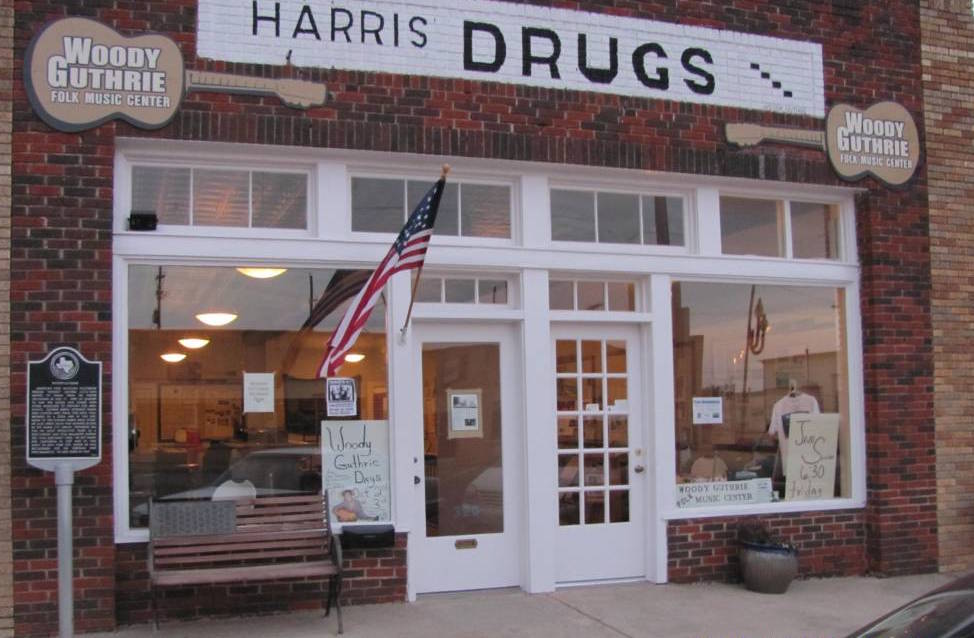
Photo courtesy of the Woody Guthrie Folk Music Center

Though Pampa is a small town in the Texas Panhandle, far from the state’s music centers, it holds an important spot in American music history because it is the place that Woody Guthrie moved to as a teenager and where he got in his first guitar. In 1991, several community leaders created the Woody Guthrie Folk Music Center, which is located in the old Harris Drug Store where Guthrie worked as a youth. While not as fancy as Tulsa’s recently opened Woody Guthrie Center, Pampa’s museum — currently open by appointment only — has a homespun charm that reflects Guthrie’s common man values. On display are Guthrie-related newspaper articles, old photos, and even an over-sized version of his “This Guitar Kills Fascists” guitar. Michael Sinks, the Center’s director, says Nora Guthrie is working on an exhibit for them. They also promote Guthrie’s legacy through public song circles on Friday nights and an annual concert in October (to mark Woody’s passing) that cowboy balladeer Don Edwards is headlining this year.

Woody Guthrie Folk Music Center
320 S. Cuyler, Pampa, TX, 79065
Free admission; donations welcome
Open by appointment only. Call 806-664-0824 or email [email protected]

The Bluegrass Bus Museum
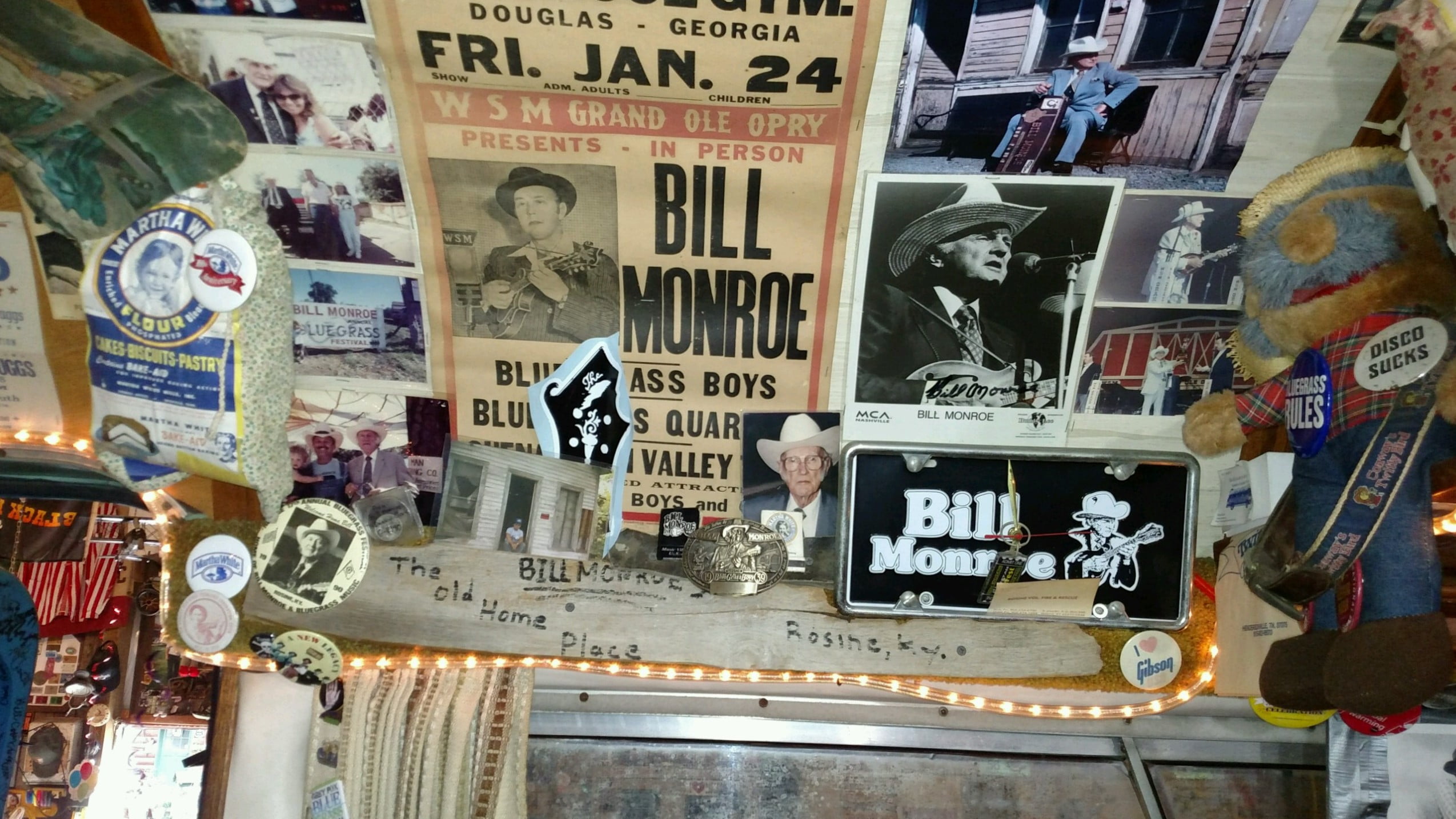
Photo courtesy of Danny Clark

After seeing Flatt & Scruggs perform on the Beverly Hillbillies, a young Don Clark became a lifelong bluegrass fan and dreamed about having a Martha White touring bus like Flatt & Scruggs had. After buying a bus like the duo’s, Clark filled it with his various bluegrass and country mementos and created the Bluegrass Bus Museum in the early 1990s. When you step inside the bus, you’ll be walking on vintage Grand Ole Opry carpeting. Clark’s eclectic array of Americana includes Lester Flatt’s old mailbox sign, antique Martha White mic stands, and a Bill Monroe’s stage suit. A centerpiece is the bus door that is covered with autographs from hundreds of musicians. After years of traveling all across America, the aging bus now only hits the road 5-10 times a year around the Nashville area, where Clark and his son Danny now reside. If you want to check out the museum, you can contact Danny through their website to arrange a visit. He is also keeping bluegrass history alive by posting on their YouTube channel a number of archival live performances that his father videotaped at festivals back in the day.

Bluegrass Bus Museum
To make an appointment, email [email protected] or phone 615-497-6731

Fur Peace Ranch
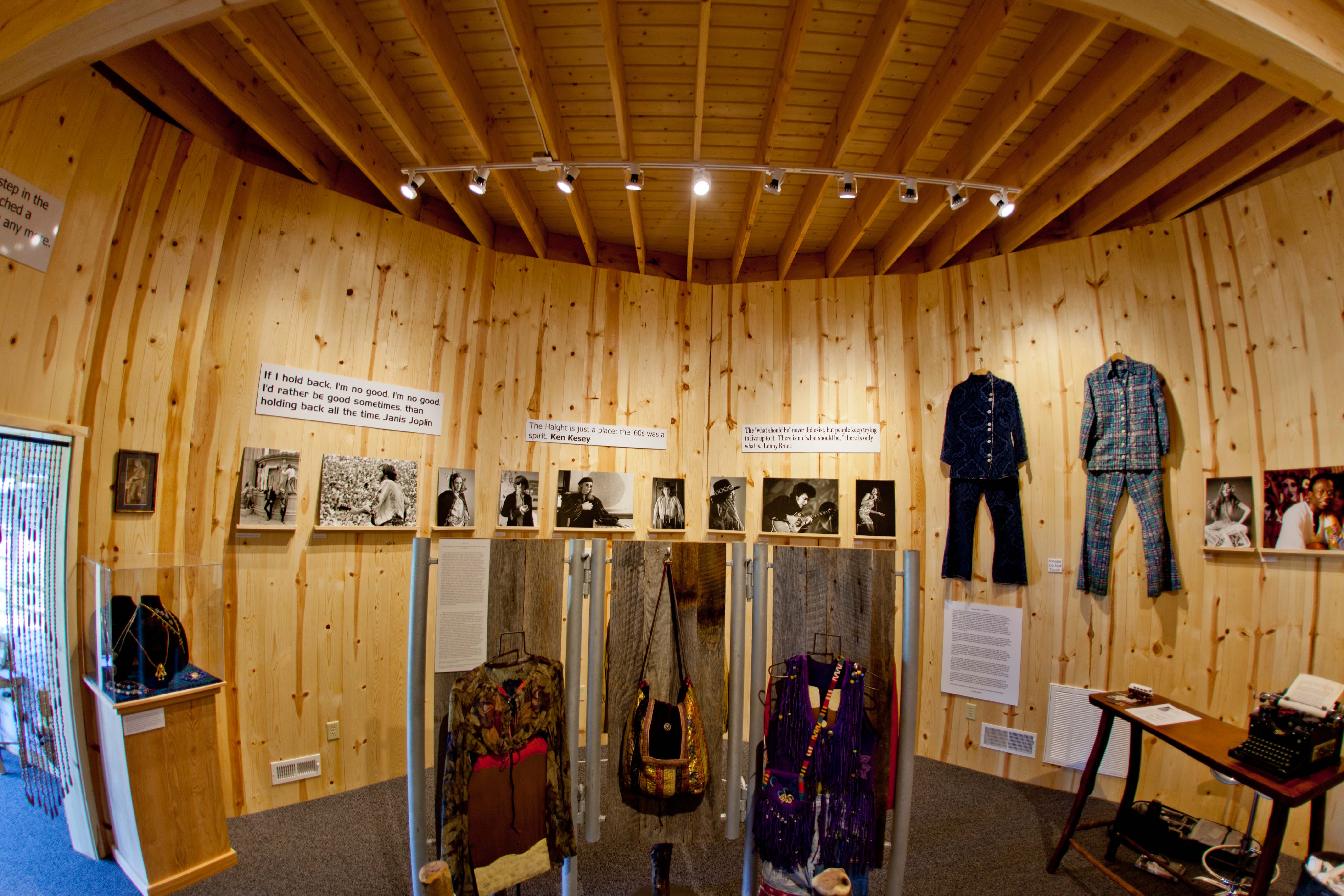
Photo credit: Scotty Hall

Why can you find a treasure trove of memorabilia for Haight-Ashbury’s golden age some 2,000 miles from San Francisco in southeastern Ohio’s rural countryside? Because this is where is Jorma Kaukonen (of Jefferson Airplane and Hot Tuna fame) and his wife Vanessa have their Fur Peace Ranch. Their ranch is best known for its long-running guitar camp and popular concert series, but Jorma and Vanessa decided a few years ago to transform an old silo into a '60s-centric museum named the Psylodelic Gallery as a way to share the many items he saved — along with offering a personal look into that historic era. Kaukonen’s original Fillmore posters adorn the walls. The typewriter heard on his famous bootleg recording with Janis Joplin is on display, as are period outfits like the one his bandmate Jack Casady wore at Woodstock. The gallery also hosts temporary exhibits, with the most recent one presenting Jerry Garcia paintings. If that isn’t enough of a flashback for you, there’s a Brotherhood of Light-designed liquid light show to further enhance the '60s vibe.

Fur Peace Ranch
39495 St. Clair Rd., Pomeroy, Ohio 45769
1 pm – 5 pm, Wednesday-Friday and during concerts
Free admission; donations welcome

Stephen Foster Folk Culture Center State Park
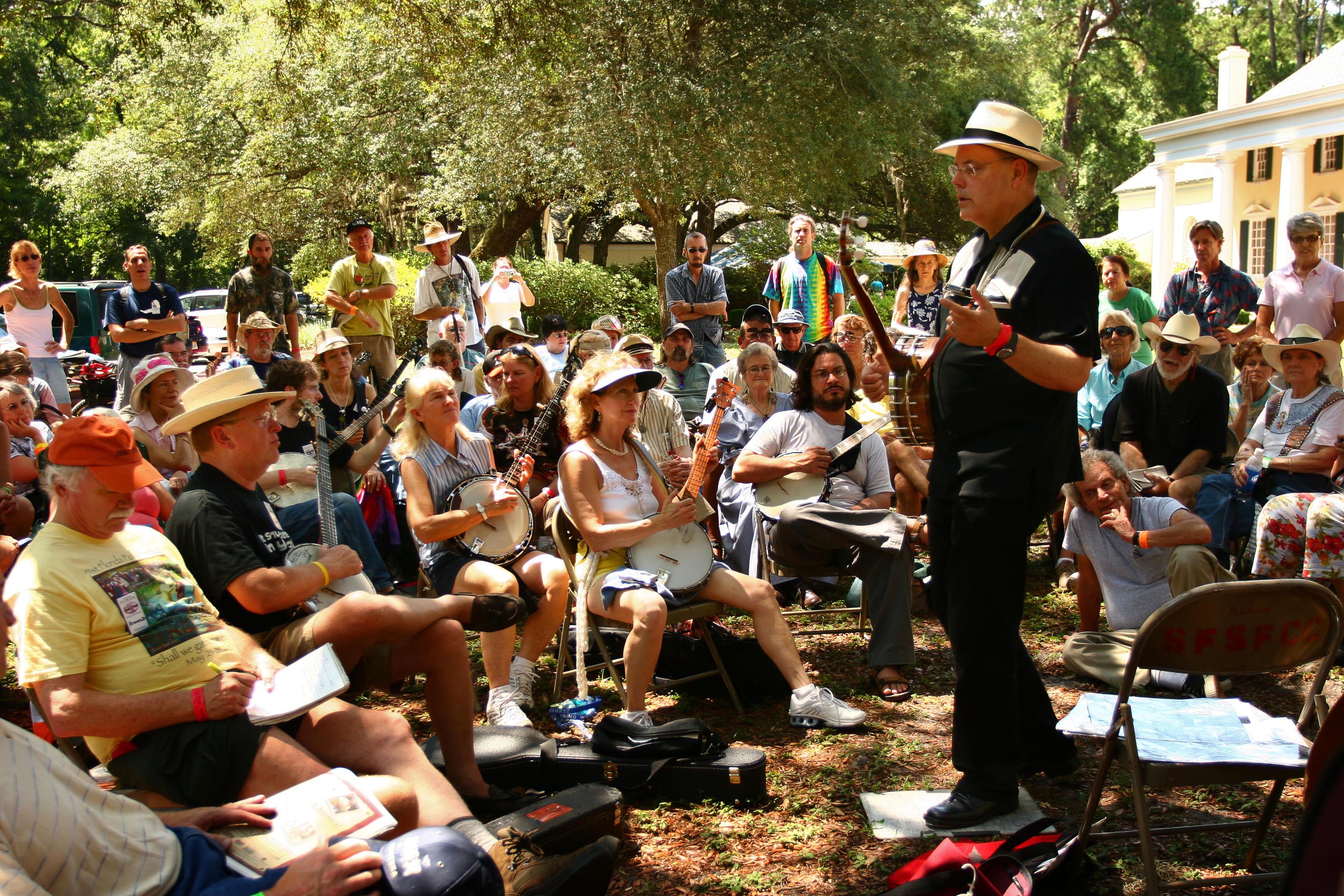
Photo credit: John Fletcher

Way down along the Suwannee River is a natural place to find a memorial to the man who penned the famous lyric: “way down upon the Swanee River.” (He took spelling liberties to suit his melody.) Located about an hour west of Jacksonville, in White Springs, Florida, this museum salutes the Pennsylvania-born songwriter, who apparently never actually visited the Suwannee River. On view are eight original dioramas inspired by Foster’s songs, along with a number of 19th-century pianos, including the one that he played. It’s hard to miss another main attraction — the 97-tubular bell carillon tower that plays Foster’s music throughout the day. The park, which also serves as Florida's official folk culture center, hosts the annual Florida Folk Festival and the Stephen Foster Old-Time Music Weekend. Sadly, the replica paddle steamers no longer travel the river as they once did.

Stephen Foster Folk Culture Center
11016 Lillian Saunders Drive / US HWY 41 North
White Springs, FL 32096
Park is open from 8 am to sunset
Museum and Tower are open 9 am – 5 pm daily
Admission Fee: $5 per vehicle. Limit 2-8 people per vehicle.
$4 Single Occupant Vehicle.
386-397-4331 / 386-397-4408 for tours

U.S. 23 Country Music Highway Museum
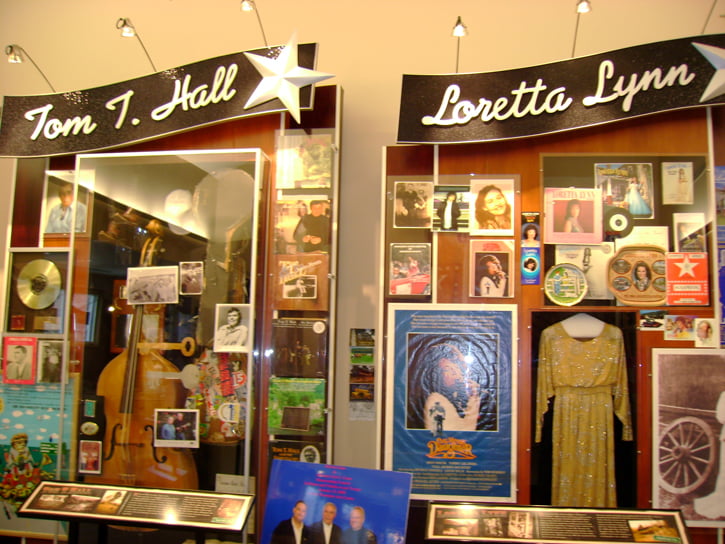
Photo courtesy of Paintsville Tourism Commission

While U.S. Route 23 stretches nearly 1,500 miles from Michigan to Florida, it is the 150 or so miles that runs through eastern Kentucky that has contributed so much to the music world that it has been officially named “The Country Music Highway.” Loretta Lynn, Tom T. Hall, Ricky Skaggs, the Judds, Billy Ray Cyrus, Dwight Yoakam, and Chris Stapleton — who have all called this area home — are among those honored at the U.S. 23 Country Music Highway Museum in Paintsville, Kentucky. Each of the 13 inductees have their individual exhibit, displaying personal items, such as a couple of Loretta dresses, a vintage Skaggs guitar, and a pair of Stapleton’s boots. As Paintsville’s executive director of tourism, Jeremiah Parsons, notes, all of these performers haven’t been afraid to be different and create their own unique style. If you visit on a Thursday, stick around for their Front Porch Picking night; maybe some of the region’s musical magic will rub off on you.

US 23 Country Music Highway Museum‬
100 Stave Branch Road, Paintsville, KY 41256
9 am – 5 pm Monday-Saturday; 12:30 pm – 5 pm Sunday
Admission: $4
606-297-1469‬

The Big House

Photo courtesy of the Big House Museum

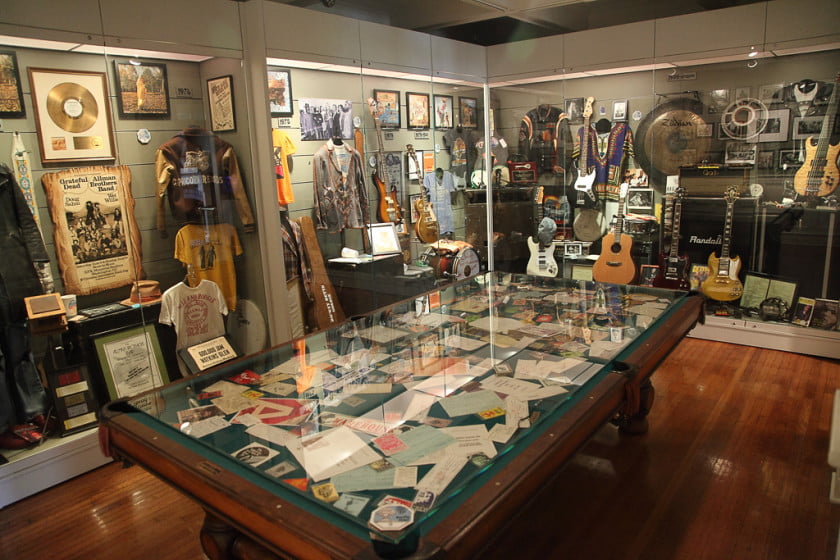
Mention “The Big House” in Macon, Georgia, and it means only one thing — the place where the Allman Brothers called home in the early ‘70s as they rose to stardom. In 2009, the old Grand Tudor mansion opened as the Allman Brothers Band Museum. Visiting it is like walking through the coolest music-themed house ever. Some rooms, like Duane’s Room and the “Casbah” Music Room, resemble how they looked when the band lived there. The Living Room and Old Dining Room, meanwhile, now present a wealth of Allman artifacts — Where else will you see Cher and Gregg Allman’s pool table? — and the walk-in closet is lined with posters and photos instead of clothes. The “Fillmore East Room,” where the group used to jam, is stocked quite appropriately with their old instruments. There’s even a room that salutes their roadies! Besides its central role in Allman Brothers history, the Big House also is where latter-day Allmans Warren Haynes and Allen Woody lived in 1994 when they put together their own band Gov’t Mule.

The Big House Museum
2321 Vineville Ave, Macon, GA 31204
11 am – 6 pm Thursday through Sunday
Admission: $10 adults, $4 children 3-10
478-741-5551


Lede photo courtesy of the Big House Museum
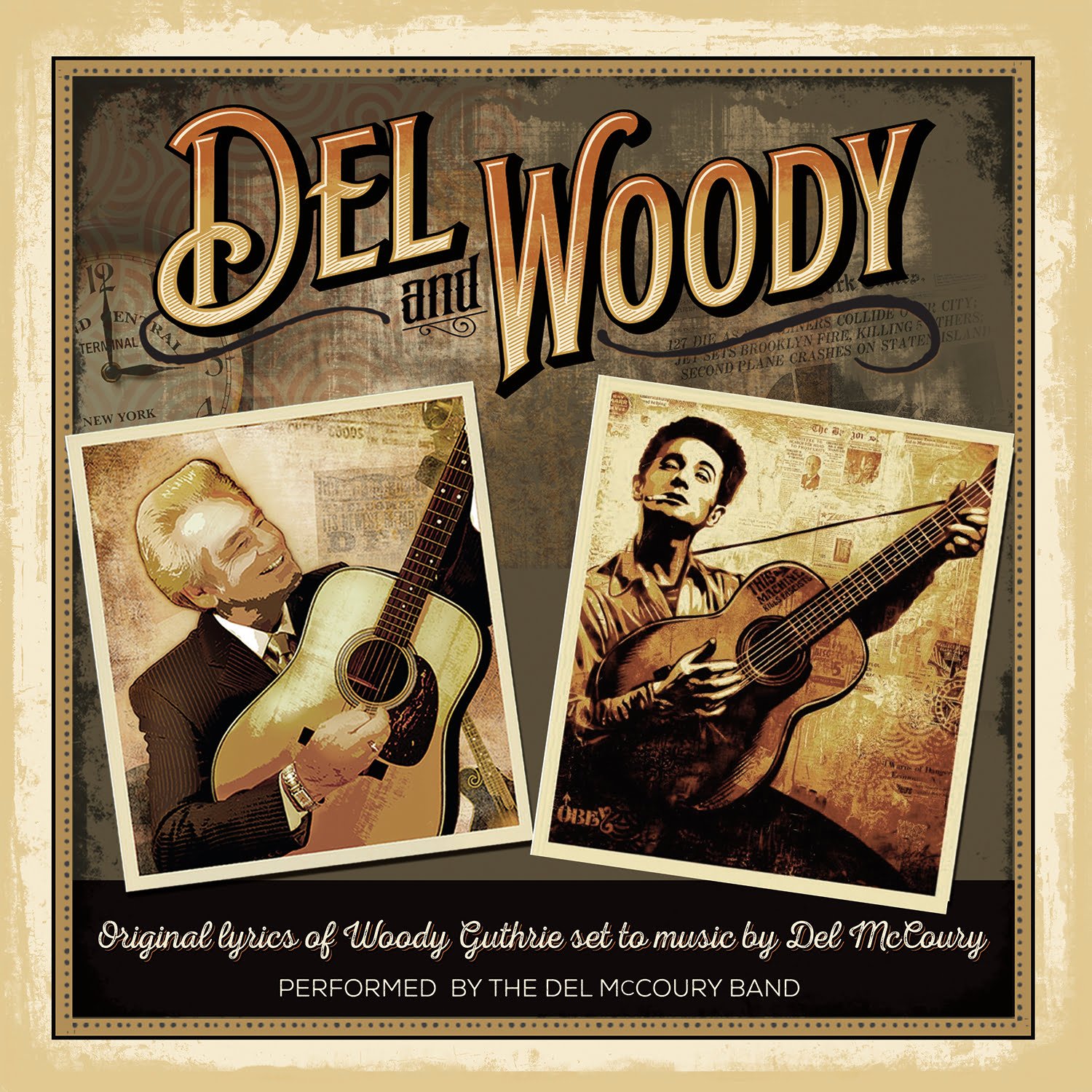
STREAM: Del McCoury Band, ‘Del and Woody’

Artist: Del McCoury Band
Hometown: Nashville, TN
Album: Del and Woody
Release Date: April 15
Label: McCoury Music
In Their Words: "We've all heard Woody Guthrie's songs for years, so being asked to put music to his lyrics is a real honor. When I read the lyrics, I knew exactly where Woody was going with the song, so I hope he'd be happy with the final product." — Del McCoury

Lucinda Williams: Every Exit Leaves a Little Death

The Ghosts of Highway 20 may sound, in title, like it has traces of wanderlust, but the ideas behind the 14 songs on Lucinda Williams’ latest record find their weight in where they come from rather than where they’re going. In many ways, Ghosts is a record that honors Williams’ father, poet Miller Williams, with opening track “Dust” its most obvious but certainly not its only homage. The song is her second re-imagining of one of Miller’s poems, expanding on his composition of the same title after finding success with a similar endeavor on 2014’s “Compassion.”

“[‘Compassion’] was not the first time I’d tried to tackle it. I’d been, for years and years, wanting to take one of his poems and turn it into a song, but I hadn’t been successful at it — it’s really quite challenging,” she says. “When you sit down to do it, you realize the difference between poetry and songwriting. You can’t just take a poem and slap a melody onto it. You have to take the lyrics and rearrange them into something that looks like a song.”

“Dust” is the only track on The Ghosts of Highway 20 that directly stems from the poetry of her father, but the record is filled with glimmers of his influence. “If My Love Could Kill,” a gut-wrenching glimpse into the pain of watching a loved one grapple with Alzheimer’s, directly draws from her father’s battle with the disease. But Ghosts isn’t limited to honoring Lucinda’s roots alone: There are fathers and grandfathers and brothers and sisters whose stories fill the lines of the expansive record, too. Bruce Springsteen’s “Factory,” the record’s lone cover song, finds its meaning in Lucinda’s father-in-law, who spent over three decades working in the factories of Austin, Minnesota.

“First of all, it’s a great song. I love doing it. But, also, it’s sort of a tribute to Tom's [Overby, husband and manager] dad. It’s a short, just really sweet song that’s very concise,” Lucinda explains. “It says so much in so few words. The line that I love is, ‘They walked through the gates with death in their eyes.’ I remember Tom saying to me, ‘I’ve seen that. I saw the men walking out of the factory. I could have been one of them.’”

It’s a haunting image, and one that isn’t a far cry from the fire-and-brimstone billboards and desolate stretches of road that set the tone for the entirety of the record. “Every question and every breath, every exit leaves a little death,” she sings on the album’s title track. Highway 20 weaves its way through many of the towns in the South that have held memories for Williams, so much so that the fascination with its reach began when she was naming her label, Highway 20 Records.

“I was looking at this map — I think Tom and I were talking about different towns in the South — and I saw Highway 20 and all the towns that it was running through,” she says. “It runs through all these towns where I grew up. My brother was born in Vicksburg, Mississippi. My sister was born in Jackson. I started school in Macon. Monroe, Louisiana — it also runs all the way through there.”

The exits that dot I-20 played host to some of the more formative experiences in Williams’ life, from growing up to experiencing music and, later, finding familiarity amidst a life of back-to-back shows and endless touring.

“I went back to play in Macon, Georgia, a few years ago at the old Cox Theatre in downtown Macon, which is one of the first places the Allman Brothers got started,” says Williams. “It’s this really cool little theatre. I hadn’t been to Macon, been back there, in however long, and I remember it amazed me how little had changed. It’s one of those Southern towns that, unlike places like Nashville that are kind of ‘boom’ towns right now, one of these towns you go back and hardly anything’s changed.”

Williams started elementary school in the small Georgia city and, even in those early years, her father was exposing her to art and music in its natural environment.

“One of the reasons it’s so significant for me is that I remember my dad taking me to downtown Macon to see, back then, this blues — gospel blues — blind preacher street singer guy named Blind Curly Brown. He never got real well-known or anything,” she says. “Needless to say, that was a significant moment because there I was, six years old, listening — that’s seeping into my little six-year-old mind.”

Williams tagged along with her father often during that time period, even chasing peacocks on the estate of his great mentor and friend Flannery O’Connor and, ultimately, finding O’Connor’s work to be a jumping-off point for her own. Songs from throughout her career — the vivid, dark imagery on 2003’s “Atonement” or the symbolism in 1998’s “2 Kool 2 Be 4-Gotten — exemplify the way Williams’ art was informed by the classic Southern writer. On Ghosts, this reveals itself in tracks like “Louisiana Story,” a tale of abuse masked in Southern idioms. Meanwhile, “House of Earth,” a song with borrowed lyrics from Woody Guthrie, continues Williams’ tribute to her influences in a tangible way without sacrificing her own distinct voice.

“I was actually sent those lyrics,” remembers Williams. “[Nora Guthrie] sent me the lyrics to [“House of Earth”]. She said, ‘You know, the lyrics are not your average Woody Guthrie lyrics, and I thought of you when I was trying to think of who might want to try to put music to them. I thought, if anyone can do it, you would be the one to do it.' So I read them, and at first I went, 'Wow.' Especially for that time — it was written in the ‘40s — it’s basically about him visiting a prostitute. It’s pretty liberal thinking, especially for that day.”

Nora was right, though: If anyone was up for the challenge, it was Williams, who went on to perform the provocative number at the Kennedy Center in Washington, D.C. before eventually recording it for The Ghosts of Highway 20.

“One of the things my dad taught me as a writer was to never censor yourself,” says Williams. “I’ve always been a rebel at heart, so I think I like to push people’s buttons a little. I like to make people think, like any good artist does, I think, whether it be a painter or a songwriter. I think it’s good to make people go, 'Wow, what was that?'”

The Ghosts of Highway 20 was largely recorded along with songs from Williams’ last record, 2014’s Where the Spirit Meets the Bone. Working with the intention of releasing it via her own label — and producing the record with her trusted team at the helm — helped her to solidify which songs were a fit for the unconventionally long record.

“I feel secure,” she says. “It makes me feel secure if I’m working with people I trust, and I think that’s the bottom line.”

Williams’ tranformative work on songs like “Dust” or “House of Earth” makes for its own road map of the way art can reimagine itself, paving a formidable road for artists of a new generation to look back on her work for their own cues. In many ways, Lucinda Williams’ creative output mimics the unwieldy stretch of road that’s borne witness to it; like an expansive Southern highway, the best records are never really finished being explored.


Lede illustration by Cat Ferraz.

HAPPY BIRTHDAY WOODY!

‘This song is Copyrighted in U.S., under Seal of Copyright #154085, for a period of 28 years, and anybody caught singin’ it without our permission, will be mighty good friends of ours, cause we don’t give a dern. Publish it. Write it. Sing it. Swing to it. Yodel it. We wrote it, that’s all we wanted to do.’

(Written by Guthrie in the late 1930s on a songbook distributed to listeners of his L.A. radio show ‘Woody and Lefty Lou’)
 

Today marks the 100th birthday of Woody Guthrie – a man to whom the folk/Americana community owes a great debt. Guthrie’s songs represented those who could not be heard otherwise, and gave voice to citizens who were not content with the status quo.  His legacy lies in lyrics which transcend time itself and are just as relevant today as they were when they were penned.

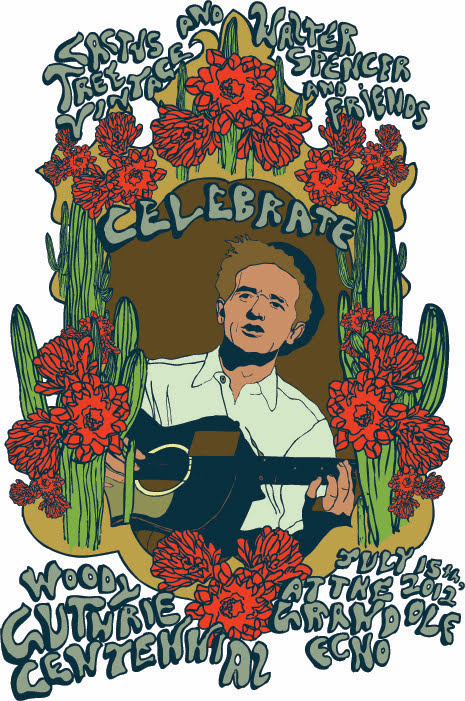
Southern California was a special place for Woody, having lived in Echo Park from 1939-1941, just east of Dodger Stadium and Elysian Park.  It seems only fitting that Los Angeles celebrates one of its favorite residents with one hell of a party. Events are scheduled throughout the city to mark Guthrie’s centennial, including tomorrow’s celebration at the Grand Ole Echo (behind the Echoplex).

We’ll leave you today with a video of our good friends The Farewell Drifters covering one of Guthrie’s classics — ‘California Stars’.  The Nashville-based Drifters will return to LA for their second appearance next week, July 27 at McCabes Guitar Shop.  Tickets are available here: http://www.mccabes.com/condata.html

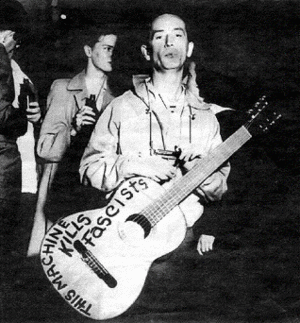
So thank you, Woody. You’ve inspired countless generations and even after a hundred years, your guitar still kills Fascists.

Woody Guthrie Festival at Santa Monica’s Broad Stage

Who’s attending the LA Acoustic Music Festival’s  event, IN THE SPIRIT OF WOODY GUTHRIE on Sunday??

Looks to be an awesome day filled with music and food in and around The Broad Stage (11th and Arizona, Santa Monica).  The festival begins at noon, and the first two shows are FREE!

Here’s the schedule:

SUNDAY, MAY 22, 2011

NOON – Festival begins on Plaza
2pm – Joel Rafael presentation (FREE! Admission limited to first 120 patrons)
3pm – Sarah Lee Guthrie & Johnny Irion (FREE!)
4pm – Jimmy LaFave
5pm – Ellis Paul
5:45pm – Eliza Gilkyson
7pm – Ribbon of Highway

Festival tickets and more information can be found here.

Hope to see you around this weekend!  (And if you do go to a show, tell me what you think!)

HAPPY BIRTHDAY AMERICA!

Hey America!  You’re 236 years old today!  Lookin’ pretty good for your age.

Readers, what are you doing to celebrate the holiday?  Looks like we’re doing a little family lunching, then some music by the fireside at a Silver Lake cookout later tonight.  Whatever your plans, have fun and be safe.