WATCH: Miner, ‘Bonfire Cabaret’

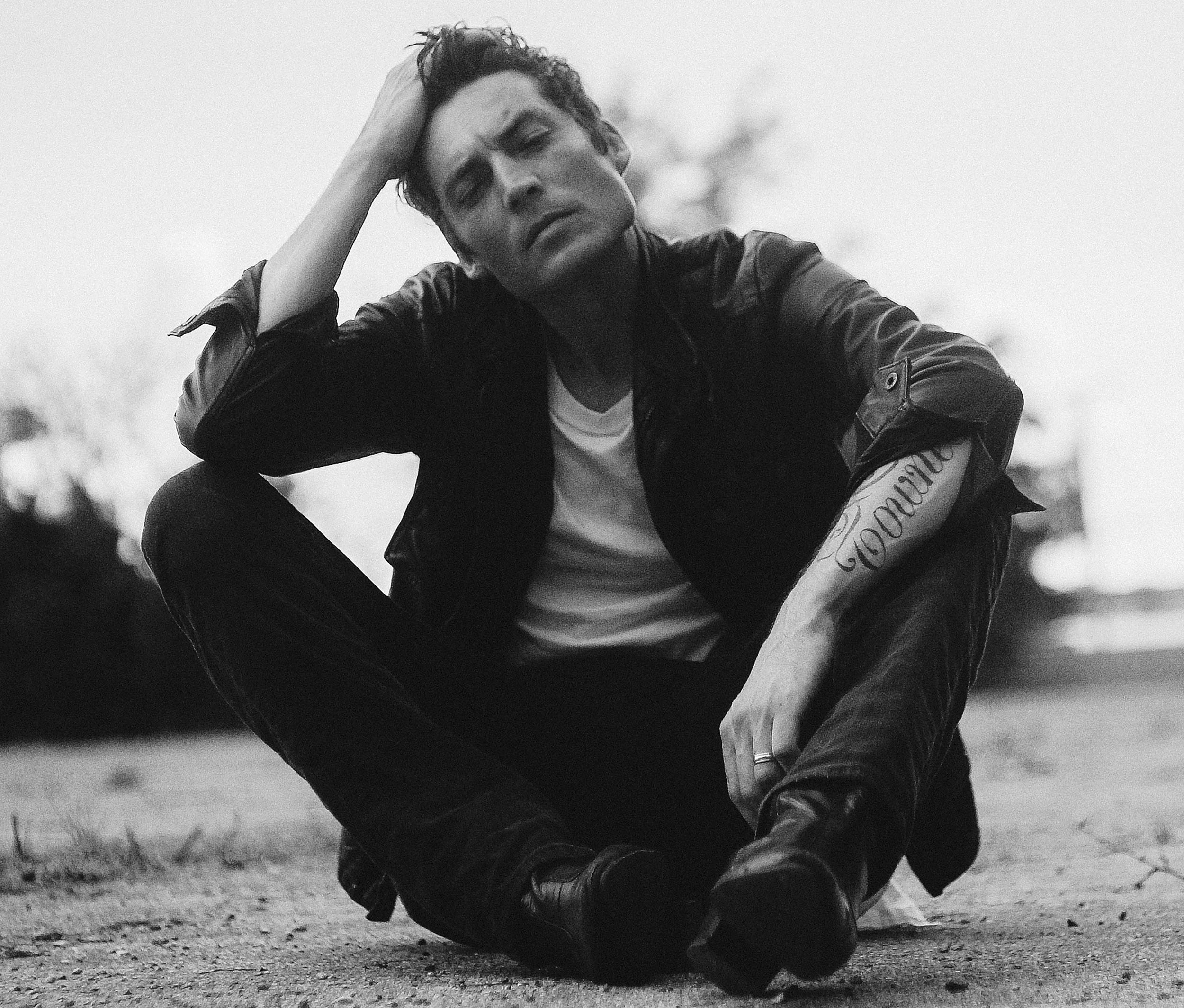
Artist: Miner
Hometown: Los Angeles, CA
Song: “Bonfire Cabaret”
Album: Tuanaki

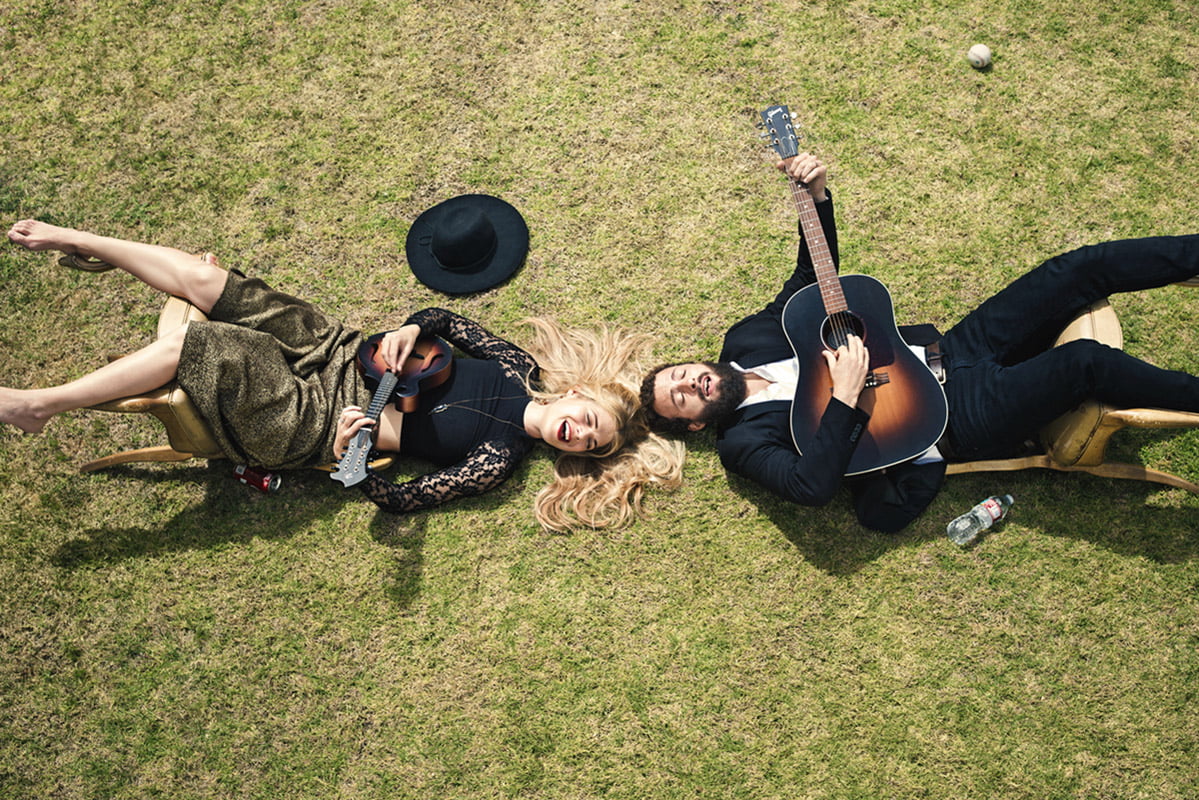
In Their Words: “Huntington’s Disease, which claimed the life of Woodie Guthrie among many others, has brought a lot of sorrow into my life over the last couple years — but the best medicine for that sadness is a song of joy along with the love of my friends and family. For this video, we gathered a bunch of our loved ones to drink and sing together, as a reminder that love will always carry the day.” — Kate Miner

MIXTAPE: Peter Mulvey’s Favorite Folk

I’ve been making my living in the folk music world for 25 years and I still don’t know what those two words mean. Long ago, I realized had no more need to figure it all out. Here’s a playlist of tunes that fall easily into my whereabouts: from Tom Waits’s thunderous take on the touchstone “Shenandoah” to Anais Mitchell’s daringly inventive confessional “Now You Know” to Birds of Chicago and their straight-from-the-ages “Barley.” — Peter Mulvey

Tom Waits — “Shenandoah”

This. This is folk music. Nobody wrote “Shenandoah.” It was coughed up out of the doings and workings of a people. Rivermen, turning wheels and winding ropes. In its complexity and simplicity, it is as deep as anything a PhD in composition could aspire to (Five lines instead of four! Echoes of pentameter! The surreality of personifying Shenandoah as a person! The song is called “Shenandoah” and yet the river continually referenced is … the Missouri!) and yet this song is as clumpy and mossy as a stone in the shallows. Tom Waits and Keith Richards do it immense justice here.

Anaïs Mitchell — “Now You Know”

There is an ongoing tension in folk music between deep folk influence and personal expression. Anaïs Mitchell’s work in revitalizing old myths and old folk song forms, whether through rewriting Greek myths or un-ironic direct wrestling with child ballads, is unimpeachable. And it is the raw power earned by all that work which lends such immediacy to the naked outpouring of “Now You Know.”

Birds of Chicago — “Barley”

“Barley” could be as old as the hills, as old as Appalachian dirt or Irish turf, and yet it’s modern, with a modern, family dedication. Allison Russell, formerly of Po Girl and now a Bird of Chicago, has been a force in folk music north and south of the 49th parallel for years, and her writing deepens alongside that of bandmate JT Nero.

Suitcase Junket — “Wherever I Wake Up”

Matt Lorenz takes old junk and makes it sing. His one-man band of a dumpster guitar, suitcase drums, bones and buzz-saws surrounds him, and his clarion voice calls out from the center of this suddenly animated junkpile. He also does throat singing, which is as folky as it gets: an ancient human skill, used for thousands of years to communicate across the vast steppes. All that, and he can write a tune.

Anna Tivel — “Lillian & Martha”

Quiet details, laid out with patience and care, illuminate this trembling, vulnerable human story of two women finally able to marry. There are anthemic protest songs that help to sweep change through our history, but there are also the true human stories within that sweep, and Tivel’s singing of the unsung here is an act of quiet decency.

Kate Rusby — “The Fairest of All Yarrow”

Let’s return to pure folk music for a moment. Kate Rusby dedicates herself to the singing of songs, with heart and vividness, with deference but also daring. Sparks strike. Flames ensue.

Kris Delmhorst — “Since You Went Away”

Jim Harrison said that “poets are the weeds of the plant kingdom: not much in demand.” In terms of poems, Kris Delmhorst is a naturalist of the highest order. Her startling 2006 record, Strange Conversation, re-imagines Whitman, Millay, Byron, Rumi, and the poetry of many more as songs. This setting to music of James Weldon Johnson’s poem “Seems Lak to Me” takes sadness and makes it beautiful. That’s a quiet feat.

Kelly Joe Phelps — “House Carpenter”

Kelly Joe Phelps blew into the landscape like a mysterious thunderhead in the late ’90s, bringing an unmatched musicianship, a towering sense of improvisation, and a depth of hard-earned soul. His sound was all his own. This blazing version of the mythical “House Carpenter” story is a dizzying journey, crossing wide high seas in just the span of minutes.

Sam Gleaves — “Two Virginia Boys”

Sam Gleaves wears his musical identity authentically, unironically, and with true grace. This simple, plainspoken song of love between two men is an act of dignified, courtly bravery. By using the traditional “East Virginia Blues” as his chorus, he roots this song where he wants it to grow.

June Carter Cash — “Tiffany Anastasia Lowe”

As a descendant of the First Family of American Folksong, June Carter was (no doubt rightly) alarmed to learned that her granddaughter planned to go to Los Angeles to make movies with Quentin Tarantino. This marvelous song is her warning. Take heed, people.

Woody Guthrie — “This Land Is Your Land”

Writing about this song is a bit like writing about the Mississippi River, or Denali. I’m just going to put this on the list and let it speak for itself.

Kendrick Lamar — “Alright”

But speaking of protest songs, of songs that the people sing in their time of need, crowds in Cleveland, having been pepper-sprayed during demonstrations in 2015, spontaneously broke into the refrain of this anthem from Lamar’s masterpiece, To Pimp a Butterfly. Folk music is for folks. Listen, if you’d like to know what’s going on.


Photo credit: Elisabeth Witt

Like Woody Guthrie Before Them, Roots Musicians Take on Trump through Song

If there are two American figures one would least expect to be connected, they may well be Woody Guthrie and Donald Trump. Guthrie, one of the most revered political songwriters ever to put pen to paper, has next to nothing in common with Republican presidential nominee Trump, a man who represents everything against which Guthrie fought as a folk singer and activist. But the two do have one connection: Trump’s father, the late New York real estate mogul Fred C. Trump. 

In the early 1950s, Guthrie was briefly a tenant of Trump’s Beach Haven apartment complex, a Brooklyn property the elder Trump developed using an FHA subsidy specifically designated for affordable public housing. Years after Guthrie moved out of Beach Haven, in 1964, Trump would be investigated for profiteering, having, as Will Kaufman wrote in a story on Guthrie and Trump for The Conversation earlier this year, “overestimat[ed] his Beach Haven building charges to the tune of $3.7 million.” And in 1973, six years after Guthrie’s death from Huntington’s disease at the age of 55, Trump was sued by the Justice Department for discriminating against Black people, eventually settling outside of court.

“In 1950, Woody and his family rented an apartment in the complex called Beach Haven that was owned by Fred Trump,” Deana McCloud, Executive Director of Tulsa’s Woody Guthrie Center, says. “After they moved in, it came to [Guthrie’s] attention that the elder Mr. Trump would not lease apartments to African-Americans, which did not sit very well with Woody, as an advocate for civil rights.”

It was the racism of “Old Man Trump” that stoked the most intense anger in Guthrie, inspiring him to write two sets of writing — the first being the better known “Beach Haven Ain’t My Home,” a re-working of an existing Guthrie song called “Ain’t Got No Home” and one that is often referred to as “Old Man Trump,” and the second, “Racial Hate at Beach Haven.” Both writings are available on view at the Guthrie Center and, since Kaufman’s piece was published, have been fodder for outlets as large as NPR and the New York Times, once again relevant in light of the 2016 election. As seen in the images provided by Kaufman, Guthrie punctuated his lyrics with exclamation points, a seemingly small detail that McCloud finds very telling.

“What’s really interesting for me is, I looked at the lyrics for ‘Beach Haven Ain’t My Home’ and — of course, we have thousands of examples of Woody’s handwriting and very seldom does he use exclamation points — in this particular lyric, every line is followed by an exclamation point,” she says with a slight laugh. “His emotions are very apparent in the lyrics. It was just an issue with him, the idea that people should be separated and kept apart in anything, but especially when it comes to allowing them to live together and learn together and cooperate with each other.” 

A reimagined “Old Man Trump,” recorded by Santa Barbara band U.S. Elevator, made its way into current headlines just a few days ago as part of the “30 Days, 30 Songs” project, an initiative spearheaded by acclaimed author Dave Eggers (famous for works like 2000’s A Heartbreaking Work of Staggering Genius and the more recent novel A Hologram for the King; he also documented his time at a Sacramento Trump rally for the Guardian) and Zeitgeist Artist Management’s Jordan Kurland, who is known for his integral role in the careers of artists like Death Cab for Cutie and Bob Mould. The project, which kicked off October 10, is a playlist of anti-Trump songs, proceeds from which will benefit the Center for Popular Democracy, written and/or performed by a diverse roster of artists that includes Aimee Mann, Jim James, R.E.M., and Adia Victoria. At press time, the initiative has grown to become “30 Days, 40 Songs,” and could continue to grow larger as Election Day draws nearer. “30 Days” follows the pair’s 2012 effort “90 Days, 90 Reasons,” a series of essays by figures like Roxane Gay and George Saunders that argued for the re-election of President Barack Obama. 

“One of the things that really struck [Eggers] about the rally was the music that was being played,” Kurland says. “It was so off-base from Trump’s message, you know? It was Elton John’s ‘Tiny Dancer’ or Bruce Springsteen or the Who — clearly just songs that didn’t make sense contextually, but also songs that there’s no way the artists would have approved. So Dave came back with the idea to get artists to write songs that should be played at Trump rallies, with that meaning they could be songs either directly about Donald Trump or songs that celebrate all the things that Donald Trump is against, like diversity and freedom of speech, etcetera, etcetera.” 

Nashville artist Adia Victoria — who speaks powerfully on race, class, and Southern culture in both her music and in interviews — contributed the sparse, sobering “Backwards Blues” to the playlist. When sharing the song on Facebook, she wrote, “Perhaps the greatest irony is how a campaign fueled by outright lies reveals a deep-seated kernel of truth of what far too many Americans hold up as sacred: massive wealth, the sway of celebrity, branding, power, and greed. I don’t want to say that he’s the president we deserve, yet here we are.”

Many other musicians outside of the “30 Days” project have found themselves getting political in recent months, too. Ani DiFranco recently released the song “Play God” which, while not overtly anti-Trump, champions women’s reproductive rights, a message that flies in the face of Trump’s endlessly mysognistic rhetoric and behavior. “As we prepare for our first woman president, isn’t this the perfect time for all of us to put women’s civil rights into law?” DiFranco asks. “Make reproductive freedom a Constitutional amendment. With the Supreme Court in flux, we cannot afford to leave our rights in the balance.”

Revered Nashville/Austin songwriter Radney Foster contributed to the conversation with “All That I Require” — what he describes as an “anti-fascism history lesson” that, to name only one example, feels especially chilling in light of Trump’s third debate comments about his reluctance to concede the election were Clinton to win the presidency. 

“The voices of extremism and fascism are ringing more loudly in our national debate than ever before in my lifetime,” Foster says. “Questioning the free press and the peaceful transition of power never ends well. All of the sloganeering in the song are taken from Stalin, Mussolini, Hitler, and Franco — demagogues from the right and the left. I hope the song is something that will make us all, Democrat or Republican, do some soul-searching about what kind of country we want to be.”

One of the most powerful, acclaimed albums of 2016, the Drive-By Truckers’ latest release American Band, was described by Slate‘s Carl Wilson as “the perfect album for the year of Trump.” DBT songwriters Patterson Hood and Mike Cooley address a number of difficult topics, including racism, immigration, and police brutality, on the LP, with songs like “Ramon Casiano” and “What It Means” two standouts (among a consistently stellar batch of songs) whose narratives have chilling parallels: The first describes the death of Mexican teenager Ramon Casiano at the hands of Harlon B. Carter; the second refers to the murder of Trayvon Martin by George Zimmerman, as well as cases like the police killing of Michael Brown. The album grapples with many of the very issues for which Trump stands, providing alternative viewpoints from, as Wilson describes, a group of men “embodying the stereotypical demographics of a Trump voter (white, male, middle-age, non–college-educated).”

Akron, Ohio, songwriter Joseph Arthur released his anti-Trump number, “The Campaign Song,” which juxtaposes audio and video of clips of Trump shouting catchphrases like “Build That Wall” with lyrics like “Trump is a chump,” earlier this month and invoked Guthrie’s legacy as a political songwriter, as well as his unfortunate connection to the Trump family. “Woody Guthrie wrote a protest song about Donald Trump’s grandfather,” Arthur wrote on his website. “So this is like carrying the torch for Woody. I used the lingo of a by-gone era to accentuate that aspect like ‘America really should boot bums like this out’ and ‘Old scratch’. I wanted to use the lingo of Trump’s elders as subtle form of linguistic manipulation designed to send him under his bed shivering like the whimpering maggot that he is.”

A particularly biting critique of Trump, his policies and his deeply flawed Trump University comes from folk singer/songwriter Anthony D’Amato, who released the song “If You’re Gonna Build a Wall” and its accompanying video via MoveOn’s Facebook page last week. D’Amato was inspired to write the song, which references Trump’s desire to build a wall between Mexico and the United States and includes lines like “Oh if you’re gonna build a wall / You better be ready the day it falls,” after covertly attending a Trump Rally in Long Island.

“I wrote this song last Summer during the primaries,” D’Amato says. “I was home from tour with a broken finger and bombarded by election news every day. The rhetoric was dark and divisive and ran counter to a lot of the ideals I always felt like this country was built on. Trump’s campaign was the initial spark, but the song touches on race and class and privilege, too. History doesn’t look kindly on those who build themselves up by excluding  and demonizing the less powerful. If you’re going to do that, you’d better be prepared for the consequences.”

Pioneer Valley band Parsonsfield also felt compelled to write about Trump’s hypothetical wall, expressing their frustration in the song “Barbed Wire,” a stirring track off their recently released album Blooming through the Black. “It’s funny how the loudest voices championing freedom are the ones who want to erect the clearest symbol of restrictiveness,” the band’s Chris Freeman says. “It will never happen, but the rhetoric is frightening enough. The song references the wall in the sense that they are often built as a mechanism to keep others out. The builder usually fails to see that they are also the ones being kept in.”

Like his father’s before him, Donald Trump’s policies seek to exclude rather than unite. And like Guthrie before them, today’s musicians are using their platforms to voice progressive platforms, the latest entrants into the long, continually evolving songbook of American protest music. Protest music is most commonly attributed to the 1960s — just look at this year’s somewhat unusual, certainly polarizing winner of the Nobel Prize for Literature — but it’s a tradition that’s been around in America for centuries. To name just two, non-’60s American milestones that birthed political music, the Civil War inspired a number of tunes, including “When Johnny Comes Marching Home” and “Song of the Abolitionist”; and the gay rights movement of the ’80s and ’90s brought us “Rebel Girl” by Bikini Kill and “True Colors” by Cyndi Lauper.

Trump is, of course, not the first politician to inspire musicians’ ire (and he certainly won’t be the last), although he has accomplished the not-so-desirable feat of doing so before the election results have even been tabulated. Bright Eyes, Radiohead, and, perhaps most famously, the Dixie Chicks were among the many artists who called out 43rd President George W. Bush through song. Ronald Reagan had the Ramones and Prince as detractors. And, in case you thought musicians only targeted Republicans, Democratic President Bill Clinton’s indiscretions have been documented by artists as high-profile as Beyoncé — though it’s important to note that Monica Lewinsky is often, problematically, the target, instead of Clinton himself. 

“The way that music makes a difference in society is still apparent today,” McCloud says. “You still have those people who are raging against injustice and we know that Woody’s work is as relevant today as it was whenever he was writing it. The specific names might have changed a little, some specific details may have changed. But when you look at the lyrics that Woody wrote, and that Pete Seeger wrote, and Phil Ochs wrote, we’re still struggling with this huge divide between the people who have so much and those who struggle just to get by every day.”

And while many artists choose to express political views through song, others take stances by withholding their music from candidates with whom they disagree. Just this year, the Trump campaign has received cease and desist letters (or, some cases, some very angry rhetoric) from the Rolling Stones, Adele, R.E.M. (who, along with Sleater-Kinney, just released their own “30 Days” tune), and several other artists regarding the usage of their songs at Trump rallies and events. 

“Music and protest, for a very long time, have gone hand in hand,” Kurland says. “For this particular project, it’s to get people inspired about the election or voting that have maybe been somewhat apathetic to it. Certainly Bernie Sanders captured a lot of people’s attention and imagination amongst younger voters and it just felt like, in May or June, there were people who were disappointed and people who weren’t really seeming like they were very engaged. So the idea of doing this is a way of getting people motivated by hearing a well-written song about an important topic. The goal with this project, and the other projects we’ve worked on in the past, is to appeal to younger voters who maybe don’t fully grasp the importance of this election or understand how different the two candidates really are. I get so sick of hearing, ‘Hillary is the lesser of two evils.’ That couldn’t be further from the truth.” 

While Guthrie isn’t alive to sing us through these last few weeks leading up to election day, many of the issues for which he fought are, unfortunately, still issues today. McCloud believes he would have been just as disappointed by Donald’s political rhetoric as he was by Fred’s housing practices. “I certainly don’t want to put my thoughts into Woody’s voice by any means, but based on my knowledge of what he wrote and his perspective of things, I think, like many of us, it would be deeply troubling to him to see the lack of civility and the divisive nature of today’s political climate,” she says. “This idea of getting together, walking together, talking together, solving problems is almost nonexistent in what we see today, and I think that would be deeply troubling to him.”

Though it appears as though Hillary Clinton has all but clinched the election, the work to heal from and evolve past the divisive, racist, bigoted rhetoric in which the United States became ensnarled throughout this election is only just beginning. It’s another chapter in a long, bloody story that is centuries long — one that Guthrie, like his modern counterparts, immortalized in song, offering small glimpses of hope, wisdom, and catharsis for all of us hoping for a better world. 

McCloud sums up Guthrie’s feelings — which were messy, uncomfortable, unresolved, but ultimately hopeful — when she recounts his writing “Racial Hate at Beach Haven.” “What I really love is the way he ends it,” she says. “The last paragraph — it’s so lyrical. It’s, ‘Let’s you and me shake hands together and get together and walk together and talk together and sing together and dance together and work together and play together and hold together and let’s get together and fight together and march together until we lick this goddamned racist hate together, what do you say?’ That’s Woody. He was upset. He was angry. But he still understood that this is a problem, and let’s sit down and talk about it and solve the problem instead of just being separate and having our own opinions. Let’s solve the problem.” 


Lede photo courtesy of U.S. Consulate General Munich from Germany and Joseph Arthur

Woody Rolls On: Cahalen Morrison in Conversation with Jon Neufeld

The Great Depression was just sputtering to a close, Europe was a mess, and the attack on Pearl Harbor was still several months away when Woody Guthrie moved his family from New York City to Portland, Oregon. He’d been hired by the Bonneville Power Administration to pen a series of songs for a documentary film about various engineering projects in the Pacific Northwest — namely, the Grand Coulee Dam in Washington State and the Bonneville Dam across the Columbia River. Spearheaded by the Public Works Administration and the U.S. Army Corps of Engineers, these feats of American ingenuity would bring water and power to areas that had previously seemed uninhabitable or unfarmable.

The film was never completed, but during the month he and his family lived in the Pacific Northwest, Guthrie wrote 26 songs — which itself seemed a feat of American ingenuity. The populist folkie extolled the achievements of industry, as well as the heroic fortitude of the common American worker. Some of the lyrics never made it off the page of his notebook, while others became … well, Guthrie never had what you might call hits, but “Pastures of Plenty” and “Grand Coulee Dam” and even “Roll, Columbia” became popular tunes within his catalog.

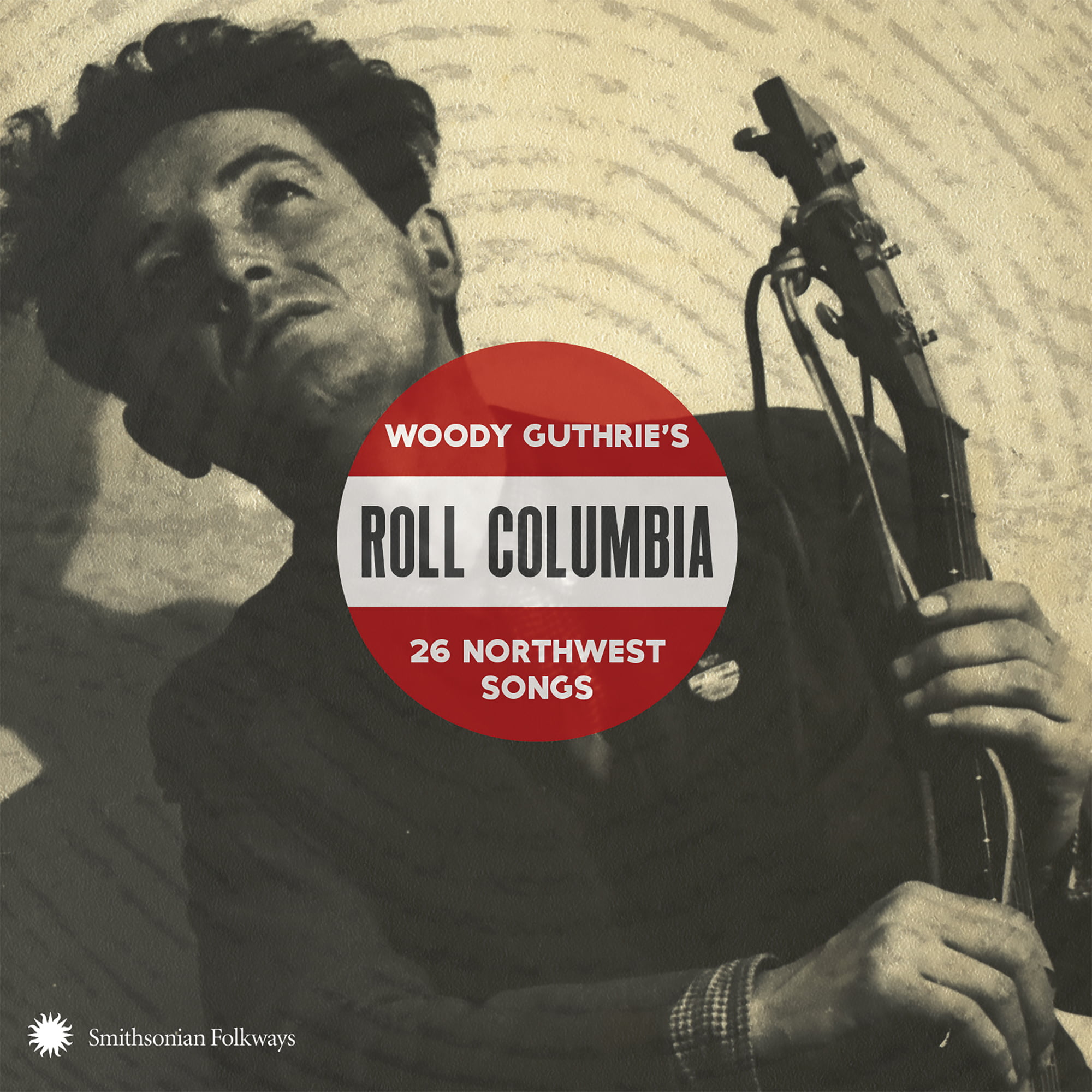
To mark the 75th anniversary of Guthrie’s short but productive tenure with Bonneville, Smithsonian Folkways is releasing a rambunctious double album of new covers called Roll Columbia: Woody Guthrie’s 26 Northwest Songs, featuring mostly musicians based in the Pacific Northwest and still affected by these engineering projects. Contributing their own interpretations of these tunes are members of the Decemberists, R.E.M., the Minus Five, Timberbound, and Dolorean, along with Orville Johnson, Martha Scanlan, David Grisman, and Michael Hurley, among others.

(The album follows the excellent book, 26 Songs in 30 Days: Woody Guthrie’s Columbia River Songs and the Planned Promised Land in the Pacific Northwest, by KEXP radio DJ Greg Vandy and journalist Daniel Person.)

While neither Jon Neufeld nor Cahalen Morrison are Pacific Northwest natives, they both have lived there long enough to call the region home and have been active in the Portland and Seattle folk scenes, respectively. A veteran of Dolorean and Black Prairie, Neufeld oversaw nearly every aspect of Roll Columbia, while Morrison covers two songs: the rip-roaring industrial cautionary tale “Lumber Is King” and the majestic “Ballad of Jackhammer John,” which rolls along like the Columbia itself.

What is your experience with Guthrie’s Columbia songs? How familiar were you with them before you started this project?

Jon Neufeld: Well, my initial experience was, “Oh, I recognize some of these songs.” Nothing further than that. I didn’t recognize them as being songs that he wrote after he was hired by the Bonneville Power Administration or any of the specific history that goes along with it. My dad’s a folk singer, so I grew up on Woody Guthrie, Bob Dylan, Simon & Garfunkel, and all that classic folk music — a lot of the peace-and-justice songs. A lot of Guthrie’s songs were familiar to me, but when [executive co-producer] Joe Seamons approached me about doing the project, I started listening further and could see a thread through these songs that had been somewhat invisible to me. That made me think about the music a little differently because it seemed so obvious, in retrospect, that they were all connected.

Cahalen Morrison: I had a similar introduction, I guess, in that I was familiar with a handful of the songs, the more well-known ones — “Pastures of Plenty” and things like that. But I wasn’t familiar with the majority of it. I’ve never been a huge Woody-head or anything like that. Joe approached me, as well, and offered me the gig, which turned out to be fantastic. I’m not originally from the Northwest, but I’ve been living here for quite a while now. It was fun to hear all this music written so specifically for the area. I’ve done a lot of touring and traveling around, so I’m familiar with the countryside around it and really enjoyed digging into these songs and seeing how they represented this part of the world. That it was all bought and paid for by Bonneville was a funny thing to discover, but it didn’t make it any less cool or discredit the songs in any way. I find it impressive that he did what he did.

JN: Twenty-six songs in 30 days is a lot.

CM: I’m a songwriter and a fairly prolific one, I suppose, but that is pretty insane. I can’t even fathom that.

Did this project change the way you see this area that you both moved to?

JN: I’ve lived here for 20 years now, longer than I’ve lived anywhere else, and these songs described the area pretty much to a tee. They reminded me of the beauty that’s around here, but also of this issue of self-sufficiency. You want to provide your own electricity and jobs, but at what cost? Harnessing the environment around you, in order to derive your own power initially seems like a good idea, because you can be self-sufficient. You can have light and power and jobs and you don’t have to borrow them anybody else. It’s right here in this rushing river, and the feats of engineering were really celebrated at the time. But you end up losing sacred land of the Native Americans. You have erosion in places that never had it before. But you also have water coming to places that were never able to grow wheat before. Basically, you’re changing the landscape and, at first, I think that was seen as a good thing. For some places, it certainly is. But overall, maybe not so much.

CM: You can look at it from both an environmental perspective and from a social or humanistic perspective, and it’s a double-edged sword. It does give water to places that weren’t getting water, which allows people to grow food and attract jobs. But, at the same time, it does take away from the natural beauty of the area and it does completely change the habitat for people and for wildlife. So you can look at it as thing that was great for humans and culture and society, at that point in time, but it has swung the other way now. Now we’re trying to get rid of dams.

JN: We’re still discussing these same issues right now in the same places, but back then it must have seemed like uncharted waters. They were a lot more excited about it then; these are songs of hope. They’re historical documents about that time.

CM: I had a similar experience. The songs sound really accurate and contemporary even though, at this point, they’re historical documents. None of these issues have changed. In fact, I feel like it’s only gotten more severe, so maybe it’s even more poignant now than it was then. Guthrie is more famous now than he was then, but I don’t feel like he has the reach he had then and the gusto that came along with being a current icon. Now, people are more able to write off historical songs like these as some cute thing that happened long ago and don’t really apply to anything going on right now.

That was one thing that struck me about Roll Columbia. It walks a fine line between celebrating these songs and exploring the consequences of the Bonneville Power Administration.

JN: I strongly believe that, if Woody were alive today, he could still sing these songs. He might have to change a word or a turn of phrase here and there. I recently read a biography of him and, during this time in his life, he was looking for work. He had a family, three kids, and he would go back and forth between being completely broke and having a job. So this place wants to hire me to write these songs and move the family up there and I’ll have work for a month? Sure. In some ways it was just another gig for him, but just another gig for an artist with his perspective turned out to be another batch of great songs. I think the beauty of the Northwest really overtook him and was the catalyst for these songs, but it’s interesting when you look at it in the context of his life: This was only 30 days out of all those years.

Cahalen, you address some of these issues in your version of “Lumber Is King.” What drew you to that song?

CM: Lyrically I thought that song was fantastic. I love the lyrics. It goes back to what I was saying about the double-edged sword. It’s all about these booming lumber towns that were making all this money. People were happy and prosperous. But then it all dries up and everything is gone: the jobs, the money, the land. It just destroys everything. As a piece of art and as a political statement, I thought “Lumber Is King” was really powerful. Woody did a great job on that one.

That was a set of lyrics that he had never set to music, much less recorded. What was it like taking it that next step?

CM: I did that for both of the songs I sing on here. It’s another reason why I chose them, because they didn’t have music. Being a songwriter, I thought it would be a fun thing to take a whack at. For “Lumber Is King,” I wrote this romping bluegrass waltz sort of thing, and I was inspired by a town called Darrington, up north of Seattle. It has a big Tarheel population, from when people relocated from North Carolina for logging. There’s a big bluegrass festival there now and there’s a funny pocket of bluegrass culture there. I liked the continuity of arranging this song in a fast bluegrass style. It felt natural to me, even though — and I don’t mean this in a negative way — it was written in a very obvious cadence that fits well within whatever kind of tune you wanted to write to it.

And you both worked on your other song, “The Ballad of Jackhammer John.”

JN: There’s a funny story behind that one. Some of Woody’s titles are really similar, and I was in the studio with [Montana-based singer-songwriter] Martha Scanlan and Joe Seamons working on a song together. I thought, “Wow, this is really working. It sounds great.” Totally different song than the one we were supposed to be doing. It wasn’t “The Ballad of Jackhammer John,” but “Jackhammer Blues (Jackhammer John).” Completely different song. I got a call at 8 o’clock the next morning, about an hour before we were supposed to start the next day’s session. It was Joe saying we had a problem. Martha had recorded a song that we had already recorded with another artist [Orville Johnson]. Well, that is a problem because Martha just left for the airport. We had to figure something out. Was it your idea, Cahalen, to record it yourself?

CM: It was not my idea, no. I remember the initial idea was that we were going to trying to get everybody to sing a verse, but we were still trying to figure out the lyrics. Talk about not an easy cadence! With that one, I felt like Woody was like, “I gotta get 17 more verses,” so he just sat down and pounded them out. There’s some really awkward phrasing and strange words in there. So I sat down right before I left, figured out how to sing all those verses, and recorded myself reading off the lyrics sheet. It was just to have a blueprint for everybody to follow, but later I found out it’s just me on the final recording!

JN: I don’t remember how we came up with it, but it was Joe Seamons playing banjo and I was playing a guitar. It’s an eight-minute song and we didn’t have any vocals to play to, so he had to develop a system of signals for when we would change. Joe would turn his head to the left, and we would switch to the minor chord. If he put his head down, we went to the 5-chord. We did it all in one take — about nine minutes’ worth of playing. Then Cahalen went in there and did all the verses in one take. After he had gone home, I remember listening to it and thinking, “Hey, this really works!” The song is this eight-minute monster with all these complicated verses, but it ended up being the simplest one of them all.

When did you find out that they were using your take, Cahalen?

CM: I don’t remember. I think it was when the mixes came. “Oh, okay, I guess we’re doing it that way.” I would have done another take or two to get some of that squirrelly stuff figured out, but hey, at least it was organic.

JN: That was one of the things I was aware of most during the production. There was zero polish on Woody’s songs, so I felt we should lean toward grittier takes. That seemed to reflect where the songs came from. And “The Ballad of Jackhammer John” is a perfect example of knowing how you’re going to do it and just doing it.

At what point in the process did you decide that you wanted to emphasize regional musicians?

JN: That was from the very beginning, the first conversation we had. The songs are about the Pacific Northwest, and there are a lot of great musicians in the Pacific Northwest, so let’s do that. It’s not like we were only going to use musicians from this area; if we thought someone on the East Coast could be great, or from the South, or from wherever, we’d consider them. But when you live out here or on the West Coast, in general, there are just so many great musicians that you meet but never get to hang out with until there’s a project to do. So it becomes a perfect reason to reach out and say hello. I met Pharis and Jason Romero when I was on Vancouver Island touring with my friend Kristin Andreassen, so I thought of them for this project. They recorded all the way up in Horsefly, which is way up there in northern British Columbia, and they sent the tracks back to me. There are all these little connections between different people, even though it’s a big area up here. It starts to seem pretty small when you tour for a long time.

CM: That’s true. It’s good to hang with people you don’t get to see very often. When you hear other people’s takes on their tunes, even though I didn’t get to see them, it can have a nice effect and make it seem like a community project. It’s good to have friend along for the ride.

That’s an enormous amount of territory to seem like a small community.

JN: The Pacific Northwest is Montana all the way down diagonally to California and up into Canada. It’s all different kinds of music, too. Not just folk or old-time or bluegrass, although those are some of the most tight-knit communities I’ve ever seen. I don’t know why there is so much music out here. It may have a lot to do with the land because, when I go out to the East Coast, it feels very different. There are tight-knit communities in certain boroughs of New York, but those people wouldn’t necessarily be tight with people in Boston, even though that’s the equivalent of us going to southern Oregon. On the East Coast, though, you cross a couple of states. So I think it has a lot to do with landscape.

How does the landscape inform the music you make?

JN: Cahalen, do you find yourself pulling from the things around you that are outside the realm of relationships?

CM: I would say it’s equally inspiring, even if it just reminds you of your relationships and experiences with people. Not to sound cheesy, but being out there in the wilderness and seeing those big vistas really does open your mind up. It has a very strong effect on me, and that’s mostly what draws people to the West. You get a lot of likeminded people who have chosen to be here. Outside the West, I think people just live where they live because they live there. It’s maybe not as intentional. I know there are communities like that outside of the West, but I would say it’s a prevailing thing that the West has in common with the Southwest, which is where I’m from. People move to New Mexico because they want to live in New Mexico.


Photos courtesy of the artists.

New Alan Lomax Materials Now Available Online

It’s no secret that Alan Lomax is a hero of ours here at the BGS. We’ve spoken with modern musicians like Sam Lee about the immense influence of the famed folklorist, as well as taken a trip or two through Lomax’s digital archives. That first foray into the digital world of Lomax yielded all kinds of goodies, like a Lead Belly concert poster from 1950 and an interactive map of Louisiana musicians playing and performing in 1934. 

We pulled those materials from a number of sources, including Lomax1934.com and the Association for Cultural Equity. We also spent a great deal of time surfing the Library of Congress’s online archives which, as of last month, just expanded its collection of Lomax-related content.

The new collection, which adds over 300,000 pieces to the Library’s Lomax archives, is culled from the Lomax family’s papers, so you can now feast your eyes on thousands more letters, writings, and research documents. The new material is housed in the same location as the some 25,000 pieces that were made available when we first began digging around in the digital Lomax realm. 

We’ve yet to make it through all 300,000 new additons, but we’ve already found some pretty cool pieces. Here are some of our favorite finds so far. Get to digging!

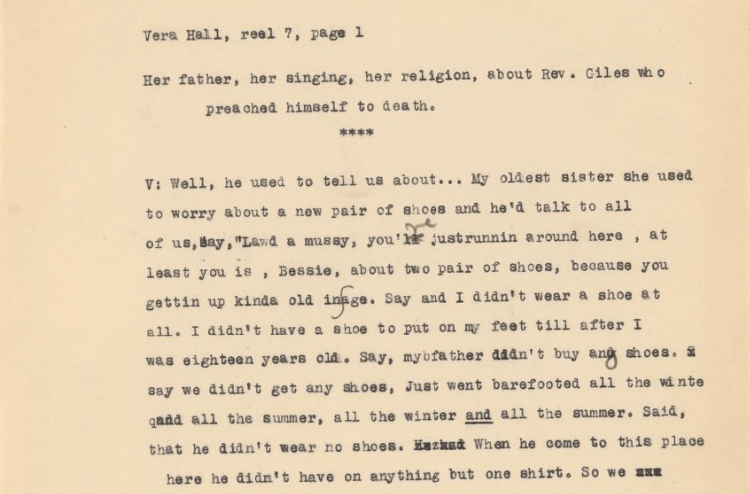
A transcript of Lomax’s interview with folk singer Vera Hall, conducted for The Rainbow Sign: A Southern Documentary in 1959. See the full transcript here.

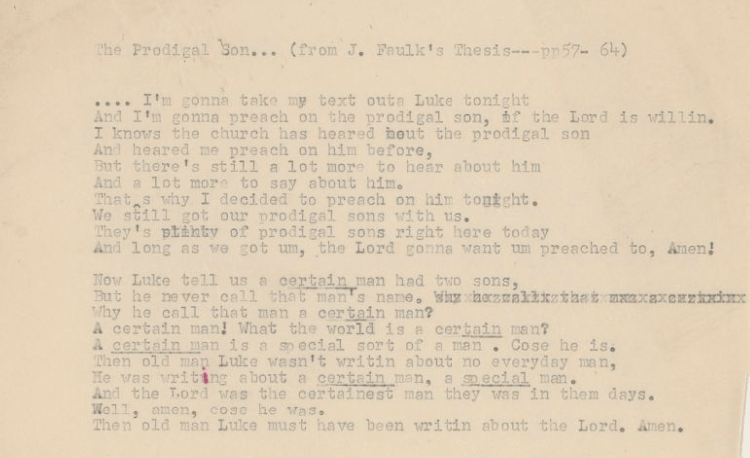
John Henry Faulk’s Master’s thesis, “The Negro Sermons,” circa 1940. See the full document here.

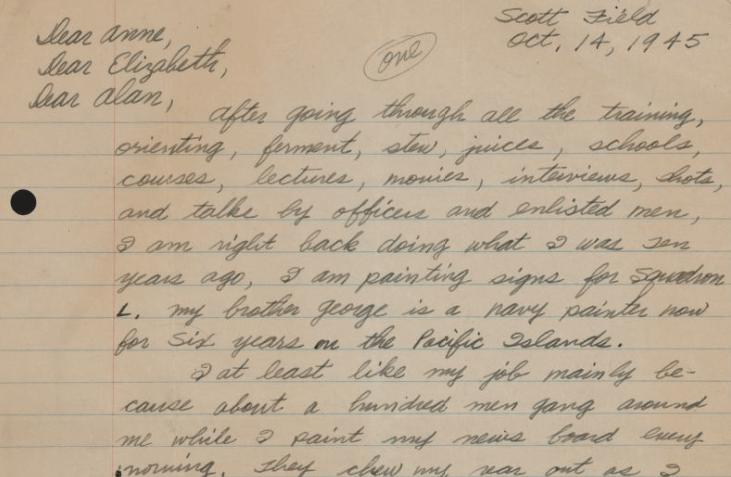
A 1945 letter from Woody Guthrie to the Lomax family. See the full letter here.

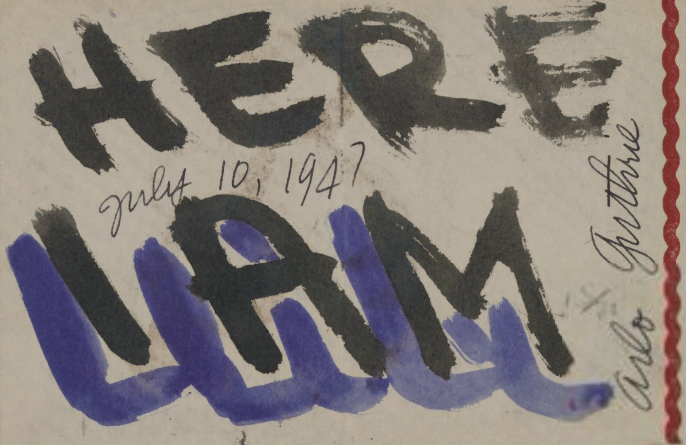
A birth announcement for Woody Guthrie’s son, Arlo, circa 1947. See the full announcement here.

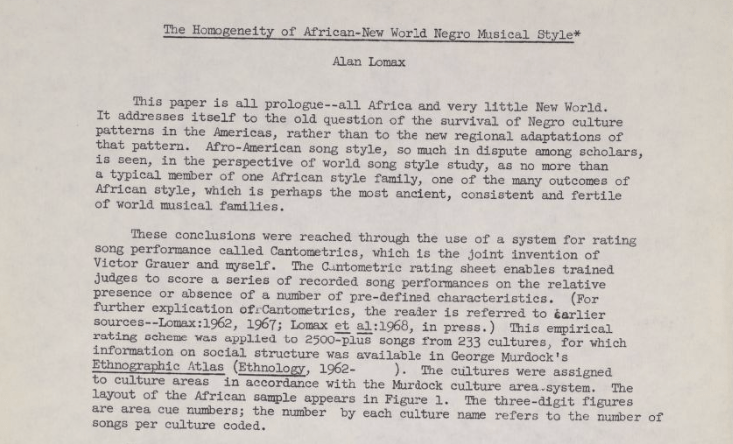
Transcript of a presentation, “The Homogeneity of African-New World Negro Musical Style,” by Lomax to American Anthropological Association in 1967. Read the full paper here.

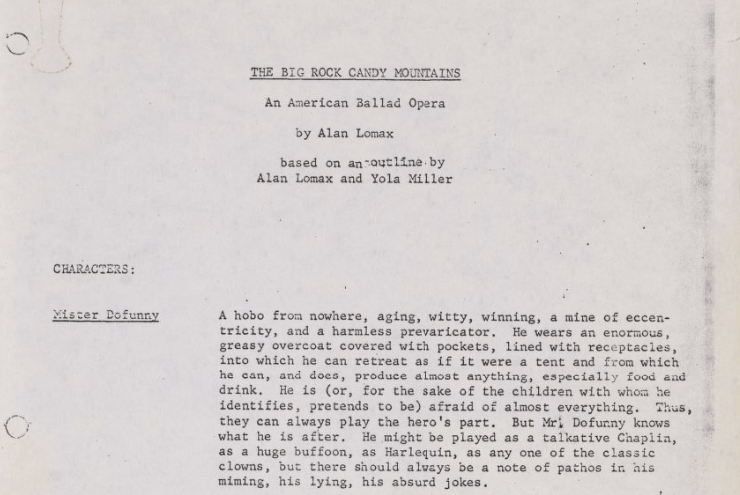
Script for Lomax’s 1953 play, The Big Rock Candy Mountain. Read the full script here.


All photos via Library of Congress

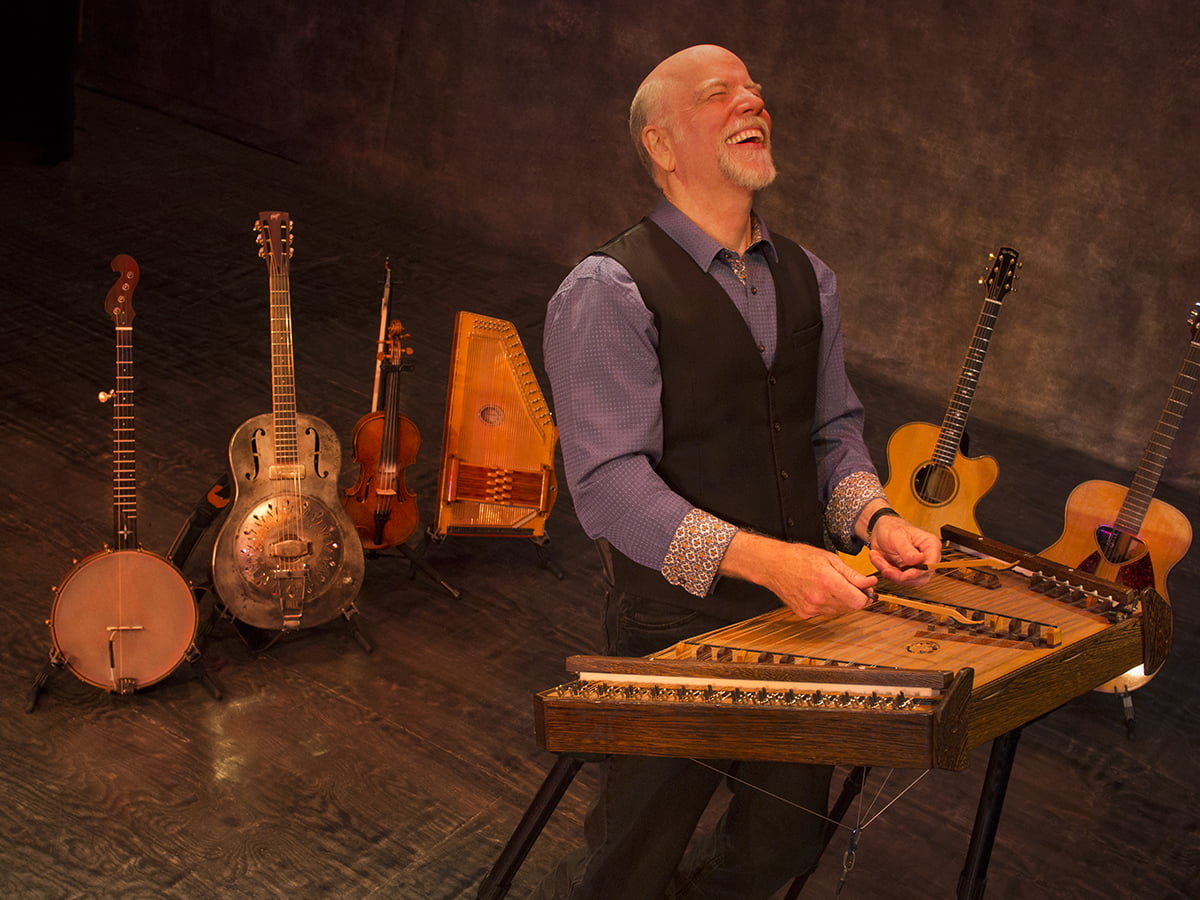
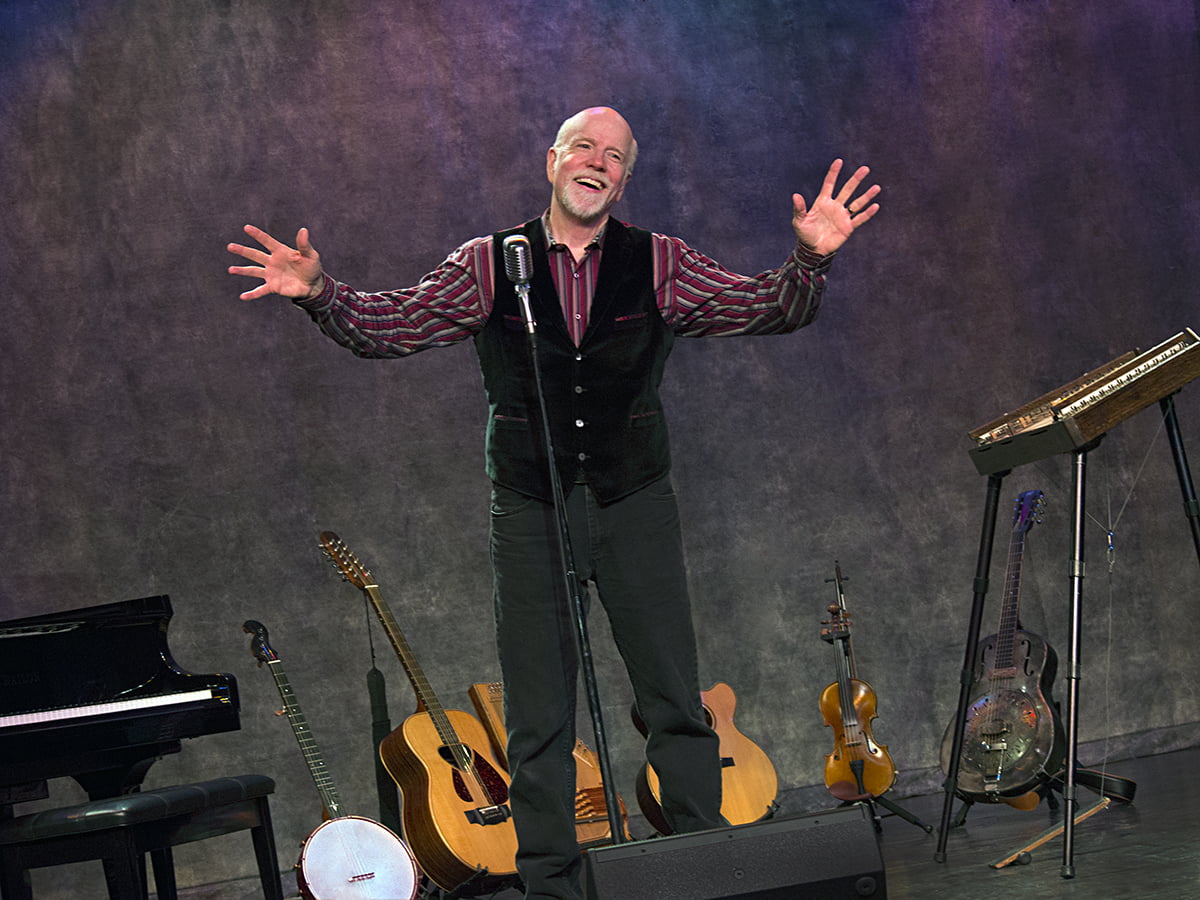
Counsel of Elders: John McCutcheon on Telling Powerful Stories

In late 2015, songwriter and multi-instrumentalist John McCutcheon received the kind of news capable of derailing any person, let alone a creative individual with lots left to say and the imagined time left to say it. Doctors found a lump in his lung and wanted to send him for a biopsy, but the discovery fell around Christmas and most services were, at best, delayed or, at worst, unavailable. McCutcheon eventually learned the lump wasn’t cancerous, as doctors initially believed, but the abscessed strep infection he did have required rest, so he cancelled the first two months of his tour in 2016 and followed doctors’ orders.

Like any storyteller who requires words to make sense of experiences and then lets those experiences out into the world as songs, McCutcheon spun his experience into music. He certainly had the time do it. “It afforded me lots of time to do writing and thinking and appreciating the fact that I get to do this amazing job,” McCutcheon says of recovering from the infection. McCutcheon gave himself over to writing and the result inevitably formed his 38th album, Trolling for Dreams. The songs encompass stories large and small, detailing everything from the epiphany he had after discovering a Bible at a garage sale to dancing with his wife in the kitchen as supper cooked on the stove. But amid those tales exist an incredibly personal tune — “This Ain’t Me.” In the song, McCutcheon details his cancer scare, describing with scalpel-like precision the way it forced him to reexamine the connection between his mind and his body. “I know people get news like this every day. Still, I gotta say, this ain’t me,” he sings in the chorus, sharing how the lump at first seemed something apart from him and eventually a part of him. It resonated in visceral ways with listeners, who saw the universality in his subjective experience. Stories, after all, exude that power.

You channeled your cancer scare into the song, “This Ain’t Me.” Has it made you appreciate music even more? That it, in some ways, gave you the form and the feeling to work through something so difficult?

Well, it’s same thing I did when I was a kid. I was working through the world, and music was a big part of it and it continues to be. Now I get to write, which is a completely cathartic experience. I never intended “This Ain’t Me” be anything but a private meditation, but I run a couple of songwriting camps, and there are good local people who have come to the camps numerous times. They have a songwriting group and they invited me one day, so I went over and they asked, “What have you been writing?” I sang them that song, and I said, “But this is just a way to write through what you’re going through.” I was trying to be the teacher. They said, “No, no. This is so universal. Remember what you taught us at camp that sometimes the most personal is unwittingly the most universal?” More than a lot of songs in recent years, when I sing that one in public, people come up to me and say, “That’s my story.”

That’s the sentiment I gathered from it. It’s something so many people deal with, but I found your articulation of the experience so compelling: This reckoning that some foreign body is a part of you, and, more than that, is hurting you.

I was pretty raw in those days. It was Christmas season; it was impossible to get a biopsy scheduled. My wife — God bless her; I wouldn’t be here if it wasn’t for her — she started hunting around branches of the hospital in little rural communities and that’s where we went. One of the things that may not seem quite as obvious, which is in the last verse of the song, is before they started the biopsy, they all prayed. It was the interesting juxtaposition of spirituality and science. I thought, “I’m so glad I’m in a place where there is that kind of submission to things you don’t know about,” because in some ways that’s what music is about.

All art is built on a foundation of discipline, but art is about abandon; it’s not about control. I’m doing a workshop these days called Holy Ground, which is the place where politics and spirituality meet, because that’s kind of where I came from as a kid. I think a lot of people dwell in that world, where you realize that you don’t know everything and there are things driving your life that you can’t put a finger on. To some, it’s Marxism or Ayn Rand or whatever; and to other people, it’s sort of how you grow up feeling that this is the right way to do things. And when you trace back its provenance, it probably goes back to you sitting in Sunday school or hearing your mother say something and it actually took.

It’s interesting that you say that people dwell within that space of politics and spirituality, because it strikes me how much those two concepts become almost antithetical, as you get older.

Well, I think we instinctively take big ideas to extremes, and things become really unnecessarily binary: You are liberal or conservative; you’re a Jew or Muslim. Everything is black and white.

Very either/or.

We love to think that the people in our group are deliciously diverse, are nuanced in every possible way, and the other is monolithic because we’re too lazy to get to know them. It’s one of the interesting things: The evolution of my thinking about political music. I grew up in a union movement and was really involved with the musician’s movement — still am — but I was a president of my local, which was formed to serve people in the traveling musicians world, so we got blues players, bluegrass bands, folk singers, gospel groups, and so on. I had to be involved in negotiating union contracts with presenters and festivals and stuff. I realized that I needed to know what the other side wanted, what was really important to them, so I knew what the parameters were. You’re just getting to know people. That’s the core of it. As we launch into this weird new world that seems to be so polarized, I’m not interested in playing into that anymore. I like political satire and I think humor proves that the emperor has no clothes, and here’s a guy who’s stark naked who would be really fun to write humorous, excoriating songs about, but that only plays into the disease that got us here.

That divisiveness.

Yes, we’re isolated and we’re insulated from each other. I know how to do that. I did that for a lot of years. Now, I think there’s a more creative way to move forward, and I’m interested in being part of that.

As someone who has taught songwriting, how do you keep from being too heavy-handed with a political message?

I have a number of credos that I adhere to and I teach. One of the most important is to remember that you just have the microphone, that doesn’t mean you have the answers. I remember the first time I stood up in front of a microphone, I thought, “Wow, this is an incredible privilege and, with that, comes responsibility.” Not many people get the microphone in this world, so how are you going to use it? [That development] was tempered by lots of things that happened in real life. I became a parent. What am I going to do to really parent them? Part of it is what I do with that microphone. The job of the artist is to ask interesting questions; just as important is “Don’t tell people what to do.” Give us a good idea.

How do you do that at a time when so many people seem to be shouting over one another to get their message across?

I think you can present ideas in all their messy glory. I’m interested in giving people new ideas — that’s what I’m searching for in the songs. In one respect, every song I write is a political song. You’re presenting your idea of what the world could be and, in some respects, you’re opening up the world to people. When I write songs based on my experience touring in Alaska, where I got to learn a lot about small commercial fisherman, that was opening up a world of the other to an audience that would otherwise have no experience in that.

It’s interesting that you say political, because I know the humanities continue to come under fire as being unnecessary, but I always viewed literature or music as being incredibly important because they taught empathy. And there’s a political aspect to understanding another person, another perspective.

Well, it was Kafka — and he talked about books, but substitute music, art, theatre — who said, “It is the axe for the frozen sea within us.”

I love that.

It’s beautiful. It does the best it can do, as far as creating compassion. Look, I’m a word nerd. My wife is a writer, and we have the entire 22-volume Oxford English Dictionary. I frequently go there and I look up words I feel I’ve overused or people tend to overuse, and one of the words was “compassion.” It is what every great religion, all the wisdom in literature, teaches us is a supreme virtue. I looked up “compassion,” which is really sharing in someone’s pain and, unless you are a participant, that is impossible. You’re not sharing directly in their pain. The closest you can come is empathy, and that’s one of the things that music is so powerfully able to do.

I write frequently in the first person, and I learned to do that from Woody Guthrie. “I’ll take you through a door and up a high stairs” … it’s so cinematic. Everybody in their own mind knows what that door looks like. If you ask four people, you’d get four different answers, but they were right there — they were invited in by the power of the first person and, all of a sudden, the magic can start. It was brilliant. I liberally steal from other good writers.

Well, that’s a creative trick. Or at least how you learn your craft at the beginning.

I don’t think you know that you’re doing it. I don’t think Woody would have taught a class in songwriting, saying, “Here’s how you do this.” He was just an instinctive genius, and had the ability to tell a story. And that’s what so many writers lack is the power of that connective tissue that is primal to human beings. We love stories. It’s what makes country music so popular into the 21st century. It’s the one kind of music that truly, consistently tells stories. It’s what makes Bruce Springsteen such a powerful songwriter. And it’s what drew me to folk music right away.

Is the power in the telling or is there more to it?

I’ve been a lifelong fan of the poet Pablo Neruda, and my friend took me to this place up the Pacific Coast in Chile six or seven years ago. I was walking through the courtyard and there was a boat there. The director of the Neruda Foundation said as we passed, “Oh, that’s a boat that Pablo built.” I stopped. I said, “Really? He was famously frightened of the sea.” He said, “Oh, he never put it into water and sailed it. He just built it. “ I said, “Well, then it’s not a boat.” He said, “Of course it’s a boat.” I said, “Until you put it in the water and it functions as a boat, it’s nothing more than sculpture.” And the same thing is true of the song. Until you take it out of the ivory tower of your imagination and turn it lose and let it be imbued with the meaning other people feel, then it’s just creative narcissism. I’m not an art-for-art’s-sake kind of guy. The song has to get out there; it has to do its work. And the people have to do their work on it.


Photo credit: Irene Young

A Million Woody Guthries (Op-ed)

I’m a songwriter.

I was asked to write a piece about the 2016 election.

My first thought was, “What the hell will this have to do with being a songwriter?”

My second thought was about how easy it would be to write this piece about the people in my songs and show that they weren’t directly responsible for the election of Donald Trump.

I don’t have any mixed emotions about this election.

Donald Trump used a time-honored tradition utilized by bullies and scoundrels to shout down the truth and feed the racist, misogynist anger of his devoted followers.

I think he’s dangerous and I think that anybody who voted for him will be hurt just as badly as the people who did not. I also believe that the Republican party, unable to win a fair election in a demographically changed country, used every technique — legal and illegal — to steal the election.

The country is having a too-little-too-late conversation about exactly who voted for Trump, where they live, and how they think.

Some people have suggested to me that I write about the Trump voters because I write mostly about the white, formerly middle-class, American working-class.

My subjects usually are the people I know from my life as part of that group.

And it’s true: Some of them have been screwed.

And it’s true that they are so frustrated with PR-spouting politicians, local and national, that they might have seen a non-politician who never seemed to use a speech writer — let alone a public relations company — as their best hope.

Hopeless people are desperate.

Many of them voted for something new and different.

Something less Washington, D.C.

But, in doing so, they just voted for another one of the people who have been screwing them.

This is what happens when people get most of their information from liars and crooks, political charlatans, TV characters, bald-faced liars, and hate mongers who are as effective at turning their hearts as any faith-healing, religious, scam artist.

This is how a person thinks when they look at social media 20, 30, 1,000 times a day, at a site like Facebook, that pretends to a social greater good, yet behaves as if money is the only God and pits people against each other for advertising dollars.

Or at Twitter, where celebrity is everything and lies look just like the truth, only shorter and easier to digest.

I feel bad for many of them. The media on the coasts shames them and the voices that purport to be for them lie to them.

They could use defenders.

They could use a voice or two in support of their lives spent working for their families, exchanging long hours for a life of safety and love, a kind of life that has always been hard to come by if you don’t start somewhere near the top.

Living in the South or the middle of the country (condescendingly called the flyover states by the heads on the screens) isn’t enough of a reason to be ignored and insulted.

And because I’ve been them, I am them, and I owe them for my songs, it should be me.

I can’t do it.

But I’ve thought hard about what impact I would have defending the position of a single Trump voter, however misinformed or misguided.

My father is Jewish and my family started in the United States as immigrants from the Diaspora.

Now, we are in danger, again.

In a Trump society, our daughters and sons are in danger. The planet will die, for all intents and purposes, in their lifetimes.

In a Trump world, our wives will grow older in a society increasingly more misogynistic with drastically reduced health care options for everyone.

I may know where these Trump voters are coming from, but they are dead wrong to have given our country over to rich, white men.

I can forgive them and hope that they will become less hateful and more helpful.

But I can’t defend them.

So, what the hell does this have to do with being a songwriter?

If Trump’s behavior toward journalists is any indicator, there will be an attempt to silence all writers of conscience.

And that’s what the hell this has to do with songwriting.

Being a songwriter is a selfish profession.

Donald Trump will change that.

In a change that is already in progress, American journalism will die and be replaced by propaganda.

In a Trump society, as in the former Soviet Union, Apartheid South Africa, and current-day China, the writers and artists will become the only truth tellers.

Songwriters will have a mantle of artistic responsibility that has been largely missing for a very long time.

We will need to go back as far as the 1930s and Woody Guthrie.

There will need to be a million new Woody Guthries.

To succeed, this million-songwriter army will need to stop writing about their own feelings, their love affairs, their exhausted life on the road.

These new truth tellers must stop writing about working people like they were happy laborers, excited about the possibility of another day in the factory.

They will have to abandon their clichés about Southerners and people from the flyover states as simple, noble, unaware beasts.

There will be no place for art that ignores people who dream of simple, attainable, and quiet goals.

Some people’s dream is just a house like the house in the song “Little Boxes,” the insulting and inaccurate ’60s folk song dreams — used recently as the theme song of the popular show Weeds — that mocked anybody remotely interested in conforming to what was then considered middle-class values and dreams.

Songs like “Little Boxes” can never again be written.

The condescension of saying that somebody who isn’t chasing a bigger dream isn’t in pursuit of something valuable must cease.

No songs can be written that reduce a person’s value.

And it will be untruthful to write songs that straddle the divide, refusing to take any other stand than “We could all be cool to each other.”

People listen. Songs can make an impact, reminding us of why we strive to be human and humane.

Songs can, and do, bring people together.

But being a songwriter isn’t an act of courage.

The racist American right wing armed themselves while we songwriters were singing our songs.

Then, while we were singing some more songs, they took over our government.

Writing the truth is an act of courage.

And let’s prepare for whatever comes next.

Let’s hope that we need arm ourselves only with the truth.

— Nathan Bell, December 22, 2016


Photo credit: AK Rockefeller via Foter.com / CC BY-SA

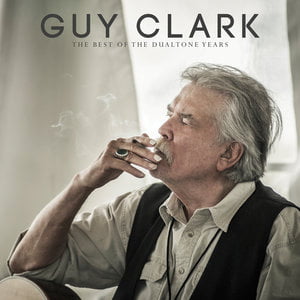
Guy Clark, ‘Just to Watch Maria Dance’

This year, by so many accounts, was a terrible year. From the complete atrocities in Aleppo, to the never-ending police brutalities, to the election of Donald Trump, it's often felt like one disaster after another with no sign of stopping soon. In times of trouble, it's always helped to look to our idols for guidance — particularly in music, for me, at least — which is another way that 2016 was just so damn awful: So many of those very people passed away. Prince. David Bowie. Merle Haggard. Leonard Cohen. Phife Dawg. When the world starts to slide into the ocean like a sand castle that seemed so safe from its waves, these legends always present a certain sense of consistent solace and, once they started to disappear, it seemed like nothing, and no one, was safe.

It's impossible and irresponsible to rank the value of any one departed soul over another, but one of the losses I grieved the hardest was Guy Clark, who died in May. I was quite pregnant at the time with my second baby, and the onslaught of hormones left me staring at the computer screen in shock, tears joining with remnants of last night's mascara and forming trail-maps down my cheeks. Clark's words had always served not only as the basis of his beautiful music, but as something aspirational — even a journalist can take a lesson from the way his lyrics evoke a scene, the way he picked up on the smallest detail or nuance of human emotion. Should he have wanted to, he would have made a world-class reporter.

The last time I saw Clark, in the basement of his home for an interview, I was actually pregnant with my first child. I'd asked him before leaving if he had any advice to me as a new parent — if he knew how I could assure he'd grow up as curious about the world and the art it contains as he was. He said, simply, "Read him Dylan Thomas and play him Woody Guthrie." I took the advice to heart. A few years later, when my daughter was born three months after Clark's death, we named her Dylan. It just seemed a fitting thing to do, and a permanent reminder.

The amazing gift of such prolific minds as Clark's is that, even once they pass, there is often more music hiding in tapes and basements and hard drives, and such is the case with Guy Clark: The Best of the Dualtone Years, out in March. While most of the collection focuses on his work from the last decade of his life that had already made its way onto other records, there are a few unreleased treasures, too. One such song is "Just to Watch Maria Dance," written with Lady Goodman (aka Holly Gleason), included in a demo version. Clark was never one for artifice or studio polish, so his demos sound quite similar to anything mastered up — here, his vocals perhaps just a touch more ragged and the plucking perhaps a little more stiff, like a pair of his signature denim jeans just a hair short of worn-in.

"Empty threats and no regrets, it's time for moving on," he sings. The words are new, but the voice as familiar as ever, even though Clark has now moved on for good. This may have been a terrible year, but little treasures like this add glitter to the darkness, and true gifts, like a daughter who will never forget to read Dylan Thomas, make it still worth living.

Are We on the Verge of a Golden Age of Protest Music? (Op-ed)

A few weeks ago, I finished the final draft of an editorial about the modern state of protest music. The Bluegrass Situation had asked me to write on this topic because I had just released an album called How to Dream Again — a largely political album in which I attempt to examine the current state of America by asking questions about the American Dream, the failures of our economic and political systems, the ongoing issue of racism in this country, and whether there's any hope for potential solutions. The tone of the piece I wrote was measured, and largely optimistic.

Then, Donald Trump was elected president.

In my original piece, I wrote that we're living in the most turbulent time in America since the 1960s. That now seems like an understatement. We’re now living in the most turbulent time in the world since the 1930s.

Everywhere you look, people are uncertain about the future and angry about problems that seem to have no immediate solutions. On an almost weekly basis, another Black or brown person is killed by a police officer. The middle and working classes have been eroding for decades, there aren’t enough jobs for those who need them, and many of the jobs that exist are unstable and low-paying. Our governmental institutions have ground to a halt due to partisanship and public distrust. An opiate epidemic is ravaging Middle America. Scientists say that the amount of carbon dioxide in our atmosphere will cause temperatures and sea levels to rise dramatically in the coming decades.

Half of the country — at least, half of those who actually voted — responded to this pervasive uncertainty and anger by voting for Donald Trump — a con man, a liar, and a racist. His lack of knowledge and preparation alone should have been disqualifying. His election has already sparked racial violence and protests across the country. He has promised to deport millions of people and ban Muslim immigration to the country. His aggressive rhetoric and unpredictable temperament threaten to spark international conflict. He has already named a climate change denier to staff the EPA and a known KKK sympathizer to lead his administration.

The frustration and change of the past several years has given us glimpses of a coming golden age of protest music. Kendrick Lamar’s To Pimp a Butterfly may come to define the Black Lives Matter movement in the same way Sam Cooke and Bob Dylan defined the Civil Rights Movement. With their new album, American Band, Drive-By Truckers haven’t only put out their best work in a decade, they've crystallized our current political moment. Still, these examples are largely viewed as one-offs rather than part of a larger trend.

In light of the election of Donald Trump, this can’t remain the case. In my original piece, I encouraged songwriters who “feel called to write protest songs” to step up and do so. Now, that rhetoric feels too soft. Now, we have a responsibility to do so. I’m not saying that every song you write should be a political screed. But we must use our voices to inform people, rally people together, and help mobilize a movement that will resist the dangerous forces that Trump threatens to unleash in the next few years.

This can be a scary step to take. I know from experience. Two years ago, after putting out two albums in quick succession, I felt like I’d run out of things to say as a songwriter. At the same time, I was growing increasingly frustrated with the political landscape. After reading AIynda Segarra’s May 2015 Bluegrass Situation piece, in which she called on folk musicians to — in the words of Bell Hooks — “fall in love with justice” and use our music to discuss issues of social justice and human rights, I decided I wanted to write songs with greater political relevance. Almost immediately, though, I got scared. I was scared of rubbing some people the wrong way. I was worried about the effects this direction might have on my career. Mostly, I was scared that I wouldn’t be able to write good songs in this new style. But I kept repeating the mantra I’d adopted when I first made the terrifying leap into my music career: Lean into your fear.

So I got to work. And two years later, my earlier fears have evaporated. I filled my brain with ideas related to politics, history, economics, and race — studying writers like Naomi Klein, Noam Chomsky, Ta-Nehisi Coates, and Thomas Piketty — and wrote, rejected, and edited dozens of new songs. Along the way, I learned to write songs that effectively blend the personal and the political. And as I’ve spent the past year traveling around the country playing the songs that ended up on How to Dream Again, I haven’t encountered any heckles or boos. In fact, I’ve been humbled and surprised by the positive reaction to my political material. Over and over, I’ve heard people express how much they're craving honest, thoughtful voices that can help them frame and understand what’s happening in the country and the world.

After all, we live in a time when it seems like there are no trustworthy leaders, institutions, or public figures left. Church attendance is at an all-time-low. Distrust of government is just about about the only thing liberals and conservatives can agree on. Time and again in 2016, the media has proven its inability to understand the changes happening in the country. Hell, even Bill Cosby — the one-time epitome of a wise, honest father figure to many of my generation — turned out to be a monster. And as we’ve learned in the past year, where courageous, trustworthy truth-tellers fail to emerge, demagogues thrive. 

All of us humans have a deep need to understand the world we inhabit. We need to be reminded of universal truths. There will always be a need for songs about love, pain, and heartbreak. But we also need to be confronted with temporal, day-to-day truths specific to a particular place and time. These kinds of truths are what folk music was created to communicate, long before the Internet and cable news. As Woody Guthrie put it, “A folk song is what's wrong and how to fix it, or it could be who's hungry and where their mouth is, or who's out of work and where the job is, or who's broke and where the money is, or who's carrying a gun and where the peace is.”

This type of information can be life-changing. If it reaches enough people, it can alter the course of history. If more modern-day Woody Guthries had emerged over the past year, maybe Trump’s message wouldn’t have resonated the way that it has. This is the deep power of folk music. Perhaps the next golden age of protest music has yet to arrive because we, the next generation of songwriters, have yet to fully realize this power.

It’s understandable. As songwriters and musicians, we're reminded of our weaknesses on a daily basis. No one buys records anymore. Fewer people are going to shows. Streaming pays fractions of a cent per play. I don’t need to remind you: Your bank statements and half-empty clubs are daily reminders, as are mine.

I think many of us secretly believe that our songs don’t matter. We were born with the gift — and curse — of needing to make music so badly that we can’t do anything else. But we were also unlucky enough to be born in exactly the wrong time, a time when songs have become practically worthless. It can often feel like no one is listening to these songs that we’ve devoted our lives to creating.

But people are listening. I take the subway to my part-time job twice a week when I’m not on tour, and nearly every passenger in every car is wearing headphones. At the gym, nearly everyone is wearing headphones. On the sidewalk, nearly everyone is wearing headphones. Sure, songwriters and musicians are making less money, but everyone is still listening to music. Every day. And we’re listening to more music than ever.

If you’re a songwriter, or an artist of any kind, now is not the time for apathy, complacency, solipsism, or silence. You have a mouthpiece, even if it’s relatively small, and we all need you to use it. Be brave. If, as Woody Guthrie once said, all human beings are really just hoping machines, then it's our job to provide the fuel.

So protest and encourage solidarity through your art. It’s not as scary or as hard as you think. God knows there’s plenty of material out there, and audiences are hungry for these kinds of songs. Our country and world desperately need them, now more than ever. If enough of us listen to our intuition, lean into our fears, and dig deeply to find new kernels of truth, we just might discover a power we didn’t know we had — the power to inspire thought and change, to bring people together around a common cause, and to drastically change the political conversation in our country and around the world.

We could make more than songs. We could make more than a living. We could make history.


Max Porter is a singer/songwriter who performs as M. Lockwood Porter. His newest album, How to Dream Again, came out this September on Black Mesa Records (US) and Hidden Trail Records (UK/EU).

Nothing to Hide: A Conversation with Dan Layus

After more than a decade at the heart of Augustana, Dan Layus recently released an official solo album, Dangerous Things. And anyone who thinks they are going to get another bunch of roots-rock anthems out of Layus has another think coming their way. The sparsely drawn, country-tinged singer/songwriter set summons Gram Parsons, Woody Guthrie, and early Tom Waits as its patron saints, and Layus's Rodney Crowell-esque voice feels right at home in the form. There's a fragility to the whole artistic affair, but one which makes it clear that there's strength in being vulnerable, in asking for or offering help.

I dig this record. A lot. And I'll tell you why: It has a serious lack of pretense. It's not trying to be anything that it's not. You're just putting it out there with nothing to hide behind. How's that feeling?

I appreciate that. Without sounding pretentious, ironically, that's exactly what I was going for — to, essentially, go for nothing. [Laughs] It's like Seinfeld; it's a show about nothing. That's probably my favorite compliment about the record. Thank you. That's very intuitive and a little bit left-of-center approach to describe it. And that's absolutely what I was going for.

Let me put it this way: It felt far too predictable to say, “I think I'm gonna make a country record now. That seems like the thing to do.” It felt like that would've been laughed off the map. Being a self-described narcissist, I know that I care a little too much about what people think sometimes, especially music people. So I needed to challenge myself … I'm joking about the narcissism, by the way. [Laughs]

[Laughs] Yeah, yeah. I gotcha.

I hoped you would. I needed to let go of a lot of the practices — the writing practices, sonic habits I had in the past. It's very easy to fall into a pattern of crutches, when it comes to music. You get used to certain elements around you. Even things as simple as “Where do the drums go on this song? What's the bass gonna do?” — assuming that there needs to be these four cornerstones of a record that make the sound of the record. I think what I was able to do — and it was a greater challenge than I thought — was to just not worry about it at all. Just rely on the characters in the songs, let them be themselves.

I won't lie: I'm absolutely in love with the few elements, sonically, that are implied and nodded to, as far as pedal steel and fiddle and, of course, the Secret Sisters and the female background vocals. I'm in love with those, but I think the subtleties of them are what make it say, “Yes, this is what you think it is, but I'm not going to stand on top of the building and say, 'I'm a country artist now. Hear me roar!' I'm just going to let it be what it's going to be.”

It seems fitting, too, to leave the band name behind with the big, sweeping melodies and the arena-rock drums fills. Just let that all live in its own world.

Right. Yeah.

Why, for you, was that shift in branding and that shouldering of responsibility important? Because, like I said with the music, there's nothing left to hide behind, brand-wise.

That is true. It was kind of for selfish reasons. Sometimes you forget, at least for me, if I'm a fan of a certain artist or singer that's associated with a band, you forget that they have their own feelings of weight or they're battling with their own self-image in that environment. You forget that. “Oh, I just like the music. I like that band a lot.” You forget there are all these times that, potentially, they don't feel totally comfortable in their own skin underneath that umbrella, that moniker, that brand or band name. It comes with a weight. It comes with an expectation of a certain sound, a certain style, a certain form.

I think what happened was, I put out this last record — the last Augustana record — I made it, essentially, by myself with a few producers. It felt like a desperate plea. I loved the songs, but the album felt completely scattered. I tried my very, very best to be myself in that situation and carry it or be comfortable with it. But it became glaringly obvious, after a few years, that this was done. This was not what it once was. To call it a band and call it what it used to be in 2005 is just silly. I'm lying to myself and to the fans. Times change. Things change. Relationships change. People's careers change. One day you work in a business office and one day you don't want to work there anymore. You need to try something new to feel motivated or excited about something.

So it really is more of a reboot than an evolution, creatively, then?

I think so, yeah. I felt that, creatively and in a career-minded way, Augustana had reached its resting place. I have nothing but wonderful feelings about it. Never felt angry about it. Never felt jealous about other people's standings, maybe people we were coming up with and where they ended up, if they ended up anywhere at all. I was always able to keep that all in perspective.

But I think, for my own benefit and the benefit of my family and our future and definitely my future in music, I felt like, “You know what? Let's live in the current place that we are.” And the current place that I am is that I'm ready to make an album that has my name on it and sounds the way I've always wanted it to sound. And nobody's gonna tell me no, that I can't have pedal steel, that I can't have a fiddle. [Laughs] Nobody's gonna tell me that it sounds too Americana.

[Laughs] And it's a fiddle, damn it. Not a violin.

It's a damn fiddle! [Laughs] Nobody's gonna tell me that this isn't gonna work at alternative radio because it's too alt-country or whatever. I'm just gonna make the damn record sound the way I wanted it to, ever since I heard Gram Parsons or Ryan Adams, when I was 16. That's the record I've always wanted to make, but for whatever reasons, I was never able to fully realize that sound and feel. I feel more at home now, than I ever have.

I think that's going to be reflected in the people who respond to it. I'll be honest, I have a few Augustana songs in my iTunes, but I wasn't that big a fan.

Yeah.

But I seriously love this record. It reminds me of Chely Wright's new one. I was never a commercial country listener, so I knew of her and liked a few of her tunes, but on her new record — it's the same thing — she found her true voice. I feel like that's what you've done.

Awww. Thank you. Thank you very much. I appreciate that very much.

You're welcome. And I don't say that just to say it.

[Laughs] I can tell! I can tell that you mean it.

[Laughs] Now, you've talked about having to let go of songwriting in order to write these songs. Is that because of the personal nature of the songs — that they were for your album and not for a singer to be named later or for a band?

Yeah, that's part of it, certainly. I'd be lying if I said that it wasn't partially my fault for investing a lot of time in co-writing with other people over the last five or six years. Especially in Nashville over the last two to three years.

That's the way it is here.

That's the way it is here. I learned a lot. I learned a lot of good writing habits and I learned a lot of bad writing habits over the course of a few years. And I already had my own style of writing, which a lot of people do, when they come to town. I was writing with people in L.A., too. It just has its own thing to it. Coming to Nashville and being like, “Alright. I'm going to try to get some cuts. Some BIG country cuts. I need to make some damn money for my family. I need to let go of my whole artistic thing, because it ain't working out.” [Laughs] “If I'm a music guy, if that's what I'm gonna do, then I better find a way to support my family with music because I don't know what the hell else I'd be able to do. I know I can write a song, so let me get in with some writers. Let me try to get some cuts.”

And it didn't really work out. I had a hard time letting go of my own … I don't know what it is … my own method. I couldn't just say, “It's for the money. It's worth it.” I was never able to go to the point where I said, “Yeah, this song is worth barely being able to sleep at night.” [Laughs]

[Laughs] Well, it's putting a price tag on your soul, right?

Yeah, it really felt like it. I think, at the end of the day, I found that there were a few songs that really impacted me with some of these writers who I'd met in town. And they made the record. They were close to being cut by other, larger artists in Nashville who passed on them and I was like, “You know what? Then I'm going to do it because this feels like my song.” So there are a few of those cuts on there.

The rest of the record, I wrote myself, which I hadn't done 70 or 80 percent of a record on my own for seven or eight years, so that was part of letting go of the songwriting process that I was referencing. After driving into Nashville from Franklin every day from, essentially, 9 to 5, coming home to dinner after writing a pop-country song or whatever it was, it becomes this occupation, this lackadaisical, mediocre endeavor, if you let it.

At some point in that process, it became that. It became very mediocre, very uninspired, and I realized that I needed to stop and stay at home for a minute and not try to go get cuts and write my own songs. I had to figure out how to write my own songs again, by myself without another writer. It sounds crazy, but I needed to. I became too reliant on the process where the goal is just to finish a song a day. That was a very convoluted perspective to develop and I felt like, “Man, I don't know how I lost my way on this one.” So I took a step back, stayed home, and … I don't know what song it was, but it just broke open the floodgates. I was so proud that I could write a song that I could feel something about, that I wanted to showcase and go play. That's what happened, as far as writing was concerned.

Got it. “You Can Have Mine” … it might be my favorite cut. I'm not sure. There's some competition there.

Ohhhh, wonderful!

It reminds me of that old parable of a friend jumping down in a hole with someone because they know the way out. So I wonder if that is that a role you've played for someone … or had someone play for you? Or if music plays that role for you?

You know what? A little bit of everything. That's one of those songs. Two of these songs are written with a wonderful writer named Emily Wright — “You Can Have Mine” and “Call Me When You Get There.” There was a stretch of a few weeks when we were getting together and writing a bunch. It was a wonderful connection, as far as writing was concerned. We saw things in a similar way. Both of those songs kind of just shot right out and felt really great right away.

“You Can Have Mine” — the title just popped into my head and we just started writing it. So I don't know where it came from, specifically, but it came out of something. It definitely came from experience. At that time, either myself or my wife was battling a pretty heavy bout of stock seasonal depression, I think. Which, living down here, as you know, can be very impactful when January, February come around and money's running low and you're feeling tired and estranged from any feeling of inspiration and kind of a little lost or down. That's something my wife and I, and probably most people, go through — just feeling like you've got someone there to go through it with you, you have somebody to call or go home to or get up for the next day. That's something that I don't think I address as often as I should, these bouts of depression that I feel or that my wife feels.

It is something you explore, though, on this record.

Absolutely.

Like on “Only Gets Darker.” For you, it's not a passive state with a big “Time Heals” light at the end of the tunnel. You have to be an active participant in your own healing, right?

Yes. Yes. That was how I felt about it, and still feel about it. This is a long life. Just because I've been sober for five-plus years doesn't mean that's it. [Laughs] It's a constant struggle for anyone to get out of their own way, essentially. That's the battle every day that I feel I'm fighting. It's not just booze or whatever. It's anything. Just trying to move yourself out of your own way and find a way to appreciate the moment that you have, what's happening around and in front of you, people who love you, people you love. That's a challenge. It's easier to see the things you're not getting or that aren't being given to you.

That song, in particular, I never felt as if … and this is just my perspective, everyone feels differently … but my experience is, seeing yourself out of a dark place or having a hand to help you like in “You Can Have Mine,” that feels like the only way. Not only is it empowering to give you confidence for the next time, but it also just feels like the truth. I mean, I've never just woken up one day and said, “Oh, shit. I feel better.” [Laughs] It's a conscious effort. It's a thought process. It's your actions. It's your choices that help you wind up in a better place, mentally and emotionally. But I don't know. That's just me.


For another folk-country songwriter's perspective, read Kelly's interview with Lori McKenna.


Photo credit: Justin Clough