In an all-star acoustic tribute, the timeless music of O Brother, Where Art Thou? rambled across the Grand Ole Opry airwaves for a 25th anniversary celebration on Saturday, February 28.
In some ways, this night in Nashville felt different from a typical Opry show – no drum kit, no square dancers, and not a lot of commercials. On the other hand, it would be hard to find a more suitable place to stage a salute to O Brother than on the world’s longest-running radio show.
The GRAMMY-winning, 8-times platinum soundtrack was performed in its entirety by Opry stars such Alison Krauss, Emmylou Harris, Del McCoury, Old Crow Medicine Show, and the Whites, as well as guest performers like the Alaskan Sunnyside Sisters, the Fairfield Four, the Fisk Jubilee Singers, and Colin Linden alongside contemporary masters like Sarah Jarosz, Billy Strings, and Molly Tuttle. (To put the time frame in perspective, Jarosz was 9 years old when the soundtrack was released, Strings was 8, and Tuttle was 7.)
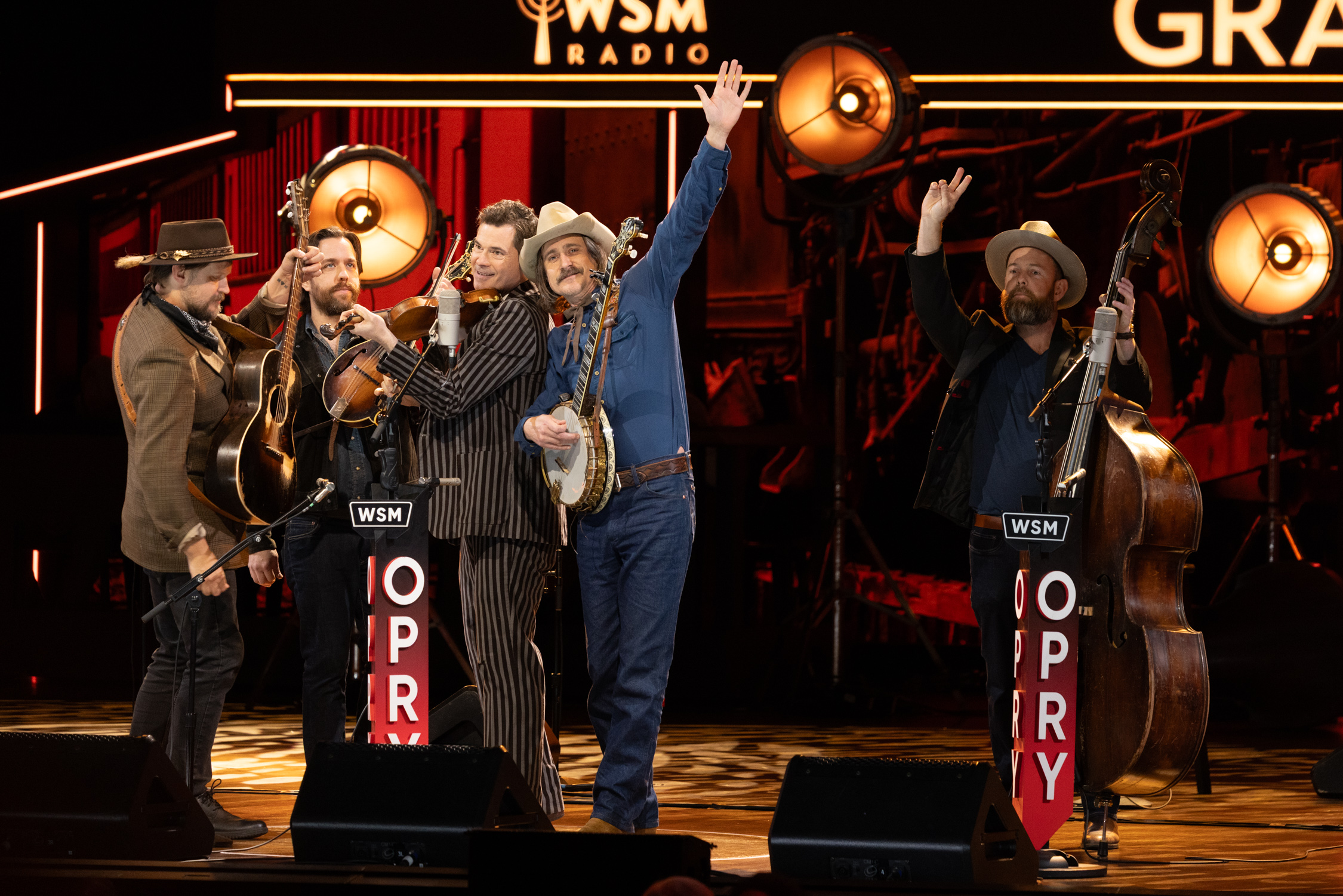
Old Crow Medicine Show perform during the Opry’s tribute to ‘O Brother, Where Art Thou?’
In addition, Chris Thomas King and Tim Blake Nelson also reprised their performances from the film, while the A-list house band was composed of Mike Compton on mandolin, Dennis Crouch on bass, Jerry Douglas on Dobro, Stuart Duncan on fiddle. And what O Brother tribute would be complete without Dan Tyminski delivering “I Am a Man of Constant Sorrow”?
As a bonus selection not included on the landmark collection, Krauss and the Fairfield Four opened the special evening with a lively rendition of “Every Time I Feel the Spirit,” which immediately immersed the audience in that same spirit. After Krauss stepped away, the Fairfield Four performed the soundtrack’s original opener, “Po’ Lazarus,” accompanied only by hand claps. Old Crow Medicine Show roused the crowd with “Big Rock Candy Mountain,” an enthusiastic choice that fit their high-energy demeanor. Bandleader Ketch Secor also co-hosted the event alongside Opry announcers Bill Cody and Mike Terry.
Dan Tyminski sings “I Am a Man of Constant Sorrow” with the evening’s house band.
Backed by the house band, Jarosz engaged the audience to sing along with a perennial favorite, “You Are My Sunshine,” and the sold-out Opry House was happy to oblige. Krauss returned with the Fisk Jubilee Singers for a sterling performance of “Down in the River to Pray,” where the audience sat almost perfectly still in reverent silence. Following the song, Krauss was presented with a commemorative scarf designed by the famed clothier Manuel; all Opry members are receiving the scarf as part of the Opry 100 celebration. The house band then shared an instrumental version of “A Man of Constant Sorrow,” which was a nice touch referencing the handful of variations of the song on the soundtrack.
That soundtrack practically came to life with Colin Linden and Chris Thomas King’s “Hard Time Killing Floor Blues” and The Whites’ “Keep on the Sunny Side.” Jarosz on mandocello and Molly Tuttle on guitar teamed with the house band for a wonderful take on “I’ll Fly Away.” Emmylou Harris and Alison Krauss then stood on either side of Tuttle for a trio rendering of “Nobody But the Baby.” (Gillian Welch, who sang with Harris and Krauss on the original album, was unable to participate in the show.)
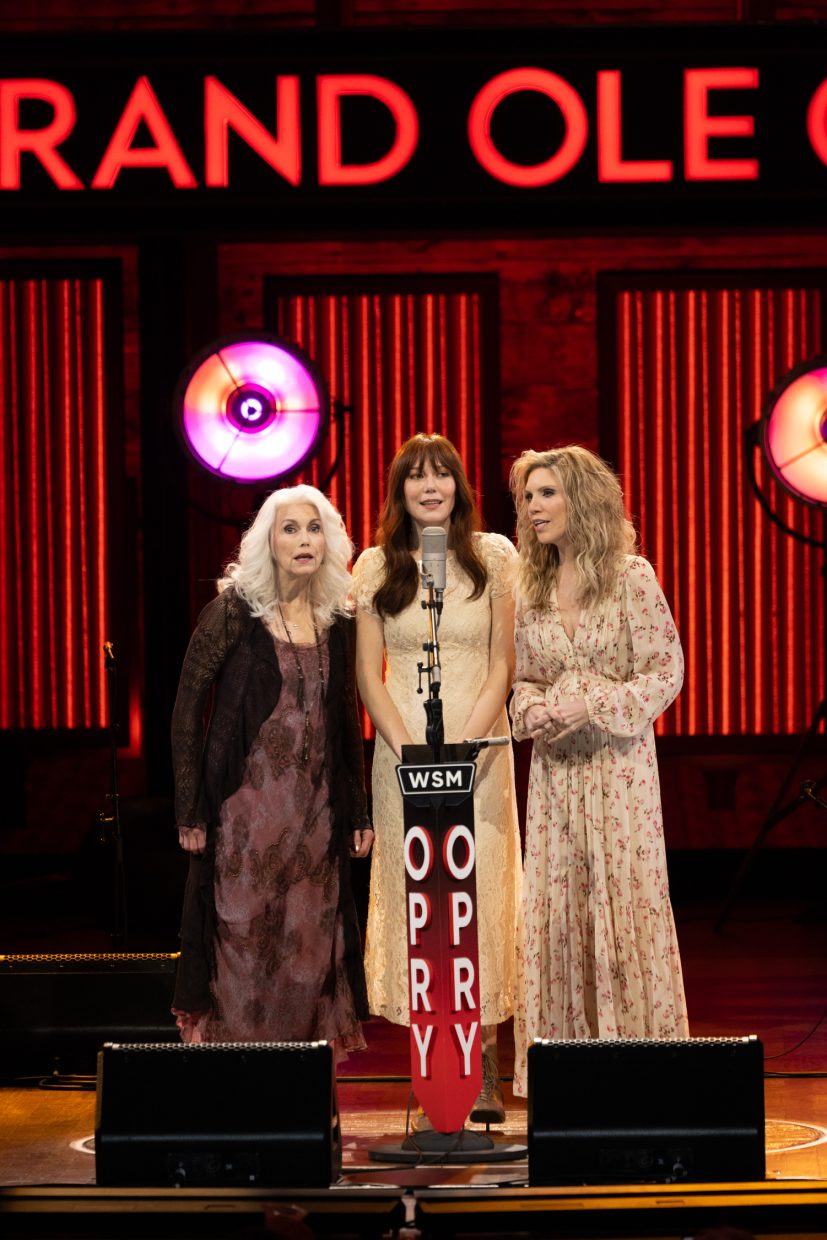
Emmylou Harris and Alison Krauss, both of whom appeared on the soundtrack, are joined by Molly Tuttle for an a capella rendition of “Nobody But the Baby.”
Folks, that’s only the first half!
After decades away from the spotlight, the Peasall Sisters returned to the stage to introduce “In the Highways,” the song they recorded as children; on this night, it was sung by an endearing kid quartet – and viral internet sensations – the Alaskan Sunnyside Sisters. Molly Tuttle returned for the emotional “I Am Weary (Let Me Rest),” which led into bluegrass phenomenon Billy Strings singing “Wild Bill Jones,” which appeared on the 2000 O Brother concert album, Down From the Mountain. Strings then welcomed Dan Tyminski for a duet of “O Death,” which was sung by the late Doctor Ralph Stanley on the soundtrack. (Incidentally, Stanley joined the Opry cast the same year the O Brother soundtrack was released on Lost Highway Records. The newly resurrected label co-presented the show with the album’s award-winning producer, T Bone Burnett.)
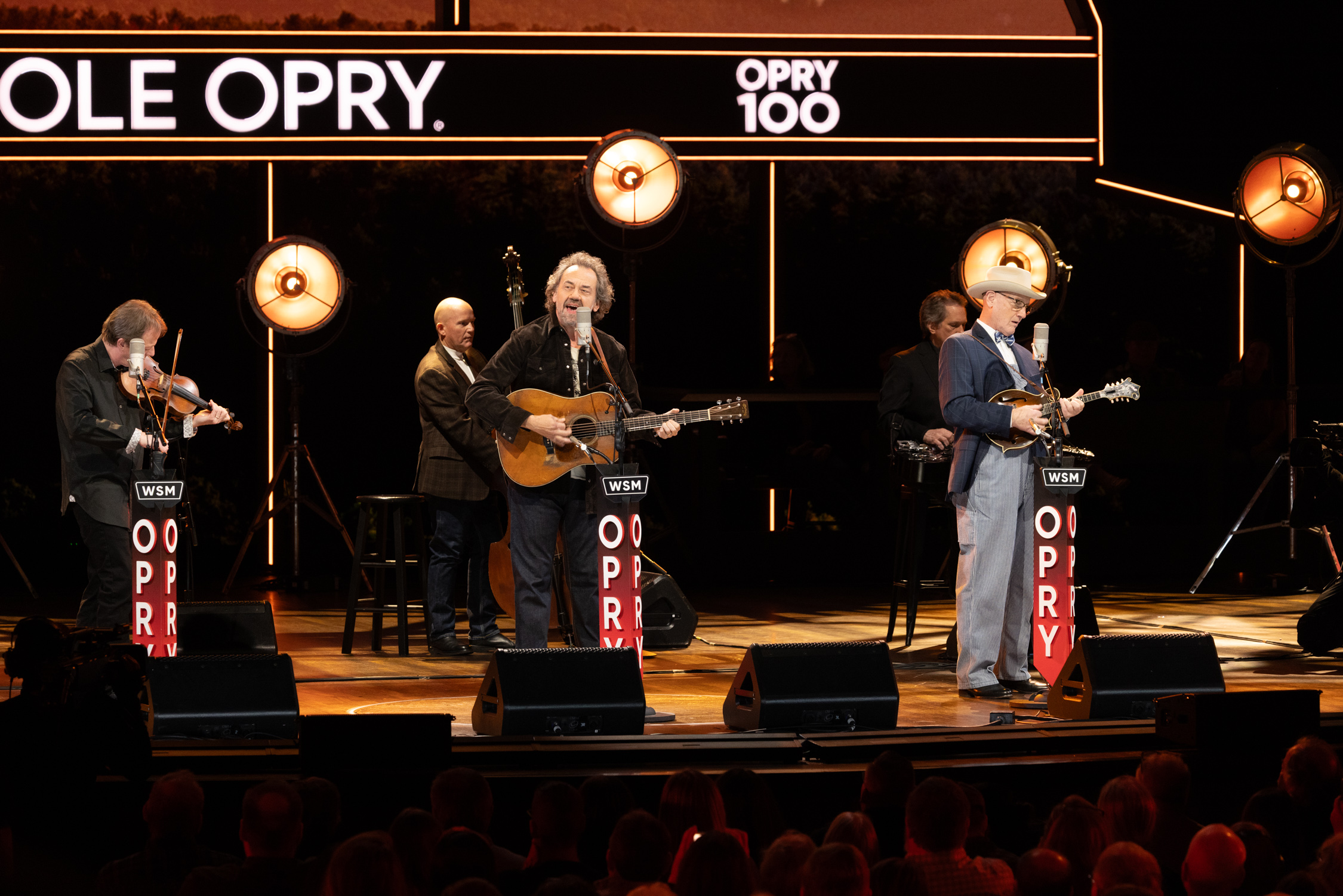
Billy Strings takes the stage to sing “Wild Bill Jones” with the house band.
The audience especially loved seeing and hearing one of the film’s stars, Tim Blake Nelson, revive “In the Jailhouse Now” on the Opry stage. Tyminski (who voiced George Clooney’s singing in the film) naturally brought the house down with “I Am a Man of Constant Sorrow,” then Old Crow Medicine Show offered the vivacious “Indian War Whoop,” recorded by John Hartford for the original project. The Fairfield Four also returned to the stage to sing “Lonesome Valley” just ahead of Del McCoury Band’s performance of “Get Down on Your Knees and Pray.” (That one’s not in the film, but it was a terrific addition.)
The Del McCoury Band sing “Get Down on Your Knees and Pray” before leading a sing along with the entire cast of performers.
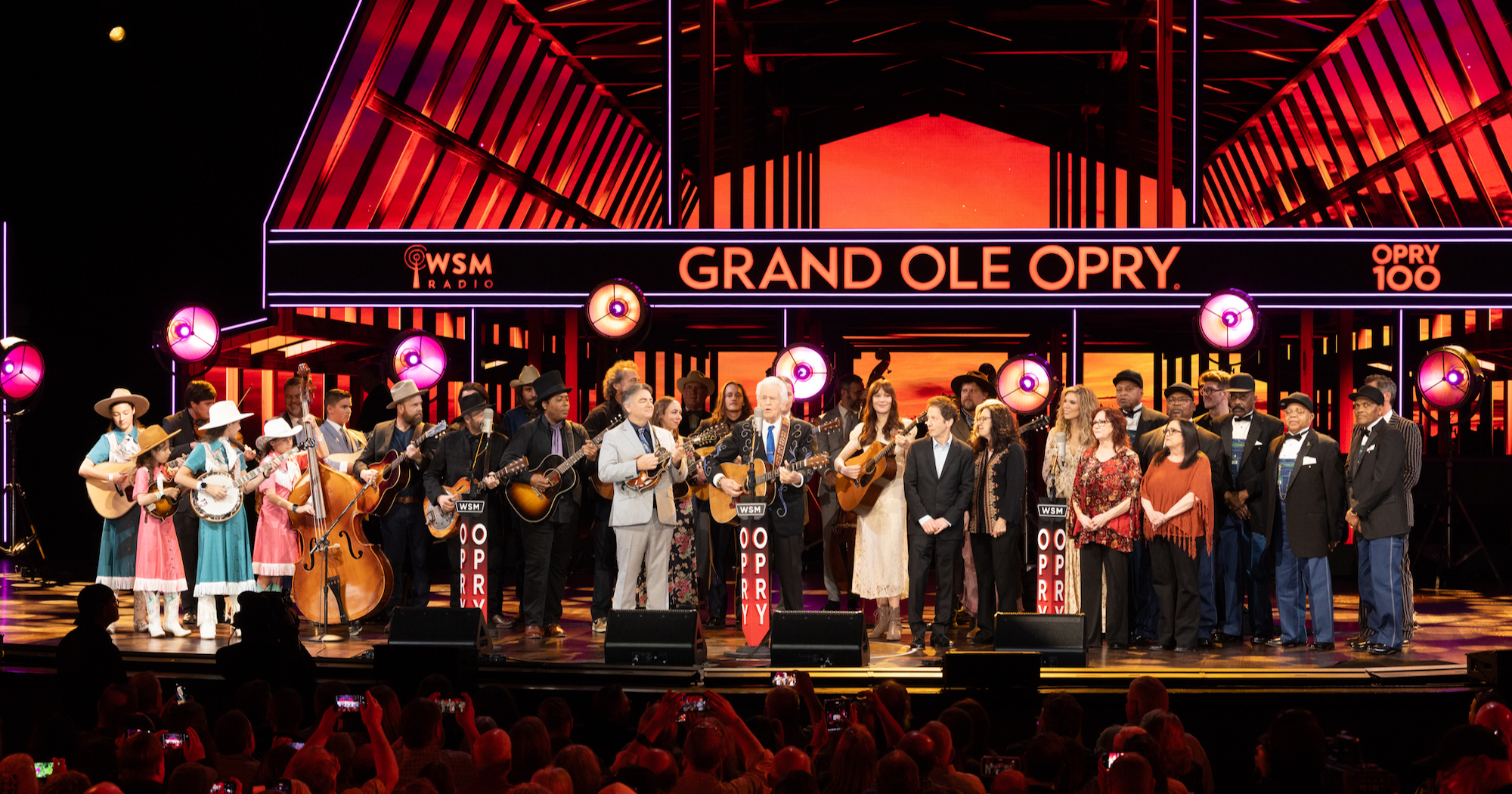
In his brief remarks, Burnett took a moment during a brief speech to acknowledge Denise Stiff, a visionary Nashville manager who recruited many of the musicians for the soundtrack back in the day. But of course, it wouldn’t be a tribute without everyone coming back on stage and singing at the end – in this case, “Angel Band” and a reprise of “I’ll Fly Away.”
Twenty-five years ago, the O Brother soundtrack brought old-time and bluegrass music into the national spotlight. This long-awaited encore underscored the staying power of this classic album.
Photo Credit: All photos by Chris Hollo for the Grand Ole Opry.
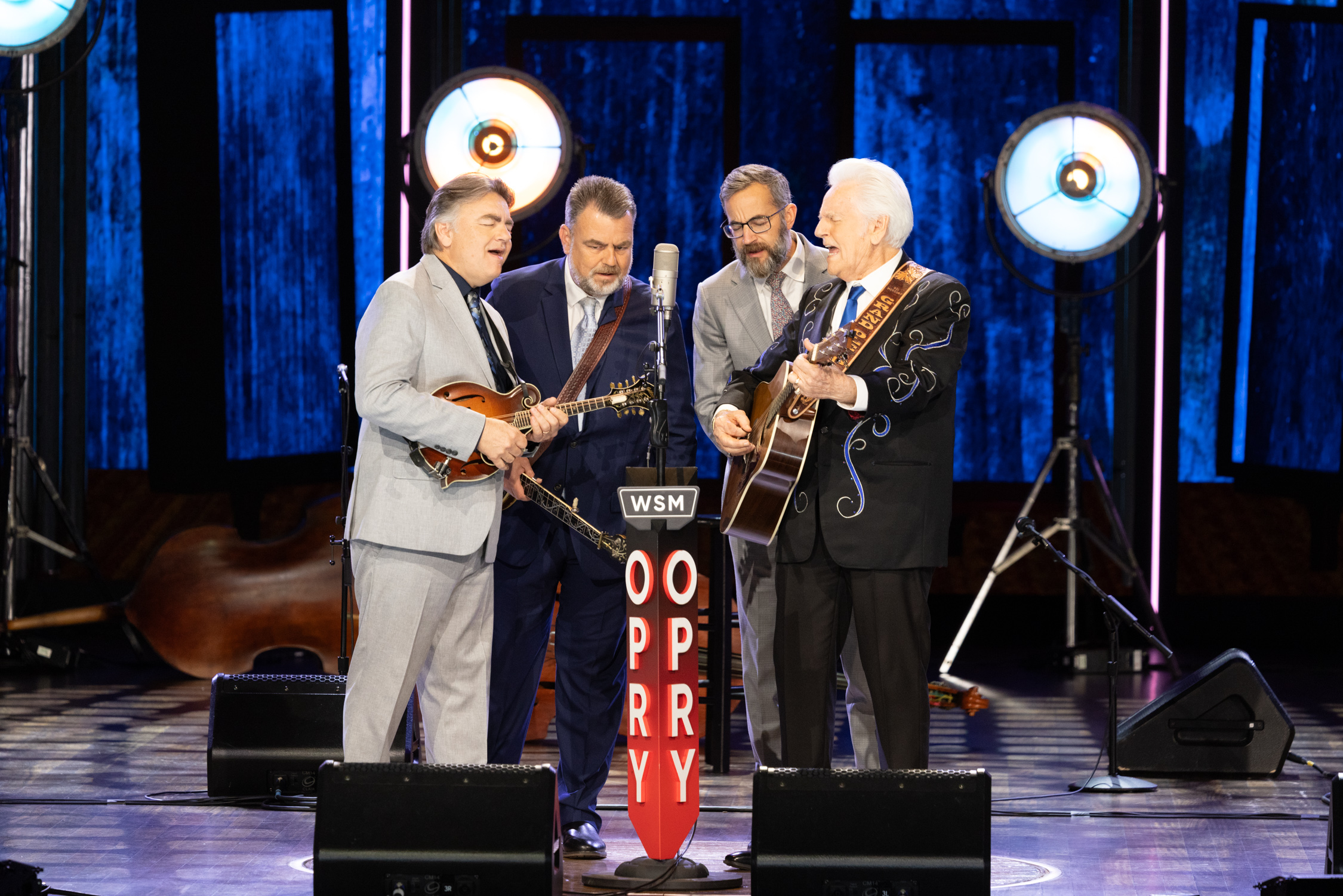
Lead Image: The entire cast of the Opry’s O Brother, Where Art Thou? tribute show take the stage to sing “Angel Band” and “I’ll Fly Away” to conclude the evening.
Happy New Year! We’re so excited to bring you our first collection of new music and videos for 2026. We’ve missed you over the past few weeks and, well, You Gotta Hear This…
Kicking us off, our old friend Joshua Britt returns with a new artist project, The Boy The Earth Sings To, and an official video for an original song, “Eyes Of God.” Falling on the continuum between gospel, sacred, and contemporary Christian roots music, the lush alt-folk track is built around the inspiration of a new mandola, tying the tone wood used to build the instrument to the forested visuals of the video. Meanwhile, Western North Carolina-based singer-songwriter Aaron Burdett unveils a new single, “Arthur’s Last Dance,” which pays tribute to folk dancer Arthur Grimes and his final performances at MerleFest before his retirement. It’s driving modern bluegrass appropriately perfect for flatfooting, clogging, and polishing those floorboards.
Then, from just up the mountains, Lonesome River Band also bring their first new single of 2026, “Bernadette,” written by Bob and Ginger Minner. Below, Bob offers his perspective on writing the tune, which he and his wife immediately imagined LRB recording, as soon as they had finished writing it. If you like crooked contemporary bluegrass that’s steeped in old-time mountain music – with a slightly dark, modal tinge – you’ll love this one.
Let’s continue up the mountains now, across Virginia and West Virginia to southeastern Ohio, where we’ll find the music of singer-songwriter Trey Hedrick and this new track, “Shoestring,” which features Tim O’Brien. It’s a testament to Hedrick’s grandpa, his relocation of the family to Ohio, and the way life, love, work, and place are passed down generation to generation.
Rounding out our collection this week, it’s a premiere we published elsewhere on the site this morning, as well. Celebrating his upcoming collaborative album, guitarist Bryan Sutton launches a hilarious and entertaining animated music video for “The Devil Went Down to Deep Gap” featuring Billy Strings, Del McCoury, and more. It’s a delightful reimagining of Charlie Daniels’ “The Devil Went Down to Georgia” that tells a fantastic version of Doc Watson’s origin story, pitting Doc’s style of picking against shredding metal electric guitars played by Sutton and Strings. You won’t want to miss this masterpiece of country, bluegrass, and flatpicking storytelling.
What a great way to kick off the year, right? There’s plenty to hear, love, and enjoy below. You Gotta Hear This!
The Boy The Earth Sings To, “Eyes of God”
Artist:The Boy The Earth Sings To Hometown: Franklin, Kentucky Song: “Eyes Of God” Album:The Quiet Voice Of God Release Date: November 7, 2025
In Their Words: “Years ago, my band played a show with Sierra Hull in Montana and that’s where she introduced me to mandolin builder Bruce Weber. Visiting his shop was unforgettable – an old schoolhouse where one room was filled with raw, uncarved slabs of wood that he would walk across, knocking on each piece, saying, ‘They all sound different, but some of them sing.’ It felt like he was listening for the mandolin already inside the wood, the way Michelangelo spoke about finding David inside the marble. Bruce built an octave mandolin for me that became the backbone of this album and while I was writing it I came across another Weber mandola. The first night I brought it home, I picked it up and wrote ‘Eyes Of God’ in one pass, as if the words and melody were already waiting inside that piece of wood. My favorite art has always felt more like discovery than invention.
“For the video I was inspired by time I spent in Bolzano, Italy, reading about the singing trees in the high altitude mountain forest – God placing the best wood high in the mountains, starved for air instead of down in the village. A reminder to me that making something great always requires adventure.” – Joshua Britt
Track Credits: Joshua Britt – Vocals, mandola, other instruments, songwriter Matt Menefee – Banjo Neilson Hubbard – Drums Colter Britt – Harmony vocals Sarah Drake – Harmony vocals
Video Credits: Filmed on location in the Colorado Rockies. Directed by Joshua Britt and Quincy Britt.
Aaron Burdett, “Arthur’s Last Dance”
Artist:Aaron Burdett Hometown: Saluda, North Carolina Song: “Arthur’s Last Dance” Release Date: January 9, 2026 Label: Organic Records
In Their Words: “I was first introduced to Arthur Grimes when I lived in Boone, NC, in the ’90s. He’d materialize now and then at many shows I was playing or attending over the years. So when I played a set at MerleFest 2024 with Steep Canyon Rangers and heard that Arthur was going to be there with Old Crow Medicine Show – to do his last dance before largely retiring – my interest was piqued. After our set, I was checking out other performances and, sure enough, got to see Arthur doing his thing on the Watson stage one last time. It was an event that deserved a few songwriting notes. Those notes I took that night are what turned into this song commemorating Arthur’s long career dancing with any and every band or performer who came through the High Country of NC over the past 50 years or so.” – Aaron Burdett
Track Credits: Aaron Burdett – Lead vocal, acoustic guitar Kristin Scott Benson – Banjo Carley Arrowood – Fiddle Tristan Scroggins – Mandolin Jon Weisberger – Upright bass Wendy Hickman – Harmony vocal Travis Book – Harmony vocal
Trey Hedrick, “Shoestring” (featuring Tim O’Brien)
Artist:Trey Hedrick Hometown: Wilkesville, Ohio Song: “Shoestring” featuring Tim O’Brien Album:Sing, Appalachia Release Date: January 7, 2026 (single); February 18, 2026 (album)
In Their Words: “‘Shoestring’ is a song about my Papaw, who was an incredible singer and multi-instrumentalist and the engine to the musical life of my immediate and extended family. Through him I came to the writers and songs that I still call on frequently in my own writings. Pap grew up in Parsons, West Virginia, and when work dried up or, more likely, after a need to move on after his brother Skip died in a mining accident, he moved north to southern Ohio. A move that anchored the geography of our family to southern Ohio after many generations in West Virginia and Kentucky. I didn’t try and likely couldn’t have written ‘Shoestring’ from any perspective other than reverent grandson, intentionally setting aside any precise detail. ‘Shoestring’ is about place, love, work, and life passed down, intentionally or not. I was honored to have Tim O’Brien sing and play fiddle on the track – Tim’s music has been an inspiration and has long meant a great deal to me.” – Trey Hedrick
Track Credits: Trey Hedrick – Lead vocals, acoustic guitar, songwriter Tim O’Brien – Lead and background vocals, fiddle Maya de Vitry – Background vocals John Mailander – Fiddle Ethan Ballinger – Mandolin Frank Evans – Banjo Phillipe Bronchtein – Pedal steel Jamie Dick – Drums Rhees Williams – Bass
Lonesome River Band, “Bernadette”
Artist:Lonesome River Band Hometown: Floyd, Virginia Song: “Bernadette” Release Date: January 9, 2026 Label: Mountain Home Music Company
In Their Words: “My wife Ginger and I write a lot of songs together and sometimes the ideas come from the strangest of places. ‘Bernadette’ came from when one of Ginger’s favorite authors, Shawn Inmon, who asked his fans to offer up unique women’s names to be used in his next novel. We were driving around and joking about names like Ethel, Maude, Calry, etc., and I just blurted out ‘How ’bout Bernadette?’ And out of nowhere I sang that name and first line. We got home and sat down and we wrote it in no time. It just fell out, so to speak. Plus, I always wanted to use the word ‘trifling’ in a song, so it seemed fitting for a woman like Bernadette in the story. We did a guitar and vocal demo of it and I sent it right to my buddy Jesse Smathers, because LRB was who we heard in our heads doing it as we wrote it. Thanks to LRB for cutting this one, we’re honored.” – Bob Minner, songwriter
Track Credits: Sammy Shelor – Banjo Jesse Smathers – Acoustic guitar, lead vocal, harmony vocal Mike Hartgrove – Fiddle Adam Miller – Mandolin Kameron Keller – Upright bass Rod Riley – Electric guitar Bob & Ginger Minner – Songwriters
Bryan Sutton, “Devil Went Down to Deep Gap” with Billy Strings
Artist:Bryan Sutton with Billy Strings Hometown: Nashville, Tennessee Song: “The Devil Went Down to Deep Gap” Album:From Roots to Branches Release Date: January 9, 2026 (single/video) Label: Mountain Home Music Company
In Their Words: “It was listening to Charlie Daniels’ original ‘The Devil Went Down to Georgia’ with my youngest daughter, Lily. She has very eclectic and broad musical tastes. I’ve loved sharing music with her and checking out what she has discovered. We found some other covers of the original and one that stuck with me was Jerry Reed’s interpretation, where he makes Johnny a guitarist instead of a fiddler. I have been working on a duets record for some time, collecting recordings here and there with my pals, and knew I wanted to do something different with Billy, as he and I have a whole record of duet playing.
“Billy and I also share a love for heavy metal. I was trying to think of a way he and I could do something connected to this duets project that would allow us to play acoustic and electric. It all kind of came together when I realized this song would allow for that. The Doc [Watson] origin story came about thinking how to make this not just a cover, but more personal and fun. It’s also another subtle tribute to Doc, who would oftentimes change or add lyrics to a song in order to make it fit for him. I fashioned the story, made a little demo, and sent it to Billy. He was into it and we were off.” – Bryan Sutton
Artist:Bryan Sutton with Billy Strings Hometown: Nashville, Tennessee Song: “The Devil Went Down to Deep Gap” Album:From Roots to Branches Release Date: January 9, 2026 (single/video) Label: Mountain Home Music Company
In Their Words: How do you see Doc’s playing influencing both yours and Billy’s?
“I think beyond the specific influence of Doc’s guitar playing that informs most every note Billy or I may play, I know that we both are students of Doc’s complete artistry. To say Doc is just the most influential flatpicker ever is limiting. He brought so much to the table in his honest and emotional singing, his song choices and writing, banjo and harmonica playing, and Travis-style fingerpicking. He was not comfortable being labeled or limited within a specific genre. His onstage persona was true to him. Without being a ‘showman,’ he was informational when the song needed it and willing to share whatever emotion he might be experiencing. It’s also important to note that Doc and Merle’s duo playing has been a huge part of the overall focus for things Billy and I have done together. I know for both Billy and I, Doc provides a lifetime of inspiration, influence, and learning.”
How do you pay tribute to that in this song and video?
“First and foremost, this is kind of a silly or fun thing, along with being a somewhat serious tribute to Doc Watson. I wanted to use the song to have fun with the guitar shredding and good versus evil battle, but also imagine an origin story of how Arthel Watson could have become the ‘Doc’ we all have loved. Maybe it’s a gospel song in the way that Doc, even and especially in his blindness, can ‘see’ through the Devil’s lies. Ultimately, Doc carries his triumphant message to the world, and influences us all with wonderful and heartfelt music.”
It sounds like you had this concept before talking with Billy about it. How did the concept and song come to be, from start to finish?
“It was listening to Charlie Daniels’ original ‘The Devil Went Down to Georgia’ with my youngest daughter, Lily. She has very eclectic and broad musical tastes. I’ve loved sharing music with her and checking out what she has discovered. We found some other covers of the original and one that stuck with me was Jerry Reed’s interpretation, where he makes Johnny a guitarist instead of a fiddler. I have been working on a duets record for some time, collecting recordings here and there with my pals, and knew I wanted to do something different with Billy, as he and I have a whole record of duet playing.
“Billy and I also share a love for heavy metal. I was trying to think of a way he and I could do something connected to this duets project that would allow us to play acoustic and electric. It all kind of came together when I realized this song would allow for that. The Doc origin story came about thinking how to make this not just a cover, but more personal and fun. It’s also another subtle tribute to Doc, who would oftentimes change or add lyrics to a song in order to make it fit for him. I fashioned the story, made a little demo, and sent it to Billy. He was into it and we were off.
“I feel fortunate that Del was into playing the Devil. I also am so happy to have T. Michael Coleman and Sam Bush on the track, who played many years on the road and studio with Doc. My pal Jerry Roe, who is Jerry Reed’s grandson, plays the drums, connecting to the Reed version that inspired me. Once I had the concept and demo for the song, I knew it had to be an animated video and discovered Pat Bradley of Springshoe Animation. It was wonderful working with him to take what had been in my head and be able to visualize it. Ultimately, all this came about a little piece at a time, and I’m so happy to share it with the world.” – Bryan Sutton
Track Credits: Bryan Sutton – Acoustic guitar, electric guitar, vocal Billy Strings – Acoustic guitar, electric guitar, vocal Del McCoury – Vocal T. Michael Coleman – Electric bass, harmony vocal Sam Bush – Mandolin Jerry Roe – Drums
Video Credits: Animation by Pat Bradley, Springshoe Animation.
In 1925, world leaders were signing the final treaties coming out of WWI; Congress authorized work on Mt. Rushmore as a national memorial; the Scopes Trial was held in Tennessee; and the first patent on radio transmission was only 28 years old.
And, in 1925, WSM first broadcast its barn dance – soon to become the Grand Ole Opry.
One hundred years later, the Grand Ole Opry is the world’s longest-running radio program. After a century that saw changes unparalleled in world history, audiences are still drawn to the Opry. Every week thousands make the pilgrimage to the Grand Ole Opry House in Nashville while others tune in around the world. The show continues to inspire new generations of performers to aspire to step “into the circle” on the Opry House stage.
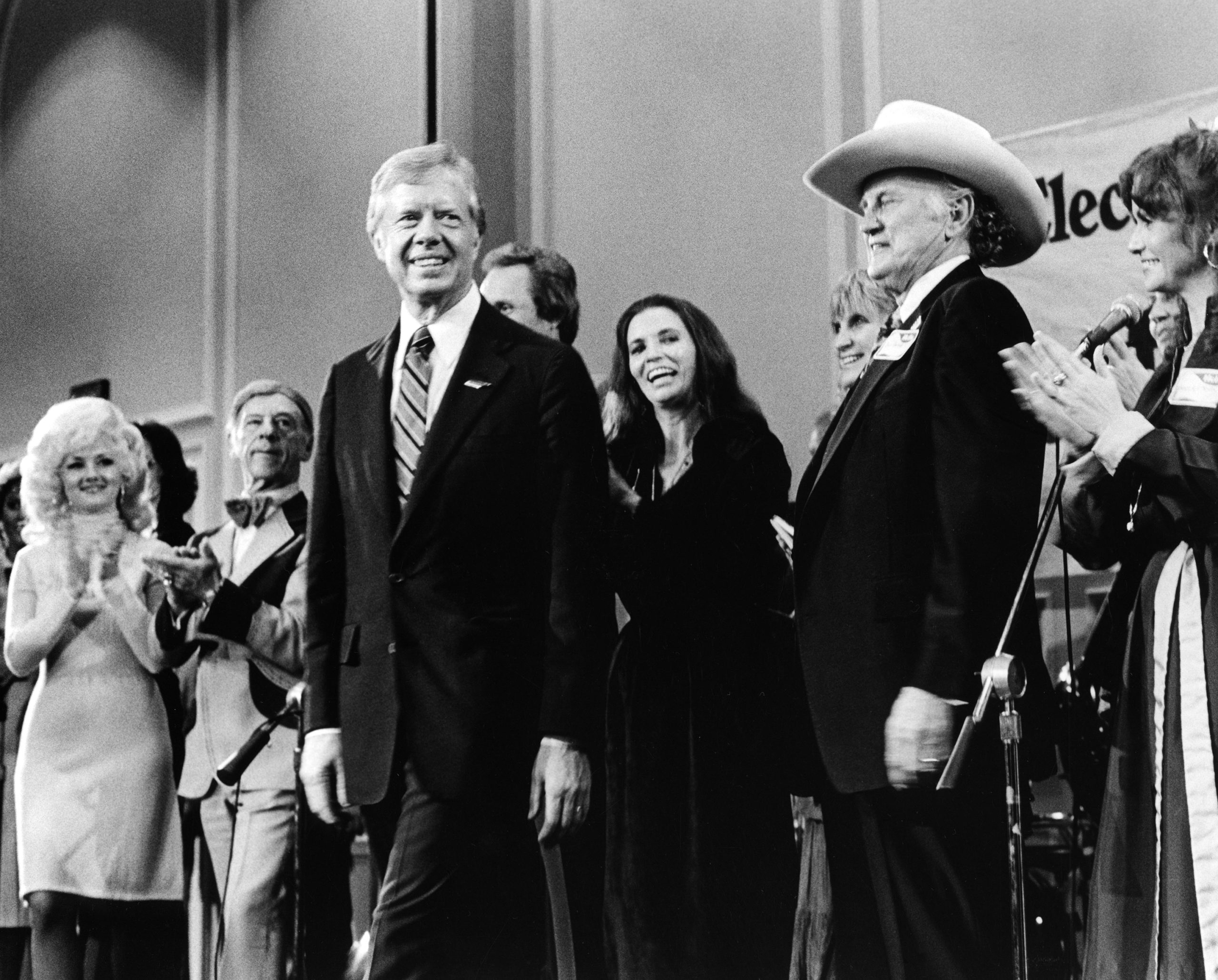
President Jimmy Carter on the Grand Ole Opry stage with Kelly Foxton, Hank Snow, Mel Tillis, June Carter Cash, Skeeter Davis, Bill Monroe, Jeannie C. Riley, and others on October 9, 1980. Photo courtesy of Ryman Hospitality Properties.
In The Beginning Was Insurance
In the 1920s, Edwin Craig was watching radio stations emerge across the nation – and seeing the money-making potential for sponsors and owners. He convinced Cornelius Craig, his father and founder of the National Life and Accident Insurance Company, that a radio station could sell a lot of insurance.
Soon, the fifth floor of the company’s downtown Nashville building held a radio studio. The call letters WSM stood for “We Shield Millions,” the company’s motto. A program that would become the lifeblood of country music started as a way to promote life insurance.
The hiring of George D. Hay away from Chicago’s WLS was the beginning of the WSM Barn Dance. The 30-year-old who called himself The Solemn Old Judge and started every show with a steamboat whistle would set the tone for much of the Opry’s 100 years – including its name.
Which all started with a clash of cultures.
Some upper-crust Nashville residents complained the only radio they could hear on weekends was string band programming from the dominant WSM station. In response, WSM began carrying the syndicated “Music Appreciation Hour.”
The Barn Dance slot followed the classical program, and Hay, not one to pass up a good line, said, “For the past hour, we have been listening to music largely from Grand Opera, but from now on, we will present ‘the Grand Ole Opry.”
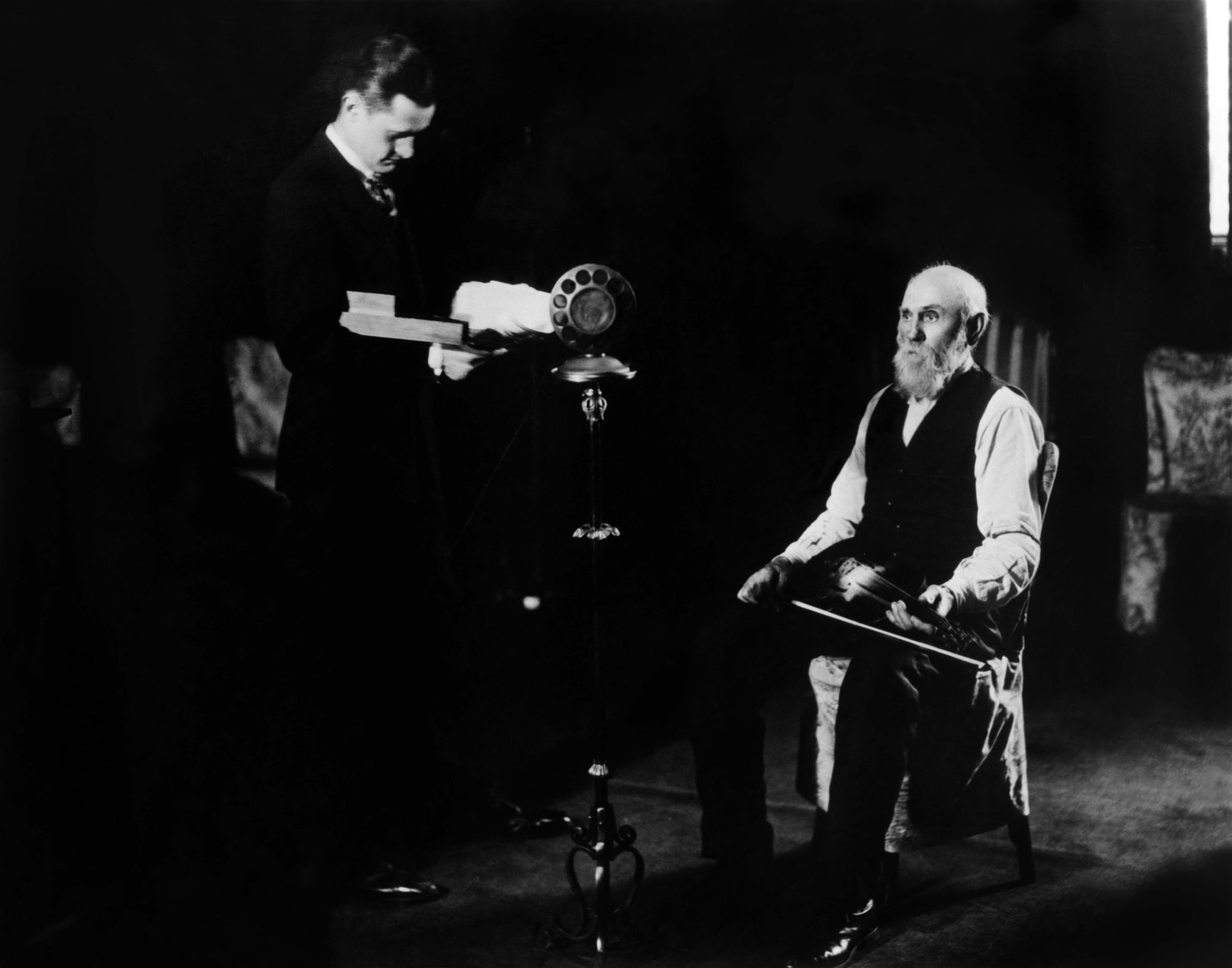
George D. Hay is pictured at microphone with a whistle and Uncle Jimmy Thompson is seated in this 1925 photograph from when the Grand Ole Opry was still the WSM Barn Dance. Photo courtesy of Ryman Hospitality Properties.
For years, the Shield Men – door-to-door National Life and Accident insurance salesmen carrying the company’s shield logo – introduced themselves as representing the Grand Ole Opry. They would even listen outside windows to see who was tuned in to the Opry – and who would be a likely customer.
The earliest WSM shows relied on local talent, running heavily toward fiddlers and string bands. But Hay would invite whoever he thought the audience would like.
DeFord Bailey, a Black musician grounded in both the blues and old-time string band music, became a regular, wowing audiences with his harmonica. Kitty Cora Cline, the first female soloist, performed on hammered dulcimer, and Fred Shriver played the accordion. Uncle Dave Macon on his banjo with Sid Harkreader on fiddle and guitar set the stage for the comedy that would remain central to the Opry’s success, with songs like, “Keep My Skillet Good and Greasy.”
A Beacon
As the recording industry grew, the variety of musicians available to the Opry grew, as well. The show began featuring brother duets, cowboy music, Western swing and solo crooners. Bill Monroe & the Blue Grass Boys were featured stars for decades.
Opry singers expressed the joys of new romance, the happiness of Sunday dinner on the lawn, the sorrow of lost love, and the loneliness of leaving home. Audiences across America listened – and related. The Opry became a focus of family life.
Dolly Parton, like many rural listeners, grew up without electricity. Her family faithfully listened to the Opry on a battery-powered radio. Waylon Jennings’ dad would hook their radio to the car battery. Jeannie Seely’s family would pile in the car and drive up a hill until they could get the signal. Opry history is filled with stories of musicians who listened as children – and dreamed of growing up to perform, like their idols, on the iconic stage.
Opry member Dierks Bentley, who gracefully moves between country and bluegrass, told BGS, “Being invited to join at all is the biggest honor – especially for me, personally. I grew up listening to all the Opry greats on the radio with my dad, so becoming a member is like having the ultimate backstage pass to see the best musicians in the world. And to be invited by Marty Stuart … hands down, it was one of the coolest nights of my life.”
Dan Rogers, the Opry’s senior vice president and executive producer, said the Opry has always been a place to celebrate the good times and be uplifted during the tough times. “Think about,” he said, “the folks who tuned in on Saturday nights during World War II. That was their only source of entertainment throughout the week.” Minnie Pearl, with her signature “How-dee,” and Roy Acuff gave them respite from war news.
On the first show after the 9-11 attacks in 2001, Rogers said, “Our background singers sang an a cappella version of ‘God Bless America.’ And one by one, the people in the audience stood and sang along. And I remember thinking, I bet everybody tuned in across the country is singing along to ‘God Bless America.’”
The Opry’s response to the COVID-19 crisis created desperately needed connection during a frightening time of isolation.
Just a week after deciding that live audience shows weren’t safe, Opry staff arranged a pared-down streaming production with no audience and a skeleton crew. Longtime cast members Bill Anderson, Jeannie Seely and Connie Smith held down the first night alongside Mandy Barnett, Michael Cleveland & Flamekeeper, and Sam Williams.
For the second weekend of restrictions, veterans Vince Gill, Marty Stuart, and Brad Paisley sat on stools spread out across the stage and pulled off what Rogers called “a beautiful, beautiful show.”
Watching from his office, Rogers started reading comments from grateful listeners. For months, people marked their calendars to tune in. They wrote, “I’m in Europe. I set my alarm. It’s 2 a.m. here, but I wanted to experience this with a community.”
Marty Stuart, Vince Gill, and Brad Paisley perform for an empty Grand Ole Opry House during the COVID-19 lockdowns in 2020. Photo by Chris Hollo, courtesy of Ryman Hospitality Properties.
Kathy Mattea, the newest Opry inductee, feels those connections whenever she performs there.
People may have sung along to her hit “18 Wheels and a Dozen Roses” in their car or in the shower, but at the Opry, she says to BGS, “Here’s your chance to sit with an audience and sing this song that everybody knows. Nobody knows who the person next to them voted for and it doesn’t matter at that moment.”
“The Ellis Island of Country Music”
In the early days of radio, what was called hillbilly music was as limitless as the range of a 50,000 watt radio station. And the Opry remains dedicated to maintaining those wide open spaces.
Garth Brooks and Trisha Yearwood, in their forward to the book 100 Years of the Grand Ole Opry, refer to the show as the “Ellis Island of Country Music – a place where all are welcome.”
Contemporary country often has been accused of being homogenous and limited. But despite the factors that have controlled commercial country, the Opry maintains its open-arms attitude. Rogers said, “The two core tenets of an Opry show are celebrating the past, present, and future of country music, and also showcasing multiple genres under the country music umbrella.”
In any show, he said, “You might have something that’s on the top 20 of the country charts today. And you’ll have country classics. You might have a contemporary Christian song, Americana string music, or even something from outside the genre by somebody who just happens to be a country music fan or was influenced by country music.”
In 1974, the R&B-oriented Pointer Sisters included an original country song, “Fairytale,” on their second album. The cross-over hit earned them an invitation to the Opry stage, where they became the first Black group to perform.
Ringo Starr appeared for the first time in 2025 and James Taylor’s debut on November 11 will be remembered as a big part of the 100th anniversary celebration.
And, Rogers said, “Because we can do it, it’s fun to take a chance on a new artist.”
Before his first Opry appearance in July 2022, Zach Top had no hits to his name. But Rogers remembered the programming team saying, “You don’t see an artist like that every day. It sure feels to us like our audience would absolutely eat that guy up!” Today, Top’s music is everywhere.
Bluegrass has been a staple since before it had a name and it has never lost its place on the stage. Bentley and Del McCoury played “Roll on Buddy, Roll On” when the Grand Ole Opry House first reopened after the 2010 flood closed its doors for months.
Charlie Mattos is a 10-year veteran Opry announcer and longtime co-host and producer of WSM’s morning show. He said that on any given night, a portion of the Opry House audience “may truly have never seen a bluegrass band play.”
“And when Del McCoury and the boys finish with an incredible instrumental,” Mattos continued, “or Sister Sadie blisters the stage … the enthusiasm that comes out of that crowd, the immediate standing ovation for the insane musicianship that they have just witnessed …” Mattos said, “it blows their minds.”
Mattea said, “Bluegrass is front porch jazz – the virtuoso playing and the vocals and the harmonies and the trading off of licks. That’s how I fell in love with bluegrass.” And the Opry exposes millions to that brilliance.
A Good-Natured Riot
The Opry show is a complex set of acts and sets requiring precision planning, flexibility, and good nature on the part of the announcers – and commitment on the part of the performers. Rehearsals are brief or non-existent. Timing is everything.
Borrowing a phrase from George D. Hay, the Opry is still sometimes called a “good-natured riot.”
Mattos said, “When you come to see the show live, you see it all. The set changes. The artists leaving as the announcer sends them off. You can see the stage crew out there and usually in 90 seconds they can completely swap things around.”
But while reading a commercial during set changes, Mattos may notice the stage manager giving the “stretch” signal. He might have to keep talking for as long as four minutes – a millennium in radio time.
Sometimes the commercials themselves become the entertainment.
The first time Glad Wags sponsored an Opry segment, Chuck Morgan was announcing. While he stood off-stage reading the dog food commercial, house bassist Bill Linneman came up behind him and started barking. “By my last year there, there were like 20 people behind me going at it,” Morgan said. (The consensus is that Connie Smith does a great chihuahua imitation.)
A Family
Jeannie Seely – who racked up nearly 5,400 performances on the Grand Ole Opry before her passing in August 2025 – remembered it was more than the music that fueled her desire to join the Opry: “That’s hearing these people, like Mr. Acuff and Minnie [Pearl] and Jimmy Dickens and all of them, coming together every week,” she says in 100 Years of the Grand Ole Opry. “They always sounded like they were so glad to be together. They picked on each other and joked, and I thought, that’s just like a family.”
And they were family. When the plane Jim Reeves was aboard crashed in a wooded Nashville suburb, Marty Robbins and Ernest Tubb joined the search party, as did the elegant Nashville socialite Sarah Ophelia Colley Cannon – known as Minnie Pearl.
Opry star Jean Shepard was expecting her second child with husband Harold “Hawkshaw” Hawkins when Hawkins died in the plane crash that also killed Patsy Cline and Cowboy Copas. After months feeling adrift, as Shepard was quoted in the 100 Years book, “I looked down my driveway one day and here come two big black limousines full of the so-called ‘higher-ups’ from the Grand Ole Opry. They said, ‘We want you to come back to the Grand Ole Opry.’ And it really meant a lot to me.”
The family feeling is no accident. In earlier years, Opry members had to perform a specified number of Saturday nights a year. While there’s no set number today, Rogers said they look for a sense of commitment in new members. “It truly is about that relationship,” he said.
Rogers quoted Mattea, upon her invitation to become a member, saying, “These people treat you like family, no matter what.”
One of Mattea’s favorite Opry memories involves a bass player who toured with her. “He was sitting on a stool, playing and singing some old Western swing chestnut, and suddenly Riders in the Sky leaned into the dressing room in full regalia and started singing harmony.
“He was gobsmacked. He felt it was the highlight of his life,” she said.
Bluegrass performer Kody Norris’ music is influenced heavily by first- and second-generation bluegrass. But the band’s preference for flashy suits dates back to a family-friendly welcome Norris received 25 years ago.
His parents took nine-year-old Kody backstage at the Opry, “and I met Bill Anderson. And he had on a red rhinestone suit. That’s the first one I ever saw up close, where I could touch it.”
Later that day, upon meeting his equally rhinestone-clad hero, Porter Wagoner, young Kody got so excited he spit out his chewing gum. Wagoner graciously grabbed two Opry-logoed napkins, one of which the little boy used for his gum. The other one the grown Norris still keeps in perfect condition.
The Circle is Unbroken
In 1974, the Opry left its revered home of decades, the Ryman Auditorium, to move to the deliciously air-conditioned 4,400-seat Grand Ole Opry House.
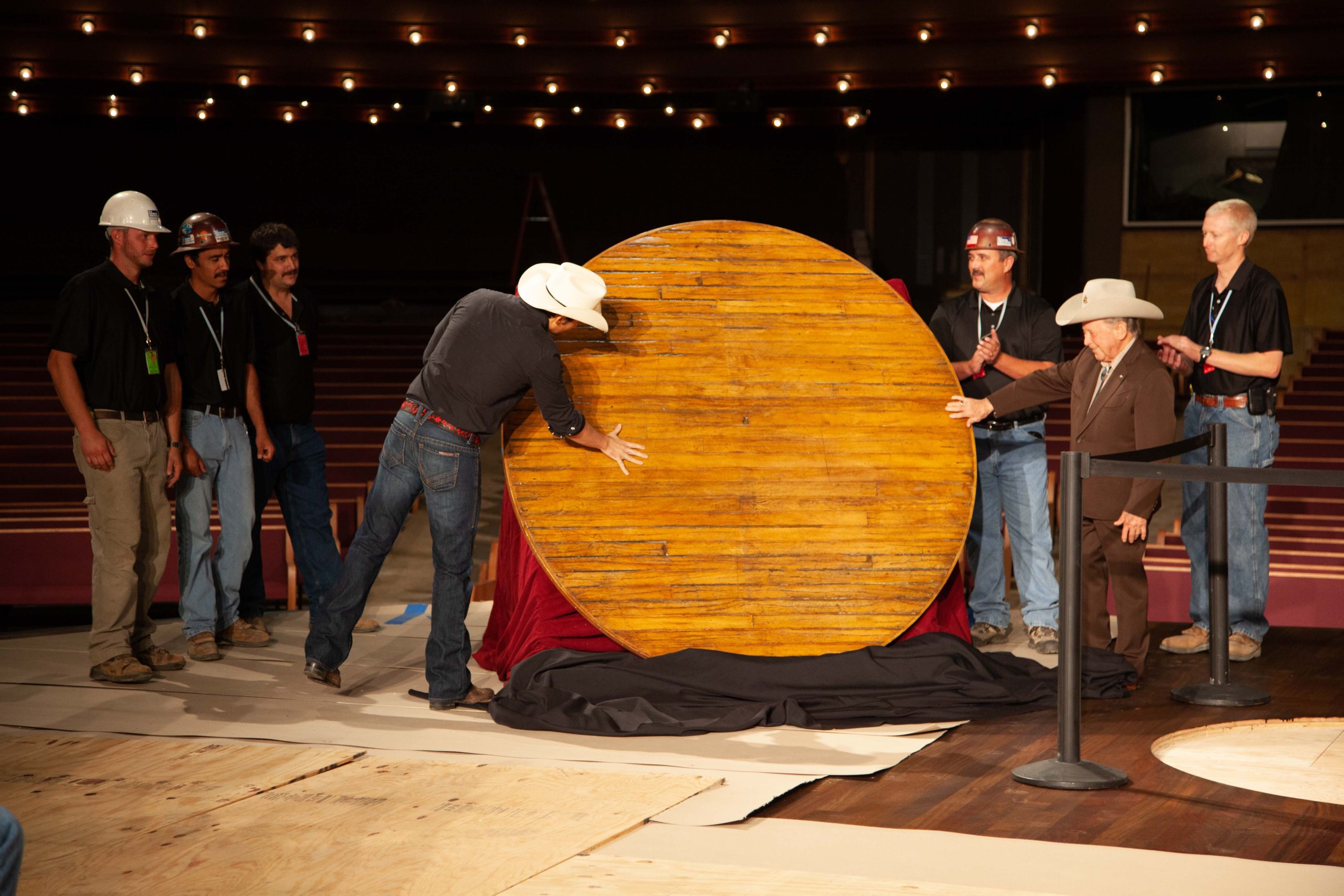
To honor its longtime home, the Opry crew cut a circle out of the Ryman stage and inset it in the new Opry House stage. The circle symbolizes the Opry’s continuity, respect for the past, and optimism for the future.
Mattea experienced that sense of a completed circle on the day she became an Opry member.
“Suzy [Bogguss] was there. We’ve toured together and sung on each other’s records. She’s my closest artist friend, and she was the only one at the ceremony who was not a member. And I thought how generous it was of her to be there.
“So, while I was overflowing with celebration, to get to invite my friend to the party publicly in the name of the Opry was the sweetest gift. It was a moment I’ll never forget, and I’m going to be there for her induction, too.” Bogguss will officially be inducted as an Opry member in early 2026.
Braid Paisley and Little Jimmy Dickens return the Circle to the Opry stage after the 2010 flood. Photo courtesy of Ryman Hospitality Properties.
Join The Celebration
There’s nothing low-key about the Grand Ole Opry – so in the classic Opry spirit, fans have had plenty of opportunity to celebrate the centennial all year long.
Earlier this year, NBC broadcast a three-hour anniversary special, with dozens of stars ranging from Reba McEntire to Jelly Roll to The War and Treaty. The Opry also took the show to London’s Royal Albert Hall for the very first time. You can stream clips of these and other Opry events on YouTube and social media.
With the Virgin Music Group, the Opry has produced the album Opry 100, Country’s Greatest Songs (released November 7). Among the unforgettable recordings are Vince Gill singing his heart-rending “Go Rest High on That Mountain,” Dolly Parton singing “I Will Always Love You,” and Ashley McBryde covering the classic “Your Cheatin’ Heart.” You can order the album from the Opry site.
Craig Shelburne, Brenda Colladay, and Opry members and employees collaborated on 100 Years of the Grand Ole Opry, a book filled with anecdotes and photos that vividly illustrate the Opry’s remarkable history. And to teach your children well, there’s also a new childrens’ picture book written by Emily Frans and illustrated by Susanna Chapman. Find them in your local bookstore.
And, on November 28, 2025, the official 100th anniversary of the Grand Ole Opry we all hold dear, the Opry is celebrating with two huge birthday party shows featuring country stars and Opry members like Vince Gill, Ricky Skaggs, Trace Adkins, Dailey & Vincent, Bill Anderson, Jamey Johnson, Marty Stuart, and many, many more. Tickets are available here.
Of course, the celebrations will continue in 2026.
“The Opry is the core and soul of country music,” Bentley said. “It’s a place where the past, present and future of our genre all come together. There isn’t anywhere else like it.”
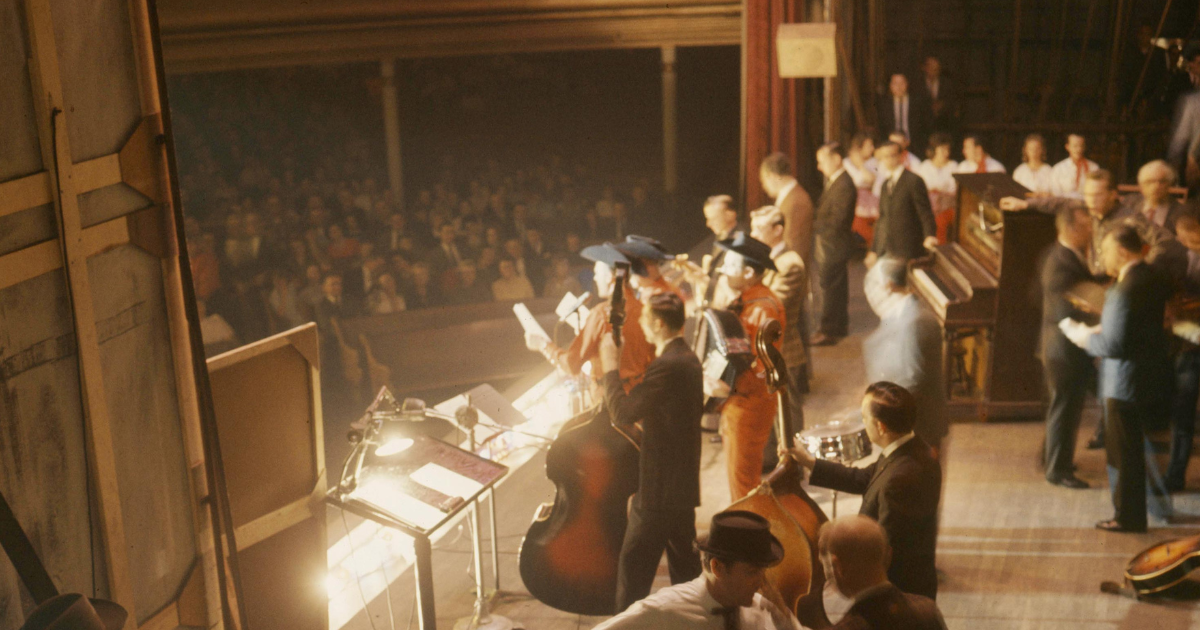
All photos courtesy of Ryman Hospitality Properties, credits and attributions as marked. Lead image: Bill Monroe & the Blue Grass Boys and the Opry Square Dancers take the Opry stage at the Ryman Auditorium in the 1960s.
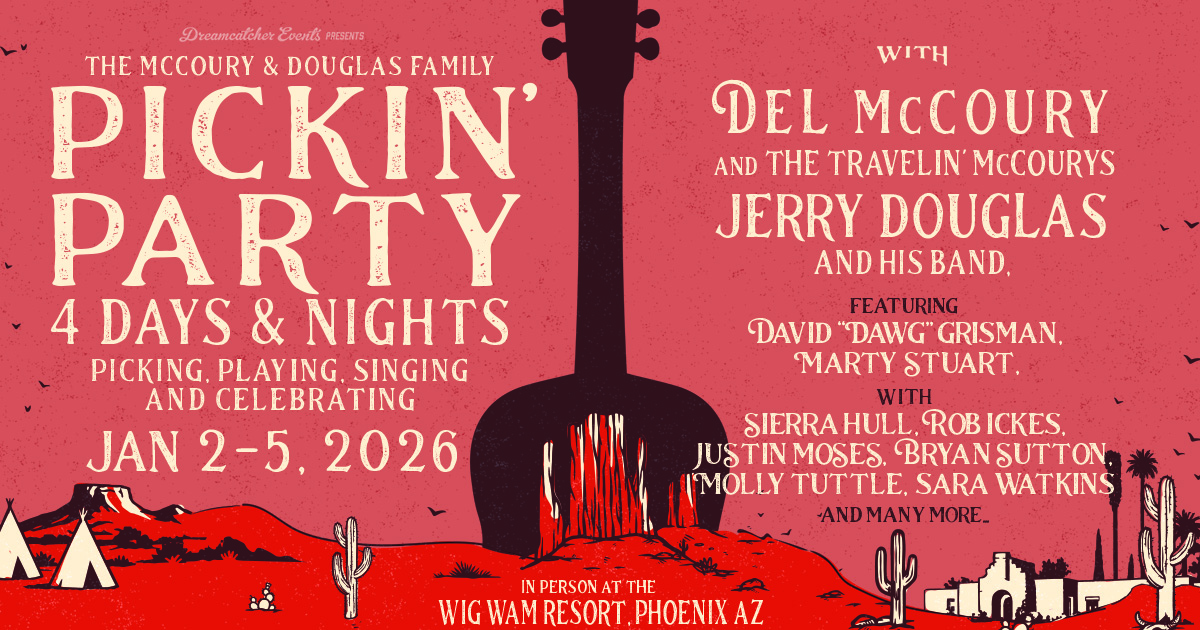
Have you ever dreamed of hanging out, jamming, and learning from your all-time favorite bluegrass artists? Then you don’t want to miss your opportunity to be part of the best pickin’ party ever, The McCoury & Douglas Family Pickin’ Party happening January 2-5, 2026 in Phoenix, Arizona.
We’ve assembled an exclusive playlist (listen below) featuring all of the amazing artists who will be on site for four days of masterclasses, performances, and workshops, including Del, Ronnie, and Rob McCoury, Jerry Douglas, Bryan Sutton, David “Dawg” Grisman, Sara Watkins, Molly Tuttle, Marty Stuart, Sierra Hull, and more.
Limited spots for this one-of-a-kind experience remain. And if you’re already registered, start getting excited by jumping into our BGS playlist. Registration and more information can be found at DelMcCouryPickinParty.com.
This content brought to you in partnership with the McCoury & Douglas Family Pickin’ Party and Dreamcatcher Events.
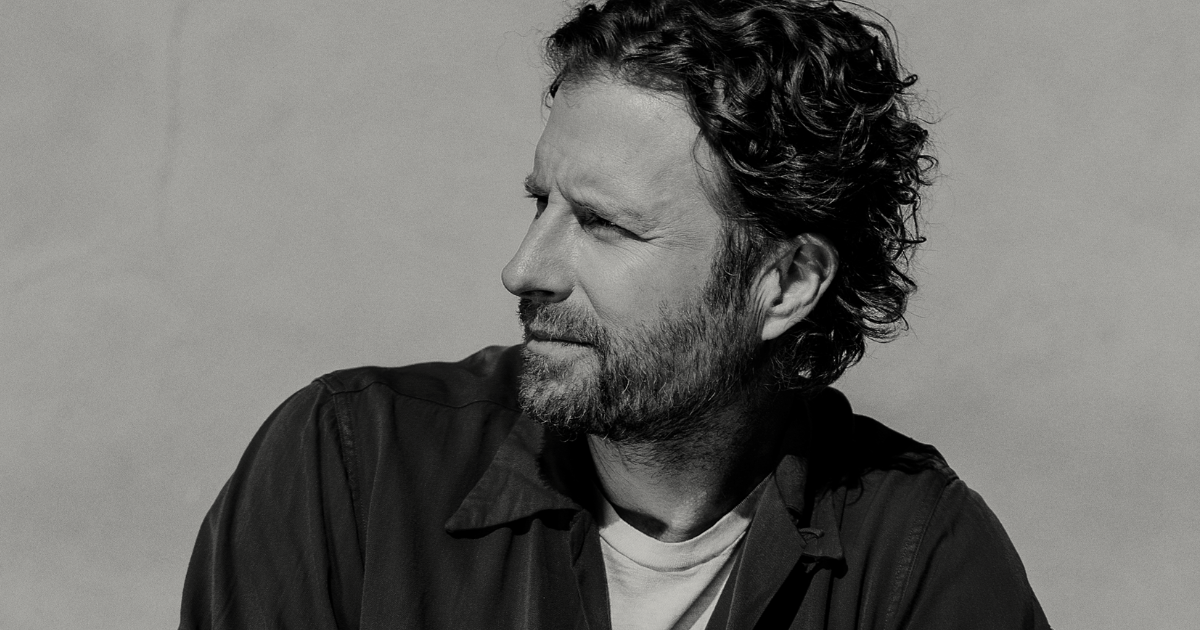
In 1994, a not yet 20-year-old Dierks Bentley threw all caution to the wind when he packed up his dorm room at the University of Vermont with hopes to never return. Bentley’s relocation would not only forever change the course of his life – it would go on to catalyze his tremendous impact on roots music at large.
After a trip with his father to Nashville made quite the impression, Bentley decided to complete his college degree at Vanderbilt, dedicating his studies to English (the major most proximal to songwriting). After graduating, Bentley continued to foster both his musical education and career; his day job entailed archiving old country performances at The Nashville Network (in fact, his diligent field work even got him banned temporarily from the Grand Ole Opry), while his evenings were filled with bar gigs and songwriting sessions. After five years of grunt work, 2003 saw Bentley release a self-titled album with Capitol Records. His first single, “What Was I Thinkin’,” made waves on the country charts. Since then, Bentley has been responsible for the release of 20 No. 1 country singles and 10 additional studio albums, the latest of which, Broken Branches, arrived in June.
While Bentley’s career has seen major commercial country success, his deep respect for expansion and immersion has made him a beloved fixture within bluegrass, as well.
Of his instrumental move to Nashville, Bentley has shared, “I moved to Nashville in 1994 – I was trying to find that seed of truth, that authenticity, that thing ‘country music’ that I had in my head. And I got here and it was definitely different than I expected it to be. It’s big business, a lot of money.
“Luckily, for me, I found a little bar called the Station Inn where bluegrass music existed – and I found what I was looking for. Just the sound of a five-piece bluegrass band blew my mind. And they’re not trying to take meetings all the time and meet producers, and get their foot in the door. It’s funny, I moved to Nashville looking for country music, but I found bluegrass.”
Whether it’s his proclivity for cross-genre conversation, songwriting prowess, or patinaed tenor delivery, Dierks has proved himself a mainstay favorite for country, Americana, and bluegrass fans – here at Good Country and BGS, and beyond. In honor of his recent album release and his huge Broken Branches tour with Zach Top and the Band Loula concluding this month, we present you with our Dierkscography, a non-comprehensive compilation of more than 15 songs meant to show off some of our favorite Dierks gems from across genres sampled from the many years of his remarkable career.
“Never You” featuring Miranda Lambert, Broken Branches (2025)
Dierks’s new album, Broken Branches, arrived fresh off the press with a slew of impressive collaborators, from Riley Green to Stephen Wilson Jr. Dierks fondly calls the record a “special” display of “making music in the studio with our buddies.” Country giant and longtime collaborator Miranda Lambert joins Bentley on this banjo-driven track, with the pair’s velvety duet vocals imbuing tenderness and warmth into one of the album’s only love songs.
“High Note” featuring Billy Strings, Gravel & Gold (2023)
This rip-roaring tune off of Bentley’s tenth studio album features a whole handful of bluegrass greats. Not only does Billy’s high tenor soar above Dierks gravelly tones during choruses, his famous flatpicking joins the likes of Sam Bush, Bryan Sutton, and Jerry Douglas for a superjam ending.
Of the collaboration, Dierks recalls, “Bryan Sutton first tipped me off to Billy Strings about seven years ago, mentioning that the future of bluegrass was in good hands. I was totally blown away the first time I saw him. I’ve cut songs like these since my first record, and I knew I wanted to have him on this one, I’m such a huge fan. It was a lot of fun to have him, Jerry, Sam, and Bryan all passing licks around – having them all on this record means a lot to me personally.”
“American Girl” (2024)
Who doesn’t love an Americana “American Girl”? Bentley delivers this country-fied Tom Petty classic alongside some BGS favorites, including Chris Eldridge on guitar and Noam Pikelny on banjo. Dierks reprised the hit single joined by Bronwyn Keith-Hynes, Sierra Hull, and Molly Tuttle on stage at the 2024 CMA Awards, bringing down the house.
“For As Long As I Can Remember,” Broken Branches (2025)
The country canon has seen its fair share of heartache, murder, trains, and drinking. Also on his latest release, “For As Long As I Can Remember” shirks these motifs in favor of something a little more wholesome – a warm and adoring ballad dedicated to the strength of enduring familial bond. An ode to his brother and father, Dierks reminds that respect and love can be country, too.
“Train Travelin’,” Dierks Bentley (2003)
With many of his nascent Nashville days edified by nights at the Station Inn and in the surrounding bluegrass scene, iconic bluegrass family the McCourys quickly became repeat collaborators for Dierks. Their features pepper many of his earlier albums, dating all the way back to his debut self-titled release in 2003. “Train Travelin’” would become the first of many, with other gems such as Good Man Like Me (Modern Day Drifter, 2005) and Last Call featuring Ronnie McCoury (Feel That Fire, 2009) dotting the road to Bentley’s eventual bluegrass-centric album, Up On The Ridge.
“Up On The Ridge,” Up On The Ridge (2010)
The titular track off of Bentley’s bluegrass-inspired album is thrumming with energy, both quickly-paced and haunting with its descending melodic hook. Up On The Ridge was Bentley’s fifth studio album, featuring a star-studded list of bluegrass collaborators including Alison Krauss, Punch Brothers, Chris Stapleton, Tim O’Brien, Sam Bush, and beyond. Del McCoury even joins forces with Bentley and Punch Brothers to deliver a deliciously grassified cover of U2’s “Pride (in the Name of Love)” further evidencing the album as a culmination of both tradition and innovation.
“Freeborn Man,” (Live, 2025)
Another of our favorite timeless covers, Dierks has been adorning his Broken Branches Tour this summer with his vigorous take on “Freeborn Man.” This rendition includes a fiery feature by Zach Top, nearly toppling the stage with talent.
“Hoedown for My Lowdown Rowdy Ways” featuring Dierks Bentley, Lowdown Hoedown (Jason Carter, 2022)
With Jason Carter fiddling his heart out on Dierks’ records since 2003, it’s of course a polite roots custom for Dierks to return the favor. Released as part of Carter’s second solo album, Lowdown Hoedown, “Hoedown for My Lowdown Rowdy Ways” has Dierks singing harmony and strumming away on the bluesy breakdown. Lowdown Hoedown also features a tender Jamie Hartford number, “Good Things Happen,” that Dierks Bentley covered on his 2005 album Modern Day Drifter, yet another frame of conversation between the two artists.
“Prodigal Son’s Prayer” featuring The Grascals, Long Trip Alone (2006)
This acoustic tune features the bluegrass sensibilities of the Grascals, a long-running group lauded for their instrumental prowess. The song loosely follows the parable of the prodigal son, ultimately centering themes of repair and reconciliation. The song also features the stomps and hums of incarcerated individuals from Charles Bass Correctional Complex, who had been in Bentley’s producer’s Bible studies course at the time.
“Free and Easy (Down The Road I Go),” Long Trip Alone (2006)
From the same release, this breezy banger remains a hallmark of Bentley’s career, even after nearly two decades since it dropped. The fifth of his singles to top Billboard’s Hot Country charts, “Free and Easy (Down The Road I Go)” lures in listeners with its fast-paced country twang and life-affirming sentiment.
“Beautiful World” featuring Patty Griffin, Feel That Fire (2009)
No stranger to incredible collaborators, Dierks Bentley asked iconic folk and country singer-songwriter Patty Griffin to accompany him on this track, gushing, “Her voice is one of a kind and she’s such an important figure in the American music scene… She’s just amazing. And so I asked her.”
The result is a tender homage to the beauties of the world, largely inspired by his wife, who was pregnant with their daughter at the time of the song’s conception. “You hear people sometimes say, ‘Man, I can’t imagine bringing a child into this world. It’s so bad.’ That’s just such a negative outlook,” Dierks says. “You cannot live your life with that viewpoint of the world. Yes, there are a lot of things that are wrong, but it is a beautiful world, and you need to find the positive in it.”
“Heart of a Lonely Girl,” Home (2012)
From Bentley’s sixth studio album, Home, comes this spirited, emotionally deep number. The narrative song was penned by the infinitely talented Charlie Worsham, who would go on to join Bentley’s touring band a decade later – and you can currently see him on stage each night during the Broken Branches tour.
“Trip Around the Sun,” featuring Dierks Bentley, I Built a World (Bronwyn Keith-Hynes, 2024)
Fiddler Bronwyn Keith-Hynes first connected with Bentley through Molly Tuttle & Golden Highway, the popular bluegrass group that opened for him several times on tour. She’s also married to Jason Carter, so Dierks wasn’t just a professional collaborator, but a member of her personal Nashville network, as well. It’s no surprise, then, that she’d end up on stage with him at the CMA Awards and, in the same year, he would guest on her acclaimed and GRAMMY Award-nominated album, I Built a World.
“Mardi Gras” featuring Trombone Shorty, Black (2016)
Soaked in Louisiana charm, this tune was inspired by Dierk’s 2015 galavant on a Mardi Gras parade float. Featuring the indelible hornsmanship of Trombone Shorty, the track grooves along with bluesy undertones. “Getting Trombone Shorty to do his thing on it, what a great guy. I love working with him. He is so laid-back and so good at what he does,” Bentley boasts of his collaborator.
“Travelin’ Light” featuring Brandi Carlile, The Mountain (2018)
Featuring the powerhouse vocals of Americana giant Brandi Carlile, this tune appears on Bentley’s 2018 album, The Mountain. The collaboration between the two icons came to fruition after Bentley saw Brandi perform at Telluride Bluegrass Festival, inspiring him to approach her about dueting on the track.
“Sun Sets in Colorado,” Gravel & Gold (2023)
Written reflecting his pandemic move to Colorado (though he has since returned to Nashville), Bentley released this tune on Gravel & Gold. The song shouts out New Grass Revival and Telluride in a verse: “Sing an old new grass song with me/ Telluride along with me,” while also featuring New Grass Revival founding member Sam Bush on mandolin. Bryan Sutton also joins in on the studio recording, yet another sparkling collab with bluegrass greats.
Want more Good Country? Sign up to receive our monthly email newsletter – and much more music! – direct to your inbox.
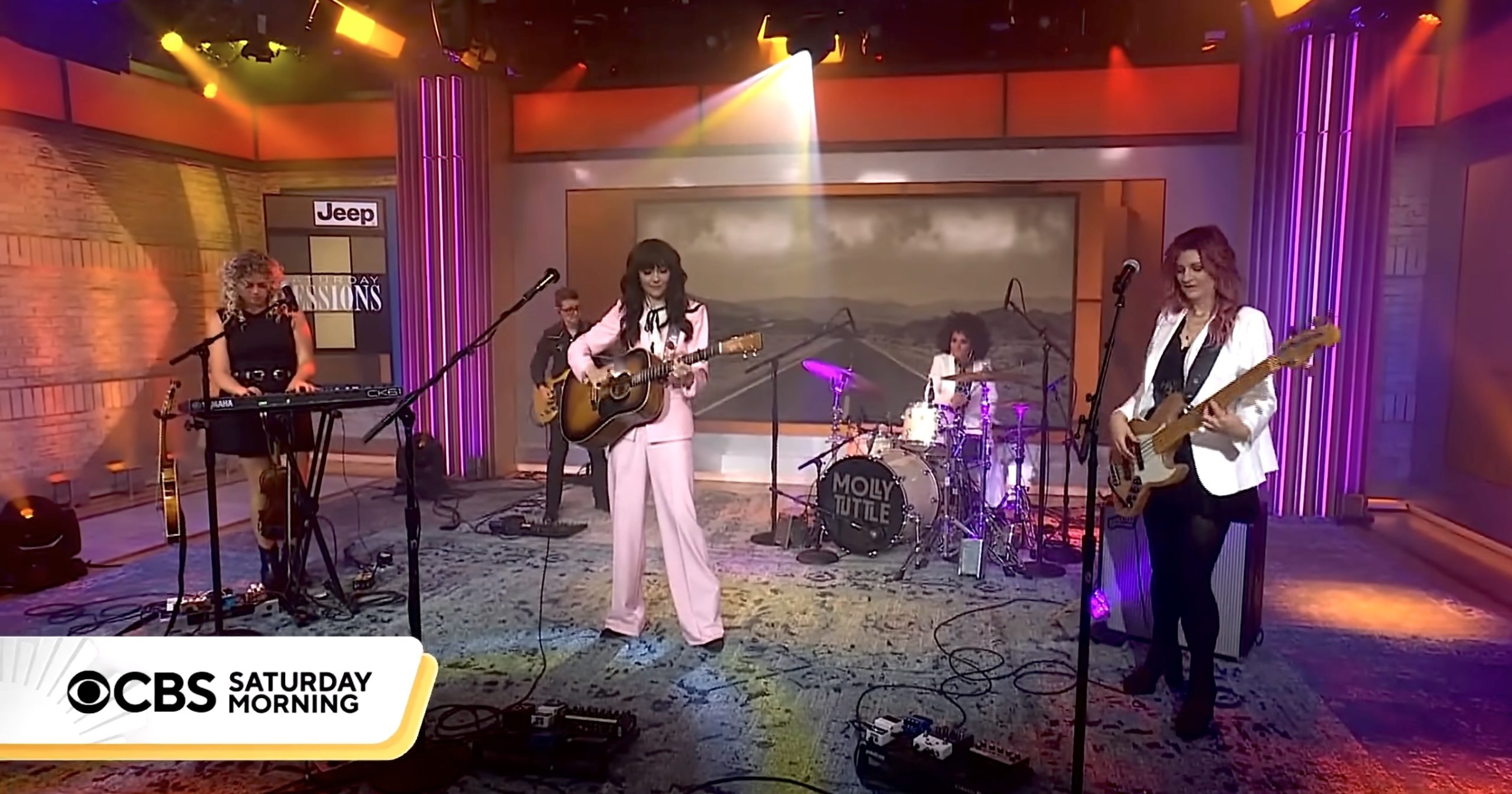
Guitarist-singer-songwriter Molly Tuttle caused bit of seismic activity in the roots music world when in the middle of May she announced a brand new band and the beginning of a brand new era, after the smashing, GRAMMY-winning run of her decidedly bluegrass outfit, Golden Highway. With several years of touring and two critically acclaimed and audience-adored albums with that group under her belt, Tuttle posted on social media that she had assembled Mary Meyer (fiddle, mandolin, keys), Vanessa McGowan (bass), Megan Jane (drums, percussion) and Ellen Angelico (guitars, Dobro) for her new backing band. Predictably, the award-amassing picker had many a bluegrass “chair snapper” run to her comment sections to decry her abandonment of bluegrass, her selling out, and her forsaking the genre that made her.
A little over a month later, Tuttle announced her upcoming album, So Long Little Miss Sunshine, due out August 15 via Nonesuch Records. With that second wave of exciting news she dropped the LP’s first single, “That’s Gonna Leave a Mark.” Last week, she and her newly-minted band appeared on CBS Saturday Morning to perform that track (watch above) as well as a burnin’ fan favorite from the Golden Highway years, “San Joaquin” (watch below). In addition, Tuttle spoke to journalist Anthony Mason about the project, her creative process, and how and why she’s ready for something fresh and different – sonically, and otherwise. (Watch Tuttle’s interview with Mason below, as well.)
“Okay, yeah, I want to set the record straight!” Tuttle laughs when asked about “abandoning bluegrass” and her more string-band-inclined fans. “I’m not abandoning the bluegrass fans. I feel like, with my music, a door will just open and then I’m walking through it.”
“With my last two records,” she continues, “I just felt so inspired to go back to my roots and write bluegrass songs. And, all of a sudden in the last year, I was like, ‘It’s time to do something different, to do something totally new, and find my own sound that’s not emulating a certain genre or style.'”
Longtime fans of Tuttle know that dabbling in genres on the fringes of more traditional bluegrass has always been a practice at the core of her creativity, songwriting, and expression. Her debut EP after moving to Nashville, 2017’s Rise, was far from straight ahead bluegrass in structure, arrangements, and production. In 2019 she released When You’re Ready. Her full-length debut, it boasted bluegrass and flatpicking bones with dashes of old-time and country, but couldn’t be easily or simply defined – or entirely contained – underneath any of those aesthetic umbrellas. “That’s Gonna Leave a Mark” is poppy, bold, and broad with dashes of Katie Gavin (of MUNA), Sheryl Crow, and Aimee Mann. But still, it’s anchored by, of all things, clawhammer guitar. Is that “abandoning” the genres that made her?
Along the way, Tuttle’s live shows have always been expansive, joyous, and fun, whatever the personnel on stage – and her shows have always been unconcerned with genre fidelity, too. (Even as she crisscrossed the country and the globe with her beloved ‘grassy Golden Highway comrades.) Now, with her new “that ain’t bluegrass” band, she continues playing with genre and expectations.
For instance, at ROMP in Owensboro, Kentucky, last month she at one point invited Del, Ronnie, and Rob McCoury onstage for a guest slot, many a Golden Highway track made the set list, and she covered both “Blue Moon of Kentucky” and a dramatic, languid version of Icona Pop and Charli XCX’s smash hyperpop hit “I Love It” for her twin encores. This sort of musical multiplicity from Tuttle isn’t anything new, it’s foundational. It’s a keystone on which she’s built her entire brand. Her incredible covers album, 2020’s pandemic-proffered …but i’d rather be with you is another excellent example of this fact.
It’s clear Tuttle, her band, and her team are knee-deep in messaging and intentionally reinforcing their brand identity for this next album and her headlining “The Highway Knows” tour, which kicks off in September. Whether on CBS Saturday Morning, social media, or a bluegrass festival stage, that task comes incredibly naturally to Tuttle, because these sounds aren’t a gimmick. This isn’t a cash grab or selling out or abandoning anything or anyone. It’s Molly Tuttle being exactly who she has always been. After all, just when you think you know her, “She’ll Change.”
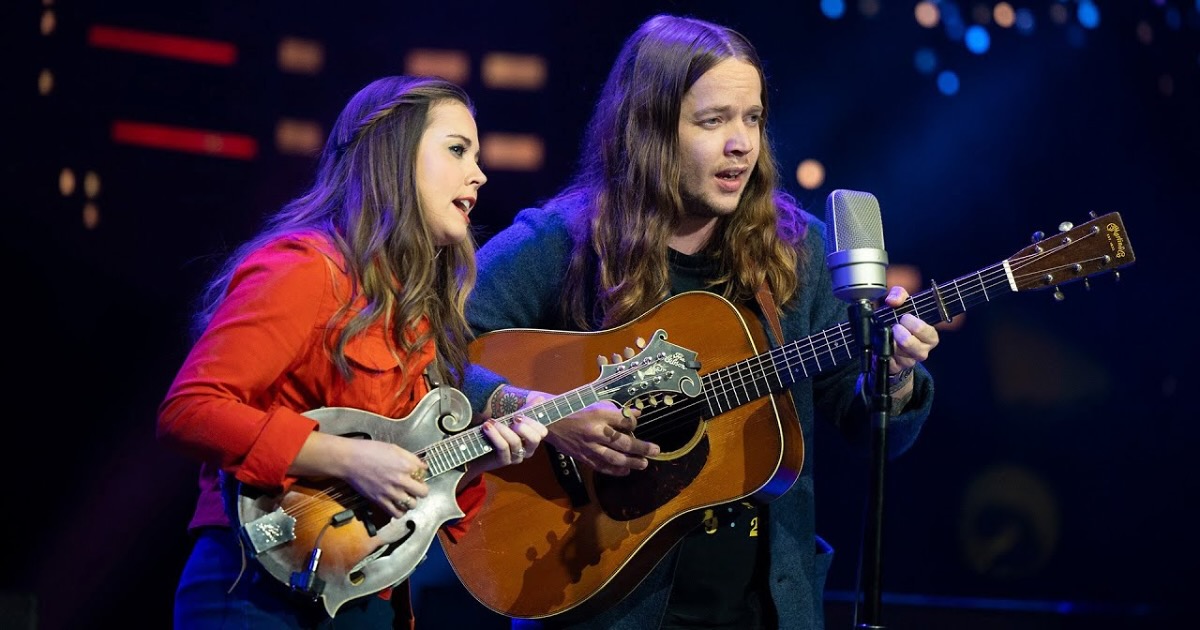
Last week, Austin City Limits released an excellent bluegrass performance from their Austin City Limits Celebrates 50 Years broadcast, which debuted on April 4 on PBS. Mandolinist Sierra Hull and guitar phenom Billy Strings appeared on the special ACL show, performing a classic bluegrass number, “Midnight on the Stormy Deep,” a traditional song that entered the bluegrass canon via Bill Monroe himself. (Watch above.) It’s a popular duet, whether at jam sessions or on stage, and in this iteration finds the forward-thinking pair of Hull and Strings employing more retro sounds. Both are adept at these tones and textures, but tend to opt for more envelope-pushing picking on their own songs and creations. It’s lovely to hear both players in a bit more reserved a setting, with moments of star power shining through their tasteful playing and careful listening.
It’s striking how crisp, clean, and precise Hull and Strings render the song, but the grit and gristle that we tend to associate with bluegrass – and that “high lonesome sound” – are evident, certainly not in short supply. Hull’s solos are playful with zany touches and bluesy licks. Strings holds down the resonant lead vocal part while Hull adds the high harmony, both singing the lyric entirely in duet, because that’s how it goes! Strings pulls hard through his own solo with his signature confidence and boldness, while reminding his listeners how pivotal an influence Doc Watson has been across his career.
Hull and Strings are no strangers to collaborating, and in many contexts. Remember that time they covered Post Malone together? And well before Postie’s country foray and Strings’ track features on it. Hull has been known to guest on Strings’ shows, and vice versa. Their backstage cover of “What Does the Deep Sea Say” taped at the Ryman Auditorium has hundreds of thousands of views; “Midnight on the Stormy Deep,” meanwhile, has amassed nearly 200,000 views since it landed on YouTube late last week. Plus, Strings fans will recognize the track, not only from the bluegrass songbook, as it were, but from Strings’ own discography as well. He dueted with bluegrass legend and Hall of Famer Del McCoury on a version of the number a few years back. We never tire of it.
Whatever the many factors that led to Hull and Strings picking “Midnight on the Stormy Deep” together on ACL, they all add up to a live performance that’s easy, confident, and fun, and ultimately speaks to the deep and wide roster of young and younger bluegrass professionals who are keeping this music alive and in the limelight. For the coming generations and as-yet uninitiated new bluegrass fans, too.
Following more than 30 years since first meeting and countless times sharing the stage during festivals, the two most accomplished fiddlers in International Bluegrass Music Association history have finally teamed up for their debut album together.
Released March 14 via Fiddle Man Records, the aptly titled Carter & Cleveland sees the combined 18-time IBMA Fiddle Players of the Year Jason Carter and Michael Cleveland flexing their bluegrass muscles on compositions from some of the most prolific songwriters around – like Darrell Scott, John Hartford, Tim O’Brien, and Del McCoury.
Coincidentally, it was with McCoury and his sons’ band, the Travelin’ McCourys, with whom Carter spent the last 33 years playing until the February announcement that he’d be stepping away from the groups to focus on his solo material and collaborative projects, like this one with Cleveland.
“I just thought it was time to start pursuing other things, like my own career,” explains Carter about his decision to leave the bands. “That being said, I never thought I’d be leaving the [Del McCoury] Band. I recently gave a fiddle lesson and the person I was teaching told me he was surprised I left the band and I remember telling him, ‘I’m kind of surprised too.’ [Laughs] But it’s so rewarding to be doing something new with my own band along with getting to play with Mike.
“I’m also really excited to see the McCourys play with their new mandolin player, Christian Ward,” he continues. “There’s no bigger fan of Del or the Travelin’ McCourys than me. This will be the first time since I was 18 years old that I’ll be able to sit out in the audience and watch his show. I can’t wait!”
It was also with McCoury where Cleveland, then 13, first met Carter back in the early ’90s during one of Carter’s (then 19) first gigs with him.
“[The Del McCoury Band] has always had the players that I aspire to be like,” says Cleveland. “I remember going to and recording the band’s shows from the soundboard when Jason was just starting out with them. Then I’d go home and try to play guitar over the recordings to best imitate each part. They quickly became some of my biggest influences in this music, and still are.”
Ahead of the album’s release, BGS spoke with Carter & Cleveland over the phone to discuss the duo’s years-long partnership, the process of bringing this record to life, and their thoughts on the history of duo records in bluegrass music.
You have tunes from Del McCoury, Darrell Scott, John Hartford, Bill Monroe, Buck Owens and other roots music legends on this project, but no originals. What was behind that decision?
Jason Carter: Well, for me, I didn’t have any original tunes at the time we started doing this, so I just started throwing out songs I liked. Then I called some songwriters – Tim O’Brien, Terry Herd, Darrell Scott, and others – and the songs I liked most of what they sent I then played for Mike. I’ve only written one fiddle tune so far, but actually have four or five writing sessions lined up this week, so maybe if there’s a Carter & Cleveland Volume II, I could have a cut on there.
Michael Cleveland: We’ve talked about needing to sit down and write together, it just hasn’t come to fruition yet. When I’ve sat in with Del or Jason in the past we never had time to rehearse, which is similar to how these songs came together. We were able to talk about material and send things back and forth, but we didn’t have much time to sit down and rehearse before recording because we’re both so busy. I hope we get to do that someday, but at the same time songwriting isn’t the main focus for me. I know folks that’ll write a tune every day, but for me that only happens once in a while; when it does I make sure to run with it.
What are some standout songs for y’all on this project?
JC: That’s tough, because I like all the songs on the record. At any given time I could have a different favorite. There’s also some that didn’t make the record we still have in the can and might put out later that could actually be my favorite songs. That being said, I really like the part of “With a Vamp in the Middle” where [Mike] finger picks the fiddle while I’m strumming…
MC: That was your idea!
JC: I heard you play something that sparked that. [Laughs] When you’re in the room as a fiddle player and you hear Michael Cleveland play, it’s all special. He [is] leagues above everyone else.
MC: It’s hardly ever a problem that you have too many good songs, but that was definitely the case when we went in to record. As soon as we put the word out about it we had a bunch of our musical heroes sending us songs to record and they were all great! When I first heard the demo of “Give It Away” from Tim O’Brien I liked the song immediately. Tim was playing old-time banjo on it in the key of D while singing, but once I heard Jason sing it in the key of B I knew it was meant to be a hard-driving bluegrass song.
I also really enjoy “Kern County Breakdown.” The only time I’d ever heard that – which made me want to record it – was from Alison Krauss. She used to play it as a fiddle instrumental and I always wish she recorded it. I don’t know if it’ll happen, but I’m still holding out hope that she’ll put out a fiddle album one day.
She does have her first album in 10 years dropping later this month, so you never know!
Throughout the history of bluegrass music there have been many timeless duo records from the likes of Ralph Stanley & Jimmy Martin to Ricky Skaggs & Tony Rice to Bill Monroe & Doc Watson. What are your thoughts on being the next chapter in that series of collaborations?
JC: I hadn’t really thought of it like that before…
MC: If this album is mentioned in the same breath as any of those, that would be great! We also talk a lot about our favorite twin fiddle albums, which this seems to be more of, and have tossed around the idea of doing this project for 15 years. There’s albums from Kenny Baker and Bobby Hicks, Buddy Spicher and Benny Martin, Buddy and Vassar Clements, and so many more, but there hasn’t been one for a long time now. That’s what originally inspired us to do this. In the last few years people have also finally figured out what a great singer Jason is, which afforded us a lot more room to experiment than if it were a twin fiddle instrumental album.
JC: Mike just has such a good ear. I remember sending him a couple versions of demos I played and sang on and he’d immediately get back to me with suggestions like adding a fiddle lick at the beginning, like on “Outrun The Rain.” He thought it would be great for a high harmony thing two above the lead. As soon as he heard this stuff he had ideas. It was really cool to see how that all came together.
Mike just mentioned the idea for this album has been floating around for 15 years. When did y’all eventually get to work on it?
JC: We started recording a couple years ago. The first session we recorded we actually did at [guitarist] Cody Kilby’s house during COVID, then it was another year or so after that until we got working on it again. Because we didn’t have any rehearsal time, I remember sending voice memos of myself playing fiddle, guitar, and/or singing to Mike to listen to and send suggestions back. I remember being at a show with Del tucked away in the dressing room by myself trying to record versions of these songs or trying to run through an arrangement before sending it to Mike through text message.
MC: I had a great run with the label I was previously involved with, Compass Records, but they weren’t really interested in collaboration albums. With all of my projects and Jason as busy as he is, we were always just in the middle of other things until Jason put out [2022’s Lowdown Hoedown] and I completed [2023’s Lovin’ Of The Game]. It was around that time we decided to take the leap and finally start working on this.
Speaking of taking a leap, I know y’all co-produced this record too. What was your motivation behind that?
MC: We had talked about bringing somebody in. I’ve worked with Jeff White for years on my albums. In a way he helped to produce this one too, which is fitting because I always felt like we co-produced my albums together. For this record there were people we’d send stuff to listen to, even down to the final mixes, just because we respect their opinions, but the final calls were all us.
JC: Even when you’ve got someone like Bryan Sutton in the studio for tracking, he may have an idea he throws out that becomes a big help as well. That could come from anyone involved in the session, even engineer Sean Sullivan, who we leaned on heavily as well because they do this every day. These people are here for a good reason, because they’re super talented and play some of our favorite music. And when it comes to Cleve, I’m all ears. He always has good advice.
MC: When you first start recording, you don’t always know what sounds good. It’s like with playing, singing, or anything else, the more you put yourself in those situations the more you understand what you want to hear and how to achieve it. Working with Jeff in the past, we’d be together during the day when all of the sudden he’d say, “Hey Mike, I gotta take off for a few hours, produce for a while.” It freaked me out the first time he did that, but it forced me to get comfortable in the situation and forced me to trust my ear more. Jeff having that faith in me also gave me a little more confidence in myself that I was making the correct decisions and to continue trusting my instincts.
JC: With the Travelin’ McCourys, all of those records were produced by the band along with most of the stuff we did with Del, too. I did produce my solo record, Lowdown Hoedown, though. But even on that, when we were recording Sam [Bush] and Jerry Douglas were there. I remember Jerry – who produced a lot of the McCourys’ stuff early on – always had great ideas on arrangements and different things to put in when he spoke up, which was a huge help. Getting to be in the studio with him is an education you can’t get anywhere else.
Jason, you briefly spoke of a few of the album’s players there. But they’re far from the only top-notch pickers you have on this record, with the likes of Vince Gill, Charlie Worsham, and Sierra Hull, among others. How’d y’all go about deciding who to bring into the fold?
JC: We just tried to think of who would best fit with the songs as we listened to demos for each.
MC: It also came down to who was available at certain times. Guys like Bryan Sutton, Cory Walker, and Alan Bartram played on most of it. I remember days where Sam Bush was available on mandolin and others where Harry Clark filled in. Some of the first sessions we did after the pandemic were with Cody Kilby and Casey Campbell followed by David Grier and Dominick [Leslie].
And going back to something Jason said earlier, I also leaned on Bryan a lot, specifically about what songs he thought it would be good to have Sam on, which led to his inclusion on “Middle of Middle Tennessee” and a few others.
What has music, specifically the process of bringing this record to life, taught you about yourselves?
MC: This was one of the first things I’ve done without a producer being there. Most of the time we would agree on decisions, but other times you don’t know what the right thing is and somebody has to make the call, because that’s typically something a producer would do. When it’s just you there’s no question, but when you’re working with somebody you want to make sure it’s a collaboration and not one person running the ship. Recording this album has taught me to be more aware of that.
JC: The singing part of this too, that’s still pretty new to me. I’ve sung on other people’s records, my solo album and with the Travelin’ McCourys, but being the lead singer throughout is a new venture for me and something I really enjoyed getting to do with Michael.
What do the two of you appreciate most about one another as both musicians and people?
JC: Everything about Mike’s playing, he’s just on another planet right now, and as a person he’s the same way. I recently got married and Mike was my best man, because no matter what he does he is the best man!
MC: Hearing Jason play with Del, he’s always been the fiddler I’ve wanted to be. We’re both into the same stuff, which is why I think we work together so well. It’s why we’re able to jump on stage and play twin fiddles without rehearsing, which is usually a mess when you do that. Getting to work with him on this album has been a dream come true for me.
Photo Credit: Lead image by Sam Wiseman. Square image by Emma McCoury.
After over 20 years behind the wheel of Western North Carolina-based bluegrass and roots band Steep Canyon Rangers, founding member Woody Platt is forging a new path ahead as a solo artist with his debut album, Far Away With You.
Released on October 11, the 10-song project sees the GRAMMY and IBMA Award winner teaming up with a variety of collaborators – from the North Carolina writers whose songs litter the collection to guest spots from legends like Del McCoury, Tim O’Brien, Sam Bush, and Darrell Scott. The album also showcases covers from Georgia bluesman Blind Willie McTell (“Broke Down Engine”) and rockers Kings of Leon (“Beautiful War”) that showcase Platt’s ability to take songs from far outside the bluegrass space and capture them within it, casting these familiar tales in an entirely new light and making them new all over again.
“This album is a big step for me,” Platt tells BGS. “When I left the Steep Canyon Rangers, it was only to slow down and be home more. I didn’t really have a plan to make a record or to have any sort of solo career, but when you spend half your life on the road and playing music, it just becomes a little bit of who you are.”
That big step has come with even bigger adversity in recent weeks as Platt has joined others in recovery efforts after Hurricane Helene pounded his home region. While his property and most of the city of Brevard were spared catastrophic damage, countless other communities nearby were not. Though recovery will likely take years, Platt is determined to help for the long haul with both power tools and his baritone bluegrass bops.
During a break from hacking away at a fallen tree with his chainsaw to get a neighbor’s bridge reopened, Platt spoke with BGS about the mixed emotions leading up the release of Far Away With You, how Western Carolina informs his music, his song selection process, and how fatherhood has impacted his outlook on music.
What’s it been like for you balancing promoting and preparing for an album release while simultaneously helping your community recover from Hurricane Helene?
Woody Platt: I’m not going to lie to you, I’m conflicted. This is the first time I’ve ever focused on a record that is a solo project with my name on it. With that comes a general sort of concern, anxiety, and excitement, and I’m proud of it, but at the same time I’ve been conflicted about trying to promote something that’s so singular and personal during this huge storm event that’s got so many people in such a bad situation.
Originally, I thought there’s no way the album release show can go on, but when you think about it a little bit more, you realize that music is a great way to bring people together, create a healing environment, and use it as a platform to continue to create awareness and raise money. There’s so many benefit concerts and there always has been, but that just gave me some peace of mind that if we can transition this into being less about the album and more about the community at large and the health of the community, these two things can coexist in a really good way. Being further and further away from the storm and as more people are getting power back, I think it’s a good chance for people to come together and contribute to a greater sort of healing process.
Aside from the pivot to the release show turning into a benefit, what do you hope to accomplish with Far Away With You?
The reason I first started playing music was to play bluegrass music, so this album for me represents a return to my roots. I never stopped playing bluegrass music, but when I was with the Steep Canyon Rangers we evolved and developed more of an Americana sound, so this [album] has been a good way for me to get back to basics and playing the music that originally got me fired up about creating a band and performing in the first place. Also, there’s a lot of great songwriters here in my home community, including my wife Shannon [Whitworth], which has allowed me to tap into some of the local talent to put a spotlight on them as well.
Do you see yourself getting back on the road for any tours or solo runs in support of this record or anything else you may do in the future?
I see shows always on my calendar, but tours, not so much. I don’t envision long runs of shows, but I do see myself playing a festival here, a concert there. I’m also doing a fair amount of work with Shannon, which is sort of separate from this. Between the two, I feel like I’m actually playing more music than I thought it would be. I didn’t have any expectations of what was next after years of touring, but every time I look at my calendar I have some work to do. It’s all been really organic. I’m not out there chasing it or pushing it very hard, but if an opportunity presents itself then I’m usually pretty willing to take part in it.
As you just mentioned, most of the songs on the album are penned by other songwriters. How do you go about deciding what work from others to incorporate into your shows, or in this case, an album?
I’m really drawn to songs, melodies, and just the feel of a composition. I didn’t start this project with a goal to find the songs just within this community, but when a song speaks to you, it speaks to you. Because of that, there was no real roadmap of what the final 10 songs would be. I just went with my gut and the songs that meant something to me or moved me for one reason or another, and this is where I ended up. It was only when looking back on them at the end that I realized that most of them came right out of Brevard.
I was so lucky when I was with Steep Canyon Rangers to be in a band with some really great songwriters. It set the bar pretty high for what I look for in a song, leading to this album where every song is one that I love to play and sing.
From songwriters to nature, how do the mountains of Western North Carolina inspire and inform your music?
We live in such a beautiful place. One of my favorite things about it is all the water. It’s no secret that I’m a lifelong, serious fly fishing angler and I get in the river a lot, like more than most. There’s a real sort of music to the river, so when I’m in the water there’s a lot of inspiration that washes over me. There’s a lot of sounds and what you see is not what you hear and the way it surrounds you is all very inspiring and helps to clear my mind. It’s always been a way for me to reset, which leads to loads of creativity and inspiration.
That’s interesting you bringing up water, because I agree it can be peaceful and relaxing, but as we’ve seen it can also be powerful, destructive, and deadly. Quite the duality.
That’s very true. I just spent the morning in the river with some other guys trying to clear a neighbor’s bridge. Right now the rivers don’t feel as peaceful as they have. There’s a lot to be done, but it’s amazing how rivers can heal themselves and how water can be healing in general.
Sticking with that concept of duality, I can’t help but get a similar sentiment from the song “Like the Rain Does,” which lyrically plays out like a love story (“you’ve got me falling like the rain does”), but is also flexible and ambiguous enough to tie into the recent storms y’all have experienced.
I absolutely love that about music. A song might be written for one particular perspective, but the listener might take it in a totally different direction based on personal experience or, like you said, a recent natural disaster that can sort of change what a song means to you. I’ve always liked that about songs and feel that many of the songs on this record have that sort of ambiguity and openness to interpretation while others are more direct.
Another song I’ve really enjoyed is “Walk Along With Me,” an original of yours that combines your life at home as a father with your love of music. How did it come about?
“Walk Along With Me” was one I wrote in 2015 shortly after our son was born. Shannon and I would work different shifts and I would put our little boy in a Moby [Baby] Wrap on my chest, staying up real late with him while she got some uninterrupted sleep, sort of like a night shift. I wound up writing a lot of songs with this classical guitar nestled against his back, which was really inspiring, because I’d never really thought of myself as a songwriter. I was a part of a lot of song creation, but not as a first writer of songs.
With this one in particular, I was emotional about all of the sudden becoming a father, so I thought about my life and the experiences that I’ve had and how that translated into how I would be as a father. And, how close I would keep my child or how far I would let them go, the ebb and flow of wanting to keep your arms around them and be by their side while also realizing that they’ve got to blaze their own trail. Being a father is ultimately what led me to slowing down my touring. It really changed my whole life, having a son and starting a family and that song is just one example of how I felt about it at that time.
Given that your son is eight years old now, has he started catching the musical bug himself yet?
He really is. Just this morning he was getting ready for school and he had his own music on in his room. He’s also been singing a lot and is getting quite good on the drums. He takes drum lessons from [Aquarium Rescue Unit and Leftover Salmon’s] Jeff Sipe here in town. We were at a little jam not too long ago and he found a cajon and next thing I knew he was a part of the jam and was holding it down pretty well. We’ve tried not to push music on him, but I think just being around these rehearsals at the house and these shows that we play is causing it to seep into his bones.
You’ve mentioned your wife Shannon a couple of times now. What does it mean to you to not only have her by your side for encouragement, but also to lean on as a songwriting partner?
It’s wonderful. She’s super creative [and] also a painter in addition to being a multi-instrumentalist, a songwriter, and a great singer. We play and write a lot together now, but when she was touring with her solo band or with The Biscuit Burners and I was touring with Steep Canyon Rangers we’d oftentimes just put our instruments by the door and not get them out when we got home. We were working so hard with our other groups that when we got together, we were just hanging out. Now that we’re both not playing as much we’re doing a lot more together. It’s been a lot of fun to write together and have her as a good sounding board, and vice versa. We’ve come to a really good place of musical compatibility and creativity.
What has music taught you about yourself?
I was never naturally made for this type of thing. For a long time I didn’t even realize that I had the talent and the capability to carry a show. Because of that, I usually show up over-prepared – I’m not the kind of guy that can just show up and jump on a show, I have to be studied and be ready. That preparation and drive to be good has helped to keep me humble and honest about it. I’ve always felt like at any minute this could all go away. It’s not only aided in keeping my head down and staying focused, but it’s also kept me playing and enjoying music for all the right reasons.
Photo Credit: Bryce Lafoon
This website uses cookies to improve your experience. We'll assume you're ok with this, but you can opt-out if you wish.AcceptRejectRead More
Privacy & Cookies Policy
Privacy Overview
This website uses cookies to improve your experience while you navigate through the website. Out of these, the cookies that are categorized as necessary are stored on your browser as they are essential for the working of basic functionalities of the website. We also use third-party cookies that help us analyze and understand how you use this website. These cookies will be stored in your browser only with your consent. You also have the option to opt-out of these cookies. But opting out of some of these cookies may affect your browsing experience.
Necessary cookies are absolutely essential for the website to function properly. This category only includes cookies that ensures basic functionalities and security features of the website. These cookies do not store any personal information.
Any cookies that may not be particularly necessary for the website to function and is used specifically to collect user personal data via analytics, ads, other embedded contents are termed as non-necessary cookies. It is mandatory to procure user consent prior to running these cookies on your website.