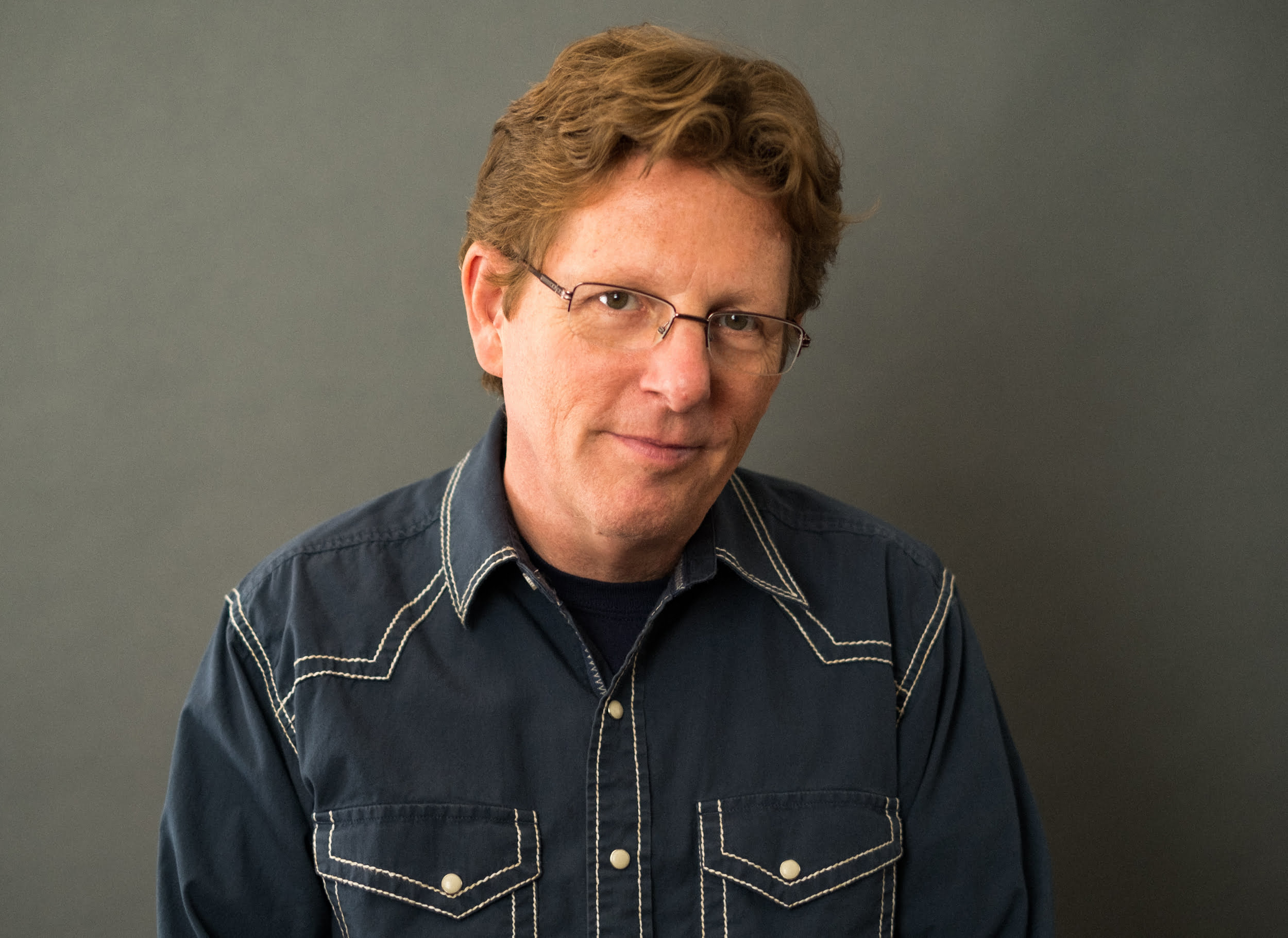
The Unbroken Circle: An Interview with Tim O’Brien

Let’s say your banjo-obsessed buddy asks you to join him at the local Tuesday night bluegrass jam. Bluegrass. Sure, you’re aware of the term. You loved that George Clooney movie. You’ve got a couple verses of “Wagon Wheel” up your sleeve for wedding receptions. Plus, you’ve been wondering how Garrison Keillor suddenly got so good at the mandolin. Why not dive a little deeper?

As a newcomer to the strange pastime of standing in a circle with fiddles, banjos, and mandolins, you will be perfectly positioned to ask a really good question: “Where did all of these songs come from?” Your banjo friend might try to satisfy you by calling the songs “traditional,” but that’s just evading the question. Sure, some common tunes arrived in America on boats from Europe, and some of them were “collected” by folklorists like John and Alan Lomax who combed through rural America in the early 20th century, but the bigger-picture truth is that the bluegrass canon has been alive and evolving throughout its history. Even before bluegrass’s inception in the 1940s, the story of folk music in the 20th century is one of surprising re-discovery, unorthodox re-interpretation, and, yes, the addition of songs that happen to be brand new. Right up there alongside the other great writers and re-interpreters — A.P. Carter, Bill Monroe, the Stanley Brothers, and many others — there’s a whipper-snapper (by “traditional” music standards) named Tim O’Brien.

Tim’s band, Hot Rize, emerged in the late ’70s as part of a neo-traditional reaction to New Grass Revival and David Grisman’s no-holds-barred hippie bluegrass boom of the early ’70s. There was a back-to-basics element to Hot Rize’s chemistry — led by O’Brien’s distinctive tenor and mandolin playing — but bassist Nick Forster played an electric bass, banjo player Pete Wernick occasionally played through a trippy phase-shifter effect, and they all wore obnoxiously ugly ties with their formal wear. (Traditional Ties was one tongue-in-cheek album title.) In other words, in a world of stiff suits and tall Stetsons, they injected a playfulness that both revitalized the tradition and reminded it not to take itself too seriously. In that way, they weren’t a reaction to New Grass Revival so much as their fraternal twin. Both bands effectively proved the point: Long-haired kids can play their own kind of bluegrass.

Tim’s original songs “Nellie Cane” and “Ninety Nine Years” share the rare double distinction of being staples of many local jams and also popular covers in the repertoires of Phish and the Punch Brothers, respectively. He’s also re-energized old songs like “Blue Night,” “Pretty Fair Maid,” and “Look Down that Lonesome Road,” bringing them and many others into popular bluegrass rotation.

Before all that, O’Brien was just a kid from West Virginia listening to the Beatles on the radio and playing wedding gigs with his talented sister, Mollie O’Brien. This month, he released a record, Where the River Meets the Road, that returns him to his West Virginia roots. True to form, he uses the opportunity to try his hand at old gems like “Little Annie” and to bring to life surprising re-interpretations of other West Virginians’ songs, like Bill Withers’ “Grandma’s Hands.” We talked about the new record as well as his many decades spent nudging the folk tradition forward. 

The band on Where the River Meets the Road is killer. They really move together like a tight band, rather than just background studio musicians. Some of them are familiar folks from the bluegrass world like Stuart Duncan and Noam Pikelny. How’d you end up incorporating Chris Stapleton?

I’ve known Chris for a good while. When he first moved to Nashville, Bryan Sutton was hired to produce demos of his. I went and played and sang on his demos, and I was really impressed. We wrote together a little bit, messed around. We stayed in touch. He sang on a record I made called Chicken and Egg. I was really pleased he was able to sing on this one.

That’s a great duet. Your voices are totally different, but the harmony is kind of striking. It really works.

He came in there and nailed that thing. I have to say, that track was good before he sang. You know how it can get in the studio. It’s pretty mellow listening to the same track over and over. Then he came in, started singing, and we all shot up straight in our chairs. Our spines straightened and our hair stood up on the back of our necks. I said, “Yeah, more of that!” It was really wonderful.

I saw on your schedule that you’re headed to Wheeling, West Virginia, tonight.

Yeah, that’s right. I’m playing my hometown tonight. It’s really exciting and terrifying at the same time. I haven’t played there in so long, and I think most of the people who bought tickets in advance are friends of mine, so you’re kind of on display. But I’m excited about seeing the old hometown.

Have you spent much time there since you left home many years ago?

No. You know, my dad died in 2011, and my mom had died before. I have a few cousins there, but I’m not close to them. I’ve only just sort of passed through a couple of times. I played with the Wheeling Symphony a couple of years ago and that was fun. My sister and her husband and my partner Jan and I sang.

Wheeling has a symphony?

Wheeling was the biggest city in the state for a long time. It was the only symphony in the state before they ever had one in Charleston. Yeah, Wheeling was a rich town with a steel mill at one point. People dressed in finery, you know. It’s a faded town now, but it has surprising culture. [Laughs]

And it had a great radio station that you grew up listening to, right? WVA?

WVA was a great resource. I was into pop music and stuff at the time, but WVA was a place you could actually see live performers on a Saturday night. I enjoyed listening to the radio, as well, but I liked going down to the Saturday night show and seeing the pros play their guitars.

But you were just a kid mostly listening to pop radio and Beatles records. So, in other words, you weren’t from a traditional music family on an inevitable path toward a folk career?

No. Not at all. My parents loved music, but it was just on the sidelines. They liked the music of their era — Glen Miller and Benny Goodman and stuff like that. When my sister and I got into music, they encouraged us. They tried to steer us toward a well-rounded experience growing up, so we could choose what we wanted to do.

Did you and Mollie sing together and learn from each other growing up?

Well, she was playing the piano and I started playing guitar. By the time she was in high school, she was studying voice there, so, yeah, we would get some little gigs — school plays, different things. We would play at weddings, sing a few Peter, Paul, & Mary songs, Beatles songs, or whatever.

Then you left college to move west and pursue music. Did your parents think you were crazy?

Well, I was the youngest of five. Being the youngest, my parents cut me a lot of slack, I’d say. They had been through it with the rest of them. Also, you know, I was determined. They wanted me to stay in college, but I just wasn’t going to respond. So they said okay. I think they were holding their breath for about three years. Then I put out a record on a little label — I think it was ’77 or ’78 — and that’s when they finally said, “Oh, maybe this will lead to something.” They developed a more open mind. Then my parents became big fans of whatever I was doing and supported it. So it was a gradual thing, kind of a wait and see. They lightly steered me, but they knew they couldn’t do the final job, you know? I’m lucky I had that background with them.

So after growing up in West Virginia, you moved out west to Colorado to get your career started. Why did you feel like you had to leave the south to play bluegrass music?

My dad said, “You just want to go as far away as you can, don’t you?” I said, “Well, sort of.” [Laughs] Really, I was going out there because I loved the weather and the scenery, the lifestyle out west. I thought in a ski area, maybe I could play music and ski — both things I was excited about. So I went to Jackson Hole. Some other friends that had worked at summer camp with me were going to spend a winter there, so I went out and joined them and scuffled around for the winter. I ended up looking for a more active music scene and I ended up in Boulder. I guess I could’ve moved to a college town in West Virginia, but I wanted to see the rest of the country.

It’s funny — when I sing the song, “High Flying Bird,” from this record, I realize it’s symbolic of what I wanted to do when I was young. I wanted to get the heck out of there. I didn’t want to be rooted and tied down in West Virginia. I wanted to see the rest of the country, the rest of the world. And I didn’t realize that song was from West Virginia until now. You get away and you find perspective on where you left. You can see it from a longer view. The music provided a connection to West Virginia, as well as my family, so I kept going back. I realized it was a valuable base to have started from, and I continue to value that.

What is it that’s made you interested in reconnecting with your West Virginia heritage? Why now?

I feel like I’ve been given a gift of this music and this background. I got involved with the West Virginia Music Hall of Fame when they wanted to start that about 12 years ago. Meeting all these people as they come through to be inducted was really wonderful. You learn that a lot of people you knew about and music that you’d heard came from West Virginia.

Until I heard your record, I had no idea Bill Withers was from West Virginia.

Yeah, and that’s the thing. Part of the aim of the Hall of Fame is to connect those dots. We’re doing it for the public, but as it turns out, the members of the board and the members of the Hall of Fame are learning about the rest of the scene and connecting dots themselves. I think why I did this project now is, well, I needed to put a record together! [Laughs] I originally wanted to do a record of all original material, but I didn’t think I could pull that off for another year. I’d been thinking about a West Virginia record for a while, and I didn’t realize how much work I’d already done organizing it, making lists of songs, brainstorming on it. I’d already done a lot of that. So it came together really fast. It felt right.

One big part of your story is that you’ve made so many different types of music, so many types of records over the past nearly four decades. Do you have to keep exposing yourself to new songs and new sounds to keep your ideas fresh? How do you do that?

You just keep looking. You go to the record store. Nowadays, I get online — YouTube or Spotify. Then back to my own old record collection. My huge CD wall. Every year, I clean a lot of stuff out of it, give it away, put it in the free box at the Station Inn or something. Then there’s a lot of stuff that always stays there — the first generation of bluegrass masters, or the Lomax field recordings, or classic songwriters like Randy Newman or whatever. Then my friends around me are always writing new stuff, and I’m trying to keep up with their stuff. It’s a constant search, and I always feel the need to refresh the palate. But it’s funny — even by going back to the same stuff you’d passed over, you’ll hear new things and learn. So I’m always combing. Part of the week’s work is to comb for new music.

I like that — it’s part of the week’s job. It’s what you do when you wake up. Reminds me of the first time I saw you solo, at Grey Fox in 2012, when you did a solo guitar tribute to Doc Watson. I’m a North Carolinian and I know Doc’s stuff pretty well, but you put a new stamp on those tunes. It was like rediscovering Doc. So, for me, it was a sort of revelation, but I heard a guy next to me say, “Wish he’d brought his mandolin …” I can imagine for you that must be frustrating. Do you have to put effort into not being pigeonholed?

Yeah, you do get pigeonholed in bluegrass. I think back when I was starting, if you did bluegrass, you couldn’t do anything else. People wrote you off. When Pete Wernick called me [in 1978] and said, “Hey, why don’t we get a band together?” — our solo records were both coming out around the same time in ’78 — I said, “Yeah, that would be great.” I told him I wanted to play some traditional bluegrass, for sure, but I also wanted to do some country music and different things. I asked him if he played dobro so we could get away from the traditional thing.

Nowadays, the rock ‘n’ roll and country players, even the jazz players, are respectful of bluegrass. They understand it’s a training ground, that there’s a certain amount of woodshedding you have to do to even try to play bluegrass. So, yeah, I didn’t want to be pigeonholed. But I am pigeonholed. I’m always referred to as a bluegrass artist — and I’m glad to have a handle to carry it around on. Bluegrass music is Bill Monroe’s music, but then the bluegrass audience is a separate thing. There’s the genre as defined by the history, the classic examples. Then there’s the genre as defined by the audience — though it may only be a small part of what that audience listens to. So, in a way, I’m lucky to have been labeled a bluegrass artist while still sneaking in this other stuff. If I play something on acoustic instruments, they tend to accept it. Bluegrass fans are a very tenacious, very loyal bunch. They keep giving you another chance.

Can’t they be a pretty judgmental bunch, too?

I’m sure there’s judgmental stuff going on, but I don’t really look for that or worry too much about that. I just go my way and hope things will work out. And they have. I tried to get on a major label — I sort of glanced at the big time there. It didn’t take. I thought maybe I’d get the big publicity for a while and then I’d be on my way. Instead, I dug into the trenches of the folk and bluegrass worlds and developed an audience slowly but surely. You’re a product of what you do, so if my output has been eclectic, the audience that has remained has been willing to accept that. There’s enough of them out there to make a career.

Back in the Hot Rize days, and also what you do now, your music was right on that line between the traditional and the progressive — or neo-traditionalist, as people called Hot Rize. Did you ever feel any tension between those two camps? Or was the general attitude different in Colorado?

With Hot Rize, it was interesting. West of the Mississippi, we represented a traditional bluegrass band, but east of the Mississippi, we were these wild card guys. Our hair was too big and our ties were wrong and we had an electric bass.

But you guys had a sense of humor about it, too.

Yeah, we did. I mean, you’ve probably been at a bluegrass jam where people play a tune and, when it’s done someone, will say, “Well, that’s not bluegrass,” and everyone will laugh. Bluegrassers are always referring to their relationship with Bill Monroe’s music. They’re always measuring that. It’s part of our thing.

Sort of a self-conscious conversation we’re always having.

Yeah. And there is a tension. I’ll say this: There are a couple of places where we couldn’t get booked because Pete [Wernick] is Jewish. But, like I said, we took it where we could. Luckily, we came along at a time when people like New Grass Revival and David Grisman had broken a lot of ground. There was a hippie element that supported an alternative to the music. We were on a wave that was returning back to a traditional sound — the Johnson Mountain Boys, Nashville Bluegrass Band, Doyle Lawson & Quicksilver were starting out at about the same time. They were hip and innovative in the way they were presenting traditional music, but they weren’t breaking the walls down like New Grass Revival did. This was viewed by a lot of people as a refreshing return to form. We enjoyed that. You know, we tried to play the kind of no-boundaries music when we started, and it just didn’t work out. Charles [Sawtelle] was playing bass at first, and we had a different guitarist. When Charles started playing guitar, he was much better at the traditional stuff. And we felt better playing it. You’ve just got to find your feet in whatever situation you’re in. That seemed to be the way to go, so we kept going there.

Since then there have been many ups and downs in terms of bluegrass’s broader popularity, the general awareness among the public. Is there anything that surprises you now about what the scene is like or feels particularly different about the 2017 bluegrass world?

The biggest draws in bluegrass now are the jam bands. Again, if you defined it in terms of Bill Monroe’s music, they’re not bluegrass. But they’re playing banjo and bluegrass and they’ve got a lot of attention. There’s a crowd that will get interested in that and look behind it for their influences. They might get into Widespread Panic or the Grateful Dead — or they might go to Doc Watson and the people that he learned from. The thing about bluegrass — even with the ebbs and flows of it — it’s always been growing. With O Brother, Where Art Thou, or with Alison Krauss crossing over into country, or with String Cheese Incident becoming a big draw — there might be a surge related to those things. But mostly the genre grows slowly like a tree. It’s healthy. The roots are growing, as well as the branches.

From those days starting out with Hot Rize in ’78, it just seems to keep growing. That’s the overall trend. Young kids are going back to the old stuff and remaking it. Even if you do something that’s been done before, your version of it will appeal to someone in a new way. It’s heartwarming to see it. Evolution is part of the definition of tradition. Each musician is a link in the chain and, whether you like it or not, you’re part of a tradition. You’re not going to do it exactly like the old folks did it, and you’re not going to do something completely original. You might as well get used to it.

In the same vein, you’re circling back to Wheeling tonight.

Yeah, it’s really exciting. I’m playing a little restaurant bar! [Laughs] Almost everyone there will be my friend, so that’s a little intimidating. But it’ll be fun. I just want to go out and walk the streets a little bit.

10 Tunes for Your End of Summer Road Trip

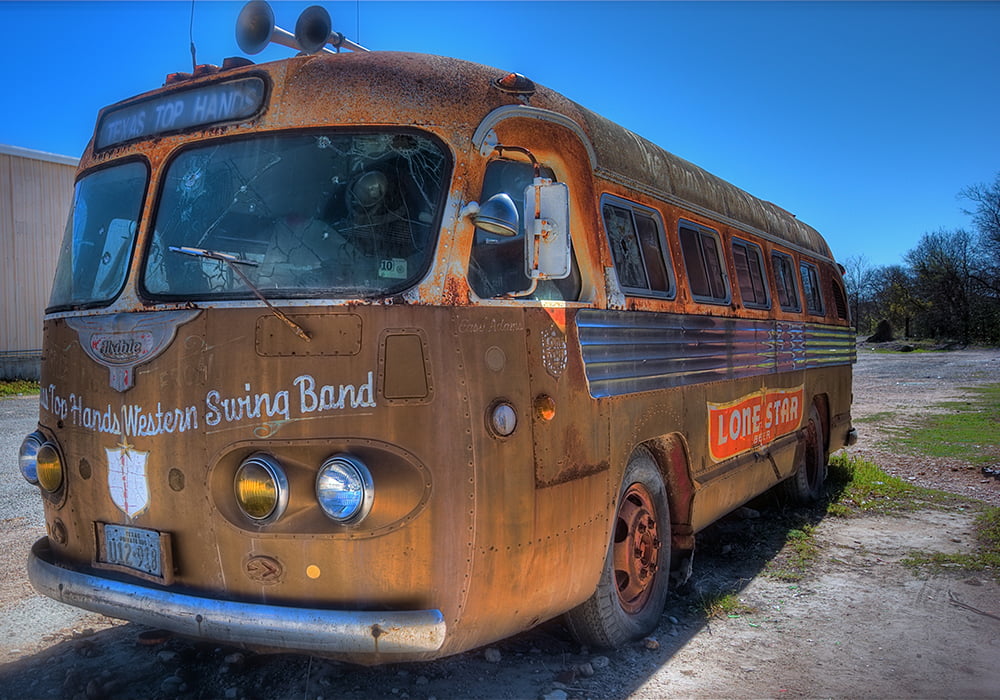
Summer’s pretty much over, but there’s still time to get in one last road trip to see Uncle Phil and Aunt May down Pennsyltucky way. So roll down the windows of the minivan, bluetooth your Spotify into the entertainment system, and hit the highway to this playlist of 10 Tunes for Your End of Summer Road Trip.

New Grass Revival: "On the Boulevard"
Guitarist Pat Flynn wrote this one as the title cut for the first of four albums recorded by the band’s last lineup (that included Sam Bush, Béla Fleck, and John Cowan). It’s a nice, easy cooker that’s perfect to get you off the onramp and onto the road.

The Allman Brothers: "Jessica"
Some 40+ years since the Allmans dropped this in 1973, it’s still one of the greatest country instrumentals of all time. Dicky Betts wrote the record for his daughter with Les Dudek helping out on the bridge. Air guitaring is allowed in the passenger’s seat only.

Little Feat: "Let It Roll"
The title cut from the first post-Lowell album from the Feat, this one simply smokes, from the opening B3 spread by Billy Payne to the funky horn riffs to the song’s drive-off-the-cliff ending. Please don’t follow.

Robert Earl Keen: "Amarillo Highway"
If you’re going on a road trip, who would be the first Americana artist you’d invite? I’d invite Robert Earl Keen to sing while I drive (and beat four-on-the-floor with my free foot).

Dave Dudley: "Six Days on the Highway"
Earl Green and Muscle Shoals songwriter Carl Montgomery wrote this one for Dave Dudley. It’s a little known fact that going on a family road trip without playing this song once is illegal in 29 states and the District of Columbia.

Junior Brown: "Highway Patrol"
Dave’s the rebel and Junior’s the law — and, funny enough, they sound almost the same. One of the best songs ever recorded by a dude who easily has the best guitar collection on the planet.

John Hiatt: "Memphis in the Meantime"
Any excuse to include John Hiatt in a playlist is an acceptable excuse … except no excuse is needed. This tune rocks as hard as any he’s ever recorded.

The Band: "Endless Highway"
This is a song that was batted around the Band for a number of years but never got a proper airing. Capitol Records does us a favor by including it on a rarities record and we inject it into the proceedings, right between John Hiatt and Cross Canadian Ragweed.

Cross Canadian Ragweed: "Highway 377"
A road trip without at least one sinister song is like a campfire without a ghost story. Herein, we travel down the dark road that is “Highway 377,” courtesy of the dearly departed Cross Canadian Ragweed.

Homer & Jethro: "Freda on the Freeway"
Every sinister song needs a silly antidote and this one’s perfect. Country humorist Don Bowman recorded this one in ‘66, but his musical brethren Homer & Jethro bring this one home to roost.

Save the full playlist to your Spotify account right here.


Photo credit: Princess Stand in the Rain / Foter / CC BY-NC

Old, New, Borrowed, and Blue: A Conversation with Sam Bush

I first heard Sam Bush in the early 2000s — I was 11 or 12, probably — when my dad brought home Glamour & Grits. The CD jacket was a minor epiphany. Here was this wildcat-looking guy wearing big, black shades and a cheetah print headband. In his hand was a busted old Gibson mandolin. Not a Les Paul. Not a Strat. A mandolin. Something in my tiny little music-obsessed mind said "DOES NOT COMPUTE."

From there, I found New Grass Revival, the genre-expanding string band founded in the early '70s. I started with On the Boulevard, featuring R&B expatriate John Cowan and a very cute-looking banjo player named Béla Fleck, and moved on to Fly Through the Country, where Sam’s Duane Allman-inflected slide mandolin solos gave my pubescent mind something else to struggle to categorize. Through my teenage years spent banging on guitars in garage bands, it was Sam Bush who kept me holding out hope that there could be something interesting — something cool — in the otherwise hokey genre my dad loved called bluegrass.

Though I wasn't around to witness the string band world of the '70s, I’ve learned to revere those heady days. All my heroes were buddies: There was John Hartford, the hip eccentric with steamboat stories; Norman Blake was the traditionalist who looked more like a train conductor with his wire-rimmed glasses and worn-out shoes; and Tony Rice landed somewhere near Richard Petty on the redneck scale and mostly dressed like a lounge singer, but he and David Grisman had dominant 9th chords, goddammit, and they weren’t afraid to use them. Sam Bush, on the other hand — Kentucky-born mandolin-toter though he may have been — was cut from a different cloth. He was rock 'n' roll, 100 proof, who managed both to piss off Bill Monroe (“Stick to the fiddle, son”) and to introduce the Big Mon’s licks to a new generation.

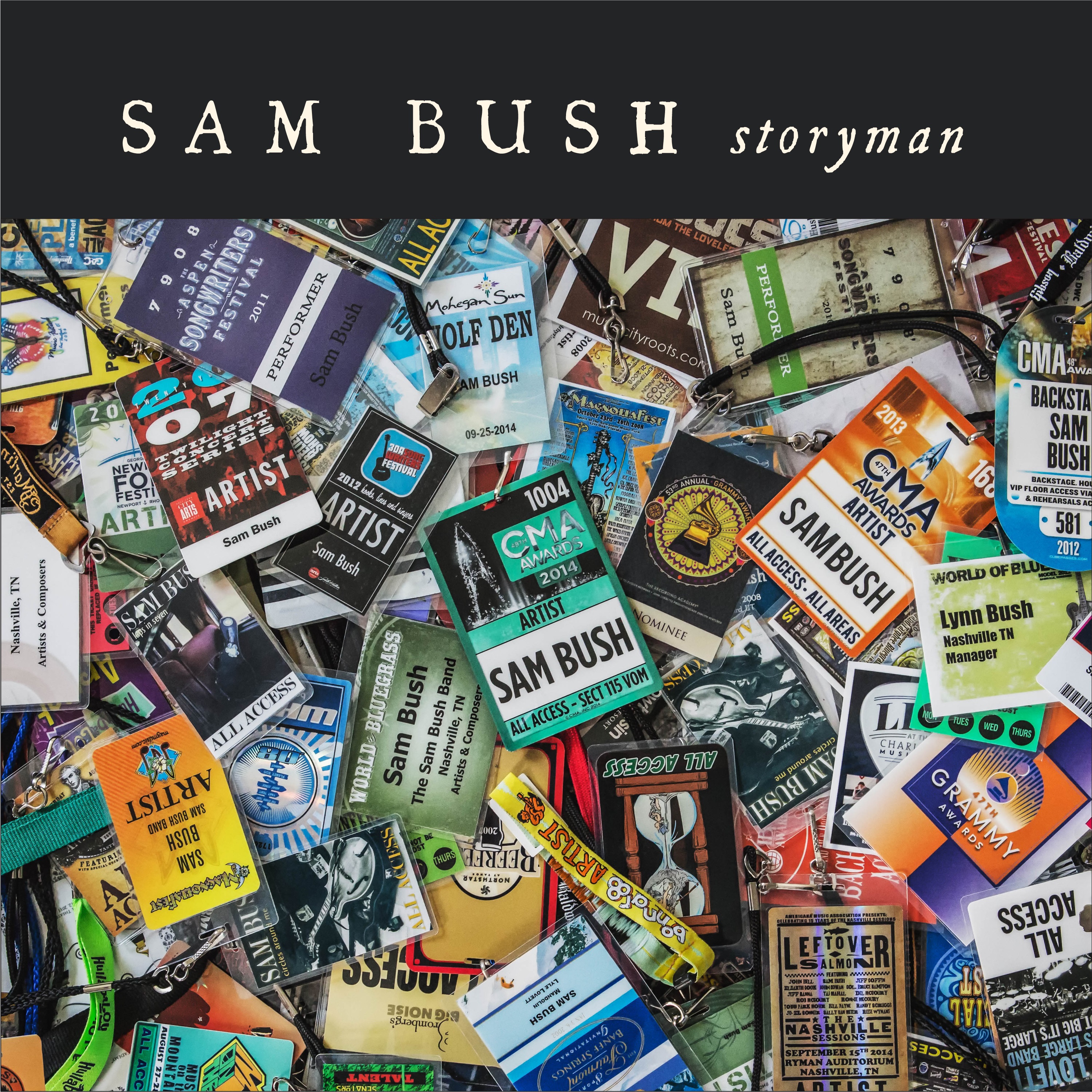
I got to talk with Sam this week about his new record, Storyman. We touched on his songwriting process, festivals in the 1970s, and the future of his instrument of choice: the mandolin. These days, 46 years into his career, he’s often praised with patriarchal titles — Father of Newgrass, King of Telluride — but while he embraces his role as elder statesman, I got the sense that he mostly thinks about playing music, discovering new records, and writing songs with new friends or old heroes — for a man in his fifth decade of professional music making, he still brings to the stage a surprisingly joyful, boyish energy. In fact, if you see him off stage at a festival, he’s probably jogging to another set, mandolin case in hand, floppy curls bouncing above his unmistakable grin. He’s still loving it, even after all these years.

I’m struck that Storyman really showcases a band. It’s not just a backing band, but a band band.

Absolutely, yep. And that’s my love. That was my first wish as I tried to accomplish this singer/songwriter record. Really, my favorite musicians I get to play with are those four guys. We’re all in a band together.

That’s cool. It’s a pretty eclectic batch of tunes.

We did a couple of different treatments on this one, with an out-and-out country shuffle song on the duet with Emmylou [Harris], and then a Jimmie Rodgers kind of song with the one Guy [Clark] and I wrote, "Carcinoma Blues." Within our group, keeping it all acoustic, that seemed to be another thread to follow. Because I love to play electric music and to mix the two, but these songs were all definitely acoustic-style songs to me, so in that way, the obvious choice was our band.

Guy Clark and Emmylou Harris are a couple of my favorite songwriters. What was it like writing songs with those two?

Guy was the most masterful songwriter I’d ever worked with. With Guy, it’s kind of like the way he made his guitars: simple, to the point, not one wasted chisel. He liked his guitars plain and unadorned, just like his songs. And with Emmylou, you know, I played in her band for five years, so she’s taken on the role of big sister for me. For us to write together and sing together, it’s really a comforting feeling.

So there’s the country-style song, “Handmics Killed Country Music,” with Emmylou, and there’s even a little reggae thrown in there on “Everything Is Possible.”

Yeah, that tune with Deborah Holland! Steward Copeland and Stanley Clark and Deborah Holland, the three of them were in a band called Animal Logic. She’s a tremendous talent. So Deborah and I wrote this tune a number of years ago, and she had these real positive lyrics already going, so we said, we need to make this a Bob Marley-sounding song. So we put it together.

Funny you mention Bob Marley. When I was a kid, my dad’s two favorite bands were New Grass Revival and the Wailers. And you guys played Marley tunes, so I grew up thinking that combination of newgrass and reggae wasn’t weird at all. But sometimes people talk about you as if you dip your toes into separate styles — a little bit of reggae, a little bit of country, a little bluegrass — as if the genres are a buffet line. Do you think of those divisions when you’re arranging or writing a tune?

I don’t think about the genre divisions when we’re actually sitting and arranging. And that’s fine with our band, because there are different areas we can play in, so we’re fortunate that we can just think about the song. The way these songs were written kind of dictated the arrangements.

How was the recording process?

Really, we just went into the studio down in Florida, and the way the banjo and mandolin solos sound, that’s the way we played it that day. Boy, when you think of it, Scott Vestal is kind of the star of the record to me. He just plays so beautifully. His parts, his banjo picking is just perfect to me. I never suggest anything for him to play, and Stephen Mougin the same way. As Stephen and I were writing “Play by Your Own Rules,” we were trying to find a little fiddle tune-style melody to go with the lyrics. Those kinds of songs really turn me on. I guess we’ve got a couple of those on the record, that one and the one called “Bowling Green.”

Your hometown, right? Tell me about that one, “Bowling Green.”

On that one, Jon Randall came over to the house one day and he already had most of the first verse written, which was about my mom and dad, of all things. [Laughs] He had me and Lynn in tears. I said, "Well, hell, let’s finish that one." In that one, we specifically mention a couple of fiddle tunes. My dad, man, he loved the fiddle. God, he couldn’t have enough fiddle. His favorite tune in life was "Tennessee Wagner" and he just called it “The Wagner.” He loved fiddle contests, and all the Texans would come up to the fiddle contests and they would add an extra chord to the song. So my dad would say, “I don’t want to hear that 'Texas Wagner.' I want to hear the one from Tennessee!” So that’s why the song says, “He loved to saw 'the Wagner' / The one from Tennessee.”

That’s cool that it’s an homage, not just to those fiddle tunes, but to the music in your family.

Yeah, and that song’s true, you know. We would work in the tobacco fields and come in for the midday meal, which wasn’t lunch — it was dinner. And then at night, it wasn’t dinner — it was …

Supper!

[Laughs] Supper, that’s right. So we’d come in for dinner and we’d play a tune or two. It’s all true. Then we’d listen to the Opry. It’s just like the scene out of Coal Miner’s Daughter. We’d sit around and listen to the Opry on Friday and Saturday nights, gathered around that radio. My dad would just sit and wait for somebody to play a fiddle tune.

You know, I grew up with a lot of music, including some bluegrass, but I’m still pretty new to the insider’s bluegrass world. I’ve been to the last few IBMAs, since they’ve been held in Raleigh, and it’s always cool to see the mix of bluegrass communities that come out of the woodwork. From the real dyed-in-the-wool traditionalists from Southwest Virginia, to the Colorado folks with Grateful Dead T-shirts on …

Yeah, and that’s been true for all of my professional life, which started in 1970 when I got out of high school. That Spring, before I graduated, I went to the Union Grove Fiddle Festival, and that was the first time I found hippies out in the field playing. They were called the New Deal String Band from Chapel Hill. They were a little older than me, and I made pals with them. Of course, there were old-time traditionalists. You had the hippies and rednecks, the young people and old people. And that’s the great thing about acoustic music, bluegrass, old-time, folk music — the music was the tie-in. It isn’t just for one age group. I’m hoping this record is that way, too. It’s not for one age group.

I’ve heard Union Grove was a wild time back then. A lot of folks think of ’71 at Camp Springs, too, as a real watershed moment when you and Tony played with the Bluegrass Alliance. Now it’s been 45 years. Did you know it was a big deal at the time?

No, we were just trying to stay in tune! Camp Springs in ’71 — now looking back I know that, right around that very weekend, a lot of things turned around in bluegrass. Tony Rice’s last performance with the Bluegrass Alliance was that weekend. Tony was leaving our band to join J.D. Crowe’s band. That was a big turnaround in bluegrass music when Tony went on with Crowe. And the reason J.D. Crowe’s band had a vacancy is cause Doyle Lawson left Crowe to join the Country Gentlemen. And the reason there was a vacancy in that band was because Jimmy Gaudreau left the Country Gentlemen to form the Second Generation with Eddie Adcock. I mean, four bands turned around within a month.

And then, within two months, the Bluegrass Alliance became Newgrass Revival. Probably within the next year, they started getting the Seldom Scene going in D.C. And you still had the New Deal String Band over in Chapel Hill. And the Osborne Brothers, to me, were just outrageously great then. They were totally the kings of progressive bluegrass-style music. So those early '70s were really important. But right off the bat, it was obvious to me that bluegrass-style music wasn’t for one age group. It wasn’t for one type of person. And it doesn’t revolve around trends. It revolves around people learning to play and sing.

Talking about trends and tradition reminds me of Nick Forster’s speech at IBMA last year, where he said something like, “I love the Earls of Leicester, but we should realize that we gave our Grammy to a cover band …” What do you think about that? Too much homage being paid to the traditional stuff?

You know, I think bluegrass-style music has been in a good spot for a while now. Unfortunately, we just lost Ralph Stanley. I was privileged to see the Stanley Brothers in ’65, and, when I first saw Ralph, I knew I was seeing an incredible musical force, and he always has been. And he sure will be missed. But we still have some of the greats. The next great king of bluegrass for me is Del McCoury, and boy is it resting in great hands. And, of course, the Travelin' McCourys are a force — and then you think of Sierra Hull, and way on the top of the scale, the Punch Brothers, and then over on the West Coast, David Grisman has the David Grisman sextet, and then on the rock 'n' roll side, you’ve got the Sam Bush Band. We all give a nod to old-time bluegrass all the time. Too numerous to name them all because they’re all great — and anybody younger than 50, I think of them as the young bands! Within the world of bluegrass, the variety is pretty healthy I think.

I just saw Sierra play with the McCourys at DelFest, and, man, she’s great. I’ve seen you a few times now at Tony Williamson’s Mando Mania workshop at Merlefest. I take it you’re feeling good about the future of the mandolin?

Oh, the future of the mandolin is really rolling right along. Tony Williamson does such a great job with Mando Mania because, every year, he introduces me to a new, young player that I haven’t met. So Tony’s the one out there with his ear to the ground paying attention to all the young mandolin pickers, and, once again, he brings someone new that I haven’t met before that I’m always knocked out with.

As far as mandolin itself, I hesitate to start naming mandolin players because I’m a fan of all the young pickers. Now, with the advancement of people like Adam Steffey and Chris Thile, and now Sierra Hull — I see her as kind of having learned from Chris and Adam — the bar is being raised. I’m fascinated by the things they can play. I’m just glad to be in there somewhere!

You think [Bill] Monroe’s style is going to stick around alongside all the modern stuff?

As far as Monroe style, you know, that’s alive and well very much in the hands of Ronnie McCoury, Roland White, and especially Mike Compton. I really believe there will be people that always will want to play like Bill Monroe. Actually, it’ll be interesting: I think in the next 20 years we may see more people playing like Monroe than we have lately. The same way that guitarists love to dig up stuff from Muddy Waters and Elmore James and Skip James, you know, Freddy King and Albert and B.B. King. The way guitarists are honoring them, I have wondered if there might be a resurgence in Bill’s style, the same way that all banjo players want to play like Earl Scruggs.

Thinking of all the distinct styles of heroes like Scruggs or Monroe — you know, the first name guys, Doc [Watson], J.D. [Crowe], Clarence [White] — they sound now like they came up with their own style out of whole cloth.

Yeah, true.

A lot of young folks nowadays — and I mean friends of mine, great pickers — are coming out of programs like Berklee. Do you think there’s anything lost with the more conservatory-style instruction?

No, I think it’s just a different way to look at it. Once again, it sure hasn’t hurt Sierra Hull to go to Berklee for a couple years. You know what, great musicians come from both areas, whether you were schooled or simply learned by ear and are following the traditions. What’s the old joke? “Can you read music?" "No, not enough to hurt my playing.” Or, "How do you get an electric guitar player to shut up in the studio?"

Show him some sheet music?

[Laughs] To me, I mean, I chose to start playing after graduating from high school. I chose to move to Louisville from Bowling Green, Kentucky, and I started playing five or six nights a week in a bluegrass band. I was either going to go to college and play violin or do that. And I chose the more improvisational side. Of course, they’re both valid, but for myself, I believe I chose correctly. I tell you what — nothing will make you tighter than five nights a week playing in a bluegrass band. You spend a number of months in the wintertime doing that, when you hit your first festival, you are ready. You have done your homework. It was that way with New Grass Revival. When we recorded our first album, we were playing so much that, when we hit the studio for our first record, I know we did the whole thing in three days. We knew those songs — bam! — like the back of our hands. We were ready to go.

Any new stuff outside of bluegrass you’re digging these days?

You know, my listening tastes are pretty eclectic, I guess. Let’s see, what am I into these days? John McLaughlin’s new record called Black Light. The new Eric Clapton record called I Still Do has got some really great stuff on it. There’s a record called D-Stringz, and it’s Stanley Clarke on bass, Biréli Lagrène on guitar, and Jean-Luc Ponty on violin. And then, on the other side of the coin, I’ve been looking for this Country Gentlemen record on Mercury called Folk Session Inside forever … for I don’t know how long. Lynn and I walked in a great record store in Louisville, Kentucky, called Matt Anthony Records, and there it was — for eight dollars. [Laughs]

Man, that’s a good feeling.

So I finally just got Folk Session Inside — I’d had a tape of it, of course, but I’d never owned the record. Just when I least expected it, I was walking out of the store with that Country Gentlemen record and I was totally thrilled.


Photo credit: Shelley Swanger

3×3: Frank Solivan on Fallon, Fishing, and Finding the Right Jeans

Artist: Frank Solivan
Hometown: Originally Modesto, CA now in Alexandria, VA
Latest Album: Family, Friends, & Heroes
Nicknames: shwoolio, spanky, Franklin


Starting supper in Santa Fe.

A photo posted by Frank Solivan (@fsolivan) on

What was the first record you ever bought with your own money?
With my own money … New Grass Revival, Friday Night In America

If money were no object, where would you live and what would you do?
I'd probably want to move back to Alaska for part of the year to fish and hunt and be in the epic beauty of that place. Maybe live in Hawaii and spend lots of time with a Hawaiian sling and mask, snorkel and fins. Living island-style.

If your life were a movie, which songs would be on the soundtrack?
There'd have to be too many to mention. Songs from the Highwaymen to Tower of Power to Ray Charles to Stevie Wonder, Little Milton, Garth Brooks, Merle Haggard, George Strait, New Grass Revival, Flatt and Scruggs, and Bill Monroe.


@dangbooth and @fiddlinmanders pickin' at @cartervintageguitars today. #kidsinacandystore

A photo posted by Frank Solivan (@fsolivan) on

What brand of jeans do you wear?
Whichever ones fit! I usually have to try on a number of pants before I find the right fit. Recently, I found some in Target. But, in years past, I would wear Wranglers and Carhartt.

What's your go-to karaoke tune?
Don't have one, but if I did, I'd love to sing some Adele.

What's your favorite season?
Winter

Kimmel or Fallon?
Fallon

Jason Isbell or Sturgill Simpson?
Can I say both?

Chocolate or vanilla?
Depends on my mood. If I need some comfort, I'm on the chocolate


Photo credit: Chester Simpson