Chris Thile Infuses Himself Into Bach’s Partitas and Sonatas

How many years does it take for a musician to master the music of Johann Sebastian Bach? This isn’t the start to a joke, but the answer to the question can be a bit amusing considering that, for Chris Thile, there’s no such defined number of years or fixed amount of time.

It’s an apropos viewpoint for the GRAMMY-winning mandolinist, composer, vocalist, and collaborator to have, given that Thile is reviving a Bach-related pursuit he began more than 12 years ago. In January 2013, Thile recorded three of the six works that make up Bach’s Sonatas and Partitas for Solo Violin. That August, he released Bach: Sonatas and Partitas, Vol. 1. The logical question following the record’s release and enthusiastic public praise was, “When would volume 2 arrive?”

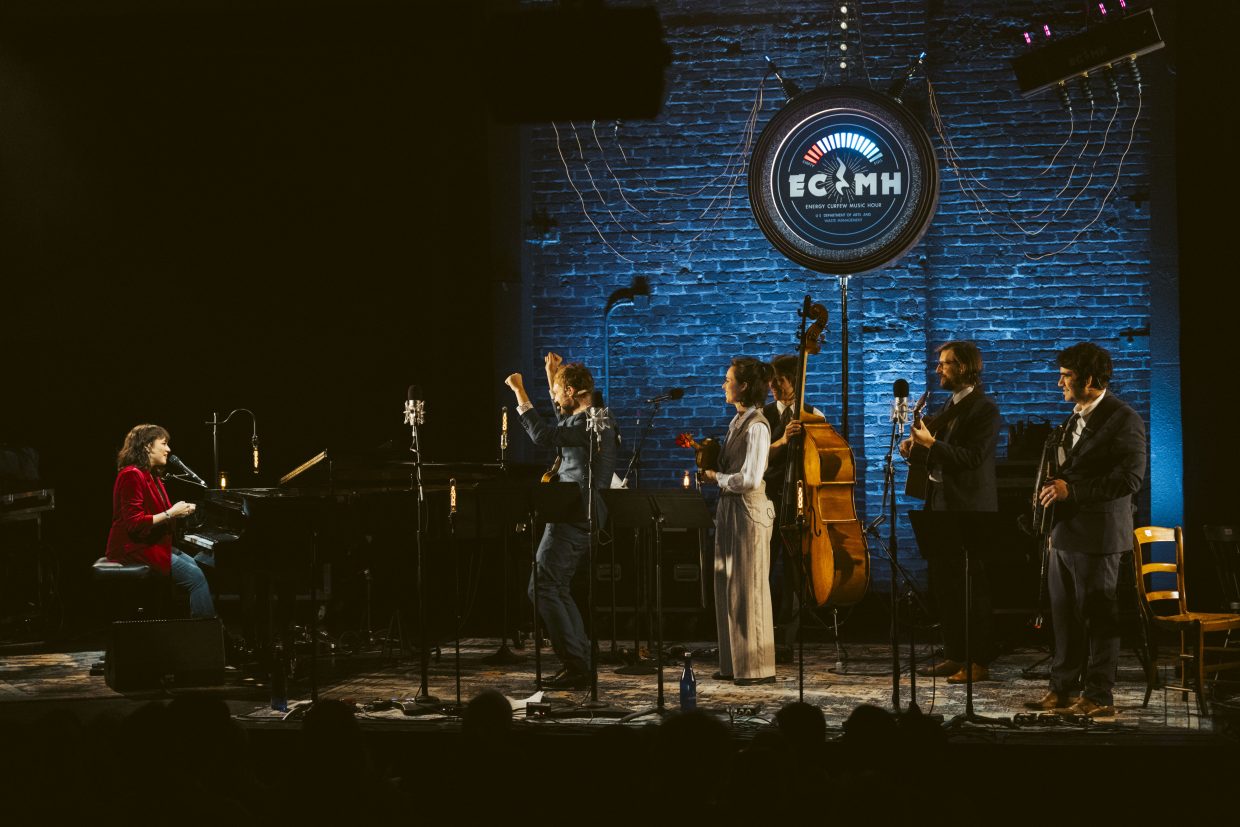
There’s no disputing the abundance of professional endeavors and musical collaborations that Thile dove into since then, recording with the likes of Yo-Yo Ma, Brad Mehldau, Edgar Meyer, Punch Brothers, and Nickel Creek; winning a MacArthur “Genius” Grant; hosting Live From Here; releasing other solo albums; and even creating a new musical variety show with Claire Coffee, The Energy Curfew Music Hour, which just released its second season on Audible. The extended wait has been understandable. Still, it became difficult not to wonder if Bach’s sonatas and partitas would ever see completion in Thile’s extensive and stylistically diverse discography. Thankfully, Thile renders the other half of the collection on a new solo recording, Bach: Sonatas and Partitas, Vol. 2, released November 7.

The undertaking sounds simple enough: record the remaining two partitas and one sonata. However, Thile embraces Bach’s work with a completely different aim from the first volume. Vol. 1 stayed true to Bach’s written intentions as much as possible. Now, Thile has allowed himself to consider his inner desires for what he feels the music needs – particularly where his music-making process is concerned.

The result is music that is not only pristinely performed, but also offers moments that occur naturally as Thile puts each piece together. Whether that means the ethereal decay of an individual harmonic, harnessed and expanded to ignite a particular feeling between movements I and II of Partita No. 3 in E major, or listeners’ ears traveling from one place to another as a piece blends audio from two completely different settings – like a concert hall, public park, or Blackberry Farm. Vol. 2 is an enlightening peek into Chris Thile’s mind and a bit of a walk in his shoes. In fact, he goes so far as to say that the process of learning Bach’s music is eternal, ongoing, and personal to every musician.

“It’s never done,” he says. “I think you could keep living and growing with Bach forever. But god, what a rewarding process!”

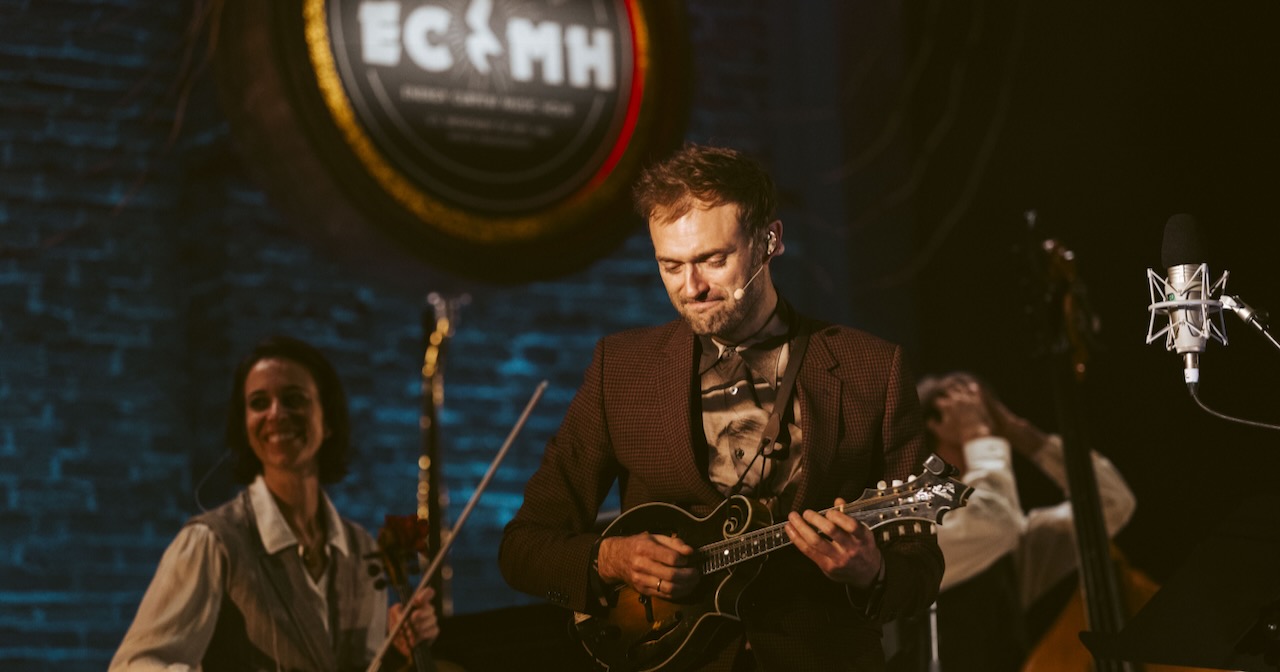
Chris Thile spoke to BGS on a call from Ann Arbor, Michigan, amid a cluster of solo tour dates. He reflects on the different ways musicians become inspired to explore Bach’s music, some of the very subtle but unrelenting dissatisfaction he encountered during the recording process, how practicing Bach is like practicing yoga, and much more:

Given the profundity you view Bach’s music as having, how did you negotiate its iconic place in music history with your desire to explore the possibilities you feel when listening to it, learning it, and making it part of yourself?

Chris Thile: I think that almost every ambitious musician’s relationship with Bach begins when someone tells them they should check it out, you know? Some of us just encounter it in the wild and have a major moment with it, but for me, my grandmas on my mom’s side – my grandma and my step-grandma – they both are excellent pianists and taught piano, performed a bunch, and both are gigantic Bach fans. When they realized their little mandolin-playing, bluegrass grandson was pretty serious about music, they were like, “Well, this boy needs to know about Bach!”

Sometimes it takes an expert to tell you that something is amazing and that you should see what’s there in it for you. And, sometimes, you’re just intrinsically aware of the thing’s value. I think mine was kind of both that helped. Having these women in my life who were so important to me tell me that this guy was really, really good helped [foster curiosity].

When [my grandma Sal] sat me down with Bach, it was with Glenn Gould’s second recording of The Goldberg Variations. She was also underlining that Gould’s performances of the music were more notable. That, I think, impressed itself on me, too; that we don’t have recordings of Bach playing Bach. So someone makes those for us or we make them for ourselves. Then it introduces this other music-making entity into the equation.

That’s a big and very long transition going from “Bach, the Almighty” to Bach, a human being whose music I am interested in having a real relationship with. And by “real relationship,” I mean a two-way, back-and-forth conversation. Yes, the text is fixed, but you can still have a living, growing relationship with it. And it takes a long time to learn how to do that. I think it’s lovely to have people giving you advice along the way.

You’ve said that practicing Bach “is like practicing yoga” and that it’s something you do everywhere you can. What does that mean for you?

Being someone who plays Bach and being someone who does yoga, I did want to figure out a way that the recording could represent that [connection] – the living, changing, growing, aspect of being someone who interacts with this music regularly. That these pieces could go from one place to another, potentially mid-movement. And then realizing that would also potentially mirror my experience of playing the pieces.

Because it’s not like I’m only playing them in my workspace. I might play them at the Elbphilharmonie in Hamburg and then a couple months later be at a Hampton Inn in Carbondale, Illinois. Or, it’s just too nice outside and I gotta practice outside today. So, multiple locations ended up serving two ends: wanting to be able to utilize the studio and [all that’s] possible when you’re recording music, to trying to figure out a way to sonically represent that life of practicing Bach.

Did you have a lot of thoughts on Bach going through your mind even while planning Season 2 of the Energy Curfew Music Hour?

Yeah! That was all happening concurrently. Every now and then, Punch Brothers would be in a practice room and I’d show my bandmates something, [asking,] “What do you think of this random thing I’m trying to do with the C major Fuga?” Just trying to get a read on people and playing a little bit of it on the side, to see if I can gauge a natural reaction to it and see if that gives me any ideas for future shenanigans. And it definitely did.

You’ve said that once you hear something in your head and enjoy it, you have to chase it until your ears tell you differently. That making peace with that aspect of your musicianship “is actually kinda the B story of this whole record.” What does it mean for you to “make peace” with this facet of your artistic spirit?

I am compelled to make this music. I don’t always understand the nuts and bolts of why I think it’s important to do it. First and foremost, I love the music. I love hearing other people play it. I love it on the page, I love the physical sensation of playing it, and I love the sound of me playing it.

But then, as is my custom, I’m voice memo-ing myself playing [the sonatas and partitas]. I heard the voice memos back and did not like how it sounded. There was something insincere about it. It was very, very strange, like something reflexive. It was almost the sensation of seeing video of me back and having some sort of physical mannerism that I was unaware of and not liking it. Or like, hearing the tone of my voice on a recording and thinking, “That’s what I sound like?” I think we’ve all had that sensation before.

So it was really disorienting and vexing, my perception of what was happening: the music that was actually being made was so off and somehow struck me as inauthentic and non-additive – and like regurgitation. So I had to do something.

The thought struck me, “I’m not ready to make this record.” The way I approach making music has changed over the last 12 years. I went back into this music thinking that my methods from when I was 31-32 were gonna be great and yield a good result. I just like to get my hands dirtier these days. The musician that I am takes everything down to the studs and blends it with everything else that’s swirling around in my musical life. That’s what I do. That’s how I make music. It’s how I write music and it’s how I approach performing any other music besides Bach. I think my reverence and awe that I hold [Bach’s] work in was preventing me from actually engaging with the music the way that I do with every other piece of music in my life.

It was scary for me, because I’m not any less reverent of what Bach did. I don’t love it any less. I don’t think it needs to be different. But when it’s me playing it, it has to go through my process, like everything else does, or else it doesn’t sound sincere and doesn’t sound authentic. That was an almost painful realization to have, and to have to basically scrap an approach and build a whole new approach to working on this music. But again, it wasn’t a new approach. It was just applying everything I know about music to Bach for the first time.

What was your intention when you decided to record in different settings – New York City’s Reservoir Studios and Tomkins Square Park, Tennessee’s Blackberry Farm, and Farrell Recital Hall at Murray State University – as well as choosing to merge audio together?

The different locations thing was part of the initial impulse, in terms of turning the thing into an actual record. It was a fairly radical move – to go from just recording in a nice studio or nice hall and getting a great sound and letting that be the sound and playing the music.

There were two reasons to do it: One of them is that, increasingly, I feel if you’re going to make a record, you should utilize the studio as an instrument. You should make sure that you’re using the medium. I guess it’s not a “should.” You can utilize the medium. For me, I’ve made a lot of archival records where really it’s just, “This is what happened in the room. Enjoy!” But I’ve realized about myself that often, when I’m listening to an archival recording, I have FOMO or something. I wish I were there, because clearly this happened in a room just like this and imagine if you had been there when it happened.

Whereas, I don’t have that when I’m listening to something that’s really taking advantage of the tremendous tool that the recording studio can be. For example, a record like Radiohead’s Kid A, where it’s something that can’t happen live. If you had been there in the room, it would have been really interesting to hear them discover the sounds. But then the flight that performance takes in the hands of a great engineer, who’s been set free in terms of exercising their own creativity in the mix environment, or artists who are very hands-on during that part of the process.

Again, it’s like a performance that’s happening over the course of months, even years at times. What happens live in the room is part of it. And then what happens in the editing booth is part of it, and what happens in the mixing room is part of it. If you’re going to make a record, it’s just interesting to note the difference. You can use the studio as an instrument or it can merely be the camera with which you’re taking the snapshot of where you’re at with a piece of music at a given time. I wanted to mess around with the former on this album.

The more I listened to something like that in my head, the more I liked it. The more committed to it I became, the more I considered, “[What if I] allow myself to record these things in multiple locations and even stitch performances together from from very tangibly different environments?” Really, sort of leaning into the surrealism of it. Now you’re in a studio and now you’re in a corner of Tomkins Square Park in the East Village. If I’ve allowed myself to do something like that, then what wouldn’t I allow myself to do?

Track 10, the first movement of Partita No. 3 in E major, I. Preludio, ends with nearly 13 seconds of ominous, rising, distorted feedback that pivots right into the clean first notes of movement II. Loure. What role is that very intentional ending meant to play?

It wasn’t something I knew that I needed until I had everything quote-unquote “done.” And then it was like, these moments in this medium need a little extra something. To give the [Partita No. 3 in E Major II.] Loure this kind of psychodrama towards the end of it was important to me. And then to prepare that [piece] with that crazy delay loop, grabbing that last harmonic [in the first movement, Preludio] was also important to me. So I asked my mixing engineer, Joseph Lorge, to find something. Bless him, I love what he found. That is almost like the harbinger of what’s going to happen on the Loure. What happens during the Loure was really important to me, artistically. But then I wanted there to be some sort of trumpet call like, “Hey, look out. Something’s coming.”

What stands out as something unique about making Bach’s music more your own this time around, especially knowing this is a solo endeavor?

There’s so much in today’s society about “Be yourself!” “Follow your dreams!” I’m talking about how important it is for me to have a two-way conversation with this music and not just revere Bach to the point that I’m taking myself out of the equation as a creator.

But we are so “Me, me, me, me” now. “This is me, just deal with it.” It can be really interesting to consider, “What happens when you expose yourself to the taste of other people?” It’s ultimately going to happen anyway, but what if there’s a practical concern? Can you go through that kind of exercise? It’s one of the reasons I love being in bands. In Punch Brothers, for instance, I need [all four of my bandmates] to be as happy with the music as I am. It’s not done until then. When I make music by myself, I have to figure out ways to trick myself into considering more than just me while I’m doing it.

[However,] you do have to make sure that you’re pleasing the only ears that you actually have any control over pleasing, which are your own. That’s first and foremost. But yeah, you’re always looking for any way to give shape to the very nebulous process of creating something from nothing.

What do you think musicians and composers of today can learn from Bach’s approach to music that would bring today’s songs, performances, and practice mentality closer to the timeless, ever-insightful, and continually inspiring nature of Bach’s work?

One thing that I keep trying to learn from Bach, just as someone who does try and write music or make it all the time, is how much of his art was happening anonymously. He had his professional duties – as he was a court composer and then he was a church composer – so there were those things, where he was writing music for very definite purposes with very definite deadlines. A ton of it was really theoretical and him working on the craft without any promise of getting a reaction out of his fellow humans – really his own curiosity and work ethic and desire to know and discover.

So I’m constantly thinking about, “Are people going to like this? Is it going to help me grow my audience? Is it going to help me make rent? Pay the mortgage?” Of course, [Bach] had those kinds of concerns. I think human beings in the early 1700s were not immune to ego. It’s not like Bach didn’t care what people thought of him – I’m sure he did. But I’m also sure that [thought process] took a very different form in those days and I think being able to make music – just for the love of it and with the patience that it takes to really explore your materials – is a thing that I at least keep trying to learn from Bach.


Photo Credit: Josh Goleman

Ethan Setiawan’s Personal Encyclopedia Mandolinnica

A short history of the mandolin in America: The mandolin is essentially a small lute which has been around since the 1300s. Italian immigrants brought bowl-back mandolins to the States in the 1800s. Mandolin orchestras were big in the 19th and 20th centuries, believe it or not. In fact, a whole mandolin family exists with mandolas, mandocellos, and mandobasses out there.

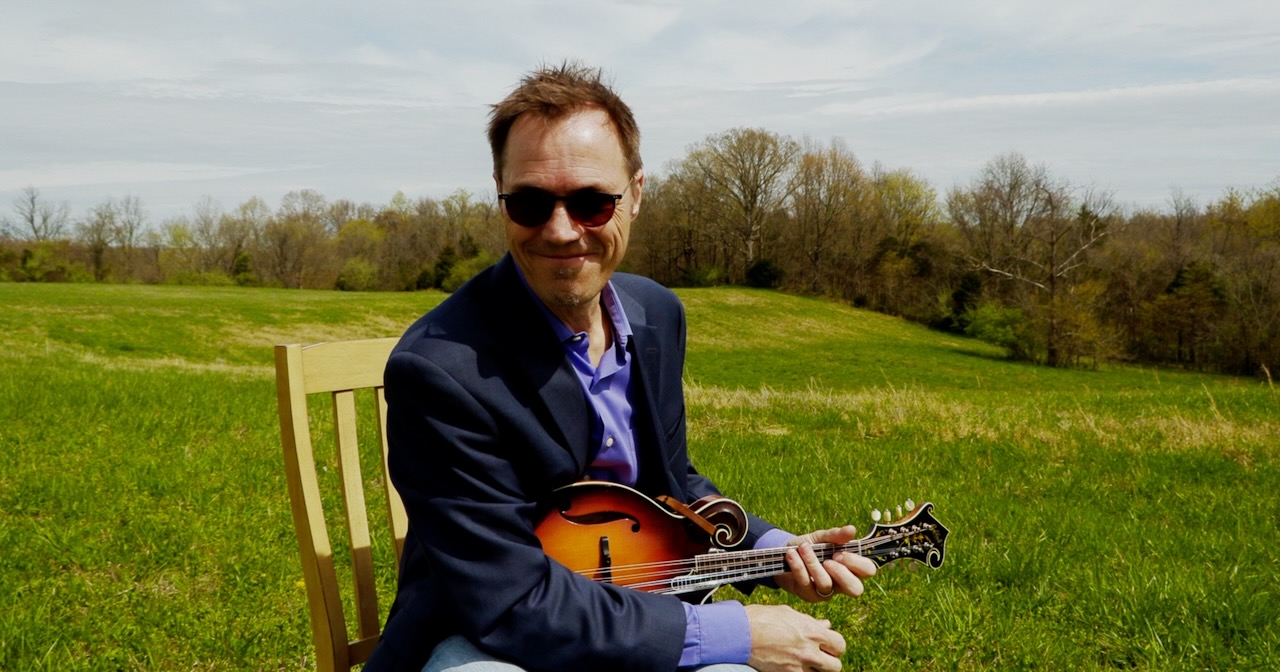
Around the turn of the 20th century, Orville Gibson started to develop flat-backed mandolins constructed more similarly to guitars. Finally, in the 1920s, Lloyd Loar created the F5 mandolin, with its longer neck and F holes. These new instruments were built to project and fill a concert hall, though they were ill-timed – the mandolin orchestra craze was fading and not ’til Bill Monroe picked up one of those instruments from a barbershop in Florida in the ’30s did they come back into their own. Since then, bluegrass mandolinists the world over have played these instruments or copies thereof. I play an instrument by John Monteleone, who started innovating on Lloyd Loar’s design in the 1980s – and so the tradition continues.

My new album, Encyclopedia Mandolinnica, turned into a survey of Western and Northern mandolin styles quite quickly. It’s very much been shaped by these inspiring musicians who were very kindly up for playing a duet with me. We go on a real journey through bluegrass both progressive and traditional, old-time, jazz, classical, and Scottish trad. The chance to get to work with these heroes of mine has been such a pleasure and invoked several “pinch me” moments. One of the most beautiful things was getting to see how everyone approached our little 8-stringed instrument so uniquely. I learned something from playing with and working alongside each of the mandolinists that agreed to be a part of the project!

In putting together this playlist I thought about my personal inspirations as well as the mandolin’s place in musical cultures across the world. It ranges from hardcore bluegrass, to Brazilian choro, over to Scottish trad – with lots of things in the middle. It mostly features folks you can hear on Encyclopedia Mandolinnica. I hope you enjoy my guided tour of the mandolin! – Ethan Setiawan

“Victoria” – Ethan Setiawan & Mike Marshall

Mike is a legend of the mandolin. He was an early member of the David Grisman Quintet and went on to collaborate with Darol Anger, among others. He helped write the book on progressive acoustic music and mandolin styles therein. This tune of mine falls within that realm and Mike was the perfect person to play it with.

“Shoulda Seen It Comin’” – Mike Marshall & Chris Thile

Mike also duetted with this young guy Chris Thile, whom you may have heard of. The live record that this cut is from is one of my very favorite recorded mandolin performances. Both mandolinists are at the top of their game. This tune was in my ear quite a bit when writing the previous tune, which maybe you can hear?

“There Will Never Be Another You” – Don Stiernberg

Don is one of the world’s foremost practitioners of jazz mandolin – a combination of words you might have never thought you’d hear. He studied with the great Jethro Burns of Homer & Jethro before forging his own path forward into a style where few mandolinists have ventured. Don was a teacher of mine during high school and it was great fun to get to be in the studio together for Encyclopedia Mandolinnica.

“Jiguaraña” – Ethan Setiawan & Maurizio Fiore Salas

Venezuela has a rich and beautiful mandolin tradition that not many folks are aware of. This tune is a co-write between myself and Maurizio. We took a jig (a Celtic form in 6/8) that I came up with and Maurizio had the bright idea of putting it over a Venezuelan rhythm called guarana (also in 6/8). It’s always a joy to play with Maurizio, he challenges me in the right ways.

“Wonderful” – Kinnaris Q (Laura-Beth Salter)

Laura-Beth is at the forefront of the Scottish trad revolution in Glasgow, Scotland. This track by her band Kinnaris Q puts the mandolin front and center – when she takes the tune at 1:52 check out the facile right hand triplets! We co-direct the Glasgow Mandolin Retreat as well and it’s always great to get a tune with LB.

“Blue Grass Stomp” – Bill Monroe

This is where it all started for a lot of us. Bill Monroe, along with Earl Scruggs and Lester Flatt, in the ’40s had something electric and powerful, so much so that in large part bluegrass has been unchanged since then.

“New Cimarron” – Matt Flinner

Matt Flinner is one of my favorite mandolinists out there. One of the many things that strikes me about his playing is how good it feels. Everything is placed so precisely and beautifully. He also writes great tunes that beautifully synthesize lots of things we love about bluegrass, old-time, and jazz. This is one of my favorite tunes of his.

“Golden” – Ethan Setiawan

In a similar tradition to the last tune, this is my take on a progressive “new acoustic” tune. Darol Anger on the fiddle here, he produced this album and it was such a joy to work with him on it.

“O Voo Da Mosca” – Jacob Do Bandolim

While bluegrass was developing up north, another mandolinist was fusing styles down south. Way down south. In short, choro is a fusion of classical forms with jazz harmony and Afro-Brazilian rhythms – similar on the page to ragtime. Jacob Do Bandolim (which translates to Jacob the mandolin, amazing) wrote many tunes that became staples of the style and was a virtuosic mandolinist to boot.

“Saint Cecilia Caprice” – Hamilton De Holanda

Hamilton De Holanda is the Chris Thile of Brazil. Amazing technically and a great musical mind. He wrote a double album of caprices and made the music public on his website, as well. Every mandolinist reading this: go download them, now!

“Salt Spring” – John Reischman

The greatest modern jam standard of our time! John is another great tune writer. He also gets the most beautiful sound out of the mandolin.

“Shetland Jigs” – Hildaland (Ethan Setiawan)

My own contribution to the Scottish trad lexicon from my duo with fiddler Louise Bichan, Hildaland. These are a couple nice jigs from Shetland. I’m playing mandola here, but I’ve tuned the highest string down a step and put on a capo so that the strings are tuned DAEA. This is inspired by the fiddle, which is crosstuned – common in old-time but not so common in Great Britain. We thought it was a cool connection to draw for our duo which goes between those styles at will.

“Canon at the Twelfth in Counterpoint at the Fifth” – Caterina Lichtenberg & Mike Marshall

Caterina is one of the greatest classical mandolinists to ever live. There have been vital classical mandolin traditions going on this whole time in Italy and Germany, which is so cool to see. Classical music is being made on the mandolin at very high levels and being taught as well.

“Queen of the Earth, Child of the Stars” – Sharon Gilchrist & John Reischman

A beautiful old-time tune, played so beautifully by Sharon on mandolin, John on mandola, and backed up by Scott Nygaard on guitar. I first heard this tune played late at night by Darol Anger and Bruce Molsky at Freshgrass a bunch of years ago now and it’s stuck with me ever since.

“Big Hill” – Ethan Setiawan & Andrew Marlin

Andrew has taken the mandolin scene by storm over the past several years with beautiful tunes and great trad bluegrass playing. Part of the thing that developed with this project was to write something that I thought might work well for each guest – not to explicitly write something that sounded like theirs, but to draw a little inspiration. I think this tune captured something there and I love the way Andrew accompanies the tune.


Photo Credit: Louise Bichan

BGS 5+5: My Brother’s Keeper

Artist: My Brother’s Keeper
Hometown: Cincinnati, Ohio
Latest Album: Wartime Cartoons
Personal Nicknames (or rejected band names): Most of the band goes by our given names. Titus, Joshua, Adam, and Benj(amin), but our bass player “Wyatt” has been holding strong to the nickname “Sawmill” and has a “Sawmill” vanity license plate on his Ford Focus to prove it.

Answers provided by Benj Luckhaupt. 

Which artist has influenced you the most – and how?

I’m sure any artist would say “it’s hard to choose” and I’m going to say the same. Brian Wilson, Chris Thile, Alison Krauss, Tony Rice are all so formative to us, but as a songwriter I would say Bruce Springsteen has inspired me above all. His melodies are insanely catchy, his lyrics are gritty and literary. I appreciate his ability to be both subtle and straightforward, sometimes in the same sentence. He tells you the facts and then makes you think about the implications. Bruce also covers such a wide range of the human experience. His music is a great blueprint for the “song first” approach and I really try to incorporate that into my writing, even in the bluegrass medium. I want to write simple songs that make you think. There’s also such a variance in sound (think between Nebraska and Born in the USA) and yet it all works. I could nerd out about this forever.

What other art forms – literature, film, dance, painting, etc. – inform your music?

Definitely film and literature. We look to film often to inspire our visuals. We have a music video that is very Wes Anderson-esque, and the visuals for the album cover of Wartime Cartoons were inspired by the starkness of show Severance. There are certainly a few songs inspired by movies. A song called “The Banshees” on our last album was inspired by the landscape and darkness of a movie called The Banshees of Inisherin.

Literature, song and poetry are all so closely related. Leonard Cohen was a great author outside of songs. Spending a lot of time in books has had major influence on my writing, directly and indirectly. I love to start my day with a book about religion or history and end my day with a book about music or musicians. Sometimes I try to do an audiobook in between. Just taking in all those beautiful words is such a wonderful way to increase your vocabulary and worldview.

Titus and Wyatt are both photographers, and I think that art form opens up creative pathways as well, and of course contributes to the visuals of the band.

What has been the best advice you’ve received in your career so far?

This kid told me to think about what I’m thankful for and write about that. That was great advice. He was like 5 or 6 years old and I do think about thankfulness every time I write. Out of the mouth of babes.

What is a genre, album, artist, musician, or song that you adore that would surprise people?

Most people are pretty surprised when they find out that we love hip-hop and mainstream pop. They’re even more surprised when we tell them that our music is inspired by those genres. I’ve even had people say things to me like, “I like all music except for that rap crap” and I’m always like, “Oh, really? Because I love it!” Some people are even surprised when they hear how much we love The Beach Boys.

Since food and music go so well together, what is your dream pairing of a meal and a musician?

I’d like to sit down with Tony Rice and eat whatever fish he just caught and fried up. I’m sure we wouldn’t talk much, but we’d probably listen to Miles Davis and I’m sure I would learn a lot.


All Photos: Tasha Moehlman

Basic Folk: Chris Thile (Reissue)

(Editor’s Note: Welcome to our Reissue series! For the next several weeks, Basic Folk is digging back into the archives and reposting some of our favorite episodes alongside new introductions commenting on what it’s like to listen back. This episode featuring Cindy Howes interviewing Chris Thile was originally posted on September 9, 2021, after Chris released his solo album, Laysongs. Enjoy!)

Chris Thile has been making music nonstop since he was five years old. His musical parents found him a mandolin and he started taking lessons and jamming at nearby Southern California pizza shops. He met Sara and Sean Watkins when he was twelve, and they started Nickel Creek. In the meantime, Chris’ parents moved the family from California to Murray, Kentucky, and really started getting serious about evangelical Christianity. This would have a huge impact on Chris; his record Laysongs asks a lot of questions surrounding his experience with religion as a young kid. He talks about the transition from being a family with no religion in their routine to being enveloped so intensely in faith.

LISTEN: APPLE • SPOTIFY • AMAZON • MP3

Another important aspect that comes along on the album is Chris’ striking love for classical music. His grandparents gave him some pieces by Bach and set him up for a lifetime of studying and playing classical. Elsewhere in our Basic Folk conversation he gets into what it was like to grow up alongside Sara and Sean as bandmates, friends, and fellow Christians. One of the themes of the new album is about community, namely, engaging in a community that you love. Chris recognized that he dissented from Christian community in his young adult life where everyone was thinking the same way – Chris felt excluded, so he left. Now, in music, he’s found a new community where everyone thinks the same, so still certain people are excluded. He talks about how the pandemic helped further shape those feelings about exclusionary community. We also get into a riveting conversation about Chris’ thoughts on writing simple pop music and one of his deepest passions: wine. 


One To Watch: With Connecticut Origins, On the Trail Find Their Way in Bluegrass

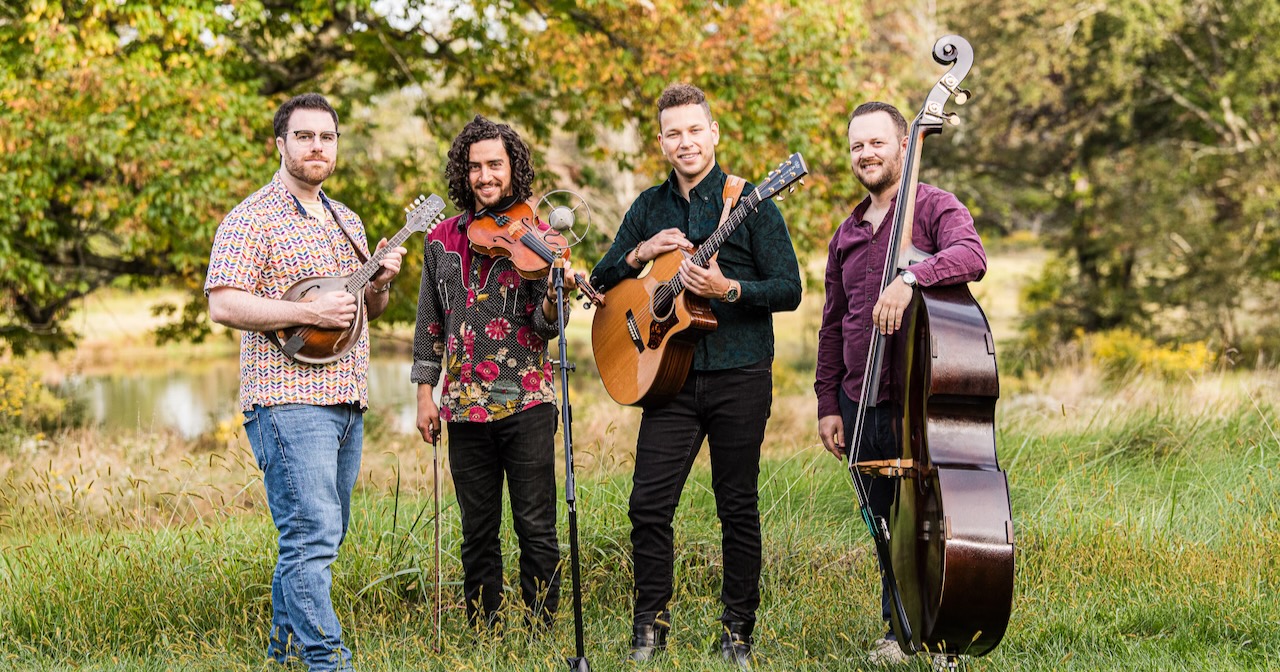
While Boston may claim its title as the bluegrass capital of the Northeast, acoustic quartet On the Trail is living proof that the Connecticut bluegrass scene is not only alive and well, it is thriving. Composed of four impeccable musicians who each attended Western Connecticut State University to earn vastly varying degrees, On the Trail weaves together an uncommon collection of backgrounds to deliver a unique sound.

Drawing inspiration from opera to the Beatles to jazz, these four achieve a sonic richness that will leave listeners edified and enamored. True to their band’s name, they trailblaze full force with the release of their first full-length album, Where Do We Go from Here.

BGS recently had the pleasure of sitting down with Tom Polizzi (mandolin, guitar, vocals), Matt Curley (bass, vocals), Charlie Widmer (guitar, vocals), and Austin Scelzo (fiddle, vocals) to discuss all things On the Trail.

Congrats on the new album! Will you tell me a little bit about how you all ended up in a bluegrass band together?

Tom Polizzi: Well for me, I was a really, really serious jazz guitar player for a number of years – it was my whole life. Then around the end of high school I started to get a little more disillusioned with what jazz was about and where that could take me in life. I knew about Chris Thile, though weirdly I didn’t know about mandolin’s association with bluegrass, but I knew I was really interested in mandolin, the tone and potential of the instrument. I got a little $400 scholarship from the music department at my high school and bought myself a mandolin as a graduation gift for myself.

I learned to play walking around a camp that I worked at that summer with the thing on my back, playing while I walked anywhere around the camp. I remember standing somewhere at that camp with the mandolin and someone asked, “Do you want to play a bluegrass tune?” I was like, “A what?” And then they taught me “Cherokee Shuffle.” From there, I just started learning fiddle tunes and while in college I pretty much gave up on jazz aspirations. Even though I got my scholarship to school with jazz, I just kind of started playing Doc Watson and bluegrass tunes and the rest is history.

Austin Scelzo: My background was in classical violin. I learned to read [music] growing up in school orchestra and then went on to study it in college. But in the summers of my later high school years, I got sent to those iconic fiddle camps that get so many people in the door and that opened up my whole world to non-classical playing, which eventually propelled me into spending my summers in college exploring different music camps and festivals. My freshman year of college I went to Grey Fox, my first bluegrass festival. And throughout college, I started playing in a bluegrass country group locally. I would play classical music in school systems and then spend summers floating from festival to festival, living out of my car and really digging into the bluegrass stuff, which over time grew to become my primary musical expressive tool. So between the classical/arranging mindset and my investment in traditional bluegrass, that’s kind of where my musical tastes lend themselves to this group.

Default icon

Charlie Widmer: Austin and I met when I was 19 years old – he’s actually the one that married my wife and me; he got ordained for it. We’ve known each other for such a long time. I had auditioned on a whim for a musical at 16. Didn’t know I could sing. They were doing Grease and I had a crush on a girl at the time. I went into that room and I met my now-wife, that same day at the audition, and I ended up getting the lead role. And then that kind of spiraled into more musical theater and trying to get into music school.

When Austin and I met, I was in school for classical singing and we were both interns at a church in Ridgefield [Connecticut], where we were both paid section leaders in the choir. After about a year of working together, somehow we ended up sitting next to each other. You know, we were in an a cappella group together, lots of different choirs, all these classes, but we just hadn’t connected. But as soon as we sat next to each other it was clear that we were getting along.

And so, fast forward five years, I was in the middle of a gig with my hip-hop soul band. I’d been doing stuff as a front man for a hip-hop soul group and it was awesome. I’m drenched in sweat, and Austin and I are talking in the break and I say to him, “Hey, man, I’ve been listening to Chris Thile and his group, Punch Brothers, and they’re sick, man. If that’s, like, a possibility in bluegrass, I’d love to do something where I’m playing guitar – let me know if a gig pops up.” We kind of agreed that he needed another year to finish school and get settled into being a teacher and everything. And a year later, almost to the day, he said, “I got us something if you want to drive.” It was perfect timing. My other group was falling apart. When this started, it just kept working and going. I don’t think any of us ever thought at that point, six years later we’d be here with an album.

Matt Curley: I was the last member to join On the Trail and I’ve been in the group for about three-and-a-half, four years now. I started playing guitar when I was in middle school and in early high school, I was playing in punk rock bands. When I got to high school, I really wanted to play in the jazz band playing guitar, but the guitarist was very good, So I thought, “I’ll play bass. It’s easy, it’s four strings.” Then the band director points to the upright bass. I remember thinking, “No, no, not that one!” So during that rehearsal it was the first time I ever played upright, and I eventually came back to the bass.

I’m the kind of guy who’s switched instruments several times. I switched to percussion, joining the drum line. I ended up marching drum corps for a few years, which led me to majoring in percussion at WestConn and then to get my master’s degree in Tennessee, right outside of Nashville, in classical percussion performance. For a while I thought I was going to be in professional orchestras, as I was training and practicing to take auditions for triangles and cymbals. Glad I didn’t do that. Then I started teaching band down there in Tennessee and I ended up moving back up here. I was teaching and Austin was the orchestra teacher in the same school, so we started jamming. Up to this point, I knew nothing about bluegrass. Even living in Nashville for a while, I knew nothing about bluegrass. Then I just happened to own a bass, so that led to me showing up to an On the Trail rehearsal. Here we are, three and a half years later.

CW: We also had a banjo player with us for the first three years, Chet, who was from Mississippi and originally grew up in Nashville. Chet lent a hand on some of the songs, even on the album. He got a doctoral offer to go down to Florida and get his doctorate in philosophy. He’s a genius, really such a smart guy – we always hope that Chet will join us again. We just always have a lot of fun together. I think that can be rare in groups.

Absolutely. Y’all have amazing chemistry and it’s evident. You recently released the band’s first full length album, Where Do We Go from Here. What are you each proudest of on the album?

TP: I think the fact that I actually wrote songs with lyrics and they made it somewhere. After I finished school with an audio engineering degree, I did our whole first EP – all of the editing, mixing, mastering – myself. And with this record, I felt like that kind of stuff culminated in a different way, where I knew how to be on the other side of the booth, so to speak, in a way that was productive. I think I was able to help us keep the sessions thoughtful and productive throughout, from a perspective of final product.

I also love that I’ve got a couple of very sad or introspective songs on the album, one of which my fiancée didn’t know I had written. We were on the phone with her mom and she was talking about “Help Me” on the album. She said something along the lines of, “This is so devastating. Tom, you really wrote something beautiful.”  And Claire goes, “You wrote that devastating song about heartbreak and loss?!” I had all these things written years ago after I broke up with my ex-girlfriend. Claire had never heard it because I don’t sing it – Charlie sings it on the record and we don’t play it at shows very much. She didn’t know I was capable of even having such sad words in my brain.

AS: I love that this album captures three or four original songs from each of us. My three songs all have a really different feel than anything else I’ve put out and they all mean something really powerful to me. They each capture a timestamp of a part of my life. The title track, “Where Do We Go from Here,” was one of the last songs we recorded, and one of the last songs that we even talked about putting together. It almost didn’t make the album at all. But we’re so proud of that track. That’s the song I’m by far the most pleased with. I also really like the way that “Trouble in My Soul” captured a different side of my voice that I’ve never captured on a record. It’s a lot more gritty, which is kind of cool, and then “Can’t Get You Out of My Mind” has some really nice moments too.

CW: For me, honestly I think the whole album is the pride point. When we did our first record, we had no clue what we were doing. I was really green to bluegrass in so many ways. Those first couple years were trial by fire, where I had no clue about any artists or vernacular and I was constantly terrified of every gig and jam. It felt like everyone was speaking a language. This record feels very full circle – we’d been talking about it forever. It really captures who On the Trail is. As songwriters, I think all of us have gained some confidence, though so much of that has come from just performing these pieces and getting positive feedback from the audience the last six years. When we started we didn’t know we had something, but our friends and family and even strangers told us to keep going. It just kept fueling us, you know? So, yeah, when I think about the proudest thing, it’s that we have this collection.

Given the diversity of musical backgrounds you each come from, where do you feel like your aligned priorities are? Do you have through lines about what you all prioritize and value musically?

TP: I would say one of the biggest factors that held us together is just that joy of making music. One of our biggest frictions, probably, is that diversity of background – even now, in the background of this interview, I’m just wrapping up my marketing job, my day gig, Matt’s driving home from teaching school, and Charlie and Austin both freelance more and do more things that are full-time music. A lot of it has been about finding that balance that brings us all joy and keeps us believing in what we’re doing. But you know, on our toughest days, what drives us ahead is that we love making music together, we love making music on our own and sharing it with one another.

CW: Yeah, as any musician knows, we’re always just chasing that incredible moment. We all share a true appreciation of music, and we are all deeply aligned regarding what exciting music feels like. When something’s hot, we all can agree immediately – it’s not even so much of a discussion.

AS:  We’re all also pretty consistent with the vocal harmony, regardless of the song. No matter the arrangement, we value strong vocal harmony and strong vocal presence. So a big part of this group is understanding harmony to a point where we can get really good three-part and other types of arrangements.

TP: For probably the first year and a half, I didn’t sing a note in the band. Vocals have become such a big thing. I learned from these guys, who are and always will be better singers than I, but they coaxed it out of me.

MC: Same for me. I’ve never taken a voice lesson or anything and now I’m singing four or five songs. It’s incredible.

For our final question – you’re our One to Watch, but who are you watching right now? Any creatives, musical artists, or otherwise that are inspiring you right now? Could even be a TV show or a Tik Tok creator.

TP: I’m sure they’ve been featured here a lot, but someone who’s been talked about a lot in our band is AJ Lee & Blue Summit. We love them. We’ve played with them. We’re inspired by them. Lots of our friends just around here, you know, keep us moving. The Ruta Beggars are doing fantastic things. Cahaba Roots, High Horse – all of those guys have so much going on. And if you’re looking for a good TV show to watch, watch Shrinking, because it’ll just rip your heart out. Oh, and one sleeper album – if you love all the music that we’ve talked about, this is an album I’ve heard no one else talk about. Maybe I’m just not talking to the right people, but it’s an album called Passages by Ethan Sherman. It’s got Wes Corbett on the banjo, and Thomas Cassell plays amazing mandolin on that album. I found it very inspiring.

CW: For me, a constant, big influence in songwriting and sticking to your vision and making it work has been Theo Katzman, who’s one of the guys from Vulfpeck. His last record especially resonated incredibly. All of his records have, but that one was during the process of making my album, as well as On the Trail’s album, and it empowered just feeling brave enough to do what we felt was right for the music. He was a big inspiration.

Allen Stone is also a huge inspiration for me as a singer and as a songwriter and he just dropped a new project. I always come back to Nickel Creek and Punch Brothers. Nickel Creek’s last album, I thought, was stunningly brilliant and beautiful.

MC: It’s really a great time for bluegrass, country, and folk music, even in the Northeast, not just down south [or] in Nashville. There are a lot of groups that are getting really big here. I mean, we have a Connecticut group, North County Band, that is doing some good things. Another group that I played with this summer, Raquel and the Wildflowers, from the Poughkeepsie area, are also doing great things. Shout out to the Rock Hearts, the other group Austin fiddles with. They’re great too.

AS: I mean, I would definitely have to reiterate the bands that Tom mentioned. We’re so steeped in the New England scene, we play so many shows, and my best friends are in so many of these bands. We’ve been friends with the Ruta Beggars forever. I mean, they were my earliest experience seeing young people play bluegrass music at Grey Fox. I just love those guys – they are so hardworking. They just got signed this year and are doing awesome stuff.

I go to IBMA every year with the Rock Hearts and I see some of the upcoming bands, and every once in a while one will really strike me, and the one that struck me this year was Never Come Down. I got to hang out with them in Colorado and I was hanging with the Stillhouse Junkies, who have a new player from New England that just joined them this year, so they’re a quartet now. They’re doing some really cool new stuff. Another band is Della Mae, and they’ve been around for a really long time, but they’re still producing amazing new songs. I mean, some of the songwriting that comes out of the group has absolutely made me weep, multiple times. Some of the songs are unrecorded—they’re still building a repertoire that’s really meaningful and really powerful.

I think we always have an eye on Twisted Pine, too, who just came out with a new album, and they have all these really fun videos, too. They’re doing something that I think we hope to do as well, which is kind of keep a foot in the bluegrass door, but also step into spaces that bluegrass music hasn’t been to. I think our music is suited for that, to get it outside of the traditional festival circuit, the traditional concert series, and preserve the tradition we’re so grateful for while also being innovative.


Photo Credit: Courtesy of the artist.

Chris Thile Dives Into New Audible Variety Show, ‘Energy Curfew Music Hour’

Punch Brothers’ new audio-based variety show, The Energy Curfew Music Hour, takes listeners to a fictitious, not-so-distant future where, as the show materials describe, “diminishing resources and extreme weather have ushered in a worldwide effort to ration electricity. America has instituted a weekly ‘energy curfew’ where the power grid goes down completely and we all live electricity-free for 24 hours. The Energy Curfew Music Hour hits the airwaves an hour before the lights go out while the nation tunes in and turns off together before the Dark Day.”

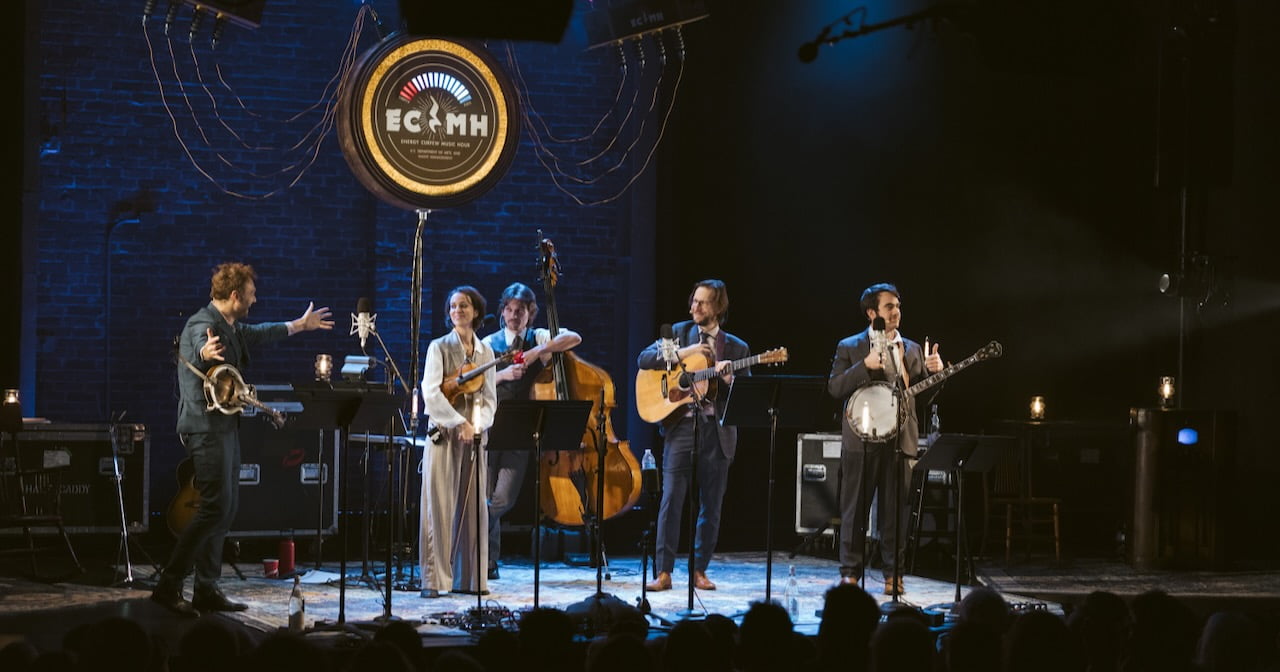
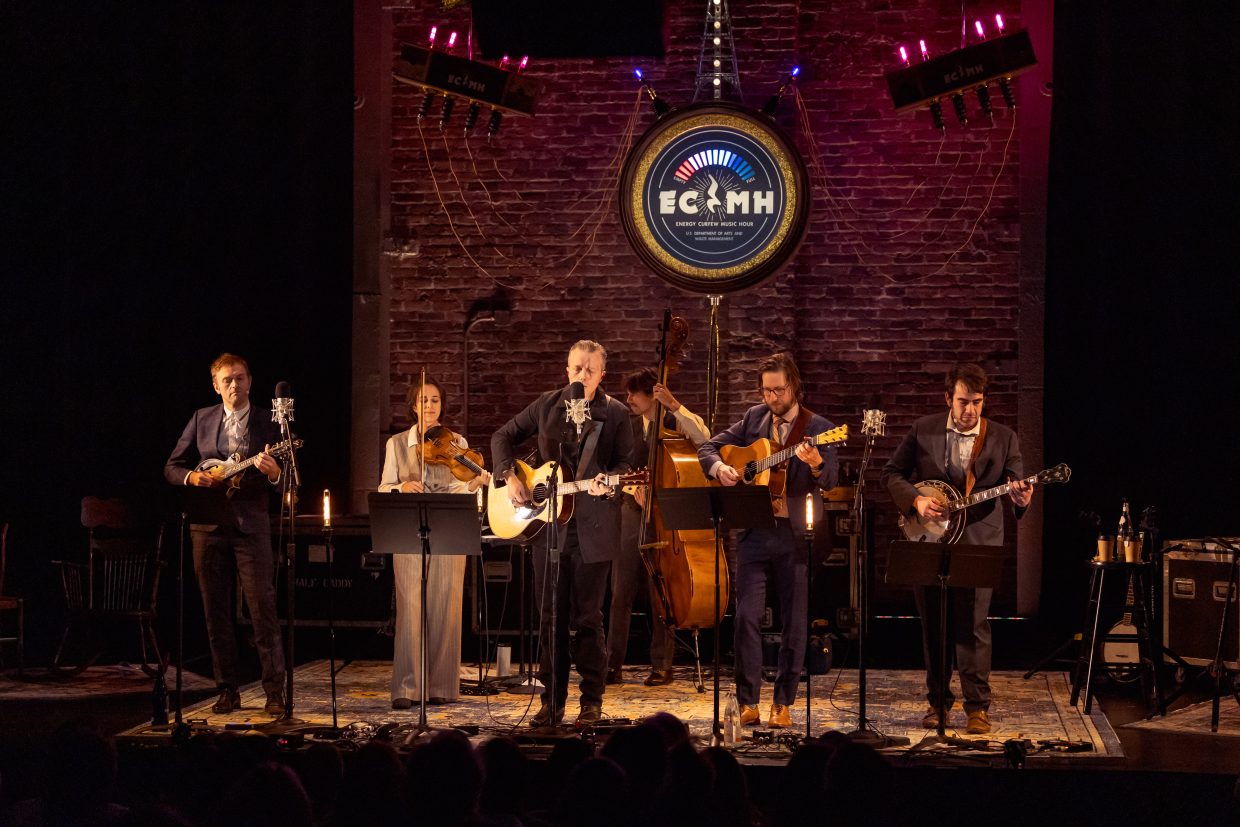
The Audible exclusive, eight-episode series was recorded in front of a live audience at the Minetta Lane Theatre in New York in early 2024 and features a cavalcade of all-star performances backed by Punch Brothers, who serve as co-hosts and house band.

BGS executive director Amy Reitnouer Jacobs spoke to Punch Brothers’ frontman Chris Thile about the show and what’s next for the band.

What a good way to start my week, chatting with you! I’d love to start by hearing how The Energy Curfew Music Hour started.

Chris Thile: [My wife, Claire Coffee] and I came up with the idea a long time ago… originally it was like a show within the show for Live From Here.

We always thought maybe two-thirds of the way in the show, we would all of a sudden flash-forward to a future that was like this. And we’d gather round one microphone, because I’ve always loved the sounds of those old variety shows and their campy-ness.
And then of course, practically speaking, there’s not much of a platform for acoustic music out there. That was the thing I missed the most on Live From Here: I was obliged to at least try to concern that show with the width and breadth of the music being made in the world, regardless of aesthetic.

Norah Jones joins Punch Brothers on stage at Energy Curfew Music Hour at Audible’s Minetta Lane Theatre in New York City.

There’s something in what you mentioned about old-time radio shows with one microphone. When you think about when those were popular, it was the Dust Bowl, the Depression, a time that was really hard for most people. And the radio brought everyone together. So, in an age where we are so splintered as a society, I find [Energy Curfew Music Hour] very comforting. But there are elements of dark humor throughout too… am I reading too much into it?

Oh, no you’re right on it. There’s a certain aspect we always talked about, trying to strike the balance between shameless optimism and at the same time as I think it is really staring the monster [of reality] in the face. The extent to which we’ve imagined life has changed in a very short amount of time is huge. None of us have pseudonyms. We’re all [playing ourselves], so it can’t be that far in the future.

The extent to which we’ve imagined that life has changed is dramatic and potentially traumatic. And there’s some gallows humor throughout that. But despite taking place in this “dystopian future,” there’s nothing actually futuristic about the show. We wanted it to feel like a little bit of escapism, but a little bit real too.

Yeah, we know that change happens very fast in our world today. It’s not that hard to put yourself in those shoes when you’re listening.

That’s good to hear. Claire and the band and I keep talking about the increased emphasis on collaboration, compared with Live From Here, which was more just “Here are some acts that we love…” But those acts coexisting or working with me or the band … those were few and far between on that show, whereas on this show, it’s every episode. That’s also something of an analogy for the kind of thing we have to do just as human beings, not just as musicians, to effect the kind of change that we’re all hoping to see [in the world].

Gaby Moreno guests with Punch Brothers during the Energy Curfew Music Hour.

Can you talk a little more about working with Claire? I know you guys have worked together on Attention!, [a new narrative live show for mandolin and orchestra], which you’re taking more places now. What is your process like being married and collaborating?

I think I realized [during the pandemic] how shamelessly I had used Claire’s incredible taste as a sounding board for just about everything I’d done since we met. So I hired her to produce the solo record I made, Lay Songs. Then I hired her for Attention! and she helped me tell the story of how I met Carrie Fisher on a rooftop bar in San Diego in my mid-twenties, in what ended up being a really silly story, but also a very foundational experience for me in many ways.

When you’re telling a story like that – really when you’re working on any art – you get so inside of the thing, it’s very difficult to know how it’s coming across or if any of the stuff that’s so clear to you is landing with any other human. Claire is one of the very few people in my life who has absolutely no problem telling me when I’m full of shit, and it can be intense, but it invariably yields a better result.

So, when a couple people had asked me whether I wanted to do something like Live From Here again, I thought about it for a little while and remembered Claire’s and my idea for a show within a show. I asked Claire whether she would be interested in trying to make that a whole show and then fairly soon after that, the idea of Punch being the house band and co-hosts with me materialized and it was really off to the races.

It all felt very comfortable and natural. Claire is not a musician by trade; she’s an actor and writer and now director, and she’s always been the person that all her writer friends go to for their first round of notes. She has an extraordinary ability to strip away and identify what’s in between the writer and their audience – of what’s getting in the way. We’ve benefited a lot from that.

Sylvan Esso perform during a taping for Energy Curfew Music Hour episode 5 at Audible’s Minetta Lane Theatre in New York City.

You’ve got some incredible names in this first season as guests – Norah Jones, Lake Street Dive, Jon Batiste, Kacey Musgraves, and James Taylor, just to name a few. Who brought the most surprising acoustic performance to the show?

Sylvan Esso came in and were really excited to not do what they normally do. To be there with them using Punch Brothers, wielding us like a laptop and basically muting and unmuting us, but all in analog! I think that was a moment of proof-of-concept for me. When we did that, I found myself cackling with surprise and delight. I hadn’t suspected that it would crack the show open to a whole other level.

You’re premiering some new Punch Brothers songs on the series too. Is there something else cooking for the band? What’s ahead now that you’ve added Brittany Haas to the lineup?

The band feels very, very new. We’re in uncharted territory and it’s so interesting. Four-fifths of the band is the same. You change one component and it feels completely new in the writing room, in the rehearsal room, and on stage. At this stage in the band’s career, that’s really interesting. So yes, there are new Punch Brothers songs and they’re being written specifically for Energy Curfew now, but of course, with an eye towards whatever’s coming next.


Season One of The Energy Curfew Music Hour is out now via Audible and is available to stream for free for Amazon Prime members. Discover more about the show here.

Photo Credit: All photos by Avery Brunkus, courtesy of Audible.

BGS 5+5: Mark Stoffel

Artist: Mark Stoffel
Hometown: Murphysboro, Illinois
Latest Album: True Tones
Personal Nicknames (or rejected band names): Dr. Pretzel and recently The Mandolinator

What was the first moment that you knew you wanted to be a musician?

Before I picked up the mandolin, I played the piano, inspired by my mom who was an accomplished classical player. When I was around ten years of age, my parents switched piano teachers and the new one taught me something completely new: blues, boogie, and ragtime. I did appreciate the classical stuff, but the boogie stuff got me really excited. Not too long after that I performed in school – I kicked it off with a fast boogie-woogie piece, then I played a solo on harmonica (probably not the greatest!) while continuing the piano rhythm with my left hand. The audience went nuts and I that’s the first time I felt that my calling was to be a musician!

What has been the best advice you’ve received in your career so far?

Much later in my career I was given a book by Nate Lee, amazing fiddler and mandolinist. The book is entitled Effortless Mastery, penned by a jazz pianist named Kenny Werner. I started reading and from the get-go I was mesmerized. It’s all about embracing yourself – your ideas, your expression, your every musical moment. Do not ever worry about what other people might think of your playing and don’t always compare yourself with others. I’ll never be a Chris Thile, because only Chris Thile can be Chris Thile. I am Mark Stoffel. It’s as easy as that. Kenny Werner writes it in a way that totally spoke to me and it really – to this day – helps me every day. When I compose I no longer dismiss any ideas, when I practice, perform or record, I try to be myself and stay true to it. That was the best advice I received in my career so far.

Genre is dead (long live genre!), but how would you describe the genres and styles your music inhabits?

We’re all just a product what we’ve been exposed to. I grew up listening to lots of classical music. Then my dad, in the ’70s, got into rock, soul, and disco music and he bought tons of records and spun them all the time. Then I got bluegrass, first the more contemporary stuff – which at the time was Tony Rice, New Grass Revival, the Seldom Scene – then I gradually worked myself backwards in time to gain an appreciation for first generation bluegrass.

I think all of that is what informed what I do today. Genres are worthless to me. There are only two categories: Good music and bad music. As long as it has good drive, good melody, compelling lyrics, and a soul, it’s good. I love AC/DC as much as Flatt & Scruggs.

If you didn’t work in music, what would you do instead?

I’d be a baker and make original Bavarian pretzels for my fellow Americans.

What would a perfect day as an artist and creator look like to you?

Get up in the morning, have a cup of coffee, grab my mandolin, and play whatever comes to my mind, most likely come up with some new riff or melody. That will set the tone for everything else that happens that day, and all will be good.


Photo Credit: Mary Stoffel

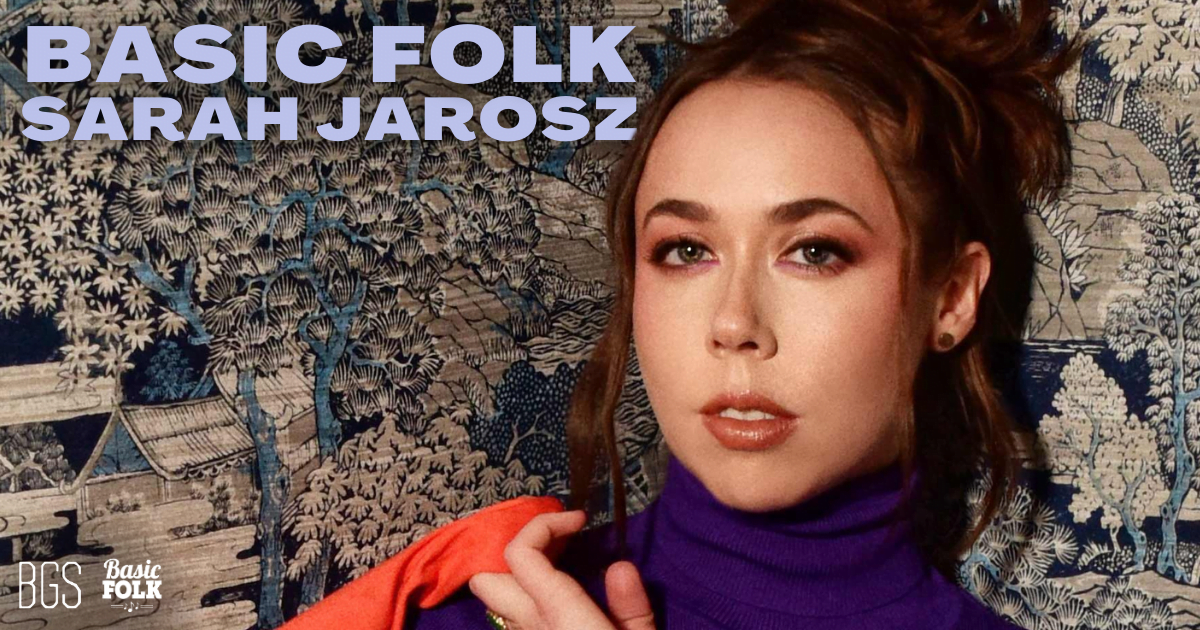
Strings of Support: Sarah Jarosz’s Mentors and Co-Writing Magic

Sarah Jarosz is what happens when young women are taken seriously. A huge part of the mandolinist’s story is that she had supportive male mentors and that has added to her confidence. We all know the age old story of “Young woman shows promise, gets exploited by the patriarchy and it affects her work.” We need to hear stories like this. Starting in her hometown of Wimberley, Texas, just 45 minutes outside of Austin – the live music capital of the world – Sarah found the mandolin at 10 years old. Labeled a prodigy, and thanks to the encouraging spirit of folk music, she found mentorship with seasoned professionals like David Grisman, Ricky Skaggs, Tim O’Brien and Béla Fleck. Following her time at The New England Conservatory of Music, she moved to New York and would go on to collaborate with people like Chris Thile in the Live From Here House Band and her trio I’m With Her, featuring Aoife O’Donovan and Sara Watkins, and won four Grammys.

LISTEN: APPLE • SPOTIFY • STITCHERAMAZON • MP3

After making the move to Nashville, on her latest album, the very impressive and sonically expansive Polaroid Lovers, Jarosz collaborated with producer Daniel Tashian, which originally was just a low-stakes co-writing project. The success of her first co-writing experience with Daniel led her to pursue other songwriting sessions with Ruston Kelly and Natalie Hemby. The collaboration found on the record has opened Sarah up to new sounds and new experiences. In our conversation, we talk about Sarah stepping into her own voice with confidence on this record and knowing her musical self enough at this point in her life. She describes her experience with ​confidence using the ​Dunning–Kruger effect, in which people with limited competence in a particular domain overestimate their abilities. AKA “fake it till you make it,” AKA “leap and the net will appear.” She also talks about her parents’ influence on her early musicality and how her mom is doing with her cancer remission. An overall theme of this conversation is that Sarah never lost sight of her goal: Keep it all about the music and don’t let noise get in the way of your important work.


Photo Credit: Shervin Lainez

Brittany Haas Joins Punch Brothers Just in Time for the Energy Curfew

I first encountered Brittany Haas when I was 14 years old, attending the Mark O’Connor Fiddle Camp outside of Nashville. Brittany was only a few years older than me, but she was miles ahead of me musically and professionally, already gigging with some of the best traditional musicians around. I bought a copy of her self-titled CD and learned every single track on it. When I would meet other fiddle players my age, we would often bond over this recording and its shared influence on our playing.

Haas went on to join Boston-based band Crooked Still, one of the most influential string bands of the last 20 years. In the small community of acoustic music makers and lovers, Crooked Still was the kind of iconic band – much like Nickel Creek and Punch Brothers – that created a hundred baby bands in its wake, each inspired by the reinvention of traditional song in modern and exciting ways. There was even a period of time when seemingly all of the young women involved in the folk and bluegrass scene (myself included) began dressing like Haas, wearing messy buns in their hair and colorful leggings under short boho dresses.

Following her time with Crooked Still, Haas went on to play with Gillian Welch and Dave Rawlings, in the house band on Live From Here, and with her own genre-bending quartet, Hawktail – among many other projects. Unlike other powerhouse women instrumentalists like Missy Raines, Molly Tuttle, and Sierra Hull, who have carved out career paths by leading their own bands, Haas has stayed largely under the radar to the wider public, working primarily as a collaborator or band member.

As my own musical interests have grown and changed, I have found myself feeling guilty at times for not putting my focus on being an improvisational instrumentalist, fearing that I’m taking a too traditionally female path as a songwriter, and reenforcing gender expectations. But as Brittany has kicked through ceiling after ceiling as an instrumentalist, I’ve thought “Hey, it’s OK, Brittany is so good that nobody will ever doubt that a woman can do it!” For years, Haas has been a pinnacle, an example for the rest of us female instrumentalists. So, you can imagine the thrill that I felt when it was announced that Haas would be the newest member of Punch Brothers, a band that is representative of the highest caliber instrumental prowess in today’s acoustic music scene.

Haas’ first gigs with the band have been as part of The Energy Curfew Music Hour, a live radio-style show created by Claire Coffee and Chris Thile in collaboration with Audible. The show features Punch Brothers along with special guests like Jason Isbell, Gaby Moreno, and Sylvan Esso among others.

BGS had the opportunity to ask Brittany Haas a few questions about her career and her hopes for joining the band in the lead up to a handful of Energy Curfew Music Hour shows in New York City this month at Minetta Lane Theater.

Chris Thile & Punch Brothers perform at Energy Curfew Music Hour with Jason Isbell in December. Photo by Rebecca J Michelson.

You’ve had a lot of experience working with various members of Punch Brothers in different bands and formats over the years, what about the particular aesthetic and ambition of Punch Brothers made you want to accept the gig?

I’ve been a fan of the band for a long time – I guess as long as they’ve been a band. So the idea of joining was very exciting. I think any fan would tell you that there’s something about the band – the expansive nature of their approach to writing and arranging music – that is really unique. They’re making music that doesn’t sound like anything else. Getting to jump into something that’s been evolving and expanding into and beyond itself for so long is really cool. And as an instrumentalist in this “new acoustic” musical universe, it’s basically a dream gig, joining four incredibly talented and smart people and making music through which I know I will grow as an artist.

You’re known as a fiddle player that’s rooted in old-time traditions, but also improvisationally virtuosic. Do you feel like your background in old-time will bring a different flavor to the band moving forward?

Old-time is a genre in which I feel a lot of joy and comfort, so it’s always nice when that can be utilized in service of a tune or a song. Lately, in playing with my sister and with Hawktail, I also feel that my voice is strongly Celtic and Scandinavian – basically a combination of the genres I grew up around at fiddle camp and got obsessed with. I think that stuff will come out naturally no matter what new music we’re creating and perhaps some of the music will be written in that direction.

When stepping into a role that has been created and maintained by one specific fiddle player for so many years (Gabe Witcher), how much freedom do you have to remake the parts for the older material in your own voice?

I think this is true in many areas of life– the more deeply you know something, the more you can put yourself into it. Once you know intimately how it goes, you can be freer and more artful and playful with it while staying true to its nature. So that’ll be a journey for me with the back catalog material. Also, sometimes the parts he played were just the best thing that could happen in that musical moment. Some of the parts are more written than textural/improvised, so in those cases I will need to stay true to what he played. And I love his playing! Playing like Gabe is fun for me, because it stretches me in a different way than I normally go.

What made you want to wear a suit for this gig?

I’d never worn a suit before joining the band, so I saw it as an opportunity to try that. I always thought that the women I saw wearing pantsuits looked awesome. Plus it’s great having so many pockets for mic and in-ear packs. The other part of my thought process was, this is a band and I want to integrate into it, so it makes sense to wear the uniform. No one said I had to wear a suit. I’m sure it would be cool with everyone if one of them wanted to start wearing dresses, so it’d be cool for me to do that too, and maybe I will at some point.

You’ve made incredible records in a lot of different fiddle genres at this point, is there any uncharted territory that you hope to explore in the future?

The depths of my own mind! I’m partially kidding; I do want to write more music. But there is always uncharted territory! Darol Anger is an inspiration in this – he never stops practicing and devising new ideas for getting around the fiddle. I hope to keep learning tunes from different musical traditions. Lately I’ve enjoyed learning conjunto music and I’d like to spend more time with Eastern European folk music, getting comfortable in different time signatures, etc.

What is a record that has been inspiring you lately?

James Taylor’s album Hourglass from 1997. We learned a few of those songs to play with him on the show and I fell in love with them. Also Alasdair Fraser’s album Dawn Dance, which I returned to recently after first being obsessed with it about 25 years ago. It is still as lovely as I remembered.

What is your process for preparing to play with so many different guest artists on the show – how do you approach constructing fiddle parts?

Mostly listening. Generally, when we get together with the guest artists that’s when most of the decision making about parts happens. So my job is just to show up being familiar with the music. Sometimes there are more specific string-oriented parts to play.

You’ve been a part of the Live From Here house band in the past, how does the vision and format for the Energy Curfew shows differ from that show?

The format feels similar, although there is more of an air of collaboration, because there is a bit more time for creation and also the same core band for every show. And, the premise of the show centers on the idea of it being purely acoustic music, so that’s mostly what it is with some inventive ways around that rule when needed.


Photos courtesy of Audible. Lead image by Avery Brunkus; inset image by Rebecca J Michelson. 

Artist of the Month: Sarah Jarosz

The songs of Sarah Jarosz have always been snapshots. Each, whether literally or obliquely, is a tableau – a window into a moment in time, an attempt to capture but never contain the intangible present. Whether demonstrable story songs or abstract, poetic text paintings, Jarosz’s catalog of material shows a ubiquitous skill – a writerly athleticism – for ushering her listeners into the scenes she inhabits or constructs. From her earliest release to her newest, Polaroid Lovers (out January 26 on Rounder Records), Jarosz’s point of view has been confident, relatable, and inviting.

Simultaneously, the expansive body of work she’s produced since her 2009 Sugar Hill debut, Song Up in Her Head, tells a tale as much of uncertainty as of skill and finesse and, within that uncertainty, a commitment to relishing the journey – rather than rushing toward an arbitrary destination.

A teenager when she first gained national notoriety, Jarosz was often compared to her mentor-peer-friend Chris Thile and her contemporary, Sierra Hull. While child bluegrass, Americana, and string band stars – proverbial and oft-mythologized prodigies – have a much more gentle route to adulthood than say, their Hollywood counterparts, it’s still a time hallmarked by experimentation, growing pains, exploration, and a prerequisite amount of floundering. Musically, Jarosz may have “floundered” a bit less than say, Hull or Thile or any kid whose teen years may have had a recorded, audio history. Nevertheless, you can trace a through line of angst, introspection, and finding oneself underlying the precocious self confidence of her early albums.

By the time Jarosz reached 2013’s Build Me Up From Bones, which gained her her first Best Folk Album Grammy nomination, that uncertainty was no longer an undertone, but a focal point in her music. On both Bones and the follow up full-length, Undercurrent, which then won the Grammy for Best Folk Album, Jarosz picks up and runs with those musical expectations, whether overt or projected. She plays with the dichotomy between the public nature of her growing up a heart-on-her-sleeve songwriter and bluegrass picker and the individual, private nature of seeking and finding her own agency within those paradigms. She purposefully built broad and appealing, commercial songs that are both assured in their sincerity and unconcerned with virtuosity or authenticity for their own sakes. She knows exactly what she’s doing, even – if not especially – when she does not.

Needless to say, the following projects World On The Ground and Blue Heron Suite feel like they are both indelible home bases built on the steady foundation of the albums that led to them. Each are distillations of Jarosz’s musical commitment to bringing her audience inside the turmoil and delight, growth and doubt, beauty and bittersweetness of life and song. Jarosz had arrived at her destination, hadn’t she? In her beloved New York City, a Grammy winning artist, picker, and songwriter who knows who she is and why she does what she does.

Ah, but remember, it’s the journey Sarah Jarosz is after and not the destination. Polaroid Lovers is a lens into the new growing pains, the new uncertainty, the new uprooting and, eventually, re-rooting Jarosz finds herself in the middle of now. She recently moved to Nashville, building a life with her new husband, bassist Jeff Picker. Polaroid Lovers, like its predecessors, brings the listener into how living in Nashville has reshaped Jarosz’s songwriting and creative and recording processes.

It may not sound like a Music Row album – it sounds, as all of her work does, exactly like Sarah Jarosz. Whatever that sounds like! – but it’s a collection that has the Row tangled among its roots and certainly in the water. Polaroid Lovers was recorded at Sound Emporium and produced by Daniel Tashian, plus it has many a credited co-writer, a bit of a departure for the songwriter who, besides in her work with Aoife O’Donovan and Sara Watkins in I’m With Her, rarely co-writes material for her own albums, preferring to pen most lyrics and tunes herself. Music Row and Americana hit writers like Ruston Kelly, Natalie Hemby, Jon Randall, Gordie Sampson, Tashian, and others each lent their own fingerprints and touches to this set of song snapshots.

Does Polaroid Lovers sound new? Does it sound like Nashville? Yes, it certainly does, but it doesn’t sound instant or ready-made either, and it always sounds like quintessential Jarosz. This is evidenced nowhere on the record as strongly as one of its lead singles, “Columbus & 89th.” Among more than a few masterworks in Jarosz’s catalog that center on her beloved, transplanted (former) hometown, New York City, “Columbus & 89th” is perhaps the best example of the form. Wistful and hopeful, with a tinge of bittersweetness from the wisdom that comes with age, it paints such a specific picture – of a literal street corner – but, as in all of her snapshots, this polaroid is not confining or finite, it’s resplendent and limitless. Following the photography metaphor one step further, it’s not difficult to see how the perspective Jarosz has gained by moving away from the city might have enabled her to render such a picture perfect homage to New York.

This is a vibrant, animated collection of Polaroid Lovers. This is Sarah Jarosz at her best– for now.

Watch for our Artist of the Month interview feature with Jarosz to come later this month, plus we’ll do a catalog deep dive and showcase plenty more content pulled from the BGS archives. For now, enjoy our Essential Sarah Jarosz Playlist:


Photo Credit: Shervin Lainez