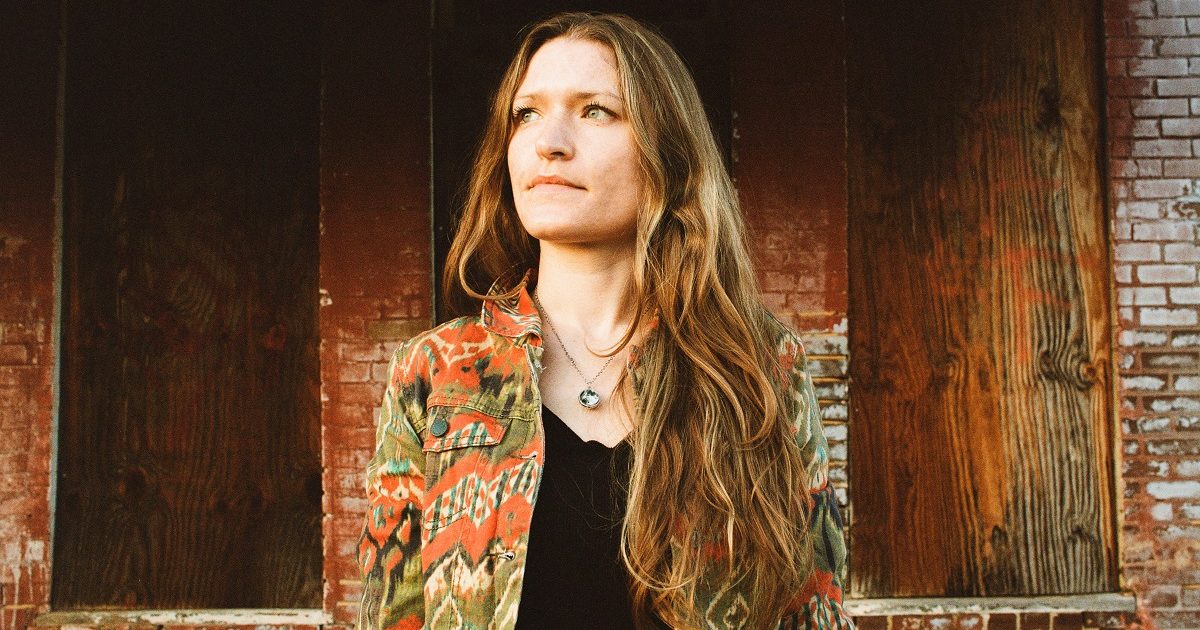
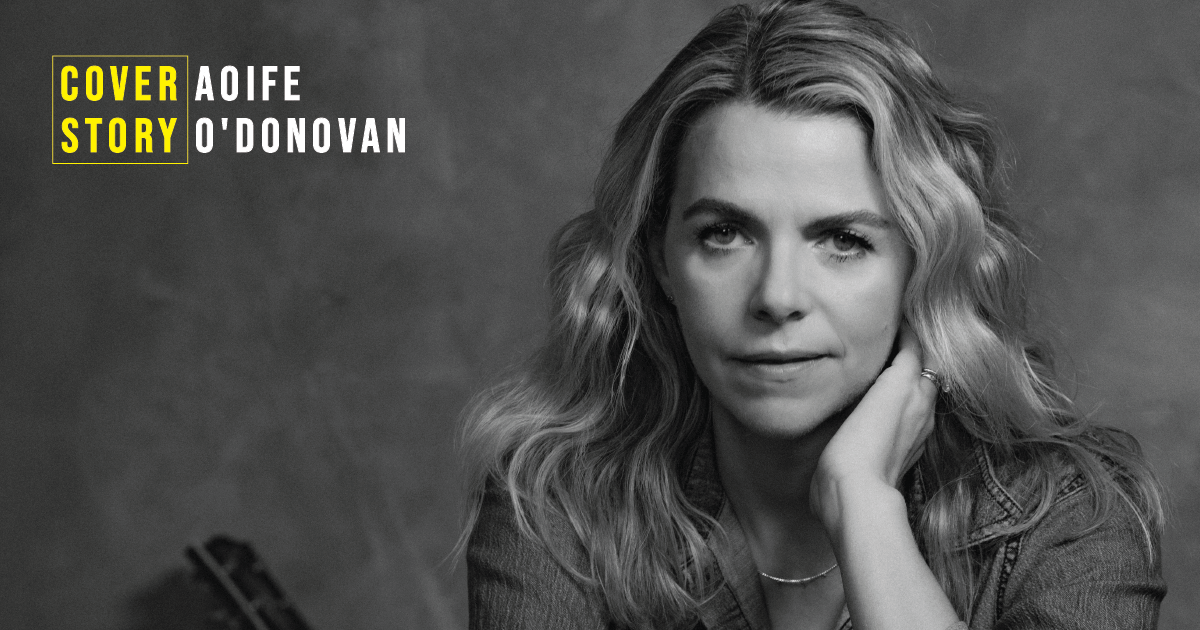
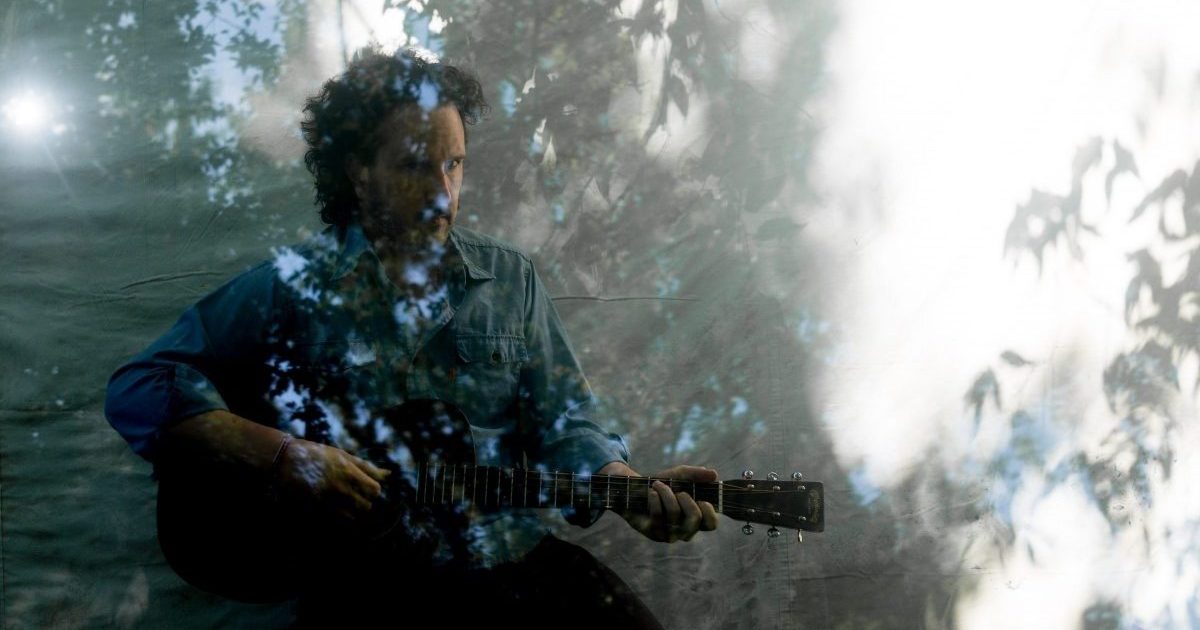
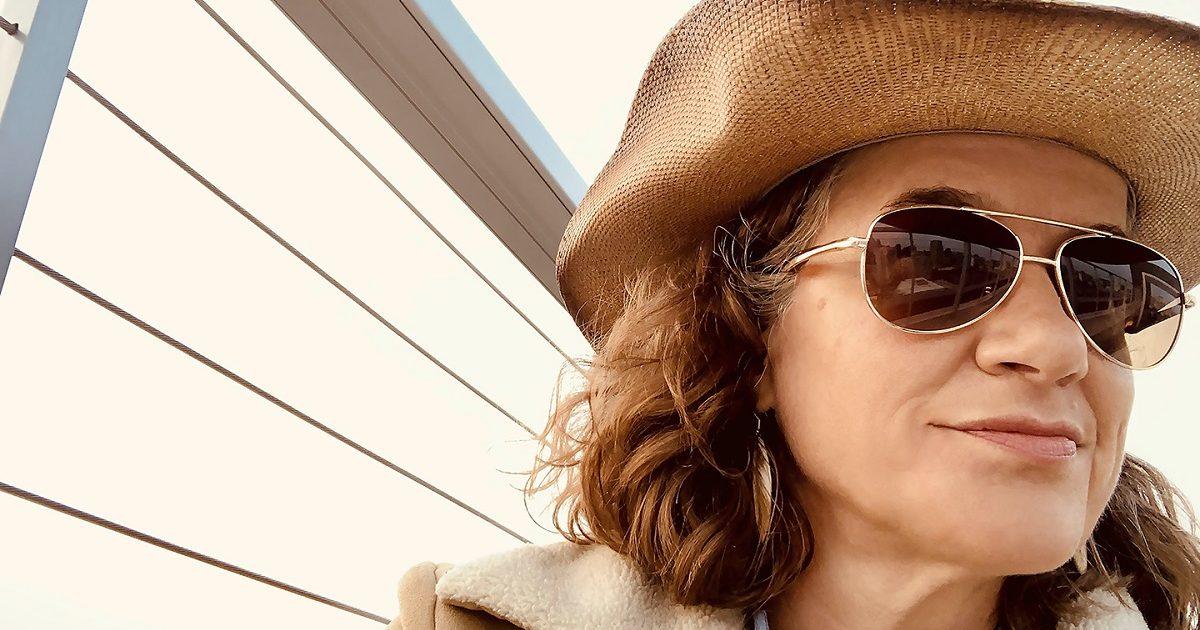
If there’s one aspect of Aoife O’Donovan’s career that has endured through the years, it’s a sense of community. Tinkering with different combinations of creative chemistry across multiple albums for groups of varying styles, it was no surprise to find O’Donovan working with others in pursuit of her third solo album, Age of Apathy. Still, even with the release calling up collaborators in front of and behind the mic, what makes this record stand out isn’t just a matter of having new cast members.
Age of Apathy’s development, both logistical and creative, was discerned and executed during the height of complications ushered in by the pandemic. This element of disconnection makes O’Donovan’s third solo record one built from a place of unique separation. In the same way a person can be surrounded by a crowd but be alone with their own thoughts, much of O’Donovan’s creative process for this record remained tethered to a sense of singularity.
Whether it was realizing more of her own potential as a composer when asked to write music to poetry that would become the song “Town of Mercy,” or nurturing ideas in her new home in Florida amid the responsibility of parenthood, O’Donovan found herself gradually surrounded by more and more people with creative energy to burn, while uncovering more of her own uncharted creative territory.
The presence of new voices in Allison Russell and Madison Cunningham, sonic perspectives from producer Joe Henry and engineer Darren Schneider, conceptual contributions from Joe Henry’s son Levon and mandolinist Tim O’Brien, as well as the intrigued curiosity of students from Full Sail University, all clearly reveal the album’s embrace of community. Yet ultimately, O’Donovan needed to figure out how to reinvigorate and sustain her own creative spirit to bring Age of Apathy to fruition.
It’s this dynamic of dualities – the communal and the singular, the stationary and the restless, the uncertain and the confident — that pivot Age of Apathy’s focus back to O’Donovan’s resilience and growth as a musician, performer, and songwriter. The result is an album that, despite its familiar elements, re-contextualizes the meaning of community and shows just how her artistry is still evolving, with or without anyone else beside her in the room.
BGS: You’re no stranger to working, writing, and performing with other people and Age of Apathy seems to keep in that spirit. Knowing this dynamic is a staple of your musical history, what would you say makes a community?
O’Donovan: Community is such a broad word, but for me, throughout my career the community has been the people I play with and I see. Not just musicians but people that you see at festivals, fans, audiences, the people you might see on stage or backstage, your manager, your agents, their friends, families, your own family and friends – it’s a really special thing. I think with [Age of Apathy], what was kind of different was that I made this record in the absence of that community. You know, I was physically alone yet there’s so much community on the record. And a lot of new community in there, it’s less of the people that I’ve made music with in my life and more of the people who I haven’t gotten to play with live that often, but do look forward to a day when I will.
How, if at all, has your definition of community changed, especially given that you moved away from your long-established community of Brooklyn?
My Brooklyn community, while it’s unbelievably dear to my heart and all my friends there are lifelong friends, [being] a touring musician, it’s not like that was necessarily the bedrock for my creative life. I will say that moving to Florida has led me to find and to make new community — to sort of dig in here and find those friends. I feel like we have such a rich group of friends here, as well as we did in New York. One of the beautiful things about being a musician is that you have friends in so many different places. And from touring and from being on the road, you can call upon your community in many different ways.
What was your vision in terms of how you wanted to tell the stories you included in Age of Apathy? And how did that affect who or what you turned to in order to shape the album’s sonic character?
I had very low creative period leading up to writing for this record, because it was the six months in the beginning of the pandemic and lockdown. It wasn’t until six months in that I was sort of like, “Okay, I have to figure out a way to get creative again and to sort of find the muse.” Once I did that, I feel like I did get the vision of thinking about the last 20 years and thinking about [and] reacting to a lot of dormant emotions. In a lot of ways, [the music] is more me than ever before — like, playing more guitar parts and playing a lot of piano and a lot of keys in a way that I had never really done to that extent on previous records.
Did you ever try to start picturing what you were going to hear in the recordings, taking into consideration everyone who collaborated on the record? Or did you just go into it with open expectations?
I definitely started picturing what I was going hear. We sent the first three songs to Jay Bellerose and I remember being so excited to get them back, thinking I had an idea of what it would sound like. But then it sounded nothing like what I thought it was going to sound like, which was so cool. It was just like, “Holy sh-t, this sounds completely different than I thought it was going to be,” and then being so happy with that. It was just wild, totally wild.
Having the students of Full Sail University watch your sessions added an educational layer to the familiar act of playing in front of others. How did that extra layer shape your expectations for yourself and the sessions? Did you feel a degree of responsibility, different from when you play a recreational concert?
I wasn’t as aware as much — in a good way. I knew people were watching but it was more just, “All right, this is how we’re doing it.” I really appreciated the fact that that I was able to give [the students] that opportunity, but also that they were able to give me the opportunity of being able to work in such an incredible space, at a time when it was really difficult to be doing anything outside of your own home. It was just great to have access to a studio and have access to Darren Schneider, who was an unbelievable engineer. The whole thing worked out really well.
A lot of the distant past comes through on this album, as on the title track’s reflection on September 11, 2001. Yet, it also reflects a new version of yourself as a songwriter, found in part through reflection on that same past. How is your personal retrospection and hindsight for this album different from other records you’ve made?
I think my sense of hindsight on this record just feels much more measured. I was looking back on a specific chunk of time and trying to draw the lines between these events and between these feelings. And really connect the dots between these emotions in this arc of time, this age of apathy specifically, not to put too fine a point on it. Really trying to go back there and say, “How did I feel? What were those big feelings that I felt when I was younger?”
At any point, you can look back at your life and you feel things in a different way. When you’re a toddler, the fact that your paper folded in the wrong place causes you to have a great big emotion. Obviously when you’re older, you don’t have that same emotional response to it. I think it’s the same with matters of the heart. When you’re younger and you’re experiencing these things for the first time – like love or heartbreak or whatever, you’re going to react to it differently than you will when you’re, you know, almost 40.
Just looking back at these emotions and looking back at the things that I cared about [20 years ago,] it’s funny. The memory of September 11th and what that was like for me, living in Boston, it didn’t really personally affect me or anybody I knew, other than that it was this huge world event and I knew that nothing would ever be the same after that. So, it affected me without actually affecting me. I remember sort of being mad at the fact that it happened because I didn’t want it to affect me. I wanted my problems to be as big as my boyfriend at the time, or the paper I was turning in that I was late on, or whatever. I think that’s sort of a natural response when you’re younger — or not even. Your own problems always seem bigger than the problems in the world.
I think that in the 20 years that have passed since then, as I became an adult and entered into this new phase of adulthood that I have now, it is a chance to reflect on that time and think, “Why is apathy the feeling that I’m left with so often, when I’m greeted with so much bad news and so much intensity?” Is it because all I want is to have that feeling, that indescribable feeling, that you get the first time you read The Unbearable Lightness of Being? It’s hard to explain. I think it’s just the want to have those big feelings again but have them be yours, and not on a global scale.
It just seems like a matter of sheer overload. If a person were to be in touch with what was happening around us right now, to the fullest extent, all the time, they’d blow apart.
I guess I just think about music, and the power of making music, and making art. For me, as somebody who loves listening to music, I just want to crawl into a song and listen to it over and over and over again. I can just lose myself in it. And it doesn’t matter if it isn’t about what I think it’s about. You just have to find your own story in a song and then it can really carry you to the next phase of your emotional journey. I just think it’s really important. I think music is so important.
Editor’s Note: Aoife O’Donovan will be live at the Troubadour in Los Angeles on April 14. Grab your tickets here.
Photo Credit: Omar Cruz