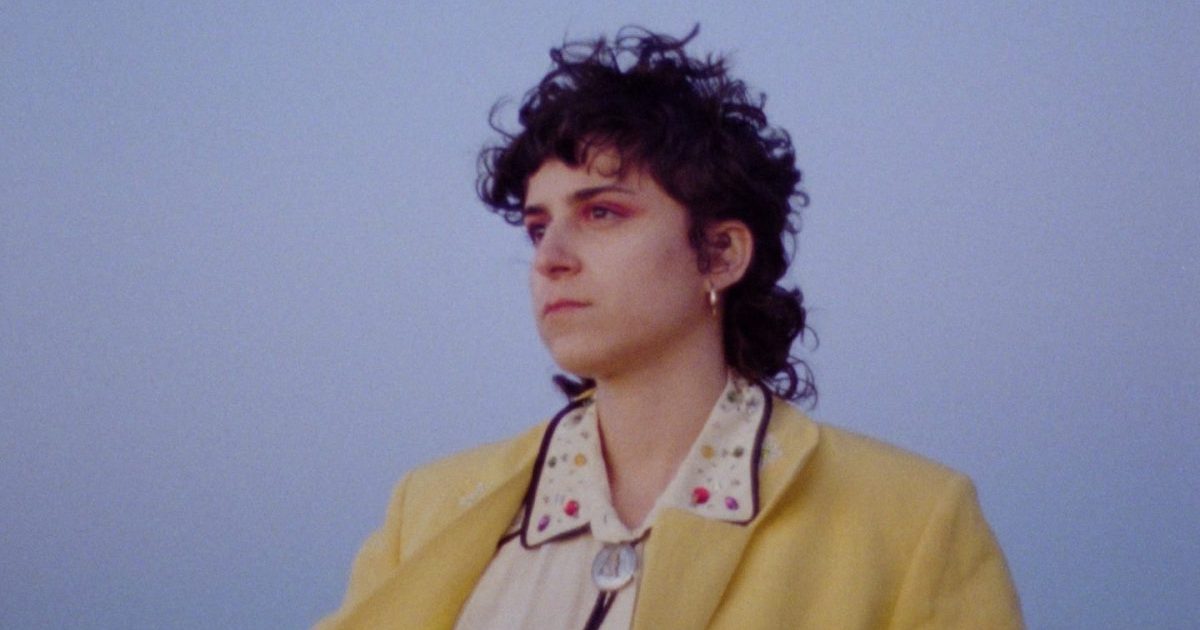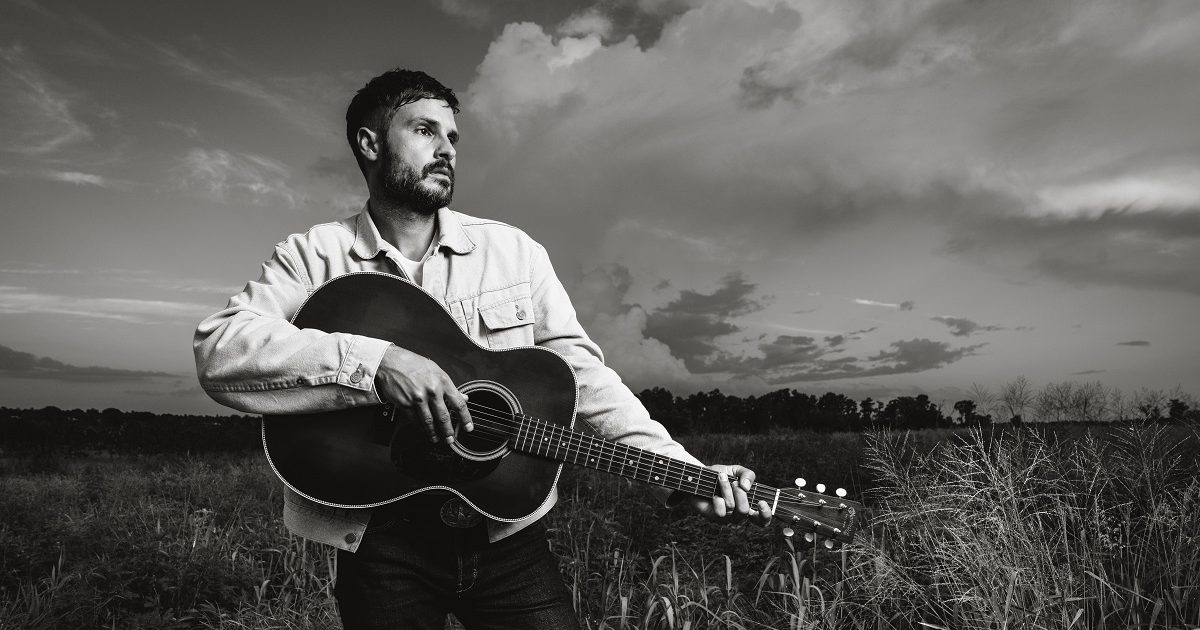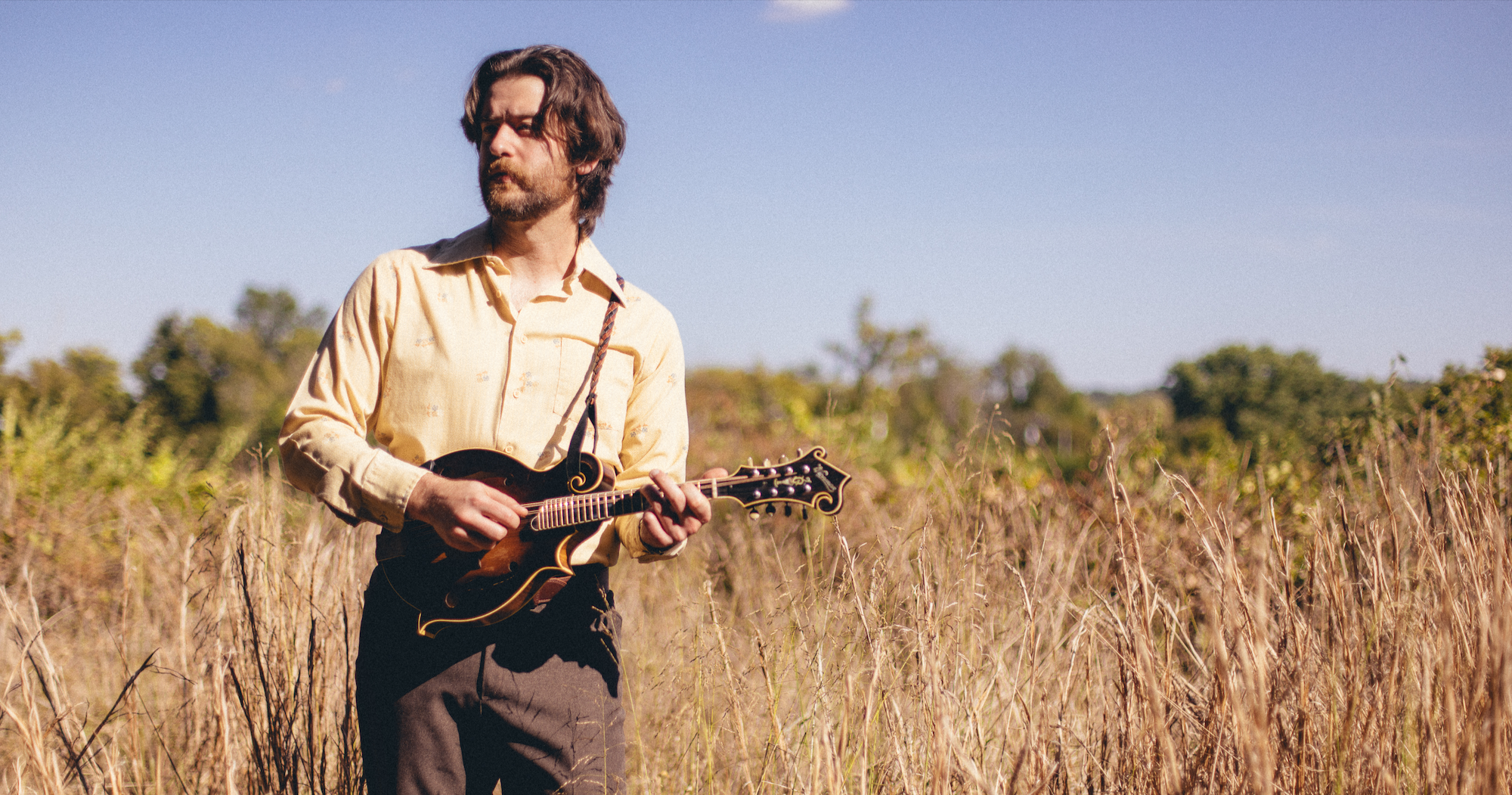
Jarrod Walker is Much More Than Just a Sideman

You know Jarrod Walker because for nearly 10 years he’s been Billy Strings’ mandolinist. But within the tight-knit bluegrass community, Walker has been a well-known and sought-after sideman for much longer. Before going on the road with Strings, he did stints touring with Claire Lynch, Missy Raines, Rebecca Frazier, and more, and he got his start in the rich bluegrass landscape of Florida, gigging with his brothers – including East Nash Grass banjoist Cory Walker – in a family band, the Walker Brothers.

Beloved for his taste, virtuosity, and a cleanliness to his picking unparalleled in modern bluegrass mandolin – except perhaps by his childhood friend and peer Sierra Hull – Walker enjoyed a reputation pre-Billy Strings that holds strong now, as he’s gone from being a humble bluegrass sideman and session player to having nearly 50,000 followers on Instagram and a niche fandom of his own within the greater Billy Strings Cinematic Universe. His song “Red Daisy,” recorded and performed by Strings and co-written with longtime friend and fiddler Christian Ward, has garnered more than 10 million streams and was awarded IBMA Song of the Year in 2022. (Though, shockingly, Walker has still never even been nominated for Mandolin Player of the Year by IBMA.)

Earlier this month, Walker took yet another step toward the limelight and away from the increasingly reductive “sideman” title. He released Nighthawk, his debut solo album, a fascinating and artful collection of bluegrass and string band-centered Americana that demonstrates the incredible depth and breadth of skills he has developed since his Lynch and Raines touring days. All but one of the 13 tracks are Walker originals – many co-written with Ward, who also plays fiddle on the project – and all but the two instrumental tracks are sung by Walker, as well. His vocals are thoughtful and intricate; he’s clearly put in plenty of time and energy into crafting an equal level of virtuosity with his voice as an instrument.

For a picker who’s remained booked, busy, blessed, and performing on stage hundreds of times a year on average for the greater part of two decades, it’s notable that Walker has launched Nighthawk and, with it, shown the remarkable level of growth and development he’s undertaken simultaneously, right under our noses. An impeccable sideman has blossomed into a fully-fledged, intentional, and multi-faceted artist. Even if, like me, you’ve been fortunate enough to call Walker your friend and a collaborator over those years, this is a revelatory, infinitely expressive body of work – surprising if not at all unexpected.

This isn’t an album meant to capitalize on Strings’ rabid audiences and pick up some extra spending money at the merch booth. This isn’t a vanity project or simply a mandolin record – or a hobby with which to spend time and keep him occupied when he’s not on the road with his main gig. No, it’s clear that with Nighthawk Jarrod Walker is telling the world exactly who he is, what he does, how he thinks, and what he sounds like. And it sounds damn good.

I wanted to start by talking about how you kick off the album with “Miles on My Shoes” and how the first single released was “Nighthawk,” the title track. Both of those tracks, to me, feel like straight-ahead, traditional bluegrass. I was curious about this being the audio “swatch” that fans and listeners first get of this album and about what you’re trying to communicate to them by the first track and the first single being pretty much straight-down-the-middle trad bluegrass.

Jarrod Walker: It took a long time to decide what to put forth as the first single, and same goes for the first track on the album. But I did feel like there was a certain expectation of me putting out a record and there being bluegrass elements to it. I wanted to reassure people that there would be some bluegrass elements. And, like you said, those two tracks are probably the most straight-ahead bluegrass tracks on the album. But the rest of the album is very different. The second single, [“Cordova Street Blues”] is very different from the first track or the first single. I think it was somewhat a conscious decision, but also just listening to people around me and seeing what they thought.

For no particular reason both of the singles that came out wound up being the two songs that Billy Strings sang background vocals on. It just worked out that way. We decided not to do the whole “featuring Billy Strings” route, because then that puts such an emphasis on [what’s] really just background vocals. But of course you could put “featuring Jake Stargel” or “featuring Christian Ward” [on it] by the same regard, ‘cause it’s not a true feature or whatnot.

But yeah, Cordova Street is a street in St. Augustine, [Florida] where I’ve spent a lot of time. I have some family who still live down there and some deep family roots going back to a store in the main part of town, which is now the historic district, called Denmark Furniture. It was probably very misleading to people, because I don’t think they sold Danish furniture. [Laughs] I think it was just American furniture with my mom’s maiden name, which is Denmark – and it’s my middle name. I’ve spent a lot of time down there and it’s inevitable that some St. Augustine imagery would make it into one of these songs. “Cordova Street Blues” is more of a dreamscape, ethereal kind of track, which is entirely different than the first single, “Nighthawk,” which is more or less just a Stanley Brothers-style bluegrass song.

It’s funny that you say “dreamscape,” because I was already drawing parallels here between single one “Nighthawk” and single two “Cordova Street” and track one “Miles on My Shoes” and track two “Leaving Canaan’s Land.” What I wrote in my notes for “Leaving Canaan’s Land” is “it’s like an Americana dreamscape” – especially with that groove and its pacing. So I see this parallel with the singles and also with the sequence: “here’s what you’re expecting, here’s where we’re going eventually.” Bluegrass, then beyond. You’re immediately showing people the continuum on which you’re creating music, sonically.

The groove differences between “Nighthawk” and “Cordova” or “Miles on My Shoes” and “Leaving Canaan’s Land” are incredible, too. It’s the best kind of whiplash from barn-burning, leaning-forward bluegrass to this sort of languid, lazy river, chill, floating vibes. Can you talk a little bit about that?

I’ve always liked the contrast and the juxtaposition between something, like you said, very bluegrass and something that offsets that. It’s like sometimes I wear camouflage and then I wear a tie-dye T-shirt. “Who the hell is this person?” I like to do that musically sometimes, too.

There are a lot of songs on the record that I wrote with just a guitar. It was more of a folky kind of approach. But then I decided to get drums and percussion and pedal steel on nearly the entire record and that really shaped these songs into something that I hadn’t imagined before – in a very positive way. I think it’s turned out how I would’ve wanted it to, ultimately. But it wasn’t necessarily a conscious decision. I think I just have that mentality throughout a lot of aspects of my daily life.

The variety also makes the album listen by really quickly. You have so many different textures and so many different style points and references. But, when I listen through the whole thing, to me it still feels like a bluegrass album. It reminds me of Jim & Jesse when they had pedal steel and drums in the band. Or a lot of those bluegrass bands from that golden age of bluegrass where they still were calling themselves country – the Osborne Brothers, Ricky Skaggs, J.D. Crowe and the New South.

Oh, for sure. I feel like I have never been afraid to introduce some drums or exterior, non-traditional bluegrass instruments into the mix. Like you said, I think it just adds some texture. And I love the early bluegrass where they were still figuring out and shaping the sound. There’s so much snare drum in Jimmy Martin music. And like you said, the Osborne Brothers, Jim & Jesse – and listen to J.D. Crowe and the New South’s first record. There’s steel, there’s piano, there’s drums and percussion. By that definition a lot of people, on paper, would consider it not a bluegrass record. But of course it’s one of the classics that everybody thinks of.

I think it was the reason that I put drums on nearly everything. But I made the decision after things started shaping up and I heard the songs that were more folk-oriented coming together. They would’ve been incomplete without drums. I wanted to use drums as glue for the record and to offer some cohesion. The pedal steel served that same purpose, too. Spencer Cullum is a fantastic steel player. And Jamie Dick is playing drums on this. They’re both coming from a different musical background, so it kinda makes everybody else think on their toes. Everybody has to adjust a little bit in order to accommodate each other, and I think everybody being a little bit out of their element gives it a certain freshness that it might not have had otherwise.

I was struck by how your voice sounds so good and confident. You’ve always been a singer, but on this record I hear so much more personality in your voice and I hear more of your musical point of view – in your voice as an instrument, instead of your voice just being something you also do. How did you feel in the process of getting to the point where you’re singing on all but two of these tracks? Your voice sounds really dynamic, even when you’re shifting between trad bluegrass and those slower, grooving songs. It doesn’t sound like you’re intimidated by the space that’s left for your voice to inhabit. It really feels confident and self-possessed.

Oh, thank you. I think you’re right, most people see me playing on stage and think of me more or less as a sideman. That’s what I have done for years. But behind the scenes, I have been writing a lot of songs, and when I have written those songs oftentimes they are sung by Billy Strings. So the outlet was not necessarily available to me.

A lot of these were songs that I threw into the mix over the years with Billy and they wound up getting passed on for one reason or another. For some of them that’s the case, others I was holding onto for a record. But this was really just an opportunity to work that muscle. And myself, if I’m going to listen to a record, most of the time I prefer to listen to lyrical music in some shape or form. Having written all these songs, it was like, “I’m not gonna get somebody else to sing these songs.”

So, over the years it has been something that I’ve worked on, and I guess somewhat behind the scenes. This project was very informative. I might have died a thousand ego deaths in the vocal booth. [Laughs] … It’s been just like playing an instrument. You learn things about it over the years. Now I listen to some of the singing [on the record] and I’m like, “Oh, I wish I would’ve done this differently,” but that’s the name of the game. I think, ideally, I will not look back 20 years from now and be like, “This is the best thing I ever did.” ‘Cause hopefully I continue to improve, love it for what it is, and move on from it. …

We tried to leave everything as live as possible, which– emphasis on “live as possible.” Because sometimes you hear something and it’s so wrong you have to change it. There are some moments where I could have probably taken a better mandolin solo than what I left on the record. But you just start going down a very deep, dark rabbit hole when you start chasing the perfect solo. If I can live with what I played in the moment, it’s probably gonna come across as a more real representation anyway. There’s something that you lose when you try to perfect things.

I want to talk about the songwriting, because in a similar way to noticing the development of your vocals I think your songwriting is really great. It doesn’t feel “try-hard” or contrived. So many of these songs are about movement, traveling, covering ground, putting miles underneath your feet. That’s not entirely surprising, given the last eight to 10 years of your life being you doing exactly that. Can you talk a little bit about the songwriting process and the inspirations for the songs? And that sort of overarching theme of movement and traveling – and that sort of loneliness and longing that comes with that?

Most of the songs that I’ve written in the past 10 years have been with Christian Ward, who’s playing fiddle on the album. Early on we would just get together and spend the entire day trying to just come up with a verse. We would work on things maybe to a fault. Extensively. But through doing that I think we found a rhythm where we were able to get things done a little faster. He and I both like and hate many of the same things.

I don’t think it was a conscious decision to write songs that are involving movement, but like you said, it does make sense. That’s how they turned out. Oftentimes I’ll just see a pond and I’ll say, “Oh, I could make a chorus using the word pond.” And then, “What rhymes with pond?” That’s how it takes shape. Generally I don’t start with, “I wanna write a song about leaving home on the next train” and that’s what it turns into. Most of the time when I start writing something it turns into something vastly different than what I originally imagined.

For me at least, I’ve only written one song – as far as I remember – where I wrote the music before I wrote the lyrics. … Almost always it’s just an object or a singular thought that winds up turning into a song. That song that I wrote with Christian called “Red Daisy” was kinda the same way. It’s a very simple song, melodically and lyrically, but it more or less sprung from that.

So maybe you knew this question was coming, but we gotta talk about “Nighthawk,” not just from the perspective of it being a song about longing, existential dread in the middle of the night. But also, to me, nighthawks – as a group of birds – I always equate them with Florida. Florida’s one of the only places you see them during the day when they’re migrating; it’s where I’ve had some of my favorite experiences with whip-poor-wills or chuck-will’s-widows, out in the middle of the Everglades and you hear them booming their song in the middle of the night.

When I saw the lead single/title track come out I immediately drew a line from that song to Florida – I have a feeling I’m making that connection up, but I wanted to ask you about that song, the inspiration of it, and if there is any reference here to all the nightjars – nighthawks – in Florida. [Laughs]

When I lived in Florida, I didn’t know different bird species – other than maybe a Bald Eagle and a turkey. [Laughs] So unfortunately, I probably have seen a bunch of them and didn’t realize that I was looking at them. I probably wrote it off as something else. But the way that I found out about nighthawks was through this book called The Dictionary of Obscure Sorrows. Little did I know these were made-up definitions [in the book]. When I first was thumbing through this book I was just like, “Oh, this could make a good bluegrass song.” Nighthawk – it sounds a little macabre, a little gothic. One of the pillars of my songwriting is that I can’t write a joyful song. So I was like, “This is perfect.”

When I first started writing that song, I was trying to make it more of a vibey song. Eventually, I was just like, “This works better just as a bluegrass song.” Sometimes I want to expand my horizons and try to do something entirely different, but ultimately, the world that I know the best is bluegrass and a lot of times it’s very difficult to write a good bluegrass song. It can be very challenging and there’s also such a precedent and such a box that you seemingly – at least from my experience – have to write within. You can’t talk about modern technology or you have to pretend a little bit. It’s a little bit of cosplay.

With those kinda songs, I try to make them as authentic as I possibly can. Which oftentimes is just being a little bit more ambiguous and not as direct in the songwriting. These lyrics – “nighthawk, just an old memory” – that’s very vague. But I come to find out the word nighthawk was associated more or less with that famous painting. I was writing with somebody one day and I was like, “I just wrote this song called ‘Nighthawk.’” He was like, “Oh yeah, like the painting.” I totally had seen the painting, but didn’t know the name of it. It’s called Nighthawks.

I probably should have done some research before completing the song. [Laughs] Truth be told, I thought it was just a hawk. Which is very logical of me to assume, right? But then I found out it’s its own species of bird. I had to make sure when I was having all the artwork drawn – I was like, “Hey guys, just want you to know a nighthawk is not a hawk. Don’t draw a hawk. Here is the silhouette of a nighthawk. Let’s do something like this.” ‘Cause I knew somebody like you would be out there and would catch it instantaneously!

Oh man, I would’ve been so happy to “Um, actually…” you. It would’ve been the first thing I said on this interview! [Laughs]

That’s what keeps me honest! [Laughs] I just downloaded the Merlin app [for identifying birds by song and call], which I had never heard of. It’s great! …

It’s so hard for me to try to write a song without including either a bird or a flower or trees. I want to get to a point where I can write about any given subject and just talk about that thing. But once you put birds or trees or flowers or mountains into a song, it’s like, “Okay, now we’re getting somewhere.”

I think my favorite track on the album is “Cold Daylight.” I love the groove of it, I love the feel of it. I love the long, extended vocals. But the thing that jumped out at me is that this must really be a bluegrass record, because you reference a bluegrass song in one of the songs!

Which is against the rules. [Laughs]

Since when?! You sing about “True Life Blues” – again you’re talking about lonesomeness and that same sort of existential feeling, sitting around a fire, singing “True Life Blues.” Can you talk to me a little bit about that song and where it came from?

Jarrod Walker: That particular song was maybe the best example of a song that I just wrote in more or less typical, boom-chuck, medium tempo bluegrass, folky, singer-songwriter [style]. It bored me at first, just the way that the chords were, the way that they laid, didn’t resonate with me. I revisited the song and tried to imagine it with drums – this was a couple weeks before actually going into the studio – then I fell in love with that song again.

I think the idea for this was just another example of some word association. Like, daylight is generally warm, but what if you call it cold? That’s where that came from. It was a challenging one to get the groove of [right], but it wound up being one of my favorite tracks on the record, too. It was probably the toughest vocal to lay down.

It feels pretty exposed vocally.

Yeah, it is. Like I said, being in that vocal booth is no joke. Singing the line that’s, “Pass the bottle around the fire and sing those ‘True Life Blues,'” I was a little hesitant to reference another bluegrass song within a bluegrass song – to do the bluegrass inception thing. But I was like… “Gillian Welch does it. I gotta give myself a pass to do that.” It adds another dimension, another layer. If you just said “singing those blues” it wouldn’t have the same effect. And most people don’t even know what the song “True Life Blues” is. It also just works as a phrase. it doesn’t necessarily have to be a song, so it kinda works on a couple levels.


Photo Credit: Jesse Faatz
WATCH: Jaimee Harris Performs “Orange Avenue” for From One to Tenn

Artist: Jaimee Harris
Hometown: Born in Nacogdoches, Texas; Raised in Hewitt, Texas; Living in Nashville, Tennessee
Song: “Orange Avenue”

In Their Words: “My partner, Mary Gauthier, was given an incredible writing residency in Key West for the entire month of January 2022. We often tour together, so I decided I’d take the time of solitude to search for songs. I started my search in the panhandle of Florida and spent a month driving down to Key West. Every two to three days I traveled to a different town, collected stories, visited fascinating museums, explored the variety of Florida’s natural beauty, and wrote a song in every town I visited.

“I did not plan to stop by Pulse Nightclub, but I found myself there alone at night. The first thing that struck me about Pulse was its location. I imagined it would be located in a nightlife district, but that is not the case. I was surprised to find it standing at the end of Orange Avenue, across from a Dunkin’ Donuts – the only two businesses on a street lined with houses. Pulse was a queer-friendly club, but it was also a neighborhood bar. The entry age was 18, so there were plenty of teenagers who hung out at Pulse simply because it was a friendly place where they could dance without having to be 21 to enter.

“The second thing that struck me was a plaque that listed 48 names of those who were killed on June 12, 2016. The third thing I noticed was a block of text that read, ‘We honor the 49 angel birthdays by placing angel wings next to their name. You are always in our hearts.’ If there were 49 killed, then why were only 48 names listed? I then noticed a plaque that said, ‘Out of respect for the family’s wishes, a victim’s name has been kept private.’

“I was curious about why that was and so I did some research. What I discovered was that the family of one male victim did not know he was gay until he was murdered at Pulse. The man’s family did not want to collect his body. This is why officials in Orlando felt it was important to emphasize to the world that this, up until that point, the highest casualty mass shooting in America was a hate crime targeting the LGBTQ+ community.

“I tried not to write ‘Orange Avenue.’ I tried to run away from it. But the song kept nagging at me. The original version of this song was sung from my perspective, but I felt it wasn’t quite right. I tried a lot of other narrative perspectives until I landed on the one that made me cry the hardest: the unnamed, unclaimed man.

“I have only played ‘Orange Avenue’ in public three times. In July 2023 at the Woody Guthrie Folk Festival in Okemah, OK, in September 2023 at the Americana Proud showcase hosted by Autumn Nicholas, and for this Pilot Moon Films taping.

“I am so grateful that Pilot Moon Films invited me to participate in this incredible From One, to Tenn. series. Because Pilot Moon Films was so generous with their time and talent, I felt deeply that I should use this gift as an opportunity to share this man’s story.” – Jaimee Harris

(Editor’s Note: Subscribe to the YouTube Channel for From One, to Tenn. for a new exclusive performance video every Wednesday.)


Video Credits: Filmed by David Allison, John DeMaio, and Joel Malizia, Pilot Moon Films / Islander Entertainment
Audio captured – Brett Blandon
Mixed/Mastered – John Kelly
Special thanks to Helene Cronin & Victoria O’Campo

Photo Credit: Video stills courtesy of Pilot Moon Films

WATCH: Rachel Angel, “Closer to Myself”

Artist: Rachel Angel
Hometown: Miami, Florida
Single: “Closer to Myself”
Album: Midnite Heart Attack
Release Date: September 9, 2022
Label: Ruzafa Records

In Their Words: “‘Closer to Myself’ is a song about stripping away the distractions to get closer to yourself. My upcoming album, Midnite Heart Attack, features songs about getting through a difficult time and coming out on the other side, stronger and more free. ‘Closer to Myself’ is about a recovery of mind and spirit from a place of denial, addiction, and longing. Ultimately, it’s a song of hope. It is the second single to be released from the album, which was recorded in Philadelphia and features players from The War On Drugs. I made the music video while living abroad in Valencia, Spain, for a year while getting a masters at Berklee College of Music’s Valencia campus. I teamed up with a Portuguese director, Martim Braz Teixeira, who had the creative idea to make a video about me trying to find a missing person, who in fact is myself. The idea plays on the messaging of the song following me on the streets of Valencia as I make that desperate search, and ultimately, to a place of freedom when I make the discovery and ‘find’ myself.” — Rachel Angel


Photo Credit: Martim Braz Teixeira

LISTEN: Michael McArthur, “Winding River”

Artist: Michael McArthur
Hometown: Lakeland, Florida
Song: “Winding River”
Album: Milky Stars
Release Date: September 16, 2022
Label: Transoceanic Records

In Their Words: “It’s important to log your thoughts, lyrics, and melodies whenever the muse calls. Whether or not you’re able to finish the idea, then and there, is another thing. Thumbing through old voice memos on my phone, I came across a verse/chorus idea over a fingerpicking pattern. The melody was mostly there, but the lyric wasn’t. In fact, I mumbled through most of it with the exception of singing, ‘oh, the winding road is hard to read’ and ‘the winding road leads somewhere.’ There’s a reason I didn’t finish it then. I had to live a little more to fully understand what the song was needing to be. If you’ve ever had a day that hasn’t gone your way, you’re not alone. It’s likely not the first time it’s happened and it surely won’t be the last. Like the river that winds in pursuit of an ocean, we will, all of us, get to where we’re going. So long as we bend with the bends and seize the ride. That’s ‘Winding River.’ A gentle reminder that we’re together in this life. Fighting the same fight. Figuring it out as we go along.” — Michael McArthur


Photo Credit: Mike Dunn

BGS 5+5: Leon Timbo

Artist: Leon Timbo
Hometown: Jacksonville, Florida
Latest Album: Lovers and Fools, Vol. 2

Which artists have influenced you the most…and how?

Ray Charles. Ray Charles was able to authentically represent a part of himself, within the country music genre, without losing the essence of the Ray Charles we have all come to love and know. My deep admiration for him is directly associated with the genuineness experienced in all his music, regardless of the chosen genre or sound. His ability to be himself gives me permission to be myself! As a musician, I needed that permission to do what I do.

What’s your favorite memory from being on stage?

My favorite kind of memory is not tied to a specific date or event but rather a unique experience I have had several times in my career. This favorite moment happens when people who don’t know who I am discover me for the first time. I’ve experienced this with people and have also been fortunate enough to experience it in rooms. You can almost feel the room holding its breath as it shares in my honesty and transparency. Eyes closed, deep breaths, and the look of connection on the audience’s face signal to me that this is a special moment to be remembered. I love those moments!

If you had to write a mission statement for your career, what would it be?

We create art that gives people permission to live honestly, and freely!

What has been the best advice you’ve in your career so far?

Let it go! Let go of the good, the bad, expectations, and limitations. As artists and writers, I think we put a lot of pressure on ourselves, and sometimes it prevents us from experiencing the freedom that creative moments naturally bring. The best advice I have ever been given is to let all that stuff go and write for the moment.

What rituals do you have, either in the studio, or before a show?

Before a show and studio session, I like to practice mindfulness. I want to feel the energy of a space and figure out how to connect to it. This could mean just walking into the area and spending a few quiet moments there. Each room you enter has a sound and expectation; what worked for the last show may not work for this one. As I find my space, I visualize where I am and what narratives are essential for what I need to get across. Most times, I see myself more as a comedian than an artist. Comedians are intentional about knowing details about the cities they visit and incorporate that knowledge into their jokes. I try to do the same thing as a musician. I try to lean into what a region may be experiencing to ensure that what I bring to the stage is relevant.


Photo Credit: Jace Kartye

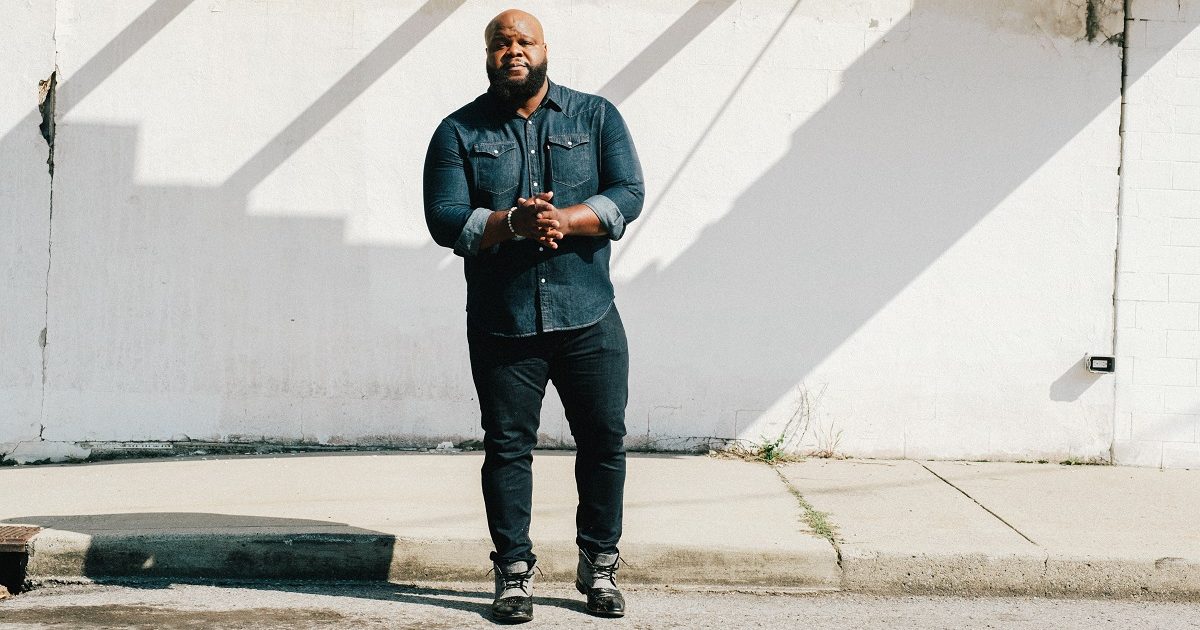
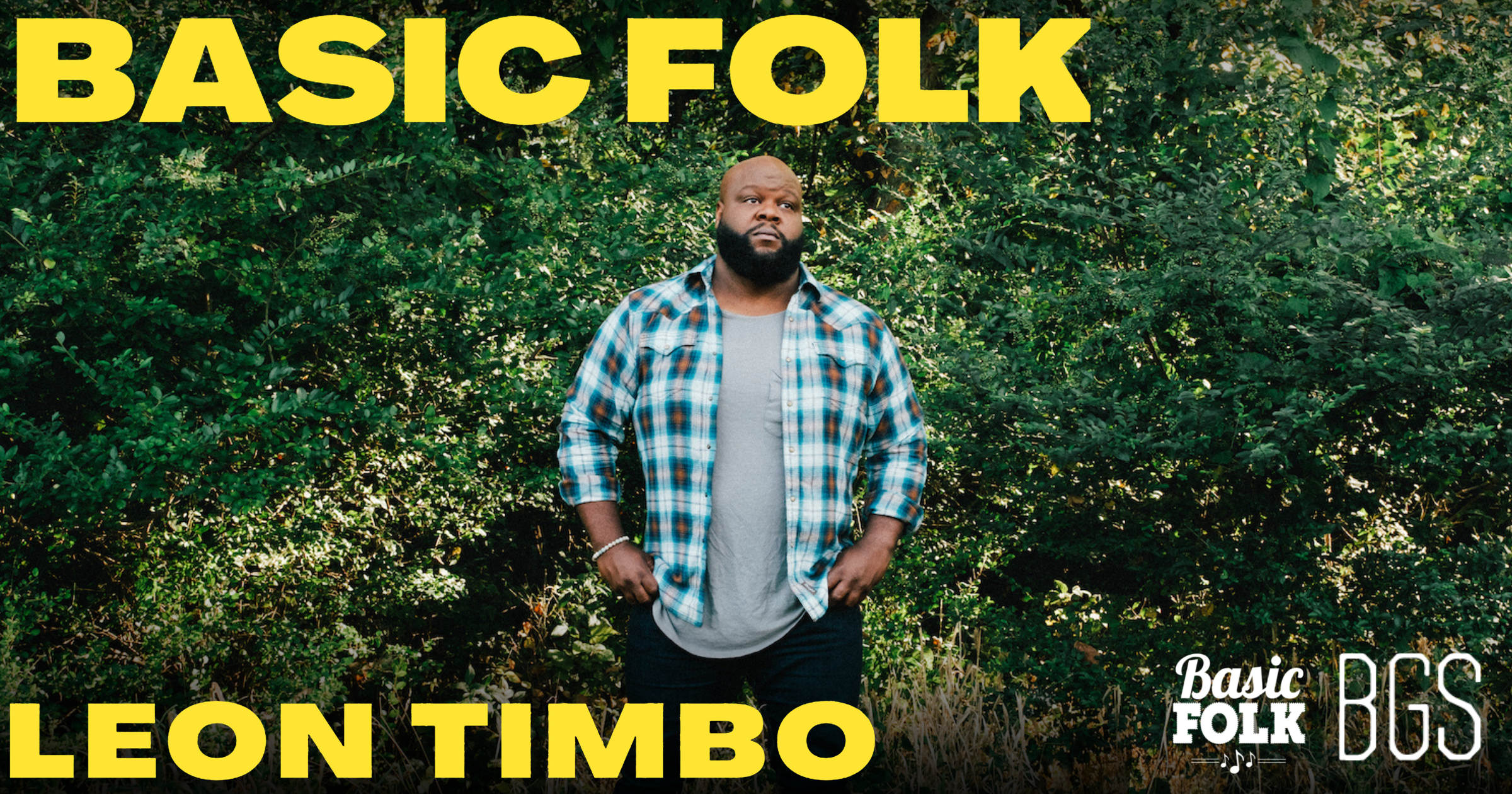
Basic Folk – Leon Timbo

When Leon Timbo was a teenager, he prayed for a singing voice. As a young poet and the child of a preacher, he was a born storyteller, but he dreamed of being able to sing. Leon’s remarkable artistic journey has been the answer to that prayer.

LISTEN: APPLE • SPOTIFY • STITCHERAMAZON • MP3

Timbo started writing and performing songs on DIY solo tours in his native Florida, eventually expanding his reach across the United States. He focused on connecting with each audience member and immediately started building a loyal following. It was on one of these tours that musician and actor Tyrese Gibson fell in love with his music and storytelling and invited Leon to open for him. Gibson’s mentorship helped Leon hone his sound and opened massive doors of opportunity.

Each step of Leon’s musical path has been guided by faith, spirituality, and the power of human connection. He has performed with the legendary Fisk Jubilee Singers and hung out at a bar with Quincy Jones. He has a unique take on Americana, R&B, gospel, and folk music. His new album, Lovers & Fools, Vol. II, is a vehicle for his hopeful worldview, and of course, for his spectacular voice.


Photo Credit: Jace Kartye

BGS 5+5: Joshua Hedley

Artist: Joshua Hedley
Hometown: Naples, Florida
Latest Album: Neon Blue
Personal Nicknames: Mr. Jukebox

Which artist has influenced you the most…and how?

I found Bob Wills at a very young age. Probably 10 years old or somewhere around there. I was instantly obsessed. He really struck a chord with me. Something about the blend of country and jazz resonated with me and particularly inspired me to be better at my instrument. I would lock myself in my parent’s bathroom with a CD player and my fiddle and just wear out this Bob Wills greatest hits CD for hours, trying to learn all the fiddle parts and solos and stuff. It really strengthened my ear at that age when you just soak up knowledge like a sponge. I probably wouldn’t be playing at the level I’m at today if I hadn’t discovered Bob Wills when I was so young.

What was the first moment that you knew you wanted to be a musician?

Honestly, it’s almost like I was born into it. I don’t remember the first moment I knew. I just always did. I asked my parents for a fiddle when I was 3. They told me to ask again when I was older, and I did, five years later. They got me one when I was 8 and I just took to it almost instantly. I just knew that’s what I was going to do with my life from then on. I started playing for real, professionally in bands, when I was about 12 and after that it was all over. That was it. I decided then I was going to move to Nashville and play country music for the rest of my life.

What’s the toughest time you ever had writing a song?

I always have a tough time writing. More specifically with finding inspiration and focus. I had this brief period of inspiration when I wrote Mr. Jukebox, but before that and ever since, I’ve always had a hard time writing. I struggle with ADHD, so it’s hard for me to stay focused on a single idea long enough to write a whole song. There’s also a level of self confidence needed to be a great writer that I lack. I can recognize a great song that someone else wrote, but even if other people tell me how much they love my songs, I always second-guess them myself. I always feel embarrassed playing my own music.

What has been the best advice you’ve received in your career so far?

Don’t read your press. Especially the reviews. Good or bad, they’ll affect your ego negatively. Someone once told me when I was just a kid, “You’re never as bad as they say you are, but you’re never as good as they say you are either.” You can’t control what people write about you. If it’s negative, it can crush you, but if it’s positive, it can inflate your ego too much. Neither of those things are good for you. Staying away from your own press seems like good advice to me, even if I don’t always take it.

Since food and music go so well together, what is your dream pairing of a meal and a musician?

You can probably tell just by looking at me that I enjoy food. I like everything from Michelin Star to Taco Bell. My buddy Sean Brock is absolutely crushing the food game in Nashville right now. It’d be cool to do a show where he catered it. Maybe do a bunch of traditional Florida foods like gator tail, smoked mullet, frog legs, Cuban sandwiches, key lime pie — stuff like that. Then me and Elizabeth Cook and Wade Sapp can play a bunch of country music from Floridian artists like Mel Tillis, Pam Tillis, Slim Whitman, Vassar Clements, John Anderson, Terri Gibbs, Gary Stewart (not actually Floridian, but we claim him), etc. Actually…I kind of want to make that happen now.


Photo Credit: Joshua Black Wilkins

WATCH: Thomas Dollbaum, “Florida”

Artist: Thomas Dollbaum
Hometown: New Orleans, Louisiana
Song: “Florida”
Album: Wellswood
Release Date: May 20, 2022
Label: Big Legal Mess

In Their Words: “I grew up outside Tampa, Florida, and before I had a car, I would take the bus into town and walk through the city to get to my friend’s neighborhood from downtown. ‘Florida’ is about the people I knew who were down and out where I am from. It’s about getting into trouble, hanging out with strangers, and how a place can mold you into who you are even as you are wishing you could do something or be somewhere else.

“The premise of the ‘Florida’ video was pretty simple. I wanted to go back to Tampa and try and capture some of my favorite places that I knew from growing up. We stayed downtown at the Hotel Floridan, which is a 1920s hotel that is sort of stuck in time, and ventured out filming at different barrooms and beachfronts that really are the setting for the songs. Alex Theil did a great job of capturing spots that I was interested in filming, and I think the video really captures the world that I tried to build with the lyrics.” — Thomas Dollbaum


Photo Credit: Cora Nimtz

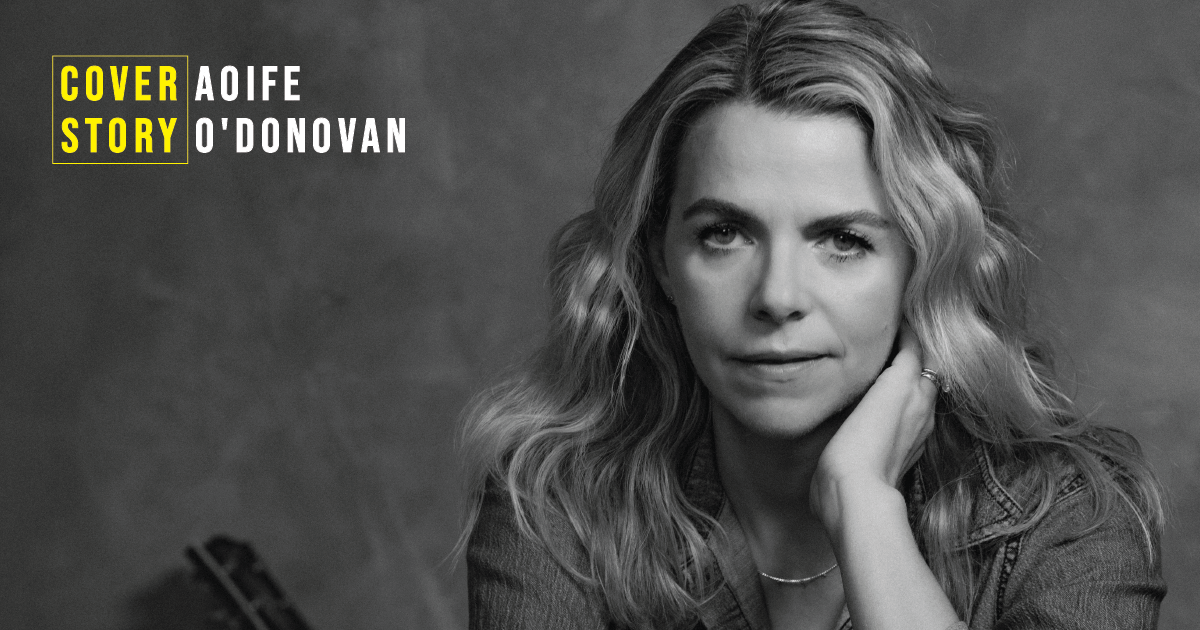
On ‘Age of Apathy,’ Aoife O’Donovan Explores the Emotions of Her Past

If there’s one aspect of Aoife O’Donovan’s career that has endured through the years, it’s a sense of community. Tinkering with different combinations of creative chemistry across multiple albums for groups of varying styles, it was no surprise to find O’Donovan working with others in pursuit of her third solo album, Age of Apathy. Still, even with the release calling up collaborators in front of and behind the mic, what makes this record stand out isn’t just a matter of having new cast members.

Age of Apathy’s development, both logistical and creative, was discerned and executed during the height of complications ushered in by the pandemic. This element of disconnection makes O’Donovan’s third solo record one built from a place of unique separation. In the same way a person can be surrounded by a crowd but be alone with their own thoughts, much of O’Donovan’s creative process for this record remained tethered to a sense of singularity.

Whether it was realizing more of her own potential as a composer when asked to write music to poetry that would become the song “Town of Mercy,” or nurturing ideas in her new home in Florida amid the responsibility of parenthood, O’Donovan found herself gradually surrounded by more and more people with creative energy to burn, while uncovering more of her own uncharted creative territory.

The presence of new voices in Allison Russell and Madison Cunningham, sonic perspectives from producer Joe Henry and engineer Darren Schneider, conceptual contributions from Joe Henry’s son Levon and mandolinist Tim O’Brien, as well as the intrigued curiosity of students from Full Sail University, all clearly reveal the album’s embrace of community. Yet ultimately, O’Donovan needed to figure out how to reinvigorate and sustain her own creative spirit to bring Age of Apathy to fruition.

It’s this dynamic of dualities – the communal and the singular, the stationary and the restless, the uncertain and the confident — that pivot Age of Apathy’s focus back to O’Donovan’s resilience and growth as a musician, performer, and songwriter. The result is an album that, despite its familiar elements, re-contextualizes the meaning of community and shows just how her artistry is still evolving, with or without anyone else beside her in the room.

BGS: You’re no stranger to working, writing, and performing with other people and Age of Apathy seems to keep in that spirit. Knowing this dynamic is a staple of your musical history, what would you say makes a community?

O’Donovan: Community is such a broad word, but for me, throughout my career the community has been the people I play with and I see. Not just musicians but people that you see at festivals, fans, audiences, the people you might see on stage or backstage, your manager, your agents, their friends, families, your own family and friends – it’s a really special thing. I think with [Age of Apathy], what was kind of different was that I made this record in the absence of that community. You know, I was physically alone yet there’s so much community on the record. And a lot of new community in there, it’s less of the people that I’ve made music with in my life and more of the people who I haven’t gotten to play with live that often, but do look forward to a day when I will.

How, if at all, has your definition of community changed, especially given that you moved away from your long-established community of Brooklyn?

My Brooklyn community, while it’s unbelievably dear to my heart and all my friends there are lifelong friends, [being] a touring musician, it’s not like that was necessarily the bedrock for my creative life. I will say that moving to Florida has led me to find and to make new community — to sort of dig in here and find those friends. I feel like we have such a rich group of friends here, as well as we did in New York. One of the beautiful things about being a musician is that you have friends in so many different places. And from touring and from being on the road, you can call upon your community in many different ways.

What was your vision in terms of how you wanted to tell the stories you included in Age of Apathy? And how did that affect who or what you turned to in order to shape the album’s sonic character?

I had very low creative period leading up to writing for this record, because it was the six months in the beginning of the pandemic and lockdown. It wasn’t until six months in that I was sort of like, “Okay, I have to figure out a way to get creative again and to sort of find the muse.” Once I did that, I feel like I did get the vision of thinking about the last 20 years and thinking about [and] reacting to a lot of dormant emotions. In a lot of ways, [the music] is more me than ever before — like, playing more guitar parts and playing a lot of piano and a lot of keys in a way that I had never really done to that extent on previous records.

Did you ever try to start picturing what you were going to hear in the recordings, taking into consideration everyone who collaborated on the record? Or did you just go into it with open expectations?

I definitely started picturing what I was going hear. We sent the first three songs to Jay Bellerose and I remember being so excited to get them back, thinking I had an idea of what it would sound like. But then it sounded nothing like what I thought it was going to sound like, which was so cool. It was just like, “Holy sh-t, this sounds completely different than I thought it was going to be,” and then being so happy with that. It was just wild, totally wild.

Having the students of Full Sail University watch your sessions added an educational layer to the familiar act of playing in front of others. How did that extra layer shape your expectations for yourself and the sessions? Did you feel a degree of responsibility, different from when you play a recreational concert?

I wasn’t as aware as much — in a good way. I knew people were watching but it was more just, “All right, this is how we’re doing it.” I really appreciated the fact that that I was able to give [the students] that opportunity, but also that they were able to give me the opportunity of being able to work in such an incredible space, at a time when it was really difficult to be doing anything outside of your own home. It was just great to have access to a studio and have access to Darren Schneider, who was an unbelievable engineer. The whole thing worked out really well.

A lot of the distant past comes through on this album, as on the title track’s reflection on September 11, 2001. Yet, it also reflects a new version of yourself as a songwriter, found in part through reflection on that same past. How is your personal retrospection and hindsight for this album different from other records you’ve made?

I think my sense of hindsight on this record just feels much more measured. I was looking back on a specific chunk of time and trying to draw the lines between these events and between these feelings. And really connect the dots between these emotions in this arc of time, this age of apathy specifically, not to put too fine a point on it. Really trying to go back there and say, “How did I feel? What were those big feelings that I felt when I was younger?”

At any point, you can look back at your life and you feel things in a different way. When you’re a toddler, the fact that your paper folded in the wrong place causes you to have a great big emotion. Obviously when you’re older, you don’t have that same emotional response to it. I think it’s the same with matters of the heart. When you’re younger and you’re experiencing these things for the first time – like love or heartbreak or whatever, you’re going to react to it differently than you will when you’re, you know, almost 40.

Just looking back at these emotions and looking back at the things that I cared about [20 years ago,] it’s funny. The memory of September 11th and what that was like for me, living in Boston, it didn’t really personally affect me or anybody I knew, other than that it was this huge world event and I knew that nothing would ever be the same after that. So, it affected me without actually affecting me. I remember sort of being mad at the fact that it happened because I didn’t want it to affect me. I wanted my problems to be as big as my boyfriend at the time, or the paper I was turning in that I was late on, or whatever. I think that’s sort of a natural response when you’re younger — or not even. Your own problems always seem bigger than the problems in the world.

I think that in the 20 years that have passed since then, as I became an adult and entered into this new phase of adulthood that I have now, it is a chance to reflect on that time and think, “Why is apathy the feeling that I’m left with so often, when I’m greeted with so much bad news and so much intensity?” Is it because all I want is to have that feeling, that indescribable feeling, that you get the first time you read The Unbearable Lightness of Being? It’s hard to explain. I think it’s just the want to have those big feelings again but have them be yours, and not on a global scale.

It just seems like a matter of sheer overload. If a person were to be in touch with what was happening around us right now, to the fullest extent, all the time, they’d blow apart.

I guess I just think about music, and the power of making music, and making art. For me, as somebody who loves listening to music, I just want to crawl into a song and listen to it over and over and over again. I can just lose myself in it. And it doesn’t matter if it isn’t about what I think it’s about. You just have to find your own story in a song and then it can really carry you to the next phase of your emotional journey. I just think it’s really important. I think music is so important.

Editor’s Note: Aoife O’Donovan will be live at the Troubadour in Los Angeles on April 14. Grab your tickets here.


Photo Credit: Omar Cruz