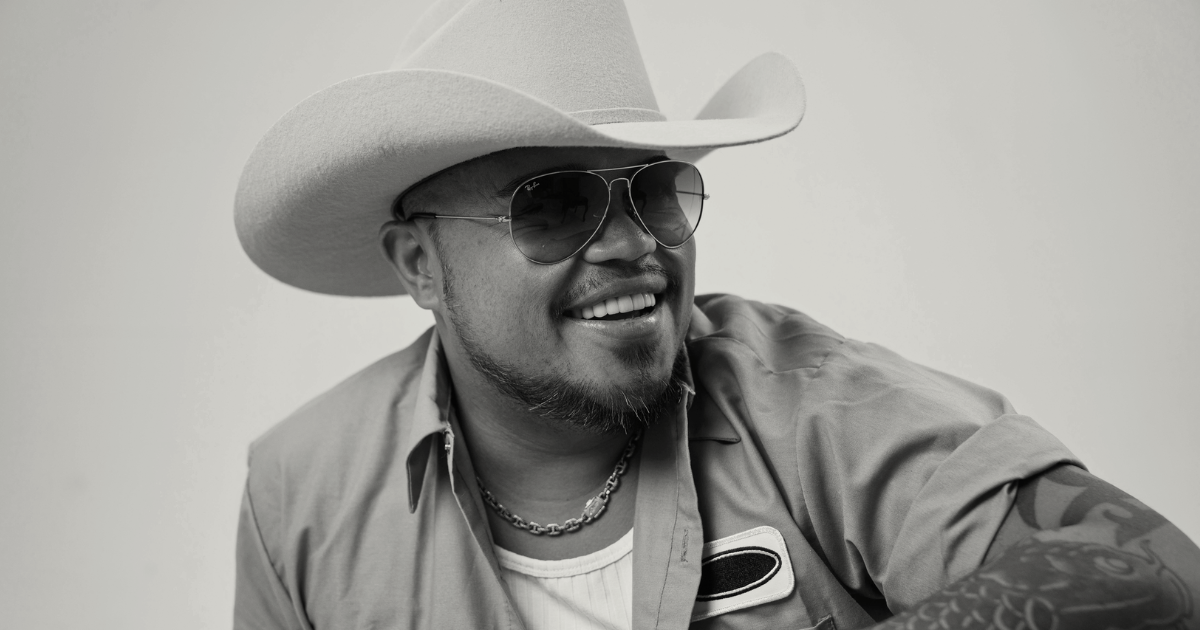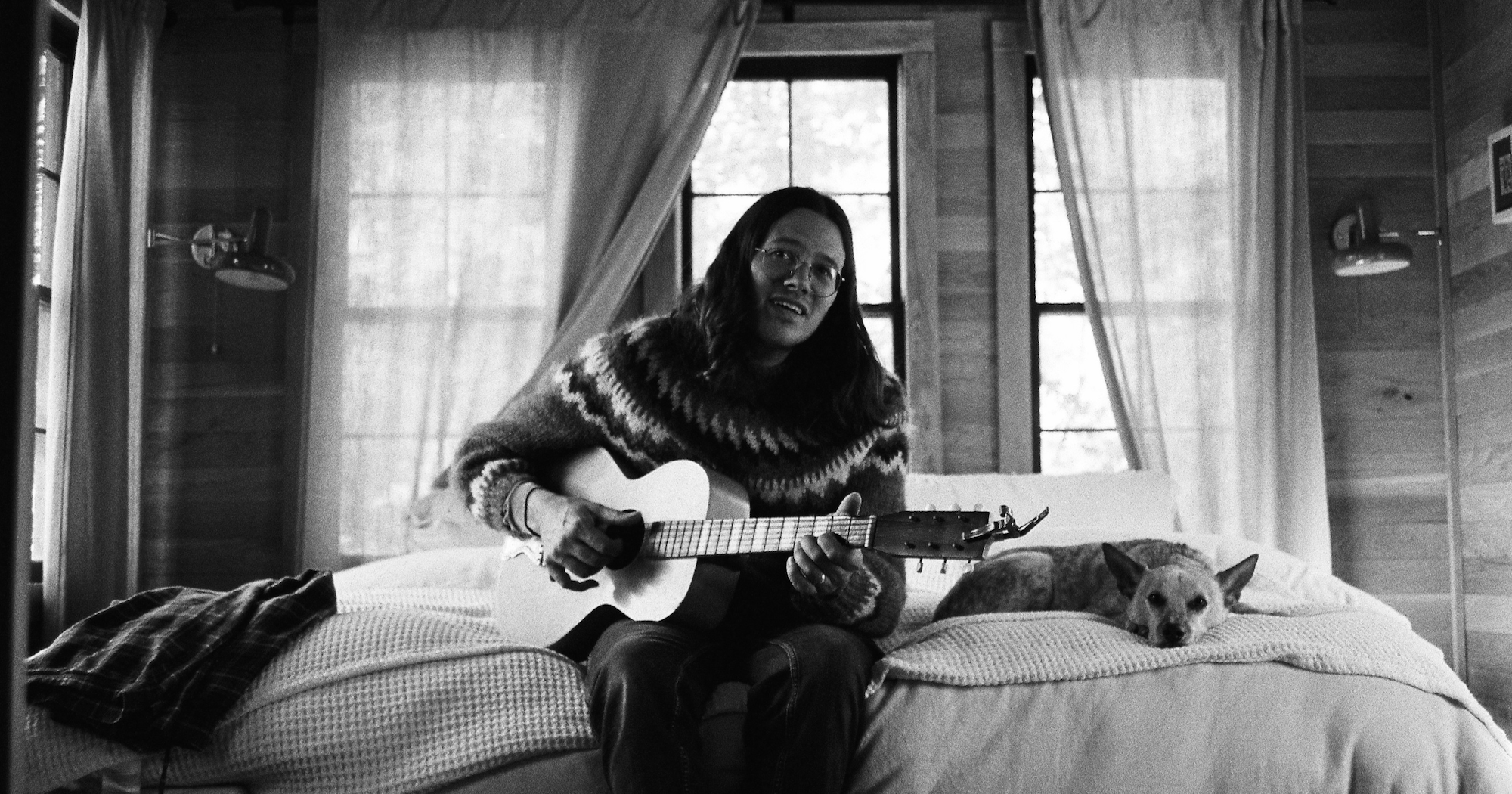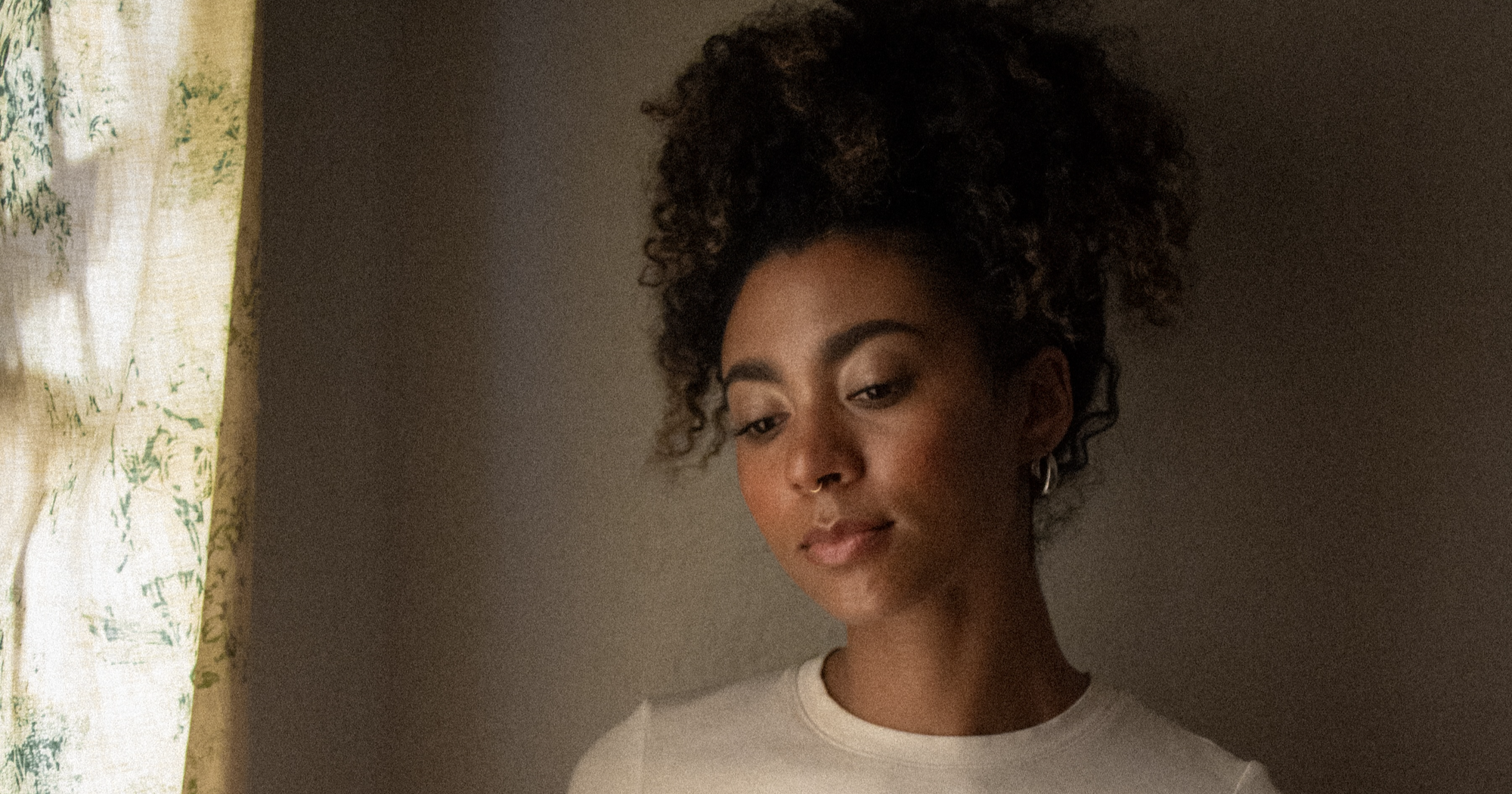
Maoli Fully Embraces His “Island Country” Point of View

In an era of polarization, social division, and dissent, Glenn Awong, the Hawaiian country reggae star better known as Maoli, believes we’ve all got more in common than not. Awong came to this realization in the late 2010s while he was touring through the US with his band. Show by show, he discovered that life in the American South wasn’t too dissimilar from the cattle ranches and pineapple fields where he grew up on Maui’s North Shore.

Once Awong had those shared realities in mind, he observed that island reggae pop and the soulful sides of country, folk, and bluegrass weren’t that different either. Emboldened, he began to cover popular contemporary country hits like Brett Young’s “Mercy” and “In Case You Didn’t Know,” imbuing their lilting melodies, range-roving rhythms, and plainspoken storytelling with a breezy, coastal shuffle. The results spoke for themselves, catapulting the big-hearted singer into a new tier of success, paving the road towards 2023’s hit-laden Maoli Music Overload album and the innumerable singalong singles that have followed.

Prior to his transformative revelations about island and country, Awong and his band had spent a decade building audiences across Hawaii, the Pacific Islands, and the American West Coast. Once he wholeheartedly embraced his fusion style, the rest of America and locations as far flung as Australia and New Zealand welcomed him with open arms. Since then, it’s been one rodeo after another.

Ultimately, the secret, as Awong has come to understand it, is leaning all the way into his island country upbringing and lifestyle. He didn’t need to disguise himself as someone else. He just needed to be the most unapologetic version of himself.

“I’m really that island guy, but I can go into the country right now and do my rodeo cowboy thing,” he says, grinning from ear to ear on a video call from Maui. “I can hunt, go down to the beach, enjoy a beer, jump in the water and start fishing, all in the same day.”

Several weeks before the release of his latest single, “Runnin’ Me Off” featuring Nashville’s Maddie Font (formerly of Maddie & Tae), Awong spent 45 minutes in conversation with Good Country. Punctuating his thoughts with an infectious laugh, he spoke generously about his musical heroes, island and country life, his experience in Nashville, and the realities of life on the road as an entertainer.

I noticed you follow Aaron Neville on Instagram. What does he mean to your music?

Maoli: Aaron Neville is one of my musical heroes. My grandmother introduced him to me when I was a kid. I was always fascinated by his music. His voice is super unique. He moved me in a way that made me feel like he was the greatest. I used to try to mimic him. You can hear it in my music.

I grew up on his music as well. I was impressed by how effortlessly he could work across genres while always sounding like himself.

I really loved it when he sang a cover of “The Grand Tour” [by George Jones]. I love it more than the original. He’s transcended genre multiple times. He did what I’m trying to do right now. I look up to people who take risks and do things that are not normal. He didn’t limit himself. I love people who take that to heart.

What do you see as the values that underpin your music?

When it comes to country and reggae, it’s really like a lifestyle for me. It’s really who I am. Reggae music comes from Jamaica. Jamaica is an island, but so is Hawaii. We can relate in Hawaii, because we’re both island people. A lot of people don’t get to see this, but in Hawaii, we live country lives as well.

If you weren’t a singer, who do you think you’d be?

I’d probably be some type of farmer or cowboy. I’d probably be cowboying for a living, or I’d be a construction worker, like a lot of people out here. I’d be in some line of labor work.

Which would have probably led you to write songs anyway.

Yeah, that’s true. That’s how songwriting is done. You’re inspired by things that happen around you.

I like how you’ve identified that your music is the outgrowth of a lifestyle.

I see a lot of artists try to copy other people. What they’re missing is that you have to find out who you are. I studied the greats as well, but I always wanted to find my own voice.

What you’re talking about is a durational exercise. It doesn’t happen overnight.

I didn’t find crazy success until five years ago. People don’t understand this, but I was in the game for 15 years before that. I was trying to discover my voice, and it led me back to where it all began, my country lifestyle.

Who are the gold standards for you in country music?

There are so many good country songwriters. Zac Brown is one of them. I love his style, which also comes from that Jimmy Buffett feel. Then Kenny Chesney or George Strait, but I can’t say George was a writer, but I love his songwriters. That type of country. George Jones. I’m an old school guy.

Songwriting, recording, performance. These are all art forms that have to work together. Often, it takes a team.

That’s what I’ve learned in the business. I’ve done covers. I used to get a lot of shit for doing covers. If that’s a crime, you might as well take Whitney Houston and Elvis Presley out of the picture. A lot of your favourite artists do not write their own music.

There’s a process where you find the great songwriters, you find the perfect producer, the perfect engineer, and all that stuff. You gotta create that team. You can’t always do it all yourself. The best of the best have teams.

What are some of your favorite covers to sing, and what did you learn from them?

My favorite cover to play live is “Every Night, Every Morning” [by Maddie & Tae] because that’s the only time I can rest. The crowd sings the whole song. [Laughs] Doing covers helped me as a songwriter. I get to see how these people put these masterpieces together. I don’t just do any cover; it has to move me. The melody and lyrics have to move me.

I thought I was a good songwriter until I went to Nashville and started writing with the best songwriters. They really know what they’re doing. What I learned with them is you gotta have good storytelling, the melodies just gotta come, and all that stuff. It was cool going out there and learning how to write.

What do you think makes a good story?

It has to come from a place of truth. It can’t be fake. I’m not going to name names, but I’ve listened to songs where they’re talking about drinking and partying, and they’ve never touched a beer in their lives. How do you understand that energy if you’ve never partied?

Not everyone will be familiar with the relationship between country music and Hawaii.

People ask me all the time what my shows are like. I always say it’s something you have to experience. It’s the same with our relationship with country music. I’d really have to take you where I’m from so you could see how we live.

Country is country, right?

The country that I love is the songs that really talk about that cowboy life. Hard work, heartbreak, leaving when times are rough, and finding yourself in a bar, drinking your sorrows away. That’s real shit, right there. That’s where the relationship between island and country is very similar in ways. I spent a lot of time in Texas and Nashville. If Polynesians knew how these cowboys really live, they would realize that we’re the same.

If I asked you to name-check some Hawaiian musicians who were combining country and reggae music before you, who would you mention?

I would have to shout out the Kaʻau Crater Boys. They’re the original group that brought country covers and gave them an island reggae feel. I’d also have to say Kapena. Those are the two groups I looked up. They’ve done this stuff longer than I have. I can’t say I created it. They were really popular here. Some people didn’t know their country reggae songs were covers. They became a staple in Hawaii. Even Israel Kamakawiwoʻole, one of our greatest singers, did a cover of “Country Roads” by John Denver. It was one of the biggest songs in Hawaii. People here thought that he wrote it.

At this point, there’s a back-and-forth relationship between American country music and different scenes all over the world.

People don’t always understand. Even for me, when I started going to Nashville, it took me a while to get used to their customs and culture. I would sit in on songwriting sessions with some really incredible songwriters who had written platinum songs and had never heard of me before. I sold 42,000 tickets in Hawaii. I sold out shows in Tahiti and Samoa. I’m not trying to brag, I’m just saying that, for example, I could do all of that, and they still had no idea who I was in Nashville. When they found out who I was and what I could do, they wanted to write with me. If I hadn’t gone there, I wouldn’t have known who they were either.

It’s an interesting situation to be in. When you’re building a career like you have, you might be famous in one country and unknown in another. How do you keep yourself grounded through it all?

I don’t let any of it get to me. I stay neutral. If you tell me I’m the goat, I’ll say thank you. If you tell me I’m a piece of shit, I’ll say thank you. The way I feel is whether I’m selling 42,000 tickets or an unknown in Nashville, I’m the same. You’ve got to be humble in your success. I love going places where they don’t know me, because I can really be myself and not worry about people pulling out their phones to film me.

It seems like a hard thing to navigate in the social media era.

I’ve gotten better at the post-and-ghost thing. When you have a certain level of success, everyone on social media has an opinion. I try to spend as little time as possible on that stuff. There are great things about it as well, but I have a team to handle that stuff. I don’t let it get to me. You can get trapped on social media. Whether what they’re saying is good or bad, you don’t always need to hear it. I don’t want to break my humility. I’m just a regular guy doing my thing.

How important has the West Coast of America been to your growth as an artist?

I think it’s been really important. They were my voice when it came to the States. I started in small little bars with maybe fifty people showing up. I remember playing in venues where I counted 10 people, including security. I just told myself one day I’m gonna sell out arenas. The West Coast really helped me with that. They helped me to cross over to the Midwest and the East Coast, too. The West Coast has always been good to me. I consider them my voice when it comes to the mainland. It all started there.

Those ten people at those shows had a good time, right?

Right! I think the security guards even bought me a couple of drinks. [Laughs]

You must have had some interesting conversations with fans.

People have told me I brought their marriage closer, or I stopped them from committing suicide. There are those people who just come up, say thank you, and tell me they loved the experience. It’s all over the show.

It’s a lot of energy to give out and take in.

It takes a lot of energy to go on stage every night. At the end of the night, I just go back to my bus, green room or hotel, and decompress. It takes a lot, but you get a lot back. I’ve been backstage puking my guts out, or on an IV drip to get hydrated before performing, because I know there is someone in the audience who spent months saving to watch me. I’ve had fans drive 400 miles or fly halfway around the world to see me perform. I don’t take any of that lightly.

Did you watch cowboy movies when you were younger?

I wasn’t really a television guy. We spent a lot of time outdoors. On the weekends, I’d help dad with the pigs and goats, or herding the cows. That was my lifestyle for a long time.

If you could go back, what would you say to that kid?

I would tell that kid to just keep going. Be passionate about what you do, and never give up. They’re going to tell you that you’re crazy, but just keep going. As long as you don’t give up, you’re destined to succeed.

One of the hardest things to master in life is patience. When you’re planting, it takes time. It takes time for the plants to grow and bear fruit. You’re not going to plant the seed and get the fruit tomorrow. You’ve got to water it, let the sun do its thing, and be patient. Everything happens when it’s supposed to happen.


Photo courtesy of the artist.

Artist of the Month: Jo Dee Messina

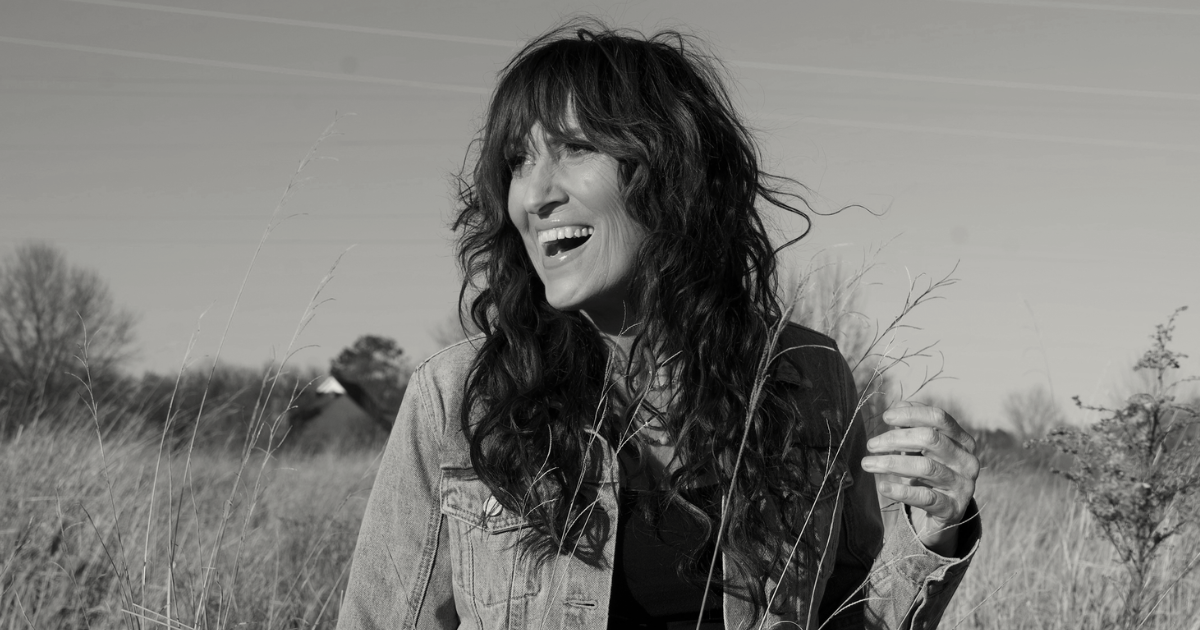
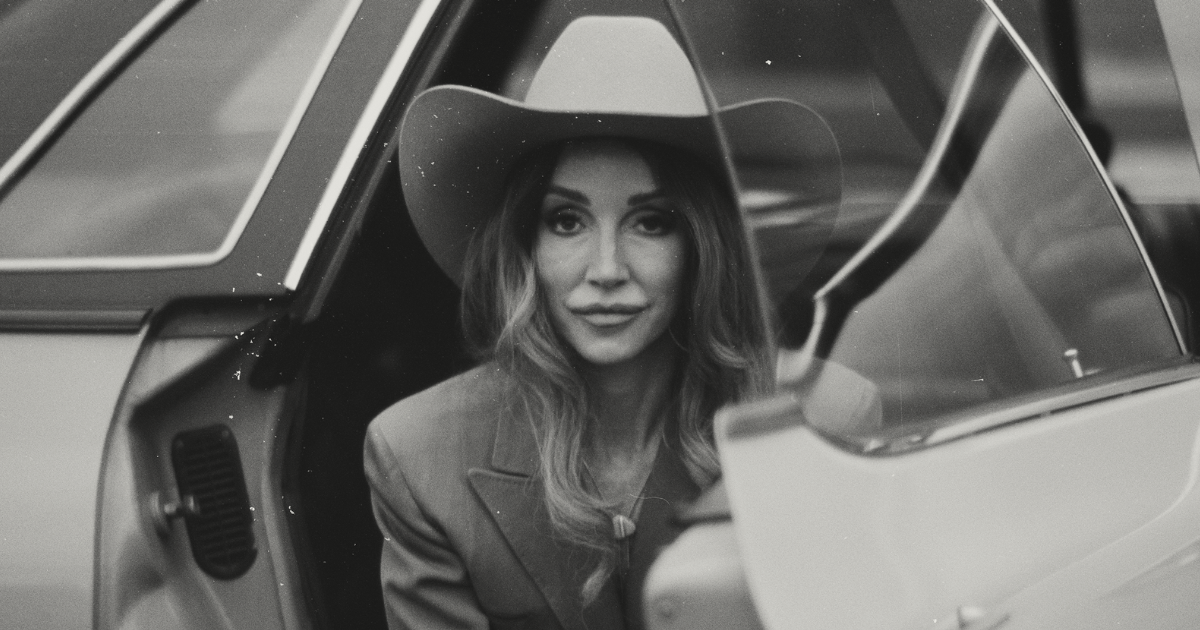
Jo Dee Messina wants to know where the real cowboys are.

“Well, are they in some greener pastures?” she asks on “Where the Cowboys Ride,” a spicy sendup of Tecovas-rocking poseurs and a standout on Bridges, Messina’s first album in over a decade, out June 5.

Sometimes cheeky, often affecting, Bridges condenses a lifetime of lessons into 12 tight tracks. Whether she’s taking a narcissistic partner to task (“It’s All About You”), warning about the dangers of self-medication (“Message in a Bottle”) or setting the record straight on scripture (“The Jesus I Know”), Messina explores life’s complexities with her signature mix of grit and hard-fought joy.

Lead single “Some Bridges” is a power-pop-country belter that recalls the triumphant highs of 1998’s I’m Alright, which spawned three consecutive No. 1s and cemented Messina as one of the leading voices of country pop’s golden age. Like “Bye Bye,” Messina’s indelible ode to putting “a lead foot down on my accelerator” and leaving a bad relationship in the rearview, “Some Bridges” reminds listeners that self-preservation sometimes means burning things down.

“You have to learn to forgive, but do you go back to that abusive situation?” she says. “Do you go back to that addiction? You don’t have to subject yourself to these things.”

Jo Dee Messina is our Artist of the Month for June 2026. She sat down with Good Country to talk burning bridges, her “sweet” relationship with Ella Langley, and what she hopes fans will take away from this new era. Check out our interview and don’t miss our Essential Jo Dee Messina playlist below, too.

Why was now the right time to put out new music?

Jo Dee Messina: Because it was done. [Laughs] I’ve been writing a lot with people, and [my co-writers] are just so encouraging. We’d write a song and they’d be like, “Man, you should record this.” It happened so many times, and I was like, “Well, I think I’m at a stage right now where I have time I can dedicate to a project,” releasing the songs and a tour schedule to support it. It just seemed like the right time.

Do you feel like you’ve gained confidence as a writer as your career has gone on?

I’ve always been a songwriter. I do believe that in the last few years, my songwriting has had time to develop and I’ve written a lot more. I’ve had more time to write, so I’ve had a lot more content.

To hear songs like “Some Bridges” on the radio kind of brings tears to my eyes, because it’s like, I actually wrote this. I actually wrote the songs on this record.

“Some bridges are meant to burn” is a great lyric. Do you feel like you’ve had to burn bridges in your career?

I wouldn’t say career. But with life, sometimes there are situations that aren’t beneficial, or jobs or that really take the life out of you. I think everybody has experienced that. And it doesn’t have to be heavy. It could just be like, “I feel like my talents aren’t being used, and so I’m going to move elsewhere.”

With that song, we were in the writers’ room, and somebody brought up the idea that you can’t be burning bridges. But what if they’re meant to burn? What if that bridge leads you to pain and abuse, or to a job that sucked the life out of you? Forgiveness is for us, we’re not built to carry the weight of unforgiveness, but you can forgive from the other side of the bridge.

“Where the Cowboys Ride” is such a fun song. Did that song come out of any experience in particular?

It’s funny, because it’s not portrayed in the song, but the truth of that song is that a friend of mine went down to Lower Broadway [in Nashville] one weekend and came back and had his foot in a sling. I’m like, “What is the deal? What happened?” And he’s like, “I wore my cowboy boots down to Broadway this weekend.” I was like, “I’ve never seen you in cowboy boots. You wear sneakers every day.” But he dressed the part.

There’s a line in the song about how you don’t see them around here on a Friday night. I want to see the guys that are slinging dirt for a living. I want to meet the guys that will lay their life down for their family. All the things that a true cowboy does.

Everyone’s certainly throwing on the cowboy boots right now. Any theories as to why country music is having such a moment?

Country music tells the story of life. The messages don’t change as far as the relatability to different generations. Dolly Parton wrote “I Will Always Love You” in the ’60s, and then it came back in the ’90s, and people are still cutting it. You ask seven-year-olds and they know that song because their parents are singing it. With some songs, the emotion and the life story behind them doesn’t go out of style.

Of course, some of your older songs have been getting renewed attention as well. You recently performed “Lesson in Leavin’” with Ella Langley at the Ryman Auditorium, and then the two of you interviewed each other at Country Radio Seminar (CRS). Can you tell me about your friendship with her?

That started off with us messaging each other online. She sang “Lesson in Leavin’” on TikTok, and I reached out to her. We talked about writing together, but then life got crazy. Then when she played the Ryman she reached out to me and was like, “Hey, do you want to do this deal with me?” And then she did CRS and asked if I wanted to do that.

I think it’s just a mutual admiration. I’m really proud of what she’s doing and how she’s handling it. We both know Jesus, and we both love Jesus, and so I’m able to have that connection with her, and just say, “Hey, if you need prayer, I’m here. If you need a safe space, I’m here.” It’s a sweet friendship.

“If He Knew Jesus” is one of a couple songs on that album that takes up the topic of faith. What’s the backstory behind that song?

I’ve been a single mom for a while, and it’s difficult because you can’t split yourself up. Especially if you have more than one child, you can’t go to one’s recital at school and one’s hockey game, so one of them is always missing something. Someone had asked me if I would ever consider dating somebody, and my first response was that he would have to love Jesus. And so in these conversations with other moms is where we came up with the line, “If you knew Jesus, there’d be no raising these babies alone.”

I started to cry in the writing room when we wrote that. I was like, “That’s the saddest thing,” and then I went on to other examples: “He wouldn’t crush you beneath all that he did,” all of the hurt and pain and abuse and whatever, where Jesus raises us up. He protects us, and He cares for us, and He puts us first, and He dies for us.

What’s the best thing someone can tell you about what your music means to them?

I think, “It gave me hope. It made me not feel alone.” That would be the greatest thing. “It made me not feel alone in my situation,” whether it’s a happy situation, a lonely situation, a feisty situation, because the songs cover everything. Keep in mind the enemy tries to separate us so we feel alone, and when we’re alone, all sorts of crazy things go through our brains.

Who’s the enemy?

Satan. It’s like, if you get alone, your mind starts going, “Why am I alone? Oh, because nobody likes me, or I’m not good enough.” All these crazy thoughts go through your head, and so you don’t start to think, “Wow, I’m beautiful, and I’m worth it, and I’m treasured.” That’s why it’s called the enemy of who you really are and who God created you to be. He’s working against it.

Are there experiences you’ve had in life where you felt like you were alone?

I think we all have. So I just want to be sure that people know you’re never alone. Even if you don’t see another person in the room, you’re still not alone. Period. God’s word tells us you can never go too high, too low. He’s there. We just have to open our hearts and see it.

I work with teenagers and I remember a teenager saying, “I don’t even think my parents hear what I say.” It was such a sad statement, and it inspired the song “Can Anybody.” In my inner circles, I’ll call that song “The Teenager’s Lament,” because they all feel invisible. It’s why they’re doing things on social media and hanging out with certain people. It’s why they sometimes don’t talk to their parents.

That’s where the first verse came from, and then the second verse came from myself: “I’ve got a history of trying to save myself/ But God, if you’re listening/ I’m screaming out for help.” That’s me. I’m a doer, and I have a history of thinking, “I’ll fix it, I’ll fix it, I’ll fix it.” But there are some things I can’t fix. You can’t fix someone else’s health or their mental state. After my mother had anesthesia, she was confused, and I couldn’t fix that. I tried and drove myself crazy. I’d made her photo albums, and I made her song playlists, and, and I couldn’t do it. She was still confused. It made me realize the humanity of myself and the limits of a human.


Photo Credit: Madison Sharp

There’s an Edge to Abbie Callahan’s Sugary Country

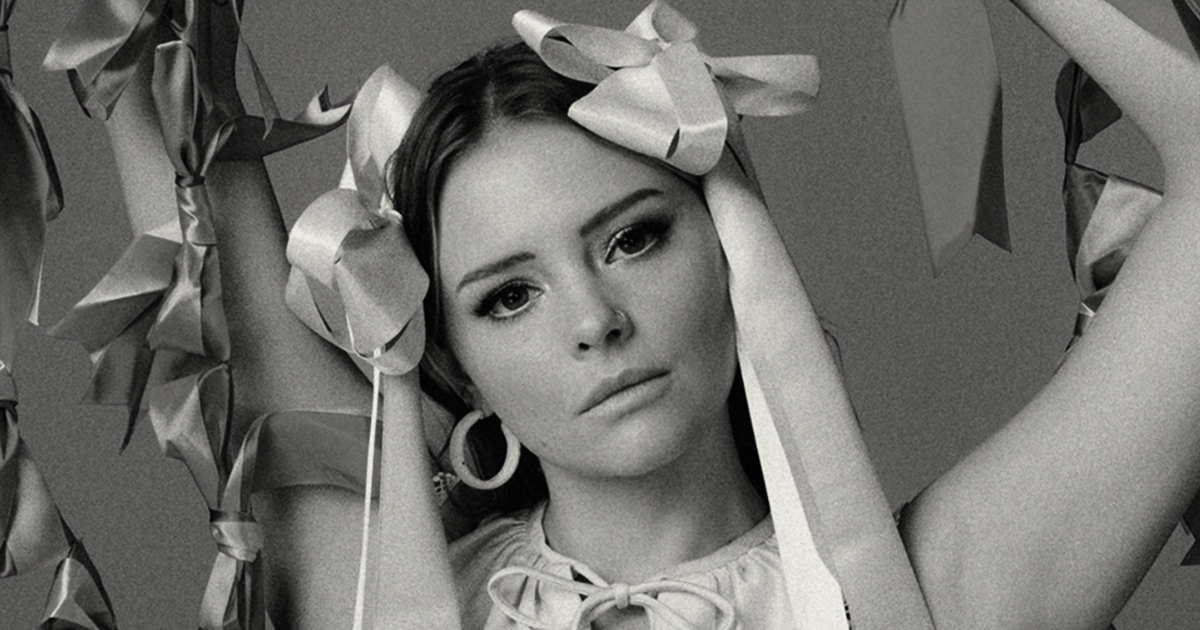
There’s an effortless charm to singer-songwriter Abbie Callahan’s persona when you first encounter her via vertical video. Beautiful and whimsical makeup, adorable wardrobe, hyper-femininity, and a Gen Z polish to her social media presence are all complicated in the most fascinating ways by her music itself. Landing somewhere in between witty and incisive pop country like Kacey Musgraves and gritty, train-hopping Americana such as Sierra Ferrell, you’d be well served not to make assumptions – or to sell Callahan’s songs short based on appearances.

This is not a book you can accurately judge by its cover. Callahan’s songs will reel you in with her sharp, impactful vocals, her deft wordplay and solid hooks, and a wink and sly smile around every lyrical corner. Tracks like “Simon Says” will have your head bobbing before you even realize the devastation and trauma woven through the lyrics. A new, as-yet-unreleased number, “OptiMystic” – debuted, as Callahan tracks often are, on TikTok – lays out her worldview pretty tidily:

I’ve been known to be a little easy on a Saturday
Known to smoke a cigarette and throw up in the alleyway
Checked off greed and lust in a church pew
Had confession in the Red Door bathroom

Who can really say where you can talk to Jesus anyway?
Anyway…

If you were to engage with and enjoy Callahan’s music without any deeper inspection, you’d still come away with plenty. But the real appeal here is that the sweet, sugary veneer on these songs is only to bring you in. It’s the tinges of bitterness, the tannins, the “something much deeper going on below the surface” that will bring you back again and again. However you zoom out or zoom in on Callahan, her lyrics, her process, and the way she brings her songs directly to her listeners there’s subversion, a deliberate and inspired flouting of expectations.

@iamabbiecallahanWho can really say where you can talk to Jesus anyway… anyway🧚🏼‍♀️🔮♬ OptiMYSTIC – Abbie Callahan

Callahan is intentionally leveraging the way she’s perceived outwardly and visually to “Trojan horse” her way of making music into a country industry that’s often loath to platform artists like her, who build fandoms and idiosyncratic styles on hyper-femininity without apology. Like Dolly, Loretta, Kacey, and so many others who’ve come before her in that age-old country tradition, Abbie Callahan is onto something.

We caught up after a gentle spring rain in Napa Valley, as Good Country attended Live in the Vineyard Goes Country and caught Callahan performing as part of the event. Finding ourselves in such a stunning location, we began our interview chatting about country’s relationship to place and how well-suited this music is to the many settings it finds itself in.

I wanted to start by asking you about country’s relationship with place. Country music is always about place – rural places, urban places; farms and ranches; California, Tennessee, Iowa. We’re at Live in the Vineyard Goes Country here in Napa, so I’m thinking about country and place, and I wonder if you think about country’s relationship to place – and about how this music is so appropriate for so many different contexts, whether you’re in Napa or playing a honky-tonk or a festival. How do you think about country’s relationship to place and to land? It’s interesting to be here in a place like this with everybody sharing a few days in such a beautiful setting.

Abbie Callahan: That’s a great question. Usually I think about it in context of place in genre. It kind of is the same thing to me. My music with a band or just with guitar, I can make it fit into whatever genre I want – I feel like that in place, too.

But here [in Napa] it’s spring and the flowers are everywhere, it feels like they are one and the same. Especially my last project, Grossly Aware, with all the flowers – and we have the garden [right beside us] and all that. It feels like this is the perfect spot for me to be.

Two weeks ago we were back where I’m from in Iowa. It was gloomy and rainy and we were playing a bunch of the new stuff. It was, I don’t know, probably a little bit out of place, ’cause it was all fun disco [music]. But maybe it added to [the impact], because it was so gloomy and getting rained out. I don’t know how [my music] relates to place, but I feel like I can make it whatever I want, which is kind of nice. Kind of fits anywhere.

Well, being in California for this interview makes me wanna talk about “Strawberry, California.”

We went there yesterday! We drove through it. It was my first time actually there. We went over the Golden Gate Bridge and I was– I’m from Iowa, so I’m from like, not much. [Laughs] So it’s cool that music can bring you somewhere and you get to see all the things. I don’t think I would’ve been able to see the Golden Gate Bridge and come to California [without music]. Or be in Napa for country music. Napa’s outside of my tax bracket, so it’s nice to be here. [Laughs]

One of the things I noticed when I was listening to “Strawberry, California” to get in the mood for us talking in California is the banjo playing. I love that the banjo is playing the melody along with your voice. And I love that you evoke bluegrass in your music so often. Could you talk a little bit about that song and having banjo in it, and about the bluegrass touchpoints across your catalog?

I was in a rock band that played in downtown Nashville. That’s how I paid for college. I was playing ‘90s grunge, so I’d go home and I want to listen to the opposite. That’s how I found bluegrass – just how simple and deep everything is. It’s different than how I write and talk. It’s so concise and wrapped up so well that I just envy it, in a way. I love listening to it, ’cause I feel like I can learn a lot. But then my setup, my band when I play, is a bluegrass setup. It’s upright bass, me, guitar, fiddle, another guitar. We just added drums, which is a big step.

But that’s when I started listening to bluegrass, ’cause it was like a palate cleanser. I don’t listen to a lot of modern country, because that’s the space I’m in. When I listen to it too much, I feel fatigued from it all. So bluegrass is a nice outlet. It just feels refreshing to listen to. I wasn’t raised on it or anything, so I feel a little bit like an impostor, but I love it so much.

Charlie Worsham played banjo on “Strawberry, California.” He played throughout the whole record, Grossly Aware, on guitar and banjo. “Strawberry, California,” it was tricky to get it right with a band, because of the time changes and how intricate the guitar is. But I pulled it up for him in the studio, he listened to it once, and he was like, “Wow, this is tough.” Listened to it twice, and then had it perfectly. I was like, “What in the world?!” He’s a freak. So good.

I really enjoyed listening to it. And then I also have been listening to your new single, “Drag, Queen.” I love it in so many ways.

It’s a little controversial.

Of course, it’s a little controversial, but also it’s 2026. They can catch up or we don’t need them. [Laughs] I love that, again, you’re subverting expectations. And again, it’s traditional modern country with that big hook, the wordplay is great. The sort of wink and a smile about it. But also I love that it sounds so bluegrassy.

Yeah, it’s the grassiest song I’ll be putting out this year. It’s super grassy. It’s so fun to play live. I played it on tour with Carter Faith this spring. Her audience was so perfect for it, ’cause they love weed and they are awesome. [Laughs] I played it on tour with her and it was probably my favorite song in my set.

I wrote that song last year – last June – and I posted it right away and it’s just been my favorite. I think it’s silly, but it has a lot of layers to it. I had a song, “Marry Jane,” blow up on TikTok. It was my first thing that ever did anything on TikTok, so I got hate for the first time. Which is always an interesting experience. It was all like balding, middle-aged old men being like, “Is this a song about a lesbian or a song about weed??” And I was like, “It’s about both, duh.” [Laughs]

Have you ever heard of an entendre? Yeah, no, you haven’t.

Double it. [Laughs]

[Laughs]

Anyway, it was so funny. But that’s why I wrote it. I was like, “They’ll hate this.”

@iamabbiecallahan Wrote this one yestersay, Marry Jane💌🍃 #maryjane #singersongwriter #nashville ♬ original sound – Abbie Callahan

I also wanted to ask you – femininity and hyper-femininity in country are also traditions. The performance of femininity by folks like Dolly Parton and Loretta Lynn all the way to k.d. lang. I love the way that you inhabit femininity and it’s so clear that you do not feel like it’s a burden, or that it weighs you down, or that it’s something that you could be penalized for. But I wonder how you feel like it’s received – especially on social media, like you mention, TikTok. Do you ever feel like you’re penalized for your femininity?

You know, I think as we’re starting to talk to labels and all that, yeah. I think if I was a man with this amount of monthly listeners and success so far, I would have a deal already. In that way, it’s definitely hindering, but it’s not gonna stop me from anything. I will have more leverage in two years, and that’s fine. [Laughs] But whatever. But because it’s so raw and real and feminine, I feel like my audience is all girls. It’s been really nice. I feel like I can be myself, say whatever I want, and I don’t have to worry about it. [I can] dress however I want – and dress strange – and be something to look at and not just, like, pretty, you know?

And the girls get it. I love it. I don’t think it’s a bad thing at all. It’s what I prefer. …

Another song that really jumped out at me is “Simon Says.”

The production of it started with just me in my room on guitar on TikTok, and then people were like, “I need a full strings version of this. I need a banjo version of this. I need a pop version,” all these different things. When we recorded it for the first time the demo had a synth on it, which is the banjo part. That’s how it started. I knew that wasn’t how it was gonna end, but it was like in demo jail for a year and a half. And I was like, “It has to have that element,” and then it just worked out for the banjo.

I did have a question about TikTok, so it’s interesting to hear you talk about how you’re in the comment section, you’re seeing what people say. It’s interesting to me that you’re responding in your creative process as well. Like what you just said about “Simon Says.” You’re listening to the fans being like, “I need this, I need that.”

If they want an acoustic version I’m like, “If you’ll stream it, I’ll do it.” Without a label right now, that’s been amazing. Something will blow up and in a month and a half or two months later we can have it out. You can’t replace that. It’s been really nice.

How do you feel when you’ve done a bunch of reps of a song, or when you’ve taken it from TikTok, to demo, to recording, to bringing it to an audience – do you feel like the song changes meaning? Do you feel like “Simon Says,” for instance, will always have that tinge of sadness and trauma to you? Or do you feel like the audience takes it, it changes, and then you get up on stage and you don’t feel that anymore? Or does that feeling always stay with you? ‘Cause as a songwriter myself, I feel like I re-traumatize myself every single time I play one of my songs. Is that how it feels to you with a song like that?

I have to write about what I live. I can’t just write to write. I have to put myself through stuff. It’s whatever – “tortured artist,” you know. Every line in there is real, so it’s definitely re-traumatizing.

But I guess it was my first tour, my first time singing it on stage, I was thinking about the writing of it a lot. ‘Cause it’s something so magical, that three people are in a room – or two people or just me – and then now I’m in front of 1,000 people and some of them know the songs. I don’t know, something about that is so special. I wish my co-writers were there to see it. It’s such an intimate thing.

There’s a little bit of a healing moment there.

Totally. It kinda changed what I was thinking about, especially with “Simon” and a lot of the next project. All of it’s co-written, which is different for me. I was just thinking about the people that made it all come to life. When we were in the studio, little ideas that people had. It’s so cool.

So it’s like, less sad now. I guess it depends on the situation. If it’s me on TikTok, I’m getting into the sad headspace. But in person I’m like, “Oh my gosh, this is so fun. My favorite people helped get me here.” I’m like singing “Simon Says” with a pep in my step. Like, what is going on?! [Laughs]


Want more Good Country? Sign up to receive our monthly email newsletter – and much more music! – direct to your inbox.

Photo Credit: Catherine Powell

2026 Americana Honors & Awards Nominees Announced

The Americana Music Association has announced the nominees for this year’s Americana Honors & Awards. The nominations include Album of the Year, Artist of the Year, Duo/Group of the Year, Emerging Act of the Year, and Song of the Year. The winners will be unveiled during Americanafest, which will return for its 26th year September 15 through 19 in Nashville, Tennessee. (See the full list of nominees below.)

Each year, the Americana Honors & Awards are a sort of “kick-off” for Americanafest, held on the Wednesday night of the conference and festival at the beloved Ryman Auditorium. This year the awards show falls on September 16; as the Americana Music Association explains via email, “Tickets to the Americana Honors & Awards are on sale now to Silver Wristband Holders. Honors & Awards tickets will be available to Festival Wristband Holders, members, and the general public at later dates.” Wristbands can be purchased here.

Nominees this year include country, roots, and Americana mainstream superstars like Tyler Childers, Brandi Carlile, and Mumford & Sons alongside newer discoveries and up-and-coming artists like Ken Pomeroy, Molly Tuttle, Mon Rovîa, Kashus Culpepper, and more. Other awards bestowed on September 16 will include Americana Lifetime Achievement Honors, the Legacy of Americana Award, and the Spirit of Americana Free Speech in Music Award.

In past years a trophy for Instrumentalist of the Year has also been announced in tandem with the “of the year” categories, this year the category was notably absent from the announcement. After outcry from musicians and members, the organization made a statement on social media a few days after the announcement stating that the Instrumentalist of the Year Award will be “presented at a later date.” The Honors & Awards host(s), house band, and musical performers have not yet been announced, but participants each year are stellar.

See the full list of nominees below and make plans now to attend the Americana Honors & Awards in Nashville, Tennessee on Wednesday, September 16, 2026.

ALBUM OF THE YEAR

Snipe Hunter, Tyler Childers; Produced by Tyler Childers, Rick Rubin, Nick Sanborn

Billionaire, Kathleen Edwards; Produced by Jason Isbell & Gena Johnson

Planting by the Signs, S.G. Goodman; Produced by S.G. Goodman, Matthew Rowan, Drew Vandenberg

Cruel Joke, Ken Pomeroy; Produced by Colton Jean, Dakota McDaniel, Gary Paczosa

Hard Headed Woman, Margo Price; Produced by Matt Ross-Spang

ARTIST OF THE YEAR

Brandi Carlile

Charley Crockett

Margo Price

Molly Tuttle

Jesse Welles

DUO/GROUP OF THE YEAR

Flatland Cavalry

I’m With Her

Mumford & Sons

Turnpike Troubadours

Gillian Welch & David Rawlings

EMERGING ACT OF THE YEAR

Boy Golden

Crowe Boys

Kashus Culpepper

Ken Pomeroy

Mon Rovîa

SONG OF THE YEAR

“Returning To Myself,” Brandi Carlile; Written by Brandi Carlile

“Snapping Turtle,” S.G. Goodman; Written by S.G. Goodman

“Wild and Clear and Blue,” I’m With Her; Written by Sarah Jarosz, Aoife O’Donovan, Sara Watkins

“Heavy Foot,” Mon Rovîa; Written by Grant Averill, Eric Cromartie, Cooper Holzman, Andrew Lowe

“The World’s Gone Wrong,” Lucinda Williams (feat. Brittney Spencer); Written by Tom Overby, Doug Pettibone, Lucinda Williams


Lead image courtesy of the Americana Music Association.

This post was updated to include mention of the Americana Music Association’s social media statement regarding Instrumentalist of the Year.

BGS 5+5: Spencer Cullum

Artist: Spencer Cullum
Hometown: Nashville, Tennessee
Latest Album: Spencer Cullum’s Coin Collection 3 (released March 27, out now!)

What other art forms – literature, film, dance, painting, etc. – inform your music?

I’m a film nerd. I try to watch as many movies as possible, and also love the cinema (shout out to the Belcourt in Nashville), so if I’m burnt out from touring or music I fall back on that for influence. If you hear my music there is a deep influence of British folk horror from classic titles such as The Wicker Man and The Blood on Satan’s Claw to modern British folk movies such as Enys Men and Bait.

I do tend to go on the hunt for obscure ones I haven’t seen. I recently watched the 1977 TV series Children of The Stone and 1972’s A Warning to the Curious. Both incredible early origins of folk horror. Worth a look if that floats your boat.

What’s your favorite memory from being on stage?

Bonnaroo with Rich Ruth. Our backline was these giant Fender Twin [amps] and we all just turned up. It was this incredible wall of sound. I also think a big percentage of the audience had taken acid and there was a certain sway to everything.

Green Man Festival in Wales was also pretty magical, the sun was setting over Bannau Brycheiniog [National Park] and I got to play my favorite Trees cover, “Road,” in that environment with Sean Thompson, Erin Rae, and Hollow Hand.

What has been the best advice you’ve received in your career so far?

Surround yourself with friends that inspire you and encourage you. Be in a community you treasure.

Commit to what you enjoy and care about.

This is more advice for the “session” musician world. For years I was insecure about not being as good as x-y-z or the older players I look up to, but there’s something so powerful about harnessing insecurity. It’s what makes art special. To be confident in taking a risk and not knowing the outcome. There’s a lack of that in Music Row cause everyone plays to a formula, so the idea of risk and insecurity is not there.

What is a genre, album, artist, musician, or song that you adore that would surprise people?

Oh, I have some very questionable tastes. Especially if I’m behind the wheel and it’s an eight-hour drive home. I love Robert Palmer. I weirdly like Primus (especially the Brown Album) – I think it’s a nostalgia thing with them. Kicking around blasting Tommy the Cat at the Romford Skate Park on my CD Walkman.

Oh, Bruce Hornsby. I can burn through three hours of Bruce in one stint. Easy!

What would a perfect day as an artist and creator look like to you?

With my wife and two dogs on a hike, then a pub lunch by the seaside (somewhere in Cornwall), then a cheeky tobacco pipe outside in the evening with the cat listening to John Peel archives, but like the intense Aphex Twin archives… really loudly.


Photo Credit: Rebecca Moon

35 Songs That Hate Nashville

Hating on Nashville – whether Music City, Music Row, Lower Broadway, the tourists, the industry, the traffic, or almost anything and everything else – is a trope and tradition essential to country itself. As long as this town has been a roots music mecca it’s been a curse, too. It’s a maker and breaker of dreams that’s all at once exactly what it is and what it looks like, and a figment of your imagination, too.

On the roots songwriter’s map, it might be the capital city. Flanked by Memphis and “Carolina” and Los Angeles and Malibu and the bluegrass of Kentucky and the “concrete jungle where dreams are made of,” all familiar locales to songsters of all genres referencing places and cities. Places are excellent characters in songs, and we return to our favorite destinations over and over as we relish tracks like “Dublin Blues,” “Eight More Miles to Louisville,” “Big Ball in Brooklyn,” “Take Me Home Country Roads,” and so many more.

But isn’t there just something special about songs that hate Nashville? As a motif, it stands out among songs about places or among places as a trope, in country and outside of it. Songs that hate Nashville can ooze pain or vengeance. They can be aspirational or giving up all hope. But perhaps their real unifier, besides Music City itself, is that each and every song that offers a variation on this theme is really, at its core, declaring a deep love for the town.

In March, country artist, singer, and songwriter Ashley Monroe surprise released an eight-track original album, Dear Nashville. Not quite a concept album – perhaps rather having a concept at its core, instead of as its entirety – it’s an incisive and vulnerable demonstration of Monroe’s love… and hatred of Music City. “I Hate Nashville” opens the album with gauzy pads and a forward-leaning train beat as Monroe sings words that clearly haunt her, and so many like her. Lyrics often uttered by the gatekeepers of the world, the holders of the keys to this city. “They can’t make you a star,” “somethin’ ain’t stickin’,” “pay your dues.”

The rest of the song, though, is something different. It’s exasperated and exhausted, yes. Defeated, almost. But it’s not a hate letter Monroe is writing to her hometown of decades. She sings on the chorus:

Country music
Is the reason I’m alive
Paul Franklin playin’ steel
God knows I love Vince Gill
But I hate Nashville

And wouldn’t you know it, that mournful, heart-wrenching pedal steel singing along with Monroe’s beautiful, East Tennessee voice is played by Paul Franklin himself. Because that’s what Nashville is capable of. That’s what it does best. It makes dreams reality, it makes friends of idols. It can be everything you pictured, but wouldn’t let yourself believe is possible.

Wrote a lot of songs
Made a lot of friends
And if I’m being honest
I’d do it all again
I remember the first time
I saw the skyline shining
Sometimes the road to the top’s
A lot of downhill climbin’

Verse two captures the duality of songs that hate Nashville perfectly. Monroe is displeased with the industry, with the machinations of a community designed to reap profits and profits and profits, and that isn’t so concerned with art or country anymore. But her dreams have come true. She has paid her dues – and then some – and she’s made records and sung songs with Franklin, Vince Gill, Miranda Lambert, and so many more name-droppable peers, heroes, legends, and virtuosos. And, if she’s being honest, she’d “do it all again.” Who wouldn’t?

In each of these 35 songs, you’ll find artists just like Monroe, from across generations and from a variety of backgrounds and origin points inside and outside Music City. Each grapples with these same essential questions of this place. Of Nashville, Tennessee. Struggling with the industry, or Music Row, or the politics of each. Some demonstrate internal battles, others are so external they itch. There are songs that decry capitalism and that long for acceptance by it. There are songs of love lost and romantic haunts turned sour. You may hear someone writing on the outside looking in, or the inside looking out. It’s all compelling, the same but different.

Whatever you hear across these songs that hate Nashville, you’ll hear excellent music and a country tradition so essential to the format it belongs right next to losing your love, your truck, your dog, your house, your job, your… dream of making it in Nashville. Three chords, the truth, and hating Nashville. It’s as country as it gets.

“Heartbreak Town” – The Chicks

“Square people in a world that’s round.” That’s an indictment, for sure, written as only Darrell Scott could. Scott is well-practiced in songs that hate Nashville whether this magnificent track made even more delicious by the Chicks or “Long Time Gone,” also cut by the Chicks and included on this playlist, or even “Hopkinsville,” a Scott original inspired by longing to be done working on the Shelby Street bridge downtown. The Chicks sold the true heartbreak of Nashville on this number even before the city’s central machine turned its ire toward them. As we all know, they survived being on the receiving end of Music City’s ire more than once – and made millions doing it.

“Kay” – John Wesley Ryles

A story song for the ages, and about Nashville, to boot. “Kay” is sung from the perspective of a depressed taxi driver, “I’m living and I’m dying, staring out at Music City, from my cab.” The singer moved his love, Kay, to town to give her a shot at making it big. He’s hearing her record on the jukebox – it “don’t sound bad.” Woof. Gut punch. (At least if she’s gonna be famous, let her sound bad!) The perspective in the song is dynamic and surprising in a modern context, but reminds of how literary and poetic country story songs in the ‘60s and ‘70s could be. And how narratively dense. “Kay” peaked at No. 9 in the U.S. and is Ryles’ best-known record.

“Nashville Blues” – Billy Strings, Bryan Sutton

Out of so many versions to choose from, we chose this one. Can you blame us? Perhaps Bryan Sutton’s joke at the top is the real reason it belongs on this playlist. He introduces “Nashville Blues,” a classic in the bluegrass and old-time canon, thusly, “Here’s a song about Nashville that Billy wrote on the way here stuck in traffic.” The crowd cheers at the joke and a man can be heard responding, “That’s gonna be a long song.” Everybody at the sold-out American Legion neighboring the famous, coveted 37206 zip code laughs. Hating Nashville unites us.

“Ten Year Town” – Hailey Whitters

Speaking of dues, Ashley Monroe’s “I Hate Nashville” immediately brings to mind Hailey Whitters’ “Ten Year Town.” Released in 2020 on The Dream, it drives to the heart of the strange but usual expectations projected by others and ourselves – onto Nashville, careers, dreams, and music- and art-making. What Whitters is really singing about – and Monroe, too, to a degree – is that country music is a trade. Whitters is asking what else she could do besides this, while noting all she’s had to do besides make music in order to make music her trade. But if, like Monroe and Whitters, the trade you’ve plied your whole life or for decades can’t make you a living, what good is paying dues? In investing 12 years in a “ten year town”?

“Nashville Without You” – Tim McGraw

You know what else is country AF? Referencing country songs in a country song. If roots music is going to be one thing, it’s going to be self-referential. All songs about Nashville do this to a degree, but Tim McGraw’s “Nashville Without You” does it remarkably well. Especially for highly stylized mainstream radio country such as this. As a bonus, this is also an “I Left My Heart in San Francisco” sort of love song, where one’s relationship to a place is entirely colored by another person and your shared connection to that place. Ryles’ “Kay” in another generation!

“Nashville” – Indigo Girls

Let’s not forget the folks who have the most reason to hate Nashville – in the music industry and outside of it – have always been women, queer folks, Black and Brown folks, and disabled folks. That’s certainly part of why so many women have written such excellent songs panning Music City. There’s an added layer of truth, an extra heaping helping of grit. 70 cents on the dollar, 12 years to equal the ten-year town requirement.

As an extension of that theory then, being both women and queer as alt-country indie folk artists in the ‘90s is a huge part of what imbues the Indigo Girls’ “Nashville” with honesty and resonance. It’s artful in its lyricism and for painting as much with absence as presence, fleshing out the story by leaving it out here and there. But it’s the perfect song to leave off with, as you continue your listening to the full 35-song playlist below.

Emily Saliers and Amy Ray touch yet again on the maelstrom of mixed feelings musicians and creatives feel about this place, reminding of the central existential love/hate in Monroe’s “I Hate Nashville.” Saliers sings:

I’m leaving
I’ve got all these debts to pay
You know we all have our dues
I’ll pay ’em some other place
I never ask that you pay me back
We all arrive with more
I left with less than I had

The song is so seemingly over-and-done-with Nashville and yet, there’s a crack under the door. The window is not quite latched. A pathway however slight to wiggle back in. You can see it again elsewhere in the song, “I can’t place no blame/ But if you forget my face/ I’ll never call your name again.” Are they singing to a person? To the industry? To Nashville? To all of the above?

One thing we know for sure, they hate (love) Nashville. Just like Monroe. Because how does she close her album, Dear Nashville? It’s how we decided to close our playlist, too. With “Quittin’.” Another song co-written by Monroe with co-producer Luke Laird. It ends:

So much for quitting
I guess I’ll stay on the ride
‘Til the day that I die

We should hope so. There are so many more songs about hating Nashville to write and to enjoy!

Below, sample many more songs that hate Nashville from artists like Marty Stuart, John Anderson, John Hartford, Margo Price, Donovan Woods, Lindi Ortega, Kacey Musgraves, Steve Earle, Kris Kristofferson, Charley Crockett, Dale Watson, Waylon Jennings, and many more.


Additional contributions and curation by Shelby Williamson. 

Photo Credit: Ashley Monroe by Becky Fluke.

Drayton Farley Asks the Big Questions

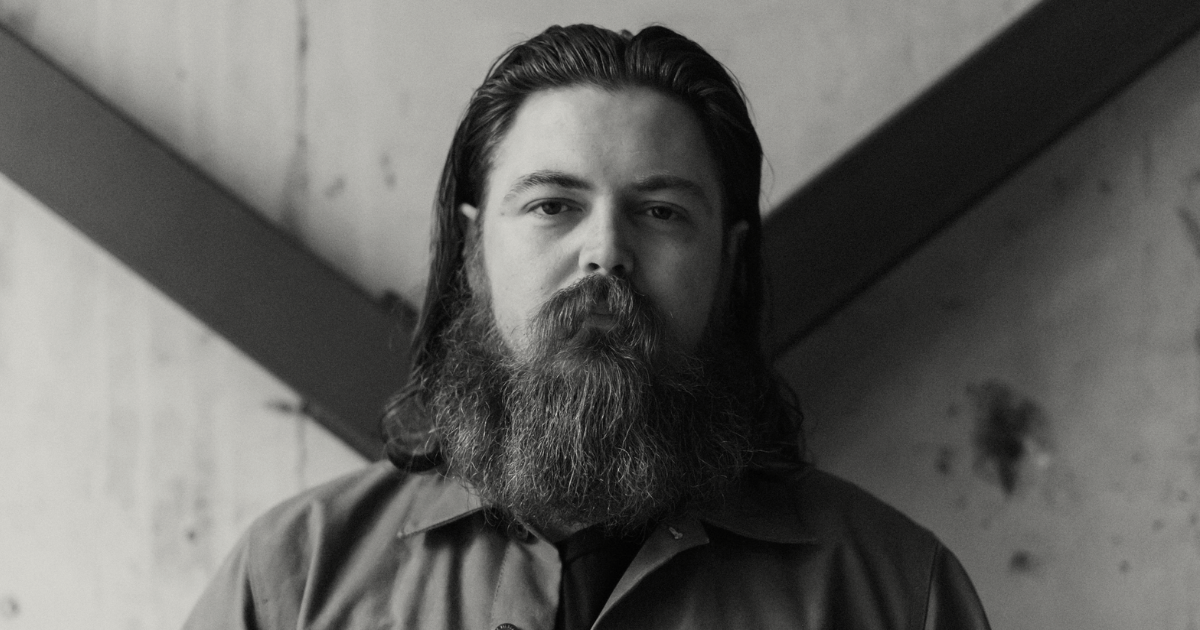
You’ve got to have some durability to name your album A Heavy Duty Heart. For Drayton Farley, paying a decade’s worth of dues is an important part of the story.

After a slow but steady build of recording albums and relentless touring, Farley picked up four significant synch placements in 2025, with songs “Blue Collar,” “Touch and Go,” and “It’s Called Doubt” heard in the Paramount+ series Landman, and “Turn Around” appearing in the CBS show Sheriff Country. That remarkable achievement seemed like a perfect way to set up A Heavy Duty Heart, which was recorded with his touring band and produced by Sadler Vaden.

“What I found is, usually the biggest enemy is me when it comes to how I’m feeling about how it’s going,” Farley says. “When things like that happen, it pulls you again out of your head and reminds you, ‘No, everything’s going great, actually. You’re doing really well, and you should just keep doing it and get out of your head a little bit.’”

In an interview with Good Country, the Birmingham, Alabama-based singer-songwriter retraces his trajectory to becoming one of roots music’s most promising performers. He explains why he considers Robert Earl Keen a role model and shares the song that still makes his wife cry.

The opening song, “Love We Mean,” captures that moment in a relationship where you have a rare moment to reflect. What was on your mind as that song was taking shape?

Drayton Farley: Yeah, it was pretty much that. I wanted to write a song about that moment where the kids are gone and you’re not on the road and there’s not a lot going on. All of a sudden, you’re both just at the house and there’s nothing to do or worry about. [Laughs] And you’ve both been going a hundred miles an hour, sometimes in the same direction, sometimes in the other direction, but all of a sudden, everything just kind of stops and gets quiet. Then you’re both looking at each other like, “What the hell just happened?” And you start kind of taking stock and checking in.

I sensed a theme throughout this album of assessing where you are in life and asking those big questions. Then I looked you up and saw that you’re just 30 years old. Have you always been the kind of guy who’s willing to look inward and analyze the world around you?

Yeah, I think so. I don’t know why. I think that feels easier to do. I celebrate my 10th wedding anniversary in May. You know, I’m only 30, but I guess I’ve worked enough of the real jobs and been married long enough with two daughters now, these kinds of things feel required to do.

What were the day jobs you had before you could finally dedicate yourself to music?

Out of high school, I spent about three and a half years working on the railroad [as a subcontractor for Norfolk Southern doing derailment cleanups]. I got married while I was working there, then quit that job, and I got a job working for Mercedes-Benz. I worked on the assembly line building cars for the next four years. During that last year is when I started releasing music. I spent the last two years there, kind of gigging after work every day that I could, just trying to build whatever local presence I could and release as much music as I could and build a catalog. And this is just me and a guitar with a few microphones. Just lo-fi. It’s really demo tapes. They’re live recordings really, just in the house.

Then I left that job so that I could gig more. I got a job working for Safelite, doing auto glass for about two months. Then I booked myself opening a few tours and I booked a little headline run for myself. I told my boss, “Man, I gotta do music. I thought I could just open my schedule a little more and that would make me happier. But it’s pretty obvious now that music is what I have to do.” In the next month or two, I met my agent at CAA, met my manager, and hit it off with David Macias at Thirty Tigers. All the dominoes started falling immediately. Within three months of quitting that last job, I was already booked to open two shows for Willie Nelson. So it all happened fast, and it’s like reassurance that I’d made the right choice.

I’m going to quote a lyric back to you, which is “Somewhere deep inside I knew/ And I know you knew it, too/ Couldn’t be more proud to see we saw each other through.” That’s got to be the best feeling to know it actually happened for you. You held onto the dream. How did you stay motivated when things weren’t exactly going fast for you?

I think, especially for those times, the struggle was the motivation. It came pretty naturally. That song specifically, “Dream Come True,” that is mine and my wife’s story. I spent those years working the jobs – and even on the railroad I brought my guitar with me to write songs in the hotel rooms. I played open mics after work. We traveled for work on that job. So, those days, all the way leading up to, I guess around ‘22, that was it.

It was always just like, “How do you even make a career in music?” You know, “I’ve never been to Nashville. I don’t know anybody in Nashville. I really don’t know anyone in the Birmingham music scene. I don’t even know where to start or what to do, other than use social media to try to get my stuff out there.” And then fast forward to Mercedes. I was gigging after work for a few years, like Thursday, Friday, Saturday, as many shows as I can play, and I’m releasing EPs that I’ve self-recorded. The dream was always to do music and just find a way to be able to support us with music, instead of these other jobs that aren’t what I’m supposed to do.

We were trying to have kids and start a family and we ended up losing the first pregnancy. We kept trying after that, we had a second pregnancy, and we lost that one. So there for a while, it just felt like music wasn’t going to happen. How do you get that to kick off? And we’ve lost two pregnancies, so who knows if we can even have kids? That was our shared dream. That is what the whole song is about. We have two daughters now and this is what I do. When my wife hears that song now, she cries.

Being married myself, I appreciate these songs about the depth of that relationship, just leaning on each other and trusting each other.

I just needed something in my catalog that would reflect those parts of my life, because I’ve written so much about other things. Just looking back through all the songs, I was like, I have a severe lack of love songs going on, you know? Why not write an entire album of it?

I also picked up on the Robert Earl Keen reference in “Feel Like Getting High.” What do you enjoy about the music that he’s made over the years?

It spans a lot of different moods and I want to be more that way. So far, a lot of my projects and albums and catalog have had a similar atmosphere around it all. What he’s talking about, and what he sings about and writes about, is a pretty broad spectrum. As a writer, I want to get more in that direction where I’m not gridlocking myself to a certain topic or a certain mood. I would say that’s inspiring from him.

Why did the album title, A Heavy Duty Heart, seem to fit?

That was the hardest part of this whole thing, just naming it. It had me stuck for a while, trying to figure out the name. I don’t know where that came from. It was just a thought and I kind of liked the way it rolled off the tongue. Looking through the songs, almost all of these songs say the word “heart,” and it’s talking about the inward, deeper, zoomed-in struggles and details of my life, being a touring musician and having children and a wife, and our journey to get there. So, it felt like it would take a pretty strong heart and will to keep going through all that and keep your eye on the prize. I thought that title reflected the overall idea of the album.

I really like “Turn Around” right there at the end of the record. What was going on in your life when you were when you wrote that song?

That was a similar thing to what I was talking about earlier, where it was kind of throwing yourself a pity party and losing perspective. “Why is this going on?” “Why are these tickets not selling more?” “Why is this artist doing more than I’m doing? Two years ago, we were at the same place.” It’s just a game of comparison on social media and that can really begin to affect you, just wondering if you’re stalling, or if you’re doing well or not.

But the truth is, that’s just your mind going to those places because you haven’t kept your own perspective on everything. Like, me five years ago wouldn’t believe anything that me right now would have to tell them about all the things I’ve done and accomplished. That’s the real perspective. And when you lose it, you get too far in your head, for no good reason. And then stopping and turning around, kind of taking stock of where you’re at, and what all you have, and measuring yourself again.


Photo Credit: Leah Dockery

A One-of-a-Kind Conversation with Jonny Fritz

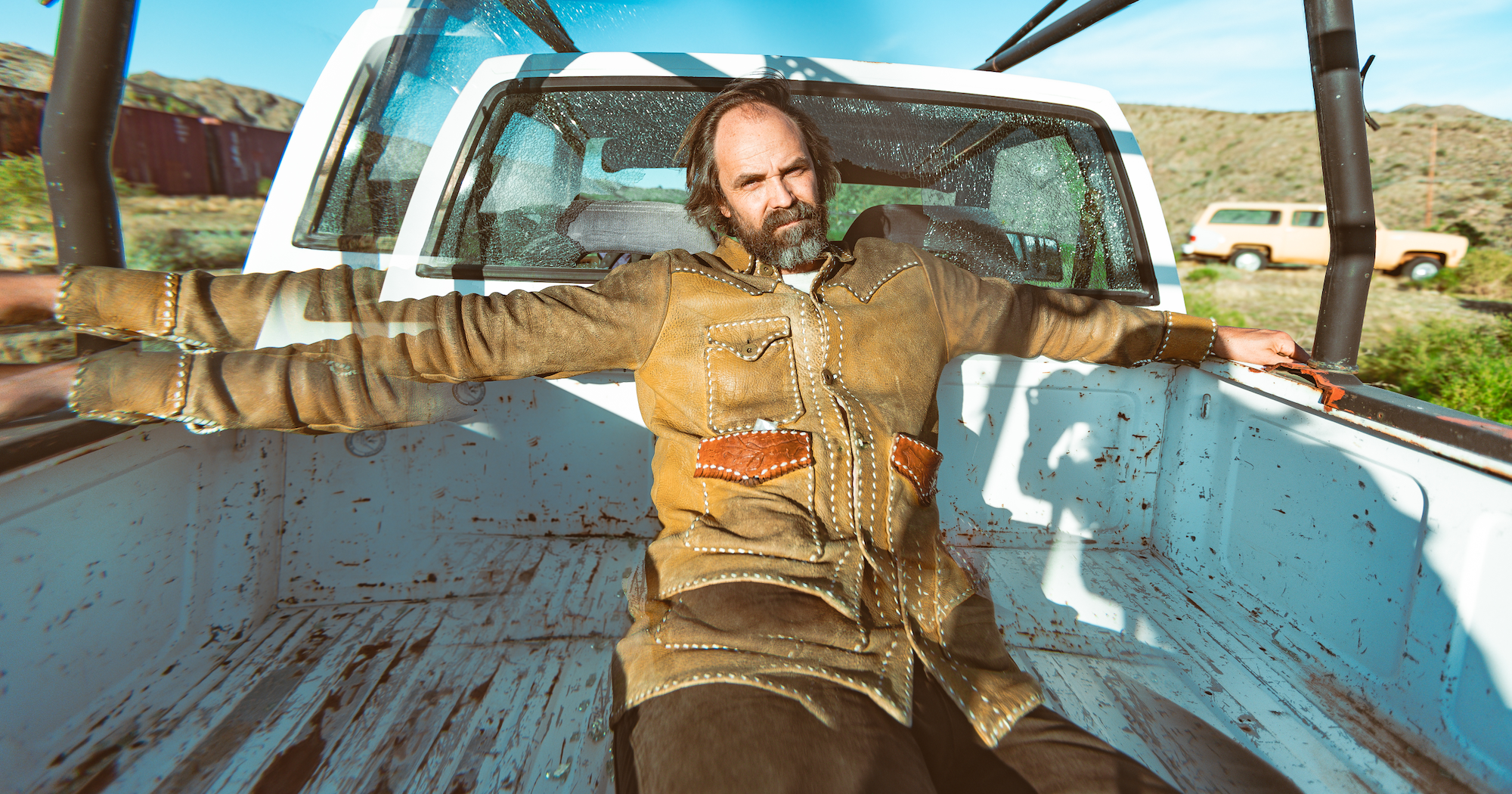
It is deeply joyful sitting with Jonny Fritz at a restaurant he suggested (Pollos Puebla #1) in an area of Los Angeles he’s an expert on (Pasadena/Altadena border) and talking about subjects he thinks about a lot, ranging from rebirthing ceremonies to alimony to how…“different” Nashville is now. He’s keenly honest about his life, his work, and his thoughts about any question thrown his way. Nothing is out of line or off limits. Nothing is filtered by a publicist or an agenda. It is off the cuff and real and wild.

We met over grilled chicken, rice, and beans to discuss his newest work, Debbie Downers (Woodwinds), a reimagining of the original 2025 album Debbie Downers. The conversation unfolded much like the album, with unexpected turns and humor that expose raw nerves about an unfriendly music industry, the beauty of PG Tips, the subtlety of serving a song, and the goal of taking a ride on the wave of a sliced open above-ground pool.

Well, let’s talk about Woodwinds. I’m a huge woodwind fan. How’d this come about?

Jonny Fritz: Oh, yeah? Me too. I love woodwinds. I’ve always loved them. I think they’re so great.

It’s so expensive making a record. It’s just stupid, you know? For example, the last record I made, Sweet Creep, I made it pretty cheap. I think it cost about 12,000 bucks. But ATO Records had an option on it so they could pick it up. They bought Dad Country, the record before that, for 5,000 bucks. It cost me five grand to make. “We’ll pay you five grand for it.” All right, fine. And then, hidden in the contract – or at least hidden to me – they got the option on the next one. Same deal. So when I made Sweet Creep they picked up the option. So for $5,000, they got this record that cost me $12k. I was like, “Jesus, man, this business is so rough.” And I just knew it was going to be something similar with the next one.

By this one, Debbie Downers, I thought, “What do I really want to do?” I might as well just do what I want, because there’s nothing worse than having something be expensive and unsatisfactory. I just decided I really wanted to make the record over and over and over again. I have a bunch of different visions for how it should go and I wouldn’t call any of them the one.

The Woodwinds one was something I’ve always just wanted to do. So I’m pretty pleased with it. I got this amazing guy in Highland Park who does film and TV stuff. There’s not a lot of work going on right now, so he was willing to do it. And the first couple of arrangements that he came up with, I was just giddy. I couldn’t believe how cool it was.

Were there any revelations for you? When you heard them in that arrangement, was there anything that shocked you about it?

Hmm… Yeah, some of the versions with the woodwinds really lent themselves to the winds better than any other version. I wrote this song called “Have You Seen Her.” I wrote it coming off of anesthesia. I was out of my mind. I got a hip replacement at UCLA 10 years ago. You know, coming off anesthesia affects people in weird ways. I’m one of them. It really got me, I wrote this song and I felt like it was the most brilliant thing.

It was so embarrassing. I wrote everybody who I knew who was high up at Rolling Stone, and all the Newport Folk Festival team, and all their PR team. I mean, I wrote everybody. And I wrote these really incoherent emails. I haven’t actually looked at them in a long time. I looked at them right after I wrote them and I was so ashamed. But I wrote all these emails being like, “You’re gonna want to get Scarlett Johansson down here. I need to perform this for her. And you need to get Joaquin [Phoenix] here, too.”

I’m not a social climber, but there was something in me that was like, “You need to make some moves. Call out a lifeline.” I was so ashamed of it for so long, because it was one of the most embarrassing moments in my life, for sure.

All of that to say, I didn’t want to play it or record it. I had to overcome it, admit it, and start talking about it. When I heard it with the woodwinds, I was blown away.

Years ago, I worked with Chris Crofton on a comedy event at Third Man Records that involved a compilation of found video footage that was submitted. There were so many submissions of people coming out of anesthesia, and I remember Chris immediately going, “No, that isn’t funny.” It really isn’t; you aren’t in your right mind.

God bless that man. He always knows exactly what the fuck is up. He is driven by pure heart and knows exactly where his morals should be. He’s incorruptible.

Do you spend a lot of time on social media? What is your relationship to it as a creator?

Pretty passive. I like social media. I feel like I’m kind of floating above social media. By like eight feet, just kind of looking down at it. Like, “What are you guys doing? That’s insane.” Then I dive into it to interact, and then just kind of get out of it. I get a little hooked on it for sure, but I hear about the addictions and the stuff that people fall for, and just like the amount of engagement. But it’s like engagement versus quality of life. I get so much fulfillment from everything else. I like playing with it. I always have fun with it, but I try not to let it get sticky.

Well, one of my favorite social media posts in the past bit is the one with your kiddo singing “Tea Man.”

Oh, wasn’t that so sweet?

So sweet.

She’s 6.5 now. She was like 2.5 then. And I just was like, I can’t post this. It felt so…I don’t know…

Personal?

It was personal, but I didn’t have a problem with that. I definitely want to protect her, you know? But that’s not her anymore. She doesn’t even look like that. She’s like doubled since that song came out. But then I was like, “Oh, fuck yeah, I’m posting this!” There was no risk of seeing her in public and recognizing that she’s the girl from the video.

Are you a tea man? In real life?

I got a PG Tips tattoo. I really like tea. I drink enough tea to float a canoe every day.

Really? All caffeinated?

Usually. Well, when I’m on tour, yeah. I get so tired. I can’t really mess with coffee. It just makes me so jittery. But I can just drink tea all day.

Are you an equal opportunist, or is it mostly black tea?

Oh, I like it all. Really like it all, but I love the black stuff, though. I think it happened when I was on tour 10 years ago with Josh Hedley. We were in England somewhere on a train, and they came down the lane with a steaming cart and it was £1 for a cup of tea. I don’t have an addictive personality. I don’t care about alcohol or anything. But I felt like, “Oh, I’m in trouble.” Just sitting on a cold, rainy train going through England with a cup of PG Tips.

It reminded me of something I heard about Andy Warhol. Although I’m not a big fan, I don’t know much about the guy. But what I do know about him is that one thing that made me really like him. I heard that he doused his whole world in a certain scent for a season. For example, in the summer of ‘63, he would just cover everything with lavender oil. And then come winter, it would be a totally different scent. And you’d put lavender away, and it’d be bergamot. So then the sense memory of whatever happened around that time would be so strongly connected to that scent that you could be completely brought back. And I really love that.

I think there’s something to it with the tea thing, because that tour was really big for me. It was a fantastic time. It was a really, really wonderful, lovely tour, and drinking PG Tips like that, I just got into English culture too. Everywhere you go, somebody’s like, “Well, you want a cup of tea?” Like, yes, I fucking do. I decided I’m never turning down a cup of tea. And I never have since.

Tell me about writing “Hot Chicken Condos” with Jordan [Lehning] and Skylar [Wilson]. I deeply connect with that song because I also left Tennessee, and for many of the reasons you list in the song.

Yeah, that was the point. Everybody who really gets this place will really understand these things, even like Pit Bull puppies in parking lots.

And humidity.

Fucking unrelenting humidity.

Were those things you were storing? How did that song come about?

God, why I love writing with Jordan and Skyler is because they don’t bring any ego to the write. They don’t fucking care. They’re just such good vibes. I’m really pretty neurotic about writing and also I’m pretty protective of my words, too. When I get into the writing space, I’m just so sensitive about what’s being said. So if somebody says or suggests the wrong thing, I can quickly be like, “This is the wrong association.” I can be a little trigger-happy.

But with Jordan and Skylar, they’re always just like, “Just play what you got.” And they usually edit everything that I have. With that song, one of the lyrics was “Mustard in the corner of his tiny little mouth.” And Jordan said, “Why don’t you say, ‘Mustard cracking in the corner of his tiny little mouth?'” And it was perfect. Mark Twain said the difference between the right word and almost the right word was the difference between lightning and the lightning bug.

It’s so true.

I got to hang out with Guy Clark once in Nashville, and it was like one of the best moments of my Nashville career. I was going through really bad writer’s block. And I asked him, “Do you ever get stuck?” And he said, “Yeah… Do you ever write with other people?” And I told him, “I don’t like the idea of giving somebody 50% of the song just because they’re sitting in the same room.” He leaned over and he goes, “Well, you never would have fucking wrote it if they weren’t sitting there.”

I was like, “Damn, old man schooled me.” Because so much of writing, I feel like, is picking up on something else that’s happening. And who’s to say you don’t owe somebody credit just because they’re sitting there?

The other thing that Jordan suggested for [“Hot Chicken Condos”], which was so right on, was that he asked me how high I could go on the Tennessee part. I told him I could go falsetto, and he told me to try it. I hit it and he said, “That’s it.” He took an idea of a song and made it a song. I just so appreciate those guys.

I just feel it is like a pedal steel player who plays about eight notes per song. That’s the best player in town, ‘cause all the other players are nonstop. Same with fiddle. Take Josh Hedley. The guy just stands there most of the time, then he pulls out something incredible, and he sets it back down. He doesn’t overplay. If you don’t overwrite and you don’t overplay, those are heavy attributes.

Those are both things to do in service of the song, not in service of self.

Absolutely. You know who I saw last night was Erin Rae. Kevin Morby and I were standing next to each other, just like, ”Oh my god, she’s so good.” One of the most amazing things about her is that she underplays the guitar. She’s playing the whole time, but if you really focus on how much she is actually playing, it is barely. It’s just enough to fill in where she’s not singing and she works the mic so well.

All those things are so important, but nobody teaches them, you know? You have to kind of know it. It’s innate, right?

Or you got to learn it trial by fire. And you have to be playing with players who know what they are doing to learn that.

Yeah. That’s right. Sometimes people are technically good, but they just don’t stop noodling, and it sucks.

You took a long hiatus from music, huh?

I did. I took nine years between records. I didn’t mean to. And I didn’t actually think that I was doing it. I was playing shows here and there. I blame it on real estate. I got into real estate because my heart got broken from music so many times from wanting to do better. Wanting to succeed more. Really, really caring what people said and thought and comparing myself. All the things you really shouldn’t do ever in any aspect of life. I mean, if you did that in a relationship, then your therapist would be like, “That’s your problem. Stop. Don’t do that.”

I couldn’t get out of it. I just felt so bad about how it was going. And I know what I’m doing is not for everybody, and it’s not gonna take off. But I love what I do. I’m not putting myself down, but I just knew my ambition was a lot faster than everybody’s interests. It was just wearing on me and I needed to do something that’s purely about money and doesn’t have anything to do with creativity, because I’m just getting my feelings hurt. And I got polyps in my vocal cords. I was touring too much. It just wasn’t going well.

So I thought, “I’m just going to pivot. I’ll still do shows and if somebody asks me to do something, I’ll do it. I love music.” I stopped prioritizing writing. I stopped prioritizing recording, and then the pandemic happened, and I had a kid, and real estate took off, and I looked up, and it was 9 years. It really was like, “Oh, crap, how did that happen?” It shocked me.

What’s your writing process like typically? Do you write everywhere?

I write everywhere. I use my voice memos a lot. I really love just making up new country songs and fake country songs – like, really bad ones. I find that if I can get them out, I can expand upon them or delete them and move on.

I was writing with Skylar [Wilson] one time and we were trying to write a song called “Remember the Alimony?” We wrote for hours and hours and it was a stupid song and it didn’t go anywhere. It went, “I’m just a poor man. All I eat is beans and write checks to my ex, one and only. I rolled the dice, but I lost my wife. But I remember the alimony.” So stupid. God. But we were writing all day and just hanging out, and neither of us thought to finish it. It just didn’t work. But then I got home and I had like 6 other song ideas that went on Sweet Creep. It’s that muscle thing that everybody talks about.

I’m also a pleasure seeker to the nth degree. If things aren’t fun, I just drop them so quick. I’m really bad about that. So I just make sure that it’s really fun and get the idea out quickly. I try to stay hovering above it, just stay light. Because as soon as I dig into it, that’s when I’m like, “Oh, my God, right. I don’t know how to do this.” Just keep it fun and it will grow. But I like to write all the time, every day.

Do you wake up and do it?

It is in the shower, on the way to school, washing dishes. You know, when you have a great idea and no way to write it down.

Soapy hands! Sometimes it happens when there’s an absence of anything else and those ideas pop up.

I have to really protect myself when I’m diving in. I wash all the dishes, do all the laundry, sweep up a bit, and make sure no one is going to ask me for anything. I’m really self-conscious about that. If nobody is home, I’m going to the basement and putting on Ken Burns’ Civil War, and I turn the radio on at low levels where it is just kind of humming. I drink a tremendous amount of caffeine. That’s my favorite.

But it is intense. I can get really emotionally rocky after diving in pretty deep.

I was thinking about Roger Miller when you were talking about the “Alimony” song. I’m drawn to that kind of writing because you can get really dark while staying very light.

People think that the meat is deep, but the nerves are on the surface. There’s meat down there, but it’s dead. I feel like the most cutting and incredible songs kind of sound like an email to an old friend. My favorite Lucinda Williams songs all sound like they were written to a buddy.

Or she’s talking to somebody over tea.

So true. And John Prine, too. Everyone’s like, “How did they do it?” They just did it. They’re just talking.

Will you play any live shows with the woodwinds?

Yes, actually, April 14, we’re doing a free show at Zebulon. It’s going to be good. I have this giant golf ball, it’s like a concession stand, and I’m bringing that to the show. The whole point of it is to give away free tea. It’s my tea ball. The tea is free, just buy a house from me!

What will the live configuration look like? How many players will you have?

Four, but they play multiple winds. It’s the players on the record. They’re such pros. They’re all symphony kids.

There’s something about stripping it down to just woodwinds; it’s so cinematic. It takes you directly to the meat and it makes you lighter when it is time, as music does for film. It helps direct your emotional experience.

I like that. I’ve always loved demos of songs. Sometimes I just want to hear someone play the songs, not the record. Or just hear someone sing it. As close to the song as I can get, I’m most happy. I love a cappella stuff. Sometimes the most powerful way to arrange a song is to remove everything.

With winds, too, it’s nice because that’s pretty much it. There’s the vocal and then there’s some wind behind it. I love that.

At the top of my notes that I took while listening to the record, I have the words “jello rebirth” scribbled down regarding the song “Polished Turd.” Can you tell me more about that concept?

For this record, it was a bit of a cynical and fatalistic career thought, but I wanted to make a record of real estate songs. The whole idea behind it was that people would hear it and would say, “This sucks.” And my reply can be, “Yes. That’s what happens when you give up on your dreams.” Music really suffers when you just write about what you’re doing. It’s like this martyrdom thing.

You know the three D’s in real estate are like death, diapers, and divorce – all the things that make people sell their homes. So I wrote one that went, “Death, diapers, and divorce. And the lottery, of course.”

During the pandemic, I had this fantasy of buying someone an above-ground pool. Have you heard of rebirthing ceremonies?

No.

Oh, rebirthing ceremonies are a thing. A fucking thing. People simulate a mother’s vagina in like a mega fucked up Christian ceremony. They make you relive your birth so you can be reborn and let go of all your childhood traumas. They have a gelatinous vagina and people push themselves through it. So anyway, I got that in my mind and thought, “What the hell is this world?” But I could see that for real estate, like a used car salesman going, “We are doing rebirthing ceremonies, come on down!”

And I have always wanted to slide through the tsunami of an above-ground pool that gets sliced open.

Yeah, that does look fun.

Right, who hasn’t wanted to do that? But then I want to turn it into jello. And then I thought maybe I should do that for my clients or have a commercial about it. I could cut a slice in the pool with a katana sword, then they’d ride in slow motion through the incision of the above-ground pool, I could hand them the keys, and they’d be reborn into home ownership. Follow me?

Yep.

That is a song very near and dear to me, but it is a hard one to explain. What was your experience with it?

Well my first thought was that wherever it was coming from and whatever it meant, you have thought a lot about it.

Fair enough, that’s true.


Photo Credit: Bobbi Rich

The Working Songwriter: Charles Kelley (Lady A)

Our guest on the Working Songwriter this week hails from Augusta, Georgia, but has made his professional bones in Music City USA. Charles Kelley was one of the founding members of Lady Antebellum – now known as Lady A – and is one of the group’s principal songwriters. Their crossover hit, “Need You Now,” became one of the defining songs of the 2010s.

LISTEN: APPLE • SPOTIFYREDCIRCLE • MP3

Lady A have sold over 18 million albums, won 7 GRAMMY awards, and their songs have been streamed over 5 billion times. Along the way Charles has also released a pair of solo albums, including last year’s Songs for a New Moon. He’s recorded for Capitol Records Nashville and Big Machine and he’s toured with Luke Bryan, Tim McGraw, Keith Urban and many others. He’s also appeared on The Tonight Show and The Late Show with David Letterman.

Rolling Stone has said that Lady A’s “vocal harmonies helped redefine country radio in the 2010s” and Billboard calls them “one of Nashville’s most successful songwriting teams.” I got a chance to catch up with Charles a few months ago to hear about his musical journey so far.


Photo courtesy of the artist.

Tenille Townes:
In Her Own Words

Editor’s Note: Earlier this month, we shared our exclusive Artist of the Month interview with Tenille Townes exploring the many factors and creative processes that brought about her excellent new album, The Acrobat.

That interview, with BGS contributor Alison Richter, included many more golden moments and special tidbits that ended up cut for length, so we’re excited to share portions of those edits here as a bonus follow-up to our feature conversation. Below, enjoy Townes’ insight, wisdom, and feelings about her songwriting methods, collaborating with Lori McKenna, trusting herself at the helm of her new album, and more.

And, continue exploring all of our Artist of the Month coverage of Tenille Townes – and our Essentials Playlist – right here, on Good Country and BGS.

Songwriting

I have a notes thing on my phone that I’m always picking at. I also have random voice notes in my phone from airplane windows. There’s something about the perspective of zooming out. I think about songs differently up there, so there’s plenty of voice memos of me singing into the window seat with the hum of the engine.

Songwriting is so interesting because it calls you to be present in the moment. When I’m more present, I notice songs around me anywhere. It’s the gift of paying attention. I push myself to keep working on that, striving to notice what’s happening around me and how I feel about it. That’s what inspires me to keep writing.

Working with Lori McKenna

I love Lori so much. Talk about somebody with lived experience, and also she has this way of completely disarming any sort of fear. Obviously she’s a legend. She’s a hero to me. She’s been that forever. When I first moved to Nashville, I saw her play a round at the Bluebird [Cafe] and I was like, “I want to write songs like that someday.” I dove into her whole catalog and learned so much from studying her work. There’s such vulnerability to her writing and there’s so much she isn’t afraid to say. She’s paved the way for so many writers. We’ve all learned from her.

I’ll never forget when we got to write for the first time. I was so nervous, but she made me feel at home and listened to and valued all the things. I had the best day. A lot of times people will say, “Be careful about meeting your heroes.” That could be the farthest thing from the truth about Lori. She’s over and beyond what you would expect. From that, we struck up a friendship and have gotten to write a ton of songs through the years.

She invited me to Boston and I got to spend a few days with her, writing in her music room. I loved every second of that trip. A lot of the songs on this record came from that time with the two of us together. She was always so encouraging about my work tapes. She was like, “You should really make a record of that someday.” So it’s full circle to me to have some of our songs together on this project.

It made sense to extend the invitation, in case she was up for singing on “the acrobat,” and she ever so graciously said yes. It was such a great experience getting to work on that with her. She starts singing as the fortune teller in the song. She enters around that line, which is such a timely entrance because she’s got this perspective of wisdom that comes from lived experience and from somebody who’s a complete master of the craft. I respect her so much, and I’m so glad to call her a friend.

The Work Tapes Were the Album

@tenilletownes anybody else feel this with me? This song is gonna be yours on Friday… thanks for pre-saving!! #newmusic #indiemusic #theacrobat #canadiancountrymusic #folkmusic ♬ original sound – Tenille Townes

I was maybe four or five songs in. Honestly, if I’d sat down at the beginning of it and gone, “I’m gonna produce a record,” I’m not sure I’d have ever started. I had so much fear and anxiety at that time – that plan never would have worked. But it’s like this record guided me along its way.

I got a few songs done and sent it to a producer friend I’ve worked with in the past. I was like, “This is something I’m excited about. Who should I get to mix this or would you want to maybe guide the rest?” He was like, “I don’t think you need anybody. You should see this through. This sounds wonderful. Just follow your gut and enjoy the ride.” That was so encouraging to hear in that pivotal moment. I kept going and I really enjoyed the process beyond that point.

I think I’m hardwired … in my family system and everything I was always the peacekeeper, and it’s in my nature to make sure everybody else is okay. It was really strengthening to not have to check on anybody else in this process and to trust my own compass again. I’m glad I gave myself permission to do that, but it was never the initial plan.

The Challenges of Self-Producing

Once I decided I was doing it, I had reached the part in my healing, my mental health journey, where I was starting to recognize that the imperfections of this project were actually where the magic was. I think the music guiding me [toward] that was a little bit of a spiritual letting go. That’s the practice.

One of the themes in this record is letting go. Even making it was a practice of that and going, “I could do that fifty more times and get it perfect, or I could accept that I think it sounds beautiful and human just like that,” and that’s what I did.

“she plays the piano”

This song is so special to me and it’s been a special one to me for years. I wrote it with Lori McKenna, Alex Stacey, and Amy Wadge over Zoom during the pandemic. I remember finishing it and going, “This song is so special. I don’t know when its moment is going to be,” because it wasn’t quite in the vibe of what I was releasing at that time. But I knew the song would tell me when it was time and I’m so glad the time is now.

The idea came from visiting my great-grandmother at her nursing home. She was there for close to 10 years and was on the Alzheimer’s and dementia ward. It was so tough, especially watching my grandmother. She went all the time, and watching her with her mom in that space was devastating. The fact that she didn’t recognize any of us or know where she was, that she was always time traveling, that was heartbreaking to have a front row seat to.

We went to visit and have lunch one day and there was this woman, this other patient, in the cafeteria. They had a keyboard, and at lunchtime she would sit and play this polka over and over. This sweet woman couldn’t tell us her name, she had no idea where she was, but she could play that polka like nobody’s business. She’d play the song and then glance around her shoulder and wait for us to clap. We’d cheer every time. It was like she played Carnegie Hall or something. We would applaud her and then she’d turn and face the piano and start the song over again.

I sat there, as a teenager, thinking how music can remember who we are even more than our mind can sometimes. That’s such a powerful thing. I’ll never forget witnessing that. I’ve wanted to write that song for a lot of years, so I’m glad it’s a part of this project. I think of that sweet woman and my great-grandmother every time I play it.


Want more? Dive into our Artist of the Month coverage of Tenille Townes here.

Photo Credit: Robert Chavers