On Love and Loss: An Interview with Tami Neilson

The Venn diagram crossing "traditional musicians poised for breakout in 2016" and "based in New Zealand" yields, unsurprisingly, only one name: Tami Neilson. Gifted with a voice that summons Patsy Cline's ghost, hair high enough to make Dolly proud, and a style lifted straight from the Saturday night stage at the Grand Ole Opry, Neilson's most recent records — the just-released-in-Canada Dynamite and New Zealand-only Don't Be Afraid — time machine back to the era of classic country with a few sidesteps into Sun Records-style rock 'n' roll, blues, and soul.

If this all seems unlikely from a nation whose biggest musical exports have been Lorde, Crowded House, and, er, Flight of the Conchords, that's because it is. But Neilson, who has won multiple New Zealand Music Awards, as well as the prestigious APRA Silver Scroll for songwriting (in 2014, the year after Lorde won), has paid her dues on the long, dusty trail.

Born in Canada, Neilson spent most of her tweens and teens touring relentlessly across North America as part of the Neilson Family, an old-fashioned gospel family band featuring her late father Ron, her mother Betty, herself, and two younger brothers — Jay and Todd. Having moved to New Zealand in 2007 for love and marriage, and, eventually two young sons, it's only now that Neilson is making her first steps to plug back in to her past life.

I want to start with an "Origins of Tami Neilson" question. From a young age, you were part of the Neilson Family, a touring family band. Would it be fair to say you had a nomadic youth?

We were just a pack of gypsies, really, the Neilsons. I look back now as a parent, I think, by taking their kids on the road full-time, my parents were either the bravest people I know or the craziest. But we definitely grew up on the road full-time and that was normal to me. Being in the same house with a dog and a white picket fence and the same friends your whole life, that was just so exotic to me.

Did you used to play in prisons with your family?

We did. That was when we were quite young. Mom and dad would bring us in, and Todd, my youngest brother, was probably four or five. I would have been about nine or 10. We would go in and dad would do his comedy, and he and mum would do a talk in the prison, and then we would get up and sing gospel songs as a family. I can remember my mom saying to my little brother, "Todd, when mommy and daddy are on stage, you stay with …" the Salvation Army lady or whoever had brought us in. "You don't go anywhere by yourself." And without fail they'd be onstage singing, and mom would see him get up and go up to a prisoner: "I need to go potty." She'd be mortified. So there were some heart-stopping moments on the prison performances.

Is it true there was a point where you and your brothers had to busk to earn money to survive?

Yep. In Midland, Ontario. On the main street. To make money to eat.

I know the town of Midland. It's not a music-friendly cultural hotbed. I can't see that being a gainful experience.

No, it was not gainful. But it did the trick for what we needed, at the time. At that time, we had just come off the road after a really bad management experience — we had basically lost everything due to our management and went back to my mom's hometown to lick our wounds, as a family. My dad plunged into a deep depression because he held the full weight of responsibility on his shoulders, and we all started looking for jobs. At that time, he didn't want to pick up a guitar; he didn't want to be anywhere near music because he felt that he'd failed us so abysmally. So my brothers and I went out on the main street every day and busked. Fifty bucks was a good day. We'd put it on the kitchen table and give it to mom and we'd get groceries until we could all find jobs.

If that isn't an authentic country music tale of woe, I don't know what is.

That's country. It doesn't get more country than that.

Do you have a band because of an earthquake?

That's actually not too far from the truth. I hadn't thought of it that way, but yes, I definitely have a producer [Delaney Davidson, Dynamite co-producer and part of the duo Delaney Davidson & Marlon Williams]. I was on tour when the earthquake in Christchurch hit. I knew the Eastern, who are a band from Lyttelton, and the venue we were supposed to play at was flattened. It had crumbled and caved in. There were just bits still standing and my poster was still in the window.

A few days later, I called Adam [McGrath] from the Eastern and said, "I'm supposed to be doing a show there" — of course, nobody's going to shows across the entire country because everybody's devastated by this news — and they were doing these pop-up acoustic shows. There was no power at all in the city. They're doing shows in parks around the city to boost the morale and lift the spirits of all the people who were living in mud and crumbled ruins. So I got in touch with him and said, "We're going to be in town, we've got instruments, let us know where you're playing and we'll come play with you." He texted me the details of the park they were going to be playing in, so we rolled up and I'm like, "Are we in the right place?" and then I saw this tall, skinny beautiful man with a white cowboy hat on looking like the ghost of Hank Williams. It was Marlon Williams (who has guitar and vocal credits on Dynamite), and next to him was a very serious, grumpy-looking guy with piercing blue eyes, and that was Delaney Davidson. We went to a barbecue after the show and really connected there. It's one of those things that's really burned on to your memory when it's in the midst of something so surreal.

To do the music you do in the style you do it, it's a very conscious decision. You've got a very traditional image, but it feels very authentic. How do you define the music you make?

The music side of it, it's Americana. It's not just country, it's not just blues, it's not just soul. But so many of those artists weren't. Johnny Cash, Elvis, the Staples … all of these people were just a hotbed of all of those genres.

Speaking of Johnny Cash, did you tour with him?

We opened for him at the Merritt Mountain Music Festival.

Did you get to talk to him or anything?

There's a story to that: The night before the gig, we had had a fire in our motorhome. Our motorhome caught on fire when we were driving to the gig. We had finished a gig in Kelowna, British Columbia, and got in the car to drive to the festival the next morning, so we were going to drive to Merritt that night. After a gig, if we were driving in evening, I would always change into my jammies in the motorhome to be comfy.

So we're on the road and these people are signaling to roll down the window, and we all thought that they had seen the show so we're waving back like this big happy family in the window. Dad rolls down the window and they're like, "You're on fire!" And dad's like, "Thank you, thank you." "No, you are on FIRE!" And we looked out and there was black smoke just billowing out the back of the motorhome. So we all got out and all of our clothes were ruined. Our instruments were stored underneath so there was smoke damage — they stunk, but they were still playable. All I had was my pajamas.

We rolled up to the festival the next morning, they gave us all festival t-shirts, and I opened for Johnny Cash in my pajamas and a t-shirt. So, yeah, my dad and my brother chatted with him, but I was too completely humiliated by the fact I was wearing my pajamas to talk to him. I was a teenager and you're just so concerned about being cool. I was just totally mortified. Of course now you're like, "Who cares?! Go back!" But when you're 18 and you're mortified, nothing matters except the fact I was wearing pajamas.

Is it true Roy Orbison held you as a baby?

Yes, and it actually makes me cry that I don't have the photo of it. That would be the cover of not just one album, but of every album I've ever put out. My dad was playing in the same venue as Roy and dad said, "Can I please get a photo of you with my daughter Tami?" Dad said Roy just lit up holding me. I can still remember the photos in our photo album. I was in this little white dress and this little bonnet. Then I took them to school for show-and-tell when I was a kid and stupidly lost them. I can still see them in my mind but it breaks my heart.

Dynamite has some songs specifically inspired by the birth of your children, whereas your newest album, Don't Be Afraid, revolves around the death of your father. In the last few years, you've experienced a really heavy, really full cycle of life.

It's definitely a lot of living in just a couple years. So I think that impacts so deeply on you as a person that you're never the same, so my music will never be the same. It will always be colored by, not necessarily grief, but the experiences of the death, of parenthood, and all those things. But love and loss are what country music is about, right?

And earthquakes and prisons and motorhome fires?

Oh my God. When you put it that way, I'm going to be writing about it 'til the day I die. I've got so much material. It's always a little bit daunting to think about what's next, especially because the latest album is something that's so deeply me and exposes me and it's the most vulnerable I've ever been. So you can't think about that too much and, when it's the next step, then you just take it. Otherwise, you get sucked up by earthquakes and fires and prisons.


Photo credit: Justyn Denney Strother

This Is What We Love: A Conversation with Lucie Silvas & John Osborne

It felt like a lucky break to catch singer/songwriter Lucie Silvas and her husband, Brothers Osborne’s John Osborne, while they were in the same room. After all, 2015 saw the independent release of Silvas’s first full-length since 2007, Letters to Ghosts, and all of the promotion whirlwind and touring that came with it. Meanwhile, Osborne had been touring, recording, and working toward the January release of Pawn Shop, Brothers Osborne’s debut full-length, while watching their single “Stay a Little Longer” climb the country charts. (The duo even nabbed a Grammy nomination for “Stay a Little Longer.”)

Even with their individual pursuits and shared influences, it's clear just how intertwined the couple's successes have become. It was difficult for either musician to get a word in edgewise as they poured praise upon one another, remembering the way their relationship began and running over the influences, creative environments and shared passions that allowed the last 12 months to be some of their most eventful.

Since I’ve got you both, let’s start with the way you first wrote together and got to know each other. I know you met when Lucie was first in Nashville in 2007. Can you tell me a little bit about that?

Lucie Silvas: Well, you know the first time we wrote together I think we were both — well, I’ll speak for myself — I was nervous. I was in a new place, and I was excited. I was trying to impress in lots of ways and just keep my cool. We just had fun collaborating. We did it a lot over the years; sometimes it was something we’d be put into, like a co-write with a third person. But sometimes we’d just sit there in the house. We’ve written a couple of songs I’m really proud of, over the years, and it always seemed easy. I don’t think all couples find it that easy to write together, but we seem to.

John Osborne: I wasn’t there to write a song as much as I was there to meet Lucie and somehow not make a complete ass out of myself. I kind of can’t even remember what the song was about …

LS: I can’t remember the song.

JO: It wasn’t even about the song. I had ulterior motives. [Laughs] But, since then, we’ve always had an amazing working relationship. There’s such a mutual admiration there. Lucie’s such a powerful singer and songwriter. I come from more of a musical, instrumental side of things. It’s great — her strengths support where my strengths are, and they don’t necessarily overlap. They really complement each other very well.

Letters to Ghosts is definitely a great example of that, what with John working on the record as a producer.

JO: Lucie needed to put out music. Anyone that’s as gifted as she is, at singing and conveying a song, needs to be heard. It would be criminal for her not to be heard, for anyone at her level to be silent. I kind of got the ball rolling: “Let’s just do this. We’ll worry about the rest later.”

We just did it piece by piece. We didn’t over-think it. As a producer, it’s really difficult if the artist isn’t great. It’s almost impossible if the artist isn’t good. But, with Lucie, she’s so amazing as a vocalist and as a conveyer and as a songwriter that it makes your job kind of easy. You let the songs steer you in the right direction. You let the singer steer you in the right direction. All I was hoping for was to not screw it up. It was so much fun because her music is quite different than the music that I play with Brothers Osborne. It was a lot of experimentation and a lot of work. We did it over the course of months, so we were able to really experiment with sounds and get some cool stuff and re-record a lot of things.

LS: John has always been really encouraging to me, just as a friend — let alone somebody who I was with in a couple. The creative process can’t be anything but exciting and inspiring when you’ve got someone with such enormous musical ability and such a laid-back nature. It makes it very easy to be fun. We also had no constraints on it. We were just sitting there having a blast in the studio. It’s nice to know we’re there for the right reasons and we’re having fun with it. John was doing all of this around a crazy schedule. He’d come home and he’d have no time to himself whatsoever, but he loves music so much that it just is a joy to him.

Every time I’d get frustrated and say, “How are we going to do this? How are we going to pay for this?” He’d be like, “Let’s just get resourceful — let’s just get our heads down and get our heads in the right place.”

JO: Sometimes not having a huge budget forces you to be creative. It doesn’t let you be lazy. It doesn’t let you rely on money. That, a lot of times, leads to really cool, new fresh things. It certainly did with this record.

Lucie, you’ve talked a lot about your interest in learning the mandolin and how that came through on Letters to Ghosts. John, you’ve got a lengthy guitar solo in “Stay a Little Longer,” and your reputation precedes you as a player in Nashville. Tell me a little bit about how instrumentals can change a song.

JO: I love playing long-winded solos. It’s fun for me. It’s exciting. But, at the end of the day, you have to service the song — that’s the most important thing. You have the melody and you have the lyric. And then you have the person that is singing them. That’s the most important part. Everything around them needs to complement that. I believe the long solo on “Stay a Little Longer” works; it has this kind of emotional thing. It’s this drawn-out moment between a man and a woman — or, like in our video, a man and a man — that seems to last forever. You’re not sure if you’re in love or out of love or what’s happening. It works within the context of that song.

LS: It really does.

JO: I f you listen to the rest of the songs on our record, there aren’t a lot of solos like that. On “Pawn Shop,” specifically, there’s kind of a hooky, licky part … I don’t think guitar solos should be gratuitous. They should support the song. A session guitar player told me, when I moved to Nashville, that the end goal is to be able to mute the lyrics and mute the vocal of the song and still kind of know what the song is about.

LS: That’s a really interesting question, though. It’s got my brain ticking. In “Stay a Little Longer” [the guitar solo] is the climax — it’s where the song is ending up. The frustration in the lyrics, the temptation that the song is talking about: you hear that. It goes and it goes and it goes, until you reach this sort of euphoric, heavenly moment with the guitar solo. That’s how love is; you get yourself into that headspace and you just acclimate from there. I think a lot of the songs on Pawn Shop do that. You get the feeling that the guitar is the song. John’s very good at, stylistically, adding what he does to make the song supported even more.

I think back to a lot of the Motown songs that I love — some of the Marvin Gaye stuff or Otis Redding or Stevie Wonder. Some of those musical riffs are the songs. They are the most identifiable moments in a song, regardless of the lyrics or even the voice, which is always phenomenal. They created the sound of the song, and that musical part of the song is also really important.

Brothers Osborne has a bluesy, rock edge that you don’t see in as many mainstream country songs. Lucie, your music has been embraced by some country stations, despite it not necessarily being bound to a particular genre. What do you think about the state of country and Americana music right now? Are the boundaries changing?

JO: It’s a really interesting time for music, in general. People don’t necessarily subscribe to one genre anymore. The iPod generation started that with the ability to shuffle the songs and make a playlist. The line immediately got deleted. On the one hand, it’s a slippery slope because it can muddy the waters of what makes a genre distinct. On the other hand, it has led to a lot of opportunity for artists that might be in the grey area like Brothers Osborne and Lucie.

It’s actually a really good time for music — especially country music — because people seem to be a lot more open-minded and willing to hear new sounds and new styles and new songs and new singers. They’re hungry for something fresh and original and genuine. Country music goes in and out of being genuine, but when it is genuine, it’s the most genuine genre of music, I think, that there is.

LS: And it’s exciting, because country music is on a world stage like it’s, possibly, dare I say it, not been in the same way before. It’s not kept separate like it might have been in the past. There’s room for good music and not necessarily these very tightly wound compartments or genres that can’t be broken. Music isn’t supposed to be about that. Music is supposed to be about feelings and emotions, making you feel something. I don’t care what genre something is; I just want to hear something good that touches me. I feel like things are becoming that way, and that’s extremely exciting to me.

Definitely. John, I’ve seen you say in interviews that Brothers Osborne was able to release Pawn Shop at the perfect time, and that makes sense, especially with what you guys are saying now. Let’s talk about that record.

LS: Oh my God, there’s so much. I’ve seen it take shape over a long period of time. They’ve been on this crazy, crazy ride, just traveling all the time and writing every chance they get and making this album. Like every album, it’s a challenge because you try not to feel … it’s not pressure from the outside. We put ourselves under so much pressure. It’s not that it’s not fun, because we have an absolute blast, but we just … it’s an amazing thing to be making an album, and we just want it to be great.

I got to sing on some of the album, which was a brilliant moment for me, just because I genuinely love the songs. John is very spontaneous when he does things, but he also takes a lot of care. He really does not do anything by half — he will sit there and do it until it’s a thousand percent finished. Somehow doing it like that, being very patient and methodical, has not gotten in the way of the passion you hear in his playing and on the album and in TJ’s singing and the whole thing. It’s very inspiring for me to watch and to witness them doing what is, I think, an exceptional album. It’s very exciting.

Okay, you go, John. [Laughs] We’re actually eating garlic bread, and we just reached for the same bit.

JO: We’re so in sync! [Laughs]

LS: John, did you want to add to that?

JO: I mean, our album definitely comes from a place of honesty and originality, the same place that Lucie’s album comes from. We never had a conversation about what was working on the radio. We never had a conversation about what songs were successful. We never had a conversation about what the masses would like. All we did was make music that we like. And it’s the same for Letters to Ghosts; it’s the same for Pawn Shop. When you listen to those records, even back-to-back, you’re going to hear a collection of songs and sounds that are unique to us. There’s no reason why any artist should put out something that’s already been done. As a listener, I wouldn’t want that. I want to listen to Thriller because I can only get those sounds on Thriller from Michael Jackson. I want to listen to a Willie Nelson record because I only get songs and sounds like that from Willie Nelson. A lot of artists, lately, copy what’s successful. You’re not going to find anything like that on Pawn Shop or Letters to Ghosts.

LS: You have your influences. There’s gonna be stuff you’re inspired by, and you can hear that in the music. Brothers Osborne, even though they’re signed to a major label, they have this thing where they’re thinking, “This is scary, because we might not fit in anywhere.” And we think that’s a good thing. But, in music — in the music industry — that can be a real challenge for artists. Because, if you don’t fit in, the chances are that you might not be put in any category.

Luckily, we’d rather do nothing or do something else than ruin the integrity of what we’re doing. It’s pretty much, “This is what we love, and we can’t compromise that.” We’ve both taken a long time to get to this point in our lives, and there’s a reason behind that. There’s a reason behind not releasing music just for the sake of being out there. We waited and we worked hard because it meant something to do something that was completely genuine, and didn’t worry about what was going to happen to it.

You talk about influences — tell me about those. Do you share a lot of the same heroes and influences, musically?

LS: We love something when we know it’s genuine. For me, growing up, that was Motown. It was Jackie Wilson and the Jackson 5 and, in some cases, the Eagles and Fleetwood Mac. As I got a bit older and was a teenager, it was all about Prince and Sheryl Crow. It was always these really strong characters. Whether it was their music or their personalities, some sort of power came from them and it was very inspiring. When I met John and saw him play, you could see there was a bond there over soul and blues. At times when we weren’t actually making music, we’d sit in the house and he’d play and I’d sing. We definitely had a connection there, in the type of music we gravitated toward. It’s just a coincidence that we had feelings for each other and we also had so much in common musically.

JO: The first time I heard Lucie sing, I heard so much soul and passion behind it. That’s one of the things that I deem most important, when it comes to singing and performing and playing instruments, is soul — that’s where it all came from. If you listen to rock music and soul music and R&B, it’s all stemmed from the blues. I feel like, in some cases, that the soul and the passion is missing; people are just singing or performing.

There are a lot of great singers out there, but that doesn’t make them great artists. I grew up playing a lot of blues music — I loved B.B. King and Albert King and Stevie Ray Vaughn and bands like the Allman Brothers, with Duane Allman and Dickie Betts. That just all are 100 percent heart in their playing. So that’s what I’m used to hearing, and the second Lucie opened her mouth and started singing I knew — I was like, “Yes, that’s exactly what singing should sound like. That’s what music should sound like.” Music should come entirely from the heart — only access the brain when needed. But it should start from the heart. That’s what my favorite music is like and that’s what Lucie’s favorite music is like.


I love this woman more than blueberry pancakes. @luciesilvas (photo: @tjosborne)

A photo posted by John Osborne (@jinglejohnosborne) on

What about the reverse? Is there a song that one of you really likes and the other really hates? What do you disagree on,musically?

LS: Um, I’m trying to think … We usually agree on many things, but we also have a lot of … we’ll tend to think the same thing about the song, and there’s a reason why we don’t like it. I’m trying to …

JO: We disagree on 1990s alternative rock music.

LS: Oh my God. Yes.

JO: When I was in middle school and high school, all I listened to was grunge and Seattle rock stuff — all the popular stuff, but like Nirvana, Pearl Jam, Sound Garden, Stone Temple Pilots. The list goes on and on. I love that music — still, to this day, I absolutely love that music. Scott Weiland dying was a big heartbreaker for me, because I was such a big fan of STP. That’s the only thing we disagree on.

LS: Hey, I love Nirvana, and there are a few things I really love about Stone Temple Pilots. But it is a general genre that I think missed me. [Laughs]

JO: At that time, we were listening to such different things.

LS: Yeah. I think I went through my Prince phase at that time. I’m also older than John. So I guess there were certain things I was listening to in school … I was really into Prince, really into Michael Jackson, really into Motown still. And I definitely got on the Nirvana thing. If John and my sister had met at that time, they would have been best friends, because she had the exact same taste in music.

But, you know what? Even if we disagree on that, I think it’s good. You can’t agree on everything, or there’s no challenge there. When we disagree on something and I hear him speak about stuff that he either passionately loves or passionately hates, it gives me more insight into how his brain works. That’s pretty cool. Then we’ll just agree to disagree [Laughs] Or, I’ll go away thinking I’m right.

Is there anything you feel like you’ve learned recently?

JO: Every time you’re in the studio, you learn something. You learn something about yourself. You should always be evolving, you should always be willing to try new things. If you’re a creative person, that’s what you do best, is to search and to create and find something new that hasn’t been done before. I guess that’s art in general — it doesn’t matter if you’re a painter or a guitar player, that’s what you’re trying to do. In the studio, you’ve gotta have an open mind. You have a blank canvas, and you have yourself and the people around you that are helping you play. You have a vocalist and you have musicians and you have the engineer and all that stuff and, as a team, you work together to create a piece of art. You have to be willing to be open-minded about it. There’s no reason to surround yourself with yes-people. You want to surround yourself with people who challenge you and bring up ideas that you’d never thought of. When you put all those things together, you create something original … hopefully. Every time I’m in the studio, I learn something. I learn a lot about myself. I learn about my strengths; I learn about my weaknesses. It’s a very eye-opening experience, I think. By the end of the record, it’s emotionally draining. I think it should be. The process is always … it should be that way. By the end of it, you’ve learned a lot. Almost too much, sometimes, but it’s always a good thing.

LS: Yeah, it is. I think that’s a good point: Every time you do anything, or even start a day in your life, you’ve got to hope that you can start at a very neutral place — start from zero. You never know how you’re going to surprise yourself. There have been many times where maybe I’ve had a bad day and I’ve gone into the studio thinking that, really, all the songs in the world must have been written already. [Laughs] I mean, there are only so many notes on the piano, so many notes in the world. And yet, you go in and you just think, "Well, I know the things I can do, but I’ve got no idea how many more things I can or can’t do. I’m just going to see."

Hopefully, you’re in a room with a person who helps to teach you that, to teach you something. John and I are both people’s people. We love meeting people, we love being around people. Because, you know, it’s always a fascinating experience — everyone’s got a point of view. Everyone’s got something to give and something you can learn from them. I absolutely believe that all people have to be equal in any collaborative situation or any musical situation. You go in and you respect the people around you, because you just never know what they’re going to teach you. You have to all be open-minded. If one person isn’t like that, it changes the course of the day. It changes everything about what you’re doing. You really can’t learn anything, if you’ve already decided something.

The Virginia Songbird Takes Flight: A Conversation with Dori Freeman

Armed with a guitar and a voice that harkens backs to traditional country greats, Dori Freeman may seem like just another singer/songwriter. But she’s far from it. The 24-year-old from southwest Virginia has been singing since she was young, a fact that comes across in her vocal control, ability, and depth. Her voice doesn’t have any pretense about it. Instead, it produces honest, straightforward melodies that complement her honest, straightforward lyrics. Her music unabashedly bridges the gap between then and now, integrating musical phrasing, cadences, and more passed down over generations throughout Appalachia’s storied region, but with a sensibility and perspective that deals largely in contemporary matters of the heart.

Freeman’s self-titled debut album will be available on February 5 through Free Dirt Records. Considering it’s already gathered buzz from the BGS, NPR, and Rolling Stone, it’s safe to say we’re catching the songbird before she soars away on quite the journey.

There’s already some significant buzz about your upcoming debut. How are you managing any excitement or anxiety you might feel about people finally getting to hear a fully realized album?

Well, I’m really excited, but it is a little bit overwhelming. I do have some nerves and anxiety over it but, for the most part, I’m really excited that everyone is getting to hear it and I’m really proud of it.

Do you have a favorite song on the album that you can’t wait for people to hear?

I really like the first track, “You Say,” and probably the country-sounding track, called “Go On Lovin’.” Those are my two favorites.

Speaking about “You Say,” I’m particularly struck by the lyrics to that song, especially the opening lines: “You say you can’t save me, but I never asked you to. Can’t you just believe that I only wanted to lie there with you?” There’s this modern-day feminist oscillation between being strong enough to stand alone, but still wanting company for the ride. Would you say there’s a particularly feminist approach to your songwriting?

Yeah, I mean, probably on a more subconscious level, but yeah that’s accurately an underlying theme in my songwriting: Dealing with relationships and breakups, and wanting to be strong and independent, but also wanting to have a partner through things.

How has Virginia and its storied musical region influenced you?

Oh, it’s had a huge influence. I grew up in a really musical, artistic family in southwest Virginia. My father and grandfather are both traditional musicians, and played bluegrass, old-time, and swing. I was surrounded by that music from birth on, and it’s had a huge impact on my songwriting and my influences, music-wise. Yeah, I feel like I owe a lot to my upbringing, to that area, and to that music.

What’s your family’s response been to your music?

I think they’re really proud, or at least … they seem to be really proud. I hope they are.
It seemed as though 2015 brought out some sharp, original female voices; I’m thinking of Natalie Prass and Courtney Barnett, especially. Each challenged their respective musical genres. How do you see yourself doing that with Americana?

I don’t really know if I have a specific intention. I just try to write from experience; I think that’s the most honest way you can write songs … or write anything for that matter. I draw on things that I’ve been through and things I know from growing up and influences that I’ve been surrounded by as a child and as an adult.

Your biography cites Rufus Wainwright as a writing influence, and there’s a mournful, honest quality to your music that certainly parallels what he’s done. What about his songwriting do you admire?

Yeah, Rufus is probably my favorite songwriter. I actually first heard him when I was 13 or 14; he was on a soundtrack to a play that I saw. It took me a few years to find out what it was, but when I heard his voice again, I made sure to figure out who it was, because it’s such an instantly recognizable voice. I’ve been a huge fan of his ever since. I really admire the honesty in his songwriting, and the originality of his music and lyrics, and how he sort of encompasses a lot of different genres and influences. He’s definitely my favorite musician and favorite songwriter.

Do you have a favorite song by him?

“Poses” is probably my favorite song.

That’s such a good one.

It’s such a good one, yeah.

Yeah, he almost has that confessional air to his writing, as if he’s sitting next to you talking, rather than putting on a performance onstage.

Absolutely. He’s not afraid to say anything. He doesn’t hide anything in his lyrics. He’s really honest, and I really admire that.

Not to get too gender-heavy here, but it seems as though male musicians can get away with that to a degree that female musicians sometimes can’t. If you even do this, how do you try to push back against being honest and having your opinion without anyone giving you any guff about it?

I totally agree with that. I think it’s much easier for male singers and songwriters to write really honest lyrics, whether it’s going through breakups or anything that has to do with relationships. I think it’s a lot easier as a male to get away with those songs. I think now we’re at a point where there are women who are writing songs now that aren’t afraid of that anymore. I just try to do the same thing, and be as honest as I can, and write what I’m feeling and what I’ve been through. It’s funny — it’s a lot easier for me to talk about those things in songs than it is for me to talk about those things, whether it be with friends or family or just in general. It’s a lot easier for me to get them out through songwriting than it is just talking.

Why do you think that is?

I don’t know. I’m not sure what that is. It just seems to be the easiest way for me to open up about things. For some reason, it’s a lot easier for me to open up about past experiences through writing songs than it would be if I were to try and sit down and talk about something with someone. It’s a lot easier for me to just put it into a song, maybe because singing and songwriting are the things I’m more confident in in my life. I think that’s why it’s a little bit easier for me.

Not to label everybody, but so many creative individuals seem to have a more introverted personality. It’s hard for them to have a one-on-one, but if you give them a creative medium, they’re able to express themselves quite freely.

Yeah, absolutely. Going back to your initial question about it being easier for males to get away with things in songwriting … I definitely think we’re at a time now where there are a lot of female singer/songwriters coming out writing really great stuff that you wouldn’t have necessarily heard, you know, 20 or 30 years ago.

Absolutely. And I long for the day when music doesn’t have such gender divides. Even if they seem to be fading to an extent, they certainly still exist.

I think it’s sort of the same thing as, you know, girls will get labeled a slut, rather than a guy who dates a bunch of girls. No one is going to say anything about him. I think it’s very similar in songwriting. Girls are going to be judged more if they write really personal, honest lyrics about something they’ve experienced versus if a guy were to write about the exact same thing.

True. I’m curious about recording in New York when what you’re doing sounds so antithetical to that city. Was that a weird juxtaposition for you?

It’s a totally weird juxtaposition, but I’ve always been really drawn to that — drawn to writing from a place of my background, where I come from in rural Virginia, and then pairing that with recording the album in New York. It’s the antithesis of the songs. I think it really brought something to the album. I like that it wound up just more modern-sounding, like backing instrumentation to pair with the lyrics. I think they really complemented each other and worked out very well.
What was it like working with your producer Teddy Thompson?

Oh, it was wonderful. I’ve been a huge fan of his for a long time, too, and discovered him through listening to Rufus. Of course, they’ve done quite a bit together, and they’re good friends. I’ve been listening to him for 10 years now, and never thought I’d get a response from him when I reached out, but he actually listened to my music. We talked some and exchanged some emails, and spoke on the phone, met in person, and then it just sort of seemed to snowball from there. Before I knew it, we were in the studio making the record. I still can’t believe it actually happened.

It seems so serendipitous to contact a producer and have them actually pay attention.

Yeah, I couldn’t believe that he actually responded. I think I got really lucky and caught him on a good day. He was wonderful to work with, really observant and specific about wanting to keep the record centered around my voice and the songwriting, and really careful to keep that the center of things.

I know your debut album has not yet dropped, but let’s have some fun and look ahead to the future. Who would you like to collaborate with down the road?

Well, Rufus will always be my first choice for that. I love the early — I mean all of it’s good — but I’m a big fan of the early Father John Misty stuff. He’d be another one that I’d love to collaborate with. My favorite female singer and songwriter is Kacey Musgraves.

You two would be killer together.

I love her; I’m such a big fan of hers. I think she’s really great and I’m so glad to see someone like her in a really male-dominated genre like country.

Going back to being honest, she’s someone who’s genuinely unafraid to say what’s on her mind.

I really admire that about her songwriting. She’s got a great voice, just the whole aesthetic of what she’s doing. I think it’s really great.


Photos courtesy of Kristin Horton and HearthPR

Counsel of Elders: Billy Joe Shaver on Honoring the Song

We’re starting a new column at the BGS called Counsel of Elders, wherein long-established artists pass their wisdom down to the upcoming generations.

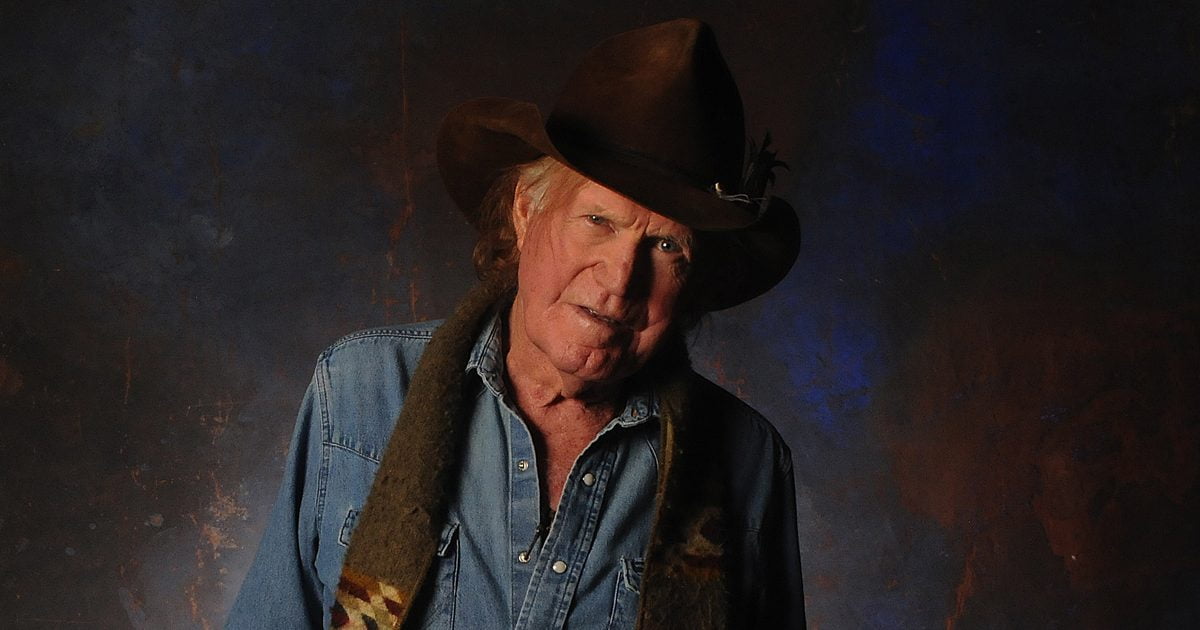
Billy Joe Shaver is one of the most celebrated songwriters of the 20th Century. He is a songwriter’s songwriter whose music is honest and gritty … just like Shaver himself. He lives the music. As one of the main architects of the Outlaw Country movement, Shaver wrote nine of the 10 songs on Waylon Jennings' breakthrough album, Honky Tonk Heroes. Together, Shaver and Jennings broke away from the Nashville Sound and ushered in the harder, more traditional country music of the 1970s. Fellow Outlaw Kris Kristofferson was such a fan that he produced Shaver's debut album in 1973. You may not know the name Billy Joe Shaver, but we guarantee your favorite songwriter is a fan.

Is there something that you know now that you wish you'd known when you were starting out as a songwriter that would have saved you some grief?

Oh yeah, yeah. There’s a lot of things I wish I knew. I guess the main thing is that people are gonna steal from you. You know, songs are so precious and, if they steal them, it’s okay if they get it right. But most times, when they do, they get them … I hate to bring it up, but it’s the truth: If they take them from you, they don’t record them worth a darn because they’re in a big hurry. You know, a person runs faster with a stolen watermelon than one they bought.

I read that you had some publishing rights issues. Is that what you’re referring to?

Yeah, and actually some big songs went big that just broke my heart because I’d just come into town. People need to know that, when you write these things, they’re part of you. The thing is, they’re like real people. I don’t want to say you have to guard them, but you need to be careful with them and treat them good, like children really. When I find I write what I think is a good one, one that I really want to cherish, I spend a lot of time with it before I let anyone else hear it. I just keep going over and over it because it’s like a child and good. You want to spend some time with it. I know everybody says it, but it’s true.

That’s interesting because, in your songs, you feel so present in them. I don’t have kids, but I assume you see yourself in your songs much like you would in your children.

Yeah, that’s what I got. People need to get it in them that what they’re doing is really very, very important. Don’t let anyone tell you that it’s not. It’s art. If you treat it like precious art, you’ll be better off. And the world, too, because you get it out the way you really wanted it. It don’t matter to me whose name is on it. If they get it right, it’s okay. As long as it’s out there right. It’s best to just watch it and be careful. It’s probably not what people want to hear, but it’s true.

It’s also what people need to hear. Was there anyone who helped you navigate the waters when you were starting out as a songwriter?

Not really, no. Nobody in my family played or did music. I was kind of older, anyway. I came into town and I knew … My English teacher way back when I was in the eighth grade told me how good I was and I took her word for it because she was real sharp. She was a 12th grade English teach we had in homeroom. The 8th graders were mixed with the 12th graders. She would come in for an hour and she would teach language … she was the one that always had you do something. She had us write poems. I wrote down one and she didn’t think I wrote it. I was one of those kids with the sleeves rolled up with cigarettes in it. So she didn’t believe I wrote it and she gave me an assignment about a very specific thing to write about and I did. It’s college-accepted poetry now. It was good.

When I quit school, she was upset with me for quitting school because I had a great talent, and I knew it. Which is why, when I cut my fingers off — when I was about 21, I had some fingers cut off at a sawmill — I shot a prayer up to God and said, “God, if you just get me through this one, I’ll go back to doing what I’m supposed to do.” And sure enough, I did. I went right back to practicing guitar. I’d been writing poetry that whole time anyway and I had these songs. I came to town and it happened very quick for me. Then again, I was older. I’d done a lot of living and been a lot of places. Everything I wrote about I did. Waylon Jennings did a whole album of my songs called Honky Tonk Heroes. It helped him as much as it did me, and that’s what I was figuring out … but I couldn’t sing as good as him. The songs are bigger than me, really. They’re huge and he banged them. He stuck his neck out and did that. That’s what got me on.

The main thing is just keep on trying. When you’re knocked down, don’t have a job, or not with a publishing company, if you’re a drunk even, or an addict, just keep on writing because as long as you’re writing and putting down words that you really like, that means you’re a success. Don’t let anyone tell you that you’re not because you’ll have the songs when your time comes. And it’ll come.


Photo credit: Jim McGuire

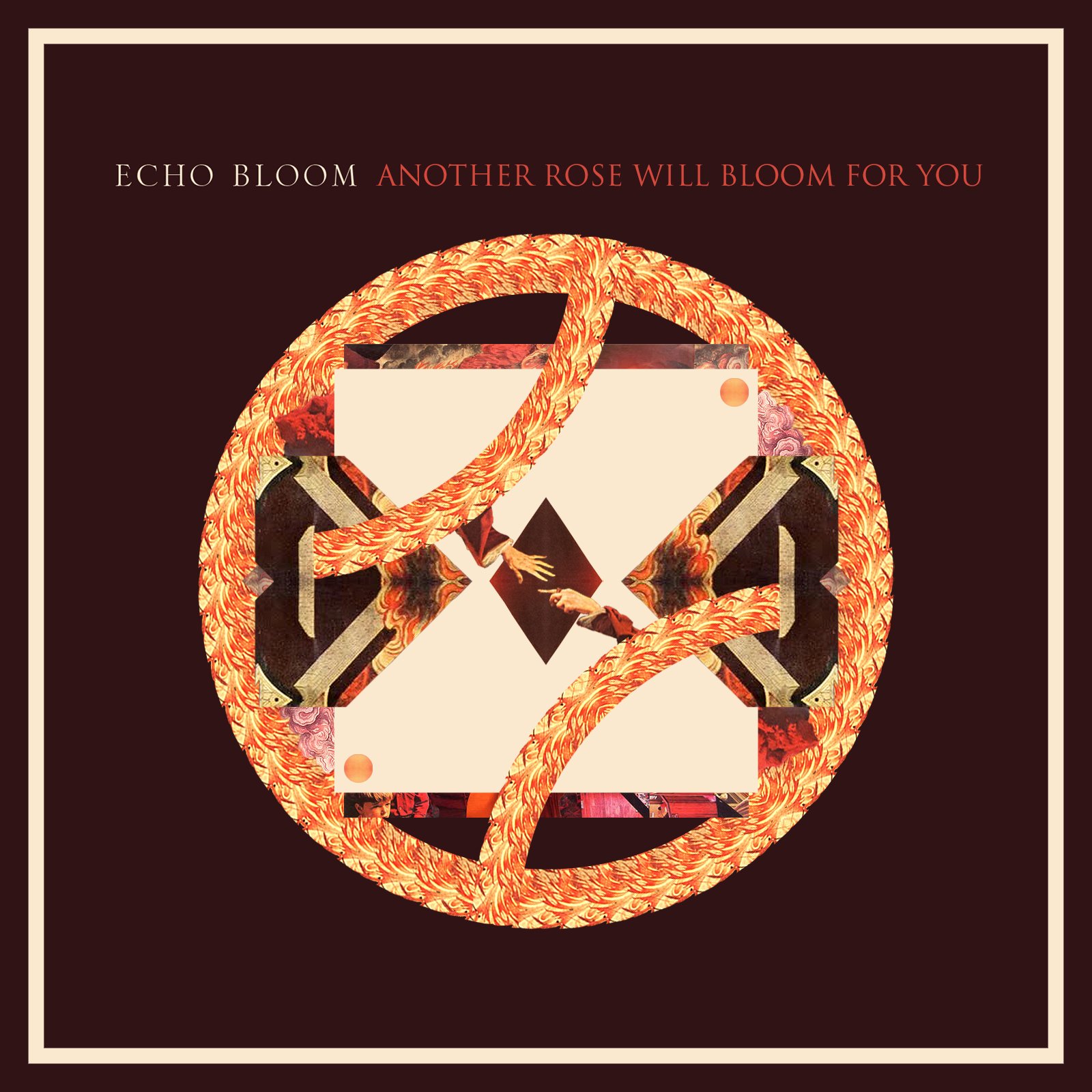
LISTEN: Echo Bloom, ‘Another Rose Will Bloom for You’

Artist: Echo Bloom
Hometown: Brooklyn, NY
Song: "Another Rose Will Bloom for You"
Album: Red
Release Date: January 22
Label: Songs and Whispers

In Their Words: "My grandmother was a total badass — she was the first woman on the Fort Worth City Council in the '40s, and served in the Peace Corps in her 80s in Costa Rica. She used to tell me stories when I was little about frogs the size of soccer balls. She was an amazing, complicated woman, and she had this saying: 'Everything's always going to be all right; and, if it's not all right, it's just not done yet.' That's what 'Another Rose' is about — that feeling that things will be okay, even if they're not okay yet. 'All things that fall will one day true, another rose will bloom for you.'" — Kyle Evans

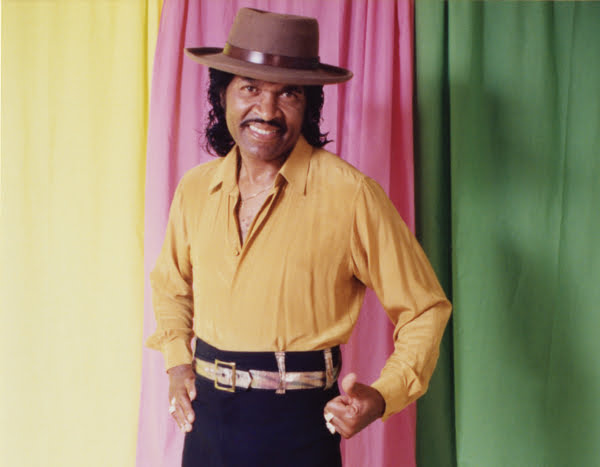
LISTEN: Bobby Rush, ‘Always on My Mind’

Artist: Bobby Rush
Hometown: Born in Homer, LA; currently resides in Jackson, MS; Also known for his years in Chicago, IL.
Song: “Always on My Mind"
Album: Chicken Heads: A 50-Year History of Bobby Rush
Release Date: November 27
Label: Omnivore Recordings

In Their Words: "Because I like country-western, I love it. In love with the slang, stories, and the twang. Like Johnny Cash and Willie Nelson … 'Walk the Line.' I listened to WLAC, then I listened to all the country and western stations that were in my neighborhood — just local radio stations — and I listened to Roy Acuff and all that stuff … the Grand Ole Opry. My favorite song was a country-western song that went, 'You get the hook and I'll get the pole, baby. You get the hook and I'll get the pole. We'll go down to the crawdad hole.' I was the kind of child who, when I heard a song, if I liked the song, I put myself in the song. I could see myself with a fishin' pole — which I learnt later, he wasn't talkin' 'bout a fishin' pole — but to me, as a child, I know about fishin', I know about the pole, I know about the crawdad hole, and the crawfish and mud and what have you. I related to it in that way. I found out when I got grown, he wasn't talkin' about fishin' at all. But as a child, you relate to what you know about." — Bobby Rush


Photo courtesy of Bobby Rush

A Trip to Bristol: The Birthplace of Country Music

Nestled in the foothills of the Appalachian mountains 300 miles east of Nashville, the Virginia-Tennessee border city of Bristol has long been widely known as “The Birthplace of Country Music” — the mythical small town where the “big bang of country music,” as music historian Nolan Porterfield first called it in 1988, took place during 10 apocryphal days during the summer of 1927.

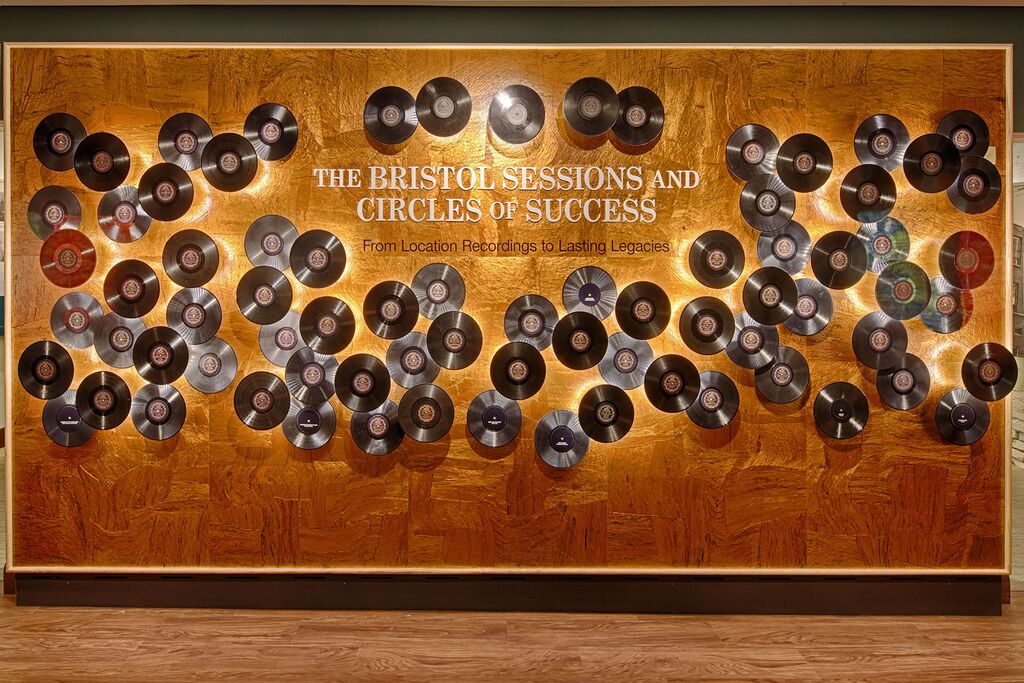
Due to its relative proximity to varying regions, from Asheville, NC, to the Virginia Blue Ridge Mountains to the Clinch Mountain ridge in Kentucky, the town of Bristol was where New York-based talent scout Ralph Peer set up an open audition in order to attract regional Southern talent to the fast-growing recording industry of the pre-Depression mid-1920s. Among the dozens of artists that showed up for the open call during that summer were Jimmie Rodgers and the Carter Family.

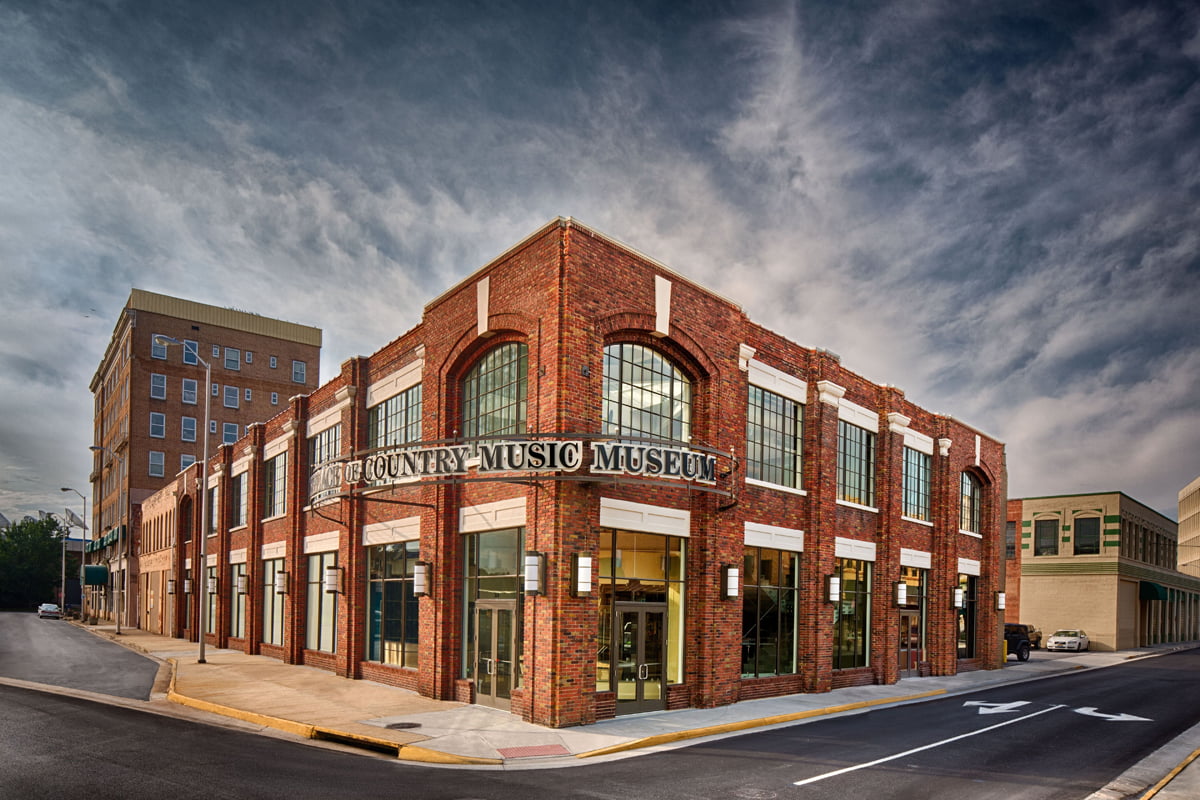
Nearly 90 years after the historic ‘27 sessions, the Birthplace of Country Music Museum opened in Bristol in the summer of 2014. The museum, which earned immediate affiliation with the Smithsonian, cost $11 million to build and is surprisingly expansive, devoted not only to the history of the ‘27 Bristol Sessions and the early roots of country and bluegrass music, but also to the history of the town of Bristol and the region at-large.

Here are some of the museum's highlights:

The Original ‘27 Newspaper Ad Announcing the 10-Day Audition

“Don’t deny the sheer joy of Orthophonic music,” begins the advertisement announcing Ralph Peer’s open audition. That phrase, Orthophonic Joy, was used as the title to a new album released earlier this year featuring artists Ashley Monroe, Vince Gill, Emmylou Harris, and Dolly Parton and Marty Stuart remaking some of the most famous Bristol Sessions material. “The Victor Co. will have a recording machine in Bristol for 10 days beginning Monday to record records,” reads the plainspoken ad. “Inquire at our store.”

WBCM Studio

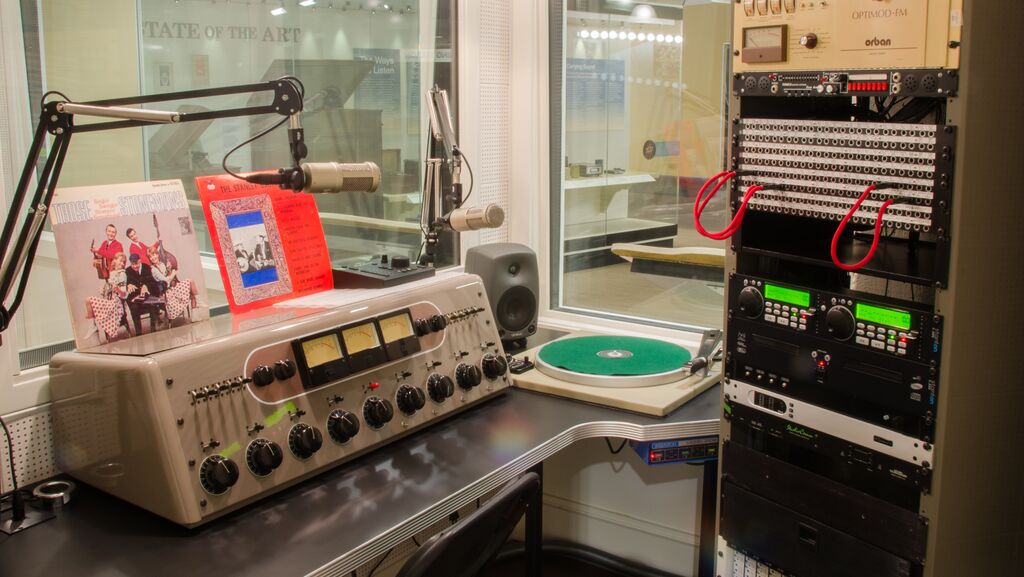
One interesting facet of the museum is that it also functions as a fully operational contemporary radio station. WBCM Bristol Radio, an FM station that also be found online, plays a selection of bluegrass, roots, country, and old-time traditional music, and hosts a regular array of live studio performances and modern-day Radio Bristol sessions.

Recording Your Own Bristol Session

One of the silliest, most entertaining aspects of the museum is a recording booth where you sing your vocals over newly recorded instrumental versions of several original Bristol session tunes. You can even lay down an earth-shattering rendition of the Carter Family’s “Single Girl, Married Girl.”

Will The Circle Be Unbroken Short Film Immersion Theater

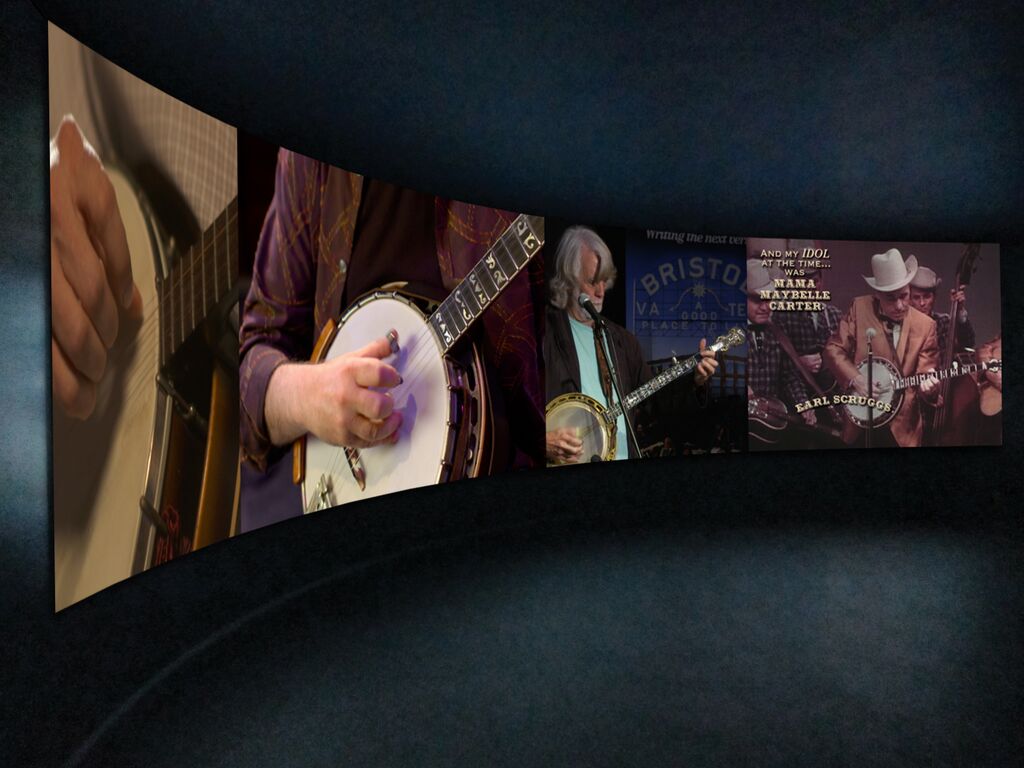
Toward the end of the museum tour, there’s a short film that is functionally an audio collage of countless different recordings of the spiritual “Will the Circle Be Unbroken.” In the film, the song is performed by everyone from Faith Hill to Mavis Staples to Spirit Family Reunion and the Black Lillies. The film is, perhaps, the best example the museum has to offer of the wide-ranging, ongoing influence the original Bristol Sessions still have on music in the 21st century.

Johnny Cash’s Signed Guitar 

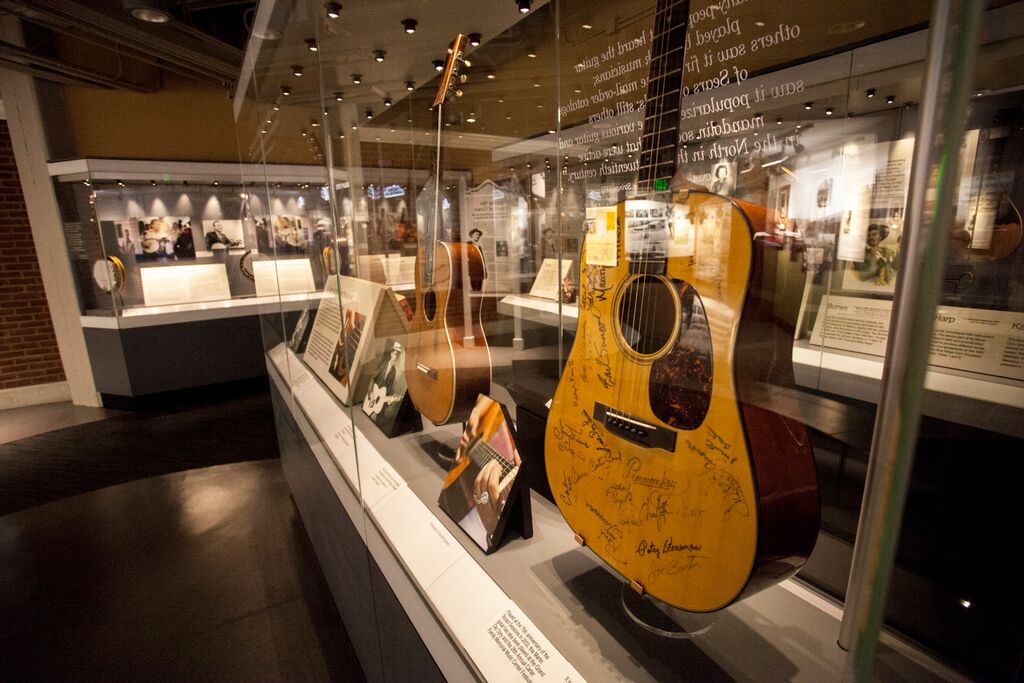
Though his relationship to the central focus of the museum is arguably tangential, Johnny Cash forever became a part of Bristol’s musical story when he married June Carter, the daughter of founding Carter Family member Maybelle Carter, in 1968. One of the museum’s most star-studded artifacts is Cash’s Martin guitar from that very year. In addition to Cash and Carter, other country legends, including Bill Monroe, Waylon Jennings, and George Jones, have signed the guitar.

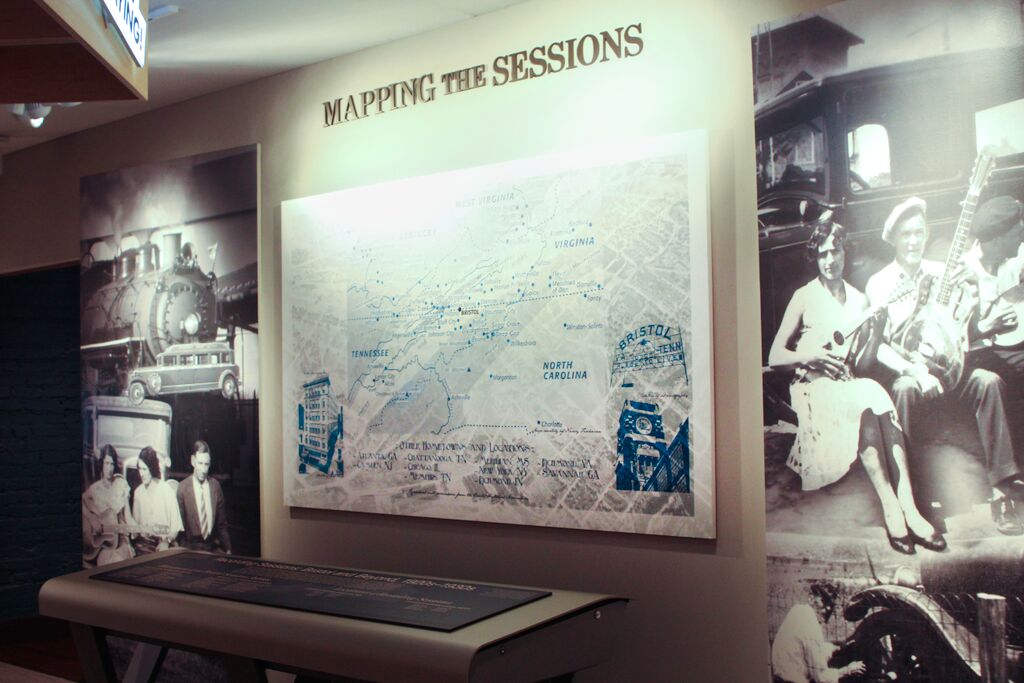
Mapping the Sessions 

The museum nicely highlights the early 20th century music of not only Bristol, but, necessarily, its plentiful surrounding areas. One panel notes the individual home towns of each performer at the original 27 sessions who came from at least five different states, from Mississippi to West Virginia.

Segregating the Bristol Sessions

The museum does a particularly good job addressing the racial hypocrisy and discriminatory practices of the recording industry during the 1920s. Blues music recorded in Bristol by white artists like Henry Whitter were marketed as hillbilly records to mainstream white audiences, while similar-sounding recordings by blues player El Watson were marketed and distributed as “race records” to black audiences. Kudos, too, to the museum gift shop for selling Segregating Sound, Karl Hagstrom Miller’s fantastic book that outlines how the early 20th-century recording industry so often imposed harsh racial boundaries and segregations on the musicians and artists they recorded.

Bound to Bristol

John Carter Cash narrates a 20-minute film near the beginning of the museum tour called Bound to Bristol. The piece gives a fairly comprehensive overview of the story behind Peer’s recording sessions and touches on the importance and centrality to early country music of Ernest Stoneman, the hillbilly singer who encouraged Peer to record in Bristol.

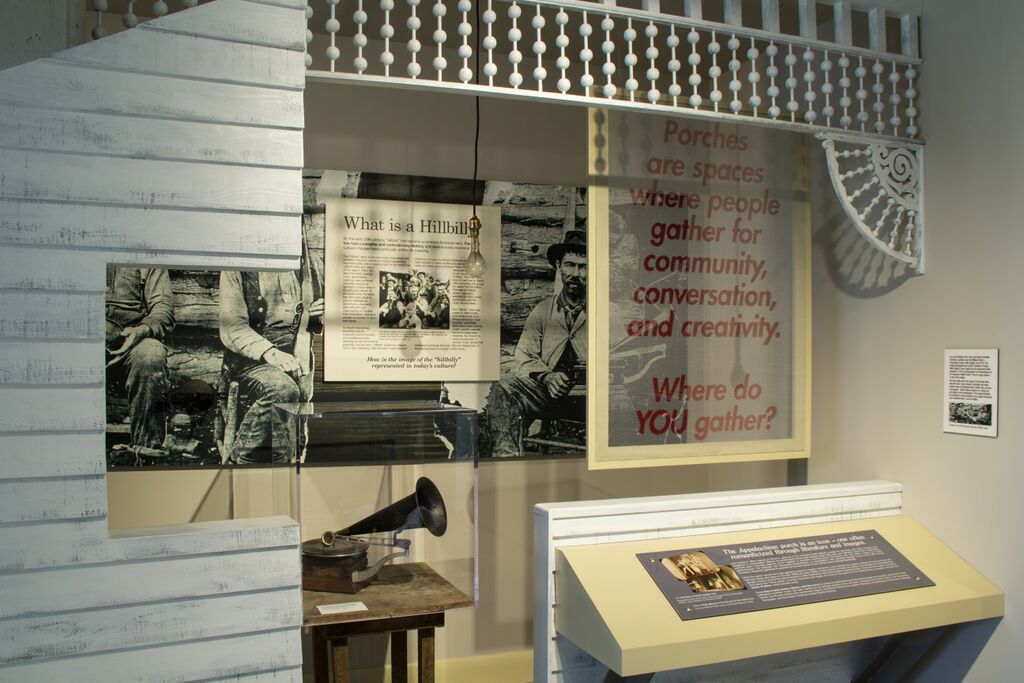
The Hill Billies

One of the most informative panels of the museum is the one that explains the derivation of the term hillbilly as a way of denoting country/white rural music during the first half of the 20th century. Peer was recording a string band in 1925 and when he asked them for their name. They shrugged and said, “the Hill Billies.” For the next 20 years, country music would be marketed, distributed, and commercialized as “hillbilly” music.

The Birthplace of Country Music Museum is currently hosting an expansive special exhibit on the career and life of pioneering American roots singer Tennessee Ernie Ford. The exhibit runs until February, 2016.

WATCH: Harvest Thieves, ‘Bob Dylan’s 78th Hangover’

Artist: Harvest Thieves
Hometown: Austin, TX
Song: “Bob Dylan’s 78th Hangover”
Album: Rival
Release Date: January 8
Label: Holy Mountain Sounds

In Their Words: "It's a song I wrote about being at a point in my life where I had some important decisions to make. I purposely took myself out of a place of comfort and complacency and tried to soak up every experience, every person, and ultimately every open bottle of wine I could find to help the process. I suppose it's about discovering a balance through which to alternate between life's extremes of success and failure." — Cory Reinisch


Photo credit: Tyson Heder

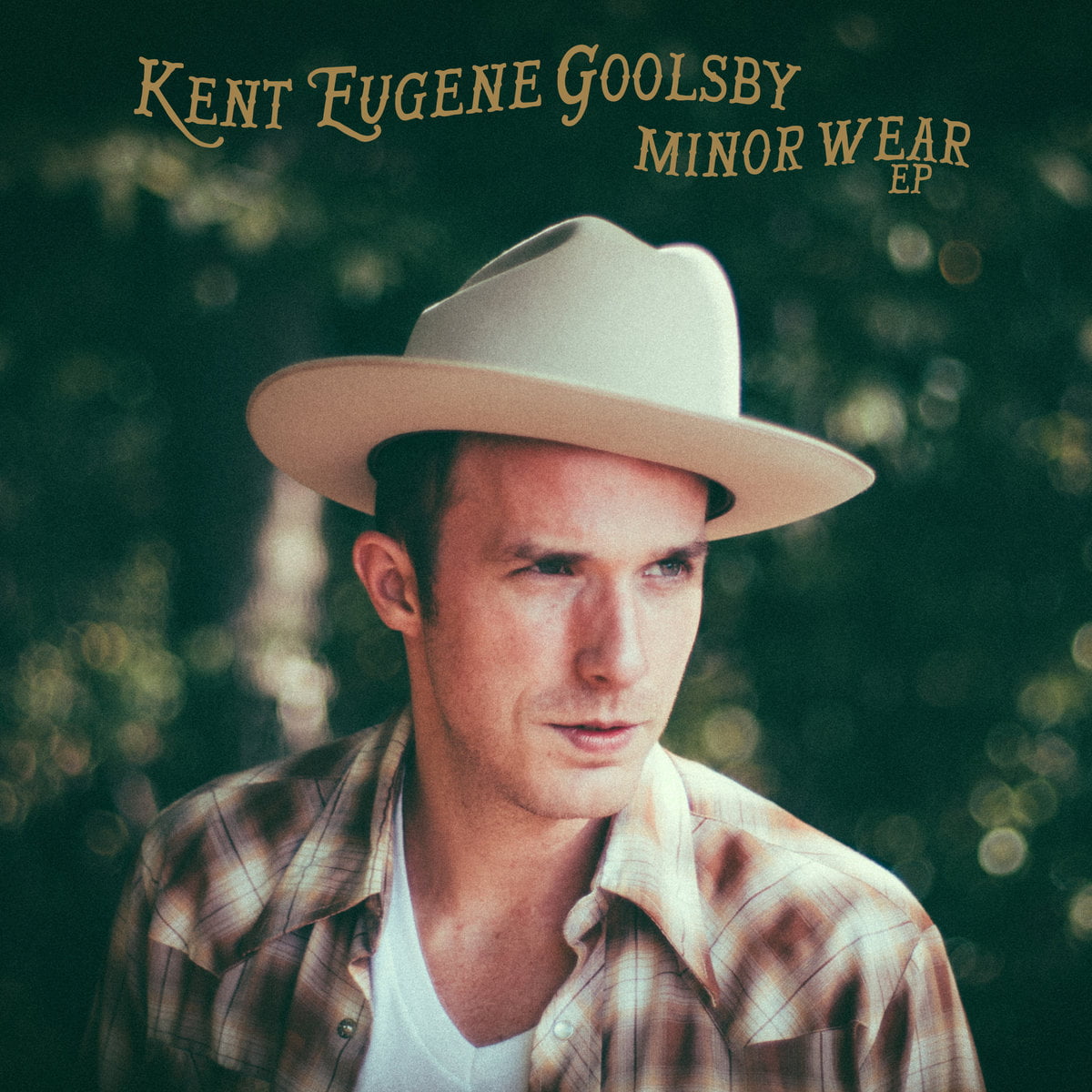
STREAM: Kent Eugene Goolsby, ‘Minor Wear’

Artist: Kent Eugene Goolsby
Hometown: Nashville, TN
Album: Minor Wear EP
Release Date: October 23

In Their Words: "The band and I went into the studio without any expectations and I think this turned out to be our best batch of songs yet. This one is blood and guts. The theme of the EP is just finding self-value in your work and the ongoing pursuit of dreams (classic stuff, really). Influences range from New Morning-era Bob Dylan to the more introspective moments of the Replacements." — Kent Eugene Goolsby


Photo credit: Joey Kneiser

LISTEN: Willy Tea Taylor, ‘Bull Riders & Songwriters’

Artist: Willy Tea Taylor
Hometown: Oakdale, CA
Song: "Bull Riders & Songwriters"
Album: Knuckleball Prime
Release Date: October 23
Label: Blackwing Music

In Their Words: "I come from a small town of bull riders and songwriters, and we all travel the same roads to the same towns. This song is about doing what you love and accepting all the consequences … good and bad." — Willy Tea Taylor

Instructions: Follow your heart, no matter where it leads.


Photo credit: Andrew Quist