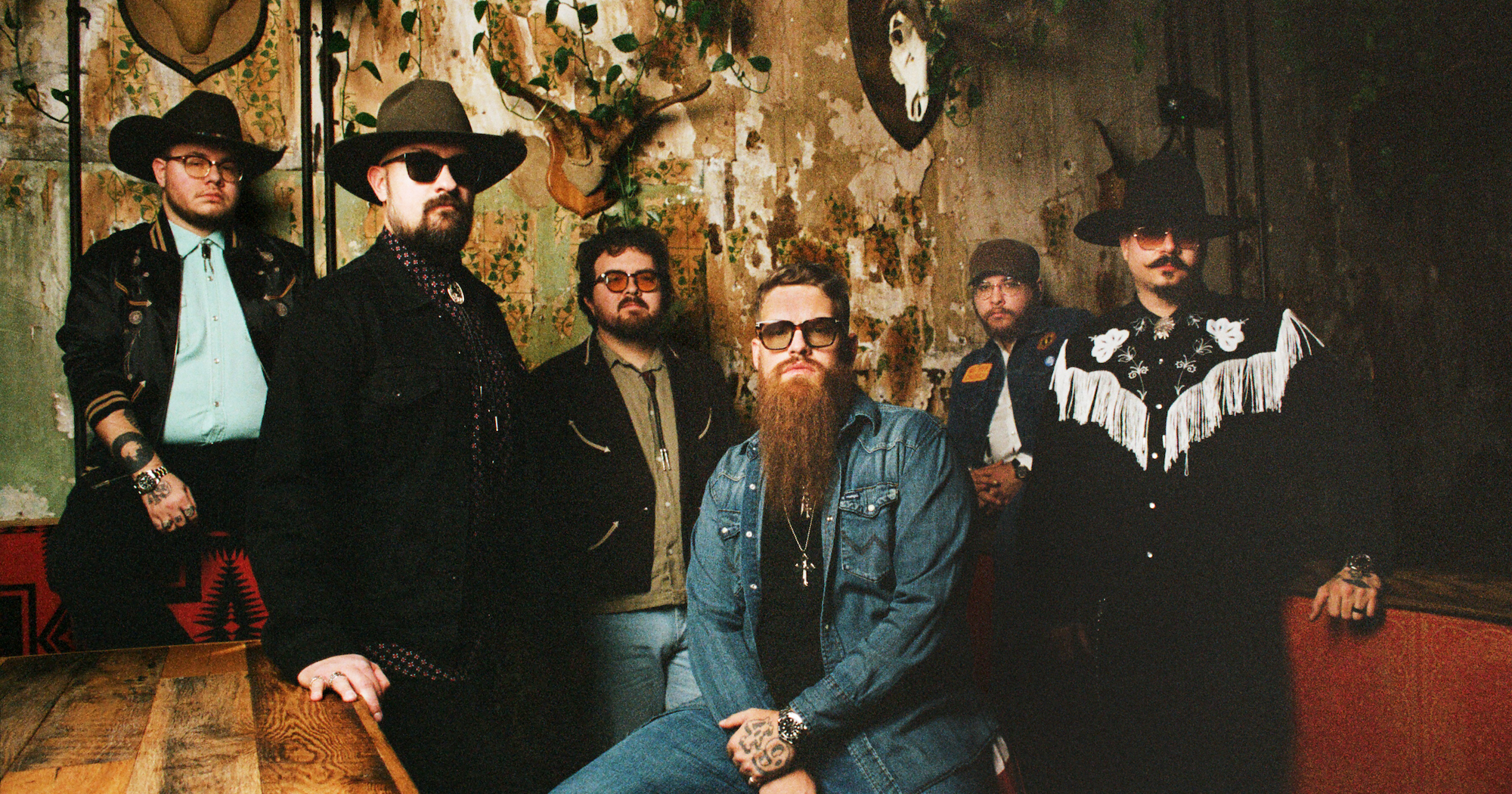
Another New Chapter Begins for 49 Winchester

One of the most heartwarming stories in roots music over the past decade has been the emergence of 49 Winchester. The group of high school friends-turned-roommates – then bandmates – emerged from the hollers of Southwest Virginia to become an ACM Award-nominated group and a future household name, off the back of songs like “Hays, Kansas” and “Russell County Line.”

Now, on their new album Change Of Plans, they’re ready to take big next steps, enlisting help from someone who’s frequented that kind of territory to do it. Released on May 15, the group – Isaac Gibson (vocals), Bus Shelton (lead guitar), Chase Chafin (bass), Noah Patrick (pedal steel), Tim Hall (keys), and Justin Louthian (drums) – teamed up with Dave Cobb for the project. It’s their most expansive to date, as it navigates everything from honky-tonk (“Bringin’ Home the Bacon”) to Southern rock (“Pardon Me”) and 2000s alternative (“Heavy Chevy”).

The album is not only the band’s first with Cobb, it’s also their maiden venture with Cobb’s imprint, Lucille Records. (It’s being released in partnership with MCA, where Cobb was named Chief Creative Officer in 2025, and New West Records, 49 Winchester’s label home since 2022’s Fortune Favors The Bold.) Isaac Gibson knew that Lucille would be a good home for the band because he was confident that Cobb would grant them creative freedom. Which he did.

“I don’t think there’s anybody else in the world that has quite the same brain as him,” remarks Gibson. “He’s hyper-efficient and unbelievably tasteful with what he does. Because of that, there was a lot less overthinking than usual. It was very instinctual, like catching lightning in a bottle.

“We also tracked it live for the first time, which is always something we wanted to do. The best way to experience 49 Winchester has always been at a live show, so we wanted to capture some of that energy while also utilizing some of the tools only available in a studio. The result is a version of the band on steroids,” Gibson continues, laughing.

Ahead of the album’s release, Gibson spoke with BGS about the studio time with Dave Cobb, paying homage to Ozzy Osbourne, the band’s trilogy of law-breaking songs, and more.

Tell me about the decision to record the album in only eight days – was that a “Dave” thing?

Isaac Gibson: Previous records have taken a whole lot longer for us. There’s some really great records that have been labored over and over, and other ones that were like pulling a rabbit out of a hat. It was cool to have a different experience this time around where we just focused on doing the thing that got us here in the first place, which is playing and singing and saying things that resonate with us and make us feel good.

But doing things so quickly wasn’t a conscious decision either. It was just the first block of studio time we had available when we weren’t touring and happened to get things done fast. There was a lot of cohesive idea sharing, which was one of the most beautiful things about the entire experience.

One of the most intriguing moments to me came with the inclusion of “Changes,” a Black Sabbath cover that marks the first such tune to ever appear on one of the band’s studio albums. Why was this record and moment the right time to make it happen?

Ozzy’s death is definitely what lit the spark. I remember first throwing the idea for it out to the guys while we were eating lunch in a fellowship hall next to the church in Savannah where we were recording with Dave. We’d been tossing around ideas for dream 49 covers in a group chat for years, so when we decided to actually include one on the record, “Changes” was the first mentioned. We immediately went to record it, not even waiting to finish our lunch. [Laughs]

Once we started tracking it we wanted to grab hold of the raw emotion of it and send it home. It wasn’t even rehearsed – we talked about arrangements and song structure, then cut it. It was a really cool way to pay homage to not only Ozzy but also Charles Bradley, who died in 2017 and performed an awesome soulful version of the song that our version leans toward.

Would you say that “Changes” – both sonically and lyrically with the line “I’m going through changes” – is reflective of the band’s evolution present on this album?

That’s why we chose the title we chose, which is taken from a line in the song “Bluebird.” We’ve all grown so much since starting this band and seen a lot of change in our lives, but through it all 49 has remained steady. But right now has been a distinct season of change for us. We all started this band as kids just out of high school, and now we’re all grown up. This record is just as much about a new chapter for the band as it is new chapters for us individually. We’re all trying to be the best we can be every day, which is what a lot of this record is about.

Regarding “Bluebird,” is it a song about having a plan or vision for how you want a scenario to play out, only for something entirely different to happen instead?

You’re spot-on, and it’s something I’ve recently lived through, too. It sounds cliché, but I always want to write songs as honestly as I possibly can. I think the best thing you can do as a songwriter is give people a little bit deeper glimpse into your life than is sometimes comfortable for you. That’s also an example of what “Slowly” was for me, too. It’s me thinking I’ve got it all figured out, only to have circumstances change that make you rethink everything you thought you knew.

Whereas “Bluebird” focuses on plans not materializing as you’d hoped, it seems “Slowly” focuses more on personal growth and the process of trying – and sometimes failing – to get better?

That one’s not very abstract at all – it’s very direct. When you’re writing about your life sometimes you’ve got to commit to write about it all – the good, the bad and the ugly. Getting better and showing myself more grace through the ups and downs is something I’ve improved on a lot over the years, but I still have more to learn.

With that in mind, the writing on Change Of Plans feels in many ways like your most personal yet. What was the catalyst for that?

It was just a natural order of things. When you’ve only ever relied on your own experiences and feelings for songwriting, you have to find more ways to connect with folks as time goes on so you can get that little bit extra out. You can only write about love, breakups, and drinking so many times before it gets stale and you start wondering what you have left in the tank creatively. This record proved that we’re still able to dig in and continue to do things our own way while staying creatively fresh. As I write more I find myself getting more and more in tune with what I want to say, and this record is the culmination of that.

Jumping back to “Bluebird” and “Slowly,” there also seems to be a bit of yearning for a person on those songs as well. Which is also the case on “Oh, Savannah,” too, albeit with a more positive tone. Are there any other connections between them?

“Slowly” and “Oh, Savannah” were actually written on the same day. “Slowly” was a song I almost had finished before bringing to a [writing session] I had with Jessie Jo Dillon and Chris Tompkins to flesh out. After that we started working on something completely new, which wound up being “Oh, Savannah.” Jessie Jo knew we were making our record in Savannah, Georgia, and said she’d always wanted to write a song about the city, but painting the picture as if it were a girl instead.

As opposed to being something introspective or very personal to me, that one became more of a story song in the vein of “Damn Darlin’” that contains references to very Savannah-y things like the sand dunes and the Cherokee rose. It’s one of these places that aesthetically inspires creativity. There’s a vibe and age to it that I love being around, which made for some cool moments both with this song and the record in general.

Similar to the connection you just made between “Oh, Savannah” and “Damn Darlin’,” I can’t help but notice the ties between “Bringing Home the Bacon” and another track from Fortune Favors The Bold, “Hillbilly Daydream” – only the former is about running marijuana and not moonshine. Tell me about it.

That’s right! It’s part of a trilogy [with “Long Hard Life” from 2020’s III] of hard times and illicit substances being used as a way out of them. We wanted a real honky-tonker on the record and that song was one I’d sat on for about eight years. I had it finished at one point but couldn’t remember anything beyond the first verse, so we brought Aaron Raitiere in to help knock out the rest. He was the perfect guy for that particular song because he leans so hard into that humorous storyteller role like a modern-day John Prine. There’s always a nugget of something to crack a smile or chuckle about in his writing, and this song is no exception.

Are there any other songs on this record like “Bringin’ Home the Bacon” where the origins stem back years?

The first verse of “Heavy Chevy” was also something I sat on since before [recording 2024’s Leavin’ This Holler]. But those were the only two on this record that had been in the tank already without the chance to grow up yet. [Laughs] Songs are like that sometimes – they don’t come to fruition until you least expect it. Most of the songs I’m really proud of have happened very quickly and write themselves in an hour or two. But other times they don’t, and if you keep something of value for long enough then it’ll eventually turn into something else. Getting to breathe new life into something that was dormant and underground for a bit is super cool.

The band has been growing into bigger and bigger venues and straying farther and farther from Southwest Virginia with each passing year and album. Considering this, how has your perception of home changed since the band’s inception?

It’s difficult to say because our home is so linked to who we are. At the end of the day, you can take the boy out of the holler, but you can’t take the holler out of the boy. We’ve gotten to travel the world now and play music for people who don’t even speak our language, which is incredible. Doing that has actually made me appreciate where I come from even more. As I’ve gotten out and seen more, it’s also made me realize just how rare and difficult it is for us to do what we’ve done coming from where we did. In the early days we were still proud to be where we’re from, but we didn’t understand what it meant to be somebody paving the way for others and doing something no other band in Southwest Virginia had done until now.

What has the process of bringing Change Of Plans to life taught you about yourself?

Making this record got me to fall in love with all this again. We’ve worked really hard the past decade, which is good because there were a lot of cool opportunities coming our way, but a doldrum had set in on me that I was able to finally shake off working on this record. It really reignited my spark for the whole thing. My love for the live performance has always been there, but the act of touring can be so grueling. However, I now feel like I have so much left in the tank that I still want to say. This music is going to be our legacy long after we’re gone, so it’s important to stick to it and keep the pedal to the floor.


Photo Credit: Daniel Prakopcyk
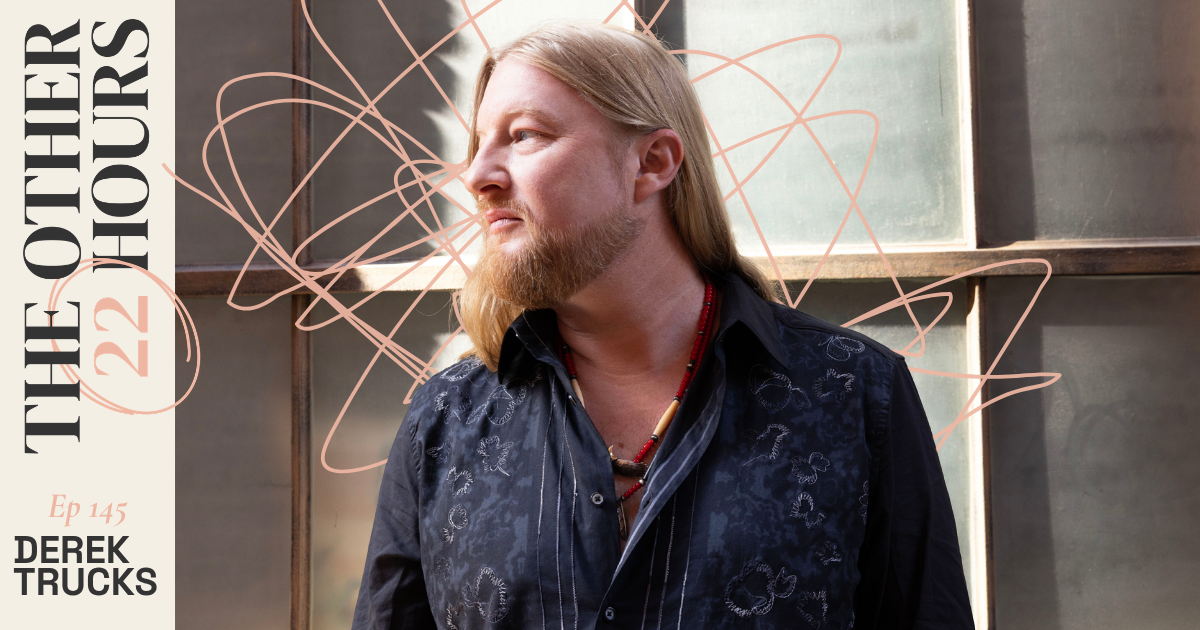
The Other 22 Hours: Derek Trucks

What happens to the creative spirit when you have been a professional “lifer” since the age of nine? Derek Trucks, widely considered one of the greatest guitarists of all time and a veteran of the Allman Brothers Band and Eric Clapton’s touring lineup, joins the Other 22 Hours to discuss longevity and leading a 12-piece musical circus. with his Tedeschi Trucks Band co-founder and wife, Susan Tedeschi. We explore the gradual shift from student to teacher, the grounding force of a musical marriage, and the essential practice of “turning the crops” to stay inspired.

LISTEN: APPLE • SPOTIFY • AMAZON • MP3

In This Episode:

Tedeschi Trucks Band
Allman Brothers Band
The Beacon Theater
Eric Clapton
Kofi Burbridge
John Lee Hooker
Koko Taylor
Ace Moreland
Colonel Bruce Hampton
Buddy Guy
Joe Walsh
Gregg Allman
Jim Scott
Tom Dowd
A Love Supreme
– Krishnamurti
Mad Dogs & Englishman (movie)

Go Deeper:

Watch: View this entire conversation above or on YouTube.
Explore: Find similar conversations in these themed playlists.
Connect: Join the conversation on Instagram.

The Other 22 Hours is hosted by Aaron Shafer-Haiss (producer, mixer, musician) and Michaela Anne (songwriter, artist, creative coach). More about Aaron’s workMore about Michaela Anne’s work.


Produced by Aaron Shafer-Haiss. Original music written, performed and produced by Aaron Shafer-Haiss.

Photo Credit: Chapman Baehler

Tedeschi Trucks Band Have Done It Again

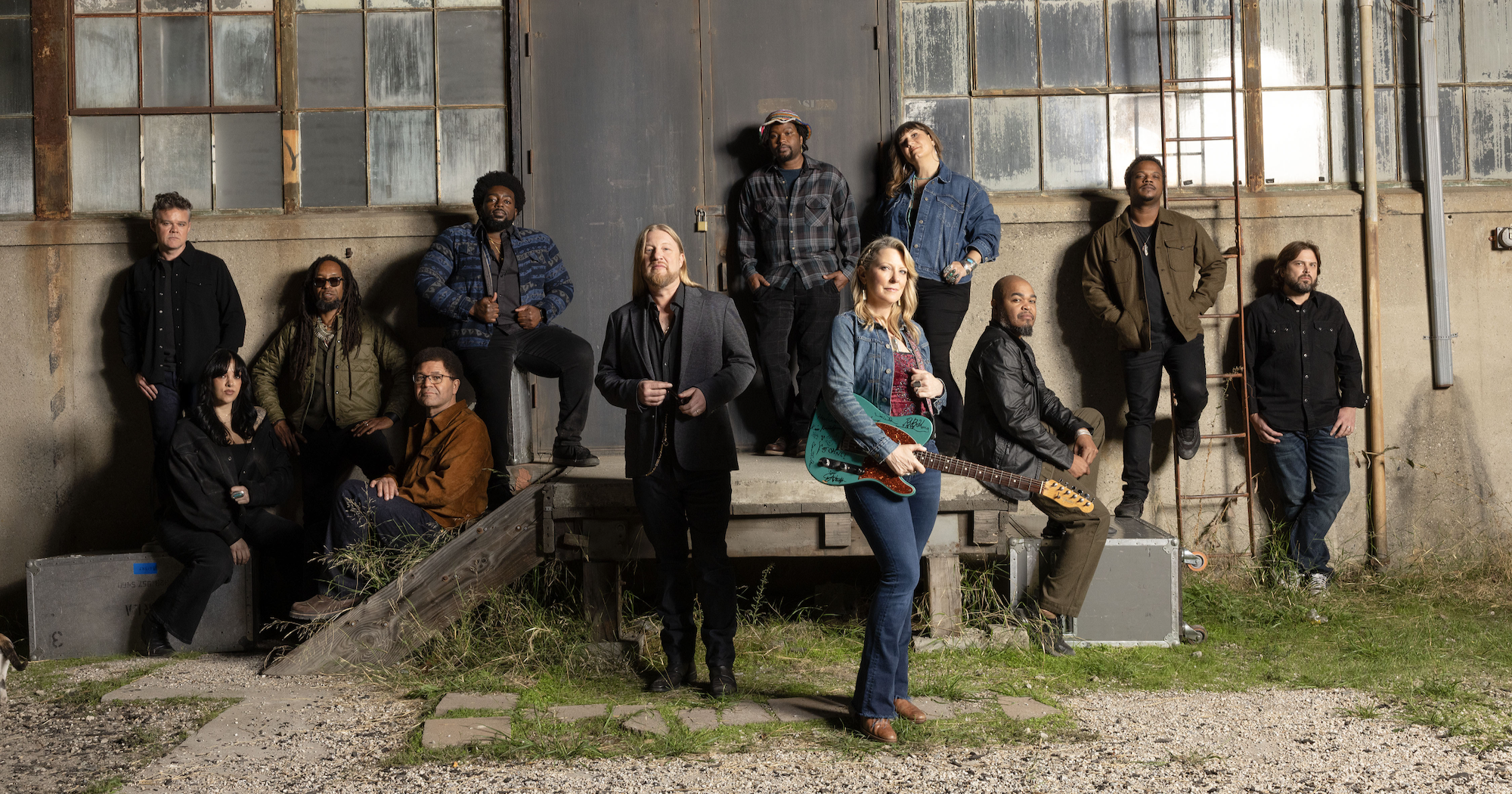
When it comes to entirely enjoyable, technically exquisite modern blues, Southern rock, and jam-band soul albums, Tedeschi Trucks Band have a statistically impossible batting average. Their new LP, Future Soul (released March 20 via Fantasy Records), is yet another “no skips” collection from the megalithic 12-person Americana group fronted by husband-and-wife guitarist Derek Trucks and guitarist-vocalist Susan Tedeschi.

On that strength of their catalog – and their ensemble – TTB have amassed hundreds of millions of streams, won eight Blues Music Awards and one GRAMMY, and a handful of their songs have become regarded as modern standards in the Americana and American roots music songbook.

Future Soul simultaneously feels like a surprising departure and familiar, essential territory for the band. With Mike Elizondo producing and songs and creative input sourced from across the group’s lineup, the set ends up sounding and feeling more acoustic than “usual,” while still reaching roaring crescendos and building it all on dank, wide open grooves. Perhaps those acoustic moments are a substantial contributing factor as well, but the cozy, plush pocket of the album is what gives it a laid-back, relaxed, and floating vibe no matter the track’s genre construction.

Screaming slide, no-holds-barred vocals, and wall-of-sound climaxes can all be found herein, as well. But the collection never thrashes or flails, it’s precise and exacting – as Tedeschi and Trucks are both known to be on their instruments, whether guitar or voice – but it’s certainly not sterile or gated or homogenized, either. It’s another remarkable feat for a group so large that you would almost have to assume, live or in studio, musical mud would be an inevitable byproduct.

But no, TTB seem to have no misses, at least not on Future Soul. It’s clear this group works together in harmony not just because of the down-to-earth and collaborative leadership of Tedeschi and Trucks, but because the artistic and musical responsibilities and ownership – of the songs themselves, of the album, of the makings of each, of “success” for the band – are decentralized and distributed throughout the group. The band has a sound, an art, that is consistently collective in the way it’s received by audiences and listeners because, forgive the obviousness, Tedeschi Trucks Band always work as a collective.

In our BGS conversation with Derek Trucks, the magic and unlikelihood of this creative dynamic and the processes by which the band continues to rack up success after success were on full display. We spoke about how they put together Future Soul as a group effort, the many inputs that went into Trucks fashioning his lyrical guitar style, and what bluegrass means to him personally, to Tedeschi, and the band as a whole. It was a joy-filled, passion-led conversation that again reinforced how this wailin’, rockin’, rollin’ band continues to flout and subvert expectations – and thereby has become so beloved.

Something that jumped out at me from the bio about the new album is that you say, “There’s just not a weak spot on this record.” I have to say, I totally agree. I think it’s remarkable that with a 12-person band and such a diverse catalog of recordings and releases, it really doesn’t seem like there’s any “fat” to trim or any duds to cull.

I have to ask, does it feel as magical on the inside of that process as it seems from the outside? It seems unlikely that y’all would work so well together towards a common goal, artistically, and be able to deliver again and again and again. And I don’t just mean commercially, awards-wise, or for audiences alone. Clearly you’re delivering artistically for yourselves and by your own standards, as well. So, does it feel as unlikely on the inside of that process as it maybe does to us on the outside looking in? [Both laugh]

Derek Trucks: That’s awesome. But it does, man! I mean, not every record you do feels the same way. They’re all their own beasts. For I Am The Moon, it was in a time of great uncertainty. We did four records and it was just kind of a heavy, heavy time – and that record feels like that.

This one felt completely different. The band felt much more confident [and] had been touring for two years straight. We had been playing so much together that when we finally got the core of the group up to our farm in Georgia to do some writing, there were a few songs right out of the gate. Like “Future Soul” and “Who Am I,” where immediately, Sue started singing, Gabe [Dixon] started singing these melodies. I got chills and I was like, “Oh, this is gonna be good.”

You’re always kind of worried about running out of ideas, or running out of runway – like a thing in the back of your head. But I feel like we’re incredibly fortunate where, when we’re together, everyone puts everything they have into it. Then, when we’re not on the road together, everyone’s all doing their own things musically. So, when we come back together, there’s a lot to talk about and a lot of music to remember together.

I think it keeps it really fresh and it keeps it moving forward. I feel like everyone’s out honing their craft when they’re away from this. When they come back, there’s a lot of new ground to cover. So far, we’ve been really, really lucky that way. And there’s a handful of just incredible songwriters in the band, so everybody comes in with two or three ideas. You’ve got a pretty strong record right out of the gate. That’s been something that I think me and Sue are just realizing – we’ve known how amazing that is but, you know, Gabe and Mike [Mattison], they show up with some serious ideas.

Then having Mike [Elizondo, the album’s producer] down, just some outside ears – I think that was really important. Sonically, he was trying some different things that I think inspired the band and made everybody play a little differently. That was exciting.

I was struck by the range of styles and the different genre infusions that y’all have put into this collection. What really stuck out to me, listening down to the project in one fell swoop, is there are still those really big energetic moments – and there are still those “wall of sound” moments that y’all are really known for. But I felt like this album is chill and laid-back in a way; it feels deep in the pocket. Can you talk about capturing those seemingly disconnected energies together?

I think one of the things is that with a band or an artist, I think if you’re maturing properly – we learn sometimes slowly – that you don’t have to force the issue all the time. You can trust things around you a little bit more, and sometimes the groove is enough. Sometimes the chord changes are enough, sometimes the melodies are enough. It doesn’t have to be these epic moments at all times. So when they do come, you’re excited about it and wrings you out. Then you lay them back down, and then you go on another little trip.

I think the band, having played together so much, we’re in a different place that way, where we realize that you don’t have to force the issue on every song. You can go to different spaces, different places. And then, again, having some outside ears – Elizondo really helps with that, too. He helps guide you to places that maybe you wouldn’t have gone naturally, so that’s a fun thing. Then you learn things about yourself musically in the band that you didn’t know before. That’s always a good place to be.

One thing that I’ve been obsessed with about your playing, specifically, ever since I discovered you as a teenager, is how lyrical of a guitar player you are. It jumped out at me from the bio, as well, when you’re talking about “I Got You” and how you’re doing a guitar-voice dialogue instead of guitar-guitar. I think of you as one of the most lyrical guitarists out there. You’re so present and so grounded. So I’ve always wanted to ask you how you’ve cultivated that style – as well as being able to have those moments of pure shreddy, lick-y wailing.

Then hearing that you really wanted to make that connection between voice and guitar on this album made so much sense to me, because I’m always thinking about how you’re a lyrical player. And Susan is, too, and you both dialogue with your instruments, and her voice, often.

Pretty early on I had a few musical epiphanies. One was Allen Woody, who played with Gov’t Mule and the Allman Brothers. When we toured with my solo band, opening for a Gov’t Mule in the early days, he would always turn me on to records. He gave me this CD by this guy named Aubrey Ghent, who was a gospel [steel] player. I put on “Amazing Grace” and I was like, “Wow, what an amazing voice.” And then I heard the pick and I realized that it was this guy playing lap steel! But it sounded like a woman singing. I got chills [over] my whole body, and I was like, “That’s it, that’s the thing.”

I had been listening to a lot of Indian classical music – a lot of vocalists and sarod players. Me and our old [Derek Trucks Band] bass player, Todd Smallie, went to Ali Akbar College of Music in San Rafael, [California] and they would let us sit in on classes. I realized he [Ali Akbar Khan] made all the instrumentalists take vocal classes, because his whole thing was that you should be singing through your instrument. So that made it just really obvious.

Those were a few of the things, and then there was a long time where I just stopped listening to any guitar player. It was only singers and horn players. That was kind of the idea [that] musical ideas can come from anywhere, but you really should be singing the thing. There’s time for all of it, but the stuff that moves me the most is, you know – even hearing Duane Allman on “Blue Sky” or something. It sounds like somebody’s singing, like somebody is walking down the road whistling. I think those are probably the touchstones for me.

Maybe I am projecting a little bit, because I’ve been a bluegrass banjo player my whole life – I started playing when I was seven. But when I think of guitarists, especially who end up reaching the pinnacle – whatever that is – or especially in flatpicking and in bluegrass, there tends to be this homogeneity of style. The people who get to the “very top” end up all sounding like each other. Then you have those folks that really stand out, and it tends to be because they’re using space and using air as much as they’re using 16th notes and 32nd notes. I think, being used to really shreddy flatpicking, that hearing steel or slide or blues guitar or jazz or acoustic jazz, anything plays with sustain and plays with space, I just drink it up.

Beautiful, man. I remember the first time I heard the Stanley Brothers, or Ralph Stanley, and I just remember it hit me in that place where those early blues guys hit me. There was just something about it. That kind of cracked that whole world open for me. I mean, I was always a Tony Rice fan. We have the same birthday, so I thought that was cool.

No way, I didn’t know that.

And I remember being at a MerleFest years ago, I think it was one of the last ones that Doc played. I remember seeing this old Oldsmobile or Cadillac – I don’t know, it seemed like an 1980s or ‘90s car – it pulled up to the stage and I see Tony Rice get out, just dressed to the nines. He pops the trunk, gets his guitar, hits the stage, and then right when that set was over, he was back in that car! I was over there thinking, “What a boss.” It was incredible, man. He went up and just annihilated everybody and got back in his car and drove his ass home. Pretty incredible.

So funny.

The last time we talked to you for the site, you were Artist of the Month in 2019 and you talked about Del McCoury and Jerry Douglas. I know you’ve played DelFest a bunch, you’ve collaborated with Billy Strings – oh, and I was super excited to see Molly Tuttle supporting on a couple dates of your TTB tour in April, too.

Yeah, we’re excited for that. That’s gonna be great.

What does bluegrass mean to you? Obviously, there’s Ralph Stanley, Tony Rice – there are pickers and makers in bluegrass that are infused into what you do, but what does the genre mean to you more broadly? And who in the space right now inspires you, or your musical vocabulary, or what you guys are doing in the band?

When I think of American music, I think of blues, I think of bluegrass, and I think of jazz. I think [those are] the things that we’ve really contributed to the world. To me, those are the cornerstones of it.

We’ve become good friends with Sturgill [Simpson] over the years, and he’s dipped into that [bluegrass] place. When I hear him sing it I’m like, “Oh yep, that’s because he’s from there.” He’s from the heart of it, and it makes me feel the way Ralph Stanley does at times. Even guys like Tyler Childers – and Sue’s a big Sierra Ferrell fan. She loves all those records.

That music, even the current guys, it’s always playing around here. I don’t know, it just feels inspiring to hear. People just get on an acoustic instrument and rip one. You’re like, “Oh yeah! There’s still people that know how to do things!” [Laughs]

That’s the big inspiration I take from it. Because [in the music industry] there’s a lot of cutting corners, and that’s a music that there’s no cutting corners. You gotta put your time in and take your licks or you’re just not gonna get on stage. I appreciate not just the dexterity, but the vocabulary and the heart that goes into it.

And there’s just something about seeing a group around one microphone just doing the dance that I think is always inspiring. We’ve done some shows recently with Sam Grisman, we did a benefit [for Camp Winnarainbow] out in San Francisco. Peter Rowan was on it, and me and Sue, and it was all acoustics. I had an old National, and just getting to play with that group – just the way that group felt. Sitting on a stool with a Dobro, and they were coming and going around the microphone. And then, getting to hang after the show with Peter Rowan and him telling these stories, man. It was just incredibly inspiring. Some of the songs that we got to play with them – that dude [David “Dawg” Grisman] has written some incredible music. That was one of the highlights of last year. It was pretty damn incredible.

There’s a lot of acoustics on this new album, too. I did find myself wondering, and maybe I’m biased, but does the world need a 12-piece bluegrass band? It might! It might! [Laughs]

Man, that sounds pretty fun to me. I mean, it would be a lot less gear to carry on the road! Which would make it more plausible.[Laughs]

If you wanted to speedrun pissing off a fan base, this might be the way to do it.

[Laughs] Yes, alright, we will be thinking about this! I’m gonna go talk to Sue.

This next one is kind of for me, so I thank you in advance for humoring me. But I wanted to talk to you about Jack Pearson. When I first moved to town, I just met this guy out jamming on mandolin at these bluegrass jams. I’d be like, “Man, this guy’s so nice.” He’s a great picker. He’s a great singer. I got a lot of practice playing swing with him at jams in town. Then folks started being like, “Hey, do you know who that is?” Oh my god, I did not know who it was. He was just my bluegrass jam pal. Then I worked at the Station Inn for a few years and I got to work a bunch of his trio shows. I’d die for the solo acoustic sets he’d do on the set break.

Incredible.

If I were to list maybe my top 5 favorite guitarists of all time, I feel like you and Jack would both be on that list. So I wanted to have a little nerdy moment to talk about Jack. [Laughs] Can you talk about his playing and your guys’ friendship? Of course, I see so many connections between your musical vocabularies and that lyrical style we were talking about.

Yeah, man I need to check up on him. It’s been a minute. I need to check in on old Jackie P.

He’s a monster, man. He’s one of the few people that can actually go play in a straight-ahead jazz band, in a bluegrass band, and then the Allman Brothers. I mean, maybe the only person that can actually do it.

I totally agree.

I mean, he played with Jimmy Smith. This dude is like, he’s an absolute monster. And a sweet fella! You can’t say enough good things. When I joined the Allman Brothers, Jack was just leaving. So all the tapes I got, like learning the new versions of the tunes, were Jack Pearson tapes. At the time, Bud Snyder was the sound man. He would mix these tapes for me with Jack really boosted in the mix. I could hear exactly what he was doing to learn these things. I got an intimate take on the way Jack was approaching these Allman tunes. It was so unique.

There’s no one [that] plays like him, and [his playing is] about as smooth as it gets. Sometimes, you watch him play – and I know he plays really light strings and he plays low action – and the way his hands move, I’ve never seen anyone play quite like that. Then he busts out a slide and you’re like, “Holy shit! This dude can do anything!” [Laughs]

I know!

He’s one of the unsung heroes. There’s no doubt about it.

He does this thing – and you do this as well – where you’re able to leverage that really gritty, aggressive, absolutely on-the-razor’s-edge style that comes with blues and Southern rock and Americana. Then at the same time, like you’re saying, with light strings and low action, still has such a deft touch. Yet he has such great attack and precision and cleanliness. He is a great lesson in taste. His taste is impeccable.

Yeah, I think that’s exactly it. I think we forget a lot of the time that most of what we love about music is the musician’s taste. I mean, you got to put in the work – and Jack has obviously done that, that dude is a master. But his taste is really as good as anybody.

I think he’s probably a bigger influence on me than I even realized. Probably because of that early Allman Brothers time for me. I was jumping in at 20 years old, 21 years old. And all of a sudden it’s, “Here’s 60 songs to learn, and rehearsal/tryout is in a few weeks. I was like, “Well, give me those dates.”

I’m stressed just hearing about that.

I mean, luckily most of that music I had listened to my whole life, but I had never bothered to learn any of them. I mean, I knew “One Way Out” and “Statesboro [Blues],” that doesn’t take long. It was all the other shit!


Photo Credit: Chapman Baehler

Confidence Is the Hallmark of Magnolia Boulevard’s Album Debut

While Kentucky is the birthplace of the father of bluegrass and as a hotbed for country artists, it also has much more to offer. Proof lies with Magnolia Boulevard, who’ve been turning heads with their mix of Appalachian soul and southern rock since their formation in 2017.

Led by powerhouse vocalist Maggie Noëlle – whose voice has drawn comparisons to everyone from Susan Tedeschi and Bonnie Raitt to Grace Potter and Amy Winehouse – the Lexington-based group has experienced highs like winning the band competition at Virginia’s FloydFest, hitting the road with Blues Traveler, and earning the personal endorsement of Paul Reed Smith and PRS Guitars – not to mention Noëlle becoming a mother. However, they’ve also experienced the lowest of lows, from having some of their biggest shows to date cancelled during the COVID pandemic to the unexpected death in 2021 of their drummer and founding member, Todd Copeland, that have done everything but derail them.

But instead of crumbling under the pressure, the band – now comprised of Ryan Allen (keys), Roddy Puckett (bass), Austin Lewis (lead guitar), Brandon Johnson (drums), and Noëlle – have fought through those trials and tribulations to deliver their long-awaited debut album. The self-titled effort looks at strength and perseverance in its many forms, from leaving relationships that are no longer serving you (“On My Own”) to learning to overcome and adapt regardless of the circumstances (“Strong-Willed Women”) and forgiving Noëlle’s father for never being around (“Nomad”).

According to Noëlle, the album marks a noticeable shift in her songwriting that reflects a much more personal tone and side of herself that she’s refrained from showing fully on stage, going all the way back to her days before the band when she sang in the bluegrass outfit Moonshine District.

“It’s taken a long time, but I’m finally realizing that songwriting for me is very much therapy,” she says. “Writing things down and getting it out and releasing it is just so gratifying and feels so empowering after being scared to do so for so long.”

During a candid conversation at an indoor market on Lexington’s north side, Noëlle spoke about everything from the long road to the band’s first album. We chat about how the sudden loss of Todd Copeland rocked the band’s world, the confluence of Appalachian and Southern music that informs the band’s sound, and more.

Why was now, eight years into the band, the right time to release your debut record?

Maggie Noëlle: I’ve wanted to put out a full-length record for years and years now. A lot of why we hadn’t yet was due to the age of streaming and constantly fighting the algorithm to get our name in front of people. Because of that, we’ve focused a lot on single releases as a way to gain more traction and win the algorithm over. But we also have a good, hard-working group of guys that are 100% for the music as a collective. Playing with them just comes so naturally, which has made everything from playing to writing together a lot easier. It’s about damn time! [Laughs]

Indeed it is! Regarding the song “It’s About Damn Time,” is it a reference to that long road to bringing the album to life, or something else entirely?

Ryan and I actually started “It’s About Damn Time” when we were driving to New Orleans to play an acoustic duo set at JazzFest. The idea was to portray the feeling of waiting around for things to change but ultimately realizing it’s you who has the control to change what you want in life. Even though it wasn’t originally meant for us as a band, it’s definitely shed some light on the progression of the group. It’s about damn time we finally have a full-length album!

You’ve had a lot of turnover in the band since 2017, from members coming and going to Todd Copeland’s death in 2021. What’s it been like continuing to make music as all of that has happened around you?

First and foremost, this band was Todd Copeland’s baby. He had an idea and knew he wanted to essentially give me a platform for my voice that I’d never had before with electric music. We kind of peaked during COVID after winning FloydFest’s On The Rise band competition in 2018 and going on tour with Blues Traveler in November 2019. But soon after, the world shut down, leading to the summer being letdown after letdown as we watched all the huge festivals we had lined up get canceled.

When 2021 rolled around, we were all excited to get back into the world until Todd’s unexpected passing, which shook all of us up in a way that we didn’t even understand. Obviously we were mourning our brother and friend, but it definitely shifted a lot of our energy. We’ve dealt with some more heavy punches since then, but we’ve also overcome a lot as well. Having someone in the group now like Roddy, who was close with Todd and played with him in the band Green Genes during the ‘90s, has made everything feel very full circle.

This album will also mark the band’s first vinyl release. What are you most excited about with that?

It’s something that fans have been asking us for for a while, so we’re thrilled to finally be giving it to them. We started taking some with us to sell at shows earlier this month and have already gone through a bunch of what we ordered. At the same time, though, it bugs me that so many songs from it are already released as singles. With records, I love listening to them front to back because oftentimes the track sequencing tells a story. But with how we approached releasing this it feels like it’s stealing some of the magic even though the full album still features three tracks – “Nomad,” “Anything,” and a cover of Robinella’s “Man Over” – that won’t be unveiled prior to it coming out.

Tell me about the Robinella cover?

When I was really little my aunt and uncle took me to Bristol Rhythm & Roots and I saw her perform. I was only 11 or 12 and fell madly in love with her and have been listening to the band ever since. She has a song called “Man Over” that I’ve long covered in my solo sets that Ryan really likes, so we decided to bring it to the band and put our own spin on it.

How did you decide which songs to put out as singles and which ones you wanted to save for the full album release?

Aside from the cover, “Nomad” and “Anything” are definitely two of my favorites that we recorded for the album. The latter is one that Ryan actually co-wrote with Madelyn Baier, who I didn’t meet until after the fact. When I did I told her how much I loved the song and she told me she thought it was meant for me to sing it. When Ryan first sent it to me I remember replaying it over and over. Before long, it turned into a mantra of sorts to help me acknowledge the special people and moments in my life and not turning a blind eye on things just because shit gets hard.

“Nomad” is also a very special song. Something I’ve always struggled with in my songwriting is opening up about my personal life, mental health, and emotions. That tune is a bit of a forgiveness song for my dad, who’s never really been a presence in my life. Rather than be bitter about it, I wanted to write a song that forgives him for that absence and reflects on how good a person I’ve turned out to be despite that.

“Strong-Willed Women” is another song that appears to take on a similar tone of highlighting strength to overcome adversity. Mind telling me about it?

I initially wrote that song when I was 17 or 18 about a health scare the women in my family were dealing with. It’s a song I never really expected to throw at this band, but Ryan always liked it and even helped me rewrite the bridge portion of it. It’s one we’ve been playing since the start that I don’t think I’ll ever get tired of. Lyrically it’s very close to what you described – about a person going through something really hard and overcoming it. Strength and resiliency are both really big parts of not just this track, but of the whole album.

You just mentioned how old “Strong-Willed Women” is compared to the other songs on the record. How do you feel you’ve evolved as a songwriter since penning that song in comparison to the newer tracks it joins here?

The difference is night and day and confidence is a big reason why. Ryan has always been in my corner encouraging me and trying to light a fire under my ass. He tells me that I have good songs inside me, I just need to practice and learn to use the tool correctly. I think a lot of what held me back in the past was being afraid to let all my dirty laundry out – not that I have much to begin with anyway. It’s taken a long time, but I’m finally realizing that songwriting for me is very much therapy. Writing things down and getting it out and releasing it is just so gratifying and feels so empowering after being scared to do so for so long.

With that in mind, what does it mean to you to be celebrating the album’s release back home with your biggest fans and earliest supporters at The Burl during your second annual Soul Stuffing Friendsgiving?

Being able to finally have a full length record out is such a personal achievement for me, and to share that with the community and people that have stood with us for eight years now is the icing on the cake. There’s some people – like you – who’ve been coming to all of our local shows and then some since the very beginning that have been begging us for this moment. There’s nothing more gratifying to have this moment with them back where this journey began. We’re also just very blessed – not only in Lexington, but Kentucky in general – to have so many talented musicians and other folks that we call friends who’ve been championing us for a long time too. It all feels like we’re one big family, which will make this celebration just after Thanksgiving all the more special.

What has the process of bringing this record to life taught you about yourself?

Like I said earlier, it’s taught me to have more confidence in myself – both on and off the stage. It’s taught me that I’m capable of letting people in more than what I have in the past and that I still have so much to learn. I’m always going to be my own worst critic, but when you have so much great feedback from great musicians and engineers like Duane Lundy it’s made it easier for me to accept their praise and keep my own thoughts and criticisms to myself.


Photos courtesy of the artist.

Brent Cobb
Ain’t Rocked In a While

He might be a renowned lyricist and self-proclaimed songwriter-singer (not singer-songwriter). His typical sound may simmer with a supremely chill mix of country, blues, and soul. But Brent Cobb got his start with the crunchy thunder of guitar-driven rock ‘n’ roll and his seventh album takes him back.

Tapping the raw rage of garage rock, the distorted domination of ‘70s proto-metal, and more, Ain’t Rocked In a While finds this GRAMMY-nominated master of phrase returning to a world where the guitar riff is king – his first love as a musician. Co-produced with Oran Thornton and recorded live, 10 songs combine Cobb’s laid-back style with the immortal edge of bands like Black Sabbath, Metallica, and heavier inspirations still. But while old metalheads do tend to get rusty, this project is razor sharp.

Speaking with Good Country, Cobb explains the change of pace, as well as his abiding love for the rock ‘n’ roll spirit and new appreciation for classic-rock lyrics. Plus, the long-haired country boy explains how Ain’t Rocked In a While could fairly be considered “dad rock.”

I want to get the story behind this record. Ain’t Rocked in While is one of those projects that really seems to do what it say it’s going to do. How much of a creative release was this for you?

Brent Cobb: Well, this project was cool because I was focused more on riff and just really digging back into the foundation of what I grew up on. My first band was a rock band with my best friend Justin, who played guitar. He was real into Pink Floyd and AC/DC and Black Sabbath, and had me learning all those songs to sing. So when I was writing riffs and lyrics for this album, I sort of went back and was rediscovering those songs that I grew up learning.

Back then, even though I was learning the lyrics, I was just learning them to sing it. I wasn’t really paying attention to what they were saying and I didn’t think of those songs as very lyrical songs. I just enjoyed the groove. With this go ‘round, it really took all the pressure off of trying to write a lyrical song – which in turn made the lyrics come way easier. It also made me aware of just how lyrical those old classic rock songs were.

Oh, right!

I didn’t notice it or I didn’t appreciate it, but I don’t guess you would as a teenager. So that was the whole process – I was just trying to write a riff album and wanted to rock a little and show the audience a reference for a live show when they came, but wound up writing lyrical songs anyway.

I guess you just can’t help it. You’ve always been known as a storyteller and a songwriter first, and you even did a gospel record just a few cycles ago. Where does hard rock fit into your listening habits?

It all has always coexisted in my little world. My mom’s from Cleveland, Ohio, and my uncles – her brothers – they were all rockers into Led Zeppelin, The Beatles, and just the classic stuff. But then here, my dad was in a band with his brother – my other uncle – and my dad would cover the early ‘50s and ‘60s rock ‘n’ roll and my uncle would do classic country. So I grew up around that, but if you looked at any of my playlists, it’s just always been real eclectic that way for sure. For this album, Master of Reality [by] Black Sabbath was probably the biggest influence and the one that I would keep returning to for inspiration. And not just in riffs, but in the way that they structured that album to ebb and flow.

This might be a hard question to answer, but how heavy do your tastes get? What do you think would be the hardest hitting band in your collection?

Oh man. Well, [for] modern [artists], I’d probably say the band Sleep. Have you ever listened to much of them?

I don’t think so. I’m going to have to check that out right after this.

It’s like stoner metal. That’s probably the hardest stuff that I’ll listen to right now. But I don’t know – I mean, Sabbath is so hard still to this day. Those first five albums are unreal. … With Sleep, that’s some heavy stoner metal.

Yeah, I’m looking on Spotify right now. They’ve got songs like “Marijuanauts’s Theme.” [Laughs] That’s an awesome title.

Dude, I know! But that stuff is like, you can go find sections of old Sabbath songs and it’s kind of like [Sleep] built a whole sound on little sections of Sabbath songs. But then if you go further, it’s all blues – that’s all it is.

For any true rock record, the recording itself is so important – trying to capture the energy. I know you recorded live-to-tape and that seems like the rock ‘n’ roll dream, right? Was that experience different from digital recording?

Well, honestly, each of my albums have always been recorded to tape except Keep ‘Em On They Toes. But with that said, it is a modern world and we still record to tape and then dump all that into Pro Tools to where it’s easier to edit, then take that and dump it all back to tape. You get the original physical, sonic difference that is recording to tape when each tape is completely different, because the needle’s hitting different, the amp was hotter, or whatever. But then we fast forward to the modern world to where we can just really be quicker and more efficient.

I think we had 10 days blocked off to record, and then I got sick on the first two days. And then Oran [Thornton], my co-producer and head engineer, he got sick for two days. And so we wound up recording in seven or eight days.

That is a plus of the modern age for sure. In any case, it came out sounding really tight – you recorded as a band, right?

That’s right. It’s the touring band [The Fixin’s] I’ve had for a while now. … The studio we recorded at in Springfield, Missouri, was this little bitty, almost broom-closet size live room, and they were all in the main live room together. I did want to isolate myself, so I was in an even smaller little isolation booth with a window where we could still see each other. … I obviously am not as experienced in singing those type songs and playing those type riffs at the same time, so I knew I was going to screw up some lyric phrasings and I didn’t want to mess everything else up. So I was the only thing I isolated.

Where’d that title track come from? “Ain’t Rocked In a While” – this definitely has that Black Sabbath feel, stretching out to five minutes.

Straight up. It started because I had bought my son a little drum kit for his fourth birthday a couple years ago. He just loves the drums … and then I would set my amp up and get my guitar out and we’d just be jamming in his room. One day he was like, “Dad, play some rock ‘n’ roll guitar.” And I’d hit a little lick and he’s like, “No, no, rock ‘n’ roll.” I’d play another little lick. And he said, “No, dad, like Mattman” – which is [the Fixin’s guitar player] Matt [McDaniel]. I was doing the best I could, really just trying to prove to him that daddy could rock.

That’s funny!

So I came up with that “Ain’t Rocked In a While” riff and then it turned into me proving to my son, “I have rocked before, boy. It just ain’t been a while.” I thought it would be funny, but I also thought, “Well, all of us are sort of that way.” I’m nearly 40 and a father of two, so you could definitely consider this album Dad Rock, but all our kids don’t know. We all had some rock eras, whether that be in life or musically or whatever it is.

Well, you still got the hair, so I think it’s easier to make that case.

[Laughs] Hell yeah. It’s funny you say that. My mama just yesterday, she used to be a hairdresser and had her own business, and she was like, “You need to let me cut your hair.” And I was like, “Look, I’m going to keep it growing until it don’t grow no more.” I’m barely gray and I ain’t thinning too much yet. Until that happens, I’m going to keep rocking the long hair.

A little earlier you mentioned how [hard rock is] all blues at the bottom, right? I think that really comes through in a song like “Do It All the Time.”

Man, I’m going to have to give my son some co-writing credit on this album, I guess. That riff did come out very Skynyrd-esque, but … I was actually trying to do my best James Gang feel with the riff, the melody, and the double vocals on that chorus. That early James Gang stuff is so badass – but I think Skynyrd also was probably trying to do their best James Gang on some of their stuff.

Anyway, the idea of that song is from when [my son] Tuck was even younger, we’d be like “Oh man. Look dude, you ate all your food!” And he would say, “I did it, and I do it all the time.” So I always had that. I started saying “I do it all the time!” And then I don’t know how much I should say, but sometimes when you’re parents, you and your other half may not be on the same page. … You’re just both sleep-deprived and sometimes it’s hard to see. And so I think we were having a little moment of that and I was going, “I tried then and I try now and I try all the time. I did it and I do it all the time, babe!” So that’s where it came from.

Okay, one more thing here. For fans who come out and see you live, do you think this is going to change the shows? Are you guys going to rock out more or what?

I mean the only way that we’ll rock out more is we just have more songs to rock out to. But no, in every album that I’ve ever put out all the way back to 2006 with No Place Left to Leave, there’ve always been rock leaning songs in my catalog – including songs that others have recorded; some of the Whiskey Myers stuff, or The Steel Woods stuff. For a little bit there seemed like a disconnect, because I don’t think [people at my shows] were aware of that rock stuff, but it’s just a funner show to me and for us especially.

Now we just have more to pull from, and for people who show up, it’s the same show. I try to do songs from every album and I’ll take requests, too. I don’t turn those down. But now, I think people will show up and they won’t be taken by surprise at all if it does drop.


Photo Credit: Jace Kartye

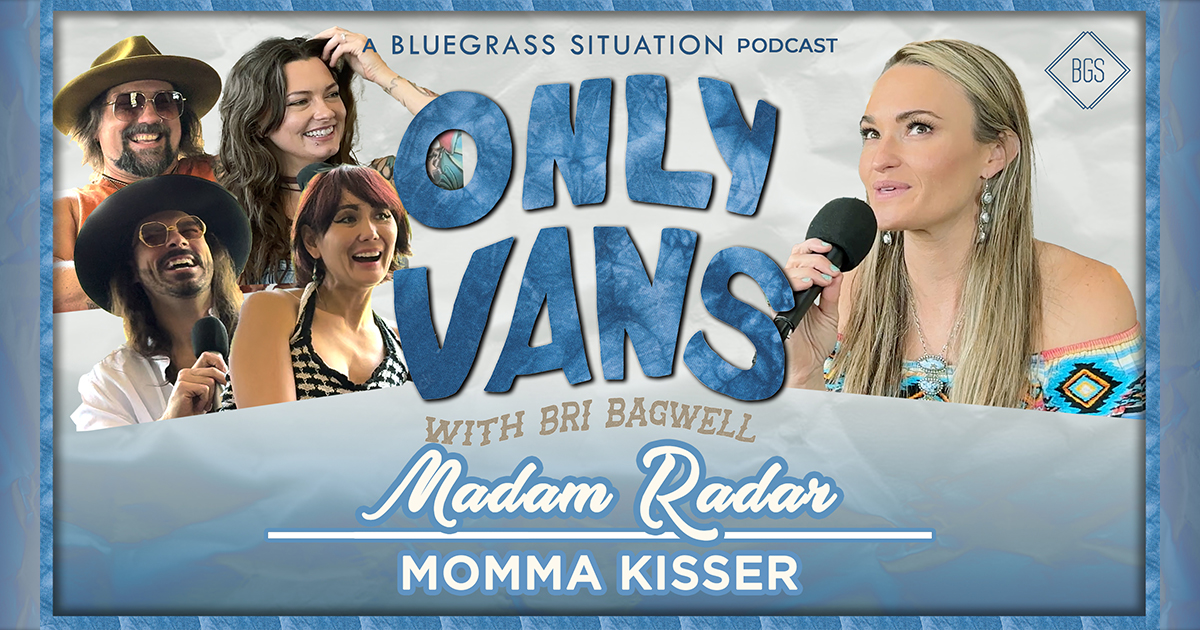
Madam Radar on
Only Vans with Bri Bagwell

Today’s Only Vans guests are one of the coolest and cutest bands in Austin, Texas! We get to talk with Kelly, Jace, Cody, and Violet of Madam Radar about palindromes, The Goose on Lime Creek, band names, and family bands, about The Finishing School, female musicians, genre lines, and their new album, Motel.

LISTEN: APPLE • SPOTIFY • AMAZON • MP3

Madam Radar is a band made up of two married couples: Kelly Green on lead guitar (y’all, she slays!), her husband Jace Cadle on rhythm guitar, Kody Lee on drums, Violet Lea on bass, and everyone sings and writes. Kelly and Kody are also brother and sister, so this band has really amazing chemistry and the coolest vibe. They’re all good at everything (except for math, Kelly jokes at the beginning if you don’t catch that).

They did end up selling out their album release party at Empire Garage in Austin, Texas this past May for their new record, Motel. Their producer Steve Berlin is a member of the band Los Lobos, but also has been a session musician in the studio for many amazing artists such as Sheryl Crow and R.E.M. We also talk former projects like The Texas KGB (which is where I first saw Kelly and fell in love) and current projects like PAACK (an all-female supergroup that plays weekly at our favorite The Saxon Pub). We give a shoutout to HAAM – for providing Austin musicians with health insurance and so much more – Swan Songs, and Dave and Rebecca at The Goose on Lime Creek for providing the amazing space in which to record this podcast.


Photo Credit: Mark Del Castillo

Sawtooth
Country Soul

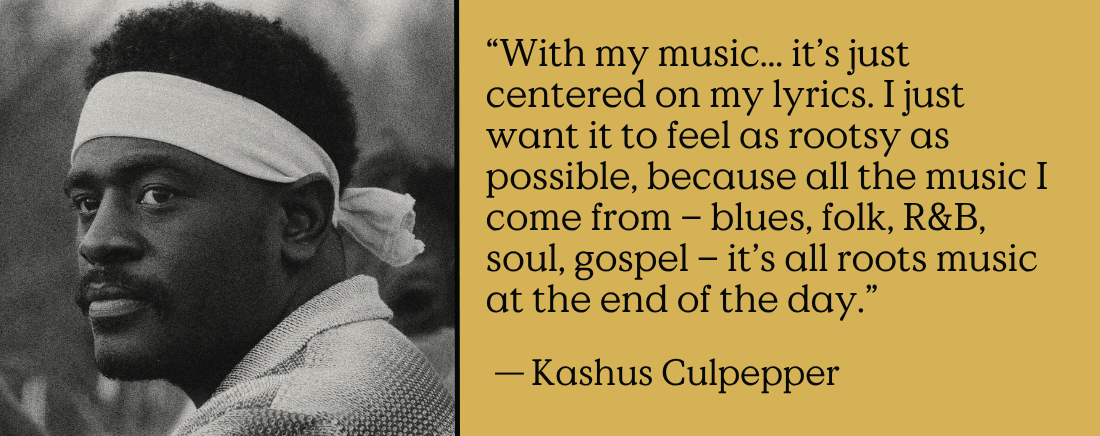
To say Kashus Culpepper’s life has changed over the last five years is an understatement. A former state champion wrestler, firefighter, and EMT, the Alabama native developed a raspy, smoke-and-voodoo vocal while stationed in Spain with the U.S. Navy in 2020, forced to pass the pandemic in his bunk. Since then, he’s knocked over one milestone after another.

With a distinctive mix of country, blues, Southern rock, and soul, the 27-year-old cites Robert Johnson, Bill Withers, and Hank Williams as inspirations and is now bringing his roots-renegade instincts to mainstream fans. Despite only releasing his first official track in June of 2024, the music industry short-timer has earned big-time appreciation.

That includes the respect of heroes like Elton John and John Mayer, a Grand Ole Opry debut, tour dates around the country, and inclusion on 2025 “artist-to-watch” lists at GRAMMY.com, Apple, Billboard, Pandora, and more. Culpepper just finished a run of dates with Leon Bridges and he’ll hit the road with Whiskey Myers in June before joining tours by Sierra Ferrell, Darius Rucker, and others later on in the summer. It would all be overwhelming, if he had time to think about it.

“I’ve just been taking it day by day,” Culpepper tells Good Country with a hearty laugh, waiting to perform at a community festival in Arkansas last month. “I think that’s the best course of action. Don’t think too far in the future and just take each show, each writing session, each recording session one at a time. Just pray everything works out and keep going. … Because when things started happening, I was like, ‘Oh, snap.’”

We wanted to get to know Culpepper before anything else “happens,” and figure out what’s fueling the hype. As it turns out, this all-natural talent is just going with the flow.

I read that you didn’t even start playing guitar until you were in Spain for the Navy, right? What made you want to do that?

Kashus Culpepper: Yeah, in Spain we got shut down and I didn’t have nothing else to do, man. I mean, literally I was bored out my mind. It’s a different type of boredom, because during COVID you couldn’t do nothing. It’s not like you can just go outside or go to a bar or hang with your friends. We couldn’t do nothing. So this was a weird point in my life and my buddy had a guitar in the barracks. I was like, “Well, this is a perfect time. I literally have nothing to do.” I just went on YouTube and looked up covers I wanted to learn. Music has always been something I go back to whenever life is hard. So I resorted back to music and that ended up leading me to learn guitar, eventually learn to write songs.

Thank God for YouTube, huh?

Shout out Marty Schwartz!

You seem to have a lot of diverse tastes, but that bluesy, soulful country thing – why did that speak to you?

I think maybe that’s just my music taste. My first taste of music was gospel, and I’m from Southern Alabama, so gospel there, it’s really rootsy already. It already sounds like a folk song. And the way they sing it sounds so bluesy, like old Son House type of vibes. From there I got into blues music outside of church. I got into country music and R&B and folk music a little. I’m all over the place when I listen to music. I can go from Allman Brothers to a Conway Twitty song really quick.

But I know you like John Mayer and all that stuff, too, right?

Yeah, yeah. I mean, I love so many of those rock artists, ZZ Top, Led Zeppelin, Skynyrd. People ask me all the time my influence and I’m just like, “Bro, it’s so hard to name everybody.” John Mayer was a huge thing for me. Recently I went back to Norah Jones, I’m like, “Man, I used to love this record.” But with my music, at the end of the day, it’s just centered on my lyrics. I just want it to feel as rootsy as possible, because all the music I come from – blues, folk, R&B, soul, gospel – it’s all roots music at the end of the day.

Your voice is so good at expressing these really raw emotional states, I think. Is that how you are naturally? Or does that only come out in your music?

Most of the time? Honestly man, it’s just with the music. It’s hard to open up to the people. I think for me music has been great, just to express how I actually feel through my singing and my lyrics. I don’t usually just tell people.

So you’re from Alabama. After the Navy, did you go home and keep playing?

I got out the Navy in 2022 and by that point I already had gigs booked on the Mississippi Gulf Coast. I was booked at all these casinos, all these bars. I was booked out for a year in advance. I got out and went straight to full-time doing cover band shows pretty much for another year, until I literally couldn’t take any more of it. Then that’s when I decided I really want to write songs. Literally, I decided “I’m going to move back home to save as much money as I can and move to Nashville.” I was home for maybe a week or two and posting a lot on TikTok and I remember I was in my mom’s living room. I posted a TikTok, I went out because I had an interview for a job, I got back home, and it had reached 100,000 views. From there it was just, “Oh, snap. It’s going on.”

@kashculpeppermusic Replying to @Casey Wayne One week till “Man of His Word” drops! Appreciating all the support on this one❤️ Pre-save link in bio🔥 #country #singersongwriter #original #kashusculpepper #newmusic #livemusic #countrymusic #countrymusiclover #tour #soul #newcountry ♬ original sound – Kashus Culpepper

That’s awesome. Congratulations on how that all turned out. I think one reason for it might be that your music seems so unconventional, almost untamed. Maybe because you did it on your own? Do you feel like fans are hungry for that?

I think so. We talked about John Mayer. John Mayer is kind of like that. He’s all over the place. Sometimes he’ll do a blues song and then straight up pop, and then an R&B song with Leon Bridges. I think people just love that from artists. Artists just being artists. Just do whatever the song feels like. That’s how I feel with songs.

“A Man of His Word” is super soulful, with lots of that gospel influence and a big raspy vocal. Tell me about being the man a girl deserves. Where’s that theme coming from?

I wrote that song with Natalie Hemby and at the time we was just talking about life. The song is from a perspective of a guy looking into a girl and she’s going through hardships, because she don’t have a man of his word. She’s drinking a lot, doing a whole bunch of stuff. The song has a lot of me in it. I grew up with a single mother and you don’t know how those things can affect you without having somebody in your life you can trust. You get the feeling you can’t really trust nobody, because that’s not part of your life, and that leads to mental health problems or substance abuse. You don’t even notice it at the time, until you look back and you’re like, “Dang, that’s why I feel that way.”

After that comes “Broken Wing Bird” with Sierra Ferrell and it’s on the opposite end of the spectrum. Very threadbare and folky, right?

Oh man. So I’m a huge fan of Willie Nelson. One of my favorite songs is “Funny How Time Slips Away” – I just love so much the crooner era that he was doing – and I wanted a song that felt like that.

I wrote the song about somebody that’s not really good for you and you just keep taking ‘em back regardless, because you love them and no matter what they do, you’re always going to. So she’s like my broken-winged bird – no matter what she does, she’s flying back and I’m always going to help her out and then she’ll probably be on her way again.

It’s been good getting to know you a little. Big picture, what do you hope people take away from your music?

I think overall, I hope they can see I’m just an artist trying to express the way I see things, and I hope in some way they can find music that can fit every part of their life. Whether they’re trying to have a good time out partying, or if they want to soak into the sadness of a lover they lost, I just hope my music can fit some aspect of their life. And I hope they can enjoy it.


Photo Credit: Cole Calfee

Sign up here to receive Good Country’s email newsletter direct to your inbox.

Exploding Trees & Airplane Screams

Most people know Patterson Hood as the frontman (really one of two frontmen) for the long-running rock band Drive-By Truckers. Had they come up in the 1970s instead of the ‘90s, the Truckers would have been mentioned in the same breath as bands like Lynyrd Skynyrd and The Allman Brothers Band. Led by Hood and fellow singer-guitarist Mike Cooley, they play kickass Southern rock — but the caveat is that this is intelligent kickass Southern rock. And much of the band’s sensibility is informed by Hood’s unique youth. He grew up in Alabama, but was raised by liberal parents (his dad is legendary Muscle Shoals bassist David Hood). As Patterson says, “Dualities have always been an obsession of mine and to some extent [of] the band itself.”

Over the years, Hood has also kept a solo career going on the side. But his new album, Exploding Trees & Airplane Screams, is unique for a couple of reasons. For one thing, it’s his first solo record in 12 years. For another, it’s a somewhat different beast, musically, from most of his albums – both with and without the Truckers. There’s considerably less guitar-based rock and roll, and other instruments, such as piano and even woodwinds, have been pushed more to the fore.

This is still very much a Patterson Hood disc. You can’t miss his distinct, gravelly vocals. His storytelling – often stories of what it was like to come of age in 1970s Alabama – retains a sharp eye for detail and the aforementioned dualities. There’s a lot of pathos in Hood’s writing, but there’s always some humor as well. Exploding Trees features appearances from the Truckers’ Brad Morgan and Jay Gonzalez (on drums and keyboards, respectively), not to mention Lydia Loveless (on the heartbreaking “A Werewolf and a Girl”), Steve Berlin, and producer Chris Funk, among others.

Good Country recently had the pleasure of catching up with Patterson Hood.

You’ve been very prolific with the Truckers, but Exploding Trees & Airplane Screams is your first solo album in more than a decade. Why a solo album now?

Patterson Hood: That’s a great question. The reason, I guess, is that I’ve been super busy with the band. The Truckers have been in a really good place for over a decade now. So I wasn’t particularly eager to do a side project just for the sake of doin’ one.

But [with] every album, there’s always a couple of songs that somehow get lost in the shuffle. Particularly after the record comes out – they turn out to be great tracks on the record, but they never get played live. So they are kind of forgotten songs that I care a lot about. I kind of started a file some years back for those songs. It’s not that the band can’t play them; the band played the shit out of ‘em. [It’s] more just the way our shows are, the flow of the show, the rooms we play. You know, the emphasis live often gets put on a certain level of rock, for lack of a better way of puttin’ it. There are songs that might be a little more introverted. So I’ve had a stack of those songs that were sitting there.

And I also, about 10 years ago, became friends with [producer] Chris Funk. We would play together from time to time, usually in the Northwest, because we both live in Portland. We had this cool chemistry. So for a long time, we’ve been talking about making a record together. And during the lockdown – when I was stuck and couldn’t go anywhere or do anything – I spent a lotta time up in my music room. I wasn’t really able to write a lot during lockdown, because my brain was just not functioning very well. I was very depressed. It didn’t make for good songs. But I could go back and go through song fragments and hone in on things. I could really edit like crazy! So I spent a lotta time working on those songs – instead of thinking in terms of what I would do in a rock band format, what I would do in not a rock band format. You know, like “I could hear woodwinds on this song!” Things like that.

We cut it pretty quick. But I spent a long time working on it before we recorded it, you know? Including Funk telling me a few months before we went in, “I hope you’re practicing that piano, because I want you to play it on the record.” I’m like, “No, that wasn’t the plan. The plan was to have someone who can actually play the damn thing!” I’m thankful, because if he hadn’t kicked my ass, I probably wouldn’t have played piano, to be honest. It forced me out of my comfort zone, which I think was as much the point as anything for him. I think he wanted to keep me in a state of perpetual terror! [Laughs]

I had been wondering if that was you playing most of the piano, whether it was Jay Gonzalez or someone else?

I played a lot of it. I mean, I’m not playing all of it; Jay’s definitely playin’ on it. And I think Funk and I both play piano on one song. Funk played a lotta synthesizers. Jay’s playing some old vintage weirdo keyboards that have names that I can’t even remember. Phil Cook played that organ part on “The Forks of Cypress” too. But as far as the songs that seem to be built around a simple piano part – that tends to be me. That’s what I play: simple piano parts! [Laughs] I’m not Randy Newman.

Can I ask you about a few of the specific tracks? I understand that “Exploding Trees” was based on an actual event.

Yeah. It was kind of like a meteorological phenomenon, I guess. It was in my hometown in February of 1994. It was right before my 30th birthday [and] right before I moved to Athens, Georgia. The weather had been warm and it rained a lot for a couple of weeks. It just rained and rained, you know? Borderline flood conditions. There’s a lot of pine trees, particularly in my home area. And they all got completely waterlogged by all the rain and with the warm temperatures.

Then there was this sudden freeze; the temperature dropped like 40 degrees in a couple of hours. And all the water in those trees froze. Particularly those pine trees – I guess they splinter easier anyway. The trees basically exploded all over town, kind of at the same time. Thousands of fucking trees! I mean, flattening cars, buildings, people. It was really awful. … And I had been out of town. I had ironically visited Athens a couple of nights before for the very first time – which directly led to me living there shortly after. I was driving back home as it happened; I basically drove right into the middle of it. I was trying to get to my grandmother’s house to check on her. I got to the house and there were, like, pieces of trees that had gone through the roof. And I couldn’t find her anywhere. [It turns out] she was fine. She was at a neighbor’s house.

I love the line “beauty queens in hospital gowns.”

Right. Well, one of the worst injuries of this storm was a girl I knew. I worked at a restaurant with her. She had just won Miss UNA, the beauty pageant, and was like two weeks away from going to compete for Miss Alabama. Lovely, lovely young woman. Very sweet – super Christian. And an oak tree fell on her car, with her in it. And it knocked her head down into her body cavity. It completely pulverized her neck and back – but she lived! She’s a quadriplegic [now, but] that accident led to [that line].

Oh God. That’s awful.

It feels like there’s a theme on a few songs of reckoning – coming to terms with past events, maybe.

Sure. Or trying to make sense of things. “Miss Coldiron’s Oldsmobile” – I was too young when that was happening to really wrap my head around what all of that meant. But as an adult, you can go, “Okay. She was being gaslighted, you know?” Every time she would ask for money, she’d get reminded of the mental hospital she had spent some time in. Things like that. It was pretty fucking insidious.

“The Van Pelt Parties” – you know, that was some of my first experiences with drinking and how adults partied. I was a little kid, sneaking booze from the punchbowl. I was the only kid at the party and we would go every year. And the older I got, the drunker I got. And the grownups were too drunk to notice! [Laughs]

Was Van Pelt a part of Alabama?

They were a family. He was a college professor, she was a schoolteacher. Their daughter was a painter who had been my babysitter. And my parents were right in the middle of their ages – kind of ended up becoming friends with all of them, with the daughter and the parents. So they were a big presence in my life growing up. You know, I loved ‘em. Their daughter, who’d been my babysitter, taught me a lot of cool stuff. She turned me on to some cool music. I actually have a painting she made after tripping on acid at a Doobie Brothers concert!

Maybe it was because we were young, but I think the ’70s had a much cooler vibe than the present.

Well, about anything’s better than [now]. I hate saying this so bad because I’m not prone to romanticizing the past; I’ve always rebelled against glory days. But right now sucks! The level of fucking misinformation and just the insanity right now is so insidious. It’s hard right now not to feel a certain amount of nostalgia for any time in the past.

You and Mike Cooley have been playing together for almost 40 years or more. And other members of the Truckers have come and gone. But the drummer, Brad Morgan, has been with you guys forever and we don’t hear a lot about him. Tell me a little about Brad and what he brings to the band.

The band wouldn’t exist without Brad. Brad was the glue that kept all this crazy shit together all these years. You know, he’s that guy that’s really even-keeled. And he brought that to the table at times when the band was far too tumultuous and emotional for our own good. We call him Easy B. There’s a golden rule in the band and that’s “Don’t piss off Easy B!” Because if you’re fucking up enough to where Easy B gets mad at you, you are fucking up! And you don’t want the phone call from Easy B! He doesn’t get mad often so if he’s mad, there’s a good reason for it and you better take heed. He’s also a colossal drummer. He so often takes such a subtle approach to things that people don’t realize what a bad-ass drummer he is.

I know you have some solo dates lined up. What can people look forward to when you’re touring with this album? I assume it’ll be a little different than a Truckers show?

Yeah! Very different. But at the same time, it’s the same universe. [Lydia Loveless] is in the band that’s touring this record. She’s gonna open the show and she’s gonna play bass and sing harmonies in my band.

I think anyone who’s into the Truckers – if they can tolerate my voice, they’ll probably like this too. [Laughs] If you’re there for the big frontal assault and guitars and sweat and spit that comes with a Truckers show, it’s very different. Although I’m not ruling out those things happening, too. But it’s a quieter show. It’s gonna be built around these songs, with some other stuff that stylistically or thematically works with this. And it’s cool.


Photo Credit: Jason Thrasher

WATCH: Reckless Kelly Go Behind the Scenes of “What’s Left of My Heart” Video

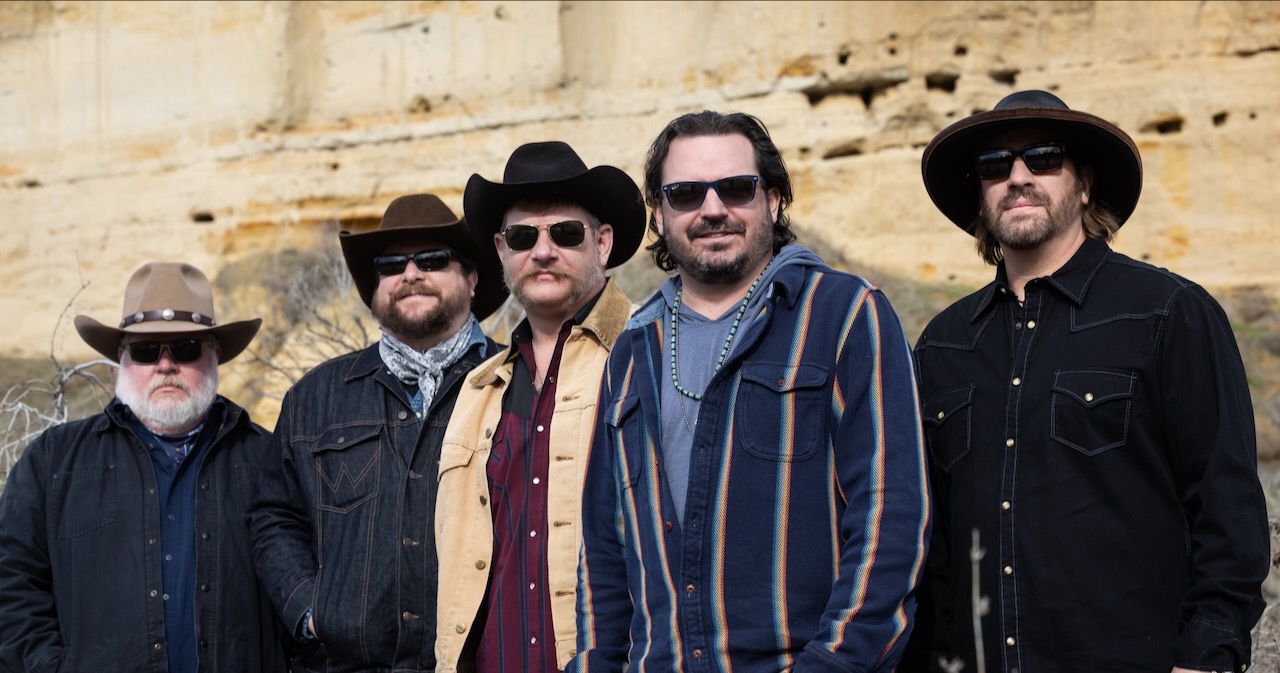
Austin, Texas-based alt-country rockers Reckless Kelly released their music video for “What’s Left of My Heart” – from their 2024 album, The Last Frontier – a handful of months ago. Now, they’ve returned with a special “Pop-Up Music Video” that takes viewers behind the scenes of the making of the video. (Watch below.)

Bits of commentary, context, insight, facts, and fun “pop up” as noteworthy action occurs on screen, bringing outlaw country fans into the processes that led to the zany and fun visual rendition of the track. Set in the now-legendary South Austin honky-tonk Giddy Ups, just days before it permanently closed its doors, the video includes plenty of Easter eggs and details that would have easily gone overlooked if not for the illuminating pop-ups. Viewers follow frontman Willy Braun through a series of hijinx brought on – or enhanced by? – the band’s informal mantra, “sorry for partying.”

“We shot the entire video in about five hours after a show,” Willy’s brother and bandmate Cody Braun explains via press release, “So a ton of pre-prep and organizing had to happen. It was amazing to have friends, family, and musician buddies join us and bring this vision to life. Giddy Ups was one of our favorite spots, and as Austin changes, we wanted to give it a proper send-off.”

“What’s Left of My Heart” is certainly that send-off, but with so many collaborators, actors, cameos, industry folks, and special guests, the behind-the-scenes touches of the pop-up video help illustrate how important community and family are to the band over the decades. There’s so much to see and hear in “What’s Left of My Heart,” we don’t want to give any of it away! So don’t miss a single beat and watch Reckless Kelly’s new pop-up music video.


Want more Good Country? Sign up on Substack to receive our monthly email newsletter full of Good Country direct to your inbox. 

Photo Credit: Robert Millage
Video Credit: Co-directed by Tony Gates and Cody Braun.

Artist of the Month: Larkin Poe

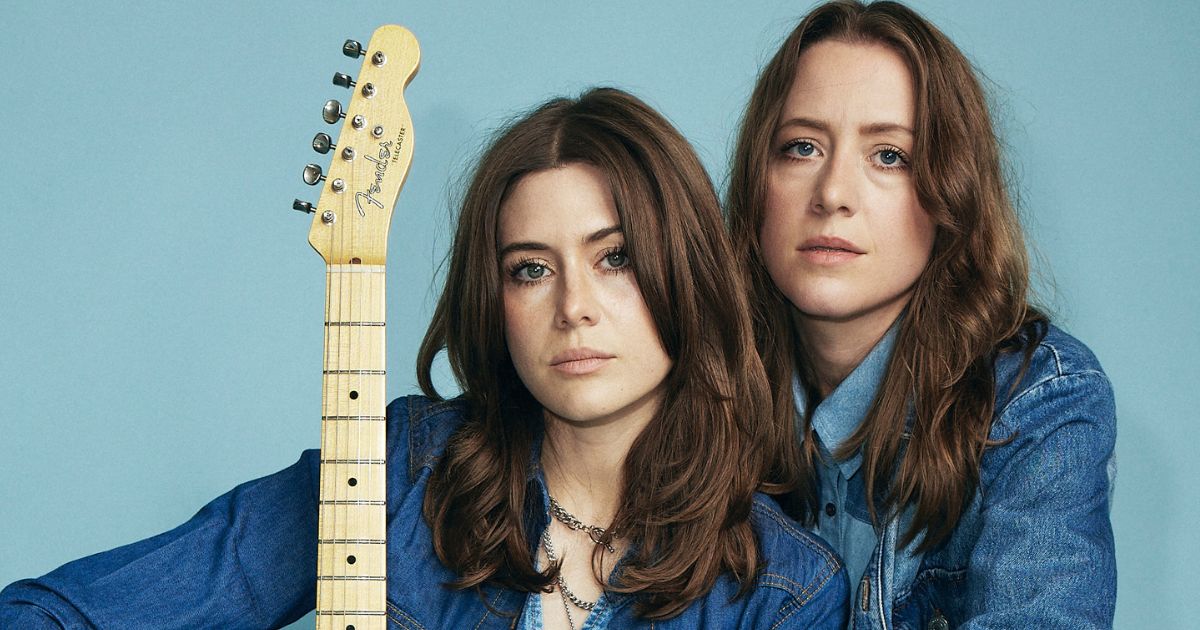
Larkin Poe are unstoppable. The incendiary sister duo – made up of Megan and Rebecca Lovell – have enjoyed near constant growth and momentum building over the past decade and a half, since they emerged from their younger family band era in the early 2010s as an endlessly gritty and gutsy Americana-meets-blues-meets-Southern rock phenomenon. Now, their sights are set on their upcoming seventh studio album, Bloom (out January 24 via Tricki-Woo Records), with a year’s worth of accolades – including their first GRAMMY win and being named the Americana Music Association’s Duo/Group of the Year – firing like afterburners on their already rocketing career.

Their perseverant climb of the music industry’s ladders is the least remarkable aspect of Larkin Poe’s trajectory, though. The sisters Lovell outwardly channel a sort of outlaw-styled disaffection for the trappings and machinations of the industry or Music Row, inhabiting self-assured personas that fit seamlessly within the genres they call home. They know they’re stellar songwriters, they’re virtuosic pickers, and they’re fluent in the aggression, anger, and release of rock and roll. Across their entire catalog there are clear demonstrations – from the winking and sly to the outright and overt (see, for instance, “She’s a Self Made Man“) – where Larkin Poe show their listeners they aren’t just living in “a man’s world,” they’re owning it, re-centering it, and doing it better than the machismo naysayers rife in these roots styles. Styles where a corrective phrase like “Um, actually…” is still wielded as a cudgel or seen as valuable social currency.

Um, actually… these women know exactly what they’re doing. And they would have to, given they came up through bluegrass, folk, and string band circles as a bluegrass(-ish) family band, the Lovell Sisters, with their sister Jessica. Winning songwriting contests and appearing on Prairie Home Companion, the Lovell Sisters were quickly beloved in bluegrass, honing their chops while also getting their first tastes of being written off or sidelined as “merely” a female-centered novelty act. When the group decided to disband, Megan and Rebecca “reskinned” as Larkin Poe, immediately transforming so many of their “I knew them when” audience members into “I wish they still played bluegrass” skeptics. Not that the Lovells cared, ultimately. A hallmark of the duo since their rebirth has been agency, autonomy, and self-possession. (Something of a prerequisite for successful women in roots music, to be sure.)

Seven studio albums into their grooving, rollicking, no-holds-barred catalog, Larkin Poe are even less concerned with external forces or outside variables influencing and impacting their music. Bloom builds on the confidence and clarity of Blood Harmony‘s GRAMMY Award-winning vision. Produced and co-written by both Lovells and their longtime collaborator (and Rebecca’s spouse) Tyler Bryant, Bloom zooms in on the individual stems, leaves, and petals of the agency and self-determination that have run through all of their music. It is, yet again, a decidedly familial project, but despite all of the ground they’ve covered together and all of the miles they’ve traveled over their lifelong careers together, rebirth and reinvention continue to blossom on each of their projects. It speaks once more to the music itself being their guiding light – rather than commercial appeal, marketability, or continuing to do it simply because it’s what they’ve always done.

Bloom is about finding oneself amidst the noise of the world,” says Rebecca via press release. “About wholeheartedly embracing the flaws and idiosyncrasies that make us real. In one way or another, pretty much all of the songs on this album are about finding yourself, knowing yourself, and separating the truth of who you are from societal expectations.”

Perhaps only a group of women could make a Southern rock album with this sort of message at its core. They may peacock and strut, on stage and in the studio, just like their male peers and contemporaries might, but they do so with a message and mission that’s decidedly antithetical to most creators in Americana, rock, and blues these days. Especially the “Um, actually…” set. By taking on these characters and personas, Larkin Poe aren’t hiding their truths from us, but putting their most authentic selves directly into the spotlight.

At the same time, when you’ve spent your entire adult lives making and performing music with your family, with siblings and in-laws and chosen family, too, it’s often a passive and subconscious process by which you slowly lose pieces of yourself, of your individuality, of your sacred selfhood. It’s no wonder, then, that Larkin Poe have crafted a stunning, engaging, and iconic catalog of music that orbits around this very dichotomy. To be a family band, to sing or pick or channel blood harmonies, is to give up yourself for the greater whole. Megan and Rebecca and their compatriots then use that same music to find and re-find that sense of self as it slips away. Each time, each album and each set of songs, it is a musical gift; and each time, including the latest effort, Bloom, Larkin Poe find and share themselves anew.

We are so very excited to name Larkin Poe our January 2025 Artist of the Month. Stay tuned for our exclusive interview with Megan and Rebecca Lovell coming later this month, dive into our Essential Larkin Poe Playlist below, and follow along on social media all month as we dive back into the BGS and Good Country archives for everything Larkin Poe and the Lovell sisters.


Photo Credit: Robby Klein