Brandy Clark, ‘Three Kids No Husband’ (Acoustic Demo)

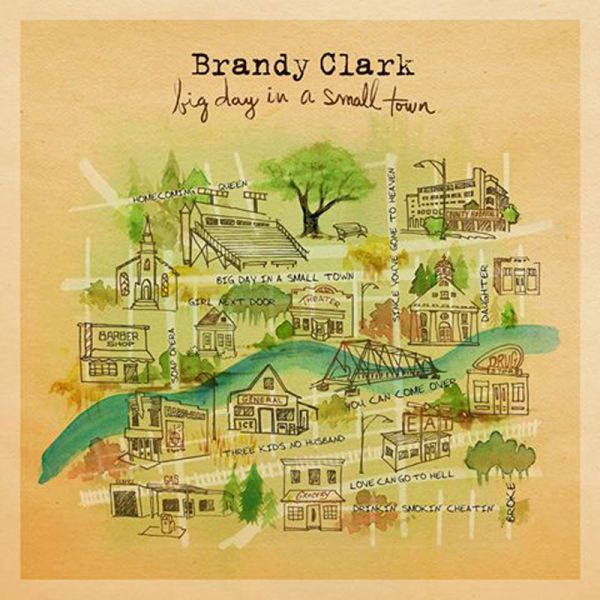
Brandy Clark understands all of the inhales and exhales of humanity. Not the just the quick, excitable sighs that come with the first beats of a new romance, nor just the deep, shuddering moments that accompany a great loss or tragedy that leaves us struggling for air. Clark looks deeper, for those times that often go unnoticed, but perhaps say much more than labored gasps and gulps. On "Three Kids, No Husband," off of her sophomore release, Big Day In a Small Town, it's a single mother stealing away for a few minutes of oxygen on the balcony, that come drifting in through plaintive and quick pulls on a cigarette. It's a picture she first conjured on her debut, 12 Stories, with "Get High" — how, for these vibrant characters, sometimes the smallest, most savored respites can be found in an ashy drag.

Written with Lori McKenna, "Three Kids, No Husband" (featured here exclusively in a demo version) is true to Clark's representation of the world at large: There's the struggle of the single mother, balancing both a job at the diner and dirty diapers, but it's never condescending to her plight. She's tired and worn, but the blame is on the cards she's dealt, not her babies — a subtlety of motherly love that many songwriters chose to ignore or just don't understand. It's not a glamorous version of parenthood, but it's true, and Clark gives anyone raising a child (from the smallest towns to the biggest cities) the respect they deserve. "A real life hero, if you ask me," she sings. "Those kids ain’t gonna raise themselves." Just remember to breathe.

WATCH: Henry Wagons, ‘Head or Heart’

Artist: Henry Wagons
Hometown: Melbourne, Australia
Song: "Head or Heart"
Album: After What I Did Last Night …

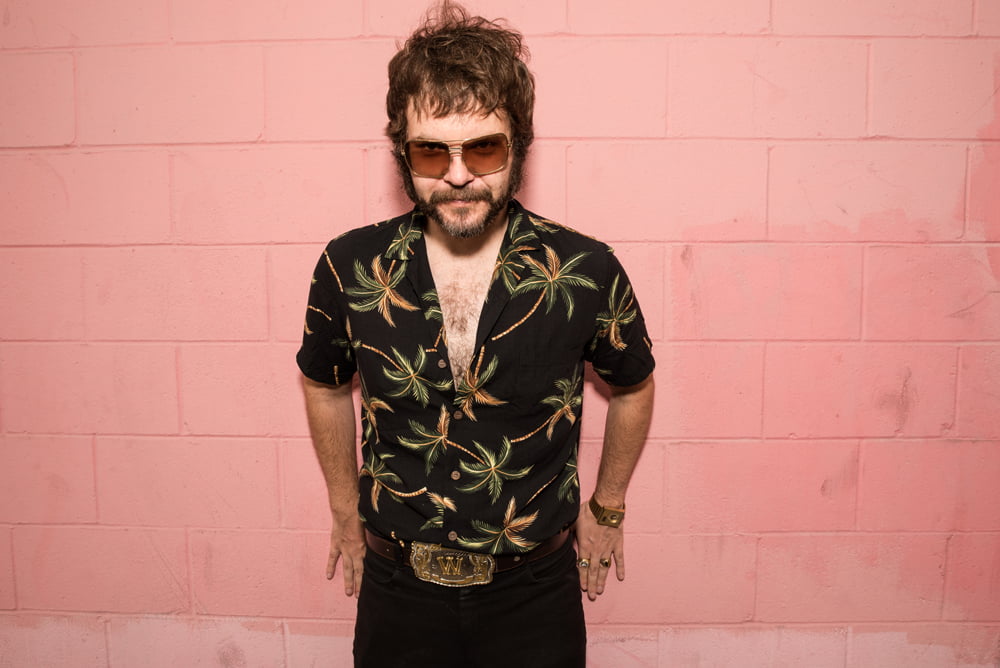
In Their Words: "Nashville is a town full of some of the finest in music and booze. A musician's paradise! Its the perfect storm for getting in a real mess. 'Head or Heart' is a song about that time of the night when it becomes difficult to decide between your rational mind, or what's below the belt. The head or the heart." — Henry Wagons


Photo credit: Taylor Wong

LISTEN: Western Centuries, ‘Double or Nothing’

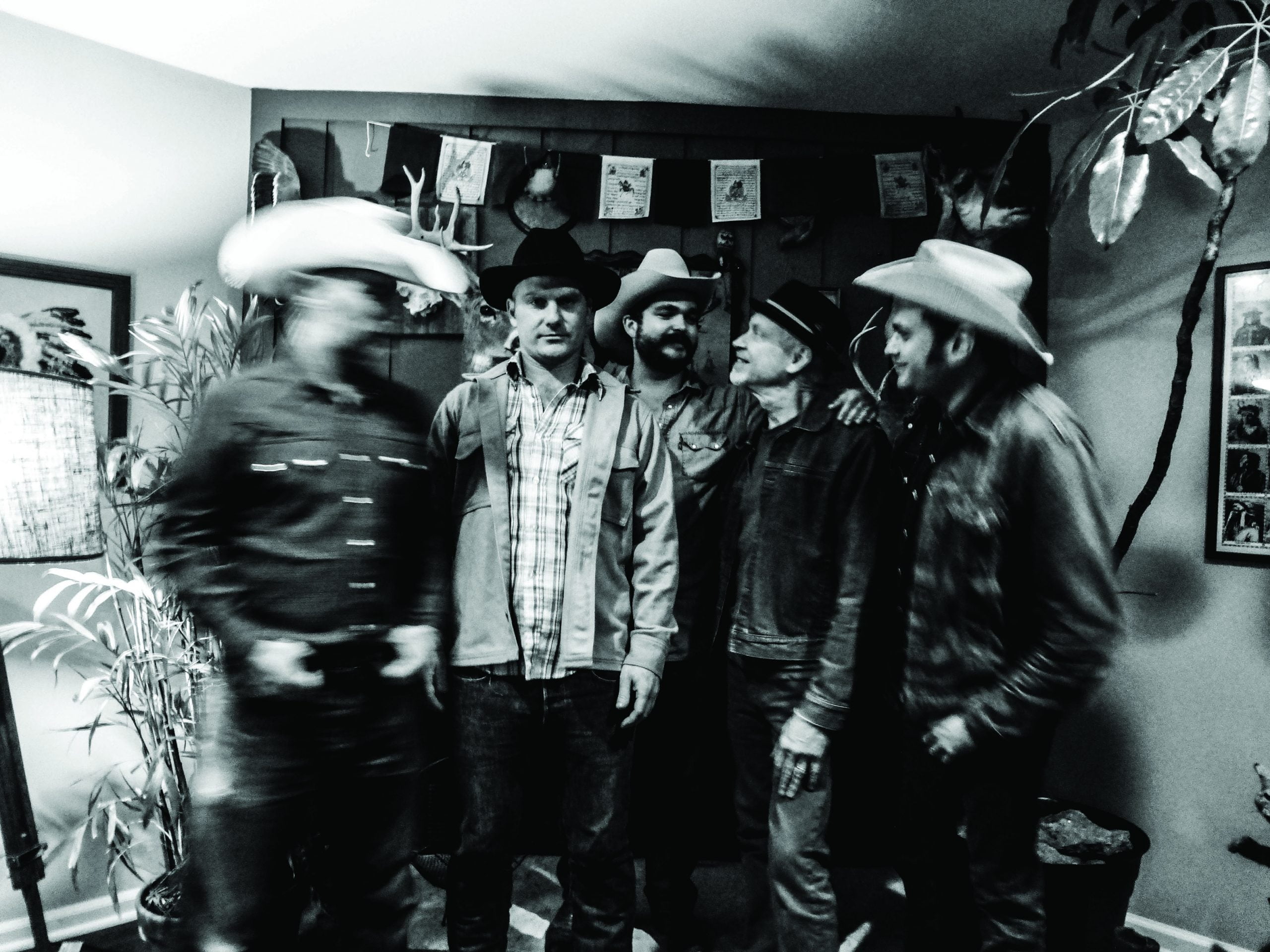
Artist: Western Centuries
Hometown: Seattle, WA
Song: "Double or Nothing"
Album: Weight of the World
Release Date: June 3
Label: Free Dirt Records

In Their Words: "I tend to gravitate toward heartbreak songs with an optimistic twist and an upbeat melody, even if that's not how I'm feeling at the time. And I do live way up on a hill where you can see the city lights." — Ethan Lawton


Photo credit: Bill Reynolds

Michaela Anne, ‘Easier Than Leaving’

In country music, a "weeper" is a real thing: a song that's somewhere between a ballad and a hopeless confessional, that places more emphasis on a forlorn guitar and rare, raw lyricism than showboat vocals (though they're often part of the package, too). Think Hank Williams' and Patsy Cline's saddest moments or, later, Townes Van Zandt's — jewels like "I'm So Lonesome I Could Cry" that struck a perfect balance on the Southern scale with barn-burning honky-tonk, keeping it all delicately teetering in line.

But then the '90s happened and, for better or worse, ballads got the Faith Hill and Shania Twain treatment — notes hit the ceiling and power bombast replaced subtle solemnity. Simplicity, this was not. Luckily, there's been a new bubbling interest in bringing back the genre's delicate, melancholy roots: most of Daniel Romano's Come Cry with Me, Andrew Combs' "Too Stoned to Cry," Margo Price's "Hands of Time," and even Miranda Lambert's "Holding On to You." Now Michaela Anne, on her sophomore album, Bright Lights and the Fame, has an LP full of them — heartbreakers so grounded in self-awareness that they never sound anything but authentic, yet never too indulgent to ring just like diary scribbles.

One of the LP's best is "Easier Than Leaving," which opens with a snapshot in time of a fading relationship: "Sitting at the table, back's against the wall / Coffee's getting colder as I wait for you to talk." Who hasn't felt that tension, taken a last gasp at peaceful air before they fully breathed in the inevitable reality they knew was coming? With a clear quiver, Anne, who moved to Nashville from New York City two years ago, reinvents the lost age of those weepers in the way someone equally schooled in both the forebears — like Williams and Cline — and its modern folk interpreters — like Gillian Welch and Conor Oberst who carried the emotive torch when mainstream Music Row was too busy belting — might. "Easier Than Leaving" might not change her lover's mind and force them to stay, but it will just continue to help put soft, strummed country sadness back on the map.

Derek Hoke, ‘Trouble in Mind’

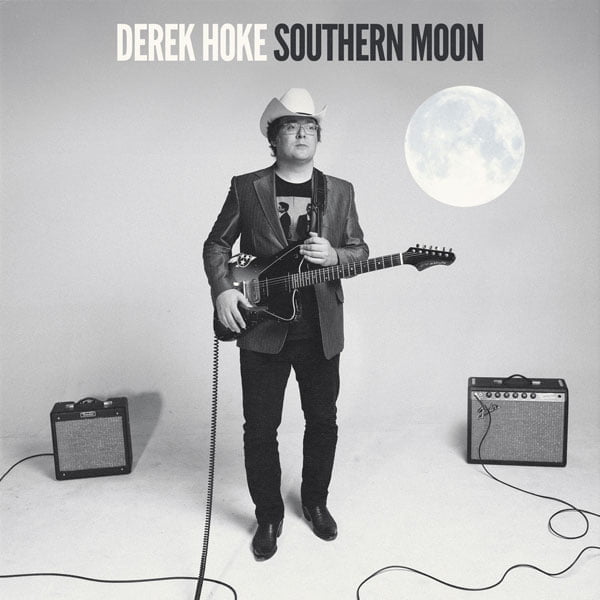
If you live in Nashville — specifically East Nashville — then Derek Hoke is your eminent host, with his weekly $2 Tuesdays event at the 5 Spot serving as your best bet to catch a smartly curated collection of emerging talent, drink cheap beers, or make an unexpected musical discovery. (Usually, it's all of those things.) But he doesn't just throw the party; he makes its soundtrack, too. Hoke appears on stage most Tuesdays, where he works through a catalogue of songs that shudder, shake, and groove with the steely composition — and slick propriety — of boogie-woogie kings like Roy Orbison. There's a classic touch and reverence for the dying rock 'n' roll tradition of occasionally keeping it clean — crisp lyrics, tight production unmarred by fuzz, tasteful riffs, and unwrinkled blazers — with an emphasis on putting the grit where it belongs. And that's in a dirty guitar vamp or wail of the harmonica.

Nowhere is this tactic more apparent than on "Trouble in Mind," off of his new third album, Southern Moon. With mouth harp courtesy of Willie Nelson's right-hand man, Mickey Raphael, the song slinks in with a bluesy roll that Hoke's smooth vocal croons right over. Like the Black Keys on "Howlin' for You," Hoke knows the power of a good Lightnin' Hopkins-era riff sidelined by a thumping drumbeat to propel a song straight to both the balls of the foot and the gut.

"I feel it down in my soul, into my heart, out of my head, I'm always thinking of you," Hoke sings. He's got trouble in mind, alright, but it's the music itself that hints at just what kind of mischievous behavior he might be after.

Squared Roots: Ryan Beaver Hails a Hero in Kris Kristofferson

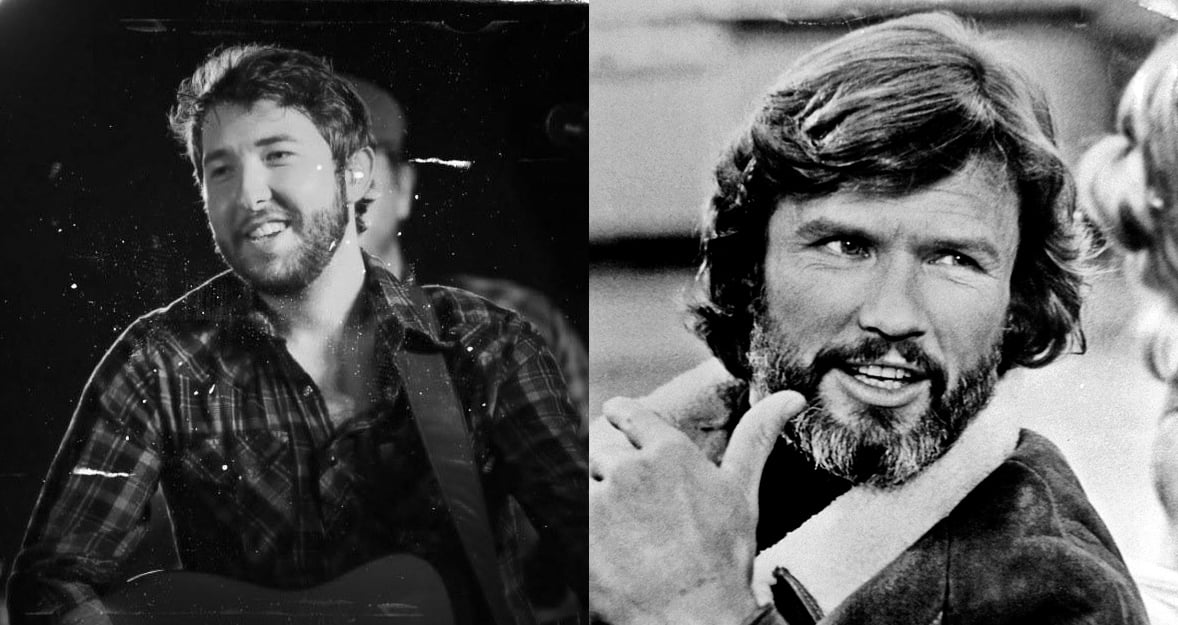
Of all the country music legends in the world, there’s something truly special about Kris Kristofferson. He was — and is — a walking paradox. Gentle, yet rugged, poetic, but grounded, his personal spirit always pervaded his professional pursuits, bringing with it an air of wonder that reflected the sly, seemingly kind knowingness of his eyes. Whether on his solo songwriting or his Highwaymen collaborations, Kristofferson’s inscrutable gift will forever be enshrined in songs like “Sunday Mornin’ Comin’ Down,” “Jesus Was a Capricorn,” “Me and Bobby McGee,” and “Lovin’ Her Was Easier (Than Anything I’ll Ever Do Again).”

Up-and-comer Ryan Beaver knows a hero when he hears one, and Kristofferson tops his list … so much so that his new RX LP includes an ode simply titled “Kristofferson” (replete with an intro of “Jesus Was a Capricorn”). In it, he frames the paradox in lines like, “You can’t hide a poet’s broken heart in rolled up sleeves” as he traces the life and soul of a man he deeply admires.

Scholar, soldier, songwriter, pilot, actor … they just don’t make them like Kristofferson anymore, do they?

No, they don’t and I don’t know if there ever will be another like him. He was a renaissance man and his legacy shows that.

Even after he left the Army, he split his time between pitching songs in Nashville and flying helicopters in South Louisiana. Can you imagine taking all of that on?

Ha! No, I can’t. That makes me feel like the different hats I balance aren’t too hard when comparing what I do to that schedule.

Because he had a master’s in English literature and a fondness for poetry, it might seem natural to expect a less earthy, everyman style of storytelling from him. What do you hear in his lyrics that reflects the sort of classical side of his nature?

The ability to be poetic but also relate to the common man is an exceptional gift and something I struggle with myself. It’s a true sign of integrity to the song while hitting the human heart with life experiences anyone can get.

You captured his spirit pretty well in the song you wrote about him. What sparked that?

Jessi Alexander, Jon Randall, and I got together one day to write and just started talking about Kris and his career. We could’ve easily talked about music all day, but somehow that led to us talking about moving to Nashville. We talked about how it can be such a tough town, at times, but wouldn’t change it for anything. The song really just blossomed from there. I think there is a little of all of us in that song, and it’s a tip of the hat to the great Kristofferson, as well.

It was such an honor to hear that the family asked Jessi to sing our song to kick off the recent Kristofferson Tribute. It really doesn’t get any better than that.

“Thank you and good night!”

[Laughs] Yeah. Exactly.

What would you say is the quintessential Kristofferson tune? And why?

“Sunday Mornin’ Comin’ Down” is the song for me. Who can’t relate to that feeling of hurting from the events of a big Saturday night and the abrupt Sunday morning sunrise reminder we all have from time to time? The lyrics hit me so hard: “Well, I woke up Sunday morning with no way to hang my head that didn’t hurt” … so great. It slays from the first line of the song.

With him, Glen Campbell, Merle Haggard, George Jones … what’s been your experience of watching these legends drift away?

It’s bittersweet. I feel grateful to be able to study the lives/careers of these great musicians and sad to see them go. They’re legends for a reason. Their legacy lives on through the amazing body of work they leave behind. What a blessing to get to know someone through their songs? I feel like I understand the complexity of these people with each album they made along the way. I’m reminded of the saying “Don’t cry because it’s over; smile because it happened.”

Apparently, he has claimed that he wants the opening stanza of Leonard Cohen’s “Bird on the Wire” on his tombstone: “Like a bird on the wire / Like a drunk in a midnight choir / I have tried in my way to be free.” If you had to pick some of his lyrics for your tombstone or, let’s say, your Twitter bio, what would they be?

I love what he said in the song “Jesus Was a Capricorn”: “If you can’t find somebody else, help yourself to me.” It’s the idea that I can carry the burden for others. It’s a selfless line and also relates to the story of Jesus taking on others’ sin.


Ryan Beaver photo courtesy of the artist. Kris Kristofferson photo courtesy of the public domain.

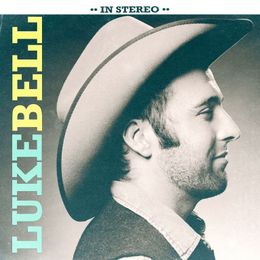
Luke Bell, ‘Sometimes’

Where does "throwback" end and "reinvention" begin? Somehow, we can smell music that's too stuck in the past, like the musky odor that lingers on a pair of thrift store corduroys: They look nice on the hanger and all, but don't really work for modern life or wear well with the times. Luke Bell, who grew up in Wyoming's ranch culture and now lives in Nashville, has plenty of vintage sheen — a deep, honky tonk-meets-soda shop croon that hiccups and yodels along, a penchant for innocent flicks of piano and steel guitar that swing and sway through tales of hurt and heartbreak where the melody keeps the glass wet but cheeks dry.

But "Sometimes," the first single from his forthcoming self-titled release on Thirty Tigers, doesn't sound like something queued up on your granddad's radio. Swirling Buddy Holly quirk and Elvis Presley quivers into his classic country constructions, there's a freshness to his interpretation of the genre, as if instead of attempting to resurrect a bygone era, he's just trying to pick up where it might have left off, using a levity and acuity that is often best gained by those who study their forefathers without trying to purely emulate them. There's a purity to "Sometimes," too, that's stripped of the sarcasm often attached to anti-Music Row arbiters who worship Waylon Jennings but translate it all into a cartoonish vision of what could have been — the only bitterness here is what Bell feels for the woman whom he loved but had to leave, his "watermelon woman" and his "cornbread queen." Nothing musky-smelling about that.

Brandy Clark: Sassy, Sentimental, and Sultry at Sold-Out Nashville Show

The thing about shows in Nashville is, even though there are sometimes way too many of them happening at once, local artists gone big often try to do something special for the hometown crowd. So, for her second-ever Music City show with a full band, Brandy Clark played the songs from her upcoming album (Big Day in a Small Town, out June 10) last night at a sold-out Basement East, and it was, indeed, something special.

Coming off the wild success of 2013's 12 Stories, Clark had a high bar to clear with her sophomore set: making a record that would please not only her loyal fans, but also her major label, music critics, and radio programmers. Based on what we heard last night, she has cleared that bar with room to spare. It really is a record with something for everyone, as the crowd — which included representatives from all those demographics — was equally responsive to the radio readiness of “Girl Next Door” and “Love Can Go to Hell,” as well as the stone cold country of “Drinkin' Smokin' Cheatin'” and “Daughter.”

Because Clark wields sass so well, as evidenced again and again in this new batch of songs (“Big Day in a Small Town” and “Broke,” among quite a few others), it would be easy to peg her as a certain kind of songwriter. But she's no one-trick pony; she also knows how to get to the real heart of a matter, even when the story isn't her own. “Three Kids No Husband” and “Since You've Gone to Heaven” fit that bill very, very well. While the sassy and sentimental perspectives were both present on the 12 Stories tunes, this time around, Clark sneaks in a third glance in the form of the sultry-as-all-get-out love song that is “You Can Come Over” which she sang the hell out of last night.

After making her way through the BDST material, Clark closed her set by reaching back in the catalog for “Get High” and “Hungover” because songs about weed and booze always, ALWAYS go over well with the country crowd. In fact, they went over so well that the calls and applause for more lingered long after the house music was already up. For Brandy Clark and everyone at the B-East, it was a big … night in a not-so-small town. And it was wonderful.

Set List
“Soap Opera”
“Girl Next Door”
“Homecoming Queen”
“Broke”
“You Can Come Over”
“Love Can Go to Hell”
“Big Day in a Small Town”
“Three Kids No Husband”
“Daughter”
“Drinkin' Smokin' Cheatin'”
“Since You've Gone to Heaven”
“Get High”
“Hungover”

SHIFT LIST: Chef Carla Hall Likes a Little Rhythm in Her Blues

Carla Hall had been on television a lot before she filmed the debut episode of The Chew, the food-focused daytime talk show she co-hosts on ABC alongside Mario Batali, Michael Symon, Clinton Kelly, and Daphne Oz. After all, she had been a finalist on Top Chef in 2008 and the fan favorite a few years later Top Chef: All-Stars, thanks to her indefatigable positivity, vibrant cooking, and cheery catchphrase — “Hootie hoo!” But reality TV hadn’t really prepared her for being filmed on stage in front of a live audience in the fall of 2011.

“I was so nervous on the first day,” she says.

Luckily for her, the DJ who was keeping the crowd entertained played something that struck a chord. (She doesn’t remember what, admitting, “I’m the worst when it comes to remembering people or their songs.”)

Whatever it was, it inspired her to run out into the crowd and begin dancing. A network executive, who was watching the scene unfold, ordered the crew to have a high-energy, Carla-specific playlist created. Now, it blares out of the speakers before almost every taping of the show. “It’s a way for me to connect with the audience, get out of my head, and loosen myself up,” says Hall, who put together this playlist to create a similar atmosphere.

Her gig at The Chew has given the Nashville-born chef a chance to hang out and cook with some of her favorite musicians, including Kimberly Schlapman of smooth-singing country quartet Little Big Town, Patti LaBelle, and Gladys Knight. “Food and music go hand in hand,” says Hall. “A lot of these guys spend a lot of time on the road, so they focus a lot on getting good food versus just having crap food from craft services.”

On this particular day, she’s prepping to tape a segment with Seal, where they’ll be cooking a blackened shrimp salad. “I’m so excited,” she says. “I can’t wait to meet him. There’s some music that reminds you of a certain time in your life. He reminds me of being in London when I was just beginning to get into food.”

Her mind is equally occupied with the upcoming debut of Carla Hall’s Southern Kitchen, which is set to open in Brooklyn, New York, in late April. Inspired by the cooking of her birthplace — she now divides her time between her home in D.C. and New York City, where The Chew is taped — the restaurant will specialize in Nashville hot chicken. “Because it’s a Nashville thing, there has to be country music,” she says. “It will range from bluegrass to country rock and country pop, as well as blues and R&B — some old; some new.”

It’s a far cry from what Hall listens to in the kitchen when she’s cooking. “I want something that’s really low-key, because I want to hear the food make sounds,” she says. “If I have something in the pan, I want to hear it sizzle. But if all the food is done and I’m plating up, that’s another story. Then the music becomes much more upbeat, as I shift into party mode.”

Reclaiming Community: A Conversation with Tyler Hughes

In early February, the Empty Bottle Stringband made their debut at the Carter Family Fold in Hiltons, Virginia, a hallowed ground for lovers of old-time and country music. A quartet of old-time musicians based in Johnson City, Tennessee, the Empty Bottle Stringband specializes in the lively, toe-tapping fiddle tunes that fill the floor with dancers at the Carter Fold, and the band is familiar with the musical family who gave the venue its namesake. When Tyler Hughes takes up the autoharp and introduces the Carter Family song, “There’s No Hiding Place Down Here,” the sounding rhythm is closely kin to the style of Mother Maybelle Carter, a living example of the sound that brought Southwest Virginia to the world’s musical attention. Hughes’s performance carries other ties to the cultural ground he’s standing on: in the clear, true tone of his singing, the stories that enrich the music, and the down-home humor that has brought laughter from generations of careworn audiences.

As a solo performer and member of the Empty Bottle Stringband, Hughes has represented Appalachian culture on stages across the eastern United States since his teenage years. Now in his mid-20s, he continues to live, teach banjo, and organize cultural arts projects in his home community of Big Stone Gap, Virginia. Hughes is a graduate of the Old-Time, Bluegrass, and Country Music Studies program at East Tennessee State University and, during his time as a student, he performed extensively with the ETSU Old-Time Pride Band. Whether he is attending a board meeting for a community foundation, calling a square dance, or showing a local kid their first chords on the banjo, there’s a reverence of heritage evident in all of his work. The ties to Hughes's Appalachian heritage are collective — traditions of music and dance which work best when a group will put them to use, not admiring them from a distance, but participating in the present.

Tyler, tell me where you grew up, some of your family’s history there, and how you started to play old-time music.

I grew up in Big Stone Gap, in Southwest Virginia. I grew up in town, but on top of a mountain; we have a really beautiful view of Powell Valley from our front porch. I grew up in the mountains, playing in the woods, and I had some interest in music as a kid, but later in my teen years, I took up music more seriously. My family’s been here for several generations now, and my mom and dad were both raised here in Big Stone. My dad was raised in town and my mom was raised outside of town in Powell Valley in a little holler called Cracker’s Neck, which sounds like a really magical place and it was. My mamaw and papaw lived in Cracker’s Neck, and my papaw still lives there. Both of them were avid country music fans — and so is my mom — so I grew up listening to modern country, '90s country, but I also listened to a lot of older country like George Jones and Loretta Lynn and Dolly Parton. I was taught to appreciate all that. I remember going to my grandparents’ house, and my mamaw would get out her record player and her eight-track tapes and listen to those artists. My grandparents were a big influence on me and they were also big fans of the '90s line dancing craze so, when I was younger, they would take me out to line dances, and I would be part of their line dancing group pretty often.

I started playing music when I was about 12. I’d always had an interest in music — I was in chorus in school and in theater — but I really didn’t have an interest in traditional music until a little bit later, when I started taking guitar lessons. I started taking banjo not too long after that, and I attended a local camp here called Mountain Music School. I attended Mountain Music School in its second year, and it was there that I really got introduced to the region’s music — people like Papa Joe Smiddy — but especially I remember the Whitetop Mountain Band came one day and played for us, and Emily Spencer, who’s a really wonderful banjo player from Southwest Virginia, was one of the leaders of the group. I just remember seeing and hearing her play the banjo and I thought, “That’s what I want to do.” Emily’s playing really struck a chord with me, I guess you could say. At Mountain Music School, I learned how influential Southwest Virginia’s music is on the world’s music. I really had no idea about people like Dock Boggs or the Carter Family until I started going to Mountain Music School and hanging around the folks that helped organize the camp, like Todd Meade and Julie Shepherd-Powell and some other folks.

The Empty Bottle Stringband at the Carter Family Fold. From left: Ryan Nickerson, Tyler Hughes, Kristal Harman, and Stephanie Jeter.

One thing we’ve talked about often is how the women who shaped the music of Southwest Virginia, what a great impact they’ve had on both of us, and I know one woman we really admire and look to as an inspiration is Janette Carter, who established the Carter Family Fold in memory of her parents Sara and A.P. Carter. Why do you connect with Janette’s music and what does her life’s work mean to you?

I, unfortunately, never got to meet Janette, even though I’d been to the Carter Fold several times and played at the Fold, but I didn’t start going until after she had passed away. On one of my first trips to the Carter Fold, I bought Janette’s book, Living with Memories, and read it. I was just so impressed with her because she overcame so much. The Carter Family … the Carters were in no way rich, especially growing up in Poor Valley in Scott County, Virginia … so Janette really rose above the poverty that most people see in that region. She was a radio star as a teen and she came back home, married, settled down to raise her family and went to work at the local school — she was a lunch lady there. She still played. She played the autoharp and guitar and sang songs. She felt so strongly about her family’s influence on music and her father’s music that she wanted to keep this promise to him that she would help carry on the legacy of the Carter Family. She gave up her job and really risked pretty much everything to open their grocery store up as a venue, a concert hall. I think it really says a lot about how brave she was, as a person, because there was no guarantee that opening up a 20-by-20 grocery store and putting chairs in it and asking people to come out and pay to hear music would work, especially in a region that’s impoverished.

I do admire her for that. In an interview I’ve heard with her, Janette said, “One day I was working and I thought, ‘I have some talent and why don’t I use it,’” so she started putting on school programs and traveling with her music a lot. Another woman who has really influenced your work and music is Sue Ella Boatright-Wells; she is part of organizing so much of the region’s community music scene. Tell me about her.

Sue Ella Boatright-Wells is also from Scott County — she lives in Scott County today. She doesn’t play music, but old-time music fans who dig deep have probably heard of her father, Scott Boatright, who was really good friends with the Powers Family and Dock Boggs and the Magic City Trio; Scott played with several bands in the area. Sue Ella grew up with music in the home and, when she took her position at Mountain Empire Community College in Big Stone Gap, she wanted to use that as an outlet to help preserve that music.

Sue Ella has been an influential part of the Home Craft Days festival at Mountain Empire Community College, helping to get local artists and musicians to the campus each October to showcase their art and their music. She is the mastermind behind Mountain Music School, which was such a huge influence on me, and even today, Sue Ella works tirelessly to help support efforts by the Crooked Road and their Youth Music Initiative and the Junior Appalachian Musicians program, which is now in Wise County. She works very hard to see that those programs succeed and are able to expose children to the music, especially our youth here that probably didn’t grow up with this music. As in any rural area, money never flows freely in the form of grants or government funding for the arts, so it’s sometimes a pretty difficult fight to find funding and to find ways to make these programs go, but Sue Ella never backs down. She’s always got a plan and she always works extremely hard to see that these programs do happen and that they happen to the best of their ability.

I’m very, very lucky to call Sue Ella a friend. I’ve looked up to her for a long time and she was incredibly encouraging to me, coming along as a banjo player. After a few years of attending Mountain Music School, she asked me to come on and be an instructor there, and today I co-direct the program and try to do a lot of work with Sue Ella to see that these youth music programs happen. I do try to model my work after Sue Ella’s.

I guess most people wouldn’t think that organizing music or organizing dance and art, especially in the mountains … people probably don’t put the same value on that as maybe somebody who organizes a food drive or a fundraiser to build a park or whatever. They probably don’t see the same value in promoting the arts because that seems intangible. But advocating for local music and arts is such an important thing to do to build community. Unfortunately, we live in a time where technology, as great as it is, is diminishing our abilities to be together as communities — just humans, one-on-one — and to share experiences like music. That’s why I feel that it’s so important to continue to organize events and programs, especially for youth, to show that this music has continually brought people together for years and years and, hopefully, will continue to bring.

Tyler Hughes demonstrating flatfoot dancing at the Papa Joe Smiddy Festival. Photo by Dan Boner.

Speaking of community and music bringing people together … you’re a square dance caller and a prize-winning flatfoot dancer, so I want to hear about your background in dance.

I started learning to dance not too long after I started learning the banjo. Probably the first person that ever showed me anything was Anndrena Belcher; she was living in Scott County at the time and she’s also someone that I look up to. Anndrena really does see the true value of our own personal stories and songs, and she’s a really wonderful musician and writer and storyteller and dancer. She was the first person to ever show me any steps; I was lucky, I got to do several workshops with her around Wise County where we went out and taught other students to dance.

Anndrena teaches dance not just to preserve or carry on the tradition, but simply to do what any kind of art is created for: self-expression. I thought that was very important and something that we shouldn’t lose when we are passing on these cultural traditions. So often in the region, we just talk about how endangered our way of life can be, and how some tunes and music aren’t getting played as much as they once were, and some dances aren’t being danced as much as they once were. It is important to preserve these arts for the historical aspect, but also for the self-expression and the social aspect. For a long time, one of my very best friends lived here in Big Stone Gap, Julie Shepherd-Powell, who’s a really wonderful banjo player and also an award-winning flatfoot dancer. She taught me a whole lot and she spent a lot of time with me at some workshops and, just on the side, teaching me different dance moves.

Julie Shepherd-Powell is also a fine square dance caller, and I know not too long ago you hosted a square dance in Big Stone Gap, and it was one of the first that had been held there in quite a while.

I started to learn to call square dances about two years ago. For a long time, I was head of a contra dance organization at East Tennessee State University, where I went to college. Along the way, we were having a lot of fun with contra, but we wanted to experiment with square dances because square dances were much more closely associated with old-time music, the music we were playing in the program. We looked around and we only knew a handful of square dance callers, and we found out that there was no young person within our immediate crowd calling square dances in Johnson City. So I took it upon myself to try to learn some and, today, I’ve probably mastered about eight to 10 dances. In December, I pulled together several organizations — the Big Stone Gap Parks and Recreation Department, a couple local business sponsors, Auto World, and the local grocery chain Food City all pitched in and several community members baked goods and food, and we all met here at an old Girl Scouts cabin. Some wonderful friends of mine, Bill and the Belles, came over and played the music and we had the dance and it was successful. The dance was well-attended: People were really receptive and supportive. Dance is a very important tool to get people together to socialize and share experiences about what’s happening in their community.

While we’re talking about Wise County, another woman from that area that you and I both admire is Kate Peters Sturgill, the great songwriter. Tell me why you sing her songs.

Kate was from Josephine, Virginia, a little coal camp just below Norton out in the county. She was a wonderful guitar player and singer but, more than anything, I love her writing. I’ve always said she was one of the most poetic writers from the region that I’ve ever come across. She really puts her passion for her home community into her writing — songs like “My Stone Mountain Home,” which I perform now. Kate is not an incredibly well-known artist — most people, if they’ve ever heard one of Kate’s songs, it’s probably her best-known gospel tune, “Deep Settled Peace” — but she wrote a whole handful of beautiful songs and many of them deal with our home county. She wrote “My Stone Mountain Home” about the mountain chain that runs down Powell Valley and between Appalachia, Virginia. She also wrote about the Trail of the Lonesome Pine, which has a lot of significance here. The book and the outdoor drama by that title, written by John Fox Jr., were based loosely on local people and events here in Big Stone Gap. The context still exists to have Kate’s songs sung and played here.

The Empty Bottle Stringband playing for the extras party for the film Big Stone Gap at the Trail of the Lonesome Pine outdoor drama. Photo by Sam Gleaves.

I really enjoy the way that you use humor on stage when you perform. That’s a real tradition in country music. Why do you think it’s important to be funny and entertain as you present this music?

I think that often, especially as old-time musicians and musicians who want to preserve early country music in the form it was created in, we sometimes forget that we’re pretty much the only ones who are thinking so deeply about the historical context of the way the instruments were played or even what the songs were saying. When we take those out to a wider audience — unless you are playing for a special audience that is there to have this historical significance explained to them — people are still coming because it’s music, and music is fun and entertaining. This music is light-hearted or it can be really deep and emotional, and I think people want to feel all of that.

I think the best way we can present the music, truly, is putting it on as a show, because that’s the way it’s always been done. People in the 1920s weren’t playing “Cottoneyed Joe” or “Turkey in the Straw” to historically preserve the tune from the way it was played in the 1860s. They were thinking, “This is fun, this is entertaining.” I don’t think that’s anything we should forget, especially if we want to bring old-time music to a wider audience. It doesn’t have to be as if we’re presenting a piece from a museum.

I love to hear you tell a good June Carter joke, but in closing, I know another female musician and songwriter we really admire is Ola Belle Reed, and she once said in an interview, “We all need each other, whether we know it or not.” I think that speaks so much to what community organizing is about and what old-time music is about. Being a community organizer and someone who has put old-time music at the center of their life, can you talk about that?

I think that’s definitely true. Unfortunately, we still live in a world where stereotypes get placed on everybody. We all do it, whether we mean to or not. When most audiences think of old-time music, they probably have in mind a hillbilly character or, perhaps, only white men playing it or it being associated heavily with Protestant faiths — the stereotypical images of Appalachia that are often portrayed. Often, old-time music probably evokes those same stereotypes to people outside the region, but the beautiful thing is that old-time music is just as diverse as the region itself and, as anywhere else in the country — or the world, for that matter.

Whether it be old-time music or pop music, music transcends the barriers that society places on all of us. It really doesn’t matter whether you’re rich or poor or black or white or gay or straight; however you identify, music can touch us all and affect us all. If we aren’t brought together through some type of connecting bridge like music or dance or community events, then we may never know that we’re sharing the same experiences and how important it is — that we’re not alone. Often, I think we get bogged down as individuals in our lives but, by coming together through art, we find many others who are sharing those same feelings and can relate to us. When we relate to each other, there’s empowerment and there’s a healthier sense of community.


Lede photo by Kristen Bearfield.

Sam Gleaves is a folk singer and songwriter from Southwest Virginia. His latest record, Ain’t We Brothers, is made up of stories in song from contemporary Appalachia, produced by Cathy Fink.