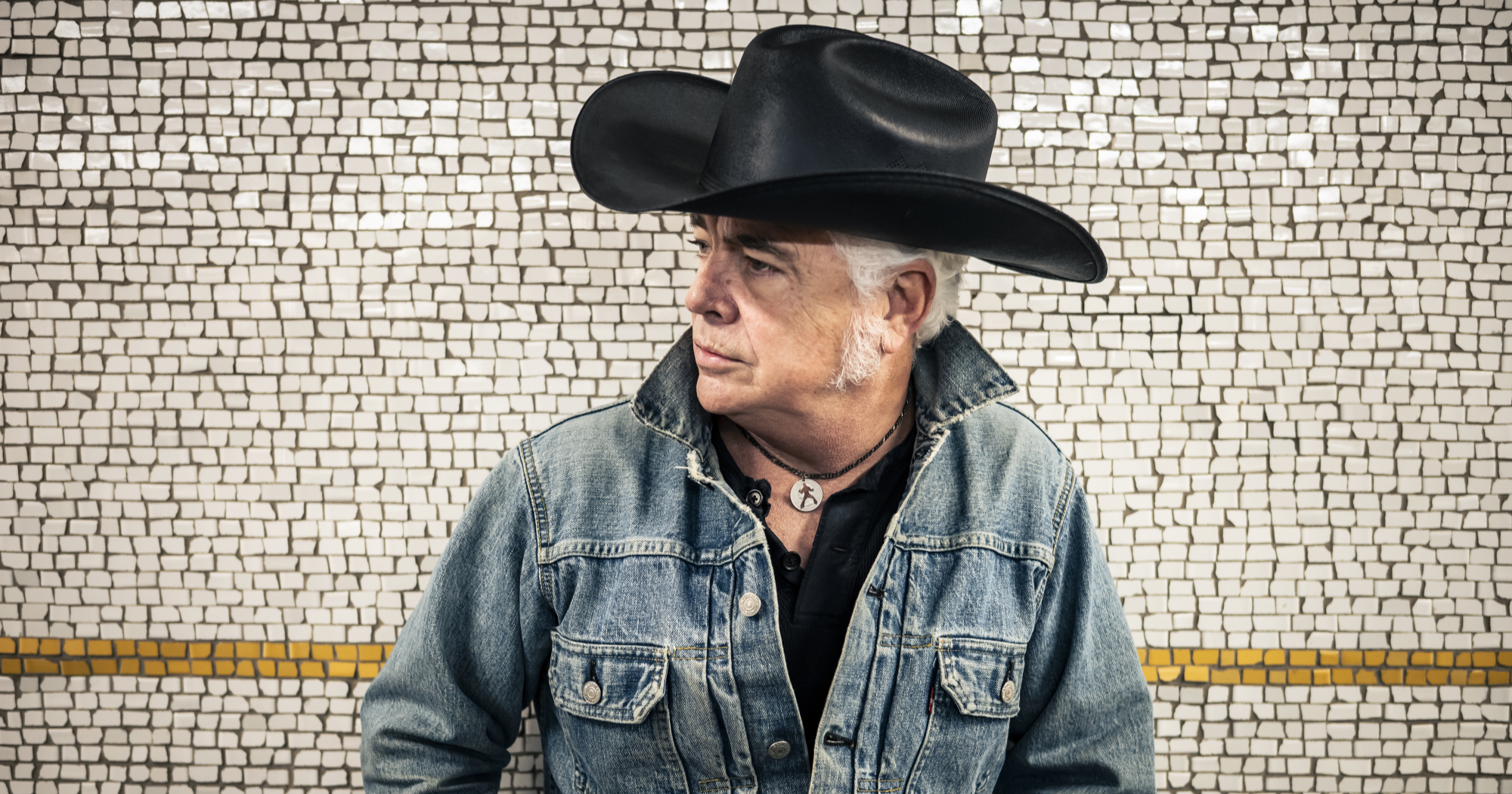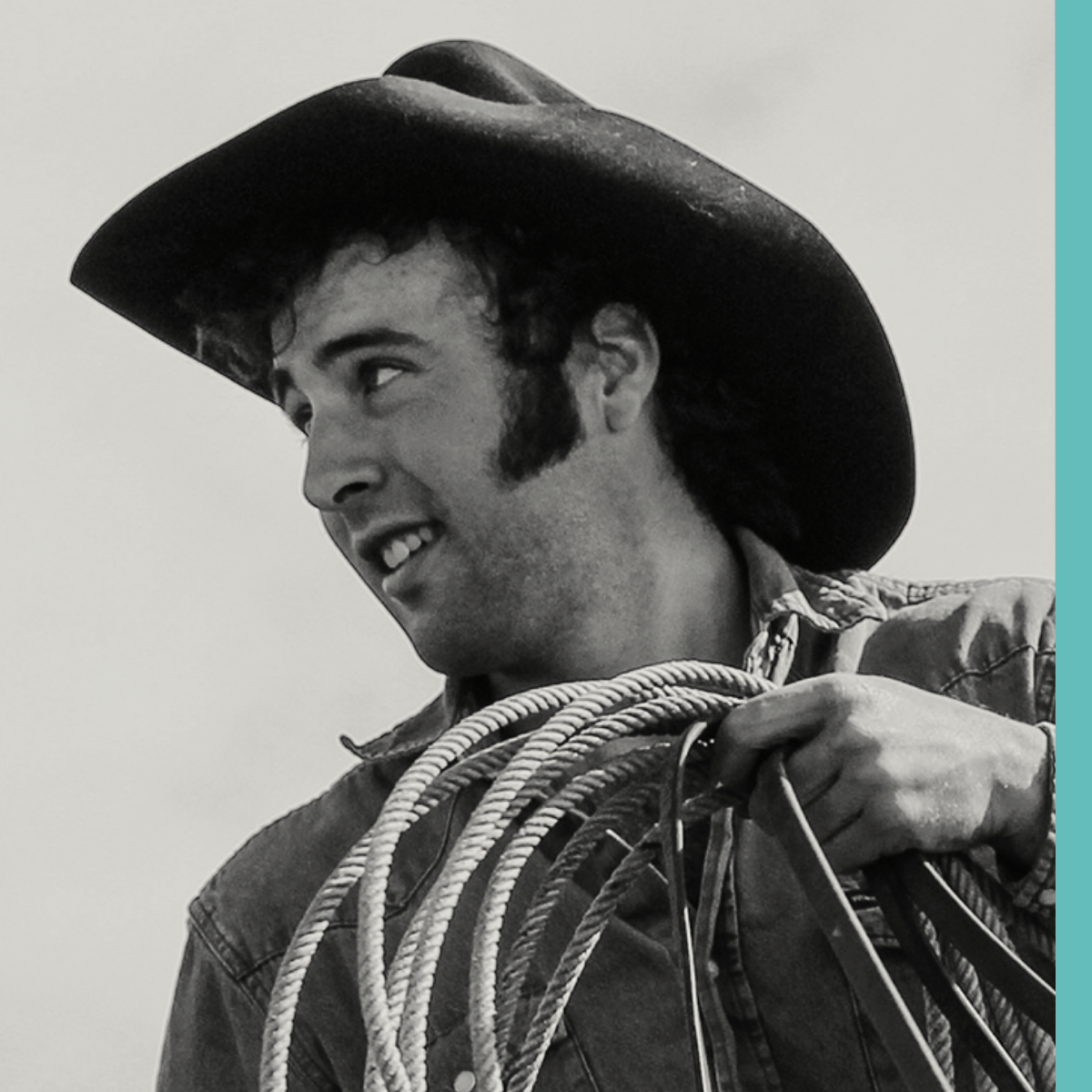
Ameripolitan music can be best defined as original music with prominent roots influence, and it has four categories: honky tonk, Western swing, rockabilly, and outlaw. My Mixtape features a song by an artist that represents the roots and then I’ll play a new artist that directly was influenced by them. You can hear the natural growth of country music when you listen to Lefty Frizzell and Merle Haggard or Kitty Wells and Loretta Lynn back to back. (Many of the roots artists had nicknames, I miss that.)
While some may hear an artist’s influence and say they are copying them, I’m of the opinion that John Lennon shared when asked about The Beatles’ influences. He said, and I paraphrase here, “One’s originality comes out in their inability to imitate their influences.” Very well said. – Dale Watson
“Who’s Gonna Take The Garbage Out” – Loretta Lynn, Ernest Tubb
Ernest Tubb had a distinctive voice as you hear on this song he sings with Loretta Lynn. Here’s the Texas Troubadour with the Coal Miner’s Daughter.
“My Wife Thinks You’re Dead” –Junior Brown
And no one is more evidently influenced by him than Junior Brown.
“Undo the Right” – Johnny Bush
Johnny Bush, otherwise known as the “Country Caruso,” was a drummer for Ray Price, the Cherokee Cowboy, before going out on his own. You would definitely hear that influence if you back-to-back Ray Price to Johnny Bush. Both are huge influences to every singer that grew up in Texas.
“Texas Honky Tonk” – Justin Trevino
This young man from Texas is carrying the Bush torch.
“D-I-V-O-R-C-E” – Tammy Wynette
The First Lady of Country Music, Tammy Wynette was married to the Possum, George Jones. She is easily at the top of women that influenced the newer singers.
“Houston Belongs To Me” – Sunny Sweeney
Singing her own divorce song, here’s Sunny Sweeney!
“Big Balls in Cowtown” – Bob Wills & His Texas Playboys
In the Western swing category this is the master, Bob Wills & His Texas Playboys.
“Riding High in Texas” – Asleep at the Wheel, Billy Strings
Though they’ve been around a while, they still burn up the road and proudly wear Bob Wills as their biggest influence. Ian Stewart sings as guest picker Billy Strings shines.
“Here in Frisco” – Merle Haggard
The Hag has influenced generations and even in death he still does. He once told me he forgot he wrote this song and was glad I brought it up so he can add it to his playlist again.
“This Highway” – Zephaniah OHora
Zephaniah OHora is now based in Nashville and he’s got a lot of great original songs. On this song you can hear the Hag in him.
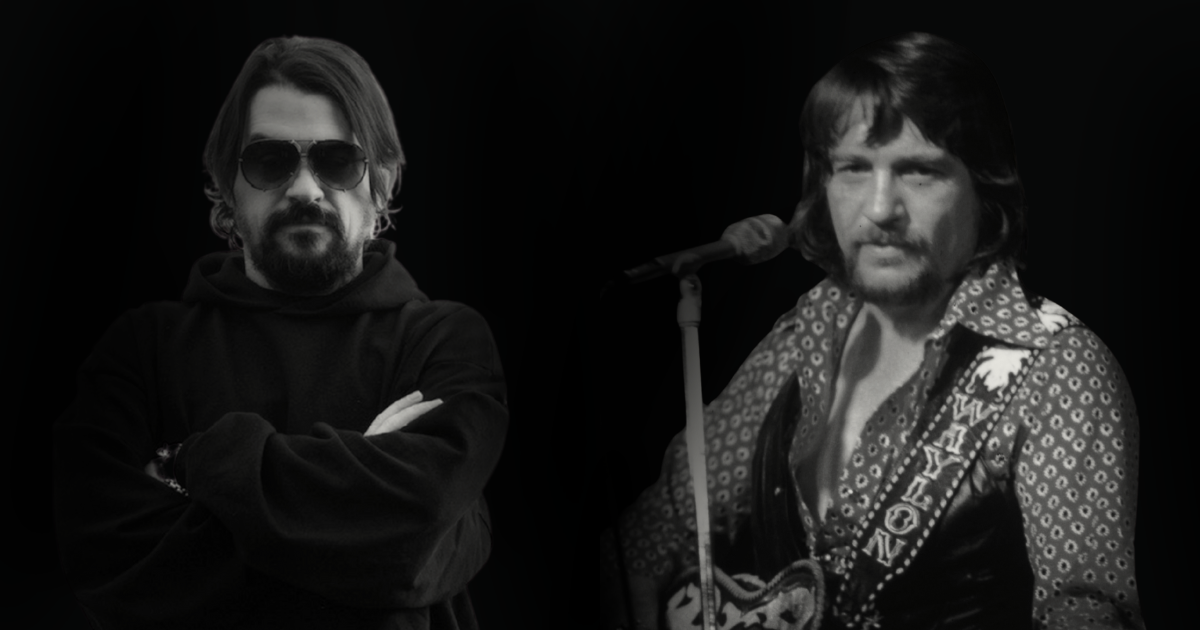
“Bob Wills Is Still the King” – Waylon Jennings
In the outlaw world there is none more influential than Waylon, and in Texas we were all influenced by Bob Wills.
“Long White Line” – Sturgill Simpson
This particular song draws heavily on Waylon’s influence. And I like it.
“Ramblin’ Man” – Hank Williams
Hank Williams’ voice is one of the most recognizable in music. His songs are timeless and still inspire singers and songwriters alike.
“Thunderstorms and Neon Signs” – Wayne Hancock
You can definitely hear Hank in Wayne Hancock, but his own voice is definitely original, too – as well as his great songwriting.
“Guitars, Cadillacs” – Dwight Yoakam
Dwight Yoakam has influenced many a newcomer. Just as he was obviously influenced by Buck Owens. He came along when Nashville needed reminded of its roots.
“Lost in the City Lights” – Johnny Falstaff
Though not well known as of yet, Johnny Falstaff is picking up Dwight’s hat.
“Blue Kentucky Girl” – Loretta Lynn
The Coal Miner’s Daughter definitely left big shoes to fill, but her sassy songs inspired many women artists.
“Don’t You Ever Give Up On Love” – Brennen Leigh
That inspiration can be traced right to Brennen Leigh.
“Good Hearted Woman” – Waylon Jennings, Willie Nelson
Here’s the quintessential outlaw song by the most famously influential artists, the Red Headed Stranger, Willie Nelson, and Waymore, sometimes called Wautawsha, Waylon Jennings.
“Willie Waylon and Whiskey” – Dale Watson
The last song I’ll put in here’s is mine, because with pride I will state, yes, I am heavily influenced by Willie and Waylon. And sometimes whiskey.
Editor’s Note: Each issue of Good Country, our co-founder Ed Helms will share a handful of good country artists, albums, and songs direct from his own earphones in Ed’s Picks.
Ashley McBryde gets the year started off right with a soaring, anthemic new single. As you’ll see with “What If We Don’t,” Good Country and arena country aren’t mutually exclusive styles. Garage rock, country grit, and stadium-ready flair – McBryde is doing it better than almost anyone else out there.
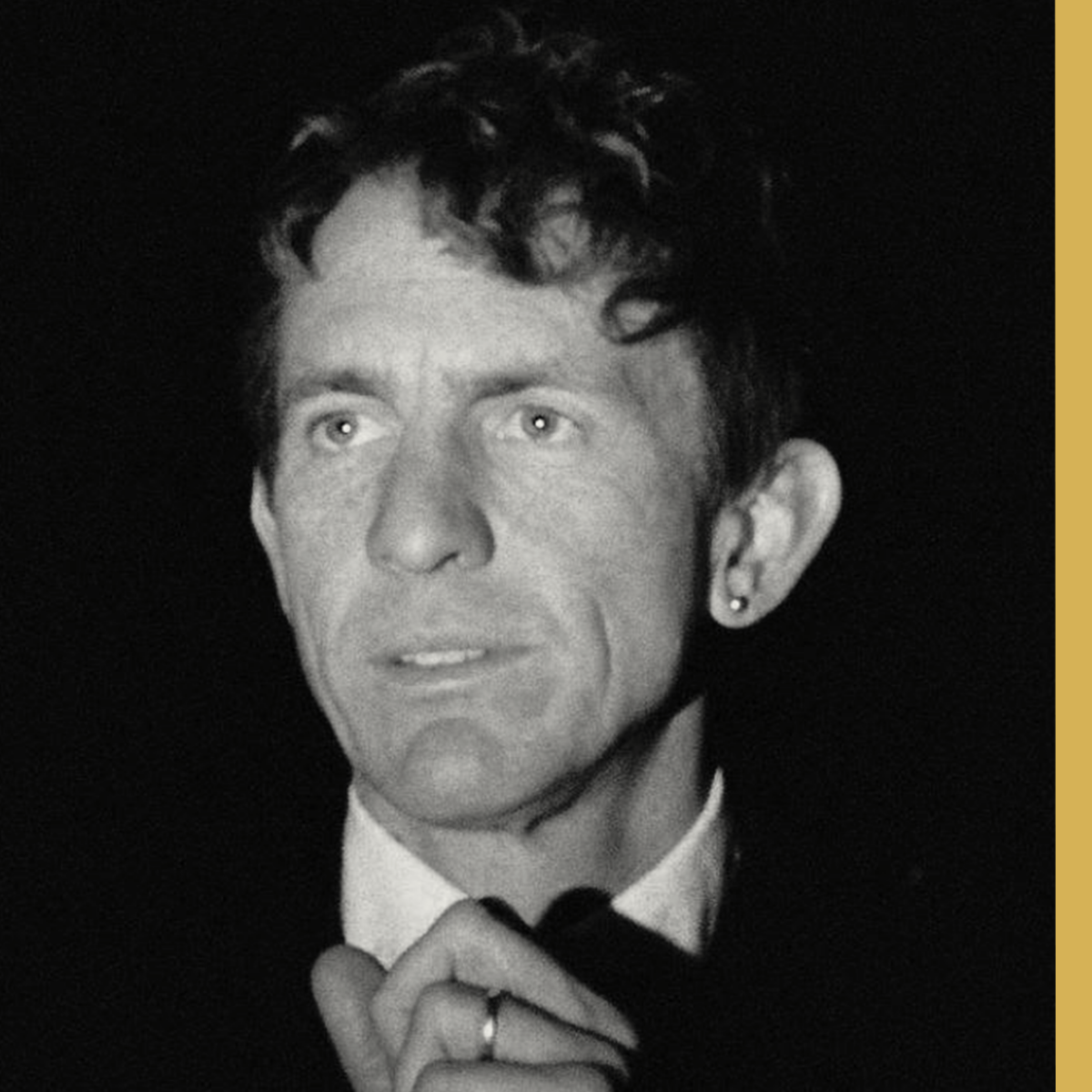
Not your mamaw’s “Ring of Fire.” Big Thief’s Buck Meek launches his upcoming solo album, The Mirror, in just a couple of weeks. Its songs were grown where alternative, indie, folk, and country overlap, though each feels just outside of reach of any single one of those terms. Featuring Adrienne Lenker on BGVs, “Ring of Fire,” like Johnny’s classic by the same name, is about love and connection – but is perhaps the flipside of the Cash coin.
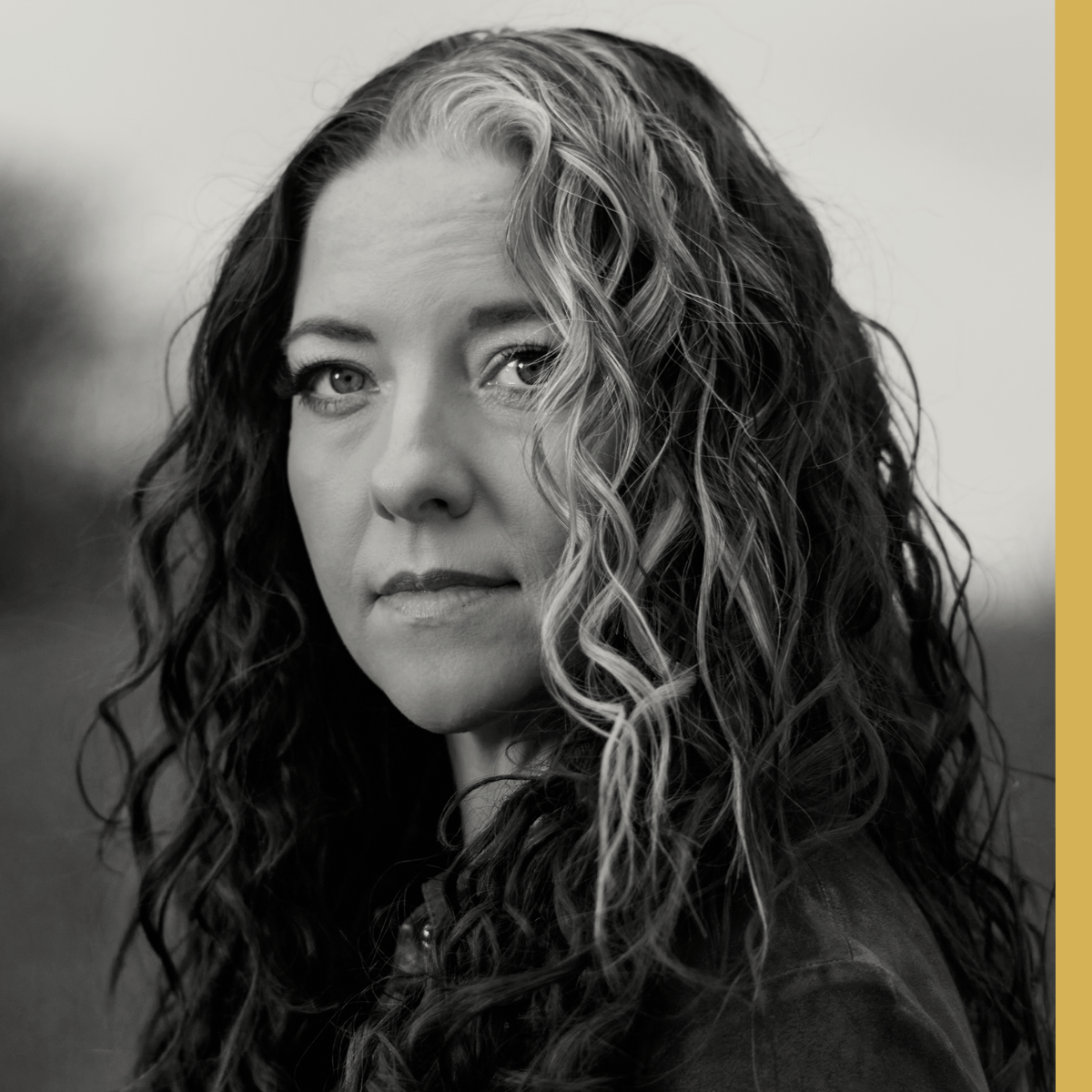
You can always trust the John Prine-founded Oh Boy Records to put out amazing music by generational songwriters. Emily Scott Robinson is certainly one. Her new album, Appalachia, embodies her heart-forward, community-minded approach to songcraft and musicmaking. Stand outs include “Hymn for the Unholy,” “The Time for Flowers,” the album’s title track “Appalachia,” and this lovely duet with John Paul White, “Cast Iron Heart.”
Read our recent interview with Emily Scott Robinson here.
Speaking of rock ‘n’ roll, our old pal Langhorne plugs in and turns up on his new album, The Dreamin’ Kind, which was produced by Greta Van Fleet’s Sam F. Kiszka. Slim’s personality – and the signature, charming touches that made us all fall in love with his music – is front and center on the new collection, however far into rockin’ territory he brings his Americana and folk sensibilities.
Find out more about
The Dreamin’ Kind in our recent Cover Story interview.
He started as a bluegrass picker in a family band and a Keith Whitley and Tony Rice diehard. Now everyone’s favorite trad country revivalist is a GRAMMY Award winner. Top took home the trophy for Best Traditional Country Album for his sophomore release, Ain’t In It for My Health earlier this month. He’s the first awardee in the buzzed-about new category opposite Best Contemporary Country Album. Well deserved!
Want more Good Country? Sign up to receive our monthly email newsletter – and much more music! – direct to your inbox.
Photo Credits: Ashley McBryde by Nathan Chapman; Buck Meek by Germaine Dunes; Emily Scott Robinson by Angelina Castillo; Langhorne Slim by Savannah Lauren; Zach Top by Getty Images for the Recording Academy.
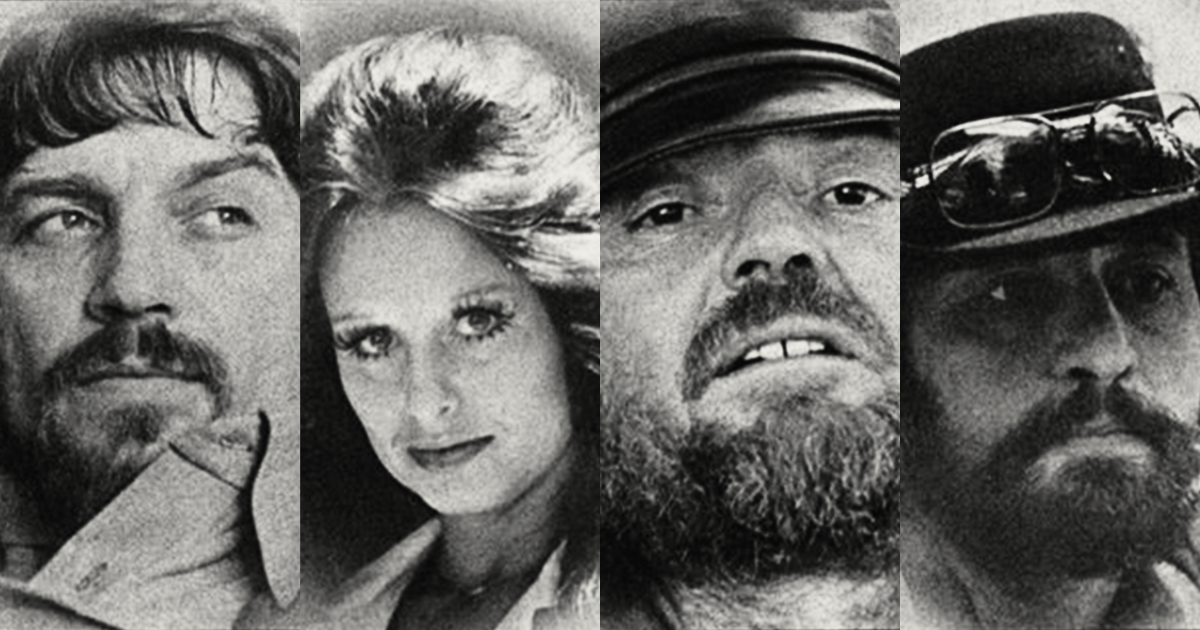
It’s strange to say about an album widely regarded as one of the 20th century’s most iconic, but maybe the most notable element of 1976’s Wanted! The Outlaws was its highly stylized cover. An old “wanted” poster associated with the wild, wild west of the American frontier (or at least movie depictions of the same), it depicted sepia-toned parchment with a trio of bullet holes. And it pictured the album’s four artists in mugshot form with Waylon Jennings as top headliner over Willie Nelson, Jessi Colter, and Tompall Glaser.
That appeared to be an unlikely quartet for a supergroup. But Wanted! The Outlaws turned out to be one for the ages, topping the country album charts and spinning off hit singles the artists performed for the rest of their careers. Wanted! even reached the crossover promised land in reaching No. 10 on the Billboard 200, a pop-chart peak for everyone involved except Nelson. When all the dust settled, it was the first country album to earn the then-newly introduced platinum certification for sales of over 1 million copies.
Despite the album’s thematic packaging, its 11 songs play less like a cohesive, organically conceived new work than the compilation it actually was. Each of the four headliners got a couple of songs, together as well as separately, and whatever unity it had came in the form of a musical vibe much closer to the progressive country coming out of Texas roadhouses than the traditional Nashville sound.
Considered as a collection of songs, Wanted! The Outlaws is a great record. And yet it emerged from a peculiar set of circumstances because it really, truly is a music-industry version of a breakfast sausage – appealing and tasty in spite of rather than because of how it was made. It’s fair to describe the feelings of many observers as mixed.
“More than anything else, it really was a triumph of Nashville marketing,” says Joe Nick Patoski speaking to Good Country. He’s the author of the 2008 biography, Willie Nelson: An Epic Life, and many other key writings about Texas music over the past half-century. “And it kind of crystalized everything Waylon, Willie and others had been doing. It almost seemed like a joke, but it worked and it sold. So who am I to kvetch?”
If Wanted! The Outlaws was a culmination that added up to more than the sum of its parts, it would not be such a key milestone without all the individual breakthroughs of its principals, starting with Waylon Jennings. A longtime journeyman who became a star, native Texan Jennings was only still alive in the 1970s because he’d given up his seat on Buddy Holly’s plane to Jiles Perry “The Big Bopper” Richardson Jr. on that fateful night in Iowa in February 1959. He’d been working the honky-tonks ever since, and by the mid-’70s his brand of too-rock-for-country-but-too-country-for-rock was landing commercially. On the strength of the statement-of-purpose hit “Are You Sure Hank Done It This Way,” Jennings’ 1975 album Dreaming My Dreams was his first to go gold.
And yet Jennings wasn’t even the biggest pop star in his own home. That was his wife, singer Jessi Colter, who had a massive No. 4 pop single in 1975 with “I’m Not Lisa.” That would remain her mainstream peak.
By 1975, however, Willie Nelson was breaking through at an even bigger level than Jennings and Colter put together. Long revered as one of the 20th century’s great songwriters, Nelson penned for-the-ages hits for the likes of Patsy Cline and Faron Young – “Crazy,” “Hello Walls,” “Night Life,” and many more. Yet success under his own name eluded Nelson, though not for lack of trying. He made album after album for RCA Records’ Nashville division, but the city’s prevailing sound just wasn’t a good fit for him. Nelson seemed doomed to be remembered as songwriter first, performer a distant second.
It took parting ways with Nashville and its assembly line – going home to his native Texas and leaving RCA to sign with Atlantic and then Columbia Records – for Nelson to finally establish himself as a viable recording artist. What finally put him over the top was 1975’s Red Headed Stranger, his 18th studio album but first for Columbia, and also the first where Nelson had complete artistic control. Spare, downcast, and terse as a Hemingway short story, the album’s sound and feel was miles removed from the Nashville sound. It was his first to crack the pop charts, selling millions, and “Blue Eyes Crying in the Rain” remains a beloved classic five decades later.
As he watched Nelson’s Red Headed Stranger success, RCA executive Jerry Bradley wanted in on it. Bradley had taken over as head of RCA Nashville from Chet Atkins several years earlier, and chief among his label’s assets was having Jennings under contract. While Nelson was long gone, RCA still had a voluminous catalog of recordings he’d left behind. RCA was already reissuing Nelson’s recordings as best-of compilations and doing some business, but taking them to the next commercial level was going to require an angle. It started with Waylon and Willie’s relationship as kindred-spirit friends and collaborators.
By the mid-1970s, Waylon and Willie had known each other for a decade. Both had artistic identities in contrast to staid Nashville, fitting in alongside other Texas-based acts like Michael Martin Murphey and Jerry Jeff Walker in an upstart wave dubbed “progressive country.” The music came out of that era’s back-to-basics ethos and was scruffier than Nashville’s assembly line. Author Jan Reid captured this particular moment with a landmark book, The Improbable Rise of Redneck Rock, first published in 1974.
Bradley’s idea was to put out an album where Jennings and Nelson joined forces, with songs both solo and in tandem. But if it was really going to take off, it needed fresh branding and a new descriptor beyond progressive country or redneck rock. That’s where old-fashioned marketing necessity entered into the equation.
Nashville writer Hazel Smith, who was working as Jennings’ publicist at that time, is widely credited with coining the phrase “outlaw country.” With that image in mind, Bradley came across a vintage “wanted” outlaw poster in a Time-Life illustrated encyclopedia about America’s 19th century western frontier. He took it to designer Herb Burnette with instructions to model a cover based on that, and then it was time to present the concept to the artists.
“He showed that to Waylon, who told him, ‘This is your idea, do whatever the hell you want,'” Patoski said. “And Jerry said, ‘Thank you’ and walked out the door. That poster on the cover really gave people something to grab onto, and ‘outlaw country’ is easier to say than ‘progressive country’ or ‘alternative country.'”
In Patoski’s telling, Nelson’s manager Neil Reshen was initially less than enthusiastic about the concept. But Bradley made it clear that RCA still had ownership and control of Nelson’s old catalog and an Outlaws album would come out with or without their blessings. It turned out that Nelson was more amenable to the idea, having just bought the Texas Opry House in Austin. He was happy to have an advance payment from his former label to fund its refurbishment.
Jennings regularly produced Colter’s music (including “I’m Not Lisa”), so she was an obvious addition to the lineup. The fourth piece of the puzzle, Tompall Glaser, also came from Jennings’ camp and was added at his insistence. Formerly of the Glaser Brothers, he too was peaking in 1975 with his cover of Shel Silverstein’s “Put Another Log on the Fire (The Male Chauvinist Anthem),” his highest-charting single on the country charts.
And thus The Outlaws were born, with success that was both immediate and long-lasting. The Academy of Country Music Awards named it album of the year for 1976, with “A Good Hearted Woman” winning the Country Music Association’s single of the year, and the album was added to the GRAMMY Hall of Fame in 2007. It also created another niche for country artists.
“My joke when people started telling me we were part of the ‘outlaw movement’ was to say, ‘No, we’re part of the in-law movement,’” said Ray Benson of the long-running Texas swing band Asleep at the Wheel in a conversation with GC. “We all thought it was kind of stupid, because everybody’s music was completely different. It was a style of marketing, not music, but it did create a shorthand to label and sell something. Honestly, the only ‘outlaw’ thing about it was the dope. What did we all have in common? We did drugs. Everybody liked something different, pot or coke or speed. But they were all illegal.”
Released in January 1976, Wanted! The Outlaws was accompanied by all the fanfare and major-label marketing of a new-music release. But the album mostly consisted of previously available material. As selected by RCA’s Bradley, seven of the original album’s 11 songs had been released in different versions as far back as 1970. But it did have a big ace in the hole, the dynamic of the Waylon and Willie show – “a juggernaut that was big and getting bigger,” said Patoski.
The duo’s live version of “A Good Hearted Woman” was one of the album’s four new tracks, and it would be its highest-charting pop single at No. 25 on Billboard’s hot hundred. It also launched Waylon and Willie’s ongoing partnership, which blew up even bigger the following year with “Luckenbach, Texas (Back to the Basics of Love).” They went on to make a series of hugely popular Waylon and Willie albums, plus their Highwayman supergroup with Kris Kristofferson and Johnny Cash.
Jennings opened Wanted! The Outlaws on a somber, solo note with “My Heroes Have Always Been Cowboys.” And yet that song is associated with Nelson, too. Four years later, he’d have a solo hit version of his own in the soundtrack to the 1980 Robert Redford/Jane Fonda movie The Electric Horseman.
Along with serving as foil to Jennings, Nelson’s key contribution to Wanted! was to give the album its main outlaw artifact in “Me and Paul,” a 1971 song chronicling some of his misadventures over the years with his drummer and partner in crime Paul English. That song’s good-natured sense of never-do-well scruff is in the DNA of some of Nelson’s singer-songwriter descendants like Robert Earl Keen and the late Todd Snider.
Colter’s most notable contribution to Wanted! was as Jennings’ duet partner on a cover of the 1969 Elvis Presley hit “Suspicious Minds,” foreshadowing their 1981 duet album Leather and Lace. Glaser’s contributions fall at the very end, with his take on Jimmie Rodgers’ “T For Texas” and “Put Another Log on the Fire” as the final two tracks. They’re classic songs rendered well, but they do feel kind of tacked on.
Wanted! would be enough of a success that the niche it created was soon viewed as problematic. Just two years later, in 1978, Jennings asked in song, “Don’t You Think This Outlaw Bit’s Done Got Out of Hand?” By then, outlaw country was bumping up against disco, and the 1980 movie Urban Cowboy was the result. Mainstream country descended into a not-great state in the early ’80s until the next wave of insurgents came along mid-decade – Steve Earle, Dwight Yoakam, Lyle Lovett, k.d. lang, and other artists who didn’t quite fit in with Nashville’s ways.
Through all of that, Waylon and Willie both kept on keeping on, separately as well as together. Jennings would remain a beloved elder statesman of country music (as well as Colter’s husband) until his 2002 death at age 64. He is still well-remembered. Glaser passed on in 2013 at age 79, but Colter is still around, making music, and released her most recent studio LP in 2023. And Nelson is, at the time of this writing, still kicking at age 92 – The Last Leaf on the Tree, as he put it on the title of his 2024 album.
Although he lives in North Carolina nowadays, San Antonio native David Menconi’s Texas bona fides include co-writing 2011 “Texan of the Year” Ray Benson’s memoir, Comin’ Right At Ya: How a Jewish Yankee Hippie Went Country or, The Often Outrageous History of Asleep at the Wheel (University of Texas Press, 2015); and his University of Texas journalism Master’s thesis, Music, Media and the Metropolis: The Case of Austin’s Armadillo World Headquarters (1985). His most recent book is Oh, Didn’t They Ramble: Rounder Records and the Transformation of American Roots Music (University of North Carolina Press, 2023).
Lead Image: Wanted! The Outlaws via Sony Music Entertainment
Want more Good Country? Sign up to receive our monthly email newsletter – and much more music! – direct to your inbox.
Being the son or daughter of a legendary artist can often cause self-esteem and identity problems, especially if offspring choose their famous parent’s profession. But that clearly hasn’t been the case with Waylon Albright Jennings, much better known to music fans as “Shooter.”
The son of greats Waylon Jennings and Jessi Colter, Shooter Jennings has forged an impressive career as a singer, songwriter, instrumentalist, and producer covering over three decades, while displaying an idiomatic flexibility that’s seen him excel with both country and rock projects. Though he never uses the term “prodigy,” he was playing drums at five, taking piano lessons at eight, and sitting in with his father’s band on guitar at 14, while often spending time riding on his dad’s tour bus. Since then, he’s done an array of projects from heading bands to helming sessions, but he’s also always upheld a mantra of his father’s, which is stressing authenticity and passion in whatever he’s doing, writing, or playing.
Towards that end, Shooter’s newest venture both pays tribute to his famous father and reaffirms the musical values both have always championed. That’s the album Songbird (released October 3 via Son of Jessi/Thirty Tigers), which is the first of a planned posthumous trilogy of releases from the famed vocalist, who was one of the most distinctive and dominant voices to emerge in modern country during the ’70s and ’80s. Waylon’s landmark recordings, both as a solo artist and later in collaborations with Willie Nelson, Johnny Cash, Kris Kristofferson, Tompall Glaser and Jessi Colter, not only ushered in the “outlaw country” movement, they signaled a major step forward for artistic independence and creative freedom that resonated across the popular music spectrum.
Waylon Jennings was an innovative and vital figure not only as a performer, but as a personality. His voice and stature helped give gravitas to an otherwise forgettable TV show (The Dukes of Hazzard) and helped fuel a drive for authenticity within country. Still, despite that quest for freshness and originality, Waylon knew how to make hits. He had 16 number one tunes on Billboard‘s Hot Country Songs chart and 11 number one albums on Billboard‘s Top Country Albums chart during his amazing career, while always being a staunch advocate for his view of what constituted country.
Though Shooter has always called himself “an MTV kid who went down the rabbit hole with rock and roll,” he’s also long held a great reverence and respect for country. He began sorting through hundreds of his father’s personal studio recordings during the summer of 2024. Having just begun an exclusive residency at Hollywood’s historic Sunset Sound Studio 3 (which he redubbed “Snake Mountain”), Shooter began examining the tapes with veteran engineer Nate Haessly. Things moved quickly, his initial goal of finding previously lost Waylon songs he could share with the world morphing into instead deciding the best way to present what turned out to be a rich treasure trove of recordings. The material he was hearing was recorded between 1973 and 1984 and featured such guest stars as Tony Joe White and Jessi Colter.
“I started listening to this material last year and knew right away I had to put it out,” Shooter said during a recent phone interview with Good Country. “Once we began thinking about what we would put out there first, ‘Songbird’ just really kind of took over.
“Everyone that I played the song for heard it and they were really emotionally affected. Many broke out in tears the first time they heard it. It was an example of my father’s philosophy about doing songs from other people. Any song that he chose to record he would turn it into his own type of anthem. I really think that was the case with ‘Songbird,’” Shooter continued. “It gives the album a power and special flavor, and I’m really proud of everything on it.”
Songbird was released the first week of October, with Jennings’ evocative and stirring cover of the Fleetwood Mac tune its lead single. It debuted at number six on Billboard‘s Top Album Sales chart and it’s been in either the Top 10 or 20 on a host of other charts as well, representing the highest any Jennings LP has charted in 35 years. The 10-track release contains several other notable singles, most of them already previously complete. But on a couple of cuts, Shooter utilized the talents of surviving members of The Waylors, including guitarist Gordon Payne, bassist Jerry Bridges, keyboardist Barny Robertson, and backing vocalist Carter Robertson to add some spice. Elizabeth Cook and Ashley Monroe were also enlisted to help propel Songbird to new heights. Shooter mixed the songs in a purely analog fashion on Sunset Sound Studio 3’s custom 1976 DeMedio API mixing board.
Another song that’s quite appropriate in these times of extreme social conflict and division is Waylon’s version of Johnny Rodriguez’s “The Cowboy (Small Texas Town),” which finds him urging both cowboys and hippies to direct their ire away from each other and towards those causing greater structural harm to society. Additional recommended cuts include a sizzling Jennings version of Johnny Cash’s “After The Ball” and “I’d Like To Love You Baby” that features Jessi Colter.
Both “Wrong Road Again” and “I’m Gonna Lay Back With My Woman” are trademark Jennings numbers, while his version of Jesse Winchester’s “Brand New Tennessee Waltz” is also solid. The one criticism that some hardcore Waylon fans might make is Songbird doesn’t offer any previously unissued gems that he penned, feedback that Shooter’s been around long enough to anticipate. “What we went through and chose here were numbers that were made memorable through his treatments,” he continued.
“That’s something that my father always talked about and stressed, that whenever you do a song, make sure that you’re not just replicating something else, you’re making your own statement. That’s why Songbird has such an impact and that’s the case with everything on this album. These are songs that he loved from other people and wanted to perform and put his own stamp on them.”
Though born in Nashville, Shooter made the move to Los Angeles in 2001. Since then, he’s comfortably moved back and forth between rock and country. He’s had a mixed amount of success as a performer, cutting 11 albums and EPs in both genres. His biggest country hit came on the 2005 LP, Put The O Back in Country. That album’s lead single, “Fourth of July,” peaked at No. 22. The album version featured a cameo by George Jones, who sang the chorus to his signature song, “He Stopped Loving Her Today,” at the end. Unfortunately that was purged from the radio version, but Jones was credited on the Billboard charts.
The album also spotlighted Shooter’s then-new band, The .357s, which consisted of Leroy Powell on guitar, Bryan Keeling on drums, Ted Kamp on bass, Robby Turner on steel, and backing vocals by Bonnie Bramlett. Later that year his song “Busted in Baylor County” was featured in the 2005 film version of The Dukes of Hazzard. Furthermore, Jennings portrayed his father in the Johnny Cash biopic Walk The Line alongside Joaquin Phoenix and Reese Witherspoon. His rendition of his father’s song “I’m A Long Way From Home” was featured on the film’s soundtrack.
Still, Shooter’s greatest fame has come as a producer for a wealth of recordings. He was introduced to the studio as a child, his earliest exposure being inside Chips Moman’s studio in Nashville. His rock influences come through in his at times freewheeling use of studio technology that wasn’t in general use during his father’s heyday, but on any of his productions he’s never let the artist’s voice be overwhelmed by layers of excessive production or backdrop.
He’s been nominated for five GRAMMYs in that role and won two. A short list of memorable sessions he’s produced include such artists as Brandi Carlile (Best Americana Album GRAMMY), Tanya Tucker (Best Country Album GRAMMY), and American Aquarium, as well as Jessi Colter, Jamey Johnson, Jaime Wyatt, The White Buffalo, Hellbound Glory, The Mastersons, Julie Roberts, Kelsey Waldon, Yelawolf, Marilyn Manson, Jason Boland, Billy Don Burns, Avi Kaplan, Billy Ray Cyrus, and Angry Grandpa. Just this year alone, Shooter Jennings produced acclaimed releases by the Turnpike Troubadours, Charley Crockett, and Jake Owen.
When asked what he enjoys most or looks for in terms of production collaborations, Jennings says, “The people that I truly enjoy working with the most are the ones who have their own ideas of what they want to do, how they want to sound, or what they want to sing. Then they bring those ideas into the studio and we take it from there. I’m not really quite as good when it comes to just taking someone who doesn’t really have a sense of who they are and saying why don’t you try this or try that.
“With Charley [Crockett], for instance, that guy comes into the studio and he’s already got all these things together and we can just hit the road from there and take it forward. A guy like Duff [McKagan], who can just write their ass off, or a group like American Aquarium, I can get really excited. Brandi [Carlile] came to me and wanted me to work with her and that was a fantastic experience. But in general, if you’re someone who has their concept of what they want to do, then we can sit down and really make it work in the studio.”
Shooter also has amassed some good credits in the worlds of broadcasting, film, and television. As well as getting the chance to portray his father in the 2005 film Walk The Line, he has made celebrity appearances on television shows CSI, Marvel’s The Punisher, and American Revolutions, while also playing a gunslinger in the 2013 film The Other Life.
Back in 2009, Shooter participated in a CMT Crossroads session, paired with close friend and fellow musician Jamey Johnson. The evening’s set list consisted entirely of duets, including a cover of “Outlaw Shit” from the Waylon Forever album, two songs from Jennings’s discography – “God Bless Alabama” and “It Ain’t Easy” – and four songs from Johnson’s album That Lonesome Song including “High Cost Of Living,” “Mowing Down The Roses,” “Between Jennings and Jones,” and “In Color.”
Shooter cites Glenn Danzig and the band Oasis as folks that he hasn’t yet worked with whom he’d like to in the future. But right now, his main focus is on the two remaining Waylon Jennings posthumous recordings – though he’s not sure yet exactly when they will come out or what will be on them.
“One thing I can say for sure is that there’s a lot more great music coming,” Shooter concluded. “I was really amazed at how much great stuff is there, and I think the fans are going to really be thrilled when we get these next two out there. My father did a lot of great music before he passed, and we’re going to get as much of it out there as we can.”
Editor’s Note: Each issue of Good Country, our co-founder Ed Helms will share a handful of good country artists, albums, and songs direct from his own earphones in Ed’s Picks.
When country singer-songwriter and community-builder Luke Bell passed away in 2022, he left an enormous vacuum in the scenes that made him and adored him. But, he left an even larger legacy. His only posthumous album, The King Is Back, was released last week after being lovingly compiled by his mother Carol, sister Jane, and his team, friends, and collaborators – many of whom perform the LP’s 28 Bell-penned songs. It’s a devastating and heartfelt collection that benefits the Luke Bell Memorial Affordable Counseling Program. Learn more and donate here.
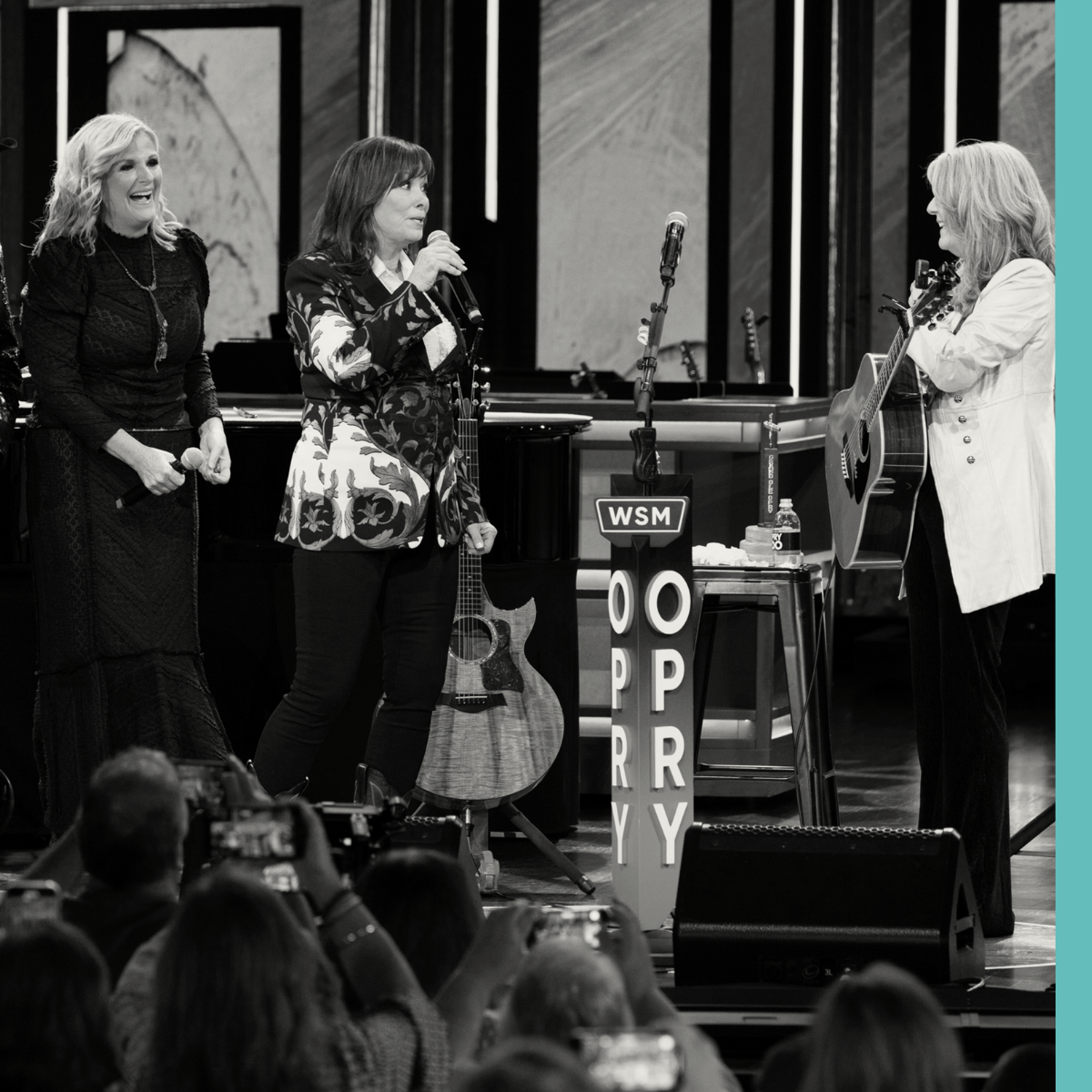
Suzy Bogguss is a country artist and singer-songwriter who’s won a GRAMMY, two CMA Awards, and an ACM award, and has had eight original songs become top 10 hits on the country charts across her career. Now, she’s adding another impressive title to her resumé: Grand Ole Opry Member! Last month, while her longtime friend Kathy Mattea celebrated her own induction into the Opry, Mattea interrupted her performance of “Eighteen Wheels and a Dozen Roses” (with Bogguss, Trisha Yearwood, and Terri Clark singing along) to surprise Suzy with her own invitation. Congratulations, Suzy! (She’ll be inducted in early 2026.)
It would be hard to find a more prolific artist-producer-actor in country these days. Shooter Jennings is everywhere, producing albums for Jake Owen, Charley Crockett, Jeremy Pinnell, and the Turnpike Troubadours this year alone. In addition, he’s reached back into the archive of his outlaw father, Waylon Jennings, to release Songbird, the first in a three-album series of posthumous Waylon releases curated by Shooter. His influence is everywhere in modern country – and we’re glad about that.
Read our brand new feature on Shooter Jennings and the new Waylon project, Songbird, here.
We first heard about Memphian modern blues-Americana family band Southern Avenue way back in 2017 and now, more than eight years later, they’re nominated for a GRAMMY! Their most recent album, Family, dropped in April and gained the group their second GRAMMY nomination last week for Best Contemporary Blues Album. The band showcases how Memphis, though it’s often overlooked in favor of its nearby music city sisters, produces fascinating, genre-blending roots music dripping with personality.
Everyone’s favorite Canadian cowboy recluse is back with more of his signature raw, down-to-earth, and grizzled country & western sound. Memories and Empties, Wall’s first studio release in two years, is out today. Tracked in Nashville at the legendary RCA Studio A with his touring band, Scary Prairie Boys, and production by bandmate Pat Lyons, it’s a stellar collection of traditional, working-class, flatland-steeped country that wouldn’t even dare to try getting above its raising. Plus, it celebrates the communities and relationships often obscured or overlooked in songs and recordings that sound like this. Good Country? That’s for damn sure.
Want more Good Country? Sign up to receive our monthly email newsletter – and much more music! – direct to your inbox.
Photo Credits: Luke Bell by Mike Vanata; Suzy Bogguss, Kathy Mattea, and Trisha Yearwood at the Grand Ole Opry by Chris Hollo; Shooter Jennings by Jared Christopher; Southern Avenue by Rory Doyle; Colter Wall by Jake Zielke.
In 1925, world leaders were signing the final treaties coming out of WWI; Congress authorized work on Mt. Rushmore as a national memorial; the Scopes Trial was held in Tennessee; and the first patent on radio transmission was only 28 years old.
And, in 1925, WSM first broadcast its barn dance – soon to become the Grand Ole Opry.
One hundred years later, the Grand Ole Opry is the world’s longest-running radio program. After a century that saw changes unparalleled in world history, audiences are still drawn to the Opry. Every week thousands make the pilgrimage to the Grand Ole Opry House in Nashville while others tune in around the world. The show continues to inspire new generations of performers to aspire to step “into the circle” on the Opry House stage.
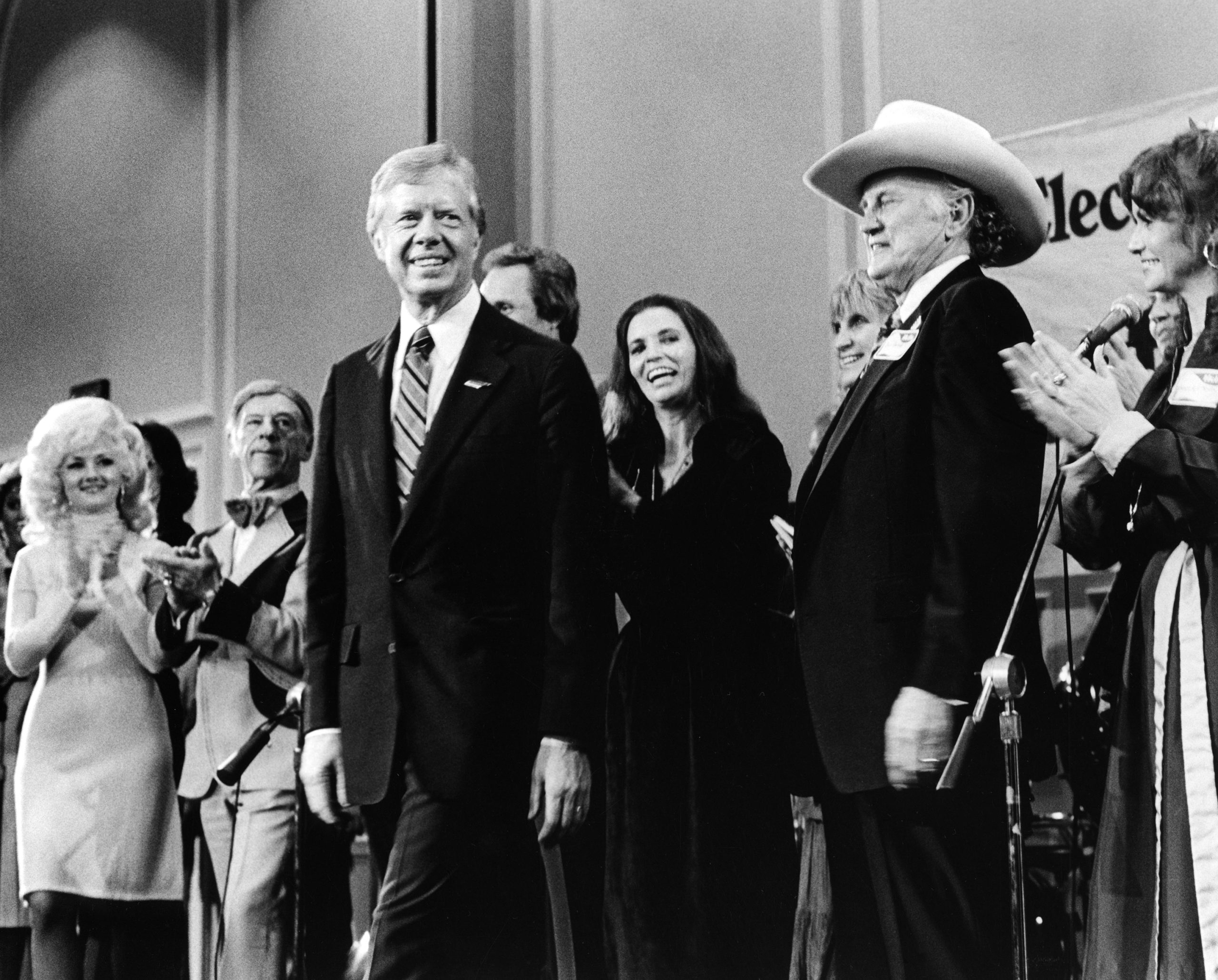
President Jimmy Carter on the Grand Ole Opry stage with Kelly Foxton, Hank Snow, Mel Tillis, June Carter Cash, Skeeter Davis, Bill Monroe, Jeannie C. Riley, and others on October 9, 1980. Photo courtesy of Ryman Hospitality Properties.
In The Beginning Was Insurance
In the 1920s, Edwin Craig was watching radio stations emerge across the nation – and seeing the money-making potential for sponsors and owners. He convinced Cornelius Craig, his father and founder of the National Life and Accident Insurance Company, that a radio station could sell a lot of insurance.
Soon, the fifth floor of the company’s downtown Nashville building held a radio studio. The call letters WSM stood for “We Shield Millions,” the company’s motto. A program that would become the lifeblood of country music started as a way to promote life insurance.
The hiring of George D. Hay away from Chicago’s WLS was the beginning of the WSM Barn Dance. The 30-year-old who called himself The Solemn Old Judge and started every show with a steamboat whistle would set the tone for much of the Opry’s 100 years – including its name.
Which all started with a clash of cultures.
Some upper-crust Nashville residents complained the only radio they could hear on weekends was string band programming from the dominant WSM station. In response, WSM began carrying the syndicated “Music Appreciation Hour.”
The Barn Dance slot followed the classical program, and Hay, not one to pass up a good line, said, “For the past hour, we have been listening to music largely from Grand Opera, but from now on, we will present ‘the Grand Ole Opry.”
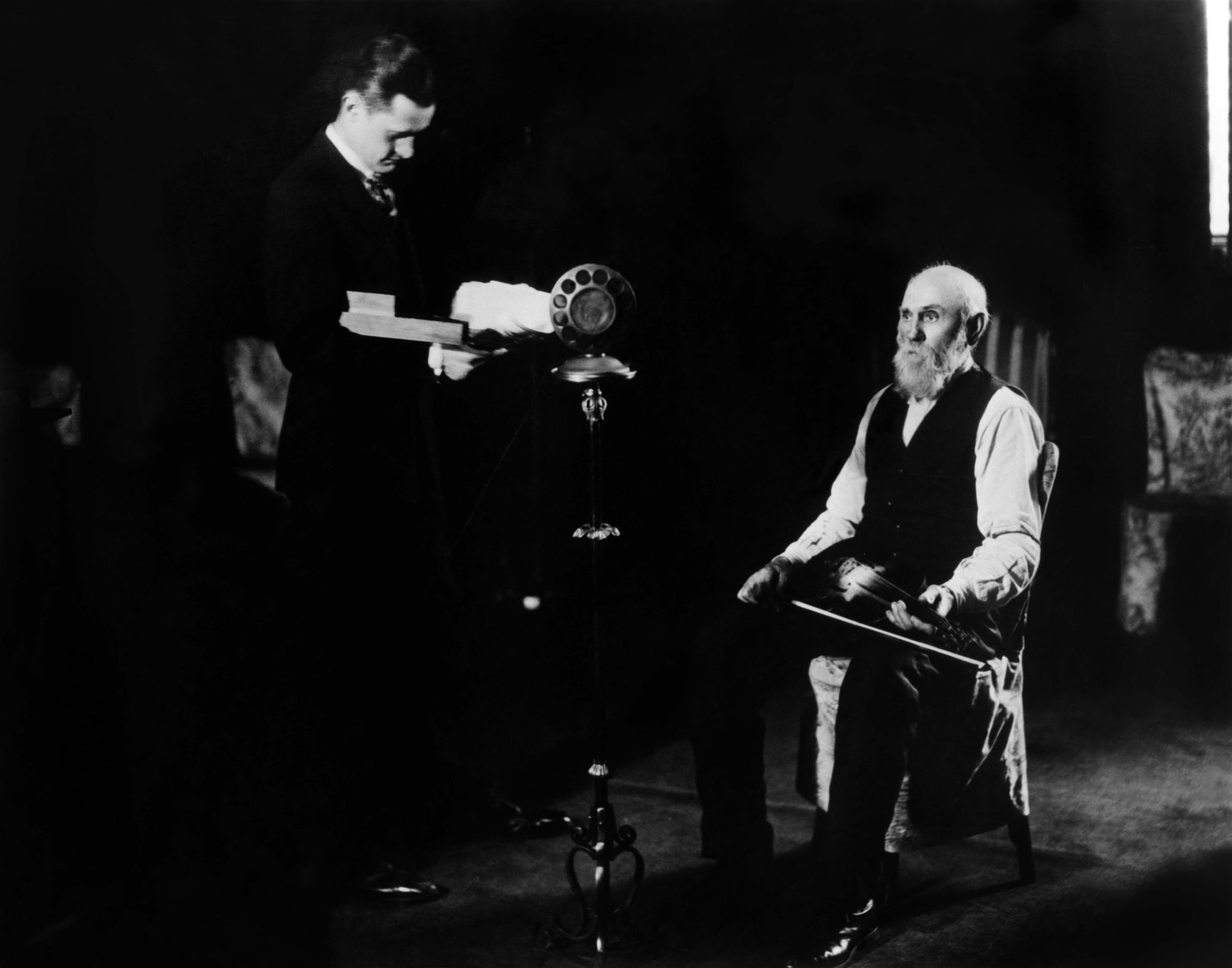
George D. Hay is pictured at microphone with a whistle and Uncle Jimmy Thompson is seated in this 1925 photograph from when the Grand Ole Opry was still the WSM Barn Dance. Photo courtesy of Ryman Hospitality Properties.
For years, the Shield Men – door-to-door National Life and Accident insurance salesmen carrying the company’s shield logo – introduced themselves as representing the Grand Ole Opry. They would even listen outside windows to see who was tuned in to the Opry – and who would be a likely customer.
The earliest WSM shows relied on local talent, running heavily toward fiddlers and string bands. But Hay would invite whoever he thought the audience would like.
DeFord Bailey, a Black musician grounded in both the blues and old-time string band music, became a regular, wowing audiences with his harmonica. Kitty Cora Cline, the first female soloist, performed on hammered dulcimer, and Fred Shriver played the accordion. Uncle Dave Macon on his banjo with Sid Harkreader on fiddle and guitar set the stage for the comedy that would remain central to the Opry’s success, with songs like, “Keep My Skillet Good and Greasy.”
A Beacon
As the recording industry grew, the variety of musicians available to the Opry grew, as well. The show began featuring brother duets, cowboy music, Western swing and solo crooners. Bill Monroe & the Blue Grass Boys were featured stars for decades.
Opry singers expressed the joys of new romance, the happiness of Sunday dinner on the lawn, the sorrow of lost love, and the loneliness of leaving home. Audiences across America listened – and related. The Opry became a focus of family life.
Dolly Parton, like many rural listeners, grew up without electricity. Her family faithfully listened to the Opry on a battery-powered radio. Waylon Jennings’ dad would hook their radio to the car battery. Jeannie Seely’s family would pile in the car and drive up a hill until they could get the signal. Opry history is filled with stories of musicians who listened as children – and dreamed of growing up to perform, like their idols, on the iconic stage.
Opry member Dierks Bentley, who gracefully moves between country and bluegrass, told BGS, “Being invited to join at all is the biggest honor – especially for me, personally. I grew up listening to all the Opry greats on the radio with my dad, so becoming a member is like having the ultimate backstage pass to see the best musicians in the world. And to be invited by Marty Stuart … hands down, it was one of the coolest nights of my life.”
Dan Rogers, the Opry’s senior vice president and executive producer, said the Opry has always been a place to celebrate the good times and be uplifted during the tough times. “Think about,” he said, “the folks who tuned in on Saturday nights during World War II. That was their only source of entertainment throughout the week.” Minnie Pearl, with her signature “How-dee,” and Roy Acuff gave them respite from war news.
On the first show after the 9-11 attacks in 2001, Rogers said, “Our background singers sang an a cappella version of ‘God Bless America.’ And one by one, the people in the audience stood and sang along. And I remember thinking, I bet everybody tuned in across the country is singing along to ‘God Bless America.’”
The Opry’s response to the COVID-19 crisis created desperately needed connection during a frightening time of isolation.
Just a week after deciding that live audience shows weren’t safe, Opry staff arranged a pared-down streaming production with no audience and a skeleton crew. Longtime cast members Bill Anderson, Jeannie Seely and Connie Smith held down the first night alongside Mandy Barnett, Michael Cleveland & Flamekeeper, and Sam Williams.
For the second weekend of restrictions, veterans Vince Gill, Marty Stuart, and Brad Paisley sat on stools spread out across the stage and pulled off what Rogers called “a beautiful, beautiful show.”
Watching from his office, Rogers started reading comments from grateful listeners. For months, people marked their calendars to tune in. They wrote, “I’m in Europe. I set my alarm. It’s 2 a.m. here, but I wanted to experience this with a community.”
Marty Stuart, Vince Gill, and Brad Paisley perform for an empty Grand Ole Opry House during the COVID-19 lockdowns in 2020. Photo by Chris Hollo, courtesy of Ryman Hospitality Properties.
Kathy Mattea, the newest Opry inductee, feels those connections whenever she performs there.
People may have sung along to her hit “18 Wheels and a Dozen Roses” in their car or in the shower, but at the Opry, she says to BGS, “Here’s your chance to sit with an audience and sing this song that everybody knows. Nobody knows who the person next to them voted for and it doesn’t matter at that moment.”
“The Ellis Island of Country Music”
In the early days of radio, what was called hillbilly music was as limitless as the range of a 50,000 watt radio station. And the Opry remains dedicated to maintaining those wide open spaces.
Garth Brooks and Trisha Yearwood, in their forward to the book 100 Years of the Grand Ole Opry, refer to the show as the “Ellis Island of Country Music – a place where all are welcome.”
Contemporary country often has been accused of being homogenous and limited. But despite the factors that have controlled commercial country, the Opry maintains its open-arms attitude. Rogers said, “The two core tenets of an Opry show are celebrating the past, present, and future of country music, and also showcasing multiple genres under the country music umbrella.”
In any show, he said, “You might have something that’s on the top 20 of the country charts today. And you’ll have country classics. You might have a contemporary Christian song, Americana string music, or even something from outside the genre by somebody who just happens to be a country music fan or was influenced by country music.”
In 1974, the R&B-oriented Pointer Sisters included an original country song, “Fairytale,” on their second album. The cross-over hit earned them an invitation to the Opry stage, where they became the first Black group to perform.
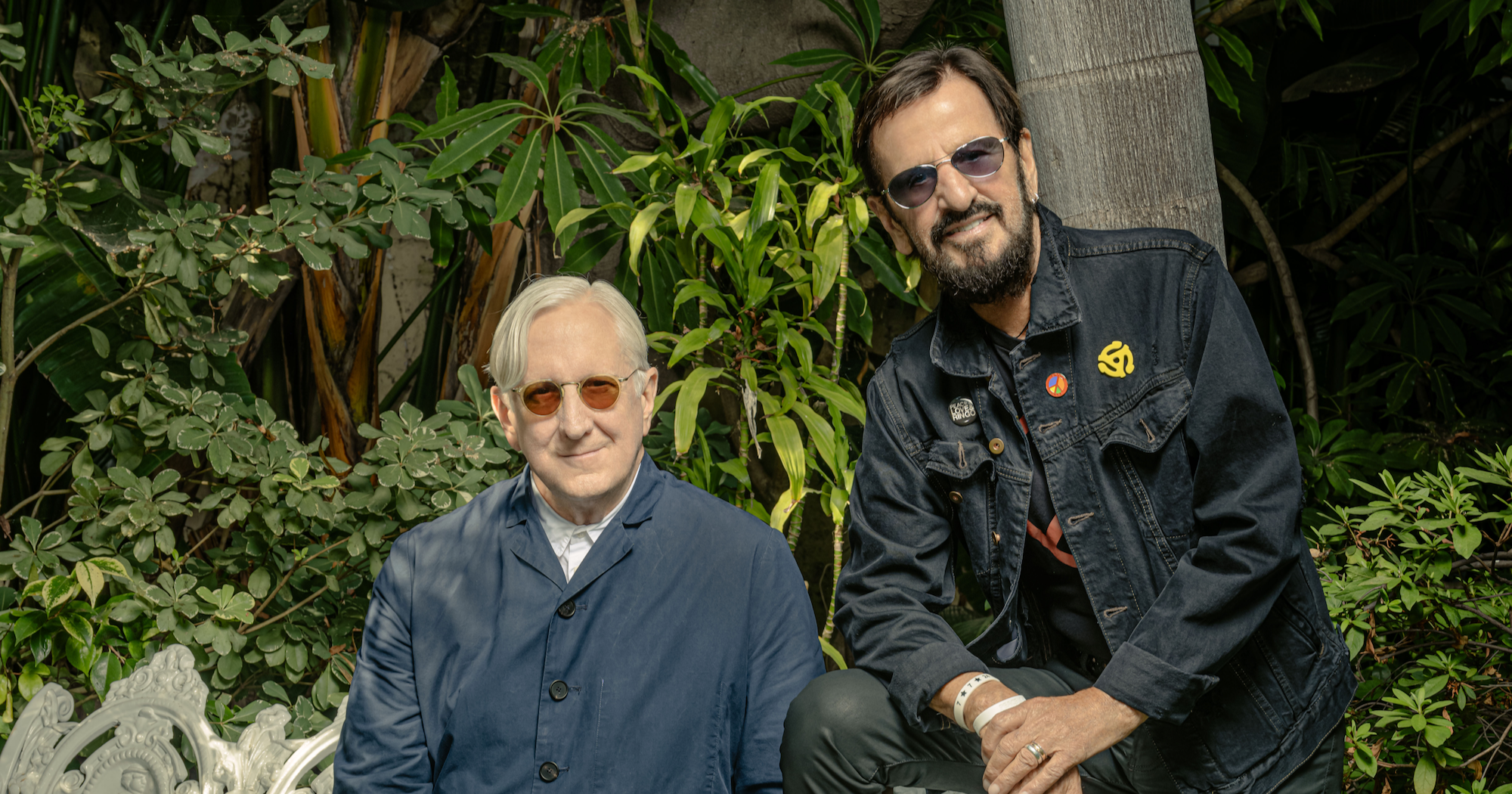
Ringo Starr appeared for the first time in 2025 and James Taylor’s debut on November 11 will be remembered as a big part of the 100th anniversary celebration.
And, Rogers said, “Because we can do it, it’s fun to take a chance on a new artist.”
Before his first Opry appearance in July 2022, Zach Top had no hits to his name. But Rogers remembered the programming team saying, “You don’t see an artist like that every day. It sure feels to us like our audience would absolutely eat that guy up!” Today, Top’s music is everywhere.
Bluegrass has been a staple since before it had a name and it has never lost its place on the stage. Bentley and Del McCoury played “Roll on Buddy, Roll On” when the Grand Ole Opry House first reopened after the 2010 flood closed its doors for months.
Charlie Mattos is a 10-year veteran Opry announcer and longtime co-host and producer of WSM’s morning show. He said that on any given night, a portion of the Opry House audience “may truly have never seen a bluegrass band play.”
“And when Del McCoury and the boys finish with an incredible instrumental,” Mattos continued, “or Sister Sadie blisters the stage … the enthusiasm that comes out of that crowd, the immediate standing ovation for the insane musicianship that they have just witnessed …” Mattos said, “it blows their minds.”
Mattea said, “Bluegrass is front porch jazz – the virtuoso playing and the vocals and the harmonies and the trading off of licks. That’s how I fell in love with bluegrass.” And the Opry exposes millions to that brilliance.
A Good-Natured Riot
The Opry show is a complex set of acts and sets requiring precision planning, flexibility, and good nature on the part of the announcers – and commitment on the part of the performers. Rehearsals are brief or non-existent. Timing is everything.
Borrowing a phrase from George D. Hay, the Opry is still sometimes called a “good-natured riot.”
Mattos said, “When you come to see the show live, you see it all. The set changes. The artists leaving as the announcer sends them off. You can see the stage crew out there and usually in 90 seconds they can completely swap things around.”
But while reading a commercial during set changes, Mattos may notice the stage manager giving the “stretch” signal. He might have to keep talking for as long as four minutes – a millennium in radio time.
Sometimes the commercials themselves become the entertainment.
The first time Glad Wags sponsored an Opry segment, Chuck Morgan was announcing. While he stood off-stage reading the dog food commercial, house bassist Bill Linneman came up behind him and started barking. “By my last year there, there were like 20 people behind me going at it,” Morgan said. (The consensus is that Connie Smith does a great chihuahua imitation.)
A Family
Jeannie Seely – who racked up nearly 5,400 performances on the Grand Ole Opry before her passing in August 2025 – remembered it was more than the music that fueled her desire to join the Opry: “That’s hearing these people, like Mr. Acuff and Minnie [Pearl] and Jimmy Dickens and all of them, coming together every week,” she says in 100 Years of the Grand Ole Opry. “They always sounded like they were so glad to be together. They picked on each other and joked, and I thought, that’s just like a family.”
And they were family. When the plane Jim Reeves was aboard crashed in a wooded Nashville suburb, Marty Robbins and Ernest Tubb joined the search party, as did the elegant Nashville socialite Sarah Ophelia Colley Cannon – known as Minnie Pearl.
Opry star Jean Shepard was expecting her second child with husband Harold “Hawkshaw” Hawkins when Hawkins died in the plane crash that also killed Patsy Cline and Cowboy Copas. After months feeling adrift, as Shepard was quoted in the 100 Years book, “I looked down my driveway one day and here come two big black limousines full of the so-called ‘higher-ups’ from the Grand Ole Opry. They said, ‘We want you to come back to the Grand Ole Opry.’ And it really meant a lot to me.”
The family feeling is no accident. In earlier years, Opry members had to perform a specified number of Saturday nights a year. While there’s no set number today, Rogers said they look for a sense of commitment in new members. “It truly is about that relationship,” he said.
Rogers quoted Mattea, upon her invitation to become a member, saying, “These people treat you like family, no matter what.”
One of Mattea’s favorite Opry memories involves a bass player who toured with her. “He was sitting on a stool, playing and singing some old Western swing chestnut, and suddenly Riders in the Sky leaned into the dressing room in full regalia and started singing harmony.
“He was gobsmacked. He felt it was the highlight of his life,” she said.
Bluegrass performer Kody Norris’ music is influenced heavily by first- and second-generation bluegrass. But the band’s preference for flashy suits dates back to a family-friendly welcome Norris received 25 years ago.
His parents took nine-year-old Kody backstage at the Opry, “and I met Bill Anderson. And he had on a red rhinestone suit. That’s the first one I ever saw up close, where I could touch it.”
Later that day, upon meeting his equally rhinestone-clad hero, Porter Wagoner, young Kody got so excited he spit out his chewing gum. Wagoner graciously grabbed two Opry-logoed napkins, one of which the little boy used for his gum. The other one the grown Norris still keeps in perfect condition.
The Circle is Unbroken
In 1974, the Opry left its revered home of decades, the Ryman Auditorium, to move to the deliciously air-conditioned 4,400-seat Grand Ole Opry House.
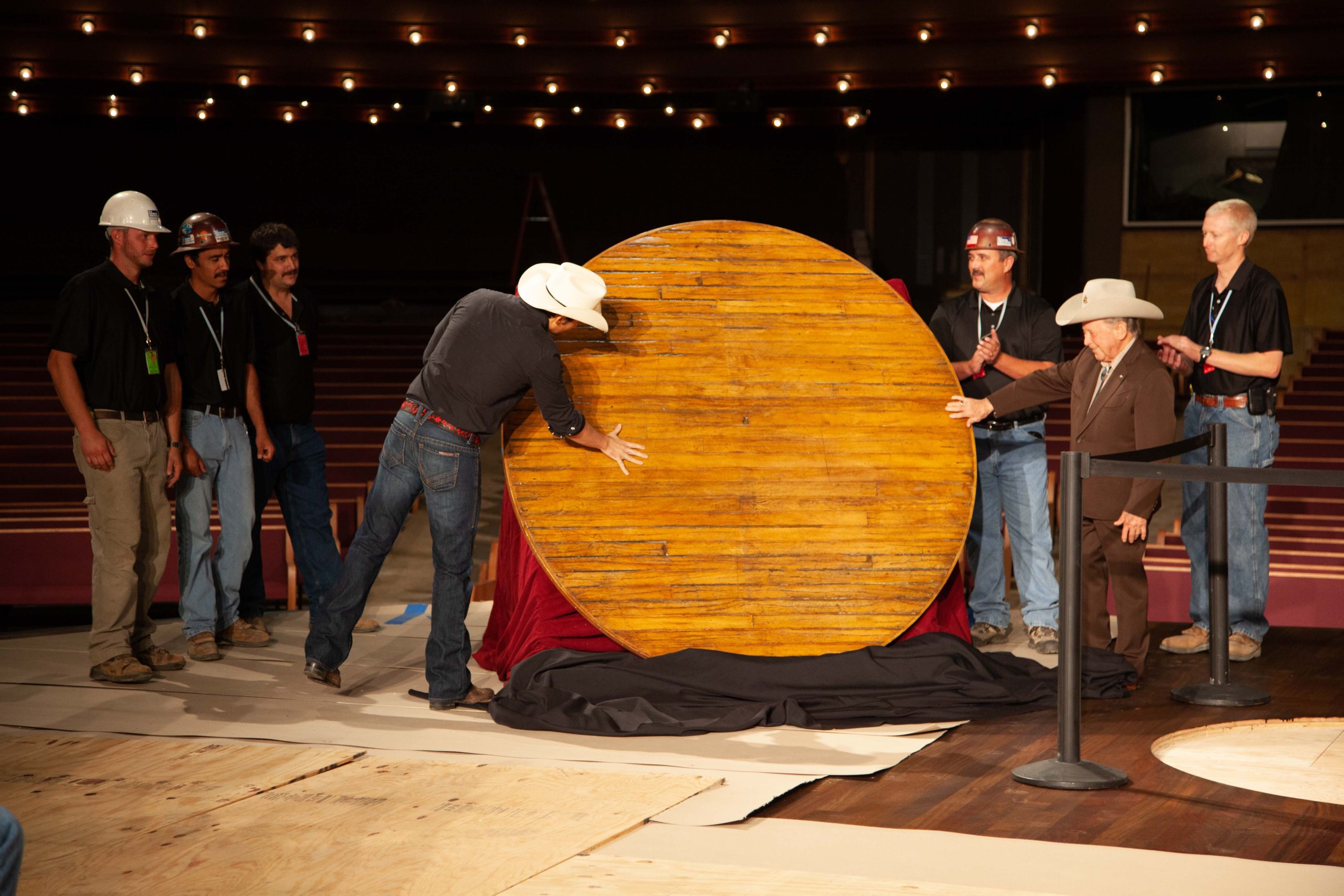
To honor its longtime home, the Opry crew cut a circle out of the Ryman stage and inset it in the new Opry House stage. The circle symbolizes the Opry’s continuity, respect for the past, and optimism for the future.
Mattea experienced that sense of a completed circle on the day she became an Opry member.
“Suzy [Bogguss] was there. We’ve toured together and sung on each other’s records. She’s my closest artist friend, and she was the only one at the ceremony who was not a member. And I thought how generous it was of her to be there.
“So, while I was overflowing with celebration, to get to invite my friend to the party publicly in the name of the Opry was the sweetest gift. It was a moment I’ll never forget, and I’m going to be there for her induction, too.” Bogguss will officially be inducted as an Opry member in early 2026.
Braid Paisley and Little Jimmy Dickens return the Circle to the Opry stage after the 2010 flood. Photo courtesy of Ryman Hospitality Properties.
Join The Celebration
There’s nothing low-key about the Grand Ole Opry – so in the classic Opry spirit, fans have had plenty of opportunity to celebrate the centennial all year long.
Earlier this year, NBC broadcast a three-hour anniversary special, with dozens of stars ranging from Reba McEntire to Jelly Roll to The War and Treaty. The Opry also took the show to London’s Royal Albert Hall for the very first time. You can stream clips of these and other Opry events on YouTube and social media.
With the Virgin Music Group, the Opry has produced the album Opry 100, Country’s Greatest Songs (released November 7). Among the unforgettable recordings are Vince Gill singing his heart-rending “Go Rest High on That Mountain,” Dolly Parton singing “I Will Always Love You,” and Ashley McBryde covering the classic “Your Cheatin’ Heart.” You can order the album from the Opry site.
Craig Shelburne, Brenda Colladay, and Opry members and employees collaborated on 100 Years of the Grand Ole Opry, a book filled with anecdotes and photos that vividly illustrate the Opry’s remarkable history. And to teach your children well, there’s also a new childrens’ picture book written by Emily Frans and illustrated by Susanna Chapman. Find them in your local bookstore.
And, on November 28, 2025, the official 100th anniversary of the Grand Ole Opry we all hold dear, the Opry is celebrating with two huge birthday party shows featuring country stars and Opry members like Vince Gill, Ricky Skaggs, Trace Adkins, Dailey & Vincent, Bill Anderson, Jamey Johnson, Marty Stuart, and many, many more. Tickets are available here.
Of course, the celebrations will continue in 2026.
“The Opry is the core and soul of country music,” Bentley said. “It’s a place where the past, present and future of our genre all come together. There isn’t anywhere else like it.”
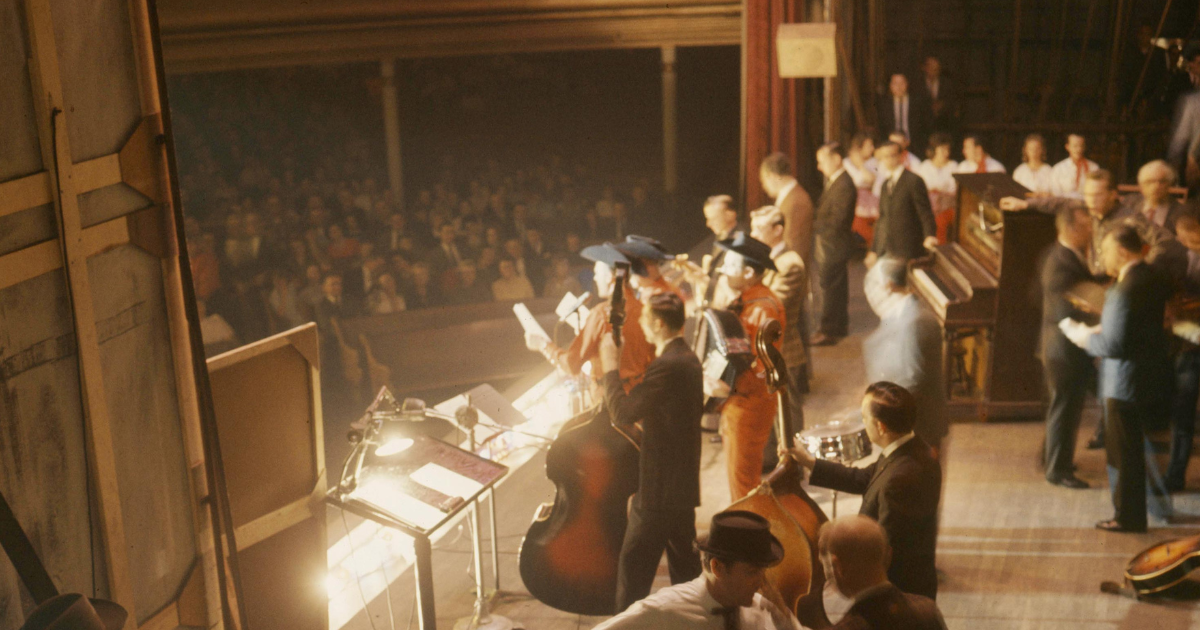
All photos courtesy of Ryman Hospitality Properties, credits and attributions as marked. Lead image: Bill Monroe & the Blue Grass Boys and the Opry Square Dancers take the Opry stage at the Ryman Auditorium in the 1960s.
Depending on who you ask, Jake Owen might be responsible for the very first bro country song. His 2011 hit “Barefoot Blue Jean Night” wasn’t the first party-ready ode to Southern summers and ice-cold beer, but its slick mix of country signifiers and stadium-rock production – courtesy of Joey Moi, best known for producing Nickelback and later Morgan Wallen – proved highly influential, arguably paving the way for crossover smashes like Florida Georgia Line’s “Cruise” and Blake Shelton’s “Boys ‘Round Here.”
“Never gonna grow up, never gonna slow down,” Owen sang on his signature hit, neatly summing up the youth-obsessed ethos of the bro country era. Now 44 and newly independent after 20 years on RCA Nashville and later Big Loud, he’s singing a different tune.
“I’ve made a lot of records that had a fantasy, ‘Remember when we were young?’ kind of feel to them,” Owen told Good Country. “What feels good about this new record is that I can listen to it and feel like I’m listening to my life right now. It’s very real.”
Dreams to Dream, Owen’s eighth studio album and his first with Shooter Jennings producing, is a sharp left turn for an artist known for hits like “Beachin,’” “I Was Jack (You Were Diane),” and “American Country Love Song.” Earlier this year, Owen decamped to LA amid the wildfires, leaving the comfort of Nashville behind in search of creative truth and a more organic sound. The result is one of the year’s best and most surprising country albums, which trades bro-ish bravado for world-weary introspection and a classic-country sensibility.
The title track is a rollicking, country-rock statement of purpose that name-checks Hank Williams, Jr. and establishes the stakes: “I’ve been down, but I ain’t no quitter/ ‘Bout to get up on my feet/ ‘Cause I still got dreams to dream,” Owen sings in the rousing chorus. On the Troy Jones-penned “Wouldn’t Be Gone,” he muses about leaving stardom behind to work in a hardware store. (“I already know a thing or two about hardwood floors,” goes the song’s best line.) Other standouts include “Chill of December,” a Haggardian expression of winter loneliness, and “The One I Did It To,” a doleful admission of romantic wrongdoing.
In a Q&A, Owen spoke to Good Country about teaming up with Jennings, defining authenticity on his own terms, and why he doesn’t shy away from his bro country past.
This album is a departure from the sound that you’re best known for. What made now the right time to do an album like this?
Jake Owen: My life has always been about timing and believing that I’m supposed to be where I am. The album’s called Dreams to Dream and it came about because I was in this interesting place in my life where I’ve had a record deal for 20 years and, all of a sudden, I’m doing something on my own. Which felt kind of like freedom, but also felt very scary.
For a long time I was focused on the more commercialized songs that would work on radio, since I was on a major label, and I felt like this is the time to make the kind of record that I’ve always really loved. I’ve always tried to follow my heart and what my intuitions have told me. They haven’t always been right, but I definitely follow them.
What was it like working with Shooter Jennings?
He really exceeded my expectations. I expected to go out there and make a record, but I didn’t know I would leave there with an awesome new friend and somebody that really believed in me as a person with dreams and a purpose and things they wanted to say. He was so encouraging to me. I felt safe with him, which is a weird way to put it, I guess. But you need people to pat you on the back and tell you that you’re doing the right thing.
It also was at a time when – I’m not ashamed to say it – there were not a lot of people ringing my phone in Nashville to tell me they were proud of 20 years of what I’d done in my career and 11 number one songs. Kind of weird, right? But the one guy that was calling me and applauding me and telling me that I could do way better, bigger things in my life than what I’d already done was Shooter Jennings. Out of all people, right? That says so much about how much he loves music and believes in people. I think you’d probably hear that same answer from anybody else that he’s worked with.
The second song on the album, “Them Old Love Songs,” is a Waylon Jennings cover. Why did covering Waylon make sense for this record?
Well, there was no part of me going out there that thought I would do any covers. But Shooter and I just talked about life and music out there, and he was saying that his dad always would cut cover songs for fun when he came off the road. Shooter would encourage me, each night or whenever we were done with the session, to do some covers and just have some fun. With that one in particular, I was nervous to ask Shooter, because it felt a little cliché. I wondered how many people work with him and have wanted to do that or if he’s offended by that.
But I always loved that song and the album that it’s on, Are You Ready for the Country. It’s pretty wild, because that album starts off really rocking, and then it goes into that. To me, if you listen to that song, the lyrics say, “I wish I had a true fine woman/ Let her rock me all night long/ And maybe we could get it together/ Like people do in them old love songs.” I’ve been singing that my whole life and it’s still the way I dream of love. And then, going back to the first verse, it says, “Nobody cares where I’m going, all they know is I’m coming back.” I don’t think anybody cared that I was going to make a record with Shooter. Nobody really even knew.
Also, one of the reasons Shooter and I decided to make this album was our love for the Hank Williams Jr. record, The New South, that his dad actually produced. Hank moved to Alabama to make that album, I think it was in 1977, and said he needed to get out of Music City because he wanted to go make his kind of music with his friends. And I felt the same way. Like, here I am going to LA to make a record with Shooter, and he’s encouraging me like Waylon encouraged Hank. So recording that Waylon song, with Shooter producing it, it just felt right.
You recently celebrated the 20-year anniversary of moving to Nashville and signing your first record deal with RCA. You made a post referring to “the highest of highs and lowest of lows” in your career. Could you tell me about some of those highs and lows?
Yeah, well, first off, thanks for even acknowledging that, which I think is important to the reasoning behind this whole record in general. I would start off by telling you that the highest high for me was just moving to Nashville and knowing that something was ahead of me. When I left college, I left my twin brother and a lot of my friends and my entire family at home in Florida. I still look back on that guy, and I’m like, “What the fuck was I thinking?” But I guess I just had to chase it. And then getting to Nashville and immersing yourself with people that are so much better than you are, I just didn’t have that where I was in college in Tallahassee. I kind of felt alone. Getting a record deal was also a big part of that, feeling like I had accomplished part of what I came here to do. And then I spent the next seven years having to figure out how to keep the guys in the band paid and the buses rolling on the road and how to get my first number one song. Everybody thinks that’s the easy part once you sign the record deal, but it really wasn’t. It was a rude awakening.
And I went through a divorce. I got married, I had a kid. It’s like the classic country song shit, man. I think that was a big low for me, having to leave my family to go on the road. I had been very successful from my dreams that I chased, but the one thing that I probably desired the most, outside of music, was a family life. The one thing that I’ve never been good at and I haven’t figured out is that real solid relationship in life, building love and trust, and that bothers me a lot. It bothers me that I can be good at a lot of other things, and that is the most important thing to me, and I haven’t been so great at it.
You were a major player in the bro country era, which is now having this sort of nostalgic reappraisal. I’m thinking of the HARDY and Ernest song “Bro Country,” which is an ode to that time in country music. When you think about that era, what goes through your mind?
It’s funny, because I don’t know that anybody has said this before, but I’ll tell you right now: I started that shit. Everybody wants to shy away from bro country or whatever, but I invented that shit. And yeah, I am proud, in a way. I remember being at a time in my career where I had a record deal for seven or eight years and I had a couple songs that had done all right, but I was feeling like I was gonna lose my record deal if I didn’t try to do some different shit. And I didn’t have a producer at the time. I’d left Tony Brown, who was great. And he’s like, “Hey, man, you should meet this guy, Joey Moi. I think he’d be great for you.”
Joey obviously came from Nickelback and all that. At the time, no different than when I left Tallahassee for Nashville, everybody was like, “Dude, what the fuck are you doing?” So here’s a guy now from Nickelback who’s gonna try out making country music on me, which was probably a crazy thing, too. It wasn’t that I was trying to sell out. If anything, I look back and I’m like, “Dude, I had the balls to just do something different at the time.”
“Barefoot Blue Jean Night” was our first release and it had all of these claps and stomps and loop shit. It ended up being the most-played song of the decade [according to Country Aircheck]. I have the plaque on my wall. It was a major, major changing point in my life and career, because it worked. Not only did I keep making those songs for the next few years, but it influenced a shit-ton of people.
I think a lot of people might want to avoid that association. It’s kind of like the way that ‘80s rock and roll gets shit on sometimes, but there are still people in their cars cranking it to 11, right? If you look back at my early career, the songs I was writing were very country, because that’s what I always loved. I went on tour with Brooks & Dunn and Alan Jackson. So when all of a sudden, years later, all of the people that were my heroes were like, “I hate this kid,” it kind of hurt my feelings. But I always knew in my heart that I would get back to what brought me to the table.
Among the detractors you alluded to, people who are into more traditional-sounding country music, there’s this idea that pop-country or bro country is inauthentic. What do you think is “authentic” country music?
Authenticity is the ability for artists to take any type of music and just make it their own. Johnny Cash never shot a man in Reno. But it was a huge song for him. George Jones didn’t write “He Stopped Loving Her Today,” but he owns that song. Stardust is the biggest album Willie Nelson ever released and he didn’t write a single song on it. And he’s one of the greatest songwriters of all time. Authenticity isn’t about where somebody’s from or how they grew up. If you own what you’re doing, and you deliver it in a way that’s believable, I think that’s authentic.
I’m thinking now of this back-and-forth you had with Jason Isbell a couple years ago about artists writing their own songs.
Yeah, dude. That guy. I love Jason Isbell, that’s what’s crazy. Some of the artists that I love the most just spout off at the mouth. The other day I said something about Zach Bryan. I love that guy’s music too, right? He’s amazing, and he’s also uber successful – selling 120,000 tickets or whatever, which I could never even fathom. And Jason is out winning GRAMMYs on top of being an incredible guitar player, so much more talented than I could ever dream of being. But I don’t understand why guys like that will take the time on shit on someone else’s music.
That’s never made sense to me and it’s always made me want to just ask that question directly to them. Which is what I did to Jason. I was just like, “Dude, I’m not going to get into an argument with you over Twitter, so give me your number. I’m going to just call you and have a conversation about why you feel this way.” He and I had a great conversation. And he was very cool to acknowledge and entertain my questioning behind why he would just spout at the mouth about stuff like that. We both ended it at the time – and this was years ago, when I was drinking, or maybe he was – he’s like, “Dude, we should catch a beer sometime.”
So, to go back to the authenticity thing, there’s so many people that are so great at a lot of things. One of my absolute favorite artists right now is Charley Crockett and he does that, too. I wonder, sometimes, I’m like, “Why are you guys all trying to prove to one another that you’re more authentic than the next guy?” Sorry, you can tell I’m getting tense talking about it. But I’m confused by it, because those guys make some of my favorite music and it bothers me that they feel the need to try to blow somebody else’s candle out in order to make their already blazing one shining brighter.
I wonder if part of you wanted to prove to that type of person that you could make one of these really rooted, quote-unquote “authentic,” hardcore country records.
I think it was about proving to myself what my intuitions are and what my beliefs have always been about what’s right for me. I also really needed somebody to tell me that what I was doing was the right decision, and Shooter never wavered. He was constantly telling me, “Dude, this is it. You’re going to open up a Pandora’s box for your career in ways that I don’t think you’ve seen before.” I will say that it’s definitely opened my eyes to a lot of things and a lot of people reached out to me that have never reached out to me before.
One of my favorite songwriters, artists, people I’m a huge fan of is Brandy Clark. I think she’s incredible and just a brilliant songwriter. And she happened to be in LA when I was there and stopped by to see Shooter. She called me after and I just started crying. Because she was like, “Jake, I’m so happy for you. Like, I hear you in this.” It was just so fulfilling to hear that from her. She didn’t have to do that, but I was so moved by it.
I’m grateful for people that don’t think about music from a standpoint of judgment, but look at it as a possibility of something greater.
To celebrate Black History Month – and the vital contributions of Black, Afro-, and African American artists and musicians to American roots music – BGS, Good Country, and our friends at Real Roots Radio in southwestern Ohio have partnered once again. This time, we’ll be bringing you weekly collections of a variety of Black roots musicians who have been featured on Real Roots Radio’s airwaves. You can listen to Real Roots Radio online 24/7 or via their FREE app for smartphones or tablets. If you’re based in Ohio, tune in via 100.3 (Xenia, Dayton, Springfield), 106.7 (Wilmington), or 105.5 (Eaton).
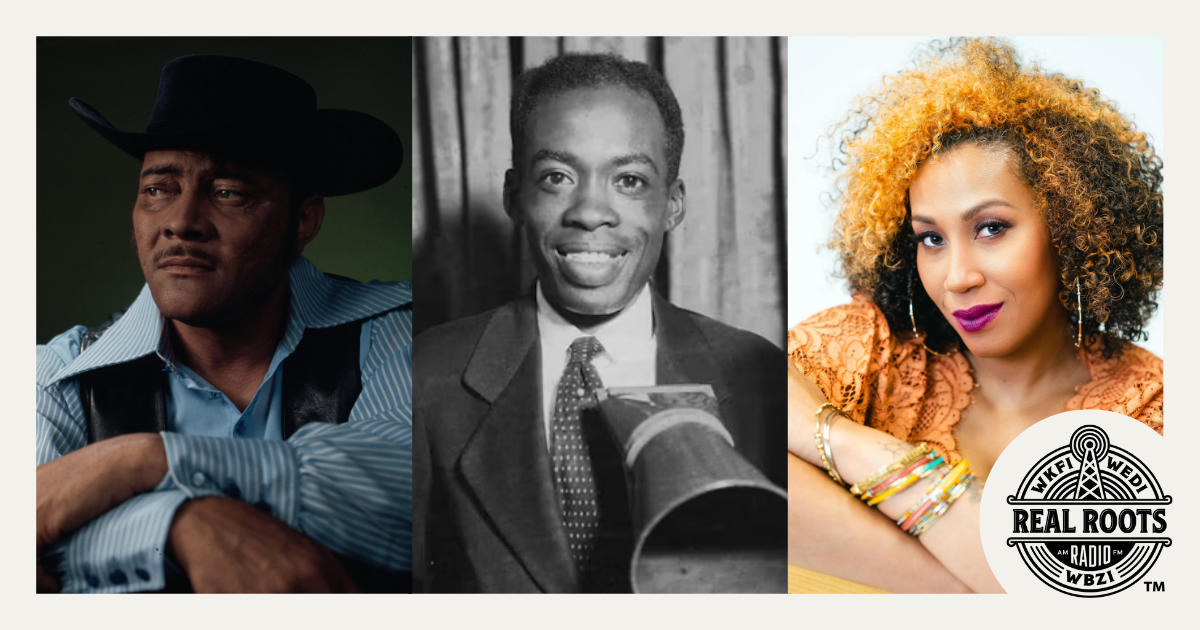
American roots music – in any of its many forms – wouldn’t exist today without the culture, stories, skills, and experiences of Black folks. Each week throughout February, we’ll spotlight this simple yet profound fact by diving into the catalogs and careers of some of the most important figures in our genres. For week two of the series, RRR host Daniel Mullins shares songs and stories of Stoney Edwards, Rissi Palmer, Keb’ Mo’, Tina Turner, and DeFord Bailey. Check out the first week of the series here.
We’ll return each Friday through the end of the month to bring you even more music celebrating Black History and the songs and sounds we all hold dear. Plus, you can find a full playlist with more than 100 songs below from dozens and dozens of seminal artists, performers, songwriters, and instrumentalists from every corner of folk, country, bluegrass, old-time, blues, and beyond.
Black history is American roots music history; the two are inseparable. As we celebrate Black History Month and its legacy, we hope you’ll join us in holding up and appreciating the artists who make country, bluegrass, blues, folk, and Americana the incredible and impactful genres that they are today.
Stoney Edwards (1929 – 1997)
If you don’t know the late, great Stoney Edwards’ name, it’s time to fix that – because his story in country is as powerful as the songs he sang.
Born Frenchie Edwards in Seminole Country, Oklahoma, in 1929, Stoney was part African American, Native American, and Irish. The son of sharecroppers, he was a prominent bootlegger in Oklahoma during his younger years. Stoney had dreams of playing the historic Grand Ole Opry. His big break in music would come later in life, in his early 40s, when he was discovered in California singing his honky-tonk style at a benefit for the King of Western Swing, Bob Wills.
Stoney was signed to Capitol Records in the early ’70s and from there he made history. He scored fifteen charting singles, including a pair of Top 20 hits, one of which – his 1973 hit “She’s My Rock” – is still revered as a bona fide country standard later covered by artists like Brenda Lee and George Jones. His songs were deeply authentic, whether he was singing about love, loss, or his own experiences growing up poor and Black in America. He gave a voice to the underdog, often drawing from his own struggles, including battling discrimination and working blue-collar jobs before music. Edwards would also record several songs saluting his country heroes over the years, including “The Jimmie Rodgers Blues,” “Daddy Bluegrass,” and his Top 40 hit, “Hank and Lefty Raised My Country Soul.”
Stoney’s music wasn’t just about catchy melodies; it was about storytelling. His debut single was inspired by a true story. Before he hit it big as a country singer, Stoney was trying to provide for his family working as a forklift operator at a steel refinery in San Francisco. A workplace accident resulted in Edwards being sealed up in a tank and suffering dangerous carbon dioxide poisoning; he endured an extensive two-year recovery, both physically and mentally. During this time, Stoney was struggling to care for his wife and children, so he planned to leave in the middle of the night. However he tripped over one of his daughter’s toys, and it prompted him to stay. In 1970, backed by the virtually unknown Asleep at the Wheel, Stoney Edwards released his debut single, the autobiographical “A Two Dollar Toy.”
While his career didn’t reach the same commercial heights as some of his peers, Stoney Edwards left an indelible mark on country music. He paved the way for greater diversity in the genre and showed that country music is for everyone – no matter where you come from or what you look like. Stoney Edwards passed away from stomach cancer in 1997 at the age of 67.
She’s a trailblazer in country music, a voice for change, and an artist who refuses to be boxed in – meet Rissi Palmer!
Palmer’s mother passed away when she was just seven years old, but she instilled in her a love for the music of Patsy Cline. Rissi would burst onto the country scene in 2007 with her hit single, “Country Girl,” making history as one of the few Black women to chart on the Billboard country charts. Rissi has built a career on breaking barriers by blending country, soul, and R&B into a sound all her own. She has penned some empowering original songs, helping folks on the margins feel seen, especially her most personal song, “You Were Here,” dealing with the heartbreak of a miscarriage.
Beyond the music, Palmer uses her platform to uplift underrepresented voices in country and roots music. As the host of Color Me Country radio on Apple Music, she spotlights Black, Indigenous, and Latino artists in country music – proving that the genre belongs to everyone. With her powerful voice and unwavering spirit, Rissi Palmer isn’t just making music, she’s making history.
Keb’ Mo’ is a modern blues legend. Born Kevin Moore, this L.A. native blends Delta blues with folk, soul, and a touch of country. With his smooth vocals and masterful guitar skills, he’s kept the blues alive for over four decades.
Mo’ is heavily influenced by the late Robert Johnson, who preceded Keb’ by about 60 years. Keb’ portrayed Robert Johnson in a 1998 documentary and included two Johnson covers on his breakthrough self-titled album in 1994. He has since won five GRAMMY Awards, collaborated with legends like Bonnie Raitt, Jackson Browne, and Taj Mahal, and performed for multiple U.S. presidents.
Mo’ is embedded in country and Americana music as well, working with cats like Lyle Lovett, Old Crow Medicine Show, John Berry, Alison Brown, Jerry Douglas, and Darius Rucker over the years. He has been quick to share his respect for country and gospel traditions, appearing on the critically acclaimed all-star album, Orthophonic Joy, recreating the magic of the 1927 Bristol Sessions – country music’s big bang.
Whether he’s playing a heartfelt ballad or a foot-stomping blues groove, Keb’ Mo’ keeps the genre fresh and timeless. His music isn’t just about the past – it’s about where the blues is going next. We love his passion for all things American roots music. Fifty years into his remarkable career, Keb’ Mo’ is still one cool cat.
She was the Queen of rock ‘n’ roll, but did you know Tina Turner had deep country roots?
Born Anna Mae Bullock, she grew up in Nutbush, Tennessee. Tina recalled picking cotton as a youngster during her hardscrabble rural upbringing. Her musical journey began by singing at church on Sunday mornings. She grew up on country, gospel, and blues. Turner and her husband, Ike (who was abusive towards her) had massive success in R&B and rock and roll, but her first solo record was actually a country album.
In 1974, Turner released her debut LP, Tina Turns The Country On!, introducing herself as a solo act. Featuring top musicians, including Country Music Hall of Famer James Burton on guitar, Tina tackled songs from country greats like Dolly Parton, Kris Kristofferson, and Hank Snow. It would go on to receive a GRAMMY nomination for Best Female R&B Vocal Performance in 1975. Over the years, unreleased songs from this groundbreaking album would be dropped, including her powerful take on “Stand by Your Man.”
However, her most enduring impact on country might be as the inspiration behind one of the outlaw movement’s most popular hits. In 1969, Waylon Jennings was staying at a motel in Fort Worth, Texas, when he saw a newspaper ad about Ike & Tina Turner that intrigued him enough to interrupt Willie Nelson during a poker game so they could write a country classic. The phrase that struck Waylon heralded Turner as “a good hearted woman loving a two-timin’ man.” Sound familiar?
From honky-tonks to stadiums, Tina Turner’s fiery spirit left an unforgettable mark on practically every genre – country, rock, and everything in between.
Let’s go back to the early days of country to a name that shaped the Grand Ole Opry, but is often forgotten: DeFord Bailey, “The Harmonica Wizard!”
Born in 1899 in Smith County, Tennessee, Bailey grew up around banjos and fiddles in a musical family, saying that he learned the “Black hillbilly music” tradition. He overcame polio as a child, resulting in his short stature – he was only 4’ 10” tall – but it was through this ordeal that he found his voice in a harmonica. While recovering from the disease, he was bedridden for a year, and learned to mimic the sounds he heard outside on his harmonica: trains, animals, and the rhythms of life.
In 1927, Bailey became one of the first stars of the Grand Ole Opry on Nashville’s WSM, dazzling crowds with hits like “Pan American Blues.” He was actually the first artist introduced after George D. Hay referred to WSM’s Barn Dance as the “Grand Ole Opry” for the first time to poke fun at NBC’s classical Grand Opera. Bailey would also become the first artist to record in Music City. His hits like “Fox Chase,” “John Henry,” and “Evening Prayer Blues” captivated radio audiences, making him one of the Opry’s most popular performers. He would tour with other stars like Roy Acuff, Uncle Dave Macon, The Delmore Brothers, and Bill Monroe, but would often not be allowed to stay in the same hotels or eat at the same restaurants as his white contemporaries due to Jim Crow laws.
In 1941, DeFord Bailey was unceremoniously fired from the Grand Ole Opry under suspicious circumstances. He would make his living shining shoes in Nashville and would not perform on the Opry again until 1974, the first of only a handful of final performances on the radio program which he helped grow during its infancy, before his passing in 1982.
The Grand Ole Opry would eventually work to reconcile its mistreatment of its first Black member, issuing a public apology to the late DeFord Bailey in 2023 with his descendants on hand. Old Crow Medicine Show was there to celebrate the occasion, performing their tribute song to Bailey led by black percussionist Jerry Pentecost, entitled “DeFord Rides Again.”
In 2005, Bailey was rightfully inducted into the Country Music Hall of Fame and over 40 years since his passing, he is still recognized as the Harmonica Wizard.
When life hands you lemons, sometimes it’s better to just burn them and start anew rather than make lemonade. That’s exactly what India Ramey does on Baptized By The Blaze, the singer’s empowering fifth album that sees her shedding the trauma that had haunted her since seeing her father abuse her mother as a child.
For years Ramey tried coping by working as a domestic violence prosecutor, but turned to music when that career fell apart in 2009 with her first album, Junkyard Angel, already in hand. Despite all the pain her father inflicted, she says her first musical memories were with him.
“He’d play Waylon Jennings and Willie Nelson’s Wanted! The Outlaws on repeat,” Ramey tells BGS. “Through that I became obsessed with Jessi Colter. I’d get my mom’s curling iron and sing her songs while standing on our living room ottoman. I always say that my dad was such a bad guy. He never gave me anything except for my love of country music.”
But as Ramey’s own career in music materialized, a 12-year dependence on the daily tranquilizer Klonopin began to rear its head. Taken to quell the panic disorder that’s lingered since first witnessing her abusive father’s actions, Ramey sought to gradually come off the drug during the pandemic before its severe withdrawal symptoms landed her in rehab. There, through stubbornness and self-determination, she was able to reclaim the power over her dependence and the trauma that caused it, vowing to never go back. Baptized By The Blaze is her journey to become a better version of herself.
“I went through a lot of stuff — a metamorphosis if you will,” says Ramey. “It was really hard and really scary, but I got so much personal empowerment out of it. Since then, I’ve been motivated to pass that on to bring folks strength and remind them that the tragedies they’ve faced give you superpowers to handle anything else life throws at you.”
Helping Ramey realize those superpowers was her therapist, a conversation with whom inspired the song “The Mountain.” According to Ramey, it occurred about a year into their sessions after something had left her in a puddle of shame and defeat. She explained how our anxiety attacks are similar to avalanches in that we don’t know the tools needed to combat them until going through it. But every time there is an avalanche you’ll have more tools and awareness to recover because you are the source, you are the mountain.
“It was the most empowering thing anyone had ever said to me in a moment where I was so vulnerable,” admits Ramey. “It left me feeling so powerful and wanted. This song is my way of spreading that beautiful message she gave to me.”
Another metaphor central to the album comes on its title track, on which Ramey compares her journey of redemption to a phoenix rising from the ashes. It was written while she “was thinking about that moment where I decided to burn it all down, to burn all of those defense mechanisms that I’d put in place to avoid confronting my trauma.” Despite its personal and well-meaning message, the song didn’t always resonate with everyone on her team though, with one person even calling the song over-dramatized. This led Ramey to shelve it for a couple years until producer Luke Wooten chose to include it on the new record.
“As artists, we’re always second guessing ourselves, so to have somebody on my own team tell me I should leave the idea behind really hurt,” Ramey confides. “Because of that, I struggled with self doubt for a long time about going all in on it, but in the end I went with my gut and I’m glad I did.”
Another example of being misunderstood and defying the expectations of others comes on “Piece Of My Mind,” a soft but stern ballad about an industry type who found out about her past working in law and said if he’d known he would just assume all her albums were vanity projects. On it, Ramey’s signature sass shines through as she urges the person to tell them their story: “Just a snapshot is all you see, you don’t know shit about me.” Before going on to describe how “I’ve fought wars and still they haunt me” and likening each day to being Halloween.
“It pissed me off, because that judgment he had was denying me my authentic story,” exclaims Ramey. “He was denying me the suffering that my family and I had gone through because of a job, so this song is me telling people exactly who I am, which is a lot more than any article or bio can capture.”
While most of the album is derived directly from Ramey’s own personal experiences, two songs that veer from that path are “Silverado” and “Down For The Count.” Both are stories about badass women living life on their own terms unburdened by the judgment and shame often delivered through patriarchal transgressions. “Silverado” details a one night stand at the motel El Dorado and “Down For The Count” highlights a streak of promiscuity to get over a past lover (“I put ten men between you and me”).
“The women I wrote about in these songs are people I think any woman will resonate with, because they’re about women doing whatever the hell they want,” she asserts. “It’s about doing things that dudes do all the time without the same level of judgment and are unapologetic about it. They’re my way of giving the middle finger to the patriarchy.”
No matter the delivery, Baptized By The Blaze charts out a journey of empowerment and recovery that is sure to provide strength and an upbeat honky-tonk soundtrack to anyone with a listening ear. It’s also proof that Ramey’s best work isn’t behind her and that her renewed focus has her poised for a bright future, despite the scars that once plagued her past.
“The process of making this record has taught me just how strong and powerful that I am, which are both things I was never convinced of beforehand,” Ramey reflects. “My hope is that it does the same for listeners and helps guide them on their own journeys.”
No matter where you look in the history of country music, you’ll find some common themes – working-class stories, banjos, an appreciation for the simple life. But there’s something else fans of country music then and now all seem to love, and that’s a deep, rich singing voice.
In this roundup, we’ve gathered just 10 of the all-time best deep voices in country music, from smooth baritones to booming basses. Whether you’re a fan of outlaw country, pop country, or something a bit more classic, there’s a voice for you on this list.
Amythyst Kiah
Combining elements of Americana, old-time, folk, and country, Amythyst Kiah has spent the past decade proving she has one of the most powerful deep voices in roots music. Whether she’s sharing an arrangement of a traditional ballad or innovating Americana, Kiah brings her unique, rich, and haunting voice to everything she does. Her song “Black Myself” even earned her a Grammy nomination in 2020 for “Best American Roots Song.”
Accompanied only by banjo, Kiah’s take on the traditional ballad “Darlin’ Cory” highlights the literal and emotional depth of her one-of-a-kind voice.
Waylon Jennings
Known as a pioneer of outlaw country, Waylon Jennings got his start in country music when he was just a 14-year-old kid in Texas. He then spent six decades gracing the world with his soothing baritone voice, earning himself a permanent place in country music history – and the Country Music Hall of Fame. Alongside frequent collaborators Willie Nelson, Kris Kristofferson, and Johnny Cash, Jennings recorded some of the most legendary songs in the modern country canon, including “Highwayman” and “Mammas Don’t Let Your Babies Grow Up to Be Cowboys.” Jennings passed away in 2002, but his deep and powerful voice remains one of the most recognizable sounds in country music.
Scotty McCreery
Newer to the scene, North Carolina-born Scotty McCreery got his industry start in 2011 after winning the 10th season of American Idol. Since then, he’s enjoyed a successful career as a country singer-songwriter – he even became a Grand Ole Opry member earlier this year – thanks largely to his smooth, deep vocals. Fitting in perfectly with the modern Nashville sound, McCreery’s most recent single, “Cab in a Solo,” showcases this young country star’s keen skill as a baritone crooner.
Orville Peck
A mysterious character in the alt-country realm, Orville Peck has one of the most stunning deep voices in country music, genre-wide. Boasting an impressive vocal range (baritone to falsetto), Peck is best known for his resounding lower register. Teaming up with country stars like Midland and Sheryl Crow, Peck has quickly made a name for himself since the release of his debut album, Pony, just five years ago. Inspired by ’60s- and ’70s country (à la Jennings and his collaborator, Willie Nelson), Peck’s brooding, emotive, and theatrical voice is a must-hear for appreciators of high-quality baritone country singers.
Trace Adkins
First rising to fame in the mid-’90s, Trace Adkins continues to reign as a big name in pop country. His gruff-yet-soothing voice sounds like a day on the farm in the hot sun — and that’s exactly why he’s on this list. A songwriter, singer, and dynamic performer, Adkins wields an unmistakable baritone voice that helped shape the sound and direction of Nashville in recent decades. If you’re looking for a chance to relive the glory days of early pop country, Adkins has the voice you’re looking for.
Randy Travis
One of the most popular country singers of all time, Randy Travis is known for his earnest songwriting style and velvet-smooth baritone voice. After getting his start in the 1980s, Travis recorded over 20 albums and charted on the Billboard Hot Country Songs chart over 50 times. In 2013, he experienced a tragic, life-altering stroke, affecting his ability to sing and perform. With the help of AI, producers recently teamed up with Travis to record and release his first new single in over a decade, “Where That Came From.” Using AI to combine past existing recordings of Travis’s vocals with contributions from another singer, James Dupre, the new single captures the singer’s spirit and depth, giving listeners a newfound opportunity to appreciate a living legend.
Johnny Cash
Let’s be real: This list would not be complete without Johnny Cash. Arguably the most famous country music star to ever live, Johnny Cash is known near and far for his deep, rich voice that straddled the border between baritone and bass. Cash had a storyteller’s voice, and he used it proudly to tell the stories others weren’t telling. As time went on, Cash’s voice settled into its lower register, which can be heard on his final non-posthumous album American IV: The Man Comes Around. But there’s no better way to showcase the rumbling voice of Johnny Cash than through his infamous recording of “Folsom Prison Blues,” recorded live at Folsom State Prison in 1968.
Jim Reeves
One of the forefathers of country music, Jim Reeves wielded one of the most beautiful baritone voices in the genre. A true crooner and country & western artist, Jim Reeves’s voice is smooth, deep, and unforgettable. Arguably the most technically accomplished singer on this list, Reeves topped the country charts throughout the ’50s, ’60s, ’70s, and ’80s. A dynamic and masterful baritone with a gentle stage presence, Reeves played a huge role in shaping the sound of Nashville and his influence is still felt today.
Colter Wall
Canadian singer-songwriter Colter Wall released his first single, “The Devil Wears a Suit and Tie,” in 2015 when he was just 20 years old. Showcasing Wall’s impossibly deep and weathered voice, the single swiftly launched the young artist into the limelight, mostly via a live performance video on YouTube. Treading the country and Americana borderlands, Wall has one of those voices that makes you think, “How is that sound coming out of that person?”
Since his debut, Wall has released five full-length albums, including his 2023 release, Little Songs. Throughout his catalogue, Wall never misses a beat or fails to remind us that he has one of the deepest and richest bass voices in country.
Josh Turner
For Josh Turner, bass singing is old hat. He grew up singing bass parts in church choirs and gospel quartets, then debuting at the Grand Ole Opry when he was just 24. Now in his 40s, Turner has spent over half his life making waves in the industry as one of the only true bass singers in the genre — and a top-notch one at that. In May 2024, Turner released a brand-new single, “Heatin’ Things Up,” proving he still deserves the title of the man with the most satisfying deep voice in country.
Photo Credit: Johnny Cash courtesy of JohnnyCash.com.
This website uses cookies to improve your experience. We'll assume you're ok with this, but you can opt-out if you wish.AcceptRejectRead More
Privacy & Cookies Policy
Privacy Overview
This website uses cookies to improve your experience while you navigate through the website. Out of these, the cookies that are categorized as necessary are stored on your browser as they are essential for the working of basic functionalities of the website. We also use third-party cookies that help us analyze and understand how you use this website. These cookies will be stored in your browser only with your consent. You also have the option to opt-out of these cookies. But opting out of some of these cookies may affect your browsing experience.
Necessary cookies are absolutely essential for the website to function properly. This category only includes cookies that ensures basic functionalities and security features of the website. These cookies do not store any personal information.
Any cookies that may not be particularly necessary for the website to function and is used specifically to collect user personal data via analytics, ads, other embedded contents are termed as non-necessary cookies. It is mandatory to procure user consent prior to running these cookies on your website.