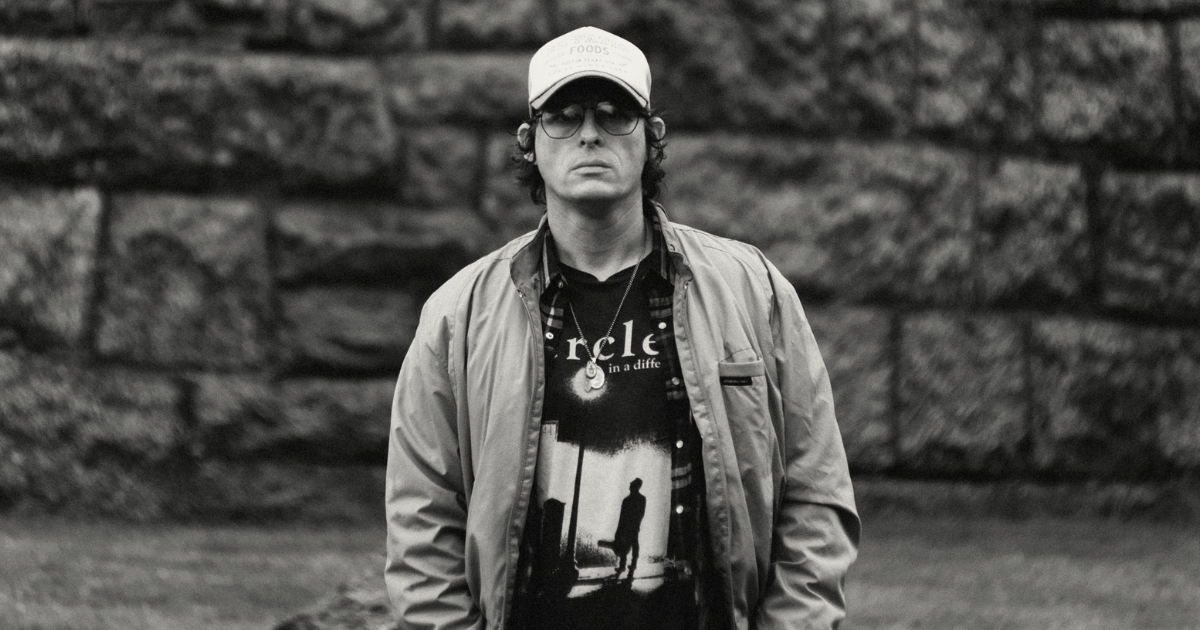
Stephen Wilson Jr.’s Dreams Have Been Outdreamed

Stephen Wilson Jr. knows he doesn’t fit the mold of your typical mainstream country artist. But honestly, who needs that?

A 46-year-old former microbiologist and Golden Gloves boxer, the Southern Indiana native stands out with probing lyrics and an experimental sound to match. Grunge and jazz combine with country inside a drop-tuned gut-string guitar, powering the 2023 album søn of dad to critical acclaim and a slow build of career momentum. But Wilson has now reached exit velocity.

After a viral, six-minute solo performance of Ben E. King’s classic “Stand By Me” at the 59th Annual CMA Awards – so stark and surging it stunned Nashville’s Bridgestone Arena into complete silence – Wilson has followed up with the equally enigmatic single, “Gary.” Like his album debut (which was a tribute to his multi-faceted father), “Gary” takes an almost scientific approach to detailing the mythical class of people who don’t do fancy, but do get things done.

“When life gets very real, like your plumbing or your electricity goes out for two weeks like we experienced [in Nashville’s January ice storm], you need a Gary,” Wilson explains.

“Gary” is now climbing up the country radio charts and it will eventually become part of Wilson’s next album, currently in the works. But we wanted to catch up with him now. Wilson spoke with Good Country about his musical worldview just before the launch of his headlining Gary the Torch Tour, which kicked off March 6 in Columbus, Ohio – and just added dozens of dates through the summer and fall, including appearances in Europe and the United Kingdom.

I was hoping you could tell me a little about how your sound developed. I mean, you play a gut-string acoustic guitar, but not the way Willie Nelson does, right? It’s down-tuned and you have these very hypnotic sections that I really love. Have you always played guitar like that?

Stephen Wilson Jr.: Yes and no. I’ve been a guitar player of all ilks over the years. I’ve been an electric lead guitar player, a jazz nerd in college. And I was an indie rock guitar player for a long time. A lot of soundscaping and stuff like that. And I was super technical for a long time. I still am very much into Apocalyptica and Al Di Meola and the John McLaughlin Trio.

Oh, ok!

I used to go to sleep to the song “Mediterranean Sundance” [by Al Di Meola, Paco de Lucía] all the time. That was the soundtrack to my late teen years. And just because I love that kind of music, there’s a lot of percussiveness in the style that I play. Influencers like Dave Matthews, a lot of acoustic players like that, they kind of treated the guitar like a drum as much as they did a melodic instrument. …

I was also very influenced by the Seattle sound, all the drop tunings. The fundamentals of my guitar playing I kind of learned from the Superunknown record by Soundgarden. I learned it from front to back, and there’s so many different tunings and so many droney riffs that had a huge inspiration on me, too. So it’s really a combination of Seattle and then a bunch of Spanish-style guitar players.

Wow, I had no idea.

Then, I discovered Willie Nelson. I grew up listening to tons of country music, but it was more like George Jones and Johnny Cash and Hank Sr. and a lot of ’90s country. Willie wasn’t a big part of my soundtrack growing up. But I saw him at the Ryman Auditorium the year I moved to [Nashville] and it changed my life. I saw him playing a gut-string through two Baldwin [amps] with a pick and I’ve been pretty much chasing that ever since. I play a gut-string through an amp, too, but not the same way. It’s a lot heavier and a lot grungier. And, obviously, I use these drop tunings, which Willie doesn’t do, which has made for a lot of challenges in the production department. It’s like trying to figure out how to tame that animal, which is honestly kind of the point. I didn’t really want it to be tame. I want it to be wild. I liked that it always has the ability to get away from you.

I think it tells – definitely on stage.

That’s kind of what I learned from Willie when he would solo. He would just fly real close to the sun. He had no problem taking the 18-wheeler right to the edge of the cliff and seeing how far he could take it before it almost goes off the edge. And he’d always somehow pull it back on the track. I really lean into that every night and every song – every time we produce a song, we kind of go in hoping that the wild animal will show up. And it does all the time on stage, there’s a lot of unpredictable things that happen, but we kind of welcome them.

The untamed wildness of it. I would say you can even hear that in your lyrics. Tell me a little bit about “Gary” and why you felt the need to say this. You write about the value of blue-collar folks, how loyal, selfless, and capable they are. But also how they’re not appreciated enough sometimes.

Well, yeah, I grew up in a body shop. I’m a son of a body man.

Really? Me too.

Yeah. Grandson of a body man. All my uncles are auto body repairmen. I grew up in body shops. I grew up in a house that was surrounded by a cornfield, like the movie Signs. And there was farmers all around me. The blue-collar influence was everywhere. I grew up in a John Mellencamp song, literally. I grew up in a town where there was an abundance of these “Garys,” as I call them. I kind of started thinking about Garys as a subspecies of humanity, and I started to observe them in the wild, similarly to how Jane Goodall would observe chimpanzees and other greater apes. That’s kind of the approach with the whole song, but it was all inspired by a tragedy, really.

I was driving down a highway and I saw a memorial billboard sign and it said “in memory of Gary,” and there was a picture of a boy who was probably 16 years old. It was just really heartbreaking. I could feel the sadness and the heartbreak and the family’s plea to keep this boy alive in any way possible. I understand that plea. That’s why I made that album. I mean, søn of dad is a sonic monument to my father. That’s my billboard that I put on the side of the road to keep my dad alive, to keep his memory alive. So I really understood that sentiment behind it, just on the foundational level. And then when I saw it, I couldn’t help but say out loud in the car, “Dang, there ain’t a lot of boys named Gary these days.”

That’s where my brain started subconsciously turning Gary into a subspecies of human. And then honestly, the song just fell out. Because of my upbringing, it wasn’t really written. It was subconscious. I guess my brain just started writing, and that’s how I write pretty much all my songs. Generally, I write them fast and I write all the lyrics first. I wrote the whole chorus in my car right there and I just kept driving around and I kept writing it. Then I put it to music a couple hours later and it was 85 percent done.

It seems like people have really latched onto the “Gary” theme. Those people you can depend on, but they’re not flashy.

There’s a lot of truth to this Gary thing. There’s a lot of people coming up after the show or whatever. I was getting overwhelming evidence to basically prove that this Gary thing was real. … You really couldn’t deny the conclusions that, yeah, I’m not the only person that has seen this Gary theme. Because I had so many people like, “Dude, I know exactly who you’re talking about.” It wasn’t a couple months after we started playing and people were chanting “Gary” in the audience. The song wasn’t even recorded yet, let alone released. … Now it’s being played all over the country. It’s pretty wild.

And the song is sad. I mean, that’s the thing. I’m definitely celebrating a working-class human, but at the same time, it’s a very sad story. I wasn’t trying to make Gary some superhuman. I wanted to try to be real about the situation, because the Garys are endangered. We experienced that when we had this ice storm in Tennessee [in late January 2026]. We had to import Garys from all over the country to get everybody’s power back on. There’s logistical evidence that we just saw recently to prove that, yeah, these Garys? We’re running out of them, and maybe we should pay attention to that because we rely on them to fix things. … Instead of just letting them drive off into the abyss to go save another person’s day, how about we give them a moment and celebrate them?

You’re starting the Gary the Torch Tour in March, and that should help. I was wondering, what’s your favorite setting for listening to music? Do you consider that when you’re putting your tour together?

I guess I prefer vinyl, and I listen a lot in my vehicle as I’m driving. But also, I don’t listen to a lot of music. It probably will shock a lot of people, not that it matters to them, but I wouldn’t say that I just sit around and listen to music all the time. I listen to a lot of silence, and I think it’s really important for musicians to listen to as much silence as they do sound, because that’s where the inspiration for me really comes from – the silence, not the sound.

That’s actually fascinating.

As much as I want to sit around and listen to bops, I got to listen to nothing, too. I’ve never had a song come to my head from listening to another song, ever. It’s always come from silence.

@stephenwilsonjrwent loco tryna open my møuth more for y’all this time. “Cuckoo” live acoustic version out now. love y’all. 🖤🥕🏃🏻‍♂️♬ original sound – Stephen Wilson Jr.

I saw you at the Ryman Auditorium in November and I know those were special shows, but you had a boxing ring on stage there. Where do you go creatively from something like that?

That was very much an ode to my father and getting to that stage was all I ever dreamed of, really since I moved to town. Back to the first part of this conversation, seeing Willie Nelson at the Ryman? I’ve been dreaming about that show since I moved to town.

Typically I tend not to rely on a lot of spectacle for the show. I tend to rely on something divine. … The real light show is what descends into the room during those shows. That’s really what I try to focus on more than laser beams and a bunch of production tactics. I do have a really quirky stage design that I created. I have my own little world up there. And ideally, full-time, there will be a boxing ring on stage. We’re working out the logistics of bringing that around full-time because it’s quite the undertaking.

But I mean, I think it’s all about feeling at home up there. I’m not really supposed to be here in this world. I’m not a natural-born star, as they would call it. My goal is to try to feel comfortable up there, and get people feeling things. That’s what people really remember. I’m in the emotion business, not the music business.

You’ve been working on some new music, right? What do you hope people will take away from that?

Well, I’m working on a whole new record, which is more just the continuation of conversations and observations from where I left off. Because it would’ve been really easy to never make another record again after søn of dad.

Oh yeah?

I never was trying to be an artist in the first place. And there was a big part of me that was … I mean, honestly, when I was making that record that’s what I was thinking, if I’m going to be perfectly honest with you. “I’m going to make this and then I’ll never make another record again,” because why would I? Then the story of søn of dad just was so much a God thing. It was so divinely orchestrated that I just had a hard time thinking, “What would I do from here?” Everything I ever wanted to do was already done.

But that was my own stuff, and I don’t believe God put me in this position for me to do that. It took me some time to figure that out. I’ve got to give “Gary” the credit for that because when “Gary” showed up, that’s when I knew I wasn’t done. If “Gary” hadn’t showed up to show me that, I’m not sure I would’ve ever recorded another song ever again. Like I said, I’m not supposed to be here. None of this was supposed to happen. So for me to have any expectation of what is down the road is pretty comical. My dreams outdreamed me a long time ago. I really just want to focus on being there for people and being where I’m supposed to be.

That’s one thing I learned from being a scientist and doing all these things over the years: There’s where you can be and then there’s where you’re supposed to be. And there’s nothing wrong with being in either place. There’s no guilt to be had in being where you can be because, man, we’re all just trying to survive. But then there’s where you’re supposed to be, and that can be a very difficult place to be. But I’ve chosen to be there and for whatever reason, I intend to stay there until the day I die.


Photo courtesy of Missing Piece.
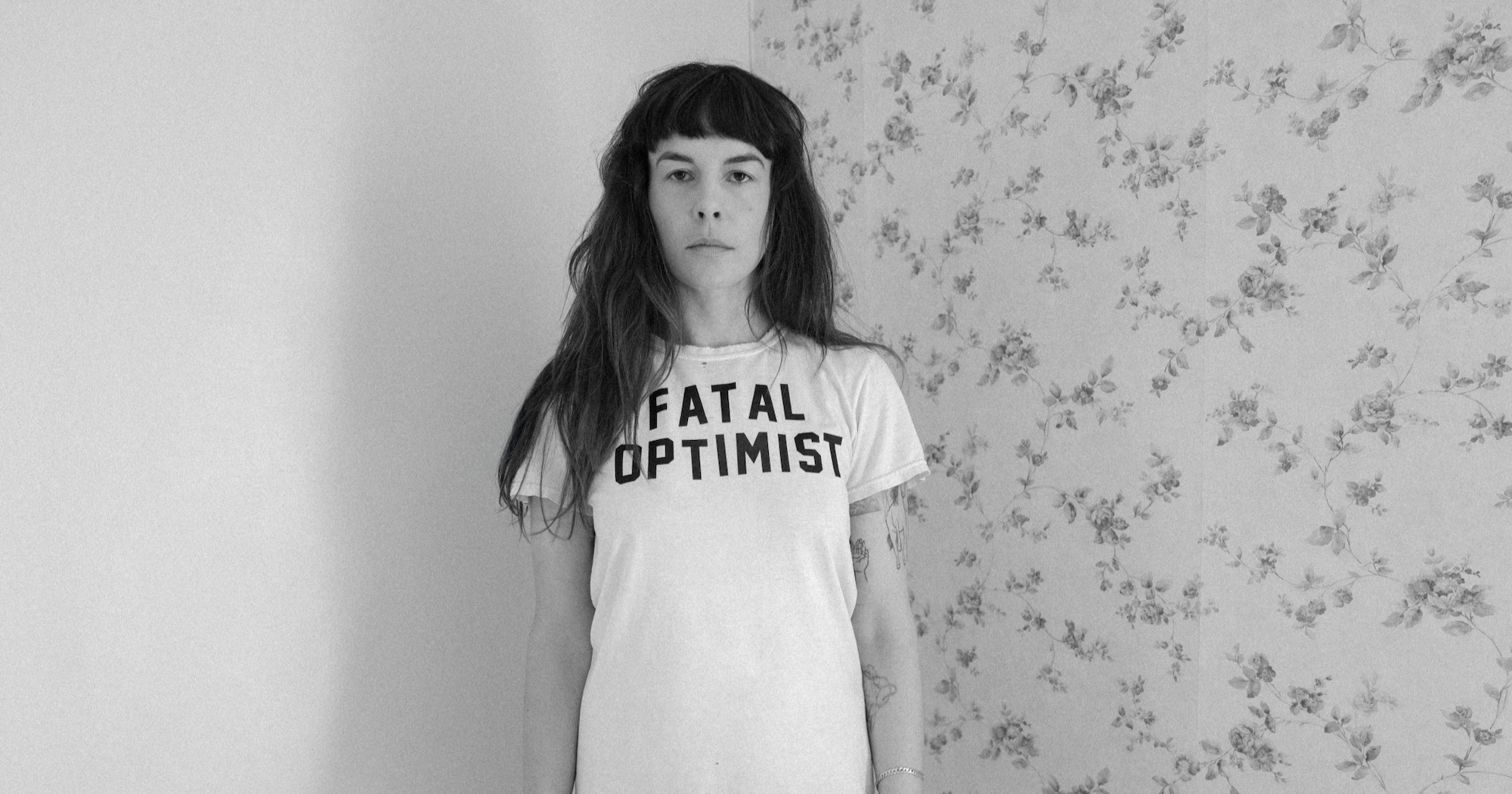
Singer-Songwriter Madi Diaz is Metal as Hell

Hitting play on singer-songwriter Madi Diaz’s latest album, Fatal Optimist, one wouldn’t automatically identify her close-to-the-mic, chunky strums and anxious, confident vocals as “metal.” But keep listening and trust.

Fatal Optimist is heavy on numerous elements of metal – fantasy, humor, darkness, anger. For much of its runtime, it feels like the inside of a clenched fist, slowly but surely letting go. With songs that are, this time, centered around her solo voice and acoustic guitar, Diaz turns her liminal songwriting further inward than ever. This is saying a lot for an artist who’s no stranger to personal narrative. While her prior album, 2023’s Weird Faith, brushed up against hopeful optimism, this follow-up proves that earned optimism is perhaps the better version.

After all, Diaz chose to open the disc with the wordplay stunner “Hope Less,” a stiff shot of reality that reorients us to a heart at least as full of darkness as light. If the LP’s vibe is “clenched fist,” its songs play like spokes in a wheel rolling us toward the jubilant title track – a progression Diaz admitted in our recent BGS interview was equal parts intentional and inevitable.

This album starts out very quiet. It feels very close and very intimate, then it slowly opens up. Was that the intentional vibe and arc of the album for you?

Madi Diaz: It definitely ended up being a much more lean-in [kind of] record. The further I got down the road, the more it felt very obvious that was just what the song content needed. It’s kind of heavy stuff, I think. It was a lot of mining of the self, which I did a lot privately. So I felt like I wanted the songs to match that [vibe], in the end.

I was listening to it this morning, thinking about your song “Everything Almost” from the last record. Like, how optimistic and full of hope that song is and then this album starts off with a line like “hope less.” Obviously, when you’re writing about personal events in your own life, it’s easy to see connection in the rearview. But I’m wondering if there’s something more to what feels, to me, like a connection between that song and this project.

That’s funny. I was just talking about this. I do feel like a lot of the songs in the last record … are about following that gut intuition. That gut feeling. So a lot of the songs on Weird Faith are absolutely going like, “I think this is it. I think this is gonna work. I think we’re really gonna get there.”

There was a really funny moment I had recently. I was practicing for this tour and putting [together] the set list. I wrote this song called “This Is How a Woman Leaves” for my friend Maren Morris, her last record that she put out [Dreamsicle, 2025]. I am planning on releasing a version … at some point down the road a little bit. But I was practicing “Everything Almost” and then I wanted to go into “This Is How” because in “Everything Almost,” I’m packing the boxes and moving in. In “This Is How” I’m fucking moving out.

Like, “How it started, how it’s going.”

It’s the “fuck around and find out” journey right there, in a nutshell.

Nice. I was reading that you went to an island when you were writing the album. Can I ask what island you went to? And did you know that’s what you were going to do when you started your trip to that island, planning, like, “I’m gonna get it together.” Or was it just kind of like how life happens?

There were, actually, many islands. Physically, mentally. … I started off coming off of this European tour. We finished this tour in Italy, so I went to an island off the coast of Italy and was there by myself. I did a lot of journaling and walking – so much walking. I’m a big processor by walking and talking, so I would kind of record myself as I was processing things out loud. I really wanted to be in a space where I felt safe to do that. It felt like the safest thing was to just take myself away from everybody, so as to not barrage people with [my feelings].

I started off in Ischia and then I ended up, really wonderfully, being asked to be a part of this [songwriters’] colony in Nantucket. So I did that. I ended up going to Long Island with my dad, to Noyack, and just [did] a lot of journaling there.

Also, [I was] feeling very much like I couldn’t tell whether I was the island or the island was the island. It was just this very unescapable lonerism. Solo mission, you know. Like in a spacesuit, kind of feeling. I just couldn’t shake it, so I just took it with me everywhere I went.

Can you talk a little bit about the process of songwriting? Your songs are so personal, almost uncomfortably so. I wonder if that’s the result of writing in an actual journal on paper and if that’s a different kind of creative experience for you than voice memos on your phone, which so many people do now instead of journaling.

I definitely rely on journaling still. A lot. Sometimes, if I’m in a pinch, I’ll text myself an idea. Or, I have [the] Notes app open. A lot of Fatal Optimist was pulled from about a year’s worth of pretty serious journaling and going back over certain words that kind of stuck out. I love journaling. I think it’s like a life scrapbook, you know? There’s a funny thing that happens. Sometimes I’ll open a journal and I don’t even know what year it’s from, because some of the issues [are] so consistent. … But it’s kind of like a sweet reminder, of survival, I guess.

Totally. Do you remember writing the couplet at the beginning of “Lone Wolf”? “Lamb’s gotta lamb, god planned it/ Wolf’s gotta wolf, goddamn it.” It’s such a perfect little song, but it doesn’t feel trope-y. It feels, really, like a strike of inspiration.

Well, I remember it was dead of winter. I was sitting on my couch with Stephen Wilson Jr. and I was going through my journal. I was talking about what was on my heart that felt so difficult, about reaching this person who chose to be a loner. I mean, he literally said to me, “I’m a loner. I’m a lone wolf kind of guy.” And I [thought,] “You just said that. That’s ridiculous.” Like, have you not seen the Pee-wee Herman movie where he’s like, “I’m a loner, Dottie. A rebel!”

But it was this thing, you know, that I almost didn’t take seriously, because it was such a crazy thing to say. And I should have [believed him], obviously, because here we are. I was talking to Stephen about it and we were laughing about this wolf character and the lines just fell out. In the aftermath of it, it’s funny.

You know, when you push somebody that wants to be alone away, they tend to want to be less alone. They feel very confronted. I mean, I’ve been there. All of a sudden, you’re confronted with your loneliness and wishing that you actually had that connection. So, when I pushed him away initially, he would just kind of show up and stick around. I really wanted him to leave me alone. Damn it. “Goddamn it” definitely came from that.

The lyric on that song is so simple. You don’t go into a lot of poetry, you don’t go into a lot of storytelling. The wolf keeps showing back up, looking good, trying to get back in. Can you talk a little bit about trusting yourself to keep it so simple? Does that come from editing or did it just feel like that’s what the song was?

I try to say it in a way like we were just talking about it sitting in the bar. I’m trying to not be misunderstood. I’m trying not to feel misunderstood even to myself. So I think I try to keep it clear and cutting, and [the way] it comes out. If it’s possible to get even closer to it, I’ll edit, but I don’t really edit a lot.

Oh wow. So it just comes out that way. That’s impressive.

Sometimes it does just come out that way. Not all the time, but sometimes it mostly does.

The other line on this album that I really wanted to unpack is in “Heavy Metal.” The line is, “In some religions, repetition is spiritual.” I wanted to unpack it a little bit, because music is often a place where people will repeat words or phrases, for a whole bunch of reasons.

But that line made me really listen to the words and phrases you were repeating elsewhere on this album: “Whose move is it to move on.” “I always love you.” “God knows how long.” “Ambivalence.” Can you tell me a little bit about how you decide what to repeat? Is it a conscious choice or just part of the process?

I think when I’m repeating something, it’s because it feels different on every lap. I’ll repeat something when the feeling is lingering in a way that– maybe if I say it enough, some magic spell will break and I’ll be released by this thing. Sometimes I feel like the repetition of it comes from a bit of a desperate [place] like, “Just get it out of me.” Maybe if I do this ten times, I’ll never have to do this ever again, which is why the [line,] “In some religions, repetition is spiritual.” …

You’re always going to carry it with you. You can learn how to hold this. I can learn how to learn from it differently every time, you know.

I guess that’s why repeating “ambivalence” is really interesting to me, because it seems like repeating that particular word is a contradiction.

I guess that’s true. Ambivalence means “caught in the middle.” Feeling in so many different directions. For me, ambivalence feels like a very desperate feeling. It almost feels like it should come with a bit of an alarm bell. Like, “Oh God. I’m feeling all of the feelings at the same time and I don’t know which one to choose.”

That makes sense. The other thing in the song “Heavy Metal” – I wanted to ask about your mom. I feel like you have mentioned your parents in other songs on other albums. But this made me wonder about your relationship with your parents. Somehow, I don’t think people talk about their parents much in music. I can’t figure out why. Do you have any thoughts on that?

I think it’s scary. It’s so scary. When I know a song is about me, I definitely tend to listen with a microscope. No one is trying to hurt anyone, but we’re all really trying our best to process love, pain, joy. I don’t know. Our effect on each other. What’s mine, what’s yours. So yeah, it’s not an easy thing to write about. …

I feel like I’ve felt the most loved and I’ve felt the most hurt by both of my parents. I think that that’s pretty normal. Or maybe not? Maybe it’s not normal.

I think it’s pretty universal.

It always kind of ends up that way. The people closest to you hurt you the most, which is why you really have to trust the people closest to you. So that when they do hurt you, you can [heal].

I think “Heavy Metal” felt right to start you talking about my mom, because she’s kind of a badass and kind of a hardass. In all the best ways and all of the hardest ways. There are some things about being tough and resilient that I wouldn’t trade for the world. It helps me survive in so many corners of my life. But also, I’ve had to really undo some of the damage that being tough does. You start to weaponize that toughness against yourself and others in a way that I didn’t even know I was doing for a long time.

Then [again,] you just don’t want to piss them off because you also want to be able to go home for Thanksgiving and stuff.

Right. That’s what makes it such a metal move, you know, to comment on your mother in this way. I’m assuming she’s still alive. Has she heard the song? Does she have any feedback for you?

I haven’t heard [feedback] yet. I really don’t know. But I’m so grateful to my mom for raising me the way that she did and giving me and my brother the lives that she gave us. I feel so lucky that she’s my mom. It’s hard to have a song like this. … But that’s just fucking art, man. It’s so hard, at the end of the day. You know, we can make it as personal as it is or as just-about-me as it is.

The last thing I want to ask about is the song “Fatal Optimist,” which is sort of a sonic departure from the rest of the album even though it’s obviously very on-topic. As a listener, it feels like we just went on this long, arduous, emotional journey, and now we’re suddenly above the tree line and the drums are here and everybody’s in the room. Not to get too nerdy about sequencing and stuff, but was there any world in which that song could have been anywhere else on the album?

It would have been a nice break, wouldn’t it have been? I just couldn’t do that. I couldn’t interrupt the intensity of this record.

I do know that optimism is a soothing balm. When it hits you, it just hits you. There’s no explanation for it. And I knew that, for me, I want a reason to listen to a record again. … This whole record feels like one step after the other. It’s like my attempt at a gift or something [for] going through it. Hopefully, these [songs] can all be like little lights on the path that lead the way to this finish line of fatal optimism. Then we can run it all back again.


Photo Credit: Allister Ann