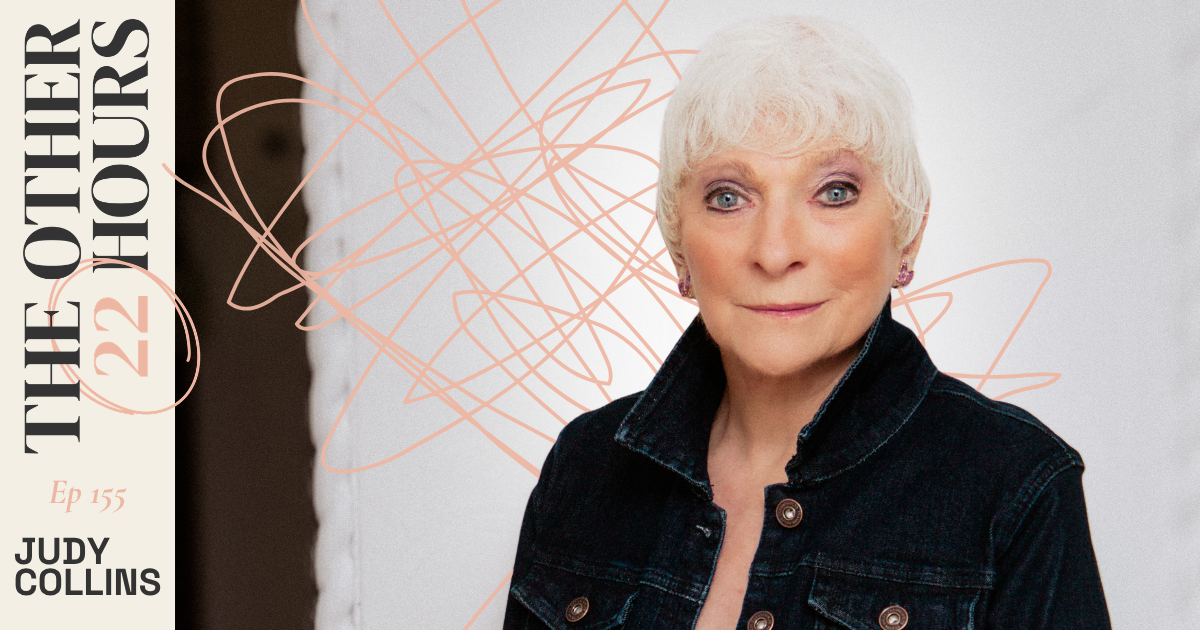
“We write to find out who we are.” For over six decades, Judy Collins has been a pillar of American music: from a GRAMMY award for “Both Sides Now,” two platinum records, and an Oscar nomination to writing more than eight books and landing her first No. 1 album at 80 years old.
But behind the staggering accolades is an artist who still treats her craft as a sacred, daily blue-collar job. In this episode of The Other 22 Hours, we explore the quiet discipline of her daily routines, the sanctuary of her 48 years of sobriety, and what she calls the “secret channels of songs.” Judy shares her philosophy on processing grief through poetry, the necessity of maintaining community in a solitary profession, and turning off the noise to protect the soul.
More than any of the world’s music, the songs of America are a reflection of a national identity and character. We are our songs.
Distilled into a few memorable minutes go the nation’s hopes and aspirations, the glories and tragedies of her past, and the promises of her future. This American canon is as diverse and vast as the country itself – our blues, breakdowns, or corridos are as different as prairies are from coastlines, as the Appalachians are from the Rockies. And yet, somehow, still our sound is a commonwealth, a singular voice rising from the chorus of many just like our national motto purports: “E Pluribus Unum.”
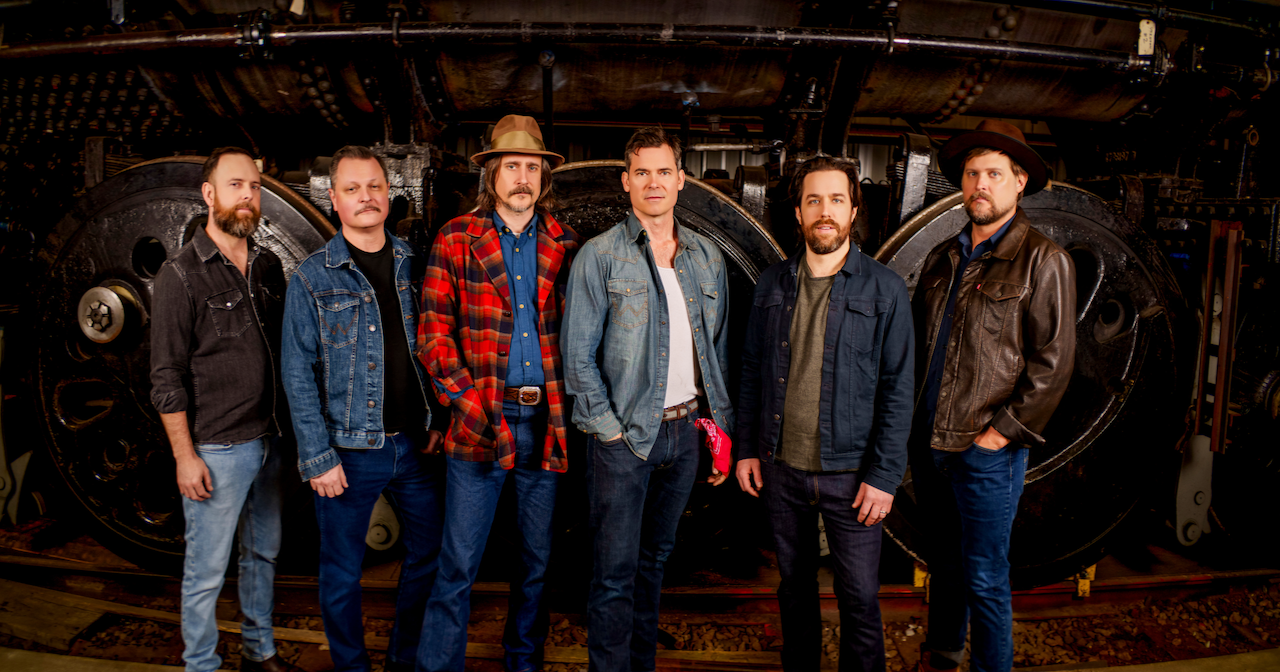
250 years is not a long time in the global scheme, and neither is 28 years of Old Crow Medicine Show‘s reign as an Americana string band. But somehow it is the vigorous and youthful American voice/song/songwriter/band (and not our transoceanic elders) that can best capture the world’s heart and soul in just a few minutes.
In this Mixtape, I’m proud to share some examples of this powerful artistry. You might already know every word to some of these songs while others you may have never heard, yet each is stitched together with a cloth of commonwealth that can only be found of uncommon ancestry. Though the singers may be perfect strangers, the songs that bubble up from our national cauldron are enough to nourish each and all. – Ketch Secor, Old Crow Medicine Show
“Howdy Do America” – Old Crow Medicine Show, Jesse Welles
Jesse Welles came whirling into the studio the other day and helped put a spit shine on this love song about the 50 states. I wondered if he was gonna get excited when he sang “Arkansas” and brother, he did not disappoint. Love this cat. He’s a brother, and I expect we’ll all be singing his tunes for years to come.
“Golden Rocket” – Jim & Jesse
I had the privilege of knowing Jesse McReynolds, even traveling and performing with him, and buddy there’s no wonder why Jerry Garcia thought he was the best of the bluegrassers.
“Field of Opportunity” – Neil Young
I was raised on Neil Young’s unique brand of tall prairie country rock. This track features the great Cajun fiddler Rufus Thibodeaux.
“Heaven Help Us All” – Joan Baez
Joan’s a real hero of mine. She’s like that tree planted by the water we all sing about, unmovable. Of all the singers on this playlist, I can say without a doubt if more people could be like Joan Baez, then this world would be a better place.
“I Wanna Go Country” – Otis Williams & the Midnight Cowboys
I love this Motown singer turned country crooner, and the world would have too, if Nashville hadn’t been so narrow-minded.
“Beautiful Land” – Old Crow Medicine Show, Maggie Rose, Lee Oskar
I wrote this one with a Baháʼí faith elder named Eric Dozier just down the street from the Tennessee State Capitol building. Sometimes politics feel like a fortress. But music has a way of wandering through the keyhole of even the most impenetrable door.
“There’s a Star Spangled Banner Waving Somewhere” – Elton Britt
I played this one for my kids on Memorial Day. They sat through it start to finish, and you should, too. It’s easy to get complacent about the sacrifice our grandparents and great-grandparents made in the 1940’s for each of us. Don’t do it.
“Oasis” – Molly Tuttle
Molly’s my favorite American singer. Here’s one of our travelogue-style songs. I had it stuck in my head all last week at the Tico Time Bluegrass Festival in Aztec, New Mexico.
“The Green Rolling Hills of West Virginia” – Hazel Dickens & Alice Gerrard
These girls rip. Back at MerleFest in the year 2000, I filled out Old Crow’s first ever W-2 form and gave it, with a shaky hand, to the great Alice Gerrard.
“How’s About You” – Dave Rawlings Machine
The Great Depression gave the world some of its most powerful songs. And even generations later, the events of the 1930s remained powerful enough to inspire music like this.
“Rock of Chickamauga” – Jimmie Driftwood
Songs about the Civil War are some of my favorites in the national cannon. Jimmie Driftwood is one of my favorite songsmiths. He’s an absolute master of the historical ballad.
“Across The Great Divide” – Kate Wolf
I am awestruck by the landscape of the West, and few songwriters can take you there better than the amazing Kate Wolf.
“What Did You Learn in School Today?” – Tom Paxton
I’ve been singing this one since I was a youngin. When I was 12, I discovered my uncle’s weathered copy of Vanguard’s album Newport Broadside: Topical Songs at the Newport Folk Festival 1963, and that was my introduction to Tom.
“The Tramp on the Street” – Molly O’Day
Born in Pike County, Kentucky, she’s one of my favorite bluegrass singers. She first heard this song from Hank Williams on a Birmingham radio station, and it became her signature song. American music has a way of championing the underdog better than most.
“Shenandoah” – Bob Dylan
I think I was 15 when I first heard Bob singing this gem, hidden in the ruffles of one of his more questionable ’80s albums. I thought, “Damn, Bob knows where I’m from.”
“Corrido de John F. Kennedy” – Los Reyes del Corrido
My band has been dabbling in conjunto for two decades now. We got to learn this one for next time we play the big D (Dallas).
“Which Side Are You On” – The Weavers
No collection of American songs is complete without a protest piece from the labor movement, the first dark corner where the full power of American music was unleashed.
“The City of New Orleans” – Arlo Guthrie
When we play Chicago, I always talk about Steve Goodman, who wrote this song. I sure would have liked to have known the guy. Thankfully his music will last forever.
“Cowboy National Anthem” – O.B. McClinton
O.B. left this world before he was fully known by the country music fanbase that would soon send black country singers consistently to the top of the charts. He was a man before his time, but the music he made reminds us that, just like Ray Charles said, “Country music is black music.”
“Deportee (Plane Wreck at Los Gatos)” – Old Crow Medicine Show
We love Woody Guthrie, and this is one of the numerous songs of his we’ve recorded through the years. In a nation of immigrants (I’m a French Huguenot), it’s hard to imagine how we could exist without a steady flow of new members to our American family.
“Big Backyard” – Molly Tuttle
When Molly and I wrote this, it was on account of having a massive vacant lot behind the house we were composing in. Now that same lot is full of little yellow flags and “coming soon” signs. Yet still we sing, louder this time.
“For What It’s Worth” – Buffalo Springfield
A few years back, I had the distinct pleasure of sharing an elevator with Stephen Stills, author of this earthquaking song which Buffalo Springfield recorded in 1966 – and we covered this year on our new album, Union Made. I wanted to tell him thanks, gush, and get my picture made. Instead, I stood quietly until he rasped, “I heard your soundcheck. Great band you got there. Keep ‘em together if ya can.” Thanks, I will Stephen.
“Louder Than Guns” – Old Crow Medicine Show
This summer, PBS stations across the country are broadcasting the film we spent three years making in a half-dozen tour stops along our travels. It’s a movie about bringing together the disparate ends of the 2nd Amendment debate during an era in which guns kill innocent Americans at shocking rates. It’s a tall order, coming together to flatten the curve, seeing past our silos and personal politics, but in town after town I watched people listening across the divide. As easy as it is to be hopeless, the film has made me hopeful we’ll get beyond this impasse and prioritize the safety of our communities. This song is the theme of this film.
“American Tune” – Allen Toussaint
I’m glad you made it through to the end. Old Crow opened up for the great Allen Toussaint in the Berkshires back around 2011. The record featuring this song had just come out and when he launched into it, I was nearly knocked off my feet. So powerful. So simple. Says it all.
Another week, another batch of excellent new roots music! You Gotta Hear This…
There’s plenty of Good Country to enjoy below, as we kick things off with Dallas Burrow’s brand new track, “Underdog.” In his heart of hearts, Burrow has always considered himself something of an outsider. He channels the angst and emotion of being an underdog through the rocking, passionate crescendo of the gritty country track. Then we immediately follow that up with more from similar sonic territory, as Whey Jennings and Karen Waldrup join forces on a song they co-wrote, “Damned If I Stay.” We’re sharing the new video for the number, a thoughtful Outlaw-steeped ballad that was begging for the duet treatment – which Jennings and Waldrup execute very well. It’s as relatable as it is personal.
In bluegrass (or from nearby!), banjoist Max Wareham launches his new album, If The Cosmos Were Whiskey…, today. To celebrate, we’re sharing the music video for “Closer To You,” as cosmic and enchanting as the record title. It’s experimental string band music that falls somewhere in the nebulous territory between neo-folk, indie, and trance. The psychedelia of jamgrass, but more deliberate and “slowed down.” When you read Wareham’s inspiration behind the track, these connections make even more sense.
Also arriving directly from the magical musical cosmos is a new track from the ethereal Allison Russell. Timed for release on Juneteenth, “Black Lavender” features Brittney Spencer and is a song about extending grace, comfort, and care – and the importance of community to lift each other up. “We saved this song for Juneteenth for a reason,” she explains. “Black women have been showing up for each other in this way as long as we’ve been here, and we can’t stop, won’t stop now!” Listen to the timely track below.
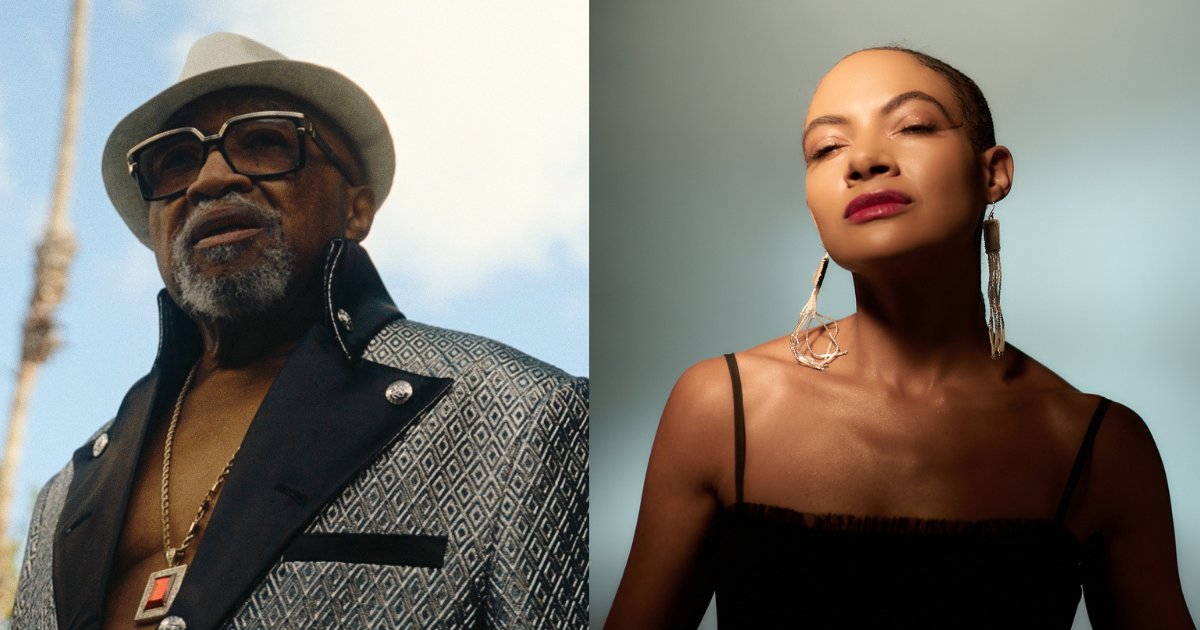
You’ll also want to hear new music from an Americana legend Swamp Dogg. His new album, Swamp Dogg Contemplates The Afterlife, is out today. But the Dogg doesn’t want you to be too concerned that our roundup selection, “Final Approach” is about mortality. “‘Final Approach’ uses an airliner metaphor, but it’s more about a homecoming than dealing with the end of life,” he explains via email. “[But], I’m OK with this ‘final approach,'” he continues. “I’ve been blessed and that’s something to sing about.” The song is smooth, grooving, and dripping with Swamp Dogg’s personality.
It’s all right here on BGS and You Gotta Hear This!
Dallas Burrow, “Underdog”
Artist:Dallas Burrow Hometown: New Braunfels, Texas Song: “Underdog” Album: Modern Day Vagabond Release Date: June 17, 2026 (single); September 25, 2026 (album) Label: 40 Below Records
In Their Words: “Like the character Dally from The Outsiders – a rebel through and through – in my heart of hearts, I’ve always felt like a little bit of an outsider, an outlier, an underdog, but I always found that, on some level, to be a point of pride. It gives you a unique perspective when you’re on the outside looking in. That’s the basic spirit of this song, though it was also inspired somewhat by my own experiences within the music business, where so many people are telling you who they think you are and how things ought to be done. Usually in some attempt to conform you to their vision of who you ought to be, when each of us, ultimately, has our own path.
“I grew up listening to hard rock and metal as a kid, before I got into the more restrained approach of the singer-songwriters who I have come to love and admire. But there’s always something in me that, at some point, wants to dig in, let loose, and rock out, so it was very liberating for me to lay this track down. It gave me a chance to scream my heart out a little bit in the song’s crescendo; a guttural catharsis that is hard to achieve through any other means except rock ‘n’ roll.
“The band really brings this one to life: Mark Tokach’s searing electric guitar, Larry Chaney’s booming distorted baritone, Kullen Fox’s fiery B3 organ track, Katie Shore providing her tastefully avant-garde harmony part in the chorus, legendary producer Mike McClure on second acoustic guitar, and Adam Odor on bass, and finally Cameron Martin from my touring band on drums, who comes from a rock ‘n’ roll background – and who were all chomping at the bit to rock this one out.” – Dallas Burrow
Whey Jennings & Karen Waldrup, “Damned If I Stay”
Artist:Whey Jennings Hometown: West Texas Song: “Damned If I Stay” with Karen Waldrup Album:Baptized By Fire Release Date: June 18, 2026 (video/single) Label: Dirt Rock Empire
In Their Words: “‘Damned If I Stay’ is about being caught between staying and leaving when both choices hurt. It’s that tension a lot of people don’t talk about. This song called for a duet and Karen’s voice added the contrast that helped bring the full emotion of the story to life.” – Whey Jennings
“Writing this song with Whey Jennings was such a career highlight for me. He is such an emotional singer and that’s what this song needed. I have such a special friendship with Whey and it’s incredible to see that friendship spotlighted on such a personal song for both of us from our own life experiences.” – Karen Waldrup
Video Credits: Director/producer – Gio Gotay.
Allison Russell, “Black Lavender”
Artist:Allison Russell Hometown: Montreal, Quebec, Canada Song: “Black Lavender” with Brittney Spencer Album:In The Hour of Chaos Release Date: June 19, 2026 (single); July 10, 2026 (album) Label: Fantasy Records
In Their Words: “We are swimming in rivers – flash floods! – of adrenaline right now. ‘Black Lavender’ is a song about extending grace and soothing comfort to a chosen sister… the kind I have trouble extending to myself. But the beautiful thing is, she’s the same way – and she gives it all back and some. Brittney Spencer is a voice for all the ages who we need right now. We saved this song for Juneteenth for a reason. Black women have been showing up for each other in this way as long as we’ve been here, and we can’t stop, won’t stop now! Incomparable . That’s what we all are, you know? Precious… magical.” – Allison Russell
Video Credit: Directed by Athena Kulb.
Swamp Dogg, “Final Approach”
Artist:Swamp Dogg Hometown: Portsmouth, Virginia Song: “Final Approach” Album:Swamp Dogg Contemplates The Afterlife Release Date: June 19, 2026 Label: S-Curve Records
In Their Words: “‘Final Approach’ uses an airliner metaphor, but it’s more about a homecoming than dealing with the end of life. That’s something that’s inevitable, but the life I’ve lived has been truly fulfilling and I remain both hopeful and thankful. I cite some of the music pioneers – Sam Cooke, Otis Redding, and Chuck Willis – who went before their time. While I’ve come as far as I have for as long as I have, and that’s something spiritually uplifting. The great work of those guys lives on and so do I, which is why I’m OK with this ‘final approach.’ I’ve been blessed and that’s something to sing about.” – Swamp Dogg
Max Wareham, “Closer To You”
Artist:Max Wareham Hometown: Boston, Massachusetts Song: “Closer To You” Album:If The Cosmos Were Whiskey… Release Date: June 19, 2026
In Their Words: “I wrote this one thinking about 8th-century Chinese mountain poets and Milarepa, the Tibetan yogi who sang his way to enlightenment in a cave, which is either the most pretentious thing you’ll read this week or the most honest. There’s a figure wandering through it, searching for something that keeps shape-shifting: person, place, idea. The song refuses to say, and that refusal is the whole point. To me, it has the patience of something that’s been waiting a long time.
“Chris Sartori, formerly of Twisted Pine, plays an inspired bass part like he’s keen on the trail of this ghost. Give it a listen and see what you think you’re looking for.” – Max Wareham
Track Credits: MaxWareham – Banjo, vocals Jack Holland – Guitar Chris Sartori – Bass Karl Helander – Percussion Lily Sexton – Harmony vocals
Video Credits: Grant Bouvier
Photo Credit: Swamp Dogg by Cooper Davidson; Allison Russell by Mason Poole.
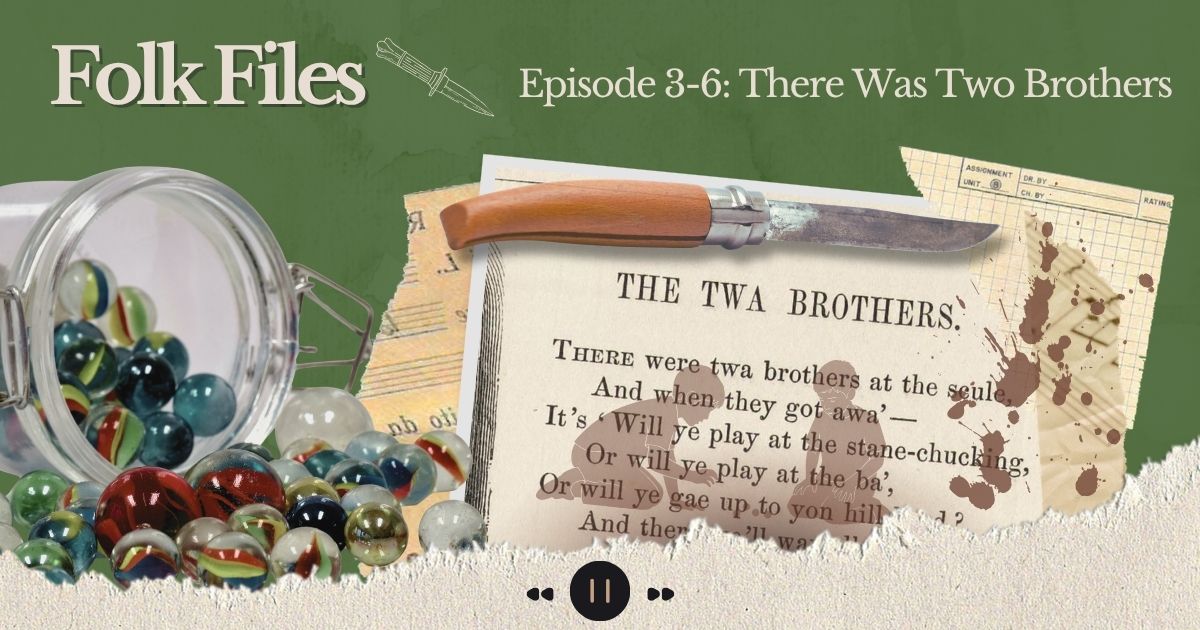
Whereas “The Two Sisters” murder ballad is a complete, coherent story, “Two Brothers” is messy. What’s the motive? Who are these brothers? Who kills whom?
In this episode of Folk Files, we search for the answers to these questions… and discover a dark hypothesis for why the story is so vague.
(Content warning: this episode discusses themes that may not be appropriate for children.)
The release of a debut album is a momentous accomplishment for an artist. For singer-songwriter Satya, the June 5 arrival of her first full-length, Yellow House, also represents the culmination of a long and emotional journey.
A Bay Area native who recently moved to Los Angeles, Satya initially started writing the songs for this album in early 2020, with the soon-arriving pandemic serving to provide her time to work on her music along with delving into her own journals, where she explored her feelings involving growing up in a household that was both abusive and loving.
The songs on Yellow House certainly reflect this duality of emotions. Her lyrics touch upon moments of madness, darkness, and desertion, while also offering up the possibility of escape and survival. Her singing holds an alluring calmness even as she’s addressing some highly charged topics. The album’s laid-back music, which combines elements of neo-soul, dreamy folk, hushed blues, and smokey jazz, serves to support her subdued vocals, creating an inviting, enveloping sound. The blending of musical styles suits someone who has played in Nashville’s Ryman Auditorium, sung (and lived) in New Orleans, and performed at San Francisco JazzFest and Hardly Strictly Bluegrass back on her Bay Area home turf.
Satya, following some work with another producer, recorded Yellow House back around 2023 with noted blues guitarist/producer Colin Linden (Keb’ Mo’, T Bone Burnett, Bruce Cockburn) at his home studio in Nashville. When she spoke with BGS, she talked about Linden’s important contributions to the record – as well as the significance of covering Lucinda Williams’ “Fruits of My Labor” and the Grateful Dead’s “Box of Rain,” the influence of Mazzy Star, and how the release of Yellow House is both a proud moment and a bittersweet one.
How did this album, Yellow House, come together?
Satya: I started writing this project in 2020. The first song I started with was “Circles.” Then the pandemic hit. I was going through a lot at the time with family stuff. I really started writing a lot of the songs for myself.
It was something that I was working on. Then the years would go by and I would kind of put it down and work on a side project. This one always just felt so personal that I wanted it to feel right, and I wanted it to really capture sonically what I wanted.
Do you feel that your sound evolved from your prior EPs (2022’s Deep Blue and 2020’s Flourish Against Fracture) or is more like a continuation of your earlier work?
This album feels like a continuation of [my] first EP I released, in a way, sonically. … I have other stuff out that definitely feels more like soul- and R&B-forward. This one, I feel like, went back into the folky, more Americana style. I don’t even think it was kind of subconscious. It was just the songs that were happening sounded that way. And I think it definitely captures a sound that I just naturally gravitate towards.
One thing that I really loved about the album was the way your singing and the instrumentation floated harmoniously with each other – and I was wondering how you achieved this airy, lived-in feeling?
That’s a good question. I know what sounds I’m drawn to. I reference Mazzy Star a lot for this project. I’ve always kind of felt listening to her, [Mazzy Star lead singer Hope Sandoval] and listening to that band, there’s a whole world that you get sucked into sonically.
This album really is based off of my past and [is] kind of a world. So, I felt like I wanted to create that same spatial sonic feeling. I think, for me, what draws me into those spaces, I think I’ve just taken notes of other artists that I love. And I love slide guitar a lot. I love the organ. I love the Rhodes. I love things that feel like reverb or taking up space.
I grew up singing in choirs and church. So, being in a wide room and hearing sounds bounce off the wall, I really wanted to make sure that the tracks felt not too airbrushed. I wanted everything to feel very raw and, you know, some things are one take.
Colin also definitely had to remind me, too – because I like to contradict myself – as much as I love everything sounding raw, I’m a]perfectionist. So, if we’re going to do it in one take, I need to do a hundred takes. But he was very good, I think, at kind of sifting through and just like allowing things to be.
How did you get together with Colin Linden as your producer?
I met him like two years before we actually recorded the album. I connected with him through my manager, Phil Green, who used to work with an artist named Fantastic Negrito. And I believe Fantastic Negrito had been working with Colin Linden. So, he was recommended to me. At the time I was living in New Orleans, too. So, I was like, “Okay, Nashville is close.” And I made my way out there.
Actually, one of the songs on the project, “Heaven’s Cry,” we just wrote that day – the first time I met him. Then, a few years later, we brought the album to him.
How big of a contribution did he make on the album?
He is a huge part of how the sound came out, and just like how the album came out. First of all, his studio is like my dream studio. He has a home studio in the back of his house. It’s like separate, through his backyard. It’s beautiful. And he just collects so many vintage, old guitars, mics and equipment.
I really just loved his approach, too, because a lot of these songs I came with were fully written. A lot of [what he did] was just kind of restructuring [the songs] or him taking the lead with rearranging.
We spent a week. I flew out to Nashville. We recorded every day, and it just felt really organic. I think that’s also why I really gravitated towards working with him. I just really loved his approach to music and also just his passion for it.
I don’t like using a lot of auto-tune or things on my voice. I really love performing live and I also love performing with a band – just having the live instrumentation… Colin loves live tracking and bringing in instrumentalists and all of that. So, yeah, I just gravitated towards working with him and it just felt really comfortable.
There was a lot of live tracking during the week you were at his studio?
Yeah, definitely. I brought the vocal stems to him. I had kind of recorded all these songs with a different producer, and then we put it down. So, I brought all the stems with me. Some stuff I already had tracked, but some of the stuff we fully reopened. He’s all over it playing slide guitar. His wife actually was playing organ on a lot of the tracks. We brought in an amazing bassist who is playing upright on some of it and a live drummer. So, we definitely had a lot of live tracking.
How significant was it to have done some work with Colin before getting into the studio with him?
I think I was very used to – especially because of the pandemic – being in my own studio and being kind of isolated with writing, which I think there’s a lot of beauty in, too. But that was the first time in a long time where it was just a full week dedicated to just “the art.” And I think that was really special.
The song “Circles” was the first one that you recorded, and did that song show you a way into the album and led to the songs connecting with each other?
Yeah, definitely. I wrote “Circles” and it just kind of sparked all the other songs – and just the concept, too, I think. “Circles” just opened up the idea; it felt like that song was needed to be next to others. “Circles” definitely felt like, sonically, “Oh, okay, this sound feels really nice.” And I think it kind of creates the world for all the other songs to live in.
The album contains two covers – Lucinda Williams’ “Fruits of My Labor” and the Grateful Dead’s “Box of Rain.” How did they become part of this album?
When I perform covers, I try my best to embody the song or embody the lyrics and tie them to my own feelings.
Well, “Fruits of My Labor” – I loved that song forever and ever. I didn’t plan to have that on the album. It was the first day that I came to Colin’s house. I had been covering that song [since] when I was doing small tours with my band. We were doing an arrangement of it, I played it for Colin, and he was like, “Okay, so we’re tracking that right now!” I was listening to that song so much after the pandemic and her lyrics just really stuck with me.
And then “Box of Rain”… that was another song that I had covered. My grandfather, he loves that song a lot. I grew up listening to it and I just love the lyrics. I wanted to add it on the album too, just because the whole album is around my family. “Box of Rain” really reflects to me just so much beauty, as well, in my family. When I hear that song, it just reminds me of a lot of the joy and a lot of the sweetness. So, I wanted to add that too.
When did this week of recording take place?
I think it was 2023.
So, it has taken some time to get it all done?
Yeah, I took a while for sure. You know, if I lived in Nashville, after that week, I could have gone back and listened to everything. But a lot of it was kind of one and done, so it was a lot of him sending me tons of different forms of the mixes and me writing feedback and going back and forth – getting the project mixed and mastered, and then everything else around it. But, yeah, it was a long time coming.
It must be really an emotional experience to have these songs finally coming out?
Yeah, it definitely is. It feels like a mixture of emotions for sure, because I’ve sat on these songs for so long. I think it’s just like – with a lot of musicians, I’ve heard and I’ve always felt this way – by the time a song is ready to release, I’ve already heard it a thousand times and I wrote it years ago. A lot of these songs were heavier, so they were a way for me to process everything I was feeling. It definitely feels like a release to be able to just finally let it all go and give it away.
I feel like I had to really take a step back when this project was done and just look at my own personal life over the last six years – and how much I think I’ve grown and overcome and a lot of things I feel have healed. It feels like, I think, a lot of things at once. I think I feel very proud and also very bittersweet from that time.
I think that also just writing this project kind of showed me the power in music and art, and how much it can bring, and cultivate so much healing, and connection with other people even. Like the conversations just kind of sparked by sharing these stories have been really special. But at the same time, I’m going to be unwrapping a lot of this stuff forever and I think it will always spiral outward, you know.
Artist:Benny Bleu Hometown: Hemlock, New York Latest Album:When I Am a Fossil (released June 5, 2026) Personal Nicknames (or rejected band names): My real name is Benjamin Haravitch. I like it just fine, and maybe someday I’ll release music as that guy. For now, Benny Bleu helps out.
Which artist has influenced you the most – and how?
Early on in my old-time journey, I became obsessed with the fiddling of Rayna Gellert. I said to myself, “I want to play the banjo like she plays the fiddle.” And that goal still stands. I love the way she records and releases music, especially her latest duo albums with Kieran Kane and also alongside Joachim Cooder. The music is accessible and rooted in traditional old-time music and also totally fresh with a clear point of view. Most importantly, it feels good and flows with perpetual motion. All things I try to do with the music I make.
What was the first moment that you knew you wanted to be a musician?
When I was about four years old, a new neighbor moved in next door. Gary. He had a band called Wilderness Family (banjo, fife, snare drum, upright bass, accordion) and I remember them playing for us in my driveway. When I was eight or so, the band threw a party in my backyard and invited all their freaky musician friends who camped out and jammed and juggled all weekend. I eventually grew up, but I don’t think I ever left that party. For a while I tried to work a 9-to-5 as a geologist. But the songs never stopped ringing in my head! I knew there was no avoiding the fact that I make music and that’s just what I do.
Which elements of nature do you spend the most time with and how do they impact your work?
All of the music I make is an echo of my relationship with the earth. Even the way I tour reflects this, primarily getting around on Amtrak. My new record When I Am a Fossil is entirely focused on our place in nature. In the title track, I reflect on my past life as an environmental geologist. Scientists in the deep future might find vast evidence of our human experiment, but will they ever find the steps we didn’t take?
I live in upstate New York, in a region known as the Finger Lakes. Two of these lakes – Canadice and Hemlock – have been lasting muses for me. Ancient worlds that have witnessed glaciation, generations of native cultures, colonial progress come and gone, and now provide water for the city of Rochester. This is a story I tell in the song “Abbey Lovely.” And “All I Want to Be” is a meditation on awe and the simple pleasure of being “here” in our place in nature.
Does pineapple really belong on pizza?
All toppings belong. Especially the under-represented ones, like pineapple. If a pizza is provided with a supportive crust, a zesty sauce, and savory cheese, then all toppings will manifest greatness. I don’t do the social medias, but in my newsletters I like to let my fans know where my favorite pies are as I travel around. I usually go for a simple slice of cheese.
What is a genre, album, artist, musician, or song that you adore that would surprise people?
The element of music that speaks to me most is rhythm. So I tend to love drummers and rhythmically adventurous musicians. I love Latin music. I love Fela Kuti and James Brown. Music that holds the groove above all else. Bernard Purdie, the legendary session drummer, is one of my favorite musicians and I hear a lot of similarity in how he keeps a song moving with how an old-time fiddler creates that perpetual forward motion. My desert-island-all-time favorite track would have to be “Sugar” by Stevie Wonder.
This Mixtape brings a spotlight to the vibrant community that I call home in New Orleans. This is a list of some recordings I’ve been part of as a side musician. There are so many bands that I have played and recorded with through the years, I feel honored to be at their sides. Here are a few memories of moments from the making of these records – and I’ve noted what I contributed to each song.
Thank you for trusting me with your tunes! The life I love is making music with my friends…
I should make a disclaimer – my memories run together and I can’t always remember complete credits for every person on every song… forgive me, for I know these are incomplete! There are so many people who work behind the scenes. One thing I realized while writing this list and wanted to note: Ross Farbe (Video Age) is either a recording engineer, mixing engineer, producer or performer on almost half of these songs. He mixed my whole record. It’s often those working just out of view who make the magic happen. – Gina Leslie
“The World Is Changing” – Gina Leslie
I’ll start off this listening session with the opening track of my new album, I Love You Always No Matter What Happens. I wrote this song sitting around a campfire on a long haul drive from Louisiana to Colorado while going through it. I went to therapy and all I got was this self-love and ability to cope?!? I’m obsessed with the guitar riff that my co-producer Nat Smith added after the hook.
“Little Things” – Bella White
(Bass, harmony vocals.) It’s been a treat to record on Bella’s new album and play in her live band for the past few years. When we met, we immediately clicked about our similar bluegrass childhoods and endless love of singing three-part harmony, and we never looked back. We recorded this album at our friend’s house by the levee in New Orleans.
“Had To” – Esther Rose
(Bass, harmony vocals.) After playing with Esther here and there through the years, we finally got together for a full record together. I loved playing bass and singing harms on her album Want, recorded live to tape at the Bomb Shelter in Nashville. Esther is a well of songs and I’m constantly inspired by her commitment to writing.
“New Believers” – Sam Gelband
(Bass, harmony vocals.) I’ve been playing in different versions of Sam’s band for a long time and we recorded his new album at his house in New Orleans. There’s something about his songs that makes me perfectly happy and sad at the same time. Sam and I are also a rhythm section team, playing with a lot of the bands on this list.
“Jay’n Bee Club” – Max Bien Kahn
(Acoustic guitar, harmony vocals.) Max and I have both been playing bass in each other’s live bands for years. This song is from his upcoming unreleased album where everyone switched instruments constantly; sometimes we would do a take of a song and then everyone swap and do another take. I love how alive it feels.
“Louisiana Hound Dog” – Sabine McCalla
(Bass, harmony vocals.) I’ve got a Louisiana hound dog of my own and she goes wild for Sabine, much like most anyone who hears her. The recording session for this album was the beginning of me playing in Sabine’s band and we’ve been all over the place since then. I love how this album covers so much sonic ground and is layered with harmonies and little ear candies everywhere.
“I Really Do” – Leonie Evans
(Bass, harmony vocals.) Nearly 10 years ago, I got a bootleg copy of a home recording of Leonie singing and nearly crashed my car when I put it on for the first time. I couldn’t believe she was real. Then a few months later, I manifested her into my life and she came to my house straight from the airport to work up harmonies for a gig that night. We’ve been harmony sisters ever since.
“Long Gone” – Chris Lyons
(Bass, harmony vocals.) I was standing outside when Chris put on the rough mixes at closing time at beloved neighborhood dive bar BJ’s, and through the walls I thought it was an old record from the ’70s. Then I came inside and realized it was the Chris Lyons record we had been working on that week. Chris has that classic folk rock sound.
“No Mama Blues” – The Lostines
(Bass, harmony vocals.) The Lostines – songwriting & singing team Casey Jane Reece-Kaigler and Camille Weatherford – were one of the early bands I started playing with when I moved to New Orleans. We recorded this record at the Tigermen Den in early 2022 with a revolving door of friends to ice the sonic cake.
“Chicken Pocket” – Chicken Milk
(Harmony vocals.) I met Dave Hammer, the mastermind behind local cult icon Chicken Milk, on the very first night I came to New Orleans in 2016. We started a band together a few days later. I’d guess we’ve played thousands of hours of music together at this point. Chicken Milk create some of the most unique, joyful, hilarious songwriting and playing I’ve ever heard. I often can’t get through a song without bursting into laughter. This is a tame one.
“Left Side” – Stelth Ulvang
(Bass, harmony vocals.) The day that I met Stelth, we went straight into the studio minutes later and started setting up mics and jamming his songs, capturing some of the first times we ever got through the songs. I love how Stelth is so playful and not precious about the creative process, with everything fully live and breathing. The backing band includes a few of my beloved and most frequent collaborators – Howe Pearson on drums and Max Bien Kahn on guitar.
“Misty Mama” – Rainy Eyes
(Harmony vocals.) The session for this album began in a little cabin in Bolinas, California, before Irena Eide (AKA Rainy Eyes) took a meandering journey to Lafayette, Louisiana, several years later to finish the album. I was so happy to be a part of bringing it to the finish line. Irena writes classic and confessional songs that speak truth to my wandering spirit.
“Oaxaca” – Maggie Koerner
(Bass.) Absolute powerhouse Maggie slid into my DMs a few years ago and asked if I wanted to hang out and try making some music together, wanting more women in the room on her next record. I was so glad to play bass on her album UPSTATE, recorded at Lil Squeeze studio by Ajai Combelic. Maggie’s voice stops me in my tracks.
“Anna Rose” – Ric Robertson
(Harmony vocals.) When I quit my job in 2016, packed my car, and started driving, it was Ric Robertson who told me to come down to New Orleans, where I could sublet a room, have a band of my own, and play every night of the week. It changed the course of my life. He co-produced my EP, No, You’re Crying, and it’s been so special to be a part of each other’s music. I loved singing harmonies here with Appalachian songbird Dori Freeman.
“Yellow Motorcycle” – Gina Leslie, Elise Leavy
(Guitar, vocals.) I couldn’t possibly talk about loving music with my friends without a mention of Elise Leavy. We’ve been dancing with the mysterious art of writing songs together for years, and have never yet run out of songs to sing together. My new album features her on a lot of the harmony singing, as well as two stripped down acoustic duets that we co-wrote.
Welcome to our weekly collection of new music! You Gotta Hear This…
First thing today, you should know it’s a bluegrass-rich week in our roundup – which we love! The Binoculars start us off on a strong bluegrassy foot with their cover of “Lorene,” a Louvin Brothers song that will be included on the duo’s upcoming album, Double Whammy, out July 17. Like the Louvin Brothers themselves, the Binoculars do a great job of bridging rootsy sonic territories, country, bluegrass, old-time, and more. For a taste of bluegrass gospel, we’re celebrating the release of Eighteen Mile’s new album, Peace Be Still (out today), with the title track, written by vocalist and guitarist Jack Ritter. It’s fresh, modern bluegrass built on faith and tradition.
We’ve got several great fiddlers represented in our list today, too. A huge – and still-growing name – on the current bluegrass and jamgrass scene, Bronwyn Keith-Hynes, is dropping her surname for a new era under a mononym, Bronwyn. Today, Bronwyn announces her upcoming album Rattlin’ Bones, her first LP under the new name, which will release in August. We’re sharing the track from which the LP draws its title, “Sticks and Stones.” It showcases the growth in Bronwyn’s songwriting over time – and features Darrell Scott. Plus, if you’re familiar with fiddler Libby Weitnauer, she’s now releasing music under the artist name Libby Dale. “Empty Tank,” which came out yesterday, is indie Americana with a Gothic, Appalachian undertone and excellent rootsy touches. Dale’s songwriting is impeccable and the production is built on a fascinating blend of roots styles.
An old-time and Americana favorite, Sophie Wellington, has unveiled a new single and video, “Scolding Wife.” Wellington has a new album coming in early July. This track and video showcase her unique, multi-hyphenate approach to music-making; it’s a simple, stripped-down arrangement featuring only guitar and percussion – provided by dance. It’s lovely and entrancing, no matter how basic or elemental in its construction. Singer-songwriter Kate Waters has a new song out this week, too. “Words” arrived on June 10, juxtaposing steel guitar, mandolin, and acoustic guitar in a folk-meets-string band-meets-Americana sound. It’s a contemplative lyric that searches inward and outward for the right thing to say.
You’ll enjoy the music video for the title track of Dailey & Vincent’s album, A Beautiful Life, released today. This feel-good song is the duo’s special way of sharing what they’re grateful for. We’re also thankful that Bill Anderson and Jon Randall (who co-wrote “Whiskey Lullaby”) teamed with Carrie Underwood to write it. And our own Justin Hiltner (editor of BGS and Good Country) and Jon Weisberger (BGS contributor) are back on the site again – for the first time since 2022 – as musicians and artists, rather than writer or editor. Hiltner & Weisberger just announced they’ve signed with Mountain Home Music Company to release music as a duo again. “Marinda” is their first single with Mountain Home, a song about a woman in California built on low-tuned long-neck banjo and an all-star band – that includes Libby Dale (Weitnauer) on fiddle, by chance, as well. We hope you enjoy the track and don’t mind the BGS team’s bias, we think these guys are pretty okay and, yeah… maybe, just maybe, You Gotta Hear This, too!
There’s plenty of bluegrass, Americana, old-time, and more to enjoy. Get scrolling and get listening– You Gotta Hear This!
The Binoculars, “Lorene”
Artist:The Binoculars Hometown: Brooklyn, New York Song: “Lorene” Album:Double Whammy Release Date: July 17, 2026 Label: Jalopy Records
In Their Words: “As huge fans of the Louvin Brothers, it’s hard to resist covering all of their songs. ‘Lorene’ really stood out to us, as a secular number and with a letter-writing theme! We both frequent the postal service for transmitting love letters and postcards. There is a spirit in handwritten letters that just can’t be replicated in a text or in the vacuum of social media. We find the lyrics strike an even more dynamic chord in these modern times, where rejection can be felt in a single swipe, and the appetite for approval and response is insatiable and aggressive. This song transports us to a slower more ponderous time, when that ache of not knowing your lover’s position gnaws at your heart. You can feel those empty mailbox blues.” – The Binoculars
Bronwyn, “Sticks and Stones”
Artist:Bronwyn Hometown: Charlottesville, Virginia Song: “Sticks and Stones” Album:Rattlin’ Bones Release Date: June 12, 2026 (single); August 14, 2026 (album)
In Their Words: “‘Sticks and Stones’ started coming to me a couple years ago as I was lying awake in the middle of the night, rolling down the road on the bus. It was a rough ride through the mountains, enough to rattle your bones, and some lines from the chorus started banging around in my head as I was drifting in and out of sleep. The chorus is the heart of this devil-may-care traveling song: ‘Sticks and stones/ Burning down the highway/ Rattling bones/ I don’t need no heartache/ I’ve been gathering a whole lotta sticks and stones…’
“‘Sticks and Stones’ has a hard-won swagger to it, a feeling borne out of years of being on the road as well as the requisite slight romanticism of it that keeps me going. That feeling is clearly heard in the last verse— ‘Heard a guy on a record singing walk that line/ He was saying what I’ve been thinking all my life/ Turned it up loud enough my truck began to shake.’ It’s self-sufficient, self-aware, and a little bit pissed off.” – Bronwyn
Track Credits: Bronwyn – Fiddle, lead vocal, songwriter Darrell Scott – Harmony vocal Harry Clark – Mandolin Bryan Sutton – Guitar Frank Evans – Banjo Jeff Picker – Bass
Dailey & Vincent, “A Beautiful Life”
Artist:Dailey & Vincent Hometown: Nashville, Tennessee Song: “A Beautiful Life” Album:A Beautiful Life Release Date: June 12, 2026 Label: Pillar Stone Records
In Their Words: “There are songs you record because they’re great songs, and then there are songs that become part of your story. ‘A Beautiful Life’ became that song for us. It captures so much of what we believe – that even through life’s challenges, we have so much to be thankful for.” – Jamie Dailey
“This song became the title track because it perfectly reflects where Jamie and I are today. We’ve been blessed beyond measure, and this lyric serves as a reminder to never take those blessings for granted. It’s a celebration of faith, family, friendship, and the gift of life itself.” – Darrin Vincent
Track Credits: Greg Morrow – Drums Craig Young – Bass Seth Taylor – Acoustic guitar Andy Leftwich – Fiddle, mandolin Michael Rojas – Piano James Mitchell – Electric guitar Jamie Dailey – Lead vocal Jaelee Roberts – Harmony vocal Darrin Vincent – Harmony vocal
In Their Words: “‘Empty Tank’ was inspired by recordings like Lucinda Williams’ ‘Crescent City’ and Emmylou Harris’ ‘Leaving Louisiana’ – both twisted anthems for less-than-perfect places. It’s an airing of grievances and a love letter for my life in Nashville. Pothole-riddled streets, the music industry rat race, and summer heat are certainly prominent characters, but so are good dances and a great band. Producer Thomas Bryan Eaton helped me bring this track to life with a fantastic rhythm section (Chris Gelb and Jonathan Beam) and the GRAMMY-winning mixing chops of Justin Francis. All parties mentioned brought the relentless groove and thunk I had envisioned for the song. ‘Empty Tank’ is the second single off my debut LP, Freehand, due in October of this year.” – Libby Dale
Eighteen Mile, “Peace Be Still”
Artist:Eighteen Mile Hometown: Upstate South Carolina Song: “Peace Be Still” Album:Peace Be Still Release Date: June 12, 2026 (album)
In Their Words: “I wrote ‘Peace Be Still’ on the better side of a bad year. While the tune was there, I struggled to find words that could convey my testimony throughout the song. The more I thought about my testimony and walk with Christ, the words came quickly and became what you hear today. I wanted this song to not only be a personal testimony of God’s grace and mercy, but a message to those who are struggling that my Lord and Savior can provide peace that is beyond all understanding. I’m so honored and never would have thought that a song I wrote would become the title track of our first album with Mountain Home. I’m so thankful to my friends for choosing it.” – Jack Ritter, lead vocalist, guitarist, songwriter
Track Credits: Jack Ritter – Acoustic guitar, lead vocal Hallie Ritter – Upright bass, harmony vocal Carson Aaron – Acoustic guitar, harmony vocal Savannah Aaron – Fiddle Steve Pettit – Mandolin Rob Ickes – Resonator guitar
Justin Hiltner & Jon Weisberger, “Marinda”
Artist:Justin Hiltner & Jon Weisberger Hometown: Nashville, Tennessee & Brevard, North Carolina Song: “Marinda” Release Date: June 12, 2026 Label: Mountain Home Music Company
In Their Words: “On a mountaintop in Western North Carolina I met a fabulous woman named Marinda. ‘Like Miranda, but with the letters swapped,’ I think she told me. She’s a great cook, made us a delicious lentil salad. Then she told me where she was from: Marin County, California. I couldn’t believe it. Marinda from Marin.
“There are so many bluegrass songs that take their titles from women’s names, I guess it was time Jon and I added such a track to our catalog of co-writes. I love how this one turned out, evoking iconic and familiar images of California and singing praises to a powerful, entrancing woman. She may be a fictionalized version of my friend Marinda, but her inspiration comes all the way through. I love the long-neck, low-tuned banjo here and the way the fiddle, banjo, and mandolin all join in together on the melodic hook. When I’m missing the Bay Area – or Marinda’s lentil salad – I play this tune.” – Justin Hiltner
(Editor’s Note: Justin Hiltner is the editor for BGS and Good Country, and Jon Weisberger is a former contributor to BGS.)
Kate Waters, “Words”
Artist:Kate Waters Hometown: Dallas and Houston, Texas, and Taos, New Mexico Song: “Words” Album:Some Comfort Release Date: June 10, 2026 (single); August 21, 2026 (album)
In Their Words: “This is the oldest song on the record, from my earliest stages of songwriting as an adult. I was wrestling with why I felt intimidated by writing lyrics, like words couldn’t ever fully capture what I wanted to say. I mean, that’s why I’m a musician, truly.
“The sentiment still holds true – words can do a lot, but they also fail a lot of the time. We see it so much these days, politically speaking – people talking past each other and never truly understanding one another. I’m a music therapist, and as someone who’s worked professionally with nonspeaking people for most of my professional life, I know how important it is to tune into other aspects of communication and human connection.” – Kate Waters
Sophie Wellington, “Scolding Wife”
Artist:Sophie Wellington Hometown: Staunton, Virginia Song: “Scolding Wife” Album:Her Bright Smile Haunts Me Still Release Date: June 8, 2026 (single); July 10, 2026 (album) Label: Adhyâropa Records
In Their Words: “This fiddle tune has complex phrasing and tells an intriguing melodic story. Marion Reece, the source fiddler for this tune, plays this in calico tuning (AEAC#) which give it haunting, suspended quality. While I can’t remember where I first learned this tune, I fell in love with it again in 2025 when playing it with Sally Jablonsky and Stefan Amidon at Cascade of Music and Dance, a social dance camp run by Country Dance & Song Society. We played this tune late into the night, locking in with one another and allowing the space to breathe and the notes to sing. For me, old-time music shines brightest in my friendships and shared memories of playing. I’m fascinated with how to best adapt this music for guitar, allowing it to feel fluid and free on that instrument.” – Sophie Wellington
Track Credits: Sophie Wellington – Guitar, percussive dance
Video Credits: Pat Piasecki and Chris Dempsey, with special thanks to Barbara Hauser.
Photo Credit: Bronwyn by Alexa King Stone; Sophie Wellington by Pat Piasecki.
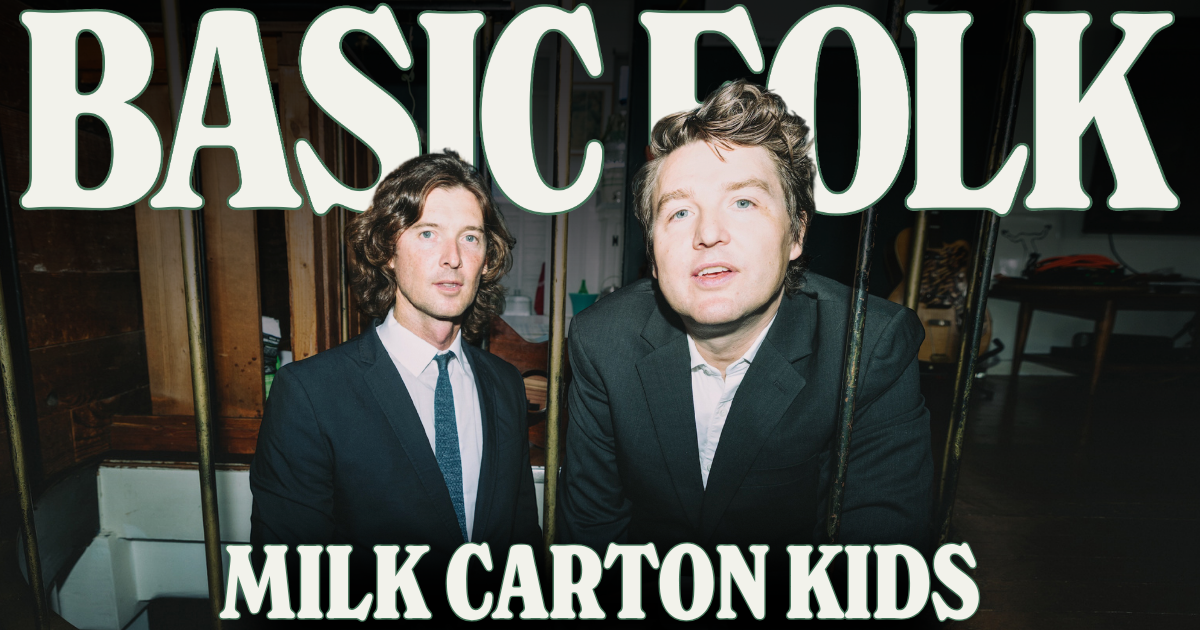
Kenneth Pattengale and Joey Ryan, the MilkCartonKids, are calling their latest album, Lost Cause Lover Fool, “the one.” They have finally figured out how to feel and sound like themselves with a broader sonic palette. They attribute that to sharing one mic when they sing with each other. The songs on the album enlarge small feelings and moments, working to turn them all into eternity. Moments that “usually pass too quickly to notice.” The guys have spent their careers making a case for staying small, staying present, and listening closely.
We loved our conversation with Kenneth and Joey so much – in fact, immediately following Lizzie sent me a voice recording expressing just that. She said it was so real: “What great guests and what great hosts!” We learn that Joey is a nepo folk baby as his mother, Debbie, was in a folk duo in college. We dig into what death–and the banjo–are up to on their new album. We explore what it means to be labeled “weenies” versus “gentle” or “the titans of yearning.” We also hear from the guys about how they do not actually feel pressured to be funny, they just are.
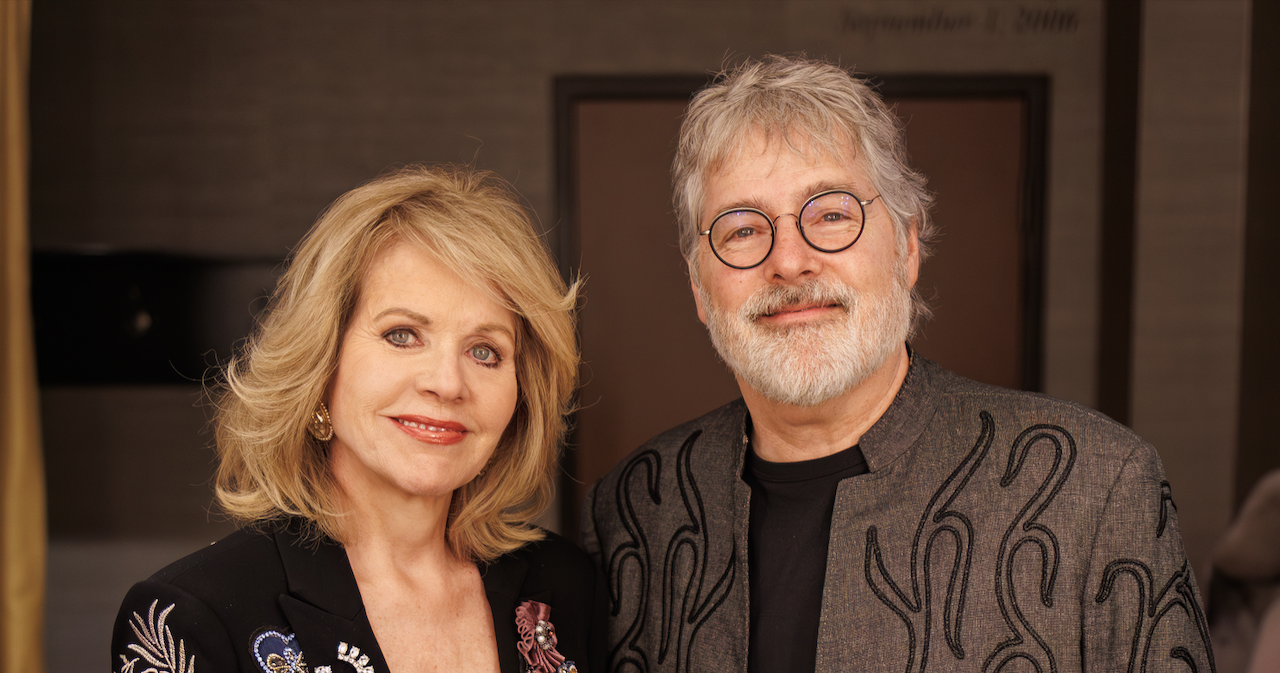
Renée Fleming, Béla Fleck, Appalachia, and an all-star bluegrass band. Though the knee-jerk reaction to this list might be to play “one of these things is not like the other,” there is much more to this premise than meets the eye – and ear.
Fleming is one of the most renowned opera singers of the modern day, but the internationally acclaimed soprano has a long history of musical curiosity and often enthusiastically indulges thereof. From this trait alone, she and Béla Fleck found a resonance within one another, embracing and making music beyond the bounds of their respective claims to fame. This resonance sparked an idea that endured for more than 20 years, culminating in The Fiddle and the Drum, an album of Appalachian songs sung by Fleming and produced by Fleck – one that, more than anything, reveals a journey of familiarity and discovery for both artists.
The pair joined BGS on a phone call to delve into the musical, historical, and personal connective dimensions of this record. The memories shared are rich and many. Some extend as far back as Fleming’s preteen years. Others revive Fleck’s contemplations of how each song might come to life through Fleming’s vocal prowess. Every one of their recollections is imbued with immense mutual respect and awe for each other as well as the album’s many collaborators; it’s clear they both appreciate the gifts each and every person brought to this record.
Our conversation isn’t without painful realities, as the album’s focus on love and loss and war prompts reflections on fights and fatalities happening today. But, ultimately, it’s a conversation colored by a range of emotions and experiences, not unlike the very music of The Fiddle and the Drum itself.
Renée, you’ve spoken extensively about your upbringing and how you formed your relationship with a lot of folk music and folk artists. In that vein, how would you describe the initial perspective you formed about the music of folk, bluegrass, and Appalachia during the younger formative years of your life?
Renée Fleming: I think it was in middle school that they offered a guitar class – which I think is a fantastic way to get kids interested in music, because it’s an instrument you can carry around and you can read tablature pretty easily and pretty quickly. So that got me interested in [music], but also some of the music that I really genuinely liked [and got me interested] came a little later, including my discovery of Joni Mitchell in junior high school and high school. Then I was exposed to it through my family as well, because my grandfather was a fiddler and a drummer, so we had very eclectic tastes in music. I just was constantly exploring. [I] wrote a lot of songs and wrote a lot of music, starting probably when I was 12 years old, and it just branched out from there.
Where did Béla Fleck initially come into the picture for you?
RF: I was already a fan of Béla because of Béla Fleck & the Flecktones. In college, I really started singing jazz with a big band and also with the trio every weekend, so I was a big fan of his [at that time].
Obviously everything worked out the way it was meant to, but you still carry those glimpses into other worlds – folk, jazz, and so on – and it helped somewhat shape where we are now. I think it’s really brought a lot of extra color, showing people that [music] doesn’t have to be so rigid and doesn’t have to be about genres and specific labels and I think that’s something that really shines through with The Fiddle and the Drum.
Béla Fleck: I think we all have a tendency to pigeonhole people and put them into a black-and-white kind of a concept. You know, “They do this, they don’t do that,” but people are nuanced and love all kinds of things, especially when growing up and you’re open, you’re trying things and figuring out where you’re going to land.
I was also a huge fan of Joni Mitchell, and I was a vocal major in school, even though I couldn’t sing worth a darn and was secretly working on the banjo in the closet. But being exposed to classical music in high school – and my stepfather is a cellist, so I was listening to string quartets and stuff when I was a kid. People might be surprised by that, or maybe not, considering the kind of music I like to do, which is very varied. But I think it makes all the sense in the world that all of these other interests make Renée an even better opera singer, if that’s the right thing to call her. But the bigger your world is, the more you can bring to the specific things that you do.
RF: I never heard that you were a voice major before. I love that.
BF: Don’t think I’m gonna sing, because I want to protect you from awful pain, agony, despair.
RF: I don’t believe it.
BF: Nobody ever gave me a voice lesson, but they started me on French horn. I got into my school playing guitar and then it became clear that I wasn’t going to be able to play the French horn. They said, “Listen, you could just go stand in the chorus and still be in the school.”
So they put me back in there, but they needed tenors. I wasn’t a tenor so I just kind of screamed, looked at the music, and tried to figure out what they were singing and sing along. Then, when I got to my final year, they said, “Oh, we found out we’re doing Rhapsody in Blue for the semi-annual concert, and we found a banjo part so you can get out of chorus. If you want to get out of chorus, you can play this banjo part on the final concert.” I was like, “I think I’ll stay in chorus.” I liked it at that point.
Then on the last day of school, the chorus teacher – a woman named Mrs. S, who was an amazing vocal teacher – she had never spent any time with me, but she got me in front of the piano and said, “Stand up straight, sing from your diaphragm!” And she gave me a few quick things she made me do and I was singing like a bird. I was like, “Holy cow, I wish you had given me a lesson when I started at the school. I would actually be able to sing!” She knew exactly what I needed to do. It was remarkable.
Speaking of singing technique, Renée, when you were preparing to record the songs for the album, where on the spectrum of vocal expression did you anticipate needing to steer your voice?
RF: I think it was Béla who kind of clocked that a lot of the songs we were choosing kind of fell in line with [themes of] love and loss – and war, as well.
One of the things that I do, especially when I’m singing outside the classical genre, is I try to avoid an obviously classical sound. That, typically for me, means the upper register. But we worked it in some songs and you just have to be mindful of vibrato. It’s really thinking about style and, for me, that’s the same as when I’m singing on a program of French art song versus an Italian aria. So I may sound the same, but the style is completely different.
What struck me as I listened to the album was just how subtle and yet impactful the differences in how you sing can be. It’s just shaping and forming your voice around the mood that needs to come through. And I visualized that, if your voice was some kind of an entity or something that could be shaped, that you just have this beautiful ability to mold it and manipulate it into exactly the shape and form and size it needs to be to express whatever the music calls for.
RF: I like to record. I like the idea of focusing only on what we hear and not adding so many other elements like you do in a live performance, where it’s also your acting and your movement and how you look and your facial expression. This is a very much more focused activity and we would do many versions of the same song. I left it to Béla to choose which versions he liked. I had almost no complaints about the choices he made.
BF: I loved to hear your voice on all the takes. And then sometimes there would just be a magic moment of, “Oh my god, the song is really happening here. We’ve got to make sure this is part of the final takes.”
I have a frustration when you have something killer that happens in one portion of the take and then the rest of the take isn’t as good. I like to find those magic moments and have them all end up on the record. But I also think for Renée, there’s an unconscious element to being a musician. [To Renée:] You’re inspired by a moment, and sometimes it’s hard to put into words all the things that you’re [doing]. You put the material in front of yourself, you decide [to] embody it, and the music is correct and things are happening in the right way – you just know what to do. And it’s hard to say how you know.
Renée and I worked really, really hard on our craft, but I think the craft is there to serve something that’s a little harder to quantify, which is just what the unconscious – what our bodies and our souls – wants to doubt when it’s time to make the music.
RF: And it has to do with the expression. I’m also thinking of specific pitches and words that relate to the song, but [to Béla:] I was really thrilled to hear how much you could vary what you were playing. Sometimes your harmonies would just come from another world and I’d say, “Wow, that’s so cool. Béla can kind of put in a jazz harmony once in a while.”
BF: You also pushed for that. I remember the first arrangements you said, “I think this could be more interesting.” And then in the moment, I had to come up with a better arrangement, a more interesting arrangement, for the first song on the record [“He’s Gone Away/Storms Are on the Ocean”]. I’m really proud of it. I think if you hadn’t pushed and I hadn’t reacted, we wouldn’t have ended up with that arrangement, which was quite unusual for that song, and then that kind of led the way to being a little bit more open.
It’s funny, when I’m playing with the Flecktones, or Chick Corea, or somebody like those folks, I feel very open harmonically. When I’m playing music that’s more traditional, I’m very careful not to get too harmonic. So, when I discovered this was a safe place to explore a little bit and look for just the right kind of harmonic additions to the basic chords, it was very freeing and inspiring. And of course, getting to work with a great vocalist like Renée… I’ve been a big fan of female vocalists since Joni Mitchell and Joan Baez and Linda Ronstadt and all of these people. I saw that there was a lot of art to working with a great vocalist like that. I was eager to have that opportunity and thankful to get a chance to try and figure out how to make it work from my end.
RF: It’s funny you say that, because I’m a huge fan now of Hazel Dickens, and you said that you had worked with her. Because there’s something so plaintive about the way she sings, it’s like Roscoe Holcomb, too. There’s something– I can’t describe it. It’s authentic and it’s immediate simplicity. I just absolutely love it.
BF: We used to talk about the “ancient tones” in the bluegrass world, and Bill Monroe had this quality. It might not always be perfectly in tune but it didn’t matter. It was just so pure and so powerful. And Hazel has that. It’s like it’s coming from another planet, almost. It’s so deep and powerful the ordinary rules don’t apply. It’s something else.
RF: I agree.
Connecting this topic of the intangible with the themes of the record, how are you both feeling about the album’s thematic focus, given the various experiences of war and loss that are happening in the U.S. and abroad?
BF: What happened was, we had a certain amount of songs we were committed to and we were excited about, and we were looking at quite a large list of additional songs that might finish out the record. That’s when I started looking at the original six songs we had recorded and thought, “You know, there really is a thematic arc.” Some of these songs were not working for me, and I couldn’t explain why until I put my finger on the fact that the six songs that we’d already recorded were telling me a story. When I explained what I was seeing to Renée, she said, “Oh, I see that. That makes all the sense in the world.”
It kind of starts with a romantic relationship that leads to commitment and then the man, in this case, goes off to war and doesn’t make it back. The woman is left on her own, maybe with a child, and then in the end, there’s a rumination about life and the way it goes like this often in the world. So that’s the story arc. Basically, to me, that is about when you make a man your boss, you give yourself up. You give up your beauty. You give up your individuality and all the promise that you could be if you weren’t in that kind of a relationship, you know what I mean? And in a way, the woman in this story is taken advantage of by bigger forces, a war.
Well, this stuff is happening every day, all over the world. And we’re in a big one right now, and there’s a lot of questions as to whether we should be there. Those questions usually come out a few years after the war is over, and everybody will say, “Oh, this was a terrible idea, and here’s why.” You don’t have to be a genius to know that we’re going to be saying the same thing about a lot of these conflicts before long. So to me, it just makes the record have that much more meaning. It’s happening right now, just like it always does – this is what people do. This is what mankind does. And it’s very disappointing that it keeps going back to this place.
RF: [My and Béla’s] generation has been fortunate that, in a way, we’re too young to have really understood what was happening in Vietnam. A lot of this repertoire really relates specifically to Vietnam. But there’s also the Civil War. And every once in a while, things really fall apart. We’re in a period now where the same thing is happening. And it’s really not useful. It’s not going to move the needle for Iranian citizens – it might even make it worse for them. So I just think it’s tragic when leaders feel like the only alternative is war.
BF: Renée also mentioned she wasn’t sure that “Scarlet Tide” would fit with the other songs, but we went ahead and did it because we both loved it. And then when we looked at what we had – again, those first six songs – it made all the sense in the world. The songs were leading us in a direction, one that, unfortunately, mirrored what mankind does.
RF: And my heart goes out also to people in the Ukraine. There are always conflicts happening around the world. There have been so many reasons for these things, it’s shocking that sometimes it’s just [plain] political. I find that really sad.
It certainly has just felt like a very heavy time, for quite a long time. So even though the themes on this album are rather heavy and emphasize a lot of the sadness that’s going on, I think it’s also very cathartic.
BF: It’s funny how in blues and bluegrass, sometimes you’ll sing the most terrible lyrics – little girl and the awful, dreadful snake or a guy killing a woman – and make this very happy, jolly song about it. It’s bizarre! And in blues, a lot of time you’re singing the saddest things, but it’s uplifting somehow to bring them out in the open and treat them maybe in a different way that allows you to experience them differently and work them through in different ways. Some bluegrass songs are really, really sad but they’re so jaunty you don’t quite realize it.
RF: Well, it’s also that we are practicing grief. That’s one of the things that scientists have come up with, that sad songs really help us process and learn how to process actual grief, because we’ll all experience it.
BF: I think also having kids – we’re both parents – but you realize that people process grief in really different ways. Some people don’t show it for a long time, but then it comes out. It’s handled in a lot of different ways.
When you were putting the music together, what kind of unexpected creative sparks came up amongst the two of you and also among the large group of immensely creative artists that are contributing to the album?
BF: I think with music, you can be over prepared because there’s a lot of things that happen very spontaneously when you have musicians of this caliber – people like Sam Bush, Jerry Douglas, Stuart Duncan. Just like Renée colors every take differently, they’re going to do the same. They’re going to be very responsive. Things are going to happen on the floor. Someone’s going to want to stay on the floor in the studio while we’re doing takes, someone’s going to say, “Yeah, I don’t know, that part’s not working for me.” And we’re going to solve it in a matter of seconds and something’s going to work.
It’s a very emotional place to get into when you’re recording, especially songs like this. As we’re all listening to Renée, we’re all inspired by how she’s singing them. They’re different than we’re used to hearing. So we’re playing differently than we’re used to. But we also come up with an arrangement, develop it, and do it a few times so we really think we have something and try not to rush through it. But there’s a tendency for things to really work out very quickly.
So with the producer role that I was in – and Renee didn’t have that experience with these folks, although she has with a lot of other musicians that are improvising musicians – where the parts are not written down and they’re very spontaneous, she was able to ride those waves very well. And whenever she spoke up, she gave me a lot of latitude, a lot of rope. But whenever she spoke up with any comment, it was always dead on the money. It was going to make it better. We listened and we tried to incorporate everything we could to make it her music.
RF: I think also that collaboration, for me– the example I would use is working with a conductor is, at best, very intuitive. You’re reading each other’s signals that you’re giving musically, in terms of dynamics, and it’s never the same way twice. I think that was true in this process as well. And having Béla, who had really created the structure for each of these arrangements, helped to anchor everything.
But to have those other musicians playing – they’re the crème de la crème of Nashville I think, and the singers as well. I mean, the way Dolly Parton was able to add her voice to the track I had already created [“In the Pines”] and just blend in amazingly, but then to also add so much to it. And the same was true for Jerry Douglas. Aoife O’Donovan, I already knew and had worked with her already on a project at the Kennedy Center. I didn’t know Sierra Hull and Sarah Jarosz, who are also just extraordinary musicians and terrific artists. For me, it was really a delight to be working with so many truly great musicians.
I’ve been fortunate to see Béla perform live in other genres with other musicians. [To Béla:] You never do anything easy, because I just wondered at your ability to manage these polyrhythms and changing meters, and then also to keep track of where you are. I mean, it just boggles my mind.
BF: Thanks. I feel like the banjo is like a percussion instrument. Like a tuned percussion instrument, similar to maybe a marimba. The rhythm of things is very fundamental to what makes me tick and what makes the banjo tick, because we don’t have sustain. So everything’s all about where you place the note.
So when they say, if you [lose or] don’t have a sense, your other senses become stronger – I think, as a banjo player, we have certain limitations that are almost like senses we don’t have. We can’t take a note and hold it for a long time. It’s just not possible. So we get better and better at timing and rhythm. If we’re on top of it, and we understand that, then we become rhythmicists.
It’s more challenging for me to do music with a lot of space, because I can’t do it. Banjo won’t do it. So notes will hang in the air for a little while. I can’t sustain like a piano with the whole pedal or things like that, but I find ways to work around it. In this case, I got to play the band. I couldn’t sustain, but I sure know who could. Jerry Douglas, Stuart Duncan, they know how to hold a note and have it mean something. It’s not just a length, it’s a feeling and a depth. So, I know I can step out of the way.
I mean, for a record that you’re kind enough to want my name on the record as an equal, I felt like I was really playing more of a producer role most of the time, and I really enjoyed that opportunity.
As the producer for the album, did you have a vision for the overall sonic profile of the music? Was there a particular way you envisioned blending the typical folk and bluegrass instrumentation with Rénee’s voice before you hit the record button?
BF: I did have the experience of hearing her sing live, doing opera in China. But I also listened to her recordings before taking the project on, because part of me was wondering, “Well, can she do this? Is this going to work?” I listened to some of her recordings and I heard some stuff that she did with Bill Frisell on one of her records, where she used a lower range. It was almost like a different person. I was amazed at how much I loved it. I love hearing her do her opera thing, because it’s the best it can be. It’s just so good. It’s like how I was not a basketball fan, but when Michael Jordan played, I wanted to watch.
I feel like Renée is like that with opera. Even if you don’t know about opera, or the form is strange to you and you’re not sure what you think about it, when you get a chance to hear her, do it. You want to see it. You want to do it, you want to hear it. I knew she was a world-class singer, but I didn’t realize that she had this other gear that was possible for her in her low range. I’m not trying to say that the opera stuff isn’t unbelievable. It’s just in a different language. It’s a different world of music. It’s a role. She plays these roles on every song.
I just didn’t know if she could translate her honest, personal humanity to these songs. And when I heard these Bill Frisell tracks, I went, “She can, she can! And it’s not a bluegrass/country singer doing their thing. It’s a whole different authenticity. I guess I didn’t know at that time that she had it in her family, and that it was music that she’d heard the whole time. So she wasn’t sitting there thinking or singing down to it, “Well, I can do this. This is easy. I do hard stuff.” She wasn’t like that. She was like, “I’m committing. I’m really going to do this thing.” So I was very impressed by her professionalism but also in the way she could summon up the emotion that felt true and authentic.
I think the album will just keep reinforcing to the listening population out there that people should embrace differences, embrace new, and embrace change – and maybe even embrace the unknown.
BF: I think it’s important to remember that it’s not just the idea that’s good or bad, it’s how it’s done. The same idea could be a disaster if it’s not done the right way.
We have something called a mashup, when you take two people that do completely different things and you throw them onto the same song and they alternate doing their thing. To me, that can be fun and enjoyable, but it’s not a true collaboration – where the artists actually have to change, grow, and listen to each other. You have to actually learn things. I look for those kinds of collaborations, where you’re doing something different from what you normally would do in order to play with this person.
But again, and you can talk about politics [in the same framing], too. Sometimes it’s not the thing that they’re doing, it’s the way that they’re doing it that is either good or bad. When you put musicians together from different musical worlds, often we can figure something out. We can work something out.
When I play with musicians from different parts of the world, people get really excited and happy. I do, the other musicians do, and we find a common ground. We find some way to play together. The people around that are there hearing it are uplifted by the idea that, “Hey, you guys worked it out.” And again, that’s what we need to do politically, too. We need to find ways to reach each other and connect with each other and listen to each other. It doesn’t need to be as hard as it feels like it is.
My most uplifting times have been playing with musicians from other cultures or from other musical worlds and finding common ground – finding a way to be yourself, together, and accommodate each other in that aural space.
Photo Credit: Madison Thorn
This website uses cookies to improve your experience. We'll assume you're ok with this, but you can opt-out if you wish.AcceptRejectRead More
Privacy & Cookies Policy
Privacy Overview
This website uses cookies to improve your experience while you navigate through the website. Out of these, the cookies that are categorized as necessary are stored on your browser as they are essential for the working of basic functionalities of the website. We also use third-party cookies that help us analyze and understand how you use this website. These cookies will be stored in your browser only with your consent. You also have the option to opt-out of these cookies. But opting out of some of these cookies may affect your browsing experience.
Necessary cookies are absolutely essential for the website to function properly. This category only includes cookies that ensures basic functionalities and security features of the website. These cookies do not store any personal information.
Any cookies that may not be particularly necessary for the website to function and is used specifically to collect user personal data via analytics, ads, other embedded contents are termed as non-necessary cookies. It is mandatory to procure user consent prior to running these cookies on your website.