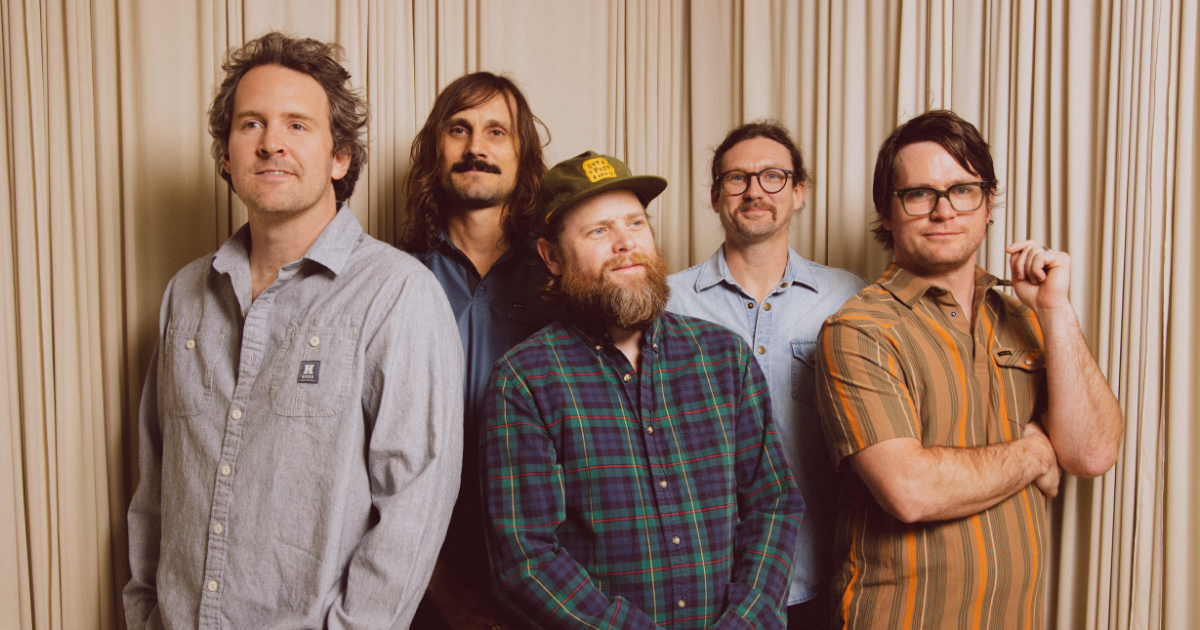
MIXTAPE: Futurebirds’ Songs for Far Out Country

This is a playlist for a road trip through the vast American West. Not necessarily songs about the “far out country,” but songs that embody it. Songs that, when you play them out in the mix of the unexplored and untainted, embody the energy of the landscape and journey.

Some of these songs are just all-time road bangers. Some are by our good friends and tour mates. Some are by universal legends. But they’re all very near and dear to us.

Listen, the boys let me (Tojo) put this thing together, and I have a penchant for slow burners and sad songs, but I tried my damnedest to mix in enough lively tunes (and upbeat bummer jams) to make this enjoyable to others, too. It was an absolute pleasure putting this together and we hope y’all like it alright.

Much Love,
– Futurebirds (and tojo)

“Guitar Town” – Steve Earle

Really captures the vibe of hopping in a van with your best friends to go play music to 10-12 people in a town you’ve never heard of.

“Something on Your Mind” – Karen Dalton

This song just feels like the beginning of a road trip, feelings of regret and longing about what you’ve left, but also confidence in the moving forward.

“Backstories” – Grass Giraffes

Grass Giraffes toured with us more than a decade ago. They’re fellow Athens guys and their drummer was 15. Who doesn’t love screaming “Oooos” with the windows down trucking down a highway?

“Born on the Cusp” – American Analog Set

One of my all-time favorite groovers, “it’s bigger than us” is a constant feeling out there.

“Violent Jubilee” – Fust

“I like driving with the odometer busted, when I know the stars are gonna fall any minute” – well said.

“Lights of LA County” – Lyle Lovett

Reminds me of pulling into a new city for the first time in your life, coming from a vast desert, and being overwhelmed by how magnificent it all looks and feels.

Deloyd Elze – “parröthead 2.0”

These boys played a month of shows with us this summer and definitely embody Far Out Country. “I want to die on stage in a Buffett cover band, going out singing ‘Margaritaville.'” Love this song.

Ry Cooder – “Drive Like I’ve Never Been Hurt”

Ry Cooder is a legend, and this song is from a concept record, but feels perfect for this.

“Carefree Highway” – Gordon Lightfoot

Our old TM loved Gordon, and I can’t argue with him. Sometimes the road is the peace you need to process.

“The Monument Valley” – Drive-By Truckers

To us, DBT are heroes and mentors. They’ve been so gracious with us, imparting their road wisdom and a constant reminder to trust the dream. This is one of my favorite Patterson songs, just nails it, and you feel it when you’re driving out West. “You turn your back on the comforts of home, and wander ’round the Monument Valley alone” – that’s as far out country as you can get.

“Hit the Ground Running” – Smog

We quote a different Bill Callahan song on the last song of our record. This song feels in line with a lot of the themes of our record. Change is constant. You’ve just got to learn how to deal, try and land on your feet and keep moving.

“Red Moon” – Big Thief

“She turned her head a full 360.” You’ll see some inexplicable things out there…

“Blame It on the Tetons” – Modest Mouse

We have an awful (and hilarious) tradition of playing area-specific, on-the-nose songs as we’re pulling into random towns. I like to play this one when we’re pulling into Jackson, Wyoming, and when it’s snowing at the end of a long tour, it feels like the only song that could possibly exist.

“Highway Anxiety” – William Tyler

This song embodies exploration perfectly, without a word spoken.

“Sing Me Back Home” – The Flying Burrito Brothers

No matter how far you get out there, the songs will keep you centered. Love this version of this tune.

“I Dream a Highway” – Gillian Welch

My go-to “missing home” song. It’s a devastating homage to longing and one of my all-time favorite songs ever. Just floors me every time.


Photo Credit: Jacq Justice
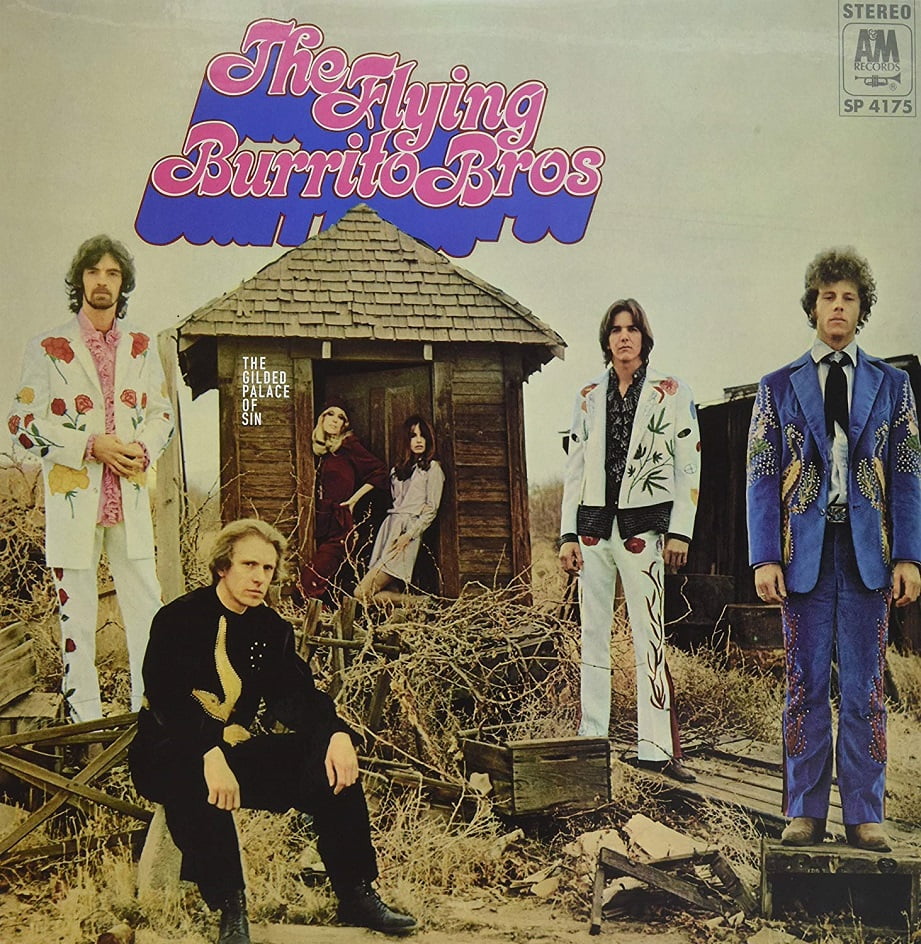
Canon Fodder: The Flying Burrito Brothers, ‘The Gilded Palace of Sin’

A spry country tune driven by Chris Hillman’s hyperactive mandolin and Sneaky Pete Kleinow’s spacy guitar solo, the Flying Burrito Brothers’ “My Uncle” is not a song about family. The uncle they’re harmonizing about is Uncle Sam, who in the late 1960s wanted members of the band to kill others and possibly be killed in Vietnam. Gram Parsons had already secured a somewhat dubious 4-F deferment, making him ineligible for military services for health reasons, but the Army continued its pursuit. “So I’m heading for the nearest foreign border,” Parsons sings, resigning himself to the ignoble fate of a draft dodger.

In the late 1960s, rock and roll was rife with anti-war songs. Some were angry, like Creedence Clearwater Revival’s “Fortunate Son.” Others were riddled with mortal dread, like “Feel Like I’m Fixin’ to Die Rag” by Country Joe & the Fish. But few sounded anything like “My Uncle,” an album cut from The Gilded Palace of Sin. For one thing, as the Flying Burrito Brothers ponder what they owe their country, they sound more melancholy than outraged, as though they’re singing a breakup song with America.

For another thing, they dressed their anti-war sentiments up in the threads of country music, which was already viewed as both musically and politically conservative: a counter to the counterculture, representing the moral/silent majority that finally put Nixon in the White House in 1968. “Okie From Muskogee” was the defining country hit of the era, a song that tsk-tsks the hippies, roustabouts, and even the conscientious objectors burning their draft cards. Merle Haggard may have written it to gently puncture the sanctimonies of an older generation, but listeners heard no irony or distance in lyrics about wearing boots instead of sandals and respecting the college dean.

Given the canonization of Parsons over the last few decades, as well as the gradual breakdown of genres and styles over time, it’s easy to forget just how contrarian it would have been for a West Coast rock band to embrace country and bluegrass. The Flying Burrito Brothers had risen from the ashes of the Byrds, a group which earlier in the decade had included Gram Parsons for just one album, Sweetheart of the Rodeo. A relative flop upon release, it nevertheless invented country rock with a set of twangy originals and covers of songs by Cindy Walker, Haggard, and the Louvin Brothers. Aside from Dylan, who was covered by everybody in the late 60s, these weren’t especially hip influences at the time.

Draft dodging may have been anathema to country music, but “My Uncle” is at its heart about more than just protest. “A sad old soldier once told me a story about a battlefield that he was on,” Parsons and Hillman harmonize. “He said a man should never fight for glory, he must know what is right and what is wrong.” The Flying Burrito Brothers plumb that stark moral divide on “My Uncle” and every other song on their debut, parsing temptation from salvation, wickedness from righteousness, and painting a picture of an America where you might easily confuse one for the other. Country music becomes the ideal vehicle to explore ideas about violence, consumerism, free love, and more broadly, the notion of sin.

The idea of sin illuminates every song on The Gilded Palace of Sin. The rollicking “Christine’s Theme” opens the album with a woman bearing false witness: “She’s a devil in disguise, she’s telling dirty lies.” “Juanita” imagines an angel rescuing the band from booze and pills. “Hot Burrito #2” invokes Jesus Christ by name — not cussin’ but praying. “Do Right Woman,” a Dan Penn/Chips Moman number popularized by Aretha Franklin, is transformed from a lover’s plea into a preacher’s wagging finger. “Dark End of the Street,” by the same Memphis songwriting duo, is about coveting your neighbor’s wife: “It’s a sin and we know that we’re wrong.” When the Flying Brothers get to the bridge, “They’re gonna find us,” they might as well be talking about angels and demons.

“Sin City,” the album’s centerpiece, is the band’s version of Jonathan Edwards’ “Sinners in the Hands of an Angry God,” which mixes Biblical imagery with twangy country harmonies to create a startlingly dire depiction of Los Angeles as both Sodom and Gomorrah. It’s a place where avarice rules all, leaving even the determined and upright struggling for footing. “That ol’ earthquake’s gonna leave me in the poorhouse,” the Brothers sing, echoing Edwards’ assertion that all humans as sinners are “exposed to sudden unexpected destruction.” Wealth won’t buy redemption or avert damnation: “On the thirty-first floor, that gold-plated door won’t keep out the Lord’s burning rain.” (That’s likely a sly reference to Larry Spector, the Byrds’ former manager, who lived on the thirty-first floor of a luxury LA high-rise).

Jesus shows up for a verse of “Sin City,” and he may or may not reappear in the close “Hippie Boy,” a spoken-word homily in the style of Hank Williams’ moralizing alter ego Luke the Drifter. Hillman tells the story of a boy caught up in the violence between the right and the left. In his 33 1/3 book on Gilded Palace of Sin, Bob Proehl suggests the band might have been inspired by the riots at the Democratic National Convention the year before. “The so-called riots in Chicago were actually more of a police action,” he writes, “a beatdown instigated by the gestapo tactics of Mayor Daley’s police force right in front of the delegates’ hotels.” Even before the song concludes with a rousing chorus of the old hymn “Peace in the Valley,” the song is a damning attack on anyone who would employ violence in the name of morality.

While they are using country music to interrogate the genre’s own high moral standards, the Flying Burrito Brothers don’t come across as scolds. Instead, they’re doing something more ambitious yet far more personal: They’re trying to find their own way in this sinful America, trying to find the moral high ground in shifting sands. On “My Uncle” they sing about dodging the draft with guilt and sadness, but they understand it is a moral predicament. “Heading for the nearest foreign border” is preferable to enlisting and killing. That makes The Gilded Palace of Sin unsettlingly prophetic fifty years after its release, maybe even inspiring in its spirit of dissent and moral defiance.

None of the Brothers would ever sound quite so political or quite so driven by moral inquisition on subsequent albums. Their follow-up, 1970’s Burrito Deluxe, sounds good but has little of the brimstone determination of their debut. Parsons left the group shortly after its release, and his pair of solo albums drive the roads of a murky, mythological America.

However, less than a year after the release of The Gilded Palace of Sin, the Brothers witnessed Biblical calamity firsthand when they played the Altamont Free Concert. Billed as a West Coast alternative to Woodstock, it included San Francisco bands Santana and the Jefferson Airplane, with the Rolling Stones headlining. The crowd of 300,000 was already agitated when the Brothers played their early set, and by the time the Stones took the stage, they were volatile, and hostile. During a performance of “Under My Thumb,” one of the Hell’s Angels working security stabbed and killed a black man named Meredith Hunter, stopping the show and casting a pallor over the event, if not the entire decade. It was intended as a show of countercultural unity, but it must have seemed like God smiting the hippie generation: the end of the 6os in great and gory conflagration.