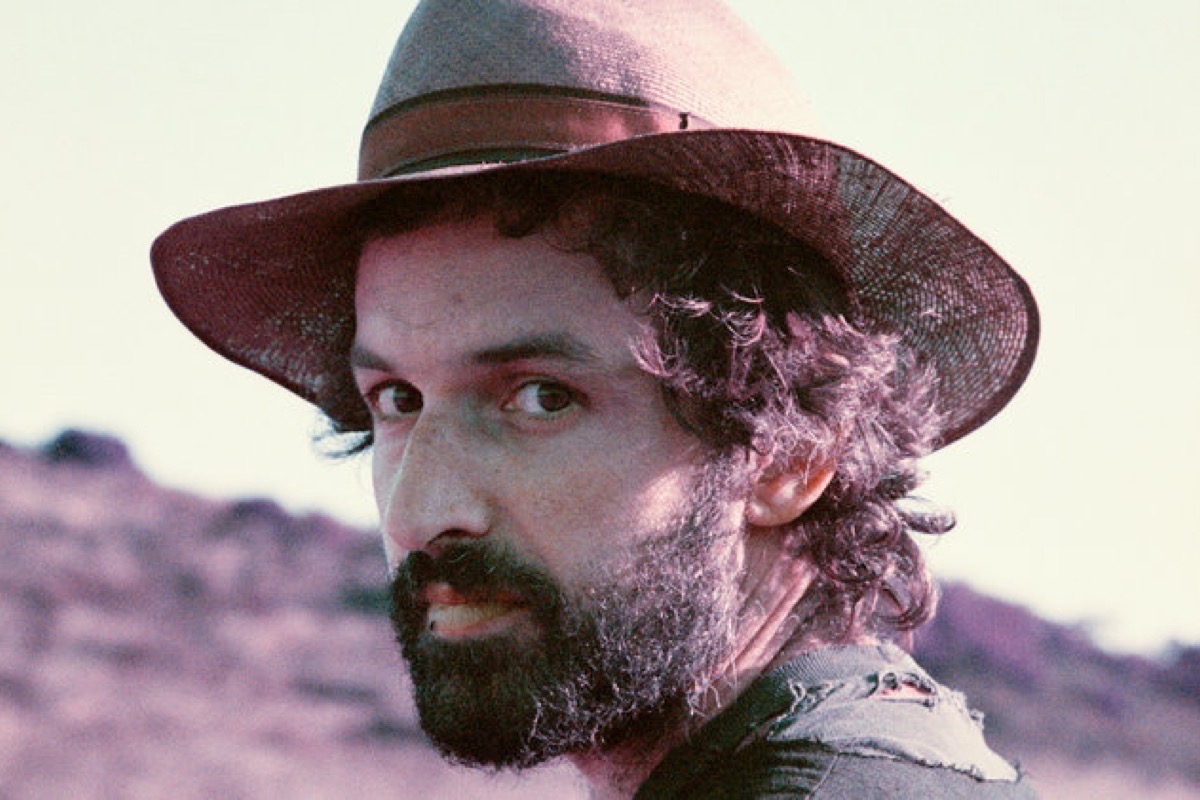
Boy Golden is Rooted in Roots

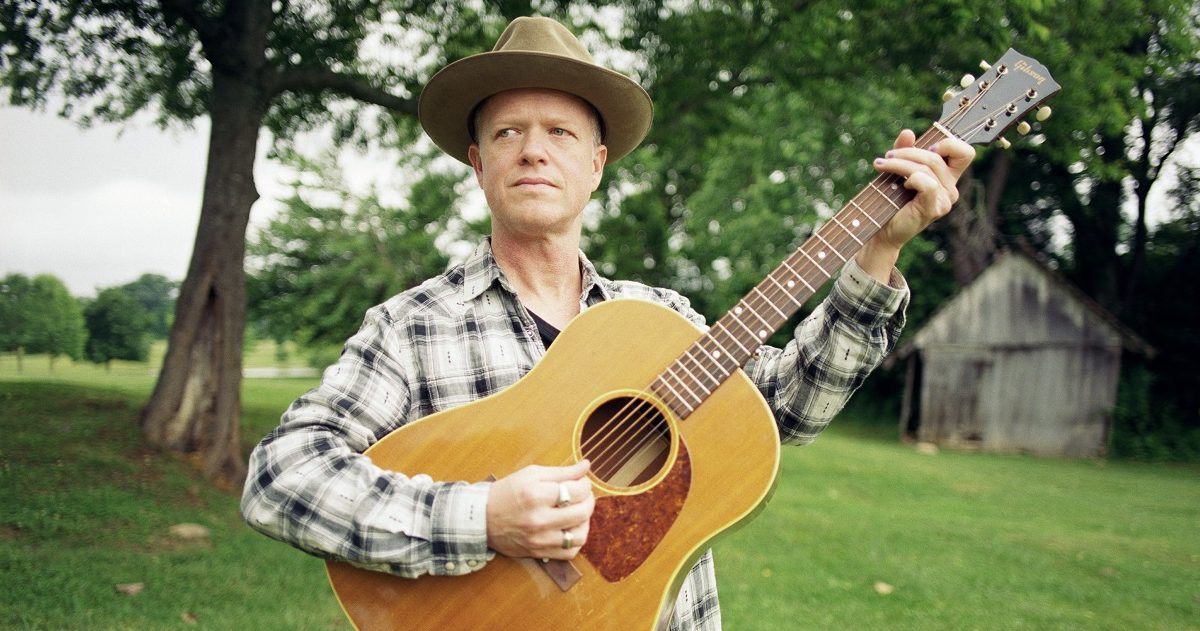
Lots of people are taking a shine to Boy Golden lately. Radio stations in Canada sent his populist pop single, “Suffer,” to the top of the modern rock chart. He produced William Prince’s 2025 album, Further from the Country, which recently received a Juno nomination in the Contemporary Roots Album category. And he’s among the new additions to the esteemed Telluride Bluegrass Festival lineup in June.

Offstage, Boy Golden is Winnipeg-based musician Liam Duncan. (His mother’s maiden name is Goulden, so he conjured the stage name Boy Golden.) In addition to jumping across genres, he’s also crossing the Canadian/American border this spring, with dozens of U.S. tour dates to promote his new album, The Best of Our Possible Lives. Duncan recorded the project in Los Angeles with fellow Winnipeg guitarist Austin Parachoniak, producer Robbie Lackritz, and cream of the crop LA studio players.

Duncan called in to Good Country to talk about making the new record, though the conversation also gravitated toward his abiding love for bluegrass music.

“Suffer” has been a big hit for you in Canada. What do you remember about trying to get “Suffer” to sound the way you wanted it to sound? Was it hard to come up with that song?

Boy Golden: No, that was a quick one. I sat down and wrote it all in one chunk. I remember it taking about an hour, maybe. But then I did make several demos of it, and throughout that process, I did edit it a fair bit and experimented with different lyrics and arrangements. By the time I got to the studio, I was really confident in the foundation, the bare bones of it. I could trust the musicians there, and they nailed it.

On that song, Pino Palladino plays the bass, which is really cool because he’s a legend, and then Abe Rounds is on the drum kit and he’s a really great drummer and musician. We had a few drummers we were thinking about asking, but I listened to Abe’s solo album – which is called The Freedom to Make Mistakes – and his percussive sensibilities on percussion instruments, beyond just the drum kit, were so spot on. It made it an easy decision, because I really wanted a lot of percussion on this album.

Why is that?

A lot of records that I love have a lot of percussion, first off. I was listening to a lot of Ry Cooder. I was listening to a lot of Paul Simon. The percussion on those records is fantastic. But also I was thinking about the first record I made as Boy Golden and I really went overboard with the percussion on that album. I hadn’t listened to it in years, I was in a store in Portland, and the guy running the store put on my song while I was in there. I was like, “Oh gosh, this is really great!” [Laughs]

I went back and listened to the record and I was like, “I should do that again,” because the records that I made between that first one and this one were way more stripped back. I made both of them on different types of 8-track tape machines so there’s just not as much room to go crazy with it. And I knew I was gonna have the freedom to do anything on this record.

The album before this one [For Eden] had a lot of banjo. Are you still grabbing the banjo from time to time?

Oh, yeah. I made a demo yesterday that has a bunch of banjo on it. And I spent the Christmas holidays just shedding some old-time, which is a really fun thing to do and does not bother my family much!

When did you pick up the banjo originally?

When did I pick up the banjo… 2020? 2019? Somewhere in there. It wasn’t, like, always a thing, but I’ve always loved bluegrass, and I’ve always listened to a fair bit of bluegrass, but I was just in a big phase. And I think part of it was, I was like, “I am never going to be a good enough guitar player to really play bluegrass, so maybe I should try a different instrument.”

You included “The Year Clayton Delaney Died” on that first record. Is Tom T. Hall somebody that you gravitated toward?

Yeah, particularly his bluegrass record, The Magnificent Music Machine. It’s such a good album! Something I love about that album is, a lot of bluegrass is pretty dry, and that record is not. It just sounds like a bunch of people playing in a big room, like maybe a church or something. I don’t know how it was recorded, but I love the energy on that record.

What are some of your other favorite bluegrass records?

My favorite bluegrass records are the Bluegrass Album Band’s Volumes I through III. [Laughs] They’re my favorite. I love a lot of what’s going on in the old-time scene right now, like Nora Brown and Stephanie Coleman. And I love playing music acoustically with friends. I love sharing songs that way. I grew up going to the Winnipeg Folk Festival, and that was where I was first exposed to bluegrass, and it has been a lifelong love. And I feel like it does make its way into my music, even though I write kind of pop songs or something. I like to produce in all sorts of different ways, but on each song on this album, I tried to have at least one element that felt distinctly rooted in roots, whether that was a guitar part or a banjo part or a pedal steel or whatever. I just tried to always have some sort of grounding in the roots.

Reading up on you, I found that you were a Gillian Welch fan.

Yeah, I saw Gillian and Dave for the first time this [past] year at Winnipeg Folk Fest. It was very emotional for me. I cried a lot because I had a friend pass away right before we made this record. We had made a record together, me and this friend, and one of the songs was called “I Dream an Ocean,” which was inspired by “I Dream a Highway.” We would just bond over those records so much. … I could cry right now thinking about listening to Gillian and Dave when he was here. It was super affecting and really gorgeous.

I’ve enjoyed the videos that you put out so far and I think visuals must be really important to you. Can you talk about the concept of the video for “Cowboy Dreams”?

Yeah. I had a couple pretty specific visual references. One of them was the Brazilian tune “Águas De Março,” which has a great video you can find of Elis Regina and Antônio Jovian duetting that song together on an old stereo capsule mic. You can put [that mic] off-axis and then you can both sing into it. Anyways, it’s just a really beautiful video, and I love watching it because they have such chemistry. Me and my friend Cat [Clyde] have a great creative chemistry as well. We wrote that song together and made the demo together. So, I thought we could basically steal that concept and make it a little more cinematic by putting a 360-degree dolly camera around it. I love that shot.

The other one was a killer Sade video that’s all in black and white, and she’s galloping on a horse bareback, which is beyond my skill level, and it’s just so cool. Cat’s a really good rider. I was not a great rider. I’m still not a great rider, but I took a bunch of riding lessons leading up to that video shoot and got myself to the point where I could gallop comfortably. The ranch where we shot the horse stuff is run by some friends of mine, and they gave me, like, a Cadillac of a horse, so it was super easy.

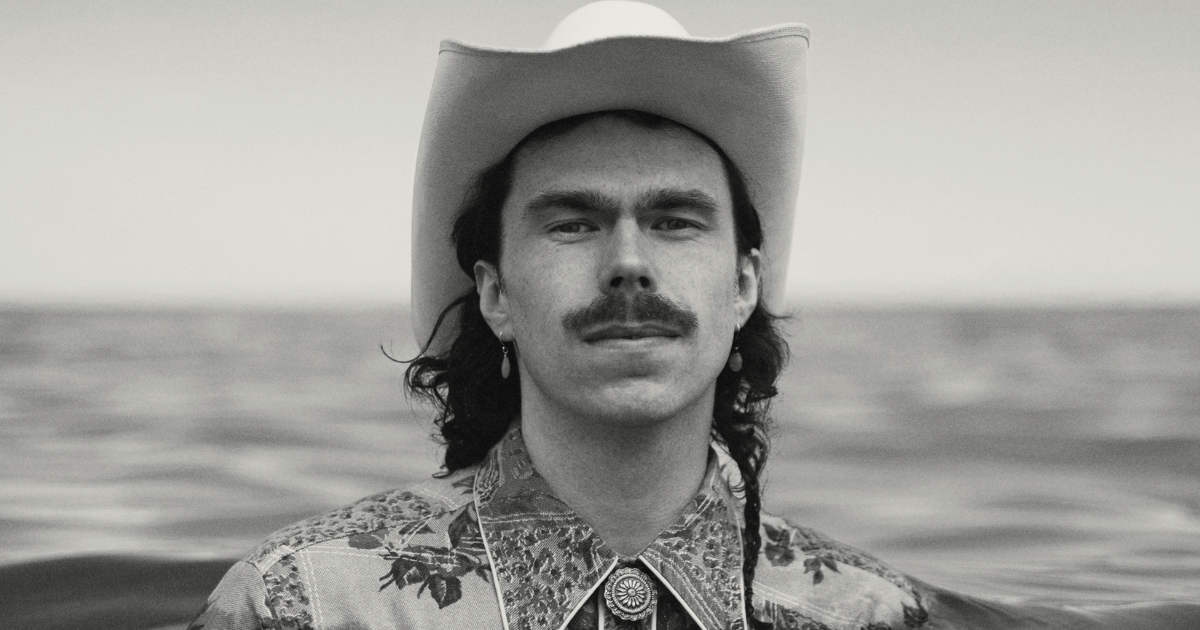
You’re riding a horse in that video and you’re in Lake Winnipeg on your album cover. I’m assuming you’re pretty outdoorsy. Do you like the great outdoors?

I do, yeah. Yes sir. There are references to the natural world in my writing a fair bit.

Say you’ve got a free afternoon, what would you do?

Well, right now in the winter, I go cross country skiing. I go a couple times a week, usually. And I love cross country skiing, because it’s very meditative once you get into the flow and if the conditions are good – kick, glide, kick, glide. … And you can get into the woods with it, which is what I like about it. I mean, you can’t downhill ski where I live, because it’s just flat, but on cross country, you don’t need a lift pass. You don’t have to pay any money, usually. Maybe a trail fee of like $5 but once you get going, you can get onto this trail and you’re in the woods in the middle of winter. It’s a pretty special experience, not something everyone gets to enjoy, or even maybe realizes is as wonderful as it is. You know, to be out in the woods in the middle of winter, it’s sweet. And in the summer, I like to hike. I like to backpack.

That reminds me of the song “Blue Hills” from one of your past records. That one seems more of a country-leaning song to me. What inspired you to write that song?

I was thinking about being in high school actually. The town I grew up in is called Brandon and Brandon famously has hills [laughs] in Manitoba and they’re called the Blue Hills of Brandon, ostensibly because from a distance, they kind of look blue, I guess. And I was under the impression when I wrote that song that I had a great aunt or some ancestor who had written an old song called “The Blue Hills of Brandon.” I found out later from my dad that I must have made that up, because I don’t! That person who wrote that song is not my ancestor.

But either way, at the time, I thought she was, so I was like, “I’m gonna write my own version,” which I thought would be really special. I was thinking about high school, I was thinking about my late grandma and grandpa. Thinking about how those really early memories of love are so tangible, no matter how old you get. That’s why I say, “It’s the only thing I know to be true.” It’s like, that early love just was true.

When did the spark start for you as a songwriter?

I always wanted to write songs, but I was really blocked until I was about 21 or 22. And then I had a relationship end. It’s a common story, and I think I was so heartbroken that I didn’t really care if I wrote anything bad. And then it was like a spiritual revelation for me.

Had you been on stage a lot before that moment?

Yeah, I toured with my high school band all over. We played over 600 shows together. I’ve been in some sort of band with friends since I was like 14, so it’s been a lifelong thing. But I kind of thought I would just be a producer. To be honest, I never really thought I’d end up doing this.

When did you turn the corner? When did you decide, “All right, let’s make it happen”?

I guess when I had enough songs. And then I made a record that came out under my own name, which you can’t really find anymore. And then I came up with the Boy Golden character and idea and had a bunch of songs that I felt like were in the Boy Golden world. And ever since it’s been an obsession.


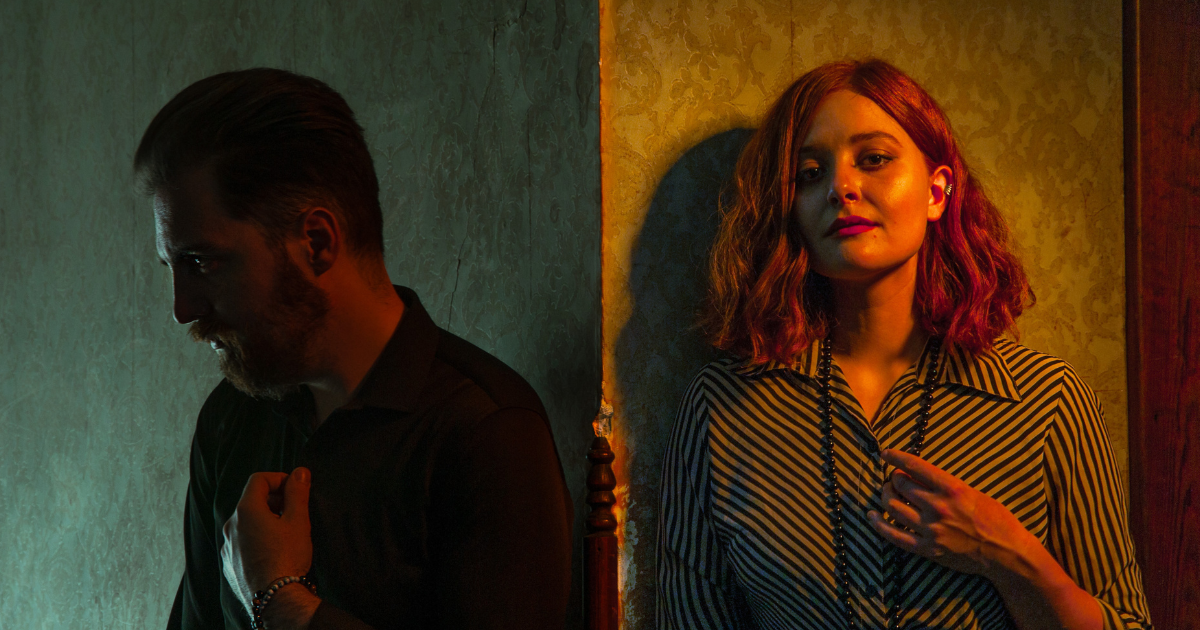
Photo Credit: Best of Our Possible Lives album cover
MIXTAPE: Moonrisers’ Instrumental Doom Folk

As a Detroit instrumental duo comprised of a session drummer and folksinger, making instrumental music as the Moonrisers has poured out slow and low.

We love exploring the dark and meditative side of folk music and instrumental recordings from around the world, and love to hear how textures talk to each other within them. Here are some of our favorite songs and inspirations in the realm of instrumental doom folk.

“Tuzna Je Nedelja” – Branko Mataja

A devastating melody made familiar by Billie Holliday’s recording of “Gloomy Sunday.” Branko Mataja was a guitar player and maker from Yugoslavia who survived an Axis invasion and a forced labor camp during WWII. His haunting self-recorded instrumental arrangements of traditional Serbian and Slavic folk songs have thankfully emerged in recent years, with Numero Group releasing two of his albums.

“Company Leaves” – Kinloch Nelson

Kinloch Nelson’s recordings of solo fingerstyle guitar–particularly this cozy, warbled album of demos from the late sixties–feel like a warm, slow autumn day. I love his pace, and the deep open tunings he frequents. There is a real sense of wholeness in his music that I love.

“Memory, Memory, Memory” – Six Organs of Admittance

This song comes from an album full of dark, woody, and meditative instrumentals in tribute to the poet Octavio Paz. I love the low hounding of the bottom guitar string on this song. It sounds so loose that it could fall off if plucked too hard.

“Paper Route” – Calexico

Calexico has a beautiful sense of space and arrangement on this recording. The vibraphone is an interesting part of the foreground, and their analog recordings are totally timeless.

“Caribea” – Moondog

I love how simple, yet complex this arrangement is. The lively hand drums and maracas are signature to the sound of Moondog. Listening to Moondog frees and ignites the joy of drumming.

“Czardas” – Rita Villa

This early-1900s wax cylinder recording of solo harpist Rita Villa from Mexico is totally magical. The song takes so many melodic twists and turns, while each note seems to stand out as an independent entity.

“Knife Chase” – Tom Waits

Love the heavy, low-fundamental stomp percussion against saturated horns and guitar. The lines are totally unpredictable, yet bind together like an unhinged orchestra. The shared admiration of Tom’s music is what brought the two of us together in the first place, and continues to provide us both with so much inspiration and excitement that never runs out.

“Everywhen We Go” – Mike Baggetta, Jim Keltner, Mike Watt

Open-tuned drums played by the legendary Jim Keltner take the floor with a feeling in this spaghetti western-sounding tune. There’s a lot of flexibility between what each instrument is putting down. Jim Keltner’s thumbprint is on so many iconic records, and it’s neat to hear him recorded in a very loose improv context.

“Barakaat” – Abdullah Ibrahim

As with all of Abdullah’s tracks, I love the sparseness and conversations between simple drum and bass lines.
The strings in this add a lot of drama.

“Fruta Prohibida” – Mitchell Froom

This incredible arrangement of classical instrumentation through the lens of Tchad Blake’s dark, emotional production is always a favorite. This record, “Dopamine” is sinister and gorgeous.

“Evensong” – Fripp & Eno

This looped electric beauty came from the 1975 ambient album, Evening Star by Robert Fripp and Brian Eno. Bright and echo-laden guitar notes aren’t often bundled together this densely, and here it creates something odd and captivating. I picture young seedlings emerging from the ground when I hear this song.

“Circle of the Seasons” – Moonrisers

This is the first track of our debut album Harsh & Exciting produced by Dan Auerbach. We recorded this in a house from 1908.

“Paris, Texas” – Ry Cooder

This song is desolate. Every bit of ambience is as important as the slide lead in this song. You are immediately transported to the desert on an empty highway. I became obsessed with this theme song before ever watching the film for which it was written.

“Don’t Blame Me” – Marc Ribot

Marc’s touch is unlike anything I’ve ever heard. It sounds antique- metallic in texture. His chord choices make you feel like you’re immersed in a Duke Ellington recording, while it’s all skin and bones and lonesome plunks. I love how different this arrangement is from the Everly Brothers’. There’s barely any sustain anywhere, and it’s a live wire of emotion as he multitasks up and down the fretboard.

“Joe Kirby Blues” – John Fahey

This track has a tone that’s really pensive. Reverent of the blues form of earlier American guitar greats, there’s a departure in the melodies here that are chilly and ruminative. It’s part of the psychedelic folk-blues masterpiece album “Days Have Gone By”. John Fahey’s renderings of traditional folk and blues songs break all kinds of “rules” in the guitar world, and hence has opened up a huge door in my perception of folksong.


Photo Credit: Jim Herrington

You Gotta Hear This: New Music From Sister Sadie, John Leventhal, and More

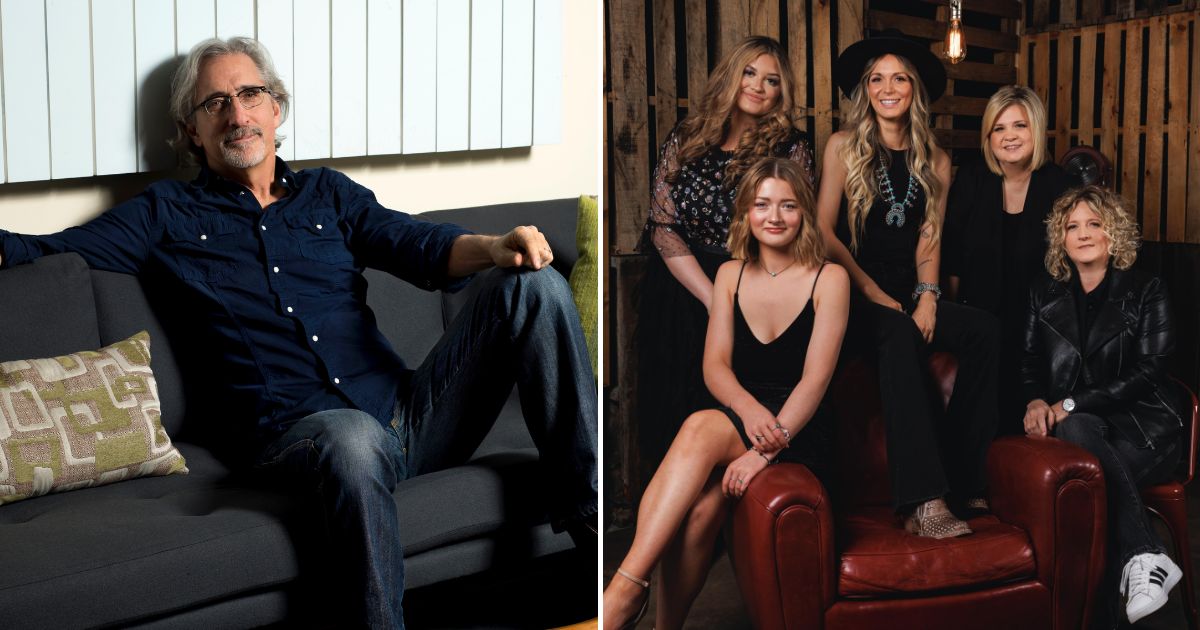
This week, BGS readers enjoyed a track premiere from California-based string band Moonsville Collective, as well as our very first Rootsy Summer Session featuring an exclusive performance by Israel Nash on the streets of Falkenberg, Sweden. Also, in this week’s edition of Out Now, we highlighted a brand new single from Mary Bragg, too.

Featured in today’s premiere round-up, You Gotta Hear This, is new music from bluegrass supergroup Sister Sadie with their illustrious friend, Ashley McBryde, plus producer, guitarist, musician extraordinaire John Leventhal, Liam Purcell & Cane Mill Road, the Grackles featuring Kat Edmonson, and North Carolina bluegrass/Americana outfit Unspoken Tradition.

We hope you enjoy a week’s worth of new music and videos; ’cause You Gotta Hear This!

Sister Sadie, “Ode to the Ozarks” (featuring Ashley McBryde)

Artist: Sister Sadie
Hometown: Nashville, Tennessee
Song: “Ode To The Ozarks” (featuring Ashley McBryde)
Album: No Fear
Release Date: January 26, 2024
Label: Mountain Home Music Company

In Their Words: “This song was originally sent to me by a great songwriter from Nashville that we’re all big fans of, Marcus Hummon. When I heard the demo, I could hear us doing it immediately in my head and sent it around to the band. I thought it would be a great fit for us and had some awesome vocal harmony possibilities. The song was co-written by Ashley McBryde and Kat Higgins, who we’re also big fans of. In the meantime, Dani Flowers had joined Sister Sadie and is very close friends with Ashley. So of course she was an advocate for doing the song as well, and asked Ashley if she would consider singing on it with us in the studio. She graciously agreed and we were so honored to have her join us! We’re grateful to Marcus, Ashley, and Kat for entrusting us to give it the right treatment. It has a very ‘swampy’ feel and is such a FUN song to perform live. We got to perform this song on the Grand Ole Opry with Ashley and that was such a special memory for us all! Hope you love it as much as we do.” – Gena Britt, banjo

“I am so happy with the way ‘Ode To The Ozarks’ turned out. It ended up so funky and dirty with the stellar musicianship of Seth Taylor, Tristan Scroggins, and Tony Creasman added to the Sadie girls. We are so honored that Ashley McBryde agreed to sing on this one with us. The icing on the cake!” – Deanie Richardson, fiddle


John Leventhal, “That’s All I Know About Arkansas” (featuring Rosanne Cash)

Artist: John Leventhal
Hometown: New York, New York
Song: “That’s All I Know About Arkansas” (featuring Rosanne Cash)
Album: Rumble Strip
Release Date: January 26, 2024
Label: RumbleStrip Records

In Their Words: “Rosanne had these lyrics. I wasn’t sure what they were actually about, but I loved them and they seemed to fit with a weird West African-bluegrass riff I had. There are two distinct guitar solos, each a tip of the hat to two musicians to whom I owe a debt: Ry Cooder and Clarence White.” – John Leventhal


Grackles, “Top Of The World” (featuring Kat Edmonson)

Artist: Grackles
Hometown: Austin, Texas
Song: “Top Of The World” featuring Kat Edmonson
Album: Grackles
Release Date: February 24, 2024 (album)

In Their Words: “‘Top Of The World’ was a beautiful chord structure Jason [Mozersky] had, that we all sat and strummed together on acoustic guitars live in the studio with upright bass and brushes on the drums. It instantly felt so warm and welcoming. I knew I wanted to sing it way lower than normal, so got Kat Edmonson to sing the melody with me. Sort of a Lee Hazelwood and Nancy Sinatra vibe. Lyrically, it’s pretty straight forward. It’s such a short, honest piece, I really tried hard not to let the words get in the way. I’m happily married and with a beautiful daughter and find my own life to be pretty damn great. Meanwhile the world around me crumbles. We bounce from one shit storm to the next, and try desperately to keep it together.” – Noah Lit


Liam Purcell & Cane Mill Road, “Homesick For Virginia”

Artist: Liam Purcell & Cane Mill Road
Hometown: Deep Gap, North Carolina
Song: “Homesick For Virginia”
Album: Yellow Line
Release Date: January 26, 2024
Label: Pinecastle Records

In Their Words:“This song (penned by Colton Kerchner) is a story of misadventure and longing for home. Though the song is straightforward and wrapped in a 3/4 bluegrass power waltz, I felt like a lot of folks could relate to the message behind it. Being young, 20-something musicians out there on the road, home is always on our minds along with our friends and family, who we frequently miss. This is one of the more traditional tunes on the album, and I thought the guys really knocked it out of the park with the feel of that old Stanley-inspired sound.” – Liam Purcell


Unspoken Tradition, “Weary Town”

Artist: Unspoken Tradition
Hometown: Cherryville, North Carolina
Song: “Weary Town”
Release Date: January 26, 2024
Label: Mountain Home Music Company

In Their Words: “Our hometown was a great place to grow up. It thrived for decades because of a trucking company founded by some of its citizens. Many locals found work there; it was almost analogous to a mining town. That trucking company was bought by a larger corporation that ultimately closed the terminal, and the town became a shell of its former self in a matter of a few years. It hurts in a way only bittersweet nostalgia can, to know that the town where I made so many memories exists in name only. When John Cloyd Miller sent us this one, it just ripped at my heart, because it makes the struggle and loss of a fading town so real. ‘What’s it gonna take for us to hold on?’ Iris Dement couldn’t have written a better love letter to a fading town!” – Audie McGinnis


Israel Nash, “Lost In America” (Rootsy Summer Sessions)

Last summer, in picturesque Falkenberg, Sweden, Rootsy Music held Summer Fest ’23, a gathering of twenty-some Americana, country, folk, and roots bands – many imported all the way from the United States. BGS video collaborators and contributors I Know We Should were there; they curated, directed, and shot a series of gorgeous live performances in and around the festival and scenic Falkenberg.

The first in the series features Israel Nash – a Rootsy artist, as well as a frequenter of Rootsy stages and festivals – performing an original song, “Lost in America.”

Read more here.


Moonsville Collective, “Helen Highway”

Artist: Moonsville Collective
Hometown: Whittier, California
Song: “Helen Highway”
Album: A Hundred Highways

In Their Words: “Friendships are often forged on some highway to nowhere. We left Pappy & Harriet’s, said goodbye to our wives, and drove across the country chasing the rookie leagues…” – Corey Adams

More here.


Mary Bragg, “Only So Much You Can Do”

Artist: Mary Bragg
Hometown: Nashville, Tennessee
Song: “Only So Much You Can Do”
Release Date: January 23, 2024

In Their Words: ‘Only So Much You Can Do’ is about chasing joy in the company of another person. I’ve been thinking a lot lately about that New York Times article about the secret to happiness – and how relationships are the key to it. We are pack people; we need each other; we need other human beings around us in order to be our best, happiest selves. Friends plus community plus honesty equals joy…” – Mary Bragg

Read the full Out Now interview here.


Photo Credit: Sister Sadie by Eric Ahlgrim; John Leventhal by Wes Bender.

International Folk Music Awards Reveal Nominees, Lifetime Achievement Winners

Folk Alliance International (FAI), the foremost global nonprofit for folk music and the producers of the International Folk Music Awards, have announced the recipients of numerous honorary awards as well as nominees for Album, Artist and Song of the Year.

The Elaine Weissman Lifetime Achievement Awards are presented each year to honor the cultural impact of legendary folk music figures: one Living, one Legacy, and one Business/Academic. This year’s honorees are lauded songwriter and performer Janis Ian; the late folk and blues singer Josh White; and Oh Boy Records, the independent record label co-founded by John Prine in 1981.

The awards show will be held February 1 in Kansas City, Missouri, on the opening night of FAI’s 35th annual conference, and will be broadcast online. Appearances are confirmed by Folk Alliance International Conference keynote speaker Valerie June; The Milk Carton Kids; IFMA honoree Leyla McCalla; and Sam Lee.

ALBUM OF THE YEAR (sponsored by Rounder Records)

Get on Board: The Songs of Sonny Terry and Brownie McGhee by Taj Mahal & Ry Cooder
Marchita by Silvana Estrada
Queen of Sheba by Angélique Kidjo & Ibrahim Maalouf
Anaïs Mitchell by Anaïs Mitchell
Crooked Tree by Molly Tuttle & Golden Highway

ARTIST OF THE YEAR

Aoife O’Donovan
Jake Blount
Janis Ian
Leyla McCalla
Prateek Kuhad

SONG OF THE YEAR

“Udhero Na” written by Arooj Aftab, performed by Arooj Aftab featuring Anoushka Shankar
“Vini Wè” written and performed by Leyla McCalla
“Bright Star” written and performed by Anaïs Mitchell
“How” written by Marcus Mumford and Brandi Carlile, performed by Marcus Mumford featuring Brandi Carlile
“B61” written and performed by Aoife O’Donovan


The People’s Voice Award is presented to an individual who unabashedly embraces social and political commentary in their creative work and public careers. As an artist, Leyla McCalla has always traveled through time and space, opening the channels between lost or hidden touchstones of roots music and the present day. As a member of the Carolina Chocolate Drops and Our Native Daughters and in her solo work, the multi-instrumentalist and composer brings immediacy to long lost stories and shows how they survive and adapt through the flexible agents of rhythm, language, and intimate human connection. Her work is political and warmly welcoming, cerebral, and highly danceable. Based in New Orleans after growing up in a Haitian family in New York, McCalla makes music that adds detail to music’s maps and gives voice to people whose struggles and triumphs define its diasporic evolution. In 2022 she released the album Breaking the Thermometer, the culmination of her most complex project yet — a multimedia performance telling the story of the first independent radio station in Haiti. Breaking the Thermometer made Best of 2022 lists at NPR Music, PopMatters, and Mojo, in addition to former President Barack Obama’s list of favorite music for 2022.


The Rising Tide Award was launched in 2021 to celebrate a new generation (under 30) artist who inspires others by embodying the values and ideals of the folk community through their creative work, community role, and public voice. Award recipient Alisa Amador points folk music toward its future — a future that’s cosmopolitan, multifaceted, and multilingual; qualities that have in fact been at the community’s heart all along. Amador, who comes from a folk music family, grew up in Boston, Maine, Puerto Rico, and Argentina, and her songs show the influence of all of those places. A native Spanish speaker who’s spent most of her life in the States, Amador moves easefully between the two languages in her songwriting. As a high schooler, she studied jazz, and is known for sometimes scatting during performances. Amador’s ability to blend all of these influences within sharply rendered yet gently flowing songs helped her win NPR Music’s prestigious Tiny Desk Contest and Folk Artist of the Year at the Boston Music Awards.


Shambala Festival will receive the Clearwater Award, presented to a festival that prioritizes environmental stewardship and demonstrates public leadership in sustainable event production. Shambala Festival is a four-day contemporary performing arts festival in Northamptonshire, England. The festival is completely and utterly committed to being sustainable, circular, regenerative, net positive, earth and life respecting, and future thinking. They have reduced the festival’s carbon footprint by over 90%; achieved 100% renewable electricity; became meat, fish, and dairy-milk free; and eradicated single-use plastics. They’ve received many awards for their sustainability work, including the Innovation Award at the 2018 UK Festival Awards, the International A Greener Festival Award, the Outstanding Achievement Award at the Creative Green Awards in 2017, and more. The festival is Creative Green Certified and has committed to measuring and transparently reporting all of their impacts to provide an honest evaluation of their efforts. They work with independent third parties like Julie’s Bicycle to assess their performance and carbon footprint. The Clearwater Award is sponsored by Levitt Foundation.


The Spirit of Folk Awards are presented to honor and celebrate people and organizations actively involved in the promotion and preservation of folk music through their creative work, their community building, and their demonstrated leadership. This year’s recipients are as follows:

Steve Edge has been presenting folk music in Vancouver as a DJ on CiRT since 1985, and concerts and festivals throughout the city since 1986, initially independently, and then as a co-founder of The Rogue Folk Club in 1987 where he continues to present Celtic, folk, and roots music as its artistic director. Steve was an inaugural member of FAI in 1989, is an inductee into the British Columbia Entertainment Hall of Fame, and a recipient of the Unsung Hero award from the Canadian Folk Music Awards.

Amy Reitnouer Jacobs is a founder and the executive director of L.A.-based the Bluegrass Situation, an online music destination and promoter of roots, folk, and Americana music and culture. She joined the board of FAI in 2015 and was instrumental in refining and codifying the recruitment process for board elections as chair of the Nominations Committee. Amy served as board president through the pandemic and supported FAI’s recent strategic plan and executive director transition.

Marcy Marxer is the creator of All Wigged Out, a poignant and witty musical theatre production (and now film) recounting her harrowing triumph over breast cancer. Painfully funny, it is an example of the power of music and humor to inform and heal. Marxer, along with her partner Cathy Fink, is a multi-Grammy Award nominee and recipient, and together they have been recognized with over 60 Washington Area Music Association Awards for their folk, bluegrass, and children’s music recordings.

Adrian Sabogal is an acclaimed musician, producer, and researcher who founded Marimbea, an organization dedicated to the well-being of the Afro-Colombian communities from the country’s South Pacific coast. By arranging music-centered cultural tourism excursions, Marimbea strives to generate alternative sources of income, knowledge exchanges, and support networks for artists in marginalized and remote communities. Adrian’s work has had an impact on the economic development in the region, and the preservation of a vibrant and unique musical tradition.

Pat Mitchell Worley is the President and CEO of the Memphis-based Soulsville Foundation, which oversees the Stax Museum of American Soul Music, Stax Music Academy, and The Soulsville Charter School, all with a mission to perpetuate the soul of Stax Records. She is the longtime co-host of Beale Street Caravan, a syndicated roots radio show broadcast, and she regularly hosts artist Q&As for the Grammy Museum Mississippi and Oxford American. She is a former development director for the Memphis Music Foundation, and a past employee of the Blues Foundation.


The Folk DJ Hall of Fame was established to recognize radio DJs who have made an outstanding contribution to the preservation, promotion, and presentation of folk music, and who have demonstrated and inspired leadership in the broadcast field. Inducted DJs include the following:

Robert Resnik has been the host of All the Traditions, Vermont Public Radio’s folk and world music program, since 1996. Hooked on music since the 1960s, Robert previously spent many years on-air at WRUV at the University of Vermont. All the Traditions is as eclectic as Robert’s musical taste, but is dedicated to promoting music created by people living in the VPR broadcast area, which includes all of Vermont and parts of New Hampshire, New York, and Quebec. Robert also plays more than 25 instruments, and has performed and recorded CDs with a variety of musical combos for kids and adults.

Marilyn Rea Beyer hosted her first concert in junior high as the school band emcee. She got on board The Midnight Special listening to WFMT as a Chicago teenager. She has had careers in education, PR, and high tech. In 1995, Marilyn became on-air host and music director at Boston’s premiere folk station, WUMB-FM, and served on the board of the legendary Club Passim. Returning to Chicago, Marilyn joined WFMT in 2020, hosting The Midnight Special and now Folkstage. The Midnight Special launched in 1953 and maintained legendary status under Rich Warren’s stewardship. She says that judicious risk-taking, nurturing artists, and falling in love with new music make the job fun.

John Platt has hosted the Sunday Supper (formerly Sunday Breakfast) for 25 years at WFUV, New York, and has curated On Your Radar, a monthly showcase for emerging artists at Rockwood Music Hall in New York City for 17 years. He has founded the not-for-profit New Folk Initiative, which has extensive resources for the folk community at newfolk.org. He began his career at WMMR Philadelphia in 1969, programmed WXRT Chicago and WRVR New York, worked at WNEW-FM and WNYC, and produced national radio programs.

Harry B. Soria Jr. was known as a radio personality and walking encyclopedia of Hawaiian music history. The musicologist, award-winning liner notes writer, and record producer was the son of prominent local broadcaster and songwriter Harry B. Soria Sr. Ironically, Harry B.’s interest in Hawaiian music was sparked by hearing “cool” old records far from Hawaiian shores while at college in San Francisco. Upon returning to Hawai’i, he bonded with his dad over his vintage Hawaiian records. Harry B.’s passion for music from this period led to guest spots on KCCN in 1976 and his weekly Territorial Airwaves radio show of recordings from his personal collection. In 2019, Territorial Airwaves became the longest-running Hawaiian music show in radio history. Soria’s record collection and archives are being donated to the Hawaii State Archives.


Pictured, top row: Leyla McCalla, Molly Tuttle, Taj Mahal, Prateek Kuhad, Anaïs Mitchell. Bottom row: Jake Blount, Janis Ian, Angélique Kidjo & Ibrahim Maalouf, Aoife O’Donovan, Anoushka Shankar.

MIXTAPE: Steve Dawson’s Crash Course in Slide Guitar and Steel Guitar

Slide guitar has been a lifelong fascination for me. I got into it when my uncle gave me a slide for my birthday when I was about 13. I had no idea how to use it, but eventually figured it out by copying Mick Taylor on Sticky Fingers, and I went from there. I’ve gone pretty deep, and find the roots of slide to be very fascinating. I’d like to share this playlist with you to show you some of the music that has inspired me in my journey. It definitely favors the early generations of players from the ’20s to the ’70s, but this playlist is meant to show you where it all comes from and what inspired me.

There wasn’t much slide going on in the ’80s that I was interested in as a kid, but there certainly are a lot of great players around now in the post-Derek Trucks era. In showing you where my influences are, this is a pretty good list. It covers blues, Hawaiian, jazz, rock, experimental, the whole nine yards. I even get into pedal steel a little bit, as there are a few important ones for me, but I won’t go too far into that world. I like how this playlist works totally out of chronological order, I hope you do, too. Enjoy! — Steve Dawson

King Bennie Nawahi – “Hawaiian Capers”

King Bennie is my favorite of all the pre-war Hawaiian players. He was very creative and inspired, and played in lots of different bands. He was basically a vaudeville/street performer who also recorded. I wrote a song, loosely based on his life on my new album, but this is one of his great performances.

Tampa Red – “Reckless Man Blues”

Tampa Red was probably the most sophisticated player of the pre-war slide players. He had sort of a jazz sensibility but could also get down in the greasy stuff. I like both of those aspects of his playing.

Kevin Breit – “Uncle John’s Third Wife”

Kevin is a brilliant musician from Toronto who I got to know and play with a number of times. He is incredible to watch and can shred with the best of them, but his compositions are often haunting and beautiful like this one. He put out a resonator/slide record some years ago called “empty” that remains one of my favorite albums to this day.

Jim and Bob – “The Song of the Range”

This duo was so creative and impressive. Their arrangements were top-notch and the playing is phenomenal. So fast, clean and sophisticated. They were obviously hip to a lot of the jazz horn players of the day.

Tedeschi Trucks Band – “Made Up Mind”

To me, slide players fall into the pre and post-Derek Trucks camp. There are things that he does as a player that no one did before and pretty much anyone that learned to play since he’s been around has been influenced by him, and you can tell. There’s tons of great Derek Trucks stuff out there, but I always dug this melodic, yet ripping solo.

Bob Wills and his Texas Playboys – “Steel Guitar Rag”

Bob wasn’t the steel player — Leon McAuliffe was. This is basically the bible of electric steel guitar playing. It’s not the most complex, or the flashiest, but most modern steel and slide playing can eventually be traced back to this ripping little number. Dig Bob doing the cat calls throughout!

Sonny Landreth – “Yokamama”

Sonny came out of the Louisiana Zydeco scene and played with John Hiatt on tour and on some great records. This is a very cool instrumental that was a big influence on me when it first came out. He really sent slide guitar in some new directions with innovative techniques.

Elmore James – “The Sky Is Crying”

Elmore basically electrified the slide and popularized the riff that anyone with an open-tuned guitar first learns to play. It’s kind of ruined electric slide guitar if you go and see a blues band at your local bar, but when you hear the guy that invented it do it this well with such tone, it’s a whole different ball of wax!

Ry Cooder – “How Can You Keep on Moving?”

For me, this has everything I like about slide playing rolled up into one song and one solo. It’s probably my favorite piece of recorded electric slide guitar ever made. Sort of simple, but incredibly difficult to play this well. It’s got all the great playing of the early era Ry and the tone is unreal. It’s cool that the solo is acoustic and the rest of the song is electric. And the rhythm playing is insanely cool throughout.

Ben Harper – “Manhattan”

I saw Ben Harper in Vancouver in about ’93 before his first album came out. He was opening for Tommy Emmanuel. There were about 10 people there. Ben played totally acoustic and it blew my mind. I’ve never forgotten that show. For me, and what I like about his playing, which is raw simplicity and soul, his recent album (all instrumental) Wintertime Is For Lovers is the best thing he’s ever done and it brings me back to that concert.

Roy Smeck – “12th Street Rag”

Smeck was a vaudeville guy and also quite widely recorded. He’s a phenomenal slide player and also just as great on regular guitar and ukulele. He had one of the earliest signature model guitars — the Gibson Roy Smeck.

Sol Hoopii – “Patches”

Sol was one of the greatest Hawaiian players and was actually very famous at the time. He came to the mainland in the mid-’20s and kicked off a nationwide Hawaiian craze that influenced music and pop culture. It was said that Sol would get hired to come to movie sets and play songs like this one to make the stars all weepy before their crying scenes. Sol was magnificent.

Muddy Waters – “Long Distance Call”

Muddy was the link between Robert Johnson and Chicago blues — he electrified it and made it commercial and exciting. Not the technical expert that Johnson was, Muddy had tone and feel for days.

David Lindley – “Your Old Lady”

I love Lindley’s electric steel playing, but in the ’90s he devoted himself to more acoustic music, although his instruments are always plugged in and sound massive. He had a few duos with percussionists like Hani Nasser and Wally Ingram that are phenomenal. The Weissenborn playing of this period of his career was hugely influential to me, but none of it is available in the digital realm, so here’s a great one from the ’80s.

Taj Mahal – “Statesboro Blues”

I love Duane Allman, and he’s on this list, of course, but if you can listen to this version of this song and tell me he didn’t get 90% of what he does from Jesse Ed Davis playing with Taj on this one, I’ll buy you a sandwich.

Allman Brothers – “Trouble No More”

Duane Allman at his finest. This one was huge for me.

Mick Taylor – “Sway”

I got into slide because of Sticky Fingers. I had no idea how to do it or what he was doing, or even who he was yet, but it was Mick Taylor who got me into it and especially considering he wasn’t 20 years old at this point, it’s pretty insane. The first solo on this one is Mick playing. And I’m pretty sure it’s Mick Jagger playing the other guitar part, not Keith.

Bill Frisell – “The Pioneers”

This is the song that got me into playing pedal steel. I’m not going to go down the pedal steel rabbit hole on this playlist, but this song and steel solo (by Greg Leisz) definitely changed my life, so I thought I’d include it.

Jerry Douglas – “The Hymn of Ordinary Motion”

Jerry has redefined the dobro as an instrument capable of playing in all genres, not just bluegrass. He came from a bluegrass background, but has gone on to be one of the great instrumentalists of our time. He is also very prolific and has tons of records to pick from, but this is an interesting one and shows his killer melodic playing that everyone who plays the dobro copies to one extent or another.

Blind Willie Johnson – “Dark Was The Night, Cold Was The Ground”

I mean, if one song shows the power of slide guitar at its moodiest, this is the one. Frightening, all these decades later.


Photo Credit: Laura Partain

Taj Mahal & Ry Cooder Reunite to Honor a Duo That Few People Have Heard Of

“No, no, no, no.”

Ry Cooder is quick to put something to rest as he talks by phone from his home in the hills above Pasadena, California.

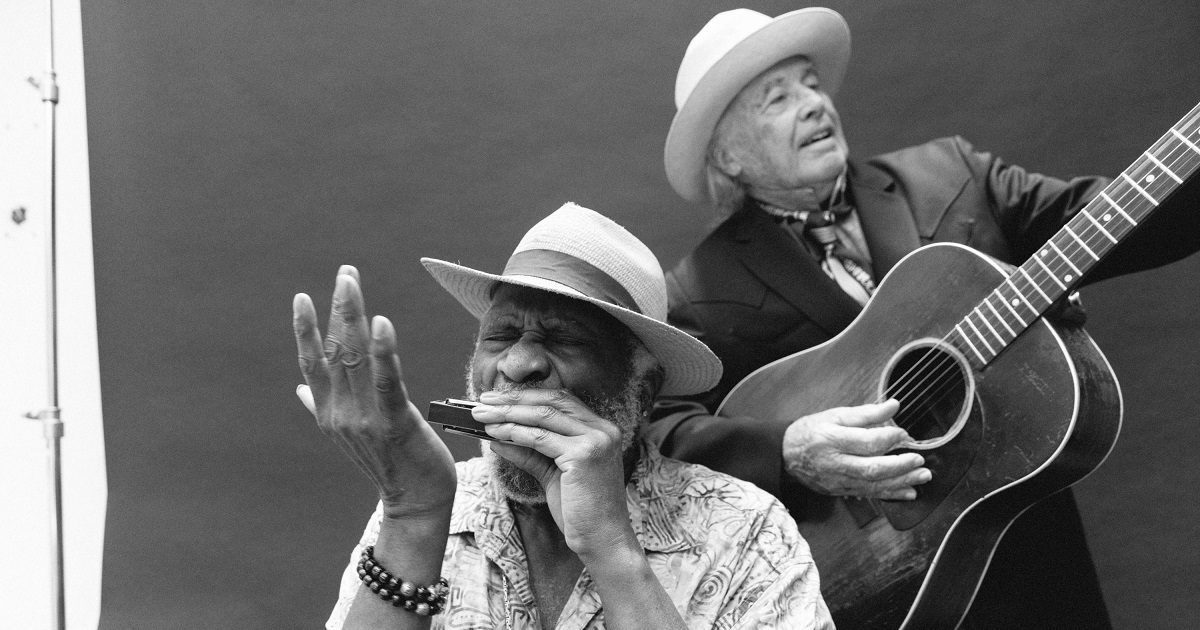
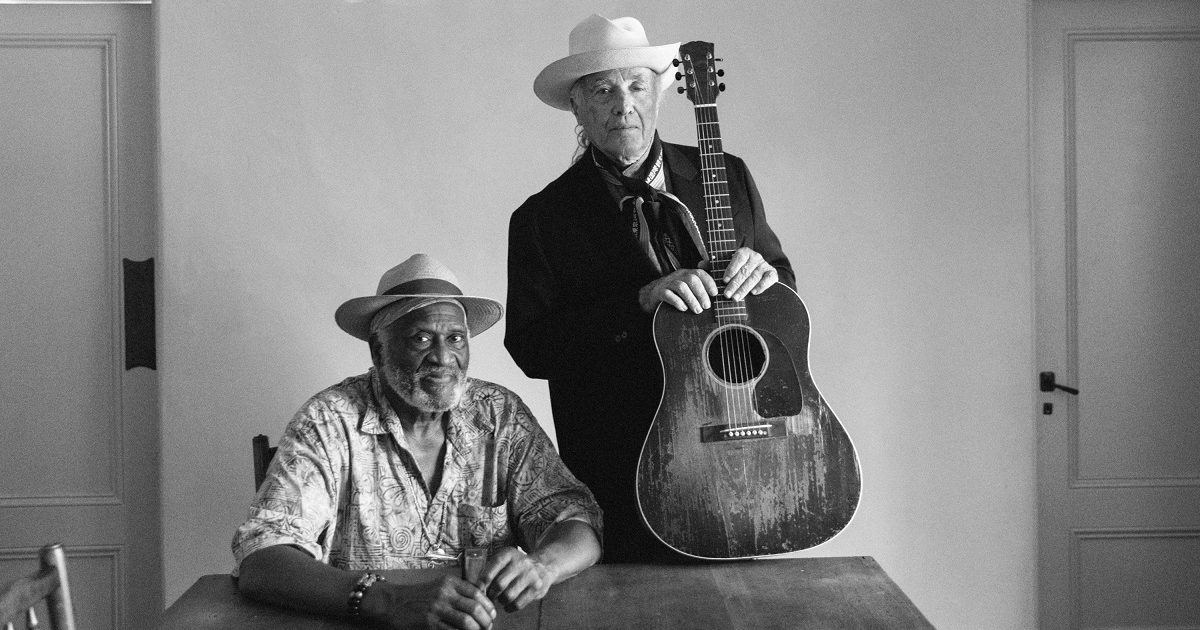
Yes, he and Taj Mahal went a full 54 years between recording projects together — from Cooder playing on Mahal’s 1968 solo debut, which grew from them co-fronting the band Rising Sons, to right now for the duo album Get on Board: The Songs of Sonny Terry and Brownie McGhee. The thing is, in the decades that harmonica master Sonny Terry and Piedmont blues virtuoso Brownie McGhee worked regularly together, from 1939 to the early 1980s, they were often at odds, sometimes not even speaking to each other off stage.

But no, there were no rifts between Cooder and Mahal, no disputes, no bad feelings that kept them apart.

“Nothing like that!” Cooder insists. “No, no, no!”

The time between projects?

“Musicians, you know,” Cooder says. “He travels around all the time.”

Yet, in other regards…

“It’s funny,” says Mahal, on a separate call between tour stops, “because we’ve actually become the men that we admired. We’re the new version of it, you know? So, it’s like full circle. It’s a wonderful thing to have really accomplished that, to be in a life in music.”

The way Cooder and Mahal have become the men they admired, presumably, is in the role of elder statesmen keeping traditions alive. They are honoring and, in highly personalized ways, refreshing the music with deep ties to past generations and cultures. That full circle — global circumnavigations, really — has seen them explore a wealth of music and cultures, from Cooder’s key role in Cuban group Buena Vista Social Club projects, to Mahal’s drawing on the Afro-Caribbean roots of his musician/arranger father. Their individual efforts include collaborations with musicians from Africa and India, just for starters. But with this album they each go back to where the sparks for all that first happened.

For Cooder, it started with the first Terry/McGhee collaborative recording, also called Get on Board, a key release in the essential catalog Mo Asch created on his Folkways label. In fact, the new tribute album not only uses the title but has cover art that is an homage as well. The full title of that 1953 album was the now archaic Get on Board: Negro Folksongs by the Folkmasters.

Sonny Terry had come to some mainstream recognition as part of the original cast of Finian’s Rainbow on Broadway in the late 1940s, and as a pair he and Brownie McGhee were featured in the Broadway productions of Tennessee Williams’ Cat on a Hot Tin Roof and Langston Hughes’ Simply Heaven. They were also championed by Pete Seeger, Woody Guthrie and Harry Belafonte, among other prominent supporters. But for young Cooder, this record was a discovery marked by its vibrant energy, with Terry and McGhee joined by one Coyal McMahan on vocals and percussion.

“It’s a great record,” Cooder says. “You’ve got the mysterious Coyal McMahan on bass voice, sort of a church bass, and maracas. They should have kept him on. I don’t know why they didn’t. He added a whole other quality to it. I don’t know who he was and nobody knows at this point.”

The new album features three of the eight songs on the Terry/McGhee set — “Midnight Special,” “Pick a Bale of Cotton” and “I Shall Not Be Moved.” Its remaining songs are part of the icons’ other recording and live repertoire, from the reverent “What a Beautiful City” to the carousing “Drinkin’ Wine Spo-Dee-O-Dee” to the double-entendre “Deep Sea Diver” to the down-and-out “Pawn Shop Blues.”

Adding their own touches to the songs, Cooder and Mahal recorded mostly live in the living room of Cooder’s son, Joachim, who also played various percussion instruments and bass, sort of filling the McMahan role (and more). They didn’t seek to recreate the originals. What they did do, was have fun.

“That was the intent,” Cooder says. “I mean, it seemed to me that we could pull it off and keep that feeling that those guys had back then. I don’t want to say ‘jolly,’ but foot-tapping, nice music. They had gone for a white audience, I’m pretty sure, at that point anyway. So, you couldn’t very well play very dark music at white people in those days. They wouldn’t know what you were talking about, what it was for. By the time they started recording together, I guess, black popular music had changed radically.”

Cooder is conscious of the radical changes since then in music and culture, in particular noting “Pick a Bale of Cotton.”

“They’re still really good songs,” he says. “And I think people will like hearing them as much now as they liked hearing them back when Brownie and Sonny did them. It’s a different time now. Of course everybody’s consciousness is totally different. I mean, everything is different.”

That’s part of the point, not to let the music that inspired them get lost.

“It just feels like old times,” Cooder says. “I have those records from when I was a little kid, so I can dig it. I remember how it used to make me feel listening to the record, how tremendous it was, how exciting it was.”

The circle for Mahal goes back to the early 1960s, when he was a student at the University of Massachusetts.

“There was a whole network for folk music and blues and bluegrass and country and all that old-time stuff in and around the Northeast sector,” he says. “I was like 19, 20 years old. And those guys were coming through and playing at local coffee houses. You could get to see them quite a bit. And I thought they were just an incredible powerhouse duo.”

A couple of years later, Mahal, who had started playing on the folk circuit himself, encountered a guitarist with a great feel for blues.

“I said, ‘Well, where the heck did you learn how to play like that?’” Mahal remembers. “And he said, ‘Well, you know, I took some lessons from this guy out in California named Ry. I said, ‘Do you think that guy might like to be in a band?’ And he said, ‘Well, he’s only 17 years old.’ I said, ‘Are you kidding me?’ And I said, ‘I guess I have to go to California.’”

And he did. When they connected, a love for Terry and McGhee was one of their bonds. Cooder, too, had seen the duo play a few times by then, the first coming when they played at the opening night of the Ash Grove, a Hollywood club that would become the center of the California folk and blues scene.

“My mother took me down there,” Cooder says. “I was 13 or so. I sat there and watched them. My gosh! It was something to see the whole thing come to life. You know, it was a tremendous impression when you’re young like that.”

And when they’re not-so-young. (Cooder just turned 75 and Mahal will be 80 in May.) They first chatted about teaming for a project after Cooder joined Mahal at the 2014 Americana Music Honors & Awards at Nashville’s Ryman Auditorium on Blind Willie McTell’s “Statesboro Blues,” a staple in the Rising Sons repertoire and a standout on Mahal’s 1968 album. That latter version, which featured Jesse Ed Davis on electric slide guitar, is reputedly the recording on which the Allman Brothers’ rendition was modeled.

When Cooder suggested an album honoring Terry and McGhee, Mahal was, well, on board. “Those guys are foundational titans,” Mahal says. “Here’s a guitarist and harmonica player that spanned 40 years, at least.”

But these musicians are also largely forgotten, which adds a sense of mission to this project, to rekindle interest in the guys whose recordings and concerts meant so much to them.

“If you stood on a corner and did an exit poll and talked to a million people, none of them would know who they are,” Cooder says. “They’ve been completely overlooked. I don’t know anybody that’s ever heard of them or remembers who the hell they were, except for musicians who have made it a point to keep certain things in mind. It’s like bluegrass. If you keep Bill Monroe or Reno & Smiley in mind, it’s that kind of thing. That’s how you live, and that’s how you evoke things, this memory that you have of these records.”


Photo Credit: Abby Ross

WATCH: Abbie Gardner, “Born in the City”

Artist: Abbie Gardner
Hometown: Jersey City, New Jersey
Song: “Born in the City”
Album: DobroSinger
Release Date: May 13, 2022

In Their Words: “This song started with the lick — a slinky little chromatic pattern I’d been messing around with on Dobro. I brought it to Will Kimbrough and we built the song around it. He had just warmed up some rice & beans for lunch when I’d arrived. We got to talking about our mutual love of Ry Cooder and other influences. I told him how I grew up near NYC, in a community that celebrated cultural differences as something special. All of these things ended up in the song, happily! I like that this song brings together a back-porch vibe with some big-city chromatic slide guitar licks. The contrasting combination is kind of like me — playing this traditionally male bluegrass instrument, but doing it as a woman, in Jersey City within view of the Empire State Building.” — Abbie Gardner


Photo Credit: Neale Eckstein

WATCH: Taj Mahal & Ry Cooder, “Hooray Hooray”

Artist: Taj Mahal & Ry Cooder
Album: Get on Board: The Songs of Sonny Terry & Brownie McGhee
Release Date: April 22, 2022
Label: Nonesuch Records

In Their Words: “When the folk era came, and Brownie and Sonny started to work folk clubs, my mother would drive me to Haight-Ashbury. And the first time, of course, Brownie came with his limp because he had polio as a child and he had a built-up shoe about yea big. And Sonny was blind, so here’s this guy way-limping, leading this blind man, and they came in — ‘Hello, everybody. Hello, ladies and gentlemen.” And hit it! It was like, ‘God! This is so good!'” — Ry Cooder

“I guess I started hearing them when I was about 19 and they were coming around. I wanted to go to these different coffee houses because I heard that these old guys were playing. I could play a little bit. I learned some stuff from my neighbor, because I wasn’t a guitar player. I knew a few licks on the guitar and played some Jimmy Reed music, but I knew that there was a river out there somewhere that I could get into, and once I got in it, I’d be all right and I could just stay in it. They brought the whole package for me. If we wanted to send somebody out to see somebody who was doing something good — ‘Go out and see Sonny and Brownie.'” — Taj Mahal


Photo Credit: Abby Ross

The String – Joachim Cooder plus Daniel Tashian

Joachim Cooder has pursued his musical life as drummer, percussionist and family man, staying near and working regularly with his father, blues/roots guitarist Ry Cooder and his songwriting wife, among other scattered projects.


LISTEN: APPLE PODCASTS

In recent years though, his writing/composing side has fully emerged, and his debut on Nonesuch Records ‘Over That Road I’m Bound,’ featuring modern interpretations of Uncle Dave Macon songs, was one of the most unique and beguiling albums of 2020. We speak from his Los Angeles home. Also, Nashville writer/producer Daniel Tashian talks about his generation-spanning collaboration with the legendary Burt Bacharach.

Americanafest Prepares Thriving Roots: A Virtual Community Music Conference

Although in-person plans for Americanafest are on hold this year, fans of roots music can still take part in celebrating the music, no matter where they are.

From September 16th to the 18th, Thriving Roots: A Virtual Community Music Conference will host intimate conversations between pairings you won’t find anywhere else.

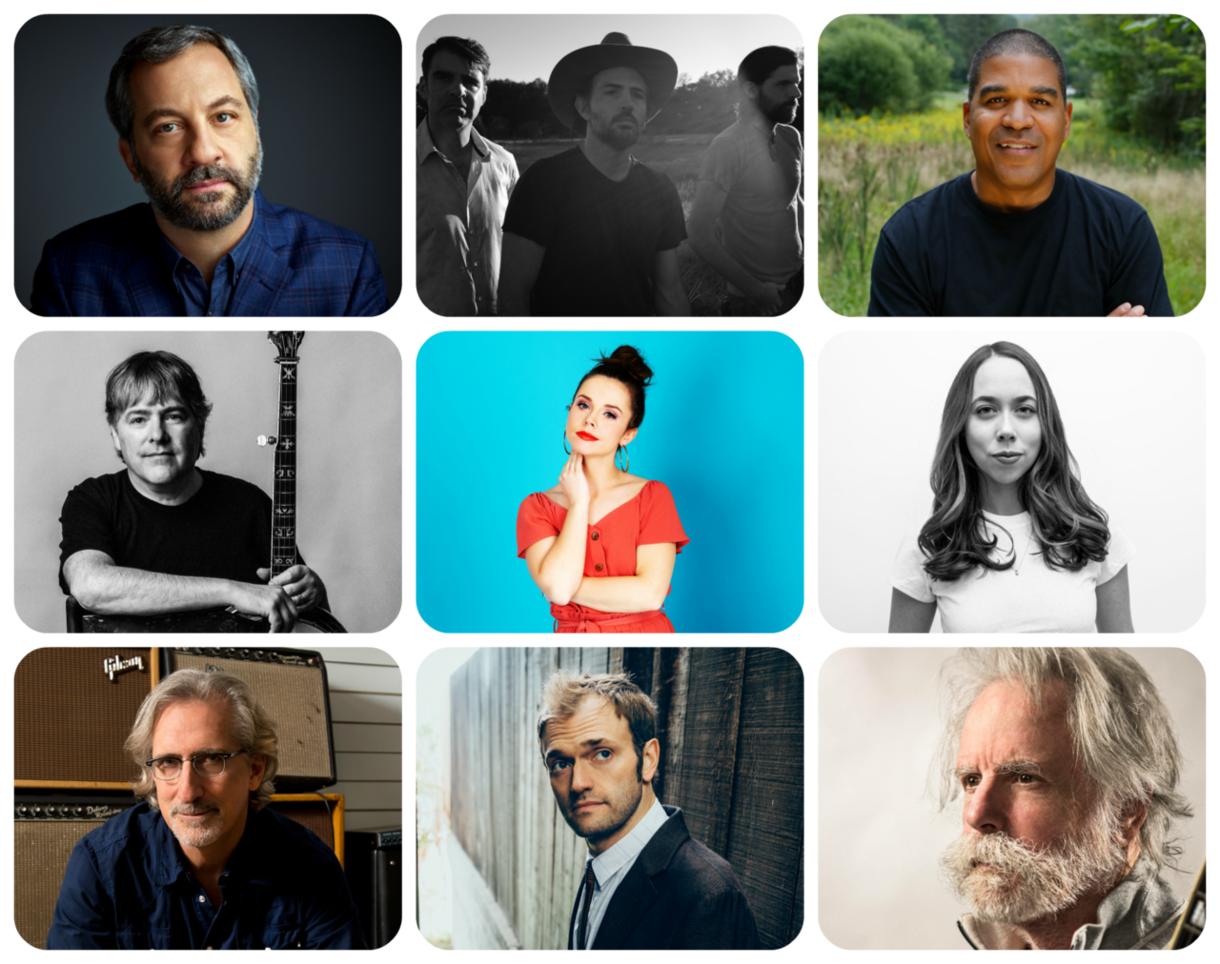
In August, the Americana Music Association Foundation (AMAF) revealed programming featuring director Judd Apatow in conversation with The Avett Brothers; Bob Weir with Oteil Burbridge; Béla Fleck with Sierra Hull; and Sarah Jarosz with John Leventhal and Chris Thile. The latest programming information also includes talks on empowering today’s creatives, developing streaming strategies and musicians in recovery.

https://www.instagram.com/p/CD1R4d_BUzV/

Apatow will sit down with The Avett Brothers to discuss the intersection of film and music, as well as the fine line between fine art and commerce. In 2017, Apatow co-directed the band’s critically acclaimed documentary, May It Last: A Portrait of The Avett Brothers. Since then, The Avett Brothers have released their new album, The Third Gleam.

The music that fans know and love from their favorite artists simply wouldn’t exist without the innovative musicians who came before them. Weir will sit down with fellow Dead & Company member Burbridge as they explore the inspirations and influence Black musicians have had on the Grateful Dead.

Now more than ever, musicians continue to push and blur the confines of genres to create the art they want to make. Fleck and Hull will speak to how roots music transcends and connects with a wide range of audiences during “Music Without Boundaries.” When it comes to creating that art in the studio, a producer’s ability to understand an artist’s vision is an integral part of the creative process. Moderated by Thile, Jarosz and Leventhal will delve into the connections forged between the artist and producer evident on her latest project, World on the Ground.

Additional new programming includes “Independent Control: The Power of Collaboration,” an inside look into how Americana industry professionals are empowering their independent artists to retain full creative control and the benefits of assembling a hand-picked team. Moderated by Jessica Nicholls (Metropolitan Groove Merchants), this discussion will include Blair Clark (Brooklyn Basement Records), Maria Ivey (IVPR) and Michelle Szeto (Paquin Entertainment Group).

In the streaming era, an abundance of digital resources can be found at the fingertips of industry and artist professionals, but how does one optimize those helpful tools? Led by Mike Fabio (New West Records), “Building a Streaming Strategy in 2020” rounds up Charles Alexander (Systemic), Margaret Hart (YouTube), Margaret Jacobi Lee (AMFM Management), Laura Ohls (Spotify) and Amy Wright (DittyTV) for a talk on developing real-world strategies that lead to increasing listenership and growing a solid fanbase.

Presented by Promises Behavioral Health, “The Show Must Go On: Musicians in Recovery” will find artists Phil Bogard and Jaime Wyatt in conversation with Shireen Janti (MusiCares) and Shane Ramer (That Sober Guy Podcast) about the road to recovery while offering how to find treatment and how others can take practical steps toward becoming a sober creator.

https://www.instagram.com/p/CDRhNsvBq-n/

Previously announced Thriving Roots programming includes intimate conversations between Brandi Carlile and Yola; Emmylou Harris and Ken Burns; and Jackson Browne and Mavis Staples. Rosanne Cash will bring together Ry Cooder, Angela Davis, Bonnie Raitt and Alice Randall for “Love and Vigilance,” a look at the history of protest music.

Moreover, RIAA Chairman/CEO Mitch Glazier and COO Michele Ballalynte will share an update on the music industry during “Record Setting” while looking at current trends and sharing their outlook. There will also be artist-friendly songwriting workshops and case studies like Mary Gauthier’s “Accessing the Universal in Your Songs: Mercy Now,” Taj Mahal’s “Music Is the Healing Voice” and an artist development breakdown with Black Pumas.

With over 50 panel discussions and more than 40 special events filled with music, Thriving Roots will bring the Americana music community together from across the world for three full days of engaging insight from its top industry professionals and leading artists.

Adding to the slate of artist conversations music fans won’t want to miss is Linda Ronstadt offering a behind-the-scenes look at Linda and the Mockingbirds, a new documentary that chronicles her 2019 journey with Jackson Browne and Mexican-American song and dance troupe Los Cenzontles to her grandfather’s hometown in Mexico, resulting in a tale of immigration, family and music. Moderated by esteemed journalist Randy Lewis, attendees will be able to watch the film screening and hear insight from the musical icon alongside the doc’s producer/director James Keach and Los Cenzontles founder Eugene Rodriguez.

https://www.instagram.com/p/CE95F1chNOY/

The Lumineers’ Jeremiah Fraites and Wesley Schultz will sit down with renowned filmmaker M. Night Shyamalan for an engaging discussion on the importance of retaining creative control of your art. In addition, Kathleen Edwards will speak with acclaimed Program Director Rita Houston (WFUV) about her new album Total Freedom, which marks her triumphant return to music after an eight-year hiatus from the business.

The common threads and differences of the Americana and country music worlds will be explored during “Ladies, Your Roots Are Showing,” presented by Change the Conversation. Moderated by CTC co-founder Tracy Gershon with freelance music journalist Marissa Moss, this panel session rounds up Brandy Clark, Tanya Tucker and Lee Ann Womack to share how they’ve been able to successfully navigate both worlds while maintaining their artistic integrity. They’ll also reveal the challenges and memorable moments they’ve experienced during their respective careers.

Reigning Legacy of Americana Award (co-presented by the Americana Music Association and the National Museum of African American Music) recipient Rhiannon Giddens joins NPR’s Ann Powers and the legendary Taj Mahal to discuss the theme of “Music is the Healing Voice.”

https://www.instagram.com/p/CEpIcpMhsZ-/

Music buffs should also tune into a special virtual edition of “Songlines Music Meeting,” an Americanafest fan-favorite. Sean Coakley and Leslie Rouffé will once again invite listeners to hear mostly unreleased tunes and score them during the live session, leading to a discussion on how music programmers in various media formats select the songs they feature.

Aside from plenty of educational and networking opportunities, Thriving Roots attendees will have a chance to unwind and recharge with immersive virtual events and lifestyle breaks. Valerie June will walk folks through a guided meditation that explores how to center oneself using ancient teachings. Big Machine Label Group will spotlight The Cadillac Three, Sheryl Crow and Ray Wylie Hubbard with some must-see musical performances.

During “Aw Heck: An Oh Boy Music Break,” join the late John Prine’s own record label Oh Boy Records for a celebration of their talented roster which includes Tré Burt, Arlo McKinley, Dan Reeder and Kelsey Waldon. For “Come Hear NC,” experience the rich music of North Carolina featuring Hiss Golden Messenger, Jim Lauderdale, Mandolin Orange, Steep Canyon Rangers and more.


Pictured above in composite: Top Row (L-R): Judd Apatow, The Avett Brothers, Oteil Burbridge; Middle Row: Béla Fleck, Sierra Hull, Sarah Jarosz; Bottom Row: John Leventhal, Chris Thile, Bob Weir