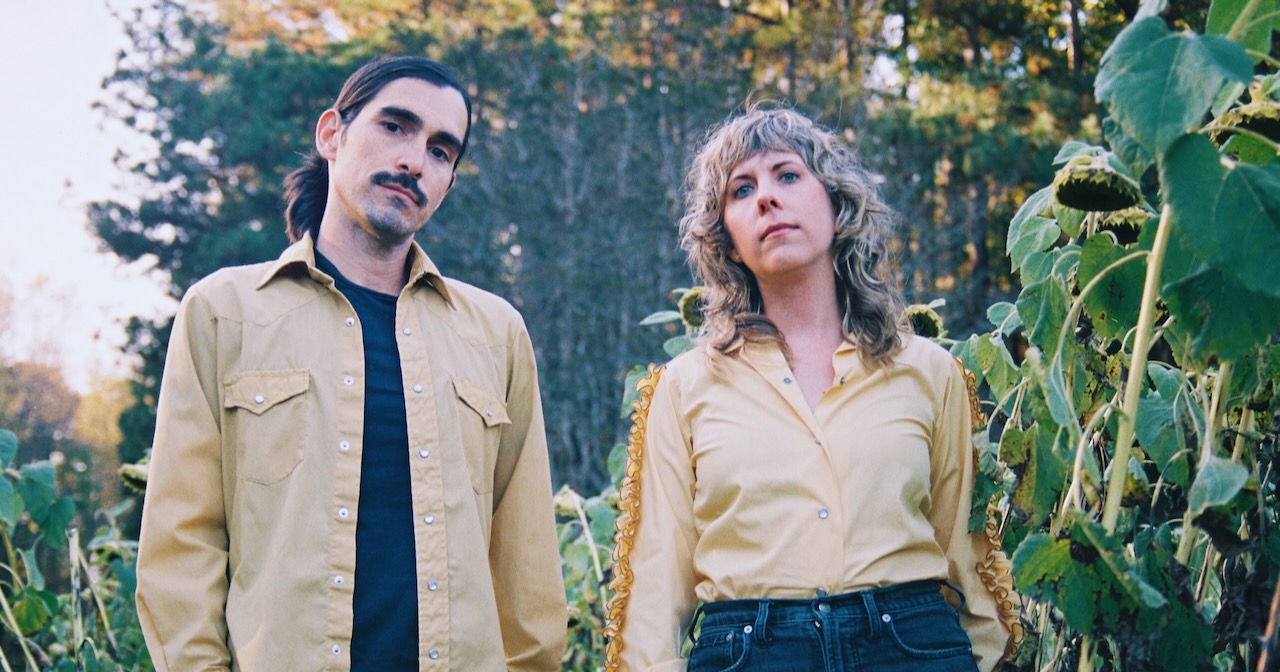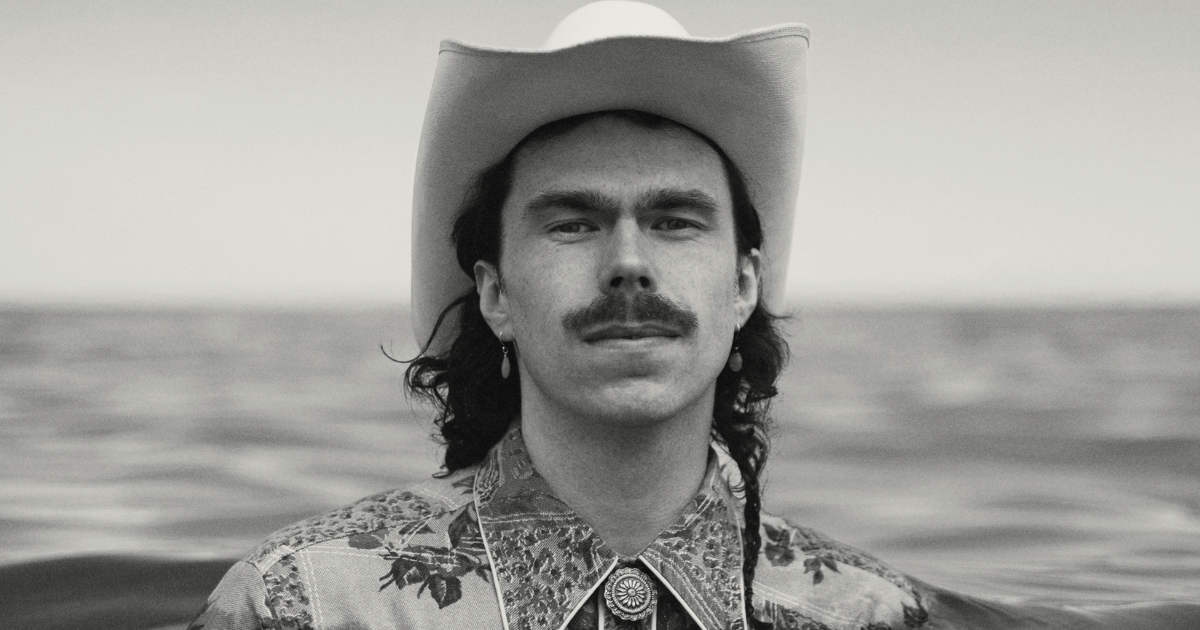
Boy Golden is Rooted in Roots

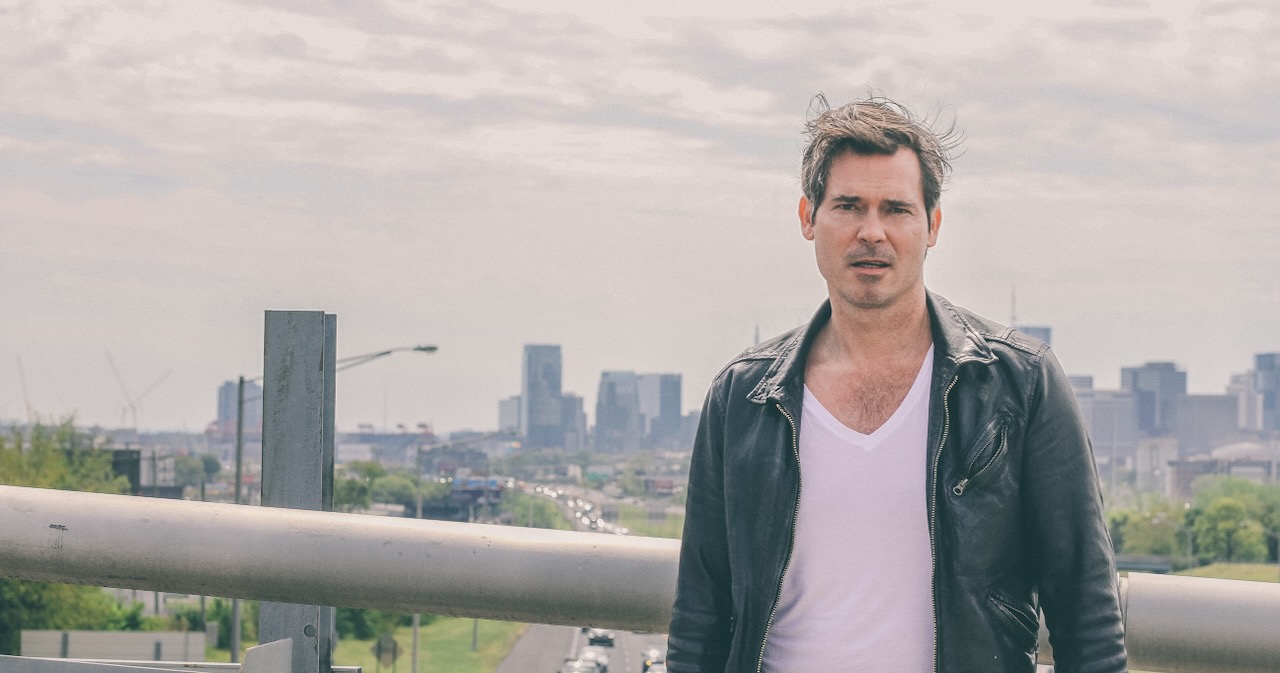
Lots of people are taking a shine to Boy Golden lately. Radio stations in Canada sent his populist pop single, “Suffer,” to the top of the modern rock chart. He produced William Prince’s 2025 album, Further from the Country, which recently received a Juno nomination in the Contemporary Roots Album category. And he’s among the new additions to the esteemed Telluride Bluegrass Festival lineup in June.

Offstage, Boy Golden is Winnipeg-based musician Liam Duncan. (His mother’s maiden name is Goulden, so he conjured the stage name Boy Golden.) In addition to jumping across genres, he’s also crossing the Canadian/American border this spring, with dozens of U.S. tour dates to promote his new album, The Best of Our Possible Lives. Duncan recorded the project in Los Angeles with fellow Winnipeg guitarist Austin Parachoniak, producer Robbie Lackritz, and cream of the crop LA studio players.

Duncan called in to Good Country to talk about making the new record, though the conversation also gravitated toward his abiding love for bluegrass music.

“Suffer” has been a big hit for you in Canada. What do you remember about trying to get “Suffer” to sound the way you wanted it to sound? Was it hard to come up with that song?

Boy Golden: No, that was a quick one. I sat down and wrote it all in one chunk. I remember it taking about an hour, maybe. But then I did make several demos of it, and throughout that process, I did edit it a fair bit and experimented with different lyrics and arrangements. By the time I got to the studio, I was really confident in the foundation, the bare bones of it. I could trust the musicians there, and they nailed it.

On that song, Pino Palladino plays the bass, which is really cool because he’s a legend, and then Abe Rounds is on the drum kit and he’s a really great drummer and musician. We had a few drummers we were thinking about asking, but I listened to Abe’s solo album – which is called The Freedom to Make Mistakes – and his percussive sensibilities on percussion instruments, beyond just the drum kit, were so spot on. It made it an easy decision, because I really wanted a lot of percussion on this album.

Why is that?

A lot of records that I love have a lot of percussion, first off. I was listening to a lot of Ry Cooder. I was listening to a lot of Paul Simon. The percussion on those records is fantastic. But also I was thinking about the first record I made as Boy Golden and I really went overboard with the percussion on that album. I hadn’t listened to it in years, I was in a store in Portland, and the guy running the store put on my song while I was in there. I was like, “Oh gosh, this is really great!” [Laughs]

I went back and listened to the record and I was like, “I should do that again,” because the records that I made between that first one and this one were way more stripped back. I made both of them on different types of 8-track tape machines so there’s just not as much room to go crazy with it. And I knew I was gonna have the freedom to do anything on this record.

The album before this one [For Eden] had a lot of banjo. Are you still grabbing the banjo from time to time?

Oh, yeah. I made a demo yesterday that has a bunch of banjo on it. And I spent the Christmas holidays just shedding some old-time, which is a really fun thing to do and does not bother my family much!

When did you pick up the banjo originally?

When did I pick up the banjo… 2020? 2019? Somewhere in there. It wasn’t, like, always a thing, but I’ve always loved bluegrass, and I’ve always listened to a fair bit of bluegrass, but I was just in a big phase. And I think part of it was, I was like, “I am never going to be a good enough guitar player to really play bluegrass, so maybe I should try a different instrument.”

You included “The Year Clayton Delaney Died” on that first record. Is Tom T. Hall somebody that you gravitated toward?

Yeah, particularly his bluegrass record, The Magnificent Music Machine. It’s such a good album! Something I love about that album is, a lot of bluegrass is pretty dry, and that record is not. It just sounds like a bunch of people playing in a big room, like maybe a church or something. I don’t know how it was recorded, but I love the energy on that record.

What are some of your other favorite bluegrass records?

My favorite bluegrass records are the Bluegrass Album Band’s Volumes I through III. [Laughs] They’re my favorite. I love a lot of what’s going on in the old-time scene right now, like Nora Brown and Stephanie Coleman. And I love playing music acoustically with friends. I love sharing songs that way. I grew up going to the Winnipeg Folk Festival, and that was where I was first exposed to bluegrass, and it has been a lifelong love. And I feel like it does make its way into my music, even though I write kind of pop songs or something. I like to produce in all sorts of different ways, but on each song on this album, I tried to have at least one element that felt distinctly rooted in roots, whether that was a guitar part or a banjo part or a pedal steel or whatever. I just tried to always have some sort of grounding in the roots.

Reading up on you, I found that you were a Gillian Welch fan.

Yeah, I saw Gillian and Dave for the first time this [past] year at Winnipeg Folk Fest. It was very emotional for me. I cried a lot because I had a friend pass away right before we made this record. We had made a record together, me and this friend, and one of the songs was called “I Dream an Ocean,” which was inspired by “I Dream a Highway.” We would just bond over those records so much. … I could cry right now thinking about listening to Gillian and Dave when he was here. It was super affecting and really gorgeous.

I’ve enjoyed the videos that you put out so far and I think visuals must be really important to you. Can you talk about the concept of the video for “Cowboy Dreams”?

Yeah. I had a couple pretty specific visual references. One of them was the Brazilian tune “Águas De Março,” which has a great video you can find of Elis Regina and Antônio Jovian duetting that song together on an old stereo capsule mic. You can put [that mic] off-axis and then you can both sing into it. Anyways, it’s just a really beautiful video, and I love watching it because they have such chemistry. Me and my friend Cat [Clyde] have a great creative chemistry as well. We wrote that song together and made the demo together. So, I thought we could basically steal that concept and make it a little more cinematic by putting a 360-degree dolly camera around it. I love that shot.

The other one was a killer Sade video that’s all in black and white, and she’s galloping on a horse bareback, which is beyond my skill level, and it’s just so cool. Cat’s a really good rider. I was not a great rider. I’m still not a great rider, but I took a bunch of riding lessons leading up to that video shoot and got myself to the point where I could gallop comfortably. The ranch where we shot the horse stuff is run by some friends of mine, and they gave me, like, a Cadillac of a horse, so it was super easy.

You’re riding a horse in that video and you’re in Lake Winnipeg on your album cover. I’m assuming you’re pretty outdoorsy. Do you like the great outdoors?

I do, yeah. Yes sir. There are references to the natural world in my writing a fair bit.

Say you’ve got a free afternoon, what would you do?

Well, right now in the winter, I go cross country skiing. I go a couple times a week, usually. And I love cross country skiing, because it’s very meditative once you get into the flow and if the conditions are good – kick, glide, kick, glide. … And you can get into the woods with it, which is what I like about it. I mean, you can’t downhill ski where I live, because it’s just flat, but on cross country, you don’t need a lift pass. You don’t have to pay any money, usually. Maybe a trail fee of like $5 but once you get going, you can get onto this trail and you’re in the woods in the middle of winter. It’s a pretty special experience, not something everyone gets to enjoy, or even maybe realizes is as wonderful as it is. You know, to be out in the woods in the middle of winter, it’s sweet. And in the summer, I like to hike. I like to backpack.

That reminds me of the song “Blue Hills” from one of your past records. That one seems more of a country-leaning song to me. What inspired you to write that song?

I was thinking about being in high school actually. The town I grew up in is called Brandon and Brandon famously has hills [laughs] in Manitoba and they’re called the Blue Hills of Brandon, ostensibly because from a distance, they kind of look blue, I guess. And I was under the impression when I wrote that song that I had a great aunt or some ancestor who had written an old song called “The Blue Hills of Brandon.” I found out later from my dad that I must have made that up, because I don’t! That person who wrote that song is not my ancestor.

But either way, at the time, I thought she was, so I was like, “I’m gonna write my own version,” which I thought would be really special. I was thinking about high school, I was thinking about my late grandma and grandpa. Thinking about how those really early memories of love are so tangible, no matter how old you get. That’s why I say, “It’s the only thing I know to be true.” It’s like, that early love just was true.

When did the spark start for you as a songwriter?

I always wanted to write songs, but I was really blocked until I was about 21 or 22. And then I had a relationship end. It’s a common story, and I think I was so heartbroken that I didn’t really care if I wrote anything bad. And then it was like a spiritual revelation for me.

Had you been on stage a lot before that moment?

Yeah, I toured with my high school band all over. We played over 600 shows together. I’ve been in some sort of band with friends since I was like 14, so it’s been a lifelong thing. But I kind of thought I would just be a producer. To be honest, I never really thought I’d end up doing this.

When did you turn the corner? When did you decide, “All right, let’s make it happen”?

I guess when I had enough songs. And then I made a record that came out under my own name, which you can’t really find anymore. And then I came up with the Boy Golden character and idea and had a bunch of songs that I felt like were in the Boy Golden world. And ever since it’s been an obsession.


Photo Credit: Best of Our Possible Lives album cover
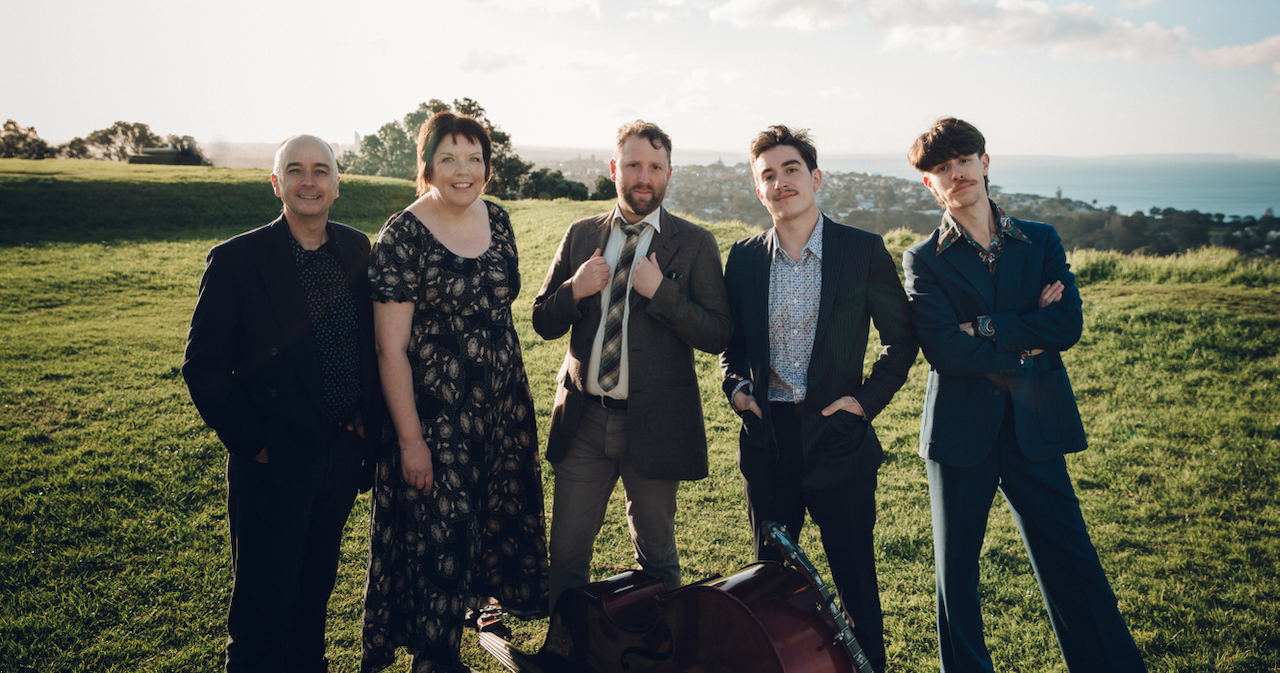
You, Me, Everybody Grow True Roots in Borrowed Soil

Aotearoa (New Zealand) doesn’t have a strong history of bluegrass bands – except one. If you mention bluegrass to New Zealanders, some will have at least heard of the Hamilton County Bluegrass Band. New Zealand has produced some great players, notably fiddle player George Jackson, banjo player BB Bowness, guitarist/singer Cy Winstanley, and bassist/singer Vanessa McGowan. (Now that we write this, these four would make a great NZ bluegrass band!) But while these names are well known in American bluegrass circles, it is fair to say they aren’t known (outside of folk circles) in Aotearoa.

Many of the songs on our new album, Midnight (out January 30, 2026), are situated within a day, or feature characters who are sitting at the cusp of who they have been before delving into something new. That sense of “in-between” also reflects our place within Aotearoa’s musical landscape, where bluegrass arrives without a long local history, but can be shaped in ways that feel natural to how we live and create here.

“Our Kiwi fans know bluegrass from traditional songs and contemporary artists such as Alison Krauss & Union Station, and Billy Strings. But they are more familiar with the other genres that bluegrass sits alongside. We’re also collectively members of the New Zealand folk, country, and jazz communities,” says our bassist, Rob Henderson.

Midnight starts with bluegrass at its core, but gently widens scope, bringing in different genres with their rhythms, broader chord progressions, and influences drawn from our own environment and lives lived in Aotearoa.

Here are the songs and tunes that anchor us in tradition and inspire us to find our own path as the clock strikes twelve. – You, Me, Everybody

“Ain’t No Grave” – Crooked Still

I love groove and the forward motion in all music, so when I heard this tune for the first time I was naturally inspired by the push of the cello part. This feel was a factor in my own bass playing across the album, especially for up-tempo tunes such as “Misdirection.” – Rob Henderson

“Dorrigo” – George Jackson

George Jackson’s tune “Dorrigo” feels friendly and familiar. It’s one of those tunes that will just keep going around and around the jam circle. When the Dorrigo Challenge did the rounds on the internet a couple years ago, it was a reminder of how a tune can bring people together. I had this in mind while writing “Sam’s Tune” on our album. – Sam Frangos-Rhodes

“Wildfire” – Watchhouse

I find when I sit down to write a song, I usually follow the same template or theme. Of course, there is variation in a lot of my songwriting, but I find rhythmically it’s always much of the same thing. A while back I wanted to break that cycle and try to write a more chilled out, slower tempo song, so I wrote “Heart of Stone,” which leads to “Wildfire” by Watchhouse. I enjoy this song because I think it has a very similar vibe to “Heart of Stone.” For me, it captures the same emotion and feeling I was looking for. I find it’s always nice to find what I was looking for in other people’s writing and relate that back to my own music. – Laurence Frangos-Rhodes

“Heart of Stone” – You, Me, Everybody

Laurence originally wrote this while we were producing our previous album, Southern Sky. I love the backbeat to it, but he also writes great chord progressions; they feel natural and authentic to the song and surprising at the same time. I’ve known Sam and Laurence since they were in their early teens and while our audience love our instrumentation, singing harmonies with them feels like home to me. “Heart of Stone” gives us an opportunity to showcase our vocal blend and milk those beautiful chords Laurence gifts to his songs. – Kim Bonnington

“Railroad” – Béla Fleck & Abigail Washburn

When I try to serve the song with three-finger banjo, I frequently look to Béla Fleck’s work with Abigail Washburn. He plays parts and the two of them fill out the texture of a song so well! Ironically, when we arranged “Silver Spoon,” I was hearing Abigail-like clawhammer behind it, so I did my best to provide that kind of sound with three fingers. – Nat Torkington

“A Hundred and Sixty Acres” – Marty Robbins

Our track, “The Ballad of Bubs and Beautiful,” started when I overheard a conversation between two women shearers in a camp ground in Waipukarau. I knew that I wanted to capture their relationship to each other and their working life, all framed within a day. My Dad’s vinyl collection is 50% Marty Robbins and I remembered the picture that “A Hundred and Sixty Acres” colored of a life well lived. That’s why the first line in “Bubs and Beautiful” is, “Up ‘fore dawn to greet the sun.” There’s a tendency for NZ songwriters to still write about American experiences and places due to an inability to describe ourselves that has been labelled “cultural cringe.” But I knew the description of the women was genuine when I heard someone go, “Oh” as we played the last line live for the first time. – KB

“Orphan Annie” – Tony Rice

As a guitarist, I’ve been heavily influenced by Tony Rice – who hasn’t!? Whenever I listen to the Church Street Blues album it leaves me feeling creative and inspired. I love the minimalism; stripped back to one guitar and vocals telling a story. A lot of the songs on Midnight started in this exact same way, guitar and vocals alone. So it only feels appropriate to give credit to Church Street Blues where credit is due. I cannot pick one track from the album as a favorite because they are all great, but here is “Orphan Annie.” – LFR

“Was It You” – Joy Kills Sorrow

“Was It You” is a song I love for how it drives. That rapid mando chop over a fast rolling banjo held down by a thumping bass is a sure way to make a foot stomper. I took a lot of inspiration from Jacob Jolliff’s mandolin playing in “Was It You” when I put together my part for our song, “Busy Without Me.” – SFR

“Busy Without Me” – You, Me, Everybody

Kim writes wonderful slice-of-life songs. The Midnight album has everything from the plight of an unwed mother to mother/daughter sheep-shearers. “Busy Without Me” is perhaps more #relatable, though: we have a short life with ample temptation for busyness, it says, but it’s important to take moments to “sit and breathe and let the breeze wash over me with nothing in my way.” I love the way the busy-ness of the music reflects the lyrics. – NT

“Caleb Meyer” – Gillian Welch

Country/folk/bluegrass songwriters have always done a great job of writing songs about things we won’t talk about, but make us happy to sing about them. Our song “Silver Spoon” was initially written to an Irish jig. But the joyfulness didn’t eclipse the bleakness of the lyrics. At different times when we were arranging it, different band members would say, “What would Caleb Meyer do?” and our producer Rachel Baiman asked exactly the same question when she arrived for our sessions before we recorded. It’s become the quintessential modern murder ballad. – KB

“Distant Sun” – Crowded House

I grew up in ’90s New Zealand with parents who would play in a country band at the local barn dance while my brother was DJing at the rugby club rooms. So while Marty and Merle would be in one ear, Crowded House was in the other. If you think of great bridges in songwriting, “Distant Sun” has one of them. It also has my favorite line ever in a song: “I don’t pretend to know what you want, but I offer love.” The melody lines in our own track, “The Rest of Us,” hark back to years of admiring Neil Finn as a songwriter. – KB

“The Rest of Us” – You, Me, Everybody

When Kim first brought the concept of “The Rest of Us” to the band I was immediately a fan, and thought it would a great fit on the album. Before we went into the studio we all spent some time together to arrange the new material. As a band I feel like we work uniquely well when it comes to putting a song together and it’s one of our biggest strengths. I think “The Rest of Us” is a great example of Kim’s songwriting and a great example of how we function as a band. – LFR

“Natchez Trace” – Béla Fleck

In my mind, this is the classic G minor banjo instrumental, from Béla Fleck’s landmark album, Drive. Recorded with his B string tuned down to B flat, Fleck often plays it live out without the re-tuning. That was the inspiration for me to write my own Gm instrumental for a banjo tuned to open G major. – NT

“What a Fool Believes” – The Doobie Brothers

I wrote “She’s Alright With Me” a few years ago before I joined You, Me, Everybody. At the time, I had been deep diving into a lot of Doobie Brothers music and the moving parts within their songs. When “She’s Alright With Me” was born, it was originally a heavy keyboard driving tune – having written it on an old 1960s Wurlitizer Piano and styled it on some of the Doobies’ keyboard parts. It’s safe to say it’s transitioned a lot as we don’t have a keyboard part, but you can hear the rhythm now being driven in the same way by Laurence’s guitar. – RH

“Old Train” – Tony Rice Unit

Laurence’s epic album-opening “Misdirection” is a straight-ahead driving bluegrass song, which nonetheless has a few surprise chords in it. For some reason that reminds me of this epic Tony Rice track. – NT

“Misdirection” – You, Me, Everybody

“Misdirection” fits nicely as the opener on our album. It’s a fun example of progressive bluegrass while still staying true to its roots. “Misdirection” is my favorite track on the album and I would like to think the amount of fun we had recording this song is reflected in the final result. – SFR


Photo Credit: Ebony Lamb

BGS 5+5: We Met In June

Artist: We Met In June
Hometown: Currently living in Sogndal, Norway
Latest Album: Going Home (released September 19, 2025)

What was the first moment that you knew you wanted to be a musician?

I remember my dad and I driving through Minnesota when I was about eight years old. He had bought Fleetwood Mac’s collection CD so we’d have something to listen to and we played it over and over again. I became completely obsessed and that’s when I found a deep interest in music. I knew I wanted to do what Stevie Nicks and Christine McVie were doing. – Sara

I think I was around seven when I saw the music video for “The Final Countdown” by Europe and I thought the guitar solo by John Norum was the coolest thing ever. I remember thinking, “I want to do that someday!” I’ve also always looked up to my dad, who’s a great guitar player. He was the one who introduced me to acoustic music and bluegrass, which has been the greatest gift. – Gjest

Genre is dead (long live genre!), but how would you describe the genres and styles your music inhabits?

We’d say it’s a blend of singer-songwriter, folk, Americana, and pop. Some journalists in Norway have called our music “Nordicana,” which is basically a Nordic take on Americana. We’re inspired by a lot of ’70s music like Fleetwood Mac, Jackson Browne, Crosby, Stills & Nash, and we also love Kacey Musgraves and the whole Nashville country-pop scene.

On top of that, we listen to a lot of acoustic music like Alison Krauss & Union Station, Gillian Welch, Nickel Creek, Molly Tuttle, etc. Our acoustic guitar playing is very influenced by those bands and the sound on our new record is a dreamy mixture of acoustic guitars, sometimes mandolin and banjo, plus drums, bass, keyboards, and synths. – Gjest

Which elements of nature do you spend the most time with and how do they impact your work?

Living on the west coast of Norway surrounded by mountains and fjords has given us a strong bond with nature – it’s part of our everyday life. I start every morning with a walk to clear my head and get some fresh air. It always seems to lift my mood a bit. – Sara

And then there’s the weather – we get a lot of cold, rainy days here, which makes it easier and more natural to stay inside and play music, write, and practice. We’ve been to Nashville, for example, and it’s hard to understand how people get anything done in that heat! – Gjest

If you didn’t work in music, what would you do instead?

I’d probably be a veterinarian. It used to be my dream before We Met In June. In Norway it’s really difficult to get into veterinary school and I’ve actually applied every year since high school just to see if I’d get in. This summer, for the first time, I was accepted – and I have to admit, it hurt a little bit to turn down the spot. [Laughs] – Sara

I honestly have no idea. As a kid, I thought excavators were the coolest thing, but I probably wouldn’t be good at anything else. I’m just glad I get to do music. – Gjest

What’s one question you wish interviewers would stop asking you?

We appreciate all questions, but there’s one that always comes up: “What’s it like being a couple and working so closely together?”

We get why people are curious, but for us it feels completely natural to spend so much time together. And, honestly, if you’re going to work that closely with someone, why not do it with your favorite person in the world? Of course it’s not without challenges, like any partnership, but most of the time it’s an advantage. That said, we could definitely be better at taking breaks – it’s music 24/7! – Sara


Photo Credit: David Zadig

BGS 5+5: Bonnie & the Mere Mortals

Artist: Bonnie & the Mere Mortals
Hometown: Avella, Pennsylvania
Latest Album: Take Me to the Moon (available August 29, 2025)
Personal Nicknames (or rejected band names): I get Bonald a lot. Bon Bon, Bonners, Bonnie Romano.

What’s your favorite memory from being on stage?

Two years ago for our Halloween show, I looked out in the crowd and saw a complete stranger scream-singing along for the first time. As an artist, I constantly question what I’m doing. This is a hard path we’ve chosen that can beat you down a lot, but you can’t fabricate that moment. You’ve reached someone, you touched their lives in some way. I’ve since had that experience dozens of times and have even gotten to do a Bonnie & the Mere Mortals tattoo on a fan, but you never forget your first.

What other art forms – literature, film, dance, painting, etc. – inform your music?

I truly think the difference between art forms is no wider than the difference of medium: oil or watercolor? Everything is how you choose to express your idea. I have a literature degree and I grew up in an abandoned coal town; I wanted to make music the way Southern Gothic writers like Michael McDowell made me feel. Southern Gothic is often seen as just slow Americana in a minor key, but I wanted to expand that thinking to include my experience growing up in a Southern Gothic tableau. I also dress up like a drag queen because I want the Mere Mortals to be as visual as we are musical. Our presentation is always firmly tongue-in-cheek because every murder ballad has a punch line and I never think you should take yourself that seriously.

What’s the most difficult creative transformation you’ve ever undertaken?

When I was growing up, it was the golden age of pop-country. Miss Shania Twain, Garth, the Chicks? Everywhere. I grew up on the values of Hank and “Raise Hell, Praise Dale.” Post 9/11 though, I really started to resent my upbringing. I discovered the Cure, Queen, and Bowie, and put aside Ralph Stanley. I moved to the city, came out as queer, and started a metal band. I never truly felt fulfilled though. I felt I had to hide a part of myself that made up so much of my character.

It wasn’t until I heard Gillian Welch for the first time that I started to dive back into myself and realized that I wasn’t really making art authentically. I bought a banjo and started to learn clawhammer. I rediscovered so many loves I had put aside and I began to feel myself again. I realized that what I loved about the Smiths was the same thing I loved about Jason Isbell, and I couldn’t see why they shouldn’t go together. Some of my folks couldn’t understand the transition, but they certainly do now.

What would a perfect day as an artist and creator look like to you?

Film an episode of The Muppets as a special guest and then head over to Dolly’s house to cook her a pasta dinner.

If you didn’t work in music, what would you do instead?

My day job for the last 15 years has been working as a tattoo artist. I co-own a shop in Pittsburgh called the Kindred Spirit Tattoo Co. It can be hard making it as an artist on both sides of the sun, but I feel so grateful I get to do two things I love so much.


Photo Credit: Veronica Baron

Ketch Secor
Contains Multitudes, Too

After a quarter century fronting the frenetic bluegrass and jug band outfit Old Crow Medicine Show, Ketch Secor is finally breaking out on his own with his solo debut Story The Crow Told Me. The retrospective record looks back on the past few decades, from his own journey to stardom spurred by a chance encounter with Doc Watson to the certified platinum hit “Wagon Wheel,” through the lens of a soundtrack that’s equal parts bluegrass and contemporary country.

“Because the band [recently] celebrated 25 years, I was already in the mindset of a retrospective look,” Secor tells BGS. “I was thinking about everything that’s happened and transpired over that time and started writing about it. In fact, at first I really thought it was going to be a spoken word record before the music eventually took over.”

Talking over the phone, Secor spoke about the timing for his debut project, its connections to both Old Crow and contemporaries like Dierks Bentley, becoming the new host of Tennessee Crossroads on Nashville PBS, and more.

You mentioned this album was initially envisioned as a spoken word compilation. What led to its transformation into a fully realized album?

Ketch Secor: I was working with Jody Stevens. We had written a couple songs that were largely based around spoken word and others we were looking to add background sounds on. Those sounds started getting more and more like what I already do, which is writing songs with choruses and verses and hooks. It just evolved out of the beat poetry version of the album, which was probably a little less listenable but closer to what I was striving for. The musicality of it is a bit of a compromise to be like “Well, I’m going to make this an actual record people might want to listen to” because the spoken word records I enjoy are not highly listened to.

I recently was trying to find them again since my record collection got lost in the 2010 floods we had in Nashville. I went on Spotify, which I’d never used before, to find all these songs in my head like Amiri Baraka’s “It’s Nation Time” or Moondog – a 1950’s renegade beat poet from New York – in trying to get an understanding of how the spoken word music I heard as a kid was being utilized today. It quickly became clear that nobody listens to that stuff anymore. [Laughs] So it seemed like making it musical would make it more fun for people.

It seems a bit ironic that you had to look up all these songs – many of which would be considered part of the Great American Songbook – on a digital streaming platform like Spotify. Talk about two very different worlds colliding!

I talk a little bit about that phenomenon on the song “Junkin’.” A lot of the experience of making music with Old Crow, especially in the beginning when we were still developing a canon, was about music’s physical form. When the band first started the internet was still new and we were still selling cassettes. The last time I made a solo record was on tape, the band didn’t have a website and none of us even used email when all of this started. It meant that searching for the physical was really important.

There’s another song on the album called “Thanks Again” that highlights the personal relationships that you develop out on the road – these chance encounters that are very much real and put the wind in your sails. There’s something to be said about having to come of age in a time when information was so tactile and often involved a human touch.

With the emergence of the internet and things like streaming and social media it really is an entirely different world for artists to navigate nowadays.

I realized that I had a kind of time capsule in my mind I had yet to crack open in the days before going in to make this record, which was done quickly and often with me writing the songs as we were recording them. Opening it up was really cathartic and essential for me to process and move past because the experience of coming to Nashville when we did and the kind of band we were in was, at times, slightly traumatic. It was a very intense quest similar to a military deployment, being a minor league ball player fighting your way through the ranks or even being a teenage whaler in Moby Dick. You end up leaving everything else behind in search of this one pursuit.

It’s not unique to come to Nashville to make it big, but what made our experience unique was that we were trying to do it with these traditional sounds in an era in which technological changes were happening as we were doing it. It was almost like we were going against the literal tide with our choices and artistic motivation.

You just mentioned writing these songs as you were recording them. Is that something you’d done before?

That was a very new way of going about things. I understand that record-making has changed a lot since we first started – our most popular Old Crow records that gave us a career were the early ones we made with Dave Rawlings on analog tape that we cut with a razor blade. Making a record the way Gillian [Welch] and Dave do is very studious, labor and time-intensive. But now the technology exists to do it super fast.

This record almost felt like a throwback to the seminal recordings of the 1920s and ‘30s that are the headwaters of our sound. Those records were made in three minutes oftentimes without knowing what the arrangements would be. Three minutes wasn’t the time frame of hillbilly music until the record company said it was – they just sat there, watched the light turn on and played. Writing a song and building a track like that actually felt really on par with what it would have been like going to Camden, New Jersey, in 1928 on a train when you’d never left your county before that. The challenge is keeping one foot in the past and one in the present. When you play fiddles and banjos and blow harmonica for a living the instrument kind of does it for you.

You name dropped Jody Stevens a few minutes ago. How’d y’all come together and what was it like working with him?

We met through my publishing company. I was going to do a co-write with him and knew he’d written a lot of songs for contemporary country artists, so I brought my bag of tricks that I bring out when I try to pretend I’m going to write the next big, top 10 country smash, except for this one time with Darius [Rucker]. I love country music even though I feel that in the past 25 years I have a whole lot less in common with it than I did when I was a kid, in terms of what it sounds like today in its mainstream output versus when I was singing along to Jo Dee Messina when I was 19. It was interesting to circle the wagons with Jody because he brought such a unique perspective in record making that comes from contemporary country music even though his roots are in hip-hop.

The other thing that brought us together was that Jody had seen Old Crow a lot, especially in our early days from 2000-2005, which is the sweet spot I try to explore on this record. He’d been there at the Station Inn and the festival Lightning 100 used to do downtown and some of these other places that have since been replaced by high rises. The fact that he had been a first-account witness to the band was really helpful to bounce ideas off of. His sister was also a big Old Crow fan and even though I’ve never met her I thought about her as my target demographic – someone who saw us back in 2001 and wanted to know what that time capsule looked like.

The fact that Jody had done all this work with people that rapped – only to find that 25 years later the tapes and demos he’d made with Jelly Roll were now part of a pop culture consciousness that hadn’t been there when he first started working on them – gave him a similar orientation to country music that I have about Americana. When I got started there was nothing called Americana and nobody lived outside of contemporary country music unless you were alt-country. Coming into this period of time in Nashville where it wasn’t yet determined that anyone with a banjo could make it that wasn’t bluegrass is another place where Jody and I shared commonality. The rap game has since become a massive component to contemporary country music similar to how Americana has become the tastemaker for anything roots-related.

In terms of the sound on this record, the way you move between more Old Crow-esque bluegrass and those pop country flavors reminds me a lot of Dierks Bentley, another person who excels at showcasing the best of both sides of roots music.

I came up with Dierks and remember witnessing his arrival. Before [“What Was I Thinkin’”] came out there was an issue of CMA Up Close that had a story about us on the page opposite one about Dierks and I thought to myself, “Well, if a guy named Dierks Bentley can make it, then probably a guy named Ketch Secor can, too.” Surely Nashville has the appetite for two oddly-named boys. [Laughs] Then I went on and took a moniker that wasn’t my name. Because of that I feel very much like a brand-new artist now and have developed a strong sense of empathy for the young guns who are out there trying to put their stuff out for the first time, because it’s so much harder now than when I was a kid.

What are some of those major hurdles you’ve noticed for new artists today compared to what you first encountered with Old Crow?

Now the way you stand out in a crowd is through visual means that often require the least amount of artistic acumen and the most amount of social media acumen. So far, I’m not sure it’s helping the cream rise to the top, though. The skill set should be how good can you pick a banjo, not how good can you pick the keypad on your iPhone, even though you have to do both to be successful today. When I was a kid it was about making these connections with people, knocking on doors so many times that every time something good came to me [it did] on account of me showing up and being in the right place at the right time.

Seeking a viral moment has an undue effect of potentially limiting the number of new entrants into the arena. For one generation, what was once divinized is now digitized. I’m sure that if there’s a God above that He or She can use the binary code to reach people and connect their children. I can pick up The New York Times and feel like there’s a closeness with the loss in Texas right now, which is only amplified by me having swam in the Guadalupe before and having a personal connection to the area. If you’ve plunged in the waters yourself then you’ll share something so much more vital with those who are experiencing the loss.

It’s really a metaphor for how we all have a shot at playing the Grand Ole Opry or going from the Station Inn to the Ryman like I did. There’s a turnstile in front of that and I want to see it spinning wide so that artists of all stripes can find their way up to that stage where they belong. As a steward of those stages, I want to see the people show up who have found music as the great connector that, regardless of the speed of the computer in your pocket, the speed of music breaks all other forms of sonic barriers.

In terms of personnel, what motivated you to bring in past and present Old Crow members like Willie Watson, Critter Fuqua, and Morgan Jahnig to record these songs with?

I really wanted to have all the past members of Old Crow on the record, because it felt like a bit of an offering to the gods to say “thanks.” So I really wanted a little bit of all their spirits on it. Not only that, but I read through a lot of old journals and called up some people I’d met hitchhiking, but hadn’t talked to in 25 years. I went and visited the guy who coined the term “Wagon Wheel,” because that song was always called “Rock Me Mama” until I met James Sizemore – a wonderful rascal and drug-dealing Vietnam vet.

I went to see him on his deathbed and recorded phone conversations late at night with old friends. While none of that stuff is necessarily on the record in its physical form, it all went into the process of trying to bake something that really felt like I was living in the past and bringing it to the present through these songs. I think a lot about cairn stones that the Inuit people up north call inuksuit, which are like sign posts that tell you where to turn, but they’re also spiritual. So imagine a road sign that could say “300 miles to Memphis,” but also told you the ancestral route of the settlers who first brought buffalo down 7,000 years ago, sort of like the duality of a time signature.

That duality of time reminds me of one of the album’s songs, “What Nashville Was,” which highlights how much Nashville has changed over the decades while also highlighting how no matter how many venues are replaced with condos, music will always be the city’s heartbeat.

A lot about the way Bob [Dylan’s] record Nashville Skyline had a way of pointing out Nashville for the first time to anyone who didn’t live in the South or listen to country music. He was really pointing to Nashville from a unique perspective and certainly Bob Dylan’s Nashville was the kind of Nashville that I was looking for when I first started playing on the street corner there in 1996.

Similarly, I was also looking for Dolly Parton’s Nashville. I wanted the Nashville that Dolly got when she stepped out of the pickup truck and married the first guy that honked his horn at her, the kind of Nashville where Willie Nelson was laying down in the street in front of Tootsie’s thinking he’s gonna kill himself because nobody wants his songs.

I used “Girl From The North Country” as the template for a love letter to a changing place and a cityscape that has gone on to do so much stuff that it itself is largely oblivious to the price it pays for its constant reinvention. And the price is that who we’re ushering in … is probably because you were on a reality TV show more consistently than because you had a song that people couldn’t stop singing at summer camps. Not that those things are good or bad, they just change. But we’re at a point now where the legend and lore of Nashville has grown so much that we’re at risk of the bubble bursting and it being something like Seattle after grunge or Austin after it wasn’t weird anymore – which is a glass, monolithic, industry executive business center. Oftentimes those forces stand in opposition to the ability of songwriters, hucksters, showmen, and the survival spirit that goes into creating the next Bob Dylan of a generation. I’m hoping that we, the architects of Nashville, can endeavor to build a place that still allows a hearty hero or heroine to come through the gates just like Loretta Lynn or Jack White did.

You were recently named the new host of Tennessee Crossroads on Nashville Public Television. How’d that opportunity come about and what’s it mean to you?

When PBS called me about this unique role that had come available with the sudden and sad loss of Joe [Elmore] – who ran the show for 30 or so years – it only made sense to find someone else to step in who’s also run a business for around 30 years that’s similar to Tennessee Crossroads. Old Crow Medicine Show has been criss-crossing the American south getting inspired by quilters, gee-haw whimmy diddles, carvers, and folks that plant by the lunar signs – those are the kind of folk heroes that go into our music. They’re also the same kind of stories that this show loves to tell.

I love public broadcasting and care a lot about access to it in this country. I made my television debut on our local PBS affiliate up in the Shenandoah Valley of Virginia when I was in fifth grade. I fell in love with my own backyard because Ken Burns showed me what was so rich about it and so frightening and tragic, which was the bones of the Union and Confederate armies right here, just past the fence. Ken Burns really illuminated that for me and ever since I’ve been the biggest fan of public broadcasting.

What has the process of bringing this record to life taught you about yourself?

I was born about 35 miles outside the birthplace of Walt Whitman and always wondered why I like the guy so much. Then I recently rode my bicycle there and thought, “God, this guy’s place is really popular!” There were people sleeping on a stoop and waiting for a free sandwich in the parking lot. And it turns out where Walt Whitman used to live is like the center of the drug-addled corpse that is parts of Camden, New Jersey. It looks a bit like the Dickerson Road corridor, at least as it was in about 1999.

I feel like Walt really said it best when he said he contains multitudes on “Song Of Myself, 51.” I feel as a picker of banjos and fiddles and guitars and dulcimers and auto harps; and a blower of jugs and juice harps and harmonicas; and a singer of ballads and lamentations pretty songs; and [an attender of] corn shuckins, frolics, and cotillions, that I am like you, a container of multitudes.


Photo Credit: Jody Stevens

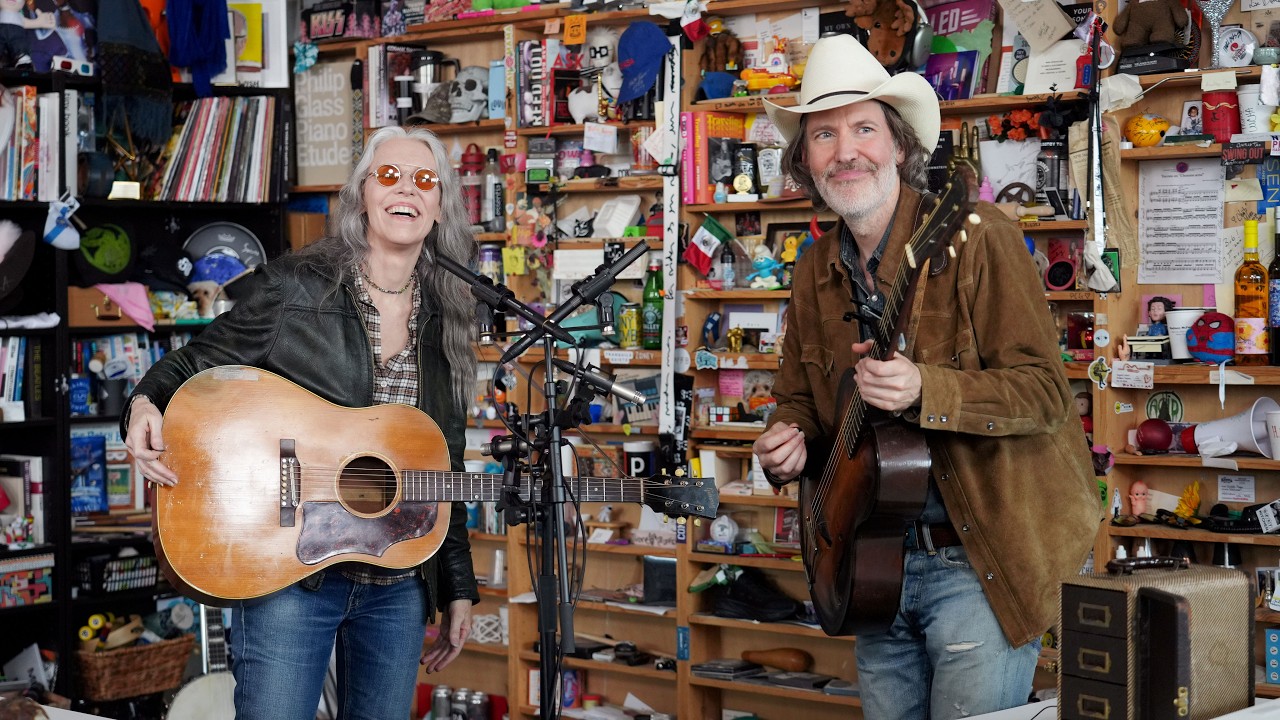
Watch Gillian Welch & David Rawlings Return to NPR’s Tiny Desk

From their earliest days as a duo, Gillian Welch & David Rawlings have crafted utterly timeless old-time, bluegrass, and American roots music of the highest order. Their lyrics and melodies sound as though they could have been plucked from any/every golden era of folk music on this continent, while at the same time being effortlessly forward-looking and grounded in the present. Perhaps that timelessness is why it feels so surprising that Welch & Rawlings have entered their own new era, as sceptered elders in their chosen genres and communities. The surprise being, of course, the realization that… have they not always been roots music elders?!

Last week, NPR Music unveiled a brand new Tiny Desk Concert by Welch & Rawlings, 15 years since their last appearance at the internet’s biggest smallest stage. In the roughly 20-minute performance, the pickers, singers, songwriters, and life partners perform three songs from their most recent album, 2024’s Woodland, as well as revisiting one of their all-time classics, “Revelator” – from 2001’s Time (The Revelator). Viewing 2025’s Tiny Desk Concert alongside their 2010 performance (watch both sets below), the circuitous journey they’ve taken to sage old-time veterans is obvious, apparent. But it’s still no less mystifying that two artists and creators so adept at musical time traveling have landed in this new phase of their careers right under our noses. With silver hair, wizened voices, a lifetime’s supply of grit, and a tenderness that’s begun to eclipse their fiery, razor’s edge aggression, Welch & Rawlings continue to be their generation’s epitome of modern folk troubadour-ship.

And aren’t they suited for it! “Empty Trainload of Sky,” a song inspired by their titular recording studio Woodland’s propensity for landing in the middle of catastrophic tornado tracks, hits just as hard in this context, their Tiny Desk performance released mere days before tragic and fatal natural disasters and flooding hit multiple states across the U.S. Their songs constantly bend time like this, finding resonance in specificity and universality, both. “Lawman” and “Hashtag” sound like numbers that could’ve been sourced from wax cylinder recordings – or from 9:16 short form videos ripe for virality and topically delicious. “Revelator,” then, reminds that Welch & Rawlings know that they operate from within and outside of the constructs of time, at least as far as music goes. They are perfectly at home in this wormholed medium.

Fifteen years feels like a mere instant, a split-second, in the grand scheme – and, certainly, when you consider the ubiquity and staying power of Welch & Rawling’s body of work over the decades of their career. Still, you can see and hear the age, the miles traveled, the hardships overcome, and the joys celebrated on their faces, in their voices, and in the pluck of their strings. Gillian Welch & David Rawlings, with each and every note they utter, invite each of us to step outside of time. It’s no wonder that they’re thriving, at the highest of heights they’ve reached yet, as they enter their latest golden age, as roots music heroes and elders who’ve touched countless scores of us with their art.

Gillian Welch & David Rawlings continue on tour now through the fall. More info here.


Read our exclusive September 2024 interview with Gillian Welch & David Rawlings here, when the duo were our Artist of the Month. 

You Gotta Hear This: New Music from Gena Britt, Maia Sharp, and More

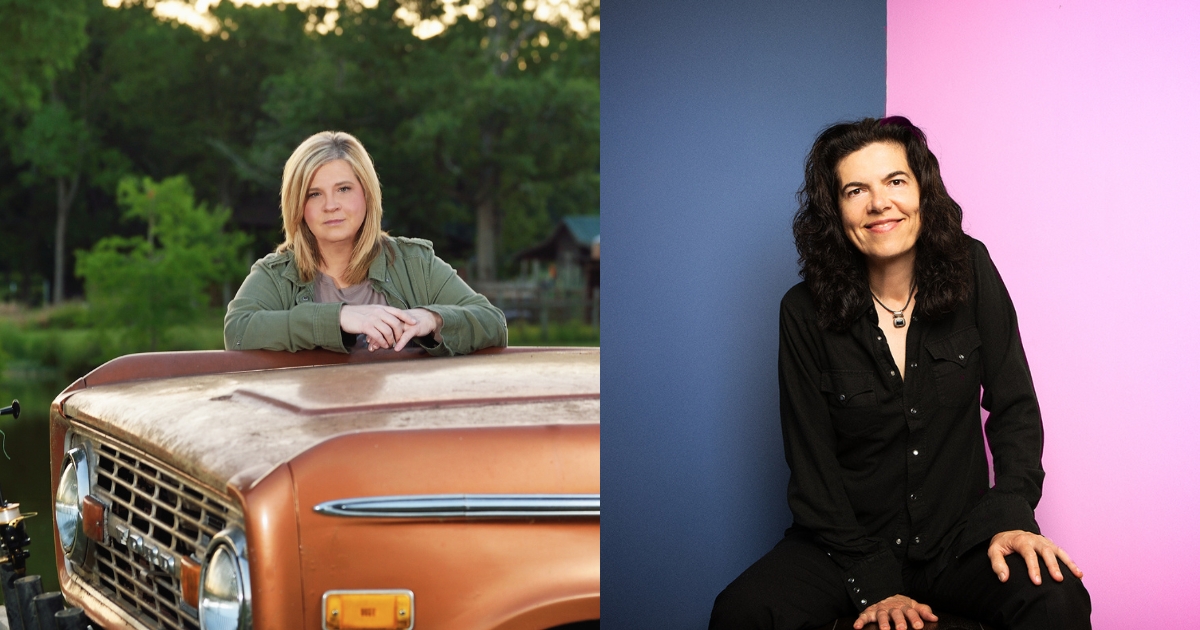
Leading up to Father’s Day, we have memories of dear old Dad shared by award-winning bluegrass musician Gena Britt as well as singer-songwriter Maia Sharp. Mike Thomas adds a spiritual approach to his song about being a father to a kid having a rough patch. Meanwhile, Kyle Morgan and Tamar Korn cover a Gillian Welch favorite, and Special Consensus, Alison Brown, and Robbie Fulks put their own spin on a country classic, “King of the Road.” Snap to it because you gotta hear this!

Gena Britt, “He Likes to Fish”

Crossroads Label Group · He Likes To Fish

Artist: Gena Britt
Hometown: Star, North Carolina
Song: “He Likes to Fish”
Label: Mountain Home Music Company

In Their Words: “I lost my dad back in 2009 and my most cherished and vivid memories are of going fishing with him. I had this idea for a song and told my friend Katelyn Ingardia about it. It resonated with her too, and she agreed to co-write it with me. She met me in Nashville one weekend when I was doing an all-star show at the Station Inn. We sat down to write this song and it just started flowing out of us. We wrote it in just a little over an hour or so. There are so many poignant moments in this song, beginning with the opening line talking about dad’s Bronco…My dad actually had an old Bronco that we would take to the coast and fish on the surf. A childhood memory like that is unforgettable. When we finished writing it, Katelyn and I looked at each other and tears were streaming down both our faces. It was in that moment that I knew I had to record this song.

“I miss my dad. He was my best friend and we could talk about anything. I hope this tune will reach out and tug on some heartstrings like it did mine. Once we started recording it, it became even more special. Hearing something like this being brought to life in the studio by some of my favorite people was so heartwarming. Alan Bartram, Jason Carter, John Meador and Johnathan Dillon knew this song meant a lot to me and they helped me arrange it. It turned out beautifully, and I’m grateful to them all for taking such a heartfelt approach. The addition of Tony Creasman on drums and Jeff Partin’s incredible dobro work was icing on the cake. I love it when songs come from such an authentic place and tell a story, and I believe this one does just that. Oh, and I hope you like to fish.” – Gena Britt

Track Credits:
Gena Britt – Lead vocal
John Meador – Acoustic guitar, harmony vocal
Alan Bartram – Upright bass, harmony vocal
Jason Carter – Fiddle
Jonathan Dillon – Mandolin
Jeff Partin – Dobro
Tony Creasman – Drums


Maia Sharp, “Tomboy”

Artist: Maia Sharp
Hometown: Nashville, Tennessee
Song: “Tomboy”
Album: Tomboy
Release Date: September 12, 2025
Label: Crooked Crown Music

In Their Words: I’ve always been a tomboy. Dad says when I was two years old I hit him square in the forehead with a handful of spaghetti from my highchair across the table. He adds, ‘You already had a good arm.’ It came in handy when I played in a local boys’ baseball league for years until music (and girls’ softball) started calling. Athletic, makeup adverse, not afraid to get dirty, seeing boys (then) and men (now) as peers: that’s what the word tomboy means to me. I feel lucky to be those things today but when I was a kid trying to figure out where I fit in, it was an unstable combination of awkwardness and fearlessness. I didn’t want to be a boy. I just liked the clothes that happened to be in their section of the store, the sports they got to play at school and the haircuts designated as theirs. I may or may not have brought a picture of Shaun Cassidy into Supercuts when I was six and said, ‘Like this, please.’

“These memories became a song when a writing day conversation with co-writer and friend Emily Kopp turned into a competition of who looked more like a boy when we were kids. We exchanged photos, a lot of laughter and a celebration of our younger, athletic, singular little selves. It felt good to be proud of something that, at the time, from the inside looking out, I wasn’t ready to be proud of sometimes. But from the vantage point of the grown-up tomboy, I can see now how strong and ruthlessly authentic it was.” — Maia Sharp

Track Credits:
Witten by Maia Sharp & Emily Kopp
Eric Darken – Percussion
Teddie Collinz – Beatbox
Will Honaker – Bass
Maia Sharp – Guitars, keyboards, synths, BG vocals & additional percussion


Mike Thomas, “A Different Story”

Artist: Mike Thomas
Hometown: Nashville, Tennessee (originally from Knoxville, Tennessee)
Song: “A Different Story”
Label: Diamond Hill Music

In Their Words: “It was an early Saturday morning in the summer of 2024. I hadn’t slept well the night before. One of our kids was going through a rough patch, and my wife and I were trying our best to help her get through it all. I headed out to the patio with my morning coffee to read a little scripture, and I started thinking about how God’s grace and mercy have shown up in my own life at exactly the right moments. I had this overwhelming feeling come over me that the same grace and mercy would show up for my child. I picked up a guitar, and ‘A Different Story’ came rather quickly. While I often weave spirituality into my songs, this one is different than anything I have released in the past. It’s a gospel-infused celebration of grace, redemption, and perseverance.” — Mike Thomas

Track Credits:
Written by Mike Thomas
Mike Thomas – Acoustic & electric guitar, vocal
Joanna Cotten – Vocal
Tres Sasser – Bass
Sten Nisswandt – Drums
Michael Webb – piano & organ
Produced by Tres Sasser
Engineered & Mixed by Joe Costa
Mastered by Pete Lyman
Recorded at Tresland Studios – Franklin, Tennessee


Kyle Morgan & Tamar Korn, “Everything Is Free”

Artists: Kyle Morgan & Tamar Korn Featuring Wyndham Baird
Hometown: Brooklyn, New York
Song: “Everything is Free” (written by Gillian Welch)
Album: Darkening Green
Release Date: August 15, 2025
Label: Jalopy Records

In Their Words: “Sifting through songs one day with our friend and cohort Wyndham Baird, he went into playing the emblematic Gillian Welch tune. As we found harmonies above Wyndham’s beautiful baritone, it was so satisfying that we begged him to record it with us. ‘Everything is Free’ is the working musician’s anthem, a digital-age dirge acknowledging, lamenting, and perhaps transcending the modern entanglement of music-making & monetization, creative expression & intellectual exploitation. As musicians and songwriters, movers & makers of sound & story, we live the conundrum & partake in the work of dealing spiritual currency within a materialist economy. Our sovereignty seems to lay in valuing & ‘listen[ing] to the words in [our] heads,’ regardless who’s paying… attention.” — Kyle Morgan & Tamar Korn

Track Credits:
Kyle Morgan – Guitar, harmony vocals
Tamar Korn – Tenor guitar, vocals (lead chorus)
Wyndham Baird – Mandolin, lead vocals on verses
Jared Engel – Upright bass


Special Consensus, “King of the Road” (Feat. Robbie Fulks)

Artist: Special Consensus
Hometown: Chicago
Song: “King of the Road” (Feat. Robbie Fulks)
Album: Been All Around This World
Release Date: June 20, 2025
Label: Compass Records

In Their Words: “This year is Special Consensus’ 50th anniversary. To celebrate, we invited six of our past lead singers to join us on a new album project. We came up with a list of songs with each of them in mind: some covers, a few new songs and a couple fan favorites from older records. Once we were together in the studio, we worked out each song around the coffee table with Alison [Brown, our producer], scratching out an arrangement on the spot before heading into the tracking room. As soon as we put on the headphones and got behind the mics, we felt a wonderful sense of joy to be making Special C music again together.

“In the middle of the two-week stretch of sessions while Robbie Fulks was in town, Alison spontaneously came up with the idea to try a version of ‘King of the Road.’ She thought it would be a perfect fit for Robbie to sing and, of course, he already knew it. Just a few minutes later, he was in the tracking room singing the song with Dan Eubanks playing the perfect bass lines – it was magical. We all jumped back in front of the mics and tracked the song: Greg Blake on harmony vocals, Ashby Frank on guitar, Brian McCarty and me copping the piano riffs on mandolin and banjo and all of us on the all-important finger snaps. I hope the thrill we felt making this music together comes through to the listener on this unplanned addition to the album!” – Greg Cahill, Special Consensus

Track Credits:
Special Consensus featuring Robbie Fulks. Music produced by Alison Brown


Photo Credit: Mike Carter (Gena Britt); Emma-Lee Photography (Maia Sharp)

Did You Miss Gil & Dave on The Late Show with Stephen Colbert? Watch Here

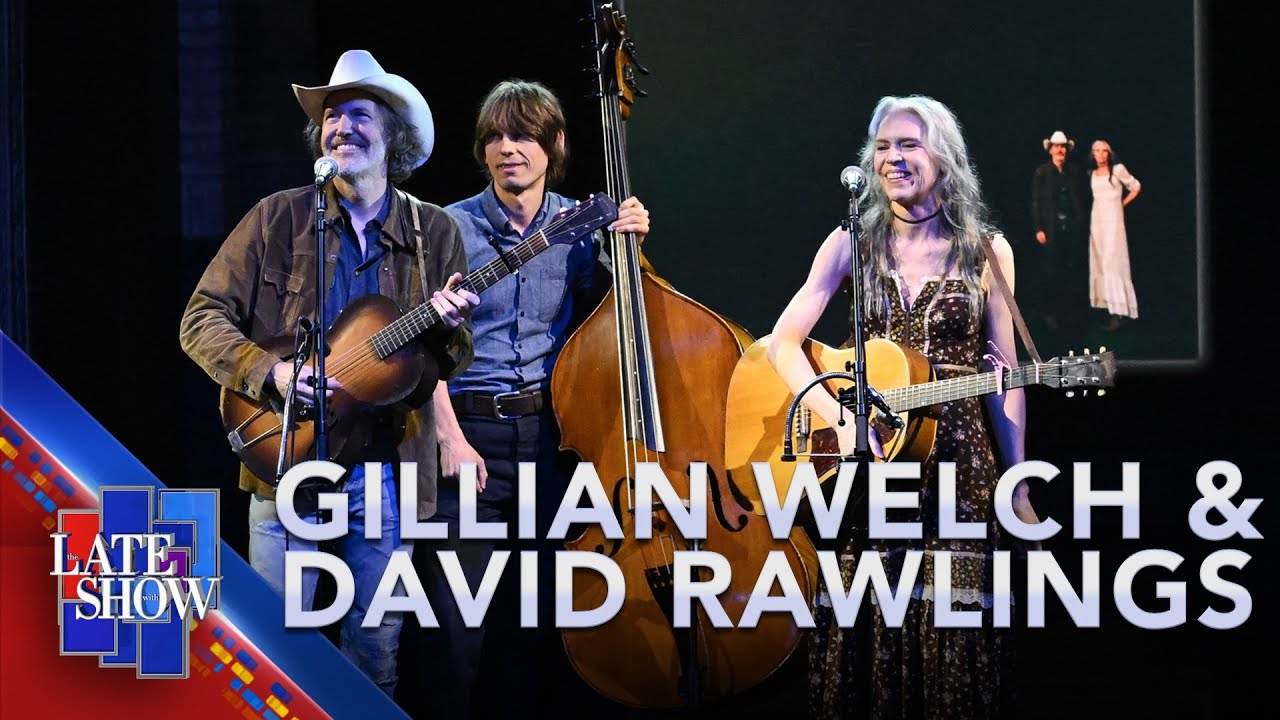
Gillian Welch and David Rawlings – one of the most beloved modern duos in bluegrass and Americana – brought music from their GRAMMY Award winning album, Woodland (2024), to The Late Show with Stephen Colbert earlier this month, performing “Empty Trainload of Sky” live on television. They also performed one of their classic tracks, “Look at Miss Ohio,” a song from Welch’s seminal 2003 project, Soul Journey, for a web-exclusive video. Watch both performances, which feature Punch Brothers and Hawktail bassist Paul Kowert backing up the pair, right here on BGS.

Welch and Rawlings are currently in the middle of a 30+ date headlining tour, with two concerts set for Nashville’s Ryman Auditorium, the Mother Church of country music, on May 22 and May 23. Earlier this month, coinciding with their appearance on The Late Show, they also appeared for two nights at Carnegie Hall before continuing along the East Coast. In June, they’ll be heading out West and concluding their run in the Pacific Northwest.

Between them, they’ve racked up endless awards and accolades, including 14 GRAMMY nominations and five GRAMMY wins collectively. In 2015, they were honored by the Americana Music Association with a Lifetime Achievement Award for Songwriting. But it’s not these well-deserved recognitions, their millions of streams and sales, or even their fantastic contributions to films like O Brother, Where Art Thou? and The Ballad of Buster Scruggs that will be their crowning achievements. Instead, it’s the nearly universal love, admiration, and respect they receive from within and outside the American roots music community that best showcases their far-reaching impact.

That and, of course, the incredible body of work they’ve fashioned together. Whether the timeless and twenty-year-old staples like “Look at Miss Ohio” or the blustery and destructive new work, “Empty Trainload of Sky,” Welch & Rawlings continue to gift us all songs that will stand the test of time – and that we each carry with us wherever we go.


BGS 5+5: Blue Cactus

Artist: Blue Cactus
Hometown: Chapel Hill, North Carolina
Latest Album: Believer
Personal Nicknames: Steph and Mar

If you had to write a mission statement for your career, what would it be?

“Slow and steady, always be on the rise.” I used to think I wanted to “make it” and I worked so hard at that, that it almost broke me, literally. I had stressed myself to the point that my mental stress had begun to manifest physically as various chronic health issues. I want to be a successful musician, which means for me that I am constantly making the music I want to create and not restricting myself to any specific rules or genre limitations. Once you “make it” there’s really only one place to go from there and so many artists have shared that their least happiest times were when their career was at its peak. I want to always be climbing, up and up, constantly evolving and learning new things about myself and abilities. – Steph

What other art forms – literature, film, dance, painting, etc. – inform your music?

I’m a perpetual hobbyist at heart and am always dabbling in some form of visual art – from film photography and cyanotype to linocut print-making and botanical dyeing – I find that having these other forms of art keeps me curious and inspired, which in turn feeds my inner-songwriter. When I look at my calendar, so much of my life feels planned out and I savor the mystery and surprise of what the film will reveal when it’s developed or how one print will vary from another when I lift the paper. It’s become essential for me to make art for myself that is separate from the business of making music and it’s taught me to embrace the happy accidents of art and re-framed my relationship with perfectionism. – Steph

Genre is dead (long live genre!), but how would you describe the genres and styles your music inhabits?

We have a deep love and respect for country and folk music, which is a sort of foundation for the music we make. There’s a bit of psychedelia and art rock swirling around, too, which seems to move us toward alt-country and cosmic country. We aspire to create songs that are strong enough to exist in varied genres, they just happen to be delivered in our vernacular. – Mario

If you didn’t work in music, what would you do instead?

Working in music has meant that I’ve also needed some other work to help pay the bills and I’ve been very fortunate to have been an instructor at a local outdoor nature program near our home in Chapel Hill, working with kids. I grew up in a very rural part of Catawba County, in the foothills of North Carolina, and was always out playing in the woods, building forts, and climbing trees. This work has kept me grounded and saved me from burnout. I suppose I’d just keep doing more of it if I changed career paths. – Steph

Since food and music go so well together, what is your dream pairing of a meal and a musician?

I’m thinking comfort food: meatloaf, mashed potatoes and gravy, and green beans paired with Roy Orbison. In particular, the album Crying. – Mario


Photo Credit: Steph Stewart

You Gotta Hear This: New Music From AJ Lee & Blue Summit, Jack Van Cleaf, and More

Our second round-up of new music and premieres for the month of May is here already!

Starting us off, California bluegrass outfit AJ Lee & Blue Summit have dropped a new track, their excellent cover of a Gillian Welch classic, “Tear My Stillhouse Down,” with Lindsay Lou joining in on harmonies. Kyle Ray takes us to the beautiful, contemplative riverbanks in Kentucky with an early listen to his ripping bluegrass-y track, “River Song,” which will arrive right in time for wading season.

For a bit of old-time, the Lonesome Ace Stringband have a delightfully quirky tune, “Carpet Beetle,” with a funky visualizer video to match. Danceable, poppy, and soulful, it’s old-time that’s modern and timeless, both. Plus, you can catch a music video for “Hikikomori,” a song about emotions and isolation from country/neo-folk phenomenon Jack Van Cleaf’s new album, JVC, which is out today.

It’s all right here on BGS! You know what you gotta do? You Gotta Hear This.

AJ Lee & Blue Summit, “Tear My Stillhouse Down”

Artist: AJ Lee & Blue Summit
Hometown: Santa Cruz, California
Song: “Tear My Stillhouse Down”
Release Date: May 9, 2025
Label: Signature Sounds

In Their Words: “My mom showed this song to me when I was really young and I’ve loved it ever since. I’m a lifelong fan of Gillian Welch and this has always been one of my favorite songs of hers. We’ve covered this song for years in the band and have found that audiences from coast to coast love it when we play it live. It’s a popular jam song in the campgrounds at our favorite festivals. I think of this song as Appalachian rock and roll!” – AJ Lee

“Gillian adds to the best of authentic stories from history with this song. Country music, traditional American music, bluegrass, folk – it all pulls from and sings about every real aspect of life. Death, addiction, love, poverty, fun, murder. This song is about falling prey to a cycle of creation, consumption, and distribution of a potent poison that you know only really has one way of ending. Popcorn Sutton would love this one, without a doubt.”  – Scott Gates

Track Credits:
AJ Lee – Mandolin, vocals
Lindsay Lou – vocals
Scott Gates – Guitar, vocals
Jan Purat – Fiddle, vocals
Sully Tuttle – Guitar, vocals
Sean Newman – Bass, vocals


The Lonesome Ace Stringband, “Carpet Beetle”

Artist: The Lonesome Ace Stringband
Hometown: Toronto, Ontario, Canada
Song: “Carpet Beetle”
Release Date: May 9, 2025

In Their Words: “John and I wrote this tune last year. I showed up with a two-part tune that was sort of like the A/B of ‘Carpet Beetle,’ but was way more note-y and pretty. Once we started playing it, it felt too ‘precious,’ at least for the mood we were in that day. We deconstructed the melody significantly, removing about half the notes in the A part, and added a bit of ugly drama. We did the same with the B part, but left the ‘prettiness’ of the melody intact. Then, we came up with a really evil chord progression for the C part. Soon, we were in paradise. Someone told us that the A part makes you feel icky, the B part makes you want to dance, and the C part makes you want to break things – I tried to reflect that in the video. We were thrilled to have Alan Mackie (bass) on this session and you can see real footage of us all recording the track live in the studio at the end of the video. The title comes from a household pest that John and I were both struggling with at the time of the composition, but that we now have under control.” – Chris Coole

Track Credits:
Chris Coole – Banjo
John Showman – Fiddle
Alan Mackie – Bass

Video Credit: Editing by Chris Coole


Kyle Ray, “River Song”

Artist: Kyle Ray
Hometown: Barren County, Kentucky
Song:River Song
Release Date: May 16, 2025

In Their Words: “‘River Song’ came to me in a quiet moment of reflection – looking back on my life, looking ahead, and doing my best to find peace in the present. Anyone who grew up in the South knows there’s always that one place you go to think. For me, it was the river. I tried to capture those thoughts and emotions in this song – what it felt like to sit by the water, surrounded by silence, and make peace with everything in my life. Just me, that river, and the Lord.” – Kyle Ray

Track Credits:
Kyle Ray – Lead vocals, songwriter
Alan Hester – Background vocals, producer
Malcolm Lyon – Banjo
Simon Holden-Schrock – Mandolin


Jack Van Cleaf, “Hikikomori”

Artist: Jack Van Cleaf
Hometown: Encinitas, California
Song: “Hikikomori”
Album: JVC
Release Date: May 9, 2025
Label: Dualtone Records

In Their Words: “I first came across the word ‘Hikikomori’ on a visit to my mom’s house.  She had something called ‘The Box of Emotions,’ a deck of cards featuring colorful, abstract images alongside definitions of obscure emotional states.  ‘Hikikomori,’ written on a black card, described a particular kind of social isolation that felt consistent with the depressive slump I had fallen into after graduating from college, which is what a lot of the record was born out of.” – Jack Van Cleaf

Track Credits:
Jack Van Cleaf – Lead vocals, songwriter
Aaron Krak – Drums
Shaker Hunt Pennington – Bass
Ethan Fortenberry – Acoustic guitar, baritone guitars, electric guitar
Austin Burns – Electric guitar
Annika Bennett – Background vocals

Video Credit: Directed by Joey Brodnax.


Photo Credit: AJ Lee & Blue Summit by Trinity Maxon; Jack Van Cleaf by Joseph Wasilewski.