Music Maker Relief Foundation: Keeping the Blues Alive

It’s no secret that the South is home to some of the greatest musicians around, past and present. From early bluesmen like Robert Johnson to country legends like Hank Williams, the South has produced some of the foremost forebears to our current musical culture. And while the South has big names a-plenty, it’s also rich with local musicians hoping to keep the region’s musical history alive, often, unfortunately, doing so with little to no recognition.

The Music Maker Relief Foundation was established for that very reason: to, in its own words, “preserve the musical traditions of the South by directly supporting the musicians who make it, ensuring their voices will not be silenced by poverty and time.” Founded in Winston-Salem, North Carolina, in 1994, the 501(c)3 non-profit has grown from a handful of passionate music lovers helping a small coalition of local musicians with simple necessities like securing food and paying bills to a globally recognized entity responsible for working with over 300 artists, releasing more than 150 albums, and spreading Southern music to all corners of the world.

Timothy Duffy co-founded Music Maker with his wife Denise after enrolling in the folklore program at UNC, Chapel Hill. His time working in UNC’s archives led to a chance meeting that planted the seeds for what would become Music Maker. “There aren’t many jobs in folklore,” Duffy laughs. “I was working for the archive and met an old bluesman named James ‘Guitar Slim’ Stephens in Greensboro. Before he passed, he introduced me to a guy named Guitar Gabriel in the early ‘90s. Gabe and I became partners and we put out a cassette. He was a great blues artist. He was very famous in a circuit that was never documented by white folks. It was called the Black Carnival Circuit. So he knew everybody. He knew all the musicians because he’d played in their towns for 40 years.”

Through his time with Guitar Gabriel, Duffy realized there was a vast community of phenomenally talented blues musicians that was virtually unknown to the rest of the world. Even more troubling to Duffy was how many of these musicians were living in poverty. “I soon realized that there was no place for these guys in the music business,” he says. “The blues guys never sold many records. They could barely scratch by a living. You’ve got B.B. King and that’s it. If anyone knows a blues artist after B.B., that’s amazing.”

The contrast Duffy’s own experience encountering countless talented players with the widely held notion that the blues was a dying art appealed to his presevationist roots. “There was this really weird view that the blues was dead,” he explains. “That was clear to me after meeting people like Alan Lomax, Archie Green, and some of the greatest folklorists of our time. It was just another case of politics of culture, of people appropriating what they wanted and keeping it for themselves and putting the culture down.”

Duffy saw the work of these little-known musicians as essential to preserving the musical legacy of the South and worked with Guitar Gabriel, Willa Mae Buckner, Preston Fulp, Mr. Q, Macavine Hayes, and a number of other North Carolina blues players to start Music Maker. A large focus of the organization’s initial efforts was simply providing these musicians with the financial assistance they needed to keep playing. “They were very disenfranchised economically. They were living on $3,000 or $4,000 a year,” he says. “We bought cases and cases of Ensure, because a lot of these guys had strictures in their throats, had nutrition problems. We bought clothes, shoes. We paid electric bills. That’s what it was founded as, at first.”

SaveSave

Thanks to the group’s passion, it didn’t take too long for Music Maker to begin growing into the internationally respected organization it is today. Word spread throughout the blues community that Duffy and his team were doing good work, and the community rallied around them. “Taj Mahal heard about me in 1995,” Duffy says. “I flew out to L.A. and hung out with him, and he introduced me to B.B. King. B.B. fell in love with the project and took me around London, New York, L.A., and introduced me to all of these influential people like the Rolling Stones, Dan Aykroyd — wonderful people that supported the organization. That was our start. Now we’re here, 22 years later, and we’ve issued over 300 records.”

That increased notoriety for Music Maker has, as Duffy and his team hoped, also brought newfound fame and success for the artists involved. “A lot of times, in these small communities, that elevates them greatly,” Duffy says of Music Maker’s artists. “They go from this obscure guy that lives in an old trailer, now, to an international figure in their community that has played Carnegie Hall, Lincoln Center, traveled all to Australia, France, Argentina. That elevates interest of the music and it helps them in their mission to keep this music alive and vibrant in their communities.”

While Music Maker has been an invaluable resource for older blues musicians like Ironing Board Sam and Pat Wilder, it’s also played an integral role in developing the careers of a number of emerging and newly established roots artists. Newer artists Music Maker has worked with include Dom Flemons, Spencer Branch, Cary Morin, and, perhaps most famously, the Carolina Chocolate Drops. “When I learned that the Carolina Chocolate Drops were learning from Joe Thompson, an old banjo player from right down the road, I went and saw the performance,” Duffy says. “We took this small, fledgling group that barely knew how to play instruments to a Grammy-winning phenomenon, that really did quite well.”

In addition to artist advocacy, Music Maker has kept busy over the years with all kinds of projects, including a photgraphy exhibit (“Our Living Past”), a book and CD (We Are the Music Makers), and the Music Maker Blues Revue, a touring group that has recently played as part of Globalfest at New York’s Webster Hall. “Gabe and I started [the revue] back in the early ‘90s,” Duffy says. “When we go play Lincoln Center or jazz festivals, we bring all these guys on stage and do a revue show. That cast is ever-changing as people pass away.”

Upcoming projects include a fundraiser to purchase instruments for the town’s prison bluegrass band and a new blues club set to open at the Durham Bulls Athletic Park, the latter of which has support from Durham Bulls owner Michael Goodman and his family. “They started a new brewery called Bull Durham Beer,” Duffy explains. “Right by the box office, they’re opening a blues club. For every beer that you buy there at the taproom, they’re giving Music Maker a dollar and also providing a budget for us to hire Music Maker acts. I think it’s going to be the nation’s greatest blues club because it’s one of the only places you’ll see these kind of guys playing. “

It sounds like a lot, but the folks at Music Maker see their work as a labor of love — one inspired by their deep admiration for Southern music history and the musicians sacrificing it all to keep that history alive.

“All music is from the South,” Duffy says. “All modern music. There’s not one popular form of music that doesn’t trace its roots back squarely to the South. The blues, bluegrass, pop music … it’s America’s greatest legacy to the world. It’s better than the Colt .45 or whatever guns we invented. The music is the greatest thing we’ve done.”


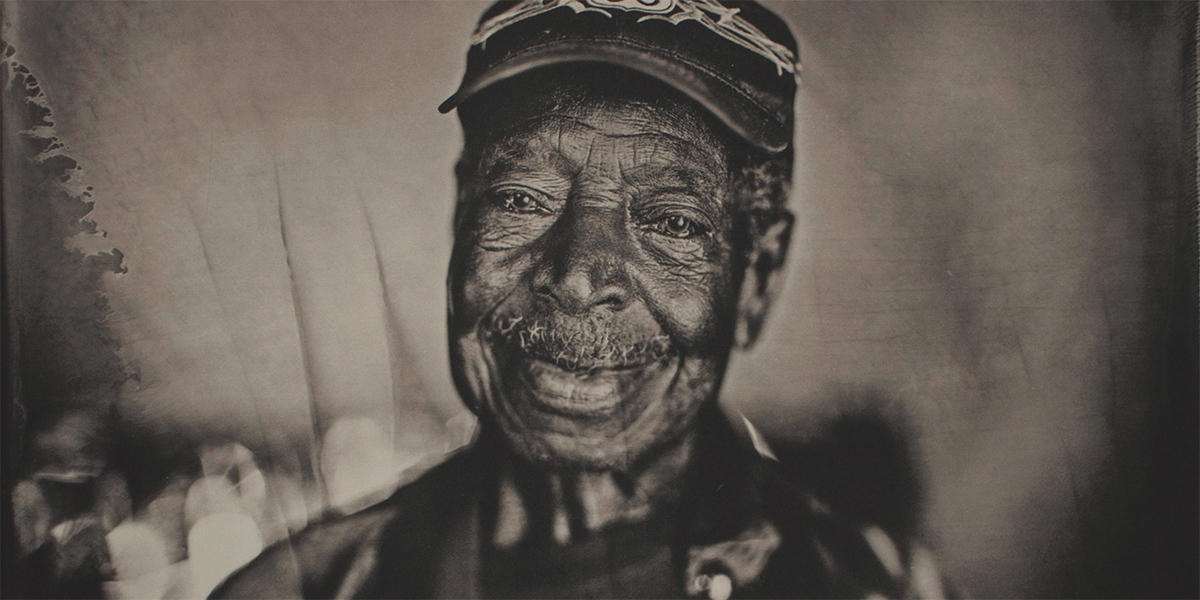
Lede photo of Eddie Tigner by Tim Duffy
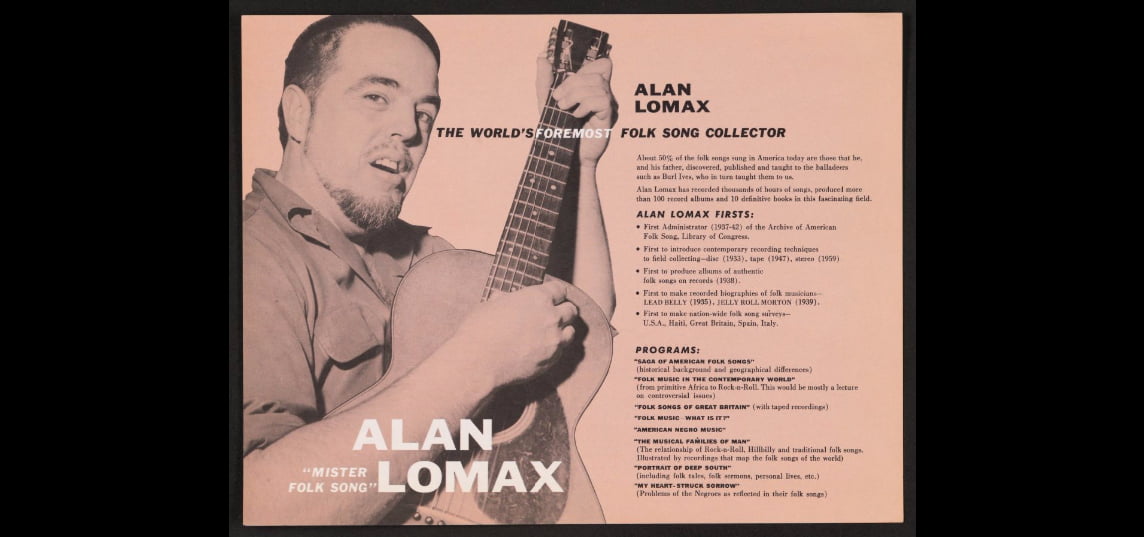
New Alan Lomax Materials Now Available Online

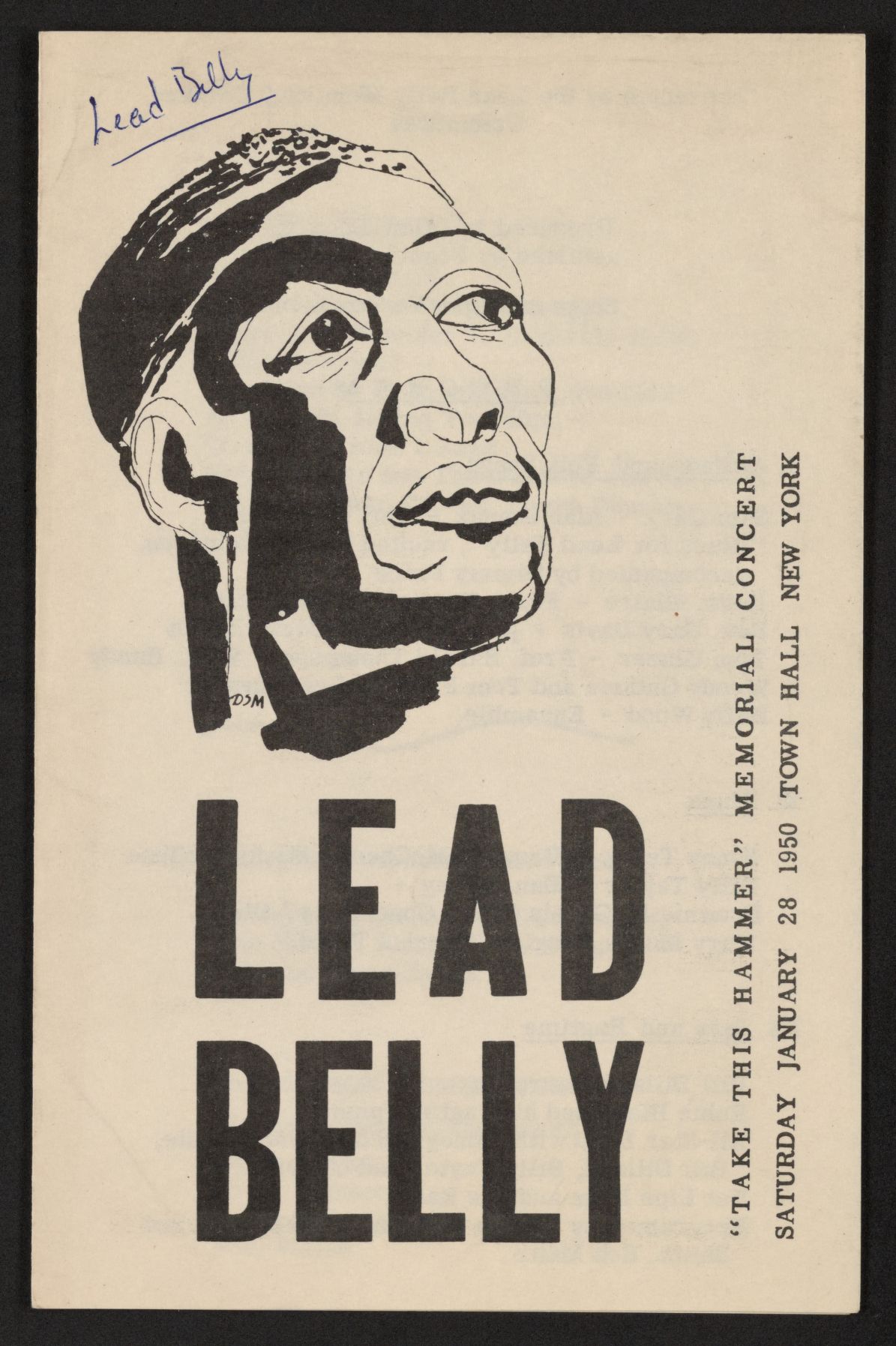
It’s no secret that Alan Lomax is a hero of ours here at the BGS. We’ve spoken with modern musicians like Sam Lee about the immense influence of the famed folklorist, as well as taken a trip or two through Lomax’s digital archives. That first foray into the digital world of Lomax yielded all kinds of goodies, like a Lead Belly concert poster from 1950 and an interactive map of Louisiana musicians playing and performing in 1934. 

We pulled those materials from a number of sources, including Lomax1934.com and the Association for Cultural Equity. We also spent a great deal of time surfing the Library of Congress’s online archives which, as of last month, just expanded its collection of Lomax-related content.

The new collection, which adds over 300,000 pieces to the Library’s Lomax archives, is culled from the Lomax family’s papers, so you can now feast your eyes on thousands more letters, writings, and research documents. The new material is housed in the same location as the some 25,000 pieces that were made available when we first began digging around in the digital Lomax realm. 

We’ve yet to make it through all 300,000 new additons, but we’ve already found some pretty cool pieces. Here are some of our favorite finds so far. Get to digging!

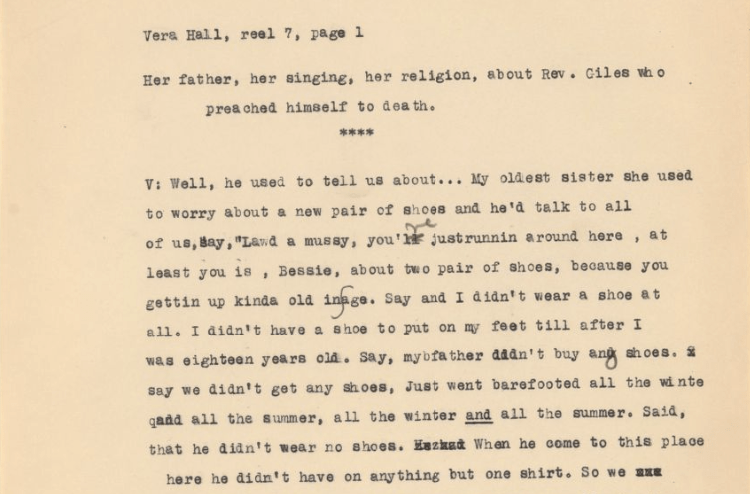
A transcript of Lomax’s interview with folk singer Vera Hall, conducted for The Rainbow Sign: A Southern Documentary in 1959. See the full transcript here.

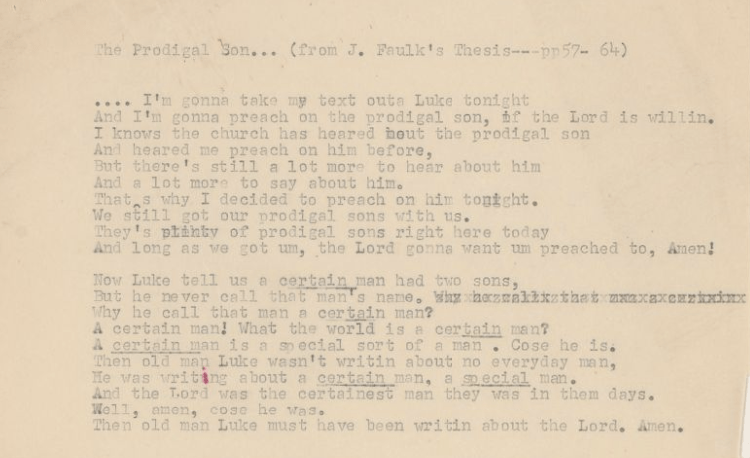
John Henry Faulk’s Master’s thesis, “The Negro Sermons,” circa 1940. See the full document here.

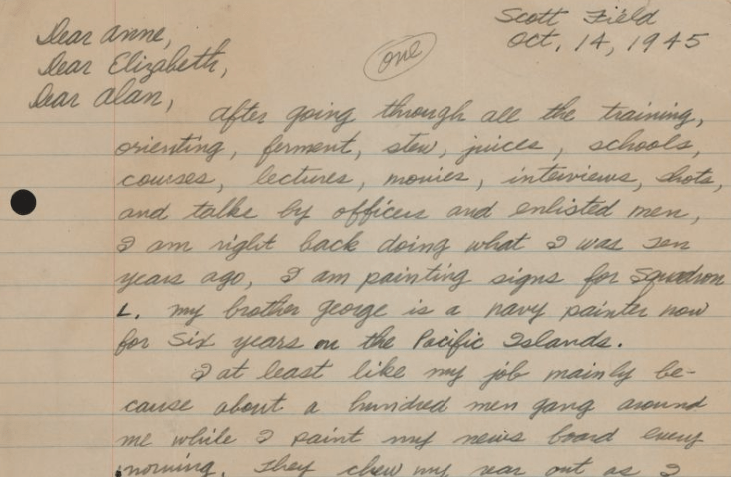
A 1945 letter from Woody Guthrie to the Lomax family. See the full letter here.

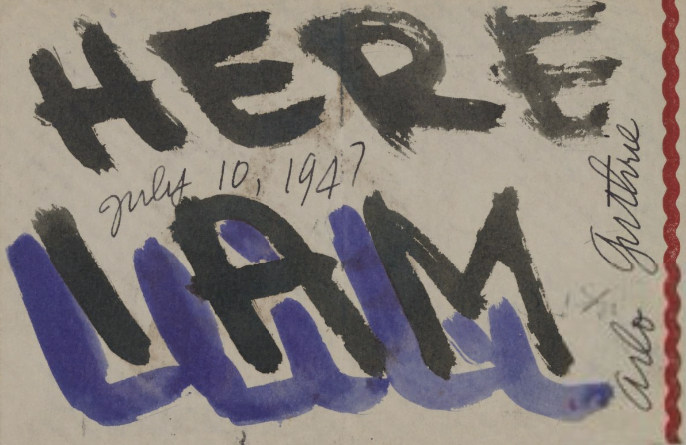
A birth announcement for Woody Guthrie’s son, Arlo, circa 1947. See the full announcement here.

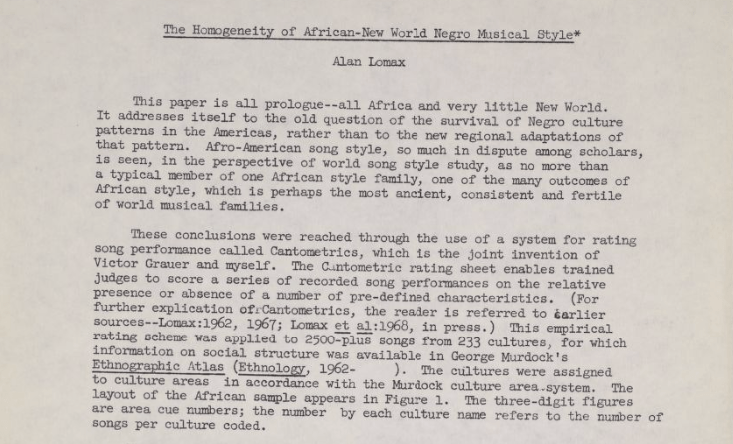
Transcript of a presentation, “The Homogeneity of African-New World Negro Musical Style,” by Lomax to American Anthropological Association in 1967. Read the full paper here.

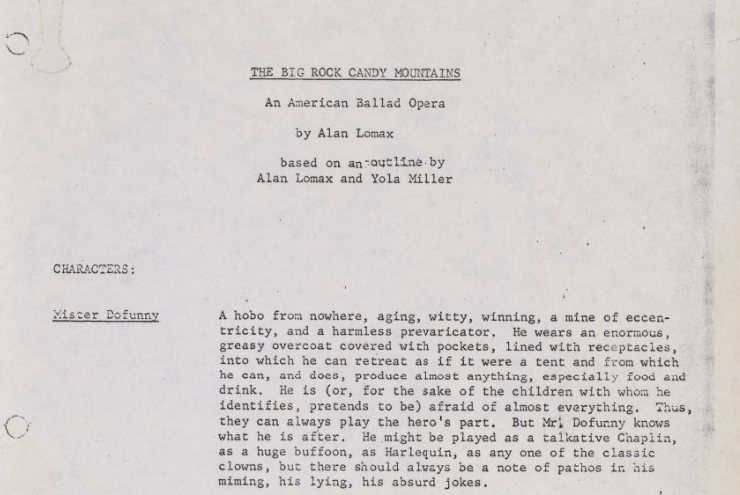
Script for Lomax’s 1953 play, The Big Rock Candy Mountain. Read the full script here.


All photos via Library of Congress

Cool Shit from the Library of Congress

In the past, we've taken you through Alan Lomax's online archives. Now, we'd like to take you on a digital journey through the vast collections available to the public through the Library of Congress's online collections. You could spend weeks going through all the site has to offer, but we've culled a few of our favorite roots-related items for your perusal. 

Dolly Parton and the Roots of Country Music: A Timeline

The Queen of Country Music, Dolly Parton's influence on the genre is endless. Take a look at major points in Parton's career — like in 1953, when she crafted her own guitar out of used instrument parts — from her birth through the mid-2000s. Check out other Parton features, like this look at the musician's relationship to copyright.

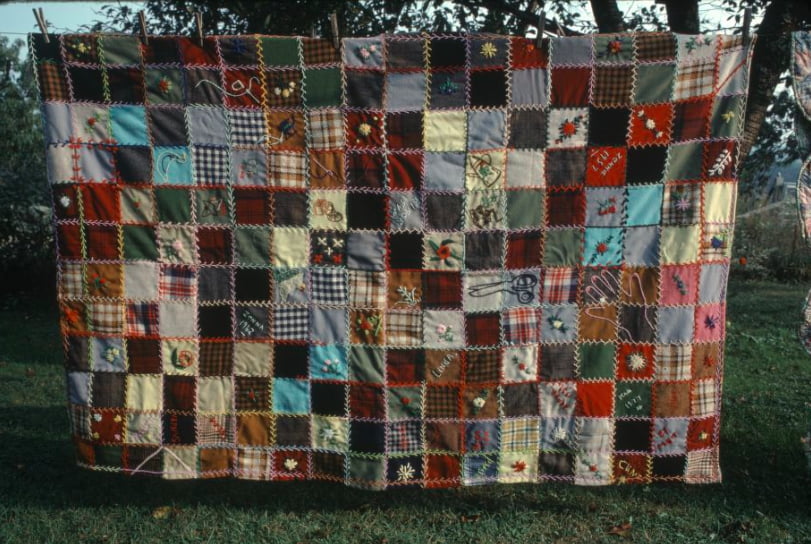
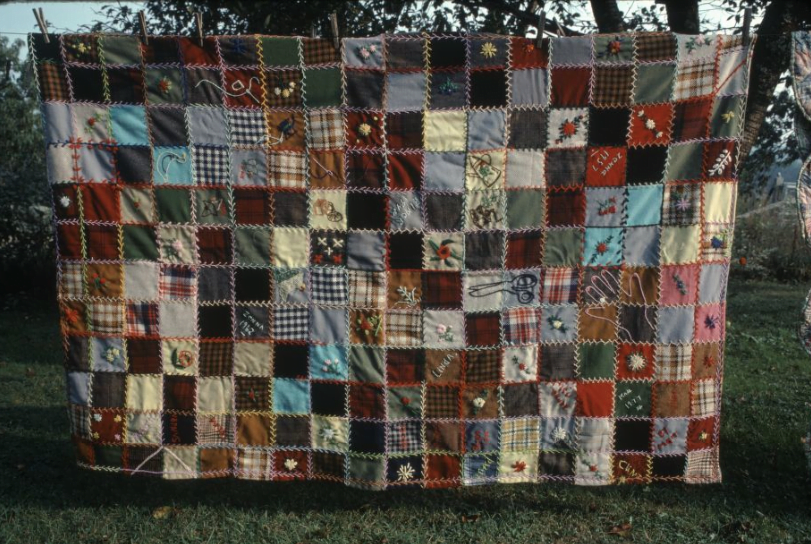
Quilts and Quiltmaking in America, 1978-1996

Quiltmaking is a major American art form, one that especially took hold in the Appalachian region. The Blue Ridge Parkway Folklife project documented major strides in quiltmaking in the late 20th century, a revival in the art in the Virginia and North Carolina regions.

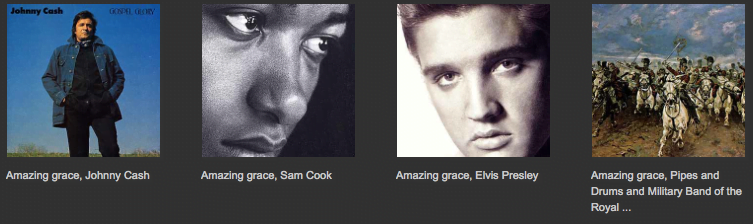
The Amazing Grace Collection

Perhaps one of the best known songs of all time, "Amazing Grace" has been recorded by countless artists, from Johnny Cash to Elvis Presley. This collection highlights some of the most important versions of that historic song.

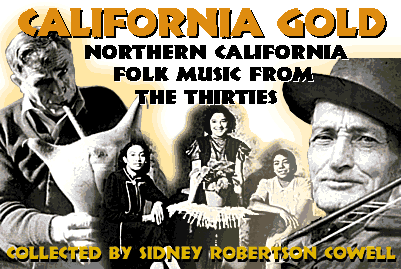
California Gold: Northern California Folk Music from the Thirties

This set houses 35 hours of folk music from the Northern California movement of the 1930s, and showcases a wide range of languages, ethnic groups, and musicians.

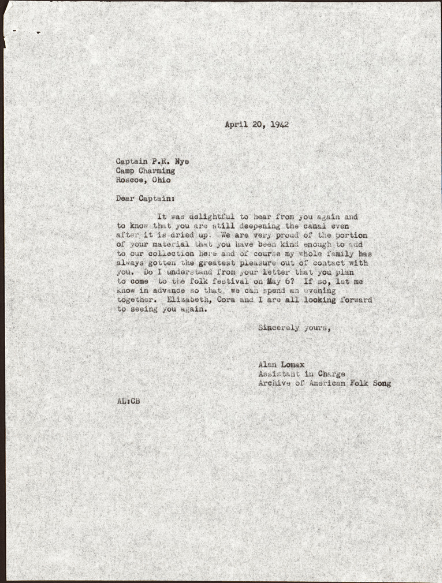
Letter from Alan Lomax to Pearl R. Nye

We'd be remiss if we didn't include one item from Lomax, and this letter to Captain Pearl R. Nye shows both Lomax's kindness and his genuine interest in broadening his collections.

Squared Roots: Sam Lee Follows the Footsteps of Alan Lomax

In his work collecting field recordings and documenting oral traditions of roots music, Alan Lomax captured the history of a nation — of a world, really — as it was happening. Lomax learned the trade from his father, John, and carried the torch forward, moving in circles that included Woody Guthrie, Lead Belly, Pete Seeger, Burl Ives, and myriad other singers — many of whose names were never known, though their contributions were no less vital in Lomax's eyes and ears. Because his work was necessarily integrated racially, Lomax was the target of investigation and scorn during the mid-century years of McCarthyism and civil rights struggles. He, nevertheless, found ways to carry on with his mission, leaving a massive trove of historical documentation as his legacy.

English folk singer Sam Lee has taken it upon himself to adopt a similar vocation, learning and recording old world songs from Gypsy and Traveller singers in the UK, including Stanley Robertson, May Bradley, and Freda Black. Much like Lomax, Lee gets the job done by keeping one eye on the past and one on the future, using whatever technology he can to best capture these traditions before they are gone. His latest album, The Fade in Time, stands as a testament to his passion and respect for not only the old-time music, but his own duty as its keeper. 

It's pretty well impossible to quantify the importance of Lomax's role in music history. From your perspective, what does his work mean — to you and the broader roots music world?

I think, firstly, it’s important to say I will probably never fully understand or appreciate the impact he made on the world, for that is to understand the enormous social revolution that happened in the U.S. and world over the '50-'60s and before and after. How he brought such a formidable energy and determination to the task of documenting the cultures of America, but also the rest of the world. The care he brought to this endeavour and sense of importance and value … to give voice to the outcasts, the marginalised, the poor, the persecuted, the outsiders. How, through his deep love of people and ability to converse with anybody on their level — combined with his weight as an academic, as a charismatic leader — how he focused the attention of a nation on the treasure on its doorstep.

The responsibility he took in the legacy of his father was such a huge task with cultural divides and technology all working against him. Now, in a time of supposedly progressed cultural assimilation and technology as good as one could ever dream of but facing the cultural ecocide and extinction we see ahead of us, I feel the Lomax journey is one to reflect upon as a reminder of the need to protect, conserve, and celebrate the beauty of self-made, localised, home spun, informed, and unaffected culture on both U.S. and UK shores — but also across the world where the great vanishing is happening, the huge forgetting of the old ways. Lomax married old world creativity with the possibilities of technology and popularisation in a ground-breaking way that’s still possible as long as we keep listening to the old ones!

In the early 1940s, he was pushing against the boundaries of race and class with his presentations, and he felt the establishment push back. But he saw that as part of his calling because a documentarian has to approach the world with equanimity and objectivity. Is that how you view the job, as well?

Nicely put. And, yes, as a "documentarian" (I’ve never been called that, by the way, but I like it, so thanks!) I think the issues are not about the establishment pushing back so much as they are generally very embracing of the work I and the Song Collectors Collective do. The challenges today are about making it financially feasible to execute this sort of research not being in an academic institution and doing it in such a way that serves the communities as well as the multitudinal interests of the outside world.

But, yes, the need for equanimity is constantly there when faced by both the regular failure in the searching for old tradition bearers, the occasional rejection, apathy, or resistance from the communities toward the work due to much more serious social issues they’re facing. But most of all what troubles me is the reactions from some of the institutions that should be endorsing and supporting the work and the establishment within the folk community. Sometimes I think those that are supposedly endorsers of folk culture seem to care so little for the communities that have kept it alive and honouring the keepers of the lore. This frustrates me a little.

Lomax spent most of the 1950s in Europe to avoid the House Un-American Activities Committee. By the time he died, his FBI file contained more than 800 pages. But he never stopped his work. Can you imagine how it must have felt to get tangled in the “Red Scare” or something similar?

It’s funny because the consequence of the Red Scare was that Lomax spent a lot of time in the UK recording our singers and the documents of which have had great impact on the preservation and popularisation of our traditions and repertoire, so it was very much in us Brits' favour. However, the folk singer's responsibility is to be fighting back against institutional or political insanity, and I am lucky that I may never live to experience such unbelievably systematic vilification by the state. In my mind, though, the subtle evils of governmental policy and corporate ravages are as devastating and corrosive as they eat away at community.

Ironically, the effect of the Red Scare was to galvanise the people into a formidable force of solidarity like we have never experienced. I am not sure how huge the collective voice of opposition is today at the slow erosion of our civil liberties. Maybe one already exists, but I hope one day there will be a file on me somewhere. I won’t have done my duty, if i haven’t challenged the regime enough to gain some sort of "listing."

Of all the amazing sessions he documented, which ones would you have wanted to witness?

Ouch! This question hurts to think about. I longed to wonder what sitting in on those Jelly Roll Morton recording sessions would have been like as that was, in my mind, a phenomenal meeting of two worlds and a transmitting of such a principal memory of the birth of a musical genre. But also, having spent a lot of time with Shirley Collins — the English folk singer and ex-lover and collecting assistant of Lomax — she tells me endless stories of their time together recording singers on their porches and, in some ways, I feel like I was there vicariously through Shirley’s telling of stories.

While I was at the Library of Congress in September 2015, I was reading some of his diaries and of the numerous recording situations he found himself in. The one that stands out was an episode of him gathering a whole crowd of Black American workers in this old shack and recording the songs of some of the best entertainers amongst them … each one stepping up, or being pushed up to sing something or play a tune. I am not sure if it was the way he described this dark room crowded with faces piling in to see this single white man record their music, their faces gleaming out from the darkness, the sense of uncertainty and fear, yet also the compulsion to record and commit this precious music that they themselves were probably not aware of its cultural wealth, depth, and evolved brilliance. Everything about the way Lomax described this experience and the joy that came from them tentatively sharing and being acknowledged and their songs valued seemed like such a magnificent mini revolution … this idea of Lomax going to each singer one by one and letting them know how very special they are … I think that is radical!

He clearly understood his place in history, even as it was unfolding around him. Do you have a similar sense, as you attempt to capture the oral traditions of your world?

Yes, I very much do and, with that, goes an immense sadness alongside the privilege. It’s like sitting near a rare white rhino or some vanishing beast, powerful and majestic, feeling the vibrations as it moves and breathes, knowing that when imminent death arrives, no one else will ever get to feel the ground shake beneath it or smell its unique breath, feel its presence. The old singers I get to meet and record are the last of the old world. They are fading custodians who sit at the edge of this great, nearly forgotten tradition and, when I leave, I know I may never see them again as is sometimes the case, returning a year later to find they have passed on.

What is left is a musical and cultural silence filled only with the noise of cheap MP3 downloads, karaoke-style music devoid of any muscle or memory. I guess that is where my responsibility as being the artist steps in and is ever more necessary — to take the essence of what I have experienced and develop it into new, informed, and "acceptable" music that can survive in the modern-day campfires and porches of musical appreciation — the mobile phones, earbuds, and YouTubes of planet Internet.

A Trip Through Alan Lomax’s Online Archives

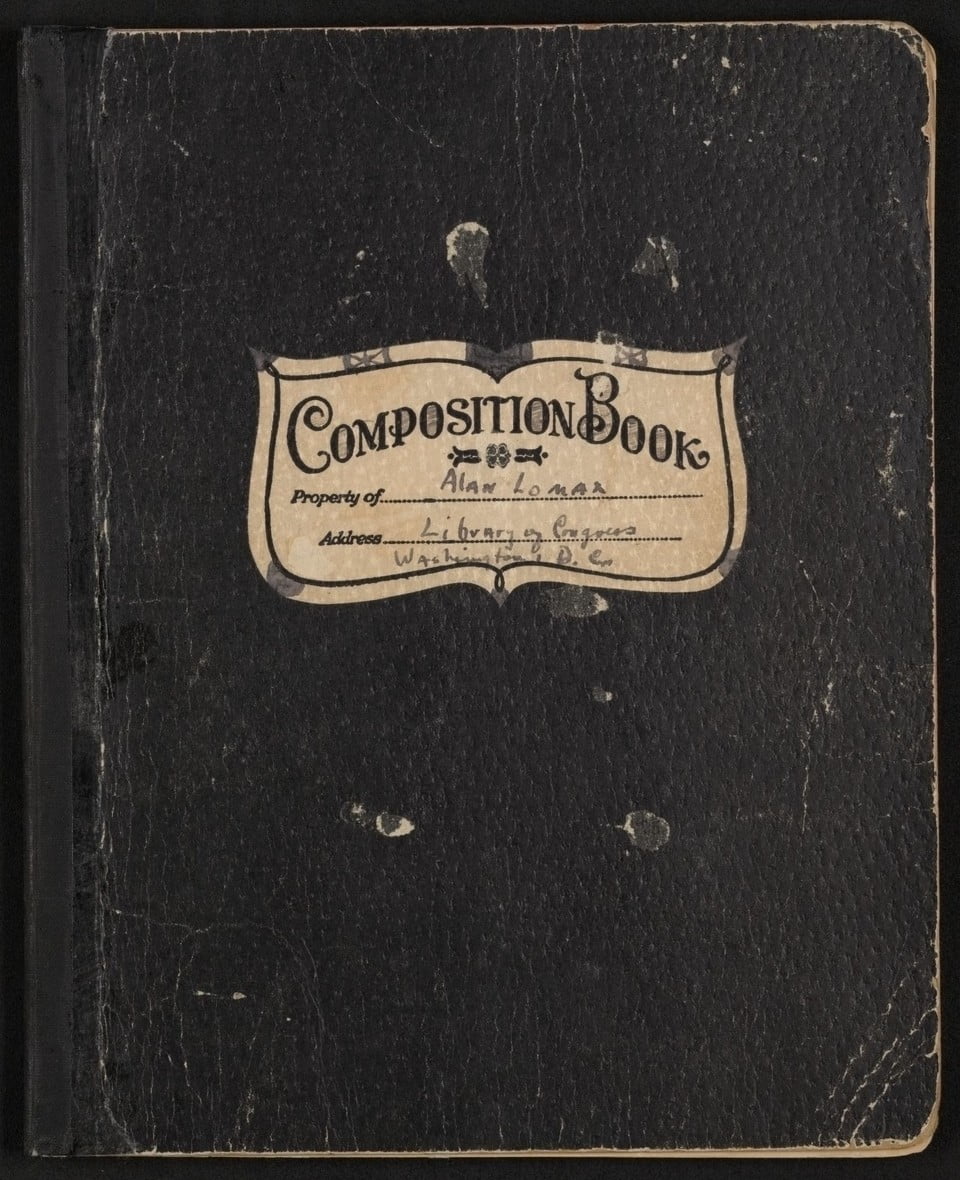
Alan Lomax was one of the world's foremost historians of American folk music in the 20th century. Son of folklorist John Lomax, he spent his life collecting field recordings, researching folklore in various cultures, producing concerts and events, and promoting the idea of cultural equity within the folklore community. In 2004, all of Lomax's archives were acquired by the Library of Congress. The massive archives include 6,400 sound recordings, 5,500 still images, and 6,000 moving images, as well as 25,000 pages from Lomax's office files. His work spans multiple continents and decades, and is one of the most comprehensive resources for folk culture available. 

With that level of research available to the public, many historians and hobbyists have put together their own Lomax-centric projects, including Joshua Clegg Caffery's John and Alan Lomax in Louisiana, 1934 — an in-depth journey into the father/son duo's studies of lower Louisiana housed at Lomax1934.com.

There are also the Library of Congress Alan Lomax Collection, which is available online for free; the Alan Lomax YouTube archives; and the Association for Cultural Equity's archives of Lomax's sound recordings to dig into. Not sure where to start? We've picked out some highlights to help you get started on your journey through the archives. 

Lead Belly Memorial Concert Poster, 1950

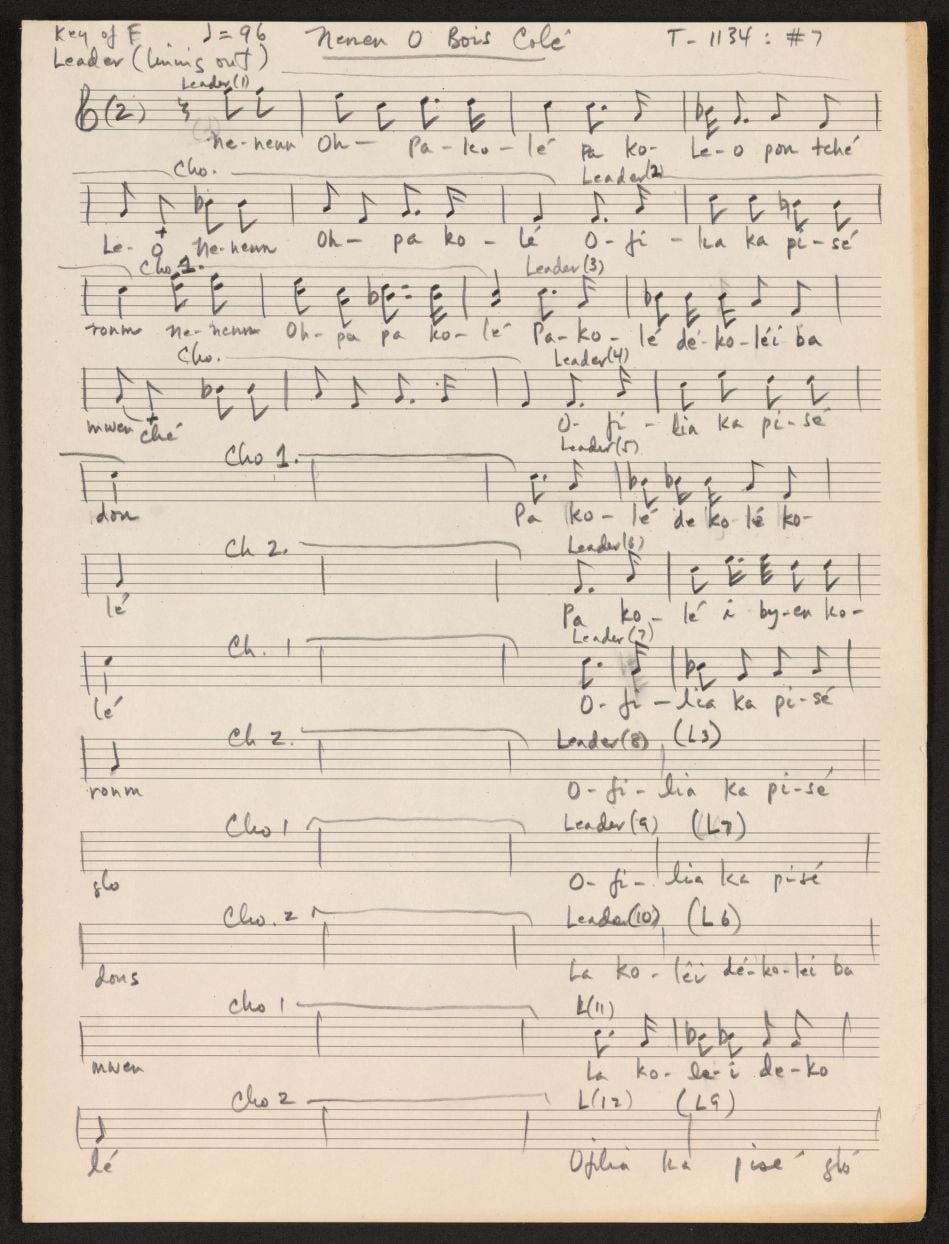
Sheet Music from the Carribean Folk Song Project, 1965

Performers in Louisiana, 1934, via Lomax1934.com

Transcript, Woody Guthrie CBS Performance, 1940-41

Belton Sutherland, Blues #1

1982 Holly Springs Sacred Harp Convention


Photos coutesy of The U.S. Library of Congress