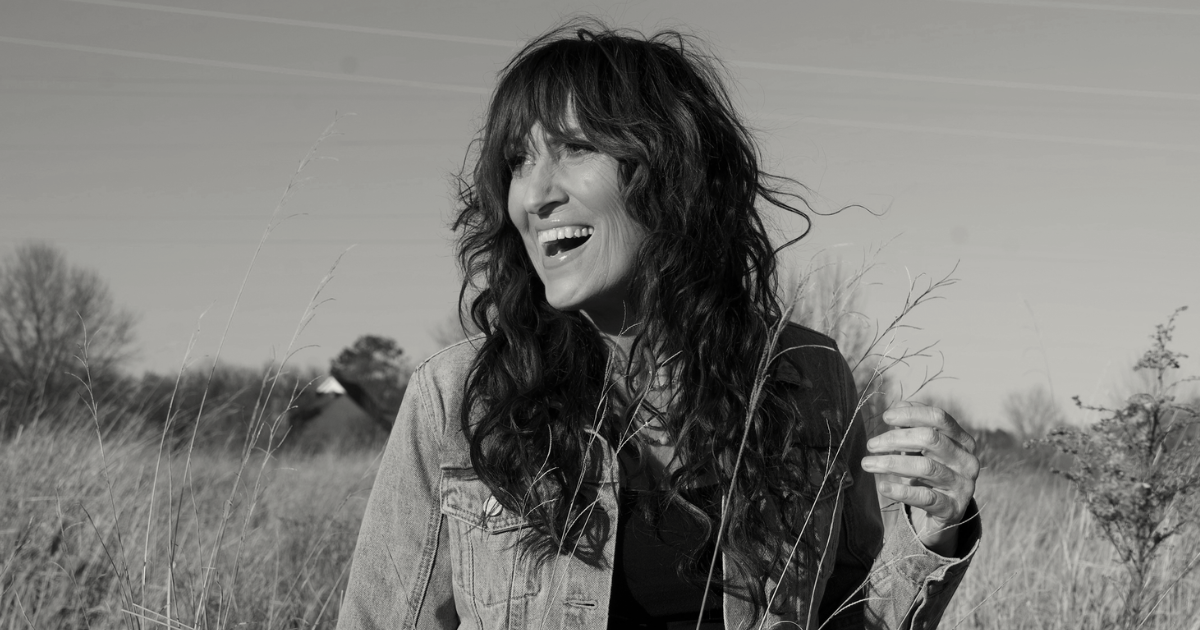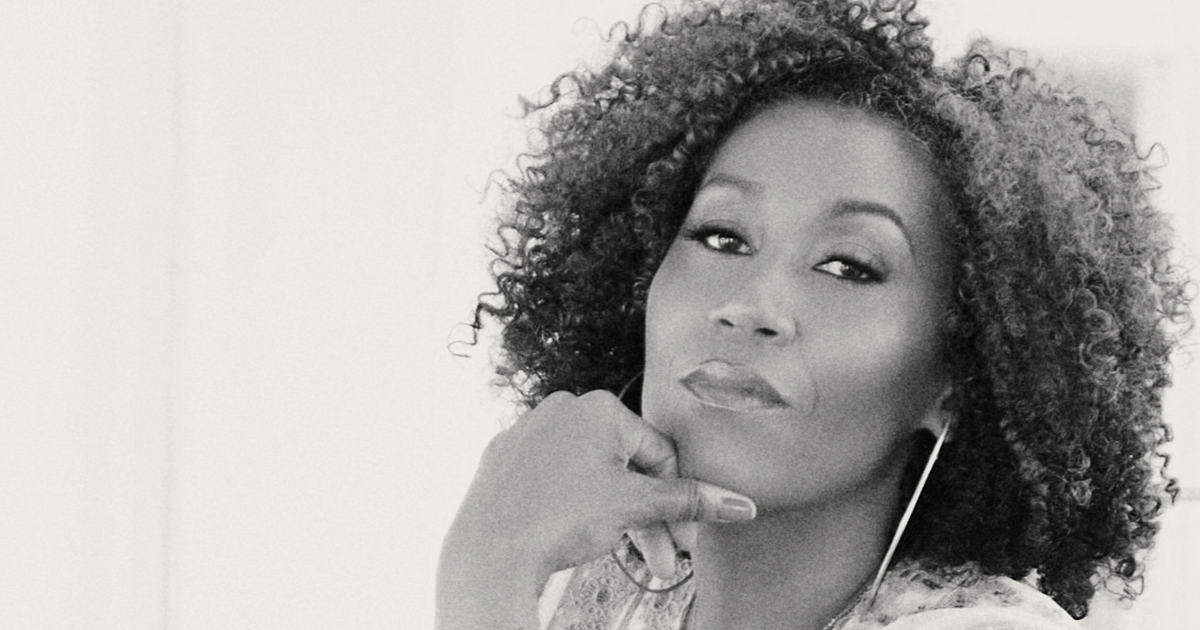
Artist of the Month: Jo Dee Messina

Jo Dee Messina wants to know where the real cowboys are.

“Well, are they in some greener pastures?” she asks on “Where the Cowboys Ride,” a spicy sendup of Tecovas-rocking poseurs and a standout on Bridges, Messina’s first album in over a decade, out June 5.

Sometimes cheeky, often affecting, Bridges condenses a lifetime of lessons into 12 tight tracks. Whether she’s taking a narcissistic partner to task (“It’s All About You”), warning about the dangers of self-medication (“Message in a Bottle”) or setting the record straight on scripture (“The Jesus I Know”), Messina explores life’s complexities with her signature mix of grit and hard-fought joy.

Lead single “Some Bridges” is a power-pop-country belter that recalls the triumphant highs of 1998’s I’m Alright, which spawned three consecutive No. 1s and cemented Messina as one of the leading voices of country pop’s golden age. Like “Bye Bye,” Messina’s indelible ode to putting “a lead foot down on my accelerator” and leaving a bad relationship in the rearview, “Some Bridges” reminds listeners that self-preservation sometimes means burning things down.

“You have to learn to forgive, but do you go back to that abusive situation?” she says. “Do you go back to that addiction? You don’t have to subject yourself to these things.”

Jo Dee Messina is our Artist of the Month for June 2026. She sat down with Good Country to talk burning bridges, her “sweet” relationship with Ella Langley, and what she hopes fans will take away from this new era. Check out our interview and don’t miss our Essential Jo Dee Messina playlist below, too.

Why was now the right time to put out new music?

Jo Dee Messina: Because it was done. [Laughs] I’ve been writing a lot with people, and [my co-writers] are just so encouraging. We’d write a song and they’d be like, “Man, you should record this.” It happened so many times, and I was like, “Well, I think I’m at a stage right now where I have time I can dedicate to a project,” releasing the songs and a tour schedule to support it. It just seemed like the right time.

Do you feel like you’ve gained confidence as a writer as your career has gone on?

I’ve always been a songwriter. I do believe that in the last few years, my songwriting has had time to develop and I’ve written a lot more. I’ve had more time to write, so I’ve had a lot more content.

To hear songs like “Some Bridges” on the radio kind of brings tears to my eyes, because it’s like, I actually wrote this. I actually wrote the songs on this record.

“Some bridges are meant to burn” is a great lyric. Do you feel like you’ve had to burn bridges in your career?

I wouldn’t say career. But with life, sometimes there are situations that aren’t beneficial, or jobs or that really take the life out of you. I think everybody has experienced that. And it doesn’t have to be heavy. It could just be like, “I feel like my talents aren’t being used, and so I’m going to move elsewhere.”

With that song, we were in the writers’ room, and somebody brought up the idea that you can’t be burning bridges. But what if they’re meant to burn? What if that bridge leads you to pain and abuse, or to a job that sucked the life out of you? Forgiveness is for us, we’re not built to carry the weight of unforgiveness, but you can forgive from the other side of the bridge.

“Where the Cowboys Ride” is such a fun song. Did that song come out of any experience in particular?

It’s funny, because it’s not portrayed in the song, but the truth of that song is that a friend of mine went down to Lower Broadway [in Nashville] one weekend and came back and had his foot in a sling. I’m like, “What is the deal? What happened?” And he’s like, “I wore my cowboy boots down to Broadway this weekend.” I was like, “I’ve never seen you in cowboy boots. You wear sneakers every day.” But he dressed the part.

There’s a line in the song about how you don’t see them around here on a Friday night. I want to see the guys that are slinging dirt for a living. I want to meet the guys that will lay their life down for their family. All the things that a true cowboy does.

Everyone’s certainly throwing on the cowboy boots right now. Any theories as to why country music is having such a moment?

Country music tells the story of life. The messages don’t change as far as the relatability to different generations. Dolly Parton wrote “I Will Always Love You” in the ’60s, and then it came back in the ’90s, and people are still cutting it. You ask seven-year-olds and they know that song because their parents are singing it. With some songs, the emotion and the life story behind them doesn’t go out of style.

Of course, some of your older songs have been getting renewed attention as well. You recently performed “Lesson in Leavin’” with Ella Langley at the Ryman Auditorium, and then the two of you interviewed each other at Country Radio Seminar (CRS). Can you tell me about your friendship with her?

That started off with us messaging each other online. She sang “Lesson in Leavin’” on TikTok, and I reached out to her. We talked about writing together, but then life got crazy. Then when she played the Ryman she reached out to me and was like, “Hey, do you want to do this deal with me?” And then she did CRS and asked if I wanted to do that.

I think it’s just a mutual admiration. I’m really proud of what she’s doing and how she’s handling it. We both know Jesus, and we both love Jesus, and so I’m able to have that connection with her, and just say, “Hey, if you need prayer, I’m here. If you need a safe space, I’m here.” It’s a sweet friendship.

“If He Knew Jesus” is one of a couple songs on that album that takes up the topic of faith. What’s the backstory behind that song?

I’ve been a single mom for a while, and it’s difficult because you can’t split yourself up. Especially if you have more than one child, you can’t go to one’s recital at school and one’s hockey game, so one of them is always missing something. Someone had asked me if I would ever consider dating somebody, and my first response was that he would have to love Jesus. And so in these conversations with other moms is where we came up with the line, “If you knew Jesus, there’d be no raising these babies alone.”

I started to cry in the writing room when we wrote that. I was like, “That’s the saddest thing,” and then I went on to other examples: “He wouldn’t crush you beneath all that he did,” all of the hurt and pain and abuse and whatever, where Jesus raises us up. He protects us, and He cares for us, and He puts us first, and He dies for us.

What’s the best thing someone can tell you about what your music means to them?

I think, “It gave me hope. It made me not feel alone.” That would be the greatest thing. “It made me not feel alone in my situation,” whether it’s a happy situation, a lonely situation, a feisty situation, because the songs cover everything. Keep in mind the enemy tries to separate us so we feel alone, and when we’re alone, all sorts of crazy things go through our brains.

Who’s the enemy?

Satan. It’s like, if you get alone, your mind starts going, “Why am I alone? Oh, because nobody likes me, or I’m not good enough.” All these crazy thoughts go through your head, and so you don’t start to think, “Wow, I’m beautiful, and I’m worth it, and I’m treasured.” That’s why it’s called the enemy of who you really are and who God created you to be. He’s working against it.

Are there experiences you’ve had in life where you felt like you were alone?

I think we all have. So I just want to be sure that people know you’re never alone. Even if you don’t see another person in the room, you’re still not alone. Period. God’s word tells us you can never go too high, too low. He’s there. We just have to open our hearts and see it.

I work with teenagers and I remember a teenager saying, “I don’t even think my parents hear what I say.” It was such a sad statement, and it inspired the song “Can Anybody.” In my inner circles, I’ll call that song “The Teenager’s Lament,” because they all feel invisible. It’s why they’re doing things on social media and hanging out with certain people. It’s why they sometimes don’t talk to their parents.

That’s where the first verse came from, and then the second verse came from myself: “I’ve got a history of trying to save myself/ But God, if you’re listening/ I’m screaming out for help.” That’s me. I’m a doer, and I have a history of thinking, “I’ll fix it, I’ll fix it, I’ll fix it.” But there are some things I can’t fix. You can’t fix someone else’s health or their mental state. After my mother had anesthesia, she was confused, and I couldn’t fix that. I tried and drove myself crazy. I’d made her photo albums, and I made her song playlists, and, and I couldn’t do it. She was still confused. It made me realize the humanity of myself and the limits of a human.


Photo Credit: Madison Sharp

You Gotta Hear This: New Music From River Shook, Bryan Sutton, and More

It’s another edition of our weekly collection of new roots music! You Gotta Hear This…

To get us started, singer-songwriter Jenn Grinels is giving us a preview of her upcoming single, “Always On The Run,” which will arrive next week. The track combines Californian indie twang with straight-ahead country & western and a gothic twist. While Grinels is an accomplished songwriter herself, in this instance she composed the music while the evocative, text-painting lyrics were penned by Alfred Howard, a poet and musician. We’re also very excited for new music from River Shook, who you may know from their prior project, Sarah Shook & the Disarmers. Their new roots-folk single, “Wildlands,” is actually a song begun more than 10 years ago – and in a completely different set of circumstances. Shook completed the song channeling feelings from their recent shift from the Disarmers to this new era, performing and releasing music solo, under their own name. With this track, we’re certainly looking forward to what comes next from Shook.

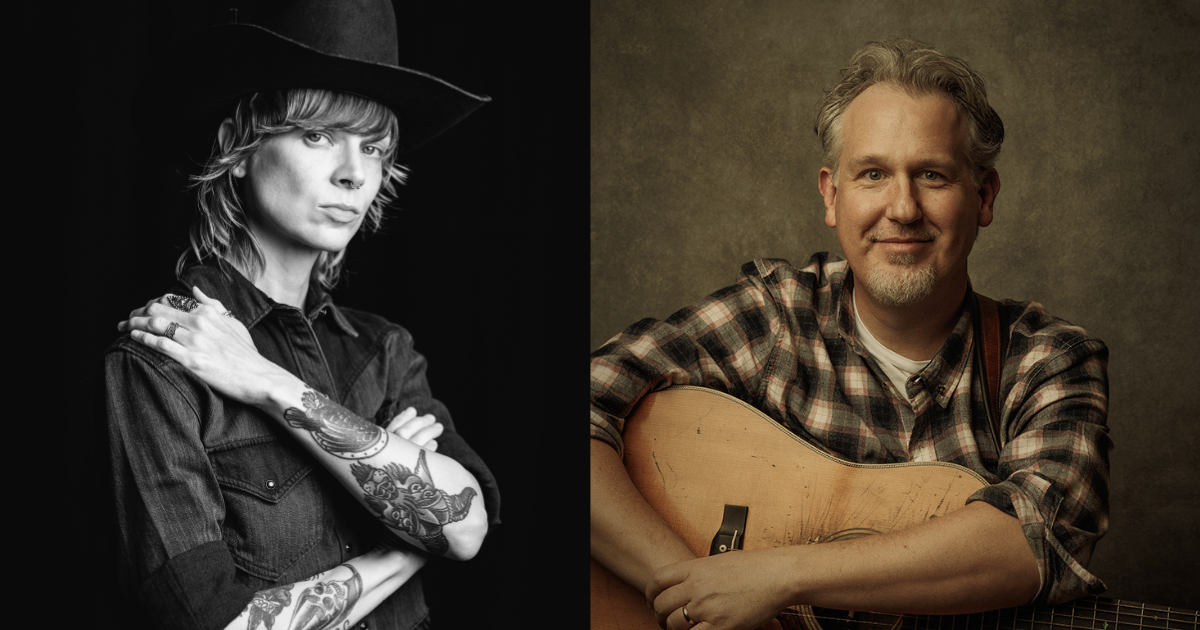
In bluegrass, Lonesome River Band pull a song seen performed by Stringbean (David Akeman) on The Porter Wagoner Show for their new single. “Pretty Little Widow” is hilarious and first rate, even employing an all-too-rare traditional bluegrass instrument, the Telecaster. Its twangy punctuations are a perfect addition to the single, out today. Acclaimed guitarists Bryan Sutton and Kenny Smith also launch a track today, “Three Star Hornpipe,” from Sutton’s upcoming album of six-string duets. Sutton and Smith’s decades-long friendship is easy to hear on the relaxed and loping modern fiddle tune.

There are a couple of great cover songs included today, too. Nashville-based artist Sweet Megg shares her new video for her most recent single, “Come On Up to the House,” her interpretation of the Tom Waits classic. She was inspired by her own family homeplace, a literal and figurative refuge where she grew up in New York City. Plus, after a lifetime of playing sets of cover songs, Jessie Wilson finally releases a cover – and it’s none other than Dolly Parton’s “Jolene.” A failsafe choice for a first cover release, Wilson’s take on the iconic favorite has a deep pocket, head-bobbing feel changes, and bluegrass instruments tucked into every one of the track’s nooks and crannies.

We hope you enjoy these songs as much as we have. You Gotta Hear This!

Jenn Grinels, “Always On The Run”

Artist: Jenn Grinels
Hometown: Originally Cupertino, California; currently working out of New York City
Song: “Always On The Run”
Release Date: April 10, 2026

In Their Words: “This song is a collaboration, with lyrics by Alfred Howard and music by me. I’ve always admired Al’s poetry, spoken word, and lyricism, so when he first reached out about collaborating, I was thrilled. These were the first lyrics he sent me – of many songs we ended up working on together – and when I read them, I was instantly inspired. The songwriting process was so quick, which definitely doesn’t always happen, and that ease ended up inspiring and setting the tone for the rest of the record.

“The imagery in Al’s writing naturally leant itself to this western feel that carries throughout the album – and a lot of that is rooted in the desert landscapes of Southern California that inspire him.

“At its heart, the song is about endless ambition – and the exhaustion that can come with it. We’re always reaching for our dreams, both of us having spent so many years in this business, constantly chasing that setting sun – and to metaphorically walk into it. It’s special to work with someone who’s in a similar place in life. He can write something deeply personal that I immediately connect to, and that sparks something in me musically.” – Jenn Grinels

Track Credits:
Jenn Grinels – Vocals, acoustic guitar, composer
Alfred Howard – Lyricist
Mike Butler – Guitars, lap steel, percussion, producer, engineer
Jason Littlefield – Bass
Jake Najor – Drums


Lonesome River Band, “Pretty Little Widow”

Artist: Lonesome River Band
Hometown: Floyd, Virginia
Song: “Pretty Little Widow”
Release Date: April 3, 2026
Label: Mountain Home Music Company

In Their Words: “Jesse [Smathers] brought this song to our attention from a video of Stringbean on The Porter Wagoner Show from the 1960s. We all love Stringbean’s music, and it was a song I had not heard before. He was backed by Porter’s country band and the electric guitar had a great part in the song. So it was an obvious choice of tunes for this project. Rod Riley on the Tele captures the vintage sound of that era of country music.” – Sammy Shelor

Track Credits:
Sammy Shelor – Banjo
Jesse Smathers – Acoustic, lead vocal
Mike Hartgrove – Fiddle
Adam Miller – Mandolin, harmony vocal
Kameron Keller – Upright bass
Rod Riley – Electric guitar


Bryan Sutton, “Three Star Hornpipe” with Kenny Smith

Artist: Bryan Sutton with Kenny Smith
Hometown: Nashville, Tennessee
Song: “Three Star Hornpipe”
Album: From Roots to Branches
Release Date: April 3, 2026 (single)
Label: Mountain Home Music Company

In Their Words: “I met Kenny when I first moved to Nashville. He had been there already a few years and was living down there near Wartrace, Tennessee, doing some work with Gallagher. And I forget exactly where I might have met him, but I was probably around the Station Inn or one of the music stores in Nashville. I went down and hung out with him. I had a guitar that I had some questions about and wanted to show it to him – you know, some structural issues – and he took a look at it and we played a little bit and I’ve just known him ever since. This is the early ’90s, over 30 years ago, and I just maintained a friendship with him all through these years.

“I’ve always loved the way Kenny is reverential towards fiddle tunes when he plays. He really finds that sweet spot of his guitar artistry, but you hear the melodies – he’s playing the tune and presenting the melody. I found this old song, ‘Three Star Hornpipe,’ that I’d heard from a fiddler named Roger Howell here in Western North Carolina. Tommy Hunter had recorded it years and years ago. I found an original recording and sent it to Kenny and went like, ‘What do you think? Here’s a tune that neither of us have ever played.’ Again, I didn’t necessarily want to do an obvious, low-hanging fruit kind of fiddle tune. So here was a newer tune and he was game to do it. That’s how we got into that tune, and I just love what he did with it.” – Bryan Sutton

Track Credits:
Bryan Sutton – Acoustic guitar
Kenny Smith – Acoustic guitar


River Shook, “Wildlands”

Artist: River Shook
Hometown: Chapel Hill, North Carolina
Song: “Wildlands”
Release Date: April 3, 2026

In Their Words: “I started writing ‘Wildlands’ when I was seeing a deeply controlling, scary person. One summer day, I snuck out of the house and went to the Haw River to clear my head. I sat writing at the water’s edge, feeling brave for the first time in years, and when I got back home, I hid the piece of paper with the lyrics deep in my closet. Nothing came of the song for almost a decade.

“Last year, when I decided to end my band (Sarah Shook & the Disarmers) and start over under my new name (River Shook), those old feelings came rushing back – fear, bravery, clarity, strength – and I remembered ‘Wildlands.’ I kept the original first verse, reworked the other two, and wrote a new chorus. Releasing this song is such a beautiful full-circle moment in my life. I feel so lucky to share ‘Wildlands’ with you.” – River Shook

Track Credits:
River Shook – Vocals, acoustic guitar, electric guitar, songwriter, producer
Blake Tallent – Drums, bass, acoustic guitar, electric guitar, pedal steel, harmonica, percussion, producer

Video Credits: Samantha Kniskern


Sweet Megg, “Come On Up To the House”

Artist: Sweet Megg
Hometown: New York City; based in Nashville, Tennessee
Song: “Come On Up To the House” (Tom Waits cover)
Album: Massive Negroni
Release Date: April 1, 2026 (single); May 1, 2026 (album)

In Their Words:  “When I heard this song, it reminded me of home – not just a place, but a feeling. My family came from Ireland in the 1920s and settled in the house where my mother grew up and where I grew up too. That house holds so many memories of family and friends. It’s a sacred space.

“When the world feels like it’s on fire, I can step inside and enter another dimension of peace and tranquility. That’s what home can be. This song by Tom Waits carries that feeling for me. It’s an invitation, a prayer I offer to others: when the world is getting you down, come on up.” – Sweet Megg

Track Credits:
Sweet Megg – Vocals
Hunter Strasser – Guitar
Norbert McGettigan – Bass
Chris Gelb – Drums

Video Credits: Filmed and edited by Matthew Farrell.


Jessie Wilson, “Jolene”

Artist: Jessie Wilson
Hometown: Phenix City, Alabama
Song: “Jolene”
Album: Rebel & Reverie (EP)
Release Date: April 3, 2026 (EP)

In Their Words: “As a girl who has played hundreds of cover shows in my lifetime, I’ve never actually released a cover song. I play ‘Jolene’ frequently at my live shows and we perform it a bit different. We play the choruses in double time and the verses in a half time, giving it our own spin.

“I recorded this version after jumping in a session with musicians I hadn’t met yet, who all happened to be monster musicians. We recorded at Station West in Nashville with Ilya Toshinskiy (acoustic guitar), Steven Sinatra (drums), Jimmy Nichols (keys), Kris Donegan (electric guitar), and Rob Cureton (bass). It surpassed my expectations and the session felt so natural and easy despite being in a room filled with all musicians that I was meeting for the first time. Sometimes, you just feel so ‘at home’ with a song, it feels like it gives you no choice but to release it.” – Jessie Wilson

Track Credits:
Jessie Wilson – Lead vocal
Nicole Boggs – BGVs
Steve Sinatra – Drums
Ilya Toshinskiy – Acoustic guitar
Jimmy Nichols – Keys
Kris Donegan – Electric guitar
Rob Cureton – Bass
Andy Ellison – Dobro


Photo Credit: River Shook by Jillian Clark; Bryan Sutton courtesy of the artist.

Welcome to Meels’ Critter Country

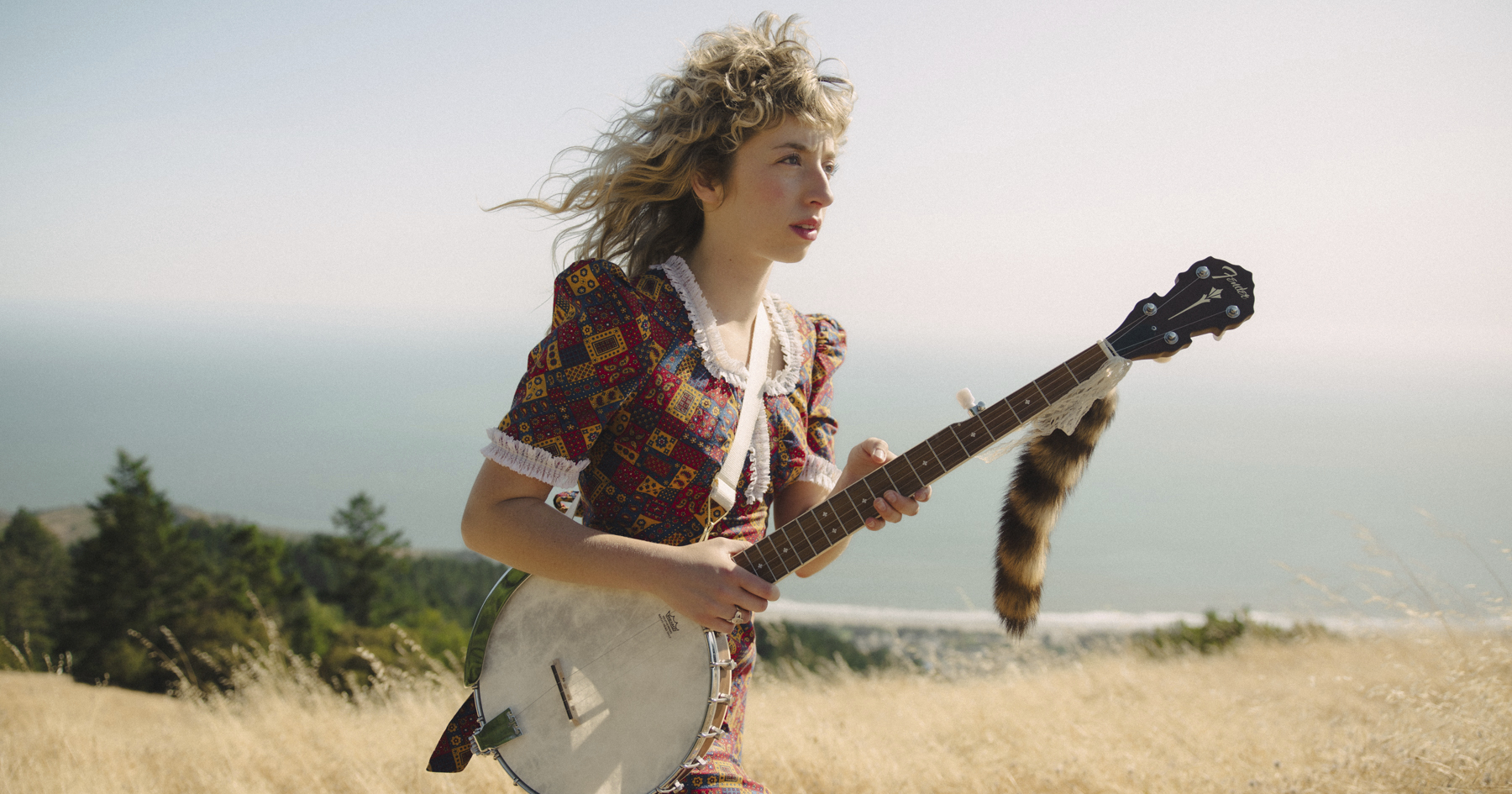
There are plenty of country subgenres out there, but quickly rising up-and-comer Meels has carved out a unique new niche. The California-born singer-songwriter calls her sound “critter country,” a fitting term for her playful but grounded brand of country-leaning roots music, which takes cues from folk of the ‘60s and ‘70s, traditional bluegrass, and classic country a la Loretta Lynn or Willie Nelson.

On her recently released new project, Across the Raccoon Strait, Meels takes listeners on a colorful, far-reaching tour of critter country and in the process announces herself as a fresh, genuinely exciting new voice in the broader roots music ecosystem.

Folks are taking notice – Meels is one of the first handful of artists signed to the newly rebirthed Lost Highway Records, with a legacy of artists like Lucinda Williams, Lyle Lovett, and Johnny Cash, as well as another left-of-center singer-songwriter, Kacey Musgraves, who was announced as the first official signee when the label relaunched last year. Meels has shared stages with artists like Molly Tuttle and Old Crow Medicine Show, and will appear with Margo Price, Carter Faith, and Nitty Gritty Dirt Band this spring.

Below, BGS catches up with Meels about songwriting, “critter country” and signing to Lost Highway.

In the lead-up to releasing Across the Raccoon Strait you shared that this batch of music feels truest, holistically, to who you are as an artist. Can you elaborate on that? What do you think enabled you to express yourself so fully?

Meels: As a writer and a producer and a songwriter and a singer, I really trust my gut and just follow the wave. With these songs, it was just me doing that. A few summers ago, before I made the project, I dove deep into the country classics – like Loretta Lynn and Marty Robbins and Dolly Parton. I got super inspired, the floodgates opened, and I just started writing like crazy. I grew up on a lot of ‘60s and ‘70s folk and my uncle is actually a bluegrass musician. He gigged around town where he lives in upstate New York. So I was already introduced to that world, but I took a deep dive and felt really inspired. The project just kind of poured out of me.

Would it be fair to say you found some unexpected connection points or overlap in those genres – the bluegrass and folk you grew up with, then the classic country you dove into?

Oh, totally. I also was trying out my own take on all of these genres and, again, trusting my gut with production and with the songwriting, to find a space within the genres that felt right for me as an artist.

You describe your music as “critter country,” which I just love. And that seems to encompass more than just your sound, as you’ve developed this really strong visual aesthetic in your videos and artwork, too. How did the concept “critter country” first come to you?

That came naturally, too. I grew up surrounded by a ton of critters in the woods in Northern California and found myself using animals as metaphors for my life. I went to NYU for music, and I took a branding class. I remember all of my peers were coming up with all these cool names for their genre. The teacher was like, “Oh, come up with a name specific to your genre and who you are as an artist.” I was still figuring out who I was as an artist in college and when I was looking through my lyrics and finding all of these “critter” similarities, I was like, “You know what? Critter country, that has such a nice ring to it.”

Take me back to the early days of making Across the Raccoon Strait. Was there a moment or idea that kicked off the creative process for you?

I think it was probably “Out West.” That track, in itself, encompasses the whole idea of the EP. I wrote it in New York when I was still living there and I’d just decided that I was moving back to California, back to my roots. I was just so excited about the idea of moving back out to the West Coast that the song came ripping out of me in my New York apartment. So that was a catalyst for me. I wrote most of these songs – that are about California and about home, actually – in New York when I was in a state of longing for home.

Did having that physical distance from your California home, and maybe the benefit of hindsight, help you write those songs?

I think so. My whole life, I have felt the most creative when I’m in California. New York is very overstimulating and there’s a lot going on all the time. I feel like, when I was living there, I was very much just absorbing everything that I could, but I wasn’t really writing so much until I was like, “Yeah, I’m gonna move back.” Then all of the sudden, I just started writing like crazy.

Something that stands out in your songwriting is how freely you use humor in your lyrics. You tackle some tough subjects, but never shy away from playfulness and to me it makes the stories feel more realistic, because in real life our experiences are often mixed bags. Are you consciously trying to inject some lightheartedness into your writing or does it just happen that way for you?

I don’t know. I do find myself making little jokes in my songs all the time. For example, in “The Wizard” I’m writing about a heavier topic: my struggles with OCD for my whole life. But I’m writing about it in a way that I’m not trying to hide anything. I’m just trying to put it in a way that’s maybe a little more digestible, and a little silly and a little funny, to help myself work through it a little more. And maybe to make it more digestible for my audience, too. Maybe I use humor as a way to cope.

“The Wizard” really does nail that balance of sharing something difficult and vulnerable while giving a little wink and nod to the listener.

I love a wink and a nod.

Speaking of that song, when you do get into vulnerable territory in your writing, do you ever feel fear or hesitation? And if you do, how do you engage with those voices?

To be honest, I feel like when I’m songwriting I’m at my most fearless. Since I was young, it’s been my way to put it all out on the table and not be afraid. I think me writing in these little critter metaphors, or using humor – maybe that’s my fear talking, I don’t know – but when I’m writing I just want to lay it all out on the table. It’s my one true release, so I try to do it without fear.

It sounds like you had a fantastic group of collaborators working with you in the studio. What was your time together like?

It was so wonderful. We recorded at a studio in Oakland called Tiny Telephone [owned by John Vanderslice]. They actually had old telephones that worked all over the studio. And they had everything you could want and more to play with and to get creative with. The space itself was incredible. We had an incredible engineer named Danielle, and she was also so important in the creative process, you know, running the vocal through this weird flanger and making moves that were so creative and so unique and so cool.

I also co-produced it with Peter [Groenwald] and Mark [Campbell], who made my first record with me, so that felt really comfortable and really safe. I knew nothing was off the table. I could bring up any idea, no matter how stupid I thought it was, and we would try it. Sometimes it worked, sometimes it didn’t. But we had such a good, natural flow in the studio. I brought a lot of friends, too, to play in the band, which was just really great.

You can hear the looseness and camaraderie in the music, in a way that I’d assume can’t be replicated without having close relationships with the players.

I’d always wanted to track a whole record live to tape. And we did that with Across the Raccoon Strait. We didn’t use any click [tracks]. It was just like, “Let’s get this next one tight, guys, let’s go.” We were all having a lot of fun with it.

When I’m in the studio, making music is such a collaborative thing. Even if it’s my song, every musician that I bring in is going to bring something unique. I really love to let them loose and let them rip. We can pull back where we want, but everybody in there plays an instrumental – no pun intended – role in making the music great.

This is also the first project you’ve done as one of the initial signees to the newly relaunched Lost Highway Records. How did you get hooked up with them and what does it mean to you to work with such an historic and impactful label?

This record has opened a lot of doors for me. I made it a little over a year ago and I was like, “I’m gonna quit my day job.” I was living with my grandma in Pasadena. She’s 86 and she’s so cool. “Marsha June” was actually written about her. So, I was basically like, “I’m just gonna give this thing a go.”

I sent this record around to literally anybody that would listen to it. I would send it to venues, because I’d just moved to LA. I was like, “Hey, I haven’t played a lot of LA gigs. Here’s my new record. You want to book me?” I was just kind of fearless about that, too. Some artists are so precious with the new stuff and don’t want to send it around. But I was sending these songs around before they were even mastered.

Eventually, I started working with a manager, I started working with an agent, and then I got a lawyer and did the whole thing. I talked to a lot of great labels, but when I met with Lost Highway I knew that it was the right direction. I’m so, so happy that I’m working with them. It really does feel like a family. It’s such a close-knit team and everybody really cares. … So many of my favorite artists have put music out through Lost Highway. Its legacy just runs so deep. I’m the hugest Johnny Cash fan in the world – and a Willie Nelson fan, and Lucinda Williams. It’s kind of absurd to me that my name could be looped in with all of those other names.


Photo Credit: Jim Hughes

An Oral History of the Infamous Stringdusters

BGS was founded 14 years ago and from the very beginning, we’ve been covering, collaborating with, and cheering on the Infamous Stringdusters. Our first posts about the group published to our site in 2013 – not even a year after our launch – spotlighting banjoist Chris Pandolfi’s Bluegrass Manifesto, the band’s only-four-years-old marquee event The Festy Experience, and their most recent album at that time, Silver Sky. Now, in 2026, they’re not only our Artist of the Month for the second time, they’ll be headlining our stage at Bourbon & Beyond this September, too. But, our love for the band – and the many partnerships we’ve built together – began, like most, back in 2007 with their now iconic debut album Fork in the Road and a banner year for the group at IBMA’s World of Bluegrass and the IBMA Awards.

Back then, when the Stringdusters took home trophies for Song of the Year (“Fork in the Road”), New Artist of the Year, and Album of the Year, perhaps no one – not even the band themselves – would have predicted the seismic, existential impact they would end up having on bluegrass and the as-yet-unnamed subgenre thereof: jamgrass. Twenty years on, the Stringdusters celebrate their duo of decades with 20/20, an album of 20 songs celebrating 20 years of defining and redefining bluegrass and jamgrass.

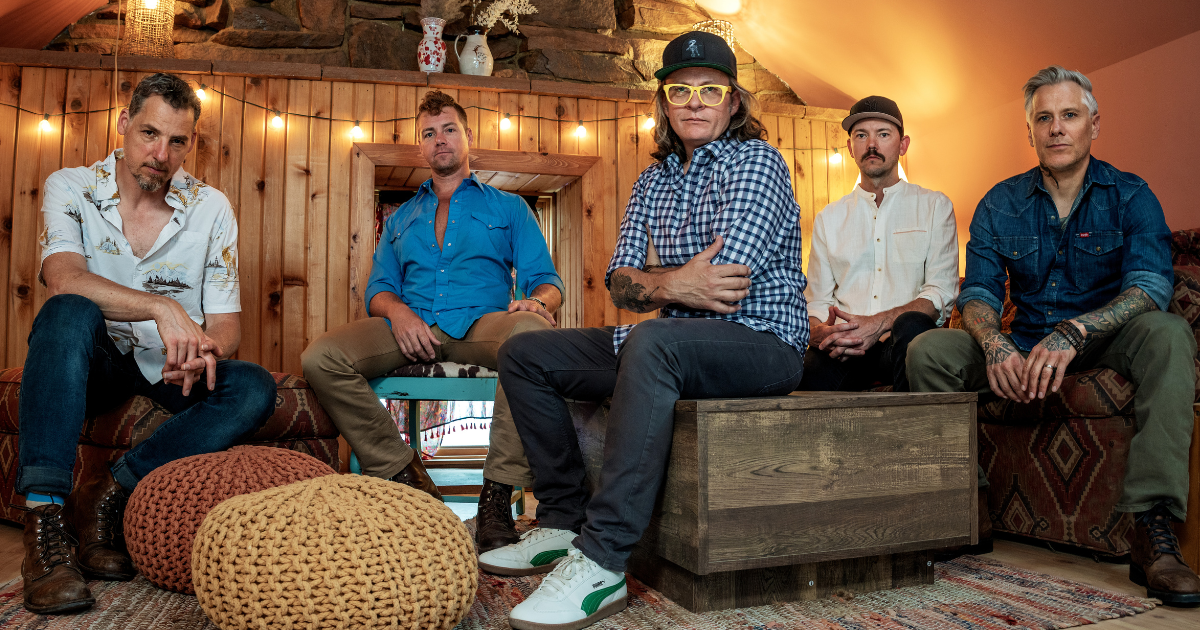
For our Artist of the Month coverage, BGS and Good Country co-founder Amy Reitnouer Jacobs sat down with all five members the Infamous Stringdusters for a wide-ranging conversation of a band that epitomizes bluegrass, jamgrass, and psychedelic string band music in the 2000s.

First of all, again, I wanna just thank you for doing this. We are so thrilled to have you guys as our Artist of the Month and congratulations on 20 years of the ‘Dusters.

I wanna start this with Panda actually, and this is not gonna be just an oral history interview, but I think, looking back on 20 years, it feels appropriate to start from the beginning. So let’s talk about origins and start back at Berklee [College of Music], if that’s cool. Tell us a little bit about the beginning of the band.

Chris Pandolfi: I arrived at Berklee in 2001, which was the year that Andy [Hall] had just left Boston for Nashville. I first met Critter [Chris Eldridge] through Zach Hickman, who was playing in Josh Ritter’s band. He went to Oberlin [University] with Critter. We got together and we were playing, and Zach had some free studio time at a spot in New Hampshire and we were gonna go record some music, just for fun. Our careers were not underway in any way, shape, or form. We didn’t have any grand designs here. We were just gonna go record some music and have some fun.

Then, on the precipice of this recording, we went down to the Cantab Lounge to meet this guy named Andy Hall. We went there and–

Andy Hall: [It was] The Plough and Stars.

CP: The Plough and Stars! Andy was playing–

AH: I don’t remember exactly if I was playing or if you were playing.

CP: And the next day we were in New Hampshire at this recording studio and we made this EP called Stable Horse. Essentially, Andy was already living in Nashville, so around that same time, he had met Jeremy [Garrett] and they were playing together. It was that recording session that got the wheels turning for me. Like, “Oh, we could do this thing with other people our age,” and not fall into the very sort of common thing in bluegrass where you get hired by someone else and you’re essentially a sideman.

We were recording and teeing things up, and we all had other gigs at that time. It was me, Andy, Jesse [Cobb], Critter, and Alan Bartram from the Del McCoury Band. But that was my earliest memory of “We could start a band with our contemporaries.” And Zach Hickman, I give him credit, he facilitated that.

I don’t even think we had the name “Stringdusters” yet. Alan got the offer to go play with Del McCoury and we had met Travis [Book] at IBMA, so we called him up and he came and lived in my driveway for a few months. True story.

Travis Book: You can really get away with a lot if you park your car in someone’s driveway and then try to stay outta the way.

So Andy and Jeremy, what are the origins of you guys starting to play together?

AH: Was it Ronnie Bowman? Was that the first time? I was in Ronnie Bowman’s band and the fiddle player and Ronnie had a bit of a falling out while we were on the road and–

CP: We were all at a festival, so we scooped up Jeremy and he got on the bus with Ronnie Bowman!

Jeremy Garrett: Yeah, I definitely knew about you two beforehand. And, of course, in bluegrass everyone’s a fan of Ronnie Bowman. He’s such a crooner and such a cool cat. I definitely had plenty of experience before, but this was like one of my first major Nashville gigs. And it was eye-opening very quickly that, as a sideman, it’s pretty limiting.

The conversations I remember started happening pretty fast in the back rooms: “Hey, let’s maybe consider doing something of our own. Long-term, how can we make this happen?” But it was just like whispers. I remember going to IBMA – that’s where I met Chris Pandolfi and he blew me away with his melodic banjo playing style and this futuristic sound that he had. I’d really never played with that before, because I came from a very traditional side of bluegrass.

CP: Didn’t I give you a copy of my record? I remember you telling me that.

JG: Yeah. And I listened to that record all the way home from IBMA – I’ll never forget – and my dad was riding with me. I was just like, “This guy’s awesome.” Overall, it felt like all of us coming together through our connection in Nashville and these music parties that used to happen on the reg. I don’t know if they still do. We would have huge jam sessions, especially at Panda’s Pad. There’d be 20-30 people all gathered up in somebody’s backyard, picking. And it was almost every night. So you can’t help but get tight and start seeing the writing on the wall, the possibilities, through those kind of connections.

CP: These days in Nashville are so different. It’s so much “cooler” now. There’s so many young people playing bluegrass and when you hear about a lot of the socializing in Nashville, it’s a lot of young musicians. When we were having these parties, it was a real diverse mix of ages. You had Sam Bush there, you had Scott Vestal, you had Ronnie Bowman, and the McCourys. We were the young cats around and there wasn’t a very vibrant young scene. We were intermingling with a lot of the elder statesmen of bluegrass.

That’s a really special time in Nashville. I can remember that’s when I started hanging out in town and there was like a magic in the air. That intergenerational mix doesn’t organically seem to be happening as much, but maybe it is and I’m just not invited to parties anymore.

So Travis, were you coming to Nashville from Colorado? Where were you before then?

TB: Yeah, I was living in Durango and Anders Beck from Greensky [Bluegrass] and I started playing music together in maybe 2002. There were gigs and we were learning this music and then Andy Thorn and some other friends – that’s Leftover Salmon – they just showed up in a music store one day. Andy was probably 19 on college break and we hung out with him for three days straight. When he went back to North Carolina, we called him up. We’re like, “Dude, you gotta come back! We gotta make a band! We’ll play RockyGrass, you’ll win the banjo contest, we’ll win the band contest.” Anders and I were like, “We can see the future, but we need Andy Thorn,” because he was such a compelling musician and just such a natural. Still is.

We started this band called the Broke Mountain Bluegrass Band with Jon Stickley, who’s also a visionary in our music. We were all picking and almost entering that same path as Leftover Salmon or Yonder [Mountain String Band]. We were already doing this like hippie bro band, just loving playing music and camping and playing festivals and going to hot springs and just fucking around. It was brilliant.

But then we went to IBMA, which at the time was the best way to show off your band and position yourself in the context of the larger [bluegrass] world. Try to get some gigs and go party your absolute brains out for a week. We were pretty rough around the edges, but one night I stepped off an elevator and Chris Eldridge came around the corner. [He] was like, “We need a bass player for this jam. Will you come jam with us?” I went into this little alcove and it was essentially the Stringdusters. It was Critter and Pandolfi and Andy Hall and Jeremy and Jesse Brock. I was just hanging out, holding on for dear life. I’m partying, I have a backpack full of beer, I have no shoes on, and I looked around and all my band mates were just there sitting along the hallway floor listening to the jam.

Andy’s partner at the time, Janice, said, ” Do you ever think about moving to Nashville?” I just laughed. Absolutely not. But I had fixed myself in their mind and once they exhausted all the possibilities of people who could play bass in Nashville – at least this is my understanding – they dug into their collective consciousness and called me up to audition. They’re like, “We think you’re the guy. When can you move to Nashville?” So I went out there to work on Fork in the Road that summer. What was this, 2004? Am I right, guys?

AH: I think that would’ve been 2005.

TB: Yeah, you’re right. 2005. [I] moved out there in September and lived in this guy’s driveway. It was kinda wild.

Falco, I promise we’re getting to you. We’re almost there!

In pretty quick succession though, you’ve got the core crew with Critter and Jesse [Cobb] at that time, you record the album, and get signed to Sugar Hill. And then things just start happening! Can you walk me through the time between recording and the IBMA Awards in ’07?

CP: There’s a lot of extremely disorganized touring. We’re driving around in two cars. I still have the notebook from the gigs – we were getting paid a few hundred bucks a night, maybe a thousand on a good night. Doing everything that we could.

We didn’t have grand designs on anything. The IBMA Awards was a really big moment for our band. Thinking back, it was a moment of legitimacy, of just getting [to] one of the hardest things as a band, which is the collective feeling that this thing is gonna stick together. That’s the peril of starting a band with players who you think are really good: at any time anyone could get hired away for something. But we were playing gigs, we were loving life, we were working on our music, and we were poor as could possibly be. I just remember the IBMA Awards as a big moment of solidity, of that feeling like we could really do this, we could really be in this for a long time.

TB: There was that first summer we had a couple of big anchor gigs, but a lot of it was really just driving around and killing time in between these anchors and hoping that we could reach the right audiences. I think that the big bluegrass scene was ripe for some young pickers who were taking it seriously and committed to each other.

JG: Yeah, getting gas in the tank right off the bat was huge for us, that’s for sure. And we spent a lot of time in between those gigs just going to be in the wilderness and spending time together. I don’t know, for lack of a better way of explaining it, [we were] bonding like a band.

But man, when you’re a real band and you’re not just like a frontman or whatever, you’ve got a real synergy with other guys in a group. It’s special. And I feel like a lot of what brought us together and [what] makes us as tight as we are now was those off times where we were discovering our lives and just doing cool stuff like that. Creating this thing together.

I do need to know who came up with the name. Where did the name come from?

CP: Ben Eldridge.

AH: Yeah!

CP: We were working with a list of pretty mediocre names and Ben came up with “Stringdusters.” After 20 years, I can say there’s a lot of bad band names out there, but the Stringdusters – I think it’s a cool band name and it suits us.

All right. Now we bring Falco into the mix. So how did you get mixed up in all this? Tell us your origin story.

Andy Falco: So, Critter fell off the back of a truck and I got picked up – no! What happened was, I’d known Pandolfi and Andy Hall from the Northeast bluegrass scene. I was playing with this guy, Buddy Miriam, who’s on Long Island, and who actually was friends with Bill Monroe because he got struck by lightning at the Berkshire Mountain Bluegrass Festival, which of course was Grey Fox. And Monroe found out about it and reached out and they became friends. So he learned a lot of mandolin directly from Monroe.

My brother was getting into bluegrass and was like, “You should come to this bluegrass festival.” I went up there and saw Doc Watson and really got into playing bluegrass. ​I moved to Nashville maybe a year after Panda and Critter did. Andy Hall was already playing in Dolly Parton’s band. And I had met Jeremy, actually by accident, at SPBGMA. My first time in Nashville, some guy came up to me and said, “Hey man, how are you doing? How’s everything been?” I was like, “Great. This is my first time in Nashville. Everything’s been great.” Then he stopped and said, “Man, I thought you were someone else.” And he says, “Come meet my son.” That was Jeremy’s dad, and that’s the first time I met Jeremy.

When I moved to Nashville, these guys were starting the band. I was watching them doing their sets at IBMA. It was killer. Then when Critter left, they asked if I’d be in. I wasn’t gonna start until September and one month later was the IBMA Awards. So I just joined the band and here they are, winning all these awards.

JG: I would like to say, I’ll never forget your first gig. You killed it harder than literally anybody I’ve ever worked with to this day. Absolutely stepped into the role and blew it away. And it was very obvious at that moment that he was the right man for the job, for the Stringdusters.

AF: I had big shoes to fill with Critter – and Critter and I were friends. In fact, I knew Critter before I met anybody in the Stringdusters. We met at seven o’clock in the morning on the last day of IBMA, when we’d pick all night and our door was open. And here comes Critter with his guitar.

CP: Critter introduced us.

AF: Yeah.

CP: He said to me, “Do you want to go hear the fastest guitar player alive?” And I said yes.

AF: I worked with Critter, too. Critter was very supportive of coming over when I was preparing to join the band, showing me the parts that he played on the record. So I had a really good foundation, thanks to Critter, of what he had done. Then I was able to put my stamp on it.

So what is that pivot then? You all mentioned the kind of shift that occurred, moving you away from traditional bluegrass and more towards jamgrass. How did you find your own sound? What was the decision to pivot?

AH: I remember a specific show where we decided we were gonna try and extend some [of the] set. I think it was the Animus Theater in Durango and it was a Colorado bluegrass crowd, which was more of a dancing crowd. They were used to more diverse sounds. I don’t remember, we were just like, “Let’s try and put a jam in this one song,” or whatever. So we’re playing, we’re jamming, and we’re extending whatever song it was. The whole crowd was just dancing. The energy was feeding back and forth and it was like, “Whoa! This is so much more exciting,” in contrast to everyone sitting silently and clapping in between songs. We made a choice one night and we saw the crowd just light up and dance and lose themselves in the music, and that fed our energy.

CP: Also, we were into that stuff.

AH: Yeah.

CP: But we hadn’t really made that connection yet. The real moment that I remember is we opened three shows for Railroad Earth. We played the 9:30 Club. We played Theater of the Living Arts and, I think, and we played Burg Williamsburg, when our van broke down and we showed up last minute. Those are the gigs that I referenced in the Bluegrass Manifesto. When I did the IBMA keynote that grew out of that, it really referenced those. I remember a few shows, too, where we would come off stage and we’re like, “Oh my god, that jam. Let’s do that again.”

We played these shows with Railroad Earth and it connected some dots that didn’t connect automatically, even though we had Grateful Dead, Phish, playing all the time. We were really coming from that IBMA buzz and awards. And, like anything, it took some time to discover, [it took] some experience. That was when some real change started happening around our business. Then the music really followed that trend.

JG: I’ll say, you guys, don’t forget about the Zeltfestivals. They were beyond anything that I personally had ever experienced. We went out and these people were going absolutely bonkers for our music – they had barricades out there and stuff. I’d never seen any of that at a bluegrass show. To me, that was fire in the tank.

AF: I think that also a big part of that is just, I know for myself, not growing up playing bluegrass music and then getting turned onto it by Garcia and Grisman and people like that. But I think it was just like when I started learning bluegrass. There’s a way that you have to do it and then, finally, you get to a certain point where all these dots are being connected, where you start to let these other influences come out, because you start to get more comfortable as a band. You start to allow that like, “Yeah, why can’t we do it? Why can’t we mix these things?” Even just as individual players. Why can’t you play this style? Blending these kind of jammy elements and these rock elements and then seeing how it worked.

You all have such varied individual projects and influences. Do you still think that you’re shifting your sound? What are you listening to and is that influencing what you’re doing?

AH: It’s definitely influencing what we’re doing. I think, to Falco’s point, I feel like I’m allowing [in] more and more of my original influences that I grew up with. I was a metal dude in high school. I think the older I get, the more I enjoy letting in who I am.

AF: Getting away from the “that ain’t a part of nothing” bullshit, right? Like, what? Who’s to say, right?

JG: Yeah, at the end of the day it’s art and you gotta let that lead itself, if you’re a true artist. Otherwise, you’re doing a preservation society kind of thing in the bluegrass world. For the longest time, I felt we were all paying homage to this awesome music, but we’re not letting it breathe like it should sometimes. It’s very fun to be an artist and be able to have the permission to just kinda let it flow, which is what we let ourselves do. We let the art dictate what we did, and we were true to ourselves in that way. That was something that served us very well. Still does.

You all live in different places now. I know the band is not as centered in Nashville as it used to be, but you did talk about the off-times and how that bonded the group early on. How do you stay bonded as a band now? How have things shifted? Being a decentralized band, how has the writing recording process changed for y’all over the last 20 years?

JG: I think that’s an important point. Yes, we’ve changed a lot over the years, but we’ve been able to stay tight because of those early formative years when we were all just broke traveling around in a band. I didn’t have any brothers growing up, but these guys are definitely my brothers and they know more about me than anybody else in this world. To allow each one of us to have the freedom to live where we wanna live and come together the way that we want to come together, I think that has been really one of the main things that have kept us together.

Over the years we’ve all developed little side things outside of the band. I think that’s been healthy. For me, I like to do my own solo music, music that I write and I like to perform – and stuff that wouldn’t necessarily fit within the confines of the Stringdusters. But I still want to get that art out there. We continue to challenge each other. Music can be competitive in a not-healthy way. But I feel like we do it in a healthy way, in the sense that we drive each other to just be the best that we can be at what we do.

CP: I got married last fall and in the run up to my wedding, one of my aunts asked me, “Are all your bandmates gonna be there?” In my mind I had this moment where I was like, “Are my band mates gonna be there?” You might as well ask me if my family is gonna be there! It’s just life at this point. After 20 years, it’s cool to observe the level to which you become each other’s family.

That’s the definition of community and you don’t think about these things when you’re going into this life, but there are some incredible unintended consequences. That informs the music and that informs all the life experiences too.

And here we are, 20 years later. That’s pretty cool.


Explore more of our Artist of the Month coverage of the Infamous Stringdusters here.

Photo Credit: Daniel Milchev

The Many Perspectives of Rissi Palmer

Rissi Palmer is putting her lifelong love of country music into Perspectives, her first project in six years. With three tracks produced by Shannon Sanders and a fourth by Dan Knobler, the new EP places Palmer back in the artist spotlight after a period of time focused on personal and professional evolution.

Palmer also hosts an Apple Music country radio show, Color Me Country, which spotlights original music from artists of color. But there’s even more to the story. She’s collaborated on a children’s book titled Color Me Country: A Celebration of Black Women Who Shaped Country Music and she’s also wrapped a memorable tour called The Trailblazing Women of Country, where she performed some of the best-loved songs from Patsy Cline, Loretta Lynn, and Dolly Parton. Off the stage, she’s devoted more time to her two daughters following her divorce, while still ramping up to the release of Perspectives.

Though she’s based in Durham, North Carolina, Palmer caught up with Good Country in Belfast, Northern Ireland, during the Your Roots Are Showing conference. At the event’s opening night concert, she sang “Old Black Southern Woman,” a heartfelt ballad that touches on the loss of her mother when Palmer was just seven years old. Perspectives also offers a cover of the SteelDrivers’ “Can You Run?” as well as an original song titled “Good For Me” (about diving back into the dating pool) and a rendition of a Loretta Lynn classic, “Somebody Somewhere.”

“All these things came together, and Shannon so graciously decided to be a part of this with me,” Palmer recalls. “He said, ‘Well, two of these songs sound very bluegrassy. What if we just did the whole project like that?’ I was like, ‘That’s kind of dope,’ because I hadn’t done anything like that. And again, perspectives. Two Black musicians, making this very bluegrassy, but still very soulful, project. And I decided midway through that we’re going to call it Perspectives.”

What was on your mind as “Old Black Southern Woman” was taking shape?

Rissi Palmer: I wrote that with Kyshona, and that was our first time writing together. Kyshona has a way of getting straight to the heart of whatever it is that you’re talking about. I had the idea for the chorus, the “ooh-ooooh” thing, in my head, and I hadn’t really started writing anything. So, we sat down and we started talking. When you go to her house, she’s got all these really cool plants from her mom and her grandma. We talked about that, and I wanted to write something that paid homage to my mother but also acknowledged all the other women that came in and helped raise me.

It’s a universal thing, too. Everybody thinks of getting older as really bad, and I don’t know what I thought my 40s were going to be like, when I was in my 20s. I honestly don’t know, but I don’t feel old! [Laughs] I think I thought 40 was going to feel different, but 40 actually feels just like a creakier 25! And I see the blessing in it. I feel really lucky to be here, because I outlived [my mother] and I have babies now. I just wanted to write something that says it’s OK to get old. It’s actually really cool to be able to get old and to see the fruits of your work.

I think the title kind of throws people off because they’re like, “Oh, this is a song about some Black people.” But it’s actually about getting to be old, seeing the blessing and good in that, and making the most of it.

When you sing that song now, it gives you a chance to talk about your mom and share her memory. Is that extra special for you?

Yeah. It was hard, I’ll be honest. The first few times that I sang it were really hard and I would cry. I’m starting not to cry when I sing it. Especially when we get to the lyric, “Every curse my family claimed ends with me.” That’s always where it got hard. You don’t realize how hard it is to overcome and not repeat mistakes.

Was it a dream for you as a kid to become a singer?

I’ve always known. I don’t know how, but I’ve always known that this is what I wanted to do. In that way, I’m very lucky. It was never, “Maybe I should be…” I would say that I was gonna do other stuff, just to make my parents happy, because I figured that they were probably really scared about me wanting to be a singer. So, I was like, “I’ll be a lawyer.” They’ve got a lawyer. My brother is a lawyer, so they got one. So, we’re good. [Laughs]

Now I did not always want to be a country singer. I wanted to be a singer and I wanted to write songs. I knew the kind of songs that I wanted to do, but I didn’t call it that. That didn’t become clear to me until I met my first managers, and then that was when I realized, “Yeah, I guess that is what I want to do.”

Is bluegrass an influence for you?

I like bluegrass! I’m a Rhonda Vincent fan and I’ve always been an Alison Krauss fan. And on Jon Randall’s first record he has this really cool song with Vince Gill called “My Life.” That’s one of my favorite records, by the way. It’s called Walking Among the Living.

I’ve always been a fan. I’ve always listened. I’ve always had those things on my playlist. I just never thought of myself as that, because there’s a very distinct vocal style. There’s a very distinct cadence in which they’re singing. A lot of the people on the show last night [at Your Roots Are Showing] were just brilliant bluegrass singers, and I never thought of myself that way because I can’t do that. Like, that’s not what I do. I didn’t really think of it as something that I could do. I used to write stuff like that all the time and I tried to give it to other people. But it was Shannon – Shannon was the push. Shannon was like, “Let’s do this.”

What was the Trailblazing Women of Country tour like?

It’s one of my favorite things that I’ve ever done. It was an all-female band and it was myself and Kristina Train, who’s a brilliant singer, as the two leads. We split the show in half, usually there was an intermission between Kristina and me, and we sang two songs together. You know how it is to be a fan, but you don’t necessarily know everything by a person? Patsy, I knew. For Patsy, I didn’t even have to study, because I knew all those songs. Most of my Dolly stuff I knew, but there’s a lot of words in “Coat of Many Colors”! And then Loretta, I’ll be perfectly honest, I had not gone super deep into Loretta’s catalog, so that was fun. That was the one that I needed the most work.

And I loved it! We did mostly theaters. I played in places I never went before. I went to Alaska. We did Wyoming – and you haven’t lived until you’ve driven across Wyoming! It’s just space! It’s wild! With the audiences, it was really funny how they varied. Sometimes we would make jokes, and sometimes people would say things to me. Like, someone asked me once, “Where’s your blonde wig?” when we got to the Dolly part. And I was just like, “Did you ask Kristina that?” They didn’t say anything, and I was like, “Girl, why would I cover up my fabulous hair?” and everybody started laughing.

You know, we got some weird comments. There were some people that (gasps) when I walked out. And afterwards, people would say really kind things. I never had anything rude said to me. But I did notice the [look of surprise] at first. It was good for me. It reminded me about why I love country music. I think I needed that, because you spend so much time, like with Color Me Country, talking about what’s wrong with the industry and talking about ways that we’ve been slighted or ignored. Then you lose sight of why you even started this in the first place, and that was why. It’s because of those songs. It’s because of those women. It’s because of the connection that the audience had with that music.

I can’t tell you how many people came up and told me stories. I met one woman who actually saw Patsy Cline performing on the bed of a truck when she was a kid. And I was just like, “That’s the most amazing thing I’ve ever heard before.” That’s country music.

You’ve got a lot of things coming up. Where would you like this new music to take you?

That’s a great question. I put so much into other facets of my career for the last few years. I put a lot into my children, because of our changing family situation, and just wanting to be there for them. At the same time, I was wanting to experience the career wave that I was having and trying to balance that. So, my own music took a backseat. I started feeling like, “I think people forget that I sing.” And really what I’m saying is, “I think I forgot that I sing,”

I was still doing shows, and still doing things in between, but it was like, “I don’t want everybody to forget why I’m here.” Really I’m saying, “I don’t want to forget why I’m here.” The Trailblazing Women of Country really cemented that for me, especially the “country” part. I’ve been experimenting and trying different things – and there is a project that comes later – but I wanted to do this. I felt like this was a really important statement to make, like, “This is why she talks so much shit.” [Laughs] Because this is where I started and this is what I do.


Photo Credit: Dire Image

A New Children’s Book Welcomes Youngsters to the Grand Ole Opry

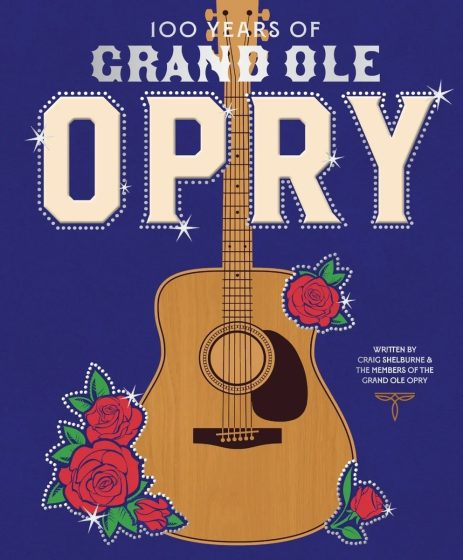
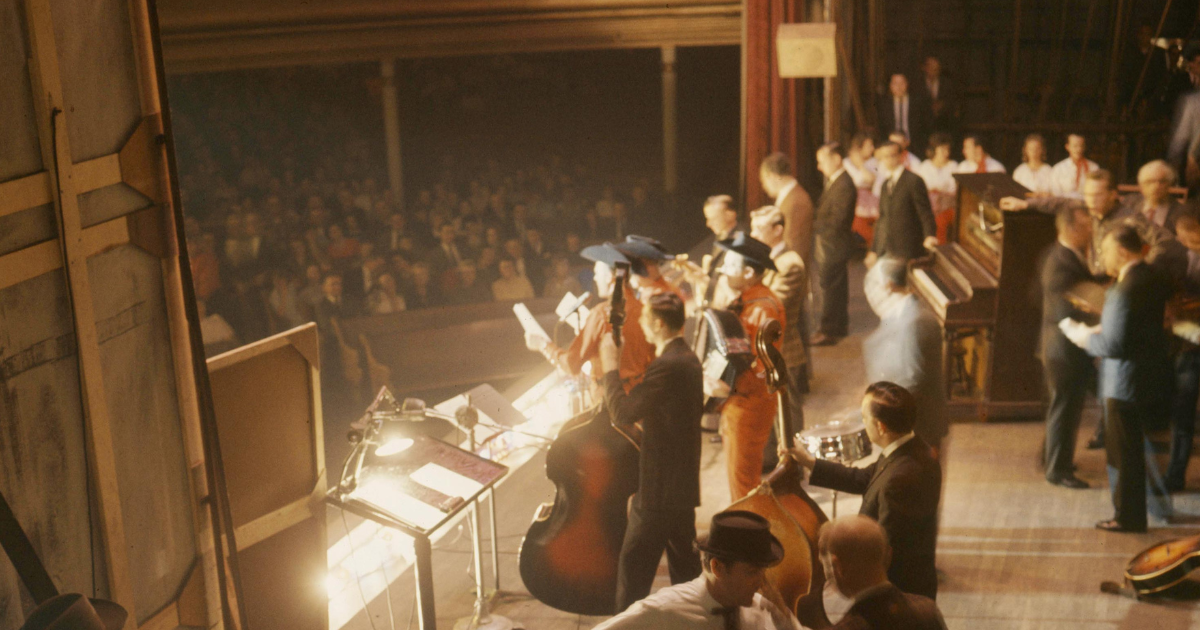
Last month, we celebrated the 100th anniversary of the Grand Ole Opry as our Artist of the Month. We dove into the history of the world’s longest running radio show, we celebrated the music made on its hallowed stages, and we spoke to author Craig Shelburne about undertaking the gargantuan task of squeezing all of that rich history into a book, 100 Years of Grand Ole Opry. That coffee-table-ready tome is 350+ pages of photos, stories, interviews, and Opry lore.

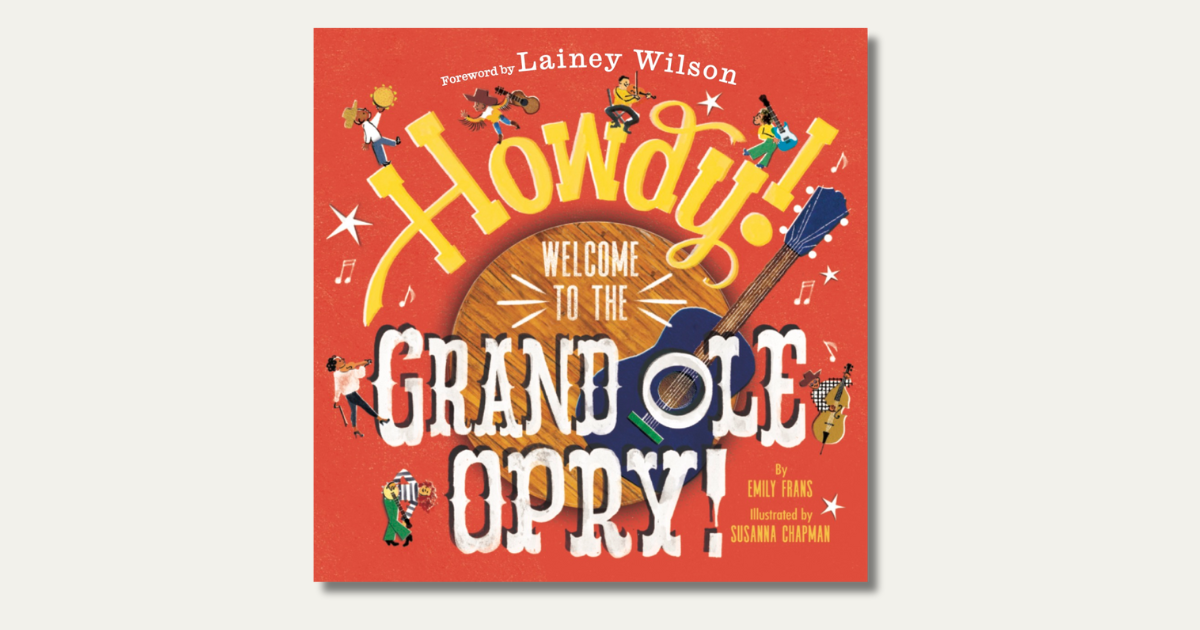
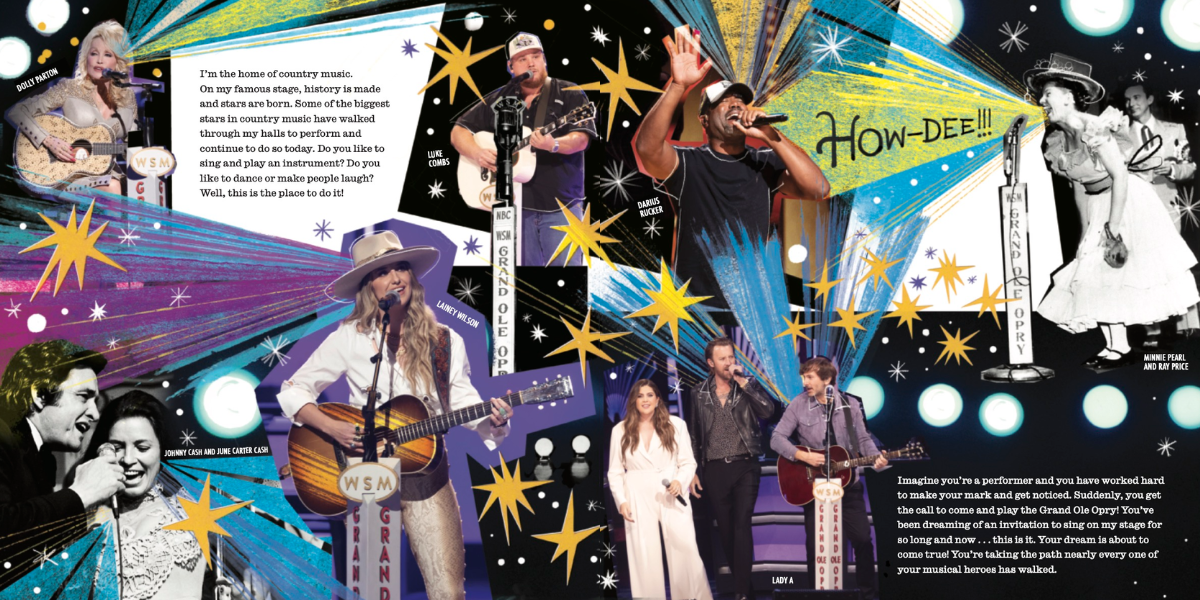
Now, imagine the same task for Opry employee, archivist and content manager Emily Frans – but squeezed into a children’s book. The new title, Howdy! Welcome to the Grand Ole Opry! does just that. One hundred years of history, illustrated gorgeously and fantastically by Susanna Chapman alongside words and story by Frans, it distills the magic of the Grand Ole Opry for its tiniest audience members and fans. With a foreword by Lainey Wilson and stories from Dolly Parton, Lauren Alaina, and more, it’s an Opry 100 celebration that can be appreciated by country music fans of any/all ages.

Whether a gift for the holidays, an everyday present for the youngsters in your life, or pro-country-music propaganda (which we can always get behind), the new kids’ book is certain to inspire oncoming generations of would-be stars, pickers, and songwriters, seeding dreams of someday stepping into that hallowed circle on the Opry House stage. We spoke to author Emily Frans about the project and the special balance of telling a complete Opry history that engages, inspires, and stokes the imagination of children all around the world.

It must have been a difficult enough task for your colleagues to write the 350+ page 100 Years of Grand Ole Opry book that distills the immense history of the Opry into a single volume — it’s hard to imagine condensing all of that history, all of those stories, and all of that music into an even smaller space, a kids’ book! How did you go about it?

Emily Frans: You’re right! After pouring so much time into artist interviews, research, and trying to cover 100 years of history in as much detail and photography that a 350+ page book will allow, shifting gears into a children’s book was a completely different challenge. The biggest task was figuring out what not to include.

With kids, it’s all about clarity, pacing, and imagination, so I asked myself: What moments spark imagination? Which people feel larger than life? What stories can light a fire in a young mind? I tried to frame the story as kind of an adventure that kids could really imagine themselves experiencing while still including historical facts and details that they could learn from.

What do you see as the essential “nuts and bolts” of the Opry story that could – or should – be translated to country fans of all ages? What is the central idea or mission here, as far as putting this incredible, respected show in front of its youngest audience?

As a parent to young daughters, I realize how important it is for the youngest generation to understand not just what the Opry is, but why it matters. This book was written to bridge that gap and to spark wonder, inspiration, and to continue cultivating the tradition that we all cherish. In an age where attention spans are short and kids can choose their entertainment with a swipe of a screen, creating a book to share the Opry with children felt more important than ever.

The Opry is different than any other stage because of the way it connects people – artists to fans, parents to kids, and one generation of country music to the next. That emotional connection is the heartbeat of the Opry, and why, at 100 years old, it continues to thrive. I wrote this book with the goal of sparking that connection with our youngest generation.

The book has a foreword by Lainey Wilson and includes Opry stories from folks like Lauren Alaina, Dolly Parton, Kelsea Ballerini, and more. Country artists often have very special, down-to-earth relationships with their younger fans — these artists especially. Can you talk about curating the artist stories for the book and what Lainey Wilson brought to it with her foreword?

The artists featured in the book all share a genuine connection to the Opry and a real heart for their younger fans. I wanted to include messages that would almost feel like a little spark of mentorship coming straight from the stage, conveying the gravity of being asked to perform on the Opry while also making it sound achievable.

Lainey Wilson embodies that spirit so naturally. Her message is all about believing in yourself and honoring the roots that helped shape you. When she talks about stepping into the circle, she makes it sound magical, but also achievable. That tone set the stage for the rest of the book beautifully.

The book was illustrated by Susanna Chapman — the Grand Ole Opry and its history, especially its visuals, branding, costumes, and pageantry, are simply perfect for a children’s book like this, aren’t they?

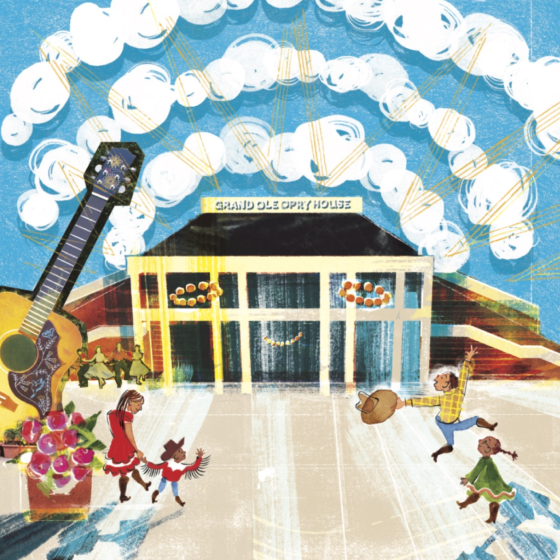
Absolutely. The Opry has always been visually rich – from stage lights to rhinestone suits to the red barn set, it was practically begging to be illustrated! Susanna Chapman did an incredible job and brought a wonderful balance of authenticity and imagination. She captured the physical space of the Opry and infused her illustrations with movement, color, and emotion.

In fact, she spent time with one of my daughters during an Opry show trying to understand which elements of the sights, sounds, and even smells stood out to her so that she could create illustrations that really make the reader feel like they were there. The words are important, but it is the visuals that really draw kids to a book and Susanna knocked it out of the park.

So many kids have made appearances on the Grand Ole Opry — Sierra Hull, Wyatt Ellis, Charlie Worsham, Vassar McCoury, and many others — do you think this book will birth a new generation of youngsters itching to step into the circle?

I really hope so. One of my goals with this book was to show kids that the circle isn’t just for legends, it’s for dreamers, too. The Opry encompasses the past and present of country music, but also its future. If even one child reads this book and thinks, “Maybe that could be me someday,” whether they imagine themselves on stage or in a seat, then it’s done its job.

Why do you think the Grand Ole Opry has such broad appeal — across identities, geography, genres, communities, and age groups?

I think the Opry continues to thrive because it offers authenticity, tradition, and genuine connection all while continuing to evolve. On any given night, you can see legends, today’s hitmakers, and up-and-coming artists sharing the same stage. That blend of past, present, and future gives the Opry a real uniqueness and, unlike a typical concert, provides a platform for guests to discover music they may have otherwise missed out on. And the emotional connection is what brings both artists and fans back night after night. When an artist steps into the circle for the first time, guests can feel it. They can sense the history, the honor, and the gratitude and that the artists are there because it matters to them. That kind of sincerity creates a powerful bond between the stage and the seats.


All images courtesy of Ryman Hospitality Properties, illustrations by Susanna Chapman.

Explore more content on the Grand Ole Opry here.

BGS Class of 2025: Books

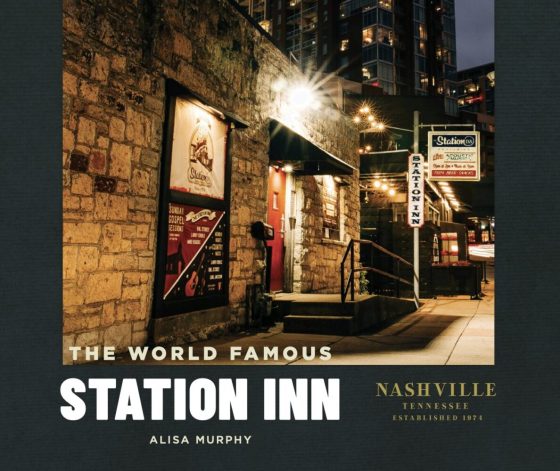
2025 was a standout year for roots music books. In a time of political upheaval and uncertainty, authors like Craig Shelburne & Brenda Colladay and Alisa Murphy brought us deep into the history of music institutions that have weathered generations of American ups and downs: the Grand Ole Opry and The Station Inn. Reading about these places is a reminder that culture is often a better litmus test than news cycles, when it comes to what a country stands for and where its soul can be found.

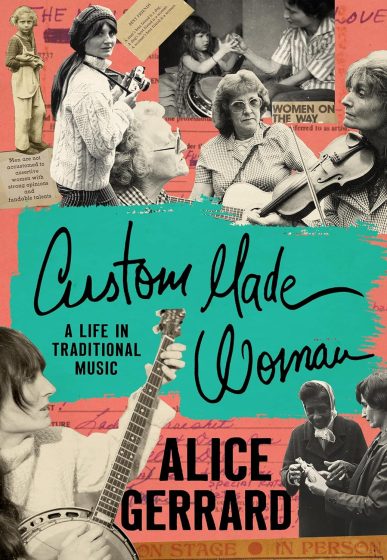
Biographies of Dolly Parton and Alice Gerrard (the latter written by Gerrard herself) highlight women who defied the odds to become iconic voices in country and old-time. Parton first debuted on the Opry at the age of 13 and her influence on American culture has spanned from highlighting women in the workplace with “9 to 5” to donating a million dollars for medical research to accelerate the creation of the Moderna COVID vaccine. Gerrard, while less of a household name, is considered one of the last of the old guard in traditional music; even if you haven’t heard of her, you’ve probably still been touched by her work. These books detail the unlikelihood of these women’s successes given the time and place of their work and both good reminders of changing gender norms that we now take for granted.

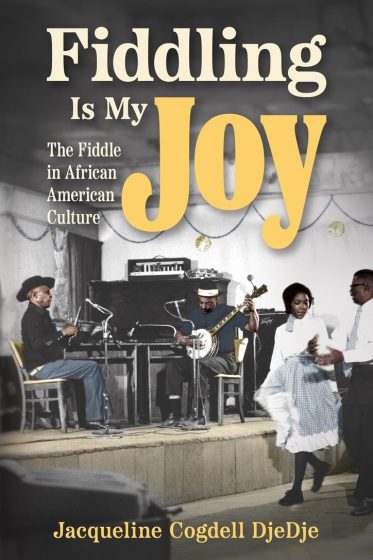
Two books on Black American fiddle and banjo music continue the quest to restore African music’s and African American musicians’ rightful place in the history of the American string band tradition. With additional archival and notation resources, these books offer not only scholarship, but an opportunity for dedicated pickers to add to their repertoire, too.

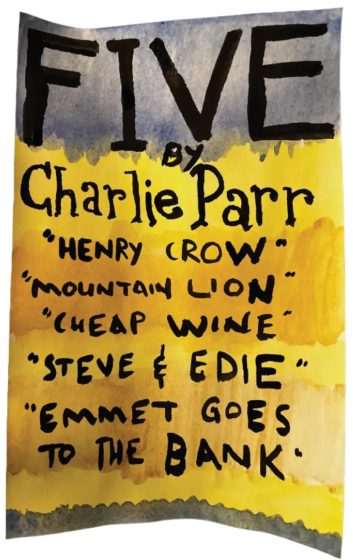
And finally, roots musicians Paul Burch and Charlie Parr channel their creative writing into novels Meridian Rising and Five, respectively, the former a fictionalized story of Jimmie Rodgers and the latter a wild meditation on the wanderings of a troubadour.

From coffee table aesthetics to novels and new tunes, 2025’s roots music books have you covered! See a list of our favorites and a collection of “honorable mentions” below.

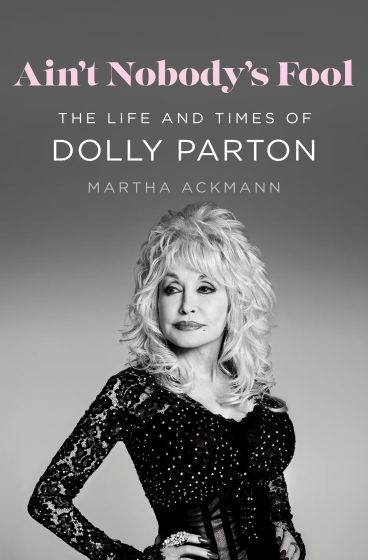
Ain’t Nobody’s Fool: The Life and Times of Dolly Parton by Martha Ackmann

Martha Ackmann is known for illuminating the stories of women who rise above societal expectations, so it’s only appropriate that she should tell the story of Dolly Parton’s ascent to success. With new interviews and documents, the book focuses on the price Parton paid for her early fame, penalized and criticized by those who saw it as a betrayal of her roots. Despite legal battles and struggles with her mental health, Parton persevered and went on to use her affluence to help her East Tennessee home, through the development of Dollywood, her charitable work, and the creation of The Imagination Library. Find it here.


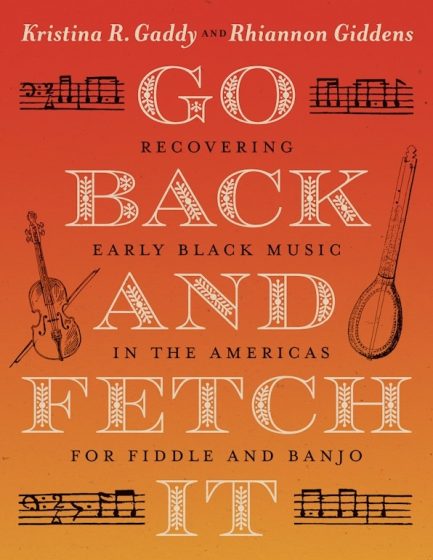
Go Back and Fetch It: Recovering Early Black Music in the Americas for Fiddle and Banjo by Kristina R Gaddy and Rhiannon Giddens

Appropriate for pickers and scholars alike, this collection of early Black Atlantic music is equal parts songbook and history lesson. Nineteen carefully transcribed tunes sourced from 1687 to the 1860s are presented in standard notation and banjo tablature, and accompanied by rich historical essays detailing their origins, cultural context, and evolution over time and place. This collection is another important step in the recovery of Black history of the American musical canon – and specifically the fiddle and banjo canon – from two lauded experts on the subject. Find it here.


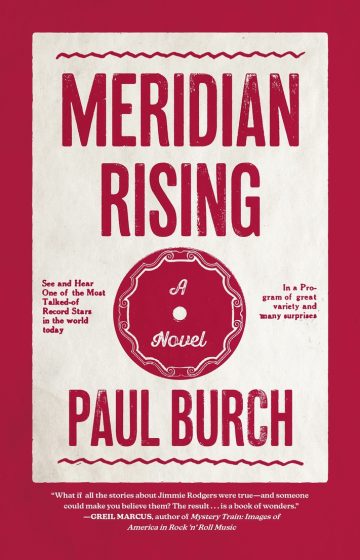
Meridian Rising by Paul Burch 

Meridian Rising, the debut novel from Paul Burch, fictionalizes the life of country star Jimmie Rodgers and was released this fall to rave reviews. As the Chattanooga Free Press says, “Burch must have done a great deal of research to deliver a story that feels so authentic, but research alone doesn’t make a good novel. The writing is what matters, and Burch skillfully renders a large cast of narrators throughout Meridian Rising, especially its main subject, whose witty, sometimes barbed voice is vivid and memorable.” Find it here.


The World Famous Station Inn by Alisa M Murphy 

The passing of JT Gray in 2021 marked the end of an era for The Station Inn. Although the venue continues its bluegrass legacy with new management, it has been long past time to commemorate this (as its name rightly points out) world-famous venue with a book of stories and photos. Author Alisa M Murphy spent two years immersing herself in the culture of the venue and conducting interviews to put together her coffee-table book, The World Famous Station Inn. Find it here.


Custom Made Woman: A Life in Traditional Music by Alice Gerrard

This new memoir from one of our national treasures, Alice Gerrard, features over 100 of her personal photographs along with stories from pivotal times and an exceptional life in traditional music. Gerrard’s career saw her crossing paths with Bob Dylan, Doc Watson, Elizabeth Cotten, and many more. Recent rereleases of Gerrard’s trailblazing collaboration albums with Hazel Dickens have been put out by Rounder Records and Smithsonian Folkways, and they can be listened to in an entirely new context thanks to this book. Find it here.


Fiddling is My Joy: The Fiddle In African American Culture by Jacqueline Cogdell DjeDje

UCLA Ethnomusicologist Jacqueline C. DjeDje investigates the fiddle in Black America, not only helping restore it to its rightful position in history, but also exploring why fiddle in African American culture disappeared from the mainstream story of the instrument in the first place. In addition to exploring geographic differences in African American fiddling traditions, DjeDje’s scholarship looks at fiddle traditions in West African and how their specific characteristics made their way to both Black and white American fiddlers. The book is accompanied by an online eScholarship Companion with primary source documents and audiovisual examples of music discussed in the text. Find it here.


Five by Charlie Parr

The second collection of short fiction from beloved Minnesota musician Charlie Parr is not for lovers of a tight plot and succinct characters. Parr’s five stories are, according to his own description, “more like sad anecdotes told to you at the end of an impossibly long dinner party by the drunken spouse of someone that you barely know while you’re easing your way to the door, having already put your coat on around the time that these stories began.”

But, if you’re a fan of Parr and his 18 (!!!) studio albums, this collection is a must. Find it here.


100 Years of Grand Ole Opry by Brenda Colladay & Craig Shelburne

Music journalist Craig Shelburne worked tirelessly with Opry historian Brenda Colladay – and dozens of artist, announcer, and Opry employee interviewees – to tell the story of the world’s longest-running live radio show over a century. The Grand Ole Opry is certainly the main character. This book is perfect for collectors and readers alike, since it’s full of illustrations and photographs. It’s separated into chapters by time periods, following the twists and turns of the Opry’s youth, adolescence, and adulthood. From Lester Flatt to the 2010 flood, the book is as deep as it is wide. An entertaining resource for country fans who like to get the full story. Find it here.


Other Reads From Our Inbox

  • Solomon Simon Dog Man Jack by Cindy Baucom, illustrated by Grace van’t Hof (Self-published)
  • Bluegrass Gospel: The Music Ministry of Jerry and Tammy Sullivan by Jack Edward Bernhardt (University Press of Mississippi)
  • Land of a Thousand Sessions: The Complete Muscle Shoals Story by Rob Bowman (Malaco Records Press)
  • Heart Life Music by Kenny Chesney with Holly Gleason (Harper Collins)
  • Southern Mountain Music: The Collected Writings of Wayne Erbsen (McFarland Books)
  • Howdy! Welcome to the Grand Ole Opry! by Emily Frans (Abrams Books)
  • Blood Harmony: The Everly Brothers Story by Barry Mazor (Da Capo Press)
  • The Hours Are Long, But the Pay Is Low: A Curious Life in Independent Music by Rob Miller (University of Illinois Press)
  • Star of the Show: My Life On Stage by Dolly Parton (Ten Speed Press)
  • Roots & Rhythm: A Life in Music by Charlie Peacock (Eardmans)
  • Poets and Dreamers: My Life in Americana Music by Tamara Saviano (Texas A&M University Press)
  • Bluegrass and Religion by Pete Ward (Bloomsbury)


Among Bluegrass Diehards, Red Camel Collective Stands Out

When you’re walking around the halls of IBMA’s business conference, World of Bluegrass, for good reasons and bad, everything ends up sounding the same. The Earls of Leicester sound just like Flatt & Scruggs. (Thank goodness.) Every single version of “Carolina in the Pines” sounds exactly like Special Consensus. (As they should.) There are pickers born in the 2000s who sound like carbon copies of Frank Wakefield or Don Reno or Wilma Lee Cooper.

But, in the well-intentioned and admirable adoration, emulation, and preservation a homogeneity results. It’s why IBMA jams sound different from SPBGMA jams; why Californian trad bluegrass sounds completely distinct from say, Virginian trad bluegrass these days. Where music happens, ideas cross-pollinate, and we all start sounding like each other, little bit by little bit. It’s a blessing and a curse.

That’s why it’s all the more remarkable when, out of that bluegrass milieu, a singular voice or perspective or sound can pierce through the sameness and rise above. Especially when that sound utilizes exactly the same tools and is built on a similar respect for emulation and preservation. At this year’s IBMA World of Bluegrass in Chattanooga, Red Camel Collective were one such band.

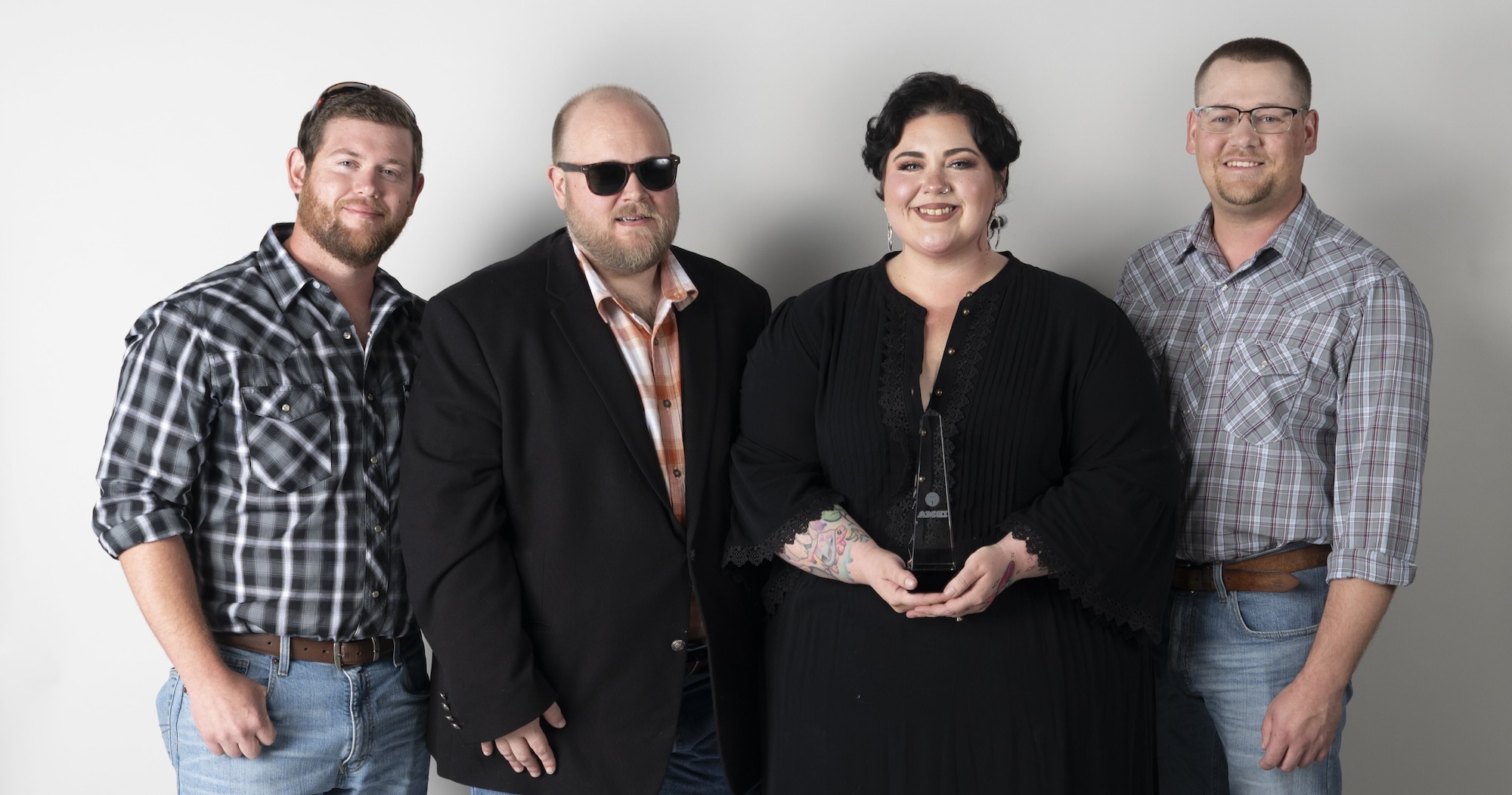
The group – made up of Heather Berry Mabe, Tony Mabe, Curt Love, and Johnathan Dillon – took home the IBMA Award for New Artist of the Year, their first such trophy. While it’s true they’ve only been a band for a few years (they came together first as Junior Sisk’s backing band and he has since encouraged them to take on work, make music, and record albums of their own), each of the Collective’s members are lifelong veterans of the bluegrass scene.

Perhaps that’s why they do sound like themselves and no one else. They know well by now the intricate little details that add up to a unique sonic brand. It’s intuition. They’re able to follow each other and each song wherever they may lead, landing in sometimes surprising or unexpected places. But still, the bones of this band and of their 2025 debut self-titled album are “just” bluegrass. Straight up and down. When you listen, though – or have the pleasure of chatting with any member of Red Camel Collective, like we did speaking to Heather Berry Mabe by phone – you’ll quickly realize this group has much more going on than the same ol’ same ol’.

Y’all sound like bluegrass, straight up and down, but you also sound like yourselves. Your sound has so much personality. You can tell that you’re holding up tradition, but also you’re trying to sound like your own band, your own group. How do you think that you’ve done that? How have you accomplished having a sound that feels within tradition, but also is something that’s all your own?

Heather Berry Mabe: First of all, thank you so much. That is a huge compliment, especially in today’s time. When I was growing up playing – I’ll soon be 38 years old – it was before YouTube and all of that. So I learned from my family members, I learned from my grandpa and my great-grandpa, and then also from the music that I was listening to at the time. Which was everything from ‘90s country to traditional bluegrass. To me, there was no box. I just loved music and it was just about getting as much of it as I could.

I think what influenced me and my husband, as far as having our own sound, I don’t think it was something that we set out to do [intentionally]. Like, “Hey, we’ve got to find a way to sound like ourselves.” I just think that happened organically. And I’m very thankful, because he’s such a recognizable picker, Tony Mabe. My husband is such a recognizable banjo player. You can hear the influences, but he totally sounds like himself. And his singing is the same way.

And, Johnathan, our mandolin player, he has so many influences, too, but he sounds like Johnathan. Nobody else sounds quite like him. I love that. I think on his part, it’s not focusing on trying to sound like anybody, but playing what you love and inspires you.

It’s not really uncommon for backing bands of bluegrass stars to have their own brand, their own shows, their own followings. I’m thinking about Quicksilver becoming their own band more than once or the New South becoming their own band once J.D. Crowe retired. Or how The Infamous Stringdusters got their start.

So could you tell us a little bit about how your relationship with Junior started as a band? And he just announced his eventual retirement at the end of 2027, as well. I’m wondering how y’all are thinking about what the next couple of years mean for you as a group. Is this your chance to springboard into having a full calendar of solo shows by 2028? Is that too far out to be thinking about?

Playing with Junior, I’ll answer that part first. Johnathan Dillon has been there with Junior since he was 18 years old and he is now 31 – or he’ll be 31 in January. So he’s been there for years and years. I’m not exactly sure how those two got hooked up, I can’t exactly remember the story. But for me and Tony, Junior called me in 2018 to sing a duet with him on an album that he was working on. The song is called “Backwards And Forwards.” I was so tickled when he called out of the blue, especially because I knew this is the first song that Junior Sisk & Rambler’s Choice had ever done with a woman. There’s never been a woman on anything [of theirs before]. So I felt really honored to get to be the first one.

A few months later, he called and said that he needed some help. He asked if Tony and I both would be interested in coming to work with him. Again, I was really tickled to get to be the first woman to play with Junior. We were just so thankful to have the work. It was at a time when my husband Tony was losing his vision. And the rest is history!

It was actually Junior’s idea [for us to be our own band], because there are songs that I’ve written and songs that we love, like I was saying, that really sing to us and speak to us and inspire us. We would sit around and jam on those and they don’t exactly fit Junior’s style. It’s two different styles there. But Junior suggested to us that we cut an album so that we would have something to sell at these venues, something to play on the radio, and all of that. He said, “I think it would be really good for you guys to do that.” So we did. Man, you can imagine our amazement at how much this has blown up! When it started as a side venture.

What are you feeling as you stare down a couple more seasons with Junior, but then his eventual retirement? What’s in the cards for Red Camel Collective? Are you looking ahead already?

We’re doing our best. It’s super hard to plan very far ahead. Lord, sometimes it’s hard for me to plan next week. [Laughs] I’ll be honest with you, most of the time I feel like I’m riding by the seat of my pants, as they say. But we are looking to the future and trying to secure bookings for ourselves so that Red Camel can continue on when Junior retires. And Junior, when he says “retire,” I’m sure that he’ll still keep making records and things like that. He’s using the word “retire” here, but he’s not gonna go away completely, because music is in his blood! It’s just like all of us, we’ll never [stop making music.]

We have plans to go as far with Red Camel as we possibly can. Man, if Johnathan Dillon and Curt Love will have me and Tony – I’m sure he feels the same way – if they’ll have us for the rest of forever, we’ll stay with them for the rest of forever! [Laughs] We love making music together. And we are working on a new album right now. As much as I loved the first one, this next one, it’s just beautiful to see the growth. It’s got several songs that I wrote. Of course, we’ve released one single, “In the Mexican Sun,” and it’s getting played on SiriusXM and a lot of bluegrass DJs are playing that one for us. We’ve got a music video that goes along with that, too.

Yes, we premiered the video right here on BGS!

That’s right!

I’m glad you bring up the single, I feel like it’s the perfect sunny, summer vacation song for moving through fall into winter. It reminds me of Jimmy Webb and the way he writes songs and it also reminded me of Dale Ann Bradley’s “Somewhere South of Crazy.” Can you tell us about the story of the single, because I know from the premiere we did that the songwriter has quite the bluegrass pedigree too…

Yeah, absolutely. We reached out to our buddy Malcolm Pulley, who is a banjo player extraordinaire and incredible bluegrass songwriter. He wrote “In the Gravel Yard” for Blue Highway. He wrote “How Many Roads,” several folks have recorded – Tina Adair, Michelle Nixon, and the list goes on. But he’s just such a good writer, so we reached out to him to ask if he had any songs. [We were] expecting traditional bluegrass, something along that line. I had no idea that he had ever written anything like this.

I believe this is right, he was playing with a jazz quintet at the time – I forget the name of the quintet. They had a [woman] lead singer who was so good. Anyway, he sent me this song that was written I guess in the early to mid ‘90s. The way they recorded it together, it sounded like a Hispanic song, I don’t know if you call it a rumba beat or whatever. It was most certainly not bluegrass! But I loved it, man. I loved the melody and the way that lady sang. It was so good.

I thought, “Man, this is just begging for banjo.” I could hear, instead of the four-quarter time that they were doing, like to halftime it and put a bluegrass spin on it. I thought, “This will really work.” I worked on a little demo of it and sent it over to Johnathan and he was like, “Wow, you’re right. I think that is really cool.”

Let’s talk about the IBMA Award you just won. It’s funny to me – and I think it’s funny to everybody – how every year in the New Artist of the Year category at IBMA barely any of the artists are new!

[Laughs] It is like that, ain’t it?

You just made the point, you’ve only been a band for two years. Your debut album just came out in February of this year. So you guys are new in so many ways, but you’re all also lifelong musicians, veterans. Tell me about what it meant to y’all to step on stage and receive that trophy, because these are peer-voted awards. And yeah, maybe you aren’t new, maybe you’ve been doing this for decades, but this is also a “moment” y’all are having as a band.

It’s so hard, because there are so many emotions. Tony and I, we’ve been married for 20 years and we’ve both, even before that, we’ve just been doing this our whole lives. This is all we’ve ever wanted to do is make music. I know and he knows that’s why the good Lord put us here. We know that it’s our purpose in life and it’s our story. As I look around and compare, I see these young people making such great strides and hitting so many marks so early in their careers. Tony and I, while we had some success, throughout the years for some reason we could just never get that momentum going.

When you’re a person who battles anxiety and crippling self-doubt, those types of things can really eat at you. [They] make you question, “Am I capable of this?” I will tell you the truth. I just said earlier, I’m 38 years old. I have never in my life grown in confidence the way that I have in the last two years. Putting together this album, writing these songs, working through the production process, putting ourselves out there as something brand new.

[Getting the award] felt like a confirmation. It felt like, “Yes. This is where you’re supposed to be.” At the end of the day, an award is a glass thing. It’s just a thing. Awards are not what matters, because there are so many incredible artists and musicians who will never be recognized in that way. Does that take away from their value? Absolutely not! On the other hand, it just felt surreal and it felt like a big kiss on the forehead from the good Lord above to me.

As a band, we were just all blown away. We were not expecting it. I know everybody says that, but this is absolutely the truth. [Laughs] In a category with Jason Carter, Bronwyn Keith-Hynes, AJ Lee [& Blue Summit], and Wyatt Ellis and all. Man, we absolutely were completely surprised and blown away – and just extremely grateful, because there are folks who work so hard for years and never get that sort of acknowledgement.

I wanna talk about the new album as well, which came out in February. It’s your self-titled debut. Like what we’ve already talked about, it combines traditionalism as well as contemporary sounds. It’s forward-looking.

But what I noticed first is how live it sounds, warm and inviting – like you’re in the room with y’all. It’s really crisp and it’s really clean, but it also sounds like real music. It doesn’t sound like it came out of a can of bluegrass cheese whiz.

[Laughs] I love it.

Can you tell me a little bit about how you guys accomplished that sound?

For Red Camel Collective, this was our first experience recording together. It was so different from recording with Junior, because the songs and the arrangements are different. I don’t know that we went in with any expectations except to do the very best job that we could. I think those were basically our only expectations.

As far as the sound, we record live. We track live and then we go back and fix and edit. I wish I could answer your question better! … Music is all about feel. Aaron Ramsey said one time, “It’s all about feel, it’s not a science project.” I think that you can strive so hard for perfection that you suck all the soul and all of the life right out of it. There has to be a balance between what we perceive as perfection and the feel and the groove of the music. Because all of the best albums, the ones that I love the most, were all created before autotune! And there are notes in there that would probably end up being tuned today. But they sure didn’t bother me. ‘Cause it’s all about the feel and the vibe.

I’m thankful to work with musicians who recognize that. While they want it to be right, more than anything they want it to have a good groove. We don’t want anything to interrupt that groove, ’cause that’s what makes people wanna get up and dance.

Speaking of sonics, I love how your voice sounds on the record, too. Could you talk a little bit about your vocal process and maybe your inspirations – or who you looked up to as you were developing your own voice as an instrument? I also can’t help but notice you have two vocal powerhouses guesting on the album, Suzanne Cox and Sharon White.

They’re heroes of mine!

Who are the inspirations and heroes that you feel have been infused into your own voice? Or maybe you’ve just done it all yourself?

Lord, no! Uh-uh, absolutely not. [Laughs] The first one that I have to list is Dolly Parton, because she was my earliest influence when I was just a little girl. The first song that I ever sang anywhere was in my grandpa’s church. I sang “Coat of Many Colors” and she was just my hero in every sense of the word, vocally, aesthetically, that she was a songwriter, an actress. I just adored her. I saw her in all these cute little movies like that Christmas movie she made and I just adored her.

Alison Krauss would’ve probably been the next one who came into my purview. Then that album that Alison did with the Cox Family. I was just a kid when that came out and I had never heard anything more beautiful in my life than their voices. They were so angelic. I would put that album on to go to sleep when I was just a little kid. I loved it so much. Suzanne Cox is probably my favorite female vocalist ever. Ever. I love Alison to no end, but there is just something that draws me to [Suzanne]. I call Suzanne Cox the queen of phrasing. Because no matter what it is that she’s singing, she will phrase it exactly the way it should be phrased. She’s a genius and she doesn’t even realize it, because it is so natural to her and it’s not forced. It’s just effortless. It’s just a gift. She just has one of those one-in-a-million voices and I’ll always sing her praises.

Then you mentioned Sharon White. It was so cool to have her come and Suzanne Cox come in and sing on that song, “Last Time I Saw Him.” But the Whites, man, oh my gosh. They were like the it group for harmony backup in the ‘80s and ‘90s country. That’s who everybody sought out, because their voices – it doesn’t matter who they’re singing with – they make whoever they’re singing with sound like a million bucks. And their singing lead, too. Their tone and their delivery is so pure.

That’s what draws me to vocalists. It’s purity. Sometimes with singing you can just hear it’s just put on. That just doesn’t sing to me. It’s a hard thing to describe really, isn’t it? It’s just something in the purity of people’s voices that really draws me in.


Photo Credit: Ed Rode

How-dee! And Happy 100 to the Grand Ole Opry

In 1925, world leaders were signing the final treaties coming out of WWI; Congress authorized work on Mt. Rushmore as a national memorial; the Scopes Trial was held in Tennessee; and the first patent on radio transmission was only 28 years old.

And, in 1925, WSM first broadcast its barn dance – soon to become the Grand Ole Opry.

One hundred years later, the Grand Ole Opry is the world’s longest-running radio program. After a century that saw changes unparalleled in world history, audiences are still drawn to the Opry. Every week thousands make the pilgrimage to the Grand Ole Opry House in Nashville while others tune in around the world. The show continues to inspire new generations of performers to aspire to step “into the circle” on the Opry House stage.

President Jimmy Carter on the Grand Ole Opry stage with Kelly Foxton, Hank Snow, Mel Tillis, June Carter Cash, Skeeter Davis, Bill Monroe, Jeannie C. Riley, and others on October 9, 1980. Photo courtesy of Ryman Hospitality Properties.

In The Beginning Was Insurance

In the 1920s, Edwin Craig was watching radio stations emerge across the nation – and seeing the money-making potential for sponsors and owners. He convinced Cornelius Craig, his father and founder of the National Life and Accident Insurance Company, that a radio station could sell a lot of insurance.

Soon, the fifth floor of the company’s downtown Nashville building held a radio studio. The call letters WSM stood for “We Shield Millions,” the company’s motto. A program that would become the lifeblood of country music started as a way to promote life insurance.

The hiring of George D. Hay away from Chicago’s WLS was the beginning of the WSM Barn Dance. The 30-year-old who called himself The Solemn Old Judge and started every show with a steamboat whistle would set the tone for much of the Opry’s 100 years – including its name.

Which all started with a clash of cultures.

Some upper-crust Nashville residents complained the only radio they could hear on weekends was string band programming from the dominant WSM station. In response, WSM began carrying the syndicated “Music Appreciation Hour.”

The Barn Dance slot followed the classical program, and Hay, not one to pass up a good line, said, “For the past hour, we have been listening to music largely from Grand Opera, but from now on, we will present ‘the Grand Ole Opry.”

George D. Hay is pictured at microphone with a whistle and Uncle Jimmy Thompson is seated in this 1925 photograph from when the Grand Ole Opry was still the WSM Barn Dance. Photo courtesy of Ryman Hospitality Properties.

For years, the Shield Men – door-to-door National Life and Accident insurance salesmen carrying the company’s shield logo – introduced themselves as representing the Grand Ole Opry. They would even listen outside windows to see who was tuned in to the Opry – and who would be a likely customer.

The earliest WSM shows relied on local talent, running heavily toward fiddlers and string bands. But Hay would invite whoever he thought the audience would like.

DeFord Bailey, a Black musician grounded in both the blues and old-time string band music, became a regular, wowing audiences with his harmonica. Kitty Cora Cline, the first female soloist, performed on hammered dulcimer, and Fred Shriver played the accordion. Uncle Dave Macon on his banjo with Sid Harkreader on fiddle and guitar set the stage for the comedy that would remain central to the Opry’s success, with songs like, “Keep My Skillet Good and Greasy.”

A Beacon

As the recording industry grew, the variety of musicians available to the Opry grew, as well. The show began featuring brother duets, cowboy music, Western swing and solo crooners. Bill Monroe & the Blue Grass Boys were featured stars for decades.

Opry singers expressed the joys of new romance, the happiness of Sunday dinner on the lawn, the sorrow of lost love, and the loneliness of leaving home. Audiences across America listened – and related. The Opry became a focus of family life.

Dolly Parton, like many rural listeners, grew up without electricity. Her family faithfully listened to the Opry on a battery-powered radio. Waylon Jennings’ dad would hook their radio to the car battery. Jeannie Seely’s family would pile in the car and drive up a hill until they could get the signal. Opry history is filled with stories of musicians who listened as children – and dreamed of growing up to perform, like their idols, on the iconic stage.

Opry member Dierks Bentley, who gracefully moves between country and bluegrass, told BGS, “Being invited to join at all is the biggest honor – especially for me, personally. I grew up listening to all the Opry greats on the radio with my dad, so becoming a member is like having the ultimate backstage pass to see the best musicians in the world. And to be invited by Marty Stuart … hands down, it was one of the coolest nights of my life.”

Dan Rogers, the Opry’s senior vice president and executive producer, said the Opry has always been a place to celebrate the good times and be uplifted during the tough times. “Think about,” he said, “the folks who tuned in on Saturday nights during World War II. That was their only source of entertainment throughout the week.” Minnie Pearl, with her signature “How-dee,” and Roy Acuff gave them respite from war news.

On the first show after the 9-11 attacks in 2001, Rogers said, “Our background singers sang an a cappella version of ‘God Bless America.’ And one by one, the people in the audience stood and sang along. And I remember thinking, I bet everybody tuned in across the country is singing along to ‘God Bless America.’”

The Opry’s response to the COVID-19 crisis created desperately needed connection during a frightening time of isolation.

Just a week after deciding that live audience shows weren’t safe, Opry staff arranged a pared-down streaming production with no audience and a skeleton crew. Longtime cast members Bill Anderson, Jeannie Seely and Connie Smith held down the first night alongside Mandy Barnett, Michael Cleveland & Flamekeeper, and Sam Williams.

For the second weekend of restrictions, veterans Vince Gill, Marty Stuart, and Brad Paisley sat on stools spread out across the stage and pulled off what Rogers called “a beautiful, beautiful show.”

Watching from his office, Rogers started reading comments from grateful listeners. For months, people marked their calendars to tune in. They wrote, “I’m in Europe. I set my alarm. It’s 2 a.m. here, but I wanted to experience this with a community.”

Marty Stuart, Vince Gill, and Brad Paisley perform for an empty Grand Ole Opry House during the COVID-19 lockdowns in 2020. Photo by Chris Hollo, courtesy of Ryman Hospitality Properties.

Kathy Mattea, the newest Opry inductee, feels those connections whenever she performs there.

People may have sung along to her hit “18 Wheels and a Dozen Roses” in their car or in the shower, but at the Opry, she says to BGS, “Here’s your chance to sit with an audience and sing this song that everybody knows. Nobody knows who the person next to them voted for and it doesn’t matter at that moment.”

“The Ellis Island of Country Music”

In the early days of radio, what was called hillbilly music was as limitless as the range of a 50,000 watt radio station. And the Opry remains dedicated to maintaining those wide open spaces.

Garth Brooks and Trisha Yearwood, in their forward to the book 100 Years of the Grand Ole Opry, refer to the show as the “Ellis Island of Country Music – a place where all are welcome.”

Contemporary country often has been accused of being homogenous and limited. But despite the factors that have controlled commercial country, the Opry maintains its open-arms attitude. Rogers said, “The two core tenets of an Opry show are celebrating the past, present, and future of country music, and also showcasing multiple genres under the country music umbrella.”

In any show, he said, “You might have something that’s on the top 20 of the country charts today. And you’ll have country classics. You might have a contemporary Christian song, Americana string music, or even something from outside the genre by somebody who just happens to be a country music fan or was influenced by country music.”

In 1974, the R&B-oriented Pointer Sisters included an original country song, “Fairytale,” on their second album. The cross-over hit earned them an invitation to the Opry stage, where they became the first Black group to perform.

Ringo Starr appeared for the first time in 2025 and James Taylor’s debut on November 11 will be remembered as a big part of the 100th anniversary celebration.

And, Rogers said, “Because we can do it, it’s fun to take a chance on a new artist.”

Before his first Opry appearance in July 2022, Zach Top had no hits to his name. But Rogers remembered the programming team saying, “You don’t see an artist like that every day. It sure feels to us like our audience would absolutely eat that guy up!” Today, Top’s music is everywhere.

Bluegrass has been a staple since before it had a name and it has never lost its place on the stage. Bentley and Del McCoury played “Roll on Buddy, Roll On” when the Grand Ole Opry House first reopened after the 2010 flood closed its doors for months.

Charlie Mattos is a 10-year veteran Opry announcer and longtime co-host and producer of WSM’s morning show. He said that on any given night, a portion of the Opry House audience “may truly have never seen a bluegrass band play.”

“And when Del McCoury and the boys finish with an incredible instrumental,” Mattos continued, “or Sister Sadie blisters the stage … the enthusiasm that comes out of that crowd, the immediate standing ovation for the insane musicianship that they have just witnessed …” Mattos said, “it blows their minds.”

Mattea said, “Bluegrass is front porch jazz – the virtuoso playing and the vocals and the harmonies and the trading off of licks. That’s how I fell in love with bluegrass.” And the Opry exposes millions to that brilliance.

A Good-Natured Riot

The Opry show is a complex set of acts and sets requiring precision planning, flexibility, and good nature on the part of the announcers – and commitment on the part of the performers. Rehearsals are brief or non-existent. Timing is everything.

Borrowing a phrase from George D. Hay, the Opry is still sometimes called a “good-natured riot.”

Mattos said, “When you come to see the show live, you see it all. The set changes. The artists leaving as the announcer sends them off. You can see the stage crew out there and usually in 90 seconds they can completely swap things around.”

But while reading a commercial during set changes, Mattos may notice the stage manager giving the “stretch” signal. He might have to keep talking for as long as four minutes – a millennium in radio time.

Sometimes the commercials themselves become the entertainment.

The first time Glad Wags sponsored an Opry segment, Chuck Morgan was announcing. While he stood off-stage reading the dog food commercial, house bassist Bill Linneman came up behind him and started barking. “By my last year there, there were like 20 people behind me going at it,” Morgan said. (The consensus is that Connie Smith does a great chihuahua imitation.)

A Family

Jeannie Seely – who racked up nearly 5,400 performances on the Grand Ole Opry before her passing in August 2025 – remembered it was more than the music that fueled her desire to join the Opry: “That’s hearing these people, like Mr. Acuff and Minnie [Pearl] and Jimmy Dickens and all of them, coming together every week,” she says in 100 Years of the Grand Ole Opry. “They always sounded like they were so glad to be together. They picked on each other and joked, and I thought, that’s just like a family.”

And they were family. When the plane Jim Reeves was aboard crashed in a wooded Nashville suburb, Marty Robbins and Ernest Tubb joined the search party, as did the elegant Nashville socialite Sarah Ophelia Colley Cannon – known as Minnie Pearl.

Opry star Jean Shepard was expecting her second child with husband Harold “Hawkshaw” Hawkins when Hawkins died in the plane crash that also killed Patsy Cline and Cowboy Copas. After months feeling adrift, as Shepard was quoted in the 100 Years book, “I looked down my driveway one day and here come two big black limousines full of the so-called ‘higher-ups’ from the Grand Ole Opry. They said, ‘We want you to come back to the Grand Ole Opry.’ And it really meant a lot to me.”

The family feeling is no accident. In earlier years, Opry members had to perform a specified number of Saturday nights a year. While there’s no set number today, Rogers said they look for a sense of commitment in new members. “It truly is about that relationship,” he said.

Rogers quoted Mattea, upon her invitation to become a member, saying, “These people treat you like family, no matter what.”

One of Mattea’s favorite Opry memories involves a bass player who toured with her. “He was sitting on a stool, playing and singing some old Western swing chestnut, and suddenly Riders in the Sky leaned into the dressing room in full regalia and started singing harmony.

“He was gobsmacked. He felt it was the highlight of his life,” she said.

Bluegrass performer Kody Norris’ music is influenced heavily by first- and second-generation bluegrass. But the band’s preference for flashy suits dates back to a family-friendly welcome Norris received 25 years ago.

His parents took nine-year-old Kody backstage at the Opry, “and I met Bill Anderson. And he had on a red rhinestone suit. That’s the first one I ever saw up close, where I could touch it.”

Later that day, upon meeting his equally rhinestone-clad hero, Porter Wagoner, young Kody got so excited he spit out his chewing gum. Wagoner graciously grabbed two Opry-logoed napkins, one of which the little boy used for his gum. The other one the grown Norris still keeps in perfect condition.

The Circle is Unbroken

In 1974, the Opry left its revered home of decades, the Ryman Auditorium, to move to the deliciously air-conditioned 4,400-seat Grand Ole Opry House.

To honor its longtime home, the Opry crew cut a circle out of the Ryman stage and inset it in the new Opry House stage. The circle symbolizes the Opry’s continuity, respect for the past, and optimism for the future.

Mattea experienced that sense of a completed circle on the day she became an Opry member.

“Suzy [Bogguss] was there. We’ve toured together and sung on each other’s records. She’s my closest artist friend, and she was the only one at the ceremony who was not a member. And I thought how generous it was of her to be there.

“So, while I was overflowing with celebration, to get to invite my friend to the party publicly in the name of the Opry was the sweetest gift. It was a moment I’ll never forget, and I’m going to be there for her induction, too.” Bogguss will officially be inducted as an Opry member in early 2026.

Braid Paisley and Little Jimmy Dickens return the Circle to the Opry stage after the 2010 flood. Photo courtesy of Ryman Hospitality Properties.

Join The Celebration

There’s nothing low-key about the Grand Ole Opry – so in the classic Opry spirit, fans have had plenty of opportunity to celebrate the centennial all year long.

Earlier this year, NBC broadcast a three-hour anniversary special, with dozens of stars ranging from Reba McEntire to Jelly Roll to The War and Treaty. The Opry also took the show to London’s Royal Albert Hall for the very first time. You can stream clips of these and other Opry events on YouTube and social media.

With the Virgin Music Group, the Opry has produced the album Opry 100, Country’s Greatest Songs (released November 7). Among the unforgettable recordings are Vince Gill singing his heart-rending “Go Rest High on That Mountain,” Dolly Parton singing “I Will Always Love You,” and Ashley McBryde covering the classic “Your Cheatin’ Heart.” You can order the album from the Opry site.

Craig Shelburne, Brenda Colladay, and Opry members and employees collaborated on 100 Years of the Grand Ole Opry, a book filled with anecdotes and photos that vividly illustrate the Opry’s remarkable history. And to teach your children well, there’s also a new childrens’ picture book written by Emily Frans and illustrated by Susanna Chapman. Find them in your local bookstore.

And, on November 28, 2025, the official 100th anniversary of the Grand Ole Opry we all hold dear, the Opry is celebrating with two huge birthday party shows featuring country stars and Opry members like Vince Gill, Ricky Skaggs, Trace Adkins, Dailey & Vincent, Bill Anderson, Jamey Johnson, Marty Stuart, and many, many more. Tickets are available here.

Of course, the celebrations will continue in 2026.

“The Opry is the core and soul of country music,” Bentley said. “It’s a place where the past, present and future of our genre all come together. There isn’t anywhere else like it.”


Continue exploring our Artist of the Month coverage of Opry 100 here.

All photos courtesy of Ryman Hospitality Properties, credits and attributions as marked. Lead image: Bill Monroe & the Blue Grass Boys and the Opry Square Dancers take the Opry stage at the Ryman Auditorium in the 1960s.

Artist of the Month: Opry 100

This month, BGS is celebrating 100 years of the Grand Ole Opry! It would be hard to overstate the influence of the Opry on American roots music – hell, on music in general – over the past century.

From Earl Scruggs joining Bill Monroe to create the sound of bluegrass; to DeFord Bailey becoming the first Black Opry star and the first Black musician to break into the commercial music scene in Nashville; to the legendary meeting of Johnny Cash and June Carter; the Opry has been a catalyst for so many iconic moments. Below, we kick off our “Artist of the Month” celebration with our Opry 100 Essentials Playlist, which includes some of our favorite live recordings from the Opry, songs famously debuted on that legendary stage, and some of our favorite roots songs written about the Opry and its lore, too.

Did you know that Dolly Parton made her first Grand Ole Opry appearance in 1959 at the age of 13 and received three encores? To get a sense of how young Dolly might have sounded on that stage, we’ve included one of her very first singles, “Girl Left Alone,” (the B-side of the now well-known “Puppy Love”), recorded when she was just 11 years old and released the same year as her Opry debut.

Elvis famously made his Opry debut in 1954 at the age of 19, singing “Blue Moon of Kentucky” in a style that was so poorly received a manager told him to “go back to driving a truck,” or something of that nature. You can hear his rockabilly version on our playlist.

In 1969, Linda Martell was the first solo Black woman to perform on the Opry, singing “Color Him Father” for her debut. Although she faced rampant racism throughout her career, her first performance on the Opry was met with two standing ovations and she went on to perform there 12 times over the years.

The Opry has also been fodder for songwriting, inspiring many tracks over the years. Early Opry star David “Stringbean” Akeman met Bill Monroe while playing semi-professional baseball and went on to play clawhammer-style banjo in his band from 1943 to 1945. After parting ways with Monroe’s band, Stringbean became an Opry star in his own right and penned the song “Opry Time in Tennessee.”

Stringbean and his wife were tragically murdered in 1973 by thieves who had heard of him storing cash in his home. In 2009, Sam Bush released his song, “The Ballad of Stringbean and Estelle,” co-written with Guy Clark and Verlon Thompson. “The thieves laid in wait for hours/ But things didn’t go their way/ But he wouldn’t let go of his Opry pay,” sings Bush on his album, Circles Around Me.


@cmt #SabrinaCarpenter makes her #grandoleopry debut 💋✨🎙️ #opry100 #slimpickins #mansbesfriend ♬ original sound – CMT

Shortly before the Opry was moved from downtown Nashville’s Ryman Auditorium to the newly built Opry House in 1974, John Hartford released “Tear Down the Grand Ole Opry,” a scathing commentary on the commercialization of country music. “Right across from the wax museum/ They used to line up around the block/ From east Tennessee and back down home again … Broad Street will never be the same,” Hartford sings nostalgically on his legendary Aereo-Plain album.

While the Opry is known as a country music gold standard, over its 100 years as a live-broadcast radio show it has held clout across the genres and in popular culture – not just in country. This year, as part of the celebration of its 100th anniversary, the Opry has been featuring 100 Opry debuts and first-time performances. These special appearances have showcased the broad impact of the Opry, hosting the likes of pop star Sabrina Carpenter who said, “My mom raised me on the artists who have stood up here.”

Whether in country, bluegrass, Americana, or beyond, the Grand Ole Opry continues to be a musical powerhouse, 100 years after its barn dance birth. While we look ahead to the next century of Opry magic, we’re beyond excited to join the Grand Ole Opry family in celebrating Opry 100 for the entire month of November. Enjoy our Opry 100 Essentials Playlist below and relive the Opry 100: A Live Celebration television special on NBC from earlier this year here, too. You can read our primary feature on Opry 100 right here. Plus, stay tuned all month as we have brand new and archive articles, interviews, and features we’ll be sharing here and on socials all spotlighting the incredibly legacy and community of our beloved Grand Ole Opry as we countdown to November 28, 2025 – the Opry’s official 100th birthday!


Lead Image: Opening of the Grand Ole Opry House in 1974, courtesy of Ryman Hospitality Properties.