LISTEN: Zachary Lucky, ‘Make It On Time’

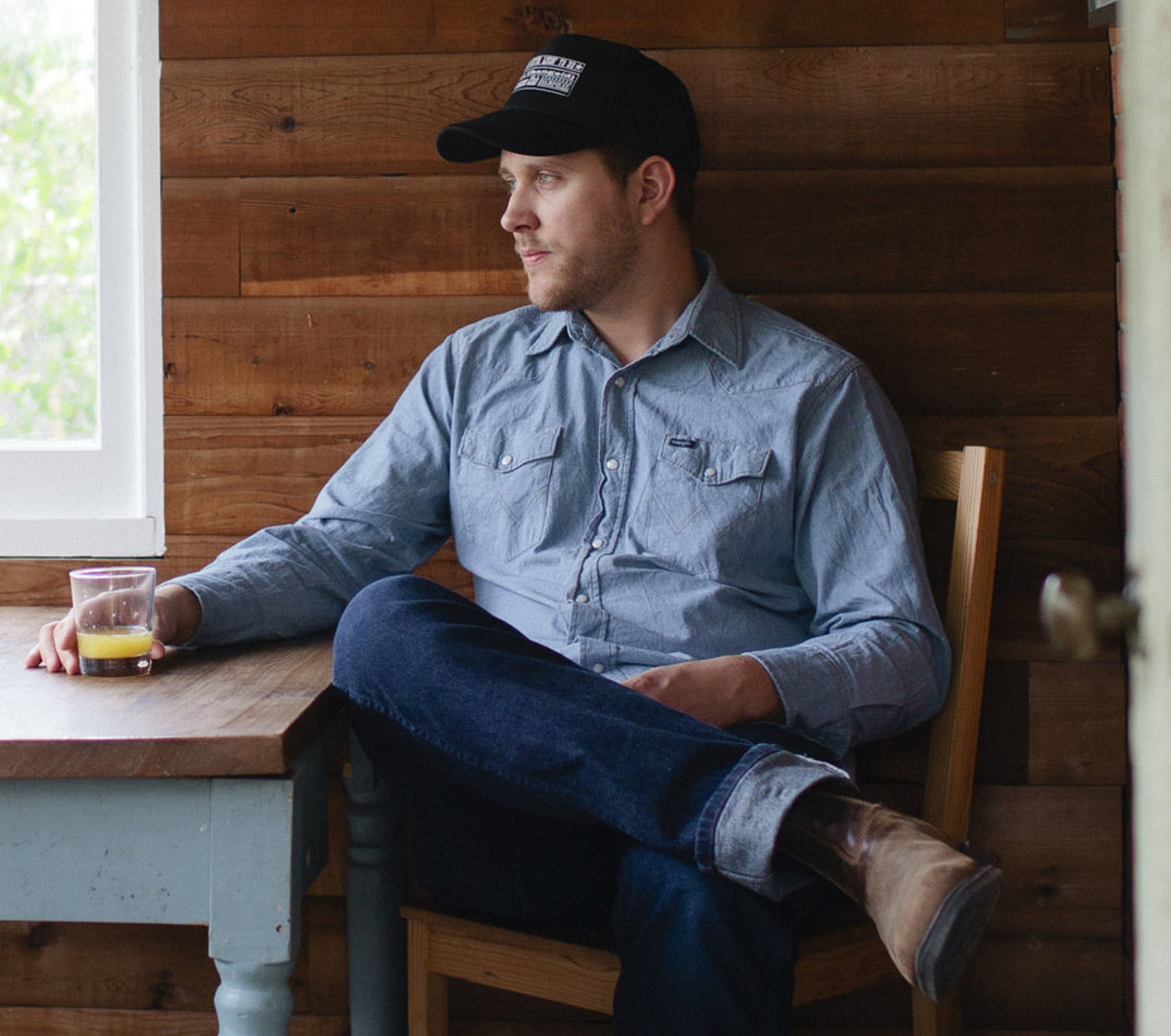
Artist: Zachary Lucky
Hometown: Saskatoon, Saskatchewan
Song: "Make It On Time"
Album: Everywhere a Man Can Be
Release Date: October 7
Label: Wroxton Recordings / Fontana North Distribution

In Their Words: "We went into making this album without any mindset of how it should be, and I guess we made a country record without really trying to. We just wanted to get some people involved who really knew how to play their instruments and see what we could do together. I’ve never made a record in this way before, and I firmly believe it’s the purest thing I’ve ever done.” — Zachary Lucky


Photo credit: Jacklyn Barber

In Honor of a ‘Savagely Great’ Singer: A Conversation with The Time Jumpers’ Vince Gill & Kenny Sears

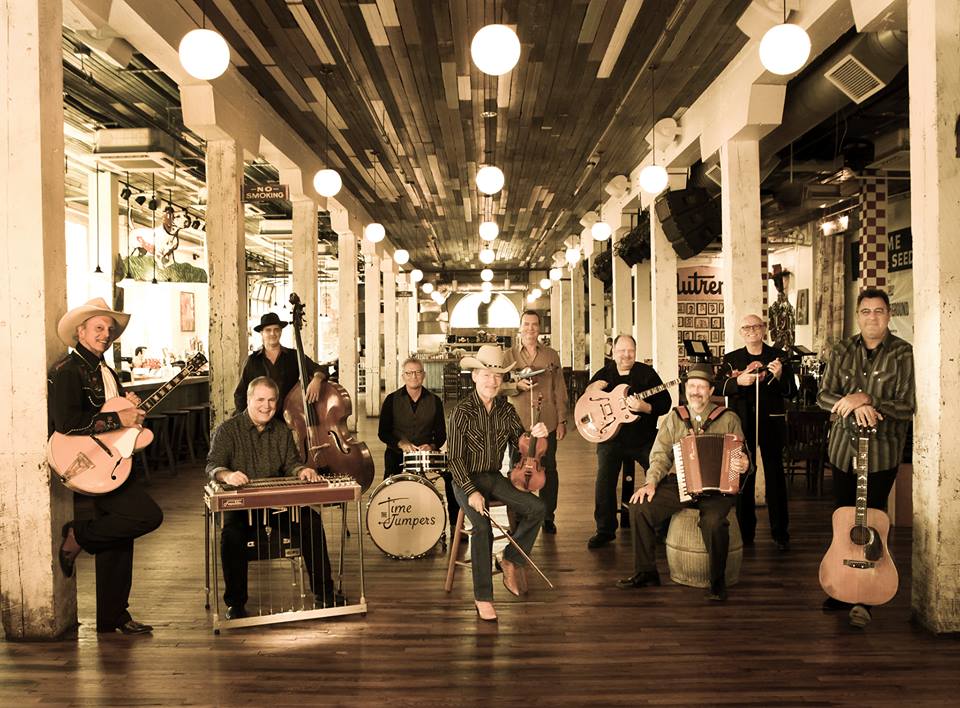
Any fan of roots, country, or Americana music has surely heard the Time Jumpers before — rather, they’ve likely heard at least some portion of the Time Jumpers before. A top-notch collection of session musicians, songwriters, and performers, these star players have made Monday nights in Nashville — first at Station Inn, now at 3rd & Lindsley — an international destination for fans of traditional country and Western swing music. The regular lineup features industry legends like Vince Gill, “Ranger Doug” Green, Jeff Taylor, Billy Thomas, Larry Franklin, Brad Albin, Joe Spivey, Kenny Sears, Paul Franklin, and Andy Reiss, whose names are sprinkled across the liner notes of some of the biggest records in music history — within country’s confines and beyond.

As the Time Jumpers, the group’s standing live gig has led to tours, studio sessions (keep an ear out for the band on Kacey Musgraves’ upcoming Christmas album), and most recently their own original full-length, Kid Sister. The album has been more than two years in the making, finding its meaning in the tragic loss of Time Jumpers’ female vocalist, Dawn Sears, whose husband Kenny remains an integral part of the group.

The Time Jumpers are a bunch of individuals who have plenty of other musical outlets in their lives. Where does this standing gig with the Time Jumpers and the music you make together fit into your life?

Kenny Sears: We actually got started jamming in the dressing room over at the Grand Ole Opry. There were several of us that would get together in the dressing room, and we were playing Western swing and traditional country kind of things. We had such a good time doing that we decided to find us a place to play — play once a week — and just have fun with this.

A former member, Hoot Hester, who just passed, and I were playing fiddles and he found the Station Inn, which had always been closed on Monday night. They had never had a show on Monday. It worked out perfectly, because Monday was a good night for us; it didn't interfere with anything else. That's how we started. We just started getting together to play for fun.

In those days, we outnumbered the audience most of the nights, but we didn't care. We didn't care! It's not why we were there. We were just doing our thing and having fun and people found out about it. The crowds grew and grew. We outgrew the Station Inn and had to find a bigger place because we were turning away so many people. There'd be people coming from other countries — they'd come and plan their vacation around Monday night and then they couldn't get in. So we started playing at 3rd and Lindsley, and now we pack that out every Monday.

Vince, you came along later — what got you into the group?

Vince Gill: It's just a bunch of great musicians that play predominately a lot of Western swing music, which I grew up listening to — being from Oklahoma and immersed in that world. They played every Monday night, and several of my friends were in the band. I found myself down there on a lot of Monday nights just listening and occasionally sitting in.

They started asking me to sub for different people that couldn't make a Monday. One thing led to another and they said, "Would you ever have an interest in being in the band?" I said, “Sure, I could do this,” honestly thinking it was going to be predominately Monday nights. I was never working very often on a Monday, so I said yes. Then everybody wanted to make some records, so we stated making a few records. Then we had the opportunity to maybe go out and do a little bit of traveling and do some gig dates, so that's been fun. It's blossomed into more than I thought it would at the get-go, but it's just always been about trying to play great music with great musicians. Those guys are a great example of that.

More than anything else, these gigs just sound like fun. Do they affect the way you approach your other projects?

VG: I think, at the end of the day, what this really does is make me a better musician. Getting to play with these guys and play more of a bee-bop and swing and jazz spirit than so much country and blues or rock 'n' roll or any other those things that I normally associate myself with. It's a chance for me to become a better musician and a little more well-rounded.

KS: Most of us have made a living recording for other people most of our lives, and that training just conditions you to be somewhat of a chameleon. You have to be able to play any- and everything, if you want to eat. We're all pretty good at adapting, you know.


For

I don't know if Time Jumpers affect other recordings, but all of that experience certainly affects Time Jumpers recordings. When we go in there, we kind of just get together and work out arrangements on the spot. There are no egos involved, so we just choose the best ideas. Everybody throws in an idea and we're all very good at picking what works, and we'll go with that, no matter who came up with the idea. We do that when we're recording for ourselves.

VG: It’s a lot of fun. We all call it therapy — go down there and get to play what we love. All the guys in this band are people that play for other people, or record for other people, travel with other people. It's the one avenue where everybody gets to play what they want and they have their own voice. It's kind of neat to see a band of musicians that had always been hired guns, for the most part, get to do what they want to do.

What do you love most about this kind of music?

VG: I just think it's a fun feeling. Music makes you feel good when you hear this swing beat.

I joined the band and wanted my contribution to be from a songwriter's standpoint. They have plenty of great musicians and I'm chipping in and playing some guitar and all that, but to have this kind of band with original material? I think it makes us more interesting. If we're all just out there rehashing the same songs that everybody else has been doing for the last 60 or 70 years, that's fun, too — but if we could have a presence of our own songs that feel like they're steeped in the history and in the way that kind of music feels …

I've always felt that it was a great task to write a new song and make it feel old. Not all new songs have to sound like new songs. They don't have to sound like what's going on today. On this record there's a song called "True Love Meant for Me" that sounds like an old pop standard from the ‘40s. It is possible to write those kinds of changes and those kinds of melodies, lyrics included. That's what I think is the unique about this band is the material we choose. We have an original presence.

This project, in particular, has been in the works for at least two years. Tell me about how Kid Sister came about.

VG: I had written a bunch of songs I thought suited and fit the band, so we decided to start a new record. Right after we started the record, Dawn [Sears] unfortunately fell ill and was diagnosed with cancer. She kind of lost her voice, so we shelved the record hoping that she would get better and we would just pick it up when she got better.

KS: We put it on hold for a year-and-a-half and during the time, of course, she passed. In the summer this year, we talked about it and decided that she would want us to finish this and continue on. And so we did: We sucked it up, went in, and finished recording the album.

VG: What started as just a normal record, in some ways, became a way to honor her. The first song on the record was a song that was the first thing we cut for the record. We never did get her vocals finished on it — we just had the track vocals when we cut the tracks. I didn't quite have enough to put together a complete vocal that would have passed her litmus test. She was a savagely great singer. So we came up with the idea of maybe making it a duet with Kenny.

KS: It was Vince's idea. He said, "How do you feel about singing this and we can keep the tracks?" So I said, "Okay. Well, let's see what happens." So I did. It wasn't exactly in the best key for me, so there were some lines that weren't very good, but I did. He realized the ones that she had recorded that were good were not the ones that I had, so he was able to put it together and make a duet. That's how that happened.

VG: I actually like it as a duet. So there we had a piece of Dawn singing that we didn't expect to have. The next song on the record is a song called "I Miss You" which was a song that I had written for a record of mine a couple years prior that Dawn had sung with me on. So I had a finished, just splendid vocal of the two of us singing together on this song. I thought, "I've got this song. What can I do here?" So I got the Time Jumpers to come and replace the music, play it in the style that they play in. Then we kind of re-did the song to our vocals.

You originally co-wrote “I Miss You” with with Ashley Monroe, but you re-wrote the lyrics for this album. Tell me more about that — how did it change to fit with the overall theme of Kid Sister?

VG: The original song was a song about a breakup. It started out, "Oh, how I'd wish you'd stay, your sweet love I'd betrayed.” It was in that vein. I needed to make it more about the loss of someone rather than a breakup. Then the lyric changed to "Oh, how I'd wish you'd stay, all the memories we made. I'll always wear your ring for the comfort that it brings." Then the lyric is very pointed and more about the truth of what we were all dealing with …

The last track on the album is a song that I wrote for Dawn the day after she passed. She sang in my band for, gosh, over 20 years, and was a great, wonderful harmony singer with me and sang on many of my records. She entertained live with me for all those years and she felt like my kid sister that I got to sing with.

KS: That's a song that he wrote for her funeral service. That's what she wanted. She wanted Connie Smith to sing and Vince to sing and I said, "Well, what do you want them to sing?" She said, "I don't care. Whatever they want to sing will be fine." Vince wrote one and he wrote that for her.

VG: Therein lies the reason for that song and the name of that record. We all wanted to honor our sweet friend, you know?


For more from Vince Gill, read his conversation with Margo Price.
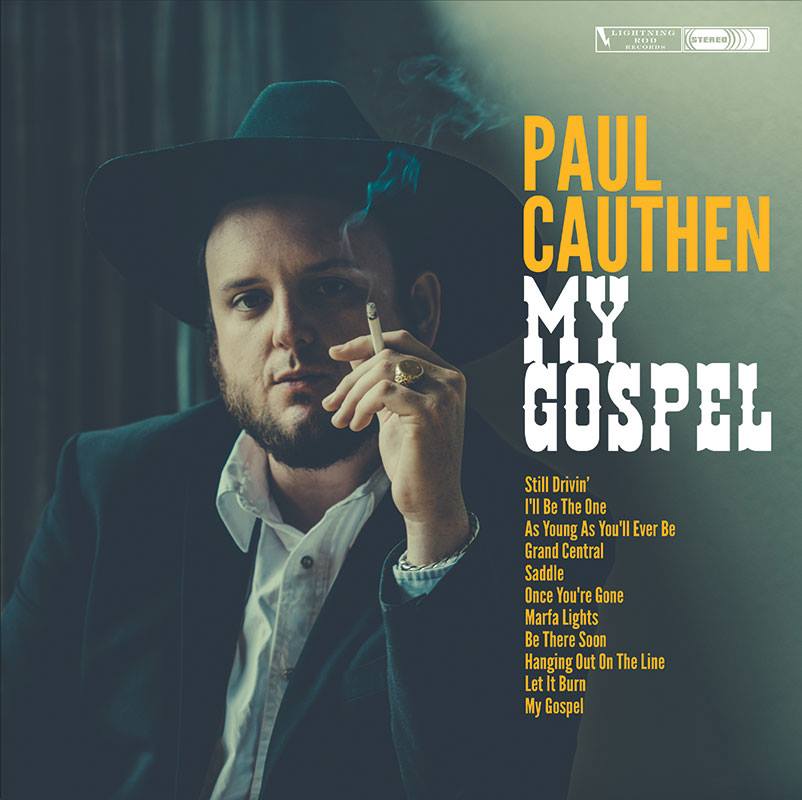
Paul Cauthen, ‘Be There Soon’

One of life's biggest curses is its emptiness: the emptiness that comes with being alone or unloved; the emptiness in the bellies of the poor; the inevitable emptiness that follows life itself, when heartbeats and heartbreak are replaced with an eternity of simply ceasing to exist. Perhaps that's one of the reasons that music is so vital — aside from helping us understand the fleeting nature of the world around us, it fills that emptiness with sound and makes mortality seem a more distant thought. Because only when it's quiet can we truly hear the noise of dying which, really, is nothing at all.

Paul Cauthen devotes much of My Gospel to exploring the fine line between life and death, offering up words and music that both fill the void and shorten the distance between breathing heavily and nevermore, going after the one thing that can destroy us before we're even in the ground: fear. Cauthen's a believer, but not devout enough to go blindly into that emptiness: This is his gospel, not anyone else's, and he knows that true salvation can only come with understanding and acceptance … not just from pages in an ancient book. "Be There Soon," a song about acknowledging our eventual fate — in love, maybe, but also that mortal curse — makes use of this soulful scorcher's most vital tools: thunderous vocals, a knack for combining the spirit of country with church-worthy arrangements, and an eye for seeing the horizon past the apocalypse. "I'll be there soon," he howls with the raw gusto of Tom Waits on Closing Time and the emotion of a man who sees the joy and the agony of knowing exactly where we're going, and how soon we all get there. For three-and-a-half minutes, life — and maybe what happens after — might not be so empty at all.

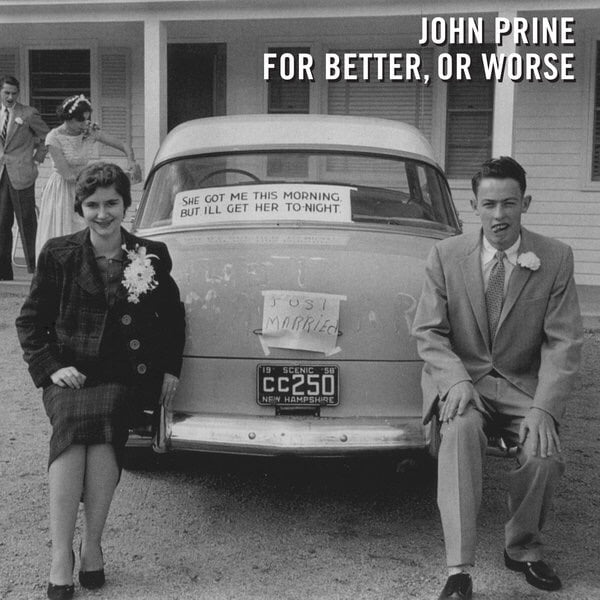
John Prine with Holly Williams, ‘I’m Tellin’ You’

Keeping the circle unbroken in country music is a very serious thing — legacy, family, and tradition are not to be taken lightly, with certain last names (Williams, Jennings, Cash, to name a few) holding the most shimmering of golden thrones. There's that legacy, and then there are the interlopers: like a singer/songwriter from Illinois named John Prine who, without any actual geographical or genetic pre-programming, manages to carry in his body some of thickest, most brilliant blood in the business, grabbing a laugh in the same sentence as a tear. Few can blend wit and wisdom like Prine can, often because he takes that storied circle and warps it into loops and figure eights, without ever losing its original foundation.

Despite his unparalleled skills as a songwriter, one of Prine's most beloved LP's is 1999's In Spite of Ourselves, a collection of classic country duets that contained only one original: the title track, sung with Iris DeMent, which boasts lines about big balls and underwear-sniffin' while still managing to paint a sincere picture of love enduring, for better or worse. It's a purely Prine move that, on an album of reverence, he still warped tradition to suit his splendors and squeezed sweetness out of a panty-puffer.

Thus it's why his version of "I'm Tellin' You," off For Better, Or Worse — his casual companion to In Spite of Ourselves — is one of the truest examples of how Prine, even when not driven by his own pen, twists and tangles the past in his own tender humor. One of the album's more unassuming little ditties, the duet with Holly Williams bends tradition (Williams, of course, is the granddaughter of Hank and her grandmother, Audrey Williams, used to perform the tune) with the Prine eye, turning it from a solo affair into a push-pull conversation. "You better straighten out, I'm tellin' you," they sing to each other while a mischievous fiddle dances along. Prine saw the charm in those aged words but knew that all love is a two-way street — not just preserving the circle, but turning it into a sphere.

LISTEN: Courtney Granger, ‘Don’t Put Her Down, You Helped Put Her There’

Artist: Courtney Granger
Hometown: Lafayette, LA
Song: "Don't Put Her Down, You Helped Put Her There"
Album: Beneath Still Waters
Release Date: October 14
Label: Valcour Records

In Their Words: "I was drawn to this song because, growing up in a small town, I felt like I knew this woman — I've seen her at the local bar with that look of defeat, life had let her down. I worked at bars, hung out at bars my whole life, on one side or the other. It reminded of a friend from years ago who was quite older than me. They were a bartender from the age of 18 and are now hitting about 56. They’re still around, hanging out at the same bar. It seemed like they were always trying to get away from the bar life, but never quite making it too far." — Courtney Granger


Photo credit: Jenny Lyon Simon

LISTEN: Jack Grelle, ‘Hearts for Mine’

Artist: Jack Grelle
Hometown: St. Louis, MO
Song: "Hearts for Mine"
Album: Got Dressed Up to Be Let Down
Release Date: October 28
Label: Big Muddy Records

In Their Words: "This is a reflection song. The conversation everyone has with themselves while being in a relationship. Questioning the situation you are in. Often times, we project our own insecurities onto our significant other, blaming them and not ourselves for any shortcomings or imperfections. It's about taking responsibility and being honest and accountable for our own emotions. It's a hard thing to do. 'No, you ain't crazy. I'll come clean.'

Musically, 'Hearts for Mine' is influenced by the Range Rats record. It is a Dead Moon country record from 1986. I wanted it to be a bit rock 'n' roll." — Jack Grelle


Photo credit: Nate Burrell

WATCH: Ryan Bingham, ‘Southside of Heaven’

Artist: Ryan Bingham
Hometown: Hobbs, NM
Song: "Southside of Heaven"
Album: Ryan Bingham Live
Release Date: September 30 — long-form video; October 21 — album (available exclusively through Amazon Music)
Label: Axster Bingham Records

In Their Words: "'Southside of Heaven' is one of the first songs I ever wrote. In every city, there's always a side that's a little grittier and a little darker. I moved a lot as a kid, and we always lived on that side of town. I remember the lyrics just pouring out of me when I first started writing songs. It's a very personal song that I still enjoy playing live every single night." — Ryan Bingham


Photo credit: Dan Winters

LISTEN: Zach Schmidt, ‘Wendy’

Artist: Zach Schmidt
Hometown: Nashville, TN
Song: "Wendy"
Album: The Day We Lost the War
Release Date: October 7

In Their Words: “This song is an outline of someone who is stuck — whether that be in a place or a relationship or something else. It is about self-destructive nature.” — Zach Schmidt


Photo credit: Joshua Black Wilkins

LISTEN: Luke Winslow-King, ‘Heartsick Blues’

Artist: Luke Winslow-King
Hometown: New Orleans, LA
Song: “Heartsick Blues”
Album: I’m Glad Trouble Don’t Last Always
Release Date: September 30
Label: Bloodshot Records

In Their Words: “'Heartsick Blues' is a song about surviving heart break. It’s about realizing something is wrong when your love starts listening to a different kind of music. It's about cheating on the dance floor at a country two-step honky-tonk night with a band called the Wasted Lives.

I included titles of cliché Hank Williams and Tammy Wynette songs in the second verse: 'She's singing "Please Release Me" and "I'm So Lonesome I Could Cry." It's thinking about her "Cold, Cold Heart" that makes we want to die.'" — Luke Winslow-King


Photo credit: Martina Monopoli

With Headphones on the Floor: A Conversation with Chely Wright

Though singer/songwriter Chely Wright made her name on the country charts back in the ’90s, her new album’s quiet confidence showcases what is probably the truest side of her: a conscious and caring, creative and compassionate woman rooted in faith and family above all else. Produced by Joe Henry, I Am the Rain features 12 tunes written by Wright, along with one Bob Dylan cover that feels right at home in the set. It also continues the artistic recalibration Wright began with her 2010 Rodney Crowell-produced release, Lifted Off the Ground.

Congratulations on a hell of a decade you’re having. Can I just say that?

[Laughs] Yeah. It’s been pretty crazy. I’ve been really contemplative in the past few weeks as I’ve been doing some press about, “Gosh, what has happened in the past decade?” It’s been pretty action-packed.

Check my timeline. I was just putting it together. In 2010, you came out publicly, Like Me was published, Lifted Off the Ground was released, and the LikeMe Foundation was established.

Yeah.

In 2011, you got married … happy anniversary, by the way.

Thank you! Yep.

And the Wish Me Away documentary … which, kudos. That was so brave.

Thank you. I’m really happy with it.

Then 2013, the boys.

Yeah. Wait. Hold on. Got knocked up in 2012.

Okay. We’ll put that in. [Laughs]

Well, I mean, being a lesbian, it’s a little bit more than a back-seat of a Pontiac and tequila. It takes some getting done. [Laughs] So that’s important for the timeline.

Indeed. Then, 2014 was your huge Kickstarter campaign. So did you make the record last year or this year?

We made it in 2015 — 2014 was Kickstarter and my mother died in May. That really was a seminal moment in the process of the itch. You’re a creative person, you know. If you’re thinking about a piece you want to write, you write a lot of it in your head, I’m sure: “What am I going to say? What does it mean? What’s the point? What’s the art?” Then you get an itch when you know to sit down and start typing. My mom’s death in May of 2014 was the itch that caused me to go to my pile of songs and start taking inventory of what I had.

Got it. That Kickstarter campaign must’ve made you feel REALLY great. Did you write the songs and plot the record after that? It probably directed a lot of how you went about things, yeah?

I’ll answer both questions: Did it make me feel great, the Kickstarter? It made me feel things I didn’t know I needed to feel. When my managers and I discussed crowd-funding, at first, I was like, “That sounds like something other people do. I don’t really think I want to do that.” But Russell [Carter] was like, “You have to pay attention to the way history is changing. It’s not begging for money. It’s, essentially, a pre-sale.” He said, “More importantly, it re-engages you with your fans.”

I didn’t really hear that, when he said it. So, in my mind, when we kicked the whole thing off, my thinking was that a successful campaign would be to get funded. I quickly understood that the success of it, for me, was to reconnect with fans that had been following me for 20 years and new fans that I could connect with. More sentimentally, I was reminded that I didn’t lose all of my fans. I didn’t even lose half. Maybe I lost 30 percent of my fans because there were people saying, “You don’t know my name, but I love your records.” Or, “I saw you in Bagdad.” Or, “I saw you at the Nebraska State Fair in 1996.” It was emotional for me, in that regard.

But you probably picked up just as many from the documentary and all the other stuff, I would assume.

Here’s the thing about those new fans coming aboard: More people, in other demographics, became aware of me because I’m the new lesbian on the street, right? And they would go to my Facebook page and hit “Like,” I think, out of support for my coming out. But there’s a big chasm between somebody who doesn’t typically like what we think of as country music and their clicking “Like” on Facebook. They’re like, “I’m going to click ‘Like’ because I like what she did, but I’m not going to buy a country record.” So, a lot of those new people aware of who I am because of coming out — it doesn’t necessarily translate into record-buying, concert-going fans. In some cases it did, though. And that’s great. I love it.

And, to answer your second question: Did I write the songs before or after the Kickstarter? I think 70 percent of the songs that ended up on the record, I wrote before. And 30 percent after.

This record, it’s polished and pretty, but it’s not slick, I guess.

Ding, ding, ding! [Laughs]

[Laughs] Yeah, yeah. It continues to stake your ground in the more roughly hewn Americana world, which may be surprising to people who only know you from the way-back radio hits. What would be your message to those folks, in terms of getting them to keep listening, or re-listen, or start listening?

I love that you say that it continues to stake a claim there in the Americana world. It’s not slick. When you make a record with Joe Henry, if you want to make a slick record, you might as well put your guitar back in the case and leave.

And go on home.

[Laughs] And go on. Because Joe Henry … I mean, I learned a lot on my last record with Rodney Crowell, and I learned a lot with Joe. It was terrifying, frankly, the notion of working with Joe because I know what he does. And what he does is, he brings in everybody and demands that they bring their A-game for every second that they’re in there. There’s no going back and fixing. There’s not a “We’ll do this, then put a real guitar overdub on later and you can tidy up your vocals.” You have to get it when the band gets it. That’s scary for a person who’s made 20+ years of records that you can make them slick.

Punch-ins and vocal comps galore, right?

Yeah. Yeah. I had to unlearn a lot. I wanted to unlearn a lot of that stuff. You know when you go play golf and everyone’s watching you hit the ball? You don’t want to use your new grip, you just want to go back to that old one you know you can hit it with. But, if you want to change your game, you really have to go out there and swing with your new grip.

[Laughs] Ummm … a golf reference?!

[Laughs] I know, right? That’s how I equate it. There’s that temptation to use your old grip. But I went in fully trusting Joe and, frankly, fully trusting myself that this was worth being courageous. For that, I feel like we have a record that sounds like somebody hit record at a really good live show.

Working with Joe and some of my favorite players ever … plus your voice … other than the nerves, that’s a recipe for success, right there — that combination.

Well, one would hope. Our intention, with this record, was that it’s a narrative. It’s not meant to be listened to on your computer speakers while you’re emailing. You put your phone down. You put your favorite headphones on. You lie flat on the floor. You hit play. And you take in … I don’t even know how many minutes the record is. Do you know?

Let’s see … 13 x four-and-a-half …

I’ve got some long songs on there, friend.

Yeah, you have that fiver at the end, but you have some fours and three-and-a-halfs …

Alright. Yeah. Well, what we intended and hoped for people to do is put their favorite headphones on and hit play and follow along and absorb it. I’m guilty, even these days … I bought somebody’s record the other day and had the nerve to listen to it on my iPhone speaker. Halfway through the second song, I was like, “Shame on me! What am I thinking?!” [Laughs] Isn’t that awful?

Headphones on the floor … with maybe a little wine or … something … that’s my favorite way to listen to a record. It just is.

[Laughs] That’s how you do it! That’s what I want. If you glean anything from our discussion today, please pass along that that’s what I really want is for people to take a moment and absorb it in the spirit it was intended. Because Joe and I are really proud of it and we hope people find something in it that moves them.

How did those groovy little cameos come about with Emmy, Rodney, and the Milk Carton boys?

Well, first of all, Rodney … I call him Shep because he’s my shepherd and he has been for a long time. He and I co-wrote one song on the record called “At the Heart of Me.” It’s a song I had written and I brought Rodney in on. It was completely finished and we decided to let Joe join us. We never shared with him the actual music of it. We gave him the lyric, and he helped re-shape the lyric and the new melody. So Rodney was on the record, but it didn’t seem like that was a song to put him on.

But Joe and I had written a song called “Holy War” and Joe called me about five days after I got home from the sessions and said, “Hey, I called Rodney. I’m going to have him come in and see what he can render on ‘Holy War.’” I said, “Of course! Why not?! That makes sense.” What I love about Rodney on the record, it really does sound like … Rodney and I have done a lot of shows together and we end up around one microphone in the middle just singing … and it really sounds to me like a live take of a show.

What’s funny is that I get press releases all the time claiming “This record features Emmylou Harris,” “This one has Rodney Crowell,” and “This one has Milk Carton Kids.” You got the trifecta!

[Laughs] I did! I’m telling you: I’ve always been the luckiest person I know. I don’t know why, but I’m like Forrest Gump. I walk into these really great situations.

So Joe called me, again, about a week or so after I got back, and said, “’Pain’ is really raising its hand. It’s really standing up for itself, wanting to be seen. I think I’d really like to get somebody special.” We did some talking and who doesn’t agree that Emmylou Harris is just about as special as it gets. What made me so happy about her vocal is that she said, “I just want to match where you are. I just want to match the emotion of what you’re singing.” Hearing Emmy’s heartbreaking voice, her haunting voice, on a record of mine … not to mention a song I authored … I made up these lyrics and SHE’S SINGING THEM! What?! [Laughs]

[Laughs] Yep!

And it gets better when you know that, shortly after I moved to Nashville in 1989, I chased her around a Kroger at midnight one night. [Laughs] I came from a place where we didn’t have 24-hour grocery stores. When I got to Nashville, I worked at Opryland, and I got off my shift and needed groceries, so I went to Kroger. I’m buying my stuff and I see this beautiful woman that looks a lot like Emmylou Harris, so I start trailing her a little bit — like eight cart lengths behind her. Chased her down a couple of aisles and finally she turned around and said, “Yes. It’s me.”

[Laughs] Perfect.

[Laughs] I just nodded and turned around and ran the other way. So … 27 years later that she’s singing on a song I wrote … Isn’t that the American dream? Isn’t that what everyone wants?

I read in a Rolling Stone interview where you said, “Who doesn’t want to grow up to be Emmy or Loretta?”

Well, that’s true.

Did she pass along any advice to get you there?

Not directly. But one only has to watch what she’s done. That’s the perfect advice. When Rodney and I made Lifted Off the Ground, that was part of the discussion: I want to be a 55-year-old, 60-year-old woman sitting on a stool with 200 people showing up wherever I decide to play singing songs that I can believably sing. And say something. And feel good about saying something. She’s the gold standard — she and Loretta and Dolly. That’s as good as you get.

And then those crazy Milk Carton Kids … Joe Henry has a relationship with them. It was his idea to make the Bob Dylan song really jump off the page and I think they did magical work on it.

Speaking of … watch what I do here: Same Rolling Stone piece, you talked about how the pronouns in your songs wouldn’t suddenly go gay. But on the Dylan song — “Tomorrow Is a Long Time” — you sang it like he wrote it, which I always appreciate. I hate it when singers flip it so they don’t come off as … whatever. The beauty of storytelling is setting yourself aside and allowing space for listeners to insert themselves into the story. Is that your thinking, too?

First of all, I just love the craft in that sentence. That was really beautiful, a really great couple of sentences that you just spoke there. [Laughs] That is, I think, the beauty of storytelling. If you listen to my last record, there’s nothing on there, except for the song “Like Me,” where it’s clear I’m talking about a woman with whom I’m having a relationship. It’s not clear, in the other songs, if I’m singing as a straight woman or a gay woman. For this record, I’m singing a song called “Mexico” and I’m not singing as me. I’m the waitress in the song.

But, as far as the Bob Dylan song, I didn’t want to change it … for a couple of reasons. Bob Dylan is perfect and how dare I alter anything. But I really loved … it’s so intimate and it’s so truthful for me to say, “If only she was lying next to me, I could lie in my bed once again.” To me, it would’ve felt too cheeky to change it.

It’s interesting, though, isn’t it? Like, Patty Griffin, her pronouns are all over the place and nobody ever brings anything up. But as soon as you or Brandy Clark sing something either way …

The thing about Patty Griffin — which, by the way, when I say her name, I sign the cross on my chest — she was never part of the commercial machine that would dare question something so trivial and small. … Patty is the ultimate … she is the character singer. We don’t know anything about Patty Griffin, the person, really.

No. And she won’t give it up in an interview, either. I can tell you that.

She won’t. That, to me, is just a different way of approaching her art. And, boy, it’s paying dividends for her listeners. We love it, right?

We really do. Talk to me about the difference in feeling you get from impacting someone’s life with your activism or your charitable endeavors versus your music.

That’s another … you’re on fire today!

Thank you!

Without a doubt, receiving a letter or speaking to somebody … I got a beautiful letter today from somebody in Washington state, a young person, that said my book saved their life and my film helped start a repair with their parents. There’s no comparison. That’s it. That’s the most gratifying, the most heart-warming, the most invigorating, humbling thing I can experience.

And you wouldn’t have that platform without the music, so they are really kind of inseparable, in a lot of ways.

That’s a great point. That’s a really great point. There was criticism, when I first came out. I remember seeing a few things. People’s rants about “She did this for attention” … which is ridiculous. I don’t know of anyone … that’s obviously spoken from a straight person. Or people who say, “I didn’t get an award for coming out as straight!”

Yeah, because did their family disown them for that? Did they contemplate suicide for that? Really, guys?!

Right. Yes. When people have been critical, and I don’t hear it so much anymore, but when people have been critical about my coming out publicly the way I did, my feeling is, “I’ll tell you what: You go move to a city, from a podunk Kansas town, with thousands of other people who want the job that you want. You get the publishing deal. You get the record deal. You go on all the radio tours. You do all it takes and work with the record label and bust your tail end and you get a couple of hit records and then you decide what you’re going to do with that.”

I made my decision and it was the best thing I ever did — not just to come out, but to come out the way that I did. I look at my life now … my wife and I are celebrating five years and I just know I wouldn’t be alive, had I stayed in the closet. So, life is good.


For more on country singers going Americana, read Kelly’s interview with Wynonna Judd.