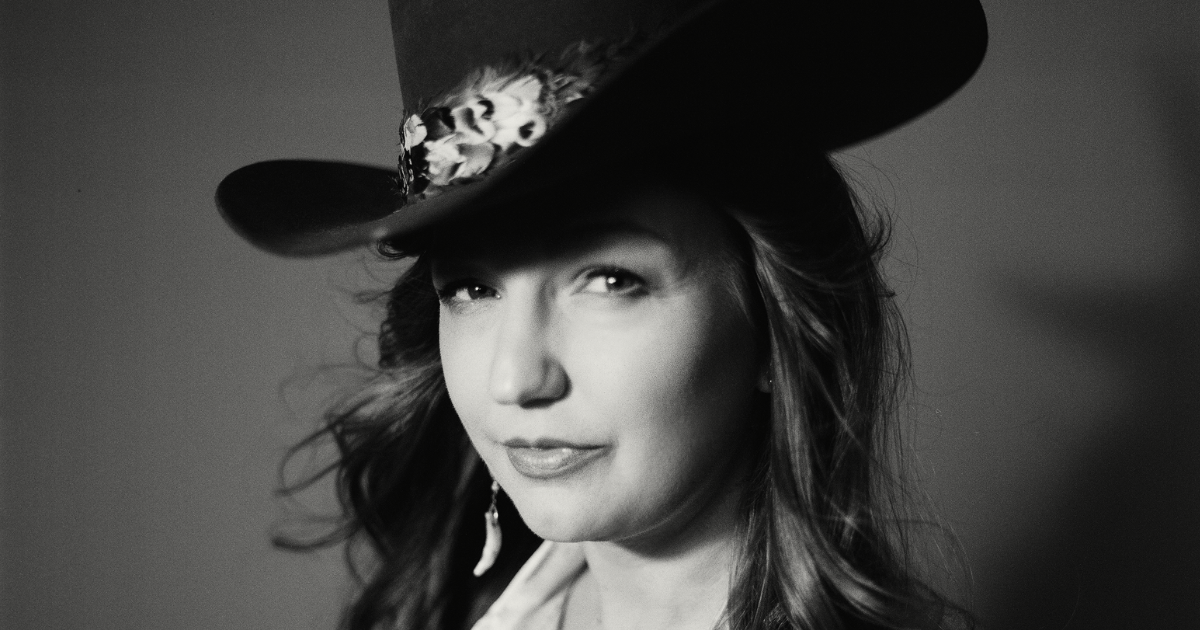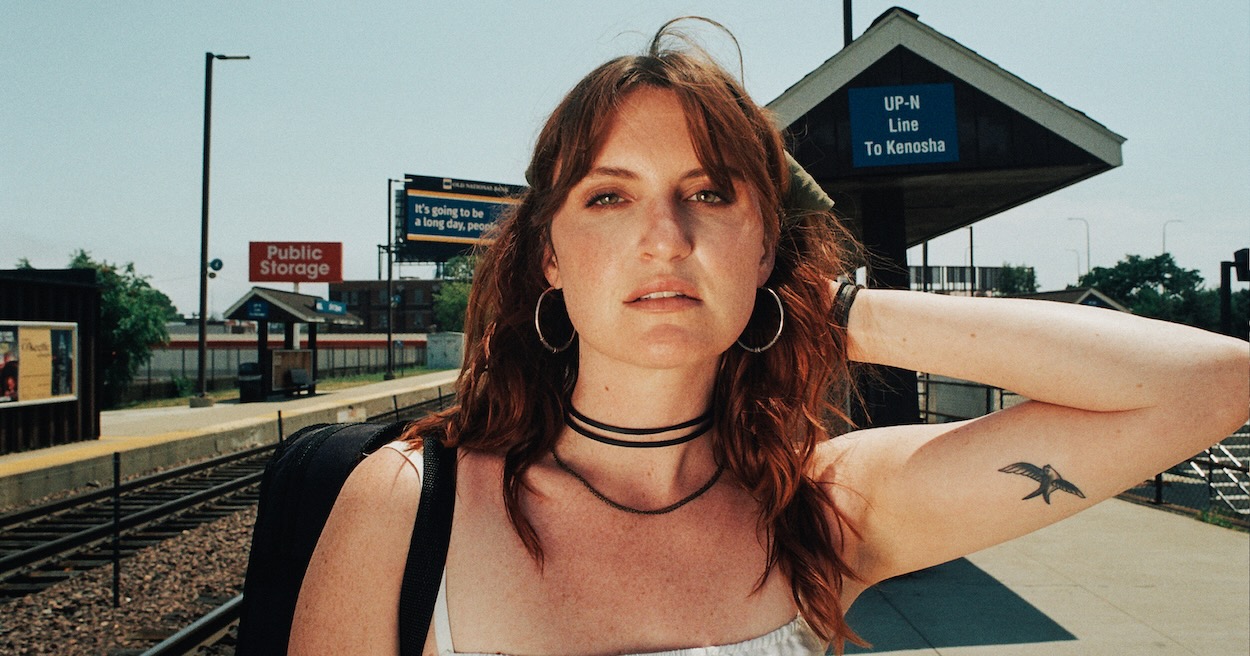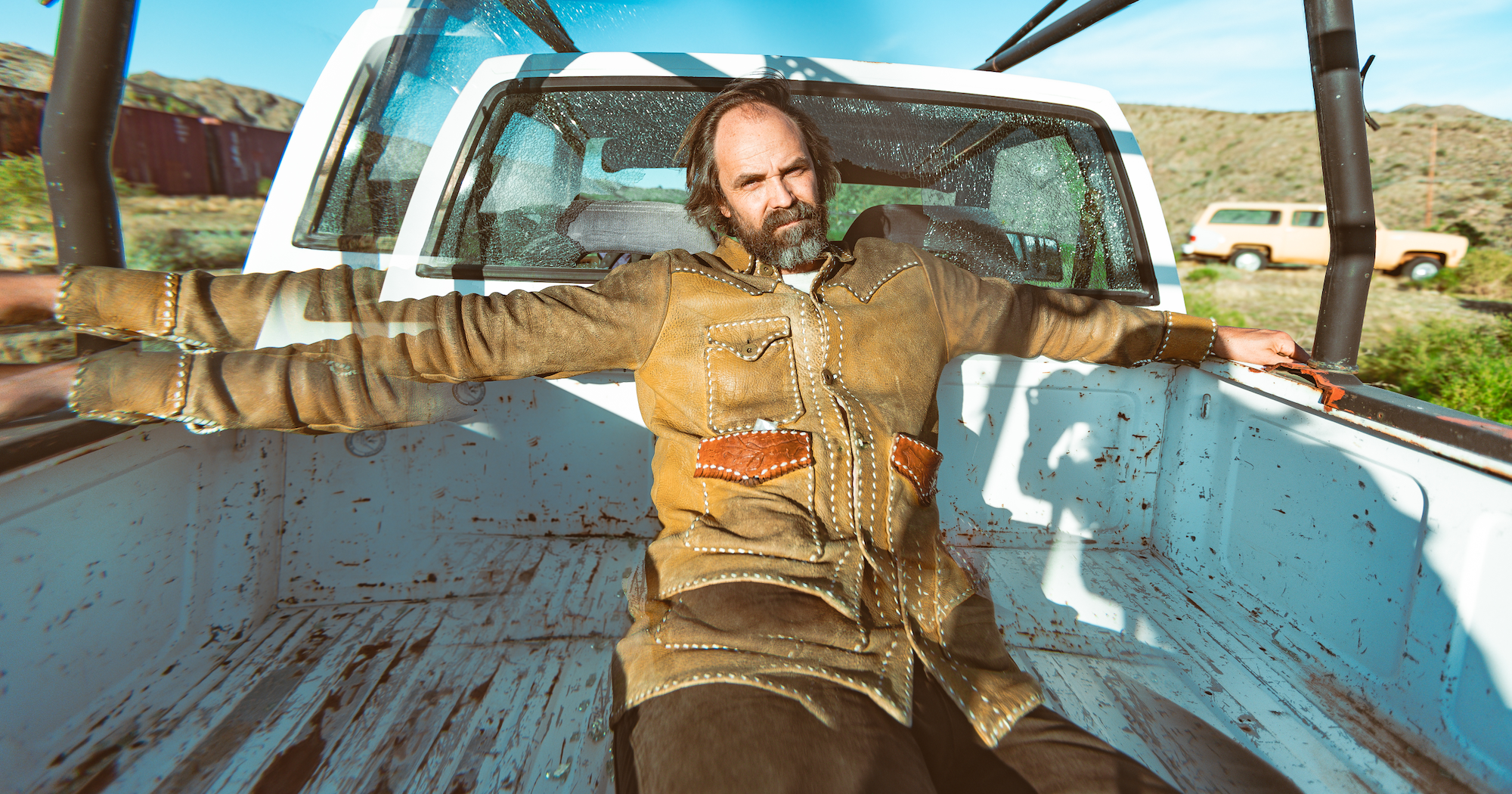
A One-of-a-Kind Conversation with Jonny Fritz

It is deeply joyful sitting with Jonny Fritz at a restaurant he suggested (Pollos Puebla #1) in an area of Los Angeles he’s an expert on (Pasadena/Altadena border) and talking about subjects he thinks about a lot, ranging from rebirthing ceremonies to alimony to how…“different” Nashville is now. He’s keenly honest about his life, his work, and his thoughts about any question thrown his way. Nothing is out of line or off limits. Nothing is filtered by a publicist or an agenda. It is off the cuff and real and wild.

We met over grilled chicken, rice, and beans to discuss his newest work, Debbie Downers (Woodwinds), a reimagining of the original 2025 album Debbie Downers. The conversation unfolded much like the album, with unexpected turns and humor that expose raw nerves about an unfriendly music industry, the beauty of PG Tips, the subtlety of serving a song, and the goal of taking a ride on the wave of a sliced open above-ground pool.

Well, let’s talk about Woodwinds. I’m a huge woodwind fan. How’d this come about?

Jonny Fritz: Oh, yeah? Me too. I love woodwinds. I’ve always loved them. I think they’re so great.

It’s so expensive making a record. It’s just stupid, you know? For example, the last record I made, Sweet Creep, I made it pretty cheap. I think it cost about 12,000 bucks. But ATO Records had an option on it so they could pick it up. They bought Dad Country, the record before that, for 5,000 bucks. It cost me five grand to make. “We’ll pay you five grand for it.” All right, fine. And then, hidden in the contract – or at least hidden to me – they got the option on the next one. Same deal. So when I made Sweet Creep they picked up the option. So for $5,000, they got this record that cost me $12k. I was like, “Jesus, man, this business is so rough.” And I just knew it was going to be something similar with the next one.

By this one, Debbie Downers, I thought, “What do I really want to do?” I might as well just do what I want, because there’s nothing worse than having something be expensive and unsatisfactory. I just decided I really wanted to make the record over and over and over again. I have a bunch of different visions for how it should go and I wouldn’t call any of them the one.

The Woodwinds one was something I’ve always just wanted to do. So I’m pretty pleased with it. I got this amazing guy in Highland Park who does film and TV stuff. There’s not a lot of work going on right now, so he was willing to do it. And the first couple of arrangements that he came up with, I was just giddy. I couldn’t believe how cool it was.

Were there any revelations for you? When you heard them in that arrangement, was there anything that shocked you about it?

Hmm… Yeah, some of the versions with the woodwinds really lent themselves to the winds better than any other version. I wrote this song called “Have You Seen Her.” I wrote it coming off of anesthesia. I was out of my mind. I got a hip replacement at UCLA 10 years ago. You know, coming off anesthesia affects people in weird ways. I’m one of them. It really got me, I wrote this song and I felt like it was the most brilliant thing.

It was so embarrassing. I wrote everybody who I knew who was high up at Rolling Stone, and all the Newport Folk Festival team, and all their PR team. I mean, I wrote everybody. And I wrote these really incoherent emails. I haven’t actually looked at them in a long time. I looked at them right after I wrote them and I was so ashamed. But I wrote all these emails being like, “You’re gonna want to get Scarlett Johansson down here. I need to perform this for her. And you need to get Joaquin [Phoenix] here, too.”

I’m not a social climber, but there was something in me that was like, “You need to make some moves. Call out a lifeline.” I was so ashamed of it for so long, because it was one of the most embarrassing moments in my life, for sure.

All of that to say, I didn’t want to play it or record it. I had to overcome it, admit it, and start talking about it. When I heard it with the woodwinds, I was blown away.

Years ago, I worked with Chris Crofton on a comedy event at Third Man Records that involved a compilation of found video footage that was submitted. There were so many submissions of people coming out of anesthesia, and I remember Chris immediately going, “No, that isn’t funny.” It really isn’t; you aren’t in your right mind.

God bless that man. He always knows exactly what the fuck is up. He is driven by pure heart and knows exactly where his morals should be. He’s incorruptible.

Do you spend a lot of time on social media? What is your relationship to it as a creator?

Pretty passive. I like social media. I feel like I’m kind of floating above social media. By like eight feet, just kind of looking down at it. Like, “What are you guys doing? That’s insane.” Then I dive into it to interact, and then just kind of get out of it. I get a little hooked on it for sure, but I hear about the addictions and the stuff that people fall for, and just like the amount of engagement. But it’s like engagement versus quality of life. I get so much fulfillment from everything else. I like playing with it. I always have fun with it, but I try not to let it get sticky.

Well, one of my favorite social media posts in the past bit is the one with your kiddo singing “Tea Man.”

Oh, wasn’t that so sweet?

So sweet.

She’s 6.5 now. She was like 2.5 then. And I just was like, I can’t post this. It felt so…I don’t know…

Personal?

It was personal, but I didn’t have a problem with that. I definitely want to protect her, you know? But that’s not her anymore. She doesn’t even look like that. She’s like doubled since that song came out. But then I was like, “Oh, fuck yeah, I’m posting this!” There was no risk of seeing her in public and recognizing that she’s the girl from the video.

Are you a tea man? In real life?

I got a PG Tips tattoo. I really like tea. I drink enough tea to float a canoe every day.

Really? All caffeinated?

Usually. Well, when I’m on tour, yeah. I get so tired. I can’t really mess with coffee. It just makes me so jittery. But I can just drink tea all day.

Are you an equal opportunist, or is it mostly black tea?

Oh, I like it all. Really like it all, but I love the black stuff, though. I think it happened when I was on tour 10 years ago with Josh Hedley. We were in England somewhere on a train, and they came down the lane with a steaming cart and it was £1 for a cup of tea. I don’t have an addictive personality. I don’t care about alcohol or anything. But I felt like, “Oh, I’m in trouble.” Just sitting on a cold, rainy train going through England with a cup of PG Tips.

It reminded me of something I heard about Andy Warhol. Although I’m not a big fan, I don’t know much about the guy. But what I do know about him is that one thing that made me really like him. I heard that he doused his whole world in a certain scent for a season. For example, in the summer of ‘63, he would just cover everything with lavender oil. And then come winter, it would be a totally different scent. And you’d put lavender away, and it’d be bergamot. So then the sense memory of whatever happened around that time would be so strongly connected to that scent that you could be completely brought back. And I really love that.

I think there’s something to it with the tea thing, because that tour was really big for me. It was a fantastic time. It was a really, really wonderful, lovely tour, and drinking PG Tips like that, I just got into English culture too. Everywhere you go, somebody’s like, “Well, you want a cup of tea?” Like, yes, I fucking do. I decided I’m never turning down a cup of tea. And I never have since.

Tell me about writing “Hot Chicken Condos” with Jordan [Lehning] and Skylar [Wilson]. I deeply connect with that song because I also left Tennessee, and for many of the reasons you list in the song.

Yeah, that was the point. Everybody who really gets this place will really understand these things, even like Pit Bull puppies in parking lots.

And humidity.

Fucking unrelenting humidity.

Were those things you were storing? How did that song come about?

God, why I love writing with Jordan and Skyler is because they don’t bring any ego to the write. They don’t fucking care. They’re just such good vibes. I’m really pretty neurotic about writing and also I’m pretty protective of my words, too. When I get into the writing space, I’m just so sensitive about what’s being said. So if somebody says or suggests the wrong thing, I can quickly be like, “This is the wrong association.” I can be a little trigger-happy.

But with Jordan and Skylar, they’re always just like, “Just play what you got.” And they usually edit everything that I have. With that song, one of the lyrics was “Mustard in the corner of his tiny little mouth.” And Jordan said, “Why don’t you say, ‘Mustard cracking in the corner of his tiny little mouth?'” And it was perfect. Mark Twain said the difference between the right word and almost the right word was the difference between lightning and the lightning bug.

It’s so true.

I got to hang out with Guy Clark once in Nashville, and it was like one of the best moments of my Nashville career. I was going through really bad writer’s block. And I asked him, “Do you ever get stuck?” And he said, “Yeah… Do you ever write with other people?” And I told him, “I don’t like the idea of giving somebody 50% of the song just because they’re sitting in the same room.” He leaned over and he goes, “Well, you never would have fucking wrote it if they weren’t sitting there.”

I was like, “Damn, old man schooled me.” Because so much of writing, I feel like, is picking up on something else that’s happening. And who’s to say you don’t owe somebody credit just because they’re sitting there?

The other thing that Jordan suggested for [“Hot Chicken Condos”], which was so right on, was that he asked me how high I could go on the Tennessee part. I told him I could go falsetto, and he told me to try it. I hit it and he said, “That’s it.” He took an idea of a song and made it a song. I just so appreciate those guys.

I just feel it is like a pedal steel player who plays about eight notes per song. That’s the best player in town, ‘cause all the other players are nonstop. Same with fiddle. Take Josh Hedley. The guy just stands there most of the time, then he pulls out something incredible, and he sets it back down. He doesn’t overplay. If you don’t overwrite and you don’t overplay, those are heavy attributes.

Those are both things to do in service of the song, not in service of self.

Absolutely. You know who I saw last night was Erin Rae. Kevin Morby and I were standing next to each other, just like, ”Oh my god, she’s so good.” One of the most amazing things about her is that she underplays the guitar. She’s playing the whole time, but if you really focus on how much she is actually playing, it is barely. It’s just enough to fill in where she’s not singing and she works the mic so well.

All those things are so important, but nobody teaches them, you know? You have to kind of know it. It’s innate, right?

Or you got to learn it trial by fire. And you have to be playing with players who know what they are doing to learn that.

Yeah. That’s right. Sometimes people are technically good, but they just don’t stop noodling, and it sucks.

You took a long hiatus from music, huh?

I did. I took nine years between records. I didn’t mean to. And I didn’t actually think that I was doing it. I was playing shows here and there. I blame it on real estate. I got into real estate because my heart got broken from music so many times from wanting to do better. Wanting to succeed more. Really, really caring what people said and thought and comparing myself. All the things you really shouldn’t do ever in any aspect of life. I mean, if you did that in a relationship, then your therapist would be like, “That’s your problem. Stop. Don’t do that.”

I couldn’t get out of it. I just felt so bad about how it was going. And I know what I’m doing is not for everybody, and it’s not gonna take off. But I love what I do. I’m not putting myself down, but I just knew my ambition was a lot faster than everybody’s interests. It was just wearing on me and I needed to do something that’s purely about money and doesn’t have anything to do with creativity, because I’m just getting my feelings hurt. And I got polyps in my vocal cords. I was touring too much. It just wasn’t going well.

So I thought, “I’m just going to pivot. I’ll still do shows and if somebody asks me to do something, I’ll do it. I love music.” I stopped prioritizing writing. I stopped prioritizing recording, and then the pandemic happened, and I had a kid, and real estate took off, and I looked up, and it was 9 years. It really was like, “Oh, crap, how did that happen?” It shocked me.

What’s your writing process like typically? Do you write everywhere?

I write everywhere. I use my voice memos a lot. I really love just making up new country songs and fake country songs – like, really bad ones. I find that if I can get them out, I can expand upon them or delete them and move on.

I was writing with Skylar [Wilson] one time and we were trying to write a song called “Remember the Alimony?” We wrote for hours and hours and it was a stupid song and it didn’t go anywhere. It went, “I’m just a poor man. All I eat is beans and write checks to my ex, one and only. I rolled the dice, but I lost my wife. But I remember the alimony.” So stupid. God. But we were writing all day and just hanging out, and neither of us thought to finish it. It just didn’t work. But then I got home and I had like 6 other song ideas that went on Sweet Creep. It’s that muscle thing that everybody talks about.

I’m also a pleasure seeker to the nth degree. If things aren’t fun, I just drop them so quick. I’m really bad about that. So I just make sure that it’s really fun and get the idea out quickly. I try to stay hovering above it, just stay light. Because as soon as I dig into it, that’s when I’m like, “Oh, my God, right. I don’t know how to do this.” Just keep it fun and it will grow. But I like to write all the time, every day.

Do you wake up and do it?

It is in the shower, on the way to school, washing dishes. You know, when you have a great idea and no way to write it down.

Soapy hands! Sometimes it happens when there’s an absence of anything else and those ideas pop up.

I have to really protect myself when I’m diving in. I wash all the dishes, do all the laundry, sweep up a bit, and make sure no one is going to ask me for anything. I’m really self-conscious about that. If nobody is home, I’m going to the basement and putting on Ken Burns’ Civil War, and I turn the radio on at low levels where it is just kind of humming. I drink a tremendous amount of caffeine. That’s my favorite.

But it is intense. I can get really emotionally rocky after diving in pretty deep.

I was thinking about Roger Miller when you were talking about the “Alimony” song. I’m drawn to that kind of writing because you can get really dark while staying very light.

People think that the meat is deep, but the nerves are on the surface. There’s meat down there, but it’s dead. I feel like the most cutting and incredible songs kind of sound like an email to an old friend. My favorite Lucinda Williams songs all sound like they were written to a buddy.

Or she’s talking to somebody over tea.

So true. And John Prine, too. Everyone’s like, “How did they do it?” They just did it. They’re just talking.

Will you play any live shows with the woodwinds?

Yes, actually, April 14, we’re doing a free show at Zebulon. It’s going to be good. I have this giant golf ball, it’s like a concession stand, and I’m bringing that to the show. The whole point of it is to give away free tea. It’s my tea ball. The tea is free, just buy a house from me!

What will the live configuration look like? How many players will you have?

Four, but they play multiple winds. It’s the players on the record. They’re such pros. They’re all symphony kids.

There’s something about stripping it down to just woodwinds; it’s so cinematic. It takes you directly to the meat and it makes you lighter when it is time, as music does for film. It helps direct your emotional experience.

I like that. I’ve always loved demos of songs. Sometimes I just want to hear someone play the songs, not the record. Or just hear someone sing it. As close to the song as I can get, I’m most happy. I love a cappella stuff. Sometimes the most powerful way to arrange a song is to remove everything.

With winds, too, it’s nice because that’s pretty much it. There’s the vocal and then there’s some wind behind it. I love that.

At the top of my notes that I took while listening to the record, I have the words “jello rebirth” scribbled down regarding the song “Polished Turd.” Can you tell me more about that concept?

For this record, it was a bit of a cynical and fatalistic career thought, but I wanted to make a record of real estate songs. The whole idea behind it was that people would hear it and would say, “This sucks.” And my reply can be, “Yes. That’s what happens when you give up on your dreams.” Music really suffers when you just write about what you’re doing. It’s like this martyrdom thing.

You know the three D’s in real estate are like death, diapers, and divorce – all the things that make people sell their homes. So I wrote one that went, “Death, diapers, and divorce. And the lottery, of course.”

During the pandemic, I had this fantasy of buying someone an above-ground pool. Have you heard of rebirthing ceremonies?

No.

Oh, rebirthing ceremonies are a thing. A fucking thing. People simulate a mother’s vagina in like a mega fucked up Christian ceremony. They make you relive your birth so you can be reborn and let go of all your childhood traumas. They have a gelatinous vagina and people push themselves through it. So anyway, I got that in my mind and thought, “What the hell is this world?” But I could see that for real estate, like a used car salesman going, “We are doing rebirthing ceremonies, come on down!”

And I have always wanted to slide through the tsunami of an above-ground pool that gets sliced open.

Yeah, that does look fun.

Right, who hasn’t wanted to do that? But then I want to turn it into jello. And then I thought maybe I should do that for my clients or have a commercial about it. I could cut a slice in the pool with a katana sword, then they’d ride in slow motion through the incision of the above-ground pool, I could hand them the keys, and they’d be reborn into home ownership. Follow me?

Yep.

That is a song very near and dear to me, but it is a hard one to explain. What was your experience with it?

Well my first thought was that wherever it was coming from and whatever it meant, you have thought a lot about it.

Fair enough, that’s true.


Photo Credit: Bobbi Rich
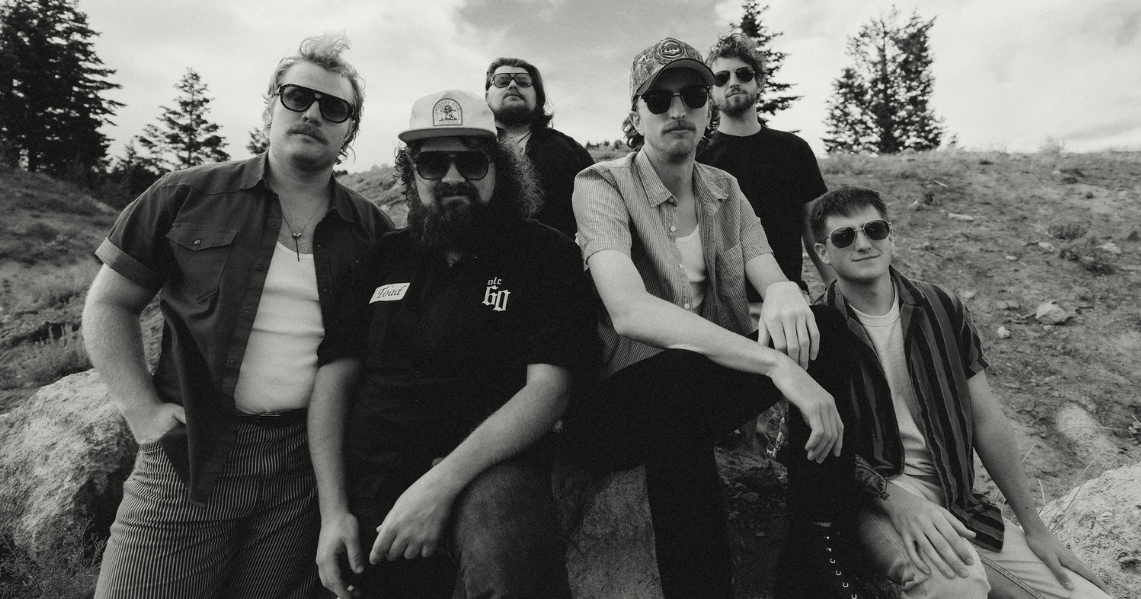
Ole 60 Bring Their Smokestack Town to the World

Pairing the slouchy charm of indie grunge with roots-rocking, small-town punk energy, Ole 60 spent 2025 becoming one of the most intriguing new acts in Americana.

With their debut album Smokestack Town – plus some fun-loving video content, huge opening-act performances with Zach Bryan, and first-time trips to Lollapalooza, the Ryman, the Grand Ole Opry, and more – the six-piece band came a long way from their blue-collar hometown of Hawesville, Kentucky. They even finished off the year with their biggest show yet, selling out their first-ever arena gig with an Owensboro homecoming. But there’s still more to do.

Inspired by a world of shift work and shitty luck, and powered by a rusty Toyota rolling on four bald tires, frontman and primary songwriter Jacob Ty Young fills his songs with vividly conflicted characters. Soaring garage-pop singalongs stand alongside sucker-punch ballads of screwing up and flaming out, each one struggling with the urge to get the hell out while still loving where you’re from. It’s a feeling anyone nursing big dreams in a small town will recognize, and Ole 60 shares it with a fresh voice.

In late January, Young told Good Country about the band’s quick rise and biggest year yet, while looking ahead to what comes next. There’s already a level-up tour underway and new music in the works. But Young pledges not to forget where they got their start – a pizza shop game room in a Smokestack Town.

In 2025, Ole 60 was out on tour, did big shows with Zach Bryan, made an Opry debut and released your first album. What’s it been like processing all that in the last month or so?

Jacob Ty Young: You try to take it in as it’s happening, but it’s a lot easier once you have some time to think. … I think it was definitely the best year we’ve had and now that we’ve had some time off, I’m eager to get back out and start touring again.

And I’ve been writing a lot. After putting out that first record, it was something that we’d never really done before. It was our first time making an album and we learned a lot of things and I think that everybody’s in the headspace that this next one’s going to be even better, so we’re working hard.

What was the common bond that brought you all together musically? You blend influences all the way from Smashing Pumpkins and Metallica to John Prine, right?

Five of the six of us are all from the same little small town in Kentucky, or bordering towns within about 30 minutes of each other. I kind of knew everybody before we started the band. We just got together and started jamming. I’m a huge Smashing Pumpkins fan. Most of the guys are big metalheads. They love Metallica, Black Sabbath, Primus, all that stuff. I think everybody bonded over just our love for rock music. There is obviously some country influence, but I never really considered it that. We were just a garage band, and it’s hard to not bond when you’re sitting there in a garage playing cover songs. The Pumpkins, Stone Temple Pilots, Black Crowes. It was that kind of grunge stuff that really glued us all together.

You can hear that still, and then there’s a rootsy folk side to it, too. When did you start writing songs?

I’ve been writing songs my whole life, but nothing ever really serious. I would write funny songs when I was in high school and I wrote a song about our basketball team one time, just as a parody thing. And I always really enjoyed playing guitar and being creative. I was into visual art and graphic design for a while. Then I kind of went through some stuff in my personal life and decided I wanted to sit down and write some songs about it. That ended up being the first EP [three twenty four]. That would’ve been 2023, I think. I always loved guys like John Prine and Bob Dylan and even Billy Corgan of the Pumpkins, just the uniqueness of the songwriting. I think for lyrics, I look to those guys, and then for the music we kind of look all over the place.

I hear there’s a pizza shop in there somewhere, right? We keep seeing pizza references in the socials and songs. Is the shop like an easter egg for you?

Yeah, I think so. I worked at a pizza restaurant in Hawesville, Kentucky, for about four years when I would come home from school. And then there’s another guy in the band, Ryan, his brother owned the pizza restaurant, so he worked there as well for years. When we first started practicing, rehearsing, and getting ready to go around playing bar gigs, we would rehearse in the back of Galaxy Pizza after close. We’d set up all our equipment back in the arcade section and jam until one in the morning. And then we got our bass player, Colby, and he had a garage, so we moved to his garage. But yeah, I grew up right next to Galaxy and it’s kind of a staple in our hometown, so we just try to let that side of us show through our content and all the visual side of stuff.

Tell me about putting the album together. Smokestack Town was one of my favorites of the year, so congratulations on how it came out. What did you want? I mean, creating a debut album is a pretty big moment. It might seem like an overwhelming task, so what were you going for?

We didn’t have a hardcore plan. I was just writing songs and I got six of ’em that I was really proud of. We went recorded and I was like, “Okay, I think this could be an album.” So I was writing as we were recording the album, and then the last song that I wrote was “Smokestack Town.” I was like, “That seems like a good name.”

I just wanted to push ourselves and try to do something different sonically than we had before. We got together with Jacquire King who produced it, and he’s one of the best of the best. He took my vision and ran with it and we’re very happy. We just wanted to put ourselves out there and let people in, see what kind of music we listen to.

That’s interesting, because it’s been presented as a concept album. But it sounds like you were building the concept as you went.

If it’s a concept album, it’s more so on the visual content side of things, because we’ve been putting out these little short videos of character acting. Taking the lead from the Foo Fighters.

Totally!

But there were just a lot of overarching themes in the record about home. Missing home, being homesick, being young. Plus that idea of small town, kind of dystopian … but not really.

Right, you wrote all these characters who are definitely small town people, with small town stories. But the thing I appreciate was they’re not stereotypical tailgate anthems or “I’m so country.” Nothing like that. Where were you coming from?

After I left Galaxy, I worked in an aluminum mill for a year and a half, and my dad works at the paper mill. Hawesville is a very industry-driven town. I think it’s different from your typical country town because it’s so labor-driven and everybody’s proud to be union and blue-collar. It’s less sitting on tailgates and drinking beer and more going to work a 16-hour shift and coming home and sleeping.

I wanted that to come through, because in country music it is a lot of sitting out in the boonies, drinking beer, and sitting on a tailgate. But I wanted to write my experience growing up in my little country town. There’s nothing to do, so we just ran around all the time and went to all these different places and got into trouble there. I wanted to write about that side of stuff, and less about the country stuff.

Being a new band coming into the indie and roots music scene, did it feel like there’s a lot of opportunity and energy out there?

Everything’s been so great. We kind of blew up on social media and I don’t know if any of us were ready for that to happen, but it did. I think that the reception’s been great. We went out and started headlining shows fairly early and we were selling them out. That’s a great feeling, because when you do blow up like that on social media, it’s hard to really put a gauge on what that means – until you go out and play a headline show and you see the crowd and they’re singing, and you go play a festival with all these big names and it’s your first time out there, and the crowd’s into it. And that’s kind of how it was.

True, and you finished last year with a huge statement in Owensboro, right? Hometown show, New Year’s Eve. Your first arena show and you sold it out. What was the feeling like on stage?

It was weird because it was both the most nervous I’ve ever been and the most comfortable I’ve ever been. You look out in the crowd, you see people you know, and you don’t get that a whole lot when you’re touring. It was just super cool. I got to sleep at the house I grew up in. The whole day just felt good. It was nice to be home and have family coming in and out and friends. Just the perfect way to end the year.

Y’all cleaned up nicely in the tuxedos. Did you put some extra polish on the performance, too?

Yeah, I thought it was New Year’s, we might as well get some tuxedos. I thought everybody looked nice. I want to do it more often. I dunno how the other guys feel about it. We’ll see.

@ole60music🗣️ said it don’t hurt and I called your bluff♬ original sound – Ole 60

You’re getting back on the road for the Smokestack Town Tour this winter. What’s everybody looking forward to? What’s the vibe?

The new year feels like a fresh start to change the show and really put a lot of thought into what we want to do with it. We’ve got some new production stuff, new lighting, and I’m really excited for everybody to see it. I think everybody just wants to go out there and every night needs to be the best show we’ve ever played. We’re playing bigger shows this year and we’re super excited, super grateful.

Earlier you said you’ve been writing, can you give us a hint about what’s been inspiring lately?

Yeah, I’ve been listening to a lot to indie rock, and what I listen to comes through in what I write. So definitely it sounds like Ole 60, but it’s new, and I’m still kind of figuring it out. But I’m really excited that the direction everything’s headed. I don’t have any idea about timelines for new music, but I have been writing a lot and I’m really excited about all of it.

Jacob, thank you for the time. I’ll leave you with the big picture – I always ask people what they hope listeners take away from their work. So what’s that look like to you?

I just hope that our story can be inspiring to others through the fact that we came from a town where after you graduate, you either go to college, you go to the military, or work in a factory, and that’s your options. And there’s always other options out there. You just got to put your head down, work hard and good things will come.


Photo Credit: Wales Toney

You Gotta Hear This: New Music From Thomm Jutz, Frank Evans, and More

Get ready to enjoy some excellent new roots music – bluegrass, country, blues, and more.

To start us off and get us in a romantic holiday mood, the Bibelhauser Brothers from Kentucky offer their bluegrass rendition of John Prine’s “Glory of True Love.” Releasing, appropriately, on Valentine’s Day, the song reinforces just how well suited Prine originals are to the bluegrass treatment – it doesn’t have to just be “Paradise”! Following up with his own cover of a country classicist, banjo picker Frank Evans pulls together an all-star cast for a live video performance of Roger Miller’s “TJ’s Last Ride.” Evans released the single studio version last week, following it up with Shad Cobb, Thomas Cassell, Mike Bub, and Jimmy Stewart joining him for the excellent live video of the track.

For a bit of gospel, Eighteen Mile releases a new single today, “Living Waters,” showing yet again the deep connections between bluegrass and sacred music. It’s a thoughtful, contemplative, and inspiring breath of fresh air – or, perhaps, a refreshing sip of cool, living waters. Plus, singer-songwriter Thomm Jutz brings us a live performance video of a new bluesy, original track, “Ramblin’ Gamblin’ Blues,” just voice and tender fingerpicked, acoustic blues in duet. Jutz reflects on the undying temptation of such vices and how the low points they often bring can be a vehicle to better things. “Ramblin’ Gamblin’ Blues” heralds Jutz’s upcoming solo album, Ring-A-Bellin’, arriving in April.

To close us out, Nashville honky-tonkin’ staples – and life partners – Hannah Juanita & Mose Wilson have a brand new EP and with it, a video for the title track, “If I Ever Lost You.” Gauzy and retro, Juanita and Wilson put on throwback styles and sounds without it feeling contrived or gratuitous – while all decked out in countrified wedding garb. It makes perfect sense, as they explain, “As we prepare to wed this year, the lyrics hit especially close to home. We drew inspiration from the greats who paved the road: George & Tammy, Loretta & Ernest, Red & Kitty, keeping their timeless storytelling at the core.”

There’s plenty to boot-scoot to below, so get scrolling! You Gotta Hear This…

Bibelhauser Brothers, “Glory Of True Love”

Artist: Bibelhauser Brothers
Hometown: Louisville, Kentucky
Song: “Glory of True Love”
Release Date: February 14, 2026
Label: Common Loon Records

In Their Words: “‘Glory Of True Love’ has been a part of our repertoire during live shows for many years with the Bibelhauser Brothers. It’s a beautiful feeling to ‘grass up’ such a timeless tale of love, written by one of the most prolific songwriters of his generation, John Prine. Recording this single has been a really special way to follow up since dropping our full-length record, Down the Road, including mostly original songs just four months prior, as our band and our signature sound has evolved. This is our first recording featuring Boston, Kentucky, native Turner Hutchens on mandolin, with Jeff Guernsey tracking twin fiddles, Steve Cooley on banjo, Adam on bass, and Aaron singing and playing guitar. We hope you enjoy our own Bibelhauser Brothers spin on this John Prine classic, with more music to come soon!” – Bibelhauser Brothers, Aaron and Adam

Track Credits:
Aaron Bibelhauser – Vocal, guitar
Adam Bibelhauser – Bass
Steve Cooley – Banjo
Turner Hutchens – Mandolin
Jeff Guernsey – Fiddles


Eighteen Mile, “Living Waters”

Artist: Eighteen Mile
Hometown: Upstate South Carolina
Song: “Living Waters”
Release Date: February 13, 2026

In Their Words: “In the Bible, there is a story commonly called the story of the ‘woman at the well.’ In that story, Jesus is talking to a lady who was married five times, likely abused and abandoned in those relationships before eventually becoming an outcast in her society. Jesus, using an analogy, called himself the ‘living water’ and said that she could believe in him and be completely, eternally fulfilled. C.S. Lewis famously said, ‘If I find in myself a desire which no experience in this world can satisfy, the most probable explanation is that I was made for another world.’ This song captures the heart behind everything Eighteen Mile does. We want people to experience and find complete fulfillment in Jesus, the ‘Living Waters.'” – Carson Aaron

Track Credits:
Hallie Ritter – Upright bass, harmony vocal
Carson Aaron – Acoustic guitar, harmony vocal
Emily Guy – Lead vocal
Jack Ritter – Acoustic guitar
Savannah Aaron – Fiddle
Andy Leftwich – Mandola
Steve Pettit – Mandolin
Rob Ickes – Resonator guitar


Frank Evans, “TJ’s Last Ride”

Artist: Frank Evans
Hometown: Toronto, Ontario, Canada
Song: “TJ’s Last Ride”
Release Date: February 6, 2026
Label: Englehardt Music Group

In Their Words: “I’ve loved Roger Miller’s music since childhood, from the Robin Hood soundtrack to constant car rides with his greatest hits, which made choosing one of his songs feel natural. ‘TJ’s Last Ride’ stood out for its Hartford-like imagery and the mournful warmth of a Stanley Brothers ballad. In the session, we agreed to keep it simple – the take you hear is almost entirely the third run-through. I was honored to record it with Casey Campbell, Mike Bub, Justin Moses, Shad Cobb, and Jake Stargel.” – Frank Evans

Video Performance Credits:
Frank Evans – Banjo, vocals
Jimmy Stewart – Dobro, vocals
Mike Bub – Bass
Thomas Cassell – Mandolin
Shadd Cobb – Fiddle
Jake Stargel – Guitar

Video Credits:
Videographer – Kyle Horan
Video Editor – Frank Evans


Thomm Jutz, “Ramblin’ Gamblin’ Blues”

Artist: Thomm Jutz
Hometown: Nashville, Tennessee
Song: “Ramblin’ Gamblin’ Blues”
Album: Ring-A-Bellin’
Release Date: February 13, 2026 (single); April 3, 2026 (album)

In Their Words: “Going on the road at 19 was the perfect way to live at the time. No responsibilities but to make it to the next gig. Do what you know how to do and move on. That way of living follows its own archetypal patterns, that’s why it doesn’t matter where you are, you could be going up and down the Mississippi River in 1898 or the damn Autobahn in Germany in 1998.

“There’s always somebody waiting to play another game, frequently with a bottle of booze. For some people, that charm never wears off. It did for me. I got sick of the people I was with, sick of myself for sitting down at the table to play their game.

“As it turned out, that part wasn’t over when I moved to Nashville – as it turned out, it was necessary, so better things could come.” – Thomm Jutz


Hannah Juanita & Mose Wilson, “If I Ever Lost You”

Artist: Hannah Juanita & Mose Wilson
Hometown: Nashville, Tennessee
Song: “If I Ever Lost You”
Album: If I Ever Lost You (EP)
Release Date: February 13, 2026

In Their Words: “‘If I Ever Lost You’ is a love letter to the golden era of country delivered in a classic, heartfelt shuffle. It’s our first co-release and our first duet, built from years of collaboration and crafted as a performance we both get to share on stage. The song speaks from the heart; love is everything when it’s here, and its absence is everything we fear. As we prepare to wed this year, the lyrics hit especially close to home. We drew inspiration from the greats who paved the road: George & Tammy, Loretta & Ernest, Red & Kitty, keeping their timeless storytelling at the core.” – Hannah Juanita & Mose Wilson

Track Credits:
Hannah Juanita – Vocals
Mose Wilson – Guitar, vocals
Jeff Taylor – Piano
Norbert McGettigan III – Bass
Matty Meyer – Drums
Ryan Stigmon – Pedal steel


Photo Credit: Thomm Jutz by Don VanCleave; Frank Evans by Scott Simontacchi.

Briscoe Hit The Road and Wrote a Country Album

Through the windshield of their Ford Transit van, the duo Briscoe drew songwriting inspiration from the Southwestern landscape during a long, meandering road trip after graduating from the University of Texas. However, this trek was more than just a rite of passage, as band members Philip Lupton and Truett Heintzelman were launching their first national tour. In those seemingly endless miles between show dates, they would trade lyrical ideas to flesh out once they got back home to Austin.

Described by the band as “Texas folk-rock,” those cinematic songs have now surfaced on Briscoe’s second album, Heat of July. Produced by Brad Cook and released by ATO Records, the collection is a generally optimistic highway companion set against the backdrop of sunsets somewhere south of Alpine, Texas, long drives to Denver, and Mexican eagles circling overhead.

During a brief break from the road, Briscoe spoke with Good Country about how banjo fits into their sound, discovering bluegrass through YouTube videos, and the John Prine classic that set it all in motion.

I found it interesting that you were writing this album as you were driving around the country. You’re going 80 miles an hour as these songs are coming to you. Can you set the scene of what that looked like?

Philip Lupton: Yeah, that’s a great question. A lot of this record was written on the road just because we were touring hard on our debut album, West of It All. You’re in the van for so many hours a day that you eventually get tired of listening to music, no matter how much you like music. You just need some silence. I think that’s when Truett and I can find a little bit of inspiration. Like, “OK, cut the music.”

“Arizona Shining,” the second song on the record, is very much written as I’m taking in the landscape through the window. You just start to mumble a few things under your breath. And then you hold up your phone and take a little voice memo. You get back home in a couple weeks, you come back to that idea, and then, finally, get to put it to a progression and bring it to life.

When you’re out on tour, coming out of your hotel, and you see that van hooked up to a trailer, does it ever strike you, like, “We’re really out here making this happen”?

PL: Yeah, absolutely it does! There’s this old Hayes Carll song called “I Got a Gig.” I listen to that song and I’m like, “OK, we’re doing it. We’re road dogging it.” We’re staying at the cheap hotels and playing gigs for cash at the door and whatever. We’ve seen a lot of growth and success in a lot of markets, but when you’re taking it all across the country, up into Canada, there’s a lot of those same stories you can experience any time on the road.

The opening song, “Saving Grace,” seems to set a tone for the album. There’s a very positive tone in that song. Is that a fair statement, do you think?

Truett Heintzelman: Super fair, yeah. A lot of this record is written over the last year and a half to two years and one of the big components of that time for both of us is that we both got married. So that’s what we were wanting to convey. We view marriage in a positive light and, God willing, we’ll always view it in a positive light. “Saving Grace” was written about marrying our respective wives.

For me, that song was about meeting my wife and realizing early on, “OK, this feels different and I don’t want this to go away.” We just tried to write as much as we could about our lives and experiences and our time between now and the last record. And, obviously, getting married is something that takes up a lot of your brain, you naturally end up thinking about it a lot.

You’ve got a cool banjo vibe on “Saving Grace” and a couple other songs on the album, too. Philip, what pulled you into the sound of the banjo?

PL: It goes back to learning guitar when I was middle school-age. I just had a desire to learn an instrument that was different and would allow me to jam with my buddies. So, I bought a banjo at a secondhand music store in San Angelo, where I’m from, for like 150 bucks, and I ended up really falling in love with the Avett Brothers. Back in the day, when Truett and I were both learning to play guitar and sing, I’d play the banjo and Truett would play the guitar and we’d cover the Avett Brothers. That was how we fell in love with playing together.

The banjo always had a strong presence. When we started writing, it was almost second nature to incorporate the banjo in some way. If Truett was handling most of the rhythm guitar, I picked up the banjo in lieu of a lead guitar. We just kind of rolled with that, way back when.

You mentioned middle school. Is that around the same time you guys met?

PL: Yeah, I was a year older than Truett in school and we met at summer camp. We just hit it off and we were both learning guitar and both interested in similar music. We saw each other every year after that at camp and became really close in high school. San Angelo is a smaller town and we’d have to go to a major city for any big need, like a big hospital system. So, my family would go to San Antonio quite a bit. I’d get dropped off at Truett’s house and we’d play guitar until my family was ready to go back to San Angelo.

Do you guys remember the first time you sang together?

TH: Oh yeah, that first summer we met at camp, we met on the first day of the session, which was two weeks long. We both brought acoustic guitars, so it was like, “All right. You play, I play.” “What do you like to play?” “Oh, I like that song too.”

We started going back and forth, kind of jamming all throughout that week. At the end of that week, we played “Paradise” by John Prine at our camp talent show, which was really just for us. We joke that I don’t think anyone else in that camp auditorium had any idea what we were saying, but they were just excited that we were singing and we were too.

How did John Prine hit your radar in middle school?

TH: There’s a guy named Joshua Lee Turner who’s in a band called the Other Favorites and he has this YouTube channel, it’s like a gold mine. He’s super talented, an awesome artist, and he and his buddies cover all these incredible songs. I owe watching Joshua Lee Turner on YouTube for a good chunk of the artists and the music that I love. I consume a ton of bluegrass music and a lot of that is because of him. The song “Old Home Place” is one that I fell in love with after watching him. When Philip and I put it together that we both loved him, that served as a blueprint, too, for us to start posting videos on YouTube.

How did you come up with the name Briscoe?

PL: Briscoe was my grandfather’s middle name. I never met that granddad, but I always loved that name. It’s a name that goes back in my family on that side a few generations. It was in consideration for my name before I was born, but my grandma on the other side of the family didn’t like it. I always liked the name and I started Briscoe in San Angelo before we got to UT, just as a name to put music under. I knew someday Truett and I would be able to do it together, so I just chose Briscoe and rolled with it and then we never had any reason to consider changing it. And that was that.

You guys have seen the whole country by now, touring coast to coast. What is it about living in Texas that makes you want to settle there?

TH: I’ll just get this out of the way now – when you’re born in Texas and raised in Texas, you’re just inherently proud of that. So, from the get-go, you probably have an inflated sense of pride to be from Texas. But we’re now at this place where we’ve gotten to see everything in North America, pretty much. There are so many beautiful parts of this country, and of Canada and Mexico. In all these cities, you’re like, “Wow, this is such a great city. It would be fun to live here.” But I have never found a place where I’ve been like, “I would rather live here than where I live in Texas.” This is where our roots are.

Philip, how about you?

PL: The older I get, the more I appreciate Texas’ contribution in the music world on all different levels, and especially this Texas country/outlaw kind of thing. To name a few guys in particular, Jerry Jeff Walker, Guy Clark, Lyle Lovett, and Robert Earl Keen. The more we appreciate them, the more that we want to resemble what they did. No matter what level of popularity or success they achieved as musicians, they never forgot where they were from. We respect those guys a lot for that, and how they blazed their own path.

We are very proud to be part of the greater Texas subgenre of Americana, folk, and country music, and we feel like that’s where we’re always going to want to be.


Photo Credit: Justin Cook

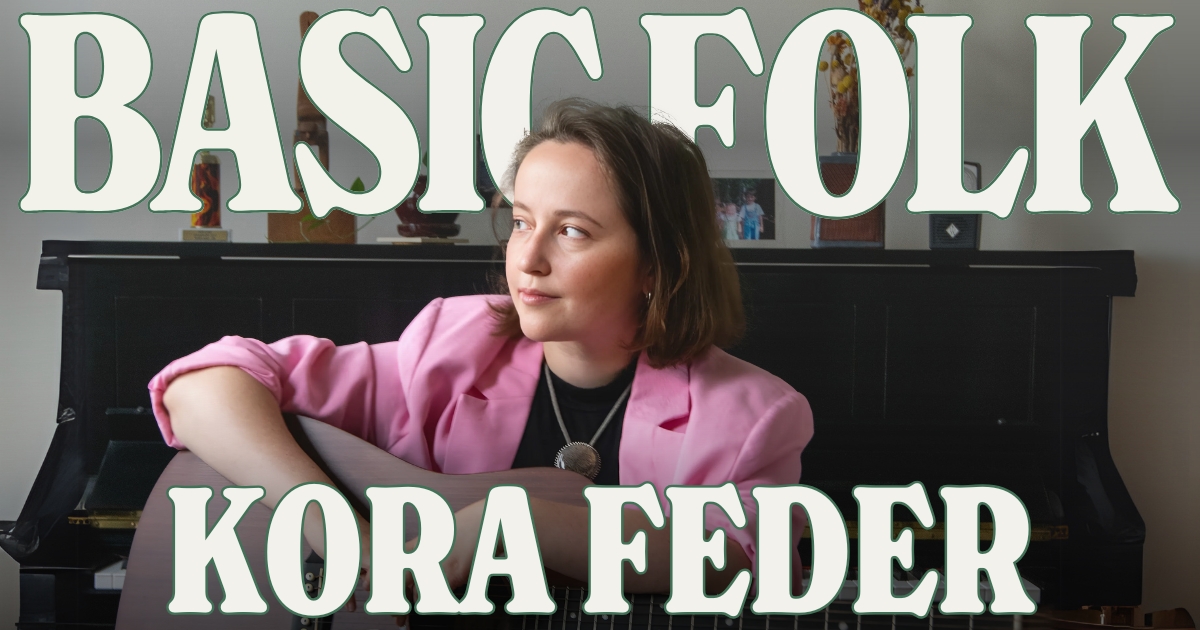
Basic Folk: Kora Feder

On this episode of Basic Folk, Kora Feder talks about her new album, Some Kind of Truth, and reflects on the incredible changes and growth she’s experienced since we last spoke in February 2020. One of the impacts of the pandemic on her music career was the necessity of exploring other artistic ventures – like crafting hats and lino-cutting. She relocated from Philly to California, finally settling in Detroit. Daughter of songwriter Rita Hosking, Kora went slightly viral during the height of COVID lockdowns thanks to her song “In a Young Person’s Body.” In the poignant composition she pays tribute to John Prine and old friends she hasn’t spoken to in years – and somehow still captured incredibly well.

LISTEN: APPLE • SPOTIFY • AMAZON • MP3

Elsewhere in our conversation, Kora discusses the passing of her grandparents, who she moved back to California to be with before they died. Their lives and deaths deeply influenced the new record. She opens up about the nuances of her gender identity, the importance of historical friendships that allow for unfiltered creativity, and her approach to writing both personal and political songs. We go through many of the tracks on the new project, including what I think is the best breakup song I’ve ever heard, “Paragraphs.” Kora Feder is a really incredible leave-you-breathless songwriter, particularly with her political writing. Here’s hoping that she doesn’t wait five more years to release a record, because we’re gonna need her.


Photo Credit: Anna Barber

You Gotta Hear This: New Music From The Brothers Comatose, Goldpine, and More

It’s a golden weekly roundup of new music and premieres! You Gotta Hear This.

Kicking off the collection, San Francisco-based bluegrassers the Brothers Comatose unveil “25 Miles,” a single from their upcoming album, Golden Grass. The full project arrives in September, but you need not journey that far to hear “25 miles,” which is available everywhere today. Listen below.

Then, Nashville Americana duo Goldpine keep the shimmering, golden aura going with “Space,” a blend of futurism and roots music about craving a break from the rat race and the “real world.” Goldpine’s brand new album, Three – their third, indeed – releases today, so we’re happy to spotlight a track from the project in celebration.

Alaskan bluegrass and country artist Josh Fortenbery shows off his new, expanded sound with “City Lights,” a song – and accompanying music video – about aging, opportunity, and anxiety that’s twangy and danceable even wrapped up in existential pondering. Plus, Mountain Home Music Company recording artist Jesse Smathers declares “If It Ain’t Broke (Don’t Fix It)” in his latest single, a tongue-in-cheek number that you’re sure to find hilarious and top notch.

To close us out on New Music Friday, Duluth, Minnesota’s Ross Thorn brings us “Baby, That’s All I Need.” With a folky sound and backed by lovely finger-picked guitar, the song is about empathy and, as Thorn puts it, “…Seeing the divine in everything, and seeing the divine in yourself.” It’s a perfect bookend for this week’s roundup.

We appreciate you joining us each week for new music. Because you know what we think – You Gotta Hear This!

The Brothers Comatose, “25 Miles”

Artist: The Brother Comatose
Hometown: San Francisco, California
Song: “25 Miles”
Album: Golden Grass
Release Date: July 16, 2025 (single); September 12, 2025 (album)
Label: Swamp Jam Records

In Their Words: “’25 Miles’ was born out of a late-night drive from the SF Bay Area to LA, up and over the Grapevine, and a feeling that most of us know all too well: the weight of the world pressing down as we’re trying to outrun it. It’s about restless energy, being burned out and broke, with only dreams and close friends guiding you to your destination.

“It was written during a time of uncertainty and mental noise, and explores the tension between responsibility and freedom, and momentum and stillness.

“The line, ’25 miles to go and we’re running out of gas,’ is a metaphor for the transitional moments when you’re not quite sure where you’re headed, but you know you can’t turn back. There’s a subtle ache and a longing to escape not just a place, but also pressure, expectation, and the past. It’s about how getting lost is part of the plan, and survival sometimes looks like singing too loud with the windows down.” – Ben Morrison


Josh Fortenbery, “City Lights”

Artist: Josh Fortenbery
Hometown: Juneau, Alaska
Song: “City Lights”
Album: Tidy Memorial
Release Date: July 11, 2025 (single); October 10, 2025 (album)
Label: Muskeg Collective

In Their Words: “This melody has been kicking around since I was in high school and I’ve returned to it and slowly tweaked the lyrics over the years. It definitely captures the expansion in my sound since the last record, but also highlights that internally, I feel as lost as ever. My anxiety around aging is pretty new – I think I’m finally recognizing that some doors are closed or closing, and I’m trying to decide if I’m still having fun.

“I worked with a videographer in Juneau, David Rossow, to visually capture the feeling of standing still in a small town while the world moves rapidly past. We probably weirded out some tourists walking in slow motion while singing the song at .2 speed, but it definitely shows off my local haunts and the local life that sometimes haunts me.” – Josh Fortenbery

Track Credits:
Josh Fortenbery – Vocals, guitar
Erik Clampitt – Pedal Steel
Kat Moore –Fender Rhodes, Hammond B-3
Sam Roberts – Bass
Todd Vierra – Drums
Kennedy Jo Kruchoski – Vocals
Taylor Dallas Vidic – Vocals

Video Credits: Directed by David Rossow.


Goldpine, “Space”

Artist: Goldpine
Hometown: Nashville, Tennessee
Song: “Space”
Album: Three
Release Date: July 11, 2025

In Their Words: “We spend a lot of time on the road these days… it’s just become our regular life now. It seems like we drive so much, and do so much computer work, and are on the move so often that we just really cherish our breaks and time off. ‘Space’ is kind of like a stream of consciousness song about the desire for a break from the real world stuff. It’s a space-aged dreamy Americana tune with futuristic sounds and a rockin’ guitar solo. This tune was recorded from a compilation of live takes from shows on the road last year and mastered by engineer Dave McNair (Shovels & Rope, Brandi Carlile). We really captured the raw live performance feel on this tune, which is what we specialize in.” – Goldpine


Jesse Smathers, “If It Ain’t Broke (Don’t Fix It)”

Artist: Jesse Smathers
Hometown: Floyd, Virginia
Song: “If It Ain’t Broke (Don’t Fix It)”
Release Date: July 11, 2025
Label: Mountain Home Music Company

In Their Words: “This tune was fun as could be to write and record. ‘If It Ain’t Broke (Don’t Fix It)’ is a common saying most folks have heard. I know I’ve heard it my whole life. However, the family in this tune must not be up to speed on the old idiom. This tune is a tongue-in-cheek reminder that if it ain’t broke, don’t fix it – just leave well enough alone.” – Jesse Smathers

Track Credits:
Jesse Smathers – Guitar, lead vocal
Hunter Berry – Fiddle
Corbin Hayslett – Banjo
Nick Goad – Mandolin, harmony vocal
Joe Hannabach – Upright Bass


Ross Thorn, “Baby, That’s All I Need”

Artist: Ross Thorn
Hometown: Duluth, Minnesota
Song: “Baby, That’s All I Need”
Album: Fitting In
Release Date: July 11, 2025 (single); August 8, 2025 (album)

In Their Words: “I began writing this one morning after I went for a walk in the graveyard, a swim in Lake Superior during a storm, and came home to see a robin in the yard. It’s a song about radical empathy, seeing yourself in everything, seeing the divine in everything, and seeing the divine in yourself. We recorded the song live at the fabled Pachyderm Studios in Cannon Falls, Minnesota. To me, the song feels like John Prine collaborated with the rooster from the old Robin Hood cartoon (AKA Roger Miller), with a blend of honesty, humor, and some good old-fashioned whistling.” – Ross Thorn

Track Credits:
Ross Thorn – Vocals, acoustic guitar
Clark Singleton – Bass
Cassandra Sotos – Violin, vocals
Jacob Mahon – Banjo, vocals
Ian Hopp – Drums
Kyle Orla – Acoustic guitar, vocals


Photo Credit: The Brothers Comatose by Jessie McCall; Goldpine by Raechel Curtis.

A Force
To Be Reckoned With

Ghosts are so much more than spooky or goofy animations; they represent lived histories, past selves, and the ever-unfolding work of becoming. With her latest album, Every Ghost, country singer-songwriter Kelsey Waldon gives grace to all the women she’s been along the way, entertaining their urgent lessons as she considers who she is today.

“There’s good ghosts and there’s bad ghosts. Some of them have unfinished business and maybe they feed off fear, or maybe they feed off your happiness. I certainly have them, I have a lot of ghosts,” Waldon says. “It’s those types of ghosts, but also the ghost of every version of yourself that you’ve been and just being proud of where you came from, where you’re going, and honestly, where you’re at; meet yourself there.”

On the album’s first track, “Ghost of Myself,” she lays out how she got here:

I had to get tough so I could get wise
I’ve been a thousand women in my own time
Been a thousand women and I’ve loved them all
I had to get low so I could walk tall

From the album’s first lush, ebullient guitar run, Every Ghost is thick with layers of twang, accompanied by driving fiddle and classic country sounds. Waldon’s velvety voice, which has always been self-assured, sings clear and powerful. She’s standing on her own two feet; this is the album she’s been working toward over the last decade of hard work and meticulous touring.

Modern pop country is rife with men behaving badly or selfishly while extolling the unholy virtue of big truck worship. But long before their unceremonious relegation to the role of disingenuous machines, good for little else than scoring sex and drinking cheap beer, truck songs (usually about big rigs, not pickups) made poetry out of the long haul and produced some of country music’s most interesting characters. Look no further than Red Simpson and C.W. McCall’s catalogues, Jerry Reed’s “East Bound and Down,” Red Sovine’s “Phantom 309,” the Willis Brothers’ “Gimme 40 Acres to Turn this Rig Around,” or Kay Adams’ “Little Pink Mack.”

“Comanche,” track 2 on the new album (named after the 1988 Jeep Comanche Waldon bought recently) joins that lineage. “The rumble of the engine feels like my soul smooth when it’s runnin’/ A little rough when it’s not movin’,” Waldon sings.

Get behind the wheel on the open road, relax, blast some music, sort out your thoughts – there’s nothing like it. “We’ve all got our own amends to make/ We’ve all got our own hearts to break/ That’s the way it is,” Waldon continues, letting go of someone no longer in her life.

Spending time with an old, well-crafted object is a privilege and a joy in a commodified quick-fix world, one which Waldon manifests throughout the album as she tackles lessons and ghosts from a life lived deeply and broadly. The specters of Every Ghost include lost loves, of course; demons and vice; and also loved ones who are no longer earthside.

“Tiger Lilies” was written for her grandmother, whose beloved lilies she now tends in her own garden. Gardening and growth figure heavily in Waldon’s lyrics and worldview (notably “Season’s Ending,” off No Regular Dog and her cover of Jean Ritchie’s “Keep Your Garden Clean” on There’s Always a Song). “I think it’s sexy to know how to feed yourself and grow things,” she says. “What’s more country than that?” Later, she dwells more broadly on what we inherit generationally on “My Kin.”

The ghosts of vice have a particular way of lingering. “Happy new year, I’m scared to death/ My ol’ demons, they give me no rest,” Waldon sings on “Lost in My Idlin’.” Waldon has been, as she puts it “booze sober” for four years, but for her, the allure of letting loose and getting drunk lingers: “Wishin’ I was fucked up in some honky tonk/ Where they let me play my music way up loud.” Beyond an ode to temptation – and in some ways to simpler times – it’s an acknowledgement of those who’ve slipped and the hard work of holding the line. (Not to confuse resisting vice with moral superiority, addiction is a disease.) “I loved getting tore up from the floor up, that’s in my blood,” Waldon says; but staying sober is what’s best for her.

“I don’t wish for pain/ And I don’t dream of war/ When will it all end?? What are we killin’ for?” Waldon demands on the chorus of the wrenching, mournful “Nursery Rhyme.” “I honestly wrote that song after seeing pictures of children being bombed,” she says. Pertinent and direct, Waldon’s premise is simple: please, be kind and decent to each other. “How can you climb when you ain’t got a dime? / Workin’ your life away till you die/ Can’t pay what you owe ‘em, not in this lifetime/ Darlin’, it’s a nursery rhyme,” she continues in the song, lamenting the dissolution of the “American Dream” and economic parity for average people. “I’m a very, very proud American, but I know that sometimes the ‘American Dream’ does feel like a nursery rhyme,” Waldon says.

In 2019, that ability to zero in on the human condition landed Waldon the first new artist slot in 15 years on Oh Boy Records, founded by John Prine, who was likewise rivetingly dialed in to suffering and joy. Waldon’s bona fides include a bevy of appearances with Prine before his death in 2020. Before this she’s released six albums – Every Ghost her seventh – including 2020’s They’ll Never Keep Us Down, a cover album of protest songs including Nina Simone’s “Mississippi Goddam” and Prine’s “Sam Stone.” More recently, she released 2022’s No Regular Dog and 2024’s There’s Always a Song, covering some of her greatest musical influences.

Waldon’s been named a Kentucky Colonel, too. The highest title of honor awarded by the governor of the state, it’s often given to artists who guard Kentucky’s cultural traditions and further their future. She’s toured with Vincent Neil Emerson and 49 Winchester, the latter of whom she will join at the Ryman later in the year. She’s also looking forward to a long list of headlining shows, including at Under the Big Sky and FloydFest.

“That’s the only place that I do feel true freedom, honestly, is in the studio and then on stage doing whatever the fuck I want to, singing my heart out,” Waldon says. “I want the show to be a force to be reckoned with.”

Myriad wonderful songs have been written about ramblin’, but they’re all about men, Waldon says. She ends the album with one of the few exceptions, Hazel Dickens’ “Ramblin’ Woman.” At its release in 1976, the song represented a bold manifesto for female independence. As an album closer for Waldon, it acts as a bookend with “Ghost of Myself.” Waldon started the album telling listeners where she’s been and concludes with where she’s going.

“Hazel’s just saying ‘I got shit to do,’” Waldon says. “Women can ramble, too. I feel like we’re more than a girlfriend, a wife, a mother, even – and all these things that are so beautiful. We know we stand on our own. And we don’t have to explain it to anybody.”


Photo Credit: Alysse Gafkjen

“I Once Was Lost, But I’m Pretty Found Lately” – Olivia Ellen Lloyd Finds Herself Again

In the wake of several viral country songs released in 2023 – most notably the ill-conceived pair of Jason Aldean’s “Try That in a Small Town” and Oliver Anthony’s “Rich Men North of Richmond” – renowned author and country journalist David Cantwell penned an essay for TIME magazine with an absolutely stunning (while quite simple) observation included. Cantwell considered place, citizenship, and ownership. To whom does the “small town” belong?

“…For most of today’s country fans that small town isn’t TV’s tiny Mayberry; it’s a suburb or exurb of some decent-or-giant-sized metro,” Cantwell explains. “I wish more country songs would talk about that proximity, how city folk and small-town folk flow back and forth for work and fun – and are very often the same people.”

And are very often the same people. Humans don’t live their lives along strict, black-and-white boundaries and borders – no matter how often society attempts such demarcations. Our lives are lived in the gray, in the blurry in-betweens, as collections of many disparate and often dichotomous parts.

Singer-songwriter Olivia Ellen Lloyd is just such a person, caught up in the nebulous purgatory between rural and urban, city folk and country folk, doing it for herself and doing it for ambition. Her brand new independent album, Do It Myself, finds Lloyd with a sense of confidence that could only be earned through a hard-working, bootstraps approach to making music – a mindset that, whether within or outside the arts, is well known to West Virginians like herself.

After a stint living in Nashville, Lloyd returned to New York City, following up 2021’s fantastic Loose Cannon with the heartfelt, sensitive, and often point-blank songs of Do It Myself. Like Loose Cannon, this material is danceable, country, honky-tonkin’, and bluegrassy while it boasts deft and majestic moments of WV DIY, punk, and rock and roll. After crisscrossing the country proffering her art, Lloyd seems to have realized that being both a city person and a country person is never a drawback, it’s a superpower. Having her feet in NYC, her heart in West Virginia, and her work anywhere and everywhere, Lloyd has clearly determined it’s not a dilution of the “authentic” or roots-music-ready facets of herself to straddle these arbitrary borders and own that duality.

As a result, Do It Myself is remarkably successful. Like Hazel Dickens in D.C. or Dolly Parton in Nashville or Tina Turner in Memphis, Lloyd has found her voice and found herself not by running from who she thinks she can’t be anymore, or editing out the parts of herself that don’t seem to “fit” with country tropes and perceptions of good ol’ American rurality. Instead, she’s reached this current era of music making by resting easy – or not so easy, at times – in the knowledge that the best she can do as a singer-songwriter-artist is to be herself, whoever that is, in the truest format possible at any given time.

We began our BGS Cover Story interview by discussing that ongoing search for herself and how that particular journey shows up throughout Do It Myself – in the lyrics, sonics, and beyond.

It feels like your music in general, whether we’re talking about Loose Cannon or the new album, Do It Myself, you’re most often turning over the idea of finding yourself – and not that that’s a static thing to be found. It’s not that you find it once and you’re done finding it. Your music orbits around these questions of, “Who am I? Is this me?” I feel that really strongly in this record. So, as you’re releasing this album I wondered, who is the self you have found? And how goes the search for yourself?

Olivia Ellen Lloyd: I think what’s really interesting is I don’t know that I would’ve put a finger on that until recently. I’ve also come around to the understanding that that is what my music has done, which is help me come back to myself and find myself. I would say it’s currently going pretty well, but boy it has been a journey to get there.

I think writing this record, I was much closer to her – to me – when I started writing this record, but I wasn’t as close as I thought I was. It’s taken not only writing it and realizing that I wanted to put it out and all that stuff, but also deciding to self release it and deciding to continue to champion my own work where I’ve truly found that. That, “Oh there she is!” [feeling]. I feel very recently like I have arrived at the person that I’ve been looking for and that’s exciting and also really scary, because boy, has most of my work orbited around, “What the fuck happened? How did we get so lost?”

I once was lost, but I’m pretty found lately.

How do you feel about writing songs that are so personal and that are so much about growth, introspection, and questioning and then having to carry them around on your back for a year or two or three on tour – or for the rest of your life! How does that process feel to you or that emotional or mental understanding?

Interestingly, at least with my first record, I think I wrote often with no aim, so there were no expectations. I mean it’s funny, Justin, because you are one of the few people in the music industry and in my music world who knew me when I was writing many of these songs, but not performing often. The process of writing was very much a way to try and tune into this inner voice that I’ve been learning to listen to. It was an attempt to get in touch with myself, which I really have struggled to do for various reasons throughout my life.

I think I’m also quite an impulsive person, historically, and I have a lot of tattoos – a lot of stupid tattoos – and I kind of think of these songs, especially the personal ones that no longer represent [me like tattoos.] I don’t drink anymore really – I wouldn’t say that I’m sober, but drinking is not a big part of my life anymore – and all of Loose Cannon and much of this record involves talking about those moments in my life. But I have this tattoo of a possum drinking a High Life. That’s not who I am anymore, but that was a part of how I got here. When I think about these personal songs that involve a lot of myself and a lot of what’s really going on I think, “Well, that’s a part of the patchwork,” but it doesn’t have to be – luckily – the whole story or the end of the story, either.

The way that you’re utilizing so many different roots styles, it’s disarming of a listener, so you can have a danceable, honky-tonkin’ track that’s still lonesome as fuck, tear in your beer. It feels like it can still be very country, very Americana in the way that it is melodramatic, but it still feels grounded in reality.

I think that playing with genre in the same way that we experiment with different sidemen and co-writers is just another tool that we can use. I see a lot of artists, especially right now, there’s just so much pressure to hit. There’s so much pressure to hit on a vibe, hit on a moment. Part of the joy of this is playing in those in-between spaces and finding something unexpected.

Come on, if we’ve got Dolly and Patsy and Loretta, they did a lot of the groundwork so we should get to play around that space! We’re not gonna outwrite or outsing those women, we simply cannot, so the opportunity we have is to explore. I don’t wanna go back. I don’t wanna go back to any type of past anywhere. The future is scary for me, but I’m really curious about what could come next, after those things, and how we can develop those sounds.

You’ve spoken on social media and on microphone about your approach to genre and how so much of it comes from growing up in West Virginia having this agnostic approach to genre aesthetic, on a practical day-to-day level. You’re doing West Virginia music, you’re bringing in Nashville, you’re bringing in New York City. Can you talk a little bit about that?

For the first record I got the feedback that you can hear the country and the city kind of intermingling together and someone was like, “This [new] record feels like so much more New York.” I think I understand where people are coming from, but actually I think what’s happened is I built a musical community in New York City around bluegrass, which I think is one of the great community music forms. It is a great way to bring people together. I’m so grateful that I knew a bunch of those songs and then I got better with those songs and then I met people who were passionate about that music. But actually, this record was more about digging into the sounds that I grew up with. I grew up going to DIY punk shows, I grew up with my dad listening to the Grateful Dead, the Band, some Jerry Jeff Walker, Nitty Gritty Dirt Band.

I think this record really returns to a landscape that’s more true to how I was raised, which was eclectic, a little bit daring, and a little bit more rock influence. I think I’ve been quoted once and I’ll say it again, I think the reason that the places in West Virginia gravitate more towards that kind of music is because music got gentrified and country became this bizarre fascist, patriotic propaganda wing of the Republicans and of government.

If you are not one of those things, if you were not a kid who could afford to go to Berklee and you were not somebody who was all that proud to be a fucking American in the 2000s, you likely grew up listening to a lot of that. Especially in rural places, you likely grew up listening to a lot of punk, a lot of rock, a lot of indie pop. Like many people do, I walked way far away from that stuff and dug into the roots of country and folk and bluegrass. I swirled around in that stuff for so long, and then I came back to myself; I came back to the first music that really inspired me and felt less academic.

In my opinion, the most interesting part is all of those genres coming together. I do think that I’m very wary of anybody who talks about “good folk music” or “real bluegrass” or anything like that, because typically some very nice man in a fisherman sweater in New England has told them [to think that way]. I learned to like music the way that most normal people learn, I just listened to it and I didn’t worry about whether I was listening correctly or not. I think we gotta return to that.

Community has come up multiple times already in our conversation and I know how important community is to you – how pivotal it’s been in your musical career. How do you balance the “doing it for yourself” with the “doing it with community”? How do you do it for yourself and trust yourself and give yourself permission to be who you are and take up space to do it your own way, while also being a member of a community and doing it for the collective at the same time?

Have you been listening to my therapy conversations? [Laughs] I struggle with deep individualistic tendencies. I have a tendency to be like, “Fuck it.” That can also be bad. Notably, have yet to accomplish a successful relationship, because of this thing I do. “Fuck it, I’ll deal with it myself. I’ll just do everything myself. I will stop relying on you. I don’t need to rely on anybody for anything.”

I hope it comes through in the music that many of my songs, including “Do It Myself,” include enough self-awareness to know that I’m talking about choices that I’m making and things that I’m doing and they are not always the healthiest choice or the best choice. That’s okay. I think there’s a side of this where, yeah, I have been way too [self-reliant]. As I sit here selling shows out, opening for Jeff Tweedy, and unable to get a booking agent or a manager. Yes, I have isolated myself a little bit too much for people to be paying close attention.

Certainly “doing it myself,” in this context, many people told me to wait to put this record out. Maybe that would’ve made sense for a more reasonable person, but I think this is really important: Your community is everything. You need to be able to trust that the people around you are people who are willing to let you show up like however [you are]. In the last two years, I have focused so hard on surrounding myself with people who I know I can trust to both keep me honest and on my shit and love me through mistakes and they will engage in conflict resolution. They will be gentle with me and like I can do the same for them.

It’s not possible to be self-sufficient, emotionally, creatively, if you do not have a community that supports that in you.

I love that on the album you have “Live With It” back-to-back with “Do It Myself.” I think it’s pretty striking, they’re kind of a reaction or a response to the other – and vice versa. That line, “If this don’t kill me…” feels like such a natural lead in to “Do It Myself.” I wanted to ask you about “Live With It” and also about that placement of those, like bookends.

Thank you for asking about “Live With It.” My producer Mike Robinson is gonna be so happy and that’s his favorite song on the record. I mean, that’s my pandemic [song]. The chorus of that song I wrote during the pandemic. Looking back, it was probably also the worst point in my life for my drinking. I was at a point where I was not in control. Things were so bleak that it was like, what’s the point of trying to slow down or get a handle on it? There was no future to look forward to.

But by the time I finished the song, what I really hoped to accomplish is [communicating that] there are many times in our life where we have a pessimistic view on our own personal outcomes. We’re not really convinced that things could get better and yet there is an interesting tendency with human beings, we just keep going anyway most of the time. I find that to be both very curious and also something that is inspirational in its own way. We can continue to live and survive through unsurvivable things, even when we don’t know entirely why or how. That’s what “Live With It” is about. It’s four people experiencing something that they, for whatever reason, don’t see why they have to live through it or how they’re going to, but they do.

I also love the feel change in “Every Good Man.” So good. It’s nasty. That song is a bit like “Stand By Your Man,” playing with country tropes in a really fun way, but that feel change – I think I made a stank face just listening to it. Can you talk about that one a little bit?

Once again I just have to say, I think a lot of what you hear and the really cool musical stuff is owed to the creative partnership that Mike Robinson and I have. I can’t say enough good things about him. I met Mike at a fucking bluegrass jam and he was playing the banjo, which is like his fourth instrument, you know? I think these days he mostly makes money as a pedal steel player. Everyone is sleeping on his ability to play the acoustic guitar. Like, truly.

I met Mike six years ago now and out of the blue he coached me into a music career. He would deny that, but that is 100% what happened. He bullied me into it. And something I really love is that I can bring songs to him and he finds exactly [how it should sound], especially when he’s excited about the songs. Both “Every Good Man” and “Live With It” were definitely high on his list of loves. He finds these like beautiful moments and we have such a similar [approach], we were raised on the same music. For “Every Good Man,” that feel change came from some moment in a John Prine song.

Another song that I really like – it might be my favorite – is “Knotty Wood.” It feels like country. It feels like church. The lyric, “Who says memories can’t be bought? We always sold ours for a song…” grabbed me. You’re talking about how we compare and contrast and measure ourselves against other people and our perceptions of other people’s lives. “Don’t they look good when you paint over the pain and knotty wood?” It’s such a great hook. I love the imagery of it. I love that it takes me to my grandma’s house. But I feel like it begs the question: Do you ever worry that in synthesizing your experiences, putting them into songs, and taking them to the world that there’s any part of that process that is also “painting over the knotty wood”?

Yes, and my mother would definitely say yes. The genesis of that song actually came from my mother and I growing up in the same small town. I grew up a mile from [where she grew up] and from our home to her childhood home it was less than a mile. That house, my grandparents’ house, I spent probably two days a week there and almost every day after school I walked from my elementary school to my grandparents’ house. It was my home, too.

It got sold after he died, we couldn’t hang onto it. It got sold again during the pandemic by an actually really lovely woman. She started renovating it on Instagram and I watched this place that held generational memories be stripped in some cases to the studs and rebuilt. It was pretty public. I felt a sense of ownership of our place – that I do not factually own and never have – that got me. Being curious about place and home made me think about the journey my grandparents went on to become property owners and to become middle class. And about that moment in the height of prosperity in the ‘50s, all the things my grandparents sacrificed.

I think the song is about thinking about those generational ties, thinking about the things my grandparents sacrificed, and did not sacrifice or did not give away. I’m also thinking about how, especially right now in this weird American moment – “Don’t other people’s lives look good when you paint over the pain and knotty wood” – how many people want to talk about their humble, hardscrabble beginnings without having to actually live them.

There are so many other reasons why it’s taken me so long to get here, why it’s taken me so long to put my songs out. But it all revolved around the generational trauma of growing up relatively poor and with people who had to give up everything in order to get anything.

You can’t have it both ways. You can’t have the small-town, Appalachian upbringing and also have the confidence and gumption of [privilege]. I mean, it’s rare. It happens, but you don’t often then also come equipped with the gumption to believe that you have the right to be a fucking artist. All my grandparents wanted was just a nice home in a small town.

I’ve been hustling, self-promoting my own art and music, and in a desire to attain the things that the people I’m criticizing have attained, we get to the third verse. … The crux of that song is, I think, a way more interesting story than “rags to riches.” It’s middle class to rags.

I mean, my grandparents went to war so they could get an education, right? My grandfather’s nickname was “Bones,” because he was so thin he looked like a bag of bones. The trajectory of their lives into middle class comfort is astounding, and the way that his grandchildren and children are sliding back into poverty is much more so. It’s much more true to what is happening in this country than this “rags to riches” bullshit that we are still being asked to sell, but it’s trickier to talk about.


Listen to Olivia Ellen Lloyd on Basic Folk here.

Photo Credit: Aaron May

On Her Debut Solo Album, MUNA’s Katie Gavin Searches for Connection and Finds It

On the album cover for singer-songwriter Katie Gavin’s solo debut album, What A Relief, she sits half-dressed in the middle of her shiny, sage-green bedspread with various clothes and possessions strewn around her and the floor; even the cat stands awkwardly mid-sit or stand, it’s hard to tell. The immediacy of this messy in-between moment conveys the intimacy Gavin reaches to again and again on the album.

I want you to see me
When you’re not looking
I want you to fuck me
When we’re not touching

The album’s opening track, “I Want It All,” exhumes a lust for connection so all-consuming she knows already, “I’m gonna lose my mind / I’m gonna lose…” But it’s also Gavin’s thirst for and attention to these acutely relatable moments of humanity that render the album enticing.

“I’m really hungry for connection. And I think that in putting out songs that express that, or putting out images that express that, and having it met with understanding gives me that experience of like ‘we’re all humans having a human experience,’” Gavin says. “I want to push myself in terms of what I allow other people to see.”

Much of Gavin’s career has been with pop band MUNA (who opened for Taylor Swift’s Eras Tour earlier this year). Solo, Gavin sheds her dazzling pop-star persona and the trappings of MUNA’s spectacular auditory and stage presence, retaining their honesty and emotional precision. What A Relief, which was produced by Tony Berg, is a collection of 12 songs Gavin wrote on the side over the past seven years. With them, and a clarity born of self-assurance and yearning for connection, Gavin pulls up a chair to settle in for a heart-to-heart with her audience.

“Some days you do your best / Some days you do what gets you out of bed…” Gavin sings on “Casual Drug Use,” possessing an inscrutable ability to pinpoint reality neatly and poignantly. That realism remains throughout the album, which unfolds as a masterful look at the human condition through the micro view of Gavin’s relationships with the world, herself, and others. Many times, she sounds so thrillingly close to the microphone it’s as if she’s singing right into your ear.

As she winnows down her experiences to a few kernels of truth, Gavin deliberately and deftly seeks accessibility and relatability without catering to weirdness or discomfort simply to make a point. “I am pleased with the same chords, over and over, as long as there’s a story and someone is saying something compelling,” she explains.

Her lack of pretense serves as shorthand for her palpably raw portraits of life: “But I think this is as good as it gets, my love/ I think this is as good as it gets/ Pray to god that you think that it is enough…” she sings in “As Good As It Gets” – which features guest vocals by Mitski – about a relationship that is not always a fairy tale. It’s an acknowledgement that you can both love someone and be underwhelmed by them, at least some of the time.

“‘As Good As It Gets’ reflects this big question that I’ve had for a long time, and I still have about what is reasonable to expect from a romantic relationship. And how good is it supposed to feel?” she says.

Elsewhere on the album, in “Sanitized,” Gavin carefully takes a wet washcloth to the bottoms of her dirty feet, afraid to stain her lover’s clean bed (“I lie perfectly still so I don’t mess up my hair/ I’m a sanitized girl, I clean up for you my dear”); or promises not to stalk her ex online, except “once in a while I’ll wanna know if you’ve died,” as she muses in “Keep Walking.”

Growing up in Illinois, Gavin’s parents gave her free reign to explore music and she gravitated unsurprisingly to pop music, entertaining preteen love for the Spice Girls and Samantha Mumba, and teen obsessions with Riot Grrrl, Gravy Train, and the Weepies’ “Gotta Have You.” She also gravitated toward queer, explicit music (Gavin is queer, but was in the closet at the time). When she started writing her own music as a teenager, her mother introduced her to Imogen Heap and her father stoked her folkie music interests with Jackson Browne and Jim Croce.

Gavin’s broad musical tastes inform her writing of course. In the case of What A Relief, she draws particularly on her love for John Prine’s flawed, human characters, and perverse, weirdo songster Loudon Wainwright III whose Attempted Mustache remains one of Gavin’s favorite albums.

“It’s the same magic that’s in a lot of John Prine songs, where these people aren’t afraid to talk about what real people experience in their real lives, even if it’s really silly, and then really mixing that with the profound.”

Silly mixed with the profound is perhaps the best possible description of Gavin’s own music. In the middle of the album, Gavin drops the bluegrass-folk portrait “Inconsolable,” about generational baggage’s impact on our well-being. Wrapped around a divinely-gratifying fiddle melody (she brought in Nickel Creek’s Sara and Sean Watkins to add a little extra bluegrass cred to the track) the song is first and foremost a reflection on learning to be vulnerable while falling in love.

It’s an experience that feels every bit as familiar as Gavin’s messy bed, but in a way that seems to make sense for the very first time – the gift of a stellar songwriter. More than that though, “Inconsolable” is a study in the way tiny moments elevate Gavin’s songs through her allegiance to the balance between silly and unvarnished experiences. We’ve all curled up on the couch hesitant to show how we’re really feeling.

But I’ve seen baby lizards running in the river
When they open their eyes
Even though no one taught them how or why
So maybe when you kiss me I can let you
See me cry
And if we keep going by the feeling
We can get by

Mid-verse, Gavin pivots from the endearing image of baby lizards learning to swim to emotional vulnerability in a fledgling relationship with the blockbuster realization that salvation and connection again might just come from that blind leap of trust.

Gavin’s quest for an honest examination of emotional intelligence stems in part from time spent with her grandparents, two of whom she lost in the last few years. Soaking up their stories, she thought about how much they endured and how many times older generations weren’t afforded a chance to be heard, or to feel their feelings.

Elders teach both by omission and by passing the torch. In “The Baton,” What A Relief’s anthemic third track, dedicated to the lineage of socially and generationally inherited womanhood, Gavin outlines her understanding of resilience as it passes from mother to daughter. Imagining what she’d say to her own daughter, Gavin also reaches to the wisdom from generations before her:

I’d pass her the baton and
I’d say you better run
‘Cause this thing has been going
For many generations
But there is so much healing
That still needs to be done

Not for rebellious reasons, but rather to instill a deep love of self, by the end of the song, Gavin’s come out the other side as her own mother.

“It’s a sense of learning, a sense of ownership and agency and learning to really listen to myself and trust myself, like if I’m going into a situation that I’m nervous about,” she explains. That’s a transformation not unlike her experiences writing the album, which she started when she was 24 and concluded at the age of 31: “You’re kind of moving from this archetype of maiden to mother.”

“I’m aware of a younger part of me that might be nervous and might have needs,” she says. “I often talk to her and say, ‘I got you, you’re coming home with me.’ And, ‘You don’t need to worry that I’m gonna forget about you or give you away to somebody else, or make you tap dance for somebody else.’”

Part of mothering yourself is finding your pitfalls and learning to prevent them. For Gavin, that includes thinking about addiction a lot, well beyond drug use.

“I can get addicted to a lot of different things; I can get addicted to different processes; I can get addicted to people; and I can get addicted to looking at furniture on Facebook marketplace,” she says. “I was thinking about this idea that when we as humans get stuck in the process of addiction, the things that make us feel good, and our actual relationship with the world gets smaller and smaller.”

That idea became the song “Sketches,” wherein Gavin distills addiction into a two-dimensional study of self reduction. In a simple acoustic guitar and cello-accompanied track, she imagines her character reduced to a sketch by an overbearing relationship: “That the deeper I’d go/ The smaller I’d get…” until she takes back control, painting herself back to size.

“The process of recovery has been really one of expansion, learning that I can feel intimacy and connection and pleasure and joy from so many different experiences in life and from so many different people,” Gavin says. “And there’s something that just feels very profound about that for me in this time.”

Even when it comes to writing about climate change, Gavin filters her stories through our relationships to one another. It feels more effective than shaming people for not recycling, she says. In “Sparrow,” she ruminates on the dangers of the quick fix, hoping in vain for the song of a sparrow in spring, only to discover that the tree it would perch on has died of a cure applied rashly and without thinking.

But perhaps Gavin’s most profound relationship moment on the album comes when she eulogizes her dog in “Sweet Abby Girl.”

“She’s taking up most of the mattress/ Can’t imagine being so un-self conscious/ She’s pushing her back up against my legs…” Abby becomes a foil for Gavin’s insecurities, as throughout the song she considers the vulnerability within unqualified love for another being.

Buried late in the album, “Keep Walking,” its penultimate track, reveals Gavin’s raison d’être: “What a relief / To know that some of this was my fault.” Superficially, it’s a breakup song. But it’s also a relief for Gavin’s to put these songs into the world, to share another side of herself, and forge new connections with listeners.

Fundamentally, we get through hard times by laughing with our friends, Gavin says. As she’s matured as a songwriter, she’s been drawn to including those moments of levity in her songs. Invariably, they feel like the best of conversations with friends and lend themselves well to What A Relief’s stripped-down, singer-songwriter format.

“There was just something funny about this idea of putting out this part of me that had up until this point been unexpressed; it does feel like a relief to just let it out,” Gavin says. “I like the sentiment in the song … ‘what a relief to know that some of this was my fault,’ which is just agency. I haven’t behaved perfectly, and that gives me some space to have compassion and forgiveness for you.”

“Real life” is such a tired phrase. Gavin’s version, though, feels scintillatingly, comfortingly relatable, and like her messy bedroom, gives the listener agency to let go and just be, too. What a relief.


Photo Credit: Alexa Viscius

MIXTAPE: Rainbow Girls’ ‘HAUNTING’ Inspirations

Hey BGS! Erin from Rainbow Girls here. Our new record, HAUNTING, just came out October 13th and we put together this Mixtape of reference tracks that inspired the writing or making of the songs on our record. We ended up choosing one reference track per song. Got some help from Caitlin and Vanessa for a couple of these and we ended up creating an awesome playlist. Hope you enjoy! – Erin Chapin, Rainbow Girls

“Sadness as a Gift” – Adrianne Lenker (for “sixth grade girlfriend”)

I’ve always been so inspired by Adrianne Lenker’s style of guitar playing. There’s an intricacy and an intimacy that lends itself so perfectly to the lyrics; the guitar and the poetry of the words stand like a power couple, instead of one falling into the background as support. “Sadness as a Gift” is this beautifully poignant song about losing a relationship, but still wanting to hold the memory in your hand like a moth – it just breaks me. – Caitlin

“Let It Be Me” – The Sweet Inspirations (for “paying my tab”)

The Sweet Inspirations’ 1967 version of “Let It Be Me” inspired me to write a song with a similar groove. I heard that simple intro and it immediately grounded me. Griffin Goldsmith from Dawes played drums on our song, “paying my tab,” and he took this reference track and ran with it to the moon and back.

“Cold Little Heart” by Michael Kiwanuka (for “you must not feel the way i do”)

“you must not feel the way i do” was written after we had already started recording for HAUNTING, but we knew it was the single. We had all the vocals and main instruments recorded, but it needed a hook to open the song. I kept demo-ing this weird sound with my voice we were calling the “vocal theremin” – this ghostly, half-human/half-instrument sound. I knew it would sound too crazy for anyone else in the band to get excited about, so I sent them Michael Kiwanuka’s hit, “Cold Little Heart,” to exorcise any doubts. Thanks, Michael.

“Running Down a Dream” – Tom Petty (for “loser”)

Nirvana loomed large when writing the chord progression for “loser,” but it was a Petty classic that kept rearing its head and ultimately snuck its way into the lyrics. “Running Down a Dream” takes us on a journey that winds towards aspiration. The road is wet and laden with obstacles, but it’s the act of surmounting those blocks that makes accessing the dream so much sweeter. – Vanessa

“Song for Prine” – Jordan Smart (for “how to deal”)

Caitlin wrote “how to deal” the day John Prine died. Part of it is a response to our friend Jordan Smart’s “Song for Prine,” which is about all his attempts to see John Prine perform live, which ultimately he never got to do. But life goes on.

“The Boy Who Blocked His Own Shot” – Brand New (for “if i saw you now”)

The progression and mood of “if i saw you now” was inspired by Brand New’s “The Boy Who Blocked His Own Shot.” Brand New has a way of holding the morose and appalling within their songs that few other artists can capture.

“Ageless Beauty” – Stars (for “ageless beauty, pt ii”)

When we first met and started playing music together in college, “Ageless Beauty” by Stars was on repeat. It was one of the first songs we ever sang together. Our song “ageless beauty, pt ii” reflects on our experience at that time and the beginning of Rainbow Girls.

“Fake As A Dream” – Rainbow Girls (for “sms to the void”)

“Fake as a Dream” is one of our songs, off our record Rolling Dumpster Fire. We had asked our friend Chris Lynch to arrange a string part for it, but what he sent back was so much more. It took the song to another dimension. When we decided that “sms to the void” should be more than an a cappella song, we knew Chris was the person to take the reins. And he did it again – the string arrangements, the piano. It’s both subtle and heartbreakingly gorgeous.

“Last Night” – The Lostines (for “a subtle f u”)

I heard the song “Last Night” by The Lostines and realized there was an entire element of “haunting” missing from our record. Their song opens up with this sweet-yet-spooky melody on an ambiguous keyed instrument and the sound conjures memories of classic ’90s Halloween-esque movies and tv shows like Hocus Pocus, Nightmare Before Christmas, Goosebumps, and Are You Afraid of the Dark. I knew we needed to have a layer like that somewhere on HAUNTING and our song “a subtle f u” won the draw.

“Subterranean Homesick Alien” – Radiohead (for our cover of it)

A cover of one of our favorite Radiohead songs. Alien contact, abduction, insanity. Everything you could ever need from a spooky social commentary.

“motel” – Hot Brother (for “spread me thin”)

We were in the studio recording our song “spread me thin” when we realized that we had 3/4ths of the band Hot Brother recording on the track with us (Nick Cobbett – drums, Ben Berry – bass, Jeremy Lyon – guitar). We decided to ask the 4th (and really first) member, Brittany Powers, to sing on it and that ended up transforming the song into a duet between two women singing about their community. Brittany performs with several other artists in the Bay Area and her voice is an iconic part of the music scene in Northern California. “motel” is the first song off her/Hot Brother’s upcoming record and it is a sheer banger.

“I Want Jesus to Walk With Me” – Mississippi Fred McDowell (for “dead ringer”)

Our song, “dead ringer” is a slide-heavy, minor blues song about being buried alive. It is musically inspired by Mississippi Fred McDowell’s 1959 version of “I Want Jesus to Walk With Me.” The vocal melody parallels the slide guitar’s melody interchangeably throughout the song, creating an eerie, almost trance-like soundscape.

“Cinnamon Tree” – Marty O’Reilly & the Old Soul Orchestra (for “goodnight angel”)

The last track on HAUNTING functions as a sort of secret track, though not-so-secret in the age of streaming platforms. “goodnight angel” is a lullaby we often sing to our friends at the end of long, inebriated nights that was actually a drunken, collective-consciousness co-write with our friend Marty O’Reilly while on tour together in the UK in 2013. We used to play shows together all the time when we first started out and “Cinnamon Tree” was one of our band favs from his first release.


Photo Credit: Kory Thibeault