Small World: Fascinating Albums From Ivory Coast, Turkey

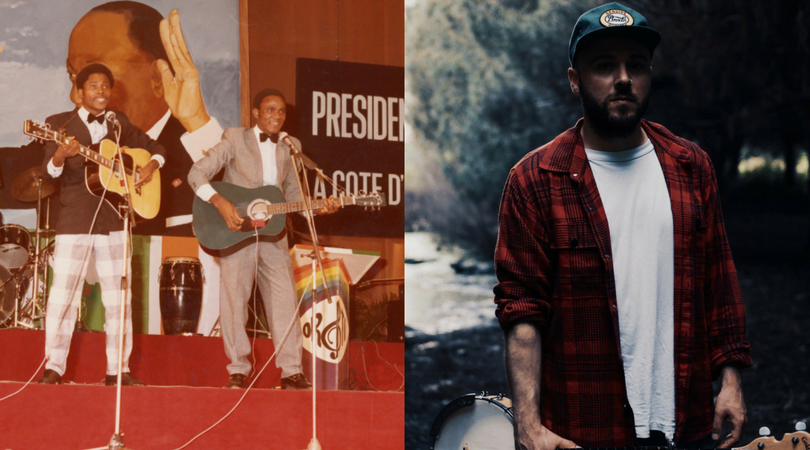
Jess Sah Bi fondly remembers as a young man hearing Don Williams’ 1982 country hit “Listen to the Radio” played, well, on the radio, and becoming obsessed with country music.

Özgün Semerci sentimentally recalls Sundays in the late ‘80s watching old Westerns on TV with his dad and becoming enraptured with the sounds of the banjo.

Nothing unusual about either of those things, except maybe that the former took place in the town of Sinfra in the Ivory Coast and the latter in Istanbul, Turkey.

The fruits of each of those passions are now found, respectively and delightfully, in two fascinating album releases this month. And each is a revelation of the flow of musical inspiration from culture to culture.

Our Garden Needs Its Flowers, via the Awesome Tapes From Africa label, brings us a captivating mix of country and country-folk influences — replete with weeping steel guitar sounds — and West African styles made in 1985 by Bi and partner Peter One. Semerci’s A Nightmare on Clawhammer Banjo, from Turkey’s Lu Records, showcases a distinctive vision in a series of fantasias that bridge Appalachia and Anatolia.

Of course, we’re accustomed to American music sounds turning up in unexpected places. Delta blues interpreted as British skiffle, and later the British Blues Invasion. Skittering bluegrass mandolins in Tokyo. Jimi Hendrix guitar pyrotechnics in the Tuareg desert trance of West Africa. Psychedelic surf guitars everywhere from Cambodia to Peru to Bollywood.

But these artists and albums are in ways more surprising, more unexpected. And both are not part of movements, per se, but of individuals in pursuit of sounds that had seduced them. And while the two releases are very different from each other, their very existence bespeaks a common bond of dedication and invention, the latter just to achieve the basic elements behind them.


“I didn’t even know the music was American country music,” Bi says of his early exposure to it. “We used to listen to Crosby, Stills & Nash and then later Don Williams. This was so popular in West Africa because some radio host played his records every morning. He became a huge star in West Africa.”

Most of what he heard then, though, was French music (Ivory Coast is, of course, a former French colony) and various West African styles. All of that kind of got jumbled in when he started his own musical career, first playing in his brother’s band at age 15 — he’s 61 now — and then moving to the capital, Abidjan, where he and Peter One started working together.

“We started playing acoustic guitars and singing very simple melodies, like we sing in the village,” he says. “But our style was kind of different. With our style, people thought about country music. So we had to add more country music instruments to get more real country.”

That meant some research and adaptations.

“We have some musicians back home who listened to the sound,” he says. “We asked questions, ‘What instruments to play?’ We found out and did it.”

That’s not pedal steel in there, though, or even Hawaiian steel, as Nigerian star King Sunny Adé used to such great effect in the distinctive aesthetics of his ju ju music grooves.

“Use the bottle,” he and One were told. “Electric guitar with the bottle on the finger to make that sound.”


It clicked, their music becoming popular not just in Abidjan, where they ultimately had their own radio and TV shows, but in the region, with regular touring through the Ivory Coast, Benin and Burkina Faso. By the time they made the album they had a sound of their own, with songs in both English and French, looking beyond their borders to issues across the continent — one song is titled “Apartheid,” another “African Chant.”

And eventually each went not just beyond their borders, but halfway around the globe to the U.S., Jess Sah Bi currently living in San Francisco and Peter One, fittingly, in Nashville, playing music separately for the most part, but occasionally together. A few years ago, the original album caught the ear of Brian Shimkovitz, the dedicated music explorer behind the Awesome Tapes From Africa web site, who tracked the two of them down and arranged to reissue it. And now the two will team again for two shows celebrating the release, Aug. 17 at the club Zebulon in Los Angeles and Sept. 21 at New York’s Union Pool.

“African people playing country music in the United States,” Bi exclaims. “That’s something funny! African country music before a Caucasian audience that knows country. Different styles, different things. Life is more interesting. Our voice carries very loud!”

Bottleneck slide guitar, of course, is standard in blues music. But here at times it is employed with remarkable nuance and sophistication to give that Nashville feeling.

For Semerci, pursuing his banjo obsession was even more of a challenge. At least they have guitars in the Ivory Coast. Banjos in Istanbul? Not so much.

“Don’t get me started!” he says. “As I am the only banjo player around, there’s next-to-nothing banjo-related here. My ex-roommate was a girl from Austin, Texas, and my second-favorite banjo was a gift she brought me from home. Maybe this album might have never happened if it wasn’t for her. Thank you, Joy!”

An earlier attempt didn’t happen, as Semerci, when he acquired his first banjo some years ago, first used bluegrass fingerpicking technique, but though he says he got pretty good at it, ultimately found it unsatisfying for material he was working on and gave up in the course of recording an album.

“I was after a more mellow tone with the banjo and the clawhammer technique seemed more suited for me as a singer-songwriter, so I leaned toward that and almost immediately fell in love with it,” he says, saying that the style allowed him to come up with his own melodies in the playing.

He repeatedly watched instructional videos by Josh Turknett, Mike Iverson and Cathy Fink that he found on YouTube, obsessively listened to albums of both classic and contemporary players — icon Pete Seeger and Sam Amidon (who mixes classic styles with bold experimental approaches) “are two names that I hold dear,” and he cites Ken Perlman and Bob Carlin as key to his development as well.

“I tried to learn and played so many traditional songs, but my favorites are ‘Will the Circle Be Unbroken,’ ‘Cluck Ol’ Hen,’ ‘Bristlecone Pine’ and ‘Roll In My Sweet Baby’s Arms.’”


But in the course he developed his own approaches that suited his musical goals.

“I wasn’t just playing known rhythms and that made this process a whole lot more stimulating for me,” he says. “I know it’s a technical detail, but the hardest part of it all was using the drop-thumb with clawhammer. But I believe I found my way around it with loads of practice.”

And in that, he found a banjo “voice” at once drawing on the music he’d embraced from afar, and the culture in which he’d been raised.

“I live in Istanbul, but my roots go back to Anatolia,” he says. “For me, the raw sounds of clawhammer and the technique itself has an Anatolian-Turkish vibe of its own within. The Turkic/Anatolian music tradition is quite raw, poetic and idyllic. If there is a common ground between those traditions, it’s attitude.”

And, he notes, there is some sonic and perhaps technique overlap with the native Turkish instrument the cümbüs, with its metal body, stretched-skin head and five pairs of strings, as seen and heard in this video he sent.

The music he created on the mostly instrumental Nightmare sets its own course, though, some leaning more to the traditional banjo elements, some more atmospheric, maybe reminiscent in places of the Bernie Leadon/Eagles banjo-centric piece “Journey of the Sorcerer” (a.k.a. to many as the theme from the Hitchhiker’s Guide to the Galaxy sci-fi satire radio, TV and film adventures.)


And the album title? That’s from something else he watched on Turkey’s lone state TV station in his childhood.

“When I was a kid, the only thing that made me forget the nightmares of Saturday night horror movies was the sound of the banjo I heard in the westerns the next morning. I like being hung up on nostalgia and feeding from it while I write my music. That’s why I wanted to use the sound of the banjo as an element of horror on some parts of the album.”

And ultimately it’s a cathartic delight that reaches across continents and cultures.

“Whether it’s in America or in the steppes of Anatolia, people always find a way to say what they have to say through music,” he says. “And I just love that.”


Photo credit: Awesome Tapes of Africa for Jess Sah Bi & Peter One / Lu Records for Özgün Semerci

MIXTAPE: Brent Cobb’s Songs from the Road

Brent Cobb may have the coolest summer job ever – opening shows across the U.S. for Chris Stapleton and Marty Stuart. During some downtime in Oregon, the Georgia native gave the Bluegrass Situation the lowdown on 11 of his favorite songs.

“Lord, I Hope This Day Is Good” – Don Williams

I woke up today singing Don Williams’ “Lord I Hope This Day is Good.” Because it just felt that way, you know? It’s just a beautiful day, I kind of want to smell the smell of hickory smoke rollin’ around in the wind. That’s also what Don Williams makes me think of, you know? We got a little somethin’ on the smoker and a little Don Williams playin’ – it’s hard to beat that.

“New South” – Hank Williams Jr.

That kind of leads into the next one, it’s sort of the same path, but Hank Jr., “New South.” It’s on his album, The New South, his first record after he fell off the mountain. Waylon Jennings, Toy Caldwell, and Marshall Tucker — they helped him produce that record. The whole album is so good, you want to sit around a campfire sound, you know? That particular song, “New South,” it also makes me want to put something on the smoker on a beautiful sunny day, pick a guitar, and maybe throw some horseshoes.

“I Wonder Do You Think of Me” – Keith Whitley

After that, I got Keith Whitley, “I Wonder Do You Think of Me.” The other night, I was sittin’ up, a lot of times when I’m on the road it’s the only time that I have to go back to my regularly scheduled writing process program. My daughter’s not out here so I don’t have to wake up at 6 o’clock every morning like I do when I’m home, so a lot of times I’ll sit up and play music and I sat up the other night till about three in the morning listening to songs. This particular one – I had forgotten about this song, I rediscovered it and listened to it about 25 times in a row the other night. It’s just so damn well-written and the chords in that song are amazing. It seems like such a simple country song, but I can’t play it. I try to pick it out.

“Leaving Trunk” – Taj Mahal

Something we listen to every night before we go on stage is Taj Mahal, “Leaving Trunk.” It’s just got that dirty south, down south, funky, country feel that I love. You can tell that the Allman Brothers were borrowing a lot from Taj. And well obviously “Statesboro Blues,” that song particularly, it’s just got that … I don’t know, it feels funky. It also would be great on a day like today, just kind of walkin’ around and have that song playin’ in your mind and be-bopping to your own beat.

“Coming Home” – Delaney & Bonnie

That makes me start thinking of other songs you could listen to, to get in the zone. So I got Delaney & Bonnie’s “Coming Home.” That’s another one we listen to before we play. I know you probably know who that is, but for those who don’t, they would have Clapton and George Harrison and folks play on their records. They influenced a lot of their peers of that time, and Dave [Cobb, Brent’s cousin] actually turned me on to that track. I’d never heard it before. Yeah, just kind of that funky country, man, gets ya goin’.

“Ohoopee River Bottomland” – Larry Jon Wilson

Which leads us into Larry Jon Wilson. Larry Jon Wilson was from Swainsboro, Georgia. He did a couple of records in the ‘70s that were super funky country. “Ohoopee River Bottomland” is the song I’m thinkin’ of. It’s also just that pre-show jam, you know? It kind of gets you down the road a little bit, and the way Larry – especially that song – would use Southern-isms or just rural-isms. He’d talk about, “this low rent land has turned to sand and I’ve done stood ’bout all I can I’m leaving…I’m leaving,” and “I got a wore-out mule and a no ‘count tractor quit now…and this is it now.” I just love the way he talks. You really capture his South Georgia background, but then he’s able to put it to some funky music.

“Play Something We Know” – Adam Hood

Alright so after Delaney and Bonnie and Larry Jon Wilson, that made me think of my buddy Adam Hood, because those are two songs that a lot of people may not know. It made me think of my friend Adam, I do a lot of writing with him. We wrote a lot of songs with this newest album of mine. He has a song called “Play Something We Know.” It’s all about hearing “play something we can sing to and play us something we know.” It’s about that guy or girl in the bar that’s slightly belligerent at your show, and they’re like “play me some ‘Brown Eyed Girl.’” You should check it out, it’s hilarious. Adam is just a great all-around artist.

“Forever Lasts Forever” – Nikki Lane

After thinking of Adam, it made me think of some other peers that I’m into, that I love, that have been good to me. Nikki Lane took us out at the top of last year and I think, in my humble opinion, she’s about the most authentic of our time. She has a song called “Forever Lasts Forever.” If you haven’t heard it, you should really check it out. It’s inspiring to listen to anything she writes, but that song is so wonderfully written. Just a wonderful breakup song, you know? Everybody loves a good breakup song.

“Hole in the Sky” – The Steel Woods

That brought me also to some other peers and also pre-show jams. The Steel Woods did a cover of Sabbath’s “Hole in the Sky.” I don’t know if you’re familiar with them, but son of a gun… It’ll get ya goin’, man. Their whole record is great. They’re recording a new record right now. That “Hole in the Sky” song, I remember the first time I heard it, I had no idea it was an old Sabbath song. It blew my hair back, it’s incredible.

“Anyhow, I Love You” – Guy Clark

Now this is gonna take us to after-show jams….the slow jams. Made me think of Guy Clark, “Anyhow, I Love You.” Man, talk about a damn well-written song. It took me a long time to get into Guy, not because I wasn’t into him…it’s just some things you gotta live enough to really appreciate it. That was one of those songs, man, “Anyhow, I Love You.” I could listen to that one, same as “I Wonder Do You Think of Me,” over and over and over and over again.

“Open the Door” – Otis Redding

That made me think of Georgia because Guy Clark is so good at writing about Texas. It made me think of an old Georgia artist, Otis Redding. Everybody knows him. “Open the Door” by Otis Redding feels like church. It’s like being back at Antioch Baptist Church when the preacher’s talkin’ to you and then he lays it on you.


Photo credit: Don Van Cleave

In Memoriam: 2017

The year end is a time for round-ups — reflections on the cultural, social, and political landmarks of the past 365 days. But the tragedies brought on by ideological conflict, mass violence, and natural disasters in 2017 are particularly hard to sum up in a few simple phrases or talking points. That’s where music comes in, lending form to feelings and ideas that we may otherwise struggle to put into words. Luckily, there were plenty of releases that did just that throughout the course of the year (and we’ve highlighted our favorites on our BGS Class of 2017 lists).

However, this function of songwriting is far from new. Music has provided respite or thrown down the gauntlet since its inception, and 2017 saw the passing of artists across all genres who have channeled this power brilliantly for years. We lost Sharon Jones, Curly Seckler, Butch Trucks of the Allman Brothers Band, Chris Cornell of Soundgarden and Audioslave, Hüsker Dü’s Grant Hart, AC/DC’s Malcolm Young, Steely Dan’s Walter Becker, Sister Sledge’s Joni Sledge, Montgomery Gentry’s Troy Gentry, Jimmy LaFave, Linkin Park’s Chester Bennington, Kevin Garcia of Grandaddy, and Pat DiNizio of the Smithereens, among others.

Here, we pay tribute to and honor the legacies of musicians who have bolstered communities, broadened the scope or forged new paths across this broad spectrum that we call Americana.

Chuck Berry (October 18, 1926 – March 18, 2017)

Chuck Berry is heralded as one of the preeminent fathers of rock ’n’ roll. His influence is so profound that John Lennon once famously remarked, “If you tried to give rock ‘n’ roll another name, you might call it ‘Chuck Berry.’” Born in St. Louis, Berry signed to Chicago’s Chess Records in 1955 and produced some of the biggest staples in American music like “Roll Over Beethoven,” “Sweet Little Sixteen,” “Rock and Roll Music,” and “Johnny B. Goode.” Berry contributed just as much to the landscape of country as he did to pop and R&B, and his songs became hits for heavyweights like Waylon Jennings, Emmylou Harris, and Buck Owens. His impact on the genre was recognized in 1982, when he was inducted into the Nashville Songwriters Hall of Fame. In 1984, he received the Grammy Lifetime Achievement Award and was inducted into the Rock and Roll Hall of Fame in 1986 as part of the inaugural class. Released in June, Berry’s posthumous record, CHUCK, became his first studio release since 1979. Tinged with playful nods to the past, it’s a fitting farewell from the architect of rock ’n’ roll.

Gregg Allman (December 8, 1947 – May 27, 2017)

As co-founder of the Allman Brothers Band, Gregg Allman was one of the most enduring figures in music. Allman and co. rose to fame as sonic trailblazers with their amalgamation of soul, gospel, R&B, country, and jazz. Allman was a strong proponent of the blues, and while he is often hailed as the king of Southern rock, it’s a moniker that he didn’t fully embrace. As Gregg Allman Band guitarist and music director Scott Sharrard told us in an interview earlier this year, “[Gregg] used to say to me all the time, ‘Nothing matters but the blues. You can go in all kinds of directions with music, but if you don’t have blues, you don’t have shit.’… And he also used to say something to me, which I thought was a really, really deep and important historical and contextual understanding of musicology in America, that there’s no such thing as Southern rock. All rock is Southern. It’s all from the South. All of it.” During Allman’s quest to preserve and build upon the blues tradition, he penned notable tracks like “Midnight Rider,” “Melissa,” and “Whipping Post.” He passed away in May due to a reoccurrence of liver cancer, leaving behind his posthumous release, Southern Blood, and a legacy of down-home soul that cuts right to the heart.

Glen Campbell (April 22, 1936 – August 8, 2017)

Selling 50 million records over six decades, the Rhinestone Cowboy reigned as country royalty, but is just as deserving of the title “Crossover King.” In the ‘60s, his guitar chops earned him a spot in the Wrecking Crew, a cast of sought-after session musicians in Los Angeles. As part of the Crew, Campbell played on infamous recordings like Frank Sinatra’s Strangers in the Night, the Beach Boys’ Pet Sounds, and Elvis Presley’s Viva Las Vegas. Toeing the line between pop and country, Campbell became a solo star in his own right, with a perfect croon that was unmatched. He was inducted into the Country Music Hall of Fame in 2005 and awarded with the Grammy Lifetime Achievement Award in 2012. In 2011, Campbell announced that he was diagnosed with Alzheimer’s and embarked on a Goodbye Tour, which was captured and subsequently released as a documentary film. He lived to see the June release of his final album, Adiós, which he recorded with the help of his longtime friend and banjo player, Carl Jackson. A pop star and a country legend, Campbell will forever be remembered as the down-to-earth farm boy from Arkansas who never lost sight of his roots.

Don Williams (May 27, 1939 – September 8, 2017)

The Gentle Giant got his start in the mid-60s, forming the Pozo-Seco Singers with Susan Taylor and Lofton Cline in his home state of Texas. After the trio went their separate ways, Williams moved to Nashville in the ‘70s and launched a prolific solo career that kept him on the top of the charts for decades. From 1974 to 1991 and over more than 40 albums and 50 singles, he never charted below number 22. Williams’ straightforward tunes and smooth vocal provided the framework for some of modern country’s biggest names, and his contributions were honored during his induction into the Country Music Hall of Fame in 2010.

Jessi Zazu (July 28, 1989 – September 12, 2017)

The word to describe Jessi Zazu is fearless. The Nashville-based singer/songwriter co-founded the band Those Darlins as a teenager alongside fellow musicians she met at the Southern Girls Rock Camp. Born out of an affinity for the Carter Family, Those Darlins sonically ran the gamut from rockabilly to growling punk and back again. On stage and off, Zazu was the epitome of grace and grit. An artist through and through, she was a staple in the Nashville scene who was just as prolific in the world of visual art as she was in songwriting. Those Darlins planned to go their separate ways, performing their final shows in March 2016 just weeks before Zazu was diagnosed with an aggressive form of cervical cancer. She publicly shared her diagnosis with a video last December in which she shaved her head and wore a t-shirt bearing the phrase “Ain’t Afraid” — a Those Darlins song written years prior. Zazu was a fighter and a creator until the very end; she continued coaching young women at the Girls Rock camp, recording solo music, and hosting art exhibitions. In her short 28 years, Zazu exuded a strength, determination, and passion that will serve as an example for young women for years to come.

Charles Bradley (November 5, 1948 – September 23, 2017)

James Brown’s frenetic set at the Apollo Theater on October 24, 1962 was given an official release the following year. One of the most acclaimed live albums of all time, its magnetism impacted generations of music fans, including a young Charles Bradley, who was in attendance at the show. In the years that followed, Bradley worked a series of odd jobs — from a cook to a James Brown impersonator — all while keeping his aspirations of a singing career in focus. Bradley’s big break finally came in the form of Gabriel Roth, who co-founded Daptone Records. Roth introduced Bradley to producer Tom Brenneck, and the result was Bradley’s debut album, No Time for Dreaming, released in 2011 when Bradley was 62 years old. Over the course of six years and two more albums, Bradley delivered captivating, worldly soul ballads that garnered him his own nickname — the Screaming Eagle of Soul.

Tom Petty (October 20, 1950 – October 2, 2017)

Tom Petty is a national treasure. Songs like “Mary Jane’s Last Dance,” “I Won’t Back Down,” “American Girl,” and “Free Fallin’” are so ingrained in the American fabric that it’s hard to imagine a time when you could turn on the radio and not hear Petty on the dial. After a chance encounter with Elvis Presley, Petty became interested in music, later dropping out of high school to join the band Mudcrutch. After its dissolution, he formed Tom Petty and the Heartbreakers — the platform which would solidify his status as a rock icon. He recorded two albums as part of the supergroup the Traveling Wilburys, which also included Bob Dylan, George Harrison, Jeff Lynne, and Roy Orbison, and was inducted into the Rock and Roll Hall of Fame in 2001. Petty and the Heartbreakers had just wrapped a 40th anniversary tour when he suffered a heart attack. Petty’s death came as a gut-wrenching shock, just a day after the mass shooting at the Route 91 Harvest Festival in Las Vegas that killed 58 people. But we can all find solace in Petty’s legacy, which is palpable. No doubt his contributions will continue to serve as mainstays in music for years to come.

Fats Domino (February 26, 1928 – October 24, 2017)

Fats Domino ushered in the early wave of rock ‘n’ roll, topping the charts in the ‘50s and ‘60s with “Blueberry Hill,” “Walking to New Orleans,” and “Blue Monday,” among others. His adept piano playing and hearty stage presence was infectious, and he was eclipsed on the charts only by Elvis Presley, coming in a close second. His New Orleans rhythm and blues captivated a wider audience and popular music was all the better for it. Rock ’n’ roll heavy hitters like John Lennon and Led Zeppelin later covered his work, and his accomplishments were recognized in 1986 when he became part of the first class of inductees into the Rock and Roll Hall of Fame. Fats’ brand of boogie woogie injected new life into pop, and his reverberations can still be felt today.