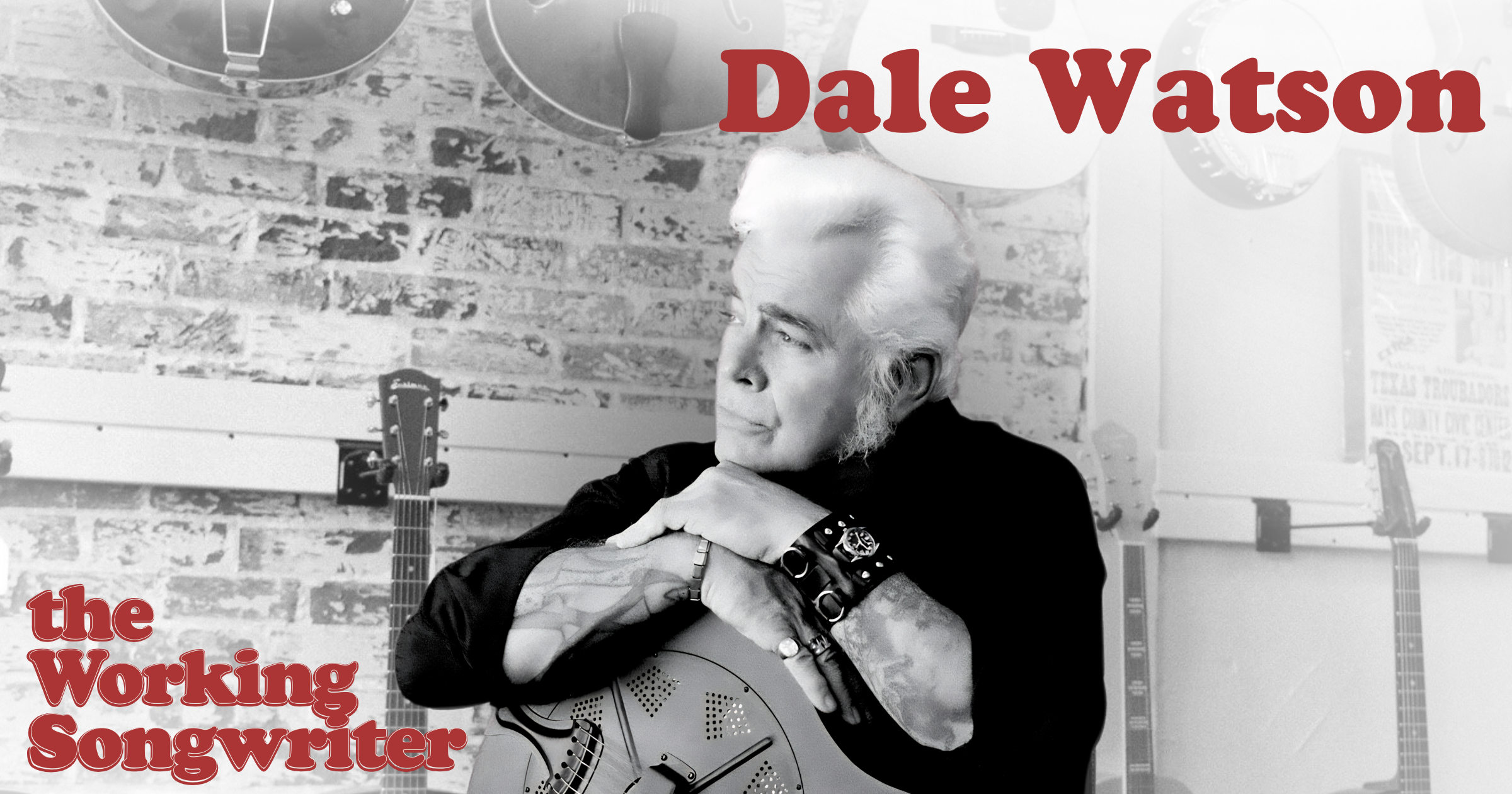
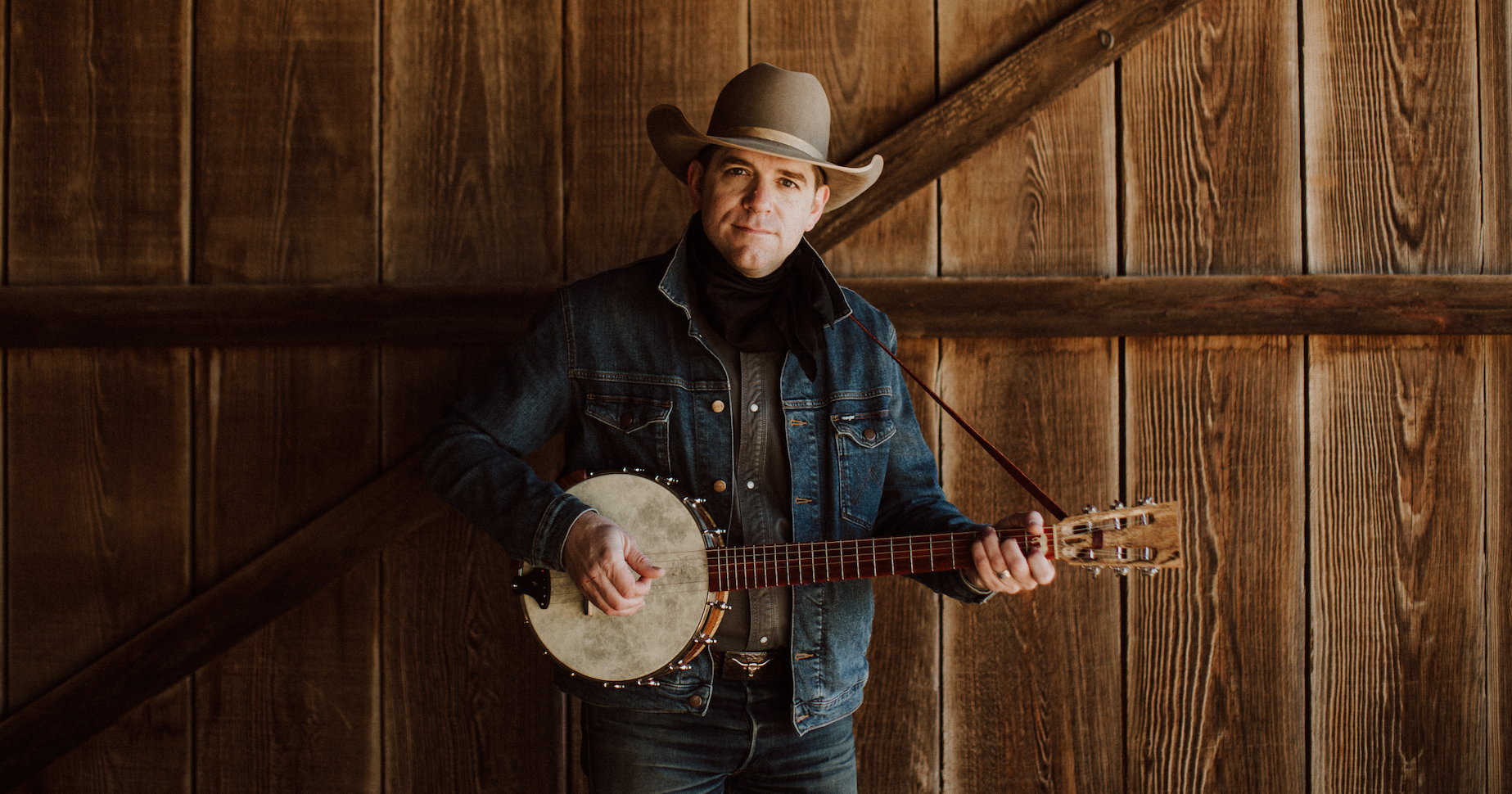
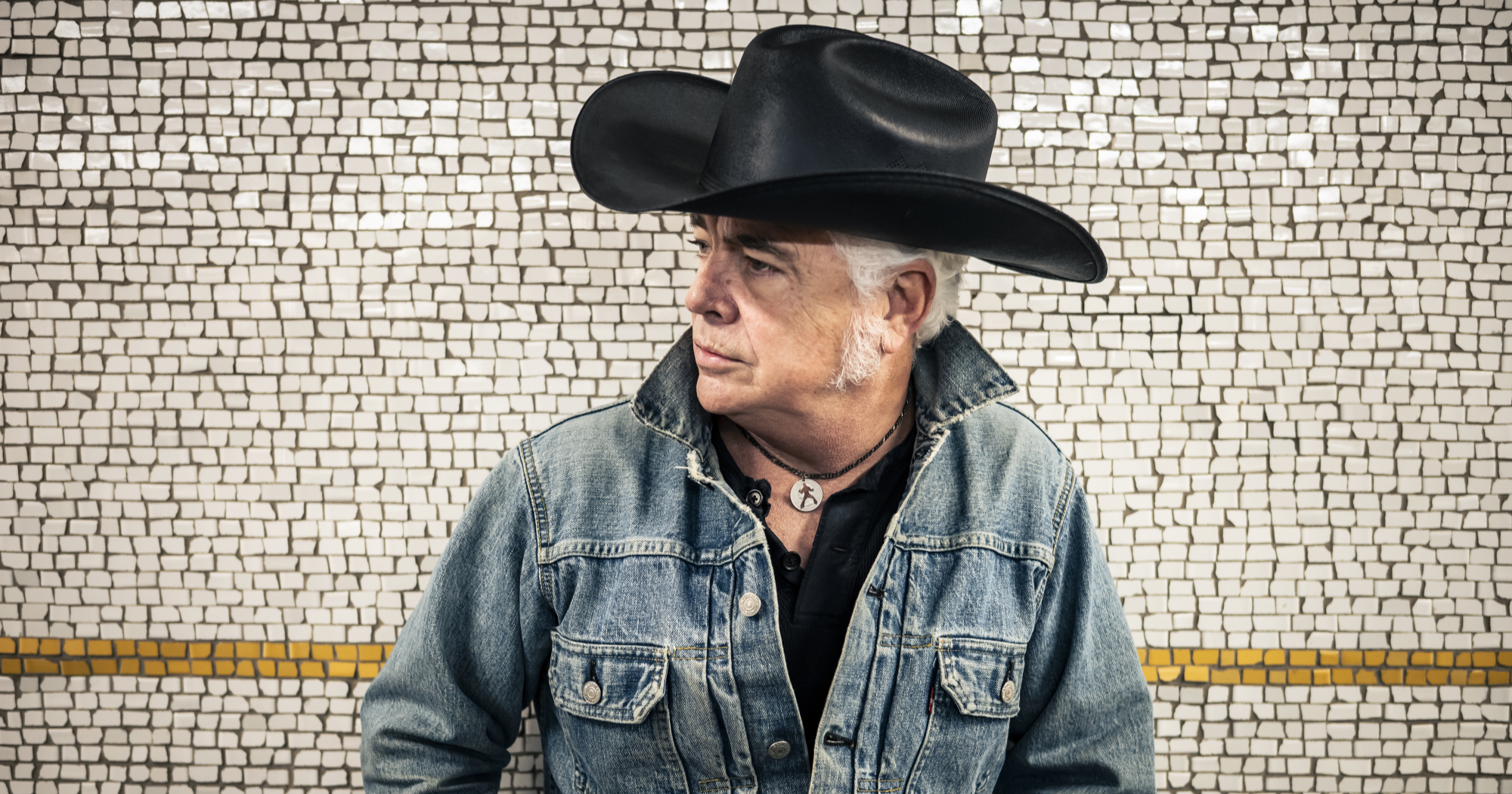
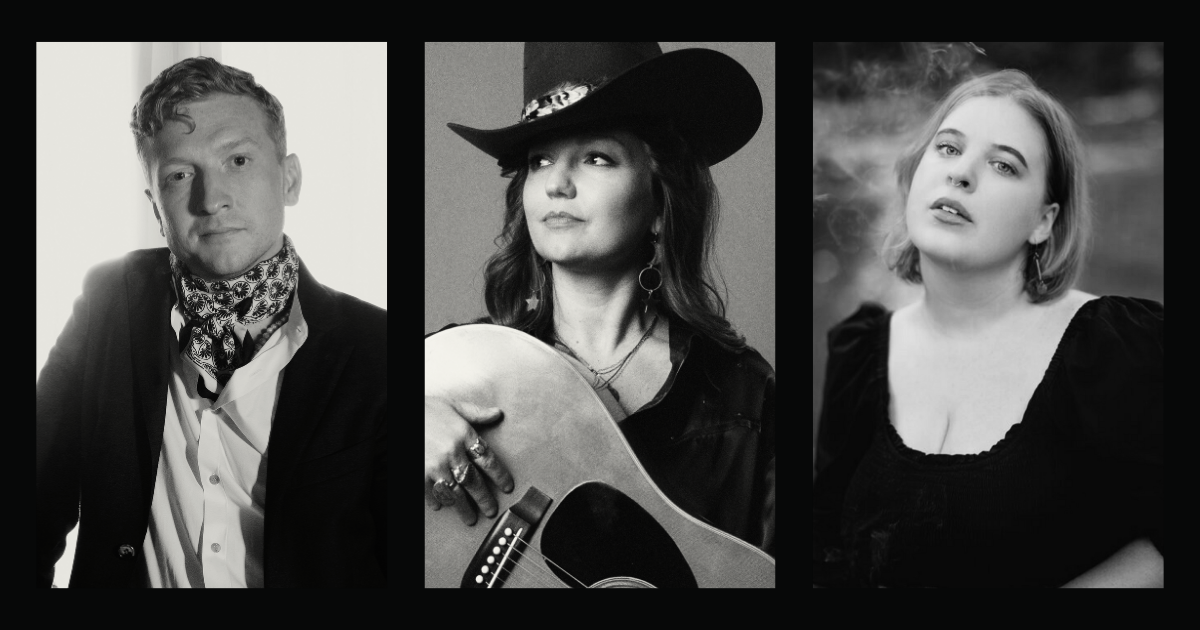
Our guest this week was born in Birmingham, Alabama, but, just like Davy Crockett, got to Texas as soon as he could. Dale Watson began his musical career playing the clubs of Houston before decamping to Austin and becoming a fixture in the live music capital of the world. The music machine in Nashville never fully embraced Watson’s traditionalist combination of Western swing, rockabilly, and country, but he’s built a devoted cult following the world over on his own. It’s a style of music that he calls “Ameripolitan.”
Watson has toured with all the greats: Merle Haggard, Johnny Cash, Willie Nelson, and Kris Kristofferson. He’s appeared on The Late Show with David Lettermen, Jimmy Kimmel Live!, and of course Austin City Limits. He’s performed at Stagecoach, Bristol Rhythm & Roots, and a host of other festivals.
He was a 2005 Austin Music Hall of Fame inductee and he was awarded the title of Texas State Musician in 2007. He founded the Ameripolitan Music Awards in 2014. The Austin Chronicle calls him their “local honky-tonk hero” and Saving Country Music says that “Dale Watson is all about keeping the honky-tonk traditions alive.”
I got a chance to catch up with Watson a few months ago to hear about his musical journey so far.
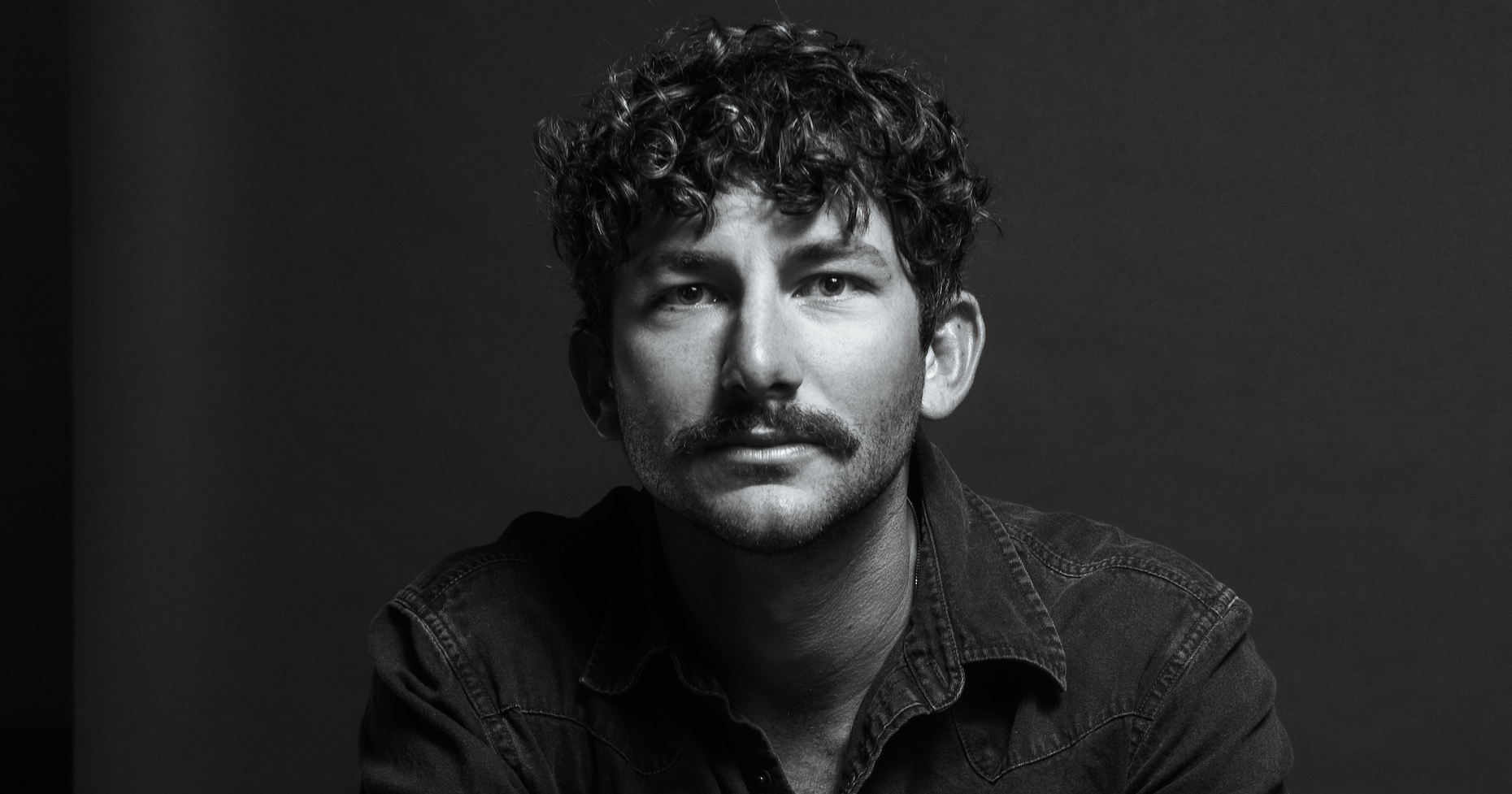
The music scene in Tulsa, Oklahoma, is alive and well. If I’d thought otherwise at any point in time, it wouldn’t take long for a stranger in an Austin dive or a songwriter in Nashville to remind me – and they have. I’ve called Tulsa home for 10 years and gladly claim and evangelize her as often as I can. This little-big town’s reputation of producing quality singer-songwriters and musicians is justified, however biased I am.
Come with me, Keyland, on a little walk through a Tulsa-Mixtape journey. Before we begin, I’d like to offer a few important listening notes:
1) I regret that I will inevitably leave some folks out, merely due to the limitation of brevity. My sincerest apologies. But I’d like to point out that this list is composed of my personal friends in the Tulsa music scene. Beers on me at the Mercury Lounge to any friends I leave out here…
2) This is a list of current artists. The Tulsa music scene is often associated with only a handful of eclectic deceased writers and musicians. God bless them – but Tulsa has changed a lot in the last 50 years or so. My friends included here do an amazing job of looking ahead at what the future holds.
Ramsey is one of my best friends and most likely the very best musician I know. He plays drums and sings harmonies in my band, Keyland, and he is an incredible guitar and banjo player. In the best way, this album is more a composition than anything else.
“Stranger” – Wilderado
This is my favorite band. I so respect the way these guys approach rock and roll with a blue-collar “dad” mentality. It’s truly inspiring, and the way I want to approach music as a career.
“Coyote” – Ken Pomeroy, John Moreland
This is a two-for-one selection: Ken and John are both powerhouse songwriters and singers. Both these artists are gifted in very special ways and I’m glad they make music.
“Get to You” – Micah Felts
Micah Felts is hilarious, a fantastic songwriter, and an all-around great dude and friend. He is also a stellar acoustic guitar player.
“Better If Worse” – HAFFWAY
Sam Westhoff is slipping in this Tulsa music list, because I sure as hell wasn’t going to leave him out. He is one of my best friends and has produced all of my music. He lives in Nashville now and is famous (rightfully so).
“Comanche Moon” – John Ferrell
John Ferrell is one of the most rawly talented players and singers I know. I met John while we were both in college and he learned to play guitar better than me and all my other friends in like three months.
“Marigold” – Chris Bo Jones
Also sneaking in this Tulsa list is OKC rockstar Chris Bo Jones. Lineman by day, rock star by night, Chris is one of my favorite singers.
“Outside” – MORE&MORE, Beachfriends
Brady Ballew (the happiest person I know) used to play professional soccer. Now his band MORE&MORE and Keyland like to sell out shows in our favorite Tulsa dive, the Mercury Lounge. I’ve listened to this song 10,000 times.
“Call Me Anytime” – Sports
Christian introduced me to nicotine toothpicks and Australian beer one time after a HAFFWAY show. These guys produce a lot of cool stuff in Tulsa. And Sports is like a huge band.
“Bullfighter” – Joleen Brown
Joleen Brown is Tulsa’s sweetheart. Her voice is crazy good and she is the sweetest, coolest person you will meet.
“Wishes” – Travis Linville
I’m new to Travis’s music and I’m so glad I found it. This is like a Tom Petty song in the best way. I don’t know Travis super well, but it seems like he has a really grounded view on the reality of what it means to be a musician in 2026, and for all the right reasons.
“More” – Kalyn Fay
Kayln Fay just put out a really cool record that highlights and honors her Cherokee culture and roots.
“This Damn Funky” – Johnny Mullenax
Johnny plays guitar 1000 miles per hour. Johnny’s band plays their music at 1000 miles per hour also. The live show is insane.
“South and Pine” – Zach Bryan, King Cabbage Brass Band
I have not met Zach yet, but I have drank one million beers at 5 or 6 of his concerts. The horn section in this new record of his is a Tulsa band called the King Cabbage Brass Band and it is physically impossible to not have fun at a show of theirs. And they also do really cool work in our community by teaching band camps for kids – they recently held a concert at Cain’s Ballroom and their band camp kids absolutely crushed a song on the main stage.
“Cowboy Song” – BC & the Big Rig, Jacob Tovar
This is another two-for-one selection: Brandon Clark was one of the first people to ever believe in my band, Keyland, and let us play our first real gig with them. Jacob Tovar has a buttery voice and one of the funniest people you could give a microphone to. You can catch both of these gentleman holding down separate residencies at local dives – Tonkin’ Tuesdays with Tovar and BC’s Sunday Service – you guessed it, at the Mercury Lounge.
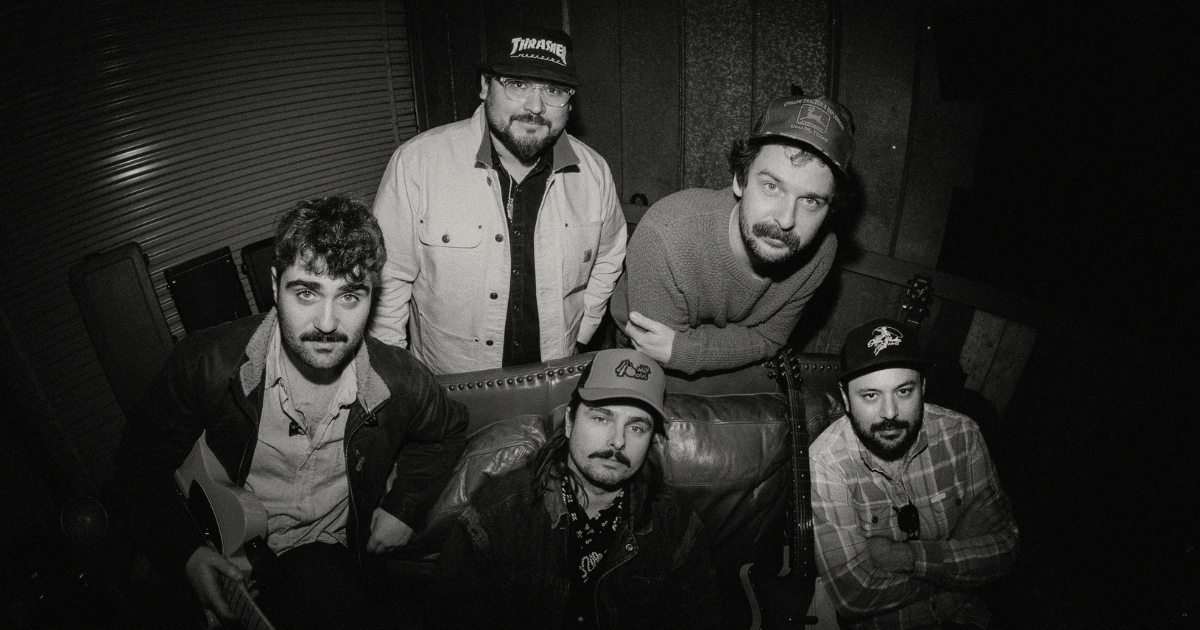
There’s little to no stage banter when the Droptines play a show, with the Austin, Texas-based band sometimes cramming 30 songs into a 90-minute set. However, as their new album, Drought Flower proves, they still have plenty to say. Their original songs touch on broken relationships (“Old Tricks”), family grief (“Mamaw,” featuring Sarah Jarosz), and losing loved ones to addiction (“What Ate My Friend”). As a nod to classic country, there’s often a little bit of clever wordplay to offset the drama, too.
Named for the downturned deer antlers that are prized by hunters, the Droptines (rhymes with “stop signs”) first took shape with an EP release in 2019. Lead singer-songwriter Conner Arthur has since guided the group through indie albums, relentless touring, and now their debut set on Big Loud Texas, the label founded by Miranda Lambert and Jon Randall. The five-piece band hasn’t yet moved into a tour bus, though. Instead, they travel in a retrofitted school bus with upgrades that would impress any road musician. (It sleeps 10 people and has a bathroom, two air conditioners, and a built-in trailer space.)
Growing up in the Texas Hill Country town of Concan, Arthur watched countless musicians play at his family’s venue, House Pasture Cattle Company, during the summer season of city folks floating the Frio River. But the rest of the year, when nothing was really going in town, influenced him just as much.
“I learned how to be alone in Concan,” Arthur says. “I learned how to clear my mind and ignore my hunger pangs. But I would always watch and study people. Especially because if you’re driving through Concan in, say, January, and you see a car that you don’t recognize or someone you don’t recognize, you’re shocked and you want to go talk to them. You’re just caught in your own little village for so long. Having an outside perspective from my little narrow worldview was very, very important to me.”
A few days ahead of a full slate of tour dates (and just before stocking the school bus), Arthur called into Good Country to talk about what inspired the new music.
For people who haven’t been to the Texas Hill Country, how would you describe it?
Conner Arthur: The drama of the limestone bluffs, the crystal clear waters of the Frio River – man, it’s hard not to have a religious experience every other day. Especially when it rains and the floodwaters start moving. Everything there is so dramatic and explosive and chaotic. From the summer to the off-season, you have three months of complete and utter chaos, then the rest of the year is just silent. There are some days where I’d walk out and just sit there looking at River Road waiting for a car to drive by. And I was starting to freak out, thinking that I was the last person on Earth.
More than likely I think that made its way into my personal life. It’s just a large juxtaposition, and a dichotomy of high highs and low lows. But I learned how to handle it, growing up there. We didn’t get internet or cell phone service until 2012, and that’s a great way to grow up. My backyard was 200,000 acres. I could ride horses without hitting a fence line for miles. I wish that more people had that upbringing. I wish that I could provide that for my kids.
If you didn’t get the internet until 2012, then you got to experience live music at your family’s venue before the cell phones in the air and people documenting every show.
Oh yeah. The funny thing about House Pasture is [that] it’s changed hands but it stayed in the family. My biological father and my uncle started it. They failed, so my grandpa bought it from them. And then it was kind of a “break even” type of venue. It was just an addendum for someone who’s gonna go down to Concan and float the Frio anyway. Like, “Oh, we can go see so-and-so.” I mean, I’ve got scars all from being this tall and women ashing cigarettes out on my collarbone. Not on purpose!
I learned more about what I didn’t want to be, seeing the evolution of the Texas country scene come through there. I saw that evolution get commercialized in the mid-2000s, like 2005 and 2006. But when I was a little guy, I got to see the Great Divide. I got to see Gary P. Nunn. I got to see John Conlee. I got to see Earl Thomas Conley. I got to see all these really high-class acts. Reckless Kelly is still one of my favorites from that era. Robert Earl Keen, the list goes on. Even if I didn’t like it, the song’s going to be in my head. It is still red dirt Texas country. I still know every word to all these other musicians’ stuff that I’m not a fan of, because it’s just ingrained in you. You can’t avoid it in that environment.
What were you doing before you jumped into music?
I was in construction throughout high school and I’ve gone back and forth over the years when I needed money. But when I was 18 years old, my mom pretty much gave me an ultimatum. She said, “If you don’t go to college, you’re cut off.” And I was like, “Well, I don’t really care. I don’t like ultimatums.” So I grabbed my banjo and I hitchhiked the country for about a year and a half.
I got back home, and that was like going 90 miles an hour into a brick wall. The fantasies in my head were dashed out by my mom’s disappointment. She said, “You’re gonna have to get a job.” So I went back to construction for a little bit, then I joined up in the oil field. I was an oil field mechanic for about two years, and I said, “I’m not going to die out here in the Eagle Ford Shale.” So I made a decision. Just to give me some more confidence, I went to the bluegrass program in Levelland, Texas, at the [South Plains] College. I did that for two years and went home and knocked out our first EP with David Beck.
I knew you played the banjo, but I didn’t know that you had studied bluegrass.
Dillon [Sampson], our bass player, and I both went to South Plains and he’s way more of a bluegrass cat than I, but my story about how I got into playing banjo is just kind of happenstance. My older brother came into some money when we were young, and I won’t go into the details on how he got it, but it was burning a hole in his pocket. He bought this Deering Goodtime open-back banjo and it was sitting in the back of his truck. I was about 14 and I had plenty of guitars floating around the house. And I had a piano, but I never really broke through on it because it was just an instrument for me to get a song out.
I don’t know if it was the open tuning or just the fact that it’s hard to not have a good time playing banjo, but I broke through on it. I could start developing an understanding of music theory and scales. I don’t know why it made sense in my mind that it was less intimidating than 72 keys or six strings. You go down that road, and then are you a gimmick banjo player or are you good? That’s what led me to South Plains. I’m not going to disrespect the institution of bluegrass or the instrument of banjo. I’m going to do my best to play it. But I need to play more. I need to stay on it, because that is not a bike. Your agility and endurance of playing the banjo collapses if you’re not tickling it once or twice a day.
Is that the same for writing with you? Do you need to consistently write, or can you put that away for a while and come back to writing?
I’m always kind of writing in my head and building concepts, then I’ll scribble it down. I’ll more than likely lose the piece of paper I scribbled it down on, but I’ve always said if it’s worth remembering, then I’ll remember it. But I probably lost a thousand songs that way. It’s like a floodgate. I sit around and I’ll have an idea, and I’ll get a quarter way through it, blah, blah… But it’s not until the band all sits down in a room and we all have the intention to write, and these things just… “Boom!” There goes the dam.
In several of your songs, there are references to pills or addiction. On this record, you have “What Ate My Friend.” That’s a reality for a lot of people. When you’re tackling a heavy topic like that, how do you get into that headspace, knowing you’re going to jump into something serious?
A lot of that, it’s lived in for sure. I’ve had men that came before me that did it so I didn’t have to. Back to, I know what not to do now. And my brother Landry being one of them. I lost him to all that shit a couple years ago. He and I were Irish twins. The same thing happened to my biological dad’s brother. At the same age, the same exact circumstance, and they both died on their birthday.
“What Ate My Friend,” I can’t even remember writing that one, but I know that I showed up with all of it, and that’s rare. I have this band to lean on, but I showed up with every bit of that. This was all here. It’s not just about my brother, but a couple friends I have. Just like, “I know you’re on meth, dude, but why is it making you a liar?” Like, you can be honest with me, just tell me. It’s getting in the way of our friendship if you’re going to turn into a liar.
I thought there was a nuance, kind of, what I refer to as the days of country gold, the wordplay of like, “She’s Acting Single (I’m Drinking Doubles).” That’s so important in country and bluegrass music – that play on words – and that one is like, “Hey man, what’s eating at you?” All right, what’s the extreme of that? “What ate my friend?” I thought it was pretty decent, but yeah, that’s a rough one, you know, but it’s real, unfortunately. It’s real for a lot of people. And I hate that. I hate that anybody has to suffer.
You’ve been around music from the time you’re a kid, and now you’re doing this full time. What has surprised you the most about this career path that you’re on?
The main one is that there’s viability. I said this in an interview before, but I just thought playing music was a good excuse to be a loser. And then to see it all pan out! It starts to feel like work, but work is good, especially if it bears fruit, which it is, and it’s starting to even more so. But to be able to build a foundation for my future family off of the back of these songs, that right there is top tier, number one, the most important thing. I can’t be more grateful for that and the blessings that God’s given us. Just having people come religiously to your shows, and singing words, it gives you faith in live music, for sure. It is a little shocking to me, at the end of the day that I didn’t make all this up.
Want more Good Country? Sign up to receive our monthly email newsletter – and much more music! – direct to your inbox.
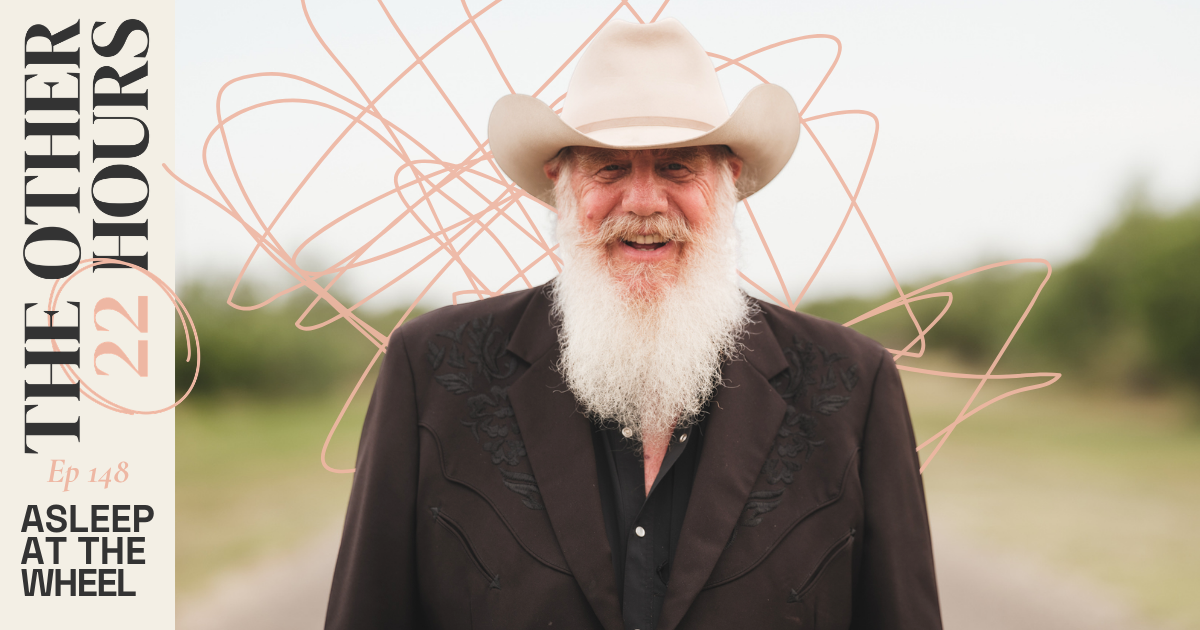
Ray Benson is an absolute pillar of American music, a nine-time GRAMMY winner whose band, Asleep at the Wheel, has defined Western swing for over half a century. In this episode of the Other 22 Hours, we talk with Ray about the “geographical imperative,” rebuilding his career from a broke-down bus to a musical institution, and the delicate balance between the craft of music and the business of image. This is an exploration of longevity, team building, and the importance of finding a “moral compass” in leadership.
Since the very beginning of the cowboy genre, cowboy songs and cowboy poetry have been closely related. Many of the best-known traditional cowboy songs started out as poems and many cowboys have recited song lyrics as poetry. The first man to collect cowboy songs was a New York-bred cowpuncher named Jack Thorp. As Thorp observed in his book, Pardner of the Wind: “Cowboy songs were always sung by one person, never by a group. I never did hear a cowboy with a real good voice; if he had one to start with, he always lost it bawling at cattle, or sleeping out in the open, or tellin’ the judge that he didn’t steal that horse.”
That old-time cowboy singing was mostly done a cappella, as there were not many guitars to be found on the trail drives or in the cow camps. It also seems that there was a fine line between “singing” and “reciting.”
This tradition of setting cowboy poems to music has continued to the present day. My old friend and mentor Don Edwards was master of this. He taught me that if you find an old poem or a set of lyrics with no music, then you just make up your own tune and make your own song out of it. That’s part of the cowboy songster tradition. – Andy Hedges
“The Strawberry Roan” – Harry Jackson
This is the most famous of all bronc ridin’ songs and one of the most famous of all cowboy songs. It was originally written as a poem by Curley Fletcher in 1914. The original title was “The Outlaw Broncho.” Rumor has it that Fletcher wrote the poem about a bronc ride made by the legendary cowboy artist and writer Will James.
Even though the poem became one of the most recorded cowboy songs of all time, Curley Fletcher never made a dime off of it due to unscrupulous copyrighters and publishers. This recording by Harry Jackson is a great example of the old-time unaccompanied style of cowboy singing.
“Sierry Petes” – Gail Steiger
“Sierry Petes” was written as a poem by Arizona cowboy Gail Gardner in 1917. It’s been set to music many times and is better known as “Tying Knots in the Devil’s Tail.” Many folks have failed to give proper credit to Gail Gardner and have also failed to get the words right. This is the original version recited by Gail Gardner’s grandson, Gail Steiger.
“Sierra Peaks” – Ian Tyson
A fun version by the great Ian Tyson with a corrupted title, some incorrect words, and a modern beat. Ian Tyson revitalized cowboy music in the 1980s with both his versions of traditional cowboy songs and his original compositions.
“The Dixie Cowboy” – Taylor’s Kentucky Boys
Montana cowboy D.J. O’Malley published a poem entitled “After the Roundup” in the Miles City Stock Grower’s Journal in 1893. It became known as “When the Work’s All Done this Fall” and a 1925 recording by Carl T. Sprague sold over 900,000 copies. I’ve always loved this obscure version by Taylor’s Kentucky Boys with an alternate melody.
“The Long Road West” – Don Edwards
Henry Herbert Knibbs was a poet, novelist, hobo, and owner of a violin repair shop. He never earned a dime as a working cowboy, but his poetry entered the oral tradition of working cowboys. “The Long Road West” speaks to the kinship between cowboys, hobos, and sailors. It was set to music by the great Don Edwards.
“The Old Cowman” – Andy Hedges & Brenn Hill
In his book Classic Cowboy Songs, Don Edwards tells the story of how he fell asleep reciting this poem one night and woke with the melody in his head. This song is more relevant now than when it was written, over 100 years ago. I recorded this version with my pard Brenn Hill for my 2023 album of cowboy duets entitled Roll On, Cowboys.
“Spanish is the Lovin’ Tongue” – Michael Martin Murphey
Originally written as a poem entitled “A Border Affair” by Charles Badger Clark. I think that Michael Martin Murphey plays the definitive version of this song. And it was also the first song that Murph sang onstage at the National Cowboy Poetry Gathering in Elko, Nevada, when he showed up at one of the early gatherings. It always reminds me of All the Pretty Horses by Cormac McCarthy.
“The Westerner” – Andy Hedges
I found the “The Westerner” in Charles Badger Clark’s 1915 book Sun & Saddle Leather. The poem speaks to the values of folks who live in the rural West. I hope that my melody does it justice. It is the title track of my new album.
“Shadow on the Cutbank” – Trinity Seely
This is a modern-day poem set to music – the poem by horseman, cowboy, and poet Joel Nelson, and the melody by horsewoman and singer-songwriter Trinity Seely. The poem is Joel Nelson’s answer to the historians who have written the cowboy off as a vanishing breed.
“Hitting the Trail Tonight” – Buck Ramsey
“Hittin’ the Trail Tonight” was a signature song for the late great Texas cowboy singer and poet Buck Ramsey. Originally written as a poem by classic cowpuncher poet Bruce Kiskaddon, folklorist and musician Hal Cannon set this one to music sometime in the mid-1980s. I asked Hal about this piece and he told me that he “always felt there is something about Kiskaddon’s words that feel good in the mouth as they come out.” This one will have you singin’ along.
April 6 would have been Merle Haggard’s 89th birthday – and was also the tenth anniversary of his death. So, before these anniversaries get too far in the rearview mirror, I wanted to take a moment to remember one of country music’s all-time legends – and one of the great singer-songwriters in all American popular music.
One lesson of Haggard’s career is that you best honor your musical heroes, not only by playing their records at home or talking up their influence in interviews, but by continuing to perform their songs – on stage and in the studio. Merle released tribute albums to Jimmie Rodgers, Bob Wills, and Elvis Presley, and across his catalog cut at least an album’s worth of Lefty Frizzell songs.
Since his death, it’s been nice to see how often Merle’s musical contemporaries and descendants have taken Haggard’s model to heart, recording his songs and even releasing entire Merle Haggard tribute albums.
In recognition of his ongoing legacy, I’ve chosen 12 of my favorite cover versions of songs by Merle Haggard. I shared a kind of companion piece to this list last week, at No Fences Review, pulling choices from the 20th century only. Now, for Good Country, I’m focusing my dozen picks on Hag covers from this century.
I could assemble similarly strong lists every week for months without running out of possibilities. But these dozen Hag covers are among the very favorites.
“You Don’t Have Far to Go” – Candi Staton (from His Hands, 2006)
Co-written with trucker-song specialist Red Simpson, “You Don’t Have Very Far to Go” was the earliest of Merle’s songs to have legs. Recorded more than a couple dozen times through the years (including three versions from Hag himself), it’s proven a special favorite of first-name-basis country women. Bonnie and Connie, Rosanne and Lucinda, and others all seem to sing the song directly to some toxic asshole: “If I’m not crying, you’re not satisfied.”
My favorite reading of the song in that way is by Candi Staton. She became renowned for her disco and gospel recordings, but when first establishing herself as an R&B star circa 1970, it was with striking country soul takes on hits by Tammy Wynette and Patsy Cline. Decades later, she deploys Merle’s old song to deliver a master class in soulful, thought-by-thought phrasing. Staton sounds fragile and beaten down yet, by the end, her tone hints she may finally have had enough.
“Hungry Eyes” – Leona Williams (from Leona Williams Sings Merle Haggard, 2008)
Leona Williams may be best known as Haggard’s third wife, but she’s a tremendous artist in her own right, a country music lifer who played bass behind Loretta Lynn in the 1960s, enjoyed a solo career worth tracking down, and wrote or co-wrote chart toppers “You Take Me for Granted” and “Someday When Things Are Good” for Merle in the early ‘80s.
Leona’s version of “Hungry Eyes,” from her superb 2008 Haggard tribute, always stops me in my tracks. In the verses, she sounds haunted by her parents’ long-ago struggles. At each chorus, she gulps and springs to the top of her range, once again meeting her mother’s dissatisfied gaze. “She only wanted things she really needed!”
“The Running Kind” – Marty Stuart & His Fabulous Superlatives (from The Marty Stuart Show, c. 2009 or 2010)
“The Running Kind” is both one of country music’s great declarations of independence and, for Haggard, a great self-own: Merle boasts that he’s always on the run from one thing or the other even though, “I know running’s not the answer” to anything. The sentiment can serve as a kind of thesis statement for the Hag’s own restless life and career, so it’s ironic that my favorite version of the song isn’t Merle’s but this live cut from Marty Stuart. From an episode of the singer’s television series, Stuart and his Superlatives rage noisily and headlong, while staying absolutely controlled, through Merle’s tune. The solos from Kenny Vaughan and Stuart are my idea of Telecaster heaven.
“Ramblin’ Fever” – Tanya Tucker (from My Turn, 2009)
My pick for the best-ever “Ramblin’ Fever” is this version by Tanya Tucker. Riding an outlaw thump spiked by country disco high-hat, Tucker honors a musical hero, a former paramour, and a kindred rambling spirit. To that end, she loves it when some good-lookin’ fella rubs her back, but what really turns her on comes in the a.m. when she can drink a cup of coffee before leaving. The series of guitar solos that play out the final 1:20 here sound like she’s already out the door.
“How Did You Find Me Here?” – k.d. lang (from Sweet Relief III: Pennies from Heaven, 2013)
“How Did You Find Me Here?” was among Merle’s finest new songs of this century. From 2010’s I Am What I Am, Merle sings the number like a grim but grateful gospel ballad – his savior has come for him in his grave. “Thank you, Lord,” he prays at the close.
k.d. lang’s spare, ethereal reading feels less straightforwardly religious but, if anything, more spiritual. She’s desperately alone, at her nadir, but now someone – a lover or friend, her sponsor or her community – has seen her for who she is, taken her in. Lang’s contralto sounds bleary-eyed and dumbfounded, but she gains strength as she goes, ready to move on up.
“I Think I’ll Just Stay Here and Drink” – Suzy Bogguss (from Lucky, 2014)
Back in 1989, one of Suzy Bogguss’ earliest charting singles was a cover of “Somewhere Between,” still my favorite version of that great Haggard ballad. So my expectations were unreasonably high for Lucky, a full-length Merle Haggard tribute that she released in 2014. But the album’s a gem straight through, and I especially recommend her take on “I Think I’ll Just Stay Here and Drink.”
Most versions of Merle’s boozy romantic complaint have been done by rowdy dudes who sound like they’re slamming shots while ordering their fourth pitcher ahead of passing out. Bogguss, by contrast, comes off country-jazz cool, sipping a good bourbon and commiserating with herself in some dark corner. Don’t wait up. She’s going to be here awhile.
“Shelly’s Winter Love” – Lonesome River Band (from Turn on a Dime, 2014)
Merle’s most haunting song is about depression: Shelly’s depression each winter, the narrator’s the rest of the year round when the sunshine’s lured her back to town. This Lonesome River Band rendition from 2014 is the most haunting I know. Brandon Rickman sings beautifully but frighteningly too, and LRB’s pacing, like seasonal affective disorder set to a melody, reflects the long, slow days of a long dark winter. Midway through, Sammy Shelor’s banjo plunks a drip, drip, drip, that quickly gathers to a stream. A thaw’s coming; spring is on the way. It won’t be long now…
“A Working Man Can’t Get Nowhere Today” – Rob Ickes & Trey Hensley (from Before the Sun Goes Down, 2015)
This was a savvy cover choice by Rob Ickes, 15-time winner of the IBMA’s Resophonic Guitar Player of the Year award, and Trey Hensley, the association’s pick for Guitar Player of the Year in 2023. For one thing, the song is an underappreciated gem of the Haggard songbook, recorded maybe not even half a dozen times since Merle had a hit with it in 1977. More importantly, this Hag number lets Ickes and Hensley trade elegantly exhausted solos while tapping into a perpetually frustrating and common condition: Working your ass off every day to to put food on the table yet still coming up short. Hensley moans, “I’ll still be deep in debt the day that I fall dead.”
“Some of Us Fly” – Bonnie “Prince” Billy (from Best Troubador, 2017)
Merle’s “Some of Us Fly” served as the concluding track to his underrated release Chicago Wind, from 2005, and featured a guest vocal from Toby Keith. Because both men had already experienced such heights in their career, the message of each chorus – “Some of us fly but all of us fall” – comes off a little like superstars performing their humility. But where Haggard and Keith share hard-won wisdom, Bonnie “Prince” Billy casts a spell. With his duet partner, Irish singer/flutist Nuala Kennedy, he surrenders to a mystery.
On the remarkable 2017 Haggard tribute album, Best Troubador, Billy (AKA indie songster Will Oldham) and Kennedy whisper their way through Merle’s song in cautious harmony, their hands clutched tightly. The whole performance feels so fragile a strong wind might blow it way.
“Today I Started Loving You Again” – Eli “Paperboy” Reed (from Down Every Road, 2022)
Eli Reed specializes in making over all manner of roots-adjacent material into cool, committed soul music. Down Every Road does that for the Haggard songbook with thrilling results straight through. (A duet between Eli and Sabine McCalla on Merle’s most covered song, “Today I Started Loving You Again,” was inspired by a famous, but officially unreleased, 1969 version by Buck Owens and soul singer Bettye Swann.)
I especially appreciate Reed’s take on Merle’s celebratory kiss-off “I’m Bringing Home Good News,” which he relocates from Merle’s dusty, country-rocking San Joaquin all the way down to Louisiana for some funky Tony Joe White-styled swamp.
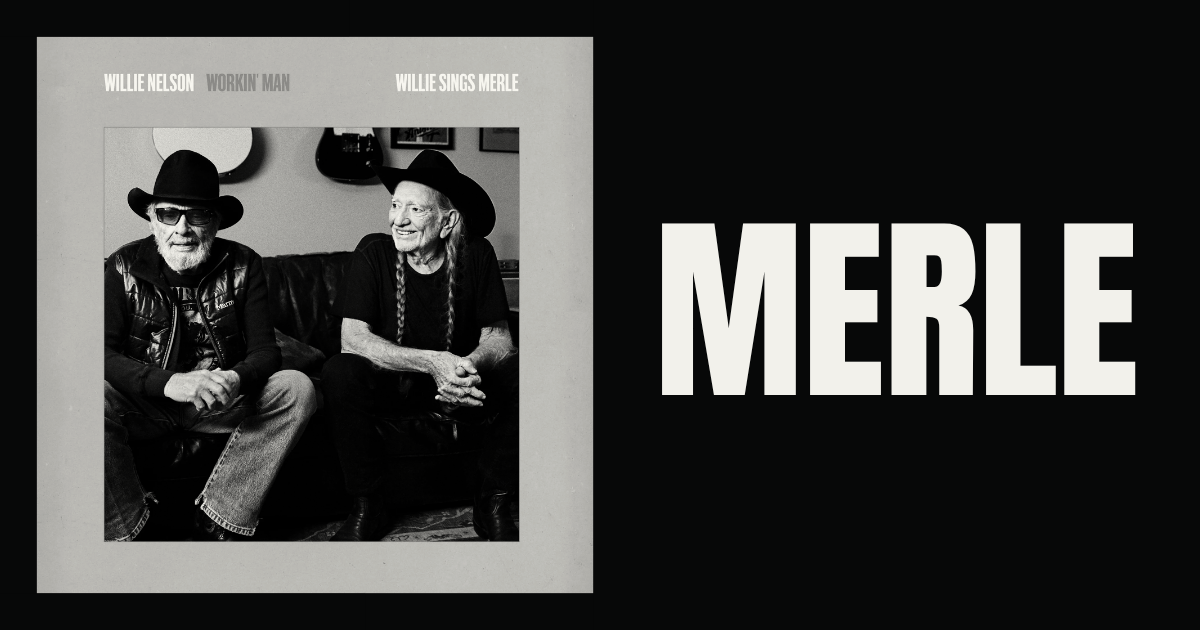
“Workin’ Man Blues” – Willie Nelson (from Workin’ Man: Willie Sings Merle, 2025)
One of Hag’s signature hits, “Workin’ Man Blues,” is usually framed as a purely blue-collar anthem, but it’s good to remember he identified the song as a blues. Having to work to survive while hoping your body holds out as long as you’ll need it is something to be cursed more than celebrated.
From last year’s Workin’ Man: Willie Sings Merle, a 92-year-old Nelson delivers his friend’s lines with a bit of a slur, weary and resigned but also grateful still to be working, to be on the road again until he runs out of road. Similarly, Willie’s arrangement sheds Merle’s Elvis-y fanfare for some hard, use-it-or-lose-it swing. “Play it, little sister,” he says, introducing one of the hot-jazziest solos in the career of the late Family band pianist Bobbie Nelson. Willie’s solos up top and midway through, meanwhile, are things of singular beauty, guitar work that sounds like play but refuses to hide the callouses and the miles. “As long as my two hands are fit to use…”
“Daddy Tried” – Jade Jackson (single, 2026)
Merle’s “Mama Tried” has been covered well over 100 times since he wrote it for the Killers Three soundtrack in 1968. But the song’s indelible ascending chorus and its universal theme – Merle sings it as if he’s as proud of defying his mom as he is remorseful for disappointing her – have encouraged people to use the song in all kinds of ways. Country comic Don Bowman parodied it as “Pappa Tried” as early as 1969 and more recently Angeleena Presley was clearly in conversation with Merle’s classic when she released “Mama I Tried” in 2017. As was Keith Urban when he sampled its lick for “Coming Home” in 2023.
Jade Jackson grew up in a small Cali town between Bakersfield and the Pacific, and her updated, gender-flipped take on Merle’s tale sounds just like that: Her voice feels a little dusty and a little sunny. Switching out Merle’s locale from “prison” to “Nashville” is funny because those two aren’t at all alike, but also because maybe they’re a little alike. For sure the ache in her voice reveals her as another singer-songwriter in a long line of kindred spirits to Merle; she’s going to go her own way, no matter her dad’s good advice.
David Cantwell is the author of The Running Kind: Listening to Merle Haggard, the co-author of Heartaches by the Number: Country Music’s 500 Greatest Singles and the co-creator of No Fences Review. His byline has appeared at Rolling Stone Country, The New Yorker, Slate, and No Depression, among other publications.
Photo Credit: Workin’ Man: Willie Sings Merle on Legacy Recordings
Ameripolitan music can be best defined as original music with prominent roots influence, and it has four categories: honky tonk, Western swing, rockabilly, and outlaw. My Mixtape features a song by an artist that represents the roots and then I’ll play a new artist that directly was influenced by them. You can hear the natural growth of country music when you listen to Lefty Frizzell and Merle Haggard or Kitty Wells and Loretta Lynn back to back. (Many of the roots artists had nicknames, I miss that.)
While some may hear an artist’s influence and say they are copying them, I’m of the opinion that John Lennon shared when asked about The Beatles’ influences. He said, and I paraphrase here, “One’s originality comes out in their inability to imitate their influences.” Very well said. – Dale Watson
“Who’s Gonna Take The Garbage Out” – Loretta Lynn, Ernest Tubb
Ernest Tubb had a distinctive voice as you hear on this song he sings with Loretta Lynn. Here’s the Texas Troubadour with the Coal Miner’s Daughter.
“My Wife Thinks You’re Dead” –Junior Brown
And no one is more evidently influenced by him than Junior Brown.
“Undo the Right” – Johnny Bush
Johnny Bush, otherwise known as the “Country Caruso,” was a drummer for Ray Price, the Cherokee Cowboy, before going out on his own. You would definitely hear that influence if you back-to-back Ray Price to Johnny Bush. Both are huge influences to every singer that grew up in Texas.
“Texas Honky Tonk” – Justin Trevino
This young man from Texas is carrying the Bush torch.
“D-I-V-O-R-C-E” – Tammy Wynette
The First Lady of Country Music, Tammy Wynette was married to the Possum, George Jones. She is easily at the top of women that influenced the newer singers.
“Houston Belongs To Me” – Sunny Sweeney
Singing her own divorce song, here’s Sunny Sweeney!
“Big Balls in Cowtown” – Bob Wills & His Texas Playboys
In the Western swing category this is the master, Bob Wills & His Texas Playboys.
“Riding High in Texas” – Asleep at the Wheel, Billy Strings
Though they’ve been around a while, they still burn up the road and proudly wear Bob Wills as their biggest influence. Ian Stewart sings as guest picker Billy Strings shines.
“Here in Frisco” – Merle Haggard
The Hag has influenced generations and even in death he still does. He once told me he forgot he wrote this song and was glad I brought it up so he can add it to his playlist again.
“This Highway” – Zephaniah OHora
Zephaniah OHora is now based in Nashville and he’s got a lot of great original songs. On this song you can hear the Hag in him.
“Bob Wills Is Still the King” – Waylon Jennings
In the outlaw world there is none more influential than Waylon, and in Texas we were all influenced by Bob Wills.
“Long White Line” – Sturgill Simpson
This particular song draws heavily on Waylon’s influence. And I like it.
“Ramblin’ Man” – Hank Williams
Hank Williams’ voice is one of the most recognizable in music. His songs are timeless and still inspire singers and songwriters alike.
“Thunderstorms and Neon Signs” – Wayne Hancock
You can definitely hear Hank in Wayne Hancock, but his own voice is definitely original, too – as well as his great songwriting.
“Guitars, Cadillacs” – Dwight Yoakam
Dwight Yoakam has influenced many a newcomer. Just as he was obviously influenced by Buck Owens. He came along when Nashville needed reminded of its roots.
“Lost in the City Lights” – Johnny Falstaff
Though not well known as of yet, Johnny Falstaff is picking up Dwight’s hat.
“Blue Kentucky Girl” – Loretta Lynn
The Coal Miner’s Daughter definitely left big shoes to fill, but her sassy songs inspired many women artists.
“Don’t You Ever Give Up On Love” – Brennen Leigh
That inspiration can be traced right to Brennen Leigh.
“Good Hearted Woman” – Waylon Jennings, Willie Nelson
Here’s the quintessential outlaw song by the most famously influential artists, the Red Headed Stranger, Willie Nelson, and Waymore, sometimes called Wautawsha, Waylon Jennings.
“Willie Waylon and Whiskey” – Dale Watson
The last song I’ll put in here’s is mine, because with pride I will state, yes, I am heavily influenced by Willie and Waylon. And sometimes whiskey.
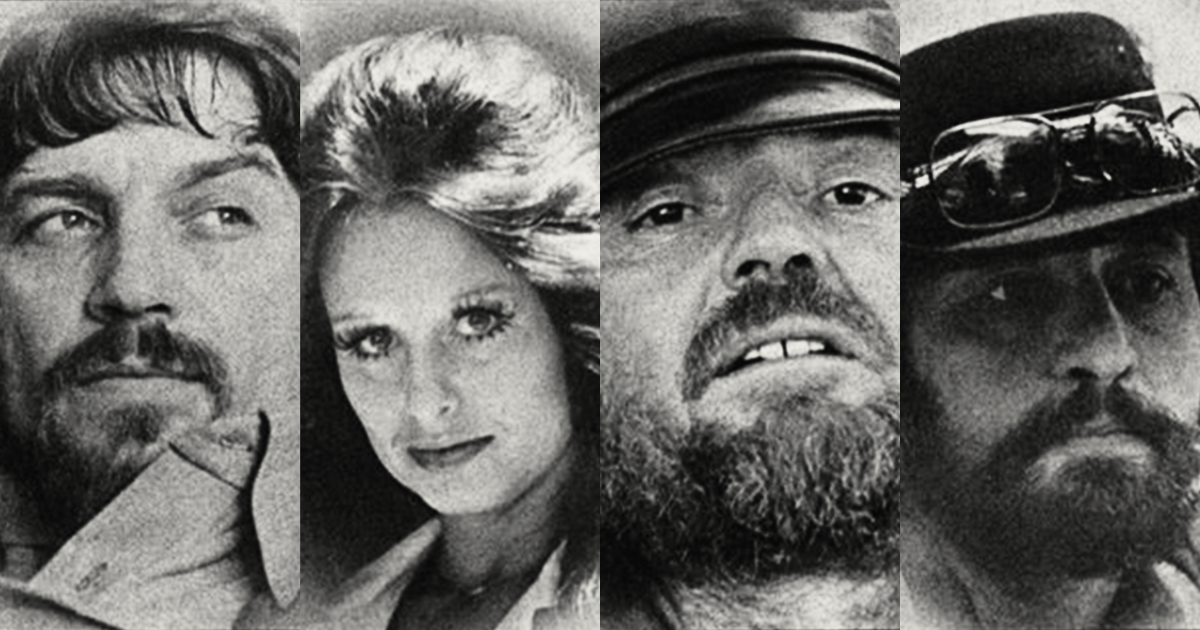
It’s strange to say about an album widely regarded as one of the 20th century’s most iconic, but maybe the most notable element of 1976’s Wanted! The Outlaws was its highly stylized cover. An old “wanted” poster associated with the wild, wild west of the American frontier (or at least movie depictions of the same), it depicted sepia-toned parchment with a trio of bullet holes. And it pictured the album’s four artists in mugshot form with Waylon Jennings as top headliner over Willie Nelson, Jessi Colter, and Tompall Glaser.
That appeared to be an unlikely quartet for a supergroup. But Wanted! The Outlaws turned out to be one for the ages, topping the country album charts and spinning off hit singles the artists performed for the rest of their careers. Wanted! even reached the crossover promised land in reaching No. 10 on the Billboard 200, a pop-chart peak for everyone involved except Nelson. When all the dust settled, it was the first country album to earn the then-newly introduced platinum certification for sales of over 1 million copies.
Despite the album’s thematic packaging, its 11 songs play less like a cohesive, organically conceived new work than the compilation it actually was. Each of the four headliners got a couple of songs, together as well as separately, and whatever unity it had came in the form of a musical vibe much closer to the progressive country coming out of Texas roadhouses than the traditional Nashville sound.
Considered as a collection of songs, Wanted! The Outlaws is a great record. And yet it emerged from a peculiar set of circumstances because it really, truly is a music-industry version of a breakfast sausage – appealing and tasty in spite of rather than because of how it was made. It’s fair to describe the feelings of many observers as mixed.
“More than anything else, it really was a triumph of Nashville marketing,” says Joe Nick Patoski speaking to Good Country. He’s the author of the 2008 biography, Willie Nelson: An Epic Life, and many other key writings about Texas music over the past half-century. “And it kind of crystalized everything Waylon, Willie and others had been doing. It almost seemed like a joke, but it worked and it sold. So who am I to kvetch?”
If Wanted! The Outlaws was a culmination that added up to more than the sum of its parts, it would not be such a key milestone without all the individual breakthroughs of its principals, starting with Waylon Jennings. A longtime journeyman who became a star, native Texan Jennings was only still alive in the 1970s because he’d given up his seat on Buddy Holly’s plane to Jiles Perry “The Big Bopper” Richardson Jr. on that fateful night in Iowa in February 1959. He’d been working the honky-tonks ever since, and by the mid-’70s his brand of too-rock-for-country-but-too-country-for-rock was landing commercially. On the strength of the statement-of-purpose hit “Are You Sure Hank Done It This Way,” Jennings’ 1975 album Dreaming My Dreams was his first to go gold.
And yet Jennings wasn’t even the biggest pop star in his own home. That was his wife, singer Jessi Colter, who had a massive No. 4 pop single in 1975 with “I’m Not Lisa.” That would remain her mainstream peak.
By 1975, however, Willie Nelson was breaking through at an even bigger level than Jennings and Colter put together. Long revered as one of the 20th century’s great songwriters, Nelson penned for-the-ages hits for the likes of Patsy Cline and Faron Young – “Crazy,” “Hello Walls,” “Night Life,” and many more. Yet success under his own name eluded Nelson, though not for lack of trying. He made album after album for RCA Records’ Nashville division, but the city’s prevailing sound just wasn’t a good fit for him. Nelson seemed doomed to be remembered as songwriter first, performer a distant second.
It took parting ways with Nashville and its assembly line – going home to his native Texas and leaving RCA to sign with Atlantic and then Columbia Records – for Nelson to finally establish himself as a viable recording artist. What finally put him over the top was 1975’s Red Headed Stranger, his 18th studio album but first for Columbia, and also the first where Nelson had complete artistic control. Spare, downcast, and terse as a Hemingway short story, the album’s sound and feel was miles removed from the Nashville sound. It was his first to crack the pop charts, selling millions, and “Blue Eyes Crying in the Rain” remains a beloved classic five decades later.
As he watched Nelson’s Red Headed Stranger success, RCA executive Jerry Bradley wanted in on it. Bradley had taken over as head of RCA Nashville from Chet Atkins several years earlier, and chief among his label’s assets was having Jennings under contract. While Nelson was long gone, RCA still had a voluminous catalog of recordings he’d left behind. RCA was already reissuing Nelson’s recordings as best-of compilations and doing some business, but taking them to the next commercial level was going to require an angle. It started with Waylon and Willie’s relationship as kindred-spirit friends and collaborators.
By the mid-1970s, Waylon and Willie had known each other for a decade. Both had artistic identities in contrast to staid Nashville, fitting in alongside other Texas-based acts like Michael Martin Murphey and Jerry Jeff Walker in an upstart wave dubbed “progressive country.” The music came out of that era’s back-to-basics ethos and was scruffier than Nashville’s assembly line. Author Jan Reid captured this particular moment with a landmark book, The Improbable Rise of Redneck Rock, first published in 1974.
Bradley’s idea was to put out an album where Jennings and Nelson joined forces, with songs both solo and in tandem. But if it was really going to take off, it needed fresh branding and a new descriptor beyond progressive country or redneck rock. That’s where old-fashioned marketing necessity entered into the equation.
Nashville writer Hazel Smith, who was working as Jennings’ publicist at that time, is widely credited with coining the phrase “outlaw country.” With that image in mind, Bradley came across a vintage “wanted” outlaw poster in a Time-Life illustrated encyclopedia about America’s 19th century western frontier. He took it to designer Herb Burnette with instructions to model a cover based on that, and then it was time to present the concept to the artists.
“He showed that to Waylon, who told him, ‘This is your idea, do whatever the hell you want,'” Patoski said. “And Jerry said, ‘Thank you’ and walked out the door. That poster on the cover really gave people something to grab onto, and ‘outlaw country’ is easier to say than ‘progressive country’ or ‘alternative country.'”
In Patoski’s telling, Nelson’s manager Neil Reshen was initially less than enthusiastic about the concept. But Bradley made it clear that RCA still had ownership and control of Nelson’s old catalog and an Outlaws album would come out with or without their blessings. It turned out that Nelson was more amenable to the idea, having just bought the Texas Opry House in Austin. He was happy to have an advance payment from his former label to fund its refurbishment.
Jennings regularly produced Colter’s music (including “I’m Not Lisa”), so she was an obvious addition to the lineup. The fourth piece of the puzzle, Tompall Glaser, also came from Jennings’ camp and was added at his insistence. Formerly of the Glaser Brothers, he too was peaking in 1975 with his cover of Shel Silverstein’s “Put Another Log on the Fire (The Male Chauvinist Anthem),” his highest-charting single on the country charts.
And thus The Outlaws were born, with success that was both immediate and long-lasting. The Academy of Country Music Awards named it album of the year for 1976, with “A Good Hearted Woman” winning the Country Music Association’s single of the year, and the album was added to the GRAMMY Hall of Fame in 2007. It also created another niche for country artists.
“My joke when people started telling me we were part of the ‘outlaw movement’ was to say, ‘No, we’re part of the in-law movement,’” said Ray Benson of the long-running Texas swing band Asleep at the Wheel in a conversation with GC. “We all thought it was kind of stupid, because everybody’s music was completely different. It was a style of marketing, not music, but it did create a shorthand to label and sell something. Honestly, the only ‘outlaw’ thing about it was the dope. What did we all have in common? We did drugs. Everybody liked something different, pot or coke or speed. But they were all illegal.”
Released in January 1976, Wanted! The Outlaws was accompanied by all the fanfare and major-label marketing of a new-music release. But the album mostly consisted of previously available material. As selected by RCA’s Bradley, seven of the original album’s 11 songs had been released in different versions as far back as 1970. But it did have a big ace in the hole, the dynamic of the Waylon and Willie show – “a juggernaut that was big and getting bigger,” said Patoski.
The duo’s live version of “A Good Hearted Woman” was one of the album’s four new tracks, and it would be its highest-charting pop single at No. 25 on Billboard’s hot hundred. It also launched Waylon and Willie’s ongoing partnership, which blew up even bigger the following year with “Luckenbach, Texas (Back to the Basics of Love).” They went on to make a series of hugely popular Waylon and Willie albums, plus their Highwayman supergroup with Kris Kristofferson and Johnny Cash.
Jennings opened Wanted! The Outlaws on a somber, solo note with “My Heroes Have Always Been Cowboys.” And yet that song is associated with Nelson, too. Four years later, he’d have a solo hit version of his own in the soundtrack to the 1980 Robert Redford/Jane Fonda movie The Electric Horseman.
Along with serving as foil to Jennings, Nelson’s key contribution to Wanted! was to give the album its main outlaw artifact in “Me and Paul,” a 1971 song chronicling some of his misadventures over the years with his drummer and partner in crime Paul English. That song’s good-natured sense of never-do-well scruff is in the DNA of some of Nelson’s singer-songwriter descendants like Robert Earl Keen and the late Todd Snider.
Colter’s most notable contribution to Wanted! was as Jennings’ duet partner on a cover of the 1969 Elvis Presley hit “Suspicious Minds,” foreshadowing their 1981 duet album Leather and Lace. Glaser’s contributions fall at the very end, with his take on Jimmie Rodgers’ “T For Texas” and “Put Another Log on the Fire” as the final two tracks. They’re classic songs rendered well, but they do feel kind of tacked on.
Wanted! would be enough of a success that the niche it created was soon viewed as problematic. Just two years later, in 1978, Jennings asked in song, “Don’t You Think This Outlaw Bit’s Done Got Out of Hand?” By then, outlaw country was bumping up against disco, and the 1980 movie Urban Cowboy was the result. Mainstream country descended into a not-great state in the early ’80s until the next wave of insurgents came along mid-decade – Steve Earle, Dwight Yoakam, Lyle Lovett, k.d. lang, and other artists who didn’t quite fit in with Nashville’s ways.
Through all of that, Waylon and Willie both kept on keeping on, separately as well as together. Jennings would remain a beloved elder statesman of country music (as well as Colter’s husband) until his 2002 death at age 64. He is still well-remembered. Glaser passed on in 2013 at age 79, but Colter is still around, making music, and released her most recent studio LP in 2023. And Nelson is, at the time of this writing, still kicking at age 92 – The Last Leaf on the Tree, as he put it on the title of his 2024 album.
Although he lives in North Carolina nowadays, San Antonio native David Menconi’s Texas bona fides include co-writing 2011 “Texan of the Year” Ray Benson’s memoir, Comin’ Right At Ya: How a Jewish Yankee Hippie Went Country or, The Often Outrageous History of Asleep at the Wheel (University of Texas Press, 2015); and his University of Texas journalism Master’s thesis, Music, Media and the Metropolis: The Case of Austin’s Armadillo World Headquarters (1985). His most recent book is Oh, Didn’t They Ramble: Rounder Records and the Transformation of American Roots Music (University of North Carolina Press, 2023).
Lead Image: Wanted! The Outlaws via Sony Music Entertainment
Want more Good Country? Sign up to receive our monthly email newsletter – and much more music! – direct to your inbox.
As our second year of Good Country comes to a close, we’re reflecting on another 12 months’ worth of the best in country music. Whether Americana, bluegrass, or string band, blues, outlaw, or Western swing – or any of the many styles of country we know and love – there’s been plenty of excellent picks from my ear buds directly to your inboxes and playlists.
We sampled post-modern Mississippian country from KIRBY, got funky and soulful with Memphis family band and GRAMMY nominees Southern Avenue. We celebrated Suzy Bogguss’ invitation to join the Grand Ole Opry and traveled to the remote center of the Pacific Ocean for Maoli’s particular twang.
Fiery twin fiddle by Jason Carter & Michael Cleveland had our jaws on the floor, while we were surprised – but not really – at how well Brooks & Dunn went together with the Earls of Leicester. Huge stars like Billy Strings, Warren Zeiders, Sabrina Carpenter, and Carín León were enjoyed alongside everyday working musicians like Jordan Tice, The Creekers, Nick Shoulders, Sunny War, and more.
That depth and breadth – of artists and styles, of notoriety, or approach – is exactly what we’re going for with Good Country.
Good Country isn’t any one thing. It’s a feeling. It’s a place. We’ll be chasing more Good Country feelings and places in 2026, and we’re so grateful to have you along for the ride. Look back at all of Ed’s Picks for 2025 with our master playlist.
Want more Good Country? Sign up to receive our monthly email newsletter – and much more music! – direct to your inbox.
We wouldn’t ever begin to even try to define it. Good Country is a place. A feeling. A sense of knowing it when you hear it. Whatever you consider to fall under the term or qualify for the moniker, there certainly is plenty of Good Country to be found these days – and especially in 2025.
To wrap up the year in country, we asked our GC contributors not to simply select their favorite country song or album of the year, but to consider that titular question. We gave our writers no parameters or qualifiers for what their picks could be or include, leaving the prompt as open-ended as possible, asking our folks to focus in on the music that stuck with them, whatever the reason or impulse or staying power. Most selections are albums and songs, but some are artists, books, soundtracks, live shows, or other more intangible moments.
The results perfectly illustrate how much easier it is to triangulate the location of Good Country by showing, rather than telling. Spanish-language and Mariachi-infused country fall alongside twangy Mississippian working class messages over hip-hop beats and contemplative singer-songwriter mental health reckonings. Bluegrass pickers can be found beside books and motion picture soundtracks and songs sung in te reo Māori. Smash hits and household names bump up against newcomers and fresh discoveries. It’s all here. It’s all Good Country.
As you scroll, we hope you enjoy the broad, borderless, and endlessly entrancing territory we’ve come to know as Good Country. As we turn the page from 2025 to 2026, we’re proud of the community of folks who love and make Good Country – and beyond excited to hear what they’ll continue to bring to us in the very near future.
Sammy Arriaga, “Before The Next Teardrop Falls”
Freddy Fender’s masterful 1974 hit, “Before The Next Teardrop Falls,” with its Tejano guitar and half-Spanish chorus, is so cemented into the history of the place it was made that it sounds as contemporary as Willie in Austin, and older than the Carter Family, even maybe older than Nashville itself. Recording a cover of it, especially in this era of ICE raids and xenophobic facism, is to argue for a kind of double heartbreak – where the loss of a lover and the oppression of a culture work concurrently. I would have never thought that Sammy Arriaga was capable of this, his previous work was often vapid and derivative, but 2025’s Heart in Texas has an immediate, difficult tenderness.
If Fender’s work has hope that his lover will eventually need him in the same way that country music will need him, then Arriaga’s work is devastating because he knows that he will not be asked to be there at all. – Steacy Easton
William Beckmann, “Por Mujeres Como Tú”
Few things brought me more joy this year than videos of country crooner William Beckmann performing Pepe Aguilar’s “Por Mujeres Como Tú” at Floore’s Country Store in Helotes, Texas, in September. Beckmann was joined by Mariachi Campanas de America, a San Antonio-based group that’s been active in different iterations since 1978.
A native of Del Rio, Texas, Beckmann has made no secret of his bilingual roots – he sang Vicente Fernández’s “Volver, Volver” during his Opry debut in 2023 and included a cover of “Por Mujeres Como Tú” on his major-label debut, Whiskey Lies & Alibis, earlier this year. But this was clearly a special moment, as evidenced by the triumphant expressions on Beckmann’s and the mariachis’ faces and the sounds of the delighted crowd singing along. It offered proof of what many generations of Texans already know to be true: Mariachis make everything better. – Will Groff
Luke Bell, The King is Back
Luke Bell was a country music chameleon like no other. Western swing, country blues, classic country, outlaw, cowboy, trucker songs, and rowdy barroom country – he sounded at home in it all. Enigmatic and tough to pin down, Bell was a quintessential driving force in the Americana and independent country scene as it blossoms now. He also struggled with mental illness and substance abuse, and was found dead at 32, truncating his musical contributions.
Now, a posthumous double album, The King is Back, delivers both Bell’s ineffable joie de vivre and his remarkable songwriting in the most complete form yet. The King is Back’s 28 tracks range from bravado on “Rattlesnake Man,” “Long Gone Love,” and “Cold Stew,” to vernacular country with “Roofer’s Blues” and “Irrigator’s Blues,” and classic country weepers like “Seven and Steady” and the album’s spectacular, tragic closer, “Tiger’s Mouth.” Bell’s songwriting was often stunningly prescient. And on the album’s title track, it’s easy to imagine Bell’s just stepped back on stage with a wink and a grin: “I heard things just ain’t the same without me/ Hold your hats, the party’s on, the king is back,” he sings. This album is as close as it gets. – Meredith Lawrence
Cole Chaney, In The Shadow Of The Mountain
In 2023, as I was wrapping up an interview with music industry counselor JT Nolan about the mental health benefits of playing music, he asked, “Have you heard Cole Chaney? Go to YouTube and listen to ‘Spirit.’” When friends and family turn away, houses of worship slam-lock their doors, and society at large stigmatizes and ostracizes, the broken take refuge in the arts. Sometimes it’s complex work. Sometimes it’s the gentle strumming of an acoustic guitar and a high lonesome refrain: “I want to let go, I don’t want to hurt no more, I want to let go … spirit … I’m tired of holding on …”
A lot can happen in two years. Cole Chaney grew his hair, plugged in, turned up, and released In The Shadow Of The Mountain. The result owes as much to Cobain and Cornell as it does to Doc and Merle. Chaney describes it as “a little bit of a darker album.” That’s saying something, considering the emotional outpouring that is his debut, Mercy. Settled in midway on the new release is a revisited “Spirit,” somehow even more plaintive than the OurVinyl session.
Albums like In The Shadow Of The Mountain, in all its aching beauty, are reminders that while our brokenness may never truly leave us, music is the kintsugi that helps fill its deepest cracks. – Alison Richter
Tyler Childers, Snipe Hunter
Sure, Tyler Childers’ grungy Rick Rubin-produced masterpiece, Snipe Hunter, has been nominated for a GRAMMY Award in the Best Contemporary Country Album, but placing the project alongside releases by fellow nominees Miranda Lambert and Kelsea Ballerini illustrates how limiting this buzzworthy category split really is. To this listener, every single fascinating song on Snipe Hunter is built upon a centuries-old foundation of country and Appalachian tradition.
While the album has certainly had a polarizing effect among those who describe themselves as Childers fans, folks “in the know” inside and outside of the region – be it central or southern Appalachia, Kentucky, the South, or rural haunts in general – found endlessly artful complications and narrations of country (and country-ness) throughout the collection. Childers’ lyrics are all at once demonstrable and fantastic, far-fetched and absolutely grounded in reality. Over the half-year since its release, I find myself returning to Snipe Hunter over and over again to delight in new discoveries and freshly raised eyebrows and first time laughs-out-loud as I find more and more whimsical magic flowing from Childers’ true country pen. You may not see yourself reflected in this EP, but to those of us who do, the sensation is joyous – and addicting. – Justin Hiltner
Madeline Edwards, FRUIT
When Madeline Edwards started turning in songs for her 2025 album, FRUIT, an “industry leader” on her team suggested she package the project as a “grief EP” – a moment of catharsis in the wake of her younger brother’s death that would not distract her from more commercially viable musical pursuits. But the grief songs kept coming and the suits lost faith.
Edwards stuck to her guns and delivered the brilliant concept album independently. The pangs of mourning ring out throughout FRUIT, but so do hard-won determination and joy. Edwards’ range as a storyteller is on marvelous display from the instantly memorable piano ballad “Just A Dream” to the wall of guitars on “American Psycho” and gospel timelessness of “Holy Fire.”
Edwards is at home among the many different shades of contemporary country, while also dipping her toes in soul, rock, indie and her very own brand of classical pop vocals. Somebody please put this multifaceted performer on a massive headlining tour ASAP so we can watch her soar to even greater heights. – Lizzie No
Sierra Hull, A Tip Toe High Wire
With the release of her latest album, A Tip Toe High Wire, Sierra Hull has broken through a new level of national and international notoriety. With a songbird voice and soothing stage presence, the mandolin virtuoso took her deep bluegrass roots and blended it with a heady helping of Americana and indie-folk stylings.
Always cognizant of her traditional bluegrass foundation, Hull continues to use that steady footing to step over musical fences and into new realms of sonic possibilities, as seen with her appearances onstage in recent years with the likes of Slash, Cory Wong, and the Allman Betts Family Revival. If anything, A Tip Toe High Wire is, in many respects, Hull finally arriving into her own space and signature sound, something she’s chased after since she was a young kid playing alongside legends like Alison Krauss, Sam Bush, and Béla Fleck. The album itself is a testament to the unlimited possibilities she possesses and radiates with such ease and pure enthusiasm.
Not to mention, Hull also took home her seventh Mandolin Player of the Year honor at this year’s International Bluegrass Music Association Awards. – Garret K. Woodward
Nicholas Jamerson, The Narrow Way
Those plugged into Kentucky’s music scene will often put Nicholas Jamerson’s songwriting on the same level as that of Tyler Childers, Chris Stapleton, and Sturgill Simpson. With his latest record, The Narrow Way, it’s easy to see why.
On the 12-song project, the singer’s humility shines through as he tackles topics like the bond he’s built with his partner (“One With You”), remaining hopeful in life’s dim moments (“Dark In Every Day”), not taking your time for granted (“Running Out Of Daylight”) and reflecting on moments you can’t get back (“Prater Creek”).
Further recognition of Jamerson’s prowess as a writer can be found in the feature spots littering the project, which range from its producer Rachel Baiman to Ketch Secor (Old Crow Medicine Show), Tim O’Brien, Shelby Means (Molly Tuttle & Golden Highway), and his sister, Emily Jamerson (another artist to keep your eye on). Altogether, The Narrow Way follows the same formula Jamerson has rode to success for over a decade now – serving the song above everything else – and the best part is he’s showing no signs of slowing down. – Matt Wickstrom
I spend more time on TikTok than I’d like Good Country’s readers to know, and it seems like most country artists’ content sits on a continuum between “here’s a bonfire scene that cost two million dollars to produce” and “pardon my PJs, the label made me post this :(.”
Mississippi songwriter KIRBY, however, used short-form vertical video as a canvas for her Southern Gothic storyscapes to great effect all year, turning album promotion into an opportunity for site-specific performances. In July, KIRBY posted a lyric video for “The Man,” a song from her then-forthcoming album, Miss Black America. She sings straight to camera in front of the yellow Dollar General sign you see on every block in the hood. Her vocal winks at Ann Peebles and the caption explains the prevalence of food deserts in America.
This fall, clips of “Na$ty” created their own cultural moment on the Black Internet. You kinda had to be there, which is a lesson in itself. On KIRBY’s internet, everything is text and anything can be useful. Hair, thighs, grooves, intertextual comparisons, and accents are thick, and AAVE will not be translated. We are cordially invited to keep up. – Lizzie No
Olivia Ellen Lloyd, Do it Myself
West Virginia native, now New York-based songwriter Olivia Ellen Lloyd taps into a deeper sense of love, heartbreak, liberation, and resilience on her sophomore album, Do it Myself. The release features an all-star band with Dave Speranza on bass, Connor Parks on drums, Duncan Wickel on fiddle, James Woodall on pedal steel, Sarah Glades on percussion, and Mike Robinson as producer – as well as playing guitar and pedal steel.
Lloyd’s storytelling is vivid, emotional, and quite powerful. Listening to both this album as well as her first, it’s beautiful to watch her story unfold in sentimental songs, which have a country twang, but you can also hear influences from other genres. Whether punchy songs or soft ones, all of her music has a groove that makes you want to sing and dance along – while also giving you a space to experience your own feelings, as she does while singing. – Emma Turoff
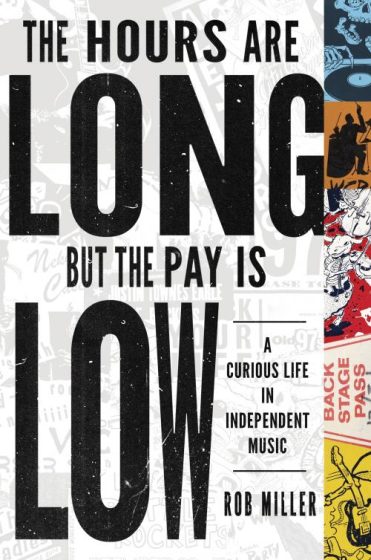
Rob Miller, The Hours Are Long But The Pay Is Low: A Curious Life in Independent Music
A question anyone who pursues a creative life will ask themselves: Why do we take a vow of poverty to put art into the world? As put forth in Bloodshot Records co-founder Rob Miller’s memoir, The Hours Are Long But The Pay Is Low, it’s because not doing it is not an option.
Chicago-based Bloodshot caught the wave of mid-1990s alternative country, releasing seminal works by Old 97s, Waco Brothers, Robbie Fulks, Sarah Shook, and more. Miller comes across as an OCD character straight out of High Fidelity, and his memories of the label’s hardscrabble early days are refreshingly unpretentious.
Bloodshot’s story wasn’t entirely positive. Its original incarnation ended badly amid disputes between Miller and his business partner (the label was ultimately purchased by Exceleration Music, which operates it now under new management). But Miller summarizes the bad-vibes part only briefly, concentrating instead on telling one man’s love story for music. It’s honestly impossible to imagine him doing anything else. And as the cherry on top, Miller dedicates the book to a pair of late friends including Dex Romweber, who he writes “left this world before he could read what his music meant to me.” – David Menconi
Kristina Murray, Little Blue
Little Blue is an understatement. Kristina Murray’s sterling third LP could convincingly have been called “Huge Bummer,” which is coincidentally the mark of a great country record.
“It’s gonna get worse, just give it time,” Murray incants on “Has Been,” a cheekily dour turn-of-phrase that just may stop you in your tracks. (Surely she means it’s gonna get better, right?) Later, on the dreamy “Fool’s Gold,” Murray tries her best at seeing beyond the proverbial grey skies, only to come up short: “It’s just more clouds,” she sighs. Such moments are appropriately slathered in pedal steel, but there’s also a swampy, rock ‘n’ roll groove to tracks like the deliciously jaded “Watchin’ the World Pass Me By” that makes the whole set go down easy. – Will Groff
Drew Parker
My introduction to Drew Parker was his 2020 single “While You’re Gone,” about missing a girl and drinking a gas station PBR while waiting for her to come back. That song had the classic hallmarks of a contemporary country breakup song. Little did I expect the curveball to come five years later.
For over a month earlier this year, Parker teased a big announcement with cryptic social messages like, “Some chapters end. Some chapters begin. This one… isn’t about me. 9•15•25.” The day came and Parker revealed in a short film testimonial that he’s felt God speaking to him, culminating in Parker’s non-religious manager calling and saying Parker should record Christian (country) music. This “moment” stuck out to me not only for the unexpected manner in which Parker revealed his decision, but because it’s obvious this isn’t a creative “phase.”
I don’t see Parker putting together a “token” record about believing and then going back to just girls, beer, and his pickup. Furthermore, Parker exudes unwavering peace about it all – whether he loses fans or faces mean-spirited judgment. There’s tangible risk to this move and there’s something to be said for Parker’s resolve and frankly, his faith in making this change. – Kira Grunenberg
Nathaniel Rateliff & The Night Sweats Live at the Kia Forum
Thinking back on all the great music I saw this year, the concert topping my list is one I saw at Los Angeles’ Kia Forum in February. The amazing triple bill – a solo Sam Beam, Waxahatchee, and headliner Nathaniel Rateliff & The Night Sweats – all delivered dynamic performances. But it was the unexpected parts of the concert that really made it so memorable.
During his set, Rateliff welcomed several special guests: Lucius’ lead singers Jess Wolfe and Holly Laessig, Taylor and Griffin Goldsmith from Dawes, and Grateful Dead bassist Bob Weir. What especially impressed me, however, was how Rateliff generously let his guests take the spotlight – a gesture that conveyed his joy for making music, particularly in a “more-the-merrier” collaborative way.
The Colorado-based Rateliff and his band also made the extraordinary gesture of using the concert to raise funds for victims of Southern California’s January wildfires as well as partnering in a purchase of a mobile food pantry to assist those left homeless by the destructive fires. This night reminded me how musicians can not only create a genuine sense of community through their rousing performances, but also through their inspiring actions. – Michael Berick
Sinners (Original Motion Picture Soundtrack)
Ryan Coogler’s Sinners is the horror film of 2025. It’s been hard to ignore, and for good reason. Michael B. Jordan, who plays double duty as twin outlaws Smoke and Stake, leads the cast which also includes Hailee Steinfeld, Wunmi Mosaku, and Thomas Pang (also known by his stage name, Yao). The film ultimately raked in $367 million in worldwide box office receipts. From its unique spin on vampires to its rootsy, blues-driven music, Sinners excels in celebrating the rich history of Black music and connects the dots between African tribal music to modern day hip-hop and R&B.
Songs like “Travelin’” (a standout moment from newcomer Miles Caton as musician hopeful Sammie) and the mind-blowing time-traveling song “I Lied to You” (paired in the movie with a visual mixing all the styles of Black-made music throughout history) mark the soundtrack as one of the year’s best releases. It’s sure to give the audience a renewed sense of Black history that’s often correlated to specific moments and eras in time. The film and its soundtrack will be talked about for decades as being a vital cinematic moment. – Bee Delores
Ringo Starr, Look Up
Way back at the beginning of 2025, Ringo Starr reminded us how different the world would look today if not for his love of American roots music. Teaming up with GRAMMY-winning producer T Bone Burnett, Starr’s country album Look Up is a love letter to the sound that drove his imagination.
Over 11 new songs written mostly by Burnett for the occasion, a classic American art form got a British Invasion makeover, with modern masters like Billy Strings, Molly Tuttle, and Alison Krauss joining Starr’s fun. Yet, what made this project a year-end highlight was not just the tunes. It was what they represent. As Starr openly declared, his first musical love was American blues and country. Artists like Lightning Hopkins sparked a creative impulse that would ultimately help redefine pop forever. From releasing music as a self-contained band and writing their own songs, to making youth culture a dominant force, The Beatles would change the world – and who knows? With a different drummer behind the kit, maybe none of it happens. Look Up shows where Starr was coming from. – Chris Parton
Vandoliers, Life Behind Bars
Vandoliers’ fifth studio album, Life Behind Bars, is both joyous and contemplative as the raucous country-punk band dive deep into themes of gender, grief, and sobriety in equal measure. “Dead Canary” blasts eardrums with a Mariachi flavor that barrels full steam ahead, setting the stage for their most impressive record to date. Other essentials such as “Bible Belt” and “Thoughts and Prayers” take aim at the current social and cultural moment, addressing religious fanaticism and how it clouds any sense of empathy.
Songs like “You Can’t Party with the Lights On” and “Valencia,” another Mariachi-intoned moment, are just plain fun. These round out the album into a well-crafted snapshot of the group right now and where they fit into the ever-changing world. Additionally, Vandoliers have never sounded so in tune with one another, vocally and musically, opting for compelling and intricate choices that expand their style without sacrificing what’s made them so good. – Bee Delores
Kelsey Waldon, Every Ghost
As the editor for Good Country and BGS, I listen to hundreds of albums a year, but they rarely stop me in my tracks. That happens even more rarely when album creators are longtime close friends of mine. But despite having met Kentuckian singer-songwriter Kelsey Waldon nearly 15 years ago and adoring all of her LP releases in that time, when Every Ghost first arrived in my email inbox earlier this year, I was floored.
In a world – and industry and genre – absolutely dripping with affectations of country music in lieu of the “real deal,” Waldon’s sixth studio album is dyed in the wool, but unconcerned with meeting those expectations or checking the boxes of trends and salability. These honky-tonking songs are infused with old-time, bluegrass, outlaw, confidence, and Prine-ian philosophizing. Waldon somehow turns introspection and identity into gritty and engaging wit and metaphor, without ever needing to obscure her messages to make them feel artistic or serious or poetic.
Even listeners like myself, who have been in Waldon’s fan club for a decade and a half or who have swapped vegetable seedlings and chicken pics with her, or who have crisscrossed her Ohio river floodplain homeland dozens of times, will learn much more about Waldon, her approach, her sonic loves, and her inner machinations as she pulls back the curtain for all of us on Every Ghost. – Justin Hiltner
Marlon Williams, Te Whare Tīwekaweka
Down here at the bottom of the globe in Aotearoa and Te Waipounamu (the North and South Islands of New Zealand), 2025 has very much been the year of the Māori singer-songwriter Marlon Williams (Kāi Tahu, Ngāi Tai).
Back in April, I interviewed Williams for a Good Country cover story to celebrate his stunning fourth solo album, Te Whare Tīwekaweka (The Messy House) and director Ursula Grace Williams’s equally affecting documentary film Marlon Williams: Ngā Ao E Rua – Two Worlds. Since then, he’s brought his antipodean blend of country and western, folk, rock and roll, and mid-to-late 20th-century pop to audiences across the U.S., UK, Australia, and at home, culminating in taking home the coveted APRA Silver Scroll songwriting award for his single “Aua Atu Rā” in late October.
Written and sung entirely in te reo Māori, the indigenous language of New Zealand, Te Whare Tīwekaweka is a masterful example of how music can use mood and emotion to cross geographic borders and linguistic barriers effortlessly. Even when we don’t speak the same language, we can still find common ground. Sometimes a sense of connection is only a song or two away. – Martyn Pepperell
Photo Credit: Tyler Childers by Sam Waxman; Kelsey Waldon courtesy of the artist; Olivia Ellen Lloyd courtesy of the artist.
This website uses cookies to improve your experience. We'll assume you're ok with this, but you can opt-out if you wish.AcceptRejectRead More
Privacy & Cookies Policy
Privacy Overview
This website uses cookies to improve your experience while you navigate through the website. Out of these, the cookies that are categorized as necessary are stored on your browser as they are essential for the working of basic functionalities of the website. We also use third-party cookies that help us analyze and understand how you use this website. These cookies will be stored in your browser only with your consent. You also have the option to opt-out of these cookies. But opting out of some of these cookies may affect your browsing experience.
Necessary cookies are absolutely essential for the website to function properly. This category only includes cookies that ensures basic functionalities and security features of the website. These cookies do not store any personal information.
Any cookies that may not be particularly necessary for the website to function and is used specifically to collect user personal data via analytics, ads, other embedded contents are termed as non-necessary cookies. It is mandatory to procure user consent prior to running these cookies on your website.