The 15 Best Country Albums of 1976

Country music has a long-standing reputation as being a genre focused primarily on breaking songs at radio and, consequently, one that releases albums routinely dismissed as “hits plus filler.” Conventional wisdom is not entirely wrong on this point, but it is wildly overstated. The truth is that every year is a good year for country albums—and that was once again the case fifty years ago.

I wouldn’t crown 1976 as the greatest country-album year ever—as I once suggested at No Fences Review, that title may belong to 1973—but the U.S. Bicentennial was yet another year filled with fantastic, even essential, country albums. Of course, any Best-Of music list is subjective, but I’d argue the best ones both validate reader experiences (“Oh hell, yes! That’s a great one!”) and challenge their taste (“What the hell?”).

So, listed alphabetically only, and with the understanding that I could have easily doubled the length of the list below, here are my 15 Best Country Albums of 1976.

Jessi Colter – Jessi

Colter will forever be best known for the pissed-off vulnerability of her “I’m Not Lisa,” the quiet crossover hit off I’m Jessi Colter. But Jessi, her follow-up in ’76, is the better album. Colter’s quaver doesn’t always hold, or even hit, the notes she’s after, but somehow that limitation consistently deepens the domestic turmoil she sounds in her songwriting. And the wild, bluesy, and country-rock arrangements on “The Hand that Rocks the Cradle” and on No. 11 hit “It’s Morning (And I Still Love You)” only reinforce Colter’s conflicting emotions. “Without You” opens at a crawl, just voice and piano like it’s going to be the unhappy sequel to “I’m Not Lisa,” then suddenly it’s a party. “Without you I can’t go on,” she keeps insisting, but you can tell she’s already starting to dance.


Stoney Edwards – Blackbird

Stoney Edwards’ final Capitol album included several tracks that, then as now, sound like they should’ve been good-sized hits, but both the sweet country pop of “Love Still Makes the World Go ‘Round” and the prayerful version of Merle Haggard’s “Don’t Give Up on Me” barely charted at all. In the uplifting but controversial social commentary “Blackbird (Hold Your Head Up High),” which just missed the country Top 40, Edwards used the N-word to describe himself and his father—pointedly so, to shine a light on the white world’s bigotry and oh-so shrewdly, as well, to claim country music for his own. The unexpected closer, a crawling six-minute version of Leonard Cohen’s “Bird on a Wire,” is a perfect vehicle for Edwards’ worn-sandpaper baritone: “I have tried in my own way to be free…”


Emmylou Harris – Elite Hotel

Elite Hotel was technically out in 1975, but since it wasn’t released until Dec. 29th, I’m more than pleased to include it among the best of ‘76. On her second album, and as of that April, her first No. 1, Harris dedicated her luminous voice to bridging country scenes new and old. She memorably covered her late friend Gram Parsons twice even as she also scored a pair of chart-toppers with versions of classic hits by Buck Owens and Patsy Cline—and added a No. 2 hit with George Jones deep cut, “One of These Days.” I know the competition has been stiff, but is this Emmylou Harris’ best album?


Waylon Jennings – Waylon Live

Recorded at shows in Dallas and Austin in 1974, Waylon Live is my pick for Greatest Country Live Album Ever. Jennings is at his tender, burly best and Ralph Mooney adds lightning-strike pedal steel throughout, atop the Waylors’ thumping, bumping country rock. From “T for Texas” (“Wanna hear me yodel?”) to “Bob Wills Is Still the King” to “This Time,” this is Outlaw country at its artistic peak. Pro tip: The 11-song original LP was bumped to 20 tracks when reissued on CD in 1999, then expanded to 42 tracks in 2003, and will still leave you wanting more.


Loretta Lynn – When the Tingle Becomes a Chill

Lynn was never much of an album artist but this one goes on her short list. The title track, written by Lola Jean Dillon, is a women’s movement anthem that lays out the cold, hard material conditions of domestic life. You wish Lynn had gender-flipped her cover of the Glen Campbell hit to “Rhinestone Cowgirl” or that her only song credit here, “Red, White and Blue,” didn’t claim Cherokee roots for herself quite so stereotypically. But those are quibbles next to how persuasively she transforms each cut here as a statement of her absolute Loretta-ness.


The Osborne Brothers – Number 1

This Osborne Brothers album included zero No. 1 hits, zero songs that include the phrase “number 1” and, what’s more, was approximately their 18th studio album, not their first, so my guess is that this album was called Number 1 because it was their first for bluegrass label CMH. Regardless, Number 1 pops like only the Osbornes can. It’s filled with Bobby’s great high leads and jaggedy mandolin solos, with Sonny’s ringing banjo and, for even extra pop, David Brakefield on high-lonesome drums. A-Team pianist “Pig” Robbins even drops by on “Memories Never Die” and “Each Season Changes You.” Bluegrasspolitan!


Johnny Paycheck – 11 Months and 29 Days

This album didn’t include any radio hits to speak of, the way earlier Paycheck sessions with producer Billy Sherrill had, and certainly nothing as monumental as the pair’s “Take This and Job and Shove It” would the following year. But would you settle for some of Paycheck’s greatest performances? The title track (a Paycheck/Sherrill co-write) is a rough-and-rowdy, in-the-jailhouse classic, while “The Feminine Touch” is a tragicomic testament to the way every domestic nicety abandoned Johnny when his wife moved out, and “Gone at Last” (a Paul Simon song and duet with soul singer Charnissa) is delivered with fingers-crossed, Pentecostal mania. Best of all is “I’ve Seen Better Days,” a miserable country-soul masterclass that begins with Johnny coming to on the lawn.


Elvis Presley – The Sun Sessions

Either a jolting reminder or thrilling revelation, depending upon when you came in, The Sun Sessions brought together for the first time Presley’s first commercial recordings, the game-changing sides that both challenged and help to expand what people thought of when they thought of country music. It kicks off, of course, with the genre-scrambling debut single “That’s All Right” b/w “Blue Moon of Kentucky,” and gathers as well his game-changing run of initial rockabilly hits—all on country radio, mind you—including his career-first chart-topper: “I Forgot to Remember to Forget.” In June 1976, the reissue of the year peaked at No. 2 on the country album charts.


Charlie Rich – Silver Lining

Country soul singer Charlie Rich teamed here with producer Billy Sherrill for a gospel album that remains too little known. Silver Lining features the dynamic rhythm beds and harmony group arrangements, and the deeply felt and swung vocals, that were already beloved from Rich’s many seventies country hits. Indeed, the versions of “Sometimes I Feel Like a Motherless Child,” “The Milky White Way,” “Down by the Riverside,” “Why Me” and the rest would fit thrillingly on any of Rich’s albums in the decade. I especially appreciate the Silver Fox’s joyous, rousing intervention on the normally staid “Amazing Grace.”


Linda Ronstadt – Hasten Down the Wind

Mention Linda Ronstadt in a county music context and people will jump first to her Trio collaborations with Dolly Parton and Emmylou Harris, then maybe recall her contributions to the country rock scene of the late 1960s and early 1970s. But her most important and lasting contributions to country music were her several big radio hits in the middle of the decade. Hasten Down the Wind further cemented old-time rock and roll sounds as up-to-date country with her version of Buddy Holly’s “That’ll Be the Day” (a No. 27 hit) and reestablished Patsy Cline’s reputation for new country and rock fans with “Crazy” (a No. 6 hit). The album also paved the way for the acceptance of a certain type of arena rock balladry for countless country stars to come—especially with the pedal steel-powered “Try Me Again,” a song Ronstadt co-wrote with Andrew Gold.


The Seldom Scene – The New Seldom Scene Album

This is the Seldom Scene late in its classic lineup’s run (John Duffy, John Starling, Mike Auldridge, Tom Gray, and Ben Eldridge) as they put their newgrass stamp on old gems from the Stanley Brothers and a couple of new ones from Rodney Crowell (including harmony vocals from one Linda Ronstadt on his “California Earthquake”). This album has often been judged as lesser than earlier efforts by the Scene, but I love the way it leans so hard into eclecticism, which is this ensemble’s always-seen calling card. From the album’s opening, rolling-on-home version on Jimmy Buffett catalog cut “Big Rig” to their closing Dobro-and-harmony-forward cover of Hank Williams’ “Pictures from Life’s Other Side,” this set feels like one more tent pole for big-tent bluegrass.


Various Artists – Wanted: The Outlaws

Sitting atop the country album chart for two months early in the year, this compilation served as the national coming out party for a long-simmering scene that remains a genre touchstone to this day. Technically speaking, several of the album’s cuts weren’t Outlaw at all: Waylon Jennings and Jessi Colter’s duet “Suspicious Minds” had been released as a single before Jennings’ famously renegotiated his RCA contract, and two of Willie Nelson’s contributions, “Yesterday’s Wine” and “Me and Paul,” had already been released as a failed two-sided single before Nelson left Nashville for Texas. Time changes everything, though, and when rereleased in 1976, these cuts were understood to crystallize progressive-country sounds and the genre’s newly rebellious attitude. The first country album ever to be certified platinum, Wanted: The Outlaws nudged country music in the direction of becoming more explicitly an album-oriented format, just like rock, even as Outlaw country also became, ironically, country music’s next big pop crossover sound. Don’t sleep on Tompall Glaser’s fantastic version of “T for Texas”!

(Read more about Wanted: The Outlaws.)


Leona Williams – San Quentin’s First Lady

When Merle Haggard played a New Year’s Day show at San Quentin in 1976, his opener was Leona Williams, who was a member of his touring troupe as well as his future wife and songwriting partner. He wrote most of the songs she performed, and his band, the Strangers, backed her up. But make no mistake: This is the Leona Williams Show. She sings the husky hell out of “I Wonder Where I’ll Find You at Tonight,” “San Quentin” and “Workin’ Girl Blues,” and she and guitarist Roy Nichols both like to tear the placed down on “If Anyone Ought to Know.” San Quentin’s First Lady is long out of print, but do yourself a favor and track down it down on YouTube.


Hank Williams Jr. – Hank Williams Jr. and Friends

Hank Williams Jr. and Friends was recorded before the singer nearly died falling off a mountainside in April of 1975. But, like Elite Hotel above, it wasn’t released until December and didn’t chart until ‘76. Timelines aside, this is the album where Hank Jr. finally began to find a rocking, modern sound of his own in the swelling southern rock anthems “Losing You” and “Can’t You See” (by his friend Toy Caldwell of The Marshall Tucker Band) and tender ballads like “On Susan’s Floor” (by Shel Silverstein). But it’s the pair of minor hit singles that close the album, both Williams originals, that steal the show and predict his superstar future. The haunting “Stoned at the Jukebox” is a boozy honky-tonker about the loneliness that closes in after all your rowdy friends head home, while “Living Proof” wrestles with having to live up to family traditions. Among the very best country albums of the entire Outlaw moment.


Bobby Womack – BW Goes C&W

R&B legend Bobby Womack’s country album was summarily panned in its day, but working a bigger-tent understanding from here in the 21st century, it sounds awfully good to me. Womack leans hard into the soul of the already soulful Charlie Rich hit “Behind Closed Doors,” brings a playful modern bounce to the mid-century Eddy Arnold smash “Bouquet of Roses,” and makes over another Rich hit, “I Take It on Home,” into delightfully ragged countrypolitan. Most telling of all, as far as cracking open genre walls goes, is when Womack turns away from the Nashville songbook to underscore the country in his brother Curtis Womack’s “Don’t Make This the Last Dance” and the song Sam Cooke wrote for Womack’s old family group The Valentinos, “I’m Tired of Living in the Country.”


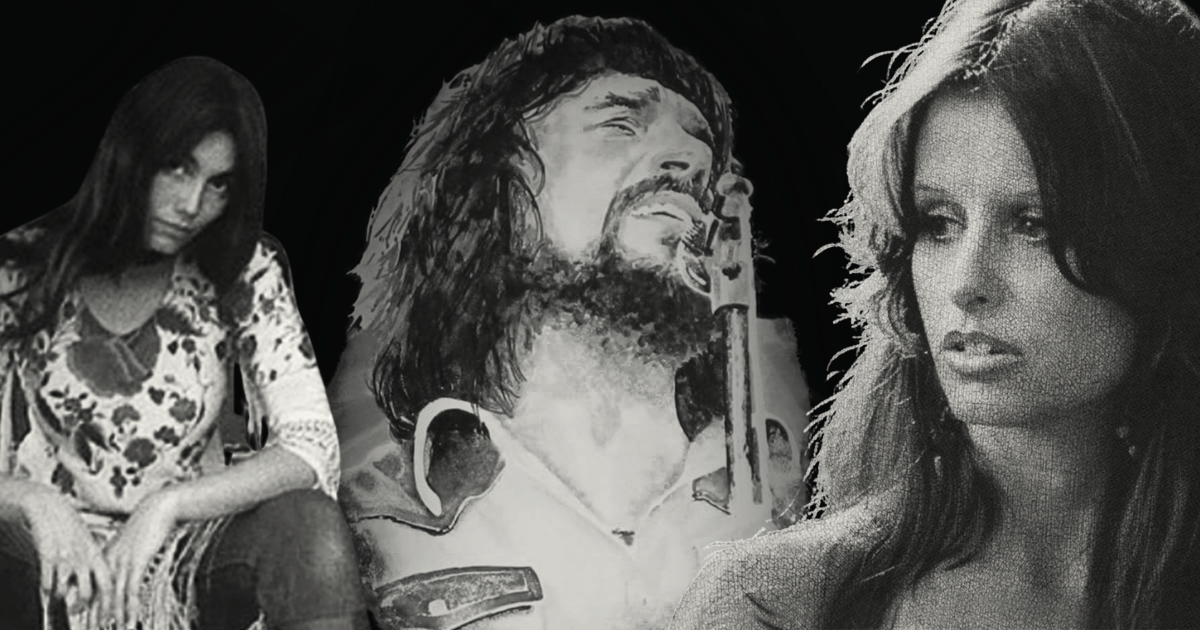
Lead image: Emmylou Harris, Elite Hotel; Waylon Jennings, Waylon Live; Jessi Colter, Jessi.
Jake Owen Started Bro Country. His New Album is Anything But

Depending on who you ask, Jake Owen might be responsible for the very first bro country song. His 2011 hit “Barefoot Blue Jean Night” wasn’t the first party-ready ode to Southern summers and ice-cold beer, but its slick mix of country signifiers and stadium-rock production – courtesy of Joey Moi, best known for producing Nickelback and later Morgan Wallen – proved highly influential, arguably paving the way for crossover smashes like Florida Georgia Line’s “Cruise” and Blake Shelton’s “Boys ‘Round Here.”

“Never gonna grow up, never gonna slow down,” Owen sang on his signature hit, neatly summing up the youth-obsessed ethos of the bro country era. Now 44 and newly independent after 20 years on RCA Nashville and later Big Loud, he’s singing a different tune.

“I’ve made a lot of records that had a fantasy, ‘Remember when we were young?’ kind of feel to them,” Owen told Good Country. “What feels good about this new record is that I can listen to it and feel like I’m listening to my life right now. It’s very real.”

Dreams to Dream, Owen’s eighth studio album and his first with Shooter Jennings producing, is a sharp left turn for an artist known for hits like “Beachin,’” “I Was Jack (You Were Diane),” and “American Country Love Song.” Earlier this year, Owen decamped to LA amid the wildfires, leaving the comfort of Nashville behind in search of creative truth and a more organic sound. The result is one of the year’s best and most surprising country albums, which trades bro-ish bravado for world-weary introspection and a classic-country sensibility.

The title track is a rollicking, country-rock statement of purpose that name-checks Hank Williams, Jr. and establishes the stakes: “I’ve been down, but I ain’t no quitter/ ‘Bout to get up on my feet/ ‘Cause I still got dreams to dream,” Owen sings in the rousing chorus. On the Troy Jones-penned “Wouldn’t Be Gone,” he muses about leaving stardom behind to work in a hardware store. (“I already know a thing or two about hardwood floors,” goes the song’s best line.) Other standouts include “Chill of December,” a Haggardian expression of winter loneliness, and “The One I Did It To,” a doleful admission of romantic wrongdoing.

In a Q&A, Owen spoke to Good Country about teaming up with Jennings, defining authenticity on his own terms, and why he doesn’t shy away from his bro country past.

This album is a departure from the sound that you’re best known for. What made now the right time to do an album like this?

Jake Owen: My life has always been about timing and believing that I’m supposed to be where I am. The album’s called Dreams to Dream and it came about because I was in this interesting place in my life where I’ve had a record deal for 20 years and, all of a sudden, I’m doing something on my own. Which felt kind of like freedom, but also felt very scary.

For a long time I was focused on the more commercialized songs that would work on radio, since I was on a major label, and I felt like this is the time to make the kind of record that I’ve always really loved. I’ve always tried to follow my heart and what my intuitions have told me. They haven’t always been right, but I definitely follow them.

What was it like working with Shooter Jennings?

He really exceeded my expectations. I expected to go out there and make a record, but I didn’t know I would leave there with an awesome new friend and somebody that really believed in me as a person with dreams and a purpose and things they wanted to say. He was so encouraging to me. I felt safe with him, which is a weird way to put it, I guess. But you need people to pat you on the back and tell you that you’re doing the right thing.

It also was at a time when – I’m not ashamed to say it – there were not a lot of people ringing my phone in Nashville to tell me they were proud of 20 years of what I’d done in my career and 11 number one songs. Kind of weird, right? But the one guy that was calling me and applauding me and telling me that I could do way better, bigger things in my life than what I’d already done was Shooter Jennings. Out of all people, right? That says so much about how much he loves music and believes in people. I think you’d probably hear that same answer from anybody else that he’s worked with.

The second song on the album, “Them Old Love Songs,” is a Waylon Jennings cover. Why did covering Waylon make sense for this record?

Well, there was no part of me going out there that thought I would do any covers. But Shooter and I just talked about life and music out there, and he was saying that his dad always would cut cover songs for fun when he came off the road. Shooter would encourage me, each night or whenever we were done with the session, to do some covers and just have some fun. With that one in particular, I was nervous to ask Shooter, because it felt a little cliché. I wondered how many people work with him and have wanted to do that or if he’s offended by that.

But I always loved that song and the album that it’s on, Are You Ready for the Country. It’s pretty wild, because that album starts off really rocking, and then it goes into that. To me, if you listen to that song, the lyrics say, “I wish I had a true fine woman/ Let her rock me all night long/ And maybe we could get it together/ Like people do in them old love songs.” I’ve been singing that my whole life and it’s still the way I dream of love. And then, going back to the first verse, it says, “Nobody cares where I’m going, all they know is I’m coming back.” I don’t think anybody cared that I was going to make a record with Shooter. Nobody really even knew.

Also, one of the reasons Shooter and I decided to make this album was our love for the Hank Williams Jr. record, The New South, that his dad actually produced. Hank moved to Alabama to make that album, I think it was in 1977, and said he needed to get out of Music City because he wanted to go make his kind of music with his friends. And I felt the same way. Like, here I am going to LA to make a record with Shooter, and he’s encouraging me like Waylon encouraged Hank. So recording that Waylon song, with Shooter producing it, it just felt right.

You recently celebrated the 20-year anniversary of moving to Nashville and signing your first record deal with RCA. You made a post referring to “the highest of highs and lowest of lows” in your career. Could you tell me about some of those highs and lows?

Yeah, well, first off, thanks for even acknowledging that, which I think is important to the reasoning behind this whole record in general. I would start off by telling you that the highest high for me was just moving to Nashville and knowing that something was ahead of me. When I left college, I left my twin brother and a lot of my friends and my entire family at home in Florida. I still look back on that guy, and I’m like, “What the fuck was I thinking?” But I guess I just had to chase it. And then getting to Nashville and immersing yourself with people that are so much better than you are, I just didn’t have that where I was in college in Tallahassee. I kind of felt alone. Getting a record deal was also a big part of that, feeling like I had accomplished part of what I came here to do. And then I spent the next seven years having to figure out how to keep the guys in the band paid and the buses rolling on the road and how to get my first number one song. Everybody thinks that’s the easy part once you sign the record deal, but it really wasn’t. It was a rude awakening.

And I went through a divorce. I got married, I had a kid. It’s like the classic country song shit, man. I think that was a big low for me, having to leave my family to go on the road. I had been very successful from my dreams that I chased, but the one thing that I probably desired the most, outside of music, was a family life. The one thing that I’ve never been good at and I haven’t figured out is that real solid relationship in life, building love and trust, and that bothers me a lot. It bothers me that I can be good at a lot of other things, and that is the most important thing to me, and I haven’t been so great at it.

You were a major player in the bro country era, which is now having this sort of nostalgic reappraisal. I’m thinking of the HARDY and Ernest song “Bro Country,” which is an ode to that time in country music. When you think about that era, what goes through your mind?

It’s funny, because I don’t know that anybody has said this before, but I’ll tell you right now: I started that shit. Everybody wants to shy away from bro country or whatever, but I invented that shit. And yeah, I am proud, in a way. I remember being at a time in my career where I had a record deal for seven or eight years and I had a couple songs that had done all right, but I was feeling like I was gonna lose my record deal if I didn’t try to do some different shit. And I didn’t have a producer at the time. I’d left Tony Brown, who was great. And he’s like, “Hey, man, you should meet this guy, Joey Moi. I think he’d be great for you.”

Joey obviously came from Nickelback and all that. At the time, no different than when I left Tallahassee for Nashville, everybody was like, “Dude, what the fuck are you doing?” So here’s a guy now from Nickelback who’s gonna try out making country music on me, which was probably a crazy thing, too. It wasn’t that I was trying to sell out. If anything, I look back and I’m like, “Dude, I had the balls to just do something different at the time.”

“Barefoot Blue Jean Night” was our first release and it had all of these claps and stomps and loop shit. It ended up being the most-played song of the decade [according to Country Aircheck]. I have the plaque on my wall. It was a major, major changing point in my life and career, because it worked. Not only did I keep making those songs for the next few years, but it influenced a shit-ton of people.

I think a lot of people might want to avoid that association. It’s kind of like the way that ‘80s rock and roll gets shit on sometimes, but there are still people in their cars cranking it to 11, right? If you look back at my early career, the songs I was writing were very country, because that’s what I always loved. I went on tour with Brooks & Dunn and Alan Jackson. So when all of a sudden, years later, all of the people that were my heroes were like, “I hate this kid,” it kind of hurt my feelings. But I always knew in my heart that I would get back to what brought me to the table.

Among the detractors you alluded to, people who are into more traditional-sounding country music, there’s this idea that pop-country or bro country is inauthentic. What do you think is “authentic” country music?

Authenticity is the ability for artists to take any type of music and just make it their own. Johnny Cash never shot a man in Reno. But it was a huge song for him. George Jones didn’t write “He Stopped Loving Her Today,” but he owns that song. Stardust is the biggest album Willie Nelson ever released and he didn’t write a single song on it. And he’s one of the greatest songwriters of all time. Authenticity isn’t about where somebody’s from or how they grew up. If you own what you’re doing, and you deliver it in a way that’s believable, I think that’s authentic.

I’m thinking now of this back-and-forth you had with Jason Isbell a couple years ago about artists writing their own songs.

Yeah, dude. That guy. I love Jason Isbell, that’s what’s crazy. Some of the artists that I love the most just spout off at the mouth. The other day I said something about Zach Bryan. I love that guy’s music too, right? He’s amazing, and he’s also uber successful – selling 120,000 tickets or whatever, which I could never even fathom. And Jason is out winning GRAMMYs on top of being an incredible guitar player, so much more talented than I could ever dream of being. But I don’t understand why guys like that will take the time on shit on someone else’s music.

That’s never made sense to me and it’s always made me want to just ask that question directly to them. Which is what I did to Jason. I was just like, “Dude, I’m not going to get into an argument with you over Twitter, so give me your number. I’m going to just call you and have a conversation about why you feel this way.” He and I had a great conversation. And he was very cool to acknowledge and entertain my questioning behind why he would just spout at the mouth about stuff like that. We both ended it at the time – and this was years ago, when I was drinking, or maybe he was – he’s like, “Dude, we should catch a beer sometime.”

So, to go back to the authenticity thing, there’s so many people that are so great at a lot of things. One of my absolute favorite artists right now is Charley Crockett and he does that, too. I wonder, sometimes, I’m like, “Why are you guys all trying to prove to one another that you’re more authentic than the next guy?” Sorry, you can tell I’m getting tense talking about it. But I’m confused by it, because those guys make some of my favorite music and it bothers me that they feel the need to try to blow somebody else’s candle out in order to make their already blazing one shining brighter.

I wonder if part of you wanted to prove to that type of person that you could make one of these really rooted, quote-unquote “authentic,” hardcore country records.

I think it was about proving to myself what my intuitions are and what my beliefs have always been about what’s right for me. I also really needed somebody to tell me that what I was doing was the right decision, and Shooter never wavered. He was constantly telling me, “Dude, this is it. You’re going to open up a Pandora’s box for your career in ways that I don’t think you’ve seen before.” I will say that it’s definitely opened my eyes to a lot of things and a lot of people reached out to me that have never reached out to me before.

One of my favorite songwriters, artists, people I’m a huge fan of is Brandy Clark. I think she’s incredible and just a brilliant songwriter. And she happened to be in LA when I was there and stopped by to see Shooter. She called me after and I just started crying. Because she was like, “Jake, I’m so happy for you. Like, I hear you in this.” It was just so fulfilling to hear that from her. She didn’t have to do that, but I was so moved by it.

I’m grateful for people that don’t think about music from a standpoint of judgment, but look at it as a possibility of something greater.


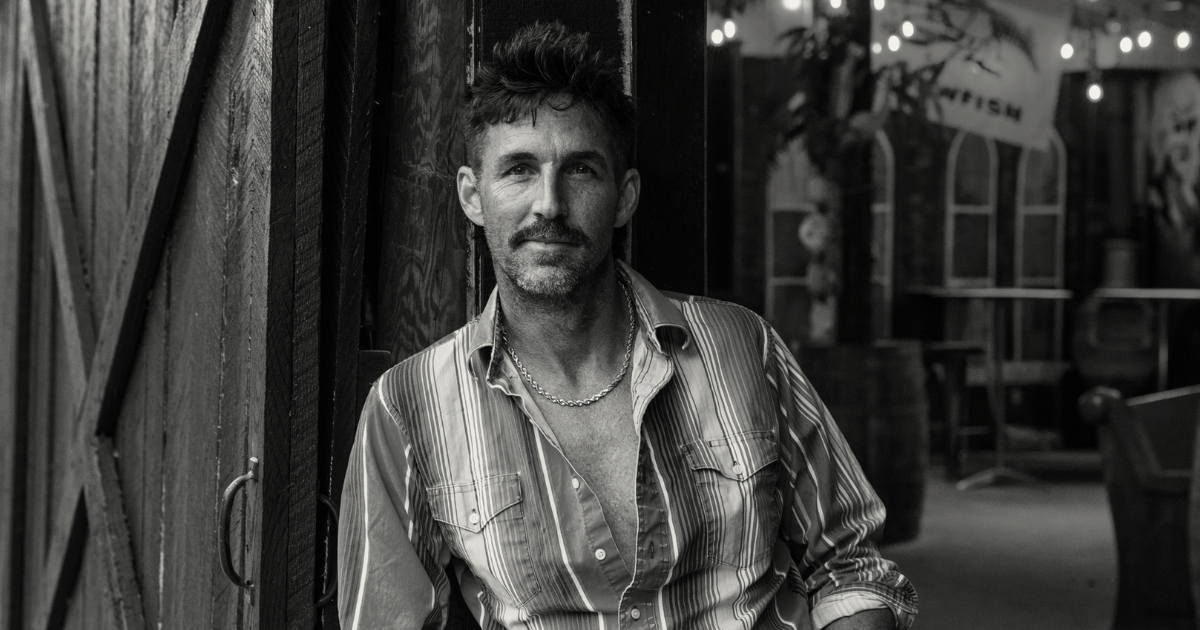
Photo Credit: Spidey Smith

Sam Williams Carries His Country Music Legacy to Late Night Debut

On his primetime television debut, Sam Williams makes a powerful statement. Grandson of the legendary Hank Williams and son of Hank Williams Jr., the rising recording artist previewed his debut album, Glasshouse Children with a riveting performance from his grandfather’s old house in Franklin, Tennessee. In an extended one-shot capture, Sam Williams does his name proud with a beautifully-written song called “You Can’t Fool Your Own Blood.” Out of a less-than-usual childhood and recent family tragedy, he has emerged with a style that is both poetic and hard-hitting, pulling no punches in his blend of honesty and vulnerability.

With an undoubtedly heavy burden of expectation, Williams blossoms in this realm of singer-songwriters who are more forlorn than raucous, standing with the likes of artists such as Donovan Woods and Ruston Kelly. Although his television debut was one for the books, perhaps the more exciting news is of the debut full-length record, set for a release later this summer on UMG Nashville. Music from Sam Williams has undoubtedly been a long time in the making, but the good news for us is that it’s almost here. Watch his performance on The Late Show with Stephen Colbert below.


Photo credit: Claire Joyce

MIXTAPE: Brent Cobb’s Songs from the Road

Brent Cobb may have the coolest summer job ever – opening shows across the U.S. for Chris Stapleton and Marty Stuart. During some downtime in Oregon, the Georgia native gave the Bluegrass Situation the lowdown on 11 of his favorite songs.

“Lord, I Hope This Day Is Good” – Don Williams

I woke up today singing Don Williams’ “Lord I Hope This Day is Good.” Because it just felt that way, you know? It’s just a beautiful day, I kind of want to smell the smell of hickory smoke rollin’ around in the wind. That’s also what Don Williams makes me think of, you know? We got a little somethin’ on the smoker and a little Don Williams playin’ – it’s hard to beat that.

“New South” – Hank Williams Jr.

That kind of leads into the next one, it’s sort of the same path, but Hank Jr., “New South.” It’s on his album, The New South, his first record after he fell off the mountain. Waylon Jennings, Toy Caldwell, and Marshall Tucker — they helped him produce that record. The whole album is so good, you want to sit around a campfire sound, you know? That particular song, “New South,” it also makes me want to put something on the smoker on a beautiful sunny day, pick a guitar, and maybe throw some horseshoes.

“I Wonder Do You Think of Me” – Keith Whitley

After that, I got Keith Whitley, “I Wonder Do You Think of Me.” The other night, I was sittin’ up, a lot of times when I’m on the road it’s the only time that I have to go back to my regularly scheduled writing process program. My daughter’s not out here so I don’t have to wake up at 6 o’clock every morning like I do when I’m home, so a lot of times I’ll sit up and play music and I sat up the other night till about three in the morning listening to songs. This particular one – I had forgotten about this song, I rediscovered it and listened to it about 25 times in a row the other night. It’s just so damn well-written and the chords in that song are amazing. It seems like such a simple country song, but I can’t play it. I try to pick it out.

“Leaving Trunk” – Taj Mahal

Something we listen to every night before we go on stage is Taj Mahal, “Leaving Trunk.” It’s just got that dirty south, down south, funky, country feel that I love. You can tell that the Allman Brothers were borrowing a lot from Taj. And well obviously “Statesboro Blues,” that song particularly, it’s just got that … I don’t know, it feels funky. It also would be great on a day like today, just kind of walkin’ around and have that song playin’ in your mind and be-bopping to your own beat.

“Coming Home” – Delaney & Bonnie

That makes me start thinking of other songs you could listen to, to get in the zone. So I got Delaney & Bonnie’s “Coming Home.” That’s another one we listen to before we play. I know you probably know who that is, but for those who don’t, they would have Clapton and George Harrison and folks play on their records. They influenced a lot of their peers of that time, and Dave [Cobb, Brent’s cousin] actually turned me on to that track. I’d never heard it before. Yeah, just kind of that funky country, man, gets ya goin’.

“Ohoopee River Bottomland” – Larry Jon Wilson

Which leads us into Larry Jon Wilson. Larry Jon Wilson was from Swainsboro, Georgia. He did a couple of records in the ‘70s that were super funky country. “Ohoopee River Bottomland” is the song I’m thinkin’ of. It’s also just that pre-show jam, you know? It kind of gets you down the road a little bit, and the way Larry – especially that song – would use Southern-isms or just rural-isms. He’d talk about, “this low rent land has turned to sand and I’ve done stood ’bout all I can I’m leaving…I’m leaving,” and “I got a wore-out mule and a no ‘count tractor quit now…and this is it now.” I just love the way he talks. You really capture his South Georgia background, but then he’s able to put it to some funky music.

“Play Something We Know” – Adam Hood

Alright so after Delaney and Bonnie and Larry Jon Wilson, that made me think of my buddy Adam Hood, because those are two songs that a lot of people may not know. It made me think of my friend Adam, I do a lot of writing with him. We wrote a lot of songs with this newest album of mine. He has a song called “Play Something We Know.” It’s all about hearing “play something we can sing to and play us something we know.” It’s about that guy or girl in the bar that’s slightly belligerent at your show, and they’re like “play me some ‘Brown Eyed Girl.’” You should check it out, it’s hilarious. Adam is just a great all-around artist.

“Forever Lasts Forever” – Nikki Lane

After thinking of Adam, it made me think of some other peers that I’m into, that I love, that have been good to me. Nikki Lane took us out at the top of last year and I think, in my humble opinion, she’s about the most authentic of our time. She has a song called “Forever Lasts Forever.” If you haven’t heard it, you should really check it out. It’s inspiring to listen to anything she writes, but that song is so wonderfully written. Just a wonderful breakup song, you know? Everybody loves a good breakup song.

“Hole in the Sky” – The Steel Woods

That brought me also to some other peers and also pre-show jams. The Steel Woods did a cover of Sabbath’s “Hole in the Sky.” I don’t know if you’re familiar with them, but son of a gun… It’ll get ya goin’, man. Their whole record is great. They’re recording a new record right now. That “Hole in the Sky” song, I remember the first time I heard it, I had no idea it was an old Sabbath song. It blew my hair back, it’s incredible.

“Anyhow, I Love You” – Guy Clark

Now this is gonna take us to after-show jams….the slow jams. Made me think of Guy Clark, “Anyhow, I Love You.” Man, talk about a damn well-written song. It took me a long time to get into Guy, not because I wasn’t into him…it’s just some things you gotta live enough to really appreciate it. That was one of those songs, man, “Anyhow, I Love You.” I could listen to that one, same as “I Wonder Do You Think of Me,” over and over and over and over again.

“Open the Door” – Otis Redding

That made me think of Georgia because Guy Clark is so good at writing about Texas. It made me think of an old Georgia artist, Otis Redding. Everybody knows him. “Open the Door” by Otis Redding feels like church. It’s like being back at Antioch Baptist Church when the preacher’s talkin’ to you and then he lays it on you.


Photo credit: Don Van Cleave