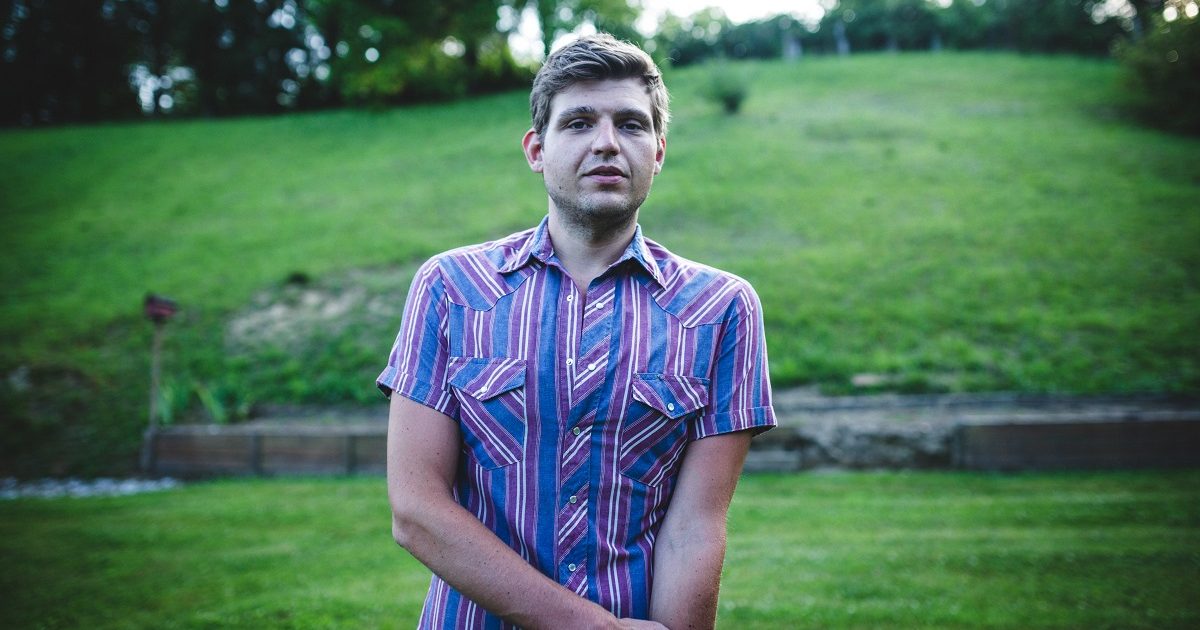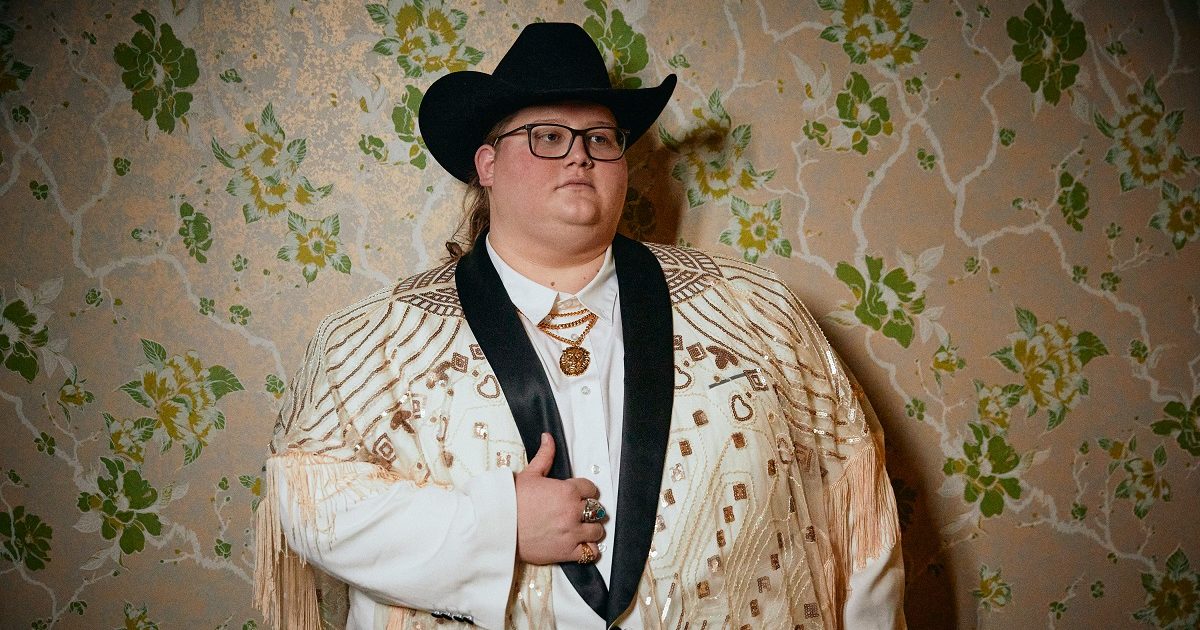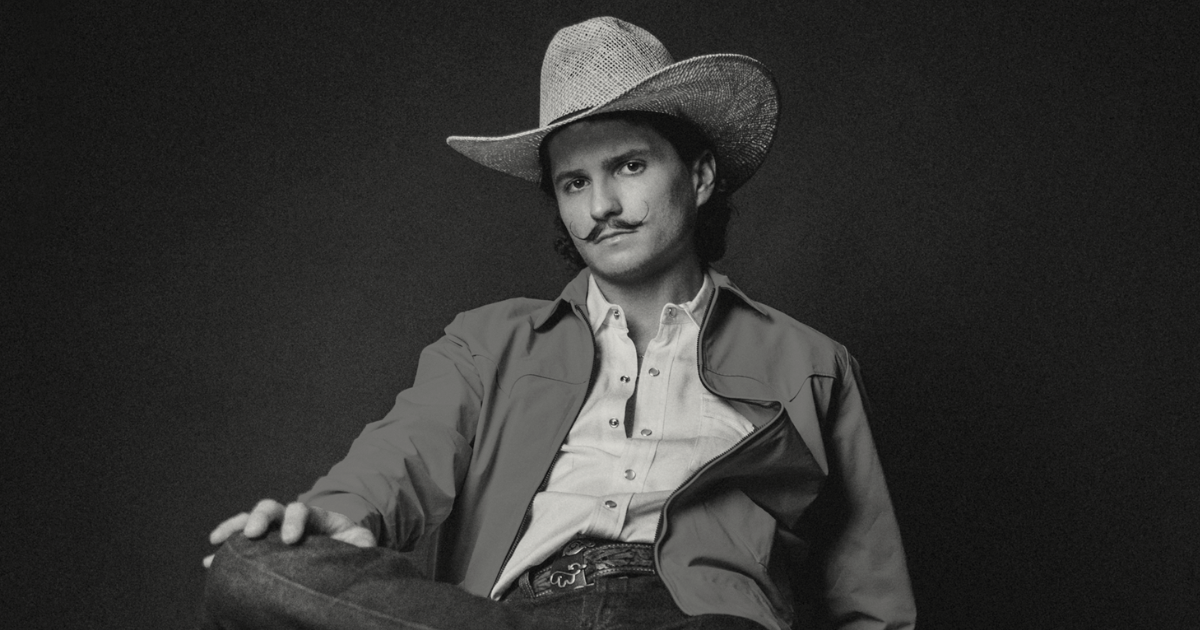
Braxton Keith’s Real Damn Deal is Country Through and Through

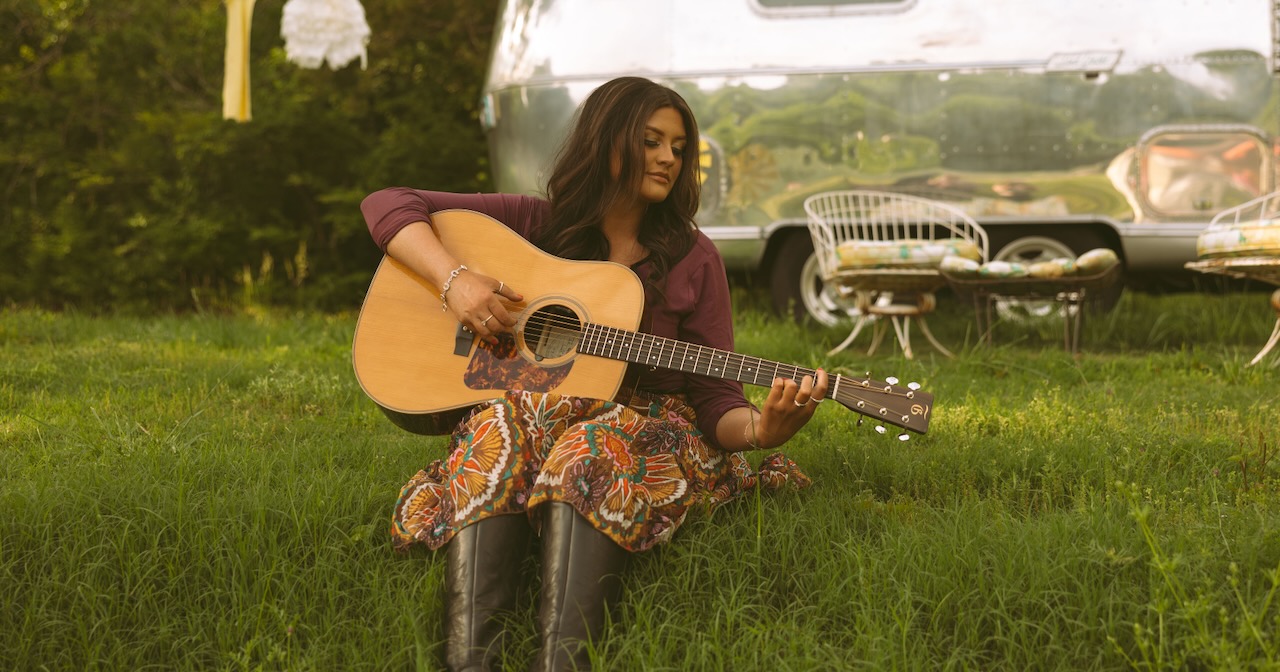
After years of building up a fan base through high-energy shows and viral social media posts, nobody is more ready for Braxton Keith’s debut album than… Braxton Keith. Raised in Midland, Texas and living in Nashville, Keith is only half-kidding when he says he’s probably listened to the new project five thousand times. Now he’s eager to hear what everybody else has to say.

His fans won’t be surprised that Real Damn Deal sounds like country through and through. Released on Warner Records on May 15, the album picks up the momentum of Keith’s gold-certified 2024 single “Cozy” and the unlikely embrace of his reverent cover of George Strait’s “The Chair.” Although he was skeptical about re-recording it, Keith found that his take on “The Chair” is serving as a gateway for his younger fans into the trenches of classic country.

Keith co-wrote a majority of the songs on the new album, but also included compelling material by Country Music Hall of Fame member Roger Miller, Americana all-star Jim Lauderdale, and some of Music Row’s most creative writers – such as Jessie Jo Dillon, Tony Lane, Liz Rose, and Morgane and Chris Stapleton, among many others. In this interview with Good Country, Keith talks about discovering country’s legends through his grandparents, learning to love the English language because of dyslexia, and hearing those inescapable ’90s country comparisons.

On this album, “Under Them Neons” sets the scene of a night in a country bar. It has a reference to Keith Whitley in it, too. He had a bluegrass pedigree, as you know, before he became a country star. Did you ever get interested in bluegrass?

Braxton Keith: I would say I have always been interested in bluegrass. Now I, by no means, am a bluegrass picker or anything of that sort, but I’ve always been interested in bluegrass, for sure. It’s such an interesting form of country music, I’d say. Very intricate, and it’s really cool to just watch. In fact, “I Ain’t Tryin’” on this record is written by Brice Long, Carson Peters, and Will Jones, and Carson is a bluegrass picker. He plays in a bluegrass band [Carson Peters & Iron Mountain] and opens up for us every once in a while.

How did you get introduced to Keith Whitley’s music?

Keith Whitley’s probably always been in the background for me. But definitely through listening to whatever was on the radio, listening to my grandparents’ old records and stuff. Keith Whitley has definitely been one that I’ve known about for a long time. I would say him, George Strait, Marty Robbins, and Ronnie Milsap … all the deep divers that you got to go in and figure out yourself.

Is that what you did? Figured it out for yourself?

I just tried to figure out what I liked the best. I really was attracted to these older artists because of the storytelling, but also they have a technical skill about their writing – and their melodies. Some of their melodies are pretty insane that I was trying to emulate, longing to hear again, or to make new.

You say you were listening to your grandparents’ records. Were they vinyl records?

Yes, sir. I don’t remember how old I was, but I remember sitting down and listening to Marty Robbins for the first time and Porter Wagoner. I remember hearing “The Carroll County Accident” and just thinking, “What is this? This is a whole different type of music that I’ve never even experienced before.” I think I was like 13, maybe even younger than that.

Every time we went over there, the Grand Ole Opry was on TV, or CMT was on at least, so we were always exposed to it. I guess I just didn’t realize what was going on until I got a little bit older. I got an iPod, and I think it was the Shuffle. It didn’t even have a screen. You just had to know what your songs were. That was the first time I really got interested in checking out music for myself. I didn’t have to listen to exactly what my parents were listening to anymore.

My mom was a big ‘80s rock person. She really didn’t like country music very much at all, because it’s very sad, she thinks. [Laughs] And my dad was listening to country music, but just whatever was on the radio. He wasn’t very specific in what he liked to listen to.

I’d read that your brothers were athletic, but you were not. However, you had musical talent. Is that accurate to say?

I would say, yeah. I tried to be athletic. I wanted to be, but they definitely had a leg up on me, on the sports and stuff. When I was a little kid we did this thing called Greater Midland Football League. From when you’re in third grade to when you’re in sixth grade you can go after school and do a football program. I never got to do that, because in third grade I actually figured out I was dyslexic. So, every day after school, I would go to classes and learn about the English language, which is probably why I ended up liking writing. So it all works out in the end. I was just a couple years behind when it got to football.

When you were learning about the English language, did you like to read too?

No. That was my big deal, that I struggled – I still do struggle – with reading. It just takes me a little bit longer and I have to really slow down and be thinking about what I’m reading to understand it. I like audiobooks a lot. Anything that I can do where I’m listening to somebody else read helps. But I would say I just liked writing. Before it was songs, I liked writing essays or whatever the assignment was. I’ve always liked writing. Coming up with my own stuff.

Did you play instruments during this time?

Yeah, absolutely. I played piano since I was in kindergarten, and I ended up playing for a while. I played for six to seven years and then I ended up quitting piano. I started piano because I loved Elton John. He was my big inspiration behind music when I was really young. I really wanted to learn “Crocodile Rock” and my piano teacher just wouldn’t let me do it. So I was like, “Man, I gotta go do something else.”

That was about the time I started picking up guitar, because my little brother was playing guitar at the time. So I was like, “Well, I’ll just go to lessons with him.” I started picking it up, got my first guitar, and never looked back. He doesn’t play anymore, but we started out together picking “Hotel California.” I remember us just sitting there for hours trying to get that thing down.

On this album, “Wind Blows” reminds me of how country music sounded in the ’90s. It reminds me of a Tim McGraw deep cut. What do you like most about “Wind Blows”?

I like the story it tells. You know, I grew up in Midland, Texas. And if there’s anything we know about Midland, it’s that there’s a lot of wind blowing in Midland. It’s kind of telling the story of how, when I lived in Midland, Midland was the end of the earth to me. There was nothing else there. And once I left, I never looked back. I went to Angelo [State University in San Angelo]. I’ve moved to San Antonio and Nashville, and we’re traveling all over all the time, just running and gunning. And the road keeps on going, you know? It’s cool to reminisce on the past, but my time in Midland’s gone and it ain’t coming back. That’s kind of what “Wind Blows” means.

Do you like it when people use the ’90s country comparison? Do you think that’s flattering? Or do you have an opinion when people say you sound like ’90s country?

I don’t have an opinion. The thing is, I don’t know if I’ve ever labeled it, which is funny to me. … You’ve heard the record. I would say it’d be very hard to pin that as ‘90s country. I would say that there’s some ‘90s elements in there, but there are elements from a lot of different dates in country music within that. I would just say we’re country, and we’re just trying to be country.

Well, you do start with a Western swing tune on this record.

Absolutely. Have you heard Jake Worthington’s new record? He has a song called “My Home’s in Oklahoma” and that one is a Western swing song. I heard that one after I’d been on a big Bob Wills kick. I just came back from Houston. Most of the rides that I do, I try to listen to different music every time. I was listening to a bunch of Bob Wills. When I heard that Jake Worthington swing tune, it was like, “Oh, son, we’ve got to have a Western swing tune on this record!”

So we called in Brice and Carson. That’s when Carson’s bluegrass magic came out. They ended up writing that beautiful “I Ain’t Tryin’” Western swing song. You couldn’t ask for a better song to start this record off. It’s upbeat, gets you in there. We’ve been ending the set with “I Ain’t Tryin’” lately, and it’s really fun. The crowds dig it. It’s a good one to just swing around to.

Did you ever get pursued to be on The Voice or American Idol or shows like that?

Not until after I was already pursuing this pretty heavily, and at that time, I was trying to stay away from those avenues. I’ve heard some nightmare stories about their contracts and how you are allowed to put out music after the show. And I just kind of knew where we were going. That’s the cool thing about being a Texas artist. There’s so many other Texas artists that are running around on the road, booking their own shows, that you can just learn from some of those guys. That’s basically what I did.

Jake Worthington [who was on The Voice in 2014] had a long talk with me about what he thought about TV and the way that it impacted his career. At that time in my career, I just didn’t think that it was necessary for me to do anything like that. I definitely think it helps put your name out there a lot more. But it also can have some hindrances sometimes.

How did you find the Roger Miller tune, “Am I All Alone (Or Is It Only Me)”?

I do believe Jamey Johnson was talking to William Beckmann one day and telling him, “Man, that’s such a great tune. You should cut that on your next record.” And then me and William ended up going and having a couple drinks, which turned into a bunch of drinks. And he was like, “Man, I listened to this song, and I’m kind of thinking about cutting it.” So I started listening to it. I was like, “Yo, are you gonna cut that song? Because if not, I’m cutting it. Like, I’m going to the studio tomorrow. I’m cutting it.” He was like, “Yeah, go ahead.” So we ended up putting it on the record. It’s one of my favorite songs to play live. It’s one of my favorite songs on the record. It’s such a beautiful song. Every time that I hear it, I’m like, “That is such a well-written song.”

Are there other songs on your record that you would like people to know about?

I would say the only other thing that we didn’t talk about is, there’s a Mae Estes collab on there, “Hurt by Heart.” I met Mae on the road about two years ago, like, less than 100 miles south of Canada somewhere, at a festival. She was singing and just blew me away. Her voice is so beautiful. She has such a great classic timbre to her voice that I knew I needed her on this record.

We’d been looking for a duet piece for a long time. Ended up writing “Hurt by Heart” [with Trent Tomlinson and Scotty Emerick] and pitched it to her. She came over to the studio one day, dressed and ready for a show that she had in Nashville somewhere. She cut her part in 10 minutes and then I spent the next two hours trying to make my part sound as good as hers. [Laughs] I just can’t brag on Mae enough. The audience that hasn’t heard Mae should definitely check her out. Her music is really good.

You’re surrounding yourself with good people. You got Mae Estes, William Beckmann, Jake Worthingon… It’s refreshing to see this new generation cheering each other on.

That’s the way you gotta do it, man. We’re all in this together. Everybody needs to be cheering each other on and helping everybody out. That’s the way I see it.


Want more Good Country? Sign up to receive our monthly email newsletter – and much more music! – direct to your inbox.

Photo Credit: Benjamin Humphrey
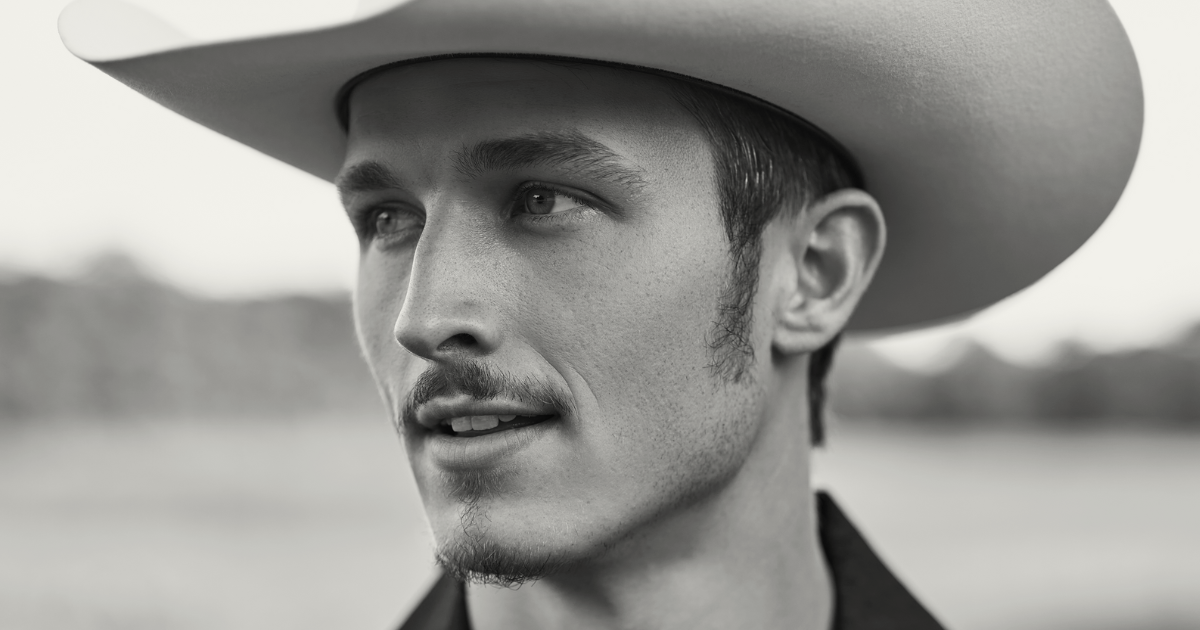
Honky-Tonkin’ Country with a Bluegrass Approach

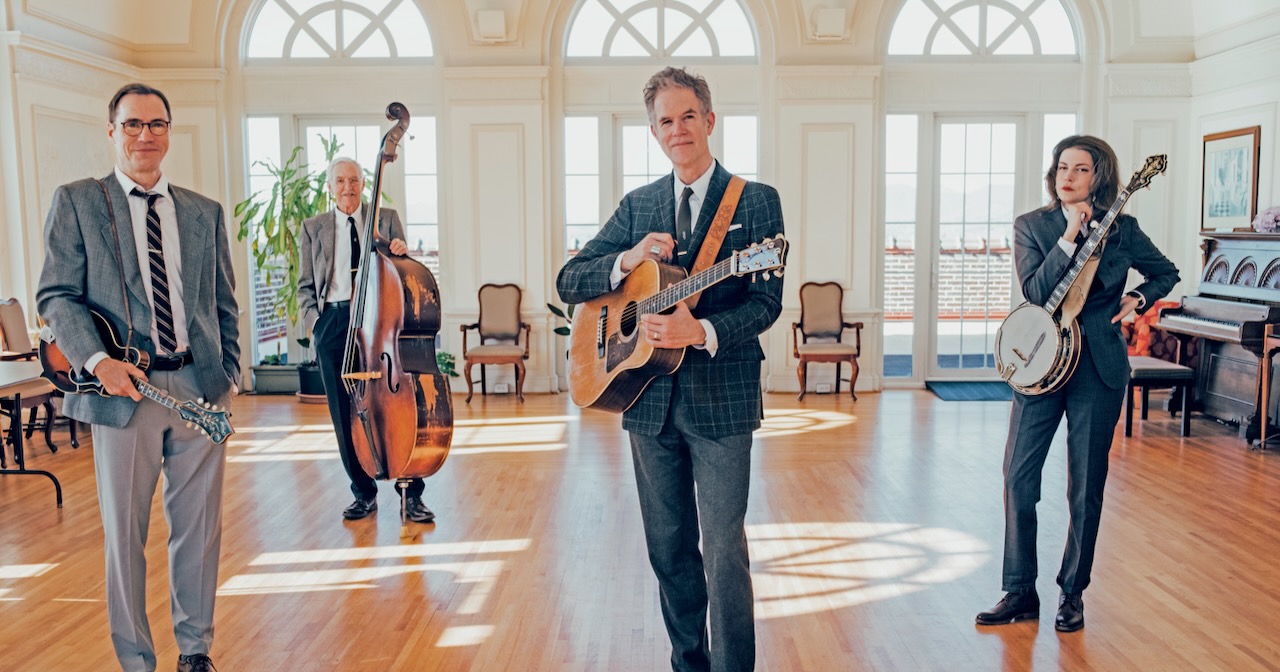
For anyone cheering on the mainstream country return of classic roots musicianship, Spencer Hatcher is a name to remember. Joining the likes of Zach Top and even Billy Strings, he’s a new country artist with some decidedly old-school tendencies and a deep foundation in bluegrass.

Having dropped his debut EP, Honky Tonk Hideaway, in November 2025, the Virginia native planted his flag for two-stepping rhythms and hot-blooded twang. Hatcher got his start in a family bluegrass band; over six tracks, his rich Shenandoah Valley vocal stands center stage, flanked by boundless barn-dance energy and timeless emotional heft. But with a thriving TikTok fanbase and a steamy, slow-dancing debut at country radio (“When She Calls Me Cowboy”), his style goes beyond nostalgia. It marks a shift in possibility, with room for roots artists in the commercial country space.

Speaking with Good Country a few weeks into his first promotional radio tour, Hatcher filled us in on his bluegrass beginnings and why they will always be his baseline. Plus, he opens up about the mainstream return of roots country, TikTok-ing back when it was “a dancing app,” and where he sees his music evolving.

Lately it seems like the foundational stuff from bluegrass and classic country is making a mainstream comeback, and you’re part of that. Do you have any sense of what is driving it?

Spencer Hatcher: I think that it’s like anything, I do believe in a full-circle moment – everything comes back into style. In this case, I’m overjoyed that the traditional sound is coming back. I’ve always called that “real country music,” and that’s just the stuff that all my heroes played. Growing up, I didn’t even know what modern country music was. I thought George Jones was modern. I thought that Johnny Cash and Waylon Jennings were modern, and then I found out that stuff was 30 years old 20 years ago.

You grew up on a farm in Virginia, right? Shenandoah Valley?

Yes, sir.

How did you get your country education?

A lot of it was just literally how I was raised. It’s what I lived by. I don’t know if everybody lives by what they sing, but I certainly do. I remember at a very early age, probably 6 or 7 years old, I learned how to drive a tractor and I’d be out in the fields every day working with my dad and running cows, and we had some goats. That’s just been my lifestyle. It’s what I love, still today. Growing up on a farm in the Shenandoah Valley right there at the Blue Ridge Mountains, and coming from a small town, that’s what home is to me. I had a lot of bluegrass around me, of course, in the Blue Ridge Mountains, and a lot of old-style country music. So that’s what we listened to, and sang, and jammed to on Friday nights.

You had a family bluegrass band. What drew you all into that music? I mean, this would’ve been in the 2000s. It wasn’t really in fashion.

It’s a fair statement to say that, in the 2000s, bluegrass was probably at an all-time low as far as popularity goes. But in my hometown, you wouldn’t really know that. There were jams, and what attracted me to it was definitely my dad. I can remember my dad sitting there watching me and my brothers play, and he’d be either playing the guitar or playing the banjo and singing. Growing up, I wanted to be like my dad, and so I picked up the banjo at 12 years old and started playing that, and I was just absorbed in it. That was the moment that music really took me over.

I just wanted to play the banjo, and so that’s what I did for three years straight. Friday night wasn’t spent with my friends at football games. It was at the local jam session where the average age was probably 75 years old. … Then my younger brother Connor decided to pick up the bass fiddle and that was history. From there, we started a band and we started playing everywhere we could.

@spencerhatcher Burnt It! #foryou #foryoupage #country #bluegrass #music #brother @connor_hatcher00 ♬ original sound – Spencer

Early on, you and Connor made bluegrass and country life seem fun on TikTok and you ended up with a pretty big following. What made you want to start posting?

I’d seen some friends do it in college and I admired their confidence. I was never into social media. I had it, but I didn’t post. It wasn’t an interest I had. But after I graduated college in 2019, I decided to move back home in March as COVID had hit, and I said, “I’m going to go back home and see about just playing country music.” I didn’t really know what I was going to do. I had a business degree. I was maybe going to be a financial advisor or something, but music was what I wanted to do. It’s what I did all through college, too. I was in four bands in college, and I just had this infatuation with becoming a country performer. I wanted to add that into my bluegrass shows.

So, I did the only thing I thought I could, and I decided to turn on a camera and sing a song. It took about six weeks for me to work up the courage to finally post that video. … And the fifth one is the one that went viral. It only took five videos and it was insane.

Wow, that’s pretty fast. And I think it’s cool that something so modern as TikTok can have so much fiddle playing and traditional lifestyle on there.

Back then in 2020, TikTok was still a dancing app, and I hadn’t seen any [country lifestyle] stuff on there yet. I was like, “Well, I’m going to show people how we live around here and just be myself.” I would oftentimes just turn the camera on and just let it roll.

Let’s talk about where you’re at now. You’ve got this country career going and it’s a little different from the bluegrass stuff, right? I mean, do you see a difference?

Yes, sir. There definitely is. But I guess you could say [I take] a very bluegrass, old-fashioned approach. I play as many shows as I can, just like the guys in bluegrass do and always have. … Of course, yes, the music is different, but I do believe that you can hear some bluegrass influence in my country music. It’s real country music. What we do in the studio, we can directly replicate on stage, and that’s how it is in bluegrass music. That’s how I wanted my country music to be.

I’ve got a fiddle, I’ve got a pedal steel, I’ve got guitars. Every single show I still play bluegrass. And maybe the difference between country music and bluegrass is that country is a little bit more polished, a little bit more produced. But I don’t like a tremendous amount of production. I don’t have anything faking my songs like bass loops or autotune or anything like that. If you come to a show, you get what you hear online.

Honky Tonk Hideaway is your debut EP. What did you want it to be like?

There was definitely a lot of thought and planning that went into the EP. And the song itself, “Honky Tonk Hideaway,” was a very exciting song. I’ve been calling it a barn burner. It’s one that makes you want to get up and dance, and that’s one thing that I hold pretty highly at my shows. I want people to just have fun and dance and have a good time. They did back in the day – you watch Urban Cowboy and everybody’s dancing, everybody’s cutting up and having fun. I don’t know if that’s been lost over the years, but I know that at my shows, a lot of people feel like they can get up and be themselves.

Did you have much of a hand in the songwriting, or are these outside cuts that you fell in love with?

All of these songs right now have been outside cuts, because basically I came to [Nashville in] July of 2024 and it was immediately like, “We need to get to the studio, let’s start getting some music.” There have been songs floating around Nashville for 30 years and they’re just stacked up – things people wrote years and years ago. There’s a song that I’ve not released yet, but it was written in 2009, so for 16 years it’s just been laying in a folder and nobody’s cut it until I came to town. And I’m like, “Man, I love this. This is country music.”

That’s a lot of what these first couple songs that people are getting to hear are. But since I’ve been in town, I’ve been doing a lot of writing and we’re very excited about the songs that I’ve gotten to write. I think we’re going to see a lot more Spencer Hatcher songs coming in the future.

There’s a lot of gold out there that’s still yet to be mined, I suppose.

Yeah, I mean, it was amazing. My producers would reach out to some of the really big companies and say, “Hey, we’ve got a new artist in town that’s looking for songs like George Strait would cut, or Joe Diffie or Keith Whitley or Merle Haggard, so send us what you got.” And we would get these folders of 50 songs and you just go through it and listen and listen.

Tell me about the single, “When She Calls Me Cowboy.” It’s got some of that Keith Whitley thing going on, in my opinion. Why did you want that to be the first single at country radio?

To me, that’s a very special song. … If anything, I compare it to maybe a Conway Twitty song, because it’s pretty intimate, but it certainly isn’t a Conway Twitty song. … It’s very country, very traditional. I love the melody, I love the words, and it’s relatable. I would say a lot of people can relate to a song like that.

I was thinking the same about “Cold Beer and Common Sense.” I feel like everybody has been saying they wish for more of that these days. What’s the sentiment behind the song?

Man, that message is just so powerful and it’s one I wish the entire world could listen to and live by – and not necessarily the cold beer part. As far as common sense and everybody getting along, regardless of what side of the fence you stand on, regardless of your political party, that’s one thing a lot of people want – to make it about politics. It’s like, “This is not a political song.” You’ve got to listen to the words. It’s about no matter what your beliefs are, everybody should be able to sit at a table and laugh and have fun and get along. I’ve always believed that there needs to be so much more of that in the world. And that’s honestly why I’m in music, is because music spreads joy. It spreads smiles.


Want more Good Country? Sign up to receive our monthly email newsletter – and much more music! – direct to your inbox.

Photo Credit: Riker Brothers

Jaelee Roberts Is the CEO of Super Lonesome Songs

I seriously love sad songs and it’s honestly so hard to keep this Mixtape short. Every time I think I’m done, I remember another song that deserves a spot. Some songs are perfect for those late-night lonely vibes, while others hit harder on a rainy day. I just think sad music has this special kind of beauty that happy songs can’t match. It’s dramatic, emotional, and somehow comforting at the same time.

Honestly, this Mixtape feels more like a mood diary than just a list of songs. Even now, I know I’ve left off some that should be here which means I’ll probably end up making a “Part 2.” At this point I might as well admit I’m the CEO of sad playlists. But hey – you can never really have too many sad songs, right? – Jaelee Roberts

“Desperado” – The Eagles

“Desperado” is a song that has grabbed me by my heart strings for my whole life. The melody alone just has that sad and lonesome feel that I love so much. A line in the lyrics that always jumps out at me is, “You better let somebody love you before it’s too late.” That grabs my heart in the best way.

“Marie” – Blue Moon Rising

The first time I heard this song it stopped me in my tracks. The way Keith Garrett sings it is absolutely the epitome of lonesome. The song is about a man struggling his entire life to make ends meet and finally he gets a glimpse of happiness through a woman he meets, Marie, and she and their unborn baby pass away. Townes Van Zandt’s lyrics paint a heartbreaking picture of poverty and loss.

“He Stopped Loving Her Today” – George Jones

George Jones is my all-time favorite and this is an obvious choice, but such an important one! This song has often been called “the saddest country song of all time” and I might just have to agree with that. A short explanation is that a man lost the love of his life and he was never able to get over her until he passed away – that’s when he finally stopped loving her. That is absolutely gut-wrenching, but I am obsessed with the song and love it so much.

“I’m So Lonesome I Could Cry” – Hank Williams

I am a huge Hank Williams fan and I have always listened to this song when feeling sad. The way his voice almost cries when he sings it just gets me in my heart and feelings every time I hear it. I am a bit of a country music history nerd and I study a lot about the lives of my heroes and learning about him and this song – the lyrics are so sad and hit even harder when you get into the story behind writing the song. He wrote it after he and his wife Audrey split up amongst his struggles with addiction… it’s heartbreaking.

“Are You Lonesome Tonight” – Elvis Presley

I have loved this song since I was a little girl. Elvis was my first love and I can remember this song being one of the first songs to ever make my heart feel sad. I was just a little kid and thinking, “Oh my goodness, is he okay?” The cry and emotion in his voice is so tragically beautiful and it’s a go-to sad song when I need to hear one. The lyrics are so sad. When you hear his voice say, “…And if you won’t come back to me, they can bring the curtain down…” it breaks my heart every time.

“Lonesome Town” – Ricky Nelson

The first time I heard this song I was hooked. The melody, the lyrics, his hauntingly sad voice made my heart hurt in the way you want it to hurt when listening to a sad song. I really love this song!

“Both Sides Now” – Joni Mitchell

This song is filled with the most beautiful imagery. It’s about viewing love one way and then having your heart broken and seeing love a different way – seeing it “from both sides now.” It’s such a perfectly crafted song and Joni’s voice is so sad and raw on this track.

“Let Me Be Lonely” – Jaelee Roberts

When I first heard this song I knew I had to record it. If you can’t tell, sad songs are my absolute favorite songs and this one hit me hard. I am so honored I got to sing this one. I love the way that it all came together with the way the fiddle sounds so sad and then accompanied by the crying steel guitar (my favorite sound in the world). I love the harmonies that the writers of this song, Kelsi Harrigill and Wyatt McCubbin added. It just completed the lonesome feeling. My favorite lyric in the song is the opening line: “Don’t come knockin’ on the door/ That smile’s not welcome here anymore.”

“Chasing Cars” – Snow Patrol

I actually first heard this song during a heartbreaking scene of one of my favorite TV shows and I remember feeling so sad. Every time I hear this song I feel like I’m in a sad music video. Lyrically, the song is just so great. I love the chorus when it comes in strong and says, “If I lay here, if I just lay here, would you lie with me and just forget the world?”

“Manhattan” – Sara Bareilles

I am a huge Sara Bareilles fan and this song has always had a hold on me. It’s one of the first songs that made me want to play piano. Her voice and the piano work together to make such a beautifully sad song. The song is about finding love, sharing their lives together in Manhattan, and letting that other person have that special place when the relationship ends. The way it’s written is just genius, really.

“Weekend In New England” – Barry Manilow

The melody of this song is what first caught my ear’s attention and then Barry starts singing and it’s just so beautiful. I have loved this song since I was just a young girl and have always listened to it when I feel sad. It’s just a classic sad song and you cannot go wrong with listening to it over and over.

“Heartbreaker” – Dolly Parton

I can still remember sitting in the backseat of our car in the driveway at home – small enough that I wasn’t allowed in the front seat yet. My mom would turn on WSM and we’d sit there together listening to the Grand Ole Opry until it was over. I’ll never forget one night when Little Jimmy Dickens had just finished his segment and the Opry signed off. The DJ came on playing music and that’s when it happened – Dolly Parton’s “Heartbreaker” came on. In that moment, my world stood still. I had never felt so heartbreakingly sad from a song, yet so completely happy at the same time. It was the first time music truly hit me that hard and it’s stayed with me ever since. “Heartbreaker, couldn’t you be just a little more kind to me?” So, so good.

“Misery and Gin” – Merle Haggard

This is another song that I have loved as long as I can remember. The music and melody starts off and then you hear Merle’s voice come in singing, “Memories and drinks don’t mix too well/ Jukebox records don’t play those wedding bells…” What a perfectly sad scenario! Merle Haggard is one of my favorites and could sing anything and make it sound sad, which I love so, so very much. This song is so lonely, but so beautiful and the lyrics are everything a sad lonesome song should be.

“Cry In The Rain” – Jaelee Roberts

This song is so beautifully written. Penned by two incredible songwriters – Billy Droze and Chris Myers – it tells a sad story about being heartbroken over someone, but refusing to let them see your tears. Instead, you hide your pain and only let yourself cry in the rain. I really love this image – it’s sad, strong, and poetic all at once. To me, that’s what makes the song so special. I feel truly honored to have had the chance to record it and tell the story in my own voice.

“Between an Old Memory and Me” – Keith Whitley

Keith Whitley had a way of singing that made you feel every single word, as if he lived inside the stories he told in his songs. In this song especially, when he sings the line, “I don’t want to talk about it, why can’t they just let me be?” you can literally hear the raw desperation and aching sadness in the cry of his voice. It’s lonesome, it’s haunting, and it’s heartbreak wrapped in melody. I love this song with my whole heart – it’s everything I admire about Keith Whitley’s music.


Photo Credit: Ava Renee Photography

Zach Top’s TV Debut

If it seems like Zach Top has been everywhere lately, it’s because he has. Not only because he and his band are staring down a packed summer full of tour dates all across the country, but he’s also coming off of his first Academy of Country Music Award win – snagging the New Male Artist of the Year trophy while also being nominated for Album of the Year – and then immediately turning around to perform on The Tonight Show Starring Jimmy Fallon. The appearance was his late night television debut, after his stunner of a traditional country album, Cold Beer & Country Music, was released to widespread acclaim – from critics and audiences alike – just over a year ago in spring 2024. The project continues to build momentum and gain thousands and thousands of new listeners for the picker-songwriter-upstart.

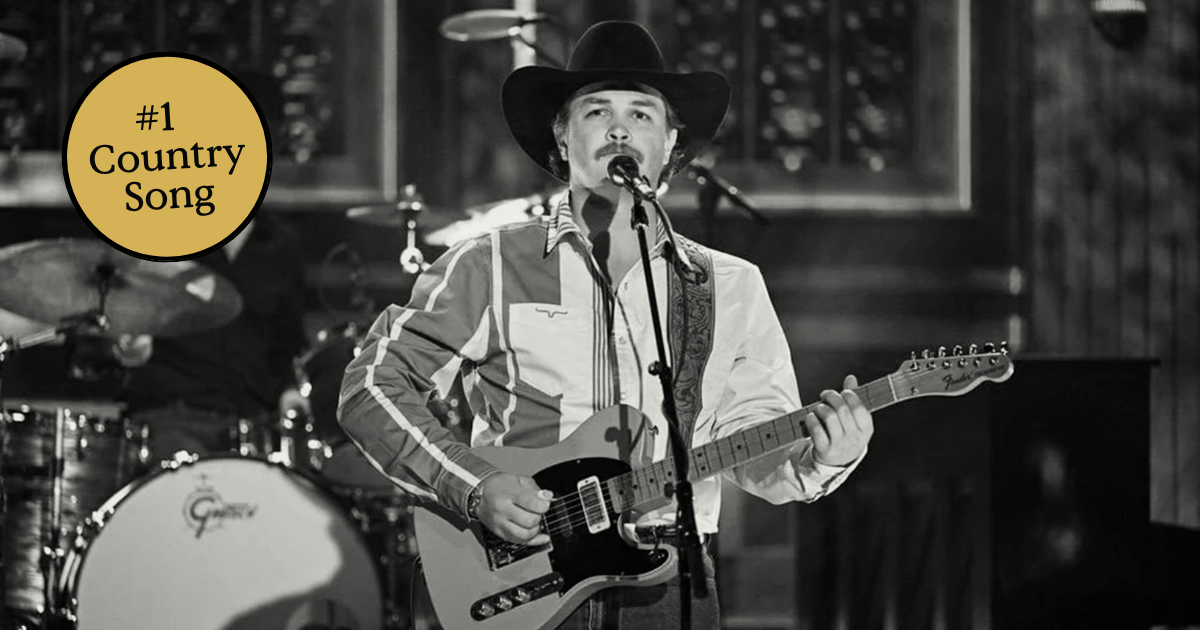
Top and band performed “I Never Lie” on Fallon, certainly the viral hit sensation of Cold Beer & Country Music. Shortly after his television appearance, the track, which is already RIAA certified Platinum, topped the country charts, becoming the number one country single in the country (and Canada) according to Mediabase. It’s Top’s very first number one.

“I Never Lie” is a classic yet modern take on a well-known country songwriter trope, the “of course I’m not lying” or “opposite day” type of rhetorical device that’s been employed by country artists and songsmiths since the genre began. Top’s spin on this iconic sort of country song setup is almost divine in its execution, as evidenced by his audiences – from humble honky-tonks to packed rodeo arenas – shouting along with the song at the tops of their lungs each and every time it’s performed.

This will surely not be the last television appearance or country award for Top, who leverages his bluegrass family band upbringing and longtime idolization of heroes like Tony Rice and Keith Whitley to craft a style of Good Country that’s forward-looking and timeless at the same time. With a wink, a smile, a first-rate mustache-mullet combo, and a “Zach Top Hop,” this still-fresh country superstar is sure to continue making an impact all across roots music well into the future. From country to bluegrass and back again.

We hope you enjoy Zach Top’s performance of “I Never Lie” on The Tonight Show. Don’t forget to make your plans now to catch Top and his incredible band on their mighty summer tour, too.


Read our 2024 exclusive Good Country interview from with Zach Top here.

An AKUS Primer: Alison Krauss and (Mostly) Union Station for Beginners

While you know better, there’s a wide swath of the music-listening world in which Alison Krauss is best known as former Led Zeppelin golden god Robert Plant’s duet partner. Yet, Krauss has had a wholly remarkable career going back nearly 40 years, in which she has exhibited profound collaborative instincts and abilities.

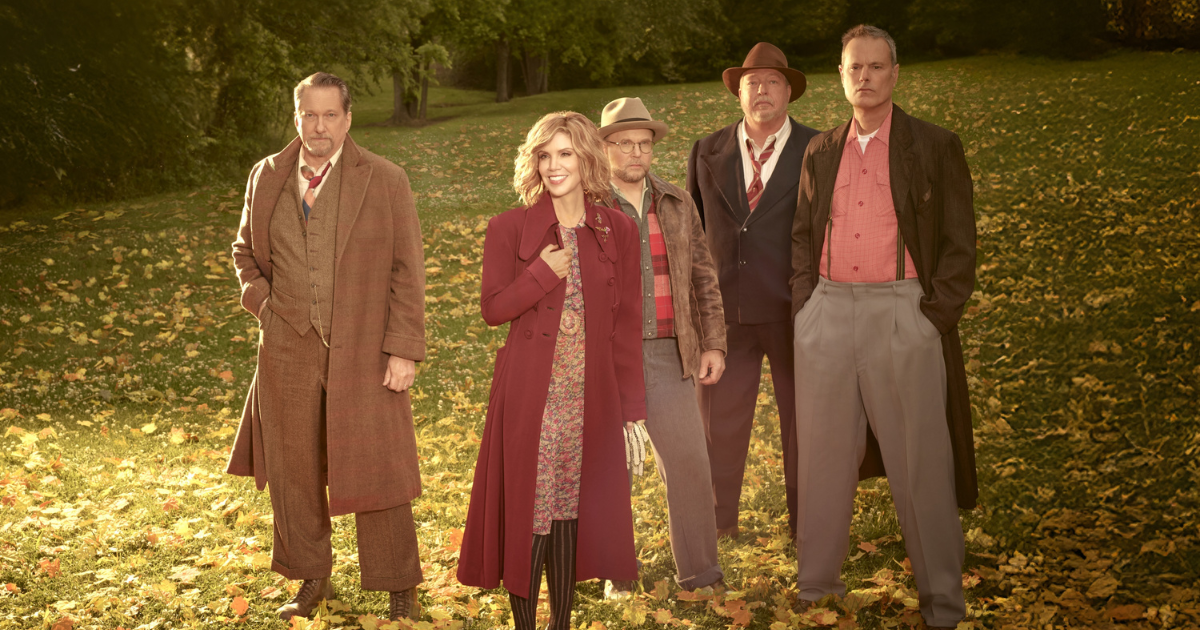
On the occasion of the release of Arcadia, her first album with Union Station in 14 years (as well as a reunion with the founders of her former longtime label, Rounder Records), we look back at some of Krauss’ career highlights in and out of Union Station.

“Cluck Old Hen” (traditional; 1992-2007)

We begin with a literal oldie, “Cluck Old Hen,” from the pre-bluegrass era, which demonstrates two things – that Alison Krauss has always revered the history, roots, and traditions of bluegrass; and that Union Station is one incredible ensemble. Recordings of this Appalachian fiddle tune go back more than a century, to country music forefather Fiddlin’ John Carson in the 1920s.

Krauss first released an instrumental version of the tune on 1992’s Everytime You Say Goodbye (her second LP with Union Station), and won a GRAMMY with the onstage version on 2002’s AKUS album, Live. But feast your ears and eyes on this 2007 performance at the Grand Ole Opry, with a pre-teen Sierra Hull sitting in.

1992 studio version: 

2002 live version:


“When You Say Nothing At All” (Paul Overstreet & Don Schlitz; 1994)

After a decade of steadily accelerating momentum, Krauss had her big commercial breakout with this AKUS cover of the late Keith Whitley’s 1988 country chart-topper. Krauss sang it on 1994’s Keith Whitley: A Tribute Album and it served as centerpiece of her own 1995 album, Now That I’ve Found You: A Collection. It reached No. 3 on the country singles chart and went on to win the Country Music Association’s single of the year plus a GRAMMY Award. You can hear why.

Whitley’s version:


“I Can Let Go Now” (Michael McDonald; 1997)

For any interpretive singer, the choice of material is key. And if the singer in question has Krauss’ range and chops and vision, some truly unlikely alchemy is possible. Among the best examples from the AKUS repertoire is “I Can Let Go Now,” a deep cut on Doobie Brothers frontman Michael McDonald’s 1982 solo album, If That’s What It Takes. Another amazing Krauss vocal in a career full of them.

McDonald’s version:


“Man of Constant Sorrow” (traditional; 2000-2002)

Before O Brother, Where Art Thou?, you wouldn’t have called singer-guitarist Dan Tyminski the unheralded “secret weapon” of AKUS. Nevertheless, he didn’t become a star in his own right until serving as movie star George Clooney’s singing voice in the Coen Brothers loopy, Odyssey-inspired farce. “Man of Constant Sorrow” was the hit in the movie and also on the radio, launching Tyminski to solo stardom.

Resonator guitarist Jerry Douglas especially shines on this version from 2002’s Live, recorded in Louisville – you can just tell everyone in the crowd was waiting for the “I bid farewell to old Kentucky” line so they could go nuts. Tyminski would have another unlikely hit in 2013, singing on Swedish deejay Avicii’s “Hey Brother.”

O Brother version:


“New Favorite” (Gillian Welch & David Rawlings; 2001)

Kraus sang on the GRAMMY-winning O Brother soundtrack, too, alongside Gillian Welch. It will come as no surprise that the Welch/Rawlings catalog has been a recurrent favorite song source for her. One of Krauss’ best Welch/Rawlings selections is “New Favorite,” title track of the thrice-GRAMMY-winning 2001 AKUS album. Though it’s edited out in this video, the album-closing version concluded with a rare in-the-studio instrumental flub, followed by sheepish laughter to end the record. Perhaps the AKUS crew is human after all?


“Borderline” (Sidney & Suzanne Cox; 2004)

The story goes that the first time Krauss was on the summer touring circuit, she’d go around knocking on camper doors at bluegrass festivals to ask whoever answered, “Are you the Cox Family?” Once she found them, she didn’t let go, and the Coxes became some of the best of her collaborators and song providers. Along with producing their albums, Krauss covered Cox compositions frequently; “Borderline” appeared on 2004’s Lonely Runs Both Ways, another triple GRAMMY winner.


“Big Log” (Robert Plant, Robbie Blunt, Jezz Woodroffe; 2004)

When Krauss first sang with Robert Plant at a Leadbelly tribute concert in November 2004, it seemed like the unlikeliest of pairings. But here’s proof that they had more in common than you’d expect, with Krauss covering a solo Plant hit from 1983. She sang “Big Log” on her brother Victor Krauss’ album, Far From Enough, which was released earlier in 2004.

This video pairs the Krauss siblings’ version with Plant’s original 1983 video, directed by Storm Thorgerson.


“Dimming of the Day” (Richard & Linda Thompson; 2011)

Fairport Convention guitarist Richard Thompson is one of the finest instrumentalists of his generation as well as a brilliant songwriter, especially with his former wife and collaborator Linda Thompson. This stately, bittersweet love song dates back to their 1975 duo LP, Pour Down Like Silver, and Linda sets the bar high with a stoic yet emotional vocal. Krauss more than lives up to it on the 2011 AKUS album Paper Airplane, which also offers another great showcase for resonator guitarist Douglas.

Richard & Linda’s version: 


“Your Long Journey” (Doc & Rosa Lee Watson; 2007)

Krauss isn’t just a spectacular lead vocalist, but also an amazing harmony singer, one of the few who can hold a candle to Emmylou Harris. Retitled from the Doc/Rosa Lee Watson original, “Your Lone Journey,” this closing track to 2007’s grand-slam GRAMMY winner Raising Sand has Krauss’ most emotional vocal harmonies with Plant on either of their two albums together.

Doc Watson’s version:


“Heaven’s Bright Shore” (A. Kennedy; 1989, 2015)

All that, and she’s an incredible backup vocalist to boot. “Heaven’s Bright Shore” is a gospel song Krauss first recorded as a teenager on 1989’s Two Highways, her first album billed as Alison Krauss & Union Station (and also her first to receive a GRAMMY nomination). It’s great, but an even better version is this 2015 recording in which she’s backing up bluegrass patriarch Ralph Stanley alongside Judy Marshall.

AKUS version: 


“The Captain’s Daughter” (Johnny Cash & Robert Lee Castleman; 2018)

The late great Johnny Cash left behind a lot of writings after he died in 2003, some of which were turned into songs for the 2018 tribute album, Forever Words: The Music. None of his songs ever had it so good as “The Captain’s Daughter.” This superlative AKUS version fits Cash’s words like a glove.


Continue exploring our Artist of the Month coverage of Alison Krauss & Union Station here.

Alison Krauss & Union Station figure prominently in David Menconi’s book, Oh, Didn’t They Ramble: Rounder Records and the Transformation of American Roots Music, published in 2023 by University of North Carolina Press and featuring a foreword by Robert Plant.

Photo Credit: Randee St. Nicholas

MIXTAPE: Brit Taylor’s ‘Kentucky Bluegrassed’ Inspirations

I grew up deep in the hills of the Appalachian Mountains in Eastern Kentucky where, I’m pretty sure, that on a quiet, cool, foggy morning after the rooster crows, you can hear the faint strumming of a mandolin or banjo echoing through the hollers. My home was near the famed Country Music Highway, Route 23, and that set the bar high for me, even at an early age. With local artists such as Patty Loveless, Loretta Lynn, Dwight Yoakum, The Judds, Ricky Skaggs and Keith Whitley and songwriters like Larry Cordle, later joined by artists like Chris Stapleton and Tyler Childers, there was always an incredible standard of music and songwriting to strive for. It also encouraged me, because if it could happen for their hillbilly asses, then why not mine?

Kentucky Bluegrassed is a sister record to my sophomore album produced by Sturgill Simpson and David Ferguson. My husband Adam Chaffins and I, along with an incredible crew of pickers (Rob Ikes, Stuart Duncan, Seth Taylor, Matt Menefee, Dominick Leslie) reimagined five songs from the Kentucky Blue album and added three new songs, to boot. Although Kentucky Blue and Kentucky Bluegrassed are kin, they have their own unique personalities and can stand separately as two distinct independent projects. Kentucky Bluegrassed is exactly what the title implies. It is “grassed” versions of some songs from the Kentucky Blue record.

I’ve never claimed to be a grasser, but I’ve always loved the genre. A lot of my favorite country acts growing up either started with bluegrass music and went to country or started in country music and went to bluegrass. My favorite country artists always drew from bluegrass inspiration and instrumentation and blurred the lines of country and bluegrass music. This Mixtape is comprised of songs that I grew up listening to and that inspired the sounds and writing on Kentucky Bluegrassed. Brit Taylor

“Pretty Little Miss” –  Patty Loveless
(Songwriters: Traditional, additional lyrics by Emory Gordy Jr. and Patty Loveless)

It’s 2006 in Prestonsburg, Kentucky, and I’m standing side stage at the Mountain Arts Center waiting for my cue to prance out on stage in an old, ugly vintage dress, silly hat, and no shoes. I always picked Patty songs to sing, whether they were bluegrass or country. I loved them all. During this particular summer show season of the Kentucky Opry Junior Pros, I chose to sing Patty Loveless’ “Pretty Little Miss.” There’s something raw and painfully beautiful about the way that Patty Loveless sings. She feels every note and you feel it with her.

Patty is a wonderful songwriter and a hell of a song hound. She surely knew how to sniff good songs out, and Patty and Emory (husband/producer) knew exactly what to do with them when they found them. Whether she writes the song or finds a great song to sing, she knows how to empathize with the song’s character and you can hear it. Unlike some of her more heart-wrenching songs (like my personal favorite, “You Don’t Even Know Who I Am,” written by Gretchen Peters), “Pretty Little Miss” is funny and fun, plus she wrote it! And she sings the shit out of it. Patty Loveless, like Dolly Parton, knows how to get into character and have fun.

“Busted” – Patty Loveless (Songwriter: Harlan Howard)

Written in 1962 by one of my favorite songwriters of all time, Harlan Howard, this song has been recorded and re-recorded. From Johnny Cash and the Carter Family to Waylon Jennings to Ray Charles and more, this song has been done again and again for good reason. In 2009, my queen Patty Loveless comes along and grasses the hell out of it. Each interpretation of this song is different from the last in pretty drastic ways. That’s one of the things I love about music and production. Music is like water, it can literally fit into whatever mold you want to pour it into. You just have to have some imagination. It’s songs like this that inspired me to write and record my song, “Rich Little Girls.” And it is artists like Patty Loveless and producers like her husband Emory Gordy who inspire me to not be afraid to reimagine a song completely different from its original presentation.

“Truth No. 2” – The Chicks (Songwriter: Patty Griffin)

This entire album is an inspiration for Kentucky Bluegrassed. The songwriting is impeccable as are the production and the playing. The album is full of incredible songs by writers like Darrell Scott, Tim O’Brien, Marty Stuart, Patty Griffin, and others. The tracks could have easily been recorded on a Chicks traditional country record, but I love that they decided to do them this way. I love the melody of this particular song and the extended intro with the fiddle hook. I also love the space in this song. They didn’t fill every “hole” with a lick. They let the song breathe. These are definitely concepts we were mindful of when recording Kentucky Bluegrassed. Where can we let it breathe? What’s the signature lick here and who’s playing it? Heavy on the dobro and fiddle, please.

“I’m Gone” – Dolly Parton (Songwriter: Dolly Parton)

No one can tell a story quite like Dolly. This whole record – Halos & Horns – is a lesson in storytelling. Dolly is always an inspiration. Her ability to connect with her audience through her lyrics, honest stories, and light-heartedness will always be something I strive to do in my own music. This is one of those records that I remember begging my mom to take me to the Walmart in Prestonsburg to buy!

“Big Chance” – Patty Loveless (Songwriters: Emory Gordy Jr. and Patty Loveless)

Lyrics in Patty’s “Big Chance” such as, “Looka here mama, looka here daddy/ This is my true love, we’re gonna get married/ Ain’t a gonna hem-haw, ain’t a gonna tarry/ This is my big chance, we’re gonna get married/” are what inspired me to be confident in my own Appalachian dialect, enough so that I put words like “sworpin’” in my song “Saint Anthony,” regardless of if other people were going to understand it.

“Marry Me” – Dolly Parton (Songwriter: Dolly Parton)

I love the perspectives and simplicity in songwriting on both “Big Chance” by Patty and “Marry Me” by Dolly. The character in Dolly’s song sounds like she might be 13-years-old, hollering to her folks about how she’s gonna run off and marry this new feller! I love that the character sounds so young and also like she just met the boy yesterday. It just lends itself to sweetness and innocence with a light-hearted humor.

I wanted a song about getting married on my bluegrass record simply because my heroes had them on theirs. I love the personality and the very matter-of-fact, bossy lyrics of these songs – and that’s what Adam Wright and I were going for when we wrote my own song, “Married.”

“A Handful of Dust” – Patty Loveless (Songwriter: Tony Arata)

This is another one of those songs that has been recorded again and again by multiple artists and for good reason. It was first recorded by Dolly Parton, Linda Ronstadt, and Emmylou Harris in 1993 and then by Patty Loveless on her 1994 country album. Then she cut it again on Mountain Soul II where she grassed it! Charley Worsham and Lainey Wilson also just released their own version of the song. I honestly couldn’t pick a favorite version if I tried. It’s hard to mess up a song this great. I chose this version for the playlist because it’s grassed and very much an inspiration for grassing several of my own songs.

I realize I have a lot of Patty Loveless songs on this playlist, but that’s because she is honestly who inspired Kentucky Bluegrassed the most. I listened to her songs on repeat growing up and still find myself doing so today. If you have heard Kentucky Bluegrassed and are now listening to these Patty songs from the Mountain Soul records, you will definitely hear some similarities. Rob Ickes, who plays Dobro, and Stuart Duncan, who plays fiddle, who were on both Mountain Soul records also play on my Kentucky Bluegrassed album.

“Don’t Cheat In Our Home Town” – Keith Whitley, Ricky Skaggs
(Songwriters: Ray Pennington and Roy E. Marcum)

Both Ricky Skaggs and Keith Whitley are from near the Country Music Highway in East Kentucky, and you can hear the hillbilly twang in their voices, especially when they’d sing together. This song is wonderful. The harmonies just kill me. If you want a lesson in singing bluegrass harmonies – hell, any harmonies for that matter – this is the record to listen to and learn from. When people tell me they don’t like bluegrass, I always tell them they just haven’t listened to the right records yet. This is one of the first albums I send them to. The self-deprecating lyrics along with the simplicity of the music with its quirky upbeat instrumentation might seem to be a contradictory songwriting and production combo, but that’s just one of the unique and beautiful things about bluegrass music that I love so much.

“Rank Strangers” –The Stanley Brothers (Songwriter: Albert E. Brumley)

My Papaw Hillard Anderson introduced me to bluegrass music when I was just a kid. Truth be told, he liked to put on a Stanley Brothers 8-track tape, drink a little too much Crown Royal and have himself a good cry – or maybe just raise some hell. One of the two. Man, I miss him. When I turned 16 and got my driver’s license, I got us tickets to go see Ralph Stanley at the Mountain Arts Center in Prestonsburg. I picked him up over on Beaver Creek in my little red Mustang and off we went. I think my driving scared him to death. But it was all worth it when we got to see Ralph sing and play. I was able to charm my way backstage because the volunteer door people already knew me from my singing at the Kentucky Opry. I got my Papaw a picture signed by Ralph Stanley himself.

Papaw passed in 2009. I sang to him and strummed my guitar as he died. I wish he could have been here to hear this record more than any record I’ve ever made. But I know he’s got a front seat in Heaven. When I recorded Kentucky Bluegrassed, I took two of my Papaw’s old, scuffed-up Stanley Brothers 8-tracks tapes with me. I set up a little hillbilly altar with the two tapes, some tigers eye, Kentucky agate, clear quartz, and other crystals, a rabbit’s foot, some incense, and a glass of bourbon. I wanted to make sure he knew he was welcome there with us. He was there. I could feel it.

“You’ll Never Leave Harlan Alive” – Patty Loveless (Songwriter: Darrell Scott)

I’ll probably spend the rest of my life trying to write a song this good. Nothing captures where I’m from as much as this one does. It just sounds like East Kentucky. It sounds like the coal mines. It feels like home. The first version of this song that I heard was by Patty Loveless on her first Mountain Soul record. I try to sing it sometimes, but it hits pretty close to home. By the last verse I’m normally in tears. My Papaw was a coal miner, and my husband’s father was a miner, too. Growing up, coal mining was about all there was to do for work around home. So hearing this song just always hits hard.

I hope you enjoy this playlist of tunes that inspired Kentucky Bluegrassed, from the songwriting down to the instrumentation. Songs like these will never grow old or sound dated because they’re too original. They don’t chase any trends of the times. They just are what they are.


Photo Credit: Natia Cinco

LISTEN: Chris Jones & The Night Drivers, “Step Out in the Sunshine”

Artist: Chris Jones & The Night Drivers
Hometown: Nashville, Tennessee
Song: “Step Out in the Sunshine”
Album: Pages In Your Hand
Release Date: October 6, 2023
Label: Mountain Home Music Company

In Their Words: “Ralph Stanley’s early 1970s Clinch Mountain Boys lineup of Roy Lee Centers, Jack Cooke, Curly Ray Cline, Keith Whitley, and Ricky Skaggs was a golden era for his band, in my opinion, and in my mid-teens their music was a major influence on me as I was just getting serious about playing music. The gospel album they did, Cry From the Cross, was and remains my favorite bluegrass gospel album of all time. It inspired my lead singing and guitar playing, and without consciously trying to do it, I learned to sing the baritone harmony part from Jack Cooke.

“I still have and cherish the original LP that I bought when I was around 15, though the jacket is a little battered and my name is written in brown magic marker on the back — because, you know, other kids in high school were likely to try to steal my Ralph Stanley records. I wanted to record a song from the album that I hadn’t heard anyone else do and that hadn’t become a Ralph Stanley standard, and so I was drawn to ‘Step Out in the Sunshine.’ We rearranged it slightly to fit our sound but it remains a tribute to the Stanley original.” – Chris Jones

Track Credits:
Chris Jones – acoustic guitar, lead vocal
Marshall Wilborn – bass
Mark Stoffel – mandolin, harmony vocal
Grace van’t Hof – banjo, harmony vocal


Photo Credit: Sandlin Gaither

WATCH: Adam Chaffins, “Who I Am” (Live)

Artist: Adam Chaffins
Hometown: 10 years+ Nashvillian (Eastern Kentucky native, from Louisa, Kentucky)
Song: “Who I Am” (Live)
Album: Some Things Won’t Last
Label: Chaffins Music

In Their Words: “A lot of my influence as a songwriter comes from torch songs. Keith Whitley sang a lot of them, like ‘I’ll Be Your Stepping Stone’ with J.D. Crowe & the New South. Songs of eternal pining for a love. ‘Who I Am’ is a torch song with a lot more brutal honesty to the torcheé. I started playing this version supporting John Hiatt on the road in 2019. It’s as bare-bones as a song can get.” — Adam Chaffins


Photo credit: Melissa Stillwell

“The Shorthairs and the Longhairs”: The Story Behind ‘Bluegrass Country Soul’

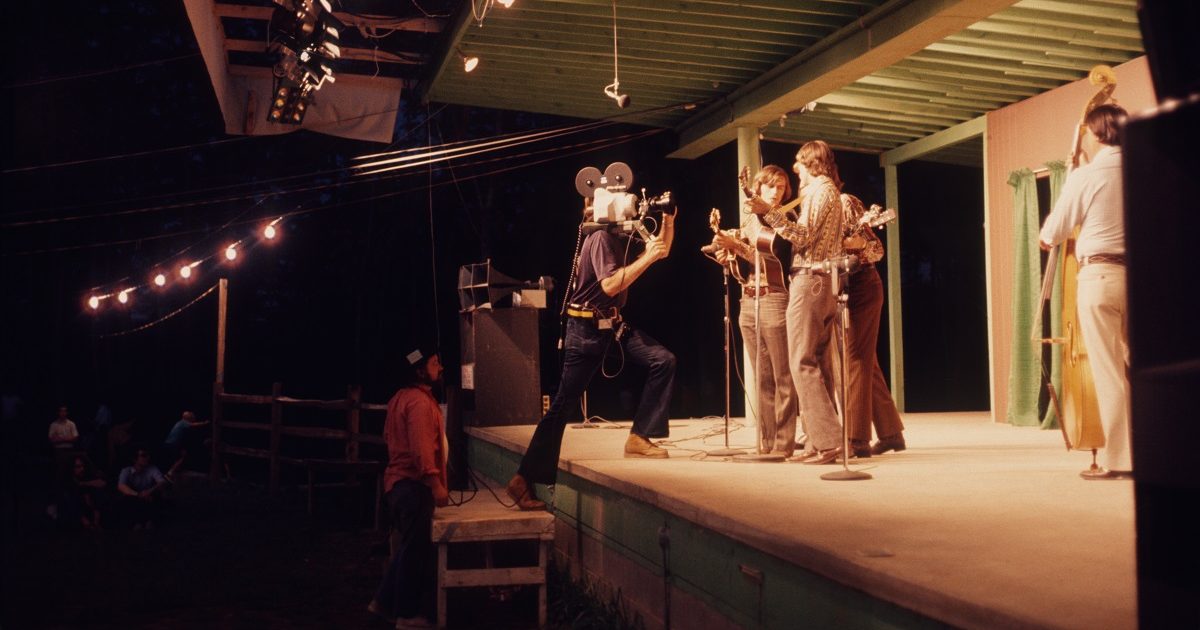
Bluegrass Country Soul captures one of Carlton Haney’s legendary festivals in Camp Springs, North Carolina, on Labor Day weekend of 1971. It is credited as the first bluegrass documentary, and is essential viewing for both lifelong bluegrass fans and those new to the genre.

This classic film features bluegrass music’s pioneers, as well as those who would take the music into the future. Earl Scruggs, The Osborne Brothers, Ralph Stanley, Chubby Wise, Mac Wiseman, J.D. Crowe, and Jimmy Martin were featured alongside The Country Gentlemen, Del McCoury, Sam Bush, Tony Rice, Ricky Skaggs, Keith Whitley, Alan Munde, and more. The film documents Rice’s last show with The Bluegrass Alliance and his first show with J.D. Crowe & the Kentucky Mountain Boys. Many of the festival’s legendary moments are preserved in color for posterity.

A larger than life figure who is credited as starting the first multi-day bluegrass festival, Carlton Haney organized the weekend’s festival, and serves as the de facto host of the film, sharing thoughts about bluegrass music, bluegrass festivals, bluegrass fans, and the bluegrass “stow-ry.” His passion for the music is evident, and makes for a great depiction of one of bluegrass’s most significant and one-of-a-kind personalities.

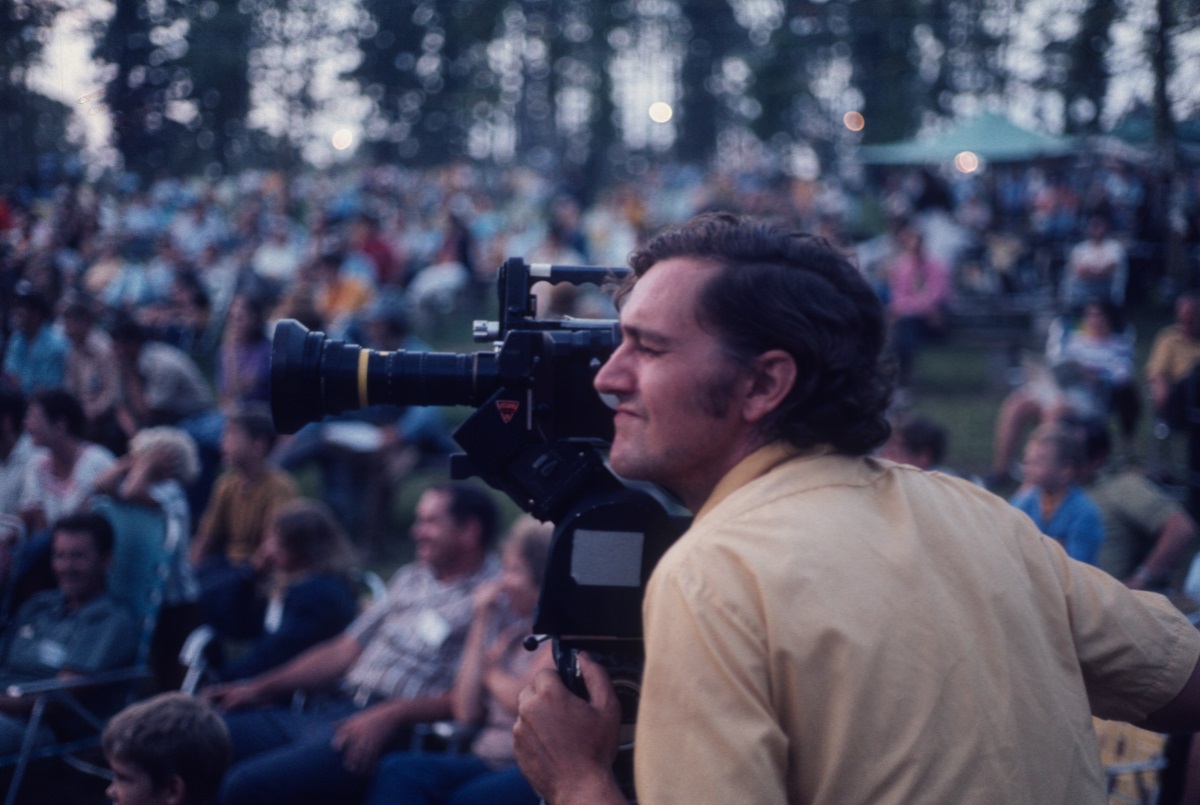
Albert Ihde, the film’s director (pictured below), spoke with BGS about the film and its legacy to commemorate the 50th Anniversary boxed set of the film, released this summer. The special edition set includes the original film, recently remastered and restored; CDs of performances not featured in the film; bonus footage including exclusive interviews with Ricky Skaggs, Bill Emerson, Missy Raines, and more; and a full-color coffee table book about the film.

BGS: How did the opportunity to film Bluegrass Country Soul present itself 50 years ago?

Albert Ihde: It was almost by accident, in a sense. A couple of buddies of mine and I were preparing a screenplay for a company in Washington, D.C. that had hired me to write a film, and then I would direct. The only thing that they insisted on was that it had to be about a Country & Western singer. Now this is 1971, and back then they called it Country & Western. I said, “Okay. Fine. Let me do some research on that.

A buddy of mine, Bob Leonard, and I were out scouting locations in Berryville, Virginia when we saw posters for Carlton Haney’s 4th of July Festival, and Earl Scruggs was going to be playing. We thought, “Well, that looks interesting.” To make a long story short, I got in touch with John Miller, who was the partner of Carlton’s there at Berryville, and John took us on a tour of the sites because I wanted to see what it looked like. It was right on the Shenandoah. Gorgeous location. He gave us passes to the Fourth of July Festival. We had no idea what bluegrass was, compared to country music, and we thought, “This looks like it’ll be fun. We’ll go to see this.”

Director, Albert Ihde

A bunch of us got a VW wagon, and my wife hooked up a camper on the back of our car. We went out, and we parked and saw it, and I have to tell you, as soon as I heard that music coming from the stage, we were all hooked. We talked to Carlton. Quite a deal! Talked to Fred Bartenstein (a local disc jockey who helped with the annual festival) and they told us more about what they were doing. I wanted to put Carlton in a film right then and there as soon as I met him.

We got back to D.C. and the company that hired me to write this screenplay, it turned out that they couldn’t raise the money to make the movie. So we took the film and decided we would try and find the money ourselves. Fortunately the first guy that I sent it to called us into his office. He was a major D.C. investor, philanthropist, and owned lots of real estate in D.C. He said that the thing that interested him most about the screenplay was this bluegrass festival out in Berryville. He said, “Why don’t you do a film about that?”

My partner and I looked at him and said it’s gonna be hard to raise money for a documentary, and he said, “How much do you need?” We get our calculator out, we start going through it, and we throw a figure out to him. It’s not gonna be as expensive as the film that’s going to have all the actors that would be taking us six to eight weeks to shoot. This, we could shoot in one weekend. He said, “Listen if you get Carlton Haney to agree to allow you to come and shoot the film at his festival, I’ll go out and find the money.” And we said, “Okay.”

The next day, Bob Leonard and I were on a plane to North Carolina and met with Carlton and Fred, pitched the whole idea to him, and Carlton was on board right at the beginning. He said, “Absolutely. No problem.” I said, “Well, are you gonna get all of these musicians to agree to this?” And he said, “Yes, I can do that.”

We had all of twelve days, two weeks, or something like that, to get the whole thing together to get down to Camp Springs on Labor Day weekend. And we lucked out. We happened to have this incredible festival with all of the pioneers of bluegrass, along with all of the up and coming newgrass guys who were changing the music as we watched. It was a great mix of both the old and the new, and as Carlton called it, “the mixture of the short hairs and the long hairs.”

That was it! You’ve got the hippies sitting right next to the guys right off the farm in coveralls. A guy in a Confederate hat sitting right next to hippie girls. It was a great mix. And everybody got along. And it was at a time in America when the country split. Nixon and the protests trying to bring our troops home from Vietnam. It was a strange time. But the thing that happened at the festival… everybody was getting along all right! Also of course, most of the audience were bluegrass musicians of their own or were learning or wanting to be. So that’s how we got into it.

What were some things about Carlton’s personality that made him such a compelling figure to follow for a film?

A number of people have said he was like the “P.T. Barnum of Bluegrass.” So it was kinda like, just put a camera on him and let him go, because you never know what he’s gonna say! Of course, the great thing about filming is, you can always edit it, and we edited out a lot of Carlton.

At one point, it was towards the end of the weekend, we were filming Carlton out on the lot, and I say “Carlton, we need something to kind of summarize the whole thing, and put a tag on the end of the film.” He said, “Oh, that’s okay. I know exactly what to say. Do you want me to make you laugh or do you want me to make you cry?” And I looked at my cameraman, and Bob was ten years older than me, and he had a lot of experience doing this, and I looked at Bob and I said, “What do you think? Make us cry?” And Bob nodded his head “Yeah, make us cry, Carlton.” And Carlton said, “Okay, start the camera rolling.”

So we started the camera rolling, and Carlton is saying goodbye to the kid who is packing up his gear at the end, and then he turns to the camera and he says, “You know, when people leave, it makes me sad, because all my friends are leaving. But I know that they had a good time, and that they’ll be back again next year.” And tears are coming to his eyes! And he says, “And that’s bluegrass and that’s a bluegrass festival.” And I said “Cut!” Bob and I just burst out laughing, and I said “Carlton, you’re going to get an Academy Award for that!”

To this day, Fred tells me, he runs into people and he says they will quote to him the lines that Carlton had in the film. “The shorthairs and the longhairs,” [and,] “You look down upon the stage and you can hear the soul of man — Ralph Stanley.” They just came out of his mouth!

The other thing was, he could not look at the lens, no matter how hard I tried. [Carlton] had this real shyness problem, and yet you put him on the stage and hand him a mic in front of ten thousand people, he was fine. But put a camera in front of him, he was looking away. Kind of shy and withdrawn. I think he was very concerned about his looks. He had terrible teeth. As somebody once said, that’s part of the times back then when nobody had health insurance or dental insurance… that was the last thing that people spent money on. So I think Carlton was a little shy about the way he looked. But he was an interesting guy.

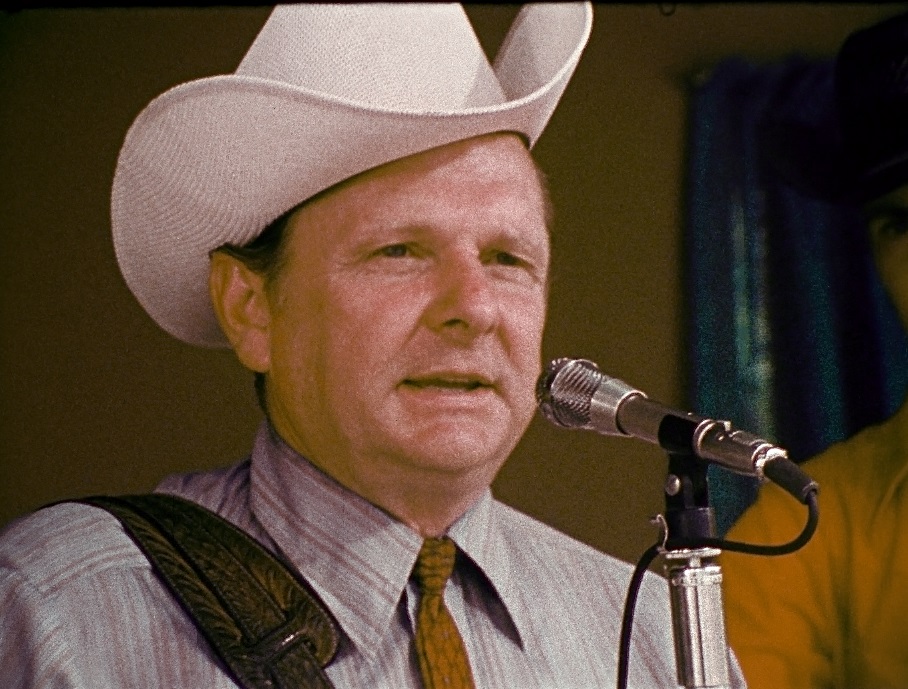
Pictured: Ralph Stanley

You mentioned that one thing that was so compelling about the film, and at bluegrass festivals in general, was seeing people from different walks of life united by this music and finding common ground, even if it was for a weekend. What do you think that message has for us today where we are as divided now as we were fifty years ago?

I hope it has the same result. Every time I have shown the film — and I have shown it to heads of studios in Hollywood, I showed it to corporations up in New York City — no matter where I’ve shown it, people leave the theatre with big smiles on their faces. It’s not necessarily because they’re bluegrass fans, but because they enjoy it. They had fun. They were delighted. Something about that music, about the people playing it, about the commitment that these people have to it. There’s more to it than just country music. I think that’s what Carlton was trying to say about the soul. It’s a commitment to the music that is thorough.

I don’t know whether Carlton told me this or not, but at some point I learned early on: bluegrass music is not commercial country. Meaning, you’re gonna lose your shirts on it, but you’re doing it because you love it. That really says it all, and I think that comes through with music and with Carlton and with all of the people that are on stage in the film and all the people playing out in the field… You see the commitment to the music.

Ellen [Pasternack, the project’s Executive Director and Ihde’s wife] and I have a background in professional theatre, regional theatre around the country, and what you’re always looking for working in theatre are actors who can really commit to doing a performance. It’s that commitment to the art — whether that’s music, theatre, dance, or painting — that’s where you find the joy in the art. And I think that comes through in the film, even if you don’t know anything about bluegrass. I hope that comes through still to this day, and maybe gets people thinking “past the politics” for a moment or two just to look at the music and listen to the music. And to see, “If this was going on back then, why can’t it happen again?”


Photos and trailer courtesy of Bluegrass Country Soul.

BGS 5+5: Joshua Ray Walker

Artist: Joshua Ray Walker
Hometown: Dallas, Texas
Latest album: Glad You Made It (July 10, 2020)
Personal nickname: High Wide and Handsome

What was the first moment that you knew you wanted to be a musician?

I started playing tenor banjo when I was three years old, and guitar when I was five. My grandfather brought a large record collection with him to Texas from Union County, Tennessee, decades before I was born. Every day after school I used to listen to those records in his workshop and try to play along on yard sale instruments he’d find. The first time it really clicked and I could keep up with one of those bluegrass records, I was obviously too young to know then, but I’ve been chasing that feeling ever since.

How often do you hide behind a character in a song or use “you” when it’s actually “me”?

Often. I build characters based on people I know, have met, or parts of my own personality and experiences. It took me a long time to realize that last part, but now that I know, I use it as a way to explore parts of myself I otherwise wouldn’t be brave enough to write about.

What other art forms — literature, film, dance, painting, etc — inform your music?

I would say film has the largest impact on my music. I think of my songs kind of like short stories and they play out in my head like movie scenes. Certain directors have informed the way some of these scenes play out, and the filters and angles by which I view them. Martin Scorsese, The Coen brothers, Quentin Tarantino, Wes Anderson to name a few.

Since food and music go so well together, what is your dream pairing of a meal and a musician?

One of my favorite parts of touring is trying the local dishes in all the places I visit. Nashville is a great food town and I have a whole itinerary of favorite spots I try to hit up every time I’m there. Fourteen-year-old me would be disappointed if I didn’t pick Jack White. He lives in Nashville, I hear we agree on where to get hot chicken in the town that invented it, and I’ve had countless near-miss encounters with him. So I pick the hot chicken basket with fries and coleslaw, extra pickles and a lukewarm Sprite with Jack White at Bolton’s Spicy Chicken & Fish!


What’s your favorite memory from being on stage?

It was December 2018 and I had just released “Working Girl” and “Canyon” in anticipation of my debut record, Wish You Were Here. I had played to fairly large crowds as a lead guitarist for other bands, but I had never played my songs live to more than about 150 people at a time and I definitely had never experienced the type of “buzz” surrounding my career prior to that point. I had a string of four preternatural shows booked that, in short, made me believe all the hard work of the previous decade was going to pay off, and instilled a confidence in me that I hadn’t had previously.

The first show was my first time playing a theater at the Kessler Theater in my hometown of Dallas, Texas. The second show was my first time opening for Colter Wall, and my first time playing solo at the Granada Theater. The third show was my first time playing the Tower Theater in OKC, opening for Colter. The last show was my first time opening for American Aquarium, and my first time at Cain’s Ballroom. Each show escalated rapidly in magnitude and capacity, and I’ll never forget how amazing and surreal it all felt.

I’m going to focus on the second show briefly. At that time, I had seen close to 100 shows at the Granada Theater, and it had been a staple in my East Dallas community for years. Spotify had just reminded me that Colter Wall and Paul Cauthen were my most listened to artists of 2018, and when I looked out into the crowd that night it seemed like I saw the face of every person who ever cared about me all in one place, singing along to my songs.

My favorite memory of being on stage actually happened right after I walked off it. I pushed my way through the heavy curtain, and what was in the tunnel waiting for me was truly unbelievable: Colter Wall, Paul Cauthen, Vincent Neil Emerson, Matt Hillyer (Eleven Hundred Springs), Summer Dean, Simon Flory, Jacob Metcalf, and others filled the hallway. They had all been watching me close the set through the curtain, and were there to congratulate me when I was done. That was one of the most heartwarming, and reassuring moments of my career and life.


Photo credit: Chad Windham