Patty Griffin Regains Her Voice After Cancer Battle

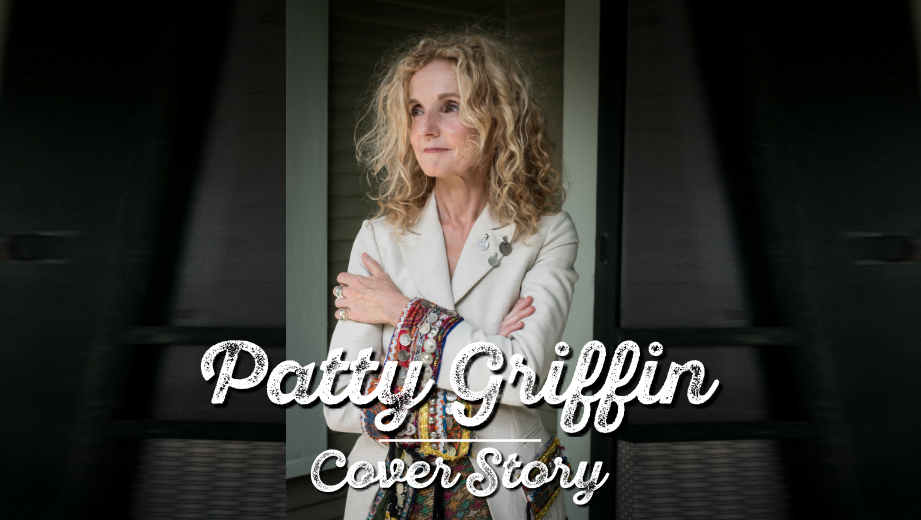
Reflecting the fortitude shown by the characters she’s written about for the last two decades, Patty Griffin made the decision to keep on working when her singing voice disappeared, the result of a battle with breast cancer in 2016. With encouragement from close friends and her own determination to carry on, Griffin spent a year writing and recording at home in Austin, Texas, ultimately regaining the strength to create her new, self-titled album, perhaps her most stripped-down work since her stunning 1996 debut, Living With Ghosts.

Speaking by phone in the middle of her American tour, Griffin offered insight into new songs like “River” and “Had a Good Reason,” and shared her love for her dogs, her guitar, and her dedicated fans.

BGS: On your new record, I keep going back to the song “River.” What was on your mind when you wrote that?

Griffin: I had been spending time with Donny Hathaway’s version of Leon Russell’s song, “A Song for You.” I actually covered that song for a little gig where I decided to do all covers. The song just kind of kicked my butt. Leon Russell is writing about something with this super sharp honesty, it’s almost like confessional, and it’s sort of healing for him and for whoever he’s singing that to.

And then Donny Hathaway picked it up and ran with it. It’s so true that it moved right over to Donny Hathaway’s voice and became his song. Just the feeling of that made me want to try to write “River.” Like, what’s down in there that I want to say, and that makes me want to sing this song? What do I have of my own to say that feels like that?

I noticed the lyric in there: “She’s been left for dead a million times / And keeps coming home, arms open wide.” That lyric seems like it might be emblematic of this record – that notion of mortality and making it through. Is that fair to say?

I think that’s fair to say, but in my mind it goes between me, as a part of nature, and what nature does. We’re beating up on this planet as fast as we can, tearing down trees. Forgetting all about the rivers, but the rivers are going to be here long after we’re gone. The rivers just keep going. There’s something in us that no matter how far away we get from understanding how we’re a part of this big incredible magical thing — this existence that no one really understands — we still are! It’s always there to go to, and in us, too.

Is this a new perspective for you? Did it hit you within the last couple of years to write about that broader scope?

I think I’ve tried to do that. But I think honestly as you get older, you do learn more about the broader scope, you know? I don’t know. Sometimes I feel like the more I go along, the less I know, too. (laughs) So I don’t know. That’s a question mark from me.

I had read that you had lost your speaking voice and your singing voice in the last few years.

Yeah.

What happened?

I believe leading into being diagnosed with cancer, I may have had it for a while. So, your immune system’s working pretty hard. Your body’s amazing. It works pretty hard at trying to eliminate it. So I was out on the road a lot, which is a good place to get sick, even on a good day. I was just getting cold after cold after cold after cold. Like one long, non-stop respiratory illness. It depleted the strength of my voice quite substantially, and then you know, you’ve got the diagnosis. There’s the surgery that’s not so hot for singing. And then there’s the treatment, there are the drugs… it was sort of this cocktail of things that finally depleted it to something I didn’t know how to use at all, and couldn’t use at all.

So, there were a few months there where it was pretty bad. I wasn’t sure what to do, but I knew I wanted to keep playing, so I just kept writing. And I thought, people do this. People’s voices change all the time and they keep going. You know, my old friend Robert Plant talked to me a little bit about that, just how he doesn’t sing those high notes anymore. (laughs) He doesn’t like to sing those high notes, but he’s discovered this other part of his voice that, to me, is so much more beautiful. So, things like that, and other moments like that that I thought about as I was going along. You know, [thinking] I’ll just have to figure this out — keep writing and figure this out as I go, what I can do next.

Where did you record this album?

Most of it was done in my house in Austin, Texas, with Craig Ross. [Recording engineer] Mike Poole came down from Nashville, and we set up the gear in my house. We did that with Mike a couple of times, and then the rest of the time throughout the year — it took about a year to do it — Craig and I worked on it, in the house mostly.

So, when you’re talking about your house, is that a home studio? Or more of a living room set-up?

Yeah, the dining room table, the living room, and the kitchen.

Do you think that environment affected the warmth of this record, and the vibe of this record?

I feel like I can hear my house in it, for sure, and I like that. But also it took the heat off me. It was Craig’s idea to do it this way, just sort of explore, without the pressure, what we had and what we could do. He was very positive about it, just hearing a few songs that I had from the get-go. He’s a dear friend of mine and I think he was huge part of this. I love his production style anyway, but beyond that, he really guided me with it and was just a friend. He said, “You can do this. Let’s start and see what we got.”

The guitar playing on this album is exquisite. How did you come to pick up the guitar and develop that talent?

I just thought it would be a great tool to write with. I thought, when I was a teenager, ‘How do these people come up with these songs? And how do you make a song happen and not depend on somebody else?’ (laughs) I got a Hohner guitar for $55, which was really the entirety of my savings account when I was about 14 years old. The strings were probably a half-inch off the neck, you know? It really hurt your fingers to play, and I started taking guitar lessons with that.

And I hated the guitar, honestly, until I was probably in my 20s. It was just really a tool. Then I started understanding that it’s also a percussive instrument, and when I saw the “Bluegrass” word next to who I was going to be talking to today, I said, “Ohhhh!” (laughs) That’s some serious playing going on there! I’m just more of a “feel” person. I experiment more than I used to on guitar. I really started to love it and it’s more of a comfort to me, like singing. So, I’ve made friends with it. I even have to say I love it. We’re like an old couple now.

I would be remiss if I didn’t mention the cute dogs on your album cover.

Awwww, those are my boys. Sal is the brown guy and Zeke is the blond guy. Zeke was actually in the original photo at my feet. You can see in his eyes that he was protecting me from Michael Rosen, the photographer. (laughs)

You have a way of bringing your family stories into your music. How has your relationship with them affected your musical direction?

They shape who you are, whether you are close to them or not. I think everybody’s been shaped by where they come from. They’re in your DNA and their stories are in your DNA. I’ve just been sort of piecing the puzzle together with them, and it’s been good for me to do that.

“Had a Good Reason” is about a mother-daughter relationship but I don’t know that it’s necessarily about the relationship that you have.

No, it’s more based on a combination of stories that I had heard about Billie Holiday and Edith Piaf. Two of those beautiful singers from the last century with these tears in their voices, and they were rock stars, really almost at the same time in their day. The sadness in those voices — both of them at a certain point had that sort of [tumultuous] relationship with their mother. I believe they both ended up living in whorehouses and being taken care of by prostitutes, and they both were not able to be with their mothers as young girls. I think for a woman, there’s some deep, deep, deep, deep sadness that would happen from that. That was just me making a guess and the song came out around that.

To me, “Luminous Places” sounds like a love letter to your fans. What is it about heading out on the road, and having that audience, that compels you to keep coming back, year after year?

That’s what is so mysterious to me. I feel like it’s mutual generosity between humans, you know? I work really hard to bring them something, but they also bring themselves and give a lot. That seems to be how the relationship works. And the older I get, the more I am grateful for that, and in awe of that. It’s really wonderful.

Is touring going well for you now? Do you feel like you’re back in the game?

I’m having a blast! I’m getting stronger every day out here and I’m working with the greatest people on earth. I’m having a really good time and I’m really lucky.


Photo credit: Michael Wilson
BGS 5+5: Boo Ray

Name: Boo Ray
Hometown: Western Mountains of North Carolina
Latest album: Sea of Lights
Personal nicknames (or rejected band names): “During the few-years span that I just couldn’t seem to stay out of jail, the other incarcerated guys that I gambled with on Spades and Tonk called me ‘Boot-a-rang.’ I didn’t ever bother to correct ‘em. In grade school, my very first band was also called Rhythm & Booze; it was a 4 piece band and Marshall Tucker’s “Can’t You See” was a feature of our set.”

What other art forms — literature, film, dance, painting, etc — inform your music?

Ahh that’s a cool question… Well, it might could be that Southern writers like Harry Crews, Ron Rash, and Mark Twain make me think it’s important to have a writing voice, and that there’s something powerful and magic about the just right combination of words used to tell the truth of our human experience.

I knew this guy everybody called Mr. Jack that ran a sawmill-–an old V-Twin Harley motor bolted to a 12″x12″ post frame and a great big 15-foot 2″ bandsaw blade that pitched and twisted so wildly when it ran that it just seemed impossible it could have ever made a straight cut. But it did cut 18-foot-long, perfectly straight slices off the huge logs he used to run through that mill. He’d cut some 1/4″ thin cedar for me to use as lining on chests. The way Mr. Jack cussed at and about his sawmill, the logs, the lumber and his equipment, expressed his passionate care, deep affection, forgiving humor and humble mastery of his industry. I suppose my affection for the way Mr. Jack carried on about his sawmill might be responsible for my cussin’.

My great buddy, artist James Willis, is constantly teaching me about perspective and how to use detail and lack of detail as creative storytelling devices. Sean Brock’s amazing passion, depth of knowledge, agrarian approach, his wood coal cooking and his completely inclusive use of information, style, technique, perspective and philosophy, have certainly influenced me.

If you had to write a mission statement for your career, what would it be?

The point of the spear is compassion, inspiration and empowerment. I’m compelled to express to my fellow man that the troubles of life are not for nothing. The singer-songwriters that have moved me the most write songs that are part of the classic American songbook. So the purpose of my endeavor as a singer-songwriter is to land some songs, or a song, in the classic American songbook, whatever that is. I think that songbook includes songs by Lowell George, Leon Russell, John Hiatt and Fiona Apple. My favorite Grateful Dead record is the one that Lowell George produced, Shakedown Street. The word “Pop” ain’t necessarily blasphemy to me, unless it’s in front of the word “country”…

After writing the songs my mission is to perform the songs with my badass guitar-slingin’ band and build a dynamic, powerful and unique live sound around the character and nature of each of the songs. Live performance is more important to me than recording records, but I use the records as templates, stylistically, and to suggest possible arrangements. For me, the style itself demands that the records are exciting soundscapes, and experimental in the recording and engineering. If my records sound like someone else I’ve fallen short.

For me the singer-songwriter/guitar band-sound bar is set by acts like: Tom Petty and the Heartbreakers, Little Feat, ZZ Top, Marty Stuart & His Fabulous Superlatives, any of John Hiatt’s bands (from The Goners and Little Village to his Trio), and Jason Isbell & The 400 Unit. So what’s my mission statement? I want to be Jerry Reed.

Boo Ray & Sean Brock

Which elements of nature do you spend the most time with and how do those impact your work?

I don’t spend enough time on/in the water lately. As a kid, I was at the river every week and in the woods all summer long. Sunrises and sunsets are important to me. I really tried to get up to my buddy Sean Minor’s for spring branding and spend some time roping, riding and working cattle this year, but had shows and sessions I couldn’t get out of. I like to do tractor work, eat homegrown tomatoes, negotiate the price of a late ’50s step-side GMC truck or dispute the shape of the taillights on a ’68 Chevelle while cracking pecans against each other, and get caught in a torrential downpour and soaked to the bone after doing some farm work.

Since food and music go so well together, what is your dream pairing of a meal and a musician?

Agreed, and I totally dig a supper club-type show. How about Sean Brock doing some kind of Low Country spread with Ossabaw pork sock-sausage, rice peas, Geechie Boy Grits with a fresh catch, and some kind summer vegetables, with Billy Gibbons giving his take on Hill Country Blues. Billy and Sean are both great historians, passionate technicians and intuitive as hell. That’d be the dream pairing.

How often do you hide behind a character in a song or use “you” when it’s actually “me”?

The artists I like definitely seem to have character-driven numbers in their repertoire: Tom Petty’s “Break Down” and “American Girl,” Eddie Rabbitt’s “I Love a Rainy Night,” and Don Williams “Tulsa Time,” written by Danny Flowers. Those kind of songs hold you up as a performer and don’t require you to emote and be so intimate, at least for three or four minutes at a time anyways. Sometimes I might jokingly introduce “Redneck Rock & Roll” as a song that I wrote first-person as Kenny Powers. But I certainly do keep a few of those songs in my set: “I Got the Jug,” “Johnny’s Tavern,” “Six Weeks in  Motel”, even “Sea of Lights” is that way now, most of the time. There’ve been a few times that singing “Sea of Lights” made me involuntarily weep and cry…

On the “you”/”me’ thing; I saw this Mary J. Blige performance once, she was singing this devastated lovesick number and my heart was just broken for her, you know? Then in the last chorus, nothing left but ashes and pain, she flips the script on the “you”/”me” switch and starts singing “bye bye” and waving as she left, and I realized she was singing my blues, and she was the one that was leaving. I was leveled. It was like a damned magic trick she’d just performed. I’ve tried variations of that writing device in my songs “Constantina,” “Six Weeks in a Motel,” and the “Hard to Tell” collab with Lilly Winwood all have a moment where they pivot or twist like that a little bit.


Photo of Boo Ray: Courtesy of Sideways Media
Photo of Boo Ray with Sean Brock: Price Harrison

Way Above the Chimney Tops: A Pride Celebration of “Over the Rainbow”

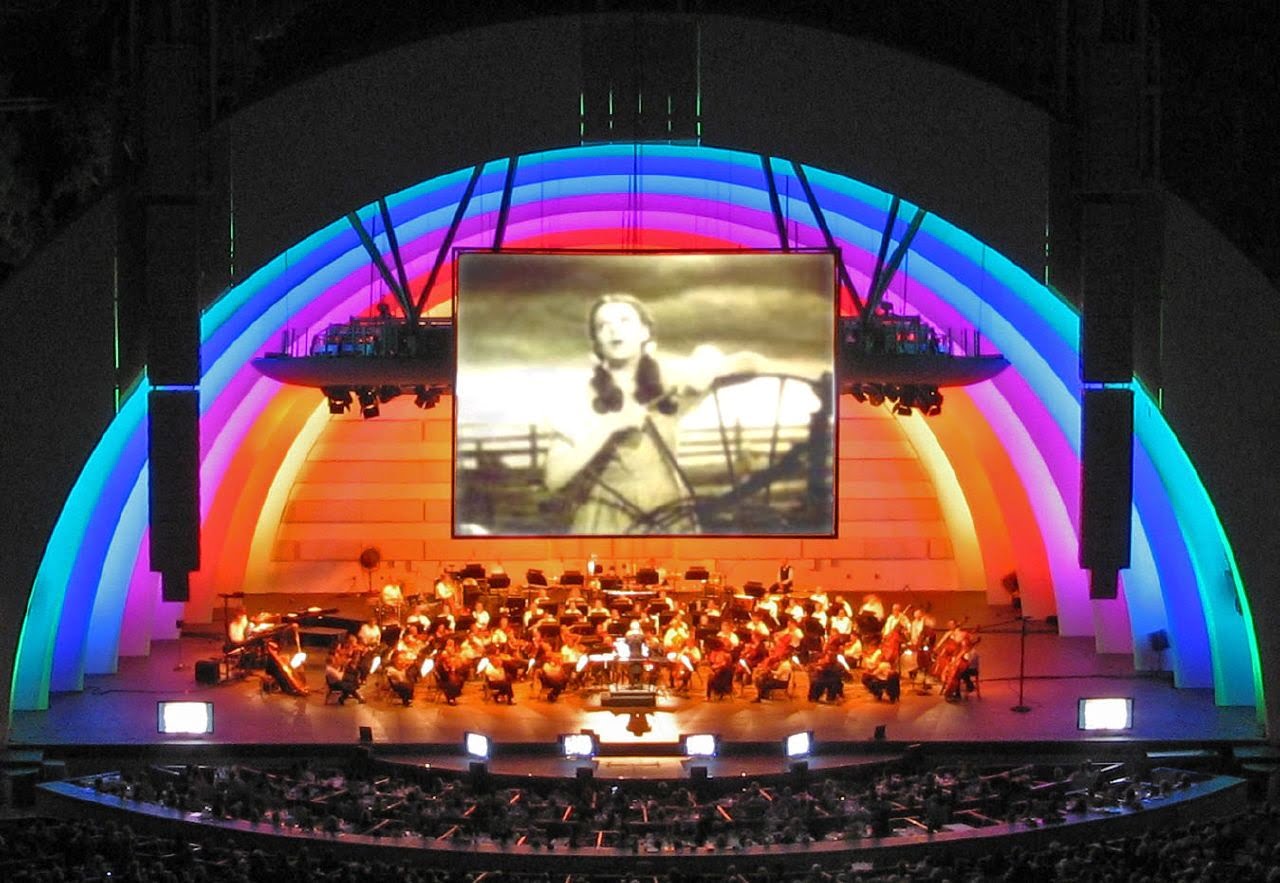
As we celebrate LGBTQ+ Pride, let’s go “Over the Rainbow.” The amount of artists that have covered this song (written by Harold Arlen and Yip Harburg) is practically innumerable — and of course Judy Garland’s version from 1939’s The Wizard of Oz is the emerald standard. Yet we looked behind the curtain and found 10 roots, country, and folk-tinged versions that we think stand at the top of the heap. What’s your favorite version?

Eva Cassidy

This acoustic cover of “Over the Rainbow” made Eva Cassidy a star, but it didn’t happen until five years after her death in 1996 when a homemade video was shown on BBC’s Top of the Pops 2.

Willie Nelson

Why are there so many songs about rainbows? Willie chose Somewhere Over the Rainbow as the title of his 25th studio album, featuring 1940s pop standards, released in 1981.

Tommy Emmanuel

Officially released in 2004, Tommy Emmanuel had been playing this masterful solo version for years. He says he adapted this arrangement from Chet Atkins’ rendition, then allowed it to evolve over time.

Jerry Lee Lewis

Leave it to ol’ Jerry Lee to insert himself into the story. Even without a broomstick, he swept onto the charts with this cool rendition in 1980, giving him Top 10 country hits across four consecutive decades.

Leon Russell with Newgrass Revival

From a 1981 live album, this version smolders with understated keys and the unmistakable voice of Leon Russell. And this trippy video mixes color and black-and-white footage, just like The Wizard of Oz!

Martina McBride

She’s not in Kansas anymore. Released as a single in 2015, Martina sang “Over the Rainbow” on numerous TV broadcasts, including American Idol and the Opry. Give the people what they want!

Chet Atkins, Les Paul

A beautiful instrumental recorded in 1978, Les is on electric, while Chet provides the fingerpicked classical guitar. Look for it on the great and powerful Guitar Monsters album.

Ingrid Michaelson

Released in 2006, Ingrid Michaelson would go on to perform “Over the Rainbow” with a choir of kids from Sandy Hook Elementary School in January 2013. She considers it a “positive and hopeful song.”

Israel Kamakawiwo’ole (“Somewhere Over the Rainbow / What a Wonderful World”)

Perhaps the best-known cover, the singer known simply as ‘Bruddah Iz’ around Hawaii found posthumous fame with this inescapable medley. According to NPR, he recorded the song spontaneously in 1988, intending it to be a demo.

Jake Shimabukuro

Iz isn’t the only contemporary Hawaiian musician to tackle “Over the Rainbow.” Check out this solo version by Shimabukuro, who has been playing ukulele since he was 4 years old. It’ll make you want to tap your heels together.


Photo by Redfishingboat (Mick O) on Foter.com / CC BY-NC

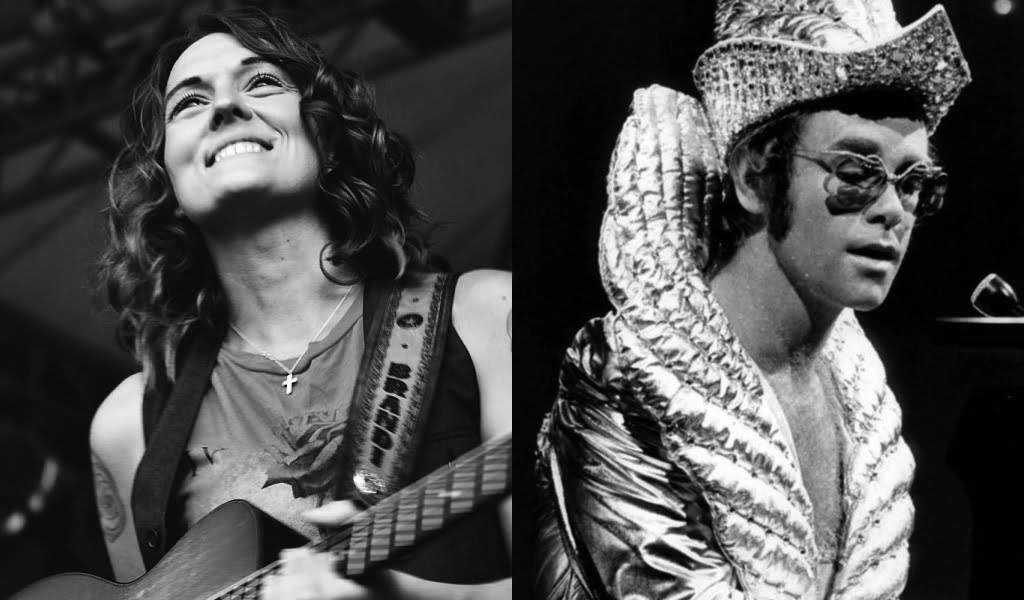
Squared Roots: Brandi Carlile Makes the Case for Elton John

The classically trained Sir Elton John wasn’t always just so. In his early days, Reginald Dwight was so hooked on the American sounds of Elvis Presley, Ray Charles, Jim Reeves, Bill Haley, and Jerry Lee Lewis that the band he formed in 1962 was called Bluesology. Then, in 1967, John met lyricist Bernie Taupin and music history would soon be made. The pair continues writing together today, after more than 57 Top 40 hits (in the U.S.) on 30+ albums … and nearly as many awards.

“Border Song,” “Tiny Dancer,” “Crocodile Rock,” “Philadelphia Freedom,” and myriad other John/Taupin collaborations fill the soundtracks of so many lives … singer/songwriter Brandi Carlile‘s among them. She grew up idolizing the two British music men and, after combining their influence with a dash of Johnny Cash and a pinch of Patsy Cline, found her own rootsy sound evolving and emanating from that somewhat surprising foundation.

To connect the dots between Sir Elton and American roots music, you have to go back to his days as Reggie Dwight. Draw that line for us.

I feel like sometimes an artist’s separation from their influences by proximity and culture almost intensify and exaggerate the effect that a certain genre has on them. Examples of this that come to mind are Paul McCartney’s passion for Buddy Holly and American rock ‘n’ roll; Old Crow Medicine Show cutting their teeth in Ithaca, NY, only to become incredible live Appalachian bluegrass on steroids — complete with Ketch Secor’s almost savant encyclopedia of knowledge on the genre and his preoccupation with southern culture; British, bluegrass-influenced arena band Mumford and Sons and Colorado-based Lumineers are also good examples of this … not to mention my personal obsession with country music and the South as a northerner or, as an American, my obsession with Brit Pop — Freddie Mercury, the Beatles … but, above all these, Elton John. Admiration from a distance is the strongest kind.

While Elton, by definition, is decidedly British, he has pushed the envelope on genre so far that it’s completely inapplicable to him. He was deeply influenced by American rock ‘n’ roll and roots music. Being so far away from Little Richard, Chuck Berry, Jerry Lee Lewis, and Elvis Presley only seems to have fueled the obsession with the culture of early American rock ‘n’ roll roots music for him.

Elton once said that Elvis looked like an alien to him. My great uncle Sunny, a guitar player and singer, told me that he was too busy (along with his friends) being jealous of Elvis Presley to be influenced by him at the time. The space between an artist and the music that inspires them becomes purer as it grows, erasing lines of competition, jealousy, even racism and politics. Elton John is a lover of early American rock ‘n’ roll roots music, pure as the driven snow. He could probably teach you and me a thing or two about it!

The most defining influences from early to current Elton John are his deep love for Leon Russell and Buffy Sainte-Marie. It took an eccentric British man in his 60s to teach me about these two absolute pillars in American folk/roots and to see something fundamental that was right in front of my nose whole time.

Once he teamed up with Bernie Taupin, things shifted. What threads of honky tonk, gospel, and other roots do you hear in their early work?

When Elton John started writing with Bernie Taupin, it was like rock ‘n’ roll met roots — Captain Fantastic meets the Brown Dirt Cowboy — and now you don’t only have early American overtones, musically, but they’re touching lyrically on early American themes. The entire Tumbleweed Connection record is Civil War fantasy meets early American Western. Good guys and bad guys, riverboats, Yankees and the Union, sons of their fathers, New Orleans, and “good old country comfort in my bones.”

Early American gospel makes its way onto Elton John many times, most notably in “Border Song” complete with a nod to ending racism. These themes are a constant throughout their career and continue to be. “Texan Love Song,” to Roy Rogers, all the way to the T Bone Burnett records of today, The Union and The Diving Board.

Bernie Taupin, to me, is the best lyricist there is and certainly the most fantastical and unselfish in his work. He is deeply interpretative and, honestly, self-revealing while also introducing us to fantasy and objectivity unchanged for 40 years.


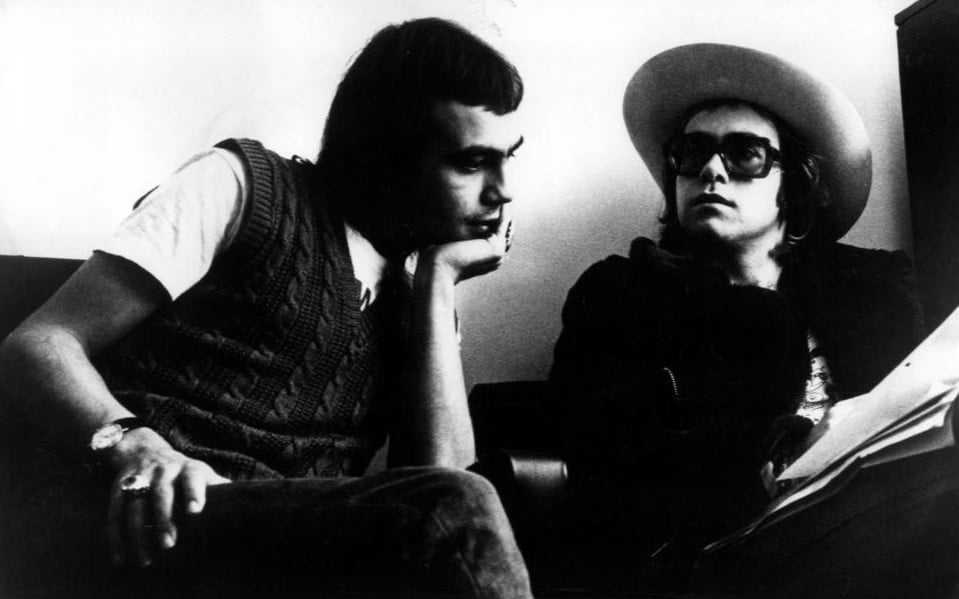
Elton John with Bernie Taupin (left) in 1971. Photo credit: Public domain.

You have a thing for big personalities in your musical heroes … Elton, Elvis, Freddie Mercury, Johnny Cash. So you clearly don’t think Elton’s flamboyant, costumed persona took anything away from his respectability as an artist. Correct?

No! No way! Elton John’s eccentricity is authentic. Picture Elton John in the hipster attire of his time — skinny jeans and a beard, all browns and fedoras with a tiny tie. Who’s going to believe anything a guy has to say about “Bennie and the Jets” in that? He proved that he could make you cry dressed like Donald Duck. That means everything. Little Jimmy Dickens and Minnie Pearl probably loved him.

There aren’t many artists who could do a duets album that included Tammy Wynette, Leonard Cohen, and RuPaul. So what is it about Elton and his music that create such a wide berth?

The thing about Elton John that creates a wide berth is that he is a truly authentic person who thrives on enthusiasm and loving people! In fact, he loves so many different kinds of people that he regularly offends someone over his acceptance of someone else. Dolly Parton also has this rare gift. Elton tends to embrace the unacceptable — from collaborating with Eminem when he was in such hot water, to playing at Rush Limbaugh’s birthday party, to insinuating that Jesus might be gay, to now getting on the phone with Vladimir Putin on behalf of LGBT Russian citizens. As a result, when Elton john speaks out against something, everyone listens … I certainly do.

Elton is wildly diverse in his efforts to become a bridge builder. He’s very intriguing and his musical collaborations have been very reflective of that. I used to listen to Duets, his collaborative duets record from the ’90s, and I never got tired of it because even if I was over [Don] Henley that day, I could hear him sing with Tammy.

Which album can we point to as the one where he moved completely away from his early influences? Or is there an argument to be made that they are still there, even in “Circle of Life”?

The beauty of Elton and Bernie is that there are no absolutes that can be applied to any one of their albums. They are a wild ride of genre twists and turns, career long. Say what you will about musical consistency, none of these records are background music. You don’t want to have them playing while you’re hosting a dinner party.

If I had to point to a departure from roots music — although never completely — I’d say maybe some of the mid-80s to early-90s stuff. From Leather Jackets, Breaking Hearts, maybe Too Low For Zero, or The Big Picture. However, having said that, those records made a huge impact on me and, last time I checked, I’m still a roots artist. Elton’s Americana leanings are firmly in tact. His last two records with T Bone Burnett are truly some of the best of his career. The Union with Leon Russell is a favorite of mine and The Diving Board is a return to form in a way that feels to me like hearing Johnny Cash sing alone on American Recordings.

Elton and Bernie have deeply influenced me as an American roots artist from 5,000 miles away! Thanks for giving me the chance to say so.


Brandi Carlile photo courtesy of Brandi Carlile. Elton John photo credit: Heinrich Klaffs / Foter / CC BY-NC-SA.