12 Fantastic Merle Haggard Covers

April 6 would have been Merle Haggard’s 89th birthday – and was also the tenth anniversary of his death. So, before these anniversaries get too far in the rearview mirror, I wanted to take a moment to remember one of country music’s all-time legends – and one of the great singer-songwriters in all American popular music.

One lesson of Haggard’s career is that you best honor your musical heroes, not only by playing their records at home or talking up their influence in interviews, but by continuing to perform their songs – on stage and in the studio. Merle released tribute albums to Jimmie Rodgers, Bob Wills, and Elvis Presley, and across his catalog cut at least an album’s worth of Lefty Frizzell songs.

Since his death, it’s been nice to see how often Merle’s musical contemporaries and descendants have taken Haggard’s model to heart, recording his songs and even releasing entire Merle Haggard tribute albums.

In recognition of his ongoing legacy, I’ve chosen 12 of my favorite cover versions of songs by Merle Haggard. I shared a kind of companion piece to this list last week, at No Fences Review, pulling choices from the 20th century only. Now, for Good Country, I’m focusing my dozen picks on Hag covers from this century.

I could assemble similarly strong lists every week for months without running out of possibilities. But these dozen Hag covers are among the very favorites.

“You Don’t Have Far to Go” – Candi Staton (from His Hands, 2006)

Co-written with trucker-song specialist Red Simpson, “You Don’t Have Very Far to Go” was the earliest of Merle’s songs to have legs. Recorded more than a couple dozen times through the years (including three versions from Hag himself), it’s proven a special favorite of first-name-basis country women. Bonnie and Connie, Rosanne and Lucinda, and others all seem to sing the song directly to some toxic asshole: “If I’m not crying, you’re not satisfied.”

My favorite reading of the song in that way is by Candi Staton. She became renowned for her disco and gospel recordings, but when first establishing herself as an R&B star circa 1970, it was with striking country soul takes on hits by Tammy Wynette and Patsy Cline. Decades later, she deploys Merle’s old song to deliver a master class in soulful, thought-by-thought phrasing. Staton sounds fragile and beaten down yet, by the end, her tone hints she may finally have had enough.

“Hungry Eyes” – Leona Williams (from Leona Williams Sings Merle Haggard, 2008)

Leona Williams may be best known as Haggard’s third wife, but she’s a tremendous artist in her own right, a country music lifer who played bass behind Loretta Lynn in the 1960s, enjoyed a solo career worth tracking down, and wrote or co-wrote chart toppers “You Take Me for Granted” and “Someday When Things Are Good” for Merle in the early ‘80s.

Leona’s version of “Hungry Eyes,” from her superb 2008 Haggard tribute, always stops me in my tracks. In the verses, she sounds haunted by her parents’ long-ago struggles. At each chorus, she gulps and springs to the top of her range, once again meeting her mother’s dissatisfied gaze. “She only wanted things she really needed!”

“The Running Kind” – Marty Stuart & His Fabulous Superlatives (from The Marty Stuart Show, c. 2009 or 2010)

“The Running Kind” is both one of country music’s great declarations of independence and, for Haggard, a great self-own: Merle boasts that he’s always on the run from one thing or the other even though, “I know running’s not the answer” to anything. The sentiment can serve as a kind of thesis statement for the Hag’s own restless life and career, so it’s ironic that my favorite version of the song isn’t Merle’s but this live cut from Marty Stuart. From an episode of the singer’s television series, Stuart and his Superlatives rage noisily and headlong, while staying absolutely controlled, through Merle’s tune. The solos from Kenny Vaughan and Stuart are my idea of Telecaster heaven.

“Ramblin’ Fever” – Tanya Tucker (from My Turn, 2009)

My pick for the best-ever “Ramblin’ Fever” is this version by Tanya Tucker. Riding an outlaw thump spiked by country disco high-hat, Tucker honors a musical hero, a former paramour, and a kindred rambling spirit. To that end, she loves it when some good-lookin’ fella rubs her back, but what really turns her on comes in the a.m. when she can drink a cup of coffee before leaving. The series of guitar solos that play out the final 1:20 here sound like she’s already out the door.

“How Did You Find Me Here?” – k.d. lang (from Sweet Relief III: Pennies from Heaven, 2013)

“How Did You Find Me Here?” was among Merle’s finest new songs of this century. From 2010’s I Am What I Am, Merle sings the number like a grim but grateful gospel ballad – his savior has come for him in his grave. “Thank you, Lord,” he prays at the close.

k.d. lang’s spare, ethereal reading feels less straightforwardly religious but, if anything, more spiritual. She’s desperately alone, at her nadir, but now someone – a lover or friend, her sponsor or her community – has seen her for who she is, taken her in. Lang’s contralto sounds bleary-eyed and dumbfounded, but she gains strength as she goes, ready to move on up.

“I Think I’ll Just Stay Here and Drink” – Suzy Bogguss (from Lucky, 2014)

Back in 1989, one of Suzy Bogguss’ earliest charting singles was a cover of “Somewhere Between,” still my favorite version of that great Haggard ballad. So my expectations were unreasonably high for Lucky, a full-length Merle Haggard tribute that she released in 2014. But the album’s a gem straight through, and I especially recommend her take on “I Think I’ll Just Stay Here and Drink.”

Most versions of Merle’s boozy romantic complaint have been done by rowdy dudes who sound like they’re slamming shots while ordering their fourth pitcher ahead of passing out. Bogguss, by contrast, comes off country-jazz cool, sipping a good bourbon and commiserating with herself in some dark corner. Don’t wait up. She’s going to be here awhile.

“Shelly’s Winter Love” – Lonesome River Band (from Turn on a Dime, 2014)

Merle’s most haunting song is about depression: Shelly’s depression each winter, the narrator’s the rest of the year round when the sunshine’s lured her back to town. This Lonesome River Band rendition from 2014 is the most haunting I know. Brandon Rickman sings beautifully but frighteningly too, and LRB’s pacing, like seasonal affective disorder set to a melody, reflects the long, slow days of a long dark winter. Midway through, Sammy Shelor’s banjo plunks a drip, drip, drip, that quickly gathers to a stream. A thaw’s coming; spring is on the way. It won’t be long now…

“A Working Man Can’t Get Nowhere Today” – Rob Ickes & Trey Hensley (from Before the Sun Goes Down, 2015)

This was a savvy cover choice by Rob Ickes, 15-time winner of the IBMA’s Resophonic Guitar Player of the Year award, and Trey Hensley, the association’s pick for Guitar Player of the Year in 2023. For one thing, the song is an underappreciated gem of the Haggard songbook, recorded maybe not even half a dozen times since Merle had a hit with it in 1977. More importantly, this Hag number lets Ickes and Hensley trade elegantly exhausted solos while tapping into a perpetually frustrating and common condition: Working your ass off every day to to put food on the table yet still coming up short. Hensley moans, “I’ll still be deep in debt the day that I fall dead.”

“Some of Us Fly” – Bonnie “Prince” Billy (from Best Troubador, 2017)

Merle’s “Some of Us Fly” served as the concluding track to his underrated release Chicago Wind, from 2005, and featured a guest vocal from Toby Keith. Because both men had already experienced such heights in their career, the message of each chorus – “Some of us fly but all of us fall” – comes off a little like superstars performing their humility. But where Haggard and Keith share hard-won wisdom, Bonnie “Prince” Billy casts a spell. With his duet partner, Irish singer/flutist Nuala Kennedy, he surrenders to a mystery.

On the remarkable 2017 Haggard tribute album, Best Troubador, Billy (AKA indie songster Will Oldham) and Kennedy whisper their way through Merle’s song in cautious harmony, their hands clutched tightly. The whole performance feels so fragile a strong wind might blow it way.

“Today I Started Loving You Again” – Eli “Paperboy” Reed (from Down Every Road, 2022)

Eli Reed specializes in making over all manner of roots-adjacent material into cool, committed soul music. Down Every Road does that for the Haggard songbook with thrilling results straight through. (A duet between Eli and Sabine McCalla on Merle’s most covered song, “Today I Started Loving You Again,” was inspired by a famous, but officially unreleased, 1969 version by Buck Owens and soul singer Bettye Swann.)

I especially appreciate Reed’s take on Merle’s celebratory kiss-off “I’m Bringing Home Good News,” which he relocates from Merle’s dusty, country-rocking San Joaquin all the way down to Louisiana for some funky Tony Joe White-styled swamp.

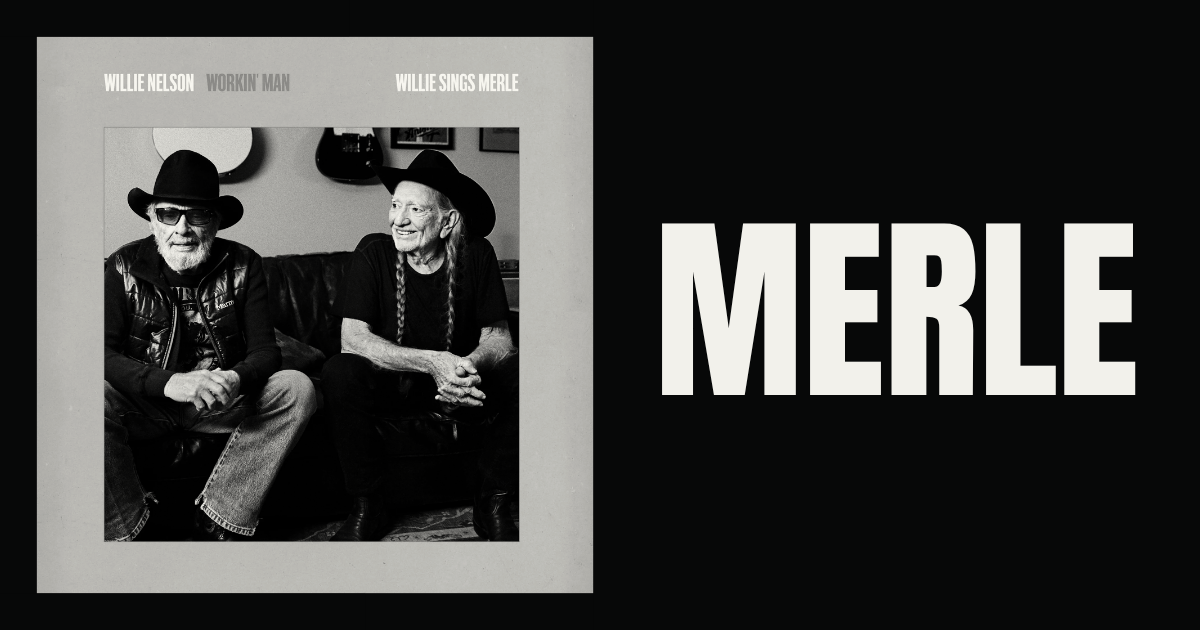
“Workin’ Man Blues” – Willie Nelson (from Workin’ Man: Willie Sings Merle, 2025)

One of Hag’s signature hits, “Workin’ Man Blues,” is usually framed as a purely blue-collar anthem, but it’s good to remember he identified the song as a blues. Having to work to survive while hoping your body holds out as long as you’ll need it is something to be cursed more than celebrated.

From last year’s Workin’ Man: Willie Sings Merle, a 92-year-old Nelson delivers his friend’s lines with a bit of a slur, weary and resigned but also grateful still to be working, to be on the road again until he runs out of road. Similarly, Willie’s arrangement sheds Merle’s Elvis-y fanfare for some hard, use-it-or-lose-it swing. “Play it, little sister,” he says, introducing one of the hot-jazziest solos in the career of the late Family band pianist Bobbie Nelson. Willie’s solos up top and midway through, meanwhile, are things of singular beauty, guitar work that sounds like play but refuses to hide the callouses and the miles. “As long as my two hands are fit to use…”

“Daddy Tried” – Jade Jackson (single, 2026)

Merle’s “Mama Tried” has been covered well over 100 times since he wrote it for the Killers Three soundtrack in 1968. But the song’s indelible ascending chorus and its universal theme – Merle sings it as if he’s as proud of defying his mom as he is remorseful for disappointing her – have encouraged people to use the song in all kinds of ways. Country comic Don Bowman parodied it as “Pappa Tried” as early as 1969 and more recently Angeleena Presley was clearly in conversation with Merle’s classic when she released “Mama I Tried” in 2017. As was Keith Urban when he sampled its lick for “Coming Home” in 2023.

Jade Jackson grew up in a small Cali town between Bakersfield and the Pacific, and her updated, gender-flipped take on Merle’s tale sounds just like that: Her voice feels a little dusty and a little sunny. Switching out Merle’s locale from “prison” to “Nashville” is funny because those two aren’t at all alike, but also because maybe they’re a little alike. For sure the ache in her voice reveals her as another singer-songwriter in a long line of kindred spirits to Merle; she’s going to go her own way, no matter her dad’s good advice.


David Cantwell is the author of The Running Kind: Listening to Merle Haggard, the co-author of Heartaches by the Number: Country Music’s 500 Greatest Singles and the co-creator of No Fences Review. His byline has appeared at Rolling Stone Country, The New Yorker, Slate, and No Depression, among other publications.

Photo Credit: Workin’ Man: Willie Sings Merle on Legacy Recordings
Watch Molly Tuttle Perform on Jimmy Kimmel Live!

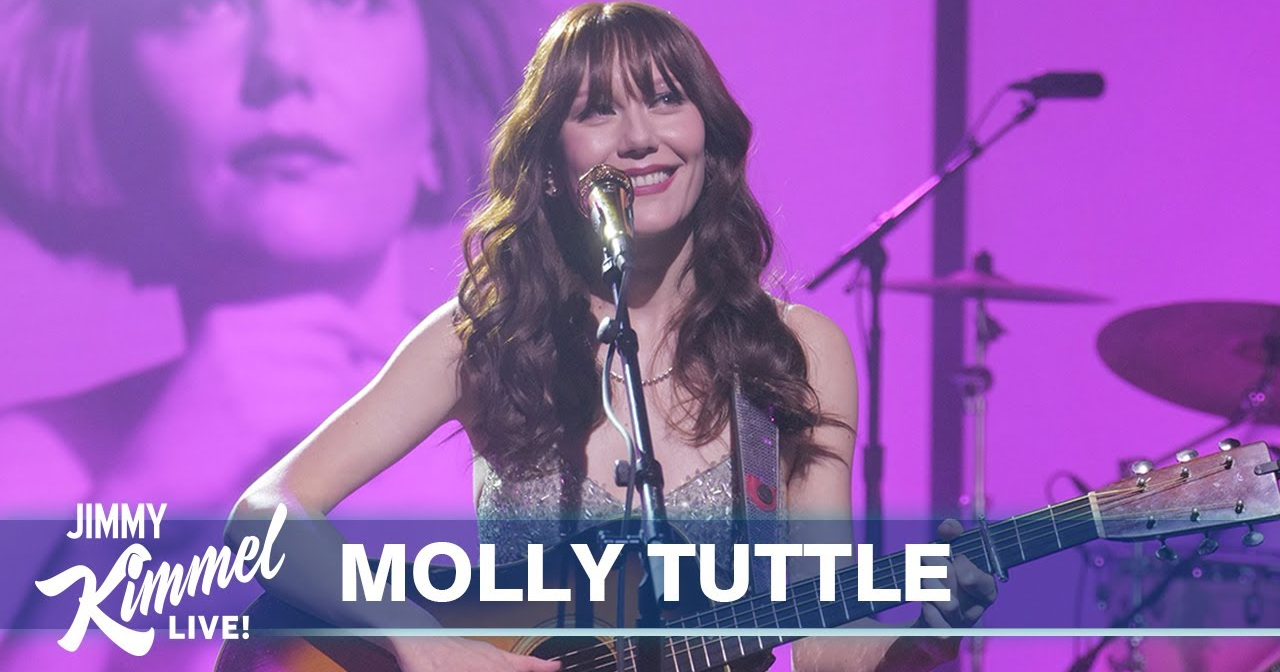
Molly Tuttle kicked off the new year in style, appearing on Jimmy Kimmel Live! on January 5 to perform a GRAMMY-nominated song from her GRAMMY-nominated album. “That’s Gonna Leave a Mark” was released on So Long Little Miss Sunshine in August of 2025. The track was nominated for Best Americana Performance while the LP gained a nomination for Best Americana Album. Featuring her signature clawhammer guitar picking style and impassioned, heart-wrenching vocals, “That’s Gonna Leave a Mark” is a standout track from So Long Little Miss Sunshine, having held the No. 1 slot on the Americana radio charts for four weeks and having climbed to #13 on the AAA charts, as well.

On the Kimmel stage, Tuttle and her band – Ellen Angelico (guitar), Megan Jane (drums), Vanessa McGowan (bass), Mary Meyer (keys) – demonstrate the genre-blending style that’s also a hallmark of her most recent album. Clawhammer guitar builds a rich foundation for pop-steeped Americana, polish and grit combining in intricate and intriguing ways. Tuttle’s percussive right hand reminds of piano key strikes in similar singer-songwriter (but keys-centered), pop and adult contemporary styles. It may be surprising that old-timey and bluegrass textures could fit so well in this musical context, but this is an intersection of styles Tuttle has long been comfortable with.

Molly Tuttle will vie for the Best Americana Performance and Best Americana Album GRAMMYs on February 1, when the awards will be handed out in Los Angeles, before going on tour with Marty Stuart & His Fabulous Superlatives for Molly x Marty: Guitars on Fire — The Cosmic Twang Tour in the South and Northeast in February.


Photo Credit: Lead image courtesy of ABC/Jimmy Kimmel Live!; alternate image courtesy of ABC, shot by Randy Holmes.

Doc Watson & Earl Scruggs’ Friendship in Photographs

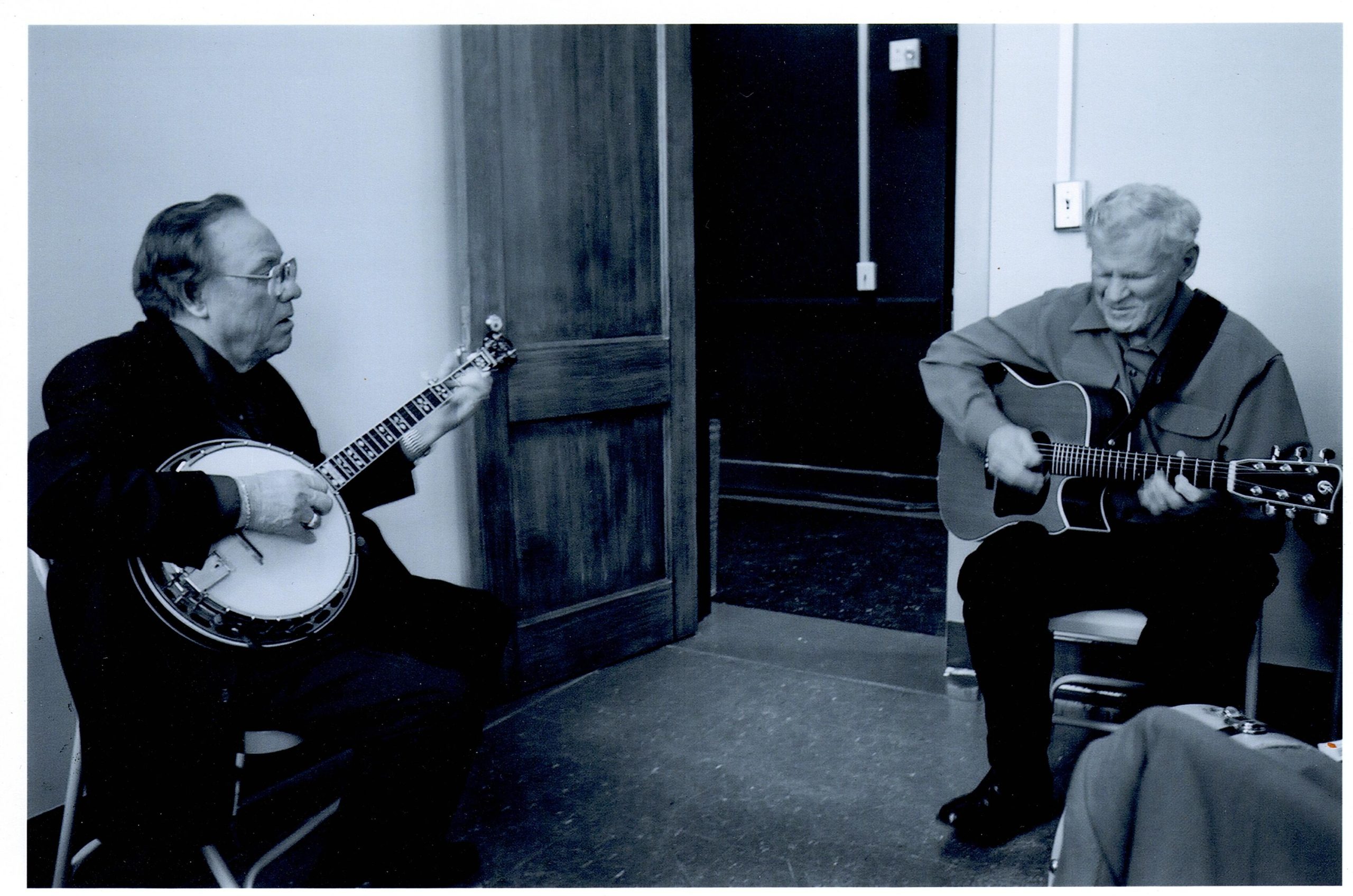
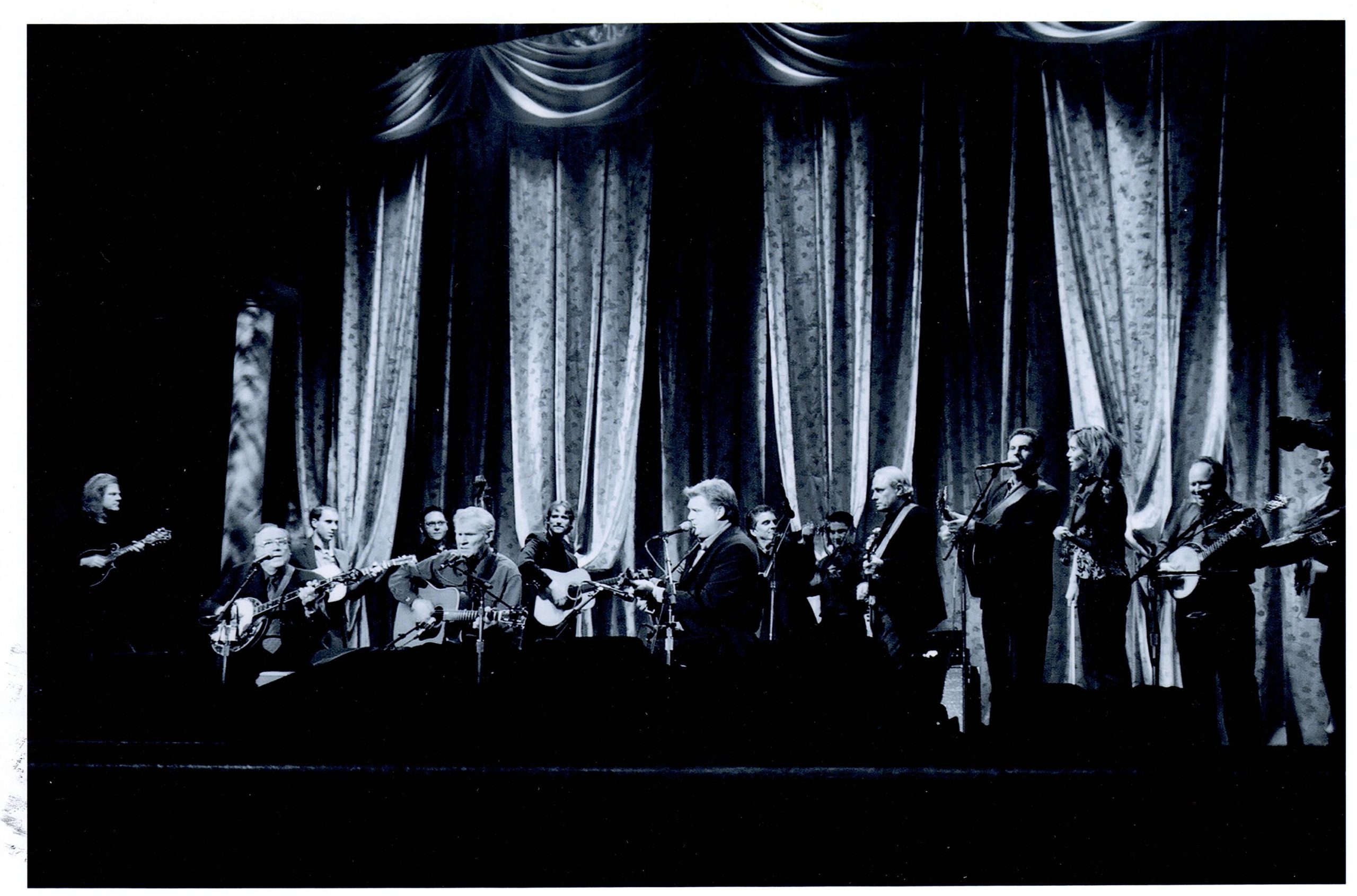
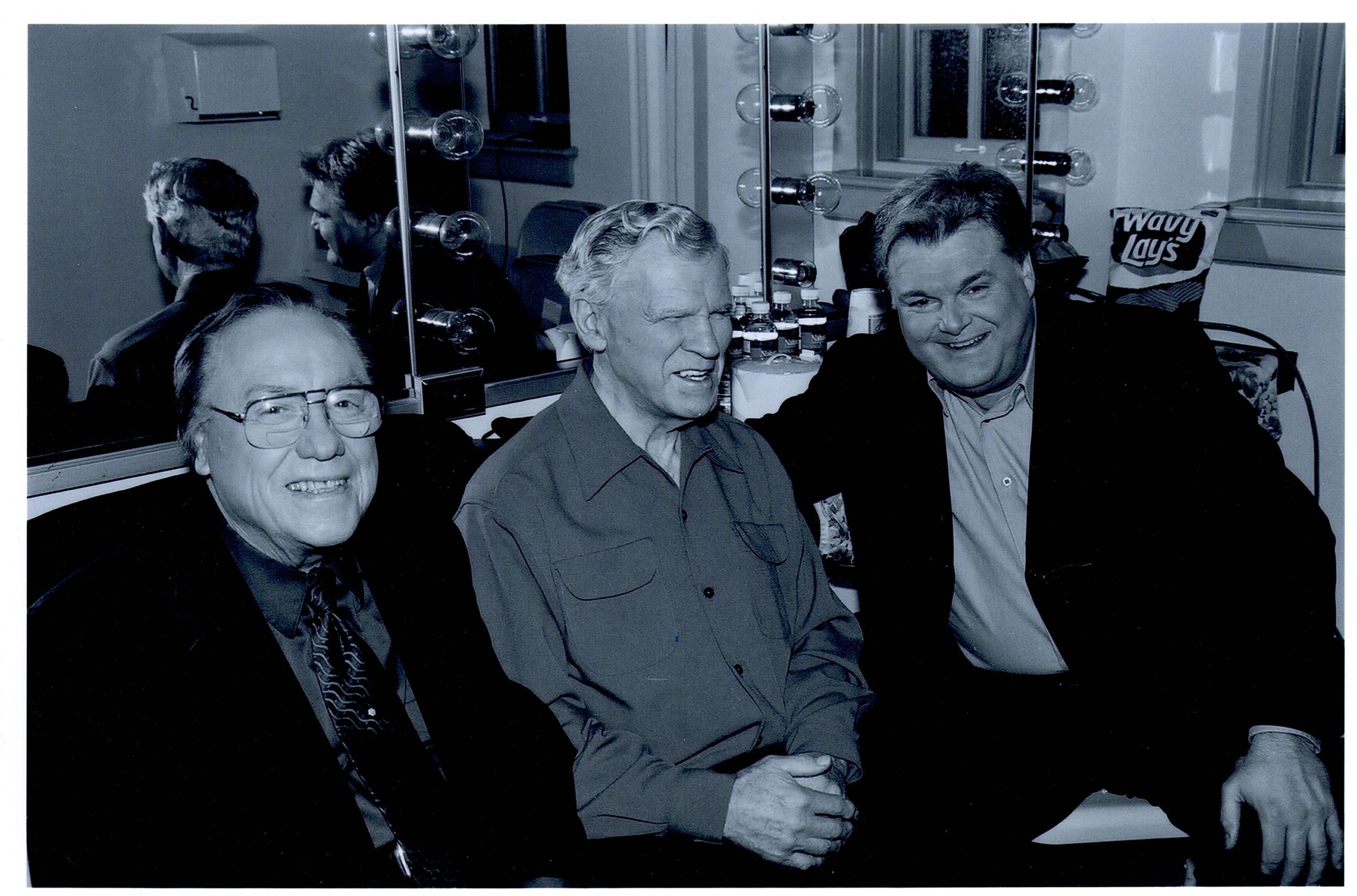
It’s no secret that Earl Scruggs and Doc Watson were great friends, collaborators, and mutual admirers. Both of the bluegrass, old-time, and mountain-music stylists took inspiration and borrowed heavily from the other across their careers, whether they were making music together or separately in any of their many endeavors. The moments they came together, though – from The Three Pickers album and concert film, to David Hoffman’s iconic backyard jam session film of the Scruggs and Watson clans picking together, to many more appearances and recordings – were always magical. Two legendary stylists bouncing musical ideas off of each other as only these two could.
In honor of our Doc in December series for Artist of the Month, we’ve partnered with our friends at the Earl Scruggs Center in Shelby, North Carolina, to bring you an exclusive look inside their collection and archives at photos of Scruggs and Watson together. The Center’s executive director, Mary Beth Martin, pulled a selection of historic photos from the collection as well as a handwritten quote directly from Scruggs’ notes about Watson and his influence:

“There are two people’s sound no man can, in my estimation, duplicate,” Earl states in a notebook. “Of course I’m referring to Mama Maybelle and Doc Watson. I’ve had the pleasure to work [with] and visit these people. I will never cease to admire the courage of these people.”

You can certainly hear the impact and influence of Watson and Maybelle Carter on Scruggs’ playing, especially his approach to acoustic guitar, when he would most often fingerpick the six-string.

“Earl had enormous respect for Doc and admired him deeply,” says Martin of the Earl Scruggs Center via email. “Both grew up in humble North Carolina homes surrounded by rich musical traditions and went on to leave an incredible mark on music. Having Earl’s personal memories and photos of Doc in our collection makes their connection feel especially meaningful.”

Over the course of their careers in roots music, Scruggs and Watson performed, collaborated, and recorded together dozens and dozens of times. We’re very proud to be able to share these photographs from the Earl Scruggs Center Collection to celebrate the cross-pollination of these two Bluegrass Hall of Famers and Doc in December.

The Earl Scruggs Center is located in downtown Shelby, North Carolina, and celebrates the life, legacy, and groundbreaking sound of Earl Scruggs. Their collection includes many treasured Scruggs family objects and remarkable pieces from Earl’s career – including more than 2,000 photographs. In January, they’ll install new interactive exhibits that dig deep into the roots of the region’s music and the history of bluegrass. The entire ESC team is excited to welcome everyone back to the museum when they reopen on February 3, 2026, after renovations and completion of the new exhibits.

Beyond the museum, the Earl Scruggs Center team are also restoring the Earl Scruggs Homeplace in the Flint Hill community of Cleveland County, bringing Earl’s childhood home back to the formative era that shaped him as a musician.

To stay in the loop and to catch upcoming Earl Scruggs Center events like the Earl Experience Banjo Camp, visit their website and connect with them on socials. We hope you enjoy our special photo story with our friends at the Earl Scruggs Center celebrating Earl Scruggs, Doc Watson, and Doc in December.


All photos courtesy of the Earl Scruggs Center Collection. Lead image: Earl Scruggs, Doc Watson, and Ricky Skaggs backstage at the taping for The Three Pickers.

Our McCoury & Douglas Family Pickin’ Party Playlist

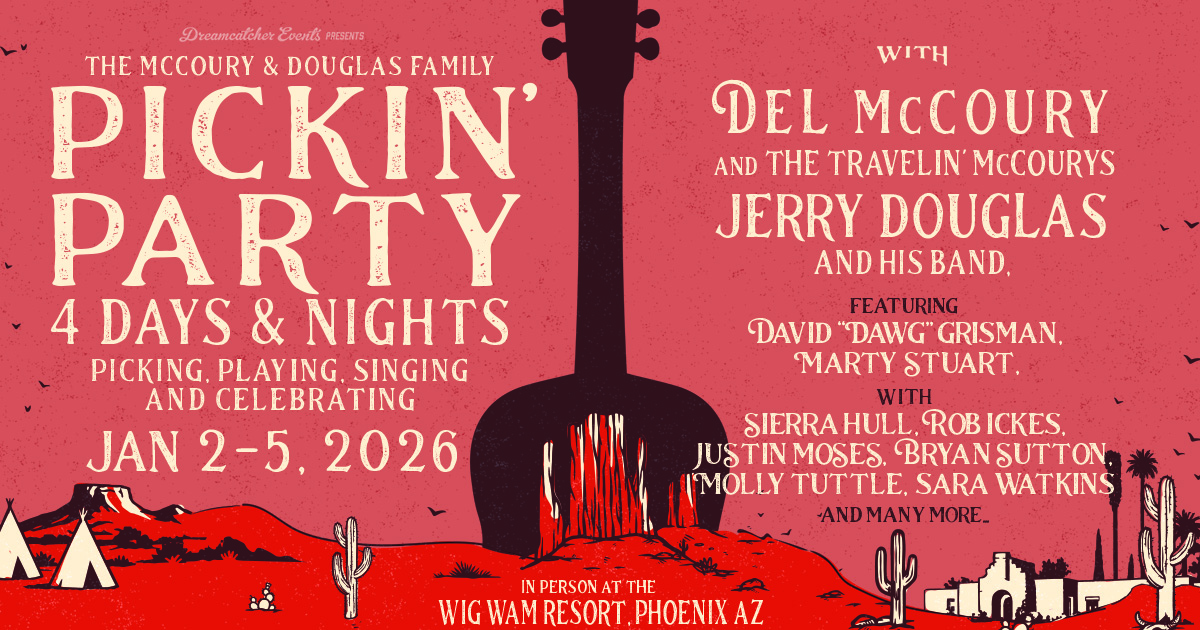
Have you ever dreamed of hanging out, jamming, and learning from your all-time favorite bluegrass artists? Then you don’t want to miss your opportunity to be part of the best pickin’ party ever, The McCoury & Douglas Family Pickin’ Party happening January 2-5, 2026 in Phoenix, Arizona.

We’ve assembled an exclusive playlist (listen below) featuring all of the amazing artists who will be on site for four days of masterclasses, performances, and workshops, including Del, Ronnie, and Rob McCoury, Jerry Douglas, Bryan Sutton, David “Dawg” Grisman, Sara Watkins, Molly Tuttle, Marty Stuart, Sierra Hull, and more.

Limited spots for this one-of-a-kind experience remain. And if you’re already registered, start getting excited by jumping into our BGS playlist. Registration and more information can be found at DelMcCouryPickinParty.com.


This content brought to you in partnership with the McCoury & Douglas Family Pickin’ Party and Dreamcatcher Events.

Classic Country
Is Here to Stay

With a new generation boasting unapologetic traditional influence, there’s more classic-sounding country in the mainstream today than in many years before. With his second album, When I Write the Song, Jake Worthington captures one specific aspect of honky-tonk history better than the rest – its sense of humor.

That’s definitely not to say Worthington’s new album is a joke. Far from it. Over 14 songs, the Texas native sinks down into the depths of sorrow and lets his heart believe in miracles all the same. His love of the classic country form is just as authentic as his barrel-chested vocal twang, and with producers Jon Randall and Chuck Ainley joining his team, it gets highlighted with more sincerity than ever. But right from the opening track, Worthington walks in the footsteps of artists like Johnny Paycheck or Jerry Reed; his down-home demeanor is as country as it gets.

Meanwhile, the solo-written title track is almost alarmingly personal and Worthington welcomes Miranda Lambert, Marty Stuart, and Mae Estes as special guests on other tracks. When I Write the Song arrived on September 12 and by touring through the end of the year with both Jon Pardi and Zach Top, Worthington adds even more evidence of an ongoing trad renaissance.

Good Country spoke with Worthington about writing the way he lives and chasing honky-tonk inspiration farther than ever. Plus, he reveals a secret appreciation fans might not suspect.

For fans who don’t necessarily know, you have always been a proud purveyor of the classic country arts. I think that’s pretty fair to say. Are fans going to get more of that on this record or what?

Jake Worthington: Damn right. Yes, sir. I guess that whole narrative don’t ever really change for me. I don’t ever want to make any other kind of music. When somebody listens to a record that I am a part of or put together, I hope they can have a definitive direction to point to and say “That’s what country music sounds like.”

I think that comes across for sure. Now, it’s good timing because there’s kind of a little traditional renaissance going on in the mainstream. Do you agree with that?

Damn right. Absolutely. I’ve never been more inspired in terms of our genre than I am right now. I think a lot of people are writing and singing and recording great country music and I think that folks of all ages are wanting to hear it. Another thing, too, is I don’t think it’s a fad of any sort. I find it interesting – you hear terms like “traditional” or the whole “’90s” deal or whatever. To me, it’s just country music getting made in 2025. I think that’s really exciting, to know that’s the case. It wasn’t like that just a couple years ago.

So you don’t think it’s people cosplaying country?

I know it’s genuine for me. I can’t control what other people do, but hey, if they want to play dress up, that don’t bother me none. I think it’s good for country music. I’m glad that they’re wanting to dress like a grownup.

One thing that I’ve always loved about classic country itself, and something that you do well on this record, is to have a touch of humor. That’s not around as much anymore, but you do that well.

Well, I think it’s funny. I have always struggled with the idea that I never wanted to not be taken serious as a singer or songwriter, but I still like to have fun. I still cut up and it ain’t all rain and storms all the time. I think country music allows room for all of that. There’s definitely a couple songs on this record that is lighthearted, and I guess I was all right with that.

There’s definitely some hardcore heartbreak in here, but the reason I ask is because of the opening track, “It Ain’t the Whiskey.” There are not many songs about getting pulled over and accused of a DUI these days – even fewer that are fun.

Well, some of us write from the research department, I guess. Unfortunately, I was just trying to make light of what was a really shitty situation for me at one point in time in my life. I’ve made some dumb decisions in my adolescence, I guess. That was a good way to look back and laugh at it.

How about “Two First Names”? This one reminds me of a little bit of Joe Diffie and the way he was able to merge classic country and a funny line.

Well, shoot man, thanks. That’s just about a country girl. I’ve got a handful of women I know and love in my life that got two first names and I love that we got away with writing it without ever saying an actual name. … There wasn’t one of us that wrote that song who ain’t from the country, and we’ve all got women we love and know that got two first names. We all love a country girl.

Hell yeah. Now, one thing about this record, you definitely got to work with some big names. You got Jon Randall and Chuck Ainley helping out on production, along with Joey Moi. I wonder with those two guys specifically, Jon and Chuck, did they help you move your sound or your style forward?

Definitely I think. There’s four tracks that I recorded top to bottom with Chuck and Jon … there’s a lot of really awesome things that I got to do through working with Joey. But I think for me, I wasn’t ever totally happy with the way things were ending up sonically. That was my biggest change that I was after, was just kind of where it landed sonically.

Really?

Especially with the vocal. I’m a very imperfect singer. I’m not a perfect singer. I want that to be heard. I don’t want to be masked.

Joey’s amazing, but he definitely comes from a different world sonically, right?

Yeah, and I wanted to work with guys that were making country records that inspired me. But again, I tracked nine of them songs with Joey and man, I love all of it. Chuck wound up mixing the record and Jon come in when we went to track the last four songs and it’s been a dream come true. I get to work with my heroes, man.

You also got to work with Miranda Lambert [plus Marty Stuart and Mae Estes]. Tell me about doing “Hello Shitty Day” with Miranda, it’s a cool broken-hearted waltz. Did you guys get to know each other?

Sure. I mean, I know it sounds a little simple, but she had texted me the song and I asked if I could cut it. She said yes and I said, “Would you sing on it?” And she said, “Hell yes,” so by God, that’s what we did. I don’t know, man. I wasn’t trying to get on the radio with that song. I just thought it was brilliant. I love that song.

One thing I’ve got to ask you, since this is BGS. Do you have any ties to bluegrass, or was that ever a part of what you listened to?

Where I’m from, oddly enough down there in Southeast Texas, we had to go find that stuff. There’s nooks and crannies in East Texas where these cats kinda start out in bluegrass and I think they find it through gospel music and stuff like that. But I wasn’t in the church or nothing – I was baptized in beer and I’m here to testify, you hear me?

Ha!

The great words of Kevin Fowler. But a lot of the stuff I loved the most was coming out of Ohio. When I discovered Dave Evans, that shit knocked me out.

Really?

Oh gosh. There’s something called “99 Years [Is Almost for Life].” One day I’d like to record it, but I understand that bluegrass is just as sacred as country music, so if you’re going to do it, you got to do it right and I think it starts with putting your heart and soul in it.

But I always loved Ralph Stanley. I’ve always loved Flatt & Scruggs and Bill Monroe. I mean, that might sound a little standard, but I love that stuff. Harley Allen’s one of my favorite songwriters and his daddy, Red Allen, I love the records he done. Ronnie Bowman and Lonesome River Band. I like that stuff.

Short answer – yes, sir. Hell yes. I love bluegrass.

That’s amazing. It sounds like you’re deep into it. I mean, maybe it doesn’t show up too much in what you’re doing right now, but maybe one day you ought to do a bluegrass record.

Oh, man. We’ll see, but right now all I want to do is what sounds like country music to me. I think it’s a matter of if you got electrics on it or not. It’s just soul music. It’s gotta come from the heart.

That’s a good segue because I wanted to ask you about the title track, “When I Write the Song,” and writing that solo. You were able to share your pain quite a bit. Where did that come from?

I don’t always wind up writing by myself. I think a lot of us writers sit down and try, and if we could, we would write a lot by ourselves. But that one just kind of fell out. I’d been six, seven years in [to my career] and I don’t know, I think I was a little hurt and kind of angry. I got a whole lot of, “You can’t sing that kind of music. That ain’t never going to work.” Sad songs and waltzes and whatnot. I don’t know why it’s so easy to write about the hard things or the bad things. It seems to be easier than it is to write about the good things sometimes. That’s just kind of where I was at with it.

When I wrote it, I was headed home from some gig and at the time I had been staying at my parents’. They had just got one of them push button door locks to the house with a code on it and I did not remember the damn code. There wasn’t no way I was getting in the house, so I had a guitar and a six pack of beer, a back porch, and plenty of time.

You’re kidding.

That’s what come out of that. I sat on that song for a long time. I was kind of scared of it. I wasn’t sure if it was for anybody. I wasn’t sure if it was any good. But I’m a songwriter and I think that’s just my way of showing it.

That’s real country music to me, so thank you for sharing the story. It’s funny that you got locked out – almost feels meant to be.

I’ve been locked out of a lot of things, hoss.

You’re going to be out on the road with Zach Top and Jon Pardi, right? In their own way, they both definitely inject some classic country into the mainstream, too. Are those tours a good fit for you?

Damn right, man. You tell me anywhere else, you’re going to see three steel guitars and three fiddle players in one stage. … I’m a fan of both of them guys and they know it, and I revere and respect the hell out of them. I’m grateful to get to go work with ‘em. That’s going to be a lot of band, buddy.

All right, Jake, thanks for the time, man. Let me leave you with the big picture. Just tell me what you hope people get from this record.

Well, take away a little piece of my heart while I’m giving it to you. Country music’s here to stay and I don’t think it ever left. I’m just grateful to be a little spoke in the wheels and I hope that when they hear this record, it’s something that they can go to and say, “This is what country music sounds like.”


Photo Credit: Jim Wright

Ashley Monroe’s Patchwork Quilt:
Tennessee Lightning

“Let me look at your radar,” Ashley Monroe says, pulling out her phone. “I have all kinds of radar apps on here: 24-hour flight radar, storm trackers…” She types in my location. “Yep, it just popped up red,” she says, forebodingly.

We’re speaking over Zoom about her album Tennessee Lightning and, fittingly, a massive storm is rumbling through New York, with loud thunderclaps sending a jolt through our conversation. Monroe is calling from an apartment in West Nashville, which she rents as a creative space in a building shared by fellow musicians and friends Meg McRee, Ben Chapman, and Lukas Nelson. The weather in Nashville is calm for now, but there’s always the chance another tempest could be brewing.

“For a while there I was like, someone’s gotta get me a bunker. ASAP,” she says.

Tennessee Lightning is her sixth studio album (not including the four she’s released as part of supergroup Pistol Annies alongside Miranda Lambert and Angaleena Presley) and her first since 2021’s Rosegold. The latter found her sloughing off the classic country sounds that defined her early work and embracing trap beats and synthy pop moments. Shortly after the release of Rosegold, Monroe underwent treatment for a rare form of blood cancer, a life-altering experience that she’s still processing. Now in remission, she feels newly awash in creative inspiration, breaking the creative silence that immediately followed her diagnosis.

The resulting album, her second as co-producer with GRAMMY-winning producer and engineer Gena Johnson, is a sprawling, 17-song “patchwork quilt” of songs that range from gritty rockers to moony love songs to bracingly stripped-down piano ballads. It’s less story-song-heavy than her beloved early work, but Monroe says that the album – a mix of new and older originals, along with a few carefully chosen covers – is as personal and revealing as anything she’s ever recorded.

“With every song on this record, I feel and see my own personal story in it,” she says. “Maybe I just didn’t need to put the third parties in this time.”

The release of Tennessee Lightning dovetails with the tenth anniversary of The Blade, Monroe’s GRAMMY-nominated 2015 album, which she recently celebrated with an intimate show at The Basement East and it remains fresh on her mind. She spoke to Good Country about her rootsy new sound, whether it’s safe to call this her Americana turn, and how music helps her weather life’s most painful storms.

I’m curious about the title of the album. It’s interesting, because in many ways, this feels like a homecoming, but then it’s also quite different from your earlier music. How did Tennessee Lightning start coming together?

Ashley Monroe: There’s actually a song called “Tennessee Lightning” that I wrote with Shelby Lynne and Jedd Hughes. It’s awesome, but by the end we had over 25 songs and it wasn’t fitting the album anymore. And at that point, it’s almost like Tennessee Lightning had become me, in a way. It’s just a zap of like, “This is everything. Boom.” Gena Johnson is the co-producer and engineer on this record and a dear friend. The two of us loaded up a ton of gear a couple years ago and rented a cabin in East Tennessee. We went to my dad’s grave, we went to see my Granny and Poppy and drove the back roads in Tazewell, Tennessee. We just immersed ourselves in going back to the roots of it all.

We set up the studio there and she recorded me on the front porch, she recorded me in the yard. We started recording “I’m Gonna Run,” which is a song I wrote in 2004, on the same trip as I wrote “Satisfied” and “Used.” We started with that song, and I was really trying not to overthink anything. I was just letting whatever songs needed to come through, come through. I always say this album is like a patchwork quilt of my life, and that applies to my friends that I’ve asked to play on this record: T Bone Burnett, Butch Walker, Brendan Benson, Marty Stuart, Brittney Spencer, Karen Fairchild. I made a joke the other day, “I’ve called in so many favors, I’m going to have to make new friends to call it more favors.”

I think people may be tempted to call this your Americana record. How do you feel about that?

Great. I’ll take that. Americana has been good to me. A lot of Americana radio stations played “Hands on You” when no one else would, and a lot of other songs. So that’s good company.

Also, I’m from East Tennessee, so no one can really hear my voice and say that I’m not country. It’s just there in the accent and the tenor of it. It’s Appalachia. That’s why I think it’s cool to not do something obvious sometimes, to not cut yourself short or shave the edges off. “I’m Gonna Run” reminds me of when Emmylou did Wrecking Ball, just those weird things she did that I love so much. I’ll take Americana all day.

The sound of this record is quite varied as well.

I guess Tennessee Lightning has different types, but it’s all real musicians, it’s all organic. “Amen Love” I was writing with Ashley Ray and Summer Overstreet, whose dad wrote “Forever and Ever Amen.” We wrote the song for Miley Cyrus, and Ashley’s husband recorded the demo. The song ended up not getting cut, but it just kept haunting me. I always like to do a sexy one, like “Hands on You” and “Wild Love,” so I thought it made sense for the young love part of the record.

Then there’s just me and Marty Stuart and Shelby Lynne on “The Touch,” and that’s as country as anything I’ve done. Gena was really good at getting the raw edges and the breaths and everything. “There You Are” was recorded in one take. It’s just me and the piano. I never did it again in the studio, ever. And then there are other songs that are more polished or have different instrumentation, but Tennessee Lightning to me is like a flash of everything. It’s not just one part; it’s all parts.

I’m wondering if maybe not chasing the country radio thing anymore freed you to explore all these different sounds.

I’m sure it did, even though I will say every label I’ve been on – Columbia, then RCA, then Warner LA and Warner Nashville – I’ve been lucky to have label people who were great at the creative part. My first single was “Satisfied,” which didn’t work, but I love that they chose that. Cris Lacy at Warner was also great at helping me pick songs. I didn’t think anyone would like “Hands on You,” but she heard the work tape and convinced me to record it.

When I got dropped by Warner, I thought to myself, “Now I can do anything.” And it’s been fun to explore. Gena is good about feeling when the spirit is moving through. She knows I like to sing in the dark or with candles. We shut the blinds, and I get to sit in that zone, and she captures it. It’s emotional, it’s raw, and I like recording like that without having to think, “What’s the label gonna say?”

You’ve been called a critical darling pretty much throughout your career. With Rosegold, it seemed like the first time the response was more tentative – warmly received, but not quite as glowing from everyone, particularly the “real country” crowd. Did the response to that record influence your approach to this one?

I really didn’t think about that at all, so that’s interesting. Honestly, though, what I will do next is a honky-tonk record. I know my band, and I know exactly what I’m going to do, which is honky-tonk it to the depths. I haven’t done a live thing like that, and I like switching it up. In my mind, what makes a memorable artist, a true artist, is when everything doesn’t sound exactly the same. Tennessee Lightning just felt like, “What are you feeling? What is it?” It’s cool when art reflects what you’re going through at the time, and for me going back to my roots will always have that earthiness.

I’m thankful for all the great reviews and the “critical darling” thing means a lot, especially as someone who doesn’t win awards or get nominated or included, really, in any circle. I’m okay with that, in a way, because I have a certain confidence — I know I have a gift. I know some people will feel it and some people won’t, but no one can deny I’m doing what I was put on this earth to do. I don’t put too much value on what people think of me, especially now after what I’ve been through. I won’t lose sleep over what a critic thinks.

Another thing that came up with Rosegold was this idea of protecting your joy, of not wanting to feel sadness anymore. Tennessee Lightning has songs that are more cutting – “There You Are” almost feels like it could be on The Blade. It made me wonder if your relationship to your art and this idea of protecting your joy changed between this album and the last one.

You know, when I got pregnant was really the first time I thought, “I’ve got to be careful about what enters here.” That doesn’t mean being delusional or not knowing that things can happen, will happen. Of course, something can always come along and bring you to your knees. But it’s about knowing when everything’s okay and shining a light on it and letting it radiate for a little bit. Rosegold was about hyperfocusing on the good and just letting it beam out for a split second.

I don’t mind if music is sad. I kind of prefer it. With this one, there are some sweet love songs, but also not all these songs are new. “My Favorite Movie” was one Vince [Gill] and I wrote in 2015 around The Blade time. He had it on one of his records, and just never did my version of it. “Hot Rod Pipedream” was written in 2015 or 2016, and “Risen Road” was from around the same time.

Let’s talk about The Blade, which just celebrated its tenth anniversary. You played the album through at a show in Nashville recently. What was it like revisiting those songs?

It was so special because I hadn’t really sung those songs. I’m funny about that – I don’t go back and listen to my old records. It’s not like you forget, but you do move on. Singing those songs, even at rehearsal, I got so emotional.

Did any of the songs in particular hit you differently this time?

I was thinking “I Buried Your Love Alive.” I literally felt thunder. I don’t know how to explain it, but there’s a ghost in that one. “Bombshell,” too. At the show I was thinking about how relevant it still is. I still understand the emotion in that song.

In the commentary you recorded at the time, you mentioned that “Bombshell” could be about a few different scenarios. It struck me that you said it could be about a breakup, but it could be about telling someone you have cancer.

I remember that. I forgot until you started to say that, but it’s so true. It’s that feeling of like, “This is big news, and it’s going to blow up life as I know it.” It was definitely a bombshell, and then I had to tell people I had cancer.

I was diagnosed in 2021, and when I came into Tennessee Lightning, I knew that I had to step back and reflect. I had to look back at the whole picture. I had someone ask me in an interview recently why I didn’t sing about cancer on the album. It’s like, I don’t want to think about cancer. Music to me is my holy, sacred place. Even though I sing about painful things and I can keep those emotions with me, I didn’t want to think about it enough to write a song about it. Maybe it’s that cancer has already robbed so much from me. I mean, it killed my dad. It’s already affected me, my family. Maybe I haven’t fully processed it yet. In a way I’m pretending it didn’t happen.

The only place on the record where I did feel the cancer feeling or acknowledgement of my emotions around it was “Jesus, Hold My Hand.” I used to sing that song when I was really young and feeling scared. I really felt it because when I was really sick, with chemo and everything, I felt as close as I ever have to that feeling of handing it over or surrender. It was like I was leaning on the spirit more than ever before.

The hymn is such a stunning moment, in a way that feels different from what you’ve done before. There are a lot of religious references in your songs, but there’s also this thread of religious guilt, particularly on the Pistol Annies songs “Beige” and “Leavers Lullaby.” There’s a lyric in the latter, “It’s as deep as the water that stains me” that comes to mind. Would you say your relationship to your faith has changed?

I can’t speak for the other Annies, but for me the “bite” in those songs is directed toward the people rather than about the pureness of it. The judgment and sending people to hell thing. I grew up with the Bible Belt and I think Jesus has a sense of humor and a lot of church people don’t. With “Risen Road,” it’s like, “You can read the Bible, quote it verse for verse/ You can steal a pain pill out of Mama’s purse.” And when I say “you,” I mean me, because I would do that. I think there’s something to being humble enough to say, “I can believe in God and still be exactly who I am.”

I wanted to ask about that line on “Risen Road,” which of course caught my attention. Between this song, “Best Years of My Life” and of course “Takin’ Pills,” pain pills have become something of a motif in your work. Why is that?

Well, because I was on pain pills for a long, long, long time. My dad died when I was 13, and at the time I was very straitlaced. All my family lived on the same road, we went to church, nobody cussed, nobody drank, nobody smoked. After my dad died, my mom kind of disappeared with a guy. She had a nervous breakdown, really, looking back. He died in February 2000, and she was gone by June.

Looking back, I was flailing. I was devastated, and my mom wasn’t around, and then my brother started having wild, wild parties and I was like, “Hell, I might as well. Give me a Zigma.” Everyone around me had pills and I’d say, “Give me a pill.” I was probably 14 or 15 and my cousin and I would keep a mirror under the front seat and snort oxycontin. Not oxycodone. Oxycontin. It’s a miracle I’m still alive, because I didn’t even know what that was. I just knew that it numbed me out. And, in all fairness, I needed numbing out. I’m not saying it’s the right thing to do, but sometimes, if you can just stay alive – and thank God I did – these things will get you through.

Honestly, though, I don’t think I was ever hooked on them. I’ve never had trouble giving up something when I know I need to. I was on them in my 20s a lot and I was drinking a lot at the time. And then, you know, I OD’d at Saddle Ranch in LA. Like, they thought I was dead. I was like, “Are you crazy? You survive all of that and then let a pill take you out?” So, after that, I quit taking them. But, you know, I took them after my C-section. I took all of them. I just think different people are wired differently and I do think it’s kind of funny now.

“She’s on the highest dose of Prozac a woman can take.” I was.

“She likes to pop her pain pills with every little ache.” I did.

It’s interesting, what you said about wanting to feel numb, because the songs that you wrote during that time had so much pain in them. They really cut.

Well, music’s always been where I let my pain seep out. When my dad died, I remember holding my guitar and sitting at the edge of my waterbed, and it was like the guitar was saving my life. It was keeping me together. And I still use music like that – I pour out pain that I don’t even know is in there sometimes. The pain pills don’t get you all the way numb. They get you numb for about 25 minutes, and I needed those 25 minutes back then.


Photo Credit: Erika Rock

Bluegrass Gospel,
Arena-Style

This feature ought to start with a laundry list of our subject’s accomplishments, but rootsy country hitmaker Dierks Bentley’s résumé and inventory of accolades, awards, and trophies would be far too long to include. After 30+ years in Nashville, Bentley has more than made it and his particular brand of country – down-to-earth approachability, bro-ey (while remarkably non-toxic) good-time vibes, honeyed crackling vocals, an unwavering sense of humor, and fierce love for bluegrass virtuosity – has now gained such a strong gravitational pull, it continues to shift Music Row. (For the better, of course.)

In June, Bentley released his eleventh studio album, Broken Branches, and launched an eponymous continent-spanning tour with everybody’s favorite, fellow trad country lover Zach Top, and swampgrass North Georgia duo the Band Loula in tow. Broken Branches features guests like Miranda Lambert, Riley Green, John Anderson, and more and – like all of the albums in his expansive Dierkscography – quite a few string band- and bluegrass-inspired moments, as well.

The Broken Branches Tour, which has been clipped and shared thousands and thousands of times on social media over the past several weeks, includes many hits, striking sets and theatrical tech, cameos from the infamous Hot Country Knights, and, yes, plenty of bluegrass. On the set list, Bentley and Top duet on an incredible “Freeborn Man” – we’re leaving out spoilers here so you can catch the tour’s scant remaining dates yourself and still be delighted. Bentley also performs the title track from his hit bluegrass album, 2010’s Up On The Ridge, and Logan Simmons and Malachi Mills of The Band Loula join him elsewhere in the set for a delicious bit of church.

@thebandloula the broken branches tour is in fulll effectttt 🥹🤧 y’all come see us with @dierksbentley and @Zach Top ♬ original sound – The Band Loula

Singing a Bill Monroe bluegrass gospel number in tight, intricate three-part harmony may seem like an odd choice for a big mainstream country arena show, but longtime fans and listeners of Bentley will know this is no aberration. This is the norm. Whatever the sonics of his music, from the most poppy and radio-ready country to the more Americana-coded to straight-ahead bluegrass, classic rock, and New Orleans grooves (and back again), Bentley brings bluegrass with him everywhere he goes. He brings its pickers, legends, and unsung heroes, too, uplifting them for all to enjoy.

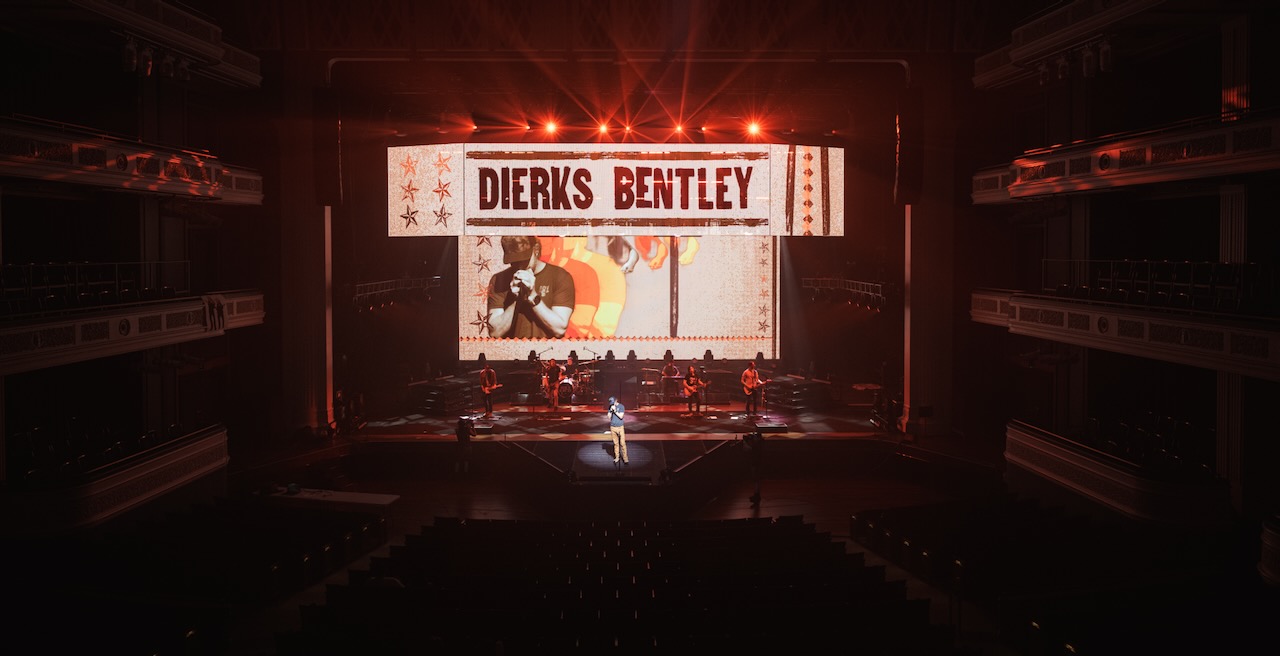
When Mills, Simmons, and Bentley step to the center stage of an enormous auditorium or amphitheater to sing “Get Down On Your Knees and Pray,” depicted behind them on towering LED screens is a little log cabin dive bar with a neon cross steeple and a flickering “open” sign. As they lead the audience in the stark, convicting, hair-raising number – with grit and heart and endless spirit – you realize, yes, this is church. This is gospel. This is country and bluegrass, front porch music and arena music. This is Saturday night and this is Sunday morning.

It’s hard to imagine all of these intricate roots music details not only being palpable in a show of this scale, but they’re also measured, vulnerable, and intimate – traits not known as hallmarks of either country or bluegrass. It’s here that we find exactly the conglomeration of reasons why Bentley retains such widespread appeal and adoration from fans of all entry points. While neither he nor any other artist is universally loved, Dierks Bentley accomplishes being the modern country “everyman” not by diluting himself and his personality beyond recognition, but by purposefully, creatively, hilariously – and spiritually! – putting all of himself on the line in his music.

Before the Broken Branches tour launched earlier this summer, Good Country sat down backstage with Dierks Bentley and the Band Loula during a break from tour rehearsals, after the trio had just run through “Get Down On Your Knees and Pray.” We spoke about what bluegrass means in a country context, the appeal of gospel to folks of any (or no) faith, tent revivals and camp meetings, the joys and vulnerabilities of singing harmony, and much more.

Obviously, Dierks, across your entire career you’ve had a relationship with bluegrass. And not just Up On The Ridge, which we just heard you rehearse a bit of for the Broken Branches Tour. You’ve got records and posters on the wall at the Station Inn here in Nashville, you namecheck Keith Whitley on the new album. You’ve worked with the McCourys over and over, Charlie Worsham, an excellent bluegrass picker, is in your band. There are so many more bluegrass touchpoints. Your bluegrassy CMA Awards show appearance last year was very popular with our audience.

And for y’all, the Band Loula, you call yourself “swampgrass.” The harmonies clearly have the grit and the gospel of bluegrass and the timbre of how your voices blend together reminds me of bluegrass.

It might be an obvious question to ask, but I figured we could go around the circle here and get each of your takes on what does the genre mean to you? What’s your relationship with bluegrass? What does bluegrass mean to you in the constellation of country music that you make now?

Dierks Bentley: When I think about bluegrass, obviously it’s the music and all that, but really it’s just people with acoustic instruments gathering to play and sing together. I never really did a lot of stints on my own, solo. Probably I’m not good enough, but bar gigs where I was just doing cover songs never really interested me. I always liked being in a band. I love the way this instrument talks to that instrument, this voice talks to that voice, and this voice gets added and– “Whoa!”

Like the Osborne Brothers, they’re switching harmonies. Sonny is singing the high tenor, then the next thing you know, he is on like a low baritone part. The voices, the way they move around. That’s the main thing, that’s what drew me in when I walked into the Station. And there were guys my age. I always thought bluegrass was kinda like Hee Haw stuff. I walked in and I was like, “Oh my God, there’s guys my age.”

It was about just playing songs together. And they were doing a lot of Merle Haggard songs, George Jones songs mixed in. Johnny Cash songs mixed in with Stanley Brothers, the Osborne Brothers, and all that too. So it was just, “Wow.”

It’s more about the community of people congregating through and with their instruments. And using those to have fun – and drinks as well. [Laughs] Lotsa drinks, a lot of moonshine back then. The real stuff! No label on it.

Not 30 proof. [Laughs]

DB: That’s what it means to me and that’s what I hear in [The Band Loula’s] music, a lot of, if you want to call it, “front porch” picking music. Picking their roots – you know, deep, Southern gospel-y kind of roots, the mixing of that, and those voices together.

That’s what bluegrass has always been to me. It’s about the community as much as it is about the instrumentation and the bands. It’s the great community of people.

(L to R): Logan Simmons and Malachi Mills (of the Band Loula) confer with Dierks Bentley during rehearsals for the Broken Branches Tour. Photo by Zach Belcher.

Logan Simmons: I’ll say something that comes top of mind for me. I spent my whole life going to tent revivals. It’s not just, “I go and it’s summer camp, ’cause somebody made me.” It’s like the pinnacle of who I am.

I really believe that it’s the pillar of my family. We go for about 10 to 15 days every year. It’s beside my nanny’s house, and all it is, red-back hymns and bluegrass. The service happens every night and you go for about an hour and a half before service starts, before preaching starts, to hear bluegrass, gospel bands.

That’s how I learned harmonies, hearing all my godmothers and aunts sing the wrong ones around me. [Laughs] And you’ll hear somebody over there, Linda’s like [sings operatically and off-tune] and she’s not on it at all. But I was at least learning something and I feel like with my roots in general, it already infused that bluegrass sound into my life.

Then when Malachi and I became friends and started making music together. He has a lot of Motown roots. I think, blended together, the blues and bluegrass just made something beautiful. And, on top of that, the family harmony we have together. We’ve been friends forever, half our lives.

Malachi Mills: It all comes back to blues, yeah. And just like you said, that cross-pollination of the different genres. North Georgia is like the southern point of Appalachia. Like she said, it really influences the music we make by our harmonies. That’s the biggest thing we take from it. I love bluegrass music, but I’m not like a bluegrass buff. I would lose at bluegrass trivia. [Laughs] But it’s just in our bones and in the harmonies that she was talking about. Growing up in church and everything influences the way that we sing together and the notes that we pick whenever we’re singing harmonies. One of the biggest things that I love about bluegrass is the rhythm and pocket. And the intonation of the instruments. Bluegrass players choose to be intentional about [all of] it, the pocket, the timing, the tuning. It’s all so dead on. The details matter when you’re making records.

Dierks Bentley and band give Good Country and members of the media an exclusive sneak peek at their Broken Branches Tour set at rehearsals in May 2025 in Nashville. Photo by Zach Belcher.

I think that’s one of the reasons why it’s striking that y’all have this bluegrass song as part of this big, arena-sized stage show. Because for me, translating those details in such a big space and in such a broad format could be really hard.

Then I hear and see y’all singing in three parts with a neon cross behind you and suddenly yes, this is church. This is what it is. Any close-singing harmony vocals are great, but when it really sounds like bluegrass to me is when you can hear the reeds of your voices match up when you’re harmonizing. That was a really beautiful moment.

Could you talk a little bit about capturing those details for a big audience in big rooms like this – or even outside, in amphitheaters. How do you take a Bill Monroe gospel song and translate it to that space?

DB: Well, there’s “Bluegrass” Ben Helson out there walking the hallways. Ben and a couple other guys in the band have played with Ricky Skaggs. Ben played with Ricky and Tim [Sergent] still plays with Ricky. I always say, if you can graduate from the Ricky Skaggs school of bluegrass and country music, you’re probably a pretty good musician. He also played with Rhonda Vincent.

I’m a big Del McCoury fan. They did [“Get Down on Your Knees and Pray”] and Del has such a cool version of it. We were just kinda thinking of songs to do with these guys that would be great using their voices. Like [they] said, they’re the blues and bluegrass. I’m still trying to figure out their sound. It’s such a unique mixture; it’s so Americana in the way that in this country we have this melting pot of stuff. We thought it would be cool to do a little three-part thing, so that one came up.

Marty Stuart also did a really cool version of that song. But Ben [Helson], our guitar player really came up with that [arrangement], leaning into the swampy stuff they do. Gave it that feel, a little Southern – I don’t know what the vibe is there, but that telecaster is playing and it just has a cool kind of dirty, bluesy vibe to it. Then working up the harmonies, there’s just something about hearing a cappella bands.

I remember seeing Billy Strings at a bluegrass festival years ago and the band all stopped – no one knew who he was back then. Bryan Sutton had told me who he was, so I was where he was. He played like a Thursday set in the middle of the day. They had just done three songs and then they stopped and did a four-part harmony thing. There’s just something about it that’s so powerful. It goes straight to your soul.

The oldest version of entertainment there was was probably harmonizing. Finding people, seeing how your voices sound together, it’s a weird, cool thing. Singers talk about it all the time, in any genre of music about how seeing how we sound together is an intimate thing.

It’s vulnerable and it’s immediately establishing that community that you’re talking about. “We may not be a band, but now we’re a thing.”

DB: I feel like I blend well with anybody, because I’m like the condition. I sing it pretty straight here and allow the people around me to really do their stuff. I’m just gonna hold the line. There’s like nothing special about my voice, but it’s good to blend with ’cause other people have these amazing voices. They can do a lot of movement and a lot of great vibrato. I’m like the dumbest Del McCoury School of Bluegrass [student], just find that note and put everything into it. [Laughs]

Not to mention, introducing people to bluegrass as well – I love that. You have a chance to be a bridge to your heroes and that is always fun. People have been that to me, Marty Stuart probably the biggest. You get into Marty Stuart’s music and you find out who he likes, and then, whoa! He brings you back there. So [I hope] this turns somebody onto Bill Monroe. That’s pretty cool.

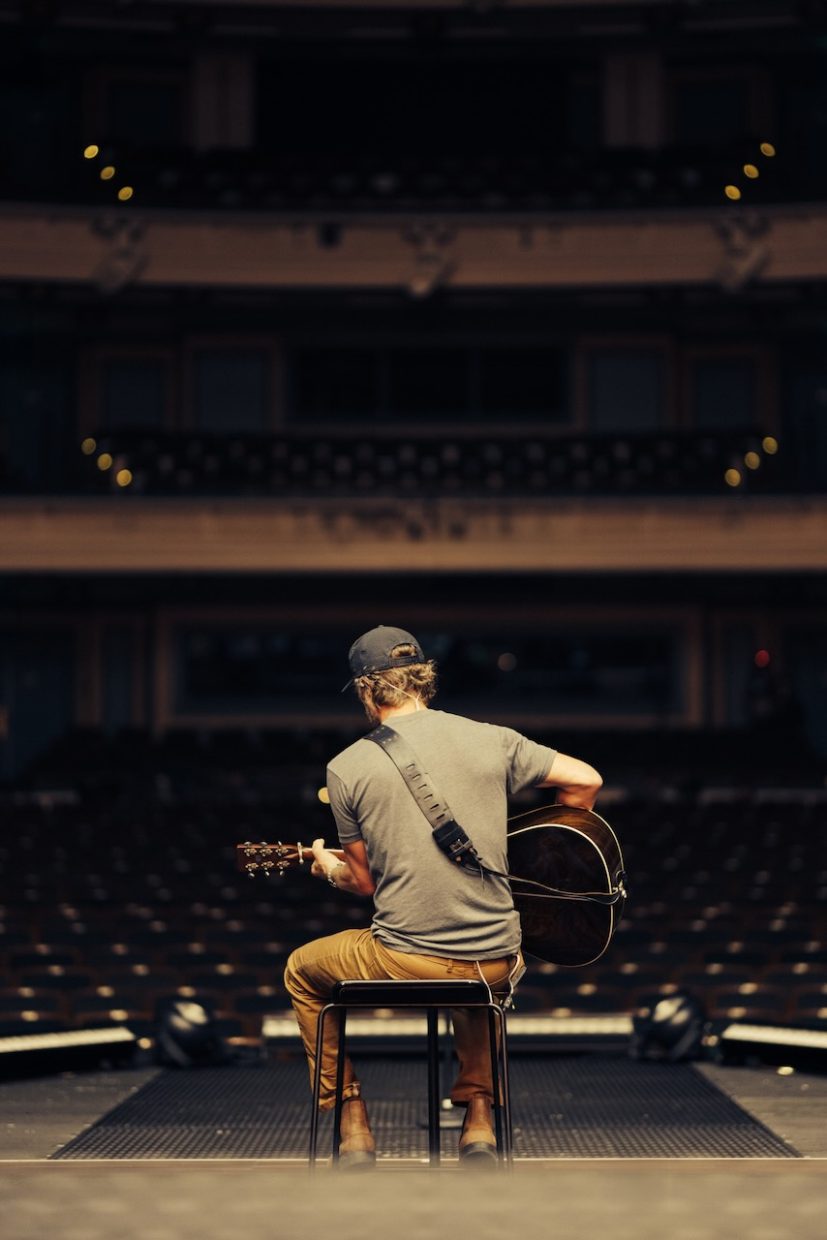
Dierks Bentley has a quiet moment on stage during rehearsals for the Broken Branches Tour. Photo by Zach Belcher.

Country – a lot like blues, R&B, and the early days of rock and roll – it has this often tempestuous and inspiring relationship between the fun of Saturday night and the conviction of Sunday morning. So seeing y’all sing that song in front of the depiction of a church as a dive bar, complete with a neon cross and a flickering “open” sign – to me that’s “a little bit holy water, a little bit Burning Man” epitomized. You guys are embodying that relationship between the sacred and the secular here. And that duality is all over your new album, too, Dierks.

MM: I’ll say, I think that one of the biggest things that contributes to that is the goosebump, hair-standing-up-on-your-arm feeling. It’s knowing that you have a part in something and whenever you sing and play bluegrass music together, you have to give way to one another on stage. So it’s the whole stage saying we’re doing this very intentionally in unity, in harmony.

And everybody in the crowd, whether they know that or not, they feel it. That’s what I think people feel. Even if you’re not a believer and maybe the message that’s being said [doesn’t apply], but you still resonate with serving each other. With being present, which is a strong energy. I think that’s what makes me excited about playing this song. I don’t know what’s gonna happen emotionally for me whenever that moment happens, ’cause it’s gonna be so much of that unified energy.

DB: Unified energy is a good way of putting it. It’s unified and it really is energy.

We’re pretty involved with the church. I have an older daughter who’s involved in the church and another middle daughter who doesn’t believe it like I did. But there’s something divine that you just can’t ignore, whether you believe it or not – just look at a sunset, look at a flower, look at a fish, look at so much unnecessary beauty in the world. There’s just some energy that exists and you can’t deny it when you sing a song like this. It just taps [something] on anybody. Recognizing how small you are in this world and the power of whatever version of prayer you do.

LS: I liked how you said it joins secular and holy together and that actually made me think of the tent revival, as well. I think growing up in Appalachia, like Malachi said – I wish I could just teleport you there so you could experience!

DB: That would be cool, a tent revival – I can’t even imagine.

I haven’t been to a camp meeting or revival in so long!

LS: Everybody’s invited to camp meeting. I don’t know if you’d love it. Our tent – I say tent, it’s like a shack on a square, it’s like a big square, four sides. So we’ll say, “Are you on the upper line or the lower line?” We’re on the upper line, which is not a good thing. It’s like you think upper line is like uppity people or something, but it’s not. Our shack is the oldest and [most] untouched of the whole campground. It was built in 1846.

DB: Wow!

LS: So there’s holes in the roof and like, my bunk bed, I get water drops on my head if it rains. There’s hay floors, there’s no air, and there’s a lot of us, so it’s all packed in there. But camp meeting is where I learned my first Bible verses and where I smoked my first joint. [Laughs] So it all marries together how you said, like holy and secular at the same time. I think of that picture of going to the gospel tent revival, going to camp meeting, singing those red-back hymns, doing all those things – but then also learning the grit of growing up.

I just loved when you said joining those things together, because that was such a representation of my upbringing. Yeah, it’s a little bit holy water, a little bit Burning Man. It’s definitely Saturday nights and Sunday mornings – and the tent revival is where I feel like those two worlds are so evident.

Dierks, in all you’ve done across your career there are all these bluegrass moments. The country that you “grow,” it’s mainstream, it’s radio-ready, but it’s like there’s bluegrass in the “soil” you grow it in, so you can always taste bluegrass in everything you do. Like on the new record, “Never You” with Miranda Lambert feels that way and “For As Long As I Can Remember”–

DB: There’s a little “Circles Around Me” by Sam Bush [reference] there at the top of that song.

Oh my gosh, yeah! Exactly what I’m talking about.

You said a little bit earlier turning people onto your heroes always feels great, but for you, from your own perspective being that guy that used to just hang out at the Station Inn and now being the Dierks Bentley and going on tour in sheds and arenas and amphitheaters… Why do you keep bluegrass with you?

Dierks Bentley: It is selfish in a lot of ways. I have such a great band and I just take so much joy watching them do cool stuff that I can’t do. It’s like our guitar player, Ben, he’s just an unbelievable flat picker. Charlie Worsham’s in our band and Charlie won the CMA Musician of the Year. He is just an incredible musician. Dan [Hochhalter] is an incredible fiddle player. Tim is so underutilized. Our steel guitar player – who plays banjo and everything else – he’s one of the best singers to me. Hearing him is like hearing Merle Haggard. He sings like nobody else, but he’s also so underutilized. And Steve’s been playing with me since 1999.

It’s just a great group and we love bluegrass music, featuring that, and having the music part of the show. I like being in a band setting, so just getting to be around it and hear these instruments swirling around me playing, I think it’s just cool.

I got a chance to play ROMP Festival last year and I feel lucky to be friends with guys like Jerry Douglas and Sierra Hull and have them come up on stage and play with us. I still think bluegrass music is the punk rock of country. It’s just the coolest genre of music there is.

It’s gotta be centering or grounding to a certain degree just to have that as something you can go back to, to feed yourself and fill yourself back up even while you’re touring.

DB: Absolutely. In the show we go from playing Tony Rice to John Michael Montgomery. We play bluegrass with the Hot Country Knights with costumes on. It’s just it’s all very selfish! It’s like, “How can I have a lot of fun in the next 90 minutes?”

I wanna do our radio country. I want people singing songs back, because that’s a great feeling. I want to get a little bluegrass in there. Just see if we get away with that. Then, can we try to get canceled on the way out? [Laughs] I dunno. It’s really fun for me. And having these guys [out with us] and getting to harmonize with them, it’s gonna be really fun. Check back in a few months, see how it turned out.


Want more Good Country? Sign up to receive our monthly email newsletter – and much more music! – direct to your inbox.

All photos by Zach Belcher.

Opry 100: A Live Celebration

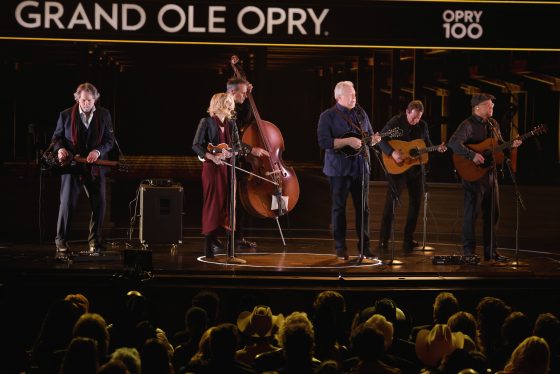
If you missed the Grand Ole Opry’s no-holds-barred 100th birthday party and live television broadcast extravaganza on NBC, we’ve got your recap right here on BGS.

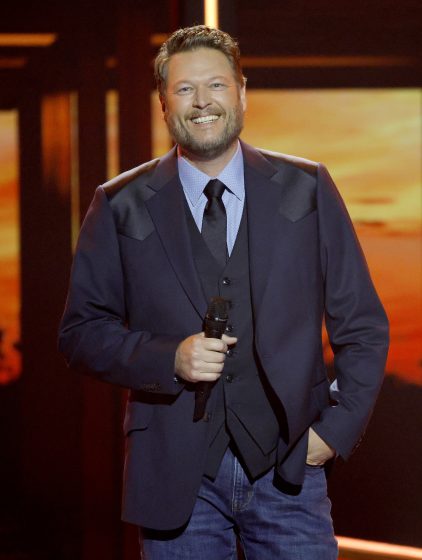
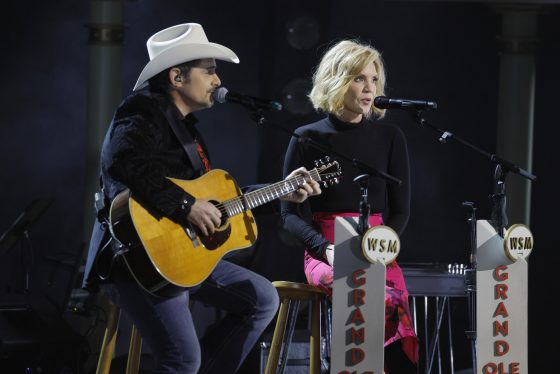
Hosted by Blake Shelton at the historic Grand Ole Opry House in Nashville, Tennessee, Opry 100 included performances by artists like Vince Gill, Alison Krauss & Union Station, Lainey Wilson, Brad Paisley, Ashley McBryde, Reba McEntire, Dierks Bentley, Garth Brooks, Trisha Yearwood, and many more. The primetime broadcast and streaming concert is just one event among an incredible, chocked-full effort by the Opry to celebrate their centennial – officially November 28, 2025 – throughout the entire calendar year.

Over the two-hour broadcast, there were dozens of show-stopping moments, from the brash, bold, and sensational to tender, intimate, and heart-wrenching performances. Good country of all varieties was on display from a wide array of artists at all levels of notoriety.

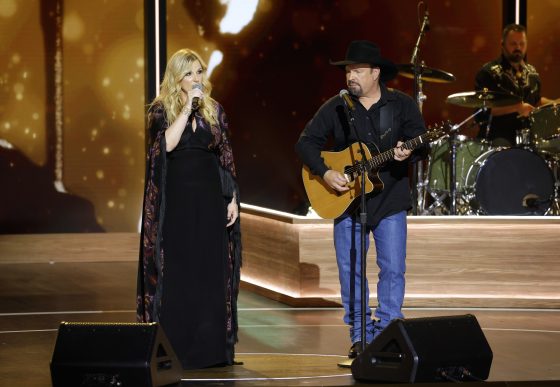
The War and Treaty sang alongside Steven Curtis Chapman and Amy Grant; Vince Gill reunited with his old pals Jeff Taylor and Ricky Skaggs; Ashley McBryde brought the house down alongside superstar country newcomer Post Malone and elsewhere in the show, ’90s stalwart Terri Clark; Lainey Wilson shared the stage with country picker and renaissance man Marty Stuart; husband-and-wife Trisha Yearwood and Garth Brooks were on hand; and Brad Paisley and Alison Krauss reunited for their 2003 smash hit duet, “Whiskey Lullaby.”

The show wrapped with a stunning full cast tribute to Dolly Parton, who greeted the Opry House audience via video and gave her sincere regrets for not being able to appear at the event. (Parton’s husband of 58 years, Carl Dean, recently passed away.) Dozens of the evening’s star artists took to the stage to pay tribute to Parton by singing her most famous hit, “I Will Always Love You,” a perfect, soaring sing along to close the momentous show.

There are truly too many once in a lifetime collaborations, songs, moments, and performances from Opry 100 to list, but we’ve collected a few of our favorite moments so you can relive this once-in-a-lifetime – or once-in-a-century – show! Get your fix by traveling through a few of our own favorite moments from Opry 100: A Live Celebration below.

Blake Shelton Hosts

Country superstar, award winner, and television personality Blake Shelton was a more than qualified host for Opry 100: A Live Celebration. Of course, he also gave a rousing performance of Joe Diffie’s “Pickup Man” to the delight of everyone in the crowd who find somethin’ they like in a pickup man. It wouldn’t be a celebration of country or the Opry without a truck mention.


Nashville’s Own, the McCrary Sisters

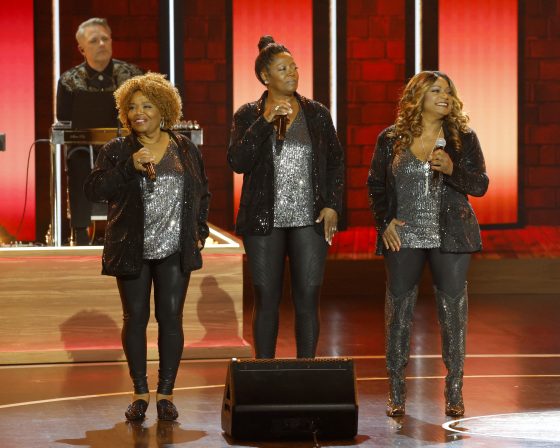
Nashville’s favorite, in-demand singing siblings, the McCrary Sisters were on hand for Opry 100, too. It’s certainly not their first time on the hallowed Opry stage, but in the centennial context their appearance reminds of the legacies of similar groups who blazed trails at the Opry before them – like the Pointer Sisters – and those who’ve followed in their footsteps, like the Shindellas and Chapel Hart.


Steven Curtis Chapman and the War and Treaty Share a Sacred Moment

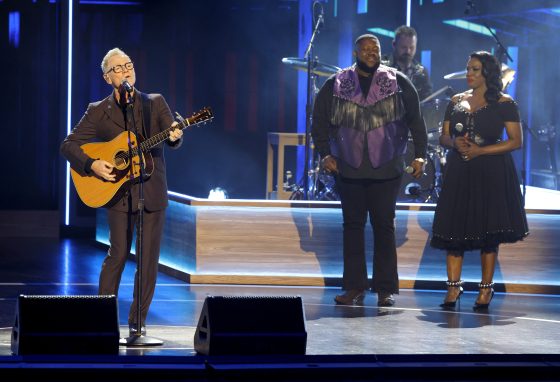
Grand Ole Opry member and contemporary Christian singer-songwriter Steven Curtis Chapman was joined by Americana/soul/country duo the War and Treaty for his performance on Opry 100.


Lainey Wilson and Hall of Famer Marty Stuart Duet

One of the biggest names in country at the moment, former GC and BGS

Artist of the Month Lainey Wilson was joined by bluegrasser, fiery picker, and Country Music Hall of Famer Marty Stuart backing her up on mandolin. They perform “Things a Man Oughta Know” from her huge 2021 album, Sayin’ What I’m Thinkin’, which many regard as her breakout release.


Ashley McBryde with Post Malone and Terri Clark

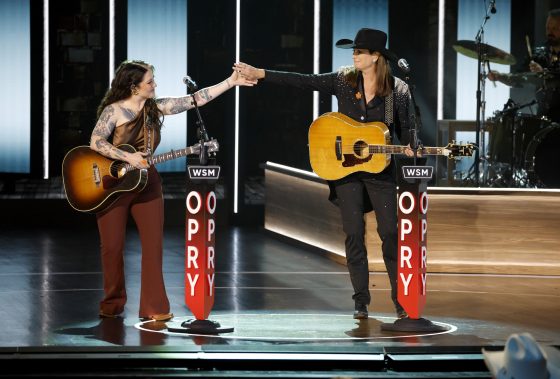
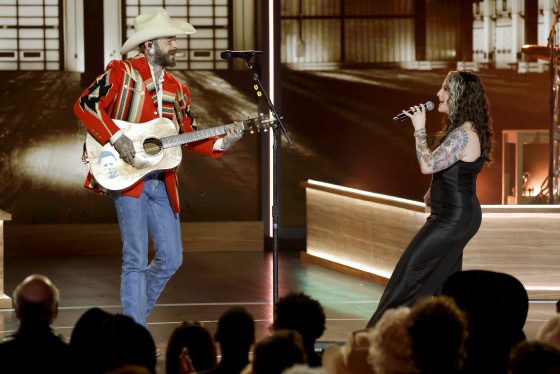
Ashley McBryde had multiple stellar moments during Opry 100, including these two prime duo performances. One with ’90s country star Terri Clark and another with a superstar newcomer to the genre, Post Malone. Her song selection with Postie was impeccable, too, taking the Opry 100 down to “Jackson” to mess around.


Trisha Yearwood with Garth Brooks and Reba McEntire

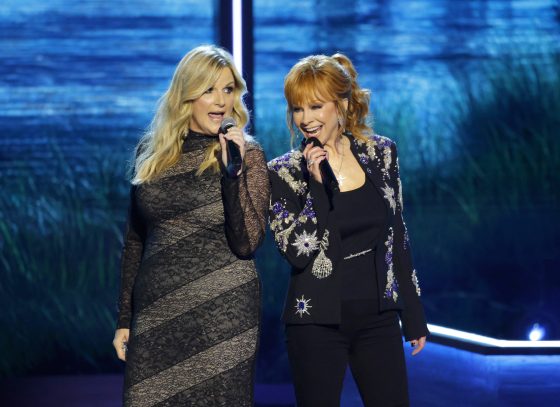
Country has boasted many amazing artist couples, but who better to take the Opry 100 stage than Trisha and Garth? Trisha also appeared with Reba McEntire to perform “The Night the Lights Went Out in Georgia,” a track that has been a huge generation-spanning hit for McEntire.


Brad Paisley and Alison Krauss Reunite

An iconoclastic example of a tear-jerker country story song, Paisley and Krauss’s recording of “Whiskey Lullaby” was released in the 2000s, but has had immense staying power. It shines from the Opry 100 stage in its simple and stripped-down styling. Is anyone a better duet partner and harmonizer than Alison Krauss? Perhaps not. Certainly a highlight among all of the many highlights of the broadcast


Alison Krauss & Union Station Perform, Too

On the precipice of their first album release in over 14 years, Alison Krauss also brought her band Union Station – including newest member,

Russell Moore – to the Opry 100 stage. Introduced by the Queen of Bluegrass, Rhonda Vincent, AKUS performed a hit from a prior era, “Let Me Touch You for Awhile” off 2001’s New Favorite. Their brand new project, Arcadia, releases March 28.


Country Music Hall of Fame Inductee, Vince Gill

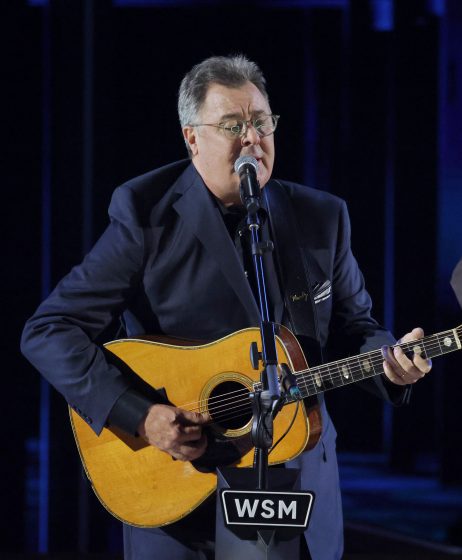
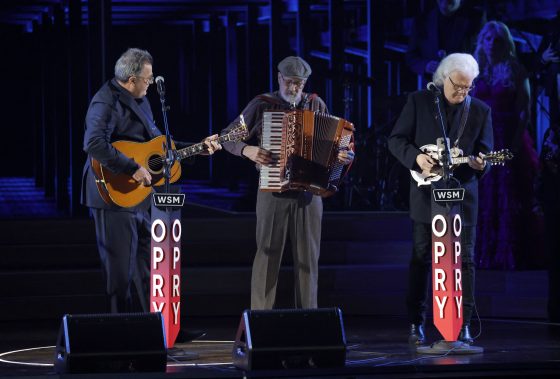
It wouldn’t have been a complete lineup for Opry 100 without Vince Gill! The Country Music Hall of Famer was joined by his old friends Jeff Taylor on accordion, Sonya Isaacs, and fellow inductee Ricky Skaggs, to sing perhaps his most famous song, “Go Rest High on that Mountain.” An impactful and inspiring number, the original has been a comfort to thousands of fans and listeners experiencing their own losses and grief. Of his deep-and-wide catalog of music, there’s not a better choice for an evening like Opry 100.


Ketch, Dierks, and Jamey

An Opry member trifecta, Dierks Bentley, Jamey Johnson, and old-time and bluegrass fiddler Ketch Secor (of Old Crow Medicine Show) paid tribute to the Charlie Daniels Band with a perfectly honky-tonkin’ medley of “Drinkin’ My Baby Goodbye” and, of course, “The Devil Went Down to Georgia.” From the sidewalks of Lower Broadway to the Grand Ole Opry stage, Charlie Daniel’s impact on country is indelible.


Luke Combs’ Mother Church Moment

From the hallowed stage of the Ryman Auditorium, the most famous former home of the Grand Ole Opry, one of the most popular singers in all of country, Luke Combs, performed George Jones’ “The Grand Tour,” as well as “Hurricane,” for Opry 100. With more than 800 million streams (on Spotify alone), “Hurricane” is one of his biggest hits from his 2017 album, This One’s For You, which has been certified double platinum by RIAA.

This long list of our favorite Opry 100 moments is still, somehow, merely the tip of the country iceberg. Stay tuned as the Grand Ole Opry continues their 100th birthday celebration all year long.


All photos courtesy of the Grand Ole Opry; credit Getty/Jason Kempin.

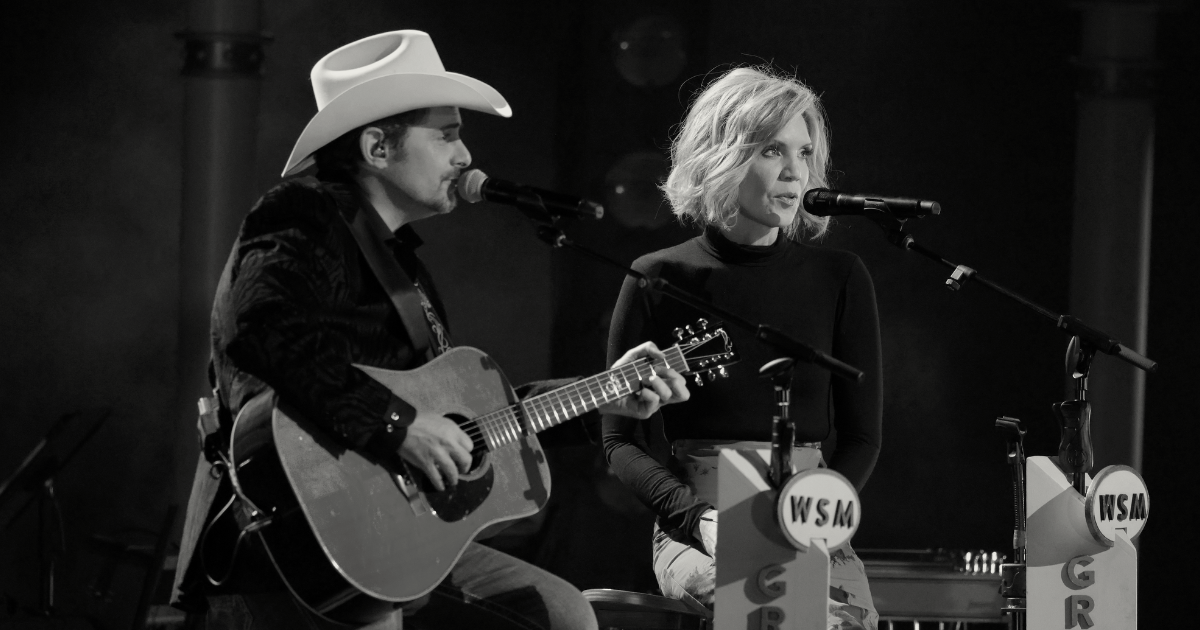
Lead image: Brad Paisley and Alison Krauss perform “Whiskey Lullaby” live at Opry 100.

Tommy Emmanuel’s Fiery Guitar Picking Is Not Just for Musicians, It’s for Everyone

Tommy Emmanuel is in his happy place: spending a Thursday afternoon at Nashville’s Gruhn Guitars in anticipation of recording a new solo album. “I’m here getting a new pickup system featured in one of my guitars, buying strings, hanging out with the guys, and getting a little Gruhn mojo from the shop,” he says. “The weekend, I’ll spend stringing up and playing my guitars, making decisions about which guitar I’ll use for what song, and stuff like that.”

For the next hour, however, he’s upstairs in the store’s amp room, settled in to discuss his two new albums – the just-released Live at the Sydney Opera House, recorded over the course of two performances in May 2023, and a solo album in the works – along with many other topics. Highlights from that conversation follow.

I was trying to find a starting point for this interview, which is challenging because there are so many. I listened to your January interview with Rick Beato and had a “stopped me in my tracks moment” when you said you spent three days listening to Taylor Swift’s The Tortured Poets Department. I thought, “Tommy Emmanuel is a Swiftie! We’ll start there.”

Tommy Emmanuel: Taylor, as a writer, is definitely a big influence on me. Someone who achieves what she achieves is doing something beyond the norm. Even beyond talent, it’s a spiritual experience, it’s big, and it’s deep, and I like to observe, listen, and learn from people who achieve like that.

You described her songwriting as “crying from the heart.” That stood out because that’s really what music is – it comes from the heart. We always hear that tone is in the hands, but is the heart not at the core of that?

Exactly. I was [writing a new song] and trying to find something that could give me the right melody to say with the chorus what I wanted to say without words, making the melody this cry from the heart. It’s– [sings melody], the chords change underneath, and so there’s movement, but there’s this cry from the heart right in the middle of everything.

Can you tell us more about this new solo album?

Normally, I record here, fly to LA, mix and master it with my friend Marc DeSisto, and I’m the producer. With this album, I’m working here in Nashville with Vance Powell, the busiest guy on the planet. We start on Monday and we’ve got to get it all done in four days.

I have eight new songs, including this piece we’ve been talking about, “A Drowning Heart.” There’s “Black and White to Color,” “Young Travelers” – I’ve got some interesting titles. The songs are different to what I’ve written in the past. There’s a couple of typical fingerpicking tunes that I really like. They’re a little more folk-influenced. The other ones I’ve been talking about are much more ’80s rock and roll style. I have a song called “Scarlett’s World.” The introduction and ending sound a bit like Dire Straits. I did that on purpose, because it’s such a cool sound. That song is inspired by the movie Lucy with Scarlett Johansson. I love that movie. I love her work. My granddaughter is like Scarlett and she is a force of nature. I got the idea to call the song “Scarlett’s World” when I was with her.

I’m enjoying this phase of my life. Whatever page I’ve turned to get to this stage has been worth it, because some songs have come to me in this last six months that I really love playing in my shows. Playing new songs live gets rid of anything that doesn’t need to be there, because sometimes you can write a song, you’re trying to be clever, you’re trying to be creative, you’ve got all these good ideas going, and then you play it for somebody and you realize, “Oh, this part here is not necessary.” You throw it out and get to the meat and potatoes. Forget all the other stuff. Just tell me the story. Take me somewhere. That’s why I like to perform my songs to an audience before I record them. Your instincts are on a hundred. When you walk on stage, your physical and spiritual instincts have risen up and they’re ready to serve you.

Of course, you’ve also just released your live album. You’re known for working without a set list. With such a rich repertoire, how do you sequence your shows, and sequence them so that the performance speaks both to musicians and non-musicians?

That’s so important to me. My music is not for musicians; it’s for everybody. I’m trying to be an all-around artist, entertainer, writer, player, performer. I’m trying to give people a bit of everything. [The show] has to be a journey, a story, entertaining, and when it’s over, I want people to think, “I’ve got to see that again.” There’s a passage in the first Indiana Jones movie that I never forgot. One of the characters says, “What are you going to do now, Indy?” Harrison Ford says, “I don’t know. I’m just making this up as I go along.” That’s me. That’s how I live my life.

Your history with Maton Guitars goes back to your days playing electric guitar. The common trajectory is the player begins on acoustic, and then goes on to electric. True to originality, you did the opposite.

I started on electric. When I was starting to be a songwriter and making my own records, I was mostly writing on electric, 60 to 70 percent, and the rest was acoustic. I started doing solo shows on acoustic and all of a sudden I realized, “Holy smoke, this really works well.” So I started writing more songs to play as a solo acoustic player. It was more pop and rock and roll music, funky, all that sort of stuff.

The record company wanted me to do something we could get on radio, so I made some jazz-oriented records. I got a lot of airplay on jazz stations and that kind of forced me into that direction for a while. It was good, because I learned to write and perform that way. When I moved to Nashville, I wanted to be on the Opry and play the Ryman, so I focused on being more country- and bluegrass-based, which is my roots. My biggest influences when I was a kid, before Chet Atkins, were Jimmie Rogers and Hank Williams. They were my first two loves of music.

What are the biggest challenges of doing what you do the way you do it?

Everything comes down to commitment. How committed am I to be a better player? I often tell people who want to talk about my technique, “I don’t talk about my technique. It’s invisible.” The music is what counts, not how I do it. My abilities fluctuate because I’m a human being. I’m not a robot; I’m not going to be exactly the same every time.

If you want it to be good, to flow, and to be wonderful to watch, then there’s a lot of work ahead. You’re going to have to work so hard to make it that way. I never stop working on my abilities, because it’s so important. My role model, Chet Atkins, worked harder than anybody I’ve ever seen at practicing and making sure that every little detail was so smooth. I will follow that with adding that my age is challenging me as well. There are things I could do twenty years ago that I can’t do today and I have to be okay about that. I have to find new things to replace some of the things that I physically can’t do.

I’ve just come off a five-week tour, which was grueling, long, lots of travel, not a lot of chance to do some serious practice. Every day was like, get to the venue, get my guitar out, start playing, work on some songs that maybe I didn’t play the night before or the night before that, remember some of my other songs that I haven’t been playing, put them in the show, and constantly find ways of making it different and interesting from the night before.

I’ve got to be in good shape physically, mentally, and spiritually to get up there and play my heart out for nearly two hours and throw my whole life into it. I’ve got to eat well, rest well, and have enthusiasm for what I’m doing. I can’t remember a time where I was standing on the side of the stage and thought, “Not this again.” That never has entered my mind. I’m like, “I can’t wait to get out there. I can’t wait to play. I can’t wait to see how this night is going to go and what I’m going to do that’s going to surprise me.”

You’ve told us a bit about your introduction to bluegrass, coming to acoustic guitar from electric, and your passion for jazz. Can you draw a through line between all those genres? How do they shape what you do?

It’s about musical abilities and musical ideas. When I play with Ricky Skaggs, or Molly Tuttle, or anybody, it’s about me fitting into what they do and serving the music as best I can. There’s a bit of bluegrass in everything I play. There’s a bit of blues in everything I play. I don’t feel like I need to be in a box or have a style stapled to me. It’s all music to me.

When I play with Billy Strings, I can hear Doc Watson and Tony Rice, of course, but I can also hear little bits of Stevie Ray Vaughan, B.B. King, George Harrison. You know, we’ve all got it in us. It’s all styles of music together. Bluegrass is such an open-ended thing to me. If I’m playing “Highway 40 Blues” and I take a solo, I don’t necessarily think, “Oh, I’d better tap into Tony Rice.” I just play what I feel at that moment.

A number of musicians have told me that they sometimes get sick of their own playing. Does this ever happen to you, and if so, how do you climb out of that rut?

I get tired of myself sometimes and usually something comes along that lifts my faith in my gift. Right when I think I’ve had enough of me, I need a break, something happens and somebody needs me to play for them, and they remind me, “Don’t forget – you’re here for a reason. You’re here to serve others. When you play, people feel something. They feel happy. So get out of your own head and do it for someone else.”

There are times when you definitely need a break. I just had a week after the tour I finished in Zurich a week ago. I flew into England to be with my grandchildren and my daughters and I didn’t play much. I played a little bit after the girls had gone to bed. I made my dinner, played a little bit, and then watched Netflix and chilled out. It was good. I needed that break.

When your colleagues talk about you, they always describe you as a good guy, a nice guy, a mentor. How much of that comes from the kindness and mentoring you received from Chet Atkins?

I’m just trying to hand on what was handed to me. When you’ve been loved on by a guy like Chet Atkins, you know you’ve been loved. When you’ve been loved on by someone like my mother, who led by example her whole life … what a great soul, a great spirit.

When I moved to the big city when I was young, I was so used to people being almost aggressive towards me, because they thought I was showing off or thinking I was much smarter than them. And it never entered my mind. But they were full of jealousy or fear or whatever, I don’t know. So when I got to the big city and I saw musicians who did things I couldn’t do, when I got to know them, they were so encouraging to me. They were so honest with me. They treated me with a dignity that other people didn’t. And so I just want people to feel good when we play together, because it’s a very honest experience.

Who is your dream artist to work with?

Marty Stuart. What a talent! He’s a free spirit and the kind of guy I like being around. I would love to work with Marty.

You’ve spoken openly about your long battle with addiction. You are in recovery and you’ve also done the work through therapy. What part has guitar played in your recovery journey?

The guitar has always been my go-to thing to help me get through stuff. When I went through my first divorce, we’d been married for 15 years and I thought we were doing great. Everything was wonderful, I’ve got two little daughters, then my wife wanted to separate and then she was with someone else. I had to let her go and I went through a painful divorce.

I was broken beyond measure and my world went upside down. It was during that period that I wrote some of the best music I’ve ever written. It came to help me and gave me something good to focus on. Next thing I know, people are loving the music I’ve written, and I’m out, I’m starting again, I’m off on a new road.

The thing I love [about sobriety] is being clear. I’m present. My love of music and playing in general has grown so much since I’m not ruled by drugs or alcohol. I’m [five years] free and I’m so grateful. What I do now is better, it’s more honest, it’s more real. I don’t feel self-obsessed, self-absorbed, or feel sorry for myself for all the bad things that nearly destroyed me.

I know what addiction is now. I know how to deal with it. It’s finding what the problem is, being willing to talk about it, put the work in, follow the steps, and keep doing the work that has made my life so beautiful and so much better. Sometimes I think, “How the hell did I ever survive that?” I’m guessing that my maker was with me all the way. I’m totally free today, but I don’t take it lightly. It’s living one day at a time, and it’s beautiful.

And finally, what is the difference between playing guitar and being a guitarist?

Being a guitarist is being a gun for hire. Being a guitar player is a way of life. A guitar player is someone who loves to play for people and who loves his instrument deeply.


Photo Credit: Alysse Gafkjen

Celebrating Black History Month: Mavis Staples, Chapel Hart, Charley Pride, and More

To celebrate Black History Month – and the vital contributions of Black, Afro-, and African American artists and musicians to American roots music – BGS, Good Country, and our friends at Real Roots Radio in Southwestern Ohio have partnered once again. This time, we’ve brought you weekly collections of a variety of Black roots musicians who have been featured on Real Roots Radio’s airwaves. You can listen to Real Roots Radio online 24/7 or via their FREE app for smartphones or tablets. If you’re based in Ohio, tune in via 100.3 (Xenia, Dayton, Springfield), 106.7 (Wilmington), or 105.5 (Eaton).

American roots music – in any of its many forms – wouldn’t exist today without the culture, stories, skills, and experiences of Black folks. Each week throughout February, we’ve been spotlighting this simple yet profound fact by diving into the catalogs and careers of some of the most important figures in our genres. For week four of our celebration, RRR host Daniel Mullins shares songs and stories of Charley Pride, Mavis Staples, Chapel Hart, Carolina Chocolate Drops, and Philip Paul. Be sure to check out week 1, week 2, and week 3 of the series, too.

Today is February 28, so sadly this will be the final installment of our Black History Month celebrations this year. But, as always, we’re committed to bringing you even more music celebrating Black History – and the songs and sounds we all hold dear – not just in February, but year-round.

Plus, you can find a full playlist with more than 100 songs below from dozens and dozens of seminal artists, performers, songwriters, and instrumentalists from every corner of folk, country, bluegrass, old-time, blues, and beyond.

Black history is American roots music history; the two are inseparable. As we celebrate Black History Month and its legacy throughout the year, we hope you’ll join us in holding up and appreciating the artists who make country, bluegrass, blues, folk, and Americana the incredible and impactful genres that they are today.

Chapel Hart (est. 2014)

If you haven’t heard of Chapel Hart yet, it’s time to change that! This powerhouse trio – Danica, Devynn, and Trea – are taking the country music world by storm with their soulful harmonies, fiery energy, and a whole lot of heart. Hailing from Poplarville, Mississippi, these ladies bring a fresh and fearless sound to country music with their family harmonies; Danica and Devynn are sisters, while Trea is their cousin.

The group first began their musical journey by busking on the streets of New Orleans. In 2021 they were among CMT’s Next Women of Country, before making their way to America’s Got Talent in 2022. Their unforgettable run on the hit music competition television show is where the nation first heard their breakout hit, “You Can Have Him, Jolene,” an answer song to the Dolly Parton classic.

Since their time on the competition, Chapel Hart have released “Welcome to Fist City” as well, in response to Loretta Lynn’s fiery “Fist City” per Loretta’s request. They have been frequent performers on the Grand Ole Opry, and have recorded collaborations with Darius Rucker, Vince Gill, The Isaacs and more. Chapel Hart are proving that country music is alive and well – and full of girl power!

Suggested Listening:
American Pride
Welcome to Fist City

Mavis Staples (b. 1939)

You know Mavis Staples as the gospel and soul legend, but did you know she’s got deep country connections as well? That’s right, her powerful voice and storytelling fit right into the heart of country music.

Mavis grew up singing gospel with the Staples Singers, even marching with Dr. Martin Luther King, before finding success in R&B and beyond. However, her musical influences also include listening to Hank Williams and the Grand Ole Opry. She once said, “Country music is just another way of telling the truth” – and if anyone knows about truth in music, it’s Mavis Staples.

Over the years, her stellar career has included forays into country that include collaborations with George Jones (“Will The Circle Be Unbroken”), Willie Nelson (“Grandma’s Hands”), and Dolly Parton (“Why”). Staples’ recording of “Touch My Heart” for the 2004 tribute to Johnny Paycheck is a masterpiece. She and Marty Stuart are dear friends and mutual admirers of one another’s music. Together, they have recorded wonderful renditions of “Uncloudy Day,” “Move Along Train,” and “The Weight.”

Staples and Stuart were part of a show-stopping performance on the CMA Awards a few years ago alongside Chris & Morgane Stapleton and Maren Morris, tackling Stapleton’s “Friendship” and the Staple Singers’ classic, “I’ll Take You There” in an awards show mash-up.

Mavis Staples is a member of the Gospel, Blues, and Rock & Roll Halls of Fame. Whether it’s gospel, soul, or country, her voice carries a message of love, hope, and resilience.

Suggested Listening:
Uncloudy Day” with Marty Stuart
Touch My Heart
Grandma’s Hands” with Willie Nelson

Carolina Chocolate Drops (active 2005-2016)

Let’s shine a spotlight on a group that revolutionized old-time string music – Carolina Chocolate Drops. Formed in 2005 by young twenty-somethings Rhiannon Giddens, Dom Flemons, and Justin Robinson after attending the first Black Banjo Gathering in Boone, North Carolina, they revived the nearly forgotten Black string band tradition.

Inspired by the legendary Black North Carolinian fiddler Joe Thompson, Carolina Chocolate Drops brought energy, authenticity, and a fresh perspective to Appalachian folk music and were a powerhouse on stage. The first African American string band to perform at the historic Grand Ole Opry, their GRAMMY-winning 2010 album Genuine Negro Jig fused tradition with innovation, blending deep-rooted folk with modern influences and proving that history and rhythm go hand in hand.

Carolina Chocolate Drops didn’t just perform, they educated, too, sparking a renewed appreciation for African American contributions to folk and traditional music. Over the years they would open for Taj Mahal and Bob Dylan, perform at events like MerleFest and ROMP, appear on Prairie Home Companion and BBC Radio, and even contributed to the soundtrack of The Hunger Games. Though they’ve since been on a hiatus for the last decade plus, their impact on American roots music is undeniable. Look for a reunion at Biscuits & Banjos festival in downtown Durham, North Carolina, in April.

Suggested Listening:
Trouble In Your Mind
Pretty Bird
Day of Liberty

Charley Pride (1934-2020)

He broke barriers and made history. Charley Pride, the son of sharecroppers, a Negro league baseball player, and the Pride of Sledge, Mississippi, became a country music legend.

In the 1960s, when country music was overwhelmingly white, Pride’s rich baritone and heartfelt songs won over audiences. At the urging of Red Sovine and Red Foley, Pride pursued a career as a country recording artist. Cowboy Jack Clement brought some of Charley’s demos to Chet Atkins and he was signed to RCA Records. His first big hit, “Just Between You and Me,” earned him a GRAMMY nomination and soon he was topping the charts with classics like “Kiss an Angel Good Mornin’.” His popularity was undeniable, outselling all of his RCA labelmates except Elvis Presley during his peak.

With over 50 Top-Ten hits and more than 30 Number Ones, Pride became country’s first Black superstar – earning the CMA’s Entertainer of the Year award in 1971. His nationwide popularity was such that in 1974 he became the first recording artist to perform the National Anthem at the Super Bowl.

“Is Anybody Goin’ to San Antone,” “Mississippi Cotton Picking Delta Town,” “All I Have to Offer You (Is Me),” “Roll On Mississippi,” “You’re So Good When You’re Bad,” and dozens of others are essential country listening. Pride would be only the second African American made a member of the Grand Ole Opry and the first Black artist inducted into the Country Music Hall of Fame. His music broke racial barriers, his talent captivated millions, and his legacy? It still inspires artists today.

Charley Pride wasn’t just a country star – he was a pioneer.

Suggested Listening:
The Snakes Crawl At Night
Roll On Mississippi

Philip Paul (1925-2022)

Philip Paul was a legendary drummer who made history in Cincinnati for decades, making major contributions to classic recordings in rock, blues, country, jazz, bluegrass, and more. Born in Harlem in New York City, he moved to Cincinnati at the urging of jazz legend of Tiny Bradshaw, to join Tony’s band. Post-WWII, Cincinnati became a hub of various music – including bluegrass – thanks to an influx of people migrating to the area for factory work. While playing in jazz clubs in the Queen City, Paul met Bluegrass Music Hall of Fame member Syd Nathan. For a dozen years, Philip Paul was a member of the house band at Syd Nathan’s King Records, where he appeared on countless classic recordings by Cowboy Copas, Hank Ballard, Freddie King, The Stanley Brothers, and more – over 350 records.
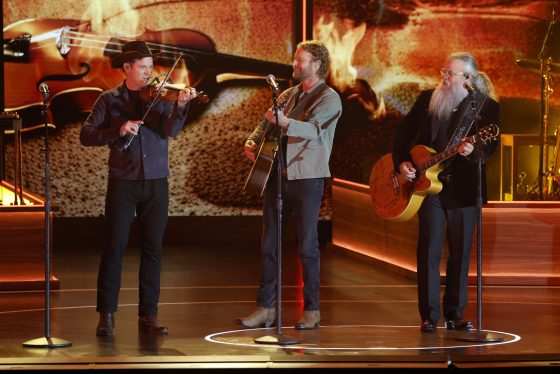
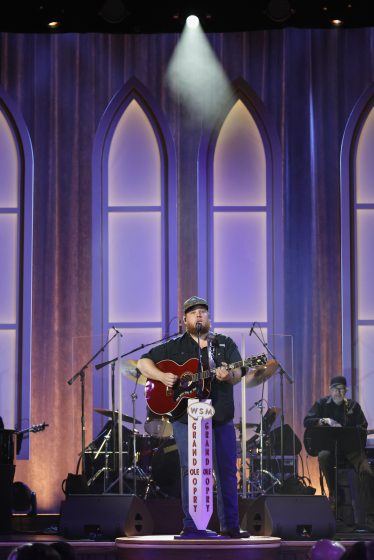
Paul is playing on drums on such American classics recorded in Cincinnati as “Fever” (Little Willie John), “Soft” (Tiny Bradshaw), “Alabam’” (Cowboy Copas), “Please Come Home For Christmas” (Charles Brown), and so many more – including the bulk of Freddie King’s catalog. He is also responsible for laying down the rhythm on the original recording of “The Twist” for Hank Ballard & The Midnighters before it was covered by Chubby Checker. In addition he performed on Hank Ballard’s “Finger Poppin’ Time” and added percussion on the overdubbed version by King recording artists, The Stanley Brothers.

For the ensuing decades, Paul would consistently perform at various jazz nightclubs around the Cincinnati area. He received Ohio Heritage Fellowship honors in 2009, the same year he was recognized for his remarkable career during a special presentation at the Rock & Roll Hall of Fame and Museum. The museum’s president at the time, Terry Stewart, had this to say: “If someone were to try to isolate the single heartbeat of the early days of rock and roll, as it transitions from ‘race music’ to ‘rhythm & blues’ to whatever you want to call what early rock and roll is, that heartbeat is Philip. [He is] the thread that runs through so much of the important music of that period.”

Philip Paul even contributed to the 2021 IBMA Album of the Year, Industrial Strength Bluegrass: Southwestern Ohio’s Musical Legacy, playing drums on “Mountain Strings” (Sierra Hull), “Readin’ ‘Rightin’ Route 23” (Joe Mullins & The Radio Ramblers), and “Are You Missing Me” (Dailey & Vincent). These would be the final recordings of Philip Pauls’ remarkable career in American music. He passed away in January 2022 at the age of 96. Phil Paul played drums on some of the most famous recordings in American history, and he did it all at Cincinnati’s King Records!
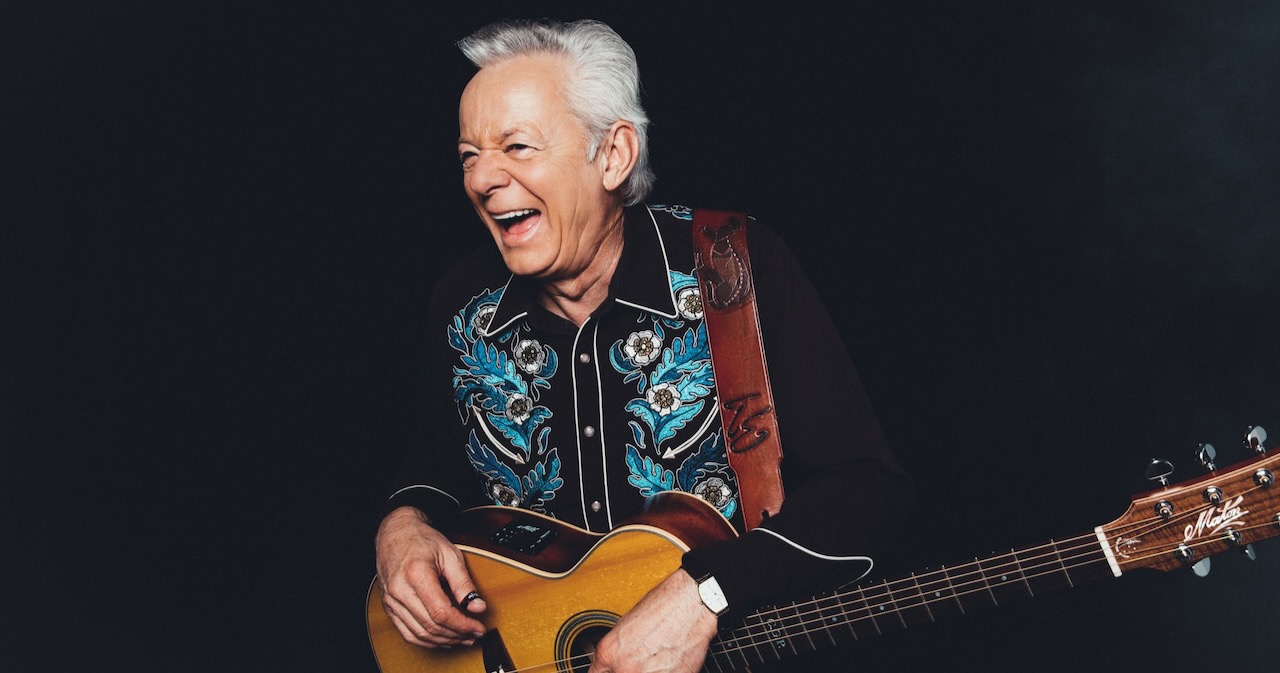
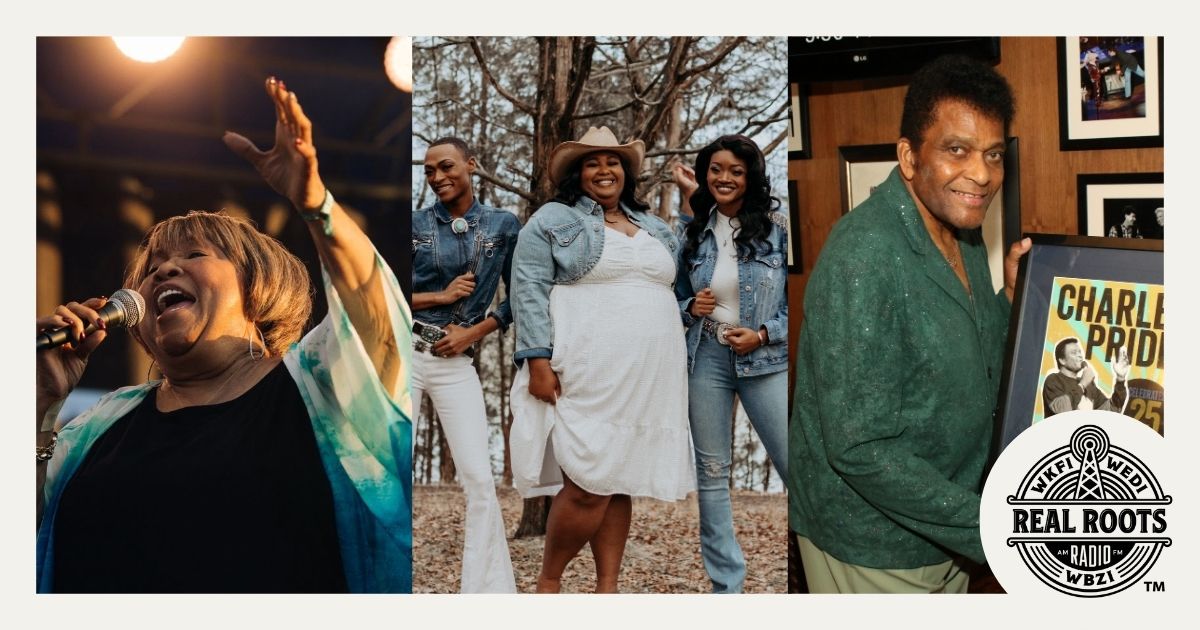
Suggested Listening:
Fever,” Little Willie John
Hide Away,” Freddie King
Mountain Strings,” Sierra Hull


Want more Good Country? Sign up on Substack for our monthly email newsletter full of everything country.

Listen to Real Roots Radio online 24/7 or via their FREE app for smartphones or tablets.

Photo Credit: Mavis Staples by Daniel Jackson for BGS; Chapel Hart courtesy of SRO PR; Charley Pride courtesy of CharleyPride.com.