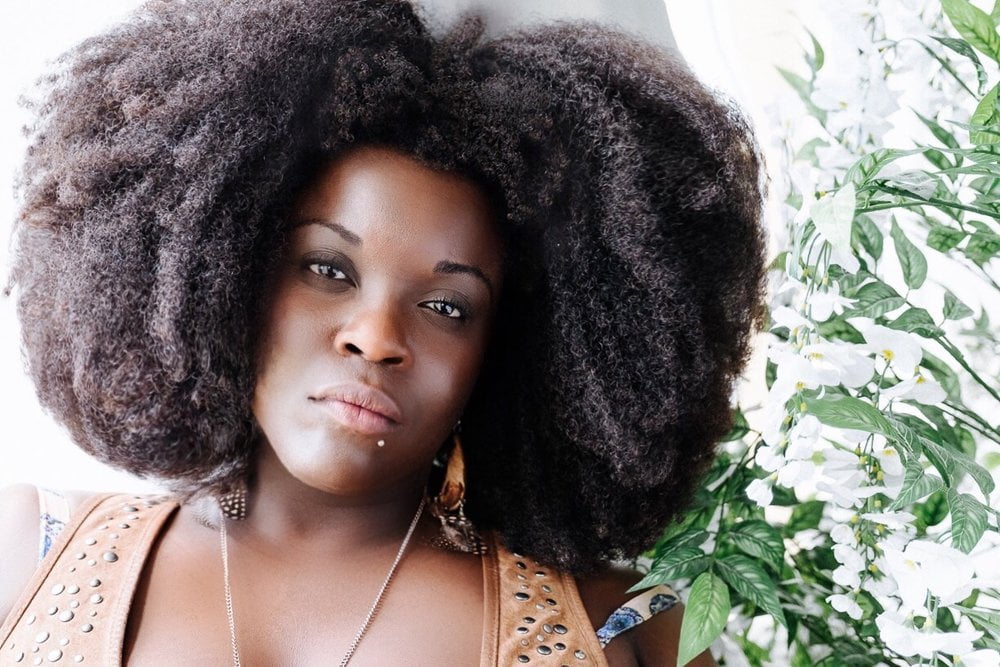
Yola Carter had planned to start her solo career slowly. Play some shows, work up some songs, settle in with a band. Make an EP. Take her time with an album. Build up an audience gradually and carefully.
It’s not going that way at all.
Following a brief UK tour this Summer, she made her U.S. debut at AmericanaFest in September, which was rapturously received and put her in touch with numerous labels along Music Row. Suddenly everything sped up. That EP wouldn’t wait, and Carter released Orphan Offering in November. She is set to sign with a label and launch more tours in 2017, with a full-length debut not too far off on the horizon. She is one of the grassroots success stories of 2016.
“I had planned to do a small thing and put it out on Bandcamp or TuneCore,” she says. “Just something to say, 'This is what I’m about. I’m here.' Then I got to Nashville, and it did not check out like that. So this whole slow thing I was doing — it’s over. It’s a real blessing, but it does make you hectic.”
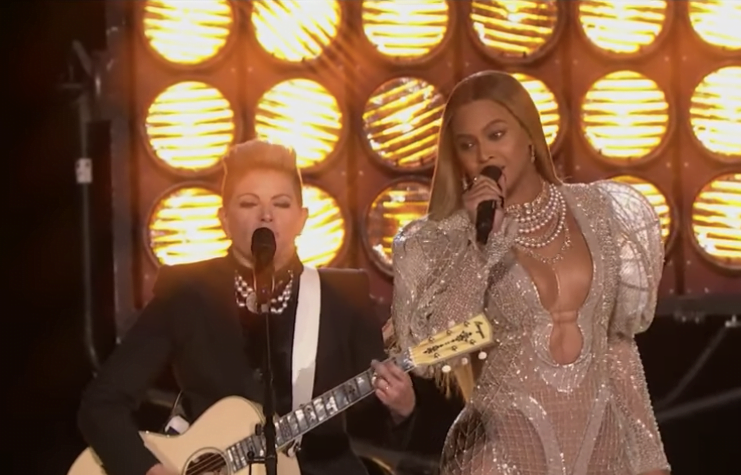
Hers is an inevitable, but still somewhat unlikely, rise. Carter possesses a voice that is at once powerful and gentle, exuberant and melancholy, with a subtle, soulful drawl bending her vowels. She might be an even better songwriter, though, breathing new life into familiar country and gospel conventions and making them sound fresh and urgent. And yet, at a time when Beyoncé’s foray into Dixieland jazz and Nashville twang stirred up a controversy about what is and isn’t country music, this “Black chick from the UK” is intent not so much to break new ground, but to show that the ground she’s standing on is historically solid.
“All of the things that fall under the umbrella of Americana are so intrinsically linked,” she says. “I think that’s why I love it so much. I think that’s why I connect to country of the past. I love how closely connected everything was — gospel and country and soul and everything.”
Growing up as one of very few Black children in a predominantly white seaside town near Bristol, Carter gravitated toward country music — the Byrds and Dolly Parton — feeling a connection to these stories of poverty and struggle, of determination and self-definition. But the market for a Black, English country singer was nonexistent, and Carter felt her only outlets were with other genres. So she toured with Massive Attack and West London DJ collective Bugz in the Attic before forming a band called Phantom Limb, which released two solid country-rock albums.
Carter spent years building up to a solo career, but the struggle has been worthwhile, if only because it gives her perspective now that everything is speeding up. “I’m not a spring chicken,” she says with a laugh. “Maybe if I was in my late teens, I would be bricking it, as we say in the UK. If you don’t know what you want from a scenario, it’s scary for sure. But I’m not here to date. I’m a marriage kind of artist.”
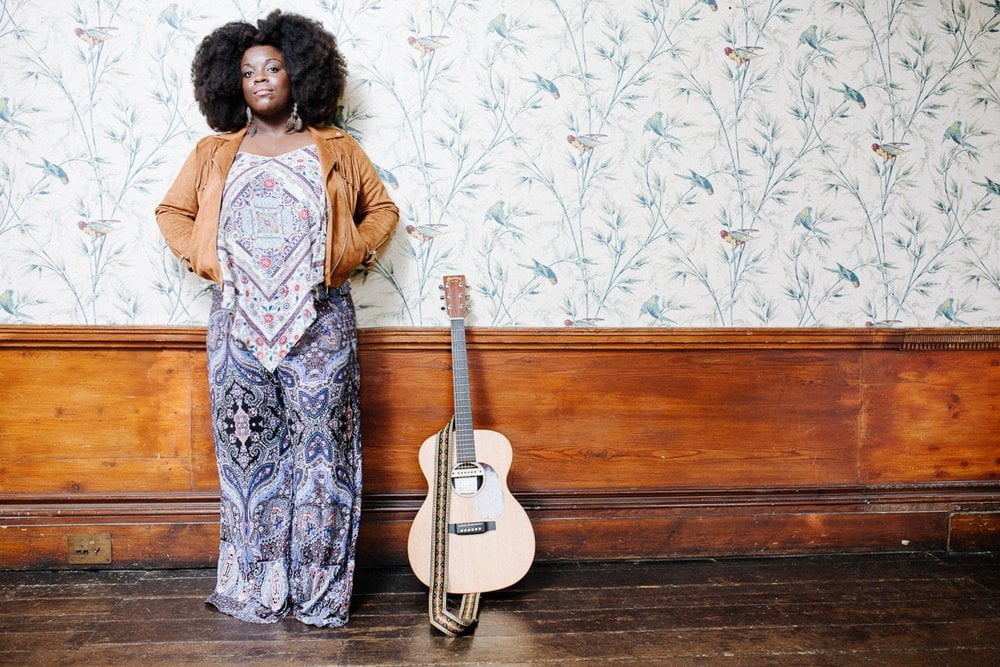
Orphan Offering is, of course, an extremely important record for you. What did you want to get across to people on your first solo release?
This record was very much like the tip of the iceberg for me. At the time I came up with a collection of songs, I had a small setup — cello and fiddle and acoustic and electric. I was just calling people up to see how the songs would turn out and, when I realized they were going to turn out, I thought I should get some of them down. So these songs were the beginning of a bigger story that’s going to be told over the next two records, one of which I’ve already written and the other I’m almost finished writing. The EP is part of a greater thought. Everything I’m writing is very autobiographical.
But I also want to get across my love of country and Southern soul and the Staple Singers. I understand that country means different things to different people. Some people are more on the bro side of things, and some people think the Byrds are country. That’s the crowd I sit in. Hey, I’m just a Black chick from the UK, but Sweetheart of the Rodeo is a big record for me. I have this conversation with people all the time. They ask me, "How country are you?" And I’m like, "I’m country. Cooouuunnntrryyy." As opposed to the kind of rock music country that we have nowadays. So it’s important for me to express my love for that ‘60s country and that ‘60s gospel, Stax and Muscle Shoals and stuff like that. I think it’s country of an era more than it’s country of a particular place.
Some people in the States wouldn’t consider a lot of that music to be country, but it all definitely comes from the same place and, in some cases, from the same people.
I’ve been having this conversation with myself. Is it through the prism of my blackness that the music becomes something other than country? If I don’t sing it with exactly the same lilt as someone else would, does it then turn back into something else? Are we going to racialize music forever and ever? And, if we are, what do we say about hip-hop when white people do it? What do we call that? We don’t have another name for it. And we shouldn’t have another name for it. Music should be judged by your ears. It is what you think it is. Whatever gets you off.
Have you noticed a difference between UK and U.S. audiences? Do they respond differently to your music?
It’s still the early days with this project and, really, the only tour we did was this Summer. But my experience of that tour in the UK was really great, really well received, and really enthusiastic. I got the same thing when I was in Nashville [for AmericanaFest]. The distinction that I make is that American audiences might be more expressive in one way and British audiences might be expressive in another way. It’s more about language than enthusiasm.
There really is a massive appetite for American music over here, and the entire infrastructure has expanded to compensate for it. You’ve got to understand: We didn’t have an Americana chart or an awards show or radio shows dedicated to playing roots or country or whatever you want to call it. But over the past five years or so, it’s just grown and grown. It’s changed our perception of what we’ve been able to do with the genre in this country, which is encouraging to me because I’ve been trying to peddle it for such a long time. So it’s a really wonderful thing that’s happening over here right now. It’s exciting.
Do you think you could have gotten such an enthusiastic response at an earlier moment?
It’s definitely good timing. The environment has changed for the genre. The infrastructure has changed. That whole process of spending your radio time explaining to people what your genre is, what your connection to it is as a Black woman … that conversation is getting shorter. The upside is that you can move along to actually promoting your record instead of leading a class in American Music 101. People don’t want to feel like they’re going to school when they’re just trying to enjoy themselves and connect with something.
But we still have people with a selective memory, when it comes to the origins of rock 'n' roll or the influence it had on the genesis of country music as it transformed out of mountain music. We’re still having a conversation about Beyoncé and how appropriate that is for the CMAs. That’s not surprising over here, but it does seem like we’re having a lot less of them. So that’s great. And it’s good that we’re talking about it and people are writing about it. It’s important to have that conversation about American music, because it’s a rich, amazing history.
I read that you play fiddle. Are you playing on the EP?
No, I’m not playing on the EP, but I used to play fiddle. My bow hand is still alright. It hasn’t got all heavy and clunky and confused. It’s still good. I can hold a melody. That was me growing up. I got attached to things in bluegrass because of the fiddle. I love double-stop fiddles and I think that was one of my gateway drugs into Americana music — CSN to start with and Neil Young. I was very much on the alt side of things when I came in, and then I slowly centered on Dolly and the Byrds. It was all very piecemeal, which is what you got in this country. It’s like you’re just bumping into things over and over and, every time you bump into something, you get a greater understanding of what it speaks to in you.
As a kid, it was Dolly and the fact that she was a woman writing about her life. That really got me because of my own environment. I wanted to write like her and sing like her. Then I bumped into other people. I had a lot of Gene Clark for a while, just for song structure, and I had my time with Joni [Mitchell] — maybe less than I should have. I started getting into the Dillards and just all the way across American music. The Staple Singers landed about that time, and Mavis is still one of my greatest heroes, musically. Soul Folk in Action changed me. We all know Ray Charles did what he did with that amazing country record, but I needed to hear someone with a similar vocal timbre doing things that I was reaching for. As female singer/songwriters, we need matriarchs sometimes.
Before she passed, my mum told me that she had a Staples' record that she used to play in the house when I was really small. It was the only one of that kind of music she had, so she wouldn’t let me touch it. So I never touched it and never knew it was there until she told she’d had the thing the whole time. Are you kidding me? I‘d been trying to reach for something, but didn’t know what it was. My mum was really into music and had a sizable record collection that was pretty diverse. She used to be a hospital DJ. She was a psychiatric nurse, and she’d play mostly disco, but sometimes soul music for the mentally infirm. That was her job.
Orphan Offering seems to be addressing some aspects of your youth.
“Orphan Country” is very much about me growing up in that seaside town. There’s a show in the UK called Keeping Up Appearances, and the title says everything. It’s about the working class in the UK trying to deny where they’re at and trying to be socially mobile. Where I grew up was very much like that. It was people buying just outside of what they could afford and either keeping their shit together or going into debt. I grew up in that kind of insular environment. There was nothing there. It was a very conservative and pretty racist environment, so music was a real escape and a way to express myself without acting out. “Orphan Country” is about growing up in that place, being from a broken home, being from a place that doesn’t accept you one bit. All the things that are going on now are things that I grew up with.
People are talking about how surprised they are that this is still happening, but it’s not surprising if you grew up with it and lived with it. "Oh surprise, I was really racist." Yeah, we got the memo about 20 years ago. You can pretend you’re not racist, but we’ve got good Spidey sense for that institutional stuff and we know it’s just a matter of time before it rears its ugly head again. It goes in cycles, like ‘70s fashion. "Oh, flares are back? Great!" We won’t talk about these issues for a while, but then people will feel like they can punch a Black person again.
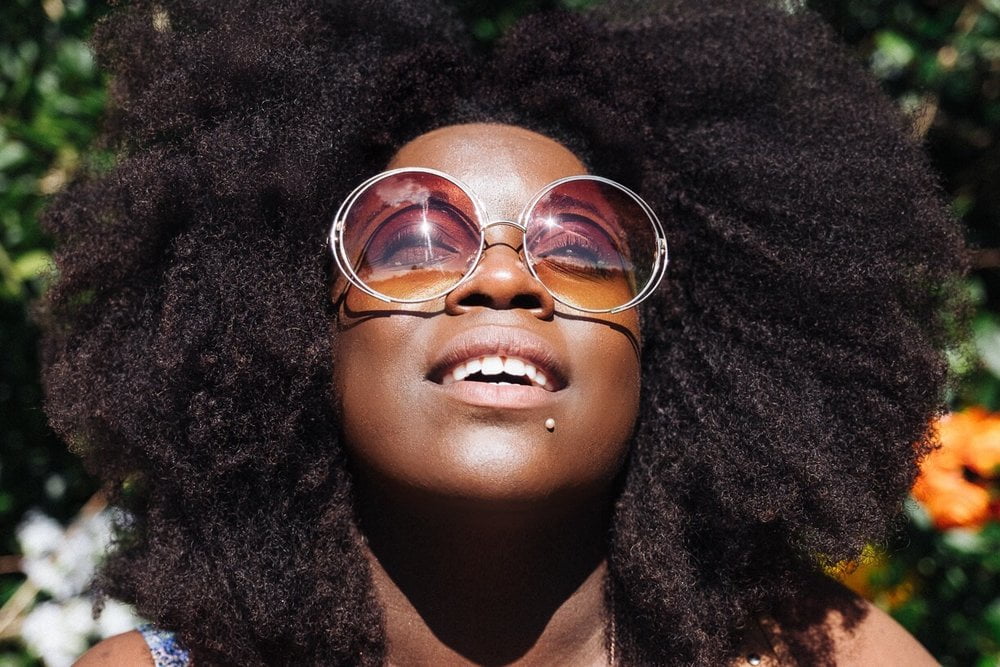
You mentioned that your next two albums will continue the narrative you started on Orphan Offering. It sounds like you’re writing with some very specific themes and stories in mind.
I’m dealing with a lot of personal issues that have been going on in my life, and I’m never going to get all of that onto just one record. These are the things that have been happening in my life and that are happening politically at the moment, which have to do with the perception of race. If you’re a Black woman, people automatically assume that the prefix “strong” can be applied to you, regardless of how you’re feeling at the time. I’m dealing with that. In this solo environment, I have new opportunities to express myself in less general ways than I have in the past. I don’t have to write about everyone. I can be personal. Freedom isn’t something that I’m used to, because I’ve never gone solo before. But I’ve got a lot to stay about these issues and about life, in general, especially coming out of a really awful, awful relationship.
It’s obviously cathartic, but I think it’s essential that I don’t just write in a woe-is-me way all the time. I’m writing to make people aware of situations or to be a mouthpiece for something that happens to my particular demographic or to us in the West on a grander scale. So this little EP — bless it — is the tip of a slightly angry iceberg. I do a little venting, but there’s a lot of hope and love and kindness. And a lot of "What the fuck?!" People always ask me, "What are your themes? What are you working with?" I’m working with "What the fuck?!" A lot of people are working with that sentiment right now. I think it’s appropriate.
I know I’m not going to save the world with a song, but I am going to be able to process things. And that’s enough. People are starting to feel a need for a little bit of protest. Not too much. We need to have fun, too. It can’t all be serious all the time, but I’m going to try to keep the tradition alive that’s been going on since the ‘50s and ‘60s: uptempo music with a happy melody and sad subject matter. There’s a song that will be on the album, I hope, when I find the producer I want. It’s called “Free to Roam,” and you listen to it and you swear it’s the greatest party you’ve ever been to. But then you read the words — it’s not exactly joyful. You have to put a little sugar with the medicine.
It’s the Woody Guthrie approach. You add a little humor and humanity to the anger and the outrage.
That’s the balance I’m after. I wrote about 50 songs. They just appeared out of nowhere in a very short space of time. I had been backed up, creatively, so I had a big old purge. And it hasn’t stopped. My writing process involves a lot of waking up with an idea. I call it lightning bolt writing. It just arrives. I’m just waiting. I’m dousing for it. I’m always trying to get myself into the right headspace for a song to turn up, and I’ve started getting very good at creating a good environment for that process. So I’m hoping that some of the songs are quite immediate, that they really get you. I go to shows and I see people mouthing the words. The band just learned the song, and people are already singing along!
For more on the intersection of race and country music, read our Squared Roots interview with Rhiannon Giddens about Dolly Parton.
Photos courtesy of the artist.