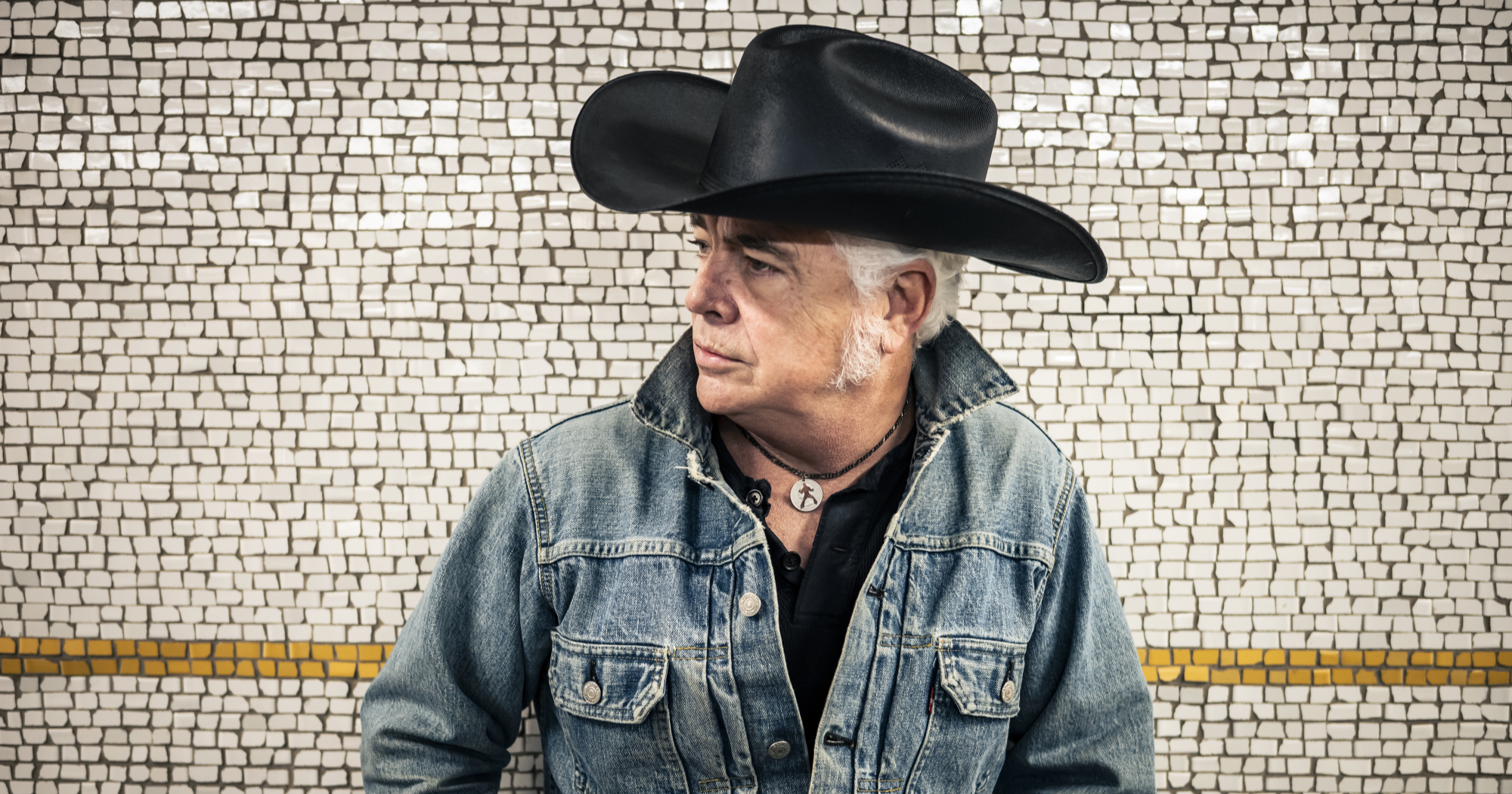
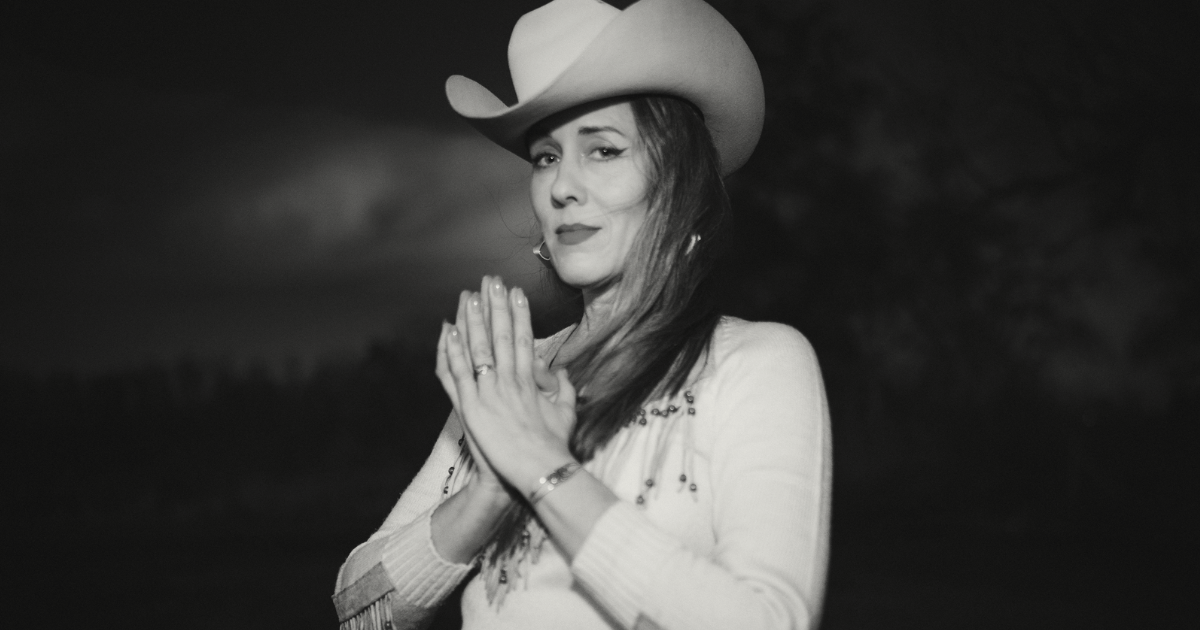
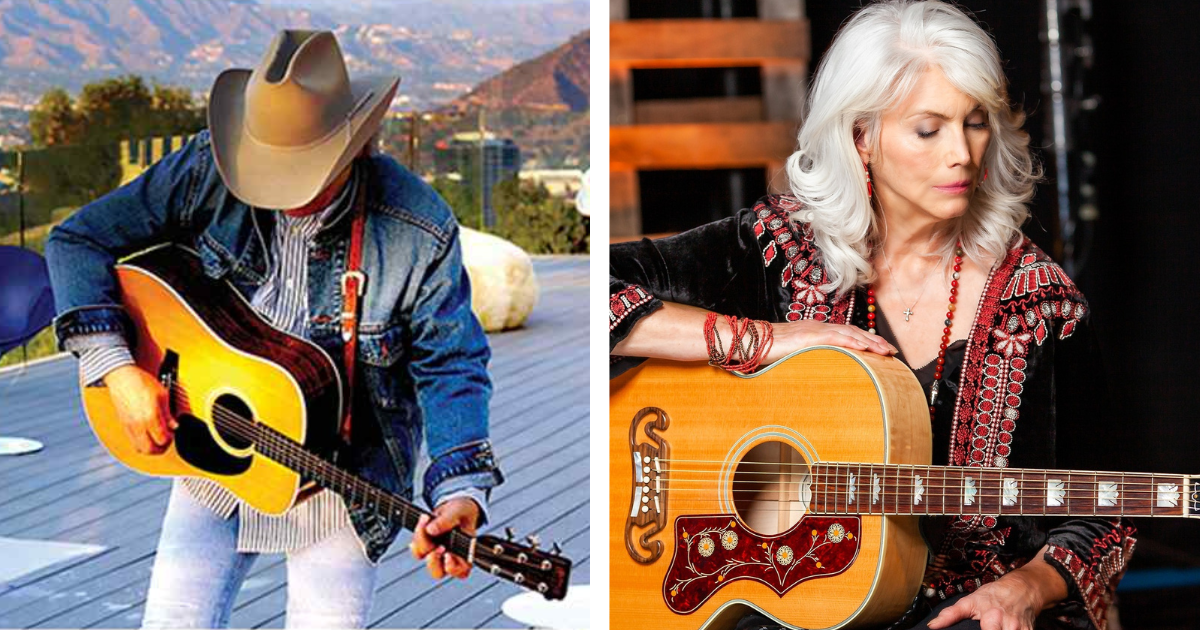
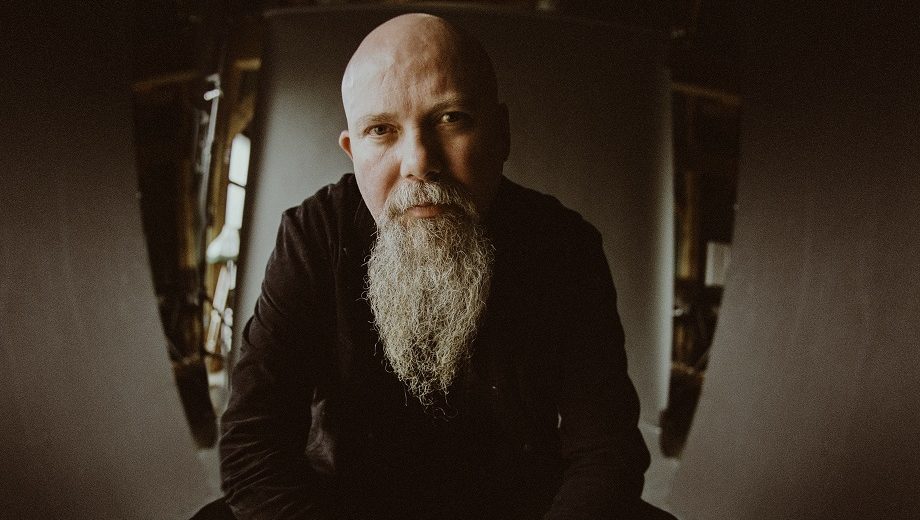
Ameripolitan music can be best defined as original music with prominent roots influence, and it has four categories: honky tonk, Western swing, rockabilly, and outlaw. My Mixtape features a song by an artist that represents the roots and then I’ll play a new artist that directly was influenced by them. You can hear the natural growth of country music when you listen to Lefty Frizzell and Merle Haggard or Kitty Wells and Loretta Lynn back to back. (Many of the roots artists had nicknames, I miss that.)
While some may hear an artist’s influence and say they are copying them, I’m of the opinion that John Lennon shared when asked about The Beatles’ influences. He said, and I paraphrase here, “One’s originality comes out in their inability to imitate their influences.” Very well said. – Dale Watson
“Who’s Gonna Take The Garbage Out” – Loretta Lynn, Ernest Tubb
Ernest Tubb had a distinctive voice as you hear on this song he sings with Loretta Lynn. Here’s the Texas Troubadour with the Coal Miner’s Daughter.
“My Wife Thinks You’re Dead” –Junior Brown
And no one is more evidently influenced by him than Junior Brown.
“Undo the Right” – Johnny Bush
Johnny Bush, otherwise known as the “Country Caruso,” was a drummer for Ray Price, the Cherokee Cowboy, before going out on his own. You would definitely hear that influence if you back-to-back Ray Price to Johnny Bush. Both are huge influences to every singer that grew up in Texas.
“Texas Honky Tonk” – Justin Trevino
This young man from Texas is carrying the Bush torch.
“D-I-V-O-R-C-E” – Tammy Wynette
The First Lady of Country Music, Tammy Wynette was married to the Possum, George Jones. She is easily at the top of women that influenced the newer singers.
“Houston Belongs To Me” – Sunny Sweeney
Singing her own divorce song, here’s Sunny Sweeney!
“Big Balls in Cowtown” – Bob Wills & His Texas Playboys
In the Western swing category this is the master, Bob Wills & His Texas Playboys.
“Riding High in Texas” – Asleep at the Wheel, Billy Strings
Though they’ve been around a while, they still burn up the road and proudly wear Bob Wills as their biggest influence. Ian Stewart sings as guest picker Billy Strings shines.
“Here in Frisco” – Merle Haggard
The Hag has influenced generations and even in death he still does. He once told me he forgot he wrote this song and was glad I brought it up so he can add it to his playlist again.
“This Highway” – Zephaniah OHora
Zephaniah OHora is now based in Nashville and he’s got a lot of great original songs. On this song you can hear the Hag in him.
“Bob Wills Is Still the King” – Waylon Jennings
In the outlaw world there is none more influential than Waylon, and in Texas we were all influenced by Bob Wills.
“Long White Line” – Sturgill Simpson
This particular song draws heavily on Waylon’s influence. And I like it.
“Ramblin’ Man” – Hank Williams
Hank Williams’ voice is one of the most recognizable in music. His songs are timeless and still inspire singers and songwriters alike.
“Thunderstorms and Neon Signs” – Wayne Hancock
You can definitely hear Hank in Wayne Hancock, but his own voice is definitely original, too – as well as his great songwriting.
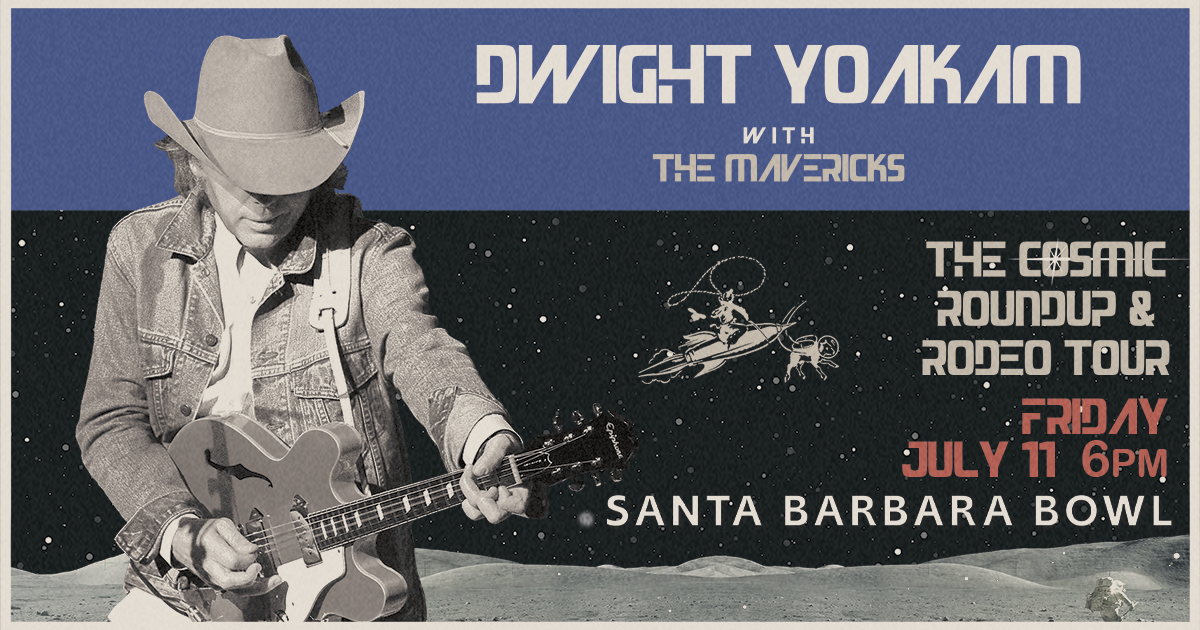
“Guitars, Cadillacs” – Dwight Yoakam
Dwight Yoakam has influenced many a newcomer. Just as he was obviously influenced by Buck Owens. He came along when Nashville needed reminded of its roots.
“Lost in the City Lights” – Johnny Falstaff
Though not well known as of yet, Johnny Falstaff is picking up Dwight’s hat.
“Blue Kentucky Girl” – Loretta Lynn
The Coal Miner’s Daughter definitely left big shoes to fill, but her sassy songs inspired many women artists.
“Don’t You Ever Give Up On Love” – Brennen Leigh
That inspiration can be traced right to Brennen Leigh.
“Good Hearted Woman” – Waylon Jennings, Willie Nelson
Here’s the quintessential outlaw song by the most famously influential artists, the Red Headed Stranger, Willie Nelson, and Waymore, sometimes called Wautawsha, Waylon Jennings.
“Willie Waylon and Whiskey” – Dale Watson
The last song I’ll put in here’s is mine, because with pride I will state, yes, I am heavily influenced by Willie and Waylon. And sometimes whiskey.
Brennen Leigh says she’s been a goner for country music since she was a teenager. But when it comes to her discography, she hasn’t been gone for long. Don’t You Ever Give Up On Love (released October 3) is the musician’s fourth album in five years, and it continues a creative streak that matches her love of traditional country arrangements with clever, well-crafted songwriting.
Recorded in Dayton, Texas, where Leigh now lives, Don’t You Ever Give Up On Love is a mostly up-tempo collection that should appeal to anyone who loves country from its golden eras. Catching up with Good Country, Leigh talks about the turning point in her love of country, her fondness for bluegrass, and how she really feels about one of Nashville’s most famous phrases.
I was curious about the title track, “Don’t You Ever Give Up On Love.” It’s got such a positive feel. Why did you choose that one to put on the cover of your record?
Brennen Leigh: I love the title of it, for one, and for two, I wrote that with a dear friend named Elijah Ocean. He’s a great writer and a player and we kind of came up through the mud together, I’ll say. He told me, “I just was thinking about you as I was writing it.” And not even about me singing it, but me as a person. He sent me the first verse – and I’m a procrastinator and I won’t read people’s texts and I won’t return phone calls – but he knows I love him, he doesn’t care. That’s how songwriters are. But about a month later, when I finally went and listened to it, I said, “Elijah, I hope you haven’t finished that, because I would love to participate.” He said, “Yeah, of course, that’s why I sent it to you.”
So I finished it. And it’s just two verses. That’s the whole song. I love that thing about songwriting, and specifically country music, where it’s just a quick statement and out. So many of the best songs are just a verse and a chorus, or even just a verse. We wrote it in the midst of recording this album and then we recorded it down in Dayton. And it’s like, well, that’s an obvious choice for the album, because it is so positive. I really like performing it.
It’s encouraging, too. Have you had a good response from the crowd with that song?
Yeah, I’ve had a lot of positive feedback from people. On the surface, it’s a love song and it’s a relationship record, but to me, it’s really more of a “Don’t ever give up on yourself” message. Because people come and go, sadly, in our lives, and for me, it’s more a story of resilience.
I think it’s similar to the song “Dumpster Diving,” where it gets the point across in a pretty cool way. You filmed that video for “Dumpster Diving” at the Sagebrush in Austin, right?
We did, and it was hot! It was like 90 degrees in April or something. We brought one of our favorite videographers, Oceanna, down from Nashville, and I just kind of threw her into this situation in Austin, but she rolled with it. She really has a wonderful eye. And we dressed me up and put me in a dumpster. [Laughs]
Then some of the other videos for this project look like ‘60s Nashville country. I love the vintage eyeglasses and that cool yellow-and-orange shirt in the “You’re Finally Hurting” video.
Those are my real glasses! [Laughs] I really have a prescription in them to drive with. And the thing specifically about the “Tell Me” video was that we wanted to make it look like we were the Nashville A-Team in the ‘60s. We were just going to work, like country business casual or Western business casual. Like, how an Anita Kerr or Chet Atkins would show up to work in kind of fancy dress, but casual. Read their charts, put the song down, and smoke a cigarette. You know, we weren’t smoking, but that’s kind of the idea.
“Tell Me” is a simple title, but that song says a lot. What was on your mind as you wrote it?
I was imagining calling somebody in a sweaty panic, like, “Oh, I heard something, I’ve got this feeling, and I need you to confirm my suspicions.” And not getting the answer that you want, but sort of trying to demand this answer. I love country songs that are one-sided conversations. There are so many good ones throughout history. For some reason, the one that is popping into my head is “I Met a Friend of Yours Today.” You’re feeling like a little bit of a psycho, like you’re losing your mind a little bit, and you confront somebody. That’s the sort of song that that is.
People often say country is “three chords and the truth.” Do you like that phrase?
I do like it, but I think in a way it’s not 100 percent accurate. We’re splitting hairs here, but for me, a lot of my writing is at least semi-fictional. Maybe I’m doing myself a disservice as an artist by saying that. But fans want to believe, and I think the listener wants to believe, that this is my story, and this came from me tossing in desperation on my bed and grabbing my notebook.
Well, you know, I’m a songwriter and it’s my job to make up stories. While this record has some truth on it, some of these stories are just straight made up! That doesn’t mean that there’s not feeling behind them, or that I haven’t experienced something similar, but I’m also a private enough person that I’m not going to just air things of a certain nature for the public. I do have lines that I won’t cross. Now, I’ll say some of these are true, word for word, and some of them are not. But that’s what imagination is for.
I think the song is not for me, it’s for the listener. So, if somebody gleaned something that they feel personally in one of these songs, I love that. And probably, as a Western swing person at heart, I should say we have a few more than three chords. But I do really appreciate and love that sentiment of like, “This is just no BS, I’m gonna sing this.” I mean, I like that saying, and I think at its heart, it’s pretty true.
How old were you when country music kind of sparked your interest?
I grew up hearing it around the house, but I was maybe 14 before I went headlong into it.
Was there a song or an artist that pulled you in?
There was one summer when my brother and I were already budding musicians. We were already playing gigs. He was heavily into Robert Johnson. I had gotten into that stuff, too, and I liked oldies. I liked ‘50s and ‘60s rock and roll and soul music, like Buddy Holly and Bessie Smith, and I liked some show tunes. We got into country one summer, courtesy of our parents’ record collection.
Then we got a free ticket – via donating a canned good to the radio station – to see Dwight Yoakam. I think I was turning 15, and I kind of flipped my lid. It was our county fair in Fargo, North Dakota and it was probably September or August – and it was probably 40 degrees. I stood there for that whole concert and went, “Wow!!” [Laughs] Then one friend gave me a box set of Hank Williams and that was huge. I already had heard him, but that Bear Family box set is like six or eight discs. I dubbed it onto tapes and that’s all I listened to.
Somebody else gave me a Smithsonian Folkways set that had Bill Monroe on it and it had Lucinda Williams on it, because it was more of a folk label. It was like, “Wow, there’s all these tentacles to country music.” And my family was into it, too. So, I was pretty well immersed, except geographically. I wasn’t around any live music, but I was around a lot of good recorded music.
Are you a fan of bluegrass?
Oh, yeah! Very much, and I grew up with it. My favorite guitar player is Norman Blake. I get asked all the time, “When’s your bluegrass record?” I would love to do something. I just need to get the songs together, because the bluegrass community, they’re the best fans in the world. Bluegrass fans are so loyal, and they know what they like and they don’t care what you look like. It’s a great culture and it’s diverse, and that’s a beautiful thing. So, yeah, that’ll happen.
You know, I wish there were two of me and I had double time. I’ve been loving East Nash Grass and Thunder & Rain. I love the Kody Norris Show. They’re so poised and so good. I’ve been feeling the influence to do something with bluegrass again, because it’s been a long time.
We can maybe wrap it up with this. What are you looking forward to the most coming up?
I just got off a three-week album release tour that was great fun. Before that, I was everywhere. [Laughs] So, to be completely honest, I’m looking forward to being home for a bit. But I’m also working on another project that’s even weirder than all the other ones I’ve ever done. I don’t want to say too much about it, but it feels like a spiritually important album for me to do. I’ve also got some songs in the can with my other band, Wonder Women of Country. We have a couple singles we’ve recorded and I think we’re going to be out together some next year, too.
You’re so collaborative and you’re not just off doing your own thing. It’s like a luxury to have such a great, rich community around you.
Well, thank you. And it is a luxury. Honestly that’s how I’ve gotten by and kept it sane, because I know it’s not about me. I know it’s about the art, and the art can be more fun than when you involve others sometime. Also, I’ve noticed a lot of the good things that have happened in my career are because I’ve worked with other people on musical collaborations. It’s just so much stronger together.
The accordion is like a cousin you don’t see very often, but who is an integral, colorful member of the family. In country, folk, bluegrass and related roots music from the U.S., the accordion has always been there, more of a presence than you might think. It’s central to styles such as zydeco, Cajun, and conjunto music, but also many foundational bluegrass and country artists – such as Bill Monroe and the Carter Family – used accordion in their music at times. The accordion was in the environment, part of the sound world of mid-20th-century popular music, adding a special touch to bands of all kinds. Although it did not continue to flourish as a central bluegrass or country instrument, there’s no musical reason for that absence: it fits right into the sound. Whether playing rhythm or lead, it can be versatile, punchy, and expressive.
If country music is our unifying theme here, the accordion makes a great lens for viewing the vast diversity of the genre and its extensive family tree: Tejano-conjunto accordion playing, with its polka and Spanish origins and its two-beat and waltz rhythms, is a natural fit with country; zydeco and Cajun music overlap with it seamlessly; Western Swing bands, which merged jazz and country, often included accordionists from the Midwest with Central or Eastern European backgrounds. Of course, the impact of African American blues, swing, and jazz is so strong in all these styles that it’s more than just an “influence” – really a foundation. Jewish klezmer music is also a branch of the “roots music” tree; it came from Europe and developed in the U.S., absorbing many of the same influences as the other genres while making great use of the accordion. – Will Holshouser
“Together Again” – Steve Jordan
The incredible Esteban “Steve” Jordan grew up playing conjunto music in Texas and expanded his repertoire to include country, Latin music, rock, zydeco and more. He was known as “El Parche” for the patch he wore over his blind eye and also as the “Jimi Hendrix of the accordion,” since he played through an effects pedal (flanger or phaser). On his version of this Buck Owens tune, he plays many roles brilliantly: lead vocals, accordion solo, fills and accompaniment.
“J’ai Eté-Z-Au Bal” – Steve Riley & the Mamou Playboys
Steve Riley is one of the finest Cajun accordionists working today; this blistering version of a classic Cajun tune (“I Went to the Dance”) shows his virtuosity, the Cajun (diatonic) accordion in a lead role, and his band’s deep groove.
“Tennessee Waltz” – Pee Wee King & His Golden West Cowboys
Pee Wee King was born Julius Frank Anthony Kuczynski to a Polish-American family in Wisconsin. He learned accordion from his father, who played in a polka band, and went on to become a famous Western Swing bandleader and write the music for this country classic. His beautiful, single-reed accordion fills and moving thirds sound totally country, while revealing a Slavic touch.
“Blues de Basile” – Amédé Ardoin
Amédé Ardoin made some of the very first accordion records in Louisiana and is a common musical ancestor of all zydeco and Cajun accordion playing. His innovative, rhythmic, virtuosic accordion style and haunting vocals won him a great reputation both inside and outside his Afro-Creole community. He often played dances and made records with his close musical partner, Cajun fiddler Dennis McGee, including “Blues de Basile” in 1930. His life ended tragically when he was beaten by white vigilantes.
“Hard to Love Someone” – Clifton Chenier
Known as the King of the Bayous, Chenier brought together southwestern Louisiana zydeco rhythms and Delta blues. On this slow blues tune recorded in 1970, his fluid improvising and support of his own singing is nothing short of glorious. His brother Cleveland Chenier plays the rubboard.
“Bluegrass Special” – Bill Monroe (with Sally Ann Forrester)
Most people know that Bill Monroe defined the classic bluegrass sound. Some may not know that an early version of his band, The Blue Grass Boys, included a Blue Grass Girl, Wilene “Sally Ann” Forrester, on accordion. Her solid rhythm playing and all-too-short accordion break add warmth to this early instrumental, a 12-bar blues. If things had worked out just a little differently, maybe every bluegrass band today would include an accordion! (Hey, it’s not too late, folks.)
“Root, Hog or Die” – Mother Maybelle & The Carter Sisters (with Helen Carter)
Later in her life, Mother Maybelle Carter of the iconic Carter Family had a long performing career with her daughters. The group featured Helen Carter playing great accordion and often Chet Atkins on guitar. Here, too, the influence of swing and blues is readily apparent. “Root, hog, or die” is an old expression that means “you’re on your own.”
“Alon Kouri Laba” – Corey Ledet Zydeco
Corey Ledet, one of today’s most exciting zydeco accordionists, plays beautifully and sings in Louisiana Creole on this high-energy tune from his album Médikamen (2023).
“American Without Tears” – Elvis Costello (with Jo-El Sonnier)
Accordionist Jo-El Sonnier brings his sensitive touch and gorgeous Cajun waltz style to this song from Elvis Costello’s album King of America. (Rock producers and engineers, please take note: this is where an accordion should be in the mix – loud enough that it can breathe dynamically and find its place among the other instruments.)
“Shouting Song” – Will Holshouser
Here’s a tune from my new album, The Lone Wild Bird. I wrote “Shouting Song” with the sound of shape note singing in mind. This is a choral tradition in the rural U.S., mostly in the South, with a unique sound: shape note composers ignored (or just didn’t know about) many European harmonic rules which disallowed features like parallel fifths and chords with only two notes. Along with influences from various folk traditions and camp meeting spirituals, that stark approach to harmony gives the style its sound, which I use here as a point of departure.
“Un Mojado Sin Licensia” – Flaco Jimenez
The creative genius of the great Flaco Jimenez is on full display in this conjunto song about the hardships faced by a Mexican immigrant in Texas. His rhythmic drive, melodic inventiveness, and roller-coaster chromatic runs are thrilling to the ears.
“Streets of Bakersfield” – Dwight Yoakam (with Flaco Jimenez)
Here’s Flaco again, on a recording that went to the top of the country charts in 1988. This song was written by Homer Joy, first recorded by Buck Owens in 1972, and re-done here by Dwight Yoakam with both Buck and Flaco as guest stars.
“Spadella” – Spade Cooley (with Pedro DePaul)
Accordionist and arranger Larry “Pedro” DePaul grew up in Cleveland, Ohio, where he studied music at the Hungarian Conservatory. Spade Cooley, originally from Oklahoma, was a popular Western Swing bandleader in the LA area. There’s a grisly tale behind this tune: Cooley wrote it for his wife Ella, who he was convicted of murdering in 1961.
“Second Avenue Square Dance” – Dave Tarras with the Abe Ellstein Orchestra
Any discussion of the accordion in American roots music should include klezmer, Eastern European Jewish music that came to the U.S. and absorbed influences such as the drum kit, certain jazz band formats, etc. On this tune the great clarinetist Dave Tarras plays the lead, but the anonymous accordionist is heard prominently, playing beautiful fills and rhythm, harmonizing with the melody, and using rich chords to blend with the horns. Second Avenue in Manhattan was the epicenter of the Yiddish theater scene, which had a huge impact on Broadway. The title could be just a lark, or a nod to the musical kinship between klezmer and country music!
“Atlantic City” – The Band (with Garth Hudson)
Garth Hudson’s adventurous playing with The Band carved out a role for the accordion in that kind of rock music. (He also played the horizontal keyboards: organ, etc.) I had the thrill of meeting him when we both played on Martha Wainwright’s live Edith Piaf tribute album (Sans Fusils, Ni Souliers à Paris). Unfortunately, the producers had us playing on different tunes, not at the same time! On this cover of a Bruce Springsteen song, recorded in 1993, Garth creates a fantasy using multi-tracked layers of accordion and organ.
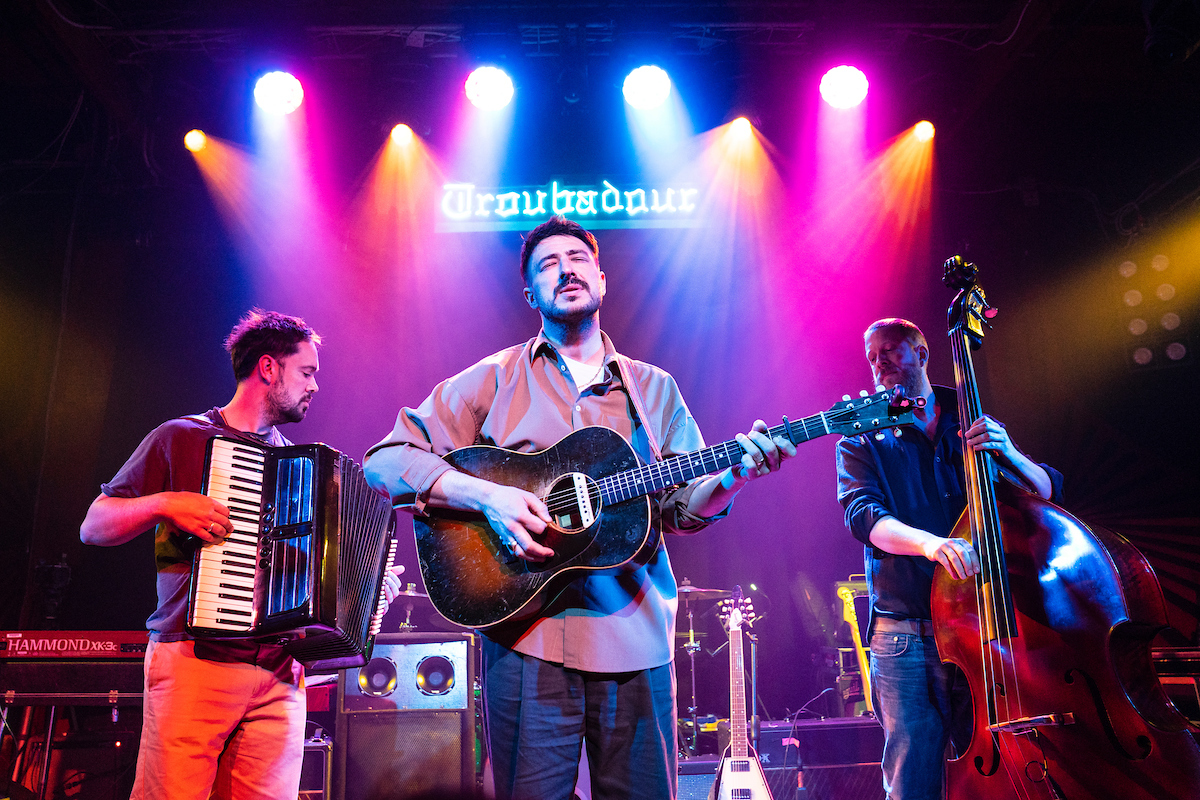
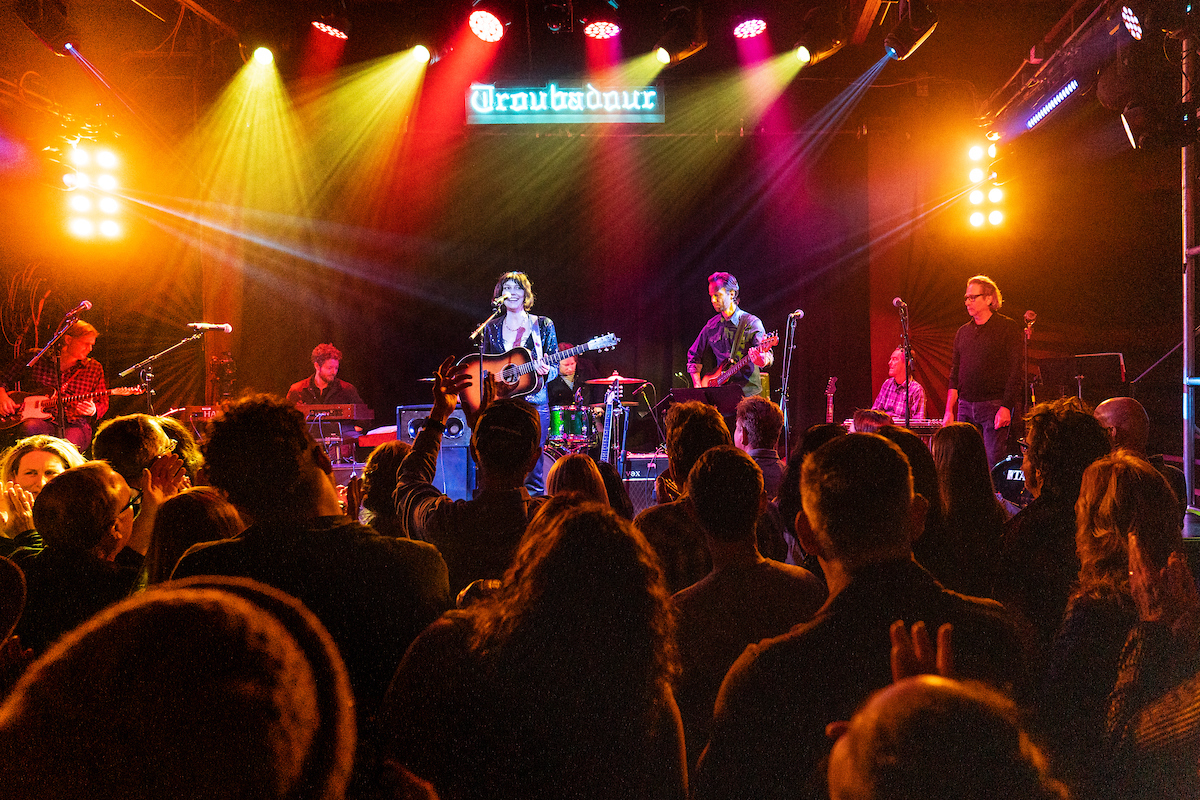
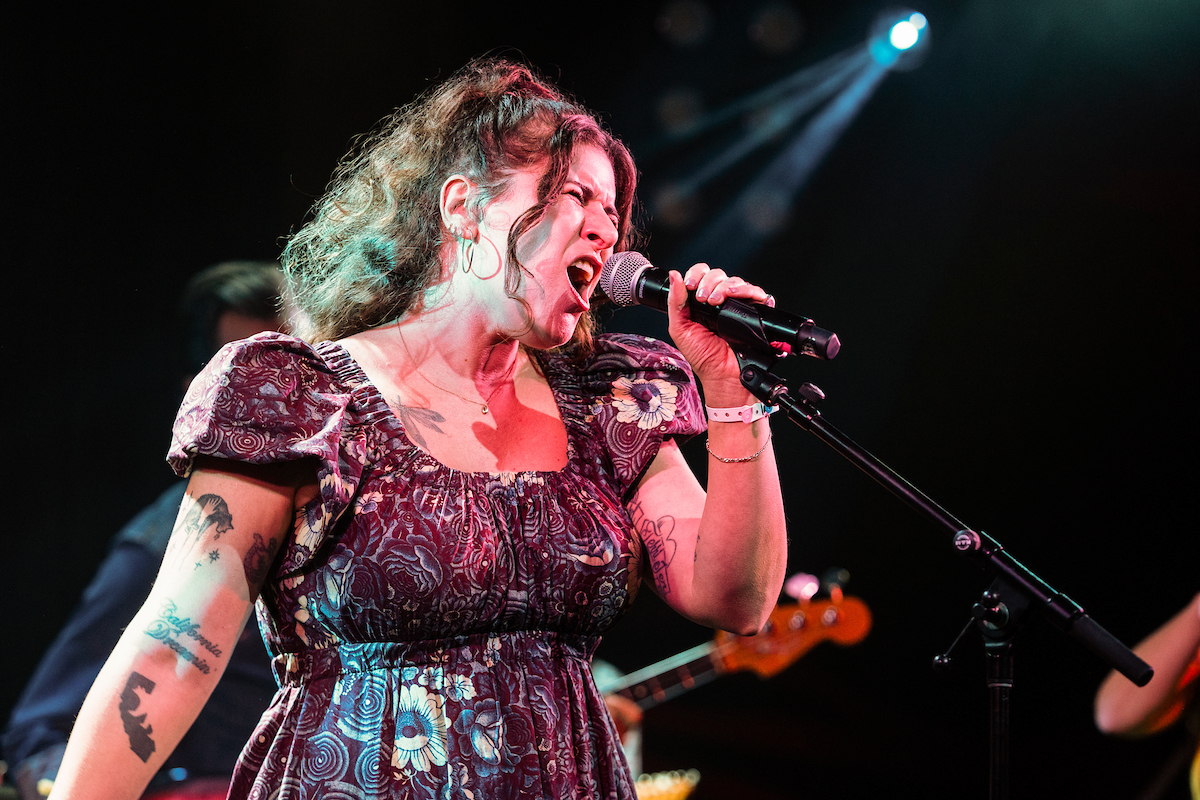
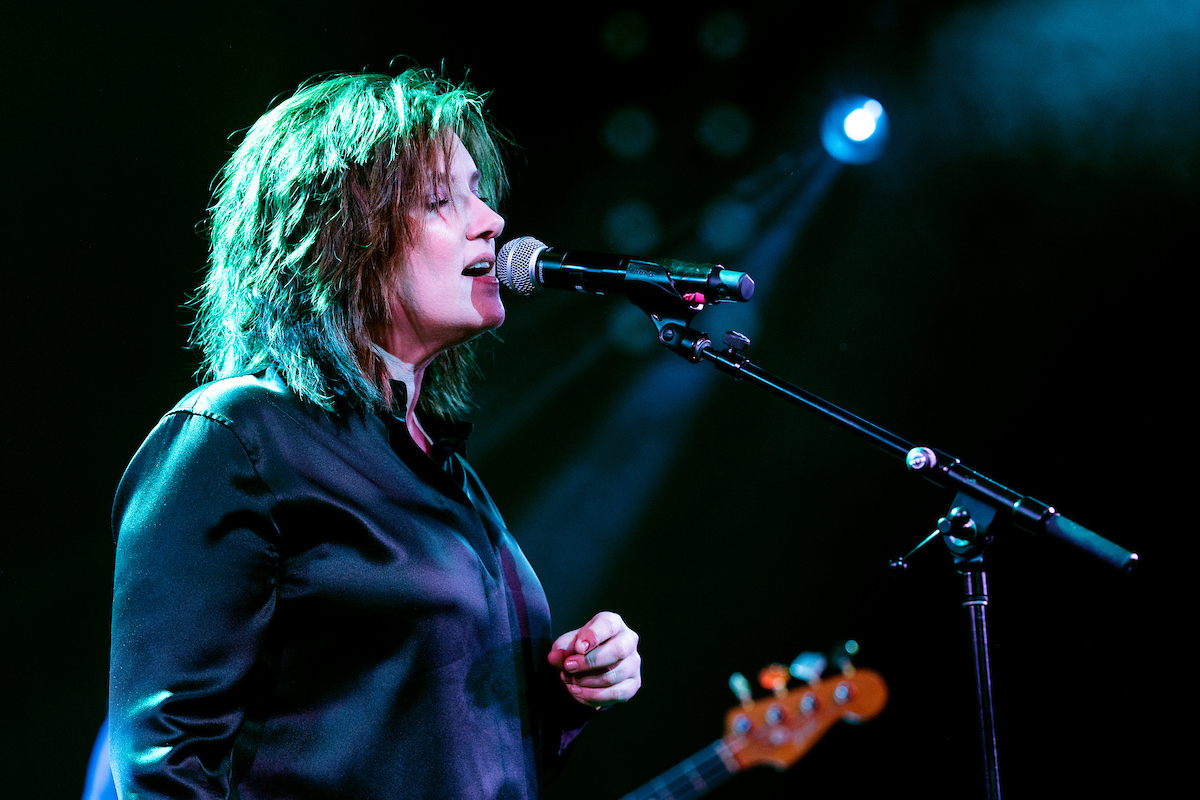
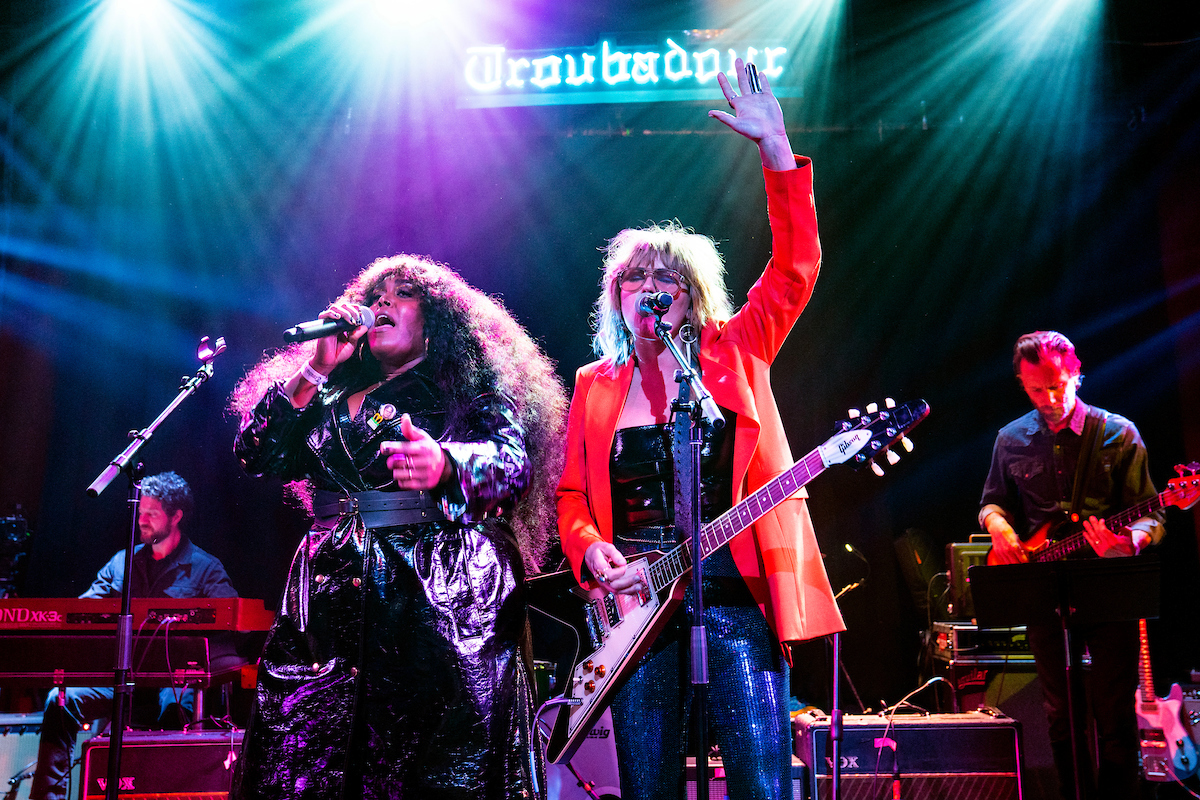
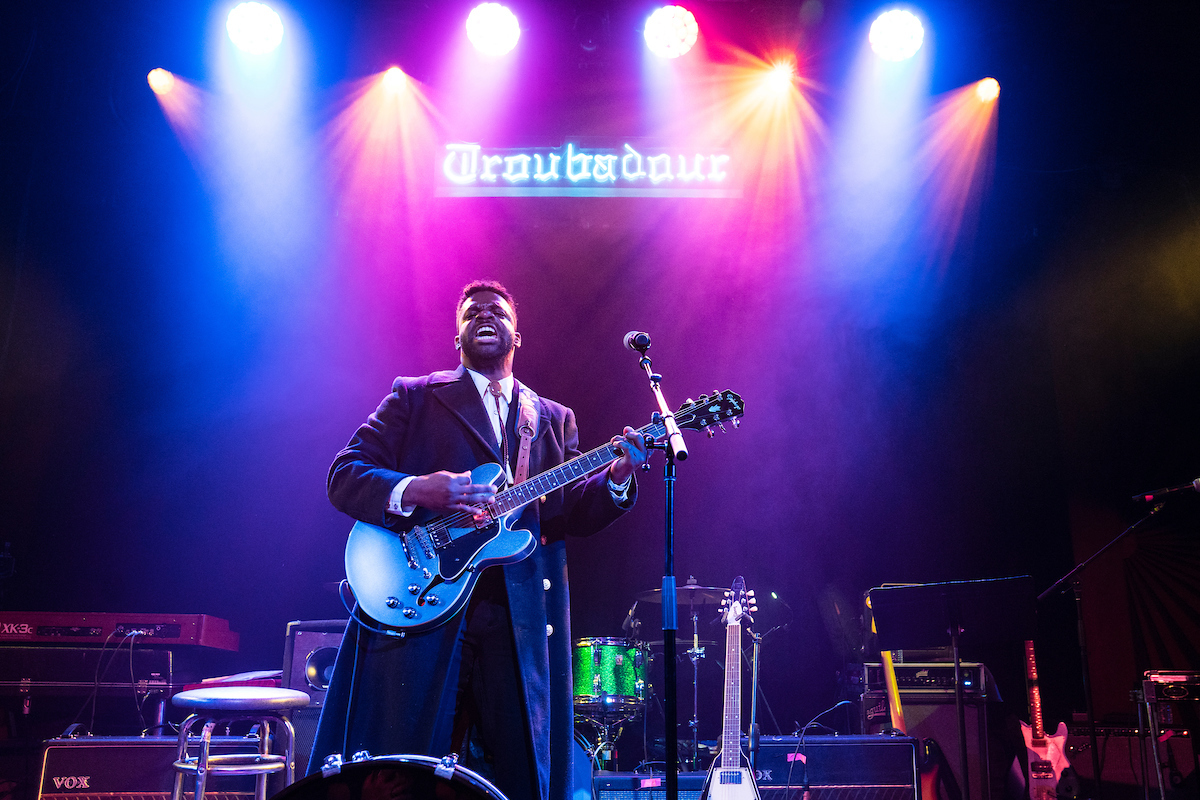
Few artists are more associated with Americana music than Lucinda Williams, even as her incredible career is hard to categorize. Her Grammy wins range from Best Country Song (“Passionate Kisses”) to Best Contemporary Folk Album (Car Wheels on a Gravel Road) to Best Female Rock Vocal Performance (“Get Right With God”). Just a few days following her 70th birthday, the Americana Music Association hosted an impressive all-star tribute concert at the fabled Troubadour club in Los Angeles on Saturday, February 4. The intimate performances underscored Williams’ versatility as a songwriter, with each of the performers putting their own personal stamp on her songs without ever losing the straightforward and often sensual lyricism that she’s known for.
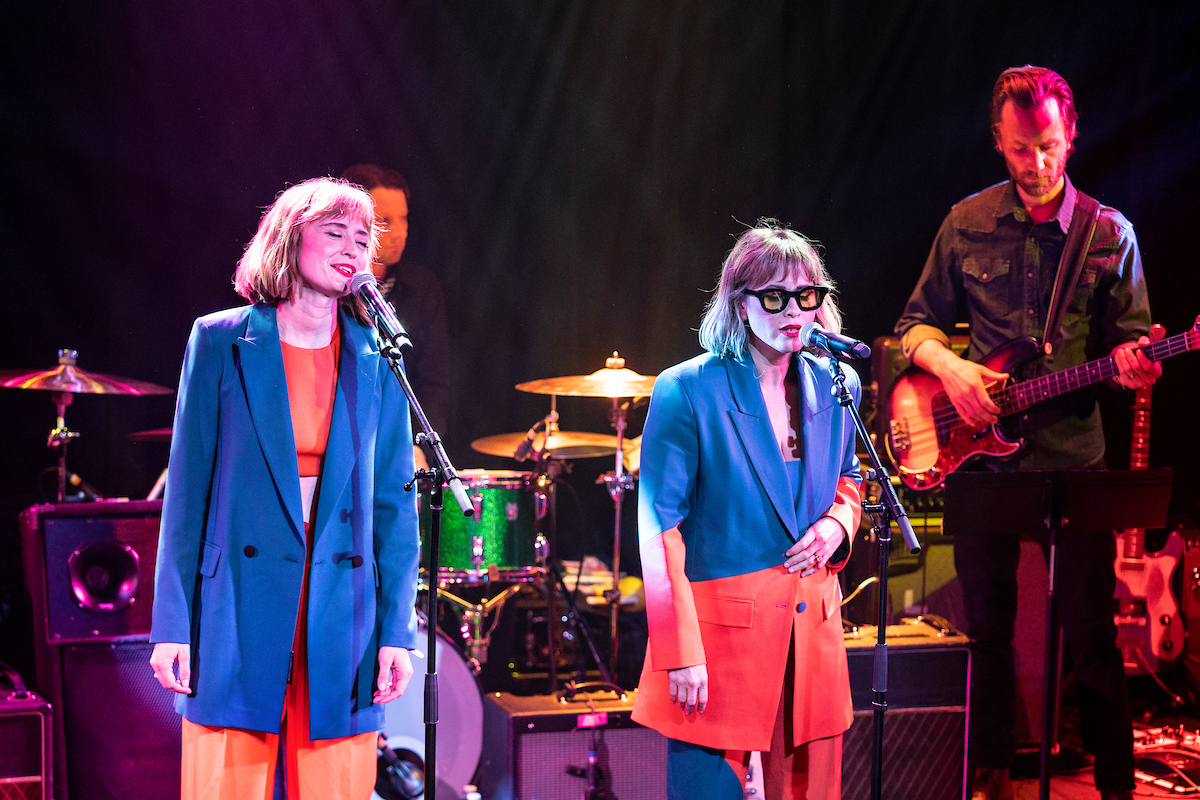
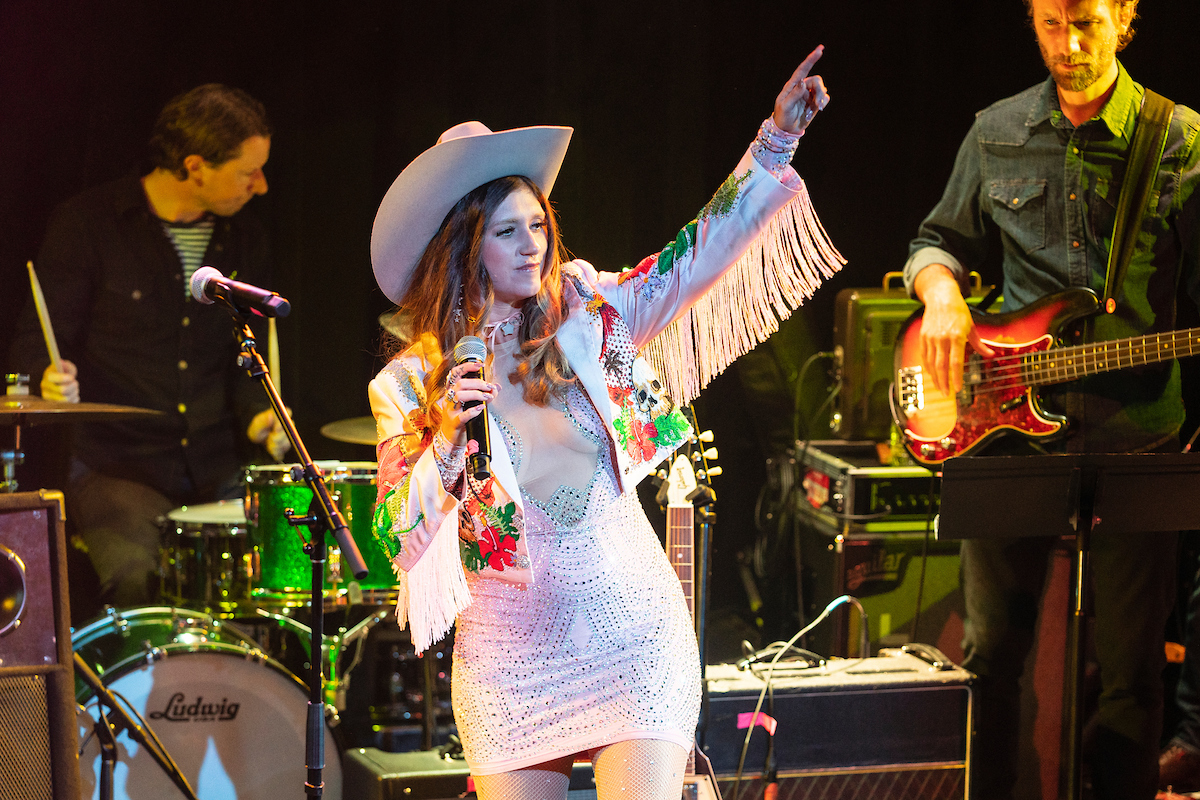
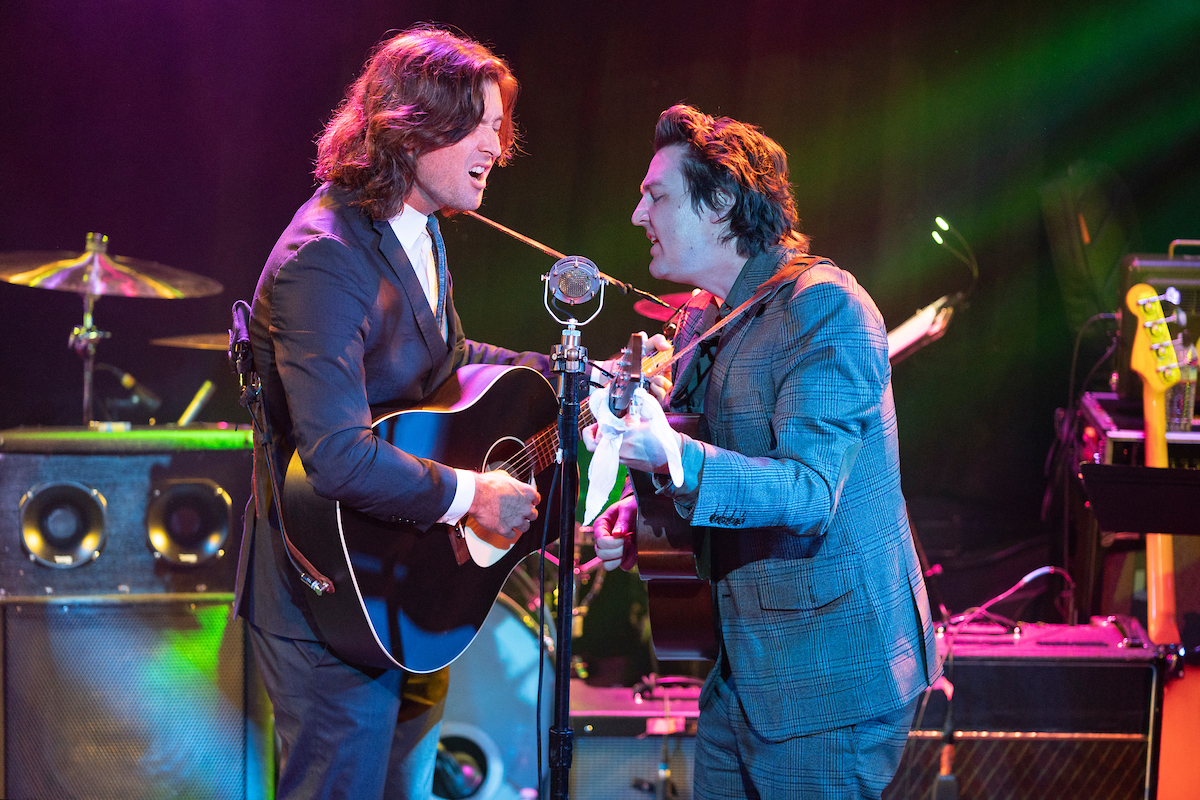
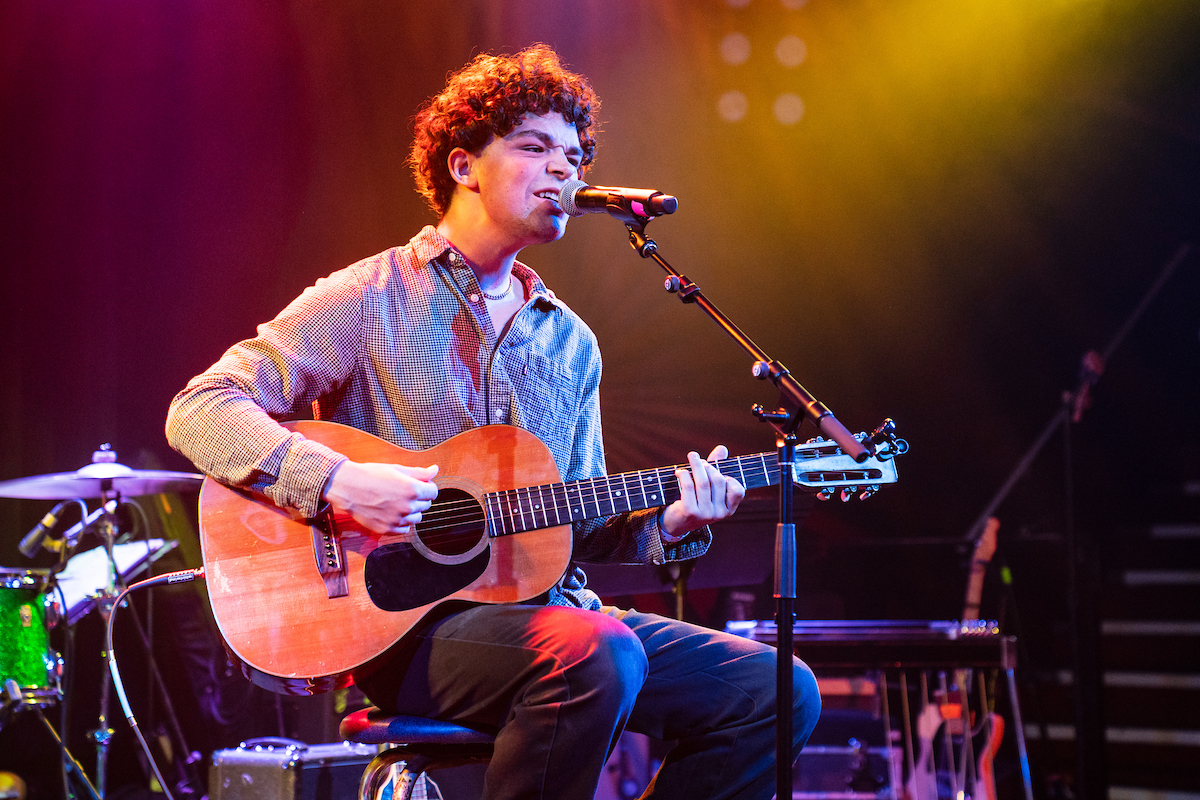
Enjoy photos from the AMERICANAFEST Pre-Grammy Salute to Lucinda Williams:
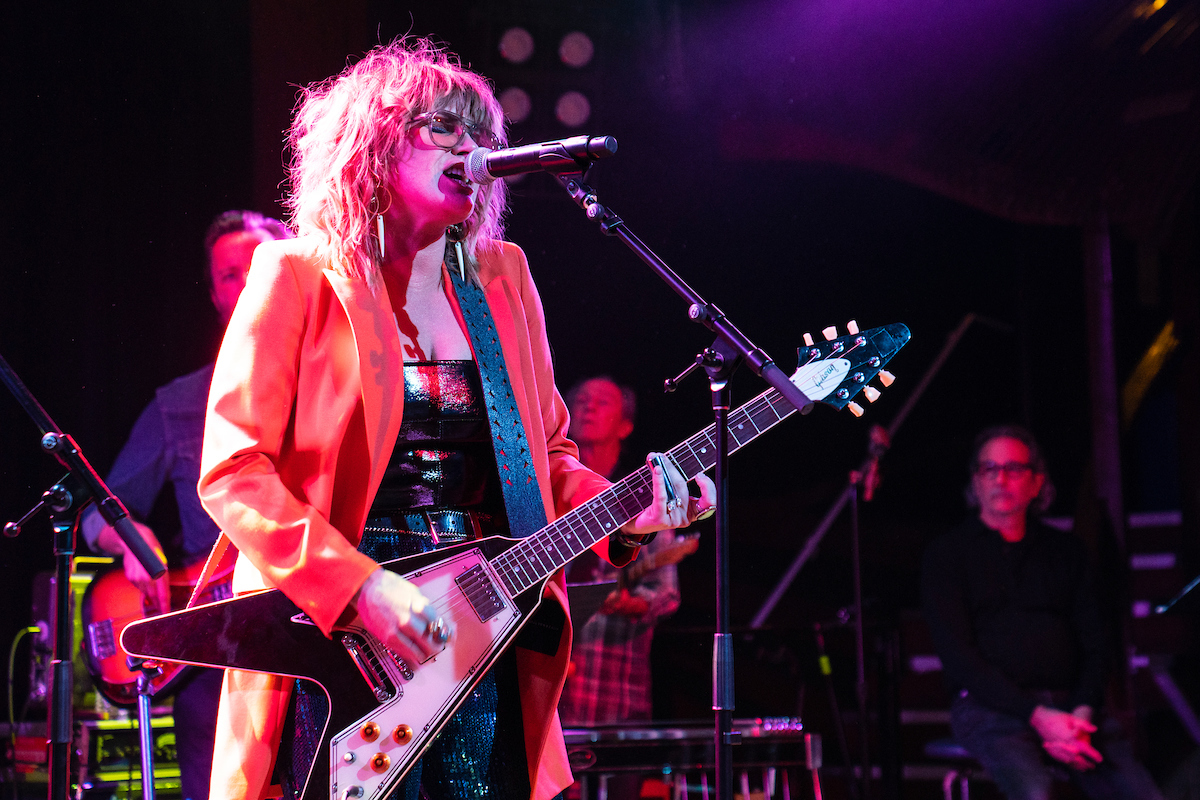
Grace Potter kicks off the AmericanaFest Pre-Grammy Salute to Lucinda Williams.
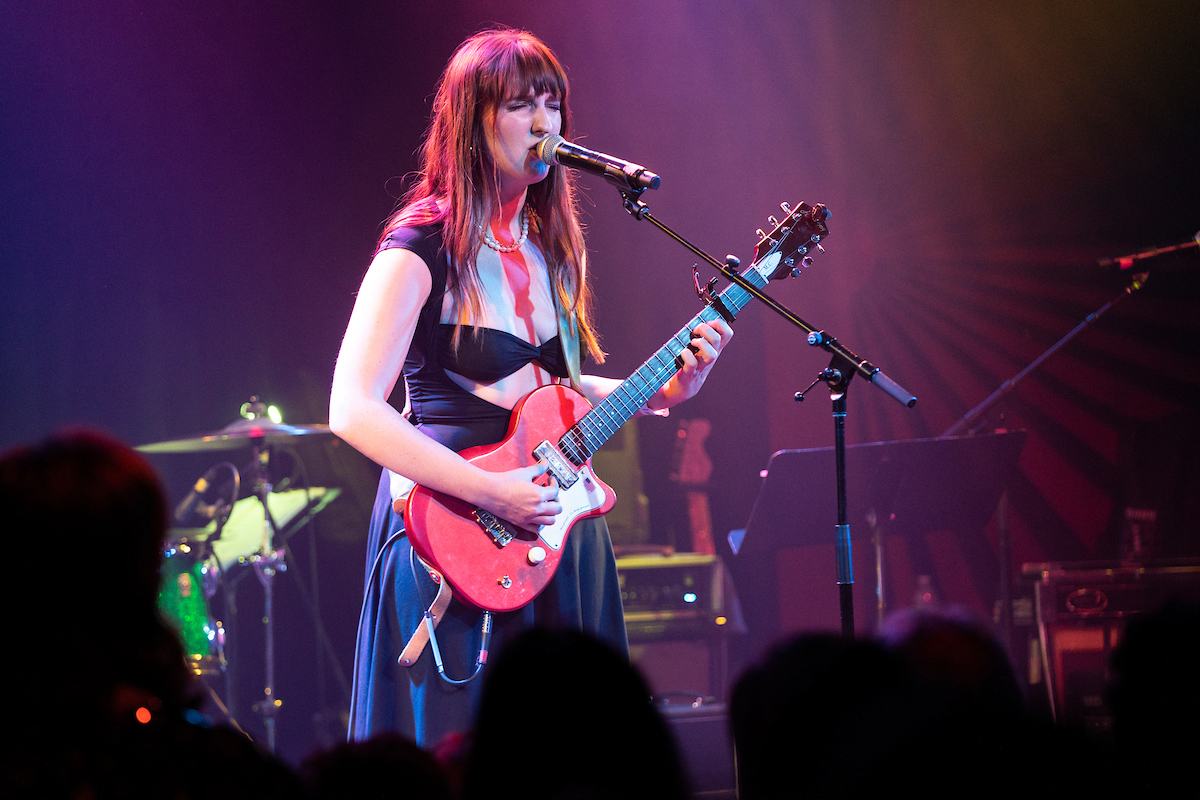
Jade Bird performs at the AmericanaFest Pre-Grammy Salute to Lucinda Williams.
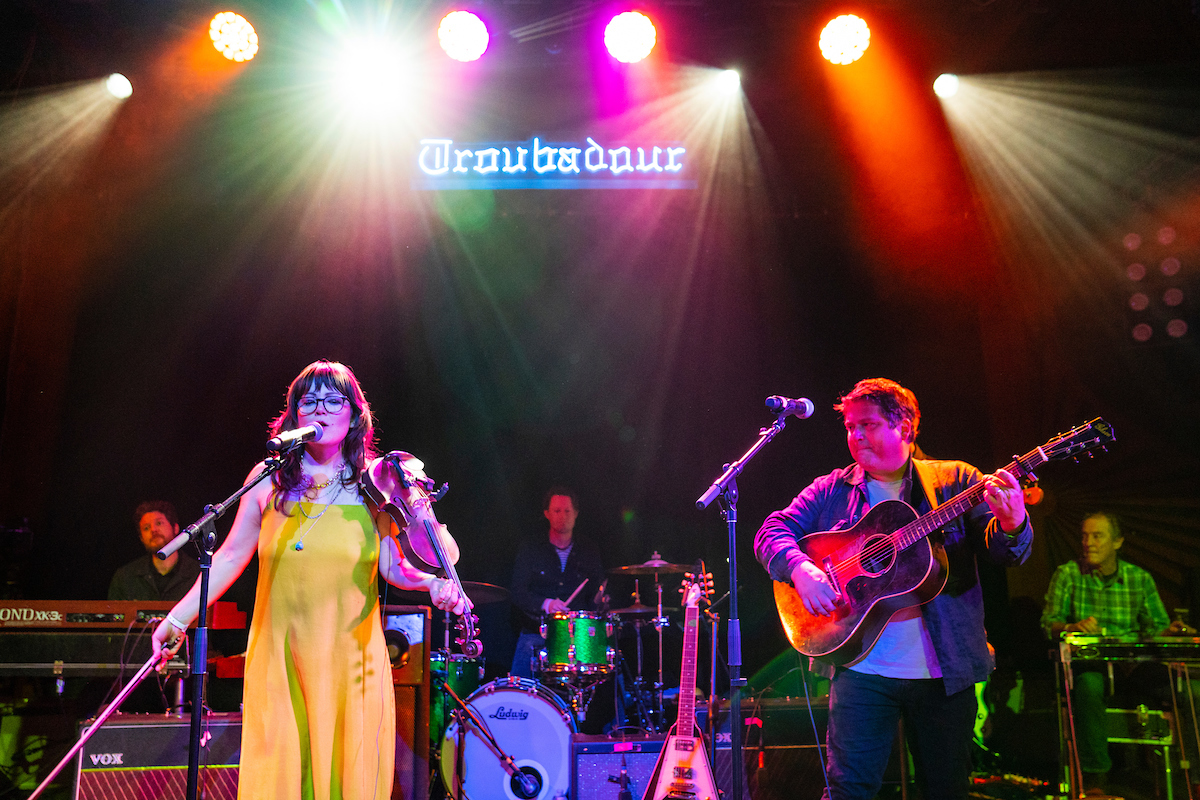
Sean & Sara Watkins at AmericanaFest Pre-Grammy Salute to Lucinda Williams.
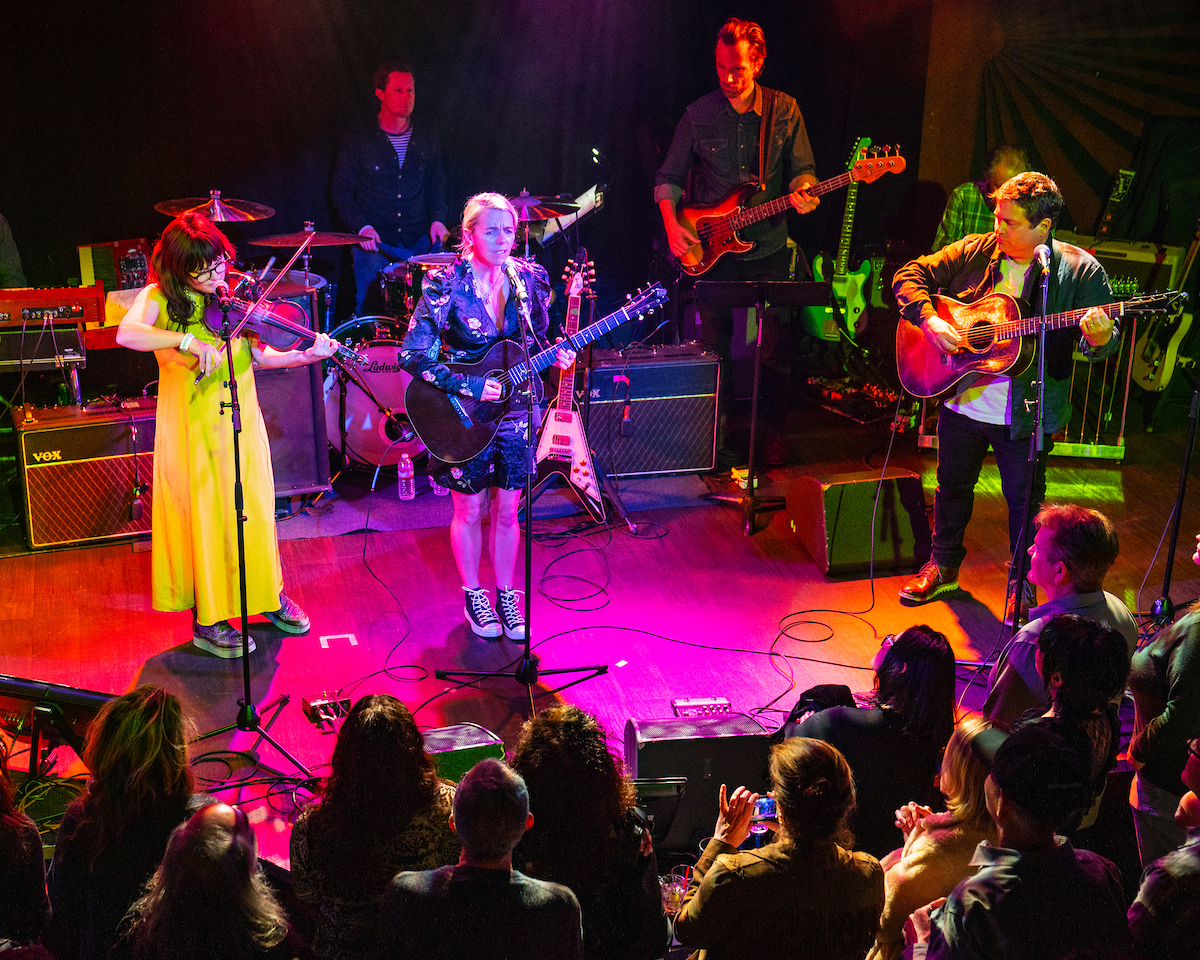
Aoife O'Donovan joined by Sean & Sara Watkins at the AmericanaFest Pre-Grammy Salute to Lucinda Williams.
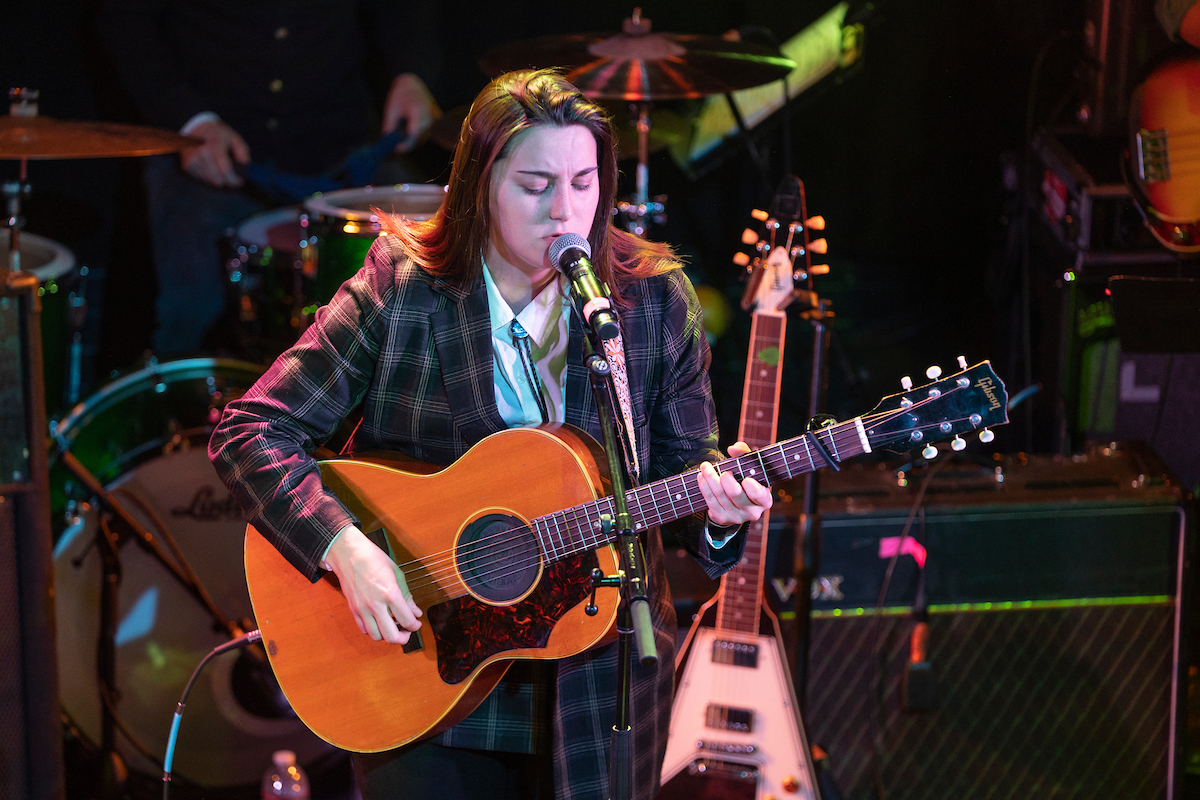
Katie Pruitt performs at the AmericanaFest Pre-Grammy Salute to Lucinda Williams.
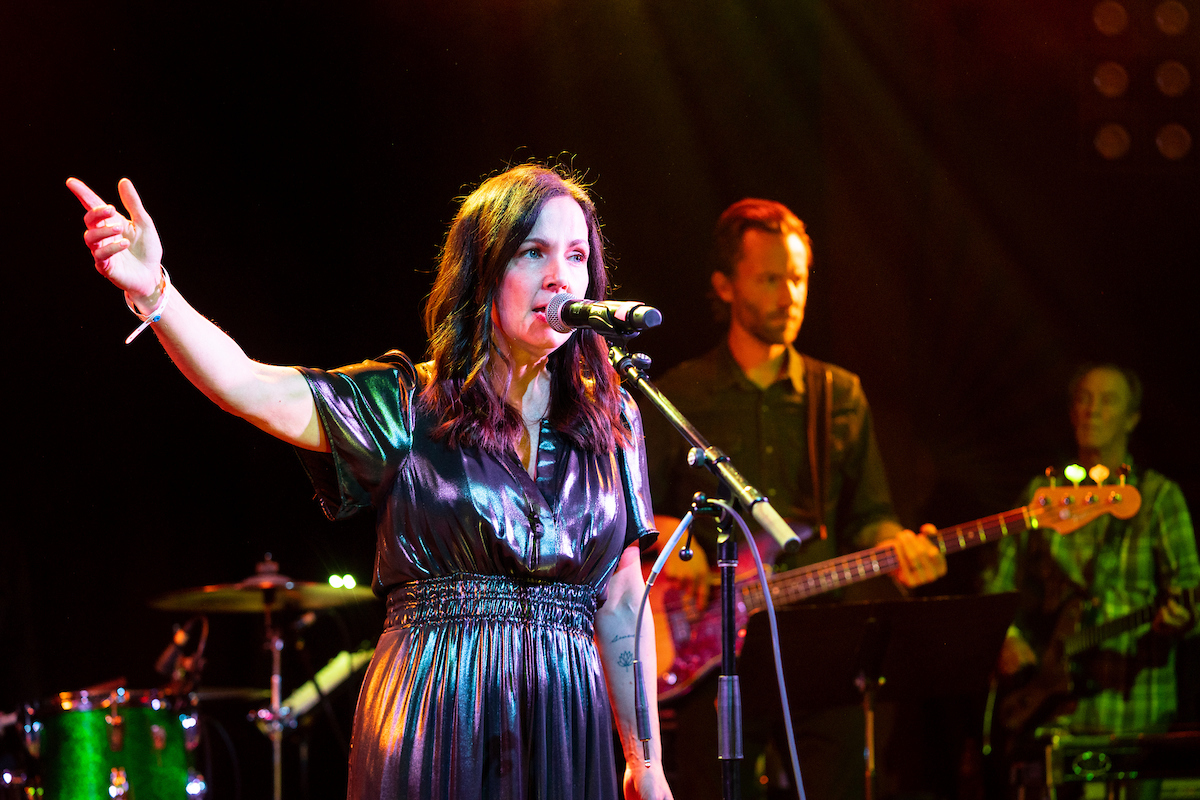
Lori McKenna at the AmericanaFest Pre-Grammy Salute to Lucinda Williams.
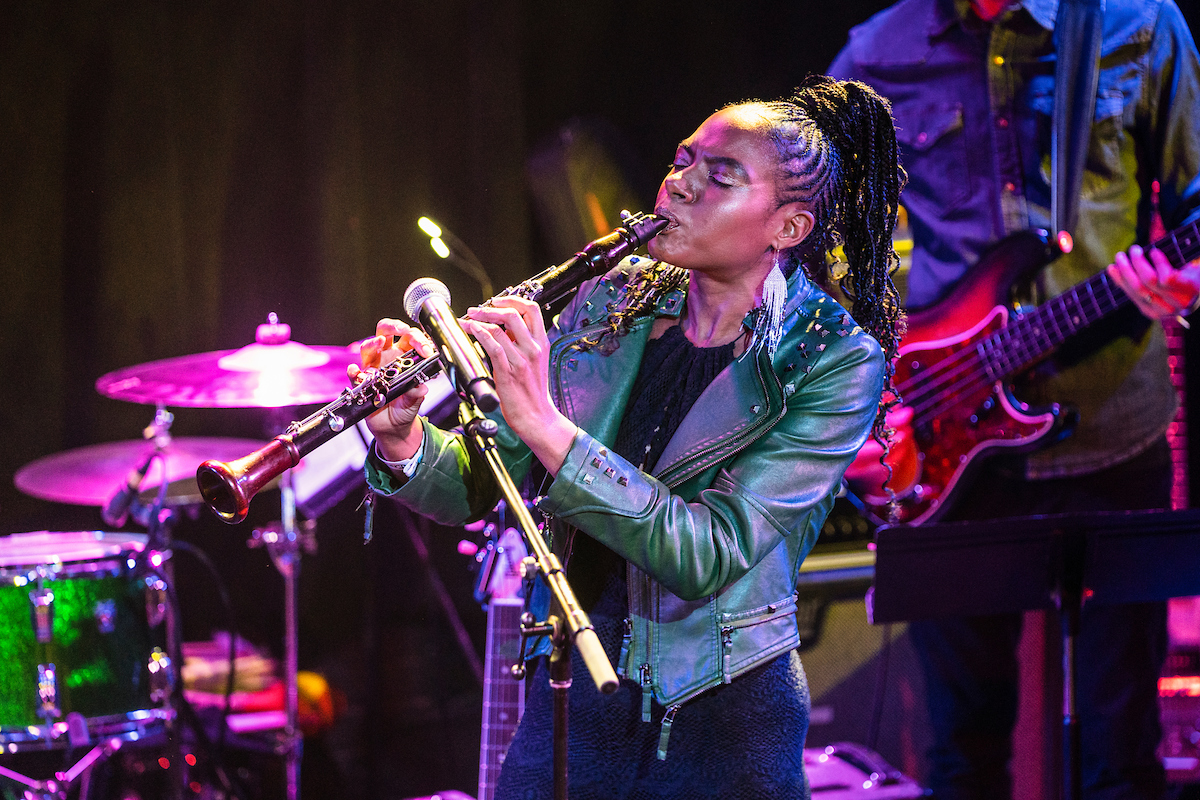
Allison Russell plays clarinet at the AmericanaFest Pre-Grammy Salute to Lucinda Williams.
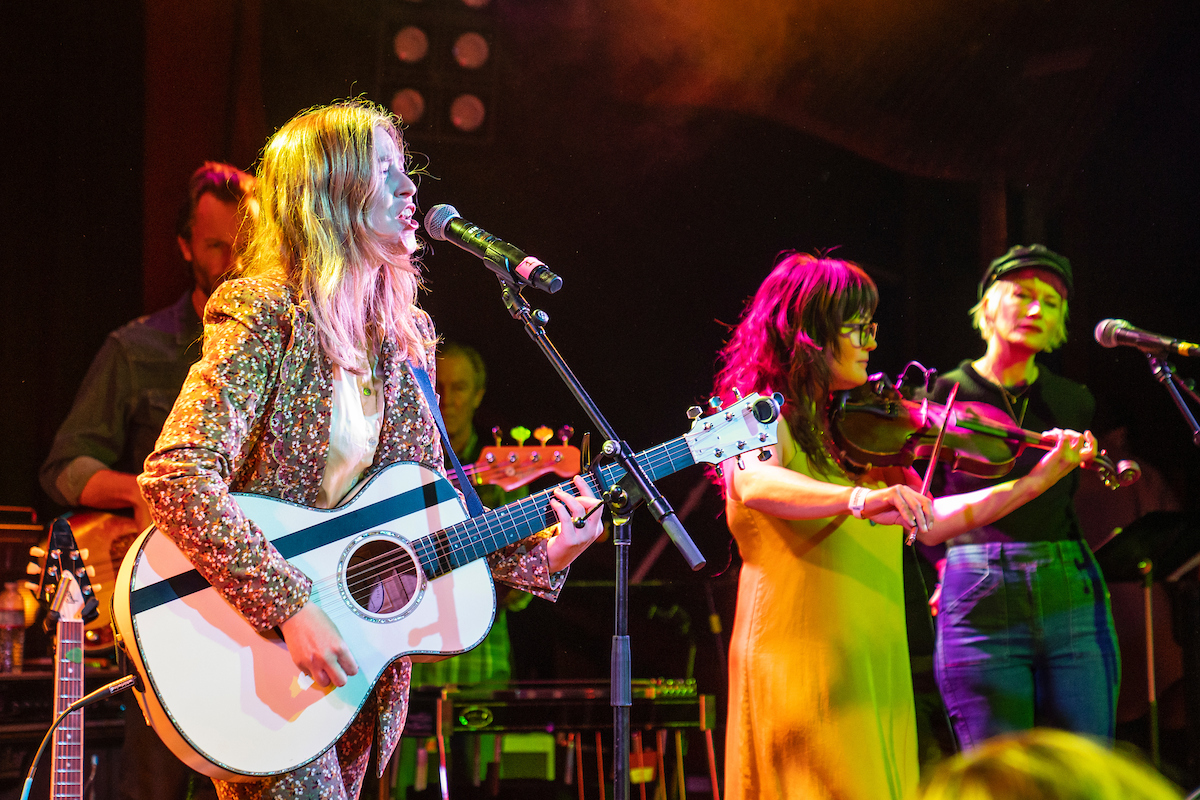
Now Grammy winner Molly Tuttle at the Troubadour for the AmericanaFest Pre-Grammy Salute to Lucinda Williams.
Bethany Cosentino at the AmericanaFest Pre-Grammy Salute to Lucinda Williams.
Brandy Clark sings at the AmericanaFest Pre-Grammy Salute to Lucinda Williams.
Brittney Spencer and Grace Potter collaborate at the AmericanaFest Pre-Grammy Salute to Lucinda Williams.
Lucius perform at the AmericanaFest Pre-Grammy Salute to Lucinda Williams.
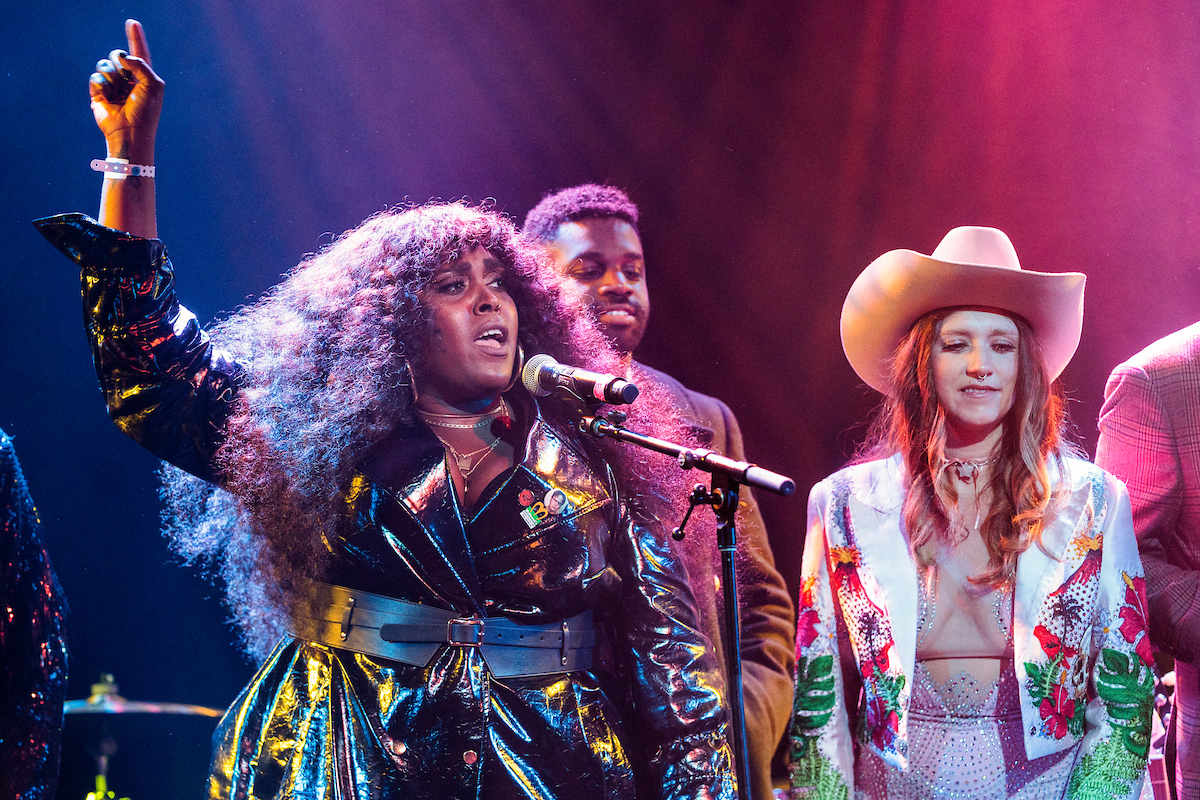
Sierra Ferrell at the AmericanaFest Pre-Grammy Salute to Lucinda Williams.
The Milk Carton Kids perform at the AmericanaFest Pre-Grammy Salute to Lucinda Williams.
Charlie Hickey at the AmericanaFest Pre-Grammy Salute to Lucinda Williams.
Abraham Alexander at the AmericanaFest Pre-Grammy Salute to Lucinda Williams.
Our January Artist of the Month, Madison Cunningham, performs at the AmericanaFest Pre-Grammy Salute to Lucinda Williams.
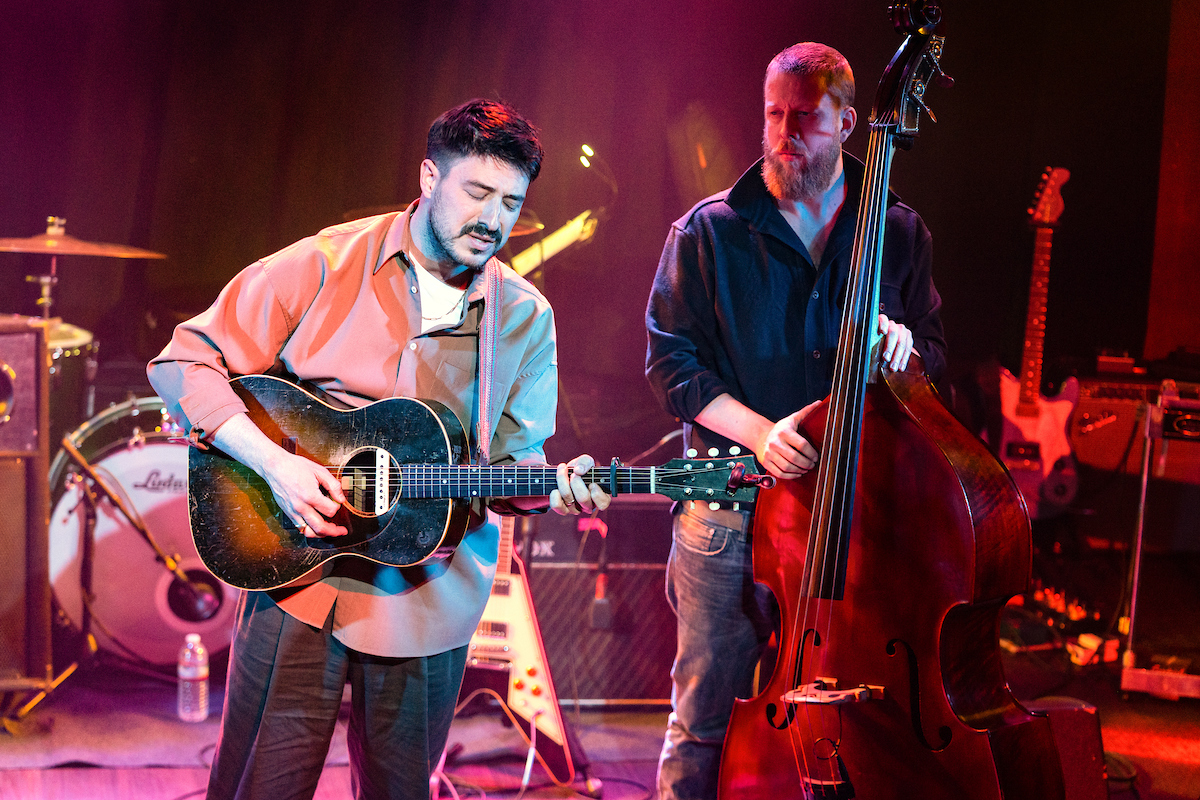
Mumford & Sons at the AmericanaFest Pre-Grammy Salute to Lucinda Williams.
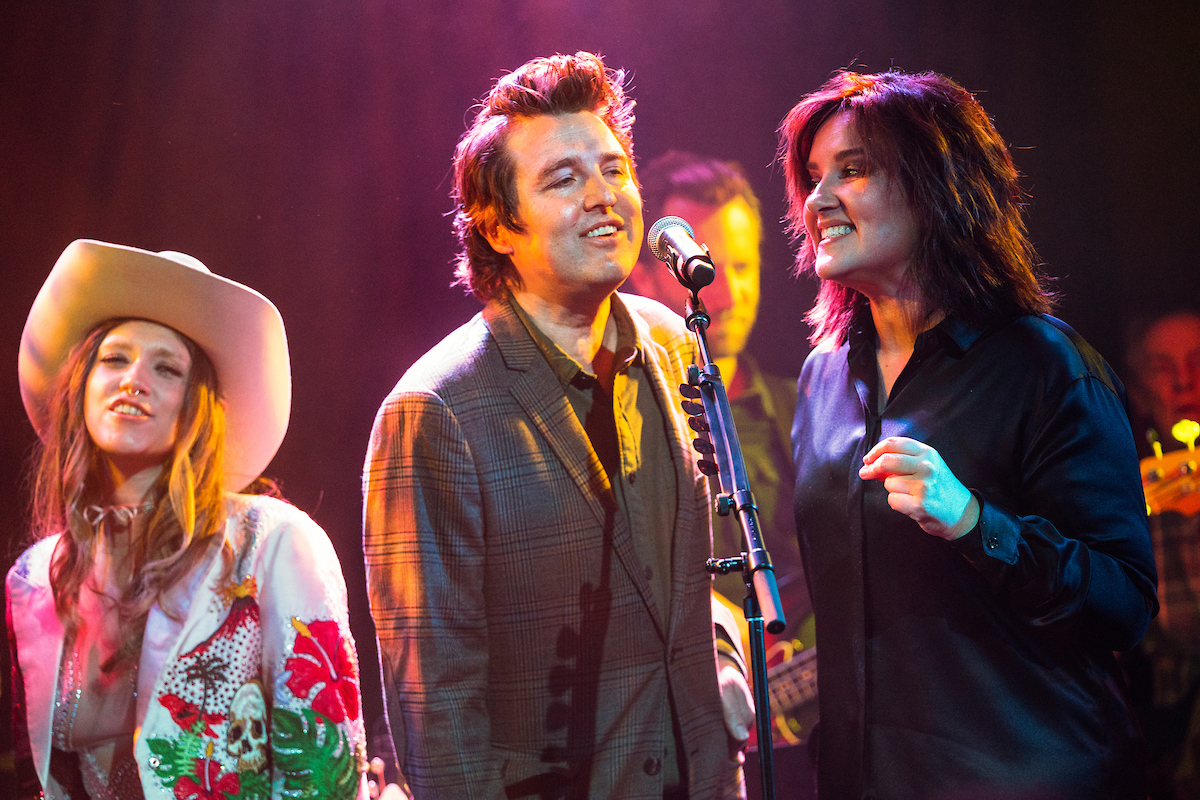
Sierra Ferrell, Kenneth Pattengale of Milk Carton Kids, and Brandy Clark during the grand finale of the AmericanaFest Pre-Grammy Salute to Lucinda Williams.
Brittney Spencer and Sierra Ferrell during the finale at the AmericanaFest Pre-Grammy Salute to Lucinda Williams.
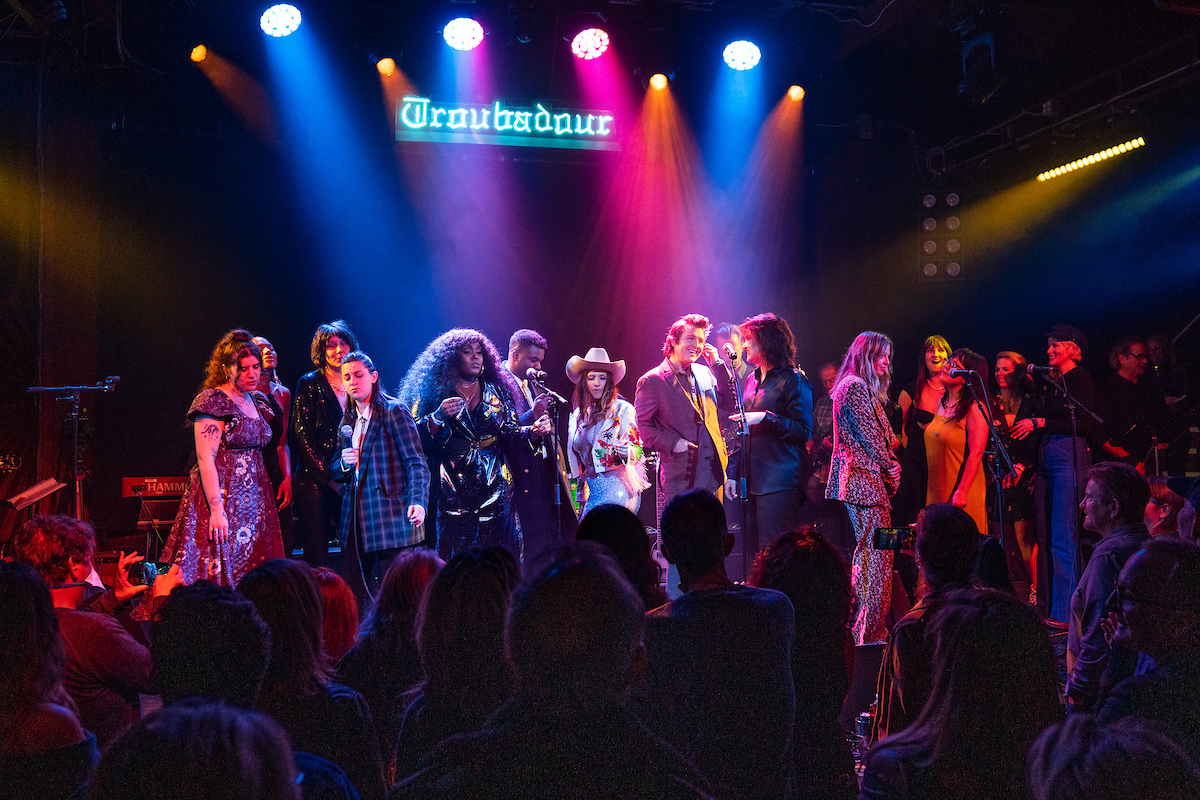
The grand finale of the AmericanaFest Pre-Grammy Salute to Lucinda Williams.
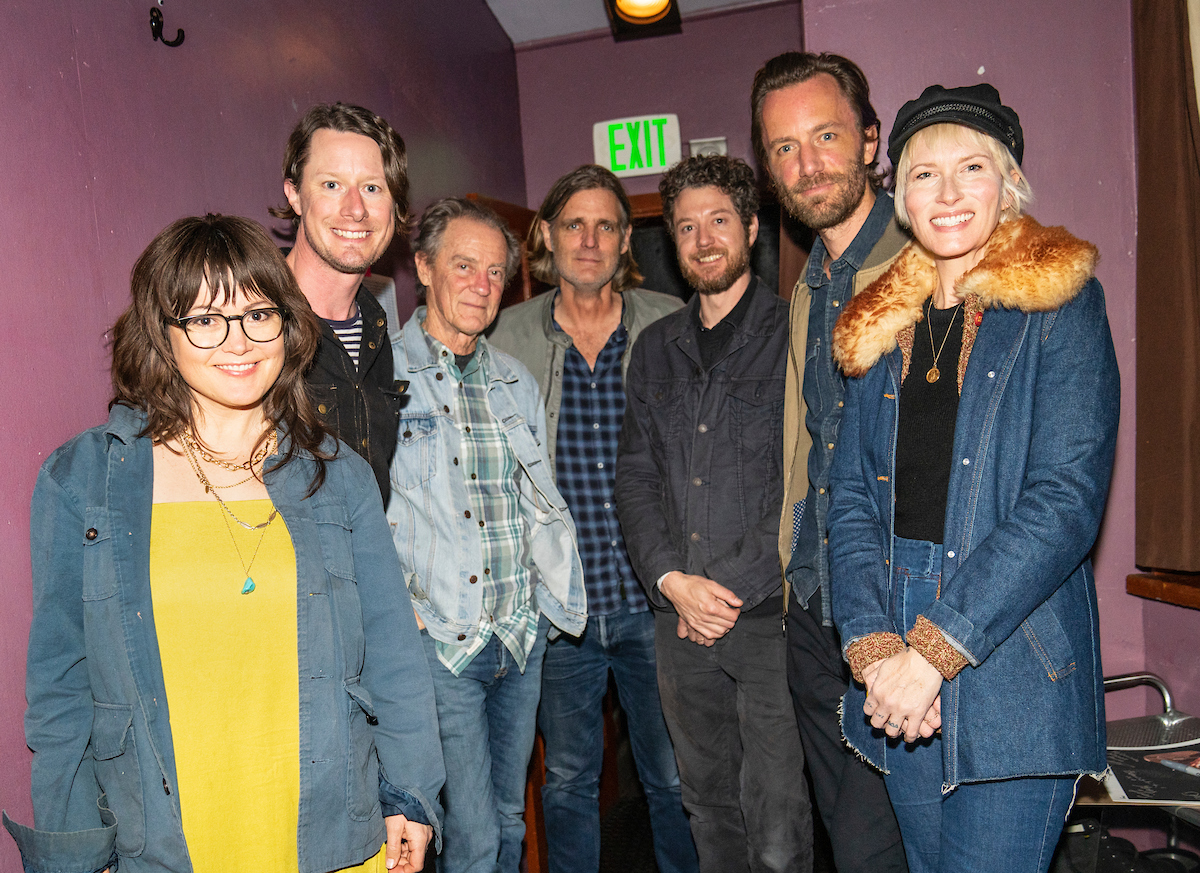
The evening's house band backstage at the AmericanaFest Pre-Grammy Salute to Lucinda Williams. L to R: Sara Watkins, Mark Stepro, Greg Leisz, Val McCallum, Lee Pardini, Daniel Rhine, Molly Jenson.
All Photos: Erika Goldring, Courtesy of the Americana Music Association.
Artist:Joe Mullins & the Radio Ramblers Hometown: Xenia, Ohio Song: “Readin’, Rightin’, Route 23” Album:Industrial Strength Bluegrass Release Date: March 26, 2021 Label: Smithsonian Folkways
In Their Words: “The great Appalachian migration of the 20th century placed tens of thousands of families from the hills and hollers into the industrial region of southwestern Ohio. Three shifts a day produced steel, paper, automobiles and more, from Cincinnati northward to Hamilton, Middletown, Dayton and Springfield, in the Miami valley of Ohio. No one makes better music than homesick hillbillies and they picked and sang at neighborhood taverns, churches, radio stations and fairgrounds. My parents left Kentucky in 1964 and I was born in Middletown, Ohio, one year later. Dad was a fiddler and radio personality spotlighting bluegrass music for the entire region.
“‘Readin’, Rightin’, Route 23′ was penned by Dwight Yoakam early in his career. His roots travel US Route 23 from eastern Kentucky to the Columbus, Ohio region. My mother’s parents lived a few miles off Route 23 in Lawrence County, Kentucky, in a’ ‘holler.’ Our family made the trip from Ohio to see my mamaw and papaw Williams hundreds of times. This song’s second verse was so personal to me, it took a lot of rehearsal to sing through my emotions. Seeing their porch light burning brightly, as a kid, meant I was soon to welcomed into their loving arms. In these troubled times, it’s a memory I cherish and find very comforting.
“‘Readin’, Rightin’, Route 23′ is the opening track to the forthcoming album entitled Industrial Strength Bluegrass. The 16-song project will feature songs all connected to the rich history of bluegrass music created, written or recorded in my neighborhood, southwestern Ohio. I can’t wait until the world hears Dan Tyminski, Lee Ann Womack, Doyle Lawson and more artists performing songs draw from a deep well of classic bluegrass!” — Joe Mullins
An exquisite singer who is undeniably country, Nashville singer-songwriter Brit Taylor is taking a stand for herself in her debut album, Real Me. It’s an intriguing collection of original songs that position the East Kentucky native as one of Americana music’s most promising artists. After a number of setbacks, ranging from the demise of a marriage to the end of a publishing deal, she contacted producer Dave Brainard to talk about a fresh start. Around the same time, she met Dan Auerbach, who encouraged her to sound like a traditional country singer, even though she’d been told for years that nobody was buying that kind of music anymore.
Emerging from a cloud of depression, Taylor channeled her emotions into song. Then she released Real Me in November, staking her claim as an artist that proudly honors her roots without sounding stuck in the past. Songs like “Waking Up Ain’t Easy” and “Broken Hearts Break” echo her true country influences, too. Talking by phone from her farm, with a few goats roaming nearby, she told BGS about the journey.
BGS: You’ve said that your family wasn’t very musical, but was there music always around as you were growing up?
Taylor: Yeah, I grew up in Eastern Kentucky, right by the Country Music Highway, US 23. So, the culture of country music is super rich around Eastern Kentucky. I grew up singing in the Kentucky Opry Junior Pros in Prestonsburg, Kentucky. I was always singing and playing music every weekend of the summer, and through the Christmas season.
What were those shows like?
It’s kind of like something you would see in Branson. Back when I was a kid, it was booming and tourism was really rich around there. We would sell out shows every Christmas and have to add matinees. I felt like I was in the big time when I was a kid! [Laughs] It’s a really nice theater, too. I saw my first concert there, and it was George Jones. I played there for 10 years, and then I moved to Nashville and started playing tiny bars! It was such a shock, The Junior Pros opened up for the older members who were in the Kentucky Opry. What I was in was just kids. I don’t think anybody was older than 18.
When did you learn to play guitar?
I learned to play guitar in my senior year of high school. I had a vocal coach and I was taking piano lessons. He knew I wanted to move to Nashville. I was very [eager to move]! I was always playing by ear, and I was always frustrating him, because I hated to read music. One day he said, “How are you gonna pack this piano around Nashville?” And I was like, “Well, I don’t know.” He said, “You’re not going to make it in that town unless you learn how to play guitar.”
And I went home and I was like, “Mom, you have to buy me a guitar. Now.” [Laughs] We went to the music store and she didn’t know anything about music. The guitar was a hundred bucks, or two hundred bucks, and my mom said, “I am only spending $50 on this guitar.” I told the guy at the cash register that I would sing him any song that he wanted if I could have that guitar for fifty dollars. I sang him a Fleetwood Mac song and he let me buy the guitar.
You had to overcome a lot of setbacks to get where you are. How did you stay focused and inspired to keep going?
I don’t think I ever thought about the option of quitting. It’s always just been there, that this is what I want to do. There’s never been any other thought. It was hard at times, but it was never like, “I want to do something else.” This is just what it’s always been. I don’t picture life any other way.
What kind of lessons did you learn from your family? Were they good at teaching you a work ethic, focus, and dedication?
Oh yeah. My dad’s an entrepreneur and he was always going against the grain, working for himself. A lot of people don’t understand that, but I came from a family that understood being an entrepreneur and chasing your dreams at all costs. He was also a martial arts instructor and that’s how he got started. So, he always taught me how to fight, whether it was in a karate match, or in real life.
Did you take lessons in martial arts as well?
I did. Dad had me whippin’ ass since I was 4. [Laughs]
How much of this dream you had was about songwriting as well? How important was it to develop your voice as a songwriter?
Oh, I wrote my first song when I was 13. It was terrible, but it came so natural. The structure came natural. I think I had listened to so much country music at that point, it had to come natural. Yeah, I moved to town to write songs. I wanted to be an artist, too, but I definitely wanted to write my own songs. It’s always been a dream to have other people record my songs as well.
Patty Loveless. I love her. She’s one of my favorite artists. Darrell Scott, and lots of songwriters, too. I grew up listening to a lot of Elvis and oldies. I sang a lot of Patsy Cline and Loretta Lynn growing up. The Judds, Dwight Yoakam, all those Kentucky artists.
Were you listening to the words even back then?
Every single word. My dad’s favorite story to tell is about when we were on the way to Myrtle Beach. I was always my dad’s little sidekick and I would sit in the front seat while my mom and my brother would nap in the back. We were listening to Sam Cooke. The line in the song was, “My baby’s gone and she ain’t coming back.” And my dad called me his baby. I was 4 years old, and I think I thought that song was about the man’s daughter. Dad said he looked over and saw me crying, and he said, “What’s wrong, baby?” And I said, “Why won’t his baby come back to him, Daddy?” [Laughs] I’m just sitting over there bawling, listening to Sam Cooke, and it’s not even about what I thought it was about, but it hit me.
Did you go to college in Nashville?
Murfreesboro. I moved here to go to school for music business at MTSU.
What do you remember about those early days, finally being so close to Nashville?
Oh my gosh, it was the best time of my life! I felt like such an adult. I’ve always been a little ahead of myself, I think, and just being on my own, getting to make my own decisions because I’m really independent, was just the best time time in my life. I had already started writing songs and co-writing songs, and I was just ready.
I moved here when I was 19 and I remember that feeling of excitement. It feels like the whole world is in front of you.
Oh, it does. That’s the cool thing about living on the farm, too. I remember when I would drive from Murfreesboro to Nashville, or Kentucky to Nashville, seeing the skyline of Nashville is so exciting! It’s just glorious! It still makes my heart drop because I’m not in it every day. So when I get to drive to town, it’s still really special.
Are you living on a farm now?
Yeah, I live out in Mount Juliet, outside of Nashville, and I’ve got a little over three acres. And I adore it! I don’t know if it’s because I grew up this way, but there’s some kind of peace about it when you can be out in the woods. I’m an animal lover. My next thing I want to get, with these goats, is these miniature donkeys. [Laughs] And you can’t really have those in Nashville.
Oh, I’ve always had animals. My dad’s a big animal lover. And his dad had llamas, emu, ostriches, donkeys, horses… I mean, he was always getting some kind of crazy animal. And apparently I’ve taken on that role in the family.
I think animals can bring comfort in stressful times. Is that the case for you?
Yeah, I can’t look at these little Pygmy goats and not smile. They’re just hilarious! And they make me happy. The music industry is full of ups and downs, and life in general is full of ups and downs, and it’s so easy to walk outside and be grounded in nature. It’s just being in nature and watching the animals running around, because they don’t have to think about anything. They’re just hollering for some more hay.
When you listen to Real Me now, what goes through your mind?
I’m grateful. I just listened to it and I’m grateful. I’m just as much in love with this record as I was in the process of making it. I still listen to it and get butterflies.
“Listening to music when I run keeps my mind from wandering. It keeps me motivated and helps me keep a pace so I can sweat out whatever evil I got into the night before.” – Kendell Marvel
“Running on Empty” – Jackson Browne Those days when I don’t really feel like going for a run, all I have to do is put on this tune to get moving. That classic ‘70s feel and the lyric to this song are pure motivation. Hell, look what it did for Forrest Gump.
“Against The Wind” – Bob Seger There isn’t any other song that feels more open-road than this song. Bob Seger may be the greatest songwriter of our time. This song paints a perfect picture of the wind in your face. It just feels like freedom.
“It Ain’t My Fault” – Brothers Osborne Not only does this song have the stomp, but the guitar riffs, the B3 and the hand claps! Combined, they all make this the perfect tune to kick it up a notch. The first time I heard this ditty I was sitting around the fire in Lake Creek, Alaska, with John and TJ and they played it acoustic. It blew me away.
“Life in the Fast Lane” – Eagles From the opening riff of “Life in the Fast Lane” it is pure adrenaline. Southern California ‘70s rock ‘n’ roll had it all. From the great melodies to the even greater lyrics, these guys were head and shoulders above any other bands of that era. Except Petty, of course.
“Wrong Side Of Memphis” – Trisha Yearwood “Wrong Side Of Memphis,” was written by Matraca Berg and Gary Harrison and sung by the great Trisha Yearwood in the early ‘90s. It has that swampy, gritty feel that fires me up. It’s the perfect mid-tempo for an early morning run.
“Boots On” – Randy Houser This tune by my buddy Randy Houser is the perfect in your face, barn burner country song to work up a sweat to. His vocals are stellar on everything, but this one is exceptionally good. Not many people can sing like that cat.
“Hippies and Cowboys” – Cody Jinks This one’s my cooldown tune. After a good 4- or 5-mile run, Jinks’ laid-back retro sound brings the heart rate back down. Badass vocal by a badass dude.
“Fast as You” – Dwight Yoakam Dwight Yoakam is the king of cool and this song from the get-go gets me going. Pete Anderson’s guitar work and production on this song [make it] everything an uptempo song should be.
“Cocaine Country Dancing” – Paul Cauthen Good Lord, this song! It’s new to my playlist, but all I gotta do is push play and imagine wild man Paul Cauthen runnin’ up behind me. Immediately I knock a minute off my next mile.
“La Grange” – ZZ Top “La Grange” is dripping with angst. It either make me wanna fight or run. Since I’m a little older now I better stick to runnin’ with this Little Ol’ Band from Texas blaring in my AirPods.
“I Ain’t Living Long Like This” – Waylon Jennings The title of this Waylon tune, written by Rodney Crowell, pretty well sums up my reason for running every day. A musician’s lifestyle ain’t always the healthiest lifestyle. So I figure if I wanna hang around this world for a while I better stay in half-assed shape, so this title alone is motivation. Plus, this song just feels so good.
“Mowin’ Down the Roses” – Jamey Johnson I think Jamey Johnson is a modern-day Willie Nelson. This song has so much grit and cockiness it’s hard not to run with a little swagger when it’s on.
“Runnin’ Down a Dream” – Tom Petty Well, I saved this one for last because who do you play after Petty? Nobody! “Runnin Down a Dream” is the perfect rock ‘n’ roll song as far as I’m concerned. It’s reckless, it’s rockin’, it’s brilliant, and it makes me feel young. How else do you wanna feel when you’re on a run?
California country has deep roots and an enduring influence. It’s given us the Bakersfield Sound, country-rock, cosmic country, cow punk, and much more. I love the more raw/less polished sound and how its artists tend to chart their own course. Nashville was a company town; California was where the mavericks went. I have a strong personal connection to California country, stemming from my work as Dusty Wakeman’s engineer at Mad Dog Studios in Los Angeles. Dusty played bass with Buck Owens, engineered Dwight Yoakam’s seminal albums, and co-produced Lucinda Williams’ first two albums. There’s still a strong core of musicians in L.A. with roots stretching back to these earlier generations, and it’s a thrill and an honor to be writing and producing records with such soulful and beautiful people, many of whom populate the selections below. — Eric Corne
Buck Owens — “Streets of Bakersfield”
Buck Owens is, of course, a pillar of California country and a pioneer of the Bakersfield Sound. An iconic harmony guitar riff provides the instrumental theme, with gorgeous vocal harmonies and pedal steel lifting the choruses. This song really encapsulates what California country represents to me — the desire to be oneself.
Merle Haggard — “Working Man”
This is one of my favorite Merle songs. It’s got a great groove and terrific guitar playing with lyrics that clearly represent the blue-collar ethic he embodied.
Lucinda Williams — “Sweet Ole World”
Lucinda really helped broaden the boundaries of country just by doing her own thing. This song has an angelic vocal melody with beautiful harmony and precise responses from the guitar. Immaculately recorded and co-produced by my mentor Dusty Wakeman.
Dwight Yoakam — “It Only Hurts When I Cry”
Dwight and Pete Anderson were real students of classic country music, especially the Bakersfield Sound, and they were at the center of the cow punk movement, along with X, Lone Justice, and others. This is a great song with witty lyrics, perfect production, and top-notch performances.
Jean Shepard — “If Teardrops Were Silver”
Raised in Bakersfield, Jean Shepard was a pioneer for female country singers and one of its first great stars, following on the heels of Kitty Wells’ breakthrough. She had a really pure voice with a lovely vibrato and a great ability to interpret a song.
Bob Wills — “Bubbles in My Beer”
It could be argued that Bob Wills is the godfather of the Bakersfield Sound. He played there regularly and had a strong influence on both Buck and Merle … something I can really hear in this song.
Sam Morrow — “Skinny Elvis” (Featuring Jaime Wyatt)
I’m really proud to work with these two brilliant, young, California country artists who are getting well-deserved national attention. I wrote this one for Sam’s album, Concrete and Mud. It’s a little reminiscent of the Gram/Emmylou song “Ooh, Las Vegas,” so I thought it’d make a great duet with Jaime. I recruited legendary Gram Parsons/Byrds pedal steel player Jay Dee Maness to play on it, which was quite a thrill, as you can imagine.
Guy Clark — “L.A. Freeway”
Guy Clark wasn’t in L.A. for long, and this song is about leaving, but it’s a beautiful farewell song. The song makes reference to another beloved and iconic figure of California country — “Skinny” Dennis Sanchez who played bass with Clark, and ran in circles with the likes of Townes Van Zandt, Rodney Crowell, and Steve Earle. There’s also a thriving honkytonk in Brooklyn named after him. It’s an incredible performance, very dynamic, with a sympathetic arrangement including Wurlitzer piano, weepy fiddle, moaning harmonica, and gorgeous chorus harmonies.
Jade Jackson — “Motorcycle”
Here’s another great, young country singer coming out of Cali right now. I love this lyric and vocal performance — intimate with a dark, rebellious under current.
Linda Ronstadt — “Silver Threads and Golden Needles”
Her early career country records are really underrated. This is a killer country-rock version of a Dick Reynolds/Jack Rhodes classic song with strong ties to the Flying Burrito Brothers. I think Ronstadt is also important to include here, due to her work with Neil Young, the Eagles, Jackson Browne, and others in the L.A. country scene of the late ’60s and early ’70s.
The Byrds — “Hickory Wind”
No playlist of California country would be complete without a song from the Byrds’ seminal country album Sweetheart of the Rodeo. My first gig in Los Angeles was assisting Dusty Wakeman on the mixes for the Gram Parsons tribute concert at which Keith Richards did a beautiful heartfelt version of this song by his old pal, Gram.
Sam Outlaw — “Jesus Take the Wheel (And Drive Me to a Bar)”
An instant classic by one of the brightest stars of the current generation of California country singers with outstanding production by Ry Cooder and Bo Koster of My Morning Jacket on keys, who also guests on my new record.
The Flying Burrito Brothers — “Hot Burrito #1”
Even though Gram Parsons and Chris Hillman’s importance is already represented here via the Byrds, I wanted to include this achingly beautiful Burrito song, partly because of Gram’s incredible vocal and melody, and partly due to Bernie Leadon and the link he represented as a member of both the Burritos and the Eagles, the latter heavily influenced by the former.
Gene Autry — “Mexicali Rose”
Gene Autry’s singing cowboy films were instrumental in bringing country music to a national audience in the 1940s. I was very fortunate to record Glen Campbell on his version of “Mexicali Rose,” but thought I’d include Autry’s version here.
Crosby, Stills, Nash, & Young — “Helpless”
I think the Laurel Canyon music scene played an important role in California country and Neil Young, in particular — first with Buffalo Springfield, with songs like “Learning to Fly” and “I Am a Child,” and later with his Nashville-recorded classic, Harvest. “Helpless” to me represents the seeds of Harvest.
Eagles — “Tequila Sunrise”
Not much needs to be said about the first two Eagles’ albums and their role in the popularity of country-rock. Not to include them would seem an oversight. This also represents the beginning of the fruitful Glenn Frey/Don Henley songwriting partnership.
This website uses cookies to improve your experience. We'll assume you're ok with this, but you can opt-out if you wish.AcceptRejectRead More
Privacy & Cookies Policy
Privacy Overview
This website uses cookies to improve your experience while you navigate through the website. Out of these, the cookies that are categorized as necessary are stored on your browser as they are essential for the working of basic functionalities of the website. We also use third-party cookies that help us analyze and understand how you use this website. These cookies will be stored in your browser only with your consent. You also have the option to opt-out of these cookies. But opting out of some of these cookies may affect your browsing experience.
Necessary cookies are absolutely essential for the website to function properly. This category only includes cookies that ensures basic functionalities and security features of the website. These cookies do not store any personal information.
Any cookies that may not be particularly necessary for the website to function and is used specifically to collect user personal data via analytics, ads, other embedded contents are termed as non-necessary cookies. It is mandatory to procure user consent prior to running these cookies on your website.