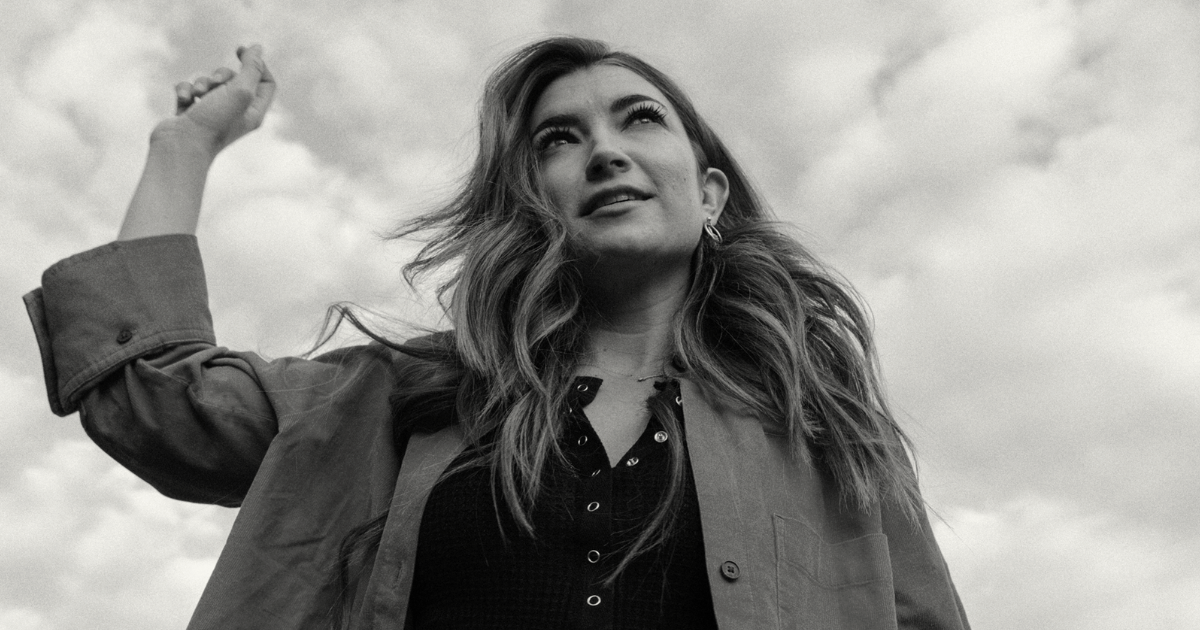
Artist of the Month: Tenille Townes

(Editor’s Note: This article originally published on Good Country in December 2024. At that time, Good Country content was available exclusively on Substack.

Townes was included as part of our end-of-year coverage in 2024, examining how many country artists across the continent have blurred genre lines to connect with new audiences and plumb greater depths of self-expression. Jewly Hight spoke to Townes about her recently becoming an independent artist at that time and together they examined where she stood and where she was headed. 

Now, on April 10, 2026, Townes will release the first full-length album of her independent era, The Acrobat. To celebrate, we’re naming her our Good Country and BGS Artist of the Month. And we’re re-sharing this piece from the archives to kick off the month. Below, enjoy an excellent interview on our website for the first time and check out our Essential Tenille Townes playlist. Dive into our brand new feature interview with Townes on The Acrobat and a special bonus article of Townes in her own words.)

“Genres are a funny little concept, aren’t they?” Linda Martell poses rhetorically during the spoken intro to “Spaghettii,” roughly halfway through Beyoncé’s western epic Cowboy Carter.

“In theory,” Martell goes on with sly poise, “they have a simple definition that’s easy to understand. But in practice, well, some may feel confined.” Martell knows what she’s talked about. She endured all manner of efforts to hem in her musical sensibilities and diminish her agency back when she was country music’s most visible Black, female talent.

And now, because she lent her voice to a track where Bey and Shaboozey go hard with down-home boasts over a lurching beat, she’s up for a GRAMMY for Best Melodic Rap Performance. Other tracks from Cowboy Carter are in pop, country and even Americana contention, a staggering range of styles for one project to cover.

That’s the kind of boundary-blurring year it’s been, with Shaboozey translating country gestures and imagery to broody, contemporary hip-hop cadences with tremendous savvy and both Jelly Roll and Post Malone furthering their paths from rap origins to ever more fully embracing – and being embraced by – the country music industry.

Things haven’t been any tidier on the rootsy side of the spectrum. After being treated like a pop prodigal during her Star-Crossed era, Kacey Musgraves’ shimmering, urban folk revival-echoing ruminations on Deeper Well have been received as a country homecoming of sorts. Noah Kahan has helped bring on a resurgence of cozily folk-forward, singer-songwriter sensibilities in pop music.

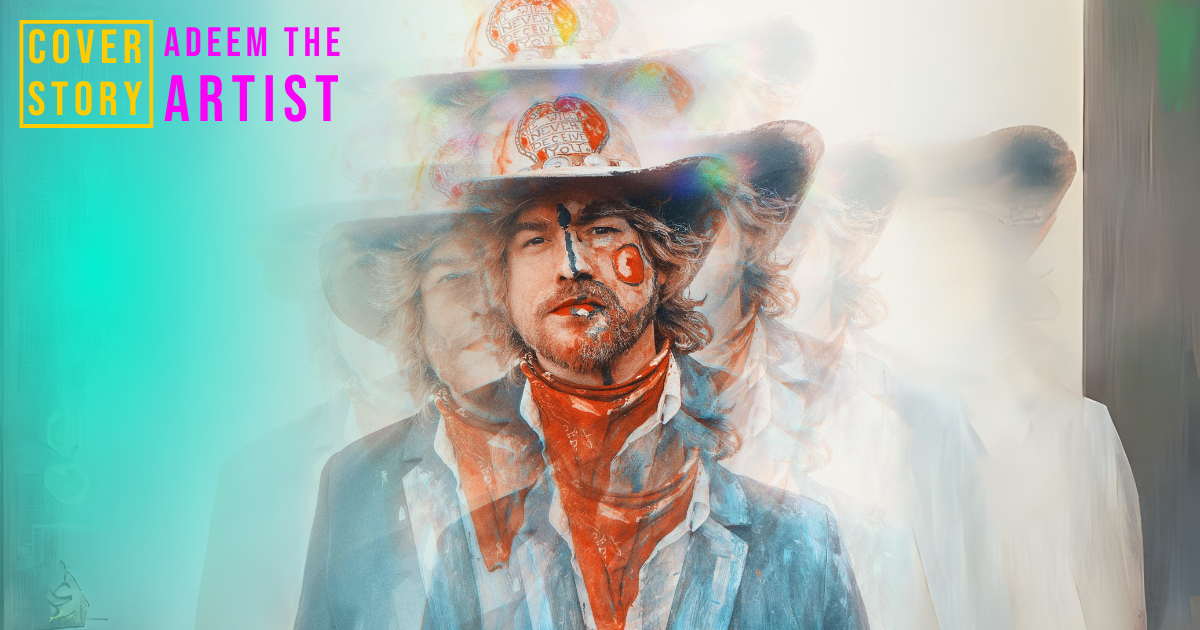
A major country record label snatched up the Red Clay Strays, the type of crowd-pleasing, Southern blues-rockers that have long been celebrated in the Americana scene, where many other pivotal voices – first Allison Russell last year, then Sarah Jarosz, Amythyst Kiah, Adeem the Artist, Kaia Kater and others – experimented with lusher or more polished arrangements and production aesthetics in their latest work.

Tenille Townes offers us a particularly compelling example of an artist charting her course against the background of that extreme slippage between genre lineage, stylistic markers, and industry affiliation. She tried the major label country route in 2018, greeted as a promising new voice at a moment when the broad appeal of Kacey Musgraves’ Golden Hour ruminations made the industry a little more receptive to artists with a personalized, writerly bent, and she’s emerged independent on the other side. In her mind, being unfettered in a time of great genre fluidity is cause for optimism.

Townes began her tenure on Columbia Nashville with spare acoustic recordings, and concluded it this year in similar fashion. She was, and remains, an ardently openhearted singer-songwriter, bent on tapping deep veins of empathy whether she’s in observational or confessional mode. When I first interviewed her, it made all the sense in the world to hear her say she felt a kinship to singer-songwriters like Patty Griffin and Lori McKenna. It also struck me that Townes’ singing – curling syllables and stretching out lines with feeling, a style sometimes called “cursive” singing – was far from the hearty enunciation for which country music has been known.

In between then and now, Townes dropped an album that bore a super-producer’s digitally sharpened touch, won a pair of ACM awards to go with the pile of honors she’s received from the Canadian Country Music Association – which began to recognize her promise when she was a teen with dreams of pursuing music beyond Grande Prairie, Alberta – and she toured with big country names like Miranda Lambert and Dierks Bentley. Townes also faced enough professional hurdles, and observed enough changes in the landscape around her, to reconsider where her songs might belong. And I very much wanted to hear about that.

You’re presently on tour in Canada, aren’t you?

Tenille Townes: I’m having the best time on this run. It feels like a community at these shows. We’ve done a few tours through Canada at this point, but this was our first time going as far east as we did. I feel like live music in general is a little bit more scarce over there. They don’t get as many people making the trek. And so [I could feel] the appreciation.

They sold out the shows so fast and they’re singing all the words. And very quietly listening intently and leaning in a really vulnerable way. And then also having a blast and being loud, which is so cool to me, for it to feel like a living room and a rock club at the same time. That’s been such a big part of my vision.

I don’t know how far out you planned this tour, but I wonder if it’s become an important chance for you to return to your home turf, regroup and get reinvigorated.

Yeah, it honestly feels really essential in my creative journey. I could not be more grateful for the way the timing has aligned this year for this moment on the road. It feels like the ingredient that I’ve been craving. In January, I’m going to be so ready to dive in with my whole heart and make [the music] I’m going to share next. I don’t think that the recipe could have ever been complete without this tour in this moment. It feels so timely, because so much of this past year has felt terrifying.

And just standing on my own two feet as an artist again, pretty much entirely, I feel so excited and grateful to be making this leap into the arms of these people showing up at the shows who are so excited about this new chapter. And it’s such a wave of encouragement to go, “Oh yeah, I think I’m on the right path, doing the right thing.”

How is it different from when you’ve toured the U.S., in terms of headlining versus being an opener, the size of venues and how you’re engaging with the audience?

There’s been a lot of theaters for us on this run, which have a bigger capacity than some of the clubs that we’ve played in these towns before. It’s our first time playing a handful of these [places], but this is our third headlining tour in Canada.

What I noticed that’s different is when it’s our shows and our community, it just feels like people show up with open arms and they’re requesting songs that I haven’t played in so long. They know the deep cuts. They’re showing up excited for a night of feeling whatever they need to feel. And I think that emotional permission feels different at our shows than it does at a show where we’re a guest [in the opening slot] going to make some new friends. And it’s been really cool hearing from people that were like, “I saw you on the Dierks [Bentley] tour and this is our third Tenille show.”

One thing I always say at the top of the shows is I want our time together around my songs to be a place where everyone who walks in the door feels safe to show up and be whoever they are and to feel embraced and welcomed for that. And I thank everyone for buying a ticket and for showing up as that community. And I really feel like they’re embodying what that means.

Years back, I took note of the fact that Corb Lund had what was considered fairly mainstream country success in Canada, but he played Americana events when he came to Nashville. I’m curious whether you’ve seen folk, Americana and country are treated as separate genre categories in the Canadian market, like they are in the U.S. How do you tend to get categorized in Canada?

At least from my experience, it feels different to me. Because in Canada, I have been really grateful to have felt super embraced by the country community, by the CCMAs, by country radio, by the community of people listening to country music. And we have fit in that bubble there. And I don’t know that we fit the same way in the States.

I relate to what you’re saying about Corb Lund. I think maybe the lane is just not as narrow in Canada. And I think that they’re just more in it for live music of any capacity. I think most fans [who come see me] would be like, “Oh, I’m at a country show.” Which is funny because when we play shows here, that doesn’t necessarily feel the same. I do feel like the Canadian country music community definitely jumped on board with what I’m creating. And the music [I release in both markets] is very much the same, so it’s so strange.

I will say that the people coming to our shows, our headline club shows that we’ve done in the U.S., they feel very similar, like-minded people to me.

You’re a little more than a decade into your Nashville tenure at this point. Why is it important to you to stay?

Even though this town has a lot of jagged edges or hard things about it, I really do still feel inspired here. I feel like there’s a tapestry of artists who have come to this town with their dream and worked at sharing their art and building a group of friends and people around them who support that. I have a front row seat, you know, going to an Emmylou Harris fundraiser at City Winery and watching all of these people that she’s embraced in her life that she’s written with or jammed with that’s really a legacy.

I love this community, and I do feel inspired musically, having access to so many songwriters and musicians and producers. There is a heartbeat to this town that I want to continue to be present in and be a part of for sure.

I can picture the show that you were just describing. The atmosphere was very similar at the tribute to Mary Gauthier during Americanafest, a multi-generational gathering of Nashville’s singer-songwriter community.

When we first talked all those years ago, you described being an astute student in Nashville, paying particular attention to singer-songwriters like Lori McKenna and Patty Griffin. At the time, you considered them touchstones because of how they used the language of the heart in their storytelling.

In terms of their career arcs, their material’s been recorded by big names in country, but as respected as they are among songwriting connoisseurs in that world, they’ve had contemporary folk careers as performers. They’ve often released their music on independent labels. Were you also taking note of what their professional paths have looked like? Or are you now?

I honestly don’t know that I was conscious of it back then. It was just the music that I loved. I don’t think I even had an understanding of the choices made on an artist’s path to stay true to that route.

I’ve learned a lot in the last handful of years: “Oh, that makes sense why a certain path, like Patty Griffin’s, unfolds in a certain way.” I never thought of it as a ceiling or an alternate route. It just was where the music had taken her. That’s been inspiring to me.

I never want to look at any options of teams to work with or whatever with any closed-doors feelings. I would love to play the music that I make in stadiums. That’d be great if that still unfolds that way. But I also just really want to tell my stories and my truth, and whoever is going to come as the audience, that’s amazing to me. The idea of seeing it as a wider horizon than maybe a stereotypical path, that doesn’t seem scary to me. I think that’s because I’ve looked up to people like Patty or Lori, people who have always stayed true to what they’re doing and figured out the path there regardless. But I don’t know if I’ve ever actually intentionally thought about it that way.

Your intention has been clearer than ever this year. It wasn’t lost on me that the final two songs you released earlier this year, before you parted ways with your label – “As You Are” and “The Thing That Brought Me Here” – each were expressions of commitment to staying the course. What did you want to communicate?

I love that you noticed these themes. At the end of that journey, “As You Are” felt like such a great theme to end that season on. There was lots of resistance [from the label] in several years of working on music and getting to a point of actually getting to put it out. But that song always had a green light from them, which I really appreciated.

I wrote that song thinking it was about showing up and being a support system for someone. I had friends in mind that I was thinking of. It was just like, “I will be that safe place.” And then listening back to the demo after the [session] on the drive home, I was like, “No, I wrote this ‘cause this is what I want to hear when I’m struggling to let somebody in.” That’s been something that I’ve felt even in my professional journey for sure, just wanting to feel seen.

@tenilletownes if you’re hearing this song I’m glad you’re here 🫶🏼 can’t wait for where we’re going together next #songwriter #newmusic #indieartist #aboutme #doglover ♬ original sound – Tenille Townes

It really seems like you’re the one communicating on your own TikTok. In recent months, a lot of your posts have been about celebrating your professionally “single” era. When you shared the news that you were no longer in your major label deal, you framed it as a breakup that you were happy about. What felt right about striking that tone?

It felt honest. It was a lot building up to that decision, and it was not easy, and it was terrifying. All of those emotions were a part of it. I just felt like, “I can’t continue to share the music I want to make if I’m not letting people in on my process of that vulnerability, even when it’s hard.” Making those videos felt scary, for sure. But that just feels like the kind of artist that I want to be, to walk the walk.

Also part of my intention was, “This is something that creatively feels really empowering to me, to take back the ownership of my music.” And for any young girls out there, I want them to know, “That’s a possible feeling for you, to stand up for yourself at any moment in any kind of career, or on any path of your life.” It’s brave to take that step. And I guess I just want that invitation to be there for anyone following along.

And I want to bring together the community of people. Like, it is an “independent artist,” but I think it should be called a “community village artist,” because you can’t get your stuff out there without people believing in what you’re doing and coming with you. I wanted it to be very clear that we’re in this together. We’ve always been in it together, but it feels very defined to me now. And I wanted to make sure everyone knew that.

And now we have the benefit of accumulated perspective, so I want to reflect back. At the beginning of your label journey, what was in the atmosphere at the time in Nashville or the country music scene in the U.S. that contributed to a sense of possibility for you?

At the beginning, it was excitement. And [I] look back and think, “How crazy cool that I got to be a part of a major label deal that let me put out a debut single about homelessness, and then follow it up with a song called ‘Jersey on a Wall’ about losing someone in a car accident?” I’m so glad they gave me a chance to put out songs that were different and that sonically didn’t sound like a sure bet. I will always appreciate that. And it set me up with so many people who heard this record and the songs because of the way that they helped lift it up.

So I have nothing but love for that season. It might not have hit the thing over all of the world’s fences by any measure of what you measure as success. But to me, it’s a win to think that I got to share that art and that people found it and that they get to keep finding it because of that.

Years back, you told me that in one of your initial meetings, when you played some songs in a boardroom, the head of the label compared you with Jeff Buckley, which was a funny thing. In hindsight, I think that kind of speaks to the fact that you were bringing a sensibility as a singer-songwriter that might’ve been a little bit outside of their frame of reference.

And maybe the Jeff Buckley comparison – as much of a stretch as it was – was a gesture of someone who lacked the frame of reference or language for what they were hearing. Because the way you elongate your vocal phrases and hold onto lines is more akin to the “cursive” singing style that’s been a thing in indie music, folk, pop and R&B than in country, with its crisp enunciation. What kinds of conversations did you have about what you were doing, how they heard it and how they thought it fit into that world?

It is really fun to reflect on that. I definitely think from that initial meeting, they were going, “This is something that doesn’t necessarily fit in what that normal trajectory would be.”

I think that has been the compass that’s directed it a little bit left of where things would traditionally fit coming out of the system that they’re used to. I think they knew that all along. And at moments, that definitely made things a little bit bumpier or harder, because it wasn’t something that naturally made all the sense in the world, I don’t think. And I’m totally great with that.

I revisited the body of work that you released on the label, and I didn’t hear you bending your songwriting approach, singing style or artistic identity to any kind of mold that was really popular in country music at the time. What did it take to maintain that?

There was never an intention of, “Okay, that’s mainstream, so I’m closing the door to that.” I’ve always felt very openhearted in the writing room. It’s just what was coming out of what I was making that I loved the most. The Lemonade Stand came out in 2020. Then I wrote the songs for Masquerades all on Zoom in my house by myself. It was a time when I didn’t feel as much outside influence of commerciality. I was just honestly writing to express something and feel better.

We certainly, production-wise, had moments of trying to be strategic about what kind of things might — I don’t know — reach more people or something, or sonically be something that could be more mainstream. So there wasn’t a lack of strategy in that. I just had to follow the songs, I think.

On TikTok, you’ve shared clips of songs that you’ve had in the can for years that you said the label didn’t want to release. How did the disagreements over your artistic direction begin to emerge? And what was at stake for you when they did?

I think the biggest rub maybe was being able to plan far enough down an artistic vision, because it was just like, “We’ll see how this one does.” And the targets just kept moving. Mentioning putting out an EP or a record was scary. They were like, “No, we can’t. We gotta just take it one step at a time.” So I think that became the hardest thing, and where a lot of songs fell through the cracks, because we didn’t hit certain measures to be able to go to the next. We still found ways to push through and get music out. It just didn’t happen in a guaranteed, planned-out manner, necessarily.

“It's like the metaphor of having a [limited] number of crayons in your hand and trying to make a picture out of that. I felt I wanted the whole box back.” - Tenille Townes
What brought you to the place where you were ready to part ways?

I could feel it building for a while, for sure. And when it came to the point of putting out “As You Are,” there was a group of songs that were ready, and we were just getting resistance on putting out more than one or two out again. And honestly, they came to us and [said], “I don’t think we can put out the rest of these.” And it was like, “Okay, I think it’s time to go.” It wasn’t like I’d arrived at this place of courage. Circumstances were like, “Okay, I think the arrows are really pointing that this is the moment to take the leap, and I’m just going to do it.”

What did you see yourself as leaving behind and moving towards instead?

The idea of taking back ownership of what I create and jumping into this place of freedom in the sense of less hoops to get through to actually get songs to people. I think creatively, I needed change as well.

I’m so proud of that whole journey. I have no regrets, but in a lot of ways, it’s like the metaphor of having a [limited] number of crayons in your hand and trying to make a picture out of that. I felt I wanted the whole box back. I never felt like I was trying to create something to fit within [the industry], but I do feel like that kind of a system can’t not have an effect on what you’re doing creatively. I feel this freedom in my hands. What do you do? That’s a whole other process that I’m in the middle of right now, trying to figure out exactly what I want to say and how I want to sound next. It’s so liberating, and it’s also just, “Oh, this is up to me now.”

When you look back on it, do you think that label partnership was no longer the right fit for you, or that the mainstream country marketplace that it exists in was not the right fit for you?

I don’t know. I think maybe a little bit of both. But mostly, I think the major label system just ran its course for me. And I feel open to whatever team there may or may not be in the future. I wouldn’t write that experience off ever again. I think it just depends on the season I’m in creatively and what people are behind it.

What’s funny to me is looking back on the history of country music, the things that have [at certain moments] laid on the outside have actually [become] pillars of what’s created the format that we love and know. So it doesn’t scare me to [say], “I don’t actually feel like I belong in what we call right now the mainstream of country music.” I’m just going to do my thing and whatever we want to call it later, looking back, it’s fine with me.

Earlier we were talking about the singer-songwriter ecosystem that’s long existed in Nashville and has amorphous boundaries – those songwriters play their own intimate shows and write for bigger names in other lanes.

But there’s been far more visible crossing of boundaries than that this year. We’ve had pop superstars going country, and Kacey Musgraves – who never fully left her country label, but was viewed as drifting towards pop – made a folk-pop album that’s gotten her country awards nominations again. And then there are artists like Noah Kahan. I know you’ve expressed admiration for what he does. He’s been having great success with songs that are grounded in folk, but he exists in the pop world – and yet he’s also gotten Americana and country nominations. Have you been looking around you and taking note of how other artists are transcending genre boundaries?

Yes, and it feels so encouraging to be like, “How about you just make what’s you?” And then, what if there are different categories of music lovers who want to listen to stories and songs and voices and actually don’t care what sticker you put on it?

[As for] Noah, that’s just songs that are speaking to people at such a loud volume. I don’t know what you call it, and it doesn’t matter. Longterm-wise, I think Brandi Carlile’s path is a flashlight, to have something that’s just evolved with her as an artist and fit in so many different places. And I think about Patty Griffin. Even somebody like Billy Strings, Marcus King, I think is incredibly inspiring looking at all of these people who are not sticking to one lane.

You are actively narrating the decision-making process for your audience and frequently discussing what it looks like to be an independent artist, what that means, what your aims are, what challenges you face. From what I’ve read, you’ve kept some important parts of your team, management and publishing, but other aspects of the model have changed. What do you feel are the most significant differences in how you’re operating at the moment? What do you most want people to know about your present reality?

I think the biggest shift is how much making videos is a part of actually getting a song to be heard at all. And the creative output of just trying to make noise in a place that’s got way too much noise going on, the internet. That’s the most overwhelming thing that’s very different than what I thought it meant to be a singer-songwriter and write songs and tour.

I’m trying to balance the creative output of constantly being like, “Hey, I’m over here. This is what I’m working on.” And also making sure that my soul is in a good place, not just spinning on a hamster wheel, so that I can make something that I’m really proud to stand on in my life.

I’ve heard that you are working on new music. Are you broadening your circle of collaborators?

Yeah, definitely. I’ve been reaching out to people I’ve not written with before, people I’m just fans of their music and [asking], “Hey, let’s write or let’s get together and just jam.” And then I’m in the stage [where] I’m always writing. I’m at a point where I have a lot of songs and I’m trying to just zoom out and go, “Which ones are speaking the loudest to me?” The theme for me right now is very much about betting on yourself and getting to the heart of the matter without everything feeling too heavy and serious.

I’m at the spot of taking song inventory and trying to make some new friends and keep writing, and working on what might be next.

Won’t it be wild if you have an album that is on a Canadian country chart and then in the U.S., is on Americana and folk charts, the same collection of songs?

I think it’s possible. I believe it is. I love you putting that out there. I’m declaring it right now.

The expression of music is going to fit differently in different places. And I think that’s more possible in the landscape we’re in now than it ever has been.


Read our 2026 interview with Tenille Townes on her brand new album, The Acrobat, here.

Want more Good Country? Sign up to receive our monthly email newsletter – and much more music! – direct to your inbox.

Photo Credit: Lead image by Madison Rensing; inset image by Robert Chavers.
Country Stars
Country Songwriters

While every country star knows how to tell a good story, it takes a particular strain of excellence to also be able to write one.

Songwriting is the gravitational center around which Good Country orbits. Lyrics that strike at the oceanic spread of human existence, chords that evoke its sprawling underbelly – the songwriter weaves both words and notes together, using each as a tool to explore the other.

Uniquely attuned to the value in lyrical narrative and authenticity, country music self-selects its fair share of multi-hyphenate talents who, beyond their performative prowess or instrumental skills, have a knack for setting pen to paper. From Willie Nelson to Kacey Musgraves, country carries an extensive lineage of talented songsmiths. The following collection merely scrapes the surface of the best country star songwriters. Unsurprisingly, this list is a tangled web with many superb songwriters covering, popularizing, and collaborating on one another’s songs in true communal country fashion.

Willie Nelson

With over 300 songwriting credits to his name, Willie Nelson is indubitably one of the most prolific songwriters of all time – not just in country. Having written his first poem at the age of six, Nelson has nearly nine decades of steadfast dedication to the craft under his belt. Patsy Cline’s 1961 recording of “Crazy” lifted his songwriting further into the limelight. His pen went on to produce such potency that it helped define an entire new subgenre in the ‘70s— “outlaw country.”

Prized for his rebellious and forthright lyrical attitude, Nelson values raw emotion over placative commercial appeal, ironically earning him one of the most successful careers in country history. Over the years, Nelson has delivered a seemingly endless stream of hits performed by both himself and countless other musical giants, including Loretta Lynn, Merle Haggard, and Dolly Parton, just to name a few.

Bobbie Gentry

Bobbie Gentry is the keeper of a robust legacy of composing and performing. Having written her first song at age 7, Gentry taught herself to play a slew of instruments throughout her youth. When she attended college at UCLA, she began performing her songs out at the occasional nightclub, signing to Capitol Records some years later as an aspiring songwriter. In 1967, Capitol Records released “Ode to Billie Joe,” a song that Gentry had written and recorded herself. Gentry told The Washington Post that despite wanting to write songs for other artists, she only sang “Ode to Billie Joe” herself because it was cheaper than hiring another singer.

Despite her previous obscurity and the song’s dark tenor, “Ode” crept up the charts, surpassing the likes of Aretha Franklin and The Doors until it eventually pushed “All You Need is Love” out of the No. 1 spot. This astronomical success marked only the beginning of an industrious career for Gentry; she would go on to write and perform several other smash hits in addition to becoming the first woman to host a variety show on the BBC. She would later produce, choreograph, and write the music for her own nightclub revue in Las Vegas prior to retiring from show business.

Roger Miller

The King of the Road had range! Roger Miller’s songwriting legacy entailed chart-topping hits he wrote and performed himself, such as (of course) “King of the Road,” “Dang Me,” and “England Swings,” in addition to many that he wrote for other artists, such as “Billy Bayou” for Jim Reeves and Ray Price’s “Invitation to the Blues.”

His imaginative impulse made him uniquely qualified for the projects he took on later in life, including writing the music and lyrics for several songs in the 1973  animated Disney film Robin Hood, in which he also voiced Alan-a-Dale, the film’s rooster narrator. His acting career was even furthered by another musical project – Miller wrote the entire score for Big River, a Broadway musical based on Mark Twain’s The Adventures of Huckleberry Finn. The musical premiered in 1985 and earned a total of seven Tony Awards, including Best Score. Miller even played the part of Pap (Huck Finn’s father) onstage for three months following the original cast member’s departure for Hollywood.

Kacey Musgraves

One of the most influential women in today’s country sphere, Kacey Musgraves has sculpted a name for herself for both her instrumental/vocal prowess and her impactful songwriting capabilities. Her solo catalog is chock-full of compelling songs that explore the “nuances of being a human, alive and experiencing consciousness,” as she told The Cut. The thoughtful universality of her songwriting has attracted a distinguished array of performers, with Musgraves contributing her skills to songs performed and recorded by Martina McBride, Miranda Lambert, and Deana Carter, among others.

Kris Kristofferson

This September marked a year since his passing, but Kris Kristofferson’s legacy continues to burn bright. His songs maintain a rugged, raw quality without sacrificing any of their vibrance. Though Kristofferson only landed one No. 1 hit on Billboard’s Hot Country Songs chart performing his own original material, his songs were platformed by many others featured on this list, including “Help Me Through the Night,” which Sammi Smith, Loretta Lynn and Willie Nelson recorded, and “For the Good Times,” a tune made famous by Ray Price that was later recorded by Dolly Parton, Merle Haggard, Willie Nelson, and more. Kristofferson also penned a fair number of tunes for The Highwaymen, the country supergroup composed of Waylon Jennings, Willie Nelson, Johnny Cash, and Kristofferson himself, including their titular hit, “Highwayman.”

Trisha Yearwood

Author, singer, chef, Food Network television show host – just when we thought Trisha Yearwood had done it all, her 16th studio album, The Mirror, arrived this past July to showcase yet another talent you may not know that she held all along: songwriting. In an interview with Billboard, Yearwood recounts that discouragement during her college years largely held her back from incorporating songwriting into her career over the past three-plus decades. “It made me think I wasn’t a songwriter and I just always downplayed it,” she says.

The Mirror boasts powerful co-writes with many songwriters who’ve contributed to Yearwood’s earlier albums, including Rebecca Lynn Howard (“I Don’t Paint Myself into Corners”) and Maia Sharp (“Standing Out in a Crowd”). Of homing in on her songwriting craft, Yearwood shares, “It was really something that clicked a couple of years ago. I started writing and it was really kind of therapeutic and really evolved naturally out of something I felt like I needed to do and I’m so happy with how it came out.”

Merle Haggard

Widely recognized as one of the most legendary singer-songwriters of the country canon, Merle Haggard was a staunch believer in writing from his own experiences – of which he had many worth writing about. After losing his father at age nine, Haggard wound up in all sorts of trouble, from several stints in juvenile detention to developing a strong hitchhiking and train hopping habit. His rambunctious tendencies followed him into adulthood and eventually landed him in prison after an attempted robbery and subsequent failed jailbreak.

In 1960, Haggard’s life changed forever upon attending a Johnny Cash concert while incarcerated at San Quentin State Prison, which deeply inspired him. Upon his release later that year, Haggard set out to forge his own country career, garnering unspeakable success. From “Workin’ Man’s Blues” (co-written with Roy Edward Burris) to “The Bottle Let Me Down,” many of Haggard’s songs have become perennial classics.

Jimmy Buffett

Of all the narrative-focused songwriters, Jimmy Buffet undoubtedly took the premise of “world-building” the most literally. “Margaritaville,” the hit song which Buffett claimed took him only six minutes to write, has a transcendent legacy. From hotels to casinos to Broadway musicals, Buffett’s profoundly popular songwriting grew an empire. Of course, “Margaritaville” was certainly neither the beginning nor the end of Buffett’s extensive songwriting career; having released 30 albums (8 of which are certified gold and 9 of which are certified platinum or multi-platinum by the RIAA), Buffett was credited on upwards of 350 songs over the course of his life.

Don Gibson

Responsible for the songwriting behind some of the most famous songs in country history, Shelby, North Carolina, native Don Gibson was such a force that he, in fact, penned two of his most influential songs in the same day. “Oh Lonesome Me” and “I Can’t Stop Loving You” – which would go on to be recorded over 700 times by other artists including Ray Charles, Kitty Wells, and Loretta Lynn – were both conceived in a trailer park north of Knoxville, Tennessee, in 1957.

Bonnie Raitt

In addition to being the utter powerhouse musician that she is, Bonnie Raitt also knows her way around some lyrics. Having written most of her own music and with artists like Stevie Nicks and The Chicks covering her songs, Raitt’s songwriting has left an indelible mark on the blues, country, and Americana scenes. She’s known for her thoughtful and emotionally dynamic posture; for instance, her song “Down the Road” was inspired by a New York Times article Raitt read about a prison hospice program. Another, “Just Like That,” earned her a GRAMMY for Song of the Year and was inspired by a news segment featuring two families experiencing either end of an organ donation. Written from heartful depths, Raitt’s lyrics are both inspired and inspiring.

Cam

Best-known for her Grammy-nominated 2015 hit, “Burning House,” Cam (AKA Camaron Ochs) is one of the most prominent songwriters in the contemporary country scene. Another star and composer, in addition to her own four studio albums, Cam has writing credits featured on work from some of the largest industry giants in any genres. She has composed material for artists from Sam Smith to Miley Cyrus and 2024 saw her songwriting, backing vocals, and production lending a hand in several songs off of Beyonce’s chart-topping, culture-shifting country release, Cowboy Carter.

John Hartford

John Hartford’s talents truly knew no bounds. In addition to his multi-instrumental expertise, he was a fleet-footed clogger who could tear up a rug while he played. And he sure did know how to write a song. His most successful songwriting credit, “Gentle on My Mind,” (popularized by Glen Campbell and henceforth covered over and over again) earned him three GRAMMY awards and a listing among BMI’s Top 100 Songs of the Century. With covers from folks like Loretta Lynn, Willie Nelson, Dolly Parton, Merle Haggard, and many more, it’s safe to say Hartford was one of the most respected – and most recorded and most covered – roots songwriters of his time. And of our time, too, as evidenced by this I’m With Her performance of “Long Hot Summer Days,” a Hartford original fiddler Sara Watkins once recorded on her own solo project.

Chris Stapleton

A fav of Good Country and our audience alike, Chris Stapleton has had a tremendously successful performing career in both bluegrass (via The SteelDrivers) and country (as a solo artist). His guitar prowess and smoky vocals aren’t his only claims to fame; even before his rise to stardom, Stapleton had written songs for some of the most commercially successful names in country and beyond. He’s been the pen-power behind songs for industry giants such as Luke Bryan, Kenny Chesney, Darius Rucker, George Strait, Lee Ann Womack, and more. Adele even recognized the potency of Stapleton’s powers back in 2011, having recorded a version of his smash hit SteelDrivers song “If It Hadn’t Been for Love” on a deluxe version of her album 21.

Dolly Parton

They don’t call Dolly Parton the queen of country for nothing! Illustrious and industrious, Parton estimates that she’s composed nearly 3,000 songs in her lifetime, with somewhere around 450 of them recorded. Her ability to world-build through dynamic characters and narratives has set the modern country standard for story-songs, with “Coat of Many Colors,” “9 to 5,” and, of course, “Jolene” being just some of her most chart-topping successes. She’s also written plenty for other artists – think Merle Haggard, Kenny Rodgers, Hank Williams Jr., Waylon Jennings, Emmylou Harris, and Tina Turner, just to name a few. And of course, we’d be remiss not to mention that Parton penned the biggest hit of Whitney Houston’s career!

Darrell Scott

In 2007 Darrell Scott was named the Americana Music Association’s Songwriter of the Year, and this year, 2025, he received a Lifetime Achievement Award from the organization, too. In short, Darrell Scott is a songwriting powerhouse – in addition to his status as one of Nashville’s premiere session musicians.

Similarly to many other artists on this list, albeit with his own stylistic flares, Scott champions the narrative song, writing tunes full of dynamic characters and story arcs that mesmerize. Outside of his own successful solo work, songwriting for others is the bedrock of Scott’s career. Among countless other contributions, Scott wrote the Chicks’ “Long Time Gone” (later to be sampled in Beyoncé’s “Daddy Lessons”), Travis Tritt’s hit song, “It’s a Great Day to Be Alive,” and the ever-relevant “You’ll Never Leave Harlan Alive,” which has been covered by Patty Loveless, Brad Paisley, Chris Stapleton, Kathy Mattea, Luke Combs, and many more.


Want more Good Country? Sign up to receive our monthly email newsletter – and much more music! – direct to your inbox.

Photo Credit: Kelly Christine Sutton

Sierra Ferrell, Beyoncé, Many More Roots Musicians Win at 67th GRAMMY Awards

Yesterday, the 67th Annual GRAMMY Awards show was held in Los Angeles, handing out dozens of awards across the primetime broadcast and premiere ceremony while highlighting the city’s ongoing response to last month’s extreme wildfires, which displaced hundreds of musicians, artists, industry professionals, and creatives. The marquee event was kicked off by Dawes – whose sibling frontmen, Taylor and Griffin Goldsmith, had homes, their studio, and countless instruments and equipment destroyed in the blazes. They performed a moving rendition of “I Love L.A.” with a host of special guests.

Throughout the show, audience members were encouraged to support MusiCares Fire Relief, a collaborative fundraiser launched by the Recording Academy and MusiCares in partnership with Direct Relief, the California Community Foundation, and the Pasadena Community Foundation to help expand wildfire relief efforts across the broader Los Angeles community. Despite the somber shadow cast by the disaster over LA and its creative community, the show was convivial, joyous, and restorative – and included more than a few show-stopping and jaw-dropping moments.

As usual, the crème de la crème of roots musicians could be found across both the pre-telecast and primetime awards, scooping up golden gramophones in seemingly endless varieties of categories. The evening’s big winners in the Country & American Roots Music categories included superstar Beyoncé, who finally picked up her first Album of the Year win, as well as becoming the first Black woman to ever win Best Country Album. She also won the trophy for Best Country Duo Performance with Miley Cyrus for “II Most Wanted,” bringing her GRAMMY Awards totals to 99 nominations and 35 wins – the most wins of any recipient in the history of the awards.

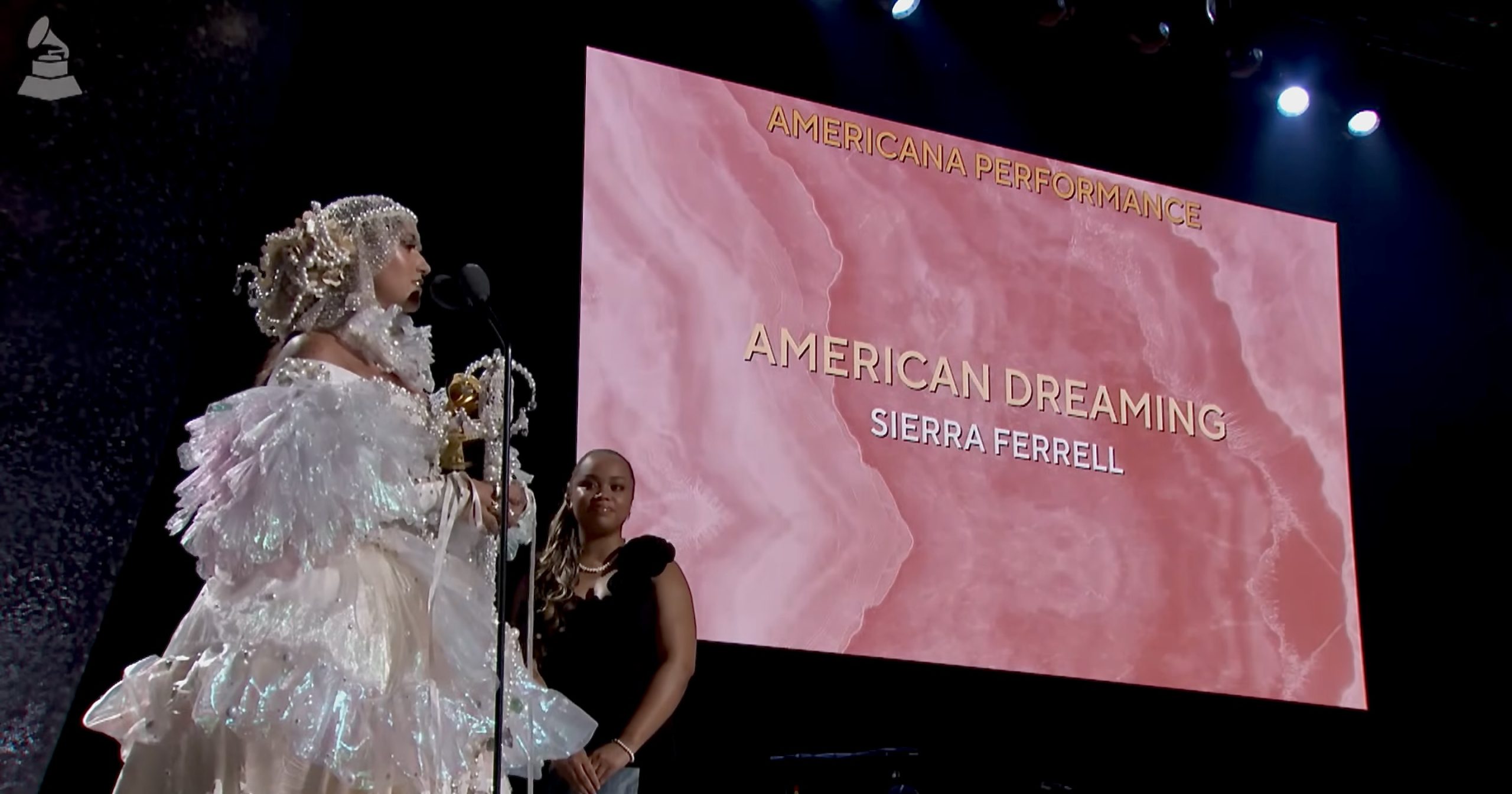
Sierra Ferrell, a West Virginia native and firebrand bluegrass and country starlet quickly on the rise these past handful of years, was indisputably the day’s other big winner, scoring in each of the four categories in which she was nominated. She quickly followed her very first GRAMMY win with three more, landing awards for Best Americana Album, Best American Roots Performance, Best Americana Performance, and Best American Roots Song – an honor she shares with her co-writer, musician, songwriter, and vocalist Melody Walker (Front Country, BERTHA: Grateful Drag).

The award for Best Bluegrass Album was yet again snatched by the world’s premier flatpicker, Billy Strings, for Live Vol. 1, logging his second win at the GRAMMYs after seven nominations over the last five years.

Pop phenom Chappell Roan won Best New Artist, Kacey Musgraves took home Best Country Song for “The Architect,” Chris Stapleton racked up his 11th GRAMMY win for Best Country Solo Performance, and Woodland, the latest album by Gillian Welch & David Rawlings, was recognized as Best Folk Album. Chick Corea won a posthumous award – Best Jazz Instrumental Album – for Remembrance, a duo project helmed by banjoist Béla Fleck that was released in honor of his hero, friend, and collaborator.

The GRAMMYs yet again demonstrate that the impact of bluegrass, folk, Americana, and country on the mainstream music industry cannot be overstated. Congratulations to all of the winners and nominees for the 67th GRAMMY Awards!

Give now to support MusiCares Fire Relief here and find out many more ways to support LA as it recovers from the devastating wildfires here. Find the full list of Country & American Roots Music winners below, including several additional related categories boasting roots music nominees and winners.

(Winners denoted in BOLD)

Best Country Solo Performance

“16 CARRIAGES” – Beyoncé
“I Am Not Okay” – Jelly Roll
“The Architect” – Kacey Musgraves
“A Bar Song (Tipsy)” – Shaboozey
“It Takes A Woman” – Chris Stapleton

Best Country Duo/Group Performance

“Cowboys Cry Too” – Kelsea Ballerini with Noah Kahan
“II MOST WANTED” – Beyoncé featuring Miley Cyrus
“Break Mine” – Brothers Osborne
“Bigger Houses” – Dan + Shay
“I Had Some Help” – Post Malone featuring Morgan Wallen

Best Country Song

“The Architect” – Shane McAnally, Kacey Musgraves & Josh Osborne, songwriters (Kacey Musgraves)
“A Bar Song (Tipsy)” – Sean Cook, Jerrel Jones, Joe Kent, Chibueze Collins Obinna, Nevin Sastry & Mark Williams, songwriters (Shaboozey)
“I Am Not Okay” – Casey Brown, Jason DeFord, Ashley Gorley & Taylor Phillips, songwriters (Jelly Roll)
“I Had Some Help” – Louis Bell, Ashley Gorley, Hoskins, Austin Post, Ernest Smith, Ryan Vojtesak, Morgan Wallen & Chandler Paul Walters, songwriters (Post Malone Featuring Morgan Wallen)
“TEXAS HOLD ‘EM”– Brian Bates, Beyoncé, Elizabeth Lowell Boland, Megan Bülow, Nate Ferraro & Raphael Saadiq, songwriters (Beyoncé)

Best Country Album

COWBOY CARTER – Beyoncé
F-1 Trillion – Post Malone
Deeper Well – Kacey Musgraves
Higher – Chris Stapleton
Whirlwind – Lainey Wilson

Best American Roots Performance

“Blame It On Eve” – Shemekia Copeland
“Nothing In Rambling” – The Fabulous Thunderbirds featuring Bonnie Raitt, Keb’ Mo’, Taj Mahal, & Mick Fleetwood
“Lighthouse” – Sierra Ferrell
“The Ballad Of Sally Anne” – Rhiannon Giddens

Best Americana Performance

“YA YA” – Beyoncé
“Subtitles” – Madison Cunningham
“Don’t Do Me Good” – Madi Diaz featuring Kacey Musgraves
“American Dreaming” – Sierra Ferrell
“Runaway Train” – Sarah Jarosz
“Empty Trainload Of Sky” – Gillian Welch & David Rawlings

Best American Roots Song

“Ahead Of The Game” – Mark Knopfler, songwriter (Mark Knopfler)
“All In Good Time” – Sam Beam, songwriter (Iron & Wine featuring Fiona Apple)
“All My Friends” – Aoife O’Donovan, songwriter (Aoife O’Donovan)
“American Dreaming” – Sierra Ferrell & Melody Walker, songwriters (Sierra Ferrell)
“Blame It On Eve” – John Hahn & Will Kimbrough, songwriters (Shemekia Copeland)

Best Americana Album

The Other Side – T Bone Burnett
$10 Cowboy – Charley Crockett
Trail Of Flowers – Sierra Ferrell
Polaroid Lovers – Sarah Jarosz
No One Gets Out Alive – Maggie Rose
Tigers Blood – Waxahatchee

Best Bluegrass Album

I Built A World – Bronwyn Keith-Hynes
Songs Of Love And Life – The Del McCoury Band
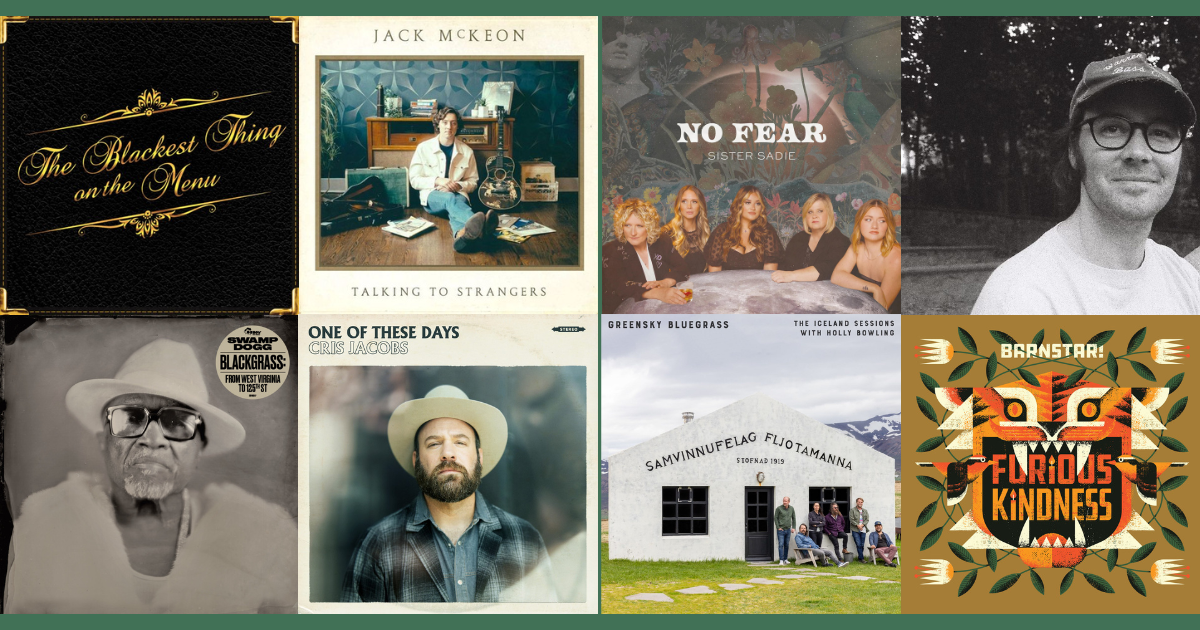
No Fear – Sister Sadie
Live Vol. 1 – Billy Strings
Earl Jam – Tony Trischka
Dan Tyminski: Live From The Ryman – Dan Tyminski

Best Traditional Blues Album

Hill Country Love – Cedric Burnside
Struck Down – The Fabulous Thunderbirds
One Guitar Woman – Sue Foley
Sam’s Place – Little Feat
Swingin’ Live At The Church In Tulsa – The Taj Mahal Sextet

Best Contemporary Blues Album

Blues Deluxe Vol. 2 – Joe Bonamassa
Blame It On Eve – Shemekia Copeland
Friendlytown – Steve Cropper & The Midnight Hour
Mileage – Ruthie Foster
The Fury – Antonio Vergara

Best Folk Album

American Patchwork Quartet – American Patchwork Quartet
Weird Faith – Madi Diaz
Bright Future – Adrianne Lenker
All My Friends – Aoife O’Donovan
Woodland – Gillian Welch & David Rawlings

Best Regional Roots Music Album

25 Back To My Roots – Sean Ardoin And Kreole Rock And Soul
Live At The 2024 New Orleans Jazz & Heritage Festival – Big Chief Monk Boudreaux & The Golden Eagles featuring J’Wan Boudreaux
Live At The 2024 New Orleans Jazz & Heritage Festival – New Breed Brass Band featuring Trombone Shorty
Kuini – Kalani Pe’a
Stories From The Battlefield – The Rumble Featuring Chief Joseph Boudreaux Jr.

Best Roots Gospel Album

The Gospel Sessions, Vol 2 – Authentic Unlimited
The Gospel According To Mark – Mark D. Conklin
Rhapsody – The Harlem Gospel Travelers
Church – Cory Henry
Loving You – The Nelons

Best Jazz Performance

“Walk With Me, Lord (SOUND | SPIRIT)” – The Baylor Project
“Phoenix Reimagined (Live)” – Lakecia Benjamin featuring Randy Brecker, Jeff “Tain” Watts & John Scofield
“Juno” – Chick Corea & Béla Fleck
“Twinkle Twinkle Little Me” – Samara Joy featuring Sullivan Fortner
“Little Fears” – Dan Pugach Big Band featuring Nicole Zuraitis & Troy Roberts

Best Jazz Instrumental Album

Owl Song – Ambrose Akinmusire featuring Bill Frisell & Herlin Riley
Beyond This Place – Kenny Barron featuring Kiyoshi Kitagawa, Johnathan Blake, Immanuel Wilkins & Steve Nelson
Phoenix Reimagined (Live) – Lakecia Benjamin
Remembrance – Chick Corea & Béla Fleck
Solo Game – Sullivan Fortner

Best Traditional Pop Vocal Album

À Fleur De Peau – Cyrille Aimée
Visions – Norah Jones
Good Together – Lake Street Dive
Impossible Dream – Aaron Lazar
Christmas Wish – Gregory Porter

Best Contemporary Instrumental Album

Plot Armor – Taylor Eigsti
Rhapsody In Blue – Béla Fleck
Orchestras (Live) – Bill Frisell featuring Alexander Hanson, Brussels Philharmonic, Rudy Royston & Thomas Morgan
Mark – Mark Guiliana
Speak To Me – Julian Lage

Best Instrumental Composition

“At Last” – Shelton G. Berg, composer (Shelly Berg)
“Communion” – Christopher Zuar, composer (Christopher Zuar Orchestra)
“I Swear, I Really Wanted To Make A “Rap” Album But
This Is Literally The Way The Wind Blew Me This Time” – André 3000, Surya Botofasina, Nate Mercereau & Carlos Niño, composers (André 3000)
“Remembrance” – Chick Corea, composer (Chick Corea & Béla Fleck)
“Strands” – Pascal Le Boeuf, composer (Akropolis Reed Quintet, Pascal Le Boeuf & Christian Euman)

Best Arrangement, Instrumental or A Cappella

“Baby Elephant Walk” – Encore, Michael League, arranger (Snarky Puppy)
“Bridge Over Troubled Water” – Jacob Collier, Tori Kelly & John Legend, arrangers (Jacob Collier Featuring John Legend & Tori Kelly)
“Rhapsody In Blue(Grass)” – Béla Fleck & Ferde Grofé, arrangers (Béla Fleck featuring Michael Cleveland, Sierra Hull, Justin Moses, Mark Schatz & Bryan Sutton)
“Rose Without The Thorns” – Erin Bentlage, Alexander Lloyd Blake, Scott Hoying, A.J. Sealy & Amanda Taylor, arrangers (Scott Hoying featuring säje & Tonality)
“Silent Night” – Erin Bentlage, Sara Gazarek, Johnaye Kendrick & Amanda Taylor, arrangers (säje)

Notable General Field Categories:

Record Of The Year

“Now And Then” – The Beatles
“TEXAS HOLD ‘EM” – Beyoncé
“Espresso” – Sabrina Carpenter
“360” – Charli XCX
“BIRDS OF A FEATHER” – Billie Eilish
“Not Like Us” – Kendrick Lamar
“Good Luck, Babe!” – Chappell Roan
“Fortnight” – Taylor Swift featuring Post Malone

Album Of The Year

New Blue Sun – André 3000
COWBOY CARTER – Beyoncé
Short n’ Sweet – Sabrina Carpenter
BRAT – Charli XCX
Djesse Vol. 4 – Jacob Collier
HIT ME HARD AND SOFT – Billie Eilish
Chappell Roan The Rise And Fall Of A Midwest Princess – Chappell Roan
THE TORTURED POETS DEPARTMENT – Taylor Swift

Song Of The Year

“A Bar Song (Tipsy)” – Sean Cook, Jerrel Jones, Joe Kent, Chibueze Collins Obinna, Nevin Sastry & Mark Williams, songwriters (Shaboozey)
“BIRDS OF A FEATHER” – Billie Eilish O’Connell & FINNEAS, songwriters (Billie Eilish)
“Die With A Smile” – Dernst Emile II, James Fauntleroy, Lady Gaga, Bruno Mars & Andrew Watt, songwriters (Lady Gaga & Bruno Mars)
“Fortnight” – Jack Antonoff, Austin Post & Taylor Swift, songwriters (Taylor Swift Featuring Post Malone)
“Good Luck, Babe!” – Kayleigh Rose Amstutz, Daniel Nigro & Justin Tranter, songwriters (Chappell Roan)
“Not Like Us” – Kendrick Lamar, songwriter (Kendrick Lamar)
“Please Please Please” – Amy Allen, Jack Antonoff & Sabrina Carpenter, songwriters (Sabrina Carpenter)
“TEXAS HOLD ‘EM” – Brian Bates, Beyoncé, Elizabeth Lowell Boland, Megan Bülow, Nate Ferraro & Raphael Saadiq, songwriters (Beyoncé)

Best New Artist

Benson Boone
Sabrina Carpenter
Doechii
Khruangbin
RAYE
Chappell Roan
Shaboozey
Teddy Swims


Lead image: Screenshot from GRAMMYs pre-telecast.

Our Most Memorable Musical Moments of 2024

Music is all about moments. It’s a fact we tend to lose sight of, forest for the trees, despite the fact that music can only exist in this, the present moment. Each pluck of a string, each breath of a voice, each lick, hook, and improvisation – no matter how practiced or free – is but a mere moment.

As we all rewind the calendar year to relive the last twelve months and all of the turmoils and triumphs they held, we asked our BGS contributors to reflect on which musical moments they experienced this year that were most memorable, most moving, and most transportive. Which musical moment would you return to, if you could? Which musical moment returns to you, again and again and again?

Our year-end lists are not intended to center on superlatives or “bests;” we don’t so much care about what “should” or “shouldn’t” land in one of these collections. Curation of this sort is never truly objective, so why pretend it is? Instead, we hope our writers and our readers will be able to demonstrate and appreciate that music is never about measuring or comparison, metrics or accomplishments, accolades or awards. Music is about moments – and about wholly inhabiting those moments, together.

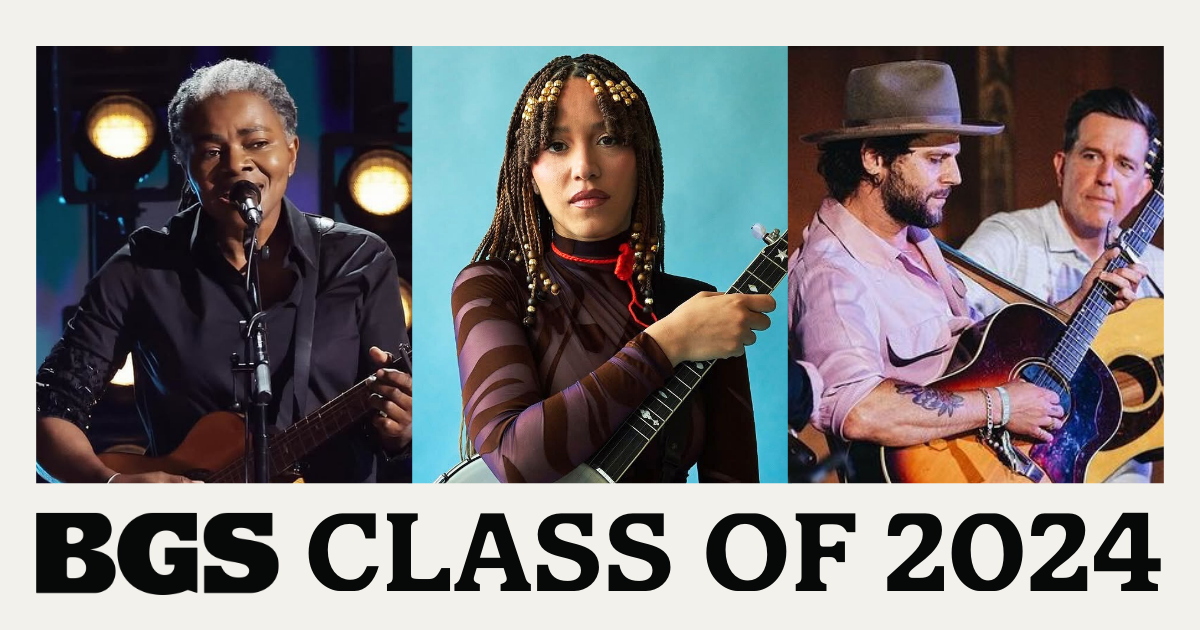
Below, our first-rate writers, thinkers, and contributors share the musical moments from 2024 that impacted them most. From Beyoncé galloping through our hearts with Cowboy Carter to intimate, people-first festivals like Laurel Cove Music Festival in Kentucky. There’s also music from harlequin creators like American Patchwork Quartet, Kaia Kater, and Rhiannon Giddens alongside memories of the late Dexter Romweber and the strength of mutual aid and community solidarity in Western North Carolina post-Hurricane Helene.

2024 held so many intricate, ineffable, one-of-a-kind moments, good, bad, ugly, and gorgeous. We hope you’ll take a second to recall your own most memorable musical moments of the year while we share ours – and while we all look forward to many more in the year to come.

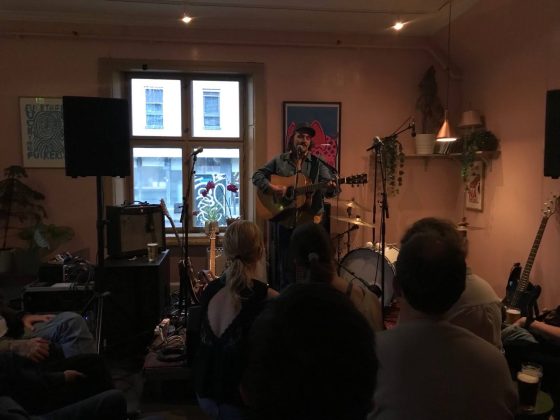
August 20, 2024 – Chris Acker and Dylan Earl at Folk i Storgata, Oslo, Norway

Photo by Dana Yewbank taken at a show by Chris Acker and Dylan Earl at Folk i Storgata in Norway.

While this doesn’t quite fit any stereotypes about Scandinavia, black metal, or Viking-inspired neo-folk, Norway has a thriving Americana music scene that welcomes and celebrates even lesser-known American folk and country artists. Chris Acker and Dylan Earl are two of these undersung artists, both represented by Nick Shoulders’ record label Gar Hole Records out of Arkansas. This past summer, Acker, Earl, and I all coincidentally ended up in Oslo, Norway, at the same time, where the pair put on an intimate, inspiring, and tightly-packed show for a crowd of about 30 people in a tiny bar with pink walls. They bantered with the audience, backed each other up on a few songs, and even spontaneously formed an unrehearsed superband with the bar owner and their Norwegian opener – and they were damn good. Acker and Earl are both deeply thoughtful musicians who use their power and presence as men on stage to question the status quo of “good ol’ boy” country and stoic male musicality. Their candidness and subversive humor drew the room together that night with a sense of camaraderie, safety, and concentrated joy. – Dana Yewbank

Act Now! A Paperface Zine Benefit Tape for the Palestine Children’s Relief Fund

A harrowing statistic from the UN agency for Palestinian refugees (UNRWA) reports that as of March 2024, the number of children killed in Gaza over a mere five months (October 2023 to February 2024) surpassed the number of children killed in global conflict over the four years prior, combined (2019-2022). As of December 2024, we are a year and two months into the ceaseless genocide being waged against the innocent civilians of Palestine and the horrific violence only continues.

I salute everyone who has waged resistance against genocidal powers, be it contacting senators, galvanizing communities to action, participating in rallies, or, in this instance, artists and musicians who have used their platform as an act of protest. Paperface Zine, a blog that writes and interviews an eclectic mix of underground artists, spearheaded this collection of tunes in an effort to express solidarity with Palestine and raise funds towards the Palestine Children’s Relief Fund. This Benefit Tape is a shining example of how most any skill can be mobilized to support greater communities; creativity and care forever go hand in hand. – Oriana Mack

American Patchwork Quartet, American Patchwork Quartet

American Patchwork Quartet have pieced together one of the best albums this year. Don’t take our word for it: they’ve been nominated for a GRAMMY for Best Folk Album. That’s the moment we want to celebrate. With all due respect to the other nominees, it’s exciting to see a brand new project get recognized so quickly – particularly one that colors outside the lines like APQ. The quartet add a number of global influences to traditional American songs: a guitar solo here, a sitar there, and a fine sprinkling of tabla make the quartet live up to their name. Now, especially, we need statements that American traditions were born of a tapestry of European, African, and Indigenous cultures that continue to be built upon by everyone who chooses to make this place a part of their own quilts. – Rachel Cholst

September 26, 2024 – Asheville, North Carolina’s Music Scene and Hurricane Helene

On the night of September 26, Hurricane Helene ravaged Western North Carolina with unprecedented rainfall and flooding. What resulted was a tight-knit area completely decimated and utterly distraught by the destruction of numerous communities. The current death toll for the state sits at 103, with many others still missing.

Beyond the cultural, economic, and unbelievable physical devastation to Asheville and surrounding towns, the city’s vibrant and world-renowned live music scene was brought to its knees – a radio silence that lasted several weeks, with numerous unknowns lingering for certain storied venues. But, with great resolve and a steadfast attitude of helping your friends and neighbors, the vast music community in Asheville and greater WNC came together with countless benefit concerts and fundraiser album compilations (Caverns of Gold, Cardinals at the Window) — an effort that remains at the forefront of the region’s recovery that will take years, if not decades, to return to normalcy. – Garret K. Woodward

Beyoncé, “Jolene”

Country music is for everyone and there is something fascinating about an album which ends up in the territory between categories. Beyoncé is a great singer, and has been flirting with country for a very long time; she has the chops to sing “Jolene” better than Dolly. So, when she sings that she’s “still a Creole banjee bitch from Louisiana,” she is making a series of arguments: that country exists in response songs; that the other woman should be given the mic; that the landscape mirrors the territory; and that the gatekeepers should be torn down, like the walls of Jericho. – Steacy Easton

February 4, 2024 – Tracy Chapman & Luke Combs, “Fast Car”

Luke Combs released his version of Tracy Chapman’s “Fast Car” in 2023, but it was his performance with Chapman on the 2024 GRAMMY Awards primetime telecast that rocketed the song from country radio back into the mainstream zeitgeist. Where Combs’s recording highlighted the song’s working-class vibes, seeing him perform it alongside its (Black, queer, female) writer gave the song’s legacy even greater heft. “Fast Car” was always a song about women carrying more weight than any single human can; about the urgent, nagging desire to flee toxic cycles; about how fleeting freedom can sometimes feel. For better or worse, all these things became emblematic of 2024. – Kim Ruehl

Rhiannon Giddens

You would be hard-pressed to cite anyone in any genre who had more memorable musical moments in 2024 than the superb vocalist, composer, and instrumentalist Rhiannon Giddens. Her writing brilliance was showcased through the Silkroad Ensemble group and project. Her arrangements of folk songs were part of their landmark American Railroad tour program along with commissioned pieces from jazz artist Cécile McLorin Salvant and film composer Michael Abels, as well as fellow Silkroad artists Wu Man, Layale Chaker, Haruka Fujii, and Maeve Gilchrist. Giddens was featured on banjo and viola on the hit single “Texas Hold ‘Em,” part of Beyoncé’s huge Cowboy Carter LP. Giddens added another GRAMMY nomination for Best American Roots Performance with “The Ballad of Sally Anne” from the excellent compilation My Black Country: The Songs of Alice Randall, too. Hard to believe there’s any ground left to cover for the MacArthur Genius and Pulitzer Prize winner, but Rhiannon Giddens continues to stun and surprise audiences with everything she does. – Ron Wynn

November 14, 2024 – Zachariah Hickman’s Power Outage Party! at Club Passim, Cambridge, MA

Not sure how bassist and music director Zachariah Hickman (Josh Ritter, Ray Lamontagne, Barnstar!) pulls off his many acts of mischief, but the Power Outage Party! shows are the most creative, beautiful, and emotional musical experiences around. Presented in mid-November by Club Passim, the shows featured a collective of musicians (including members of Della Mae and Session Americana) and guests (this year including Taylor Ashton, Mark Erelli, and Kris Delmhorst) performing without any power in the historic 100-seat club in Harvard Square. The band is lit with camping lanterns and tea lights. The audience is shoehorned in so tight (I was nearly sitting on the cello players’ lap) that you can’t help but feel a part of a very special community. Every time I go, I carry the experience and inspiration with me as we all work through the darkest part of the year. – Cindy Howes

February 24, 2024 – Kaia Kater, “In Montreal” at Folk Alliance International

One of my favorite and most memorable musical moments of the year occurred at Folk Alliance International, where Kaia Kater and her band performed tracks from her brand new album, Strange Medicine, at BGS’s private showcase. In a small hotel room with a handful of audience members, Kater began “In Montreal” with her looping, cyclical, trance-like clawhammer banjo groove. I was immediately transported, immediately grounded, gently – and forcibly – brought to the moment. I still experience the same visceral sensation each time I hear this track begin, the old-time banjo hook leaving and rejoining the beat deliciously, sketching out an expansive pocket. This night, in cold Kansas City, Kater was joined by flutist Amber Underwood (AKA Flutienastiness), who was even further transportive and dreamy in her interpretations of the track. It was a transcendent song, a daring banjo-flute dialogue, a mind-blowing mini set, and a perfect harbinger of what Strange Medicine would cure and balm. – Justin Hiltner

June 7-8, 2024 – Laurel Cove Music Festival

The gem of a festival located just north of the Cumberland Gap in Pineville, Kentucky, has fostered several special moments in recent years, but none come close to matching the memories from Wyatt Flores and The Red Clay Strays headlining sets there this past June.

The first came when Flores’ mics were cut off before an encore, leading to his band sitting atop the speakers lining the stage for a crowd sing along to Tyler Childers’ “Lady May” that to this day still gives me goosebumps. But if that wasn’t enough, The Strays topped it the following night when their show turned into an impromptu baptism after people in the crowd began jumping into the shallow pond surrounding the stage during a performance of their hit song, “Don’t Care.”

Both occurrences were pure magic from two of the year’s hottest country-adjacent acts in an intimate setting with only 1,500 people in attendance, showing that even in the age of corporate mega-festivals the best things still do come in small packages. – Matt Wickstrom

February 16, 2024 – The Death of Dexter Romweber

Though he was never top of the pops – or even on the charts at all, either solo or with Flat Duo Jets – wildman proto-rockabilly guitarist John Michael Dexter “Dex” Romweber was still an inspirational icon in the roots-rock world and a key influence on major bands like White Stripes and Black Keys. Romweber was just 57 years old when he died from a cardiac event this year, a shocking event that inspired a worldwide outpouring of tributes that went on for days. Maybe the best of all came from Jack White, who was always wide open about the depth of Romweber’s influence on White Stripes. Writing on Instagram, White proclaimed that Dex “was the type that don’t get 3 course dinners, awards, gold records and statues made of them because they are too real, too much, too strange, too good.” That’s the truth. – David Menconi

July 27, 2024 – Langhorne Slim, “We the People (Fuck the Man)” Live at the BGS Jam at Newport Folk Festival

While putting together the set list for the BGS Late Night Jam, “A Bluegrass Situation,” at Newport Folk Festival back in July, our old pal Langhorne Slim suggested a new tune he had just written. Would the house band be willing to learn it for this special occasion? In the words of our jam host and BGS co-founder Ed Helms, the song was an “instant Newport Classic.”

Slim’s new tune, “We the People (Fuck the Man)” – later released on streaming platforms just before the election – echoed through the Pickens Theatre that Saturday night and immediately got the audience on their feet. Its lyrics are as timeless and rallying as any Guthrie tune, but amidst all the declarations against greed and polarization there’s an optimistic plea in the chorus:

So let us love our neighbors
Protect the land
Look our brother in the eye
When we shake his hand
It’s been this way a long time
It’s hard to understand
The time has come for everyone
We the people, fuck the man

In these tumultuous times, Slim gave us words (and a performance) we shouldn’t soon forget. – Amy Reitnouer Jacobs

Sam Williams & Carter Faith, “‘Til I Can Make It on My Own”

Sam Williams and Carter Faith drape their fringe-laced voices over Tammy Wynnette’s “‘Til I Can Make It on My Own.” While honoring the song’s 1976 roots, the two rising stars spin their own lonesome and delicate performance that seems to transcend time and place. “Lord, you know I’m gonna need a friend,” they sing, trading stunningly confessional lines and background harmony. “‘Til I get used to losing you/ Let me keep on using you, ‘til I can make it on my own.” Through a honeyed, emotionally resonant arrangement, Williams and Faith demonstrate exactly why they’re among the best of today’s new crop of talent. – Bee Delores

Yasmin Williams, Acadia

The guitar is perhaps the most ubiquitous instrument in the modern world, making it even more notable that a picker like Yasmin Williams could still stake out fresh territory on the instrument, finding and championing her own truly original sound and approach. Acadia is a masterwork, breaking still new ground after Williams’ incredibly successful 2021 album, Urban Driftwood. While Acadia isn’t exactly a reinvention for the picker-composer-innovator, it does limitlessly expand the acoustic universe she’s been fleshing out since releasing her debut, Unwind, in 2018. That’s a fairly short runway for a creative to accomplish so much, especially given Williams seemingly treats her guitars as brand new devices each time she picks them up to compose. The results are often bafflingly, jaw-dropping, and dramatic – but always musical and ceaselessly inspiring. – Justin Hiltner


Photo Credit: Tracy Chapman live on the 2024 GRAMMY Awards; Kaia Kater by Janice Reid; Langhorne Slim with Ed Helms at Newport Folk Festival by Nina Westervelt.

See the Nominees for the 67th GRAMMY Awards

This morning, Friday, November 8, the Recording Academy announced the nominees for the 67th GRAMMY Awards, to be held in Los Angeles on February 2 at the Crypto.com Arena. Roots musicians can be found at all levels and across all fields of the buzzworthy awards, which are voted on by the vast Recording Academy membership of music makers, artists, and creatives.

Notably, Beyoncé, her groundbreaking country fusion album COWBOY CARTER, and its tracks can be found throughout the general field and American Roots categories, including landing nominations for Best Country Album, Best Country Song, Best Americana Performance, Album of the Year, Record of the Year, and more. Banjoist and composer Béla Fleck collected more than a handful of nominations for his work with Chick Corea – released posthumously – and Rhapsody in Blue, as well.

The Best Bluegrass Album category this year includes releases from Bronwyn Keith-Hynes, the Del McCoury Band, Sister Sadie, Billy Strings, Tony Trischka, and Dan Tyminski, making for an incredibly stout and superlative lineup.

From Kacey Musgraves to Shemekia Copeland, Aoife O’Donovan to Lake Street Dive, below we’ve collected all of the nominees in the Country & American Roots Music fields, plus we feature select categories from across the many fields, genres, and communities that also include roots musicians and our BGS friends and neighbors. Check out the list and mark your calendars for the 67th GRAMMY Awards, Sunday, February 2, 2025.

Best Country Solo Performance

“16 CARRIAGES” – Beyoncé
“I Am Not Okay” – Jelly Roll
“The Architect” – Kacey Musgraves
“A Bar Song (Tipsy)” – Shaboozey
“It Takes A Woman” – Chris Stapleton

Best Country Duo/Group Performance

“Cowboys Cry Too” – Kelsea Ballerini with Noah Kahan
“II MOST WANTED” – Beyoncé featuring Miley Cyrus
“Break Mine” – Brothers Osborne
“Bigger Houses” – Dan + Shay
“I Had Some Help” – Post Malone featuring Morgan Wallen

Best Country Song

“The Architect” – Shane McAnally, Kacey Musgraves & Josh Osborne, songwriters (Kacey Musgraves)
“A Bar Song (Tipsy)” – Sean Cook, Jerrel Jones, Joe Kent, Chibueze Collins Obinna, Nevin Sastry & Mark Williams, songwriters (Shaboozey)
“I Am Not Okay” – Casey Brown, Jason DeFord, Ashley Gorley & Taylor Phillips, songwriters (Jelly Roll)
“I Had Some Help” – Louis Bell, Ashley Gorley, Hoskins, Austin Post, Ernest Smith, Ryan Vojtesak, Morgan Wallen & Chandler Paul Walters, songwriters (Post Malone Featuring Morgan Wallen)
“TEXAS HOLD ‘EM”– Brian Bates, Beyoncé, Elizabeth Lowell Boland, Megan Bülow, Nate Ferraro & Raphael Saadiq, songwriters (Beyoncé)

Best Country Album

COWBOY CARTER – Beyoncé
F-1 Trillion – Post Malone
Deeper Well – Kacey Musgraves
Higher – Chris Stapleton
Whirlwind – Lainey Wilson

Best American Roots Performance

“Blame It On Eve” – Shemekia Copeland
“Nothing In Rambling” – The Fabulous Thunderbirds featuring Bonnie Raitt, Keb’ Mo’, Taj Mahal, & Mick Fleetwood
“Lighthouse” – Sierra Ferrell
“The Ballad Of Sally Anne” – Rhiannon Giddens

Best Americana Performance

“YA YA” – Beyoncé
“Subtitles” – Madison Cunningham
“Don’t Do Me Good” – Madi Diaz featuring Kacey Musgraves
“American Dreaming” – Sierra Ferrell
“Runaway Train” – Sarah Jarosz
“Empty Trainload Of Sky” – Gillian Welch & David Rawlings

Best American Roots Song

“Ahead Of The Game” – Mark Knopfler, songwriter (Mark Knopfler)
“All In Good Time” – Sam Beam, songwriter (Iron & Wine featuring Fiona Apple)
“All My Friends” – Aoife O’Donovan, songwriter (Aoife O’Donovan)
“American Dreaming” – Sierra Ferrell & Melody Walker, songwriters (Sierra Ferrell)
“Blame It On Eve” – John Hahn & Will Kimbrough, songwriters (Shemekia Copeland)

Best Americana Album

The Other Side – T Bone Burnett
$10 Cowboy – Charley Crockett
Trail Of Flowers – Sierra Ferrell
Polaroid Lovers – Sarah Jarosz
No One Gets Out Alive – Maggie Rose
Tigers Blood – Waxahatchee

Best Bluegrass Album

I Built A World – Bronwyn Keith-Hynes
Songs Of Love And Life – The Del McCoury Band
No Fear – Sister Sadie
Live Vol. 1 – Billy Strings
Earl Jam – Tony Trischka
Dan Tyminski: Live From The Ryman – Dan Tyminski

Best Traditional Blues Album

Hill Country Love – Cedric Burnside
Struck Down – The Fabulous Thunderbirds
One Guitar Woman – Sue Foley
Sam’s Place – Little Feat
Swingin’ Live At The Church In Tulsa – The Taj Mahal Sextet

Best Contemporary Blues Album

Blues Deluxe Vol. 2 – Joe Bonamassa
Blame It On Eve – Shemekia Copeland
Friendlytown – Steve Cropper & The Midnight Hour
Mileage – Ruthie Foster
The Fury – Antonio Vergara

Best Folk Album

American Patchwork Quartet – American Patchwork Quartet
Weird Faith – Madi Diaz
Bright Future – Adrianne Lenker
All My Friends – Aoife O’Donovan
Woodland – Gillian Welch & David Rawlings

Best Regional Roots Music Album

25 Back To My Roots – Sean Ardoin And Kreole Rock And Soul
Live At The 2024 New Orleans Jazz & Heritage Festival – Big Chief Monk Boudreaux & The Golden Eagles featuring J’Wan Boudreaux
Live At The 2024 New Orleans Jazz & Heritage Festival – New Breed Brass Band featuring Trombone Shorty
Kuini – Kalani Pe’a
Stories From The Battlefield – The Rumble Featuring Chief Joseph Boudreaux Jr.

Best Roots Gospel Album

The Gospel Sessions, Vol 2 – Authentic Unlimited
The Gospel According To Mark – Mark D. Conklin
Rhapsody – The Harlem Gospel Travelers
Church – Cory Henry
Loving You – The Nelons

Best Jazz Performance

“Walk With Me, Lord (SOUND | SPIRIT)” – The Baylor Project
“Phoenix Reimagined (Live)” – Lakecia Benjamin featuring Randy Brecker, Jeff “Tain” Watts & John Scofield
“Juno” – Chick Corea & Béla Fleck
“Twinkle Twinkle Little Me” – Samara Joy featuring Sullivan Fortner
“Little Fears” – Dan Pugach Big Band featuring Nicole Zuraitis & Troy Roberts

Best Jazz Instrumental Album

Owl Song – Ambrose Akinmusire featuring Bill Frisell & Herlin Riley
Beyond This Place – Kenny Barron featuring Kiyoshi Kitagawa, Johnathan Blake, Immanuel Wilkins & Steve Nelson
Phoenix Reimagined (Live) – Lakecia Benjamin
Remembrance – Chick Corea & Béla Fleck
Solo Game – Sullivan Fortner

Best Traditional Pop Vocal Album

À Fleur De Peau – Cyrille Aimée
Visions – Norah Jones
Good Together – Lake Street Dive
Impossible Dream – Aaron Lazar
Christmas Wish – Gregory Porter

Best Contemporary Instrumental Album

Plot Armor – Taylor Eigsti
Rhapsody In Blue – Béla Fleck
Orchestras (Live) – Bill Frisell featuring Alexander Hanson, Brussels Philharmonic, Rudy Royston & Thomas Morgan
Mark – Mark Guiliana
Speak To Me – Julian Lage

Best Instrumental Composition

“At Last” – Shelton G. Berg, composer (Shelly Berg)
“Communion” – Christopher Zuar, composer (Christopher Zuar Orchestra)
“I Swear, I Really Wanted To Make A “Rap” Album But
This Is Literally The Way The Wind Blew Me This Time” – André 3000, Surya Botofasina, Nate Mercereau & Carlos Niño, composers (André 3000)
“Remembrance” – Chick Corea, composer (Chick Corea & Béla Fleck)
“Strands” – Pascal Le Boeuf, composer (Akropolis Reed Quintet, Pascal Le Boeuf & Christian Euman)

Best Arrangement, Instrumental or A Cappella

“Baby Elephant Walk” – Encore, Michael League, arranger (Snarky Puppy)
“Bridge Over Troubled Water” – Jacob Collier, Tori Kelly & John Legend, arrangers (Jacob Collier Featuring John Legend & Tori Kelly)
“Rhapsody In Blue(Grass)” – Béla Fleck & Ferde Grofé, arrangers (Béla Fleck featuring Michael Cleveland, Sierra Hull, Justin Moses, Mark Schatz & Bryan Sutton)
“Rose Without The Thorns” – Erin Bentlage, Alexander Lloyd Blake, Scott Hoying, A.J. Sealy & Amanda Taylor, arrangers (Scott Hoying featuring säje & Tonality)
“Silent Night” – Erin Bentlage, Sara Gazarek, Johnaye Kendrick & Amanda Taylor, arrangers (säje)

General Field:

Record Of The Year

“Now And Then” – The Beatles
“TEXAS HOLD ‘EM” – Beyoncé
“Espresso” – Sabrina Carpenter
“360” – Charli XCX
“BIRDS OF A FEATHER” – Billie Eilish
“Not Like Us” – Kendrick Lamar
“Good Luck, Babe!” – Chappell Roan
“Fortnight” – Taylor Swift featuring Post Malone

Album Of The Year

New Blue Sun – André 3000
COWBOY CARTER – Beyoncé
Short n’ Sweet – Sabrina Carpenter
BRAT – Charli XCX
Djesse Vol. 4 – Jacob Collier
HIT ME HARD AND SOFT – Billie Eilish
Chappell Roan The Rise And Fall Of A Midwest Princess – Chappell Roan
THE TORTURED POETS DEPARTMENT – Taylor Swift

Song Of The Year

“A Bar Song (Tipsy)” – Sean Cook, Jerrel Jones, Joe Kent, Chibueze Collins Obinna, Nevin Sastry & Mark Williams, songwriters (Shaboozey)
“BIRDS OF A FEATHER” – Billie Eilish O’Connell & FINNEAS, songwriters (Billie Eilish)
“Die With A Smile” – Dernst Emile II, James Fauntleroy, Lady Gaga, Bruno Mars & Andrew Watt, songwriters (Lady Gaga & Bruno Mars)
“Fortnight” – Jack Antonoff, Austin Post & Taylor Swift, songwriters (Taylor Swift Featuring Post Malone)
“Good Luck, Babe!” – Kayleigh Rose Amstutz, Daniel Nigro & Justin Tranter, songwriters (Chappell Roan)
“Not Like Us” – Kendrick Lamar, songwriter (Kendrick Lamar)
“Please Please Please” – Amy Allen, Jack Antonoff & Sabrina Carpenter, songwriters (Sabrina Carpenter)
“TEXAS HOLD ‘EM” – Brian Bates, Beyoncé, Elizabeth Lowell Boland, Megan Bülow, Nate Ferraro & Raphael Saadiq, songwriters (Beyoncé)

Best New Artist

Benson Boone
Sabrina Carpenter
Doechii
Khruangbin
RAYE
Chappell Roan
Shaboozey
Teddy Swims


Graphic courtesy of the Recording Academy.

Brat Summer Hits Bluegrass – Everything You Need To Know

Brat summer has come to bluegrass music – like seemingly every other corner of our culture. This viral social media sensation continues to mystify internet scrollers, news anchors, journalists, and analysts of certain generations, but the trend – based on the wildly popular hyperpop/dance album, brat, released by DJ and pop star Charli XCX in June – has found a sure footing in one perhaps unlikely corner of the music industry: bluegrass.

This fact was no more evident to the editorial staff at BGS than at our A Bluegrass Situation after show at Newport Folk Festival  last month, where recent BGS Artist of the Month and banjo magnate Tony Trischka posed an earth-shattering question to the cavalcade of bluegrass and roots music stars waiting backstage: “Who here is brat?”

Reactions were mixed. Trischka and his cohort attempted to explain “brat” to the gathered artists and comedians; those with knowledge of the conversation hesitated to identify who among the star-studded lineup identified as “brat” to Trischka and who did not, out of respect for those present.


View this post on Instagram


A post shared by Hawktail (@hawktailband)

While our Newport Folk Festival lineup may have been an organic blend of brat and non-brat, elsewhere in the roots scene critically-acclaimed and award winning artists, pickers, and bands have gleefully brought brat to the forefront of a busy bluegrass festival and music camp season with many videos and posts celebrating brat summer. Impeccable instrumentalists, GRAMMY and IBMA Award nominees and winners, and industry leaders have all been seen making posts, referencing brat, and doing viral accompanying dance moves for XCX’s “Apple.” Meanwhile, new acoustic string band supergroup Hawktail have declared it’s a “Britt summer,” instead, celebrating their bandmate, fiddler Brittany Haas.

Do you or someone you know identify as brat? Are you, too, enjoying a bratgrass summer? You aren’t alone. These bluegrass artists and bands are certainly brat. And, with a few more weeks left before we usher in fall, there’s still plenty of time for bratgrass to continue to entrance and enlighten the bluegrass community.

Sister Sadie

@sistersadiemusic We’re practicing up on our dance moves for our set here at Rocky Grass 🏔️✨ we can’t wait to see y’all out there 💓🍏 #rockygrass #charlixcx #apple #sistersadie #ootd @jaelee @maddie 🫧🫶 @Gena Britt @Dani Flowers @Deanie Richardson ♬ Apple – Charli xcx

Look, we already knew Sister Sadie are brat, because No Fear = brat. The transitive property applies. Brat brat brat. Whatever this legendary lineup tackles, from exciting covers to TikTok dance trends, we’re here for it. Bratgrass epitomized. No notes, very demure. Very cutesy.

Maddie Witler

@maddiewitler 🍏 🍏 so fun my first ever tiktok dance video and a reason to wear this dress that I always chicken out on @Charli XCX dance by @Kelley Heyer #charlixcx #apple #theapple #brat #pop #fyp #trend #dance #pride #cat ♬ Apple – Charli xcx

Mandolinist, instructor, multi-instrumentalist, and coffee expert Maddie Witler was one of the very first bluegrass adopters of brat – some would argue, even well before the eponymous album. Witler has toured and performed with so many of bluegrass’s greats from all across the genre map, and now has crafted a vibrant online presence and business through TikTok, Patreon, and, of course, bringing the “Apple” dance and brat chartreuse to bluegrass.

Missy Raines & Allegheny, The Onlies, and More

@snooplemcdoople Old time brat summer #bratsummer #oldtime #missyraines @Tristan Scroggins @viv.and.riley @TheOnlies ♬ Apple – Charli xcx

Missy Raines is one of the winningest musicians in the history of the IBMA. Clearly, Raines is also brat. Here, she and members of her band, Allegheny (Ellie Hakanson and Tristan Scroggins), are joined by the Onlies (Sami Braman, Vivian Leva, Riley Calcagno, Leo Shannon) as well as several other instructors and musicians at Targhee Music Camp in Alta, Wyoming in the Grand Tetons. Sounds plenty brat to us!

Seth Taylor


View this post on Instagram


A post shared by Seth Taylor (@sethtaylor427)

In-demand guitarist and multi-instrumentalist Seth Taylor currently tours with Sarah Jarosz, bringing brat with them everywhere they go. Or, should we say, “brat paisley summer.” Which, naturally, we’ve gone ahead and agreed is 100% a thing. Taylor is a bluegrass shredder who’s performed and recorded with countless artists and bands in country, Americana, folk, and beyond. Plus, his tasty acoustic guitar cover of Sabrina Carpenter’s “Please Please Please” feels pretty brat to us, too.

While we wish we could report a Pickin’ on Brat album is currently in the works or that Charli XCX will launch surprise bluegrass remixes with a Sierra Ferrell feature verse coming soon, rest assured the BGS team will continue to monitor, address, and report on the very important issue of bratgrass to our audience and readers – brat or not.

As more and more TikTok trends and hits from the current pop and Top 40 charts filter into string band music – like Taylor Ashton or Sister Sadie covering Chappell Roan, Seth Taylor’s “Please Please Please” rendition, Molly Tuttle singing Beyoncé, and many more examples crossing our feeds daily – it’s clear this bratgrass summer is first and foremost for the demure and mindful rootsy girls, gays, theys, and every brat in between.


The Best Bluegrass Albums of 2024 (So Far)

It’s seven months into the year and music and media outlets are looking back while looking forward, pondering and collating all of the incredible music that’s been released in 2024… so far. From Beyoncé to Zach Bryan to “brat summer,” there’s certainly been no shortage of seismic album drops – and in our bluegrass corner of the roots music world, the same holds true.

So far this year, there have been stellar releases by the biggest names in the genre, like Béla Fleck, Billy Strings, Tony Trischka, Laurie Lewis, and the Del McCoury Band. Country singer-songwriter Brit Taylor and roots-soul legend Swamp Dogg both released bluegrass titles this year as well, demonstrating how the age-old tradition of various styles and sounds cross-pollinating with bluegrass continues in the present day.

Supergroups like Sister Sadie, Greensky Bluegrass, and Gangstagrass have all unleashed critically-acclaimed projects in 2024, too, while newcomers like Wyatt Ellis and Jack McKeon impressed with records that sound mature and fully-realized for debut releases. And of course there’s plenty yet to come, as anticipation builds for long-awaited albums from bluegrass stalwarts and heroes like Jerry Douglas – who was just unveiled as a 2024 Bluegrass Hall of Fame inductee – and Gillian Welch & David Rawlings, who recently announced a new project, Woodland, their tenth studio album and first release in four years.

No matter how you cut it, 2024 has been a banner year for superlative bluegrass albums – and there is still so much more to come! Take a minute to amble through our favorite bluegrass releases of the year so far (in approximate chronological order), plus a few honorable mentions that pull heavily from bluegrass traditions and inspirations, and we’ll set the table for the albums we can’t wait to arrive later this year, too.

Cary Morin, Innocent Allies

A jaw-dropping acoustic guitarist who toggles between flatpicking, fingerstyle, blues, and many other styles, Cary Morin released a gorgeous visual art-inspired album earlier this year entitled Innocent Allies. The entire project oozes images of the West done up in bluegrass textures and tones, especially so in Morin’s rendition of “Whiskey Before Breakfast.” Read our feature on the album here.

Sister Sadie, No Fear

For a band that boasts alumni like Dale Ann Bradley and Tina Adair, it’s saying quite a lot to make the statement that this may be the best lineup of Sister Sadie yet. Their latest offering, No Fear, brings striking Nashville vibes together with a dash of the Chicks and features collaborations with country stars like Cam and Ashley McBryde. It’s no surprise this supergroup and their newest album are all over this year’s IBMA Awards nominations. Read our March Cover Story on No Fear here.

Wyatt Ellis, Happy Valley

A mere 15 years old, mandolin picker Wyatt Ellis certainly deserves the “bluegrass prodigy” designation he often receives, but dare not sell this young virtuoso short with such a moniker. There’s musicality, touch, and taste evident across his debut album, Happy Valley, well beyond his teenaged years. That’s just part of the reason behind why he’s able to attract such notable collaborators and guests as Marty Stuart, Sierra Hull, Mike Compton, and more. Keep an eye on this one, ‘cause there’s no telling just how far he will go in music, but it’s sure to be way up there!

Brit Taylor, Kentucky Bluegrassed

Pulling a page out of the bluegrass playbook of the ‘60s through ‘90s, country singer-songwriter Brit Taylor demonstrates the inseparable interconnectedness of country and bluegrass with Kentucky Bluegrassed, a reimagination of her 2023 country album, Kentucky Blue, played by a cracking bluegrass band. There are touches of Alan Jackson, Vince Gill, Patty Loveless, and so many more through the project. It certainly reminds of those eras, in which bluegrass artists and bands were just as likely to identify simply as “country” as they were “bluegrass.” The lines between these genres used to be much more blurry; we’re happy to see folks like Taylor – and many others – smear, complicate, and dirty up those genre demarcations once again. Kentucky Bluegrassed is a “don’t miss” album that may not be on every diehard grasser’s radar.

Missy Raines & Allegheny, Highlander

Missy Raines never left bluegrass, but Highlander feels like something of a return by this trophied and exalted bassist, singer, and songwriter after her last few more experimental and Americana-geared outings. This is her first recording with her “new” backing band, Allegheny, who have performed with her now for a handful of years. It’s a rollicking, up-tempo, dynamo of an album, but it’s never one note or stolid – or trying to pander to digital radio. There are calm moments, songs that will bring a tear to your eye, and political tones, too, all bolstering the tightness of the band and the trad-tastic, meta-mash energy herein. “Who Needs a Mine,” the stand out track in a superlative song sequence, will most likely go down in history as one of the best issues-oriented bluegrass songs ever written. Every bit as biting and timely as Hazel Dickens, Jean Ritchie, and so many other activist artists from the regions Raines grew up in. Read our recent feature interview here.

Béla Fleck, Rhapsody in Blue

The most traditional aspect of Béla Fleck’s music-making across his lifelong career is his constant and effortless innovation. As a community, we lose sight so easily of the fact that every first generation bluegrass star was an innovator, so many consummate musicians just “making it up as they go along.” Referring to Fleck’s Rhapsody in Blue as “making it up as he goes along” might raise an eyebrow at first, but one of the most fascinating threads throughout Fleck’s countless albums is his ability to ground whatever musical vocabulary he chooses within the traditions, styles, and physicality of bluegrass banjo. He doesn’t so much care what “does” or “doesn’t” fit on the banjo, he follows his whims, fancies, and inspirations and always makes it work. Perhaps only he could do so with Gerswhin! (And we are so glad that he did.)

Kyle Tuttle, Labor of Lust

Banjo player Kyle Tuttle released his second studio album, Labor of Lust, in February. You may know him from Molly Tuttle’s band, Golden Highway, or from his ubiquitous presence in jamgrass scenes over the past decade or so. The new album demonstrates his particular approach to newgrass, jamgrass, and engaging and exciting improvisational picking. His voice on the instrument is indelible. A modernist banjo player with endless panache, a strong sense of humor, and buckets of stamina and drive. We spoke to Tuttle about the project earlier this year.

Barnstar!, Furious Kindness

New Englander and Northeastern-based bluegrassers will be more than familiar with this raucous outfit, but the national bluegrass scene may need to be put onto the singular sounds of Barnstar! Made up of Mark Erelli, Zachariah Hickman, Charlie Rose, and Taylor and Jake Armerding, Barnstar! started as a side project for these in-demand musicians and songwriters and quickly blossomed into a chaotic, bombastic, and hilarious group that can just as easily go earnest, emotive, and touching. Furious Kindness is another selection here that you may not have yet encountered – and we’re here to rectify that. Need more? We hosted Erelli and Hickman on Basic Folk to chat about the project.

Cris Jacobs, One of These Days

If your first introduction to Cris Jacobs was the above song – “Poor Davey,” featuring Billy Strings – fed to you by the algorithm or a roots DJ or found via the “appears on” section of Strings’ streaming profiles, you certainly aren’t alone. A well-known musician in alt-country, rock and roll, and the often nebulous regions between these genres, Americana, and bluegrass, Jacobs may read as a newcomer in bluegrass, but his Jerry Douglas-produced album, One of These Days, is anything but a one-off or novelty project or ‘grassy interloping. This is deep and broad bluegrass that feels straight ahead and genre-expansive at the same time, drawing on guests like Lindsay Lou, the McCrary Sisters, Sam Bush, and more. The Strings track may be what first grabs you, but this album deserves a deep dive follow-up, immediately.

Greensky Bluegrass, The Iceland Sessions (featuring Holly Bowling)

An EP we loved so much it just had to be included on our Best Bluegrass Albums list. Pianist and keys player Holly Bowling joins illustrious jamgrass group Greensky Bluegrass to revive the often latent, near extinct, and severely underrated tradition of bluegrass piano. Over four tracks recorded in remote northern Iceland in 2023, the band and Bowling have curated a vibe that hinges on the present, focusing in on the exact moments in time wherein they captured these sounds and songs. It’s why we love jamgrass to begin with, right? The way the music calls all of us to be grounded in the present. That’s the exact spirit in which these recordings were made and the translation of that intention is more than just successful, it’s deeply resonant.

Bronwyn Keith-Hynes, I Built A World

Fiddler Bronwyn Keith-Hynes has found her voice – literally and figuratively. While her last studio release, Fiddler’s Pastime (2020), was more instrumental-focused, her latest project, I Built A World, finds her stepping up to the vocal mic with confidence. Her voice is strong and well-practiced while homey and down to earth, too. The song selections are bold, her collaborators are glitzy and first-rate, but each feature, guest, and musician serves the track they’re on and the album as a whole first and foremost. Keith-Hynes has certainly found her groove and her creative community, and we’re all reaping the benefits of her commitment to challenging herself and looking ahead to the future. We recently chatted with Bronwyn and her pal Brenna MacMillan about their respective solo projects – check it out here.

Swamp Dogg, Blackgrass: From West Virginia to 125th St

When the initial announcement of Swamp Dogg’s latest album, Blackgrass, reached the BGS team, electricity and excitement shot through our ranks. Here’s a project that speaks deeply to one of our highest-priority missions in bluegrass: to showcase the multi-ethnic, melting pot, diverse roots of our favorite genre of music. Bluegrass has never been a music for white folks only, no matter how prevalent that narrative is today, and this legendary multi-hyphenate musician, creator, and producer, Swamp Dogg, demonstrates that fact part and parcel over the course of this impeccable collection of music – with a backing band that includes many of the best pickers around today. There are countless remarkable aspects of this album, too many to include in this simple blurb, so head to Lizzie No’s feature on the project to learn more about why this project is purposefully rebellious and revolutionary.

Laurie Lewis, TREES

California bluegrass keystone Laurie Lewis was just announced as one recipient of this year’s IBMA Distinguished Achievement Awards. For decades she has been a center of gravity around which the California and West Coast bluegrass scenes orbit, like a perseverant mother tree from which so many young shoots and saplings have sprung. Her brand new album, TREES, draws upon her wellspring of through-hiking and naturalist knowledge to encounter, process, and challenge so many modern day realities – health issues, the ever-quickening climate crisis, personal and professional life hurdles, and much more. The result is touching, emotional, encouraging, and inspiring, wrapped in traditional bluegrass trappings that feel more in service to the songs than to legalistic genre criteria. Lewis is one of the best to ever make bluegrass and TREES is one of the best releases in her lauded and superlative catalog. We recently published our exclusive interview, which you won’t want to miss.

Tony Trischka, Earl Jam

One of the greatest banjo players today, our current Artist of the Month Tony Trischka has made a career trailblazing on melodic-style three-finger banjo, writing, composing, and recording music that only he could’ve made. For his latest album, Earl Jam, though, he instead leans on the timeless bluegrass task of emulating the greats – namely, Earl Scruggs. The track list is pulled from recordings of casual, at-home jam sessions between Earl, John Hartford, and others, and with his all-star band and fabulous guests, Trischka reiterates Earl’s idiosyncratic playing from these previously unheard recordings. It’s a fascinating context in which to rediscover the limitless intricacies behind Trischka’s playing and the way he synthesizes others’ influences into his own musical vocabulary. Whether stepping into the role – or, shall we say, roll – of Scruggs or making modern banjo compositions out on his own creative limbs, Tony Trischka makes it look effortless and executes everything he does at the highest level. Don’t miss our Artist of the Month feature and our discography deep dive.

Gangstagrass, The Blackest Thing on the Menu

With a band as incisive and forward-looking as Gangstagrass, there will always be countless reasons naysayers will attempt to use to disqualify their music as “bluegrass.” But when viewing this now 15-year-old group through an objective lens, you can see many more bluegrass qualities than not. Innovation (the oldest bluegrass tradition), improvisation, virtuosity, conversational lyrics, a blending of styles, genres, and textures, and the bringing together of creators and inspirations from a variety of backgrounds – that all sounds like bluegrass to us! Gangstagrass’s latest opus, The Blackest Thing on the Menu, finds the critically-acclaimed group at their strongest yet, with a Jerry Douglas track feature (“The Only Way Out is Through”) and plenty of hip-hop-meets-bluegrass excellence. In the present, folks may errantly write off this band as a novelty or an aberration, but in the future we will all view Gangstagrass as they have always been: one of the firsts in the quickly-developing tradition of roots hip-hop, rap string bands, and postmodern bluegrass re-interpreters.

Jack McKeon, Talking to Strangers

In the vein of country songwriters with bluegrass careers – or bluegrass songwriters with country careers (think Shawn Camp, Tom T. Hall, John Prine, Darrell Scott) – Jack McKeon’s debut album, Talking To Strangers, isn’t just bluegrass, but it certainly tracks as first class ‘grassy, down home, front porch music. These thoughtful, introspective lyrics are perfectly set, to a straight ahead bluegrass band like Ashby Frank, Justin Moses, Christian Sedelmeyer, and Vickie Vaughn. McKeon is inaugurating his catalog of recorded works demonstrating that his songs and his voice can be shapeshifters, at home on Music Row and on bluegrass stages and radio, both.

The Del McCoury Band, Songs of Love and Life

Del McCoury is one of the most-awarded personalities in the history of bluegrass and it’s truly no wonder why. He’s spent his entire life honing the family trade: the highest quality bluegrass around. At 85 years-old, every album, concert, performance, and festival we enjoy from Del and the boys is a gift that we’re determined to cherish and savor. His latest full length album, Songs of Love and Life, is sure to be shortlisted for the highest honors handed out by the Grammys and IBMA. This particular track, “Only the Lonely,” is a Roy Orbison cover that showcases Del’s lifelong penchant for not worrying about what is or isn’t bluegrass and instead doing his utmost to serve the song – hence the tasty, honky-tonkin’ bluegrass piano. (Bluegrass piano? Twice in one list??) The record includes a few more charming covers, plenty of brand new tracks, and a Molly Tuttle feature, too.

Brandon Godman, I Heard the Morgan Bell

A killer fiddler from Kentucky who’s performed with Laurie Lewis, Dale Ann Bradley, Jon Pardi, and many, many more, Brandon Godman recently released his first studio album as a solo artist since he was a teenager. Based in San Francisco, Godman is a touring fiddler turned luthier who remains an expert in so many musical styles from his home turf in northern Kentucky. From contest fiddling to western swing to pop country to bluegrass breakdowns and transatlantic hornpipes, Godman’s playing has grit, drive, and aggression, sure, but what stands out the most on I Heard the Morgan Bell, his album of all original compositions, is his emotional range, lyricism, and heartfelt tenderness. Throw in guests like Darol Anger, Patrick Sauber, Sam Reider, and more and you’ve got what will end up being one of the best fiddle-centric albums of this decade.

Tray Wellington, Detour to the Moon

Carrying the banjo innovation banner for millennial cuspers and Gen Z, Tray Wellington is anything but a traditional bluegrass banjo player – and that fact alone is what will always land him in the “solidly bluegrass” camp, by our reckoning. Like fellow listees Trischka, Tuttle, and Fleck, Wellington has found a voice of his very own on the five-string banjo and in recent years his musical offerings – which were already top-notch – have become exponentially more fascinating, fun, and entrancing as a result. His new EP, Detour to the Moon, includes seemingly through-composed, instrumental new acoustic music a la Punch Brothers alongside more straightforward original banjo tunes and a Kid Cudi cover that may just be the best bluegrass cover of a non-bluegrass hit in recent memory. Watching the excited recognition of “Pursuit of Happiness” ripple through the audience at a bluegrass festival while Tray Wellington Band is on stage kicking off the number will certainly never get old.

Billy Strings, Billy Strings Live Vol. 1

The People’s Bluegrass President, Billy Strings, is out with his first live album, Billy Strings Live Vol. 1. No one is doing it like Billy; selling out arenas, coliseums, and gigantic amphitheaters with what’s actually just a five-piece bluegrass band will always be remarkable and noteworthy. Plus, the way he and his team bring his audience into the creative process, feeding their insatiable appetites for content, for music, for four-hour-long tribute shows, is not simply to sell tickets, fill seats, and move product. Strings, at the beginning of the day and at the end of the day, is just a big ol’ bluegrass and guitar nerd. We love that about him. There’s almost no one else in the history of this music from whom we’d tolerate a 13 minute track. (By the way, that’s not the longest runtime on the album!) Keep doing it like only you do it, Billy, and we’ll all stick with you the whole entire way.

AJ Lee & Blue Summit, City of Glass

The last time we had a bluegrass artist take off on our website and socials like AJ Lee & Blue Summit are taking off now, it was Billy Strings playing “Meet Me at the Creek.” We’ve been following this Santa Cruz, California-based string band – featuring AJ Lee, Jan Purat, Scott Gates, and Sully Tuttle – for years, so it’s no surprise to us that the greater bluegrass audience is catching onto the special sound and style of Blue Summit and their brand new album, City of Glass. This is pointedly Californian bluegrass, meaning it is effortlessly traditional and organically inventive and generative. High lonesome harmonies and fiery pickin’ skills combine with soul, groove, emotion, and thoughtful writing. There are country moments, there are barn burners, but overall, it’s clear this young band have hit their stride and know who they are. We aren’t here to tell you the best of the best, per se, but if we were City of Glass would be at the very top.

Interested in those viral moments we mentioned? Check out our hugely popular interview from earlier this month here and the band’s rendition of “You’ll Never Leave Harlan Alive” that’s still doing mega numbers here.

Andrew Marlin, Phthalo Blue

Andrew Marlin, how dare you surprise release this divine album!? (Seriously, thank you, it was indeed a wonderful surprise.) Out last week with hardly more fanfare than a handful of social media posts, Marlin’s brand new collection, Phthalo Blue, has already charmed its way onto our “Best So Far” list. Featuring Stephanie Coleman, Allison de Groot, Clint Mullican, Josh Oliver, and Nat Smith, this is the perfect kind of bluegrass to put on while you work, tidy the house, or tend to your garden. You’ll find the healing effects herein don’t just come from rabbit tobacco.


Near-Bluegrass Honorable Mentions

Whatever you think about our list so far – and whether or not the albums on it qualify as bluegrass to you – here are just a handful of albums we would have regretted not including, but may have more tangential relationships to the genre than their fellows in this piece. Still, each of these fine records has obvious bluegrass bones, however subtle or overt they may be.

Willi Carlisle, Critterland

Many an old-time troubadour/poet such as Willi Carlisle has been a bluegrass musician, but perhaps Carlisle himself wouldn’t identify in that way. Still, there’s bluegrass throughout the critters and characters on this critically-acclaimed album, Critterland. We did a feature on the project, read that here.

Sierra Ferrell, Trail of Flowers

Her new album is markedly post-genre, but those in the know are already well aware that Sierra Ferrell came up through bluegrass circles. From her patinaed West Virginia voice – that brings Hazel Dickens to mind – to her cutting fiddle bowings, wherever she may roam musically, Ferrell will always have a home in bluegrass.

Rachel Sumner, Heartless Things

Rachel Sumner (formerly of Twisted Pine) is decidedly bluegrass, but somehow that seems too simplistic an umbrella for the nuanced music she creates and the special tones she strikes. She infuses so much of the Northeastern bluegrass, folk, Celtic, and jazz scenes and their respective vocabularies into her songs – they may not be exactly bluegrass, but they certainly don’t fall entirely outside that umbrella, either.

Zach Top, Cold Beer & Country Music

Now, this ain’t no bluegrass album – it’s Good Country, that’s for sure – but there’s a bluegrass story embedded within Zach Top’s hugely popular debut, Cold Beer & Country Music, that we’re determined to tell. Once a winner of SPBGMA’s band contest, Top grew up idolizing Tony Rice and Keith Whitley and playing in a bluegrass family band on the weekends. You can see bluegrass touches throughout this mainstream country record, just like when Ricky Skaggs, Whitley, the Osborne Brothers, and more targeted country radio with their songs and sound. Our Good Country feature interview explores all the ways bluegrass filters into his music.

Kaia Kater, Strange Medicine

Kaia Kater is another genre expander who hasn’t ever quite made bluegrass music, but has never been too far from that sonic space, either. She pulls more readily from indie and old-time and folk traditions, but her new album, Strange Medicine, feels like she’s developed an entirely new thing, where genre is a third space, something liminal, or purposefully transitional. Perhaps the most bluegrass thing about this stunning collection is groove, an ever present character through these gorgeous and intricate songs. Kater was our Artist of the Month in May.


Anticipated Albums Still to Come This Year

There’s plenty more where all that came from! Here are just a few of the as yet unreleased recordings we’re sure will be on our “Best Of” lists when we reach the end of the year. It’s not as far off as you think! Luckily, we’ll have a stellar soundtrack to get us there.

Alison Brown, Simple Pleasures (reissue) – available August 9

Rhonda Vincent, Destinations And Fun Places – available August 9

Bella White, Five For Silver – available August 16

Po’ Ramblin’ Boys, Wanderers Like Me – available August 16

Dan Tyminski, Whiskey Drinking Man – available August 16

Fruition, How to Make Mistakes – available August 23

Gillian Welch & David Rawlings, Woodland – available August 23

Caleb Caudle, Sweet Critters – available August 30

Various Artists, Bluegrass Sings Paxton – available August 30

Willie Watson, Willie Watson – available September 13

Jerry Douglas, The Set – available September 20

Twisted Pine, Love Your Mind – available October 18

Brenna MacMillan, Title TBA – release date TBA


BGS Staff also contributed to and assisted curating this list. 

Watch Brittney Spencer’s Gorgeous Tiny Desk Concert

Artists from all across the genre spectrum shine in the stripped down and focused setting of NPR’s Tiny Desk Concert series, but roots musicians often stand out from the rest. Even a big-voiced, high concept, maximally-produced country artist like Brittney Spencer is seemingly at her best in this simplified context, where her impeccable, controlled, and artful voice can deliver songs from her 2024 debut release, My Stupid Life, as if they were always intended to be played by only a handful of musicians behind a desk in a corporate headquarters.

Spencer and her ensemble utilize space and restraint to center her acrobatic and athletic vocals, which are tender and powerful, passionate and nuanced. The group kicks off their six-song Tiny Desk set with “Bigger Than The Song,” a track that’s something of a mission statement for Spencer and the new album. The lyrics name check artists who have inspired and blazed a trail for the vocalist and songwriter, from Beyoncé – with whom Spencer collaborated on Cowboy Carter and “Blackbiird” – to Whitney Houston to Maren Morris, an adept and technical singer who’s not only a peer of Spencer, but a community member of hers, as well. The number points out how, even in Music City and on Music Row, the priorities of creators in country and beyond should always be bigger than just a profitable, “hit” song.

The concert continues with an easy, deliberate flow and with Spencer confidently inhabiting a vibe that feels most like a living room guitar pull or a back porch jam session. Her energy may be off the cuff, but this singer is intentional and in the driver’s seat. The group play through a handful more tracks from My Stupid Life, culminating with “I Got Time,” an apropos closer that longs to run away from the noise and the rat race to a kudzu-draped back road. Spencer is more than comfortable playing around in these classic and familiar country idioms and she uses her variable and virtuosic singing to sell each and every archetype and stereotype she references. But it’s remarkable that she does so as often with touches and styles from outside of “traditional country” as from within it. And that might just be the most traditionally country thing about Brittney Spencer.

Read more about Spencer, My Stupid Life, and her unique approach to utilizing her voice as an instrument in our recent Good Country feature, from BGS and GC contributor Jewly Hight. You can find that story here.


Adeem the Artist’s ‘Anniversary’ is a Complex, Deeply Moving Homecoming

In the press release for their 2024 album Anniversary, Adeem the Artist, the non-binary, self-described “cast iron pansexual” singer-songwriter, mentions that the album is queer country – as a genre, not simply as music made by queer people, but as a whole new thing. They also mention recording and creating with their child, their partner, and their tour manager, in a week off from touring in semi-rural Texas. The album is a deeply moving, hauntingly specific, and profoundly sophisticated look at the interweavings of family and a (literally) hostile landscape.

This is queer country – queer as a sexuality and gender and musical identity, but also as an indication of being a little askew, not really fitting plumb, as a political and personal identity. Here, a genre, Adeem notes, is a way of working against expectations or histories:

“Country music is important to me, because it’s so much tied into the dirt of where I grew up. It feels like a place I can comfortably speak from, in the authority of my testimony as a Southerner and a child of Confederates. That’s my responsibility, my calling. That’s why I’m making country records right now. It’s where I need to be, to be processing the things I’m processing.”

One of the ways of keeping safe in this landscape, while acknowledging and trying to make amends, is to move inwards, to lean on the “cast iron” of “cast iron pansexual.” This album moves from the outside – a world that is toxic and violent – toward one that is domestic. In the coruscating rock breakdown of “Plot of Land,” with its minute-long, Tom Petty quoting coda, Adeem sings:

And the politicians cast their lies like street craps,
And they sweep up every time
So baby I’m gonna find us a plot of land
With a little home to put a family in …

The plot of land is a long term plan, but there are moments in this record where you can see possibilities – of a loving home, of a rock and roll life, of a genderqueer Southern utopia, of the perfect dive bar meetup – falling out of an ambitious set of recordings. The too muchness of the album can be understood given it was made in a week, in a hostile place.

Adeem talks about how they made “Nightmare” in Texas, incorporating all the elements in their surroundings including “Isley’s laughter [their daughter], Kyle’s gentle presence [their tour manager], Hannah’s bouncing energy [their wife] as she pitche[d] hymns we could reference irreverently. That week away from the internet and the news cycle was a little insulation bubble that gave us so much room to breathe and feel safe. I don’t think this song could’ve been delivered with a different midwife.”

The midwife analogy is especially relevant to understanding some of these songs, particularly “Carry You Down,” where Adeem writes gorgeously about having and raising babies. The song is so gentle, so respectful of the autonomy of the child, but also filled with the details of domestic life that have become rare in country lately. In an album about adult pleasures and pains, it is a rest song, about carrying a child down the stairs when they ask to be carried, even if that interrupts “chorin’,” doing dishes or work in the garden.

If “Carry You Down” is a waltz, then “The Socialite Blues” is a romp about “staying up to the break of dawn/ making out of tune songs with you” – another kind of domestic, with “out of tune” its own kind of queerness. These songs have a sweetness, a refuge from harm, a way to escape not outside, but within.

The invocation of “out of tune songs” is a euphemism, but there are spaces on the album where Adeem is explicit about desire, as explicit as a country song has ever been, like in “Nancy,” which expresses exactly how difficult it is to fuck while on pharmaceuticals; or “One Night Stand,” about relationships that happen between last call and sunrise, but whose memory might, out of mercy and grace, stay on for “a lifetime of nights with him;” or “Part and Parcel,” where they sing, in gentle but urgent tones:

Take it all apart, it’s part & parcel
I came here with a strange and honest feeling
Chase all of these contradicting versions
Childhood perversions, & dreams that never steered
Let them drive a little while so that I can disappear

Those “contradicting versions” include being a child from the South, so the history here is not only personal, but social and political. There is a cluster of artists working out the history of the South right now – Justin Hiltner’s “1992,” Miko Marks’ Race Records, Willi Carlisle’s recitations of the failures of Appalachian and rural drug work, the entire career of Jake Xerxes Fussell, all of the ancestor work in Beyoncé’s Cowboy Carter. It might seem like Adeem’s work is personal, but all of this historical work flows from the personal to the corporate, an understanding of history that includes both last week and last century, trauma and joy twisting into a complex homecoming.

Homecoming for Adeem also includes the history of Knoxville, Tennessee; on the album’s last song “White Mule, Black Man,” they begin by asking if it’s too much to do one more, but after the end of the track, it’s clear that nothing could be more proper. Here, Adeem telling stories of the South, from Confederation onward, means taking racial politics seriously.

In almost exactly three minutes, they tell the story of a white mob rioting after a foiled lynching, the eventual coverup of that lynching, and the layers of myth-making and storytelling to prevent the truth from being revealed. Moving from talking to singing, somewhere between Peggy Lee’s “Is That All There Is” and Dylan’s “The Lonesome Death of Hattie Carroll,” the story in this final song laments, “But if the Tennessee River runs red with blood/ ‘Til the city runs white again/ Well, a white mule’s curse means more round here/ Than the last words muttered by murdered Black men.”

Adeem has been blunt like this before, tearing down the charnel houses of violent American racism and its myths, and this song is a deepening and extending of that practice. By ending the album on this note of violence, not as a lecture but as a moral accounting, that history work is ensuring that everyone is seen and known, their family is known, and the origins of their family’s prosperity is known.

Such knowledge is the necessary, sometimes haunting, sometimes delightful, attraction of Adeem as a person and “the Artist” – earning that sobriquet.


Photo Credit: Hannah Bingham

Ed’s Picks: All Kinds of Country

Editor’s note: Each issue, our co-founder Ed Helms will share a handful of good country artists, albums, and songs direct from his own earphones in Ed’s Picks.

Kane Brown. "Kane Brown needs no introduction, except perhaps to your 'anything but pop country' friends. This mainstream sound will have them changing their tune."


Hannah Dasher. "Hilarious and heartfelt, whether it's her cookin', her country croon, or her TikToks that bring you in, you're gonna love her."


Mickey Guyton. "Mickey Guyton has been blazing a trail in country and Music City for more than a decade; she deserves all the flowers she's receiving now – including that bouquet from Beyoncé."


Emily Nenni. "Get to know her now, 'cause Emily Nenni is on her way up. Check out her gritty and sly honky-tonk country on her just-released album, 'Drive & Cry.'"


Reyna Roberts. "In the vein of big-voiced and bold singers like Carrie Underwood, this pop-leaning Princess of Outlaw Country was rising fast even before her feature on Beyoncé's 'Blackbiird.'"


Photos: Kane Brown by Diwang Valdez; Hannah Dasher, courtesy of the artist; Mickey Guyton by Bonnie Nichols; Emily Nenni by Alysse Gafkjen; Reyna Roberts, courtesy of the artist.