Editor’s Note: Each issue of Good Country, our co-founder Ed Helms shares a handful of good country artists, albums, and songs direct from his own earphones in Ed’s Picks.
Suzanne Cox (of the GRAMMY-winning bluegrass band the Cox Family) and her son, country singer-songwriter Brandon Ratcliff, are taking the internet by storm with their lovely and tender familial harmonies. Their duets have racked up millions of views and likes on social media, leading to a new EP, Mother/Son Volume 1, and a recent appearance on the Grand Ole Opry. Those voices!
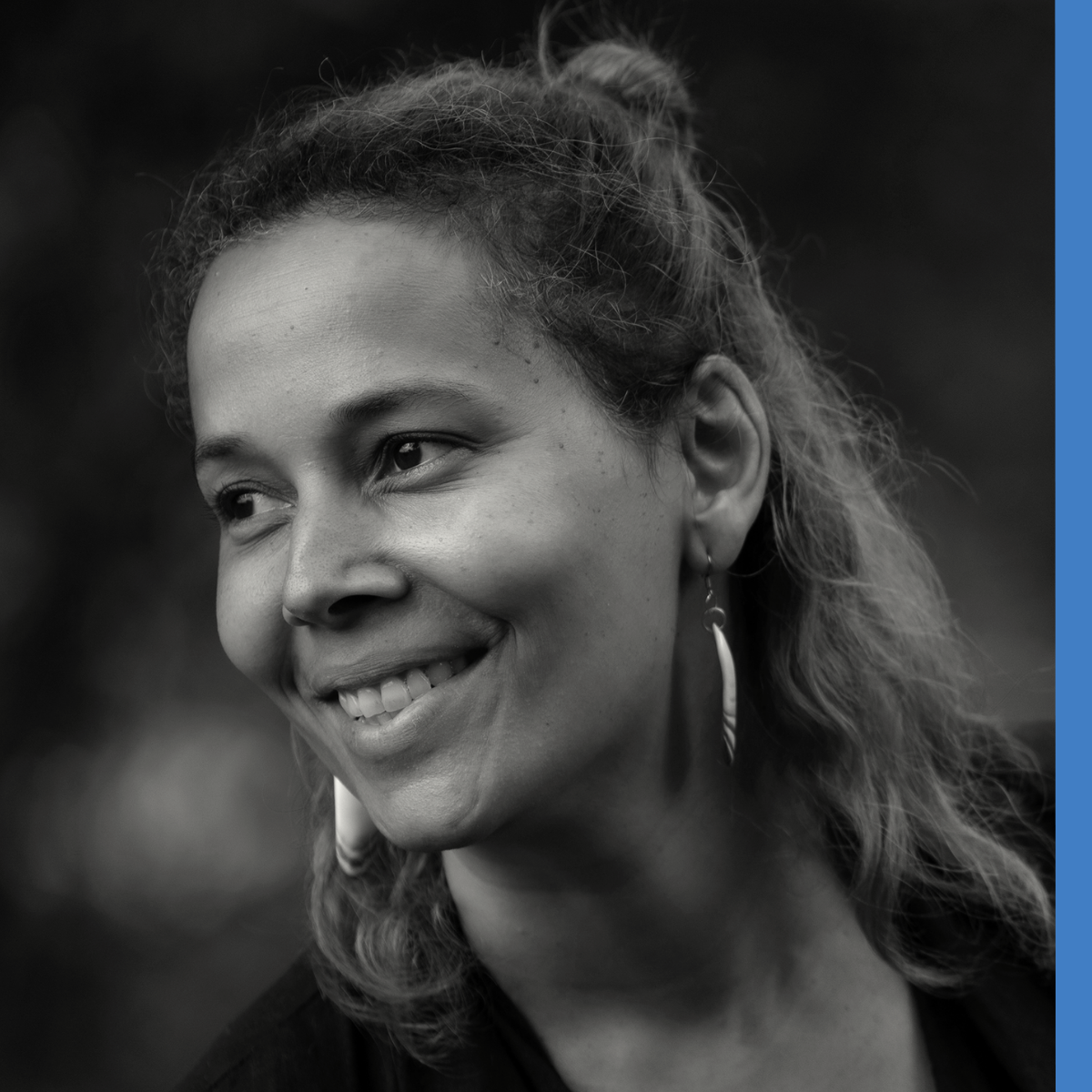
You may have seen, I’ve had the good fortune of getting to spend a lot of quality time making a film – and doing plenty of banjo pickin’! – with Rhiannon Giddens recently. Since shooting An Ode to Mary Jo together, I keep going back to Rhiannon’s catalog of recordings and cannot get enough. This duet with fiddler Justin Robinson is from her most recent release, 2025’s What Did the Blackbird Say to the Crow. Fantastic old-fashioned, down-home fiddle and banjo music drawn from North Carolina.
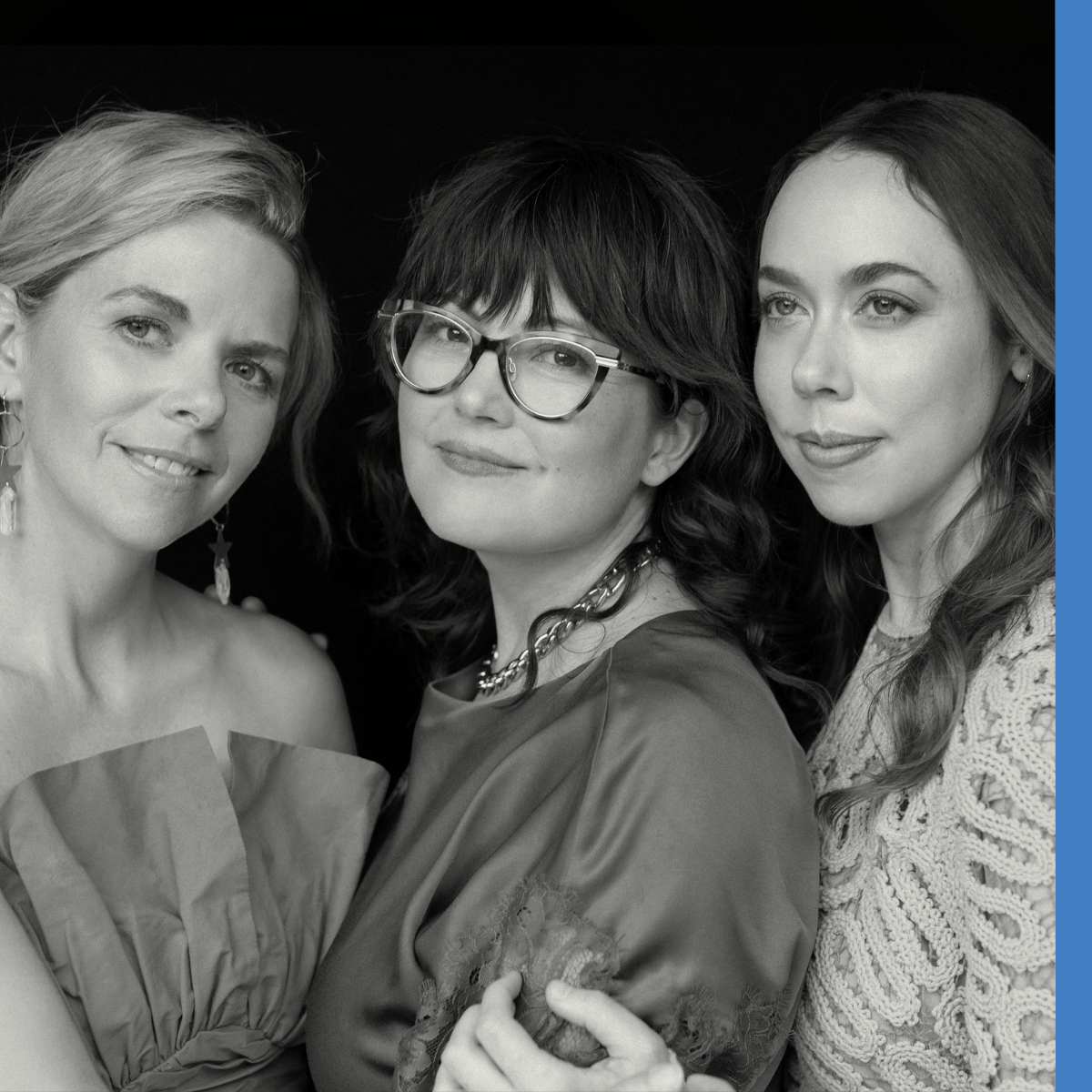
I’m with I’m With Her, too. One of our favorite trios in Americana and bluegrass released a brand new live album today, Sing Me Alive, packed with 20 tracks captured at performances across the country and in Canada. Many familiar favorites can be found alongside cover songs and tracks they’ve never released before. Here, they’re joined by Ye Vagabonds in Rocky Mount, Virginia, on “Rhododendron” in November of 2025.
Our Good Country and BGS Artist of the Month, Tenille Townes, released the first full-length album of her independent era last week. As she describes in our exclusive Artist of the Month interview, she took a much different approach to recording this music, doing most of the tracking herself, alone. The songs are deep, meaningful, and cathartic – and damn good. But it’s not an entirely solo album, as I’m With Her (how perfect) and Lori McKenna both feature on tracks. Hear McKenna join Townes on the title track, “the acrobat.”
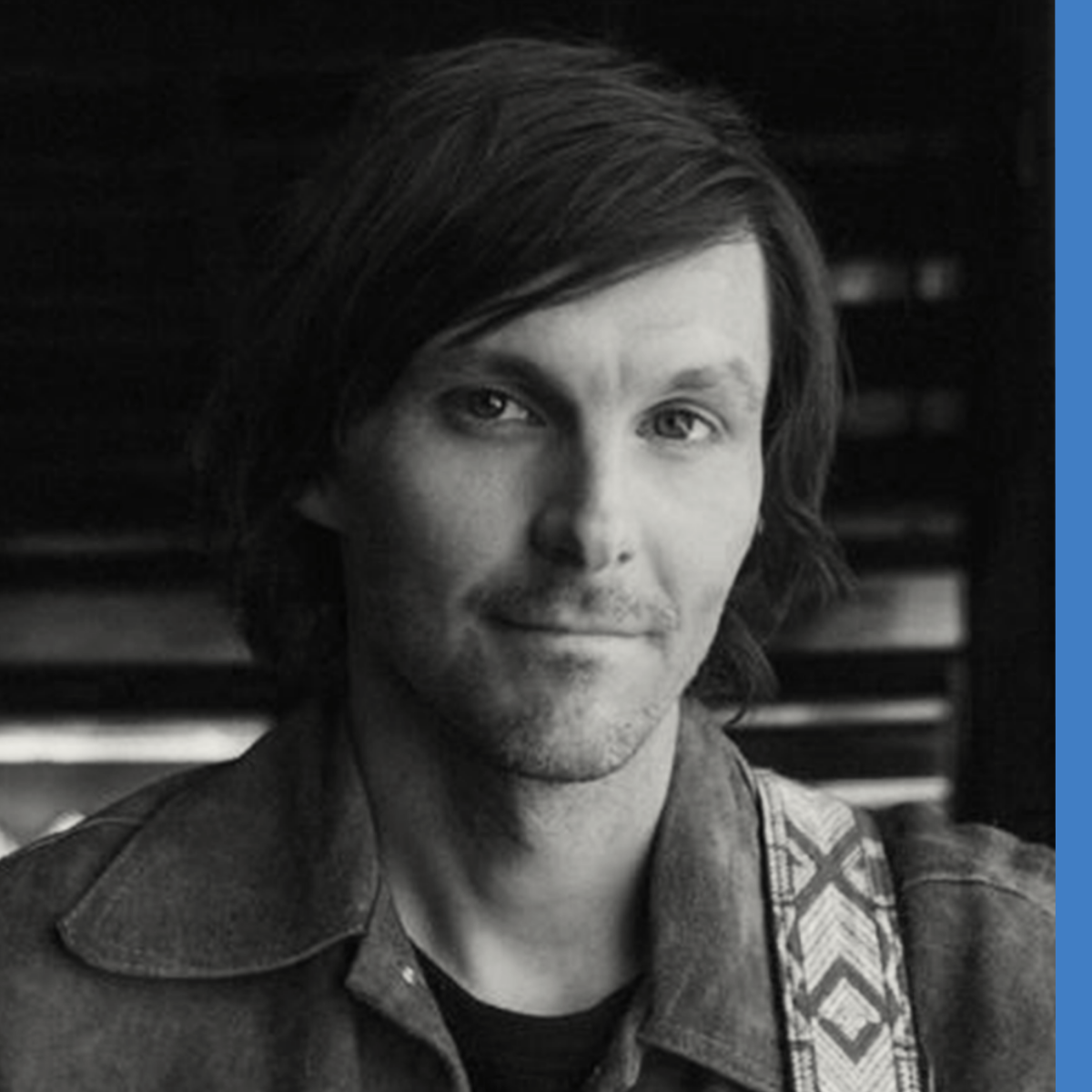
Our old pal Charlie Worsham is back at it – though he truly never stops. A sideman, radio and podcast host, session player, songwriter, and artist, Charlie does it all. He’s got new music of his own out and the GC team can’t wait for more. As he usually does, he’s once again calling on his superlative cohort of friends in Music City. On his most recent single, “They Never Do,” it’s Lainey Wilson joining in. From some teases on social media, though, we’re expecting many more special guests on Charlie’s outings in the future!
Listen to this issue of Ed’s Picks in one YouTube playlist here.
Listen to the full Ed’s Picks archive playlist here.
Want more Good Country? Sign up to receive our monthly email newsletter – and much more music! – direct to your inbox.
Photo Credits: Suzanne Cox & Brandon Ratcliff by Chase Hentges; Rhiannon Giddens by Karen Cox; I’m With Her by Alysse Gafkjen; Tenille Townes by Madison Rensing; Charlie Worsham courtesy of the artist.
Roots music was everywhere this year. It’s time we decide once and for all: Is roots music enjoying a “moment”? Or are these genres and sonic stylings alwaysthis foundational to popular and mainstream music?
Maybe roots is just at the center of everything we do here at BGS, but we’re inclined to the latter option. Roots music, folk music, whatever you want to call it, these styles are at the root – pun intended – of everything we love, not just in our scenes and spaces, but what we love about pop music, radio hits, and the musical mainstream, too. It’s no wonder, then, that roots shows up in albums and offerings by Bad Bunny and Sabrina Carpenter. That roots music finds its way across the globe in the fight for justice. That banjos and fiddles and the blues and bluegrass can be seeds by which entire resplendent artistic universes can be birthed, whether festivals or films or documentaries or albums or songs.
For our final year-end retrospective list of 2025, we asked our BGS contributors to reflect on the roots music and moments that stuck with them over the course of this year. Instead of setting strict criteria for what qualified as “roots music,” we did just the opposite, leaving our year-end “best” prompt as loose, open, and broad as possible. The results reaffirm our central belief that roots music isn’t a niche, it’s everything. There’s no limit to what it can touch on, impact, and transform.
We look forward to continuing to celebrate all things roots music and roots culture with you in 2026. In the meantime, enjoy our BGS Class of 2025. Roots music below, bluegrass here, and Good Country here.
Bad Bunny, DeBÍ TiRAR MáS FOToS
Last year, the most mainstream and far-reaching roots album was most certainly Beyoncé’s Cowboy Carter. The project has amassed billions of streams and listens, millions of sales, and has been certified Platinum by RIAA. This year, the most prominent roots album has received little to none of the controversial discourse of “belonging” and genre and roots-adjacency that Cowboy Carter attracted. Bad Bunny’s 2025 masterpiece, DeBÍ TiRAR MáS FOToS, is perhaps a bit sneakier in its rootsiness – or, being that it was made by a Puertorriqueño and is delivered entirely in Spanish, perhaps the same sorts of racism that put Beyoncé under the crosshairs may have relieved Bad Bunny of such targeting.
DeBÍ TiRAR MáS FOToS is jaw-dropping in its artistic and sonic accomplishments. Reggaeton and pop, hip-hop and house are grounded and contextualized by roots music, which does incredible heavy artistic lifting across the album. Interludes and intros reference many of the Latin and Caribbean folk styles that would birth the genres Bad Bunny currently inhabits. Calls of endemic frogs are mentioned alongside varied sounds of the diaspora, gentrification decried while advocating for self-determination. The album successfully does the work of so many solely folk and/or roots projects, but given its mainstream appeal and A-lister creator, that fact seems to have been lost in the glitz, glamour, and Super Bowl Halftime Show of it all. Make no mistake, though, for all the things that it is, DeBÍ TiRAR MáS FOToS is obviously roots music. – Justin Hiltner
Carsie Blanton
Singer-songwriter Carsie Blanton gave the most fun performances I saw on folk stages this year. Whether solo in the round or with frequent collaborators Sean Trischka, Joe Plowman, and Isa Burke, a Carsie show feels like a block party. People pack in corners to see what she will cook up next: a saucy tale, a power pop-influenced anthem of revolution, a quiet moment that demands reverent attention. Blanton has a gift for translating history into sing-alongs without softening any of her political edges. It takes an expert vocalist and arranger to sing “I guess America’s coming untied/ Half of my neighbors are living outside” without the audience feeling gloomy or preached at.
It helps that Blanton embodies the kind of working-class swagger that only a bad bitch from New Jersey can pull off. An outspoken feminist and member of the Party for Socialism and Liberation, this past October she brought the revolutionary hope of her songs to Global Sumud Flotilla to Gaza, where she risked her life as a member of the humanitarian coalition. Blanton, along with many of her comrades, was detained when the Israeli military intercepted their boats. Her bandmates were waiting at the airport when she got home. – Lizzie No
Brooklyn Folk Festival
Celebrating its 17th year, the Brooklyn Folk Festival is the best of the independent roots music community incarnate. Each November, the festival brings together members of the New York folk music community with musicians from across the country (and sometimes the world) for one weekend of homegrown joy, hosted in the Saint Ann and the Holy Trinity Episcopal church in Brooklyn. Musicians swap instruments and stories and audiences pack church pews and sit cross-legged on the floor to listen, intently.
The festival fosters space both for old-timers and young musicians; each year students from the Jalopy Theatre and School of Music, which hosts the event, perform. This year, the mainstage audience waited patiently, giving grace to 91-year-old folk legend Alice Gerrard (of Hazel & Alice) as she remembered the lyrics to one of her songs. Friends, lovers, and children waltzed together to Black string band New Dangerfield. And when musician Nick Shoulders invoked folk music’s long history of protest and compared old-time music to public lands – dubbing both worthy and precious resources, which should be protected and preserved as free for all – the entire room cheered. Community uplift at its purist and sweetest. – Meredith Lawrence
Sabrina Carpenter’s Sneaky Roots
They say the Germans have a word for everything. Do you think there’s one for how good it feels when roots music sneaks into the pop mainstream? Maybe… Beyoncénfreude? There should be some term for it, because it’s a special kind of satisfaction, and this year the good vibes continued with Ms. Short n’ Sweet herself, Sabrina Carpenter.
The superstar had already shown a genuine appreciation for country when she teamed up with Dolly Parton on “Please, Please, Please” (even changing explicit lyrics to better suit the mild-mannered icon) and with the dreamy country-folk of “Slim Pickins.” But in 2025 two important things happened. 1) She made her Grand Ole Opry debut in October, beaming with pride and lavishing the institution with praise. “Please, Please, Please” and “Slim Pickins” were both part of her set. And, 2) “Man Child.” Beneath the disco pulse ran an undercurrent of country twang, with a rhinestoned electric guitar hook dripping in her signature campiness.
This alone would be a prime case of Beyoncénfreude, but the best part was how Carpenter felt no need to call attention to the matter. It wasn’t a play or statement. She just wanted some country in there and knew her fans would accept it. What that says about roots music and the mainstream is definitely a 2025 highlight. – Chris Parton
Neko Case, “Winchester Mansion of Sound”
The late great Flat Duo Jets guitarist Dexter Romweber, who died at a too-young 57 last year, was an inspirational figure to generations of artists, Neko Case among them. The Americana siren repaid that debt with a cameo on Dex Romweber Duo’s 2009 LP Ruins of Berlin, and goes one better with this eulogy from her latest album, Neon Grey Midnight Green. Over spectral tack piano plinking away, Case paints a picture of kindred spirits bound together by music:
I still think of you And your wild, recurve guitar Only you can play so far out of tune And still kick me in the heart.
By the end, shortly before the full band kicks in for the outro, Case concludes, “Only music is forever.” Perfect.
This has been just one of 2025’s Romweber afterlife artifacts, including posthumous induction into the North Carolina Music Hall of fame and depiction in the teen drama TV series, The Runarounds. But this one is the best of all. – David Menconi
Chatham Rabbits, Be Real With Me
Despite its general lamenting about growing older – something I can relate to all too well – I can’t get enough of husband-wife duo Chatham Rabbits on Be Real With Me. But instead of focusing on the aches, pains, and other changes that come with the passing of time, Sarah and Austin McCombie also reflect on the wisdom that accompanies it as well.
This manifests itself in missives like “Matador,” where Sarah sings about trusting people too fast and ignoring red flags along the way, and “Gas Money,” which touches on overcommitting to relationships with others before first looking after yourself. The duo also navigate everything from falling out with longtime companions (“Childhood Friends”) to wanting freedom while also having desires to build and nurture a family (“Collateral Damage”), painting an understandably complex web of stories in the process.
The result is a very millennial-leaning record that puts a positive spin on aging as a young adult and will leave any 20-something listening ready to do what Austin describes on the album’s lead track, “Facing 29” – “Grabbing 30 by the strap of its boots.” – Matt Wickstrom
Michael Daves, Early Morning Sun
2025 has been a bang-up year for new releases and one at the top of my list is Michael Daves’ five song EP, Early Morning Sun. Daves’ music is always inspiring, but this EP differs from his past releases. Unlike Orchids and Violence, which was a two-part album with one side being bluegrass covers and the other being electric covers of those same bluegrass songs, Early Morning Sun is just Daves and his guitar.
All recorded on a low-tuned Kay guitar in an old church in Brooklyn, the EP has a rough, thrashy bluegrass and somewhat country feel. It’s an album of covers that, if you live in Brooklyn, you’ve probably heard Michael play around town, especially at the Jalopy Theatre or in the old days at Rockwood Music Hall. What’s special about this EP is that you can really feel the energy of how it was recorded. The slight echo of the church compliments the songs in a unique way, bringing a lot of oomph to the songs both in his vocals and his guitar playing. – Emma Turoff
Flock of Dimes, The Life You Save
Feeling weighed down by life? Tired of propping up others who can’t (or won’t) get their act together? Friend, have I got a record for you.
Jenn Wasner has been telling survivors’ stories through exquisite, deeply textured music for two decades. Her third Flock of Dimes LP, The Life You Save, leans into the atmosphere of Wasner’s voice over instrumental theatrics. Its songs find her in the deeply wearying role of reluctant savior, trying her best to heal her little corner of the world – or at least herself. The album’s money shot is “Long After Midnight,” which sounds like it could be about anything – from trying to save a friend from a drug problem or a parent sliding into dementia. The video shows Wasner sitting on the floor singing as every piece of furniture behind her is removed, finally directing attention to herself near the end:
I live my life among the lucky ones When things are bad I never let them know When you come from where I come from There’s only so far you can go…
But if you try some time, you just might find, you get what you need. – David Menconi
Rhiannon Giddens & Justin Robinson, What Did the Blackbird Say to the Crow
Rhiannon Giddens reunites with former Carolina Chocolate Drops bandmate Justin Robinson for what is essentially a crash course in the music of North Carolina. What Did the Blackbird Say to the Crow contains 18 songs – a healthy mix of instrumentals and tracks with lyrics. The music comes alive in the pair’s very capable hands and invites the listener to take a 44-minute stroll through Appalachia and North Carolina’s Piedmont. Their late mentor, Piedmont musician Joe Thompson, taught them all he knew, which is quite evident on selections such as “Hook and Line,” “Little Brown Jug,” and “Old Molly Hare.” Together, it’s like no time has passed between Giddens and Robinson, and they reach new heights in their work with some of the most propulsive and emotive string work of the year.
What Did the Blackbird Say to the Crow demonstrates that learning and growing never end. String work is best served when untethered to strict structures, but rather fluid and gently gliding, they evoke both a sense of whimsy and raw emotion. – Bee Delores
The History of Sound
I was in a cab going up the mountain to see Bugonia, and I was talking to another queer friend about The History of Sound. Specifically, about Josh O’Connor and Paul Mescal singing “Pretty Saro” and “Silver Dagger” to each other as a method of seduction. We talked about other versions of both songs – especially “Silver Dagger” – about how tender the song is in general, how O’Connor makes it softer, and about how his halting, half-good singing was effective in ways that, for example, Joan Baez wasn’t.
I thought a lot about the “Silver Dagger” scene, with a heat and a hunger, more than anything else in that film; a song which was too formalist to fully represent the erotic lives of the main characters. The movie made me sad and aroused, and what else can you ask for from a film? But it also made me worry about what songs we absorb from which traditions, and that the trading of these two famous songs as signifiers of a kind of melancholic, cock-blocked Appalachia only considers one kind of desire, one kind of hunger, and one kind of aesthetic. One marked by loss, and one which never completes except in death.
I wondered what it would mean, instead of “don’t sing love songs,” to sing every possible love song for every possible kind of love. In that too-short scene in the tent, Mescal and O’Connor sing to each other as a mode of seduction, but we get an incomplete song and an incomplete seduction. If we are listening to folk songs for their ardor, then the tradition must allow for all kinds of ardor – all kinds of desire. Sure, we have their version of “Pretty Saro” (the movie convinced me that nothing would be sexier than hearing that song post-coitally), but what about everything from “The Money Comes Rolling In” to “The Wanton Seed” to “The Two Magicians”? – Steacy Easton
I’m With Her, Wild and Clear and Blue
Right from the get-go, 2025 was a hard year. The Los Angeles wildfires ripped through homes and communities in January, displacing thousands of people, including many of my friends and music industry peers. Even for those of us whose homes were unscathed, everything suddenly felt untethered and dangerous, like it could disappear at any second.
For me, nothing captured that unnatural feeling quite like I’m With Her’s “Standing on the Fault Line.” “Is it when the reservoir runs out/ And the birds stop flying south/ Are we gonna know it’s time to flee?,” questions Sara Watkins. Many of us did have to flee, loading our cars with whatever we could grab; evacuating to anywhere that seemed remotely safer. But as climate change and economic and political upheaval continuously flip our world upside down, is anywhere really safe?
The rest of I’m With Her’s beautiful album, Wild and Clear and Blue, has been a soothing balm amidst these strange times. Each song captures a different aspect of womanhood, family, home, and the slipping of time – a testament to the shared songwriting duties of Aoife O’Donovan, Sara Watkins, and Sarah Jarosz. Their harmonies ring out like an old friend offering words of comfort on the other end of the line. – Amy Reitnouer Jacobs
Lilith Fair: Building a Mystery
One of the highlights of the late 1990s was Lilith Fair, a popular music festival co-founded by Sarah McLachlan and featuring the talent of such acts as Fiona Apple, Mary Chapin Carpenter, Sheryl Crow, Bonnie Raitt, and The Chicks over three years (1997-99). Director Ally Pankiw, known for I Used to Be Funny and two episodes of Black Mirror, pulls from a remarkable 600 hours of never-before-seen footage that cuts to the core of what Lilith Fair meant – and continues to mean – for women and female-identifying people. Interviews with Emmylou Harris, Brandi Carlile, and Jewel, among others, give new insight into the landmark festival and the tough-as-nails artists who stormed its stages.
Pankiw pulls back the curtain and offers the audience a peek into the blood, sweat, and tears that festival planners and the talent endured for the sake of the art and proving to the world that women artists were far more valuable than as tokens in a sea of men. Lilith Fair: Building a Mystery is raw, honest, and probing. For any casual music fan, it’s a must-watch of the year. – Bee Delores
Jess Sah Bi, Jesus-Christ Ne Deçoit Pas
Seven years ago, I worked on the reissue of Our Garden Needs Its Flowers (1985) by the West African country, folk, and afro-pop duo Jess Sah Bi & Peter One. Back in the 1980s, they were one of the most popular musical acts in Côte d’Ivoire (Ivory Coast), entertaining stadium-sized audiences at home, and later on, throughout Benin, Burkina Faso, and Togo.
When I first heard it, Jess Sah Bi & Peter One’s music was a revelation. In a sense, it offered a whole new lens through which to view country and folk music, while unlocking an entirely different set of African musical histories to learn from. Afterwards, Peter One scored a deal with Verve Records, culminating in his celebrated comeback album, Come Back to Me (2023).
Earlier this year, Awesome Tapes From Africa, the label that gave Our Garden Needs Its Flowers a second wind, reissued Jess Sah Bi’s rare early-1990s gospel, folk, and country solo album, Jesus-Christ Ne Deçoit Pas (Jesus Christ Does Not Disappoint). Written and recorded after recovering from a mystery illness and relocating from Côte d’Ivoire to the United States, the album’s seven songs, sung in French and Gouro, are soaring, transcendent, and undeniable. – Martyn Pepperell
Caroline Spence, Heart Go Wild
For me, 2025 has been typified by abject, all-encompassing grief. Singer-songwriter Caroline Spence’s past albums are certainly also heartfelt and lean towards tear-jerking and raw emotion-inhabiting, but Heart Go Wild feels particularly primed for a good, cathartic, therapeutic cry. Spence processes quite a few life and career changes within these songs, but the specificity by which these tracks and lyrics were born don’t hem them in or limit their relatability. On the contrary, by Spence opening up her own particular introspections to all of us, yet again, she enables each of her listeners to find our own healing, growth, and redemption in the same way she has. Through song.
Tracks like “Fun at Parties,” “Confront It,” “Why the Tree Loves the Ax,” and “Where the Time Goes” – really, the entire collection – have been remedies I didn’t know I would need so deeply when the album was first announced. Spence never needs to rely on tropes or platitudes to handle these sorts of topics. She rises above gratuitousness or melodrama, even while she acknowledges the sorts of grief, pain, and change she’s reckoning with aren’t aberrations from the human experience, they are the human experience. She’s reminding herself as much as each of us, and I suppose that’s where the magic of her particular skillset truly lies. – Justin Hiltner
Billy Strings at IBMA World of Bluegrass
When it comes to the International Bluegrass Music Association, two big things happened in 2025: the annual conference, festival, and awards show found new digs in Chattanooga, Tennessee, and Billy Strings finally returned to where it all began for the star. Taking home his fourth Entertainer of the Year award this year, Strings made a genuine, heartfelt effort to appear at the IBMA events. Not only to accept his recognition, but also to hang around the festivities all week.
Strings kicked off the conference with a stunning keynote address, only to then perform two shows in Chattanooga (one with his full band, one with guitar wizard and mentor Bryan Sutton). Throughout the week, Strings casually popped up all over the city, either jumping in on jam circles or merely stopping to chat with fans and fellow musicians alike, including a memorable jam with 90-year-old bluegrass icon Paul Williams. Strings’ presence was a well-received thing for a bluegrass community not only indebted to the six-string ace for what he’s brought to the scene, but also to remind everyone he hasn’t abandoned bluegrass — it’ll always be the essence of his melodic core. – Garret K. Woodward
Molly Tuttle, So Long Little Miss Sunshine
Molly Tuttle’s So Long Little Miss Sunshine actually comes loaded with sunshine and it’s evident from all angles. The empowered and fearless lyrics start on the first track, “Everything Burns,” and continue through “No Regrets” and “Story of My So-Called Life,” showing Tuttle standing proudly in feelings, intentions, and reflections that are true to this chapter in her life.
Whether she’s basking in a seemingly perfect headspace (“There’s no valley I can’t cross, or mountain I can’t climb/ I’m in a golden state of mind”) or making a messy choice and owning it without self-abasement (“Don’t try to fix it when you break my heart/ Knew when you hit me with your poison dart”), every moment is deliberate and delivered with confidence. That includes the sonic side of things, too – despite judgmental heat coming from folks who think Tuttle is trading in pickin’ parties for pop(ularity).
First: There’s plenty of Tuttle’s prodigious musicianship shining on this record. Second: take a cue from Tuttle herself and embrace what’s new as we go into the new year! Because for Tuttle, not all the personality on this album is new. It’s just new to us because she’s finally letting it out and letting it breathe. – Kira Grunenberg
Cristina Vane, Hear My Call
The Italian-born, Nashville-based singer and multi-instrumentalist Cristina Vane has long been at home playing bluegrass, country, blues and everything in between, but on Hear My Call she’s finally at home with the most important thing of all — herself.
Across the album’s 13 tracks Vane embraces the cultures and sounds that have shaped her, from finding joy in everywhere she’s been on the rock anthem, “Little Girl From Nowhere,” to relating to the stories of someone born an ocean away on the banjo ballad, “My Mountain.” While many songs on the record lean heavy into introspection and the strength that comes from it, others find power in everything from fun and sensual moments (“Shake It Babe”) to moving on from people who don’t value your presence and time (“You Ain’t Special”).
On top of Vane’s clever songwriting, I also can’t get enough of her playing on this album. Throughout, she moves effortlessly from banjo to slide guitar without skipping a beat, further reinforcing her staying power. This is someone to watch from 2026 onward. – Matt Wickstrom
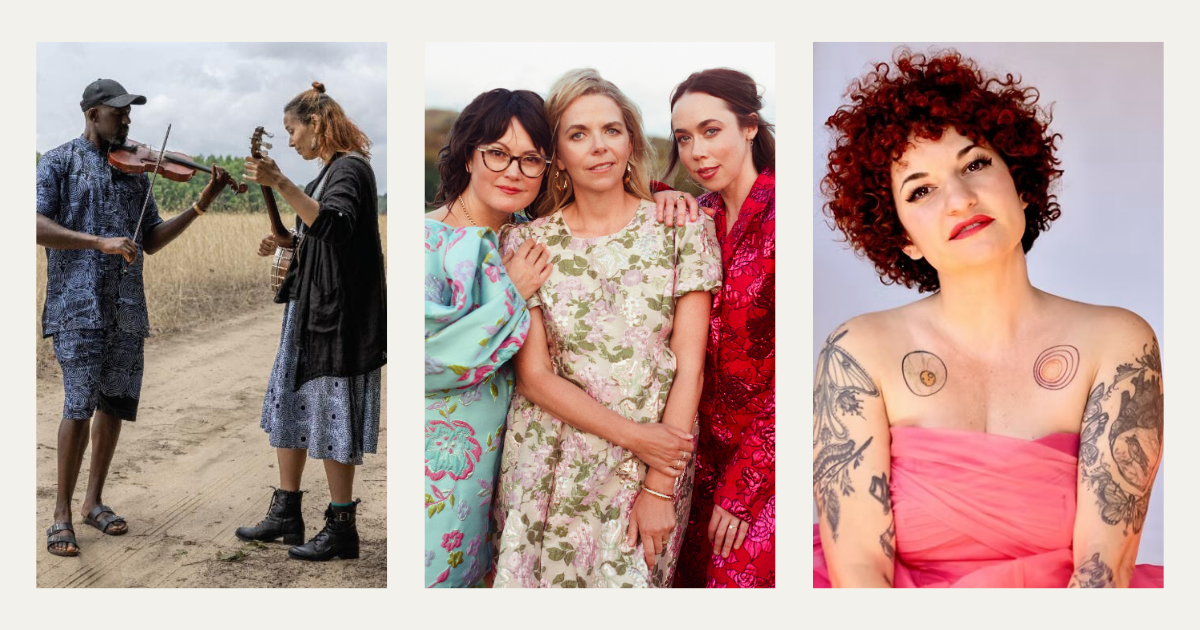
Lead Image: Justin Robinson & Rhiannon Giddens by Karen Cox; I’m With Her by Alysse Gafkjen; Carsie Blanton by Bobby Bonsey.
2025 was a standout year for roots music books. In a time of political upheaval and uncertainty, authors like Craig Shelburne & Brenda Colladay and Alisa Murphy brought us deep into the history of music institutions that have weathered generations of American ups and downs: the Grand Ole Opry and The Station Inn. Reading about these places is a reminder that culture is often a better litmus test than news cycles, when it comes to what a country stands for and where its soul can be found.
Biographies of Dolly Parton and Alice Gerrard (the latter written by Gerrard herself) highlight women who defied the odds to become iconic voices in country and old-time. Parton first debuted on the Opry at the age of 13 and her influence on American culture has spanned from highlighting women in the workplace with “9 to 5” to donating a million dollars for medical research to accelerate the creation of the Moderna COVID vaccine. Gerrard, while less of a household name, is considered one of the last of the old guard in traditional music; even if you haven’t heard of her, you’ve probably still been touched by her work. These books detail the unlikelihood of these women’s successes given the time and place of their work and both good reminders of changing gender norms that we now take for granted.
Two books on Black American fiddle and banjo music continue the quest to restore African music’s and African American musicians’ rightful place in the history of the American string band tradition. With additional archival and notation resources, these books offer not only scholarship, but an opportunity for dedicated pickers to add to their repertoire, too.
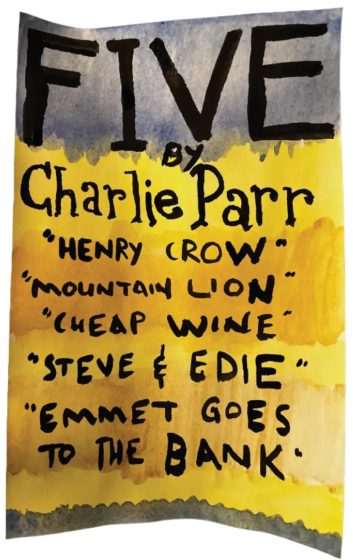
And finally, roots musicians Paul Burch and Charlie Parr channel their creative writing into novels Meridian Rising and Five, respectively, the former a fictionalized story of Jimmie Rodgers and the latter a wild meditation on the wanderings of a troubadour.
From coffee table aesthetics to novels and new tunes, 2025’s roots music books have you covered! See a list of our favorites and a collection of “honorable mentions” below.
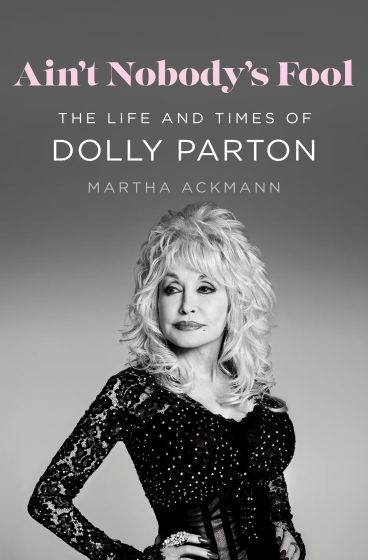
Ain’t Nobody’s Fool: The Life and Times of Dolly Parton by Martha Ackmann
Martha Ackmann is known for illuminating the stories of women who rise above societal expectations, so it’s only appropriate that she should tell the story of Dolly Parton’s ascent to success. With new interviews and documents, the book focuses on the price Parton paid for her early fame, penalized and criticized by those who saw it as a betrayal of her roots. Despite legal battles and struggles with her mental health, Parton persevered and went on to use her affluence to help her East Tennessee home, through the development of Dollywood, her charitable work, and the creation of The Imagination Library. Find it here.
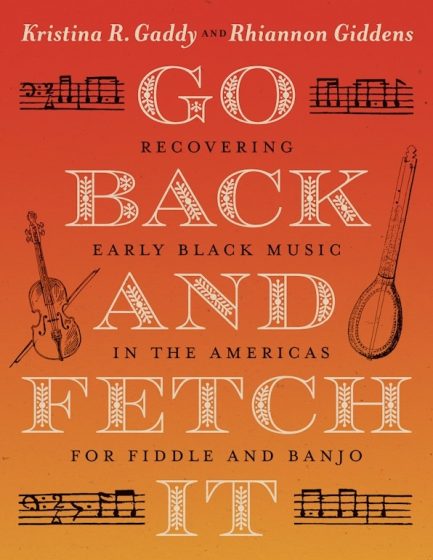
Go Back and Fetch It: Recovering Early Black Music in the Americas for Fiddle and Banjo by Kristina R Gaddy and Rhiannon Giddens
Appropriate for pickers and scholars alike, this collection of early Black Atlantic music is equal parts songbook and history lesson. Nineteen carefully transcribed tunes sourced from 1687 to the 1860s are presented in standard notation and banjo tablature, and accompanied by rich historical essays detailing their origins, cultural context, and evolution over time and place. This collection is another important step in the recovery of Black history of the American musical canon – and specifically the fiddle and banjo canon – from two lauded experts on the subject. Find it here.
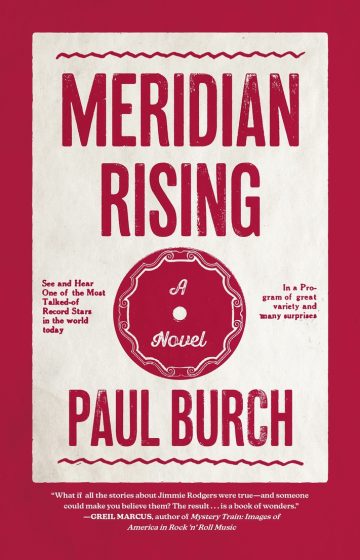
Meridian Rising by Paul Burch
Meridian Rising, the debut novel from Paul Burch, fictionalizes the life of country star Jimmie Rodgers and was released this fall to rave reviews. As the Chattanooga Free Press says, “Burch must have done a great deal of research to deliver a story that feels so authentic, but research alone doesn’t make a good novel. The writing is what matters, and Burch skillfully renders a large cast of narrators throughout Meridian Rising, especially its main subject, whose witty, sometimes barbed voice is vivid and memorable.” Find it here.
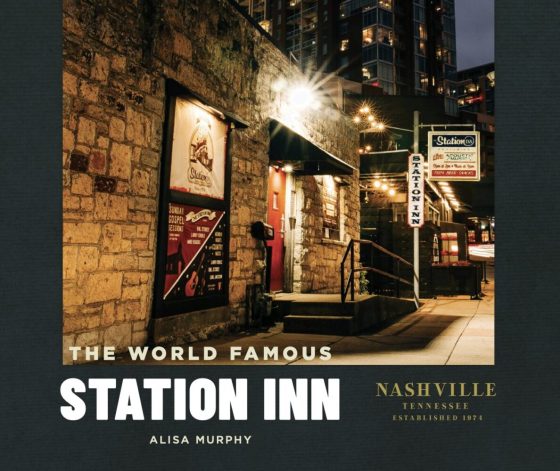
The World Famous Station Inn by Alisa M Murphy
The passing of JT Gray in 2021 marked the end of an era for The Station Inn. Although the venue continues its bluegrass legacy with new management, it has been long past time to commemorate this (as its name rightly points out) world-famous venue with a book of stories and photos. Author Alisa M Murphy spent two years immersing herself in the culture of the venue and conducting interviews to put together her coffee-table book, The World Famous Station Inn.Find it here.
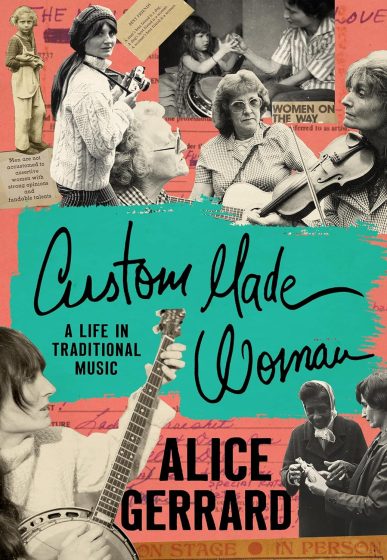
Custom Made Woman: A Life in Traditional Music by Alice Gerrard
This new memoir from one of our national treasures, Alice Gerrard, features over 100 of her personal photographs along with stories from pivotal times and an exceptional life in traditional music. Gerrard’s career saw her crossing paths with Bob Dylan, Doc Watson, Elizabeth Cotten, and many more. Recent rereleases of Gerrard’s trailblazing collaboration albums with Hazel Dickens have been put out by Rounder Records and Smithsonian Folkways, and they can be listened to in an entirely new context thanks to this book. Find it here.
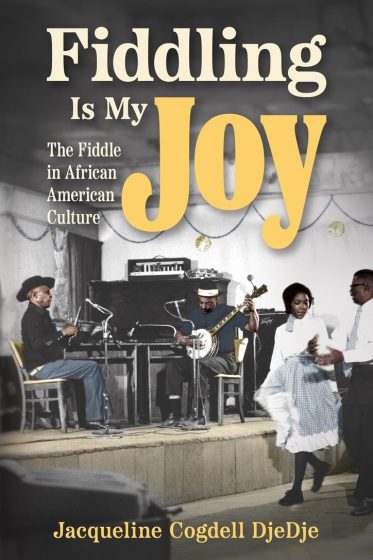
Fiddling is My Joy: The Fiddle In African American Culture by Jacqueline Cogdell DjeDje
UCLA Ethnomusicologist Jacqueline C. DjeDje investigates the fiddle in Black America, not only helping restore it to its rightful position in history, but also exploring why fiddle in African American culture disappeared from the mainstream story of the instrument in the first place. In addition to exploring geographic differences in African American fiddling traditions, DjeDje’s scholarship looks at fiddle traditions in West African and how their specific characteristics made their way to both Black and white American fiddlers. The book is accompanied by an online eScholarship Companion with primary source documents and audiovisual examples of music discussed in the text. Find it here.
Five by Charlie Parr
The second collection of short fiction from beloved Minnesota musician Charlie Parr is not for lovers of a tight plot and succinct characters. Parr’s five stories are, according to his own description, “more like sad anecdotes told to you at the end of an impossibly long dinner party by the drunken spouse of someone that you barely know while you’re easing your way to the door, having already put your coat on around the time that these stories began.”
But, if you’re a fan of Parr and his 18 (!!!) studio albums, this collection is a must. Find it here.
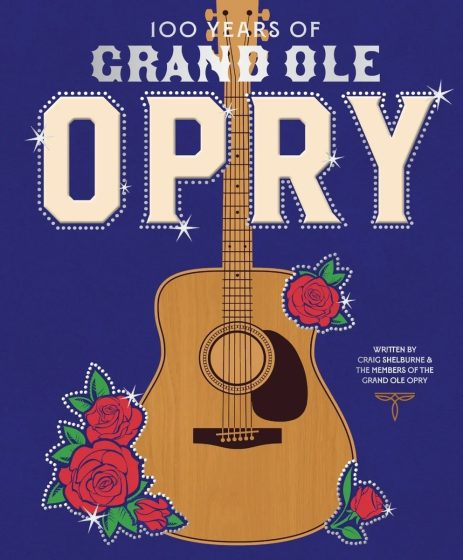
100 Years of Grand Ole Opry by Brenda Colladay & Craig Shelburne
Music journalist Craig Shelburne worked tirelessly with Opry historian Brenda Colladay – and dozens of artist, announcer, and Opry employee interviewees – to tell the story of the world’s longest-running live radio show over a century. The Grand Ole Opry is certainly the main character. This book is perfect for collectors and readers alike, since it’s full of illustrations and photographs. It’s separated into chapters by time periods, following the twists and turns of the Opry’s youth, adolescence, and adulthood. From Lester Flatt to the 2010 flood, the book is as deep as it is wide. An entertaining resource for country fans who like to get the full story. Find it here.
Other Reads From Our Inbox
Solomon Simon Dog Man Jack by Cindy Baucom, illustrated by Grace van’t Hof (Self-published)
This time on Basic Folk, we are checking in with country singer-songwriter and Color Me Country radio host Rissi Palmer and Americana/country artist Miko Marks. The two close friends both came up as Black women in country music in the early part of the 21st century where they experienced gatekeepers and discrimination in the industry, but undeniable love from listeners. Both stepped away from music for several years, but have since come back and found their audiences, artistic grooves, and industry independence. We last spoke with the pair in 2023 (you gotta go listen to that convo if you missed it!) and we have wanted them back on ever since!
Rissi and Miko dive into who they think is making waves and positive change in country and Americana. We talk about rising pop-country singer Tanner Adell and her 2023 hit “Buckle Bunny,” a song that’s clearly written for a different kind of country music fan (read: young Black women). Rissi mentions having Mississippi country sensation KIRBY on her show recently and promises her Miss Black America to be a monster of an album. There was a lot of consensus on the podcast that Madeline Edwards has released the best album of 2025 with her record Fruit, where she digs into the extreme grief and extreme joy she experienced after her brother passed away.
Elsewhere, we also touch on the pair’s experiences at Rhiannon Giddens’ inaugural Biscuits & Banjos fest in Durham earlier this year, an event dedicated to reclamation and exploration of Black music. We talk about Alice Randall’s new compilation, My Black Country – The Songs of Alice Randall, a collection of Randall compositions recorded by Black women – including selections performed by both Miko and Rissi. We talk about audiences in London versus the US, a contrast BF co-host Lizzie as well as Rissi and Miko have experienced first hand. In fact, Rissi has been curating a Color Me Country stage at The Long Road Festival in Leicestershire, England, for the past four years. We hope you learn something new, get some insight into what’s happening in Americana for musicians who are Black, and gain some joy from listening to Rissi and Miko’s hilarious banter.
(Writer’s Note: If you haven’t seenSinners yet, be warned – there are significant spoilers below.)
“There are legends of people born with the gift of making music so true it can pierce the veil between life and death, conjuring spirits from the past and the future…”
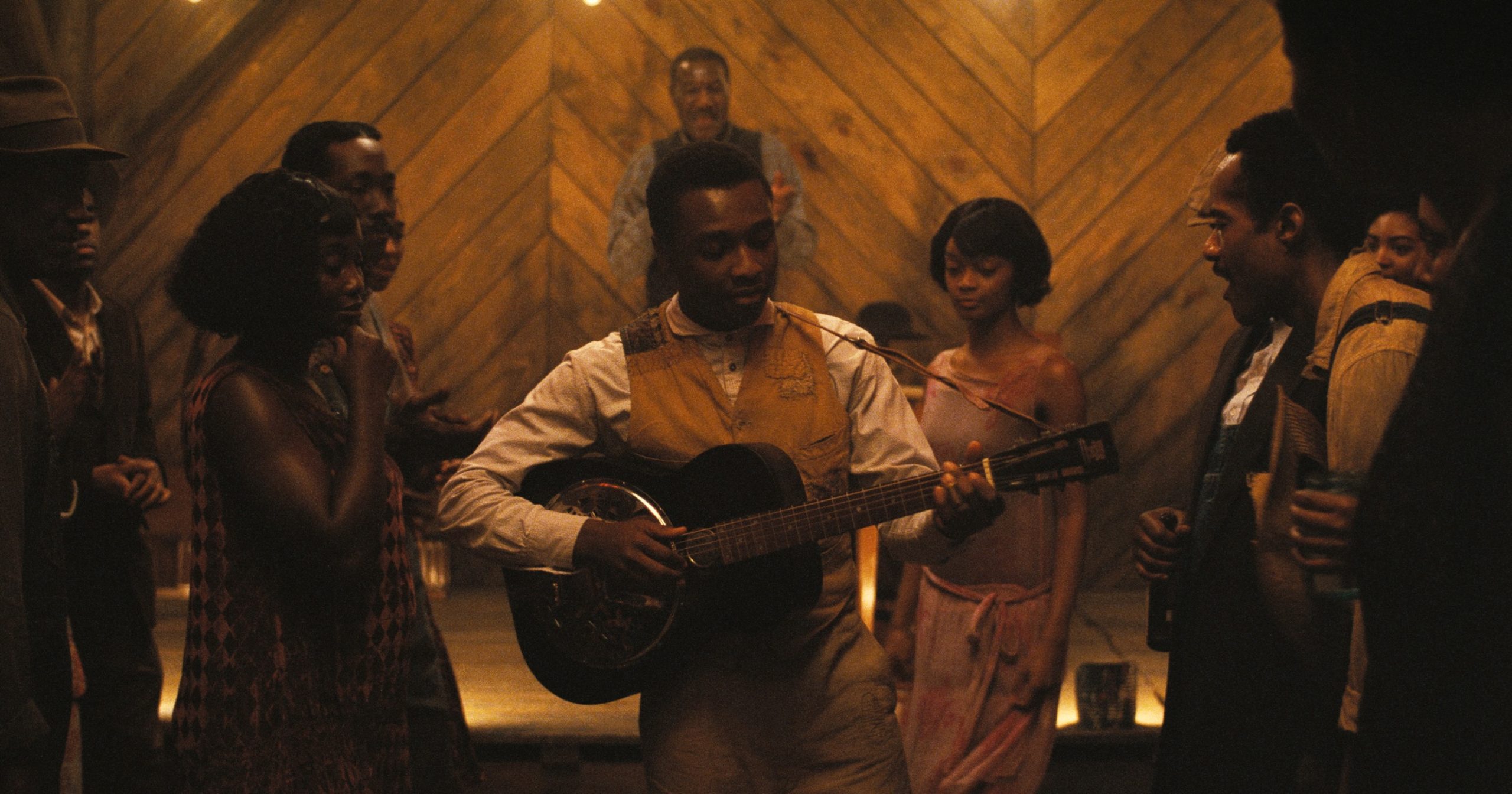
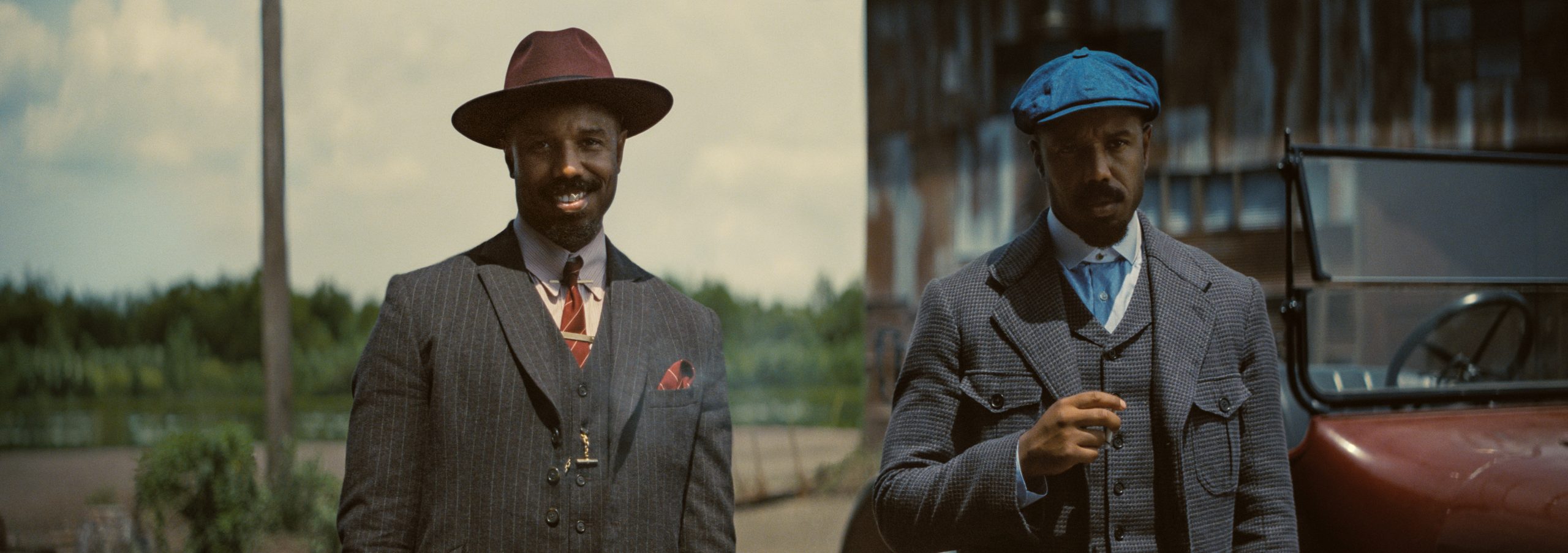
So begins the film Sinners, the epic Southern gothic horror film from acclaimed director Ryan Coogler (Fruitvale Station, Black Panther). Sinners tells of twins Smoke and Stack Moore (both played by a fantastic Michael B. Jordan), who open a juke joint with the help of their cousin Sammie (Miles Caton) in their small Mississippi hometown in 1932. Driven by a love for blues music and a desire to create a safe gathering place for other Black people, the twins establish Club Juke at a defunct sawmill, unwittingly setting into motion a sinister chain of events.
That opening narration, which points to Sammie and his prodigious musical gifts, accompanies an evocative montage of folk imagery, as the narrator outlines the importance of musical storytellers within tight-knit communities. One such folk figure is the West African griot, a protector of oral tradition who also often served as leaders in their communities. The montage is backed by haunting resonator guitar, a musical motif that will repeat throughout the film.
Coogler tapped the GRAMMY- and Oscar-winning composer Ludwig Göransson to score Sinners, continuing the creative partnership the two began with Coogler’s 2013 film Fruitvale Station (which also stars Michael B. Jordan). Rootsy and atmospheric, the score takes blues influences and ratchets up the tension with strings and percussion to suit the horror themes that unfold midway through the story.
Artists who perform on the Sinners soundtrack include Brittany Howard, Cedric Burnside, Rhiannon Giddens, Alice Smith and Rod Wave. Players on the Sinners score include Buddy Guy, Bobby Rush, Justin Robinson, and Leyla McCalla. Roots musician and actor Lola Kirke appears in the film as Joan, a member of the KKK who becomes a vampire.
Sinners is set in Clarksdale, Mississippi, a Delta city famous for its rich blues music history and for its role in the Great Migration, which, on the whole, found over six million Black Americans leaving the Southeast for large cities in other regions – including Chicago, Detroit, New York City and Cleveland – in order to flee racial segregation, Jim Crow laws and racial violence like lynching.
Dense with musical references, Sinners incorporates blues history into the naming of its characters, too. Stack’s name likely references the classic American folk song “Stagger Lee,” also known as “Stagolee” or “Stack O’ Lee Blues.” That tune tells the story of a real-life man and professional procurer, Lee Shelton, who lived in St. Louis, Missouri, in the late 1800s. Friends called Shelton “Stag” because of his perpetual bachelorhood, and, at times, “Stag” became “Stack.” On Christmas Day, 1895, Stack shot and killed a man named Billy Lyons after Lyons stole Stack’s Stetson cowboy hat, and the rest would soon become musical history.
Michael B. Jordan as Smoke and as Stack, in Warner Bros. Pictures’ ‘Sinners.’
The song’s original writer is unknown, and it has been recorded and performed by a bevy of artists in the intervening decades. One of the most popular recordings is performed by Mississippi John Hurt, a pioneering blues artist. In 1957, Louisiana-born R&B singer Lloyd Price rewrote the song as an upbeat rock number, scoring a number one Billboard pop hit. When Price performed the song on American Bandstand, host Dick Clark had him tone down the “violent” lyrics by giving the song a happy ending.
While Stack’s name is loaded with meaning, the name Smoke is more ambiguous, though as a pair the twins’ names could point to “Smokestack Lightning,” a 1956 song by another Mississippi blues artist, Howlin’ Wolf.
The plot kicks off in earnest when Stack and Smoke return to Clarksdale from Chicago, where they hoped to escape the Jim Crow racism of their home state. Disillusioned by the racism they still encountered once there, the brothers decide to move home to establish Club Juke, recruiting their cousin Sammie to be part of the house band. Sammie is rarely seen without his guitar, a 1932 Dobro Cyclops resonator that Göransson used to record much of the film’s score.
Stack claims that the guitar he and Smoke give to Sammie once belonged to Charley Patton, the Mississippi-born singer and guitarist widely considered to be the “father of the Delta Blues.” (At the movie’s end, Smoke reveals the truth to Sammie: that the guitar actually belonged to his and Stack’s father all along.) Showing Stack his chops, Sammie performs “Travelin’,” a song original to the film.
The emotional and artistic high point of Sinners is a surreal, mid-party musical number that connects the blues to Black music traditions from past and future eras, including hip-hop and rock and roll. The scene begins at Club Juke, with Sammie performing the original song “I Lied to You.” The character Delta Slim soon delivers a short monologue, telling Sammie, “Blues wasn’t forced on us like that religion. Nah, son, we brought this with us from home. It’s magic, what we do. It’s sacred, and big.”
When the opening narration replays after Slim’s speech, things get psychedelic. An electric guitarist dressed in ‘70s rock and roll regalia appears, shredding licks while Club Juke dances around him. A DJ booth appears, with a man in ‘80s hip-hop-inspired clothing behind the boards. B-boys dance among club-goers, and a West African griot appears carrying a drum. Time dissolves as boundaries between musical traditions blur, capturing the essence of 20th-century Black music in one stunning scene.
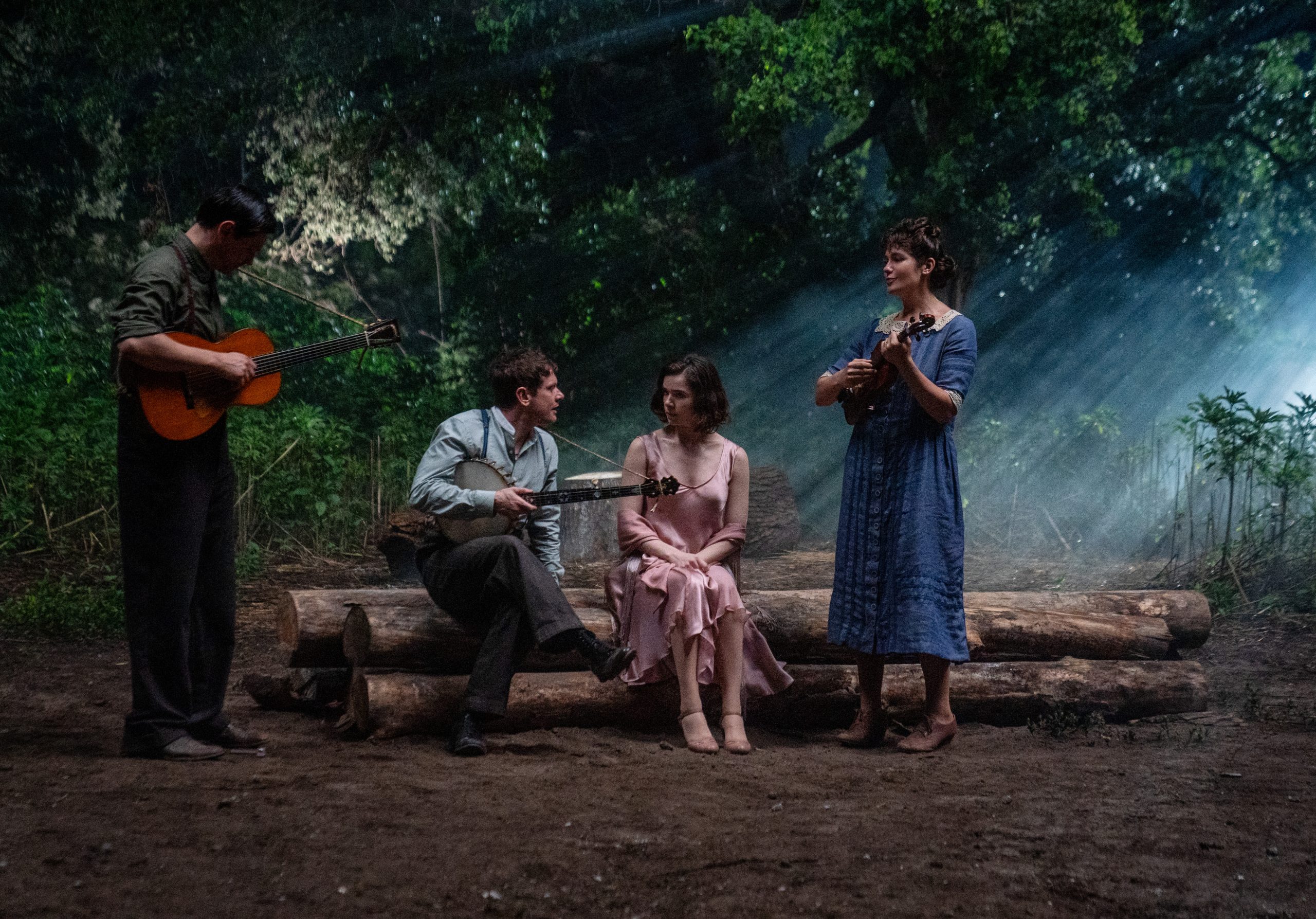
Trouble starts when a trio of vampiric folk musicians (yes, you read that right) tries to enter Club Juke, hoping to perform. That image of a literal blood-sucking monster in no small part resembles the white colonization of Black music, particularly blues music, adding gravitas to the unexpected plot development. The trio tries to woo their way in with a folksy version of the traditional blues song “Pick Poor Robin Clean,” made popular by Virgninia-born blues artist Luke Jordan in 1927 and the artists Geeshie Wiley and Elvie Thomas – from Louisiana and Texas, respectively – in 1931.
(L to R) Peter Dreimanis as Bert, Jack O’Connell as Remmick, Hailee Steinfeld as Mary, and Lola Kirke as Joan in Warner Bros. Pictures’ ‘Sinners.’
As the vampire plot unfolds, the musical story takes a bit of a backseat, though a major fight scene between the remaining Club Juke revelers and the ever-growing contingent of vampires does include another major musical number. Led by Remmick, the group performs a chilling, spirited version of the hop jig “Rocky Road to Dublin,” an Irish folk music standard with roots dating back to the mid-19th century.
The next big musical moment comes after the film’s end when, taking a cue from his MCU days, Coogler includes a post-credits scene. Set in Chicago in 1992, the scene features two familiar faces: blues legend Buddy Guy, who plays elderly Sammie, and contemporary blues star Christone “Kingfish” Ingram, a member of the elder Sammie’s band.
Guy, who also performs a version of “Travelin’” on the Sinners soundtrack, was born in 1936 to Louisiana sharecroppers and moved to Chicago to pursue music when he was 21. Shortly after relocating, Guy would meet Chicago blues legend – and Mississippi native – Muddy Waters, who would become his friend and mentor. It’s a full circle moment to close out the film, and one that reinforces the importance of lineage to the blues music tradition.
Unsurprisingly, Sinners is a movie that rewards rewatches. Coogler and his collaborators built a musical world rich with detail and allusion, and did so with what was clearly an enormous amount of love and passion. If you’re a music fan, Sinners is well worth your time – just be careful if you hear a late-night knock at your door.
Sinners is now available to stream on HBO Max and is available to rent VOD. The film is also still showing in a limited number of theaters in select markets.
All images courtesy of Warner Bros. Pictures. Lead Image: Miles Caton as Sammie Moore in Warner Bros. Pictures’ Sinners.
My gourd banjo journey began on a crisp, winter day in downtown Ithaca, New York. While an undergrad at Ithaca College early in my banjo-playing days, I stopped by the local acoustic instrument store and saw a peculiar banjo-like creature hanging high up on the wall. I was instantly hooked. It had five strings and a short drone string just like my banjo. I could play the same clawhammer style I was familiar with, but everything felt and sounded different. The instrument had an earthy, plunky, and rich tone. Besides being completely fretless and tuned a few steps low, the head was made of a gourd that smelled like dirt. Flash forward 15 years and here I’ve just released an album of solo, unaccompanied gourd banjo music called Old Growth.
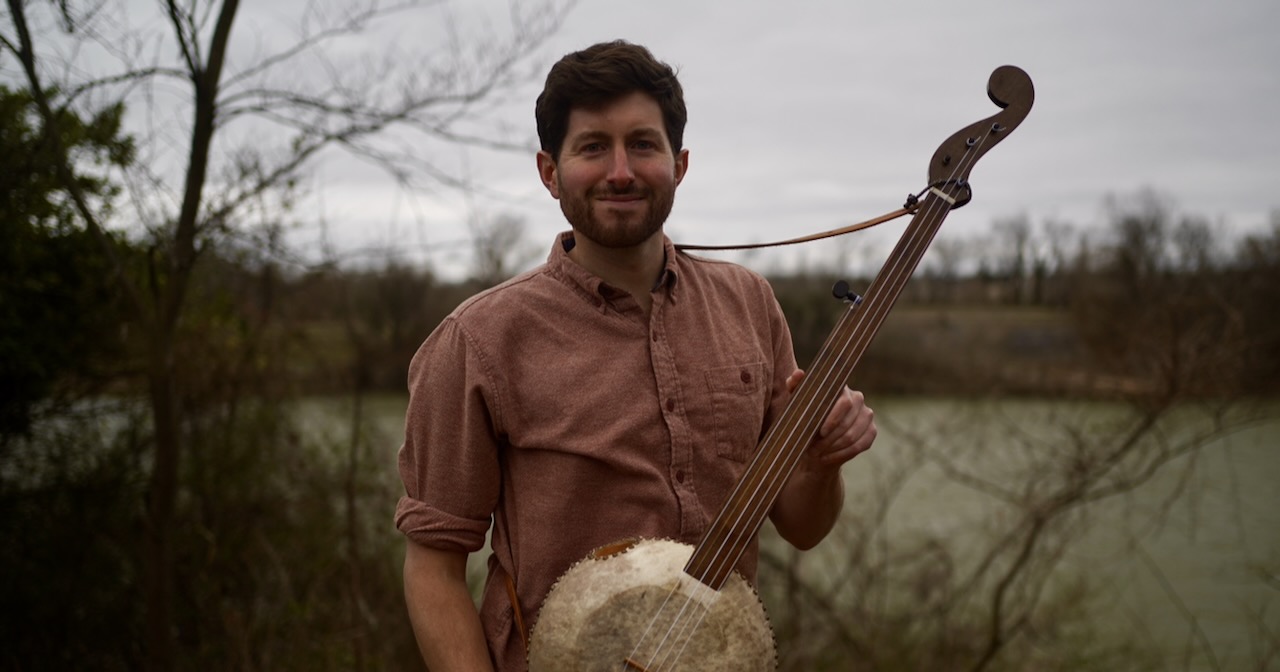
These days, I play a gourd banjo built by Pete Ross, an immensely talented banjo maker who lives in my hometown of Baltimore, Maryland, a town full of banjo history. The first professional banjo maker in the world, William Boucher, set up shop in Baltimore in the mid-19th century. The neck of this banjo, notably the scroll-shaped headstock, is modeled after the Boucher style. In addition to being a tool for creative exploration, the gourd banjo serves as a prism into the complex history of the banjo. It’s a reliable conversation-starter everywhere I go. For more on banjo history, I encourage you to read Well of Souls by Kristina Gaddy.
While compiling this list, I was struck by the sheer variety in tone and texture possible with the gourd banjo. While the instrument connects to the early roots of old-time music, it continues to serve as a platform for innovation. Every player is unique. This list features gourd banjoists from around the world playing traditional and original material. Let’s go on a deep dive into the gourd banjo! – Brad Kolodner
“Josie-O” – Adam Hurt
Arguably the most influential gourd banjo album of our time, Adam Hurt’s Earth Tones is sublime. Cover to cover, this is a dreamy album of solo gourd banjo pieces and it’s on regular rotation at my house. Adam is one of today’s most influential clawhammer banjo players and there’s no question his gourd banjo playing, and this album specifically, introduced the gourd banjo to much wider audiences inspiring countless musicians along the way.
“Old Growth” – Brad Kolodner
The title track of my new album Old Growth is a dark, spooky tune I wrote in the depths of winter, yearning for those sun-filled summer days in the vibrant forests just north of town. I tuned my banjo extra low on this track, hence the extra mellow vibes. The title speaks to the seemingly ancient sound of the gourd while nodding to how this music continues to evolve.
“Julie” – Rhiannon Giddens
A song inspired by a conversation between an enslaved woman and her mistress during the Civil War, Rhiannon Giddens’ use of the gourd banjo is particularly poignant on “Julie.” Rhiannon is a tremendous ambassador for the banjo. She’s reframing the conversation around the history of the instrument and the role Black folks have played and continue to play in American Roots music. The early incarnations of the banjo made by enslaved Africans were gourd banjos.
“Rolling Mills” – Pharis & Jason Romero
Based in Horsefly, British Columbia, Pharis & Jason Romero build some of the most gorgeous (gourd-geous?) banjos in the world. Jason Romero built the gourd banjo he’s playing on this track. Both are immensely talented musicians who take great care in their instrument building and songcraft.
“Darling Cora” – Nora Brown
One of the most exciting young banjo players on the scene today, Nora has a deep reverence for the roots of old-time music. Her playing is absolutely sublime. She plays a gourd banjo very similar to mine also built by Pete Ross in Baltimore. All gourd banjos are handmade, which gives each one a unique sound.
“Long Hot Summer Days” – John Showman & Chris Coole
Chris Coole is a banjo hero of mine and his gourd banjo playing on this John Hartford track fits perfectly. The slinky nature of the fretless gourd truly embodies those sluggish long, hot summer days.
“Gourdness” – Arnie Naiman
Arnie is one of Canada’s finest banjo players and a clever tunesmith to boot. I first heard his playing on the compilation album The Old Time Banjo Festival produced by Cathy Fink & Marcy Marxer.
“Goodbye, Honey, You Call That Gone” – Jake Blount
Ok so, technically, Jake isn’t playing a gourd banjo on this track. He’s playing a fretless banjo with nylon strings which sounds an awful lot like a gourd banjo. The next incarnation of the banjo in the mid-19th century after the gourd banjo was along the lines of what you’re hearing on this track.
“Four and Twenty Blackbirds Dancing on a Deer Skin / Twin Sisters” – Teilhard Frost
Teilhard Frost resides on Wolfe Island in Ontario and is a longtime member of the band Sheesham, Lotus & Son. He set out to build gourd fiddles many years ago and now specializes in gourd and tackhead banjos.
“The Rain Done Fell on Me, Pt. 1” – Justin Golden
Primarily known as a blues guitarist and songwriter, Justin Golden plays a mean gourd banjo. Based in Richmond, Virginia, Justin is a gem of a human – and he’s been going through a real challenging time as he’s currently battling stage 4 cancer. There’s a GoFundMe for him here.
“Wild Bill Jones” – Ken & Brad Kolodner
When my father Ken and I first started making music together nearly 15 years ago, we figured the fiddle and banjo would be the core focus of our music. We soon realized the percussive nature of the hammered dulcimer and the drive of clawhammer mesh together beautifully. The gourd banjo adds yet another dimension to this unusual texture, especially when cranked up to the tempo of “fast.” That’s Ken Kolodner on hammered dulcimer, Rachel Eddy on guitar, Alex Lacquement on bass, and myself on gourd banjo.
“Western Pine” – Talise
In compiling material for this list, I came across this lovely original song by the Canadian artist Talise featuring gourd banjo. I’m excited to dig more into her work!
“Jagged Mountain Is on Fire (Gourd Banjo)” – Andrea Verga
Born and raised in Italy, Andrea Verga is one of today’s most inventive and creative clawhammer banjo players. He writes adventurous melodies; this tune is inspired by the jagged peaks of the Dolomite Mountains in Andrea’s home country.
“Ard Aoibhinn / The Hunter’s Purse” – Steve Baughman
Steve is one of today’s most influential Celtic fingerstyle guitar players – he’s also one of the most creative banjo players out there. He even plays clawhammer on guitar! This medley features a pair of Celtic tunes played on gourd and mandolin.
“Pompey Ran Away” – Clarke Buehling
Considered to be the first banjo melody officially documented, “Pompey Ran Away” dates back to the 18th century. Hailing from Fayetteville, Arkansas, Clarke Buehling is a renowned banjo player and historian who has long been an advocate for the gourd banjo.
Editor’s Note: Each issue of Good Country, our co-founder Ed Helms will share a handful of good country artists, albums, and songs direct from his own earphones in Ed’s Picks.
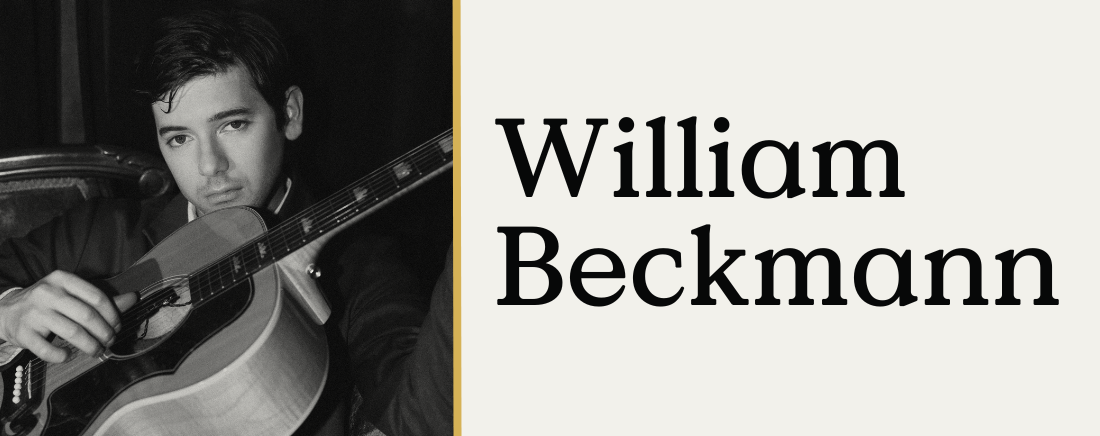
Born and raised in a border town in Texas, singer-songwriter William Beckmann perfectly illustrates how Mexican folk, Tejano music, and country have always been closely intertwined. Latin folk is Americana; mariachi and Norteño are country. With Good Country like his, that connectedness feels intuitive – and obvious. Beckmann’s new album arrives June 20.
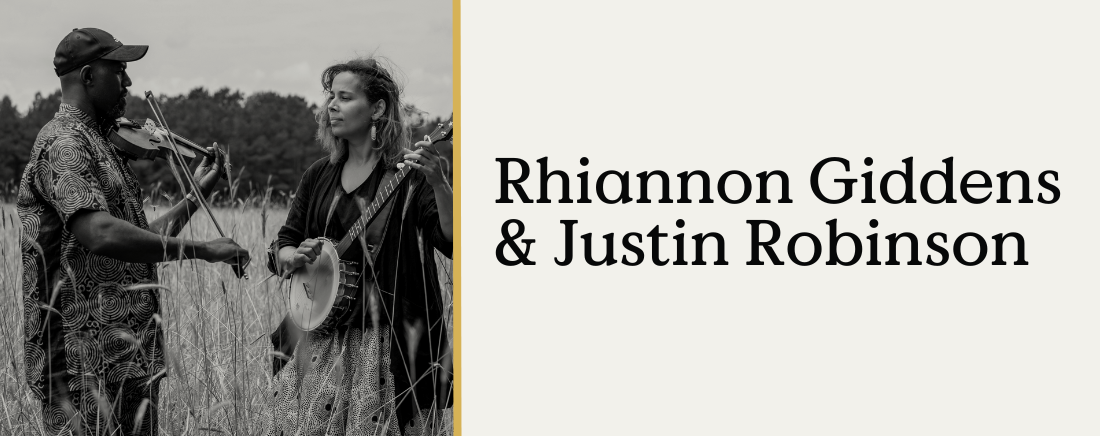
Rhiannon Giddens & Justin Robinson, founding members of revered string band the Carolina Chocolate Drops, reunite on a new old-time album, What Did The Blackbird Say to the Crow, which celebrates North Carolina repertoire, fiddle, banjo, and front porch pickin’. I’m excited to join them both – and many other special guests like Steve Martin, Amythyst Kiah, Leyla McCalla, and more – at the Hollywood Bowl on June 18 for a special one-night-only edition of their Old-Time Revue.
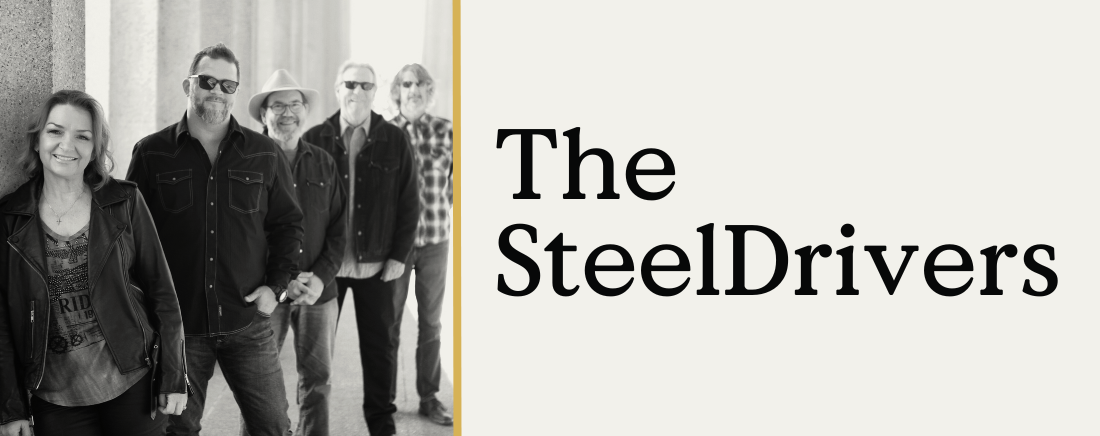
“Uneasy listening” or “bluegrass soul,” whatever you call their style of music, the SteelDrivers are a bluegrass institution. Their new album, Outrun, is their first with Sun Records, an excellent label match for a group that combines bluegrass, blues, country, and soul with music that’s equally at home in Nashville, Memphis, Muscle Shoals, and beyond. Love this band of ringers!
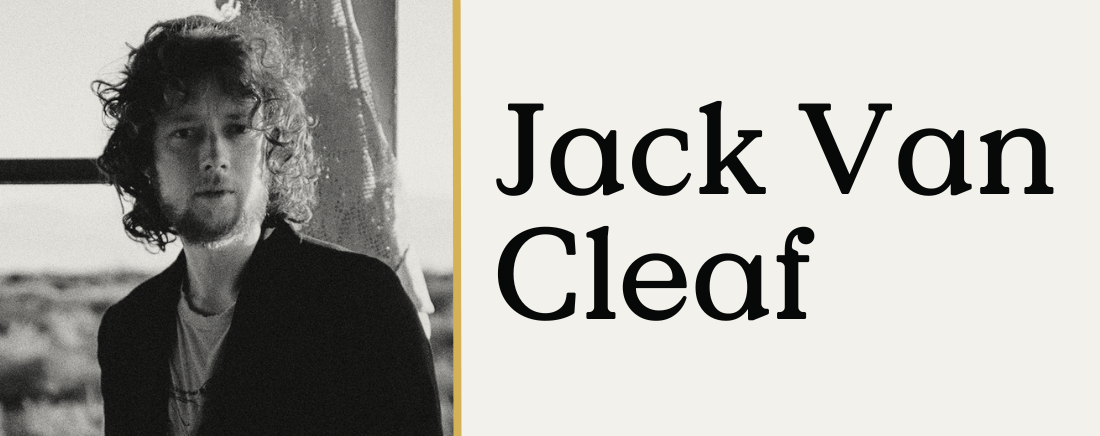
There’s a new sort of Americana/country/Gen Z folk brewing between social media and music cities like Nashville, Chicago, and LA – and Jack Van Cleaf is at the center of its rise. Is it alt-country? Is it contemplative bedroom folk? Is it indie rock? Is it singer-songwriter Americana? It’s all of the above. Check out his latest LP, JVC, to discover your own terms for his striking style.
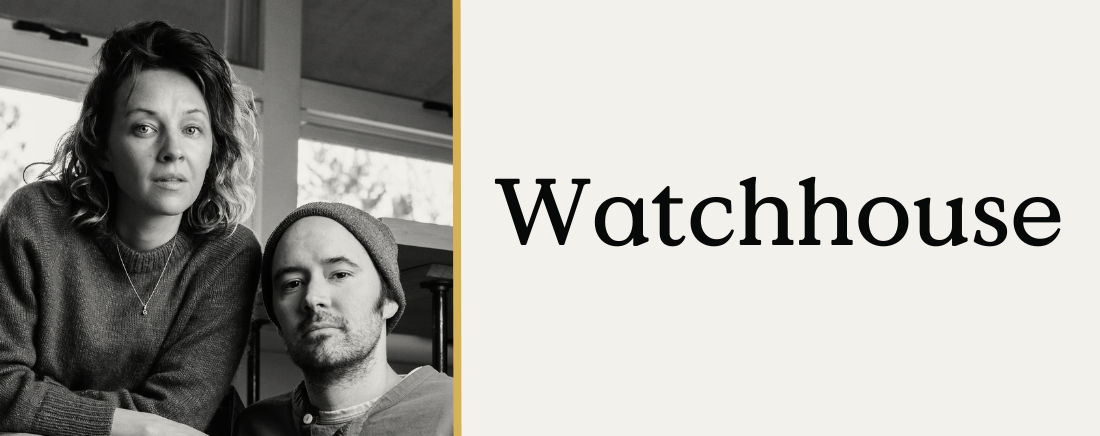
My old pals Andrew and Emily were a pick last year when they guested on “Pink Skies” on Zach Bryan’s smash hit album, The Great American Bar Scene. Now they’re back with a full-length album of their own, Rituals, out today! We’ve been covering and collaborating with Watchhouse for over a decade, so stay tuned for more celebrations of the new record coming soon to BGS and Good Country.
Want more Good Country? Sign up to receive our monthly email newsletter – and much more music! – direct to your inbox.
Photo Credits: William Beckmann by Connor Robertson; Rhiannon Giddens & Justin Robinson by Karen Cox; The SteelDrivers by Glenn Rose; Jack Van Cleaf by Joseph Wasilewski; Watchhouse by Jillian Clark.
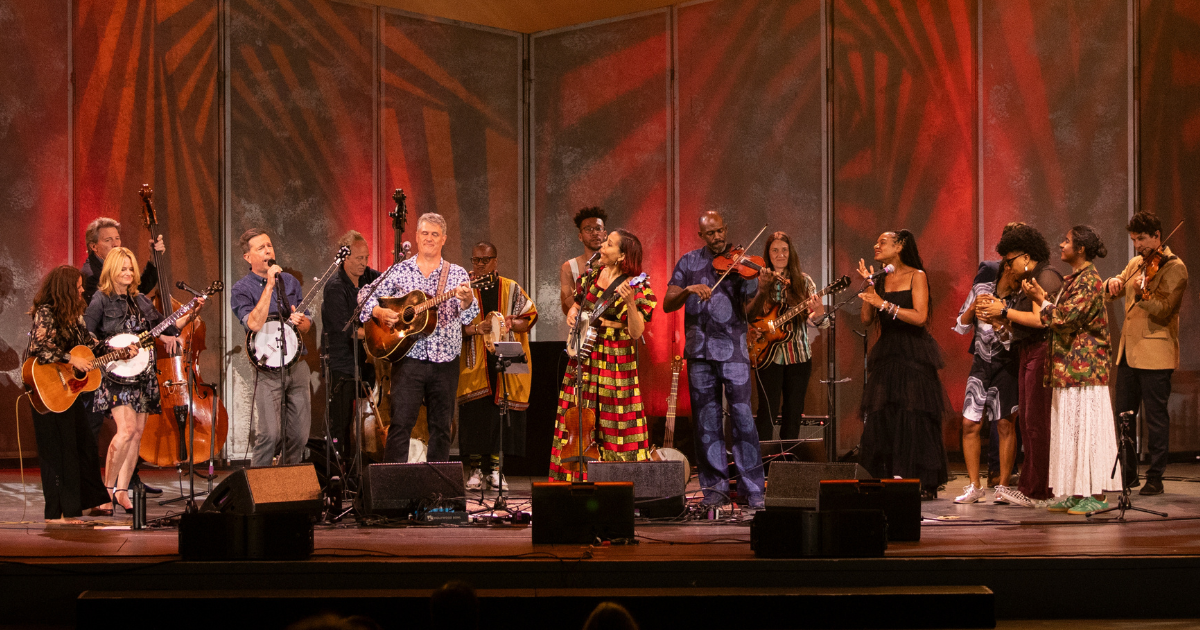
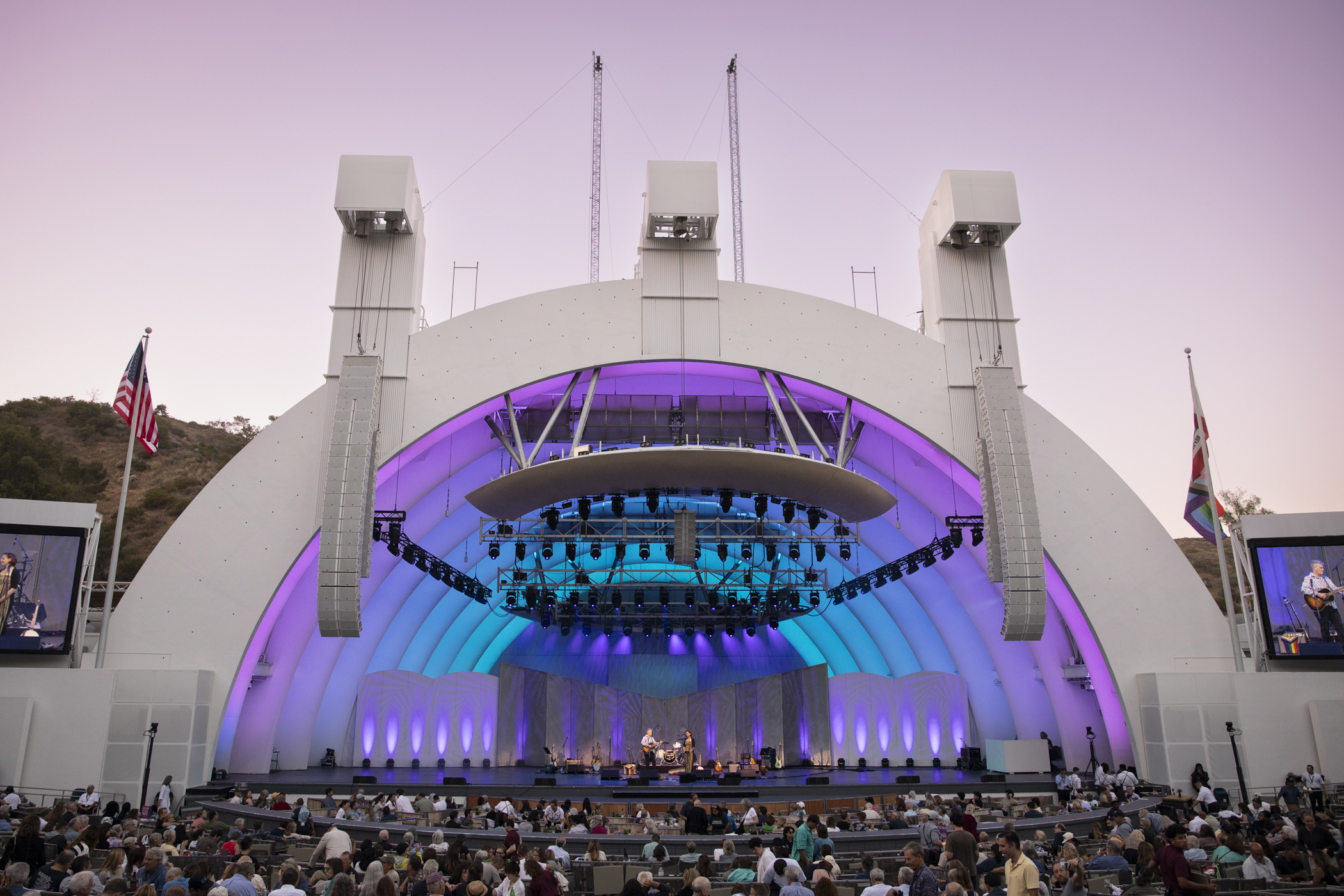
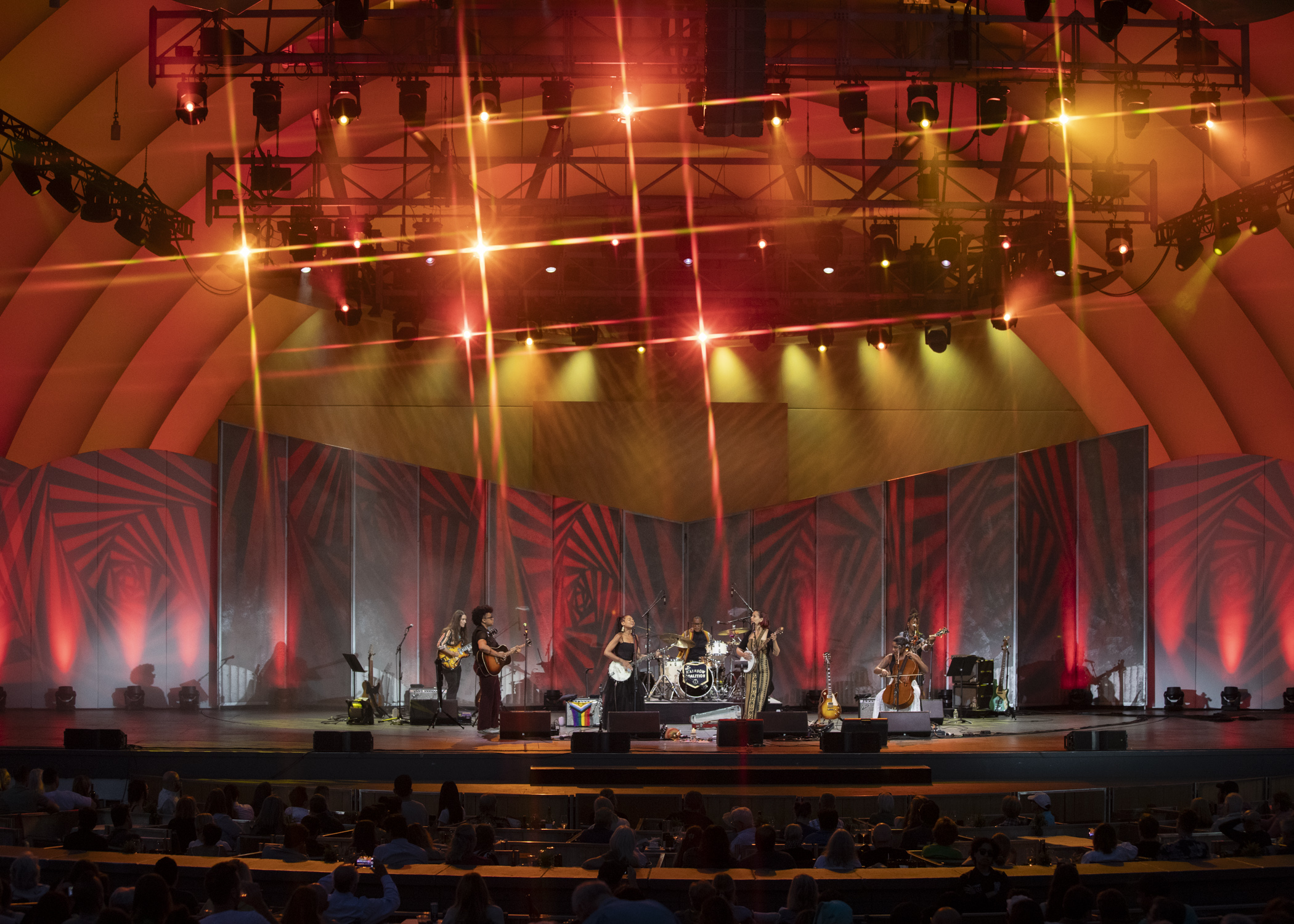
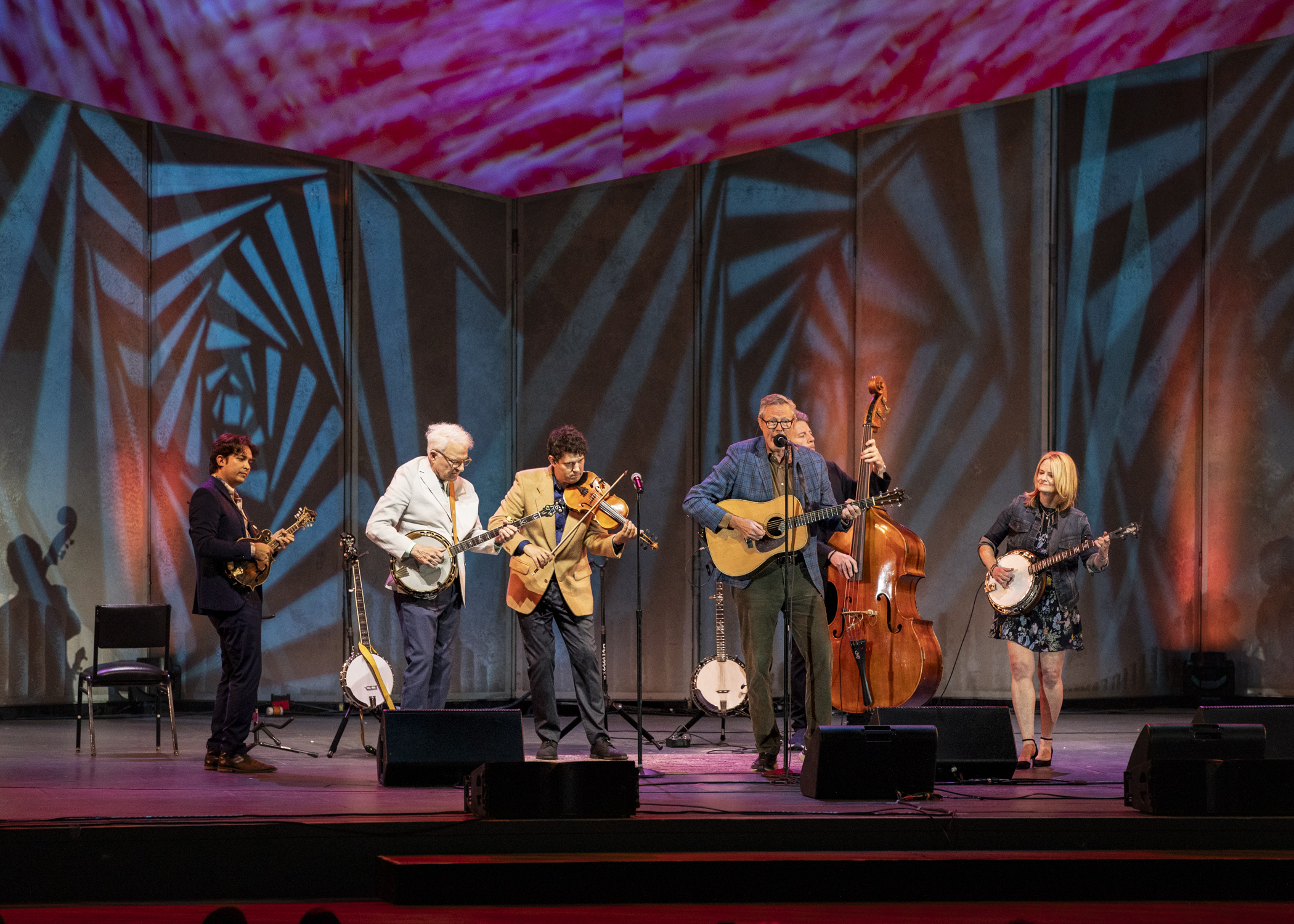
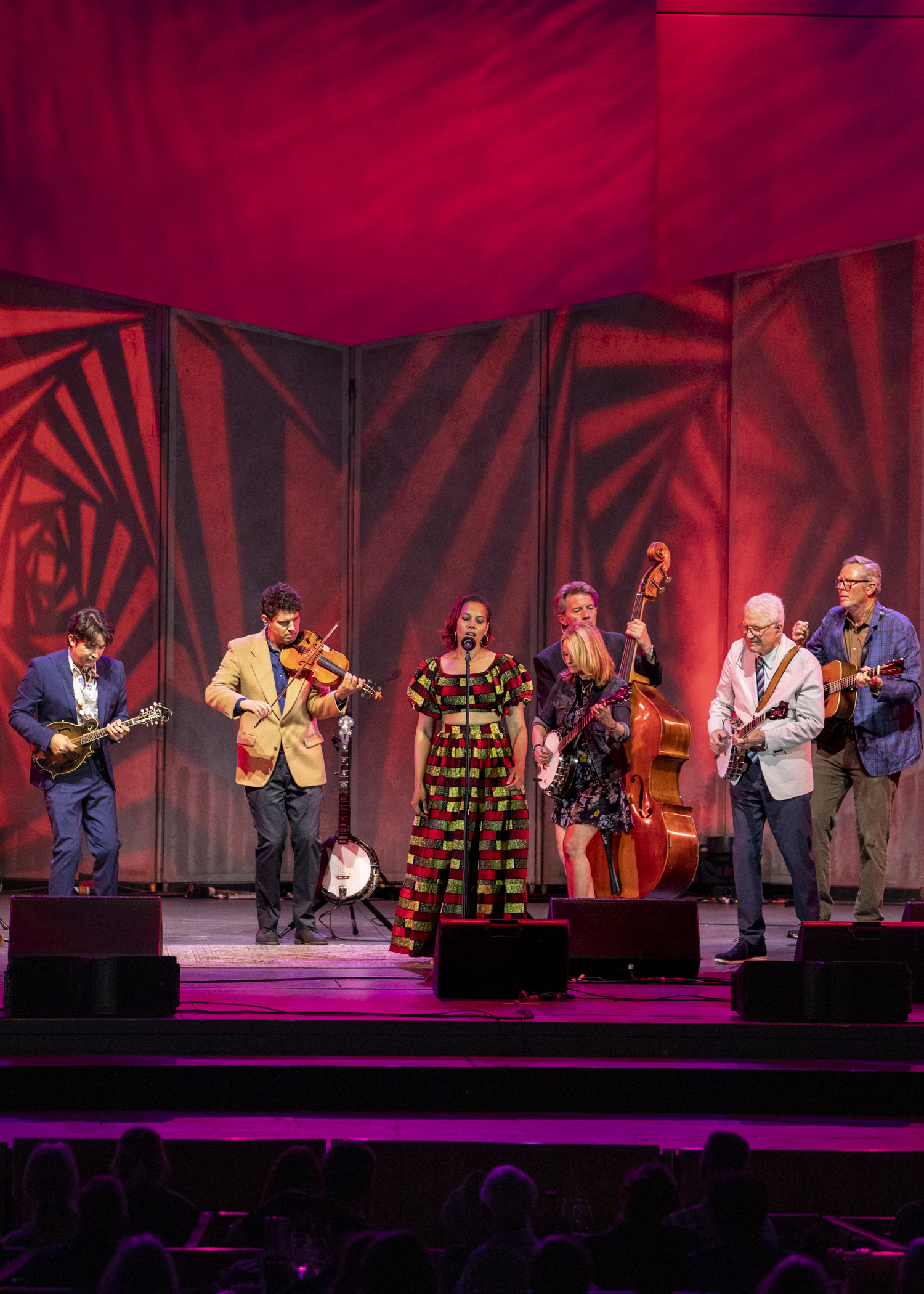
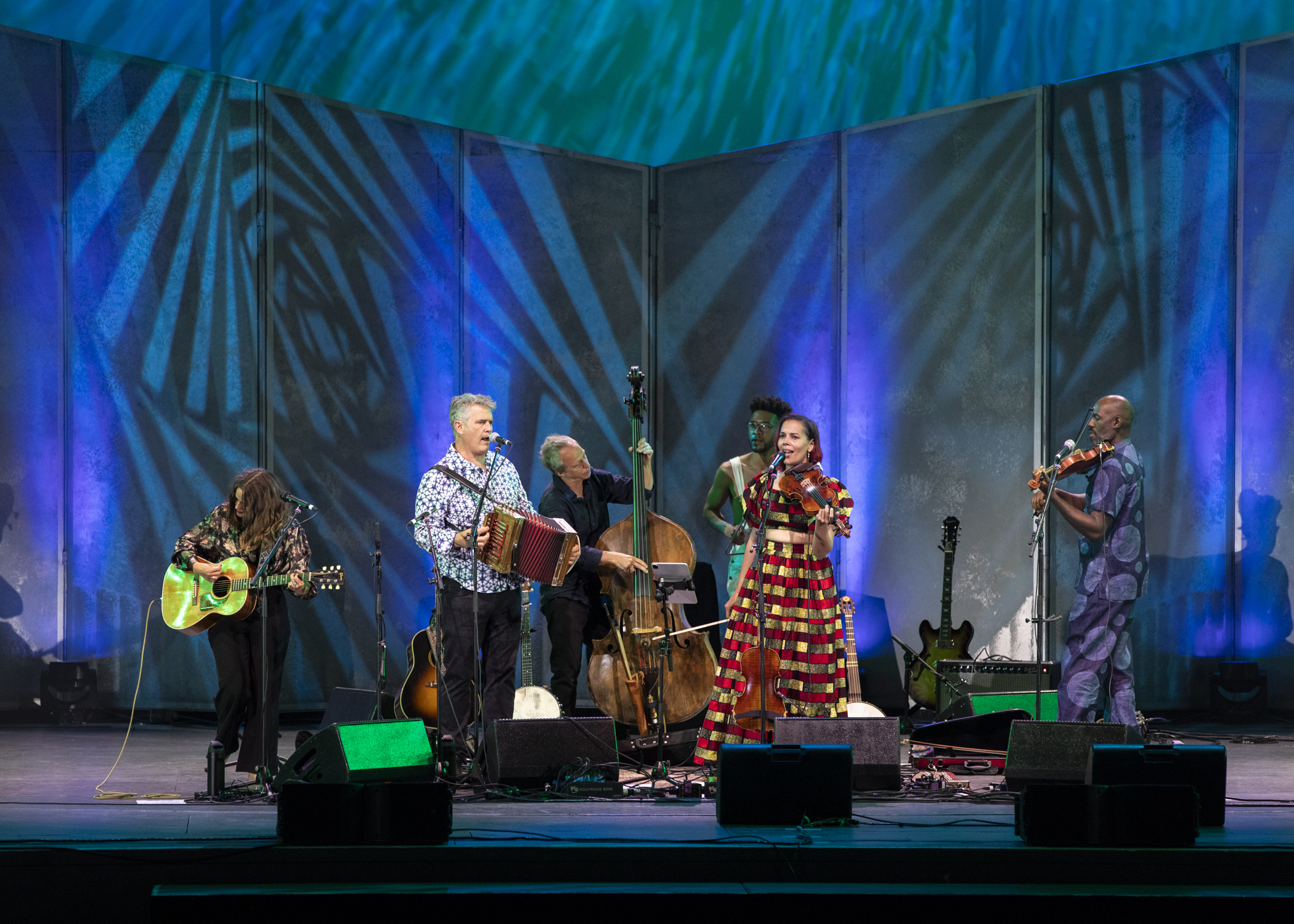
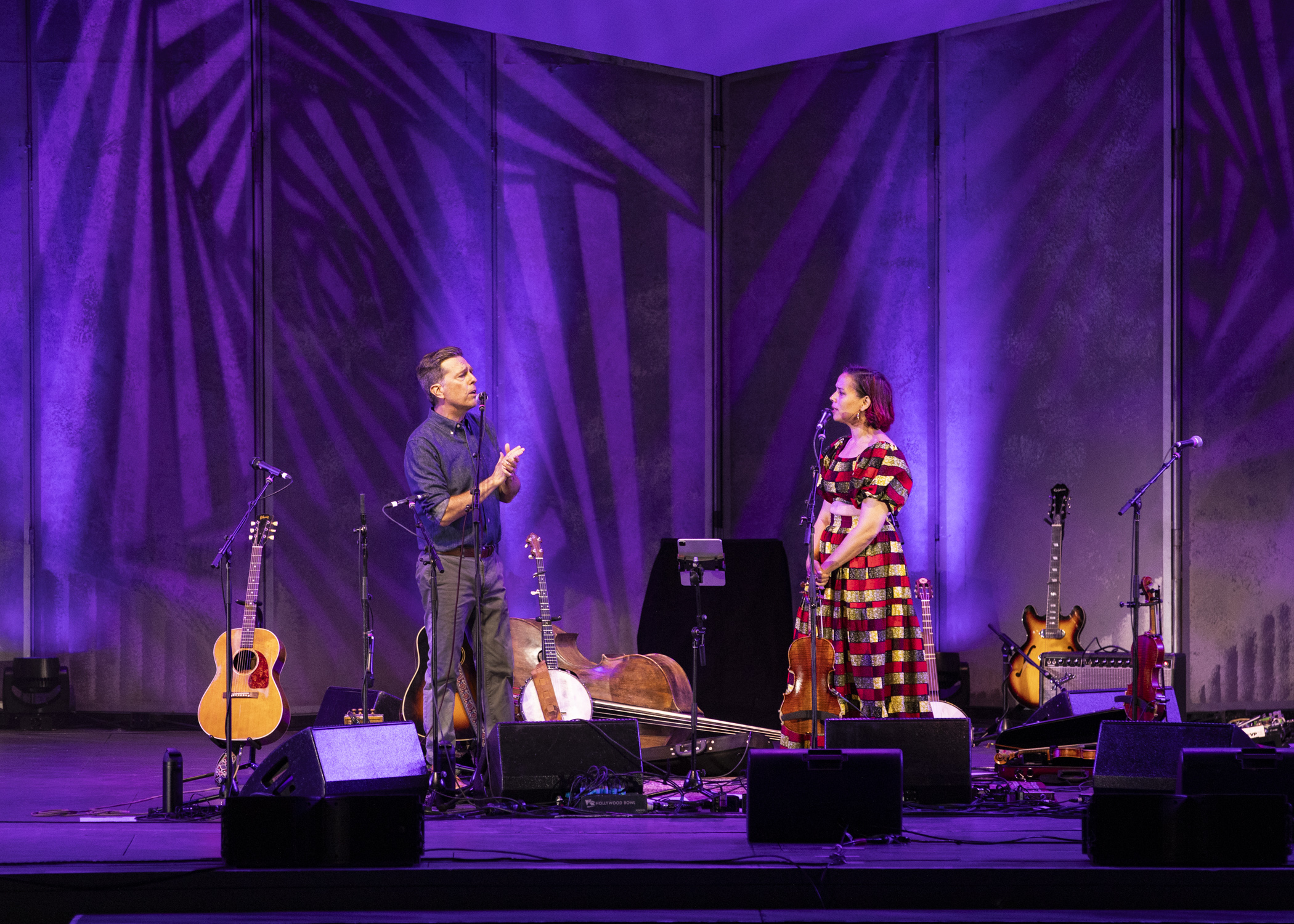
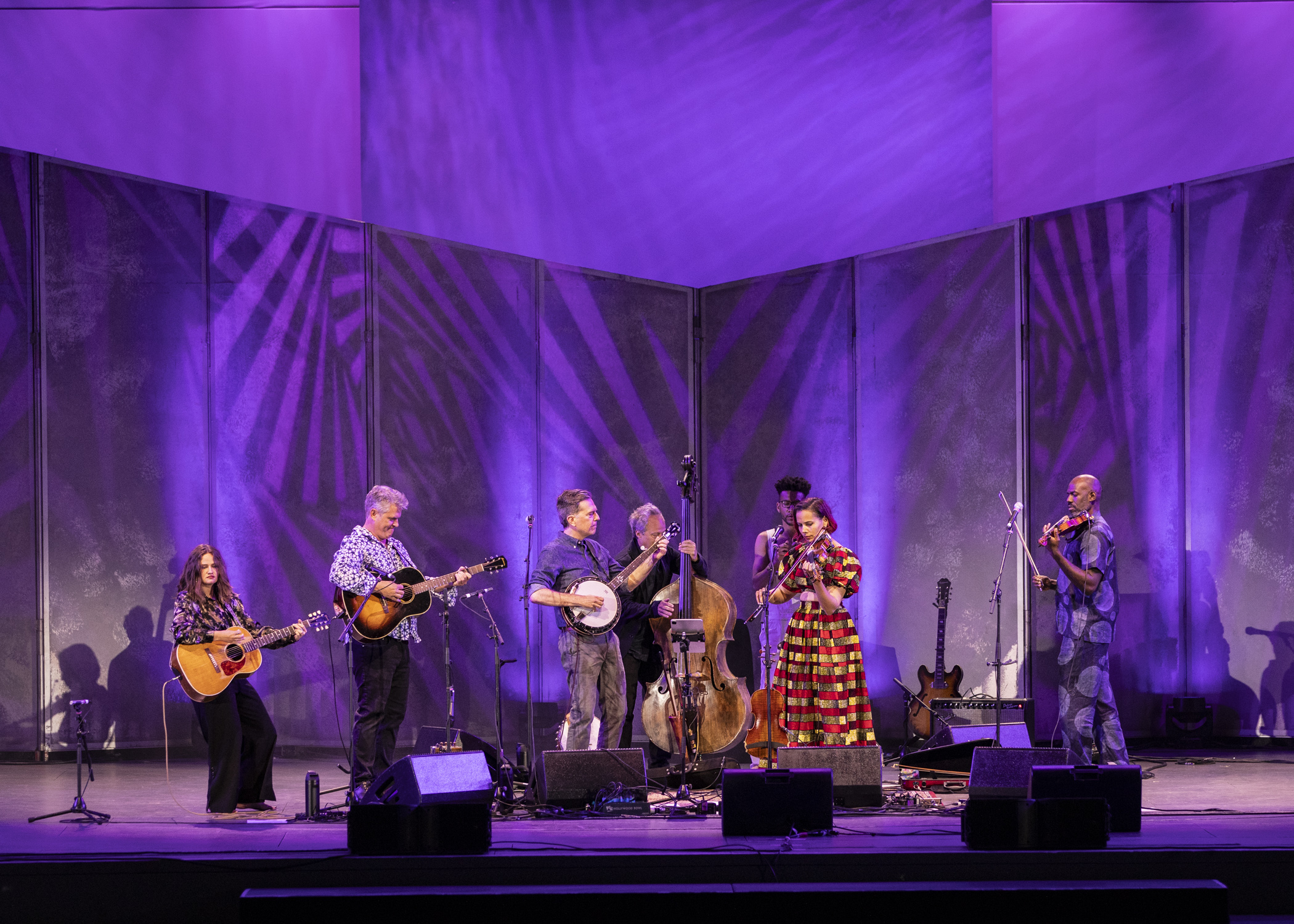
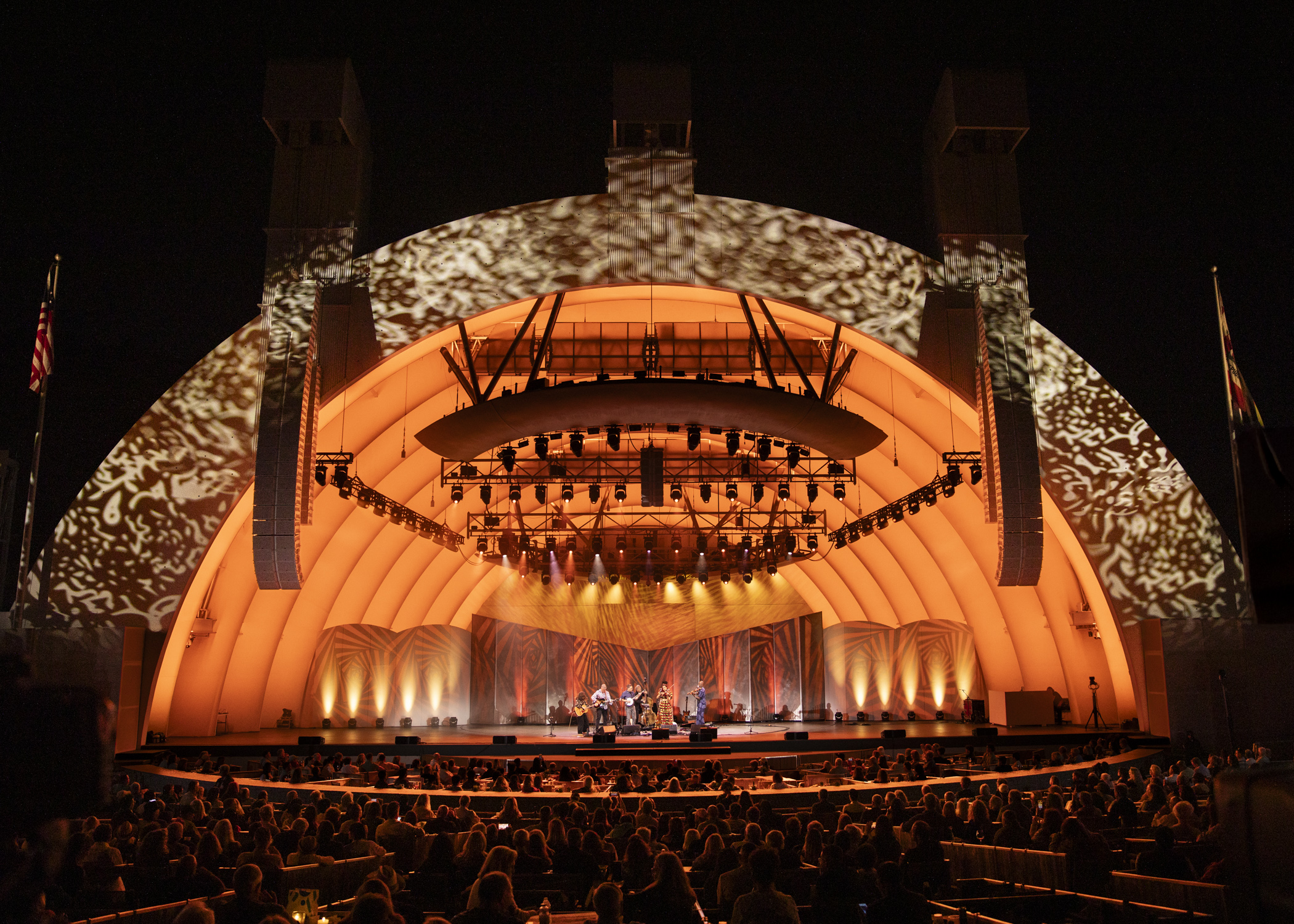
Earlier this week, on Wednesday, June 18, GRAMMY winner and MacArthur “Genius” Rhiannon Giddens brought American Tunes – a star-studded edition of her Old-Time Revue – to the Hollywood Bowl in Los Angeles, California. The evening featured a vast array of American roots music spanning eras and genres, from old-time and cajun to bluegrass and blues, Americana and folk, all brilliantly interconnected by Giddens’ masterful curation.
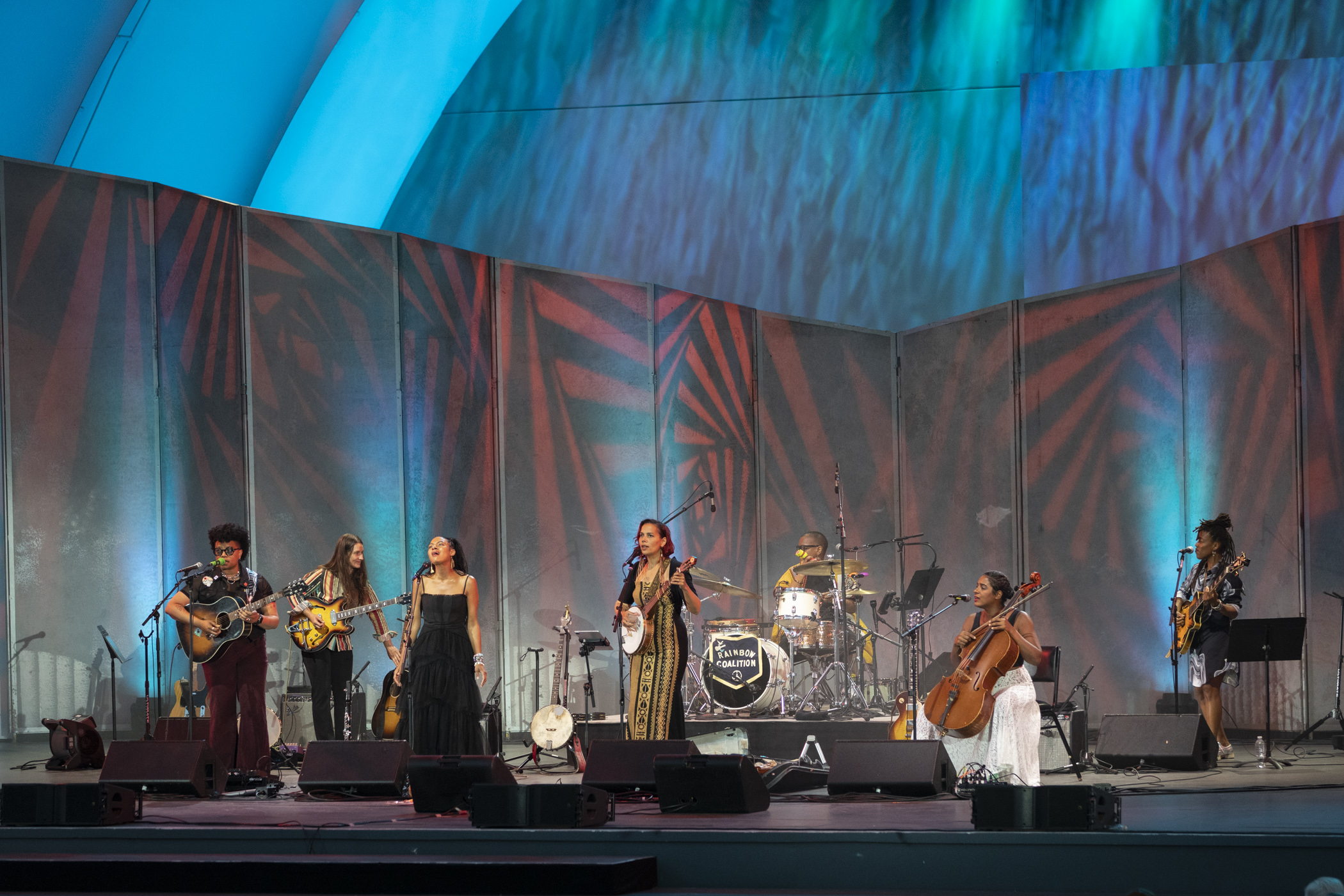
Taking the stage in front of the 18,000 capacity venue, Rhiannon welcomed the audience to her front porch – probably the biggest front porch ever – before kicking off the evening with Dirk Powell, her powerful vocals echoing the Bowl. After welcoming the audience, BGS’ own Ed Helms has on hand to introduce Our Native Daughters, Giddens’ female quartet supergroup featuring Amythyst Kiah, Allison Russell, and Leyla McCalla (instrumental backing by Russell’s Rainbow Coalition band filled out the songs, making them feel lush and all the more powerful).
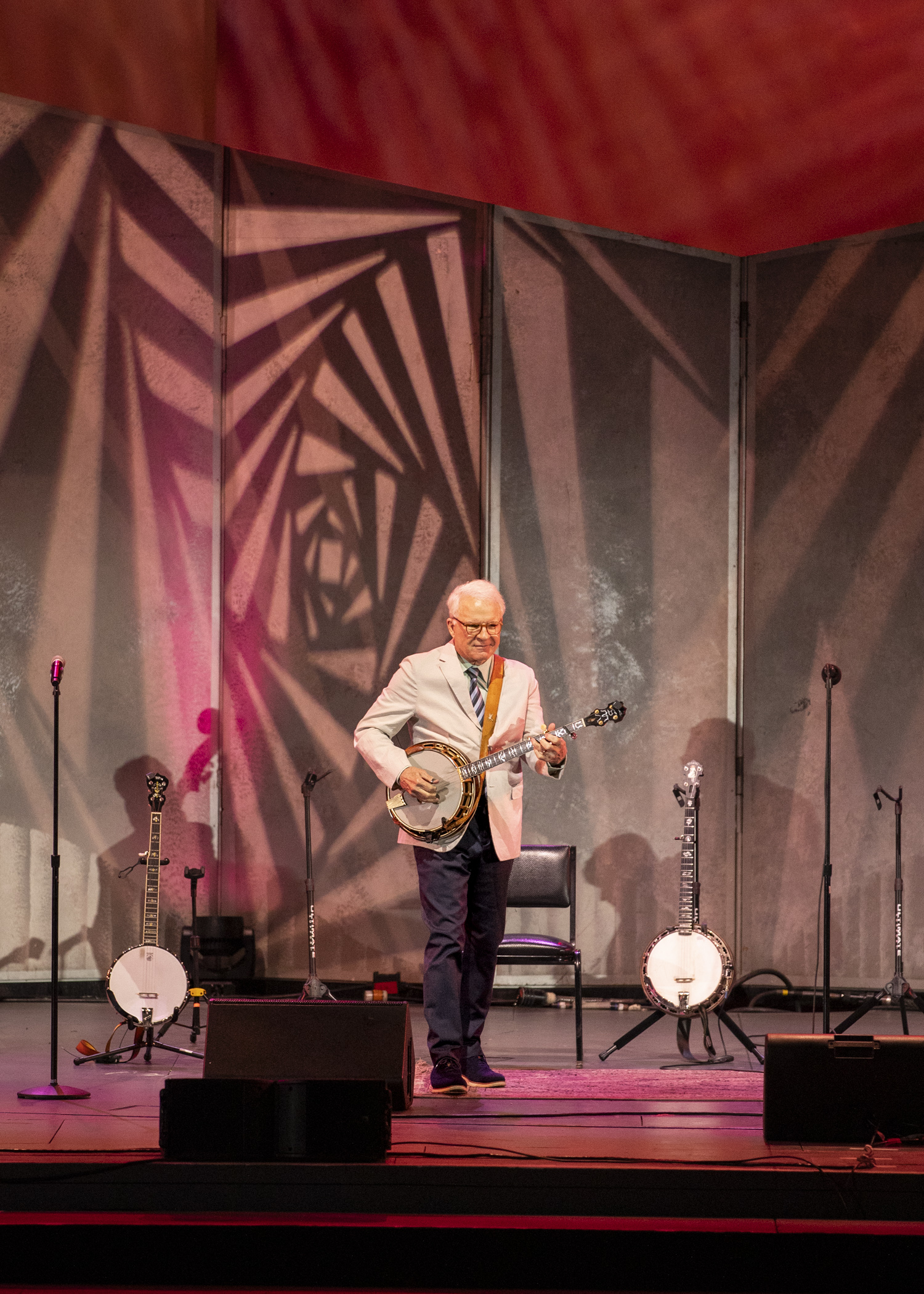
After a brief intermission, it was time for another roots supergroup: this time with Steve Martin and Alison Brown. Both were in fine form: Alison as expert as ever on the five string banjo, and Steve doing as close to a solo comedy set as we’ve seen in years. It was a portion of the show who’s only fault was that it felt much too short. But there was still plenty of music to come…
Helms returned to the stage with Rhiannon for an a capella duet before picking up the banjo and joining her Old-Time Revue. Finally, we were back on that massive front porch. For the final portion of the evening, Rhiannon, Dirk, and the rest of the band (Dirk Powell, Amelia Powell, Jason Sypher, Demeanor) made a very large group of strangers feel like we were home. And in the immortal words of Paul Simon with which Giddens closed the show “We [came] in the age’s most uncertain hours // To sing an American Tune.”
Below, enjoy our BGS exclusive photos from American Tunes.
Dirk Powell and Rhiannon Giddens kick off American Tunes at the Hollywood Bowl while the sun sets in the west.
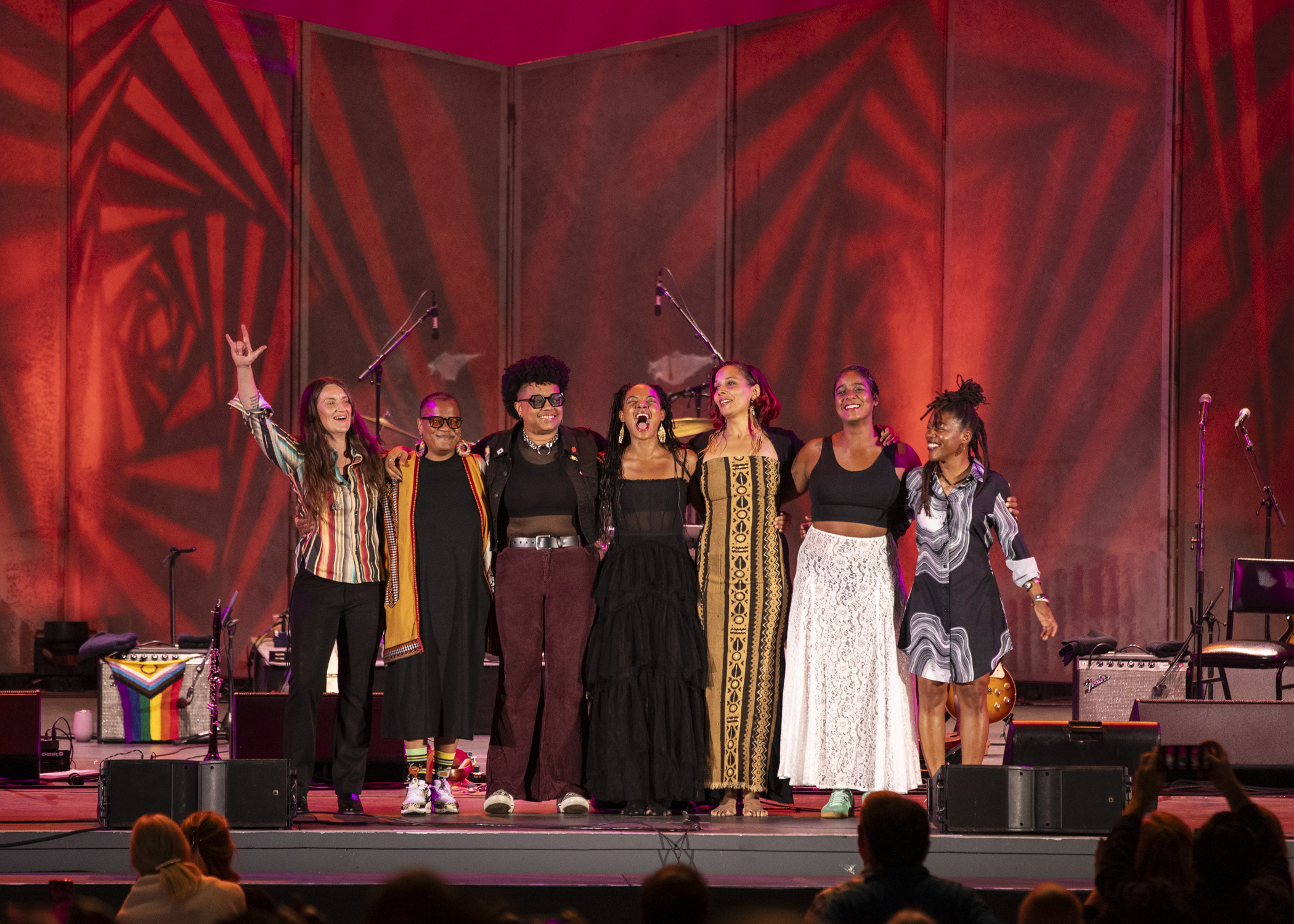
Rhiannon Giddens and Our Native Daughters joined by members of Allison Russell's Rainbow Coalition. (L to R:) Amythyst Kiah, Megan McCormick, Allison Russell, Rhiannon Giddens, Megan Coleman, Leyla McCalla, Ganessa James.
A roots music supergroup, Our Native Daughters sparkle at the Hollywood Bowl.
Our Native Daughters and the Rainbow Coalition take a bow.
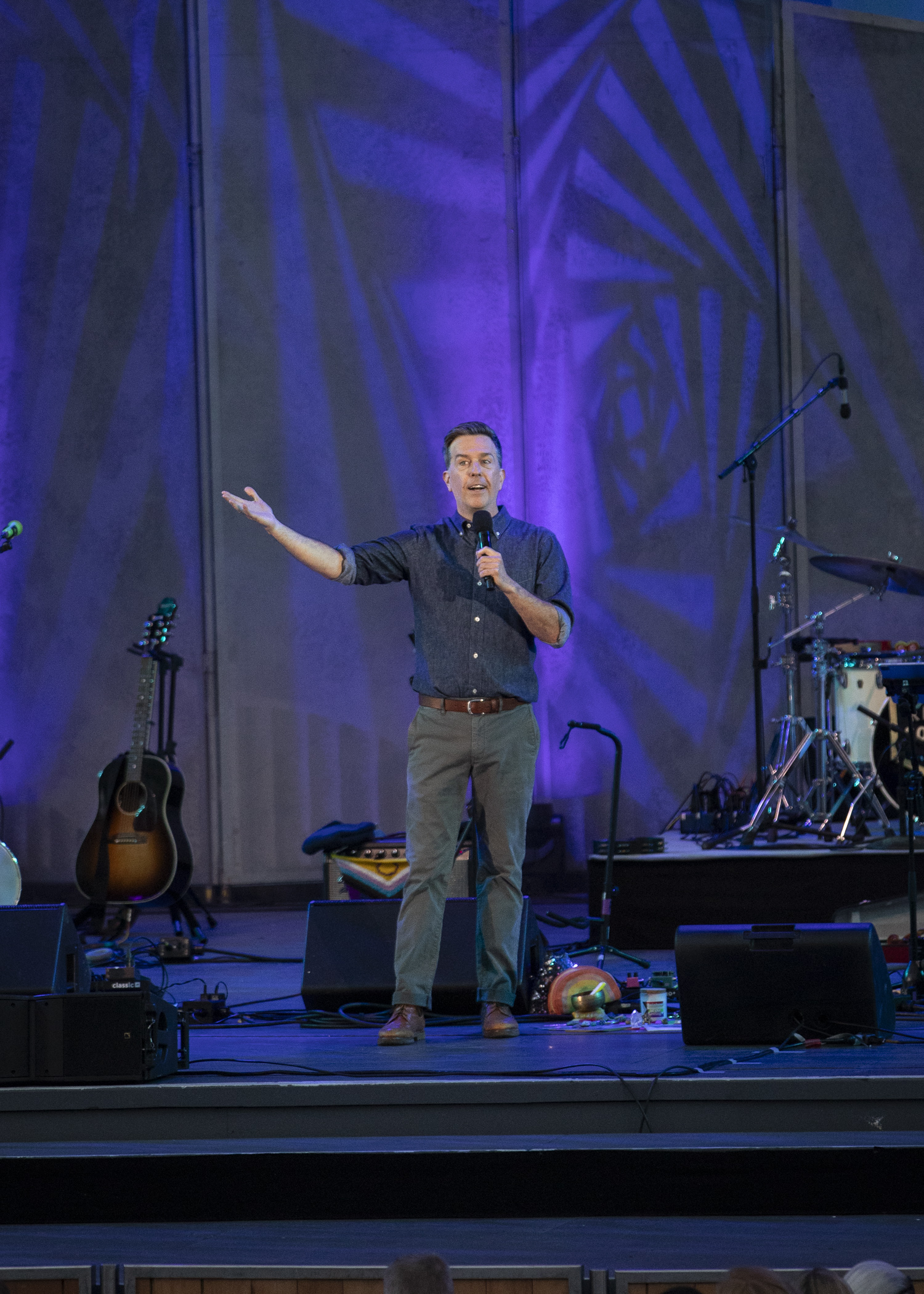
BGS co-founder, actor/comedian Ed Helms, welcomes the audience to American Tunes.
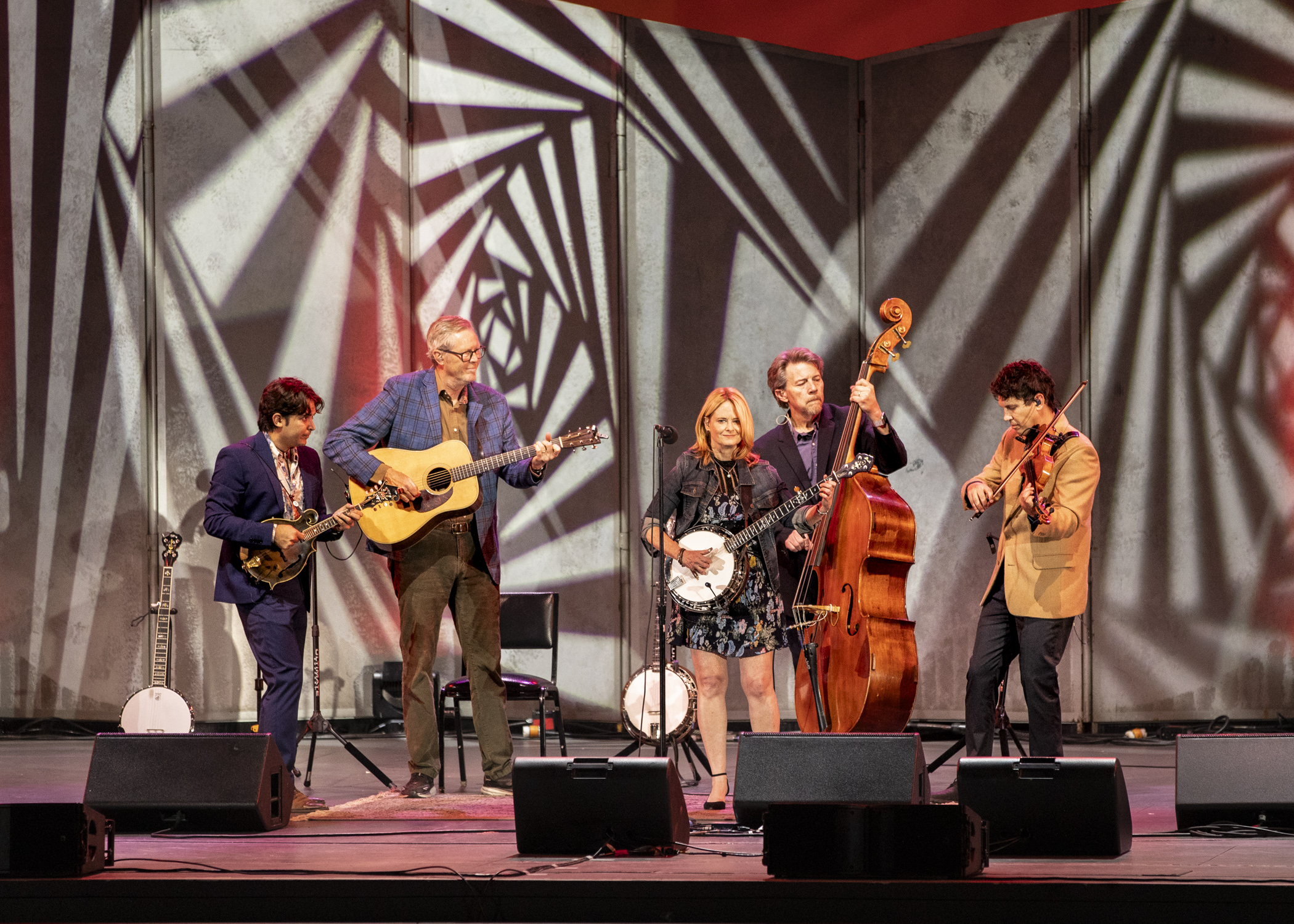
Alison Brown Band takes the stage. (L to R:) Tristan Scroggins, Robbie Fulks, Brown, Garry West, Christian Sedelmeyer.
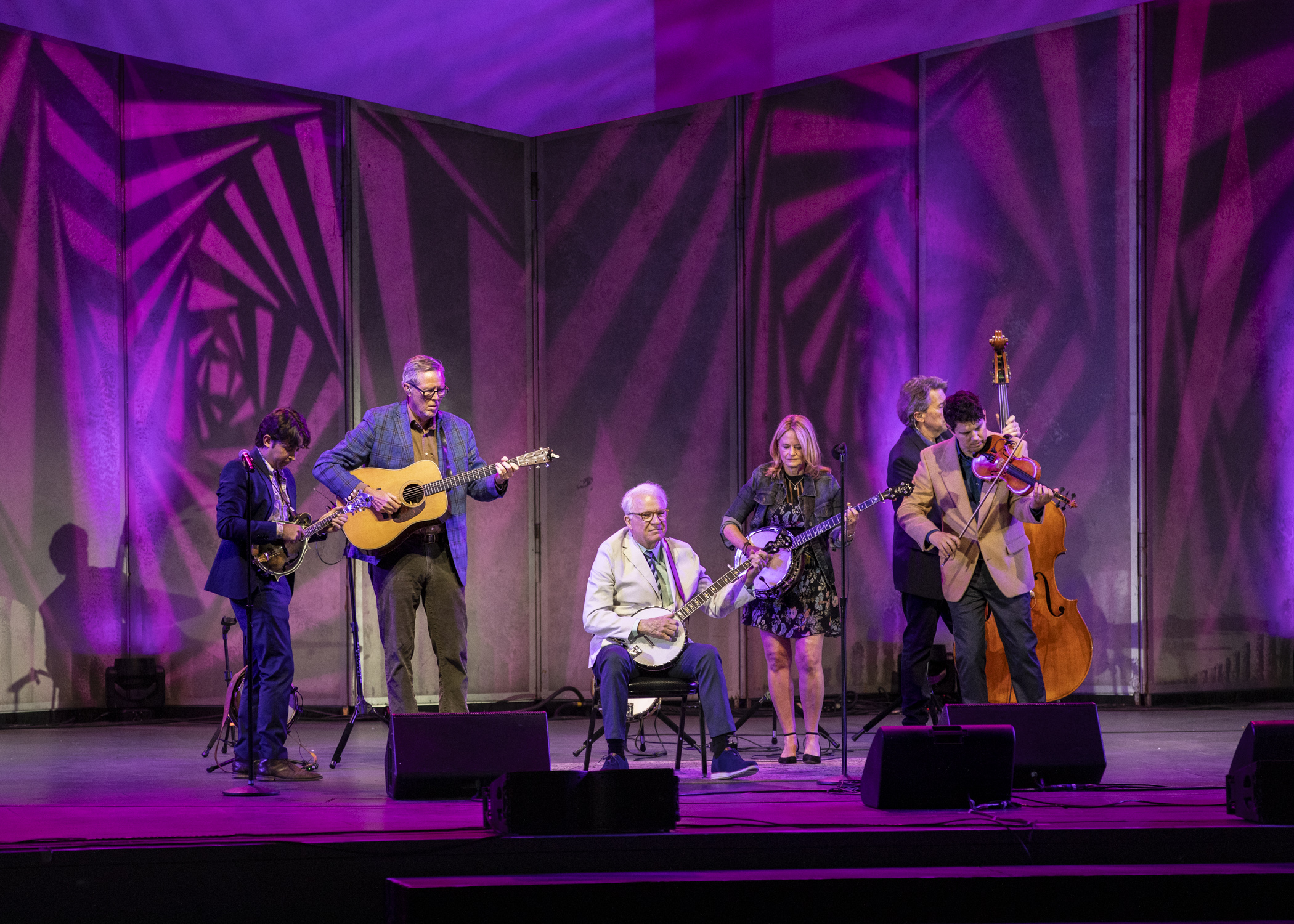
Actor, comedian, playwright, and banjoist extraordinaire Steve Martin was on hand for American Tunes, as well.
Steve Martin leads Alison Brown and band through a tune.
Singer-songwriter Robbie Fulks steps to the microphone with Steven Martin, Alison Brown, and more.
Actor, comedian, playwright, and banjoist extraordinaire Steve Martin was on hand for American Tunes, as well.
The evening's spearhead, Rhiannon Giddens, joins Steve Martin, Alison Brown, and band for a number.
The American Tunes audience fills up the hillside at the Hollywood Bowl.
Rhiannon Giddens' Old-Time Revue, featuring (L to R) Amelia Powell, Dirk Powell, Jason Sypher, Demeanor (Justin Harrington), Giddens, and Justin Robinson.
Ed Helms and Rhiannon Giddens in duet.
Rhiannon Giddens' Old-Time Revue beneath the lights of the Hollywood Bowl.
Ed Helms joins Rhiannon Giddens and band on stage for "Clinch Mountain Backstep."
A rapt audience for American Tunes and Rhiannon Giddens' Old-Time Revue.
Anne Harris is having a moment. Though many people (this writer included) are just finding out about this Midwestern violin virtuoso this year, she has been making records since 2001. With her new album, I Feel It Once Again (released May 9), Harris decided, in her words, to “bring things up a level.”
Not only is the disc getting rave reviews, it marks the first-ever violin commission in America between two Black women – Harris and luthier Amanda Ewing. The 10 songs on I Feel It Once Again range from traditionals like “Snowden’s Jig” and the closer “Time Has Made A Change” to originals like “Can’t Find My Way” and the project’s title track. Throughout, Harris remains impressive in both her vocals and her violin playing. The album was produced by Colin Linden who has worked with Bob Dylan, Rhiannon Giddens, Bruce Cockburn, and many others.
Harris is currently based in Chicago, but was actually born in rural Ohio. She took to music at a very young age, inspired by her parents’ record collection. After attending the University of Michigan’s School of Music, Harris moved to Chicago, where she delved into the city’s theater and music scenes. Now, she is about to tour with Taj Mahal and Keb’ Mo’ this summer. BGS had the pleasure of catching up with Anne Harris for a conversation about the new album, her Amanda Ewing-built violin, her influences and inspirations, and more.
To start, tell me where and when I Feel It Once Again was recorded.
Anne Harris: I did the record in Nashville. Coming out of the pandemic, I had been writing and I felt like I had a collection of songs – a pool of things that I wanted to be on my next record. I wanted to work with a producer, [but] I wasn’t sure who to work with. All my prior records had just been basement records, basically. Nothing wrong with that, but I wanted to bring things up a level. A friend of mine, Amy Helm – who is an amazing singer-songwriter in her own right – recommended Colin Linden to me.
Colin is Canadian born and raised. Incredible multi-instrumentalist [and] producer that’s made Nashville his home for many years now. Anyone [Amy] recommends I’m gonna listen to. So I started listening to some of the records he made. I got in touch with Colin and sent him, in really rough form, a big basket of songs I was considering. He really loved them and wanted to work on the record. We got the basic core of the record laid down in about a week of intense recording in Nashville and finished up with a few things remotely after that.
Is it true that you first picked up the violin as a kid after watching Fiddler on the Roof?
Yeah! My Mom took my sister and I to see the movie version of Fiddler on the Roof when we were little; I was around three. I was born and raised in Yellow Springs, Ohio. I remember being at this movie theater in Dayton for a matinee. I remember the picture of the screen – you know, this opening scene where Isaac Stern is in silhouette on a rooftop playing the overture. And [my mother] said I stood up, pointed at the screen, and yelled – as loud as I could – “Mommy! That’s what I wanna do!” She was like, “Okay, you gotta sit down and be quiet.”
She thought [it was] maybe a passing thing and that I was caught up in the drama of the music. [But] I just kept bugging her about it. So she let me do a couple of early violin camp kind of things here and there. I just had this intensity about wanting to really study it. So when I turned eight, I started studying privately with a teacher. Suzuki and classical training was sort of my background.
Tell me about the title track, which is also right in the middle of the album. What inspired “I Feel It Once Again?”
A couple of years ago, [my] friend Dave Hererro – who is a Chicago based blues guitar player. Sometimes he’ll come up with a little riff and send it my way and say, “What do you think of this?” He sent me this guitar riff, which is kind of the through line of that song. I heard it and immediately the whole song and story unfolded in my head. I wrote [it] around that guitar riff in, like, one session. I did a demo and I played it for Dave. I’m like, “Dude! I love this so much.” He’s like, “Well, do whatever you want with it!”
Writing is an interesting thing. I’m not super prolific. I’m not one of those people that’s like, “I journal every day for 13 hours!” [Laughs] You know? [I don’t] have a discipline or method other than trying to stay open to inspiration and committing to it when it happens.
[That] was the case with that song. I had the story and a picture in my mind of what that song about. Somebody musing over a loss. You know, it’s twilight and they’re finishing a bottle of wine and mourning the loss of this great love. One part of you is fine when it’s daytime and you can put on a face and you’re going about your business. But then when the curtain comes down, behind that curtain is this loss and this mourning. That’s what that song is about.
Everything looks different at 4am, doesn’t it? [Laughs]
I [also] wanted to ask you about “Snowden’s Jig.” That’s a type of music I know virtually nothing about. I know it’s a traditional.
Yes. “Snowden’s Jig” is a tune that I learned from the Carolina Chocolate Drops record Genuine Negro Jig. It was my gateway into the Carolina Chocolate Drops. I was doing errands somewhere and I had NPR on and [they] were a feature story. And it was just this mind-blowing thing.
Joe Thompson [has] been deceased for a while now. But he was one of the last living fiddlers in the Black string band tradition. They would go to his porch, learn tunes from him, and learn the history of Black string band tradition. That’s sort of how they started their group. [“Snowden’s Jig”] was on that record and they learned it from Joe.
Part of my mission as an artist is to be a bridge of accessibility through my instrument, the violin, to the Black fiddle tradition. There was a time during slavery days when the fiddle and banjo were the predominant instruments among Black players. Guitars were sort of a rarity. That was when string band music was really at its height. North New Orleans was the sort of center of Black fiddle playing. Often time, enslavers would send their enslaved people down to New Orleans to learn how to play fiddle and then come back to the plantation to entertain for white parties and balls.
You’re based in Chicago. It’s a big music city. How has living in Chicago informed your music?
Chicago is known as a workingman’s city, a working class city. There’s something very grounded about Chicago in general and that’s the reputation it has. I’m a Midwestern person [anyway], from Ohio originally. There’s something about us in the Midwest. You know, we’ll never be as cool as New York or LA! But we work our asses off. I feel that translates into the artists in this town. It’s really a place where it’s about the work.
This album apparently marks the first violin commission between two Black women. Yourself and Amanda Ewing?
Correct. Amanda Ewing. It’s the very first professional violin commission that’s been recognized in an official capacity. Amanda has a certificate from the governor of Tennessee – she’s a Nashville resident – citing her as the first Black woman violin luthier in the country.
When I first saw Amanda, it was online. The algorithm basically brought her to my phone. I saw a picture of this beautiful Black woman in a work coat, holding the violin and I about lost my mind. I was so blown away and inspired. I read her story and got in touch with her and told her, “I have to have you make a violin for me. I have to own a violin that was made by the hands of somebody that looks like me.” It never occurred to me, in all my years of playing, what the hands of the maker of my instrument might look like. That’s not an uncommon thing, but it’s sort of sad! It would never occur to me that a Black woman would be an option.
So as soon as I met her, we embarked on a commission that was funded by GoFundMe. She decided she wanted to make two [violins] so that I would have a choice. They were completed in February, a couple of months ago. [One violin] will make its official debut for a public audience on the 23rd of May. I’m gonna be playing at the Grand Ole Opry with Taj Mahal and Keb’ Mo’. I’m going on tour with them.
It’s funny, I was gonna ask you next about that tour! I noticed you had some upcoming tour dates with Taj and Keb’. I wanted to ask your thoughts on that and maybe what people can look forward to on this tour.
A friend of mine is Taj Mahal’s manager and she’s also good friends with Keb’. She said that Kevin [Keb’] had approached her looking for a violinist player for this upcoming tour. They have a new record out as TajMo called Room On The Porch. It’s their second under that moniker and it’s an amazing collaboration. Two iconic figures making beautiful music together. So she recommended me and [Keb’] had seen me before – I think when I was touring with Otis Taylor years ago. He called me and you know I’ll keep that voicemail forever!
As far as what to look forward to, it’s gonna be amazing. The opportunity to work with luminaries… I’m gonna be the biggest sponge, soaking up all of the knowledge from these giants. Taj has been influential to just about everyone on some level. He’s one of those people who’s worked with everybody and done so much. I’m just over the moon.
Photo Credit: Roman Sobus
This website uses cookies to improve your experience. We'll assume you're ok with this, but you can opt-out if you wish.AcceptRejectRead More
Privacy & Cookies Policy
Privacy Overview
This website uses cookies to improve your experience while you navigate through the website. Out of these, the cookies that are categorized as necessary are stored on your browser as they are essential for the working of basic functionalities of the website. We also use third-party cookies that help us analyze and understand how you use this website. These cookies will be stored in your browser only with your consent. You also have the option to opt-out of these cookies. But opting out of some of these cookies may affect your browsing experience.
Necessary cookies are absolutely essential for the website to function properly. This category only includes cookies that ensures basic functionalities and security features of the website. These cookies do not store any personal information.
Any cookies that may not be particularly necessary for the website to function and is used specifically to collect user personal data via analytics, ads, other embedded contents are termed as non-necessary cookies. It is mandatory to procure user consent prior to running these cookies on your website.