Derek Trucks on Analog, Allman Brothers Band, and Aging Well (1 of 2)

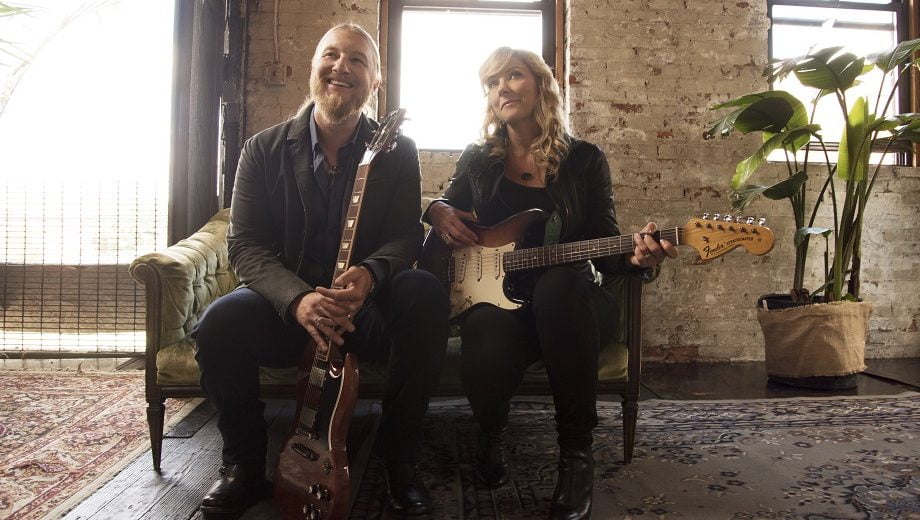
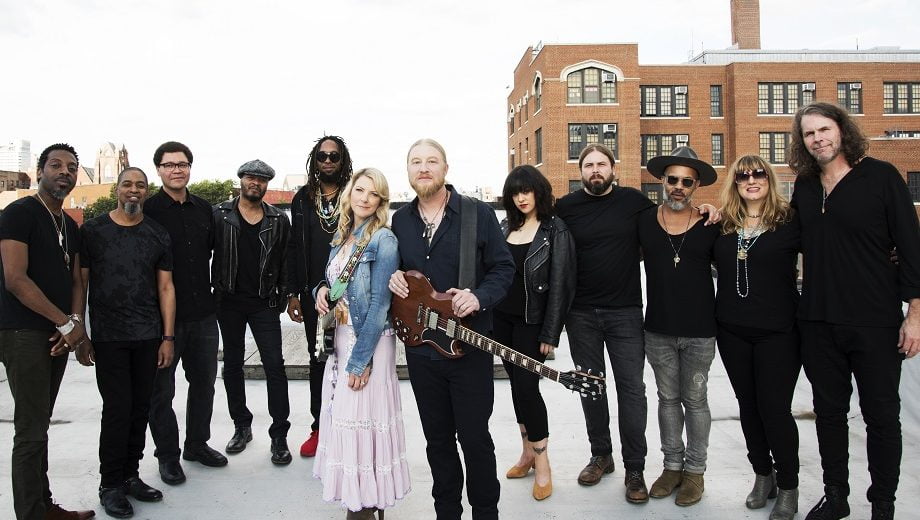
With Tedeschi Trucks Band, you get a partnership. That impressive ability to divide and conquer serves them well on stage, with Susan Tedeschi nailing the vocals and tearing up the guitar, along with Derek Trucks calmly proving his own guitar proficiency. That’s not to mention the other 10 musicians that make this one of the most potent groups on the road right now, as evidenced by their newest album, Signs. (Incidentally, the conversation took place shortly before the death of longtime keyboard player Kofi Burbridge, who passed in February.)

To begin our Artist of the Month interviews, Derek took the phone first — yet frequently praised Susan throughout the conversation, especially her ability to captivate a crowd. Before passing the phone over, he also dug into his preference for analog recording, his history with the Allman Brothers Band, and the reason why age doesn’t really matter.

BGS: I know you recorded this album on two-inch analog tape and you have that Neve console. Why is it important for you to use that vintage gear?

Trucks: I think every time you record, you’re searching for that sound you hear in your head, and what you hear live on the floor. I feel like the more analog we go, the closer we’re getting to that. This is definitely the warmest recording we’ve done to date. You know, I think the beauty of having a studio is that you’re always working toward that and you don’t have to reset and start from scratch every single time.

And there’s something about recording to tape that focuses everybody a little bit differently. You don’t have unlimited tracks, you don’t have unlimited space, and it becomes a little more performance-based. Everything seems to mean a little bit more. Every reel of tape is important! You don’t have a hard drive to fill up, so it’s a different feel all the way around. And it slows things down in a good way. I think it really does put everybody’s head in a different spot.

What does that room look like?

We designed it visually thinking about Levon Helm’s band up in Woodstock. It’s a few hundred feet from our house in the swamp down here in Florida. It’s barn-shaped and the main recording room is a pretty good-sized room. When we rehearse with the 12-piece band, everyone’s set up in the main room. But it’s a bunch of vintage gear and old Fender amps. There’s a few drum kits in there and a B3 set up at all times. You know, it’s ready for action!

Speaking of those drum kits, I noticed at your show that you tour with two drummers. What’s the benefit of that?

There’s something special about that sound, man. It’s a powerful thing when you get those guys playing. The pulse gets really, really thick. When the whole band is firing, it feels like a freight train behind you. I think after years of being on stage with my uncle [Butch Trucks] and Jaimoe [the Allman Brothers’ drummer] and the Allman Brothers, when it really works and it’s really good, there is nothing quite like it. So when we put this band together, I was certainly thinking about those guys and that sound.

The chemistry really has to work when you have two drummers. It can be a freight train or it can be a train wreck! [Laughs] It can be really bad. I’ve been in situations where there have been two drummers and it’s a “less is more” situation sometimes. But Tyler [Greenwell] and JJ [Johnson] have a special chemistry. They really listen hard to each other and complement each other well, and they have a sound that is completely unique to the two of them. It’s a big part of what makes the band unique, I think.

At risk of being too heavy, what’s that experience like when you don’t have Gregg on stage, or knowing that you aren’t going to play with Butch anymore? Was that hard for you to process?

I don’t know if I ever thought of it that way so much. I played with them for so many years and I was always doing my solo groups and other things at the same time, so there were always a few different streams. I knew it wouldn’t be forever, so that part wasn’t a shock, but more recently we started playing a few of those tunes from time to time, and it definitely hits me now. Especially when we’re playing the Beacon Theater or some of these rooms I’ve played with [the Allman Brothers Band] so many times. You certainly miss them, and you miss that sound and that spirit. When we’re making records, there are certain times when for some reason I’ll be thinking about them. They were family, they were friends, and they were musical heroes, too. Those are big losses and I think it takes a while to unpack that stuff.
I’ve heard you and Susan both talk about being “a lifer.” How would you describe what that means?

I was thinking about Del McCoury this morning when I knew I’d be doing this article. It’s the people that you just know are going to be playing and touring and making people feel good as long as they’re on the planet. The Allmans, B.B. King, Willie Nelson –there are thousands of musicians who play in small clubs that are that way. You just know once you start doing it. I knew when I started in my pre-teens. Once I got serious about it, I always got that feeling like, ‘This is what I’m going to be doing. Whether it’s successful or not, I don’t think it’s going to matter.’ [Laughs]

And the beauty of what we do is that we can do it forever. I think about professional athletes sometimes and how they give everything to their sport — and by the time they’re 30, they’re washed up. We’re incredibly fortunate. We can play into our 90s. There are guys out there doing it.

What is it about Del McCoury that you admire?

He’s one of those personalities, man. You just see him and you immediately love him before you meet him. Then you meet him and you love him more. [Laughs] And there’s something to a guy who keeps his family with him. It helps that his family members are incredibly talented too. It says a lot about somebody when music and family intersect like that, and it becomes a way of life. There’s something that really speaks to me about that.

And his sound — I don’t think there’s anyone alive who’s doing it better. Every time I hear those guys, it just makes you feel good. It gives you a little hope. It is authentic and really, really good on every level, and that dude has it in a headlock. We love him. He’s fearless, man. He’ll jump up with anyone. He’s sat in with our band. He’s not a guy that won’t go outside of his genre. Del will step on in.

That’s an interesting point because I don’t think your band can be categorized as one certain thing — you fit in a lot of places, too. That must be a great feeling to not be locked into a certain style.

Yeah, I’ve always appreciated that about this band, and my solo band as well. We were always kind of half-accepted and half-shunned by every genre. They’d put us on a blues festival and we’d hear ‘You all aren’t blues enough.’ Or in the early days, the jam band festivals, but we weren’t jam band enough. Or jazz… they let us in all of them a little bit, but no one would fully accept us, which I appreciate because that’s where my tastes have always been. I think it’s what I naturally come from, so I never minded it.

In the early days, it was a little more difficult because when you get accepted by a certain scene, it makes it a little easier to tour, and there are certainly benefits to that. But I like being able to bounce around, and in the course of a month, play a festival for four or five different genres of music. It makes you a better player because everywhere you go, you hear things that you wouldn’t have heard or known. You see incredibly talented musicians that maybe you weren’t aware of. That makes you double down on what you’re doing when you see somebody new.

I remember the first time seeing Jerry Douglas and thinking, “All right…” [Laughs] “Well, there’s that!” I think it’s important to listen wide.

It’s remarkable to me how poised you are when you play guitar. You make it look easy while some guitarists put their whole body into it. Is that the way you’ve always played, just stand and deliver?

Yeah, and at different times, especially early on when I was a kid playing, I would get people almost every night coming up and asking, “Why aren’t you smiling? Aren’t you having fun?” [Laughs] It’s like, “I’m taking this shit serious, people!” I’ve never had a stage presence that’s going to bring people to the show. I’ve had to do it another way. I don’t know… some of it is just your personality, mainly.

But I remember seeing pictures of Duane Allman as a kid and I always imagined him standing there, getting it done. And I remember seeing footage of John Coltrane when I was in my early teens, just black-and-white footage around the Kind of Blue sessions. He was stepping up and taking a solo, and the look on his face — it just felt really important. It hit me, like, “That’s what I’m after.”

Editor’s Note: Read our Artist of the Month interview with Susan Tedeschi.
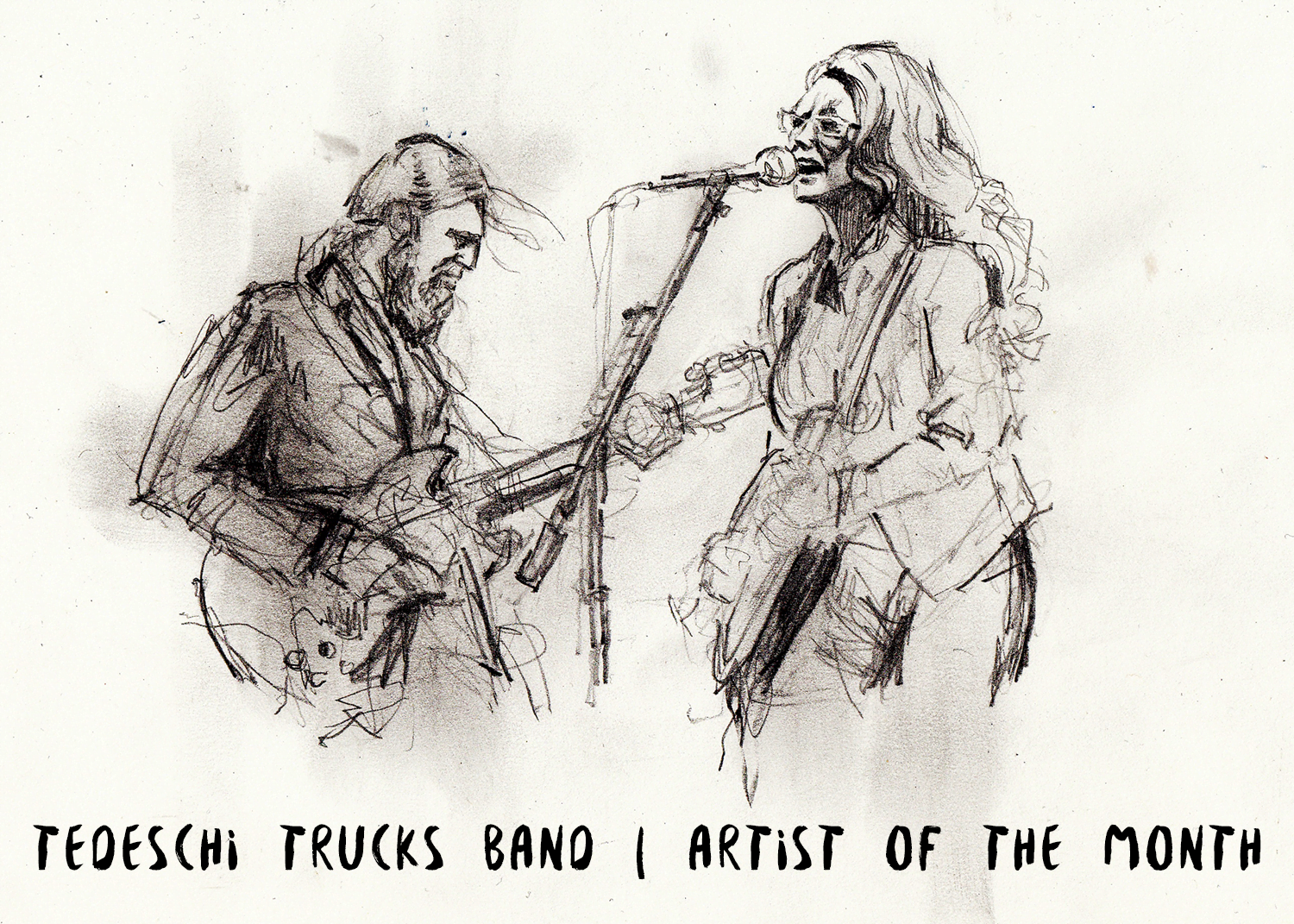

Photo credit: Shervin Laivez
Illustration: Zachary Johnson

ARTIST OF THE MONTH: Tedeschi Trucks Band

Our March AOTM is Tedeschi Trucks Band: the powerhouse ensemble that just delivered their newest album, Signs. During a tour stop in Nashville, the blues-inspired band zeroed in on the vibe in the room without concern for over-the-top stage effects or eye-catching set design. As Derek Trucks explains it, “I think our MO is always that – it’s always the music and the musicality. That comes first and everything else is in service of that.”

Next week, BGS will post back-to-back interviews on the band – as Susan Tedeschi and Derek Truck both share their perspectives on the new music, as well as the foundations that have brought them here. Although they both pay attention to politics, they had a different idea in mind with Signs. As Tedeschi explains:

“I feel like I have a lot of responsibility being in front but I don’t feel like it’s my position to be political. I feel like it’s more my place to make people feel good. So I try to help people with the stress of everyday life and all of these problems. And I try to make music that is hopeful, and try to make people feel. And if I am angry about something, or something’s going on that I think is really unjust, then I can throw it in there, in a song, or I might make a comment, like ‘Hey, help out your neighbors.’”

For now, get primed for the month ahead with a collection of some of their best work in our new Essential Tedeschi Trucks Band playlist on Spotify.


Illustration: Zachary Johnson

LISTEN: Roses and Cigarettes, “California Going Home”

Artist: Roses and Cigarettes
Hometown: Los Angeles, California
Song: “California Going Home”
Album: Echoes and Silence
Release Date: February 22, 2019

In Their Words: “‘California Going Home’ was written about a relationship that didn’t work out but the love there remains. Not everyone will stay forever and this song is about appreciating that person for who they are and where they are, even if it means your heart is broken in the process.” — Jenny Pagliaro

“This was the last song we wrote for the album. We were over at Jenny’s house, and we were talking about needing one more rockin’ song for the album. I sat on her couch and summoned Janis Joplin to help us out. The chords literally poured out from my hands. Jenny and I looked at each other and she immediately grabbed her phone, a pen, and we recorded the first draft. The song came together fairly quickly. Jenny created this beautiful scenery and imagery with her lyrics and I just love the story she tells in this song. We’ve all been there, and have felt those feelings before.

“We took a lot of inspiration from The Allman Brothers, John Mayer, and Susan Tedeschi for ‘California Going Home.’ After recording our debut album in 2015, I knew I wanted Album 2 to have a song with harmonizing guitar parts. I really had fun playing my Fender Telecaster on this track! Jenny and I both wanted a jam song and a sing-along on this album, and we are so thrilled with how this song turned out! Our producer and bassist, Michael Lyons, really dug deep to create a beautiful production on this song that truly grasps that down-home, sparkly, Americana vibe Jenny and I had envisioned when we wrote it. We were very honored to have Ryan Lipman mix this album, and he really hit it home on this track. Chris Lawrence (pedal steel,) Bobby Victor (keys,) and Vic Vanacore (drums/percussion,) completed the circle with their great energy and musical vibe in the studio to make the song a real jam! — Angela Petrilli


Photo credit: Rachel Louise Photography

WATCH: The Wood Brothers, ‘Never and Always’

Artist: The Wood Brothers
Hometown: Nashville, TN
Song: "Never and Always"
Album: Paradise
Label: Honey Jar/Thirty Tigers

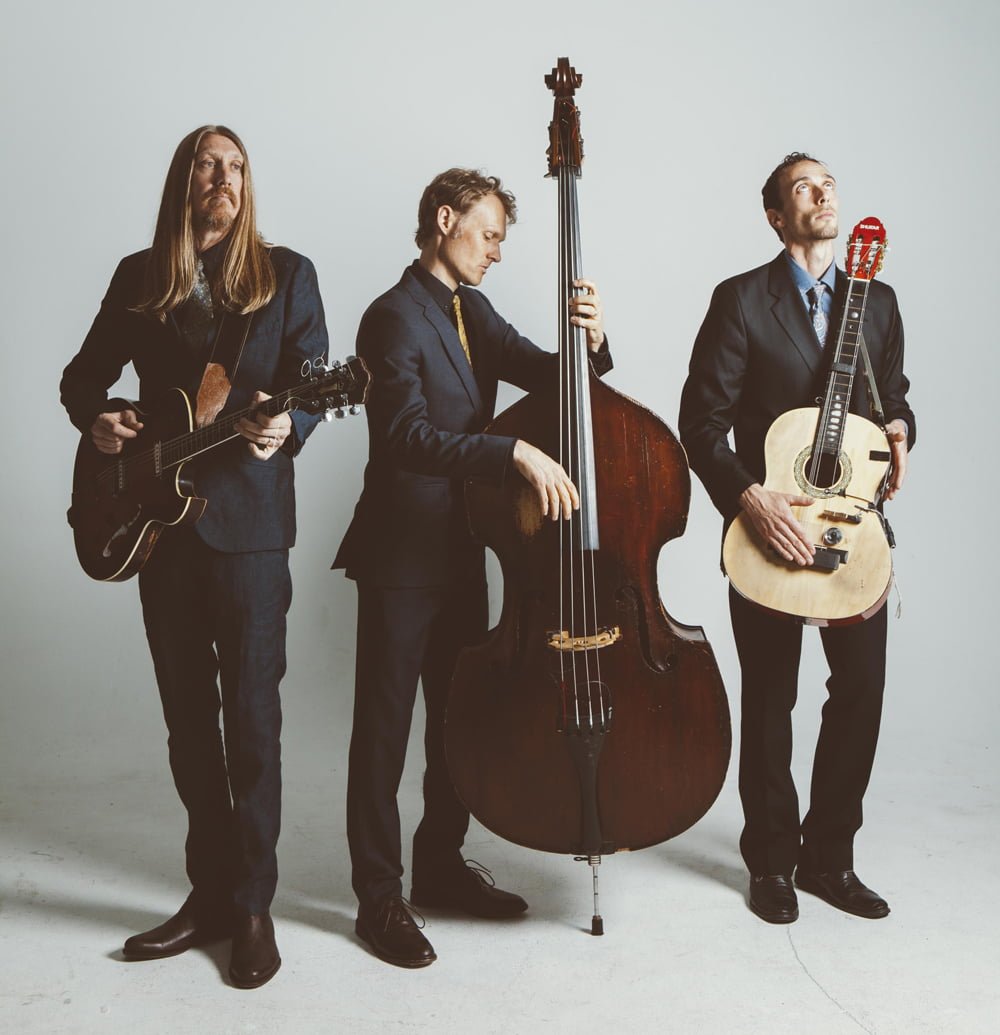
In Their Words: "'Never and Always' started out as a way to recapture our original Wood Brothers sound — upright bass and National steel guitar. We got spoiled in the studio and added Derek Trucks and Susan Tedeschi. This is our stripped-down acoustic version, shot and recorded at the Oak Room at Nelson’s Green Brier Distillery.” — Oliver Wood


Photo credit: Alysse Gafkjen

Restoration and Revival: An Interview with Wynonna Judd

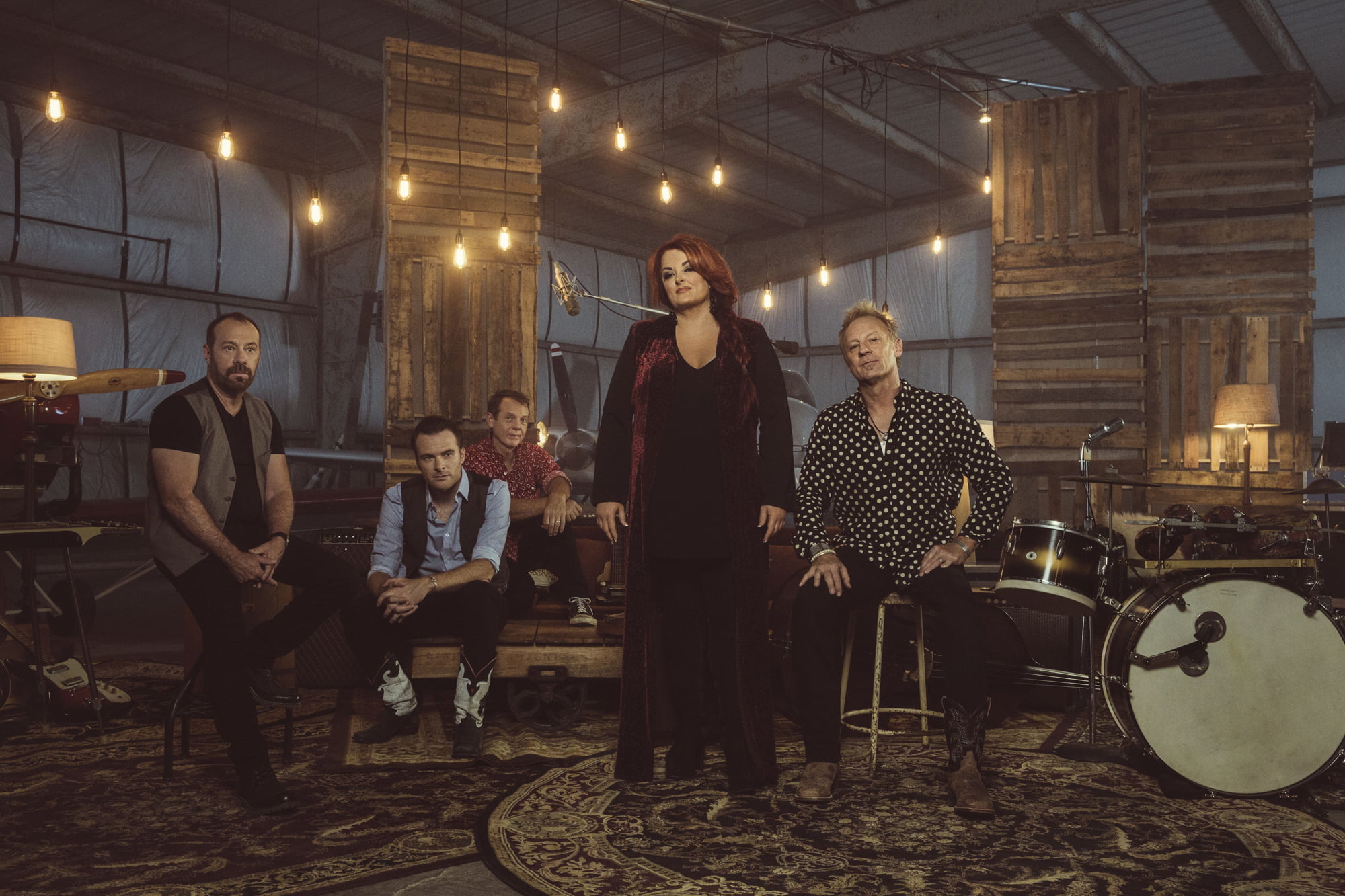
To hear (or read) the name "Wynonna Judd" instantly elicits a reaction from pretty much everyone. And, rightfully so. For the past 30+ years, the country superstar with the big voice and brash style has topped charts and made headlines with every move she's made. But, forget what you know — or think you know — about Wynonna and consider the fact that her new record, Wynonna & the Big Noise, leans on songs by Chris Stapleton, Julie Miller, and Sarah Siskind, and offers up appearances by Jason Isbell, Susan Tedeschi, and Derek Trucks. Produced by her husband and band leader, Cactus Moser, the set finds Wynonna in, perhaps, the finest form of her career and the most peaceful place of her life. 

I read a quote of yours, about you and your mom, that cracked me up. You said, “I knew the minute I was born that I was going to be the lead singer, and I knew by age 3 that I could sing. I just knew as a kid. I didn’t know exactly that she was going to follow me around.” Now that you've lost your shadow, what's the feeling? Freedom? Fear?

Wynonna Judd: One of my goals in this new year is “restoration.” I have a word every year. Restoration is taking the past and using it to propel me into the now which is, “How do I feel right now about being a part of this band?” It's exhilarating and terrifying. It's a lot of work. I'm spending more time as a musician than I ever have. Being an artist is like breathing. It's as easy to me as you writing. It's a part of me. Making this record, being on stage with my brothers … being not as much about being entertaining and funny and “Oh my gosh! She's a celebrity and a star!” It's about me getting back to my roots.

For instance, when Jason Isbell came out to the farm, we sat there and talked about everything from recovery to having children to being artists to how do we balance that. I'm really about making personal connections with people — standing in a dressing room with Bruce Springsteen and talking about what it's like to get older in this business and maintain your integrity. Going to see Susan Tedeschi and her husband, Derek Trucks, at the Ryman and talking about what it's like to be married and share the stage and share your life with a partner.

It's really an interesting time for me because, I'll be honest, I've been doing this for 35 years. Instead of looking at the word “reinvent,” the restoration part is what's really grooving me right now because I'm in a place of real change, both personally and professionally — whether it's going to the vinyl pressing where they're making our vinyl records and going, “Oh my gosh! I started out here and now here I am back 30 years later” … to using vintage instruments to make the record — 1930s drums, '40s microphones.

Cactus made a real smart move when he talked to me and said, “It's time for you to get back to your roots.” When you hear my voice on this record, it's very vulnerable, it's very raw, very real. It's a one-track take. There's no perfection — there's less of that than ever before, which is scary but exciting. It's like going bra-less. [Laughs] It feels really weird, but it's also very freeing because I can get out of the way of myself and the agenda I have and just interpret the songs, like an actor would a scene. I get to be … instead of Wynonna-isms all over the songs and having an agenda, I can just sit there and sing the song while the band plays. Dave Grohl was a huge help to me about how to be in a band, how to get out of my way, and just sing and enjoy myself. That was huge for me.

But you still have to be a band leader to a certain degree, no?

WJ: No, I don't, because Cactus is that. Cactus is the leader. I get to just show up and get away with singing. You know what's really great, sometimes? Letting go. Letting go of the idea of having to be in control. That really was a life saver.

After his accident, I became Mrs. Moser. And I finally let myself be a partner and not feel like I have to be this alpha-female and do it all myself and direct. I can just be a band member and enjoy myself and play my butt off and sing from my toenails. And I don't have to be the decision-maker. He was in the studio saying, “Okay, let's sing that with a different idea.” And I really trusted him. I let go, fell back, and let him catch me.

Cactus Moser: It's really hard, when you're an artist, to always see the spot you're standing on. To know where you need to go and to feel exactly everything is tricky. I looked at her many years ago … I was a fan from afar. I was in a group called Highway 101 and we opened for the Judds for a year. I used to go watch her sing at soundcheck and she would be playing with the melodies — playing around more than she did during the show. I was just floored by her gift and her voice and her talent.

Fast forward to when we got together to work, and I'm still looking at it like I'm a kid in a candy store. To have that amazing singer in a band is one of those rare things you get to do in life. So, when we were working together — both live and recording and writing these songs together — it was just a real dream. Sometimes it's cool to have somebody with you — I've always been in band situations, normally, and I produce a lot of stuff. I always believe in, “Let's work this out together.” She has great ideas, but I would sometimes go, “I hear it like this. Let's try it.” I think that's why there are so many great collaborations. You look at Mick [Jagger] and Keith [Richards] in the Rolling Stones or Glenn [Frey] and Don [Henley] in the Eagles or even the Police, when they were a full band … I think some of the most brilliant things come out of that pull and tug — when you try it from a different perspective. She's changed how I do things and vice versa. I think you get the best, more often than not, by that process.

You hear that on this record. You hear the balance between an edgier roots rock and a smoother contemporary country. Did that start with the songs and work out from there? Was that your process — songs first, sound second? Or did you know what you were going for, sonically, and reverse engineer it?

CM: Sonically, I wanted to make a record that sounds as interesting as it is musical. It's a little bit more of a soundtrack where the music speaks a little more. We used these very distinctive 1930s drums that I played on the whole record. The band all started to react to that instrument and it changed the feel and instrumentation that they played with. And Wy being live on the floor singing to us while we were tracking inspired, of course, everyone. Yeah, there was a sort of vision of the type of sound I wanted to go toward.

WJ: I wanted to have a revival. I don't know how old you are …

I'm old enough …

WJ: Well, you're old enough to know better, right? You know what you want. That's where I was: I know I don't want to be complacent. I don't want to make records like I did in the past where I got hooked on perfectionism, where I have to make this “vocal of the year award goes to …” [Laughs] I just wanted to enjoy myself and shake my butt and boogie. Some of these songs made me wiggle a lot. They made me do these dances while I was singing and he's filming me going, “I don't know if you see yourself doing this, but you're jiggling everywhere from head to toe.” [Laughs]

I just found myself enjoying myself so much that I kept forgetting, “Oh, I'm doing a vocal.” I was so into it, it was almost like I was on stage. I was having such a good performing moment that I enjoyed the process rather than going in and saying, “Oh, crap, I've gotta sing for four hours, get all the notes right, be perfectionism.” I didn't do that and it was so refreshing that it caught me off guard. When I would sing something and he'd go, “Oh my God, that was amazing!” I'd be like, “I have no idea what you're talking about. I was just having fun.” That's the key.

That's the magic, right there.

WJ: That's exactly what I wanted. When I walked away, I felt like I had no idea about the record and how it was going to sound. When I heard him come into the room and put on my headphones and play me Timothy B. [Schmit] singing his favorite Poco memories into this song, I just started to cry because I had no idea what was going to happen. To hear Susan sing on a song, I literally did the hallelujah dance because I couldn't believe it was happening. To get Jason to come out to the house, to sit there in our shed wearing a ball cap, doing this rap about life … one of my favorite things ever. It wasn't about the Grammys. It wasn't about, “Oh my God, this is two big artists making music history.” It was just two artists sitting there talking and having an experience together. That's my favorite.

It feels like you built a little bit of a community for yourself on this record with these folks. I know some of your earliest influences go back to bluegrass and mountain harmonies. So, do you feel like, even if that stuff isn't there musically, it's there in spirit with you these days?

WJ: Totally! And it transfers to the stage. I tell stories about everything from being 15, walking into the kitchen, and watching Stevie Ray Vaughn practice with his brother Jimmy. I've known Ricky Skaggs since I was 15 years old. He's like a relative. You're right: I did build a community with this record. I have a new appreciation for Susan and Derek. We went to see them at the Ryman and we're so connected on a deeper level than just, “Hey, I'll see you at the Grammys.”

It's a really special time of making connections that are sacred, that have nothing to do with guys sitting in a board room putting together two artists because they know it's going to be number one. These are authentic connections and that's what made it so special for me.

Which leads to … let's do a little name association. Just say the first thing you think of …

[Laughs] Oh, dear. Because I've got … [Pauses] Okay. [Laughs]

[Laughs] I'm not going to throw any zingers at you! Okay: Cactus

CM: Living waters.

WJ: The first thing that comes to mind is “mullet.” Then, the second thing is “cowboy.” When I met him, he had the biggest blond mullet and he was wearing chaps. He's from Denver. So, there you have it.

[Laughs] That's awesome. Jason Isbell.

WJ: The first thing that comes to mind is “recovery.” He's really trying, like I am, to find balance and inner peace. We're both such authentic artists. He's so sweet. I didn't have any idea how sweet he is. He's a very kind and thoughtful person.

Agreed. Chris Stapleton.

WJ: Maverick.

Tedeschi Trucks.

WJ: Badass. I mean, seriously … the best guitar player in the world and people just don't know it. They just don't. He's a badass. He gives me goosebumps when I hear him play. He's just insane.

Sarah Siskind.

CM: Emotional.

WJ: Haunting. The song takes me back to Appalachia. It's haunting. It's my roots.

Last one … Julie Miller.

CM: Honest.

WJ: I would say “authentic.”

I'd maybe add “underrated.” I wish she were more exposed.

WJ: I agree.

CM: For that little, tiny voice, she's such a super-tough badass, in terms of how she writes. She writes like Tom Petty — the most economic use of words to say the most.