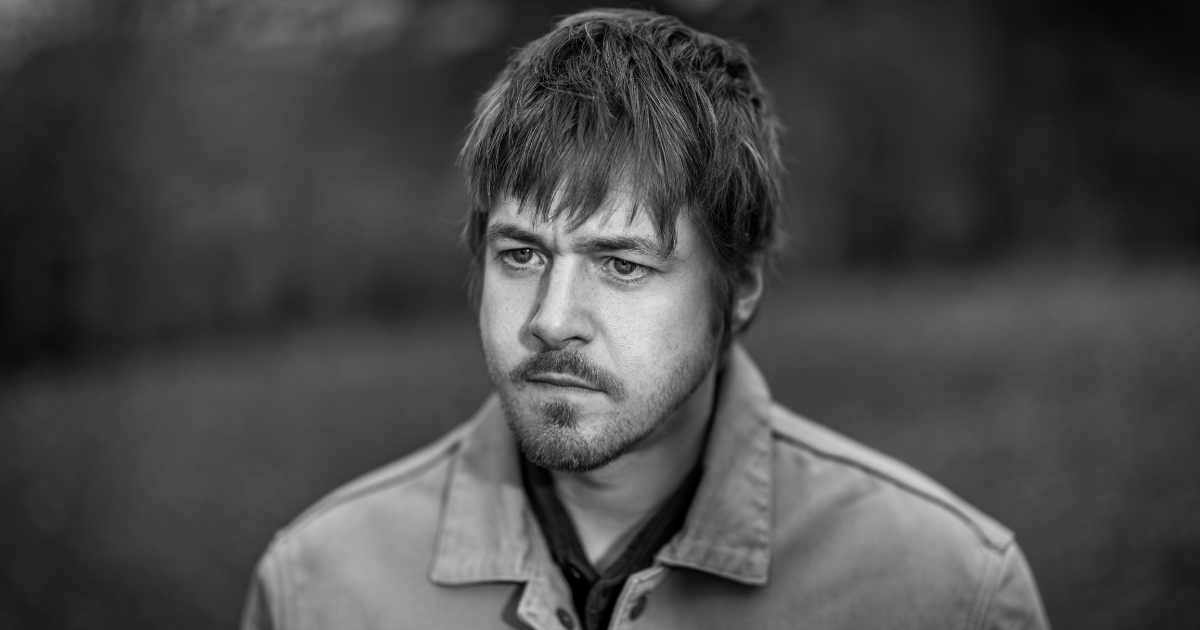
Photo Credit: Dan Winters
Photo Credit: Dan Winters
Texas has long been known for its singer-songwriters and country acts, but there’s plenty of music within the Lone Star State that navigates outside those boundaries as well. A few recent examples include Spoon, Gary Clark Jr., Khruangbin, White Denim, and Shakey Graves, the latter of which has become a cult hero of sorts in the folk and roots music space.
Born Alejandro Rose-Garcia, Graves’ career in music didn’t begin to take hold until the mid-2000s following acting roles with the Spy Kids franchise and television series Friday Night Lights, but once it did momentum hasn’t slowed since. Each step along the way the singer has reinvented himself. From the solo one-man band setup on his independent 2011 debut, Roll the Bones, to 2014’s And The War Came – which featured the indelible Esmé Patterson on songs like “Dearly Departed” and “Big Time Nashville Star” and eventually culminated in Graves winning Emerging Artist Of The Year at the 2015 Americana Honors & Awards – to the trippy, extended jams of 2023’s Deadstock anthology.
That constant transformation leaves listeners in perpetual awe. Among those caught in the cycle of captivation has been BGS executive director and co-founder Amy Reitnouer Jacobs, who first encountered Graves at Pickathon in Happy Valley, Oregon.
“I remember hearing him start his set and watching the crowd grow,” recalls Reitnouer Jacobs of that maiden experience. “There’s certain festival sets where you can feel a palpable energy and buzz, and this was one of them. It was just him, a guitar, a harmonica, and a suitcase holding a kick drum. It was a truly magical moment where you knew the person you’re watching is really gonna hit.”
In the 18 months that followed, Reitnouer Jacobs began booking Graves on several BGS-related gigs and sponsored stages at places like Bonnaroo, the Newport Folk Festival, and the LA Bluegrass Situation Festival. Around the same time, Graves was starting to pop off with his first big hit, the aforementioned “Dearly Departed,” which to this day remains his second-most streamed song ever with over 133 million listens on Spotify at the time of this story’s publication.
According to Reitnouer Jacobs, being around to witness Graves then was like a once-in-a-lifetime opportunity that is still in the process of playing out: “There’s a few key moments in anyone’s career where, if they’re lucky, they get to witness and be adjacent to somebody’s incredible talent,” she explains. “Getting to know Alejandro feels exactly like that.”
“He is always beholden to himself first and foremost,” she continues. “He’s not an artist that will crank out material just for the sake of doing so. When he comes up with something it’s going to be really considerate and developed. He’s also not afraid to try new things. I’ve seen him with a full band and solo, acoustic and plugged in. It really speaks to his multifaceted nature and how no one artist exists within a vacuum. Sometimes roots music can get a bit caught up in that, but Alejandro does a good job of having these different sides of him coexist and come through in his music.”
Speaking of trying new things, Graves does just that on his latest record, Fondness, Etc. Out May 15, the album of home recordings takes on an ambient and lo-fi approach that most closely compares to his simplified 2017 project, Shakey Graves And The Horse He Rode In On. Accompanying the minimalist methodology on these songs are the sound of bird calls and wind gusts on “On My Own” and various tropical noises on “I Once Was An Ocean” that give the compilation a very lived-in feel, something that’s not often the case for an artist who’s constantly reimagining his own work.
Per Reitnouer Jacobs, she thinks a lot of that intimacy and experimentation goes back to Graves’ roots in Austin, a Texas town known for embracing its weird side. “There’s a lot of really cool stuff happening in that part of Texas, so it doesn’t surprise me that something like ambient music is sneaking into what he does,” she observes. “My favorite artist, personally, is Kate Bush, with my top lyric of hers being ‘let the weirdness in’ on her song ‘Leave It Open.’ I go back to that a lot, because I think artists fearless enough to let the weirdness in are the ones who actually move their genres forward, which is exactly what Alejandro is doing.”
In celebration of Shakey Graves’ fifth studio record Fondness, Etc., we’ve named the singer our Artist of the Month for May 2026. Throughout the next few weeks, we’ll celebrate Graves by going back into our archives for all-things-Shakey, plus you can read our brand-new exclusive interview with Alejandro himself, watch our Sagebrush SXSW Session featuring exclusive Shakey clips, and of course, don’t miss our Essential Shakey Graves Playlist, below.
Photo Credit: Jonathan Terrell
It is deeply joyful sitting with Jonny Fritz at a restaurant he suggested (Pollos Puebla #1) in an area of Los Angeles he’s an expert on (Pasadena/Altadena border) and talking about subjects he thinks about a lot, ranging from rebirthing ceremonies to alimony to how…“different” Nashville is now. He’s keenly honest about his life, his work, and his thoughts about any question thrown his way. Nothing is out of line or off limits. Nothing is filtered by a publicist or an agenda. It is off the cuff and real and wild.
We met over grilled chicken, rice, and beans to discuss his newest work, Debbie Downers (Woodwinds), a reimagining of the original 2025 album Debbie Downers. The conversation unfolded much like the album, with unexpected turns and humor that expose raw nerves about an unfriendly music industry, the beauty of PG Tips, the subtlety of serving a song, and the goal of taking a ride on the wave of a sliced open above-ground pool.
Well, let’s talk about Woodwinds. I’m a huge woodwind fan. How’d this come about?
Jonny Fritz: Oh, yeah? Me too. I love woodwinds. I’ve always loved them. I think they’re so great.
It’s so expensive making a record. It’s just stupid, you know? For example, the last record I made, Sweet Creep, I made it pretty cheap. I think it cost about 12,000 bucks. But ATO Records had an option on it so they could pick it up. They bought Dad Country, the record before that, for 5,000 bucks. It cost me five grand to make. “We’ll pay you five grand for it.” All right, fine. And then, hidden in the contract – or at least hidden to me – they got the option on the next one. Same deal. So when I made Sweet Creep they picked up the option. So for $5,000, they got this record that cost me $12k. I was like, “Jesus, man, this business is so rough.” And I just knew it was going to be something similar with the next one.
By this one, Debbie Downers, I thought, “What do I really want to do?” I might as well just do what I want, because there’s nothing worse than having something be expensive and unsatisfactory. I just decided I really wanted to make the record over and over and over again. I have a bunch of different visions for how it should go and I wouldn’t call any of them the one.
The Woodwinds one was something I’ve always just wanted to do. So I’m pretty pleased with it. I got this amazing guy in Highland Park who does film and TV stuff. There’s not a lot of work going on right now, so he was willing to do it. And the first couple of arrangements that he came up with, I was just giddy. I couldn’t believe how cool it was.
Were there any revelations for you? When you heard them in that arrangement, was there anything that shocked you about it?
Hmm… Yeah, some of the versions with the woodwinds really lent themselves to the winds better than any other version. I wrote this song called “Have You Seen Her.” I wrote it coming off of anesthesia. I was out of my mind. I got a hip replacement at UCLA 10 years ago. You know, coming off anesthesia affects people in weird ways. I’m one of them. It really got me, I wrote this song and I felt like it was the most brilliant thing.
It was so embarrassing. I wrote everybody who I knew who was high up at Rolling Stone, and all the Newport Folk Festival team, and all their PR team. I mean, I wrote everybody. And I wrote these really incoherent emails. I haven’t actually looked at them in a long time. I looked at them right after I wrote them and I was so ashamed. But I wrote all these emails being like, “You’re gonna want to get Scarlett Johansson down here. I need to perform this for her. And you need to get Joaquin [Phoenix] here, too.”
I’m not a social climber, but there was something in me that was like, “You need to make some moves. Call out a lifeline.” I was so ashamed of it for so long, because it was one of the most embarrassing moments in my life, for sure.
All of that to say, I didn’t want to play it or record it. I had to overcome it, admit it, and start talking about it. When I heard it with the woodwinds, I was blown away.
Years ago, I worked with Chris Crofton on a comedy event at Third Man Records that involved a compilation of found video footage that was submitted. There were so many submissions of people coming out of anesthesia, and I remember Chris immediately going, “No, that isn’t funny.” It really isn’t; you aren’t in your right mind.
God bless that man. He always knows exactly what the fuck is up. He is driven by pure heart and knows exactly where his morals should be. He’s incorruptible.
Do you spend a lot of time on social media? What is your relationship to it as a creator?
Pretty passive. I like social media. I feel like I’m kind of floating above social media. By like eight feet, just kind of looking down at it. Like, “What are you guys doing? That’s insane.” Then I dive into it to interact, and then just kind of get out of it. I get a little hooked on it for sure, but I hear about the addictions and the stuff that people fall for, and just like the amount of engagement. But it’s like engagement versus quality of life. I get so much fulfillment from everything else. I like playing with it. I always have fun with it, but I try not to let it get sticky.
Well, one of my favorite social media posts in the past bit is the one with your kiddo singing “Tea Man.”
Oh, wasn’t that so sweet?
So sweet.
She’s 6.5 now. She was like 2.5 then. And I just was like, I can’t post this. It felt so…I don’t know…
Personal?
It was personal, but I didn’t have a problem with that. I definitely want to protect her, you know? But that’s not her anymore. She doesn’t even look like that. She’s like doubled since that song came out. But then I was like, “Oh, fuck yeah, I’m posting this!” There was no risk of seeing her in public and recognizing that she’s the girl from the video.
Are you a tea man? In real life?
I got a PG Tips tattoo. I really like tea. I drink enough tea to float a canoe every day.
Really? All caffeinated?
Usually. Well, when I’m on tour, yeah. I get so tired. I can’t really mess with coffee. It just makes me so jittery. But I can just drink tea all day.
Are you an equal opportunist, or is it mostly black tea?
Oh, I like it all. Really like it all, but I love the black stuff, though. I think it happened when I was on tour 10 years ago with Josh Hedley. We were in England somewhere on a train, and they came down the lane with a steaming cart and it was £1 for a cup of tea. I don’t have an addictive personality. I don’t care about alcohol or anything. But I felt like, “Oh, I’m in trouble.” Just sitting on a cold, rainy train going through England with a cup of PG Tips.
It reminded me of something I heard about Andy Warhol. Although I’m not a big fan, I don’t know much about the guy. But what I do know about him is that one thing that made me really like him. I heard that he doused his whole world in a certain scent for a season. For example, in the summer of ‘63, he would just cover everything with lavender oil. And then come winter, it would be a totally different scent. And you’d put lavender away, and it’d be bergamot. So then the sense memory of whatever happened around that time would be so strongly connected to that scent that you could be completely brought back. And I really love that.
I think there’s something to it with the tea thing, because that tour was really big for me. It was a fantastic time. It was a really, really wonderful, lovely tour, and drinking PG Tips like that, I just got into English culture too. Everywhere you go, somebody’s like, “Well, you want a cup of tea?” Like, yes, I fucking do. I decided I’m never turning down a cup of tea. And I never have since.
Tell me about writing “Hot Chicken Condos” with Jordan [Lehning] and Skylar [Wilson]. I deeply connect with that song because I also left Tennessee, and for many of the reasons you list in the song.
Yeah, that was the point. Everybody who really gets this place will really understand these things, even like Pit Bull puppies in parking lots.
And humidity.
Fucking unrelenting humidity.
Were those things you were storing? How did that song come about?
God, why I love writing with Jordan and Skyler is because they don’t bring any ego to the write. They don’t fucking care. They’re just such good vibes. I’m really pretty neurotic about writing and also I’m pretty protective of my words, too. When I get into the writing space, I’m just so sensitive about what’s being said. So if somebody says or suggests the wrong thing, I can quickly be like, “This is the wrong association.” I can be a little trigger-happy.
But with Jordan and Skylar, they’re always just like, “Just play what you got.” And they usually edit everything that I have. With that song, one of the lyrics was “Mustard in the corner of his tiny little mouth.” And Jordan said, “Why don’t you say, ‘Mustard cracking in the corner of his tiny little mouth?'” And it was perfect. Mark Twain said the difference between the right word and almost the right word was the difference between lightning and the lightning bug.
It’s so true.
I got to hang out with Guy Clark once in Nashville, and it was like one of the best moments of my Nashville career. I was going through really bad writer’s block. And I asked him, “Do you ever get stuck?” And he said, “Yeah… Do you ever write with other people?” And I told him, “I don’t like the idea of giving somebody 50% of the song just because they’re sitting in the same room.” He leaned over and he goes, “Well, you never would have fucking wrote it if they weren’t sitting there.”
I was like, “Damn, old man schooled me.” Because so much of writing, I feel like, is picking up on something else that’s happening. And who’s to say you don’t owe somebody credit just because they’re sitting there?
The other thing that Jordan suggested for [“Hot Chicken Condos”], which was so right on, was that he asked me how high I could go on the Tennessee part. I told him I could go falsetto, and he told me to try it. I hit it and he said, “That’s it.” He took an idea of a song and made it a song. I just so appreciate those guys.
I just feel it is like a pedal steel player who plays about eight notes per song. That’s the best player in town, ‘cause all the other players are nonstop. Same with fiddle. Take Josh Hedley. The guy just stands there most of the time, then he pulls out something incredible, and he sets it back down. He doesn’t overplay. If you don’t overwrite and you don’t overplay, those are heavy attributes.
Those are both things to do in service of the song, not in service of self.
Absolutely. You know who I saw last night was Erin Rae. Kevin Morby and I were standing next to each other, just like, ”Oh my god, she’s so good.” One of the most amazing things about her is that she underplays the guitar. She’s playing the whole time, but if you really focus on how much she is actually playing, it is barely. It’s just enough to fill in where she’s not singing and she works the mic so well.
All those things are so important, but nobody teaches them, you know? You have to kind of know it. It’s innate, right?
Or you got to learn it trial by fire. And you have to be playing with players who know what they are doing to learn that.
Yeah. That’s right. Sometimes people are technically good, but they just don’t stop noodling, and it sucks.
You took a long hiatus from music, huh?
I did. I took nine years between records. I didn’t mean to. And I didn’t actually think that I was doing it. I was playing shows here and there. I blame it on real estate. I got into real estate because my heart got broken from music so many times from wanting to do better. Wanting to succeed more. Really, really caring what people said and thought and comparing myself. All the things you really shouldn’t do ever in any aspect of life. I mean, if you did that in a relationship, then your therapist would be like, “That’s your problem. Stop. Don’t do that.”
I couldn’t get out of it. I just felt so bad about how it was going. And I know what I’m doing is not for everybody, and it’s not gonna take off. But I love what I do. I’m not putting myself down, but I just knew my ambition was a lot faster than everybody’s interests. It was just wearing on me and I needed to do something that’s purely about money and doesn’t have anything to do with creativity, because I’m just getting my feelings hurt. And I got polyps in my vocal cords. I was touring too much. It just wasn’t going well.
So I thought, “I’m just going to pivot. I’ll still do shows and if somebody asks me to do something, I’ll do it. I love music.” I stopped prioritizing writing. I stopped prioritizing recording, and then the pandemic happened, and I had a kid, and real estate took off, and I looked up, and it was 9 years. It really was like, “Oh, crap, how did that happen?” It shocked me.
What’s your writing process like typically? Do you write everywhere?
I write everywhere. I use my voice memos a lot. I really love just making up new country songs and fake country songs – like, really bad ones. I find that if I can get them out, I can expand upon them or delete them and move on.
I was writing with Skylar [Wilson] one time and we were trying to write a song called “Remember the Alimony?” We wrote for hours and hours and it was a stupid song and it didn’t go anywhere. It went, “I’m just a poor man. All I eat is beans and write checks to my ex, one and only. I rolled the dice, but I lost my wife. But I remember the alimony.” So stupid. God. But we were writing all day and just hanging out, and neither of us thought to finish it. It just didn’t work. But then I got home and I had like 6 other song ideas that went on Sweet Creep. It’s that muscle thing that everybody talks about.
I’m also a pleasure seeker to the nth degree. If things aren’t fun, I just drop them so quick. I’m really bad about that. So I just make sure that it’s really fun and get the idea out quickly. I try to stay hovering above it, just stay light. Because as soon as I dig into it, that’s when I’m like, “Oh, my God, right. I don’t know how to do this.” Just keep it fun and it will grow. But I like to write all the time, every day.
Do you wake up and do it?
It is in the shower, on the way to school, washing dishes. You know, when you have a great idea and no way to write it down.
Soapy hands! Sometimes it happens when there’s an absence of anything else and those ideas pop up.
I have to really protect myself when I’m diving in. I wash all the dishes, do all the laundry, sweep up a bit, and make sure no one is going to ask me for anything. I’m really self-conscious about that. If nobody is home, I’m going to the basement and putting on Ken Burns’ Civil War, and I turn the radio on at low levels where it is just kind of humming. I drink a tremendous amount of caffeine. That’s my favorite.
But it is intense. I can get really emotionally rocky after diving in pretty deep.
I was thinking about Roger Miller when you were talking about the “Alimony” song. I’m drawn to that kind of writing because you can get really dark while staying very light.
People think that the meat is deep, but the nerves are on the surface. There’s meat down there, but it’s dead. I feel like the most cutting and incredible songs kind of sound like an email to an old friend. My favorite Lucinda Williams songs all sound like they were written to a buddy.
Or she’s talking to somebody over tea.
So true. And John Prine, too. Everyone’s like, “How did they do it?” They just did it. They’re just talking.
Will you play any live shows with the woodwinds?
Yes, actually, April 14, we’re doing a free show at Zebulon. It’s going to be good. I have this giant golf ball, it’s like a concession stand, and I’m bringing that to the show. The whole point of it is to give away free tea. It’s my tea ball. The tea is free, just buy a house from me!
What will the live configuration look like? How many players will you have?
Four, but they play multiple winds. It’s the players on the record. They’re such pros. They’re all symphony kids.
There’s something about stripping it down to just woodwinds; it’s so cinematic. It takes you directly to the meat and it makes you lighter when it is time, as music does for film. It helps direct your emotional experience.
I like that. I’ve always loved demos of songs. Sometimes I just want to hear someone play the songs, not the record. Or just hear someone sing it. As close to the song as I can get, I’m most happy. I love a cappella stuff. Sometimes the most powerful way to arrange a song is to remove everything.
With winds, too, it’s nice because that’s pretty much it. There’s the vocal and then there’s some wind behind it. I love that.
At the top of my notes that I took while listening to the record, I have the words “jello rebirth” scribbled down regarding the song “Polished Turd.” Can you tell me more about that concept?
For this record, it was a bit of a cynical and fatalistic career thought, but I wanted to make a record of real estate songs. The whole idea behind it was that people would hear it and would say, “This sucks.” And my reply can be, “Yes. That’s what happens when you give up on your dreams.” Music really suffers when you just write about what you’re doing. It’s like this martyrdom thing.
You know the three D’s in real estate are like death, diapers, and divorce – all the things that make people sell their homes. So I wrote one that went, “Death, diapers, and divorce. And the lottery, of course.”
During the pandemic, I had this fantasy of buying someone an above-ground pool. Have you heard of rebirthing ceremonies?
No.
Oh, rebirthing ceremonies are a thing. A fucking thing. People simulate a mother’s vagina in like a mega fucked up Christian ceremony. They make you relive your birth so you can be reborn and let go of all your childhood traumas. They have a gelatinous vagina and people push themselves through it. So anyway, I got that in my mind and thought, “What the hell is this world?” But I could see that for real estate, like a used car salesman going, “We are doing rebirthing ceremonies, come on down!”
And I have always wanted to slide through the tsunami of an above-ground pool that gets sliced open.
Yeah, that does look fun.
Right, who hasn’t wanted to do that? But then I want to turn it into jello. And then I thought maybe I should do that for my clients or have a commercial about it. I could cut a slice in the pool with a katana sword, then they’d ride in slow motion through the incision of the above-ground pool, I could hand them the keys, and they’d be reborn into home ownership. Follow me?
Yep.
That is a song very near and dear to me, but it is a hard one to explain. What was your experience with it?
Well my first thought was that wherever it was coming from and whatever it meant, you have thought a lot about it.
Fair enough, that’s true.
Photo Credit: Bobbi Rich
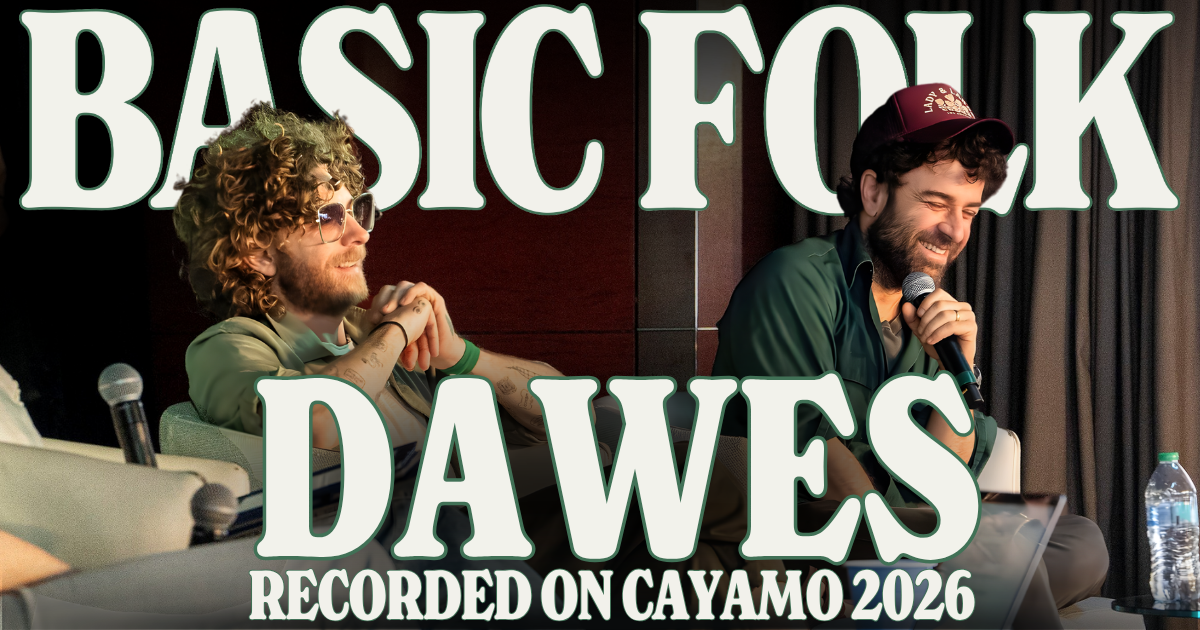
We are so excited to kick off our Interviews at Sea series with DAWES! We had the chance to talk to brothers Taylor and Griffin Goldsmith aboard Cayamo: A Journey Through Song in front of a packed audience during the music cruise’s 18th voyage in March 2026. The guys have been performing as Dawes since 2009, but the band has been a duo since their 2024 album, Oh Brother.
The Goldsmiths have been singing and playing together their whole lives inspired by their musician father, Lenny Goldsmith, who toured as the lead singer of Tower of Power in the 1980s. Taylor was never told it was hard to play guitar or sing, so he just did it. He always knew he wanted to be a professional musician. We talk about the ways his musical career turned out as not quite what he had expected. We also touch on how their singing has evolved over the course of their lives together.
Both Taylor and Griff are fathers, so of course we asked about the freedom that comes with priorities changing in their lives and careers – as well as what toys they may have regretted ever letting their kids have.
LISTEN: APPLE • SPOTIFY • AMAZON • MP3
One thing following Dawes around for the past year is the aftermath of the January 2025 Eaton Fire in Los Angeles. Both brothers and their parents suffered immense loss due to the flames sweeping through Altadena, California, destroying thousands of homes and causing over 30 deaths. Griffin’s son was born two weeks after the fire, a month early. Dawes became the musical face of the disaster with an emotional performance on Jimmy Kimmel Live! and opening the GRAMMYs with Randy Newman’s “I Love LA” with a veritable supergroup: Sheryl Crow, Brad Paisley, Brittany Howard, St. Vincent, and John Legend. The brothers get into what the experience taught them about healing and reaching a place where this tragedy does not define them. We hear a bit about Taylor’s love of collecting first editions and his fear of the comment section and we wrap up with a fun “Which One?” lightning round. Thanks to Dawes!
Photo Credit: Joel W. Parks
Lots of people are taking a shine to Boy Golden lately. Radio stations in Canada sent his populist pop single, “Suffer,” to the top of the modern rock chart. He produced William Prince’s 2025 album, Further from the Country, which recently received a Juno nomination in the Contemporary Roots Album category. And he’s among the new additions to the esteemed Telluride Bluegrass Festival lineup in June.
Offstage, Boy Golden is Winnipeg-based musician Liam Duncan. (His mother’s maiden name is Goulden, so he conjured the stage name Boy Golden.) In addition to jumping across genres, he’s also crossing the Canadian/American border this spring, with dozens of U.S. tour dates to promote his new album, The Best of Our Possible Lives. Duncan recorded the project in Los Angeles with fellow Winnipeg guitarist Austin Parachoniak, producer Robbie Lackritz, and cream of the crop LA studio players.
Duncan called in to Good Country to talk about making the new record, though the conversation also gravitated toward his abiding love for bluegrass music.
“Suffer” has been a big hit for you in Canada. What do you remember about trying to get “Suffer” to sound the way you wanted it to sound? Was it hard to come up with that song?
Boy Golden: No, that was a quick one. I sat down and wrote it all in one chunk. I remember it taking about an hour, maybe. But then I did make several demos of it, and throughout that process, I did edit it a fair bit and experimented with different lyrics and arrangements. By the time I got to the studio, I was really confident in the foundation, the bare bones of it. I could trust the musicians there, and they nailed it.
On that song, Pino Palladino plays the bass, which is really cool because he’s a legend, and then Abe Rounds is on the drum kit and he’s a really great drummer and musician. We had a few drummers we were thinking about asking, but I listened to Abe’s solo album – which is called The Freedom to Make Mistakes – and his percussive sensibilities on percussion instruments, beyond just the drum kit, were so spot on. It made it an easy decision, because I really wanted a lot of percussion on this album.
Why is that?
A lot of records that I love have a lot of percussion, first off. I was listening to a lot of Ry Cooder. I was listening to a lot of Paul Simon. The percussion on those records is fantastic. But also I was thinking about the first record I made as Boy Golden and I really went overboard with the percussion on that album. I hadn’t listened to it in years, I was in a store in Portland, and the guy running the store put on my song while I was in there. I was like, “Oh gosh, this is really great!” [Laughs]
I went back and listened to the record and I was like, “I should do that again,” because the records that I made between that first one and this one were way more stripped back. I made both of them on different types of 8-track tape machines so there’s just not as much room to go crazy with it. And I knew I was gonna have the freedom to do anything on this record.
The album before this one [For Eden] had a lot of banjo. Are you still grabbing the banjo from time to time?
Oh, yeah. I made a demo yesterday that has a bunch of banjo on it. And I spent the Christmas holidays just shedding some old-time, which is a really fun thing to do and does not bother my family much!
When did you pick up the banjo originally?
When did I pick up the banjo… 2020? 2019? Somewhere in there. It wasn’t, like, always a thing, but I’ve always loved bluegrass, and I’ve always listened to a fair bit of bluegrass, but I was just in a big phase. And I think part of it was, I was like, “I am never going to be a good enough guitar player to really play bluegrass, so maybe I should try a different instrument.”
You included “The Year Clayton Delaney Died” on that first record. Is Tom T. Hall somebody that you gravitated toward?
Yeah, particularly his bluegrass record, The Magnificent Music Machine. It’s such a good album! Something I love about that album is, a lot of bluegrass is pretty dry, and that record is not. It just sounds like a bunch of people playing in a big room, like maybe a church or something. I don’t know how it was recorded, but I love the energy on that record.
What are some of your other favorite bluegrass records?
My favorite bluegrass records are the Bluegrass Album Band’s Volumes I through III. [Laughs] They’re my favorite. I love a lot of what’s going on in the old-time scene right now, like Nora Brown and Stephanie Coleman. And I love playing music acoustically with friends. I love sharing songs that way. I grew up going to the Winnipeg Folk Festival, and that was where I was first exposed to bluegrass, and it has been a lifelong love. And I feel like it does make its way into my music, even though I write kind of pop songs or something. I like to produce in all sorts of different ways, but on each song on this album, I tried to have at least one element that felt distinctly rooted in roots, whether that was a guitar part or a banjo part or a pedal steel or whatever. I just tried to always have some sort of grounding in the roots.
Reading up on you, I found that you were a Gillian Welch fan.
Yeah, I saw Gillian and Dave for the first time this [past] year at Winnipeg Folk Fest. It was very emotional for me. I cried a lot because I had a friend pass away right before we made this record. We had made a record together, me and this friend, and one of the songs was called “I Dream an Ocean,” which was inspired by “I Dream a Highway.” We would just bond over those records so much. … I could cry right now thinking about listening to Gillian and Dave when he was here. It was super affecting and really gorgeous.
I’ve enjoyed the videos that you put out so far and I think visuals must be really important to you. Can you talk about the concept of the video for “Cowboy Dreams”?
Yeah. I had a couple pretty specific visual references. One of them was the Brazilian tune “Águas De Março,” which has a great video you can find of Elis Regina and Antônio Jovian duetting that song together on an old stereo capsule mic. You can put [that mic] off-axis and then you can both sing into it. Anyways, it’s just a really beautiful video, and I love watching it because they have such chemistry. Me and my friend Cat [Clyde] have a great creative chemistry as well. We wrote that song together and made the demo together. So, I thought we could basically steal that concept and make it a little more cinematic by putting a 360-degree dolly camera around it. I love that shot.
The other one was a killer Sade video that’s all in black and white, and she’s galloping on a horse bareback, which is beyond my skill level, and it’s just so cool. Cat’s a really good rider. I was not a great rider. I’m still not a great rider, but I took a bunch of riding lessons leading up to that video shoot and got myself to the point where I could gallop comfortably. The ranch where we shot the horse stuff is run by some friends of mine, and they gave me, like, a Cadillac of a horse, so it was super easy.
You’re riding a horse in that video and you’re in Lake Winnipeg on your album cover. I’m assuming you’re pretty outdoorsy. Do you like the great outdoors?
I do, yeah. Yes sir. There are references to the natural world in my writing a fair bit.
Say you’ve got a free afternoon, what would you do?
Well, right now in the winter, I go cross country skiing. I go a couple times a week, usually. And I love cross country skiing, because it’s very meditative once you get into the flow and if the conditions are good – kick, glide, kick, glide. … And you can get into the woods with it, which is what I like about it. I mean, you can’t downhill ski where I live, because it’s just flat, but on cross country, you don’t need a lift pass. You don’t have to pay any money, usually. Maybe a trail fee of like $5 but once you get going, you can get onto this trail and you’re in the woods in the middle of winter. It’s a pretty special experience, not something everyone gets to enjoy, or even maybe realizes is as wonderful as it is. You know, to be out in the woods in the middle of winter, it’s sweet. And in the summer, I like to hike. I like to backpack.
That reminds me of the song “Blue Hills” from one of your past records. That one seems more of a country-leaning song to me. What inspired you to write that song?
I was thinking about being in high school actually. The town I grew up in is called Brandon and Brandon famously has hills [laughs] in Manitoba and they’re called the Blue Hills of Brandon, ostensibly because from a distance, they kind of look blue, I guess. And I was under the impression when I wrote that song that I had a great aunt or some ancestor who had written an old song called “The Blue Hills of Brandon.” I found out later from my dad that I must have made that up, because I don’t! That person who wrote that song is not my ancestor.
But either way, at the time, I thought she was, so I was like, “I’m gonna write my own version,” which I thought would be really special. I was thinking about high school, I was thinking about my late grandma and grandpa. Thinking about how those really early memories of love are so tangible, no matter how old you get. That’s why I say, “It’s the only thing I know to be true.” It’s like, that early love just was true.
When did the spark start for you as a songwriter?
I always wanted to write songs, but I was really blocked until I was about 21 or 22. And then I had a relationship end. It’s a common story, and I think I was so heartbroken that I didn’t really care if I wrote anything bad. And then it was like a spiritual revelation for me.
Had you been on stage a lot before that moment?
Yeah, I toured with my high school band all over. We played over 600 shows together. I’ve been in some sort of band with friends since I was like 14, so it’s been a lifelong thing. But I kind of thought I would just be a producer. To be honest, I never really thought I’d end up doing this.
When did you turn the corner? When did you decide, “All right, let’s make it happen”?
I guess when I had enough songs. And then I made a record that came out under my own name, which you can’t really find anymore. And then I came up with the Boy Golden character and idea and had a bunch of songs that I felt like were in the Boy Golden world. And ever since it’s been an obsession.
Photo Credit: Best of Our Possible Lives album cover
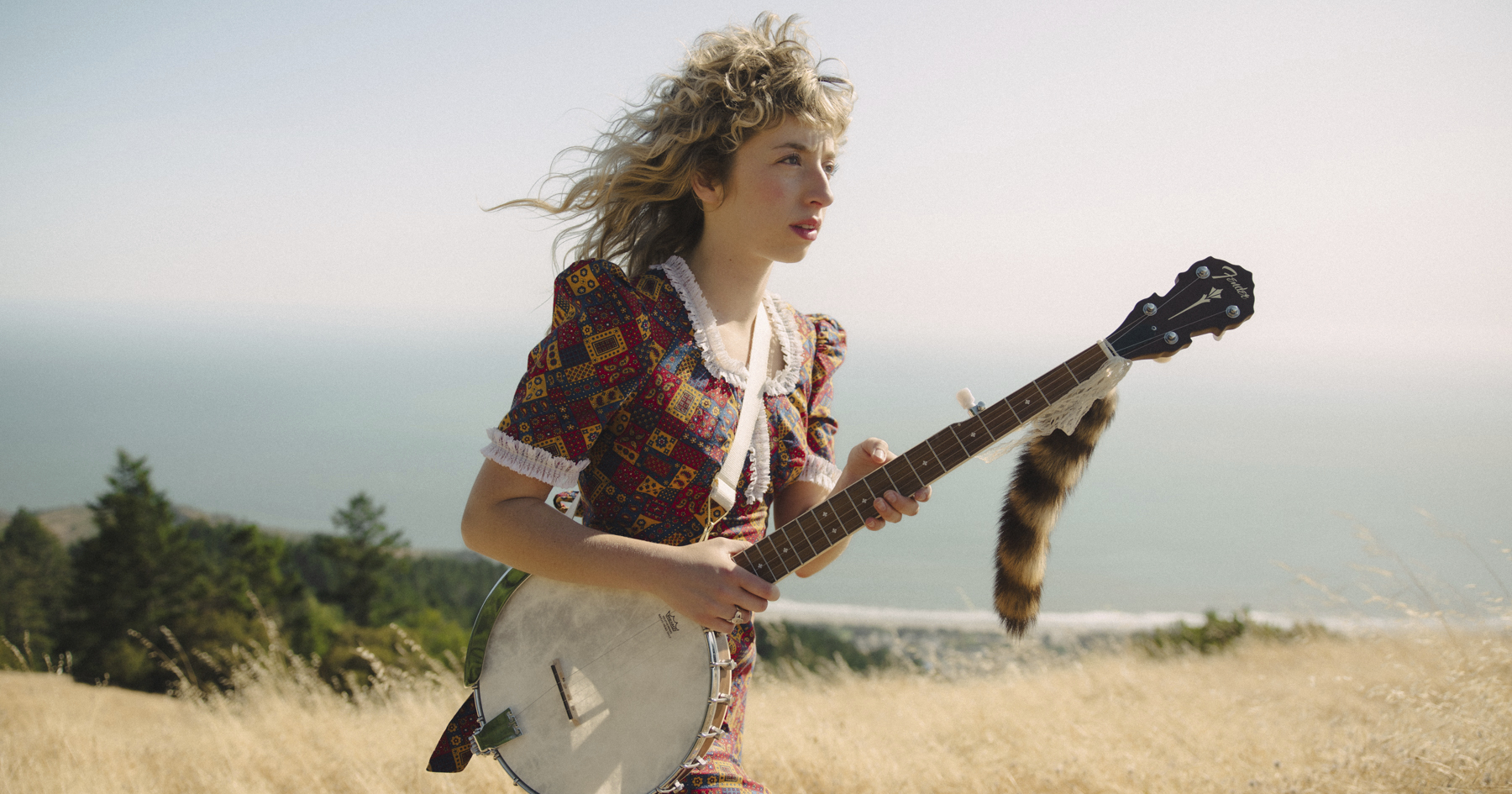
There are plenty of country subgenres out there, but quickly rising up-and-comer Meels has carved out a unique new niche. The California-born singer-songwriter calls her sound “critter country,” a fitting term for her playful but grounded brand of country-leaning roots music, which takes cues from folk of the ‘60s and ‘70s, traditional bluegrass, and classic country a la Loretta Lynn or Willie Nelson.
On her recently released new project, Across the Raccoon Strait, Meels takes listeners on a colorful, far-reaching tour of critter country and in the process announces herself as a fresh, genuinely exciting new voice in the broader roots music ecosystem.
Folks are taking notice – Meels is one of the first handful of artists signed to the newly rebirthed Lost Highway Records, with a legacy of artists like Lucinda Williams, Lyle Lovett, and Johnny Cash, as well as another left-of-center singer-songwriter, Kacey Musgraves, who was announced as the first official signee when the label relaunched last year. Meels has shared stages with artists like Molly Tuttle and Old Crow Medicine Show, and will appear with Margo Price, Carter Faith, and Nitty Gritty Dirt Band this spring.
Below, BGS catches up with Meels about songwriting, “critter country” and signing to Lost Highway.
In the lead-up to releasing Across the Raccoon Strait you shared that this batch of music feels truest, holistically, to who you are as an artist. Can you elaborate on that? What do you think enabled you to express yourself so fully?
Meels: As a writer and a producer and a songwriter and a singer, I really trust my gut and just follow the wave. With these songs, it was just me doing that. A few summers ago, before I made the project, I dove deep into the country classics – like Loretta Lynn and Marty Robbins and Dolly Parton. I got super inspired, the floodgates opened, and I just started writing like crazy. I grew up on a lot of ‘60s and ‘70s folk and my uncle is actually a bluegrass musician. He gigged around town where he lives in upstate New York. So I was already introduced to that world, but I took a deep dive and felt really inspired. The project just kind of poured out of me.
Would it be fair to say you found some unexpected connection points or overlap in those genres – the bluegrass and folk you grew up with, then the classic country you dove into?
Oh, totally. I also was trying out my own take on all of these genres and, again, trusting my gut with production and with the songwriting, to find a space within the genres that felt right for me as an artist.
You describe your music as “critter country,” which I just love. And that seems to encompass more than just your sound, as you’ve developed this really strong visual aesthetic in your videos and artwork, too. How did the concept “critter country” first come to you?
That came naturally, too. I grew up surrounded by a ton of critters in the woods in Northern California and found myself using animals as metaphors for my life. I went to NYU for music, and I took a branding class. I remember all of my peers were coming up with all these cool names for their genre. The teacher was like, “Oh, come up with a name specific to your genre and who you are as an artist.” I was still figuring out who I was as an artist in college and when I was looking through my lyrics and finding all of these “critter” similarities, I was like, “You know what? Critter country, that has such a nice ring to it.”
Take me back to the early days of making Across the Raccoon Strait. Was there a moment or idea that kicked off the creative process for you?
I think it was probably “Out West.” That track, in itself, encompasses the whole idea of the EP. I wrote it in New York when I was still living there and I’d just decided that I was moving back to California, back to my roots. I was just so excited about the idea of moving back out to the West Coast that the song came ripping out of me in my New York apartment. So that was a catalyst for me. I wrote most of these songs – that are about California and about home, actually – in New York when I was in a state of longing for home.
Did having that physical distance from your California home, and maybe the benefit of hindsight, help you write those songs?
I think so. My whole life, I have felt the most creative when I’m in California. New York is very overstimulating and there’s a lot going on all the time. I feel like, when I was living there, I was very much just absorbing everything that I could, but I wasn’t really writing so much until I was like, “Yeah, I’m gonna move back.” Then all of the sudden, I just started writing like crazy.
Something that stands out in your songwriting is how freely you use humor in your lyrics. You tackle some tough subjects, but never shy away from playfulness and to me it makes the stories feel more realistic, because in real life our experiences are often mixed bags. Are you consciously trying to inject some lightheartedness into your writing or does it just happen that way for you?
I don’t know. I do find myself making little jokes in my songs all the time. For example, in “The Wizard” I’m writing about a heavier topic: my struggles with OCD for my whole life. But I’m writing about it in a way that I’m not trying to hide anything. I’m just trying to put it in a way that’s maybe a little more digestible, and a little silly and a little funny, to help myself work through it a little more. And maybe to make it more digestible for my audience, too. Maybe I use humor as a way to cope.
“The Wizard” really does nail that balance of sharing something difficult and vulnerable while giving a little wink and nod to the listener.
I love a wink and a nod.
Speaking of that song, when you do get into vulnerable territory in your writing, do you ever feel fear or hesitation? And if you do, how do you engage with those voices?
To be honest, I feel like when I’m songwriting I’m at my most fearless. Since I was young, it’s been my way to put it all out on the table and not be afraid. I think me writing in these little critter metaphors, or using humor – maybe that’s my fear talking, I don’t know – but when I’m writing I just want to lay it all out on the table. It’s my one true release, so I try to do it without fear.
It sounds like you had a fantastic group of collaborators working with you in the studio. What was your time together like?
It was so wonderful. We recorded at a studio in Oakland called Tiny Telephone [owned by John Vanderslice]. They actually had old telephones that worked all over the studio. And they had everything you could want and more to play with and to get creative with. The space itself was incredible. We had an incredible engineer named Danielle, and she was also so important in the creative process, you know, running the vocal through this weird flanger and making moves that were so creative and so unique and so cool.
I also co-produced it with Peter [Groenwald] and Mark [Campbell], who made my first record with me, so that felt really comfortable and really safe. I knew nothing was off the table. I could bring up any idea, no matter how stupid I thought it was, and we would try it. Sometimes it worked, sometimes it didn’t. But we had such a good, natural flow in the studio. I brought a lot of friends, too, to play in the band, which was just really great.
You can hear the looseness and camaraderie in the music, in a way that I’d assume can’t be replicated without having close relationships with the players.
I’d always wanted to track a whole record live to tape. And we did that with Across the Raccoon Strait. We didn’t use any click [tracks]. It was just like, “Let’s get this next one tight, guys, let’s go.” We were all having a lot of fun with it.
When I’m in the studio, making music is such a collaborative thing. Even if it’s my song, every musician that I bring in is going to bring something unique. I really love to let them loose and let them rip. We can pull back where we want, but everybody in there plays an instrumental – no pun intended – role in making the music great.
This is also the first project you’ve done as one of the initial signees to the newly relaunched Lost Highway Records. How did you get hooked up with them and what does it mean to you to work with such an historic and impactful label?
This record has opened a lot of doors for me. I made it a little over a year ago and I was like, “I’m gonna quit my day job.” I was living with my grandma in Pasadena. She’s 86 and she’s so cool. “Marsha June” was actually written about her. So, I was basically like, “I’m just gonna give this thing a go.”
I sent this record around to literally anybody that would listen to it. I would send it to venues, because I’d just moved to LA. I was like, “Hey, I haven’t played a lot of LA gigs. Here’s my new record. You want to book me?” I was just kind of fearless about that, too. Some artists are so precious with the new stuff and don’t want to send it around. But I was sending these songs around before they were even mastered.
Eventually, I started working with a manager, I started working with an agent, and then I got a lawyer and did the whole thing. I talked to a lot of great labels, but when I met with Lost Highway I knew that it was the right direction. I’m so, so happy that I’m working with them. It really does feel like a family. It’s such a close-knit team and everybody really cares. … So many of my favorite artists have put music out through Lost Highway. Its legacy just runs so deep. I’m the hugest Johnny Cash fan in the world – and a Willie Nelson fan, and Lucinda Williams. It’s kind of absurd to me that my name could be looped in with all of those other names.
Photo Credit: Jim Hughes
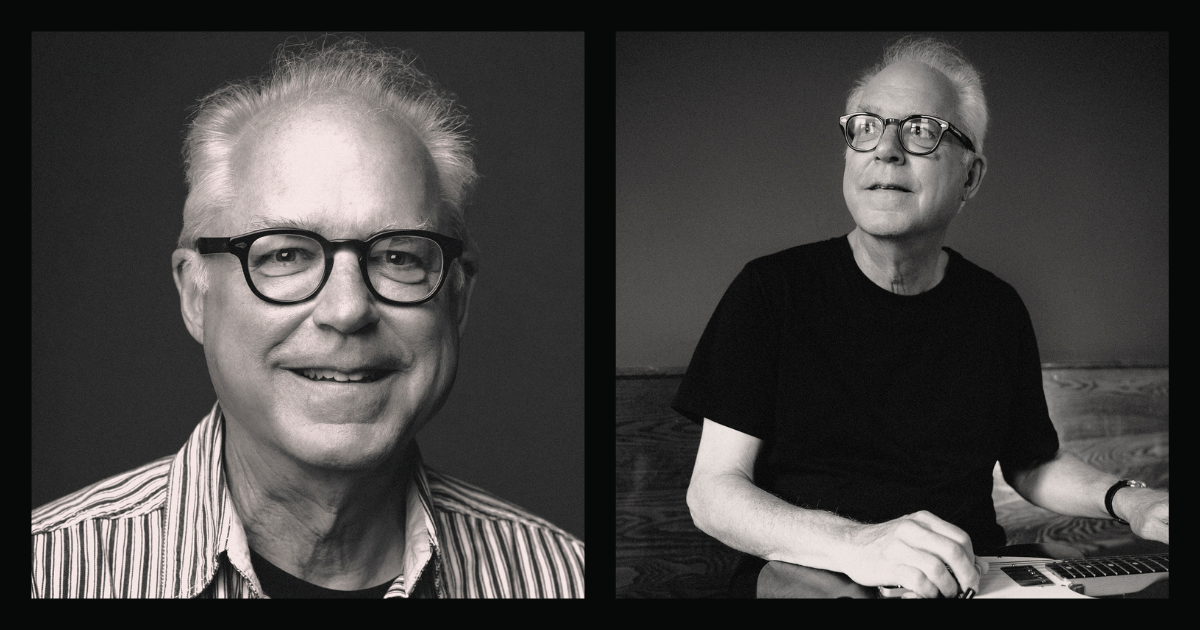
The first time Bill Frisell played guitar in front of an audience was typical for the time. It was the summer of 1965 and he was 14. He’d saved up money from a paper route in his Denver-area neighborhood so he could buy his first electric.
“Oh man, I can still just…” He pauses, lost in nostalgic reverie, on a Zoom chat from his now-home in Brooklyn.
“I opened the case and I can just smell it,” he says. “It’s amazing.”
His face bears a beatific smile, his voice a genial, gentle tone – things that he’s known for nearly as much as his astonishing musical talents.
“I got a Fender Mustang and a Fender Deluxe amp,” he continues. “And then my other friend, he got an electric guitar and this other guy across the street played drums. We learned like three songs. And then within a couple of weeks we were playing for a party in somebody’s basement.”
He’s not sure what they played – “probably ‘Louie Louie’ and I don’t know what else.” But the feeling?
“I guess in a way, that’s kind of what I kept on doing,” he says. “Get with my friends, learn a couple of songs and then go play for people. And that’s all I’ve done ever since.”
It’s exactly what he did on a recent Wednesday at the new Blue Note jazz club in Hollywood at the start of a several-week “75th Birthday Celebration” tour, that milestone coming on March 18. The friends joining this night were bassist Luke Bergman and drummer Tim Angulo.
The set was more than three songs, of course, played, as is his frequent style, in a continuous, hour-long stream, moving through originals, jazz standards, and movie score themes, as well as an ethereal “Moon River,” a tremolo-inflected “Shenandoah” and, closing, Burt Bacharach’s ever-timely “What the World Needs Now Is Love.” Wrapping it up was a somber yet hopeful encore of “We Shall Overcome.” Throughout the show, he and his trio-mates play with remarkably fluid connections. The approach could be delicate or heavy, buoyant or somber – or somehow all at once.
And with each note, even amid immeasurable harmonic complexities, melodic sophistication, and the nimble skills he’s gained through the decades, there was that kid from 1965, his beaming smile and twinkling eyes revealing his utter, still-fresh delight.
Frisell approached every measure as fresh territory, ripe for discovery, for exploration, curious where an old melody might reveal something new, reveling in its beauty or finding richness in dissonance he adds. Sometimes he’d play around with a short, simple phrase for a bit, like a new toy. Occasionally he’d fiddle with effects to enhance his pointillistic Telecaster touch (he moved on from the Mustang years ago). He throws in a cluster of sonic fireflies here, some “backwards” sounds there. He even giggled a little once when he hit a bad note.
“It’s weird,” he says in conversation a few days before the concert. “I still feel like I’m just beginning. And I’m not kidding. I mean, I know I’ve been playing for a while, but it’s still that feeling [that] never goes away. I’d be fooling myself if I thought … “
He paused again, looking for the right words.
“You just can’t feel as it you finished anything.”
This all comes through profoundly on his new album, In My Dreams, his 45th (plus many dozens of collaborations, group, film and TV scores and sideman projects), released on February 27. It also features a trio (longtime collaborators Thomas Morgan on bass and Rudy Royston on drums joining him) plus a string trio (violinist Jenny Scheinman, violist Eyvind Kang and cellist Hank Roberts), as well.
The title references an actual dream he had years ago in which a group of mysterious, cloaked figures allowed him to experience things beyond our normal perception. First they showed him colors – intense and beautiful – and then music in which all the things he’s loved, from Nino Rota to Hank Williams to Jimi Hendrix to Thelonious Monk, lived together as one glorious sound.
The album, mostly recorded live in three concerts last summer, shows him pursuing that sound himself, with approaches that might be termed jazz, classical, and folk-Americana braided through originals sometimes tender, sometimes dark and intense. Also included are interpretations of the Duke Ellington/Billy Strayhorn classic “Isfahan,” Stephen Foster’s “Hard Times” and, to close, “Home on the Range.” The latter is previewed earlier in the album with his own fantasia on themes from the song that he calls “Give Me a Home.” And for the title song, fittingly, he created an anxious soundscape inspired in part by Bernard Herrmann’s Alfred Hitchcock scores.
Still, the dream remains a dream for him, something ever out of reach, but ever-alluring.
“I don’t even know when it was, 30 years ago when I had it or more,” he says. “And music in general is always something that you can’t quite…. “
He stops to choose his words again.
“It’s always a little bit past what you can get to,” he says. “But the dream was like that. It’s like, I don’t know if I’ll ever get there, but just keep trying.”
In My Dreams is a hearty grab at that ring, though that very elusiveness is a key part of his art.
“With these people, we’ve been playing together so long,” he says, noting that Royston and the string players all were together on his 2013 album Big Sur. “There’s this thing that started happening quite a while back where, for me, I just love the line between arranging and orchestration and composing. The lines get all sort of blurred. We’re all seeing the same information, like what I write could look like a piano score or something. And we figure out some stuff, but basically everyone is free. The cello doesn’t always play what’s on the bottom and the violin doesn’t always play what’s on the top. And there’s a thing that happens spontaneously amongst them, amongst all of us, dropping out or coming in or switching parts that’s really the exciting part of it for me.
“So it’s like you’re improvising with the whole texture of everything. It’s not like they’re playing some part and then I’m playing a solo on top of it. Ideally it’s like an ongoing conversation amongst all of us. I never want it to be predictable. Hopefully it’s always in a state of uncertainty. I mean, I want it to be strong, but at the same time I want everyone to feel safe that they can fall off the edge, and then we’ll come back and pick it up, because that’s where the good stuff happens.”
That, of course, goes back to the avant-garde settings in the New York downtown scene of the 1980s and ‘90s, where he made a name as part of boundary-pushing sax player John Zorn’s unpredictable jazz-metal ensemble, Naked City. But the sensibility remains core to him even in his frequent trips into folk, Americana, movie scores, and unabashedly romantic pop-rooted material. His 1992 album, Have a Little Faith, a musical portrait of America spanning from Foster and Sousa to Ives and Copland, from Muddy Waters and Sonny Rollins to John Hiatt and Bob Dylan to Madonna, remains a landmark in his vast catalog. And he’s recorded and performed with many Americana singer-songwriters including Paul Simon, Lucinda Williams, Joe Henry, Bonnie Raitt, Buddy Miller, and Shawn Colvin. He simply loves a good song with a good melody.
“I can’t help it,” he says. “I was born in 1951 and I grew up in Colorado, just as television and rock ‘n’ roll were all happening. It’s not a conscious thing. [But] at a certain point, I realized, ‘Wait a minute, I gotta not be afraid to show that that’s where I come from.’ I think when I was younger I was more worried about, ‘Oh, are people going to think this is not cool?’ But then after a point it’s like, well, wait a minute. This is what I am. This is where I came from. And if I’m really honest, I do like that melody. I like when Burt Bacharach wrote a really beautiful song and it’s not corny if you look at it a certain way.
“I think I learned that from the people I thought were the coolest, like Sonny Rollins. He would play songs that he heard when he was a kid, or that he saw in a Broadway show or whatever. And I realized he’s doing that because that’s his experience and his life. So it’s okay for me to play a Beach Boys song or a Beatles song, because that’s what I heard when I was growing up. And ‘Home on the Range,’ I mean, [I] probably heard it when I was in my mother’s womb or something, you know?”
Arguably, the latter is the emotional keystone of In My Dreams, particularly in tandem with his “Give Me a Home” musings on its melodic theme earlier on the album, the strings following him as he steps through and around the familiar melodies, clearly with Copland hovering over.
“I was messing around with ‘Home on the Range,’ I wrote all these different versions and then that particular one, it’s just a phrase from the song, doesn’t even get through the whole song. And then the title.” He laughs.
“When you think of what’s going on in [the world]. I mean, we play ‘Hard Times’ on there, too. It’s like, folks without a home. Where are we now? What is going on around here?”
Those questions come to the fore again on the full “Home on the Range” later. The song starts relatively straightforwardly, but after a couple of minutes it goes into a dark, abstract zone. That is how the album ends.
“I didn’t have that planned out,” he says. “The stuff just happens organically and then we piece it together, and that’s what it is. But then you see how the music reflects the place we’re at. I didn’t have a preconceived idea. It’s always easier after the fact to make a story out of it somehow.”
The story of Bill Frisell, inevitably, touches on his generous, easygoing manner. It seems to be mentioned every time someone talks or writes about him. Does he ever get tired of people saying how nice he is?
He hesitates.
“No,” he says, sheepishly. “I don’t know if I’m really that nice. I try to be a good person, but I don’t know. I mean, there’s a lot going on underneath the surface.”
He laughs, clearly uncomfortable with the topic.
“I get upset,” he says. “I have to wake up and look at the news every day and that doesn’t help, you know?”
He pauses one more time.
“But I guess that’s all the more reason for us to try to be good to each other.”
Photo Credit: Marko Mijailovic
Courtney Marie Andrews’ story begins in Phoenix, Arizona. An only child raised by her mother, she found solace and an outlet for her creativity and imagination in music. She planted her music roots in a self-described “feminist punk band” and began touring while in her teens. Along the way, she recorded a number of albums – best known are Honest Life (2016), GRAMMY-nominated Old Flowers (2020), and Loose Future (2022) – lived in a number of cities, and worked and toured with a number of musicians, including rock band Jimmy Eat World.
Andrews eventually made her way to Nashville, where she now resides. There, she creates music and other art, fueling her soul and inspiration with long walks and her love of animals, bonding with friends’ dogs, and feeding an assortment of “porch animals,” mostly cats, who take up residence outside her door.
In addition to music, Andrews expresses herself through painting and poetry. She has published two collections: 2021’s Old Monarch (2021) and the recent Love Is a Dog That Bites When It’s Scared. Her music, writings, and artwork explore a broad scope of emotions and experiences: loss, grief, fearless love, deep darkness, pure joy, and acceptance of the entire spectrum.
These outpourings are at the essence of her new release, Valentine (out January 16 via Thirty Tigers). Written in the throes of anticipatory grief, the album plummets into the vortex of her trajectory. While the message is raw, the recording is anything but. Valentine is an unfiltered look into Andrews’ heart, filled with waves of sounds and layers of instrumentation.
Among the numerous instruments she plays on Valentine, Andrews is featured on an assortment of guitars and basses, including a 1973 Martin D-28, 1968 Gibson B-45 12-string, 1970s high-strung Japanese Epiphone, Gibson J-45, Epiphone Casino, 1972 Fender P-Bass, 1960s Kay K5915 bass, and 1960s Teisco six-string bass. Longtime friend and colleague Jerry Bernhardt joins her on various instruments, with drummer Chris Bear rounding out the trio. The album was recorded by Michael Harris at Valentine Recording Studios in Los Angeles and produced by Bernhardt and Andrews.
BGS reached Andrews via Zoom for an Artist of the Month conversation.
Has Nashville changed you as a songwriter?
Courtney Marie Andrews: I thought it would deeply shift everything for me, but if anything, it made me want to do other things as well, maybe subconsciously. I started painting and focusing on poetry. But that core sense of self, that songwriter self, will always be with me wherever I go. It’s hard to say how it has shaped me until I’m looking back on my life 20, 30, 40 years from now.
But I will say the community I’ve found here is profound. I’m a Western girl. I’ve lived in Arizona and Seattle up until pretty much my 30s, and I didn’t realize how lonely the West can be. I think that’s apparent in my early work as a songwriter. That subject is throughout the work. When I moved here, I was almost overwhelmed by how much people wanted to hang out. It took a while to adjust and now I can’t imagine it any other way, not having that community to feel into and understand this work, because it is a strange career. So I think more [that] it has affected me personally, but I’ve always continued to write and been on this journey on my own and in my own time.
This is a stripped-down album – only three musicians, including you, and one of them is also your co-producer. Did you know, when the songs were written, that this is how it needed to be done?
I completely funded this album on my own, so if I’m being frank, it was an economical choice. Originally, we would have loved to have a band, but in hindsight, ultimately it created the record it created and I wouldn’t have had it any other way. There’s some power to it being a very condensed group of people, because the focus is a little bit more zoned in, and it becomes a vibe if it’s coming from a few core people, rather than everybody adding their stroke to what you’re doing – which I think is also valid. But looking back, it was probably the best thing we could have done, having Jerry and I playing all the instruments and Chris Bear, of course, on drums.
You played a number of guitars on Valentine. Do the songs determine the guitar, or does the guitar sometimes direct the song?
The songs ultimately lead the way on feeling and vibe. Jerry and I wanted to layer the record. There are a lot of different layers of guitars. We would varispeed one guitar up, so it’s super-high, and then we’d varispeed one guitar lower, so it’s super-low, to create the rounder sound, especially if you’re listening in headphones or on a high-definition speaker system.
But it’s definitely song-driven, whatever the feeling. “Best Friend” is just my guitar and Jerry’s twelve-string. We didn’t go much further than that, because the song was meant to be a bit sparser as far as the depth goes.
“Everyone Wants To Feel Like You Do” is about a certain type of misogyny where it’s, “I do whatever I want and I don’t care about the consequences, nor am I held accountable for the consequences.” The song was written with that feeling, and I thought it would be funny if I played guitar like that, where I didn’t care, so I over-distorted my guitar and played as crazy as I could to assert my power.
How do songwriting, poetry, and painting each fulfill a different side of your artistry and emotions? Is there ever some cross-pollinating?
I wanted to tell the same story with a different perspective, so there is cross-pollinating in terms of the source of the material, where it’s coming from, where I’m at in my life, whatever darkness or lightness I feel. It all sources from the same well of emotion and experience. But there are different ways of telling the same story. I found that when I was songwriting exclusively, I would write the same song over and over again. Whereas if I take a step back, do a different medium, and come back to songwriting, I feel fresher.
Ultimately and forever, I’ll always identify and feel the deepest connection with songwriting. That’s the first thing I fell in love with. It’s the thing I understand the most. But the mystery of these other mediums has really flourished.
There’s a natural through-line between poetry and lyrics. What about painting? Do lyrics sometimes inspire a painting? Does something you create on canvas ever become words in one of the other mediums?
There’s not a lot of crossover. I don’t look at painting like I would look at a page or a song. Painting is, for me, a place to describe emotions that are unexplainable. That’s why painting is so cool. It’s almost equivalent to jazz; it’s more of a feeling that you can’t describe. That was enticing to me. To express myself as a word person who ultimately values words so much, it was important to think outside of the box a little bit. Painting allows that. To not be confined by words is really interesting.
Tell us about your recent Artist in Residence at the Iowa City Songwriters Festival. You performed and did a reading from your new book, but what does “artist in residence” mean at this particular event?
Because Iowa City is a UNESCO World Heritage City of Literature, there’s a heavy college-funded element. I’m not sure if that was their direct funding, but they definitely have more of a collegiate approach to an artist in residence. I’ve done some residencies where they don’t want anything from you. They just say, “Come up and write whatever you want. We don’t care.” But this one was definitely a bit more mentorship-driven. I led a class, a songwriting workshop. I also had one-on-one mentorships with young songwriters, people who are just getting started. They had a packed schedule for me, but it was so lovely.
I think their ultimate goal is to prop up songwriting among the other literature of the world, having songwriting classes in college, and having it there with poetry, fiction, nonfiction, memoirs, memoir writing, and all that. I think that’s ultimately what they’re trying to attain with the residency program. So it was great.
I’ve found that I really love to talk about songwriting in that way. I think that, in our culture, it’s a dying thing, at least from where I’m sitting, to seek out opportunities to learn from elders, from people who’ve been doing it a long time. The more we can do that in our culture, the better off we’ll be. It’s an incredible festival, and I would highly recommend people going. The people who run it are just wonderful.
When you lead workshops and do one-on-one mentoring, is it as much a learning experience for you as it is a teaching experience?
Absolutely. I think to teach is to be a constant student. The moment you feel like you’ve figured it all out … I don’t know if that’s a good thing. Even as I speak about songwriting, I say things that open doors all the time to myself. It’s good to be endlessly curious.
Do you think being an only child contributes to your storytelling ability through songwriting and poetry? Living inside your head, escaping into your own head, in a way that might have been different if you had been surrounded by siblings?
Oh yeah, absolutely. Because I was a latchkey kid, I spent a lot of time alone. If I didn’t have a friend to play with, I had to go into the inner landscape of my mind. That was my way of communicating in a deeper way that I couldn’t quite get in my home life if my mom wasn’t home. I can attribute a lot of my childhood to that. I was a deeply imaginative kid and would create stories all the time. So I think the loneliness also fueled what I do now.
Do you draw from those past emotions when expressing what you’re currently experiencing?
How it manifests is that it’s like a period of reckoning when I’m writing songs. I’m generally alone. I find it very hard to write if I know somebody is even in the next room. I’ve had weird moments in my life where I wrote at soundcheck and stuff, but when I listen back to those things that I’ve written around people, it’s not as dialed in. So when I’m writing, I’m alone and reckoning with the life that I’m leading, or the life of others. It feels like this very quiet thing that needs to happen.
Are you an old-school pen-and-paper writer or have you gone the way of voice memos?
I do both. I exclusively use a green book to write in. It doesn’t matter what color green. They all are green, though, green-colored notebooks, generally the Moleskine variety or that look. I have plenty of them in a pile. [And] I love Micron, the ballpoint art pens. I really don’t like the standard DMV pen. I’m a little bit bougie when it comes to my pens. I like the flow of a Micron. I write and then voice memo. Generally, once I’m done writing a song, I try and always get it down in its unproduced form. I think it’s important to have that, and the phone happens to be the easiest way.
Is playing guitar, just playing, as much a part of songwriting as writing lyrics?
Oh, yeah. I love the guitar. I love open tunings. I love acoustic guitar music, Hawaiian slack key, and classical Spanish-style guitar on a nylon. I love to play and try and emulate that style. And so in certain works, it’s the first thing that happens. There’s many ways to come to a song, but one of them is [to] play a chord progression I like and sing gibberish, and that sometimes leads to a song. In that case, absolutely I need the guitar. But yeah, the instrument can definitely lead the way. It just depends.
When you spoke earlier about adapting to the Nashville community, it brought up the thought that growing up as “an only” maybe affects our social skills to a degree. It can make community something new, as opposed to something you’re used to having around you.
Yeah. I feel that. I have a hard time with small talk for this reason. I want to go immediately for the jugular, as far as intense conversations. I go from zero to a hundred. It’s really hard for me to be like, “Hey, how are you doing?” I feel like such an actor in those circumstances. Of course I’ve learned to do it by way of being a musician – you have to talk to new people every day. But small talk doesn’t do it for me. I have a hard time going in a simple, surface level.
In the bio accompanying this album, you said, “I was in one of the darkest periods of my life and songs were the only way I could reckon with it. I felt cursed and the only mental cure felt like songwriting and painting.” Have you always felt that darkness?
Obviously, as a teenager, I went through a pretty wild part of my life where I felt dark, but I think I actually denied my darkness for a very long time. I lived in a haze of denial and hope, which is a beautiful thing. It can do wonderful things for your mental health. But you also can’t really grow if you’re living in that state.
When I was younger, especially in my early twenties, I always had this hope – “Oh, one day things are going to change.” That denial, that hope, kept me in this holding place, which for a time was really nice, and as a matter of defense and self-preservation, I stayed there for a long time. It wasn’t until I started therapy that I realized I always had this underlying darkness. When I had that, we worked on that, and real things started to happen. Things in life that are so hard that happen to all of us – it became deeply dark and profound to experience that in a more awake state.
How did that help with writing this album?
During a lot of writing this, I was caretaking for my family member who was terminal. If you’ve ever been in that situation, it is all-consuming. The only way I could turn my brain off from that was to write. It wasn’t “I need to write an album.” It was “I need to get back to myself for a moment.” I wouldn’t say it was a conscious decision. It was just I know how I am, and I know that songs are my only way of regulating in these crazy times.
You once said you felt embarrassed by the vulnerability of your songwriting. Where do you draw the line, or do you draw one, between what needs to be said for yourself and what needs to be said for listeners for whom you are the voice? How do you do this and protect your mental health when performing these songs every night?
I’ve always said that once the song is written, it’s not mine. It also transforms for me as I sing it. There are songs I wrote fifteen years ago that I still perform, that have taken on completely new meaning and feel different to me when I sing them. I honestly can’t remember the headspace I was in when I wrote them, or the origin of them, or who I was thinking about, to a strong degree, but I feel differently about them.
As far as what needs to be said, ultimately I try to relate to people, or first myself, and then you put the song out and it becomes a different thing. I try, in an artistic space, to be as true to myself as possible. I try not to put up any walls in that space. As far as my life where I’m not playing music, that’s a different thing. But music is a safe space to say whatever the hell I want to say. That’s the reason it’s such a powerful thing. It’s a safe place for me to communicate. Whatever walls are up in a song are walls that I have up with myself. That’s always very apparent when you write a song. It’s not quite clicking and you’re like, “I’ve got some walls up to my subconscious, clearly.” So the extent to which the boundaries, the walls, are up is truly only the stage at which my heart is at in that moment.
Did that happen with Valentine – the walls, maybe the fear of the vulnerability? It’s deeply personal and powerful, going deeper and deeper into those emotions as your journey is sequenced.
I hate to say it, because I don’t want to sound trite, but making albums, making bodies of work like this, fear is the last thing on my mind. Obviously, natural fears come up: Is it going to be what I wanted, what I envisioned in my dreams? But as far as songwriting and being vulnerable in a song, that’s not the fear. In fact, if I got very close to the heart in a song, it’s generally the ones that I’m like, “That’s a good one. I got there. I got to the essence of this thing I was feeling.”
Being vulnerable in life can be really hard in my personal life, in some ways, and I think that is more where the fear is. But, for whatever reason, the way I direct it is okay in a song, and I’ve made up my mind for that to be true. I don’t know why; I guess it just makes sense to me. Human emotion makes the most sense to me in the backdrop of music.
As far as sequencing, Jerry and I argued quite deeply about the sequencing, but ultimately it did go to a place where once we got the sequence, it was undeniable. Side A and Side B are completely different frames of minds. Side A, you’re fighting for love and you’re desperate. Side B is a resignation – this is how it is, this is how it’s always been, and this is my childhood. By the end, in “Hangman,” you’re just “This is how it is, and you can fight for it or you can walk away.” So the sequencing was purposeful. I wanted it to be a journey. I think records should be like that. They shouldn’t be all one color or palette the whole way through.
Explore more of our Artist of the Month content featuring Courtney Marie Andrews here.
Photo Credit: Wyndham Garnett
Normally, when singer-guitarist Nick Hexum plays a gig, it’s fronting legendary hard rock band 311, performing for massive audiences in huge venues around the globe. But, on a recent evening in Knoxville, Tennessee, he was backed by Americana/bluegrass act Water Tower in front of a small crowd at the Open Chord, a cozy space on the west side of the city along Kingston Pike.
“I’ve always been drawn to music that has energy, and there’s so much energy in flatpicking, the banjo, the tremolo picking of the mandolin,” Hexum tells BGS backstage. “This stuff has rock and roll energy that predates rock and roll.”
For Hexum, this deep dive into bluegrass, country, and Americana of late has become something of an intrinsic mission from within. It’s the current soundtrack of a 55-year-old rock star carefully aiming to dig up and examine the melodic roots of his past – these existential anchor points needed to move forward.
“This whole experience is just bringing it really full circle, like a home,” Hexum says. “My mom is from Nashville, so this is me getting in touch with [memories of] when we used to go to visit my great aunt Margaret in Gatlinburg and she’d play the autoharp.”
Retracing old routes, both geographically and sonically, was no more apparent for Hexum than when he and Water Tower appeared at Americanafest in Nashville. The stop in Music City was part of a larger tour throughout the Southeast in an attempt for Hexum to not only reconnect with his past, but also create an opportunity to break new ground for his craft – especially outside of the hard rock juggernaut that is 311.
“I’m just grateful that fans are showing up and are open to seeing me do something completely different,” he says.
During the intimate set in Knoxville, Hexum and Water Tower crowded around a single microphone, weaving in, out, and around each other in a whirlwind of acoustic instruments and Hexum’s signature vocals. The show ran a gamut of material, whether it be classic 311 numbers or selections from Hexum’s latest solo record, Phases of Hope and Hollow.
“The intimacy [of the show], it’s wonderful to be so up close. It’s totally different [for me] from a technical situation – it takes silence,” Hexum reflects.
This project is the brainchild of Hexum and Water Tower’s Kenny Feinstein. Water Tower is a rising ensemble from Los Angeles, one which initially started as an old-time/punk group, only to lean further into becoming a high-energy string band. They raised more than a few eyebrows when they performed at the recent Telluride Bluegrass Festival in Colorado.
“We’re walking into another side of Nick,” Feinstein says. “311 is all about bringing people together through unity and different styles of music, so this is another slice of Nick’s personality.”
For Feinstein, working with Hexum has been this surreal experience, personally and professionally. As a millennial growing up in the late 1990s and early 2000s, Feinstein was a huge 311 fan, so much so he vividly remembers their video for the smash hit “Amber” and seeing 311 guitarist Tim Mahoney sporting a mohawk haircut.
“My friend and I saw the video and [decided] we needed mohawks,” Feinstein reminisces with a laugh. “So, all three of us went to a party [that night] and got our heads shaved into a mohawk.”
This latest musical chapter for Hexum and Water Tower happened serendipitously through the sober community both Hexum and Feinstein are part of in Los Angeles. Leading up to their crossing paths, Hexum had been heading down the rabbit hole of an Apple Music playlist that featured singer-songwriter Faye Webster. His ear perked up.
“I really like her songs, the pedal steel [sound], and the beautiful arrangements,” Hexum says of Webster. “And then, I reached out to Drew Vandenberg, who produces her music. We started talking about working together and one of the things I wanted to do was learn some of those instruments. So, I bought a pedal steel and took some lessons.”
Making space in his studio for the pedal steel, Hexum wanted to add a few more instruments into his creative arsenal, including the mandolin. Cue Feinstein. Meeting him through the sober community, Hexum asked Feinstein if he would teach him how to play the mandolin.
“I had [Kenny] over and I was like, ‘Let’s do something that sounds like [Faye Webster],’” Hexum says. “And he was just a cornucopia of ideas.”
At that juncture in his career, Hexum “mostly had played six-string guitar,” with these other instruments “a new world” for the artist. And yet, even though he was just learning how to play them, he was already well-versed in the sounds of bluegrass and country.
“Nick saw a dulcimer on my wall and I was really impressed that he knew what that was,” Feinstein recalls. “He told me about his heritage and [growing up] in Omaha and how he loved country and bluegrass. Then I said, ‘We should jam sometime.’”
That initial jam session between Hexum and Feinstein resulted in the duo writing five songs right out of the gate. Soon, Feinstein brought in Water Tower banjoist Tommy Drinkard and wrote several more.
“And now we’re on tour. It’s so special to see the humility that [Nick] carries, the gratitude and appreciation for all of his fans after so many years of doing it,” Feinstein says. “It just inspires us to have gratitude for where we’re at now, and to know the journey we’re on is about continuing to lessen the suffering [of others through music].”
“There’s so many people out there in the crowd crying, really taking it in,” Drinkard adds. “These are very intense subjects and Nick does a good job of explaining where he’s coming from with the songs he’s writing.”
For Hexum, this recent journey into the bluegrass realm has become this incredibly cathartic experience. He found himself not only dissecting his past and that of his parents, but also that of his ancestors going back generations.
“My mom is from Tennessee and my grandpa was a Southern Baptist minister,” Hexum notes. “Half of my family does have these southern roots, so when I hear bluegrass, it just feels like part of my DNA.”
Beyond the new music itself, Hexum views this ever-evolving project as part of his ongoing quest to find himself through this vibrant kaleidoscope of sound and purpose. It’s about stripping everything down, focusing on the essence of a particular melody, and always being aware of the beauty of the sacred platform that is live performance. Turn off the amps, pick up the acoustic guitar and huddle around a lone microphone, together.
“It has gotten to a point where I’m like, ‘All right, time is limited here, and I want to make the most of the time that I have now,’” Hexum says humbly. “I mean, when you see your kids get older and get their driver’s license and stuff like that, you just feel this passing of an era. And so, for me, it’s getting into a different mode of songwriting – really focusing on sincerity and simplicity.”
Photo Credit: Gentle Giant Digital
Being the son or daughter of a legendary artist can often cause self-esteem and identity problems, especially if offspring choose their famous parent’s profession. But that clearly hasn’t been the case with Waylon Albright Jennings, much better known to music fans as “Shooter.”
The son of greats Waylon Jennings and Jessi Colter, Shooter Jennings has forged an impressive career as a singer, songwriter, instrumentalist, and producer covering over three decades, while displaying an idiomatic flexibility that’s seen him excel with both country and rock projects. Though he never uses the term “prodigy,” he was playing drums at five, taking piano lessons at eight, and sitting in with his father’s band on guitar at 14, while often spending time riding on his dad’s tour bus. Since then, he’s done an array of projects from heading bands to helming sessions, but he’s also always upheld a mantra of his father’s, which is stressing authenticity and passion in whatever he’s doing, writing, or playing.
Towards that end, Shooter’s newest venture both pays tribute to his famous father and reaffirms the musical values both have always championed. That’s the album Songbird (released October 3 via Son of Jessi/Thirty Tigers), which is the first of a planned posthumous trilogy of releases from the famed vocalist, who was one of the most distinctive and dominant voices to emerge in modern country during the ’70s and ’80s. Waylon’s landmark recordings, both as a solo artist and later in collaborations with Willie Nelson, Johnny Cash, Kris Kristofferson, Tompall Glaser and Jessi Colter, not only ushered in the “outlaw country” movement, they signaled a major step forward for artistic independence and creative freedom that resonated across the popular music spectrum.
Waylon Jennings was an innovative and vital figure not only as a performer, but as a personality. His voice and stature helped give gravitas to an otherwise forgettable TV show (The Dukes of Hazzard) and helped fuel a drive for authenticity within country. Still, despite that quest for freshness and originality, Waylon knew how to make hits. He had 16 number one tunes on Billboard‘s Hot Country Songs chart and 11 number one albums on Billboard‘s Top Country Albums chart during his amazing career, while always being a staunch advocate for his view of what constituted country.
Though Shooter has always called himself “an MTV kid who went down the rabbit hole with rock and roll,” he’s also long held a great reverence and respect for country. He began sorting through hundreds of his father’s personal studio recordings during the summer of 2024. Having just begun an exclusive residency at Hollywood’s historic Sunset Sound Studio 3 (which he redubbed “Snake Mountain”), Shooter began examining the tapes with veteran engineer Nate Haessly. Things moved quickly, his initial goal of finding previously lost Waylon songs he could share with the world morphing into instead deciding the best way to present what turned out to be a rich treasure trove of recordings. The material he was hearing was recorded between 1973 and 1984 and featured such guest stars as Tony Joe White and Jessi Colter.
“I started listening to this material last year and knew right away I had to put it out,” Shooter said during a recent phone interview with Good Country. “Once we began thinking about what we would put out there first, ‘Songbird’ just really kind of took over.
“Everyone that I played the song for heard it and they were really emotionally affected. Many broke out in tears the first time they heard it. It was an example of my father’s philosophy about doing songs from other people. Any song that he chose to record he would turn it into his own type of anthem. I really think that was the case with ‘Songbird,’” Shooter continued. “It gives the album a power and special flavor, and I’m really proud of everything on it.”
Songbird was released the first week of October, with Jennings’ evocative and stirring cover of the Fleetwood Mac tune its lead single. It debuted at number six on Billboard‘s Top Album Sales chart and it’s been in either the Top 10 or 20 on a host of other charts as well, representing the highest any Jennings LP has charted in 35 years. The 10-track release contains several other notable singles, most of them already previously complete. But on a couple of cuts, Shooter utilized the talents of surviving members of The Waylors, including guitarist Gordon Payne, bassist Jerry Bridges, keyboardist Barny Robertson, and backing vocalist Carter Robertson to add some spice. Elizabeth Cook and Ashley Monroe were also enlisted to help propel Songbird to new heights. Shooter mixed the songs in a purely analog fashion on Sunset Sound Studio 3’s custom 1976 DeMedio API mixing board.
Another song that’s quite appropriate in these times of extreme social conflict and division is Waylon’s version of Johnny Rodriguez’s “The Cowboy (Small Texas Town),” which finds him urging both cowboys and hippies to direct their ire away from each other and towards those causing greater structural harm to society. Additional recommended cuts include a sizzling Jennings version of Johnny Cash’s “After The Ball” and “I’d Like To Love You Baby” that features Jessi Colter.
Both “Wrong Road Again” and “I’m Gonna Lay Back With My Woman” are trademark Jennings numbers, while his version of Jesse Winchester’s “Brand New Tennessee Waltz” is also solid. The one criticism that some hardcore Waylon fans might make is Songbird doesn’t offer any previously unissued gems that he penned, feedback that Shooter’s been around long enough to anticipate. “What we went through and chose here were numbers that were made memorable through his treatments,” he continued.
“That’s something that my father always talked about and stressed, that whenever you do a song, make sure that you’re not just replicating something else, you’re making your own statement. That’s why Songbird has such an impact and that’s the case with everything on this album. These are songs that he loved from other people and wanted to perform and put his own stamp on them.”
Though born in Nashville, Shooter made the move to Los Angeles in 2001. Since then, he’s comfortably moved back and forth between rock and country. He’s had a mixed amount of success as a performer, cutting 11 albums and EPs in both genres. His biggest country hit came on the 2005 LP, Put The O Back in Country. That album’s lead single, “Fourth of July,” peaked at No. 22. The album version featured a cameo by George Jones, who sang the chorus to his signature song, “He Stopped Loving Her Today,” at the end. Unfortunately that was purged from the radio version, but Jones was credited on the Billboard charts.
The album also spotlighted Shooter’s then-new band, The .357s, which consisted of Leroy Powell on guitar, Bryan Keeling on drums, Ted Kamp on bass, Robby Turner on steel, and backing vocals by Bonnie Bramlett. Later that year his song “Busted in Baylor County” was featured in the 2005 film version of The Dukes of Hazzard. Furthermore, Jennings portrayed his father in the Johnny Cash biopic Walk The Line alongside Joaquin Phoenix and Reese Witherspoon. His rendition of his father’s song “I’m A Long Way From Home” was featured on the film’s soundtrack.
Still, Shooter’s greatest fame has come as a producer for a wealth of recordings. He was introduced to the studio as a child, his earliest exposure being inside Chips Moman’s studio in Nashville. His rock influences come through in his at times freewheeling use of studio technology that wasn’t in general use during his father’s heyday, but on any of his productions he’s never let the artist’s voice be overwhelmed by layers of excessive production or backdrop.
He’s been nominated for five GRAMMYs in that role and won two. A short list of memorable sessions he’s produced include such artists as Brandi Carlile (Best Americana Album GRAMMY), Tanya Tucker (Best Country Album GRAMMY), and American Aquarium, as well as Jessi Colter, Jamey Johnson, Jaime Wyatt, The White Buffalo, Hellbound Glory, The Mastersons, Julie Roberts, Kelsey Waldon, Yelawolf, Marilyn Manson, Jason Boland, Billy Don Burns, Avi Kaplan, Billy Ray Cyrus, and Angry Grandpa. Just this year alone, Shooter Jennings produced acclaimed releases by the Turnpike Troubadours, Charley Crockett, and Jake Owen.
When asked what he enjoys most or looks for in terms of production collaborations, Jennings says, “The people that I truly enjoy working with the most are the ones who have their own ideas of what they want to do, how they want to sound, or what they want to sing. Then they bring those ideas into the studio and we take it from there. I’m not really quite as good when it comes to just taking someone who doesn’t really have a sense of who they are and saying why don’t you try this or try that.
“With Charley [Crockett], for instance, that guy comes into the studio and he’s already got all these things together and we can just hit the road from there and take it forward. A guy like Duff [McKagan], who can just write their ass off, or a group like American Aquarium, I can get really excited. Brandi [Carlile] came to me and wanted me to work with her and that was a fantastic experience. But in general, if you’re someone who has their concept of what they want to do, then we can sit down and really make it work in the studio.”
Shooter also has amassed some good credits in the worlds of broadcasting, film, and television. As well as getting the chance to portray his father in the 2005 film Walk The Line, he has made celebrity appearances on television shows CSI, Marvel’s The Punisher, and American Revolutions, while also playing a gunslinger in the 2013 film The Other Life.
Back in 2009, Shooter participated in a CMT Crossroads session, paired with close friend and fellow musician Jamey Johnson. The evening’s set list consisted entirely of duets, including a cover of “Outlaw Shit” from the Waylon Forever album, two songs from Jennings’s discography – “God Bless Alabama” and “It Ain’t Easy” – and four songs from Johnson’s album That Lonesome Song including “High Cost Of Living,” “Mowing Down The Roses,” “Between Jennings and Jones,” and “In Color.”
Shooter cites Glenn Danzig and the band Oasis as folks that he hasn’t yet worked with whom he’d like to in the future. But right now, his main focus is on the two remaining Waylon Jennings posthumous recordings – though he’s not sure yet exactly when they will come out or what will be on them.
“One thing I can say for sure is that there’s a lot more great music coming,” Shooter concluded. “I was really amazed at how much great stuff is there, and I think the fans are going to really be thrilled when we get these next two out there. My father did a lot of great music before he passed, and we’re going to get as much of it out there as we can.”
Photos courtesy of Shooter Jennings.