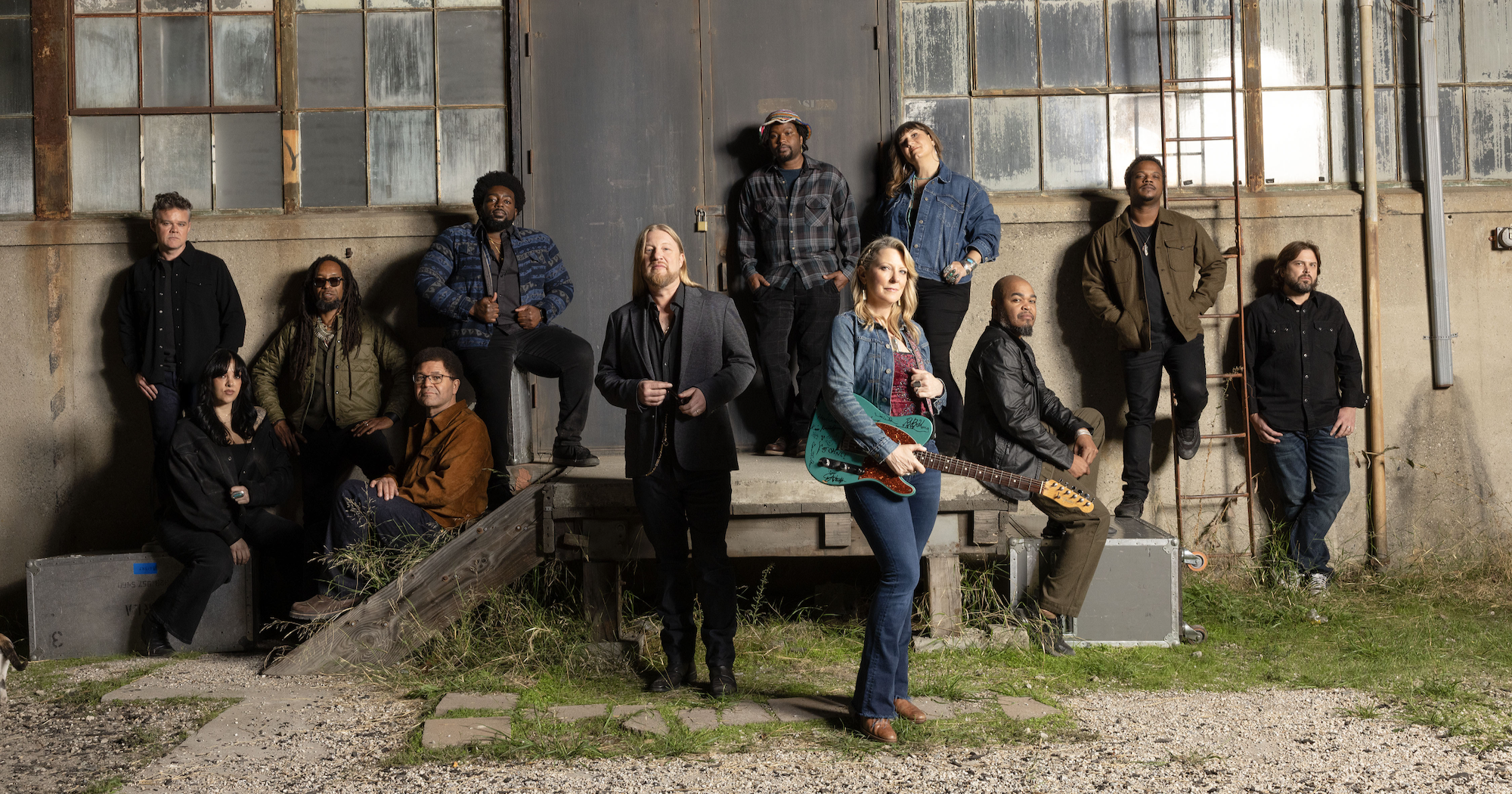
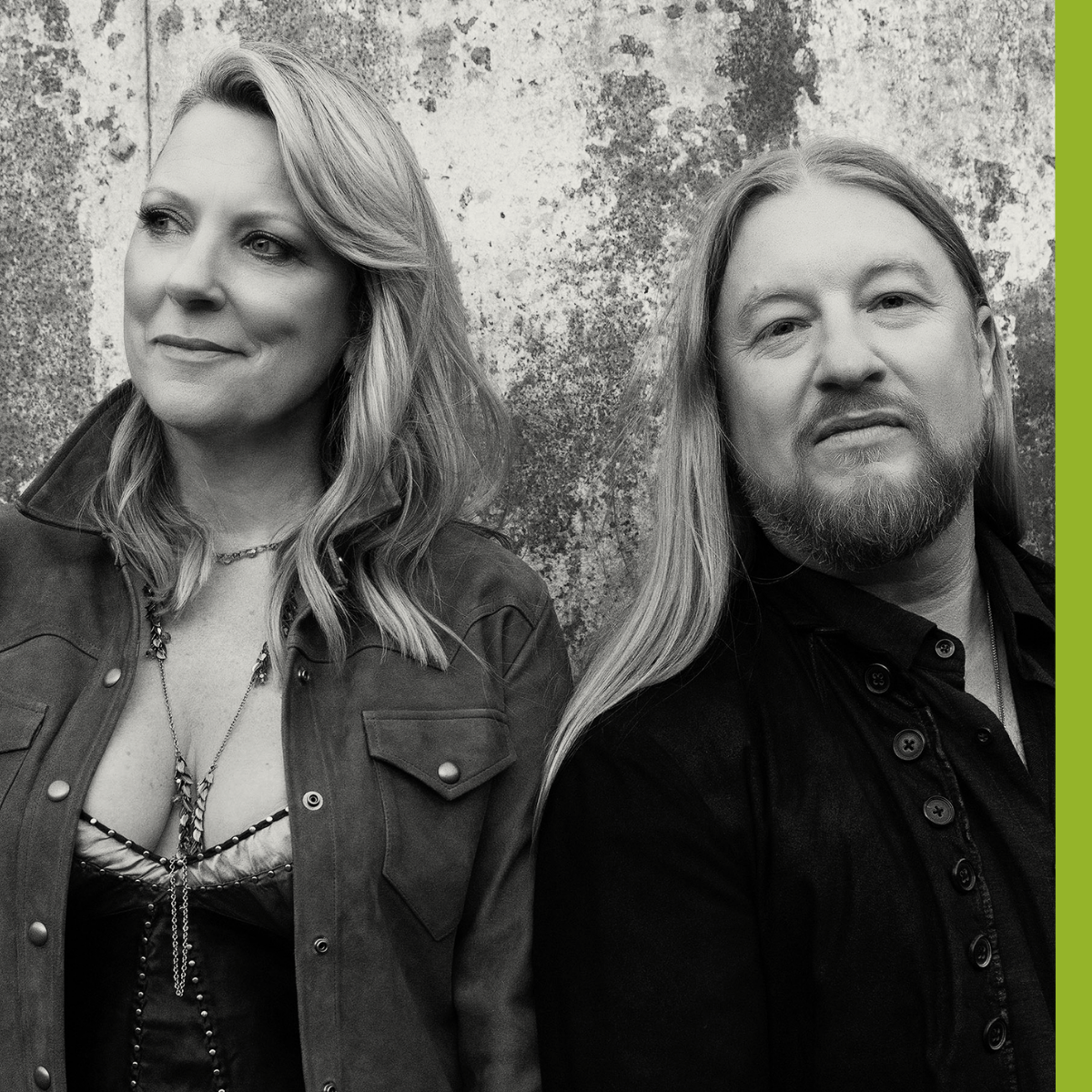
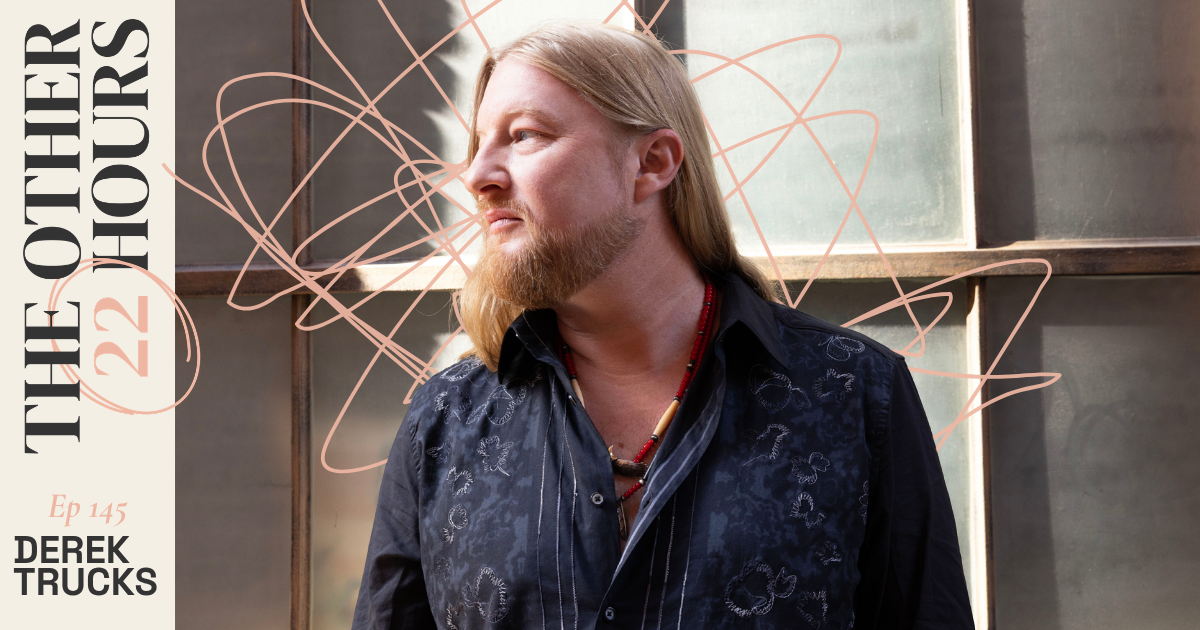
The Other 22 Hours: Derek Trucks

What happens to the creative spirit when you have been a professional “lifer” since the age of nine? Derek Trucks, widely considered one of the greatest guitarists of all time and a veteran of the Allman Brothers Band and Eric Clapton’s touring lineup, joins the Other 22 Hours to discuss longevity and leading a 12-piece musical circus. with his Tedeschi Trucks Band co-founder and wife, Susan Tedeschi. We explore the gradual shift from student to teacher, the grounding force of a musical marriage, and the essential practice of “turning the crops” to stay inspired.

LISTEN: APPLE • SPOTIFY • AMAZON • MP3

In This Episode:

Tedeschi Trucks Band
Allman Brothers Band
The Beacon Theater
Eric Clapton
Kofi Burbridge
John Lee Hooker
Koko Taylor
Ace Moreland
Colonel Bruce Hampton
Buddy Guy
Joe Walsh
Gregg Allman
Jim Scott
Tom Dowd
A Love Supreme
– Krishnamurti
Mad Dogs & Englishman (movie)

Go Deeper:

Watch: View this entire conversation above or on YouTube.
Explore: Find similar conversations in these themed playlists.
Connect: Join the conversation on Instagram.

The Other 22 Hours is hosted by Aaron Shafer-Haiss (producer, mixer, musician) and Michaela Anne (songwriter, artist, creative coach). More about Aaron’s workMore about Michaela Anne’s work.


Produced by Aaron Shafer-Haiss. Original music written, performed and produced by Aaron Shafer-Haiss.

Photo Credit: Chapman Baehler

Tedeschi Trucks Band Have Done It Again

When it comes to entirely enjoyable, technically exquisite modern blues, Southern rock, and jam-band soul albums, Tedeschi Trucks Band have a statistically impossible batting average. Their new LP, Future Soul (released March 20 via Fantasy Records), is yet another “no skips” collection from the megalithic 12-person Americana group fronted by husband-and-wife guitarist Derek Trucks and guitarist-vocalist Susan Tedeschi.

On that strength of their catalog – and their ensemble – TTB have amassed hundreds of millions of streams, won eight Blues Music Awards and one GRAMMY, and a handful of their songs have become regarded as modern standards in the Americana and American roots music songbook.

Future Soul simultaneously feels like a surprising departure and familiar, essential territory for the band. With Mike Elizondo producing and songs and creative input sourced from across the group’s lineup, the set ends up sounding and feeling more acoustic than “usual,” while still reaching roaring crescendos and building it all on dank, wide open grooves. Perhaps those acoustic moments are a substantial contributing factor as well, but the cozy, plush pocket of the album is what gives it a laid-back, relaxed, and floating vibe no matter the track’s genre construction.

Screaming slide, no-holds-barred vocals, and wall-of-sound climaxes can all be found herein, as well. But the collection never thrashes or flails, it’s precise and exacting – as Tedeschi and Trucks are both known to be on their instruments, whether guitar or voice – but it’s certainly not sterile or gated or homogenized, either. It’s another remarkable feat for a group so large that you would almost have to assume, live or in studio, musical mud would be an inevitable byproduct.

But no, TTB seem to have no misses, at least not on Future Soul. It’s clear this group works together in harmony not just because of the down-to-earth and collaborative leadership of Tedeschi and Trucks, but because the artistic and musical responsibilities and ownership – of the songs themselves, of the album, of the makings of each, of “success” for the band – are decentralized and distributed throughout the group. The band has a sound, an art, that is consistently collective in the way it’s received by audiences and listeners because, forgive the obviousness, Tedeschi Trucks Band always work as a collective.

In our BGS conversation with Derek Trucks, the magic and unlikelihood of this creative dynamic and the processes by which the band continues to rack up success after success were on full display. We spoke about how they put together Future Soul as a group effort, the many inputs that went into Trucks fashioning his lyrical guitar style, and what bluegrass means to him personally, to Tedeschi, and the band as a whole. It was a joy-filled, passion-led conversation that again reinforced how this wailin’, rockin’, rollin’ band continues to flout and subvert expectations – and thereby has become so beloved.

Something that jumped out at me from the bio about the new album is that you say, “There’s just not a weak spot on this record.” I have to say, I totally agree. I think it’s remarkable that with a 12-person band and such a diverse catalog of recordings and releases, it really doesn’t seem like there’s any “fat” to trim or any duds to cull.

I have to ask, does it feel as magical on the inside of that process as it seems from the outside? It seems unlikely that y’all would work so well together towards a common goal, artistically, and be able to deliver again and again and again. And I don’t just mean commercially, awards-wise, or for audiences alone. Clearly you’re delivering artistically for yourselves and by your own standards, as well. So, does it feel as unlikely on the inside of that process as it maybe does to us on the outside looking in? [Both laugh]

Derek Trucks: That’s awesome. But it does, man! I mean, not every record you do feels the same way. They’re all their own beasts. For I Am The Moon, it was in a time of great uncertainty. We did four records and it was just kind of a heavy, heavy time – and that record feels like that.

This one felt completely different. The band felt much more confident [and] had been touring for two years straight. We had been playing so much together that when we finally got the core of the group up to our farm in Georgia to do some writing, there were a few songs right out of the gate. Like “Future Soul” and “Who Am I,” where immediately, Sue started singing, Gabe [Dixon] started singing these melodies. I got chills and I was like, “Oh, this is gonna be good.”

You’re always kind of worried about running out of ideas, or running out of runway – like a thing in the back of your head. But I feel like we’re incredibly fortunate where, when we’re together, everyone puts everything they have into it. Then, when we’re not on the road together, everyone’s all doing their own things musically. So, when we come back together, there’s a lot to talk about and a lot of music to remember together.

I think it keeps it really fresh and it keeps it moving forward. I feel like everyone’s out honing their craft when they’re away from this. When they come back, there’s a lot of new ground to cover. So far, we’ve been really, really lucky that way. And there’s a handful of just incredible songwriters in the band, so everybody comes in with two or three ideas. You’ve got a pretty strong record right out of the gate. That’s been something that I think me and Sue are just realizing – we’ve known how amazing that is but, you know, Gabe and Mike [Mattison], they show up with some serious ideas.

Then having Mike [Elizondo, the album’s producer] down, just some outside ears – I think that was really important. Sonically, he was trying some different things that I think inspired the band and made everybody play a little differently. That was exciting.

I was struck by the range of styles and the different genre infusions that y’all have put into this collection. What really stuck out to me, listening down to the project in one fell swoop, is there are still those really big energetic moments – and there are still those “wall of sound” moments that y’all are really known for. But I felt like this album is chill and laid-back in a way; it feels deep in the pocket. Can you talk about capturing those seemingly disconnected energies together?

I think one of the things is that with a band or an artist, I think if you’re maturing properly – we learn sometimes slowly – that you don’t have to force the issue all the time. You can trust things around you a little bit more, and sometimes the groove is enough. Sometimes the chord changes are enough, sometimes the melodies are enough. It doesn’t have to be these epic moments at all times. So when they do come, you’re excited about it and wrings you out. Then you lay them back down, and then you go on another little trip.

I think the band, having played together so much, we’re in a different place that way, where we realize that you don’t have to force the issue on every song. You can go to different spaces, different places. And then, again, having some outside ears – Elizondo really helps with that, too. He helps guide you to places that maybe you wouldn’t have gone naturally, so that’s a fun thing. Then you learn things about yourself musically in the band that you didn’t know before. That’s always a good place to be.

One thing that I’ve been obsessed with about your playing, specifically, ever since I discovered you as a teenager, is how lyrical of a guitar player you are. It jumped out at me from the bio, as well, when you’re talking about “I Got You” and how you’re doing a guitar-voice dialogue instead of guitar-guitar. I think of you as one of the most lyrical guitarists out there. You’re so present and so grounded. So I’ve always wanted to ask you how you’ve cultivated that style – as well as being able to have those moments of pure shreddy, lick-y wailing.

Then hearing that you really wanted to make that connection between voice and guitar on this album made so much sense to me, because I’m always thinking about how you’re a lyrical player. And Susan is, too, and you both dialogue with your instruments, and her voice, often.

Pretty early on I had a few musical epiphanies. One was Allen Woody, who played with Gov’t Mule and the Allman Brothers. When we toured with my solo band, opening for a Gov’t Mule in the early days, he would always turn me on to records. He gave me this CD by this guy named Aubrey Ghent, who was a gospel [steel] player. I put on “Amazing Grace” and I was like, “Wow, what an amazing voice.” And then I heard the pick and I realized that it was this guy playing lap steel! But it sounded like a woman singing. I got chills [over] my whole body, and I was like, “That’s it, that’s the thing.”

I had been listening to a lot of Indian classical music – a lot of vocalists and sarod players. Me and our old [Derek Trucks Band] bass player, Todd Smallie, went to Ali Akbar College of Music in San Rafael, [California] and they would let us sit in on classes. I realized he [Ali Akbar Khan] made all the instrumentalists take vocal classes, because his whole thing was that you should be singing through your instrument. So that made it just really obvious.

Those were a few of the things, and then there was a long time where I just stopped listening to any guitar player. It was only singers and horn players. That was kind of the idea [that] musical ideas can come from anywhere, but you really should be singing the thing. There’s time for all of it, but the stuff that moves me the most is, you know – even hearing Duane Allman on “Blue Sky” or something. It sounds like somebody’s singing, like somebody is walking down the road whistling. I think those are probably the touchstones for me.

Maybe I am projecting a little bit, because I’ve been a bluegrass banjo player my whole life – I started playing when I was seven. But when I think of guitarists, especially who end up reaching the pinnacle – whatever that is – or especially in flatpicking and in bluegrass, there tends to be this homogeneity of style. The people who get to the “very top” end up all sounding like each other. Then you have those folks that really stand out, and it tends to be because they’re using space and using air as much as they’re using 16th notes and 32nd notes. I think, being used to really shreddy flatpicking, that hearing steel or slide or blues guitar or jazz or acoustic jazz, anything plays with sustain and plays with space, I just drink it up.

Beautiful, man. I remember the first time I heard the Stanley Brothers, or Ralph Stanley, and I just remember it hit me in that place where those early blues guys hit me. There was just something about it. That kind of cracked that whole world open for me. I mean, I was always a Tony Rice fan. We have the same birthday, so I thought that was cool.

No way, I didn’t know that.

And I remember being at a MerleFest years ago, I think it was one of the last ones that Doc played. I remember seeing this old Oldsmobile or Cadillac – I don’t know, it seemed like an 1980s or ‘90s car – it pulled up to the stage and I see Tony Rice get out, just dressed to the nines. He pops the trunk, gets his guitar, hits the stage, and then right when that set was over, he was back in that car! I was over there thinking, “What a boss.” It was incredible, man. He went up and just annihilated everybody and got back in his car and drove his ass home. Pretty incredible.

So funny.

The last time we talked to you for the site, you were Artist of the Month in 2019 and you talked about Del McCoury and Jerry Douglas. I know you’ve played DelFest a bunch, you’ve collaborated with Billy Strings – oh, and I was super excited to see Molly Tuttle supporting on a couple dates of your TTB tour in April, too.

Yeah, we’re excited for that. That’s gonna be great.

What does bluegrass mean to you? Obviously, there’s Ralph Stanley, Tony Rice – there are pickers and makers in bluegrass that are infused into what you do, but what does the genre mean to you more broadly? And who in the space right now inspires you, or your musical vocabulary, or what you guys are doing in the band?

When I think of American music, I think of blues, I think of bluegrass, and I think of jazz. I think [those are] the things that we’ve really contributed to the world. To me, those are the cornerstones of it.

We’ve become good friends with Sturgill [Simpson] over the years, and he’s dipped into that [bluegrass] place. When I hear him sing it I’m like, “Oh yep, that’s because he’s from there.” He’s from the heart of it, and it makes me feel the way Ralph Stanley does at times. Even guys like Tyler Childers – and Sue’s a big Sierra Ferrell fan. She loves all those records.

That music, even the current guys, it’s always playing around here. I don’t know, it just feels inspiring to hear. People just get on an acoustic instrument and rip one. You’re like, “Oh yeah! There’s still people that know how to do things!” [Laughs]

That’s the big inspiration I take from it. Because [in the music industry] there’s a lot of cutting corners, and that’s a music that there’s no cutting corners. You gotta put your time in and take your licks or you’re just not gonna get on stage. I appreciate not just the dexterity, but the vocabulary and the heart that goes into it.

And there’s just something about seeing a group around one microphone just doing the dance that I think is always inspiring. We’ve done some shows recently with Sam Grisman, we did a benefit [for Camp Winnarainbow] out in San Francisco. Peter Rowan was on it, and me and Sue, and it was all acoustics. I had an old National, and just getting to play with that group – just the way that group felt. Sitting on a stool with a Dobro, and they were coming and going around the microphone. And then, getting to hang after the show with Peter Rowan and him telling these stories, man. It was just incredibly inspiring. Some of the songs that we got to play with them – that dude [David “Dawg” Grisman] has written some incredible music. That was one of the highlights of last year. It was pretty damn incredible.

There’s a lot of acoustics on this new album, too. I did find myself wondering, and maybe I’m biased, but does the world need a 12-piece bluegrass band? It might! It might! [Laughs]

Man, that sounds pretty fun to me. I mean, it would be a lot less gear to carry on the road! Which would make it more plausible.[Laughs]

If you wanted to speedrun pissing off a fan base, this might be the way to do it.

[Laughs] Yes, alright, we will be thinking about this! I’m gonna go talk to Sue.

This next one is kind of for me, so I thank you in advance for humoring me. But I wanted to talk to you about Jack Pearson. When I first moved to town, I just met this guy out jamming on mandolin at these bluegrass jams. I’d be like, “Man, this guy’s so nice.” He’s a great picker. He’s a great singer. I got a lot of practice playing swing with him at jams in town. Then folks started being like, “Hey, do you know who that is?” Oh my god, I did not know who it was. He was just my bluegrass jam pal. Then I worked at the Station Inn for a few years and I got to work a bunch of his trio shows. I’d die for the solo acoustic sets he’d do on the set break.

Incredible.

If I were to list maybe my top 5 favorite guitarists of all time, I feel like you and Jack would both be on that list. So I wanted to have a little nerdy moment to talk about Jack. [Laughs] Can you talk about his playing and your guys’ friendship? Of course, I see so many connections between your musical vocabularies and that lyrical style we were talking about.

Yeah, man I need to check up on him. It’s been a minute. I need to check in on old Jackie P.

He’s a monster, man. He’s one of the few people that can actually go play in a straight-ahead jazz band, in a bluegrass band, and then the Allman Brothers. I mean, maybe the only person that can actually do it.

I totally agree.

I mean, he played with Jimmy Smith. This dude is like, he’s an absolute monster. And a sweet fella! You can’t say enough good things. When I joined the Allman Brothers, Jack was just leaving. So all the tapes I got, like learning the new versions of the tunes, were Jack Pearson tapes. At the time, Bud Snyder was the sound man. He would mix these tapes for me with Jack really boosted in the mix. I could hear exactly what he was doing to learn these things. I got an intimate take on the way Jack was approaching these Allman tunes. It was so unique.

There’s no one [that] plays like him, and [his playing is] about as smooth as it gets. Sometimes, you watch him play – and I know he plays really light strings and he plays low action – and the way his hands move, I’ve never seen anyone play quite like that. Then he busts out a slide and you’re like, “Holy shit! This dude can do anything!” [Laughs]

I know!

He’s one of the unsung heroes. There’s no doubt about it.

He does this thing – and you do this as well – where you’re able to leverage that really gritty, aggressive, absolutely on-the-razor’s-edge style that comes with blues and Southern rock and Americana. Then at the same time, like you’re saying, with light strings and low action, still has such a deft touch. Yet he has such great attack and precision and cleanliness. He is a great lesson in taste. His taste is impeccable.

Yeah, I think that’s exactly it. I think we forget a lot of the time that most of what we love about music is the musician’s taste. I mean, you got to put in the work – and Jack has obviously done that, that dude is a master. But his taste is really as good as anybody.

I think he’s probably a bigger influence on me than I even realized. Probably because of that early Allman Brothers time for me. I was jumping in at 20 years old, 21 years old. And all of a sudden it’s, “Here’s 60 songs to learn, and rehearsal/tryout is in a few weeks. I was like, “Well, give me those dates.”

I’m stressed just hearing about that.

I mean, luckily most of that music I had listened to my whole life, but I had never bothered to learn any of them. I mean, I knew “One Way Out” and “Statesboro [Blues],” that doesn’t take long. It was all the other shit!


Photo Credit: Chapman Baehler
Country Ain’t a Man’s World

Editor’s Note: Each issue of Good Country, our co-founder Ed Helms will share a handful of good country artists, albums, and songs direct from his own earphones in Ed’s Picks.

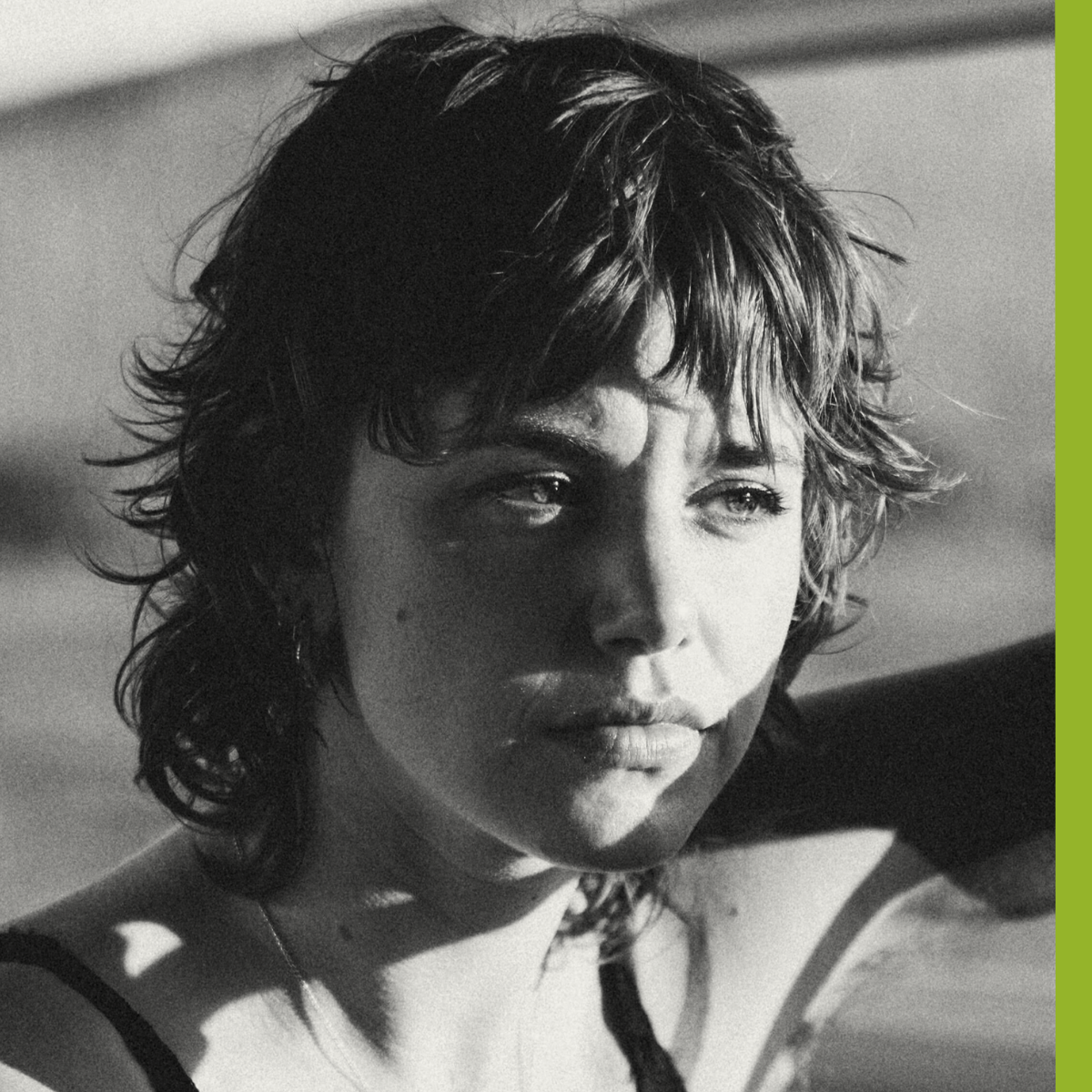
Cat Clyde
Cat Clyde

We loved Cat Clyde’s 2023 release, Down Rounder, and on her brand new album Mud Blood Bone the Canadian singer-songwriter turns the dial a few more clicks toward alt-country, indie, and rockabilly. There’s a raw, gritty quality to the collection that’s remarkably refined for how unhinged it lands – and very country, too.


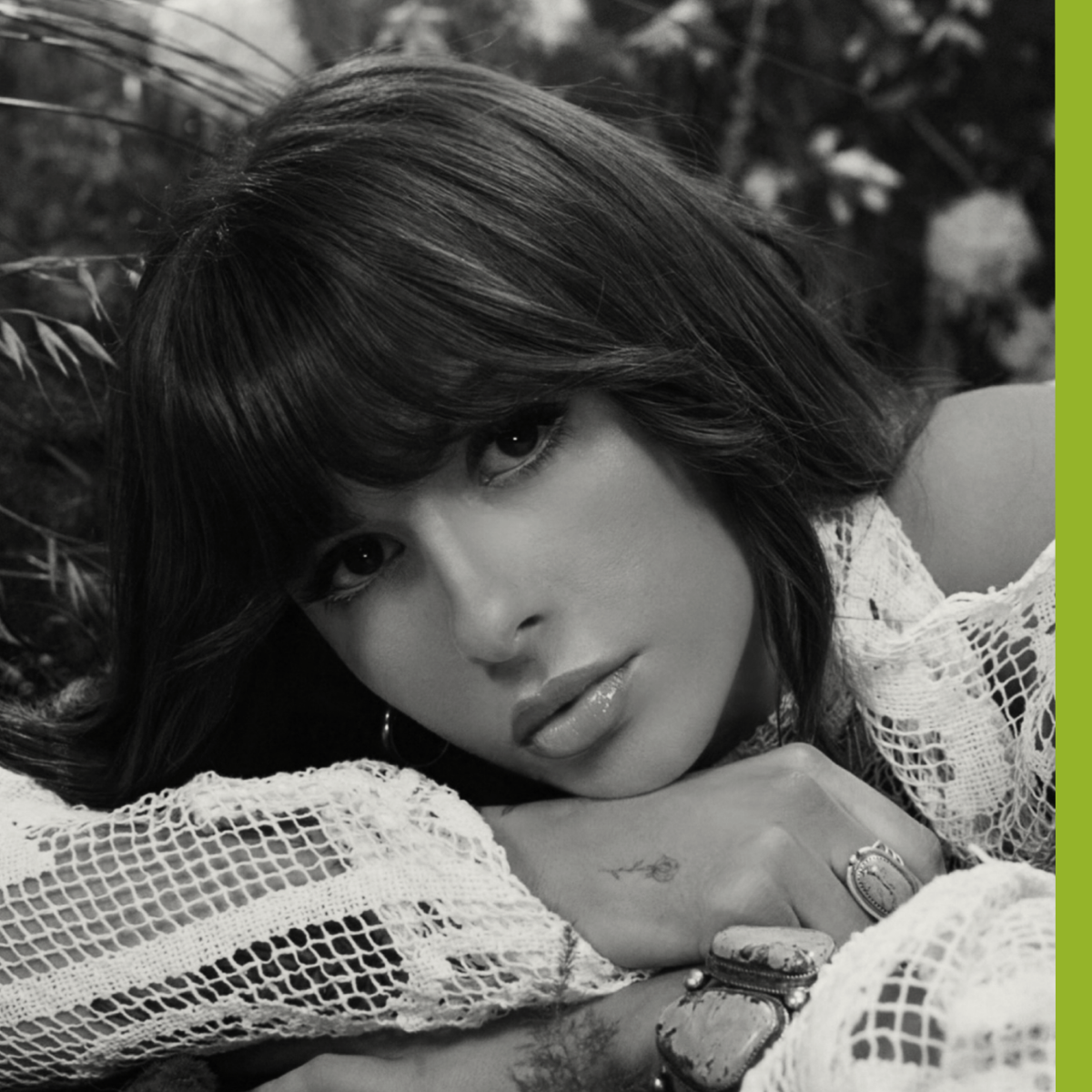
Ella Langley
Ella Langley

Ella Langley’s megalith hit, “Choosin’ Texas,” has brought her to the top of the charts, but we’re zooming in on a new single she just released a little over a month ago. “Be Her,” one of four tracks unveiled so far from her upcoming April release, Dandelion, might end up being the best mainstream country song of the year. Delightfully coy, jealous, and longing, it’s a bop that’s as deep and thoughtful as it is fun.


Megan Moroney
Megan Moroney

No one is making mainstream, crispy, hyper-stylized country like Megan Moroney. Her new album, Cloud 9, is certain to lift you up. With a lyric video showcasing beaches, palm trees, and Los Angeles sunshine, the title track perfectly illustrates how Moroney combines pop and twang, city and rural into a country style all her own. Right at home on Top 40 radio, but certainly Good Country, too.


Kacey Musgraves
Kacey Musgraves

Kacey Musgraves ended her post-Deeper Well dry spell with “Dry Spell,” a hilarious, catchy, and craveable song to bridge eras and albums. Her next LP, Middle of Nowhere (coming May 1), will expand the rat-race-opt-out universe Musgraves began building with Deeper Well. And we’re more than happy to see dashes of the wit and wordplay of Same Trailer, Different Park and Pageant Material infused in the lead single.


Tedeschi Trucks Band

An Americana, Southern rock, and modern blues supergroup, Tedeschi Trucks Band’s 12-person ensemble returns with another no-misses album, Future Soul, released Friday. The project is strikingly diverse sonically and while it features some more genre exploration and subdued moments than you may expect from their stage shows, it’s still an absolute banger. The group kicked off their album release tour beginning a 10-show residency at the Beacon Theatre in New York City that runs through March 28 before they take the show on the road in the spring, summer, and beyond.


Want more Good Country? Sign up to receive our monthly email newsletter – and much more music! – direct to your inbox.

Photo Credits: Cat Clyde by Julio Assis; Ella Langley courtesy of the artist; Megan Moroney by Cece Dawson; Kacey Musgraves by Kelly Christine Sutton; Tedeschi Trucks Band by Chapman Baehler.

Confidence Is the Hallmark of Magnolia Boulevard’s Album Debut

While Kentucky is the birthplace of the father of bluegrass and as a hotbed for country artists, it also has much more to offer. Proof lies with Magnolia Boulevard, who’ve been turning heads with their mix of Appalachian soul and southern rock since their formation in 2017.

Led by powerhouse vocalist Maggie Noëlle – whose voice has drawn comparisons to everyone from Susan Tedeschi and Bonnie Raitt to Grace Potter and Amy Winehouse – the Lexington-based group has experienced highs like winning the band competition at Virginia’s FloydFest, hitting the road with Blues Traveler, and earning the personal endorsement of Paul Reed Smith and PRS Guitars – not to mention Noëlle becoming a mother. However, they’ve also experienced the lowest of lows, from having some of their biggest shows to date cancelled during the COVID pandemic to the unexpected death in 2021 of their drummer and founding member, Todd Copeland, that have done everything but derail them.

But instead of crumbling under the pressure, the band – now comprised of Ryan Allen (keys), Roddy Puckett (bass), Austin Lewis (lead guitar), Brandon Johnson (drums), and Noëlle – have fought through those trials and tribulations to deliver their long-awaited debut album. The self-titled effort looks at strength and perseverance in its many forms, from leaving relationships that are no longer serving you (“On My Own”) to learning to overcome and adapt regardless of the circumstances (“Strong-Willed Women”) and forgiving Noëlle’s father for never being around (“Nomad”).

According to Noëlle, the album marks a noticeable shift in her songwriting that reflects a much more personal tone and side of herself that she’s refrained from showing fully on stage, going all the way back to her days before the band when she sang in the bluegrass outfit Moonshine District.

“It’s taken a long time, but I’m finally realizing that songwriting for me is very much therapy,” she says. “Writing things down and getting it out and releasing it is just so gratifying and feels so empowering after being scared to do so for so long.”

During a candid conversation at an indoor market on Lexington’s north side, Noëlle spoke about everything from the long road to the band’s first album. We chat about how the sudden loss of Todd Copeland rocked the band’s world, the confluence of Appalachian and Southern music that informs the band’s sound, and more.

Why was now, eight years into the band, the right time to release your debut record?

Maggie Noëlle: I’ve wanted to put out a full-length record for years and years now. A lot of why we hadn’t yet was due to the age of streaming and constantly fighting the algorithm to get our name in front of people. Because of that, we’ve focused a lot on single releases as a way to gain more traction and win the algorithm over. But we also have a good, hard-working group of guys that are 100% for the music as a collective. Playing with them just comes so naturally, which has made everything from playing to writing together a lot easier. It’s about damn time! [Laughs]

Indeed it is! Regarding the song “It’s About Damn Time,” is it a reference to that long road to bringing the album to life, or something else entirely?

Ryan and I actually started “It’s About Damn Time” when we were driving to New Orleans to play an acoustic duo set at JazzFest. The idea was to portray the feeling of waiting around for things to change but ultimately realizing it’s you who has the control to change what you want in life. Even though it wasn’t originally meant for us as a band, it’s definitely shed some light on the progression of the group. It’s about damn time we finally have a full-length album!

You’ve had a lot of turnover in the band since 2017, from members coming and going to Todd Copeland’s death in 2021. What’s it been like continuing to make music as all of that has happened around you?

First and foremost, this band was Todd Copeland’s baby. He had an idea and knew he wanted to essentially give me a platform for my voice that I’d never had before with electric music. We kind of peaked during COVID after winning FloydFest’s On The Rise band competition in 2018 and going on tour with Blues Traveler in November 2019. But soon after, the world shut down, leading to the summer being letdown after letdown as we watched all the huge festivals we had lined up get canceled.

When 2021 rolled around, we were all excited to get back into the world until Todd’s unexpected passing, which shook all of us up in a way that we didn’t even understand. Obviously we were mourning our brother and friend, but it definitely shifted a lot of our energy. We’ve dealt with some more heavy punches since then, but we’ve also overcome a lot as well. Having someone in the group now like Roddy, who was close with Todd and played with him in the band Green Genes during the ‘90s, has made everything feel very full circle.

This album will also mark the band’s first vinyl release. What are you most excited about with that?

It’s something that fans have been asking us for for a while, so we’re thrilled to finally be giving it to them. We started taking some with us to sell at shows earlier this month and have already gone through a bunch of what we ordered. At the same time, though, it bugs me that so many songs from it are already released as singles. With records, I love listening to them front to back because oftentimes the track sequencing tells a story. But with how we approached releasing this it feels like it’s stealing some of the magic even though the full album still features three tracks – “Nomad,” “Anything,” and a cover of Robinella’s “Man Over” – that won’t be unveiled prior to it coming out.

Tell me about the Robinella cover?

When I was really little my aunt and uncle took me to Bristol Rhythm & Roots and I saw her perform. I was only 11 or 12 and fell madly in love with her and have been listening to the band ever since. She has a song called “Man Over” that I’ve long covered in my solo sets that Ryan really likes, so we decided to bring it to the band and put our own spin on it.

How did you decide which songs to put out as singles and which ones you wanted to save for the full album release?

Aside from the cover, “Nomad” and “Anything” are definitely two of my favorites that we recorded for the album. The latter is one that Ryan actually co-wrote with Madelyn Baier, who I didn’t meet until after the fact. When I did I told her how much I loved the song and she told me she thought it was meant for me to sing it. When Ryan first sent it to me I remember replaying it over and over. Before long, it turned into a mantra of sorts to help me acknowledge the special people and moments in my life and not turning a blind eye on things just because shit gets hard.

“Nomad” is also a very special song. Something I’ve always struggled with in my songwriting is opening up about my personal life, mental health, and emotions. That tune is a bit of a forgiveness song for my dad, who’s never really been a presence in my life. Rather than be bitter about it, I wanted to write a song that forgives him for that absence and reflects on how good a person I’ve turned out to be despite that.

“Strong-Willed Women” is another song that appears to take on a similar tone of highlighting strength to overcome adversity. Mind telling me about it?

I initially wrote that song when I was 17 or 18 about a health scare the women in my family were dealing with. It’s a song I never really expected to throw at this band, but Ryan always liked it and even helped me rewrite the bridge portion of it. It’s one we’ve been playing since the start that I don’t think I’ll ever get tired of. Lyrically it’s very close to what you described – about a person going through something really hard and overcoming it. Strength and resiliency are both really big parts of not just this track, but of the whole album.

You just mentioned how old “Strong-Willed Women” is compared to the other songs on the record. How do you feel you’ve evolved as a songwriter since penning that song in comparison to the newer tracks it joins here?

The difference is night and day and confidence is a big reason why. Ryan has always been in my corner encouraging me and trying to light a fire under my ass. He tells me that I have good songs inside me, I just need to practice and learn to use the tool correctly. I think a lot of what held me back in the past was being afraid to let all my dirty laundry out – not that I have much to begin with anyway. It’s taken a long time, but I’m finally realizing that songwriting for me is very much therapy. Writing things down and getting it out and releasing it is just so gratifying and feels so empowering after being scared to do so for so long.

With that in mind, what does it mean to you to be celebrating the album’s release back home with your biggest fans and earliest supporters at The Burl during your second annual Soul Stuffing Friendsgiving?

Being able to finally have a full length record out is such a personal achievement for me, and to share that with the community and people that have stood with us for eight years now is the icing on the cake. There’s some people – like you – who’ve been coming to all of our local shows and then some since the very beginning that have been begging us for this moment. There’s nothing more gratifying to have this moment with them back where this journey began. We’re also just very blessed – not only in Lexington, but Kentucky in general – to have so many talented musicians and other folks that we call friends who’ve been championing us for a long time too. It all feels like we’re one big family, which will make this celebration just after Thanksgiving all the more special.

What has the process of bringing this record to life taught you about yourself?

Like I said earlier, it’s taught me to have more confidence in myself – both on and off the stage. It’s taught me that I’m capable of letting people in more than what I have in the past and that I still have so much to learn. I’m always going to be my own worst critic, but when you have so much great feedback from great musicians and engineers like Duane Lundy it’s made it easier for me to accept their praise and keep my own thoughts and criticisms to myself.


Photos courtesy of the artist.

Americana Agnostic: How Cristina Vane Developed a Sound All Her Own

A blues, old-time, and Americana alchemist, singer-songwriter-instrumentalist Cristina Vane has just released a striking new album, Hear My Call, a collection that defies categorization and tidy genre labels.

Something of a roots music influencer – though she perhaps would never self ascribe that title – Vane has built a remarkable following around her agnostic approach to borderless, post-genre roots music that effortlessly calls back to eras before all of these styles were stratified and separated.

Vane’s Americana agnosticism stems from a variety of inspirations and inputs, but is largely derived from circumstances, taste, and whim. On the seventh track of Hear My Call, “My Mountain,” she sings along with loping frailed banjo:

I was born across the sea
At the feet of the mountain
I left young and it left me
Lost a piece of my grounding
I watch you and how you speak
Belonging is astounding
I watch you, but what of me?
The history that I’m bound to…

She’s referencing her upbringing in Europe, born at the foot of the Alps and raised in Paris before moving to the U.S. in her youth. What does it mean to be a purveyor of “mountain music” when the mountains you claim are not Appalachia or the Ozarks or even Celtic highlands? How can you be an expert and interpreter of these art forms, while ultimately sensing – consciously and subconsciously – that your identity is not or cannot be interwoven with them? Perhaps it brings a certain unbridled freedom and ease? Or perhaps it means your entire relationship to the musics you love will be informed by this kind of daunting existential question: Can you belong?

For Vane, it’s clearly a smattering of many factors that has led her to this delicious and carefree combination of styles, sonics, and songs. She is truly an expert on blues, bluegrass, old-time, and beyond, spurred to excellence on one hand by her feeling of imposing in these traditions and on the other by a devout love and gratitude for the people who also inhabit these spaces and who passed the art along to her.

Cristina Vane may have not felt truly at home in the roots music scenes that claim her until recently or maybe she needed to still grow, easing into her current confident, unapologetic sense of self. At any rate, she’s ready for the world to hear her call – and to understand that she alone decides who she is, how she sounds, and where she belongs. Whether “her mountain” is found in the Alps, in the southeastern United States, in Los Angeles, Music City, or anywhere else. Vane knows that she, too, is a part of these timeless traditions and that, above all else, could be the primary reason she moves between these folkways so gracefully and entrancingly.

Your sound feels like it hearkens back to a time before roots music was split up into all of these different genres, when blues and folk and old-time and bluegrass and country were all technically considered the same thing. I feel like you combine sounds in a really similar way. How do you approach your sound? To me it feels like you’re pretty agnostic, you are very fluid in the way you approach genre. Especially with this album, as it feels so fully fleshed out, built up, and lush.

Cristina Vane: It is a really fine line to walk and I’ve had this struggle since forever where I just don’t want to choose. I don’t feel like I should have to really, either, and I do think that’s what I was hoping would come across in all my albums. Specifically this one in many areas of my life, includes this question of, “Who am I?” “Where am I from?” “Who am I in my community?”

“Who am I” applies to genre as well. Every time I feel this voice of self-doubt that’s like, “It’s just too confusing. If you wanna be appealing to more people and get better opportunities and festivals, they have to know what you are.”

Every time that comes up it’s a difficult feeling, but I ultimately always just say “fuck you!” [Laughs] It’s really affirming that you feel positively about that because I also agree, in the sense that I come from the ‘90s and 2000s, listening to different music and genre was important, but not in the way that I feel like it can get tiresome in Americana music. Where there’s this legacy and tradition that you have to uphold if you’re gonna fit within the parameters of a genre. Whereas, in indie music you can do whatever you want and if it sounds kind of like the other bands in the genre, then I guess you’re indie!

I guess I approached the older traditions with some hesitancy, because I knew that traditional-leaning people are [going to question me]. “You’re not really a blues woman” and “You’re not really a bluegrass artist” and “You’re not really an old-time player.”

Honestly, I think one of the people that, in a lot of ways inspired me on my first album to just stay the course, was Sarah Jarosz. It was more than the fact that she played different instruments and didn’t feel bound to be just a mandolin player. She’s just so talented, obviously, and I think it was very full circle when her last album came out and it was a completely different world than the string band sound stuff. I was like, “See? We all have it in us to want to explore different things.”

To answer your question a little more directly, I don’t worry about genre. If I wrote this song and I am proud of the song, I want to flesh it out in a way that just intuitively feels good to me. That being said, there are some songs where I lean towards more bluegrass, but there’s also a song like “Storm Brewing,” where it’s a clawhammer song. I wrote it on the banjo and then when we dressed it up, it just felt really good to put some electric guitar in there. I’ve added drums to everything because that’s how I wanna play my live show.

I love that you mention Sarah Jarosz, because that’s definitely an artist that this album reminds me of, but also Larkin Poe, Bonnie Raitt and Susan Tedeschi specifically, because you have these big bluesy modern tracks, but you’re a picker as well. I think that changes the music, when the bones of it or the origins of it are coming from someone who’s an instrumentalist-performer-songwriter-vocalist.

I also think that’s part of why the music, even though it comes from a variety of genre backgrounds, feels so engaging and charming, because you can play around with those sounds freely. Even if you were just playing the songs solo, just you, yourself, and your instrument – whatever instrument that may be – they would still work, but they also work fully realized.

Can you talk a little bit about how being a picker informs you and inspires you as a songwriter and as a frontwoman?

You kind of already hit on it. From the outset every song starts with me and my instrument – and they usually start either like “Storm Brewing” in a tent in Utah or like “Getting High in Hotel Rooms” getting high in hotel rooms in Las Vegas. I sit down with an instrument and the music always comes first.

“Everything Is Fine” actually started as a more fingerstyle thing on my resonator [guitar]. I wrote the words and then I was feeling the chorus. The vibe is more rock, and I wanted a strumming electric guitar. So it can be malleable, but pretty much [most of the time] it’s like, “I wrote this riff on this instrument and now I’m gonna write some words to it.” Then, in the case of this album, I bring it to my touring band, who I trust immensely and we can collaboratively work, play around with it, and they give their input as well.

Let’s talk about the title track. “Hear My Call” is like Ola Belle Reed meets Gillian Welch meets modern, head-bobbing bluegrass mash. I love that. I thought it was interesting to pick this one as the title track, given that it’s one of a handful of string band songs on the record among many much “harder” sounding tracks. I wanted to know more about the inspiration behind it, choosing it as the title track, and having it be the keystone of the project. How did you write it and how did it all come together?

You know, I’m actually deeply dismayed to say that I don’t even remember when exactly I wrote this riff! I think I was on a very long, grueling West Coast tour, but you know the West Coast is also always filled with magic. I’m very partial to the nature and landscape out West. I would’ve definitely written the riff first and then I started just hearing this chorus over and over. I was playing it at soundchecks.

I guess I didn’t even think about choosing a song that best represents the album. I was struggling to name the album, just because it’s hard to do that. Do I choose another title or do I do a title track? But I actually chose it because this whole album [is about] the way I was mentally, the way I still am feeling about my place in music, my place in the world, and the general sort of comfort level I have with being exactly who I am.

I’m in a time of changing my energy from being an observer and a student of a lot of different cultures and musics, from looking at other people and taking all of that with deep gratitude, realizing that I have a story as well. The unique blend of things that make up my cultural history, and geographical history – all of those things I should be proud of and not uncomfortable with. Until the last couple of years, I was just uncomfortable with how complicated everything is in my my personal history and my musical influences and not knowing how to marry being a girl from Paris that went to Princeton with being someone who loves down-home music. I just spent [a lot of] time almost apologizing for things that I really can’t change [about myself].

“Hear My Call” is reflective of the shift that happened. Maybe it’s just growing into yourself and realizing I’m actually proud of where I’m from and I’m happy to have had the experiences I have. I have learned a lot from other people, but other people can maybe also learn from me. It’s not all just “take take take.” I can give something back. It’s an assertion of reclaiming space. That’s really what this song is about.

It’s interesting to hear you say that you’re giving yourself permission to be exactly who you are and love the music you love and make the music you make, because I think part of the “trad” music world is that we’re all policing ourselves all the time.

I actually didn’t realize it, but I think a lot of what influenced how I went into the studio [for this album] was that, around that time and a little before, I was delving deep back into the music I listened to when I was, let’s say, 11 to 18. After so many years of being a true student of the blues and then old-time – like, “I have to learn every tune and I have to read all the books!” Well, I wanted to. I went back into this music that felt so familiar and not being stupid and young anymore thinking, “I can’t listen to Blink-182, ‘cause it’s not cool.” I missed The Strokes and Bon Iver and Elliott Smith and all these things that, while I’ve always loved them, I kind of pushed to the wayside as all this new music came in, which is natural.

I loved this feeling around the time of doing this album of just reconnecting with my teenage self and remembering that that [music] has [also] informed the way I write. I want it to be just as present as someone that I discovered much later, like Gillian Welch. I’m hoping that mix comes across, to some extent.

I also wanted to ask about your “online community.” You have a huge social media following and you have so many amazing collaborators that you make content with. Personally, I think part of why you’re able to approach genre without being contained by categories is because you have built this direct-to-consumer business model. You’re directly interfacing with so many of your listeners, so none of them are gonna be surprised to see you code-switch on a project, genre-wise or sonically.

It jumped out at me that the way that you operate online – creating on your own terms with the door open and the window shades up so that everybody can be part of that process and also take ownership of it – must somewhat allow you to do what you want. You aren’t beholden to anybody but yourself, especially given that you’ve created this ecosystem and this community for yourself and your fans already know that’s what to expect from you.

Wow, I just love doing interviews, ‘cause I feel like when they’re insightful people like you they’re telling me things about myself! Because that’s so, so insightful and I have never thought about it that way!

So much has been dictated by circumstance or necessity – and partially just me being batshit crazy and honestly not scared of anything. [Laughs] Like, I would go on the beach in Venice, [California] when I lived there and busk. Instead of playing songs that would make me a lot of money, I played my own songs over and over and over, because I was like, “I’m playing my guitar. I need to get good at it. I think it’s cool and they’ll think it’s cool, too.”

When I first went on the road, I was like, “Well, I’m gonna bring my electric guitar, because my acoustic is gonna explode when I’m in Zion and Moab and all these crazy places.” I was on the road for six months in a tent, mostly. That was a big factor in choosing why a lot of my songs are performed on electric. Then I brought my banjo, ‘cause I liked it and I was like, “I don’t really care if it’s confusing, but I’m gonna like play my blues stuff.”

This is actually going to offend people if you print this, but I would play through my [Fender] Blues Junior and then I would just plug my banjo into it, because, “It’s an amplifier and it fucking works, so…” [Laughs] It didn’t sound that bad actually, to be honest with you, but yeah, I would be playing some random brewery somewhere that I’ve never been and I would go from playing Son House to “Angeline the Baker,” because that’s what I was learning at the time.

I guess in some ways, of course I’m like everyone else and I worry deeply about what people think of me and how I am perceived, but in other ways, I just don’t care. That can be really freeing. I think that’s carried over a little bit. I had experimented with paring myself down – “OK, I need to just be a blues player” and then I would show up to the gig and there would always be one or two people that were disappointed I didn’t bring the banjo. And vice versa when I just did the string band stuff, it felt like I was missing a huge part.

I mean there was no way I was gonna not play my guitar. That’s like my main instrument, but there was a time in Nashville where I was just playing with a string band and I didn’t ever play my resonator. I just played acoustic and the banjo. It didn’t feel complete. I don’t have it figured out. I don’t know that there is a “figuring out” that’s going to happen. I’m just gonna play what I like.

You contain multitudes!

Yes! Thank you, I try. [Laughs]


Photo Credit: Stacie Huckeba

“Guitar Prodigy” Doesn’t Quite Resonate with Grace Bowers

Boasting an Instrumentalist of the Year nomination at the 2024 Americana Music Association Honors & Awards (held September 18), Grace Bowers may be one of the most exciting new guitar players on the planet – with extra emphasis on “new.”

Still in her teens, the Bay Area native has made a splash with soulful-beyond-her-years playing and the enthusiasm of youth, but she’s proving to be more than just a six-string specialist. Now leading a funky blues-rock outfit called The Hodge Podge, Bowers dropped a strutting, co-written debut single – “Tell Me Why U Do That” – and has a cosmic follow up to come. Plus, she’s not afraid to speak her mind.

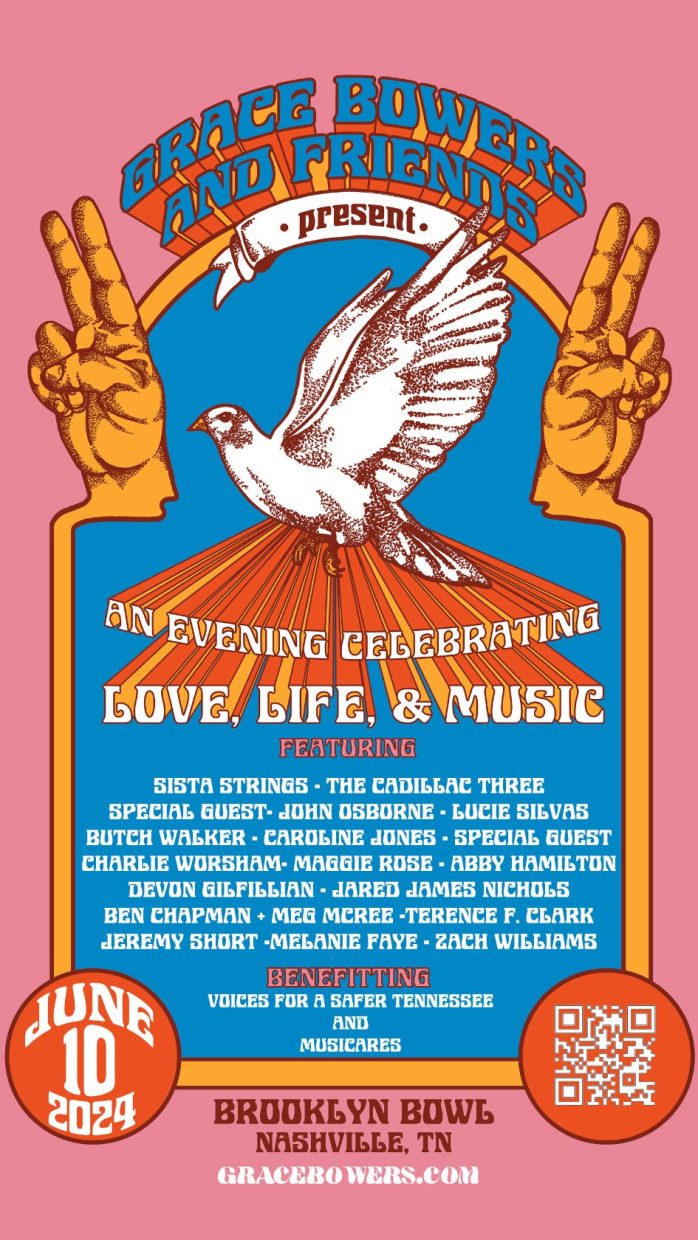
Already using her platform for positive impact, Bowers will host the 2nd annual An Evening Supporting Love, Life & Music benefit concert at Nashville’s Brooklyn Bowl June 10. Founded to support victims of the Covenant School Shooting and now benefiting Voices for a Safer Tennessee and MusiCares, the show will feature Bowers and The Cadillac Three, Devon Gilfillian, Caroline Jones, Meg McRee, Jared James Nichols, John Osborne, Lucie Silvas, SistaStrings, Brittney Spencer, and Butch Walker, as the rising star looks to leverage her “prodigy” label attention.

BGS caught up with Bowers just as the summer festival season kicked into gear, getting to know an exceptional breakout talent who seems primed for a long career to come.

After blowing up on social media during the pandemic, you’ve done a lot in the last few years – but, you still have a few months before you turn 18, right? How have you managed to balance this music career with growing up and just being a teenager?

Grace Bowers: It’s definitely a weird balance, and especially since I don’t go to school anymore. I started doing [school] online a year-and-a-half ago … and I don’t miss homework, but I definitely miss being around people my own age and just a normal experience. But at the same time, I’m getting to do this stuff that I love almost every night, and I would take that over anything. Some people look at it like I’m doing it too fast, or someone’s pulling strings for me, and it’s not true. This is what I love and I can’t imagine doing anything else.

What drew you to guitar in the first place? I know people like to compare you to the female guitar greats, like Bonnie Raitt or H.E.R., but I feel like it doesn’t have to be just women. I hear a lot of Prince’s style in you, or even Derek Trucks.

Yeah, I love all those players that you just mentioned! The first time I was drawn to a guitar or just to music in general was when I was 9 years old, and I saw Slash on YouTube. Which is kind of a basic answer, but that’s how it happened. I was watching the “Welcome to The Jungle” music video.

Really? So did you just rush right out and say, “Hey, mom and dad, I need a guitar”?

That’s pretty much how it went. I think I tried almost every other hobby there was. I got kicked out of soccer, hated Girl Scouts. I’m pretty sure I got kicked out of softball, too. I was not good at gymnastics. I tried everything and my parents tried everything. So when I came to them and said I wanted a guitar, they were like, “We’ll get you a guitar.”

Were you ripping leads within months, or how long did this take?

Oh, no, no. People call me a prodigy a lot and it’s entirely not true, because for the first three years I was so bad. I was awful, and I wasn’t even really passionate about it. It was just kind of something that I did. I never really practiced or dug into other music styles.

But when I was 13 and COVID had just started, I heard B.B. King for the first time – “Sweet Little Angel” – and that song starts off with three notes. I was so hooked on that, and it was a sound I had never heard before, because I didn’t grow up around music. I don’t have any players in my family, so it was a completely new thing to me, and that’s what really made me passionate about it. I started actually learning things on guitar, but it was not an immediate light bulb moment for me.

I think that’s actually a good message for people, because it’s easy to get burned out trying to learn an instrument.

Yeah, it takes time.

Was it a shock to get this Americana Music Association nomination? You’re up for Instrumentalist of the Year, right?

Yeah, I forgot. I didn’t even know I was nominated, to be honest with you. I had no idea. I opened Instagram one day and I was tagged in the post. I’m like, “Holy shit, this is insane.” Because the year before that, I was in the audience at the Ryman watching the Americana Awards. So now that I get to be there, that’s insane.

Tell me about getting the band going and working on songwriting. You’re known for your guitar playing, but it seems like you’ve been trying to diversify. Does that come natural?

Songwriting was a bit of a learning curve for me, but it is something I’m very, very much into these days. I feel like people just look at me as a guitar player, but I don’t really feel like I’m just a guitar player. And even at that, I’m not some bright virtuoso guitar player. I wouldn’t consider myself that at all. I lead this band, I wrote all the songs or co-wrote them. So I think that that’s something that a lot of people don’t realize when they’re leaving hate comments online.

Your band sounds amazing – I love how much funk and soul is in the mix. It’s also cool you present yourselves as an ensemble. It’s not just Grace Bowers and then some people behind her.

That was my goal, because like I said, I don’t want to be known as just a guitar player. If you think of Derek Trucks, you think of Susan [Tedeschi], too. Tedeschi Trucks Band would not be what it is without one another, and I love that. And since I don’t sing right now, I want to be known for this amazing band.

The first single, “Tell Me Why U Do That,” came out a little while back. It’s super funky and light – what did you write that about?

It wasn’t written about a single person. It sounds like it is, but I wrote it with John Osborne and his wife Lucie [Silvas], and honestly, we wrote it in an hour and we were kind of just bullshitting lines. … Normally I’m like, “Well, the lyrics have to mean something.” But I kind of let that go for this one. It’s just a fun song.

Does that speak to the other stuff you’re doing?

For the most part, the lyrics were very intentional. My second single that’s coming out is called “Wine on Venus,” and this one has a cool story behind it. It was written about my Nana who passed away a bit ago. I’m from California, so we went home for Christmas this year and it was the first year not having her at Christmas. Everyone was talking about her, and my uncle said she always told him that when she died, she’d be drinking wine on Venus. It’s the brightest star.

Oh, wow.

Yeah, and I thought that was such a cool thing to think about. So I brought it back here and I was writing with Ben Chapman and Meg McRee, and I told them this story, and this song just flowed right out of us.

Your grandma sounds like she was awesome.

Yeah, she was kind of crazy, but there were some good nuggets in there from time to time.

John Osborne is producing your work, and he’s an amazing guitarist in his own right. Does that have an impact on what you’re doing?

Absolutely. I don’t think enough people are talking about how good a guitar player John Osborne is. He’s on a whole ‘nother level, and I don’t hear his name mentioned when people are talking about great guitar players, but I can’t imagine doing it with anyone else. I think he just completely understood my vision and the sound I was going for, and I’ve worked with producers before who have a sound and they’ll try to mold you into their sound, and John wasn’t like that at all. I mean, he gave us direction and some really great ideas, but really let me and the band lead the ship on where it was going. So I really appreciated that.

Tell me about the benefit you put together for June 10 – An Evening Supporting Love, Life & Music. Why did you want to do this so early in your career?

This is my second year doing it, and the first year I put together after the Covenant School shooting. I have two little brothers in school, and I remember the day it happened, they were texting me like, “There’s a school shooting.” And at first they didn’t tell me what school, so my heart dropped thinking it was at their school. They eventually told me, but that brief moment of panic I had – I can’t imagine if you were a parent with a kid at Covenant on that day. Just to even think about that is awful. And it really upset me seeing how much of a divide there was, because coming from the Bay Area in California, we have different viewpoints.

I don’t know, it just upset me that it seemed to be such a divided issue, and really I think there’s a lot of common ground to be found. The first year I did it, the money went directly to the school and MusicCares, and it went amazing. So much so that the school is no longer accepting donations. They received so much support. So this year we’re donating [proceeds] to an organization called Voices for Safer Tennessee, and they’re non-partisan so it’s not political in any way, and they’re advocating for safer gun laws – which Tennessee needs some of that. I’m just doing all I can to support something that I’m passionate about, and I want to see some change.


Photo Credit: Cedric Jones

Country Pickers, Center Stage

(Editor’s Note: Sign up here to receive Good Country issues when they launch, direct to your email inbox via Substack.)

Double-, triple-, quadruple-threats are not uncommon in country music, not in the least. It’s a frequent occurrence, tripping over or into a country artist that’s a songwriter, vocalist, multi-instrumentalist, writer, thinker, and so much more. In fact, until more recent decades, wearing many hats was seen as a sort of prerequisite to making hillbilly music. After all, this is “just” country music, it’s got a wide and deep DIY tradition, and the folks who make it often have to also load in the gear, sell the merch, post on social media, and produce the albums, play the demos and scratch tracks, write the lyrics, and otherwise steer the creative ship.

Some of the most successful artists and most original voices in country music are perfect examples of how multifaceted skill sets translate directly to star power. You may not need to be a Telecaster shredder to make it onto the radio or you may not need to be able to pick like Mother Maybelle to make a living, but if you can back up your songs with mighty playing, it certainly translates with audiences.

From Chet Atkins, Dolly Parton, and Wanda Jackson to Charlie Daniels, Willie Nelson, and Bonnie Raitt, here are just a few legendary examples of hugely successful country artists who are or were excellent musicians and instrumentalists, too.

Chet Atkins

A record company executive, producer, and pioneer of the “Nashville Sound,” Chet Atkins was also a one-of-a-kind guitar picker, renowned across the globe for his unique style – which was inspired by Merle Travis. Atkins certainly made “Travis picking” his own, arguably eclipsing all of his predecessors and continuing to influence guitarists today. An inductee of the Country Music, Rock and Roll, and Musicians’ Halls of Fame, Atkins’ impact is hard to understate and his resume includes work with Dolly Parton, Elvis Presley, Hank Snow, Waylon Jennings, and countless others.

DeFord Bailey

One of the first superstars of the Grand Ole Opry, DeFord Bailey was a world-class harmonica player who was also the first Black performer on WSM’s fabled stage. Some sources also credit Bailey as being the first musician to record music in Nashville. However you approach his career and music, Bailey was a seismic presence in the earliest days of country. Born in 1899, Bailey faced constant racism, bigotry, and marginalization on the Opry, in Nashville, and as he traveled and performed. He passed away in 1982 and was posthumously inducted into the Country Music Hall of Fame in 2005.

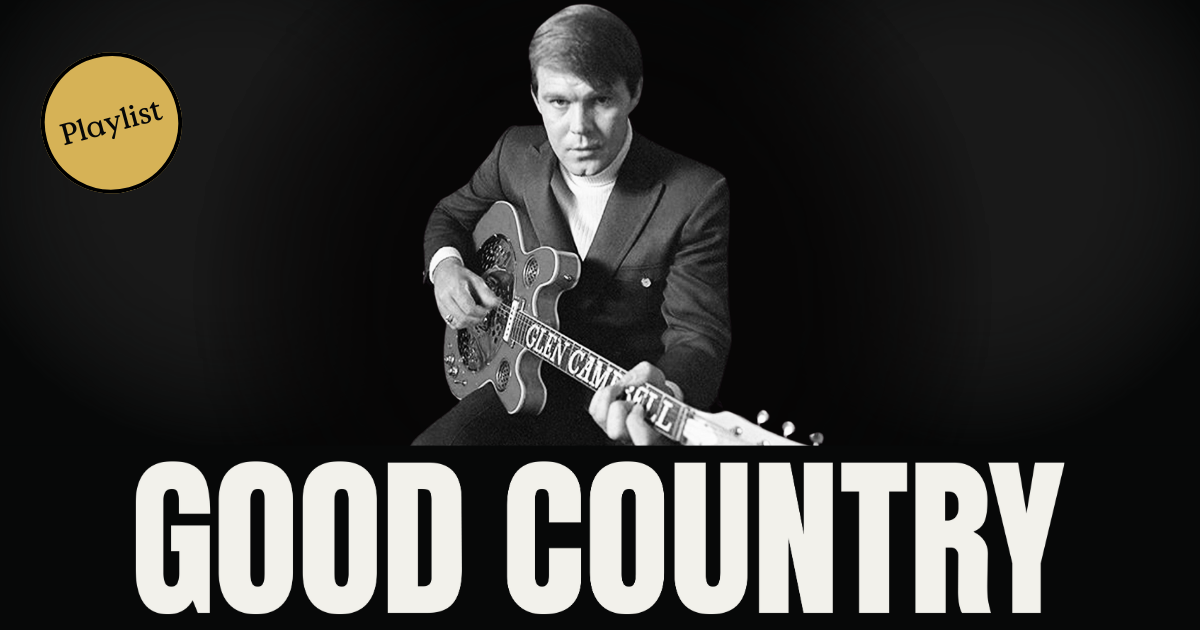
Glen Campbell

Even at the highest heights of Glen Campbell’s superstardom, he refused to let his superlative instrumental skill take a backseat to his roles as frontman, songwriter, Hollywood actor, TV star, and tabloid veteran. Campbell’s approach to country music as a true multi-hyphenate celebrity bridged generations, connecting the hardscrabble, DIY generations where multiple skills were necessary to make a living to the modern era, where he helped pave a way for famously multi-talented picker/singer/writers like Vince Gill and Brad Paisley to not be pigeonholed as one thing or the other.

Ray Charles

Any conversation around or collection of superlative country pickers and musicians would be glaringly incomplete without the inclusion of Ray Charles. His incursions and experimentations in country music are many and infamous. His 1962 album, Modern Sounds in Country and Western Music is routinely listed as one of the best country albums of all time. He’s worked with and performed with Willie Nelson, Merle Haggard, Ricky Skaggs, Travis Tritt, Johnny Cash, Glen Campbell, and many, many more. Plus, his country forays demonstrate a deep, holistic understanding of the genre. Charles is a quintessential country multi-hyphenate and country-soul in the modern era would feel especially lacking without his seminal contributions to that tradition.

Charlie Daniels

It’s hard not to wonder what young, hippie, “long-haired,” Vietnam War-opposing fiddler Charlie Daniels would have thought of his older self, and his more harebrained and often hateful beliefs later in life. But the controversial and outspoken musician, at all points of his career, was a picker’s picker. Over the course of his life he performed and recorded with Earl Scruggs, Bob Dylan, Leonard Cohen, and many more. But his chief contribution to American roots music may just be his fiery, unhinged fiddling on “The Devil Went Down to Georgia.” Just wander down Lower Broadway in Nashville on any given Saturday night to feel the impact of that particular show-stopper. In this clip, he chats and performs “Uncle Pen” with Scruggs and Del McCoury.

Vince Gill

That buttery voice, that stank-face inducing chicken pickin’, that high, lonesome sound – Vince Gill is all at once country and bluegrass, Nashville and Oklahoma, western swing and old-time fiddle. Whether with The Eagles, preeminent pedal steel guitarist Paul Franklin, the Time Jumpers, or so many other outfits, bands, and iterations, Gill is simply right at home. Because, at his core, he’s just a picker. He may play arenas, but he knows he belongs at 3rd & Lindsley or the Station Inn. Or Bluegrass Nights at the Ryman. A quintessential picker-singer-frontman, Gill continues to define the myriad ways country stars can maintain their selfhood and personality – instrumentally and otherwise – even in their wild successes.

Merle Haggard

Speaking of chicken pickin’, country’s most famous Okie was a shredder, too. A sad song, a glass of (misery and) gin, a Telecaster, and the Hag – that’s all we need, right there. Merle’s playing style, even at its most technical and impressive, was simple and down to earth. You could tell he cut his teeth playing bars, fairs, and honky tonks. You could almost hear him pulling himself up by his bootstraps as he played.

Wanda Jackson

The Queen of Rockabilly has been slaying rock and roll, hillbilly music, and the guitar for more than seventy years. In 2021 she released her final album, Encore, when she was 84 years old. It features her signature passion and fire – and performances by Elle King, Joan Jett, Angaleena Presley, and more. Jackson has been representing the vital contributions of women to rockabilly and rock and roll for her entire career, just as often commanding the stage with her growly, entrancing voice and her powerful right hand.

Willie Nelson

Who would Willie Nelson be without Trigger? Without a tasty, less-is-more, nylon-string guitar solo? For decades, Nashville, Music Row, and guitar players around the world have been emulating his particular sound as a guitarist – whether they know it or not. Sure, he’s a hit songwriter, a star and front-person, a collaborator of Snoop Dogg and Frank Sinatra, and a connoisseur of fine bud, but perhaps more than all of these accomplishments, Willie is an impeccable picker. He can hold his own with the best of the best, because he is the best of the best.

Brad Paisley

Brad Paisley’s fame crested at perhaps the perfect time for him in country music, combining a rip-roarin’ guitar playing style with a sound that was entirely trad while carrying touches of the bro country wave that was about to inundate the genre. As such, he was able to build a career on the diversity of his skill set, before Music Row and the power behind it began prioritizing music that didn’t need to be musical and voices that didn’t need to be singular. Luckily, Paisley is both those things and more, and despite the many eyebrow raising moments across his career, our faces more often show shock at his mind-bending skill as a guitarist than anything else.

Dolly Parton

How is it that Dolly Parton can play so many instruments so impeccably with those iconic acrylic nails!? Nowadays, you are just as likely to hear Dolly performing to a track – yes, she does lip sync and pantomime playing along with recordings – but don’t get it twisted, she absolutely can play a passel of instruments from her beloved “mountain music” traditions. She plays guitar, banjo, auto-harp, dulcimer, and has even been known to pick up a bedazzled saxophone from time to time – though we can’t guarantee she actually knows how to play that one, we’re still blown away.

And what about thatone viral video with Patti LaBellewhere they play their acrylics like washboards? Dolly can make music with just about any instrument.

Bonnie Raitt

How many people do you think enjoy Bonnie Raitt’s soulful blues and Southern rock sounds without knowing she’s also often the one playing the guitar solos and making that bottleneck slide weep? Raitt is a Grammy winning songwriter, a fantastic vocalist and song interpreter/collector, and – above all, in this writer’s opinion – a superb guitar picker, especially playing slide. She can hold her own with just about anyone, and she has. Her phrasing and use of melodic space demonstrates that she’s been honing her craft for her entire life. That taste can’t be taught, it has to be found. Boy, has she found it.

Marty Stuart

Marty Stuart’s long, fabulous, superlative career began with him filling the role of sideman for such luminaries as Lester Flatt, Johnny Cash, Vassar Clements, and Doc Watson. He plays guitar and mandolin, working up his chops as a youngster with pickers like Roland White as his mentors. When his solo career took off after his Columbia debut in the mid-eighties, his ear for fine picking remained present throughout his music – however far afield from those early bluegrass and country days he may have traveled, stylistically. Whether bringing in psychedelic surf sounds or Indigenous flavors of the American West, Stuart’s catalog of music centers virtuosity that’s never gratuitous. And his band, the Fabulous Superlatives, featuring crack guitarist Kenny Vaughan and multi-instrumentalist Chris Scruggs, represent a high level of picking prowess, too.

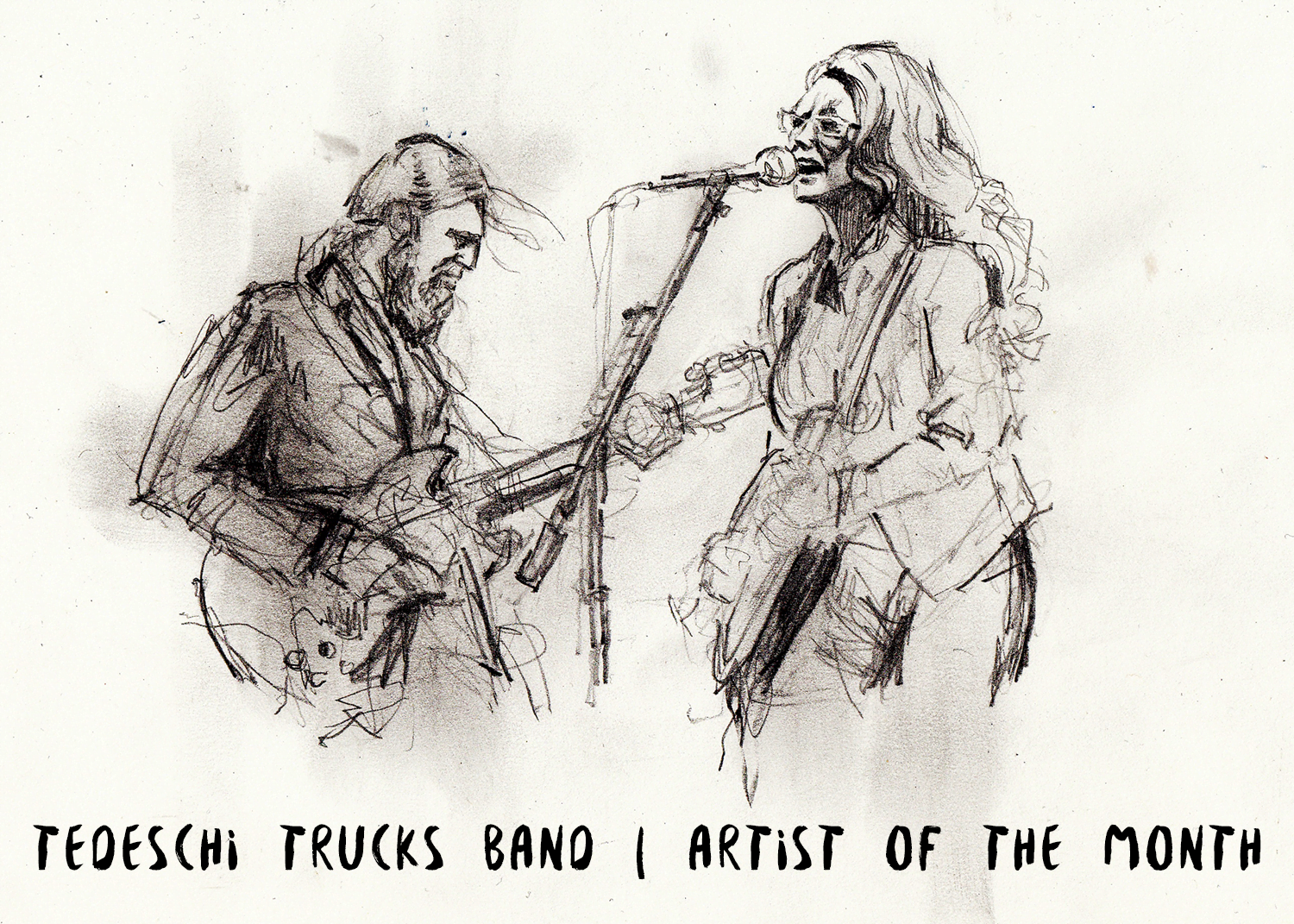
Tedeschi Trucks Band

By many measures, Derek Trucks is the world’s foremost living slide guitarist, but don’t overlook powerhouse vocalist and co-band leader, Susan Tedeschi in order to venerate Trucks! Both started playing as youngsters – Trucks when he was a kid and Tedeschi when she attended Berklee College of Music. These two are guitar and blues royalty, helming one of the most impactful modern blues and Southern rock orchestras on the planet. They’re consummate musicians, knowing just how to surround themselves by players who support and challenge, both. Even with their laundry list of personal accomplishments, together, Tedeschi & Trucks – who are also married – are so much greater than the sum of their parts.

Keith Urban

Keith Urban brings a scruffy, down to earth guitar playing style to his polished and glam mainstream country sound. Yes, even as far away as Australia, having instrumental chops means having country currency. When he moved to Nashville in the early ‘90s, with a few Australian radio hits and awards under his belt, he immediately found work as a side musician and co-writer in Music City. It wasn’t long until his star ascended stateside, too – and then, as quickly, around the world – bolstered by arena-ready guitar. Now readying his first album since 2020, Urban shows no signs of slowing down, with the music or the picking!


Photo of Glen Campbell courtesy of the artist.

Editor’s Note: Sign up here to receive Good Country issues when they launch, direct to your email inbox via Substack.

BGS 5+5: Ali McGuirk

Artist: Ali McGuirk
Hometown: Greater Boston
Latest Album: Til It’s Gone
Personal Nicknames: McJerk

Which elements of nature do you spend the most time with and how do those impact your work?

Vermont is a magical place and I certainly felt something open in me when I moved here in 2020. Spending time on the lake, among the mountains never gets old. There is a tiny island in a cove of Lake Champlain where my boyfriend lives and we like to canoe there, camp out and hang. I find that time to be incredibly restorative and I believe everyone deserves time in open nature to feel comfortable and connected.

What’s the toughest time you ever had writing a song?

Some songs come real easy and others are jigsaw puzzles that take years to solve. The songs that took me the longest to lyrically unlock on this album were “The Work” and “Evelyn.” Both of those were in process for over a year because I was more ambitious with the themes I wanted to take on. The trick with writing any song is that you want to say a lot with a little, but it’s like, which little?

In “Evelyn,” I’m pulling from some specific stories from my family’s past, but also to the general experience of feminine sacrifice. There is a lot of darkness I am navigating in this song, so managing that was a heavy lift. It was also the first song I ever wrote that was a story, abstract as it is. Figuring out what the story really was that I wanted to tell was a struggle, but it was also very therapeutic and I’m glad I got there.

“The Work” was especially tricky, too, because it is about touchy conversations around privilege and oppression. (Remember the early Trump years and the beginning of what I like to call the Great American Polarization?) Those conversations take a lot of emotional labor (patience, empathy) and can be really painful, especially for those who are more acquainted with suffering at the hands of unjust institutions. The first line I wrote was the hook that said “I’m so tired of explaining it.” I was stuck on that melody and knew there was something there, but I was really self conscious not to center myself, or make it sound like I knew everything, which I don’t, or just say the wrong thing in general and offend somebody. But I also didn’t want to be too fearful and shy away from the subject. Saying what I meant in those lyrics took time.

If you had to write a mission statement for your career, what would it be?

Keep getting better always. Play with great musicians. Make the music mean something real. Build financial stability in my life that is disconnected from exploitation.

What has been the best advice you’ve received in your career so far?

Susan Tedeschi told me to “keep singing” and that was pretty cool, and then she ripped the first solo on the first tune, and I was a puddle.

What other art forms — literature, film, dance, painting, etc. — inform your music?

God, art is amazing. All of it. That being said, I love reading novels and I think that they probably do the most for my songwriting. Good authors are able to go deep on the human experience on so many levels. I think that we can often access truths that are more profound in novels than even in nonfiction (not to knock nonfiction) and I want the same thing for my songwriting.


Photo Credit: Ben Collins

MIXTAPE: Bonnie Bishop’s Songs for Soothing the Fall

This fall season has been a tough dose of reality for me. The back-to-back losses of my beloved Grandma Breaux and my dear soul sister Kylie Rae less than three weeks apart rocked me to the core. The day after Kylie’s funeral, I left home for a six-week international tour to promote my new album, The Walk, which came out in the wake of it all.

Ironically, (or perhaps, not) this record is about navigating the ups and downs of life, overcoming depression, and continuing to move forward in the midst of our human struggle. My own songs have found their way onto this playlist of tunes that are giving me comfort at a time when I need it most. – Bonnie Bishop

Bonnie Bishop – “Love Revolution”

I’ve been running to this song. Like, a lot. And I’ve never even listened to my own music, much less worked out to it. But this Steve Jordan beat is incredible and the guitar builds and builds into this frenzy towards the end that is the perfect pace for breaking a sweat. Moving the body is a great way to channel energy when one’s emotions start getting out of control, and there’s nothing like a great soundtrack to motivate you. (Note: I’m not making a habit out of running from my problems. I am, however, making a habit out of exercise, as it’s the healthiest of all my coping mechanisms.)

Bonnie Bishop – “Keep on Moving”

This is how I hear the pulse of life: like a piece of music that grooves on and on from one generation to the next. Life is not an easy walk. The world keeps going in spite of whatever happens around us and we may be dragging our feet, but the sun continues to rise. We have to keep getting out of bed and putting one foot in front of the other because that is what is required in order to LIVE. We have to Keep. On. Movin’.

Peggy Lee – “Me and My Shadow”

We knew Grandma Breaux was dying. One night, several months ago, my Mom and I asked her if there was anything she wanted me to sing at her funeral. That was when she started singing this obscure tune which I’d never heard before, while wearing an oxygen mask no less! Later, my uncle would argue that it was totally inappropriate material for a memorial service but then again, there was nothing appropriate about Grandma Breaux. When that day inevitably came, I stood by her grave and sang it acapella, just like she did that night in the hospital. Now I find myself singing it all over the world, sometimes on stage with the band and sometimes late at night, when I’m wandering alone and restless down some foreign street that I can’t pronounce.

Brandi Carlile – “I Belong to You”

In the middle of the losses this fall, my youngest cousin got married to the love of his life in my parent’s backyard. It was a beautiful celebration, despite the glaringly obvious absence of Grandma. The highlight of the wedding for me was singing this song for the bride and groom’s first dance. There was no PA, just me and my guitar serenading them as they swayed beneath the stars and the big oak tree, all of us with tears streaming down our faces. The beauty and the sorrow of this song is knowing that loving someone means one day having to let them go. All we really have are snowflake moments like these.

Susan Tedeschi – “You Got the Silver”

Susan is always on my playlist. I could pick any one of a dozen of her tunes — just the sound of her voice makes me feel better. This is a Rolling Stones cover off one of her earlier solo albums. It has a sweet, easy going melody that is a welcome reprise to the otherwise heavy sound track I’ve been listening to for the past few months.

Bonnie Bishop – “The Walk”

I had never lost anyone close to me before August. Now two people I loved very much are gone from this earth and I am still struggling to accept that which I cannot change. Life feels heavy right now, like this song, but the haunting echo of the background voices reminds me that I am not alone. Grief it is just part of being human.

Kylie Rae Harris – “Twenty Years From Now”

Kylie released the best record of her life months before she died. This song was her ode to her daughter, and I will always remember her coming over to my apartment in Nashville the day she and Jon Randall wrote it. She played it for me and I told her this song would be her legacy. Now I just want my friend to be remembered for the love that was her… that love is evident in every note she sings on this one.

Foy Vance – “Guiding Light”

I love all of Foy’s music, but this song will always have a special place in my heart. As a road warrior, I am all too familiar with that feeling of longing, of searching for that oh-so-elusive entity called “home.” Grief has exacerbated that emotion ten-fold. Back in September, I got to sing BGVs in Foy’s band at AmericanaFest and oh, what joy! Singing these harmonies at the top of my lungs with his gut-wrenching, soulful cry of a voice… those 45 minutes were like precious salve on my open wounds.

Aretha Franklin – “How I Got Over”

This piece of music has the ability to lift me out of my depression. It brings me inexplicable joy and is one of my all-time favorite recordings ever. When I hear this song, I start clapping and dancing in my living room like a Pentecostal from East Texas. Matter of fact, I think I’ll put it on right now!

Louis Armstrong – “What a Wonderful World”

This was another of my Grandma Breaux’s favorite songs, also on the playlist at her memorial service. She always had a way of glazing over the bad things that were happening in life… and I think living requires a certain amount of delusion, honestly. But the reason I have always loved this song is because it reminds me to see the good in the world around me, to meditate on “whatever is lovely, whatever is of good report.” It is a daily choice I am trying to make, one that is teaching me the power of gratitude to change my attitude.

Bonnie Bishop – “Song Don’t Fail Me Now”

If not for music, I wouldn’t be here. It has saved me over and over again, not just listening to it but creating it and singing it. This past month, performing this music onstage with my band has kept me from going out of my mind with sadness. Every night when I sing these words, I feel Kylie’s presence. She would have loved singing harmonies on those la la la’s at the end… The fact that she can’t is a nightly reminder to me to cherish these moments of music, to cherish life itself, and to continue pouring my heart into song. They have the power to heal, and I am walking proof.

Susan Tedeschi on Evolving, Encouragement, and Electric Guitar (Part 2 of 2)

Susan Tedeschi may stand in the center of the Tedeschi Trucks Band but she is quick to give ample credit to her fellow bandmates for setting the right tone on the bus and on the road. With a new album, Signs, she certainly shines as a vocalist and an instrumentalist — and that confidence comes through in conversation, too. Engaged with the world around her, she’s quick to talk about the need to evolve, the encouragement she gives and receives in the music, and the common thread that runs through all 12 members of the Grammy-winning ensemble.

Editor’s Note: Read the first part of our Artist of the Month interview with Derek Trucks. Both interviews were conducted before the death of band keyboardist Kofi Burbridge in February.

BGS: Listening to this record, it was like a reminder of why the word “band” is an important part of this project. On that first track, everybody has a moment – all the vocalists and the musicians. Why did “Signs, Hard Times” seem like the right song to lead this album?

Tedeschi: Basically for exactly what you just said. It’s letting everybody hear a little bit about who the band is. Also, there’s a lot going on right now. And also, there are a lot of obvious signs, whether it’s political or environmental, or just living. So it seemed to fit.

Do you all get into heavy conversations on the bus? There are some topical songs on this record. Does that carry over on the road?

Oh yeah, a lot. This is such an interesting time for me. I was born in 1970 so I’ve seen a lot of different presidents come and go, and a lot of different mindsets and people who think a certain way. And I just can’t believe that this is going on now, in 2019, almost 2020. I feel like, “Come on, people, we can do better than this. We can evolve.” I just feel like we need to evolve as a species. I feel like we’re not keeping up with technology, we’re not keeping up with science and facts. It’s people and their egos that are in power, that are running things and not using common sense. It just doesn’t make sense.

This album has some heavy songs, but there are also messages of encouragement. I’m thinking of songs like “Still Your Mind.” Even as you’re presenting that message to your audience, does it resonate with you as well? Kind of telling yourself to hang in there?

Yeah, that’s a song that Derek wrote. He’s a very Zen character in real life, so it makes sense that he would write that. He’s very good at steering the ship and being a great captain to all of us, and keeping us eyes-forward and moving ahead, and being positive and learning to breathe and take your time. The lyrics of that are really encouraging and positive.

And it started instrumentally. I think Kofi was playing some of the piano stuff at soundcheck and then Derek started playing some of that stuff and it formed organically. Derek started to write words to it and would bring pieces to me and ask, ‘What do you think of this?’ I would say, ‘Oh, that’s great!’ or ‘Maybe move these words around….’ But I tried not to do much because I wanted him to have that tune.

We try to do that a lot with each other. Derek, Mike Mattison and I write most of the songs, but Mike wrote a lot for this record. I mean, he is our scholar so we put him to work. He’s got ideas for days, and it’s amazing because it shows the range of his writing. He’s got a song like “Hard Case,” which is really light and fun, and then you have a song like “Strengthen What Remains,” which is really melancholy and sad, but at the same time, real hopeful. He also write “They Don’t Shine,” which sounds like a pop hit. He has a lot of a different angles in his writing.

I read that you started playing electric guitar in your 20s. Were you playing acoustic before that?

Yeah, I played acoustic growing up, starting at 14 or 15. My dad gave me one of his old Martins when I was about 15 for Christmas one year and I cried because I was so excited. I wrote a bunch of songs on that, and that’s when I first started songwriting. I didn’t play electric guitar until I was about 22 or 23. I had graduated college at 20, so I was out of college for a couple of years before I ever picked up a guitar, other than acoustic. I was playing acoustic at shows but it was more folky and songwriter-y kind of stuff.

Then I fell in love with blues. I had some friends who used to play at Johnny D’s in Somerville, Massachusetts, every Sunday for the blues jam. They needed singers so they asked me to come down, and then I realized, “Well, shoot, this would be a great place to try out playing the guitar.” There weren’t a lot of people there and it was pretty chill, so that’s what I did. I would go down and sing a few tunes, then I’d start playing rhythm. I never really soloed for the first couple of years on electric. I just wanted to learn to learn how to play rhythm and play along with stuff so I could try to accompany myself while singing.

I played along with a lot of Freddie King and Johnny Guitar Watson and Otis Rush and Magic Sam – and I fell in love with blues. I wore out Big Mama Thornton’s Hound Dog record and Koko Taylor and all sorts of stuff. I fell in love with it and I realized, “This is what I want to do. I want to be Freddie King and Johnny Guitar Watson!” It’s funny because I did a tour with Etta James and she asked me, “Who are your influences? Who do you want to be?” I said, “I want to be Johnny Guitar Watson.” And she said, “Ah! That’s who I want to be!” [Laughs]

For guitarists who look up to you, can you give advice on how to play tastefully?

Yeah! Well, for one, don’t play real loud unless you know what you’re doing. A lot of people plow through as loud as they can. It’s like, “What are you doing? That’s not music. You’ve got to blend with the people you’re playing with.” Another thing is to actually play along with records. I did that a lot and it was very beneficial. I can’t get over how much you can learn by playing along with records and listening, so that’s some pretty good advice.

Another thing is, try not to just play riffs. If you’re trying to solo, don’t be like, ‘Oh, I love this riff and I’m going to fit it in here.’ Work on stuff and practice stuff, and then have it be in your arsenal. But think about singing a melody, like you’re trying to tell a story, if you’re going to solo. I mean, I’m still learning how to do all this stuff. I am by no means a badass guitar player. I always have so much to learn, and it’s amazing being able to be in a band with Derek because he’s one of the best.

I just feel like there’s so much to learn on guitar. You can never learn it all. Don’t think you know it all because you don’t. And listen to people like Ralph Towner. They’ll blow your mind, like, “What the heck? That’s one guy playing all those parts?” So, I enjoy it but I know my limits and my strengths on guitar. But I feel like I can sing anything. I’ve been able to sing a lot of different styles of music. I feel very blessed that way. So I’m just learning to get proficient on guitar like I am vocally.

I like the fact that this band has black musicians and white musicians, older musicians and younger musicians, men and women – it looks like the world we live in, you know?

It is, absolutely.

You have 12 people working together every night. Is there a common thread that runs through all of you?

Yeah. We love each other. [Laughs] Everybody’s a good person and communicates well and cares about each other and has respect for each other. Musically we come from a bunch of different backgrounds but we all love blues and gospel and soul music. Some people love jazz, some people love country or bluegrass. There are a lot of different places that people are pulling from. Everybody’s educating everybody all the time in different areas, which is really cool.

And we just like hanging out. We like to go eat together, do laundry together. We’re on the road like a married couple – and we’re actually a married couple and they put up with us, so that’s pretty rad. It’s a really special band, and you know, there is something to that – where people come and see our band and see the variety up there and how we live together and travel the world together. People see us coming!


Photo credit: Shervin Laivez
Illustration: Zachary Johnson