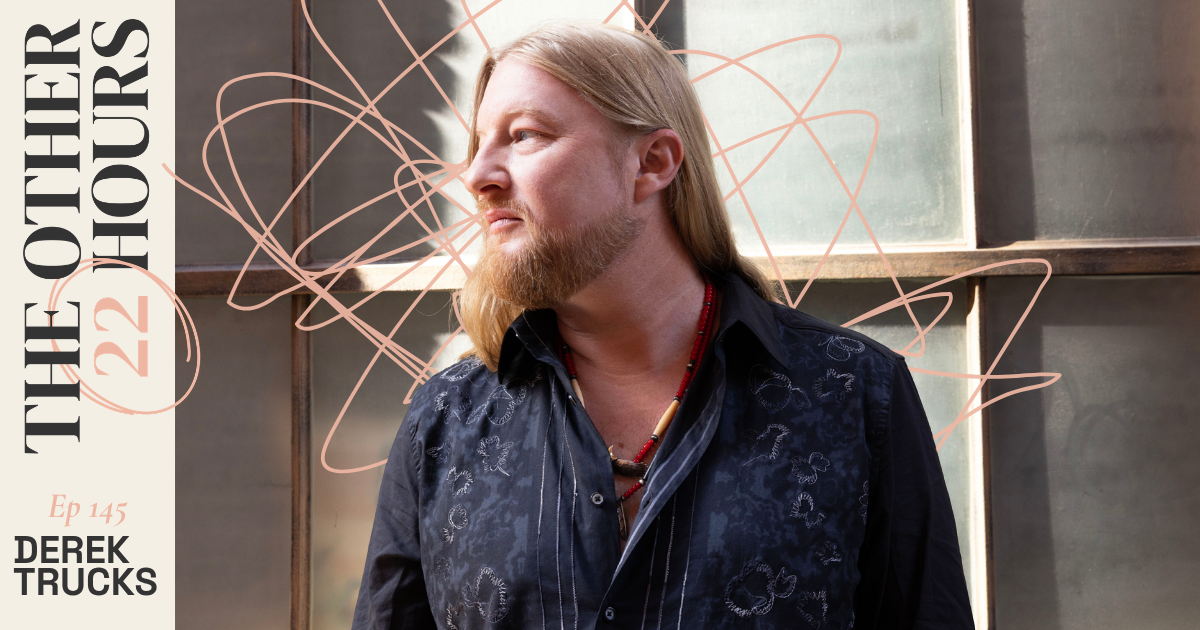
The Other 22 Hours: Derek Trucks

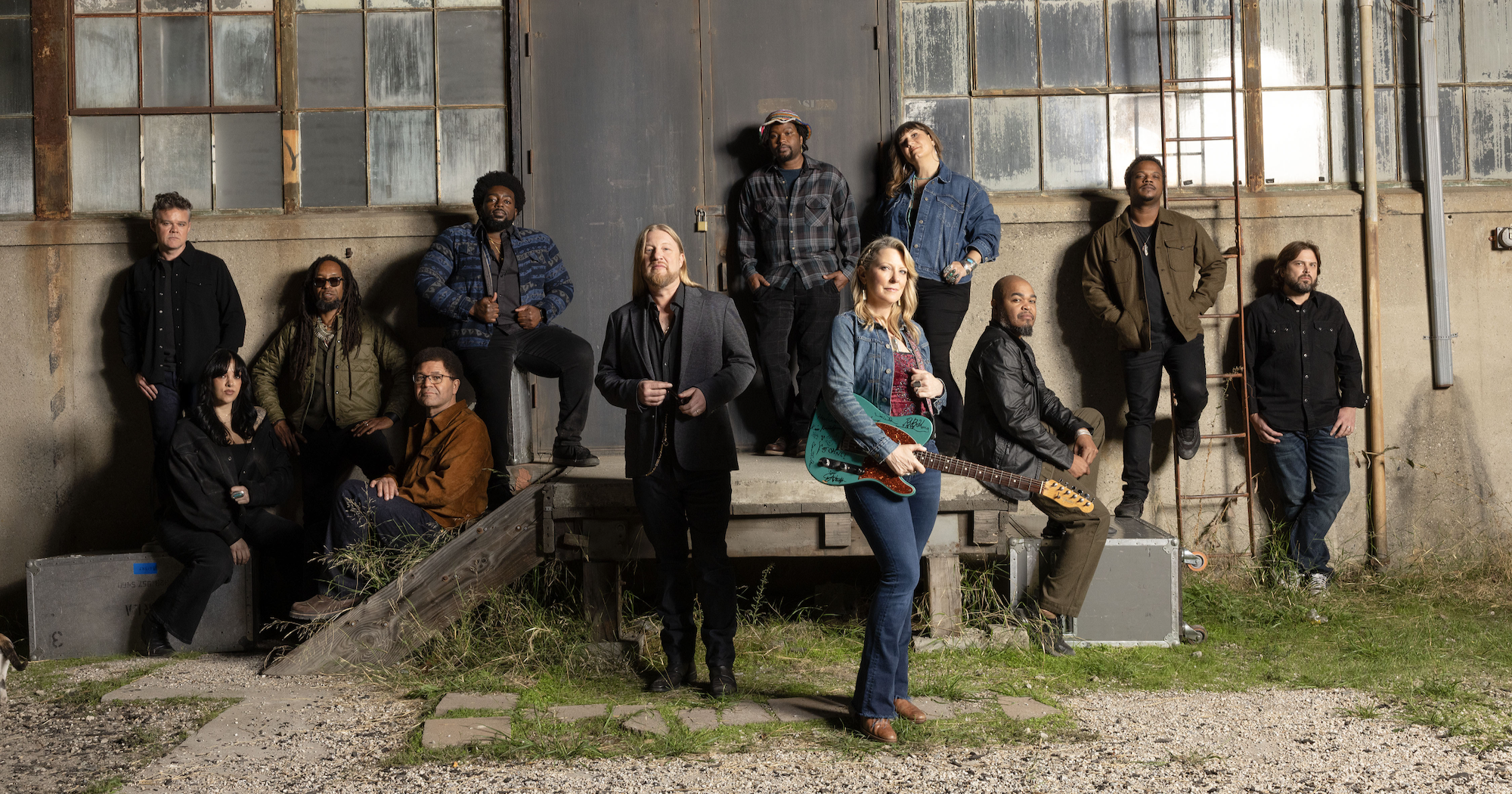
What happens to the creative spirit when you have been a professional “lifer” since the age of nine? Derek Trucks, widely considered one of the greatest guitarists of all time and a veteran of the Allman Brothers Band and Eric Clapton’s touring lineup, joins the Other 22 Hours to discuss longevity and leading a 12-piece musical circus. with his Tedeschi Trucks Band co-founder and wife, Susan Tedeschi. We explore the gradual shift from student to teacher, the grounding force of a musical marriage, and the essential practice of “turning the crops” to stay inspired.

LISTEN: APPLE • SPOTIFY • AMAZON • MP3

In This Episode:

Tedeschi Trucks Band
Allman Brothers Band
The Beacon Theater
Eric Clapton
Kofi Burbridge
John Lee Hooker
Koko Taylor
Ace Moreland
Colonel Bruce Hampton
Buddy Guy
Joe Walsh
Gregg Allman
Jim Scott
Tom Dowd
A Love Supreme
– Krishnamurti
Mad Dogs & Englishman (movie)

Go Deeper:

Watch: View this entire conversation above or on YouTube.
Explore: Find similar conversations in these themed playlists.
Connect: Join the conversation on Instagram.

The Other 22 Hours is hosted by Aaron Shafer-Haiss (producer, mixer, musician) and Michaela Anne (songwriter, artist, creative coach). More about Aaron’s workMore about Michaela Anne’s work.


Produced by Aaron Shafer-Haiss. Original music written, performed and produced by Aaron Shafer-Haiss.

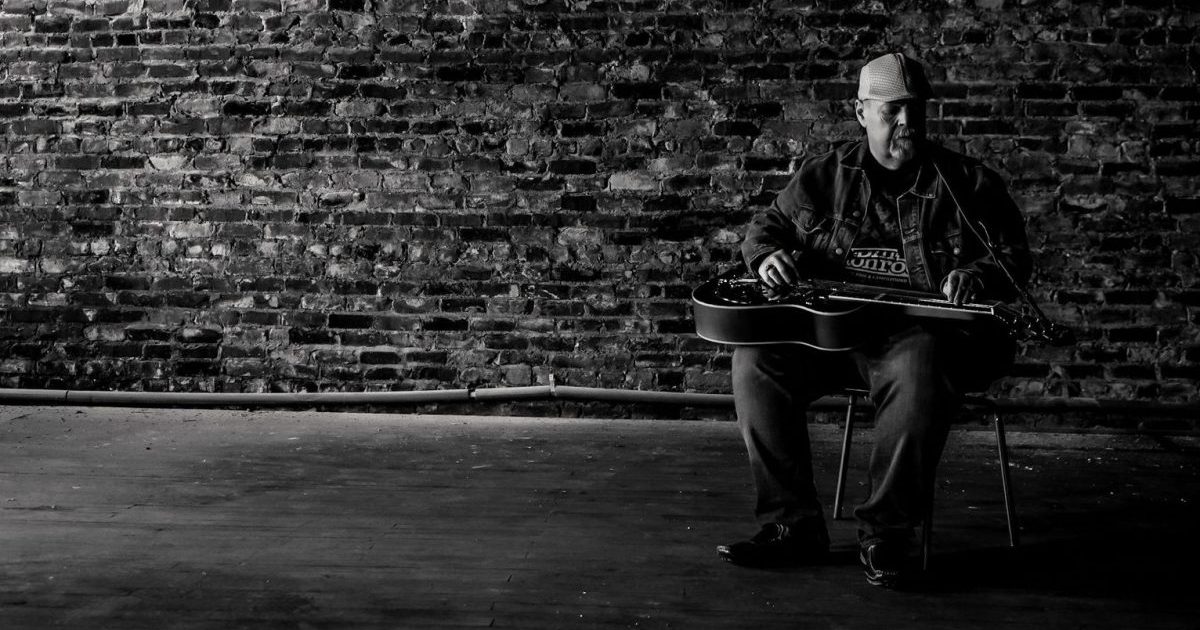
Photo Credit: Chapman Baehler

Tedeschi Trucks Band Have Done It Again

When it comes to entirely enjoyable, technically exquisite modern blues, Southern rock, and jam-band soul albums, Tedeschi Trucks Band have a statistically impossible batting average. Their new LP, Future Soul (released March 20 via Fantasy Records), is yet another “no skips” collection from the megalithic 12-person Americana group fronted by husband-and-wife guitarist Derek Trucks and guitarist-vocalist Susan Tedeschi.

On that strength of their catalog – and their ensemble – TTB have amassed hundreds of millions of streams, won eight Blues Music Awards and one GRAMMY, and a handful of their songs have become regarded as modern standards in the Americana and American roots music songbook.

Future Soul simultaneously feels like a surprising departure and familiar, essential territory for the band. With Mike Elizondo producing and songs and creative input sourced from across the group’s lineup, the set ends up sounding and feeling more acoustic than “usual,” while still reaching roaring crescendos and building it all on dank, wide open grooves. Perhaps those acoustic moments are a substantial contributing factor as well, but the cozy, plush pocket of the album is what gives it a laid-back, relaxed, and floating vibe no matter the track’s genre construction.

Screaming slide, no-holds-barred vocals, and wall-of-sound climaxes can all be found herein, as well. But the collection never thrashes or flails, it’s precise and exacting – as Tedeschi and Trucks are both known to be on their instruments, whether guitar or voice – but it’s certainly not sterile or gated or homogenized, either. It’s another remarkable feat for a group so large that you would almost have to assume, live or in studio, musical mud would be an inevitable byproduct.

But no, TTB seem to have no misses, at least not on Future Soul. It’s clear this group works together in harmony not just because of the down-to-earth and collaborative leadership of Tedeschi and Trucks, but because the artistic and musical responsibilities and ownership – of the songs themselves, of the album, of the makings of each, of “success” for the band – are decentralized and distributed throughout the group. The band has a sound, an art, that is consistently collective in the way it’s received by audiences and listeners because, forgive the obviousness, Tedeschi Trucks Band always work as a collective.

In our BGS conversation with Derek Trucks, the magic and unlikelihood of this creative dynamic and the processes by which the band continues to rack up success after success were on full display. We spoke about how they put together Future Soul as a group effort, the many inputs that went into Trucks fashioning his lyrical guitar style, and what bluegrass means to him personally, to Tedeschi, and the band as a whole. It was a joy-filled, passion-led conversation that again reinforced how this wailin’, rockin’, rollin’ band continues to flout and subvert expectations – and thereby has become so beloved.

Something that jumped out at me from the bio about the new album is that you say, “There’s just not a weak spot on this record.” I have to say, I totally agree. I think it’s remarkable that with a 12-person band and such a diverse catalog of recordings and releases, it really doesn’t seem like there’s any “fat” to trim or any duds to cull.

I have to ask, does it feel as magical on the inside of that process as it seems from the outside? It seems unlikely that y’all would work so well together towards a common goal, artistically, and be able to deliver again and again and again. And I don’t just mean commercially, awards-wise, or for audiences alone. Clearly you’re delivering artistically for yourselves and by your own standards, as well. So, does it feel as unlikely on the inside of that process as it maybe does to us on the outside looking in? [Both laugh]

Derek Trucks: That’s awesome. But it does, man! I mean, not every record you do feels the same way. They’re all their own beasts. For I Am The Moon, it was in a time of great uncertainty. We did four records and it was just kind of a heavy, heavy time – and that record feels like that.

This one felt completely different. The band felt much more confident [and] had been touring for two years straight. We had been playing so much together that when we finally got the core of the group up to our farm in Georgia to do some writing, there were a few songs right out of the gate. Like “Future Soul” and “Who Am I,” where immediately, Sue started singing, Gabe [Dixon] started singing these melodies. I got chills and I was like, “Oh, this is gonna be good.”

You’re always kind of worried about running out of ideas, or running out of runway – like a thing in the back of your head. But I feel like we’re incredibly fortunate where, when we’re together, everyone puts everything they have into it. Then, when we’re not on the road together, everyone’s all doing their own things musically. So, when we come back together, there’s a lot to talk about and a lot of music to remember together.

I think it keeps it really fresh and it keeps it moving forward. I feel like everyone’s out honing their craft when they’re away from this. When they come back, there’s a lot of new ground to cover. So far, we’ve been really, really lucky that way. And there’s a handful of just incredible songwriters in the band, so everybody comes in with two or three ideas. You’ve got a pretty strong record right out of the gate. That’s been something that I think me and Sue are just realizing – we’ve known how amazing that is but, you know, Gabe and Mike [Mattison], they show up with some serious ideas.

Then having Mike [Elizondo, the album’s producer] down, just some outside ears – I think that was really important. Sonically, he was trying some different things that I think inspired the band and made everybody play a little differently. That was exciting.

I was struck by the range of styles and the different genre infusions that y’all have put into this collection. What really stuck out to me, listening down to the project in one fell swoop, is there are still those really big energetic moments – and there are still those “wall of sound” moments that y’all are really known for. But I felt like this album is chill and laid-back in a way; it feels deep in the pocket. Can you talk about capturing those seemingly disconnected energies together?

I think one of the things is that with a band or an artist, I think if you’re maturing properly – we learn sometimes slowly – that you don’t have to force the issue all the time. You can trust things around you a little bit more, and sometimes the groove is enough. Sometimes the chord changes are enough, sometimes the melodies are enough. It doesn’t have to be these epic moments at all times. So when they do come, you’re excited about it and wrings you out. Then you lay them back down, and then you go on another little trip.

I think the band, having played together so much, we’re in a different place that way, where we realize that you don’t have to force the issue on every song. You can go to different spaces, different places. And then, again, having some outside ears – Elizondo really helps with that, too. He helps guide you to places that maybe you wouldn’t have gone naturally, so that’s a fun thing. Then you learn things about yourself musically in the band that you didn’t know before. That’s always a good place to be.

One thing that I’ve been obsessed with about your playing, specifically, ever since I discovered you as a teenager, is how lyrical of a guitar player you are. It jumped out at me from the bio, as well, when you’re talking about “I Got You” and how you’re doing a guitar-voice dialogue instead of guitar-guitar. I think of you as one of the most lyrical guitarists out there. You’re so present and so grounded. So I’ve always wanted to ask you how you’ve cultivated that style – as well as being able to have those moments of pure shreddy, lick-y wailing.

Then hearing that you really wanted to make that connection between voice and guitar on this album made so much sense to me, because I’m always thinking about how you’re a lyrical player. And Susan is, too, and you both dialogue with your instruments, and her voice, often.

Pretty early on I had a few musical epiphanies. One was Allen Woody, who played with Gov’t Mule and the Allman Brothers. When we toured with my solo band, opening for a Gov’t Mule in the early days, he would always turn me on to records. He gave me this CD by this guy named Aubrey Ghent, who was a gospel [steel] player. I put on “Amazing Grace” and I was like, “Wow, what an amazing voice.” And then I heard the pick and I realized that it was this guy playing lap steel! But it sounded like a woman singing. I got chills [over] my whole body, and I was like, “That’s it, that’s the thing.”

I had been listening to a lot of Indian classical music – a lot of vocalists and sarod players. Me and our old [Derek Trucks Band] bass player, Todd Smallie, went to Ali Akbar College of Music in San Rafael, [California] and they would let us sit in on classes. I realized he [Ali Akbar Khan] made all the instrumentalists take vocal classes, because his whole thing was that you should be singing through your instrument. So that made it just really obvious.

Those were a few of the things, and then there was a long time where I just stopped listening to any guitar player. It was only singers and horn players. That was kind of the idea [that] musical ideas can come from anywhere, but you really should be singing the thing. There’s time for all of it, but the stuff that moves me the most is, you know – even hearing Duane Allman on “Blue Sky” or something. It sounds like somebody’s singing, like somebody is walking down the road whistling. I think those are probably the touchstones for me.

Maybe I am projecting a little bit, because I’ve been a bluegrass banjo player my whole life – I started playing when I was seven. But when I think of guitarists, especially who end up reaching the pinnacle – whatever that is – or especially in flatpicking and in bluegrass, there tends to be this homogeneity of style. The people who get to the “very top” end up all sounding like each other. Then you have those folks that really stand out, and it tends to be because they’re using space and using air as much as they’re using 16th notes and 32nd notes. I think, being used to really shreddy flatpicking, that hearing steel or slide or blues guitar or jazz or acoustic jazz, anything plays with sustain and plays with space, I just drink it up.

Beautiful, man. I remember the first time I heard the Stanley Brothers, or Ralph Stanley, and I just remember it hit me in that place where those early blues guys hit me. There was just something about it. That kind of cracked that whole world open for me. I mean, I was always a Tony Rice fan. We have the same birthday, so I thought that was cool.

No way, I didn’t know that.

And I remember being at a MerleFest years ago, I think it was one of the last ones that Doc played. I remember seeing this old Oldsmobile or Cadillac – I don’t know, it seemed like an 1980s or ‘90s car – it pulled up to the stage and I see Tony Rice get out, just dressed to the nines. He pops the trunk, gets his guitar, hits the stage, and then right when that set was over, he was back in that car! I was over there thinking, “What a boss.” It was incredible, man. He went up and just annihilated everybody and got back in his car and drove his ass home. Pretty incredible.

So funny.

The last time we talked to you for the site, you were Artist of the Month in 2019 and you talked about Del McCoury and Jerry Douglas. I know you’ve played DelFest a bunch, you’ve collaborated with Billy Strings – oh, and I was super excited to see Molly Tuttle supporting on a couple dates of your TTB tour in April, too.

Yeah, we’re excited for that. That’s gonna be great.

What does bluegrass mean to you? Obviously, there’s Ralph Stanley, Tony Rice – there are pickers and makers in bluegrass that are infused into what you do, but what does the genre mean to you more broadly? And who in the space right now inspires you, or your musical vocabulary, or what you guys are doing in the band?

When I think of American music, I think of blues, I think of bluegrass, and I think of jazz. I think [those are] the things that we’ve really contributed to the world. To me, those are the cornerstones of it.

We’ve become good friends with Sturgill [Simpson] over the years, and he’s dipped into that [bluegrass] place. When I hear him sing it I’m like, “Oh yep, that’s because he’s from there.” He’s from the heart of it, and it makes me feel the way Ralph Stanley does at times. Even guys like Tyler Childers – and Sue’s a big Sierra Ferrell fan. She loves all those records.

That music, even the current guys, it’s always playing around here. I don’t know, it just feels inspiring to hear. People just get on an acoustic instrument and rip one. You’re like, “Oh yeah! There’s still people that know how to do things!” [Laughs]

That’s the big inspiration I take from it. Because [in the music industry] there’s a lot of cutting corners, and that’s a music that there’s no cutting corners. You gotta put your time in and take your licks or you’re just not gonna get on stage. I appreciate not just the dexterity, but the vocabulary and the heart that goes into it.

And there’s just something about seeing a group around one microphone just doing the dance that I think is always inspiring. We’ve done some shows recently with Sam Grisman, we did a benefit [for Camp Winnarainbow] out in San Francisco. Peter Rowan was on it, and me and Sue, and it was all acoustics. I had an old National, and just getting to play with that group – just the way that group felt. Sitting on a stool with a Dobro, and they were coming and going around the microphone. And then, getting to hang after the show with Peter Rowan and him telling these stories, man. It was just incredibly inspiring. Some of the songs that we got to play with them – that dude [David “Dawg” Grisman] has written some incredible music. That was one of the highlights of last year. It was pretty damn incredible.

There’s a lot of acoustics on this new album, too. I did find myself wondering, and maybe I’m biased, but does the world need a 12-piece bluegrass band? It might! It might! [Laughs]

Man, that sounds pretty fun to me. I mean, it would be a lot less gear to carry on the road! Which would make it more plausible.[Laughs]

If you wanted to speedrun pissing off a fan base, this might be the way to do it.

[Laughs] Yes, alright, we will be thinking about this! I’m gonna go talk to Sue.

This next one is kind of for me, so I thank you in advance for humoring me. But I wanted to talk to you about Jack Pearson. When I first moved to town, I just met this guy out jamming on mandolin at these bluegrass jams. I’d be like, “Man, this guy’s so nice.” He’s a great picker. He’s a great singer. I got a lot of practice playing swing with him at jams in town. Then folks started being like, “Hey, do you know who that is?” Oh my god, I did not know who it was. He was just my bluegrass jam pal. Then I worked at the Station Inn for a few years and I got to work a bunch of his trio shows. I’d die for the solo acoustic sets he’d do on the set break.

Incredible.

If I were to list maybe my top 5 favorite guitarists of all time, I feel like you and Jack would both be on that list. So I wanted to have a little nerdy moment to talk about Jack. [Laughs] Can you talk about his playing and your guys’ friendship? Of course, I see so many connections between your musical vocabularies and that lyrical style we were talking about.

Yeah, man I need to check up on him. It’s been a minute. I need to check in on old Jackie P.

He’s a monster, man. He’s one of the few people that can actually go play in a straight-ahead jazz band, in a bluegrass band, and then the Allman Brothers. I mean, maybe the only person that can actually do it.

I totally agree.

I mean, he played with Jimmy Smith. This dude is like, he’s an absolute monster. And a sweet fella! You can’t say enough good things. When I joined the Allman Brothers, Jack was just leaving. So all the tapes I got, like learning the new versions of the tunes, were Jack Pearson tapes. At the time, Bud Snyder was the sound man. He would mix these tapes for me with Jack really boosted in the mix. I could hear exactly what he was doing to learn these things. I got an intimate take on the way Jack was approaching these Allman tunes. It was so unique.

There’s no one [that] plays like him, and [his playing is] about as smooth as it gets. Sometimes, you watch him play – and I know he plays really light strings and he plays low action – and the way his hands move, I’ve never seen anyone play quite like that. Then he busts out a slide and you’re like, “Holy shit! This dude can do anything!” [Laughs]

I know!

He’s one of the unsung heroes. There’s no doubt about it.

He does this thing – and you do this as well – where you’re able to leverage that really gritty, aggressive, absolutely on-the-razor’s-edge style that comes with blues and Southern rock and Americana. Then at the same time, like you’re saying, with light strings and low action, still has such a deft touch. Yet he has such great attack and precision and cleanliness. He is a great lesson in taste. His taste is impeccable.

Yeah, I think that’s exactly it. I think we forget a lot of the time that most of what we love about music is the musician’s taste. I mean, you got to put in the work – and Jack has obviously done that, that dude is a master. But his taste is really as good as anybody.

I think he’s probably a bigger influence on me than I even realized. Probably because of that early Allman Brothers time for me. I was jumping in at 20 years old, 21 years old. And all of a sudden it’s, “Here’s 60 songs to learn, and rehearsal/tryout is in a few weeks. I was like, “Well, give me those dates.”

I’m stressed just hearing about that.

I mean, luckily most of that music I had listened to my whole life, but I had never bothered to learn any of them. I mean, I knew “One Way Out” and “Statesboro [Blues],” that doesn’t take long. It was all the other shit!


Photo Credit: Chapman Baehler
The Travis Book Happy Hour: Cristina Vane

I’d been searching for the right guests for the Happy Hour when a couple Instagram posts caught my eye. Two former guests had posted video of Cristina Vane playing the Station Inn in Nashville. I was struck by her distinct presence, slide blues style, and unique voice. Once I dug in I was also intrigued by her history and the path that had brought her to Americana music. I was relieved when she accepted my invite and it took us no time at all to fall into an easy rapport. I hope you enjoy this interview as much as I did.

LISTEN: APPLE • SPOTIFY • STITCHERAMAZON • MP3

This podcast is an edited distillation of the full-length happy hour which aired live on July 28th of 2021. Huge thanks to Cristina Vane and Mike Ashworth.

Timestamps:

0:05 – Soundbyte
1:15 – Introduction
2:32 – Bill’s introduction
3:50 – “Gentle on My Mind”
7:10 – Mike & Travis rap about John Hartford
8:00 – Monologue
10:03 – “I Will Lead You Home”
13:05 – Interview w/ Cristina Vane
29:34 – “Prayer for the Blind”
32:00 – “Heaven Bound Station”
34:06 – Interview w/ Cristina Vane
49:51 – “Rise Sun”
52:50 – “Talk About Suffering”
55:00 – “Make Myself Me Again”
58:20 – Outro


Editor’s note: The Travis Book Happy Hour is hosted by Travis Book of the GRAMMY Award-winning band, The Infamous Stringdusters. The show’s focus is musical collaboration and conversation around matters of being. The podcast is the best of the interview and music from the live show recorded in Asheville, NC.

The Travis Book Happy Hour Podcast is brought to you by Thompson Guitars and is presented by Americana Vibes and The Bluegrass Situation as part of the BGS Podcast Network. You can find the Travis Book Happy Hour on Instagram and Facebook and online at thetravisbookhappyhour.com.

MIXTAPE: Steve Dawson’s Crash Course in Slide Guitar and Steel Guitar

Slide guitar has been a lifelong fascination for me. I got into it when my uncle gave me a slide for my birthday when I was about 13. I had no idea how to use it, but eventually figured it out by copying Mick Taylor on Sticky Fingers, and I went from there. I’ve gone pretty deep, and find the roots of slide to be very fascinating. I’d like to share this playlist with you to show you some of the music that has inspired me in my journey. It definitely favors the early generations of players from the ’20s to the ’70s, but this playlist is meant to show you where it all comes from and what inspired me.

There wasn’t much slide going on in the ’80s that I was interested in as a kid, but there certainly are a lot of great players around now in the post-Derek Trucks era. In showing you where my influences are, this is a pretty good list. It covers blues, Hawaiian, jazz, rock, experimental, the whole nine yards. I even get into pedal steel a little bit, as there are a few important ones for me, but I won’t go too far into that world. I like how this playlist works totally out of chronological order, I hope you do, too. Enjoy! — Steve Dawson

King Bennie Nawahi – “Hawaiian Capers”

King Bennie is my favorite of all the pre-war Hawaiian players. He was very creative and inspired, and played in lots of different bands. He was basically a vaudeville/street performer who also recorded. I wrote a song, loosely based on his life on my new album, but this is one of his great performances.

Tampa Red – “Reckless Man Blues”

Tampa Red was probably the most sophisticated player of the pre-war slide players. He had sort of a jazz sensibility but could also get down in the greasy stuff. I like both of those aspects of his playing.

Kevin Breit – “Uncle John’s Third Wife”

Kevin is a brilliant musician from Toronto who I got to know and play with a number of times. He is incredible to watch and can shred with the best of them, but his compositions are often haunting and beautiful like this one. He put out a resonator/slide record some years ago called “empty” that remains one of my favorite albums to this day.

Jim and Bob – “The Song of the Range”

This duo was so creative and impressive. Their arrangements were top-notch and the playing is phenomenal. So fast, clean and sophisticated. They were obviously hip to a lot of the jazz horn players of the day.

Tedeschi Trucks Band – “Made Up Mind”

To me, slide players fall into the pre and post-Derek Trucks camp. There are things that he does as a player that no one did before and pretty much anyone that learned to play since he’s been around has been influenced by him, and you can tell. There’s tons of great Derek Trucks stuff out there, but I always dug this melodic, yet ripping solo.

Bob Wills and his Texas Playboys – “Steel Guitar Rag”

Bob wasn’t the steel player — Leon McAuliffe was. This is basically the bible of electric steel guitar playing. It’s not the most complex, or the flashiest, but most modern steel and slide playing can eventually be traced back to this ripping little number. Dig Bob doing the cat calls throughout!

Sonny Landreth – “Yokamama”

Sonny came out of the Louisiana Zydeco scene and played with John Hiatt on tour and on some great records. This is a very cool instrumental that was a big influence on me when it first came out. He really sent slide guitar in some new directions with innovative techniques.

Elmore James – “The Sky Is Crying”

Elmore basically electrified the slide and popularized the riff that anyone with an open-tuned guitar first learns to play. It’s kind of ruined electric slide guitar if you go and see a blues band at your local bar, but when you hear the guy that invented it do it this well with such tone, it’s a whole different ball of wax!

Ry Cooder – “How Can You Keep on Moving?”

For me, this has everything I like about slide playing rolled up into one song and one solo. It’s probably my favorite piece of recorded electric slide guitar ever made. Sort of simple, but incredibly difficult to play this well. It’s got all the great playing of the early era Ry and the tone is unreal. It’s cool that the solo is acoustic and the rest of the song is electric. And the rhythm playing is insanely cool throughout.

Ben Harper – “Manhattan”

I saw Ben Harper in Vancouver in about ’93 before his first album came out. He was opening for Tommy Emmanuel. There were about 10 people there. Ben played totally acoustic and it blew my mind. I’ve never forgotten that show. For me, and what I like about his playing, which is raw simplicity and soul, his recent album (all instrumental) Wintertime Is For Lovers is the best thing he’s ever done and it brings me back to that concert.

Roy Smeck – “12th Street Rag”

Smeck was a vaudeville guy and also quite widely recorded. He’s a phenomenal slide player and also just as great on regular guitar and ukulele. He had one of the earliest signature model guitars — the Gibson Roy Smeck.

Sol Hoopii – “Patches”

Sol was one of the greatest Hawaiian players and was actually very famous at the time. He came to the mainland in the mid-’20s and kicked off a nationwide Hawaiian craze that influenced music and pop culture. It was said that Sol would get hired to come to movie sets and play songs like this one to make the stars all weepy before their crying scenes. Sol was magnificent.

Muddy Waters – “Long Distance Call”

Muddy was the link between Robert Johnson and Chicago blues — he electrified it and made it commercial and exciting. Not the technical expert that Johnson was, Muddy had tone and feel for days.

David Lindley – “Your Old Lady”

I love Lindley’s electric steel playing, but in the ’90s he devoted himself to more acoustic music, although his instruments are always plugged in and sound massive. He had a few duos with percussionists like Hani Nasser and Wally Ingram that are phenomenal. The Weissenborn playing of this period of his career was hugely influential to me, but none of it is available in the digital realm, so here’s a great one from the ’80s.

Taj Mahal – “Statesboro Blues”

I love Duane Allman, and he’s on this list, of course, but if you can listen to this version of this song and tell me he didn’t get 90% of what he does from Jesse Ed Davis playing with Taj on this one, I’ll buy you a sandwich.

Allman Brothers – “Trouble No More”

Duane Allman at his finest. This one was huge for me.

Mick Taylor – “Sway”

I got into slide because of Sticky Fingers. I had no idea how to do it or what he was doing, or even who he was yet, but it was Mick Taylor who got me into it and especially considering he wasn’t 20 years old at this point, it’s pretty insane. The first solo on this one is Mick playing. And I’m pretty sure it’s Mick Jagger playing the other guitar part, not Keith.

Bill Frisell – “The Pioneers”

This is the song that got me into playing pedal steel. I’m not going to go down the pedal steel rabbit hole on this playlist, but this song and steel solo (by Greg Leisz) definitely changed my life, so I thought I’d include it.

Jerry Douglas – “The Hymn of Ordinary Motion”

Jerry has redefined the dobro as an instrument capable of playing in all genres, not just bluegrass. He came from a bluegrass background, but has gone on to be one of the great instrumentalists of our time. He is also very prolific and has tons of records to pick from, but this is an interesting one and shows his killer melodic playing that everyone who plays the dobro copies to one extent or another.

Blind Willie Johnson – “Dark Was The Night, Cold Was The Ground”

I mean, if one song shows the power of slide guitar at its moodiest, this is the one. Frightening, all these decades later.


Photo Credit: Laura Partain

LISTEN: Rodes, “So Well”

Artist: Rodes
Hometown: Durham, North Carolina
Song: “So Well”
Album: All of My Friends
Release Date: October 22, 2021

In Their Words: “‘So Well’ was an idea that came to me on the drive home from work one night, that was then fleshed out on a guitar the next day. I was nearing the end of a tumultuous professional relationship and feeling frustrated and powerless. I think there are elements of it that can be interpreted as a breakup song, and in some ways it is. Ultimately, it’s a song about power imbalance and not having the right tools or access to bring someone to justice.

“We tried out a couple different arrangements for ‘So Well,’ but ultimately decided on one that centered on rhythmic acoustic guitar and a straightforward drum beat. I had the slide guitar line in my head, but I couldn’t quite translate it to the guitar while keeping it in tune. Ryan (Johnson, formerly of American Aquarium) stepped in and laid down a beautiful lead part that really anchors the whole song. I think he captured the mournful and resigned spirit of it perfectly.” — Rodes


Photo credit: Chris Frisina

LISTEN: Phil Leadbetter, “I Will Always Love You”

Artist: Phil Leadbetter
Hometown: Knoxville, Tennessee
Song: “I Will Always Love You”
Album: Masters of Slide: Spider Sessions (Various Artists)
Release Date: June 25, 2021
Label: Mountain Home Music Company

In Their Words: “I always loved this tune. I remember the first time I heard Dolly sing this live, it just killed me! Not only her voice, but the lyrics to the song were so heart-wrenching. I saw her many times telling the story about how the song came about. The story is a very sad one. I used to drive around and listen to that song from several of Dolly’s compilation albums, and it always had such a great melody that I kept hearing in my head over and over. I started messing with it, and liked the direction it was going. In 2010, I got a brand new Scheerhorn guitar. I was at a friend of mine’s home, and I was curious to see how the guitar sounded. I started noodling around and playing different songs to see how the new guitar sounded. My friend told me that I should seriously think about keeping the track. The track got lost over the years, but one day while looking through a bunch of files, I found it!! Me and my engineer worked on it, and I had thought about using it a few years back. So happy I saved it so it could be part of the Masters of Slide album.” — Phil Leadbetter


Photo courtesy of Phil Leadbetter

WATCH: Lea Thomas, “Hummingbird”

Artist: Lea Thomas
Hometown: Born in Hawaii, based in Brooklyn
Song: “Hummingbird”
Release Date: May 26, 2021
Label: Spirit House Records

In Their Words: “‘Hummingbird’ was inspired by a dream I had in which I shape-shifted into a white wolf and ran like the wind across a mountainside, overwhelmed with the beauty and the interconnectedness of all life. I knew from the start that I wanted the song and the video to feel similarly ecstatic, like a celebration of life and a reminder of how psychedelic and magical everyday life can be. I’m especially in love with the way the horn and slide guitar duets turned out for that reason. This is the first record I’ve arranged for horns and that instrumental section still gets me so excited every time I hear it!” — Lea Thomas


Photo credit: Hannah Rosa Lewis Lopes

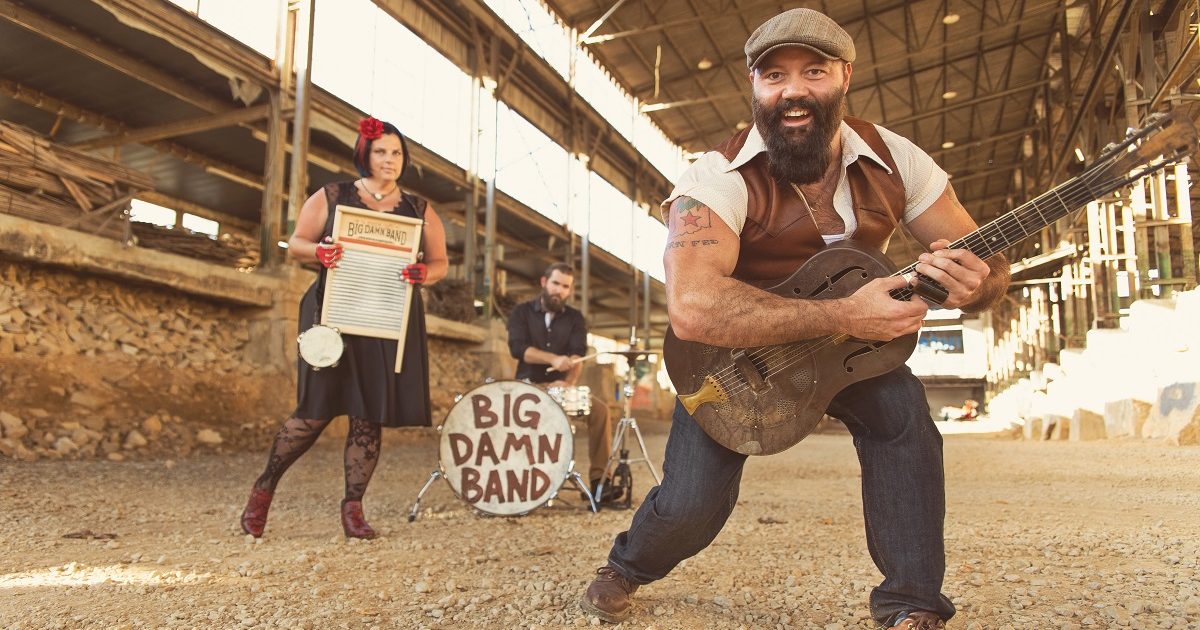
LISTEN: The Rev. Peyton’s Big Damn Band, “I’ll Pick You Up”

Artist: The Rev. Peyton’s Big Damn Band
Hometown: Nashville, Indiana
Song: “I’ll Pick You Up”
Album: Dance Songs for Hard Times
Release Date: April 9, 2021
Label: Thirty Tigers

In Their Words: “Well, this song goes out to anyone that drives or has ever driven a POS car. Of all of the songs on the record, this one probably has the most ‘rural’ subject matter, but it’s the most complicated in its vocal layers, and in my mind I wanted to layer it like a Stax records song from the ’60s. It starts with my thumb on the bass, and I wanted my slide guitar and my harmonica to come in together like a horn section. Breezy and Max worked really hard to get the strange vocal layering I came up with to really work in the choruses. And the beat that Max plays is straight ’60s R&B.” — Rev. Peyton


Photo credit: Tyler Zoller

The Show On The Road – Larkin Poe

This week, we finish off this season of The Show On The Road with a powerful, Southern sister act that has been wowing audiences around the world with their transformative take on stomping blues and cagey, slide-guitar-driven rock ‘n’ roll: Larkin Poe.


LISTEN: APPLE PODCASTSSPOTIFY • STITCHER • MP3
As it is nearly Halloween it would behoove us to mention that Rebecca Lovell (who sings lead) and Megan Lovell, (who commands the stellar slide-work) are indeed distant relatives of Edgar Allan Poe. Their name came from another long-gone grandfather, however, after their eldest singing sister Jessica stepped away from the band, leaving the younger sisters to contemplate if they wanted to continue playing bluegrassy, harmony-rich folk music — which had gotten them on shows like A Prairie Home Companion — or to strike out in a new direction.

Taking inspiration from their frontiersmen-inspired family, who often built and made everything themselves, Rebecca and Megan indeed took DIY to a new level: they have written, produced, and performed nearly all their own records and EPs themselves. They often pay homage to legends like Robert Johnson, Blind Willie Johnson, and more modern greats like The Allman Brothers and The Moody Blues, while they also put their own rawboned stamp on stellar ZZ-Top-esque originals like “Self-Made Man,” which is also the title of their newest record.

While the sisters admit that doing almost everything in-house can be like walking a tricky tightrope, the results have been encouraging. From show-stopping appearances at festivals like Glastonbury, to opening for the revivified touring version of Queen (Brian May is a new fan), to headlining the 2020 Mahindra Blues Festival in Mumbai, India, to snagging a Grammy nom for their hard-stomping record, Venom & Faith, one would think that they should keep on following their DIY instincts.

Larkin Poe doesn’t plan on taking it easy even though they haven’t been able to tour in 2020 — in November they will release Kindred Spirits, a collection of beloved stripped-back covers. Stick around to the end of the show to hear their acoustic version of Lenny Kravitz’s “Fly Away.”


Photo credit: Bree Marie Fish

Gig Bag: Pieta Brown

Welcome to Gig Bag, a BGS feature that peeks into the touring essentials of some of our favorite artists. This time around, Pieta Brown shows us what she’s gotta have on the road.

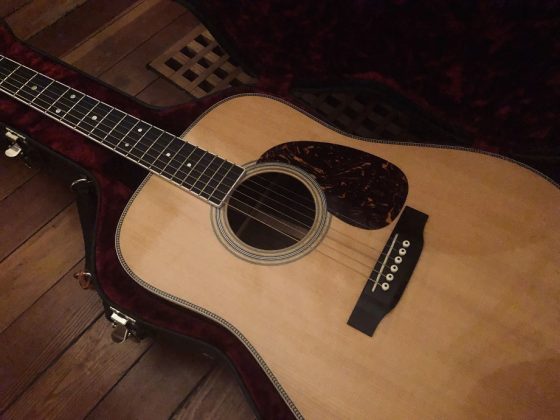
Queen of the road! This guitar goes to all the gigs! It arrived on my doorstep as a gift one day; it’s full of songs. I wish could have many lifetimes to play it.


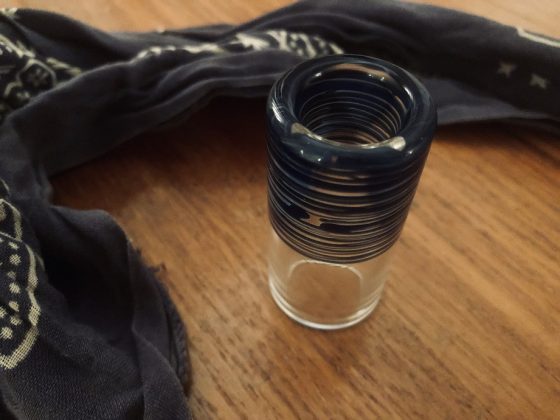
This beautiful handmade slide is always in my bag. Another gift! Given to me by one of my all-time favorite slide players, Bo Ramsey. I love playing slide and this one works great for me with acoustic or electric guitars.


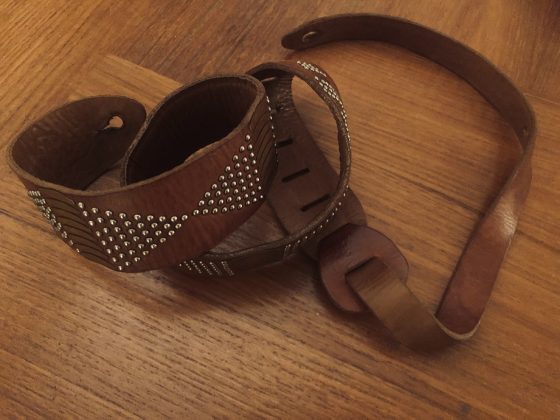
Another gift from a friend, and my favorite strap. Handmade by Calleen Cordero.


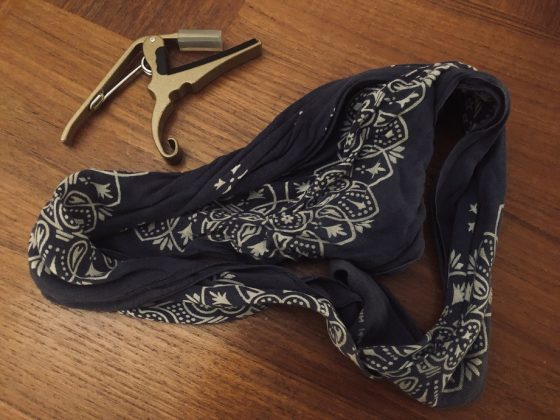
Gold and sparkly capo. And my lucky all-purpose bandanna. My dad always had bandannas around… and often wore them (and often still does!) so they make me think of him.


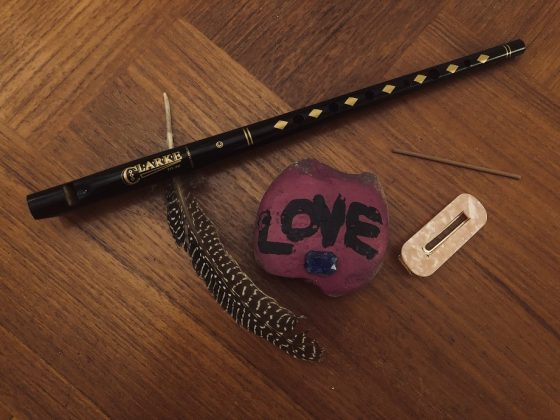
I always seem to have a few extras. This new penny whistle is gonna see some miles. Hair clip. Incense from my friend Kelly. A feather and a Love Rock (both found on walks) for good luck.


Photo of Pieta Brown: Hannah Ray