That Ain’t Bluegrass: Mile Twelve

Artist: Mile Twelve
Song: “Rocket Man” (originally by Elton John)

How did you guys decide to work up this song?

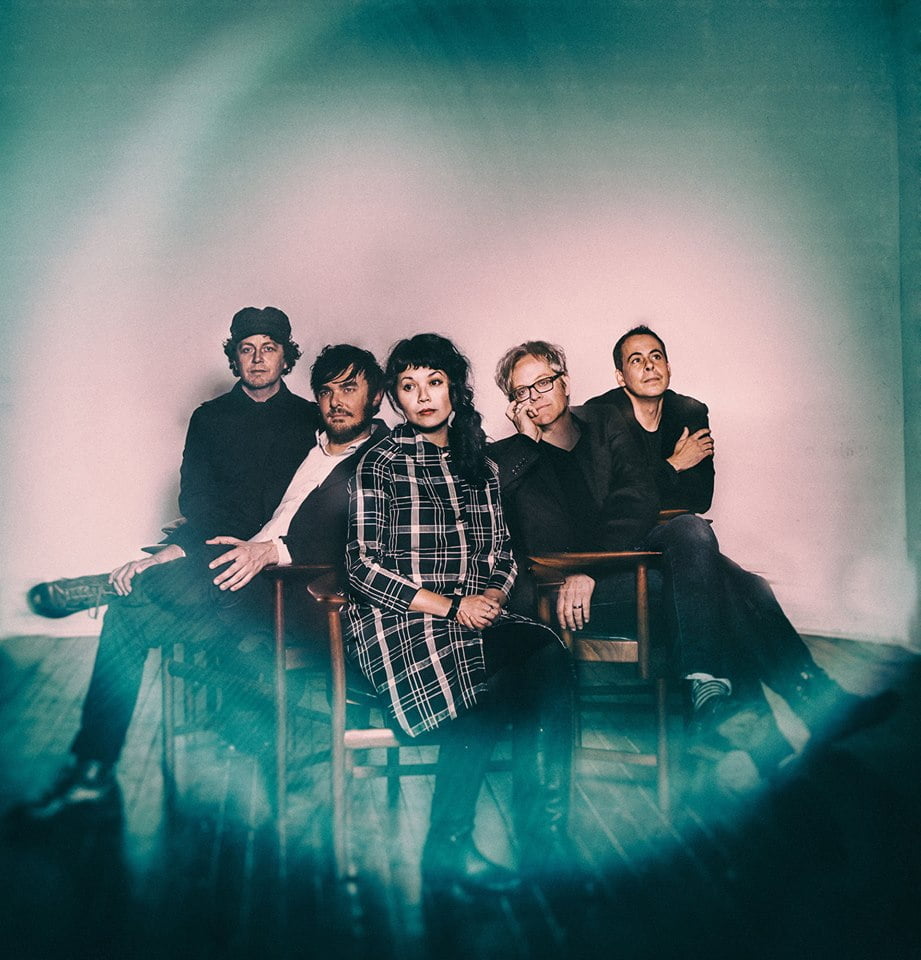
Evan Murphy: It was actually Nate [Sabat’s] idea, which is funny, because I don’t think he remembers that, so I should just take credit for it. [Laughs] We had been talking a lot about wanting to do a pop cover, at some point, just because so many bluegrass bands that we like have done that. We were looking for something that had an interesting arrangement to it, something that had parts that could be mimicked by acoustic instruments. Nate suggested “Rocket Man” one time while we were in the car and, while we were all listening to it, we realized that it had these different memorable motifs that happened throughout it and we though it could be really cool.

I remember it was last August when we were easing David [Benedict] into the group, he was flying up from Nashville to hang out, do some rehearsing, and see if it was a good fit, and we felt bad, because everything that we practiced with him would be a song that we wrote — so that would get tedious for him. We thought, to be fair to David, we should try to do something that none of us had done yet, something totally fresh, to see what it feels like. So we picked “Rocket Man.”

You mentioned other bluegrass bands covering pop songs — which is kind of a tradition in bluegrass. Why do you think that is?

A lot of musical genres do covers across genres, but bluegrass has such a specific aesthetic to it — in terms of what instruments are involved, what they sound like, and what their roles are. Bluegrass tends to be more codified than other genres. “Jazz” is such a big word, and “rock” is such a big word, so if you said that Queen did a rock ‘n’ roll cover of Elvis, that may not mean anything, because you’re using a big, catch-all genre like “rock.”

But to say that someone did a bluegrass cover of something tells you something really quickly. It tells you, most likely, what instruments were involved, that they don’t have a drummer, and that most of the instruments aren’t going to be plugged in. There’s just something inherent about the limitations of bluegrass as this acoustic form of music that doesn’t usually use percussion. So, if you say that someone covered a song from outside of the genre, instantly you have this feeling like, “Oh, I want to hear that. How did they do that?” I think that’s why it’s interesting to people.

Rather than changing the original to make it a bluegrass song, you arranged your version to basically mimic the original recording, but with a bluegrass band. How did you decide to arrange it this way?

That’s the question when a bluegrass band covers a pop song. Are you bluegrass-ifying it? Or are you trying to create a note-for-note recreation of it? There’s a band called Iron Horse that covered “Rocket Man,” and I was aware of their video of it for years — long before Nate suggested we cover it. I said to [Mile Twelve], “I’m happy to cover ‘Rocket Man.’ It would be a lot of fun to do at festivals and stuff like that, but just so you know, there’s this really popular video on YouTube of another bluegrass band doing ‘Rocket Man.’” I mean, it has like 1.3 million views on it. It’s a popular video.

The first question they asked was if they bluegrass-ified it or not. And they do. The band said, “Oh, then we’re good, because they do a bluegrass version of it and that’s not what we would do.” I was a little cautious, thinking, “Okay, we’re going to cover this song that’s already been popularly covered by another bluegrass band.” But for us, I think the point of doing pop music on bluegrass instruments is to not bluegrass-ify it.

There’s nothing wrong with doing that. We did an Alan Jackson song, “Ace of Hearts,” on our album, which we totally bluegrass-ified. With something like “Rocket Man,” it’s so well arranged; it has those spooky spaceship noises and the crashes in it. What’s so cool for people to listen to is to hear the things they recognize from the original arrangement. People will come up to us after they’ve heard the song and say very specific things like, “I loved when the fiddle did the spaceship noise.” People’s ears are catching these things that wouldn’t be there if you were to bluegrass-ify it.

You know that ain’t bluegrass, right?

[Laughs] Ain’t no part of nothin’? You know, I don’t think I’ve ever heard anyone say that to us. It may just be that we aren’t playing the most traditional festivals in the world. I definitely remember one time when we got an email back from a place that said we weren’t traditional enough for them. But we’ve mostly had the opposite experience.

We played at this place called Bill’s Pickin’ Parlor in South Carolina — this place is super old-school, pictures all over the wall of all these country and bluegrass stars. I was getting nervous, thinking we’re the dinky, Yankee band that’s playing polite, northern bluegrass for this audience. I remember specifically during “Rocket Man” thinking, “Oh, God.” I wasn’t getting a good read off of the audience. Then after, during the set break, a lot of people told us they loved our version of “Rocket Man.” Honestly, I feel like we mostly get the reaction of people being totally into it. It’s gotten to the point now where, if we come off stage and someone starts a sentence with “I loved …,” I’m 99 percent sure they’re going to fill it in with “your version of ‘Rocket Man.’” It’s a good problem to have, I guess. I think it’s the most popular thing we’ve done.

MIXTAPE: Jillette Johnson’s Piano Pioneers

Piano players aren’t as common in roots music as pickers are, so we asked Jillette Johnson to compile a list of her favorites for us. The keys-tickling singer/songwriter’s new album, All I Ever See in You Is Me, pretty well indicates that she’s on her way to joining this list herself.

Molly Drake – “The First Day”

There is no sweeter, more poignant sound than that of Molly Drake, Nick Drake’s mother. She sounds like my childhood, chasing bunnies in my grandparents’ yard in Bethlehem, Pennsylvania, while my aunts, grandparents, and parents ate tuna fish sandwiches on the patio and talked about the weather. This song, in particular, has taken me through many changes in my life, from ending relationships to moving to new states to simply starting new days. 

Aretha Franklin – “Since You’ve Been Gone (Sweet Sweet Baby)”

What a voice. And, by voice, I don’t just mean what happens when she opens her mouth. Aretha Franklin is, hands down, my favorite piano player. She plays like she sings. Without apologies and, simply, better than anyone else ever could, and perhaps ever will. 

Randy Newman – “I Think It’s Going to Rain Today”

I first saw Randy Newman play when I was 16, at an ASCAP convention, where he was the guest of honor. He sat for two hours playing his songs and talking about them for long intervals in between. That day changed everything about songwriting for me. This song, I had already heard from my favorite movie of all time Beaches. Bette Midler, who plays Cecelia Bloom, sings a beautiful version of it. It’s one of my favorite moments in the movie. But honestly, once I heard Randy sing it live in that room, I fell madly in love with him, and don’t think anyone can hold a candle to his recording of it. 

Carole King – “So Far Away”

I can’t think of a single person, album, or song, for that matter, that has influenced me more as a songwriter than this one. This — and she — taught me everything, starting at a very young age. I’m so grateful for it.

Elton John — “Mona Lisas and Mad Hatters”

Favorite Elton song. I was already a superfan, but when my childhood friend, Chelsea, put this on a mix she made for me when we were in middle school, I became forever addicted to it. I listened to it every morning on the bus going to school and every afternoon coming home.  

Leon Russell — “Tight Rope”

Saucy, groovy, wicked excellence. 

Tom Waits — “Martha”

He released Closing Time when he was 23, I think, which means he must have written “Martha” before then, which doesn’t make any sense. “Martha” is a story that only an old man would be able to tell. My best friend and I often drive around Nashville together, singing this song at the top of our lungs. 

Billy Joel — “Summer, Highland Falls”

I grew up on Billy Joel, and this has always been one of my favorite songs of his. He taught me not to be afraid of wordy mouthfuls of lyrics, as long as they tell the story in a way you can understand. My brother also, coincidentally, went to West Point for college, which is in Highland Falls, New York. So I blasted this song every time I drove up to bribe him to do my physics homework for me in exchange for donuts. 

Tori Amos — “Winter”

My friend Jon once said to me that he believes music can be reincarnated in people as generations pass. If that’s true, in my wildest dreams, I might be a reincarnation of Tori Amos. The way she writes, sings, and plays makes so much sense to me. It feels like my pain and my happiness, when I listen to her pain and her happiness. I know she makes the rest of the world feel that way, too, which is part of why she’s brilliant. And this song gets me every time. 

Ben Folds Five — “Boxing”

Ben is the only person I’ve ever “fan girled” over. I was 17 and saw him in line at Starbucks in New York City. I walked up to him, thanked him for having such a big influence on me, and darted out before he could even respond. My big brother got me into him when I was 11 or 12, and I ate up everything he ever did from then on. 

Fiona Apple — “Paper Bag”

Now if I had the opportunity, I would definitely fan girl over Fiona. I dreamed of being her from the minute Criminal hit the airwaves. I’ve watched that music video thousands of times. I had a hard time picking just one song. 

Rufus Wainwright — “Poses”

If you are a man and you sound anything like Rufus Wainwright, I will probably fall in love with you, at least a little bit. He really sunk into my skull after I turned 20, and changed the way that I thought about melody. He’s got this lilting, grand romance to him that few people other than Rufus can pull off. 

Father John Misty — “I Went to the Store One Day”

If I had a nickel for every time someone told me I had to listen to Father John Misty … I’ll admit I was late to the game and fairly resistant, just because I live under the constant, bull-headed assumption that modern music is less good than the stuff I grew up on. But I’ll be damned if Father John Misty isn’t amazing. This song is beautiful, jarring, painful, and lives in a world all its own. 


Photo credit: Anna Webber

Squared Roots: Tift Merritt on the Fearlessness of Linda Ronstadt

In the world of folk-rock, a few artists reap the lion’s share of mentions, with Joni Mitchell, Bob Dylan, and Jackson Browne, among them. One of the great voices of the genre, though, is Linda Ronstadt. As a singer and song collector, she is all but unrivaled — a point most of her peers would agree with. Starting in the mid-1960s as a member of the Stone Poneys and, later, as a solo artist, Ronstadt made a name for herself on the marquees of folk clubs and rock arenas, alike, thanks to albums like Hand Sown … Home Grown (which some consider the first alt-country album by a female), Silk Purse, Heart Like a Wheel, and many more. Her artistry recognized no boundaries as she recorded with the Nelson Riddle Orchestra, as part of Trio with Dolly Parton and Emmylou Harris, and in Spanish. In 2011, however, she announced her retirement brought on by a battle with Parkinson’s disease.

I don’t have any great, huge proclamations to begin with, except that I adore Linda Ronstadt,” singer/songwriter Tift Merritt says with a laugh. And, really, that’s enough. From her debut album, Bramble Rose, to her latest release, Stitch of the World, Merritt has attempted to follow in the footsteps of her musical heroes — women like Harris and Ronstadt — who have blazed a trail of feminine fearlessness. By pretty much all accounts, she has succeeded — a point most of her peers would agree with.

Are you a student of Linda’s work for your own artistry or just a fan for your own enjoyment?

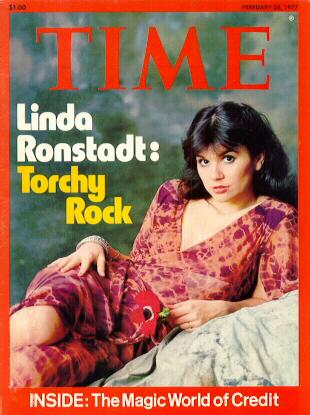
You know, I wanted to talk about Linda because she’s not singing anymore because she has Parkinson’s, so it’s almost more important to talk about her now because of that. I think what we need to talk about with Linda Ronstadt is that, at the height of the singer/songwriter movement, she was the one headlining stadiums with the Eagles and Elton John. I think it’s really important to talk about a woman doing that. She was bringing all these songwriters she knew and loved, and taking their songs and singing them. She was on the cover of Time magazine. She was a girl next door and a member of the band with a very understated sexuality, but she was also an absolute star and a commercial success. I think we tend to think about women with guitars singing earthy rock ‘n’ roll as coffee shop acts or something that’s going to fall apart in your hands. And Linda Ronstadt was kicking everyone’s ass. [Laughs]

[Laughs] What’s interesting is that there’s a quote of hers from 1999, in which she said, “I always mean to be a singer, not a star.” So, even though she achieved that level, like you said, it wasn’t necessarily her goal.

I think that’s why it’s important to talk about, too. Because she is an artist. I think she had a complicated relationship with her success and how she was viewed, sexually, and all of that. But she achieved success through her art. And I know that I first fell in love with Linda Ronstadt records when I was in my early 20s. In fact, when I made Bramble Rose, I wanted to make a record like [Emmylou Harris’s] Quarter Moon in a Ten Cent Town or I wanted to make a record like Heart Like a Wheel or Silk Purse or one of the early Bonnie Raitt records. Those first records were so raw and heartfelt and just penetrated your bones and brought tears to your eyes.

I remember that was said in the press release for my first record, and one of my first reviews kind of made fun of me for liking Linda Ronstadt. I thought, “Oh my God. This person doesn’t get it.” For me, all of those women, and Linda Ronstadt, especially … this was in the late ’90s or early 2000s. I sort of came of age in the ’90s. Madonna was on MTV in the ’80s. And I needed some female role modes who were more like me, who had something to say, who were not intent on acting outrageously, but really wanted to be storytellers. And who had a lot to say and who were masters of their art. You can tell from Linda Ronstadt’s discography and her work as a writer and a singer, she’s a student of her craft. But she always manages to look so cool in all the pictures of her! And she was in a band, too! You navigate this world of dudes traveling on the road, and she did that with so much grace.

Yeah. Yeah. I feel like, in listening to her and reading about her, to me, her fearlessness as a singer …

Uh huh. Absolutely!

both in song choices and vocal delivery. You can hear so much in her voice.

She’s totally fearless. Maybe that’s the source of her power because she’s so powerful, as well. I’ve sung along with those records … I had a break up and I ended up putting on those records to comfort myself and I was right back there. I’ve been singing along to those records for such a long time, and her voice is an unbelievable instrument. Unbelievable. It’s silken and velvet, and also as powerful as steel. And it’s fierce. The effortlessness with which she can belt at the top of her range, then go low … any melody is so lucky to end up in her hands. [Laughs]

[Laughs] What does it take for a singer to do what she did — both in terms of breaking down as many genre barriers as she did and finding her way into songs she didn’t write, but might as well have? They sounded like they were fully coming from her.

Right. They were realized through her. I don’t know her, personally, at all. But my impression is that it’s a combination of open-heartedness and intelligence and that fearlessness where you are singing with your heart on the line. Period.

Yeah. You find your way in and bring everybody along with you.

Mmm-hmm.

The other thing I feel like … her identification as a singer and, later, a producer … she was no less revered and respected just because she wasn’t a songwriter.

No. I know.

Except for with the guy who reviewed your record. [Laughs] Do you think that’s changed at all? These days, is being a songwriter, too, a huge part of the credibility factor?

I don’t know. I think the world has room for so many different types of careers. I come at this as a writer. But music is such a powerful thing, and to be able to inhabit that … music is a physical and social medium. To be open enough to let that run through you, it’s really an awesome thing.

I took some time off from touring and I missed that. It’s such a joyful letting go, even if it’s a sad song. And I think that’s what you hear when you listen to Linda Ronstadt. So much power coming through these tiny muscles in your neck. They’re so fragile. They’re the size of a dime. There’s an electric current that seems to jump out of her. Like a river of feeling coming out. I think it’s important to talk about, that music is not about a canvas on a wall. It’s not about words on a page. It is a physical, living, breathing type of media. And to be able to do that seamlessly … I love watching and hearing people who have that gift. And it is a gift.

That’s a great ending, right there.

Well, we just have to mention that “Long Long Time” and “Blue Bayou” are two of the greatest performances of great songs. Ever. [Laughs] That is all.


Tift Merritt photo courtesy of the artist. Linda Ronstadt photo courtesy of Carl Lender.

3×3: Winterpills on Elton John, E-Minor Drones, and a Love of Two Amys

Artist: Philip Price (of Winterpills)
Hometown: Northampton, MA
Latest Album: Love Songs 
Personal Nicknames: Cranky


My favorite news is about things that don't happen.

A photo posted by @winterpills on

What was the first record you ever bought with your own money?
Elton John, Goodbye Yellow Brick Road

How many unread emails or texts currently fill your inbox?
18,204

If your life were a movie, which songs would be on the soundtrack?
No songs, just an E-minor drone.


one template

A photo posted by @winterpills on

What brand of jeans do you wear?
Target

What's your go-to karaoke tune?
"Life on Mars" by David Bowie

If you were a liquor, what would you be?
Bloody Mary with extra tabasco and olives.


a double-yolker!

A photo posted by @winterpills on

Poehler or Schumer?
Both. Come on, don't do this!

Chocolate or vanilla?
Vanilla. But this only applies to me.

Blues or bluegrass?
Neither. Blue by Joni Mitchell.

Squared Roots: Brandi Carlile Makes the Case for Elton John

The classically trained Sir Elton John wasn’t always just so. In his early days, Reginald Dwight was so hooked on the American sounds of Elvis Presley, Ray Charles, Jim Reeves, Bill Haley, and Jerry Lee Lewis that the band he formed in 1962 was called Bluesology. Then, in 1967, John met lyricist Bernie Taupin and music history would soon be made. The pair continues writing together today, after more than 57 Top 40 hits (in the U.S.) on 30+ albums … and nearly as many awards.

“Border Song,” “Tiny Dancer,” “Crocodile Rock,” “Philadelphia Freedom,” and myriad other John/Taupin collaborations fill the soundtracks of so many lives … singer/songwriter Brandi Carlile‘s among them. She grew up idolizing the two British music men and, after combining their influence with a dash of Johnny Cash and a pinch of Patsy Cline, found her own rootsy sound evolving and emanating from that somewhat surprising foundation.

To connect the dots between Sir Elton and American roots music, you have to go back to his days as Reggie Dwight. Draw that line for us.

I feel like sometimes an artist’s separation from their influences by proximity and culture almost intensify and exaggerate the effect that a certain genre has on them. Examples of this that come to mind are Paul McCartney’s passion for Buddy Holly and American rock ‘n’ roll; Old Crow Medicine Show cutting their teeth in Ithaca, NY, only to become incredible live Appalachian bluegrass on steroids — complete with Ketch Secor’s almost savant encyclopedia of knowledge on the genre and his preoccupation with southern culture; British, bluegrass-influenced arena band Mumford and Sons and Colorado-based Lumineers are also good examples of this … not to mention my personal obsession with country music and the South as a northerner or, as an American, my obsession with Brit Pop — Freddie Mercury, the Beatles … but, above all these, Elton John. Admiration from a distance is the strongest kind.

While Elton, by definition, is decidedly British, he has pushed the envelope on genre so far that it’s completely inapplicable to him. He was deeply influenced by American rock ‘n’ roll and roots music. Being so far away from Little Richard, Chuck Berry, Jerry Lee Lewis, and Elvis Presley only seems to have fueled the obsession with the culture of early American rock ‘n’ roll roots music for him.

Elton once said that Elvis looked like an alien to him. My great uncle Sunny, a guitar player and singer, told me that he was too busy (along with his friends) being jealous of Elvis Presley to be influenced by him at the time. The space between an artist and the music that inspires them becomes purer as it grows, erasing lines of competition, jealousy, even racism and politics. Elton John is a lover of early American rock ‘n’ roll roots music, pure as the driven snow. He could probably teach you and me a thing or two about it!

The most defining influences from early to current Elton John are his deep love for Leon Russell and Buffy Sainte-Marie. It took an eccentric British man in his 60s to teach me about these two absolute pillars in American folk/roots and to see something fundamental that was right in front of my nose whole time.

Once he teamed up with Bernie Taupin, things shifted. What threads of honky tonk, gospel, and other roots do you hear in their early work?

When Elton John started writing with Bernie Taupin, it was like rock ‘n’ roll met roots — Captain Fantastic meets the Brown Dirt Cowboy — and now you don’t only have early American overtones, musically, but they’re touching lyrically on early American themes. The entire Tumbleweed Connection record is Civil War fantasy meets early American Western. Good guys and bad guys, riverboats, Yankees and the Union, sons of their fathers, New Orleans, and “good old country comfort in my bones.”

Early American gospel makes its way onto Elton John many times, most notably in “Border Song” complete with a nod to ending racism. These themes are a constant throughout their career and continue to be. “Texan Love Song,” to Roy Rogers, all the way to the T Bone Burnett records of today, The Union and The Diving Board.

Bernie Taupin, to me, is the best lyricist there is and certainly the most fantastical and unselfish in his work. He is deeply interpretative and, honestly, self-revealing while also introducing us to fantasy and objectivity unchanged for 40 years.


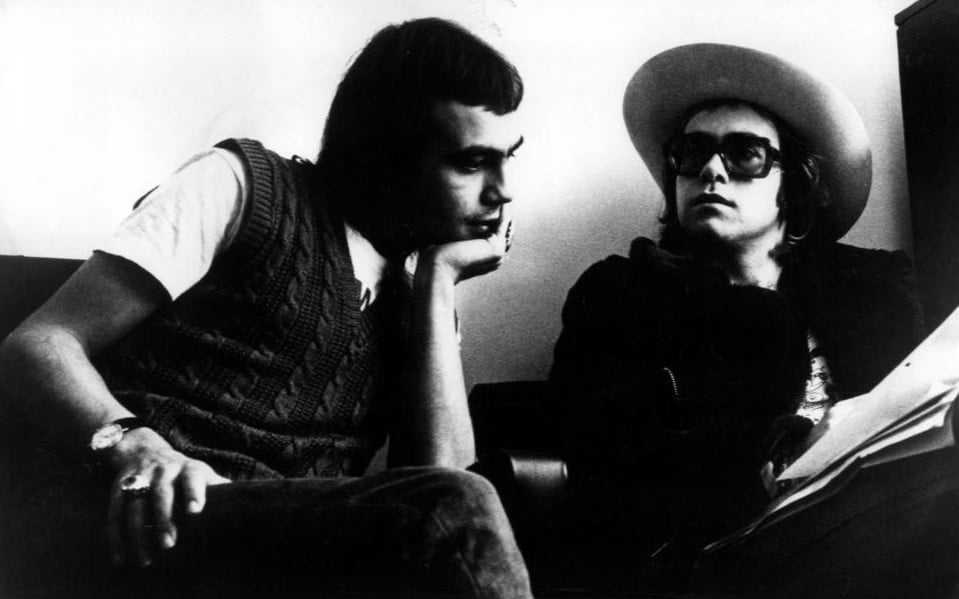
Elton John with Bernie Taupin (left) in 1971. Photo credit: Public domain.

You have a thing for big personalities in your musical heroes … Elton, Elvis, Freddie Mercury, Johnny Cash. So you clearly don’t think Elton’s flamboyant, costumed persona took anything away from his respectability as an artist. Correct?

No! No way! Elton John’s eccentricity is authentic. Picture Elton John in the hipster attire of his time — skinny jeans and a beard, all browns and fedoras with a tiny tie. Who’s going to believe anything a guy has to say about “Bennie and the Jets” in that? He proved that he could make you cry dressed like Donald Duck. That means everything. Little Jimmy Dickens and Minnie Pearl probably loved him.

There aren’t many artists who could do a duets album that included Tammy Wynette, Leonard Cohen, and RuPaul. So what is it about Elton and his music that create such a wide berth?

The thing about Elton John that creates a wide berth is that he is a truly authentic person who thrives on enthusiasm and loving people! In fact, he loves so many different kinds of people that he regularly offends someone over his acceptance of someone else. Dolly Parton also has this rare gift. Elton tends to embrace the unacceptable — from collaborating with Eminem when he was in such hot water, to playing at Rush Limbaugh’s birthday party, to insinuating that Jesus might be gay, to now getting on the phone with Vladimir Putin on behalf of LGBT Russian citizens. As a result, when Elton john speaks out against something, everyone listens … I certainly do.

Elton is wildly diverse in his efforts to become a bridge builder. He’s very intriguing and his musical collaborations have been very reflective of that. I used to listen to Duets, his collaborative duets record from the ’90s, and I never got tired of it because even if I was over [Don] Henley that day, I could hear him sing with Tammy.

Which album can we point to as the one where he moved completely away from his early influences? Or is there an argument to be made that they are still there, even in “Circle of Life”?

The beauty of Elton and Bernie is that there are no absolutes that can be applied to any one of their albums. They are a wild ride of genre twists and turns, career long. Say what you will about musical consistency, none of these records are background music. You don’t want to have them playing while you’re hosting a dinner party.

If I had to point to a departure from roots music — although never completely — I’d say maybe some of the mid-80s to early-90s stuff. From Leather Jackets, Breaking Hearts, maybe Too Low For Zero, or The Big Picture. However, having said that, those records made a huge impact on me and, last time I checked, I’m still a roots artist. Elton’s Americana leanings are firmly in tact. His last two records with T Bone Burnett are truly some of the best of his career. The Union with Leon Russell is a favorite of mine and The Diving Board is a return to form in a way that feels to me like hearing Johnny Cash sing alone on American Recordings.

Elton and Bernie have deeply influenced me as an American roots artist from 5,000 miles away! Thanks for giving me the chance to say so.


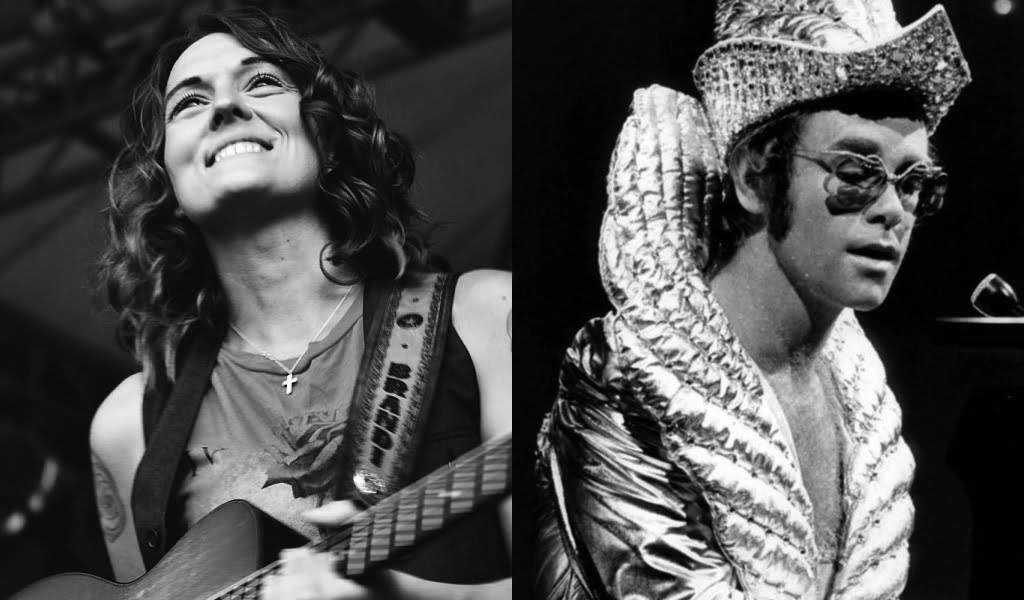
Brandi Carlile photo courtesy of Brandi Carlile. Elton John photo credit: Heinrich Klaffs / Foter / CC BY-NC-SA.