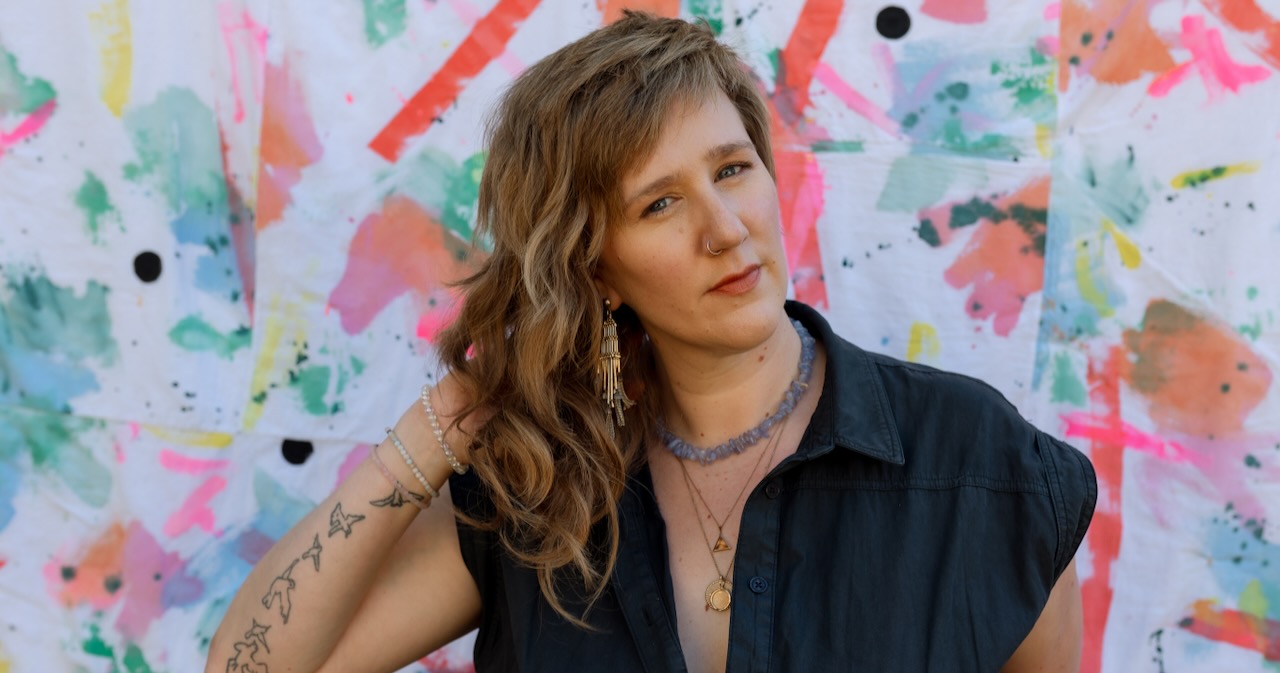
California dreaming has become a sonic reality once more. An affinity for 1960s and ‘70s Laurel Canyon sounds is alive and well, including acolytes from onetime Brooklyn punk-rockers across to Los Angeles-based former pop and R&B singers turned country-rockers. A new cohort of such artists based in Tovaangar (the traditional lands of the Tongva, the region including Laurel Canyon and all of what is now called LA) follows Jonathan Wilson’s coronation as “the New King of the Canyon,” and the historical book round-up Canyon of Dreams published at the end of the 2000s.
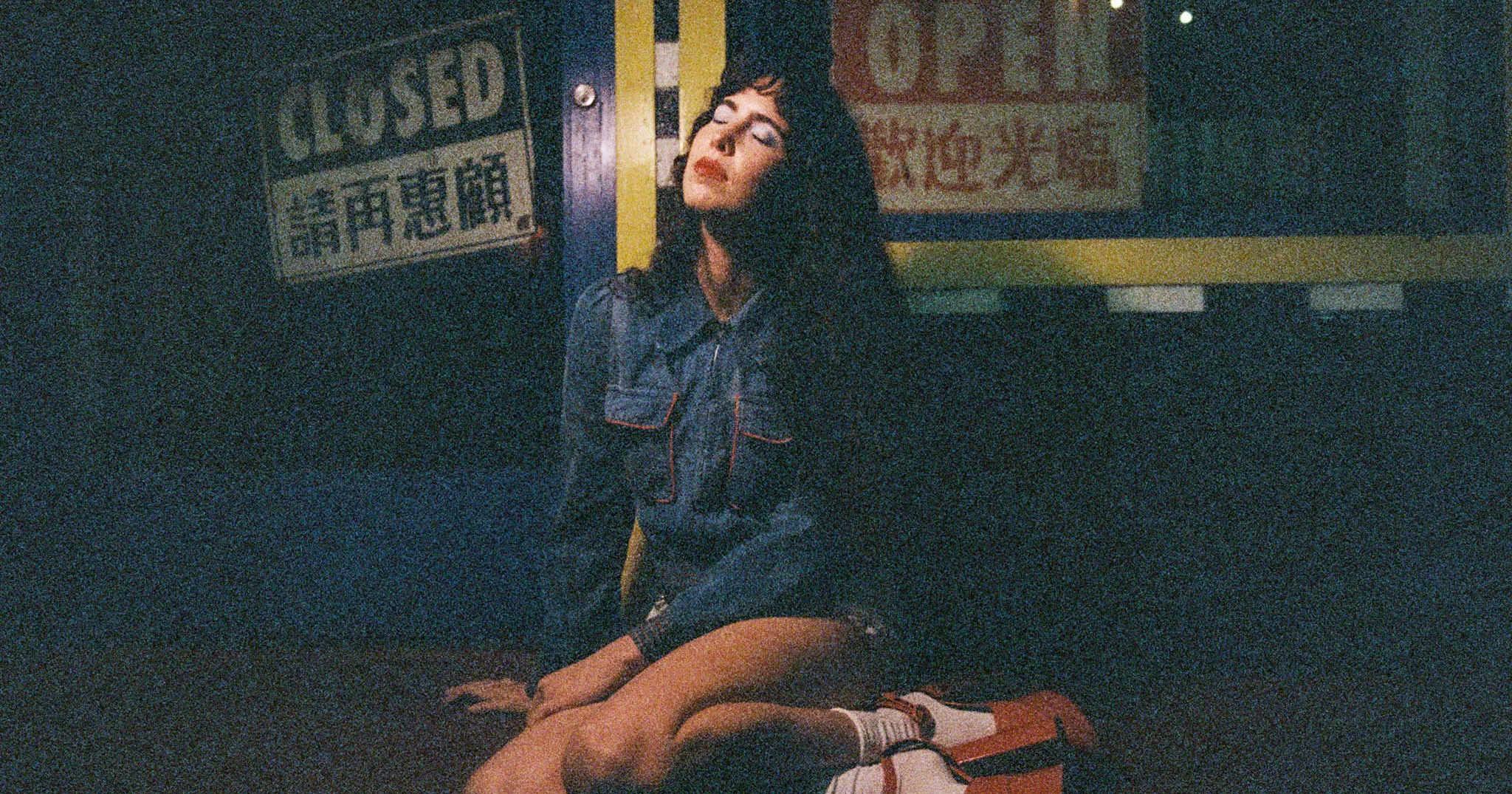
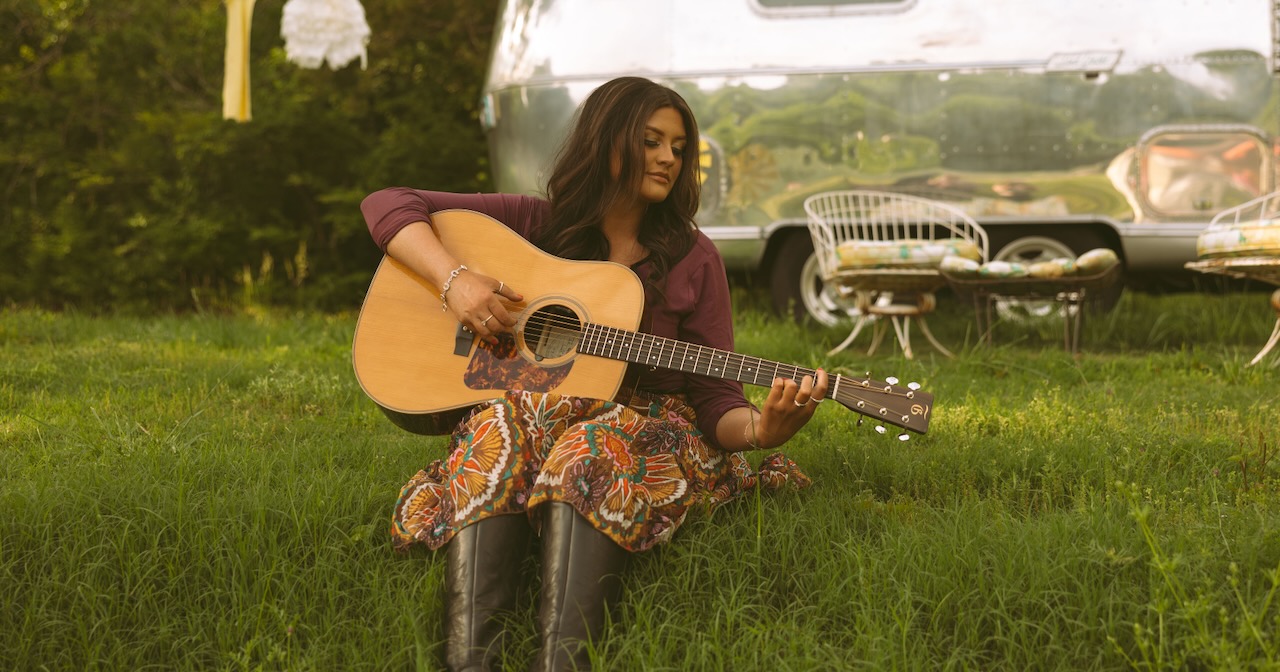
Influenced by Gram Parsons and other period icons, Northern California-born-and-raised singer-songwriter Haylie Davis is a shining star of this current Laurel Canyon wave. Her debut album Wandering Star – released June 5 on Fire Records – situates her well in the cosmic American music pantheon.
Davis has circled the Los Angeles music scene for a spell with previous musical incarnations being as one-half of country duo Will & Haylie (with Will Worden); the folksy Lady Apple Tree; and under her given name, Haylie Hostetter, contributing vocals to projects of her Canyon-rock peers. Davis descends from the sonic lineage of Jackie DeShannon, whose trailblazing 1968 Laurel Canyon presaged Ladies of the Canyon. Her other key foremothers are Mary McCaslin (Mary Noel Singing Bear, Kiowa Apache) – who got her start at the Troubadour Monday Hoot Night in the late ’60s, often plying imagery of old-timey California and the Wild West – as well as Wendy Waldman, who wrote incisive songs about the tangled love affairs of hip LA.
Davis’s pellucid soprano ascends to the stratosphere, displaying that she has the voice, sounds, and image of a singer-songwriter transported to an LA canyon of yore (she did live in Topanga) – and of a singer-songwriter that could be a big star in 2026. Indeed, Wandering Star, showing a young woman artist with mythopoeic songs with quiet thunder and heartfelt illumination, could be enshrined as Carole King’s Tapestry for a younger generation.
What was your musical upbringing like in Northern California?
Haylie Davis: I was fortunate. My high school had a really good music program, so I was able to take vocal ensemble. But guitar, I would say to this day, I’m not the best at guitar. I mostly just write with guitar. I picked guitar up when I was 16 and have since just been kind of figuring it out.
Do you figure out your songs by ear or do you read music from that teaching?
I don’t know how to read music. I don’t know, honestly, much about music theory. I’d say it’s mostly just by ear. I’ve tried to learn more in-depth about theory, but I feel like my brain has a hard time understanding it. It’s still kind of mysterious. I feel like I learned singing best from just mimicking and singing along to songs consistently.
So, how did the songs from Wandering Star flow to you?
I think it’s just kind of a sequel or it’s just a continuation of my first project, which was Lady Apple Tree. I have one album out under that name, and that album was very much a naive, youthful take on music, just kind of starting out. And I think that Wandering Star is kind of a progression of that into something a little bit more mature, a reflection of more time spent in Los Angeles, the people I’ve associated with, and just a little bit more of a growth, you know? I didn’t sit down and just write the whole album as is; I think songs just kind of trickle in as time goes on. And so those were just my favorites from that passage of time.
What was your approach to producing as you did on the new album? How did you find the studio that you used for it?
So, most of the songs were recorded at my friend’s studio named Ian Doerr. He’s not at the same place anymore, but at the time he was in Highland Park in Los Angeles and he has an all-analog studio called Love Magnet.
And I partnered up with Sam Burton, who was my partner at the time as well, and I would say he was probably one of the biggest influences on the sound. He was kind of like my confidant, someone I’d always be asking for his input and advice and his guidance. He’d been in the music industry longer than I had at that point so he had a lot more insight. I just thought that he has a very, very good ear for production, and I think he’s really good at nailing what a song needs. I call it a partnership just because I feel like he took the lead on most of it, but I also have a very specific way that I want things to sound, certain instruments I want on certain things, and certain drum beats, so I participated in that as well.
How do you command your stage?
I feel like that’s definitely been developed over the years, and it depends on if I’m by myself or with band. I was opening for this band called Nude Party, and they were, at the time, a six-piece or seven-piece band of all dudes. And they were kind of rowdy, you know? I showed up by myself. At first, it was kind of hard wrangling a crowd of people who were there to see a full band just playing by myself. I feel like I was almost catering toward them, trying to win their attention over, and it was hard. I was struggling. And then by maybe the third or fourth show, I remember just being like I don’t care. I’m over this. I’m just gonna go up there and play the songs for me and feel them as deeply as I can. And that show literally just switched the energy; people were receptive.
I learned a lot through that experience. I think I learned that it was about communicating the songs as best as you can. You have to go up there and be strong and be unapologetic.
What is the story behind my favorite of the album’s songs which is “Country Boy?”
I actually wrote that song a long time ago, when I was playing with the first band I toured with which was Sylvie and we were all playing together. And I just came up with this melody, chord progression, and words, and I didn’t do anything with it for maybe two, three years, at all. Then, all of a sudden, the rest of the song kind of came together when I was living in Altadena. I feel like most of the people and men I’ve interacted with in the music scene and just in Los Angeles have been transplants from the Midwest or the South and trying to make it in California.
On the topic of California, how do you feel about previous reviews linking you to the Laurel Canyon scene lineage? Do you identify with any of the artists from that history?
Identify is a strong word. I definitely listen, and I feel like they’re all very much close to my heart, you know, I listen to them quite a bit, and I feel like they’re very formative in my music and also how my life progressed. Linda Ronstadt, and Neil Young, and Joni Mitchell, those figures I feel like musically were very inspiring to me. So, I don’t mind comparisons; I get it. Obviously, my goal is to not replicate but make something of my own.
I saw that you’re a fan of Gram Parsons. Do you have any specific influence from him?
Oh yeah, most definitely! I love him. He’s probably one of my top artists as well. I just think that song “Hickory Wind” is maybe my favorite song. Every time I hear that song, I’m just blown away. He’s huge for me; I’m very inspired by him. I was lucky enough to stay at the hotel room that he passed away in, in Joshua Tree, for a couple nights on New Year’s 2026 – which was really special.
I really think Wandering Star could be an equivalent of Tapestry for your generation. I don’t know if you relate to that statement or not?
Thank you! Oh, wow!
Love. Well, it’s hard. I feel like it’s hard to be completely self-aware of […] it’s hard to see yourself how others see you, you know? I’m just like me, and I’m just out here trying to make it, trying to survive. But I appreciate that; it means a lot. Because it takes a lot of work. I like Carole King as well. But I will say, it’s interesting because I do think that there’s been a kind of exodus out of LA at the moment. I’ve moved to Brooklyn.
Since you’ve moved across Turtle Island do you think the “California Dream” is dead for artists?
I think that there are energy hubs, like New York, LA, certain places that I don’t think it’ll ever fully go away. But I do think that there are seasons for places in cities. And I think that, at least for this specific niche that I’m a part of, I think that it’s a little bit in a low season over in LA. I think that it’s swinging over to New York right now.
Speaking of California dreamin’, I heard that you made pictures previously with my friend the photographer Henry Diltz. Do you think what he shot is like the ones that he did for various legends?
I actually took those a few years back. I was dating this guy named Will Worden who plays music. He lives in LA and I don’t know how he got Henry Diltz’s info, but he did. [Henry] came by and just shot us and it was really, really cool. Like, obviously, he’s a legend. I haven’t really posted any of those photos, so maybe I’ll look back and check them out.
Are there some albums that you find you listen to in emotional times that help you through?
There’s some things I always go back to, but right now, I haven’t really been listening to Joni Mitchell that much. I feel like she’s someone that I can listen to at any time. Right now, I am going through a breakup, and it’s crazy, but I’m surprised by the music that I’ve been listening to… I’ve been really into the first Gipsy Kings album – the second song on that record, it just really hits. I’ve been really feeling it. I love Elliott Smith; I’ve been listening to him.
Oh, I’ve been listening to Anita Ward lately, too. She does “Ring My Bell.” You know that song? And she also has a song called “Spoiled By Your Love” that has been on repeat.
What else about Wandering Star do you want known?
One of the reasons why it feels special to me is because of the people who were working on it, just like how much dedication they shared and it means so much. Just a lot of care from people who didn’t have to do that, but they did. It’s like a nice pin in all of our timelines. It’s coming to a point where we’re all kind of moving in different directions in a lot of ways. And I’m happy to have this shared moment.
I’m just grateful for everybody who participated because honestly it couldn’t have happened especially as I was broke. I didn’t have any money to really do it, and everyone just kind of showed up and was there for it. That doesn’t always happen. You don’t always have people around like that, so I really, really appreciate them for that.
Renée Fleming, Béla Fleck, Appalachia, and an all-star bluegrass band. Though the knee-jerk reaction to this list might be to play “one of these things is not like the other,” there is much more to this premise than meets the eye – and ear.
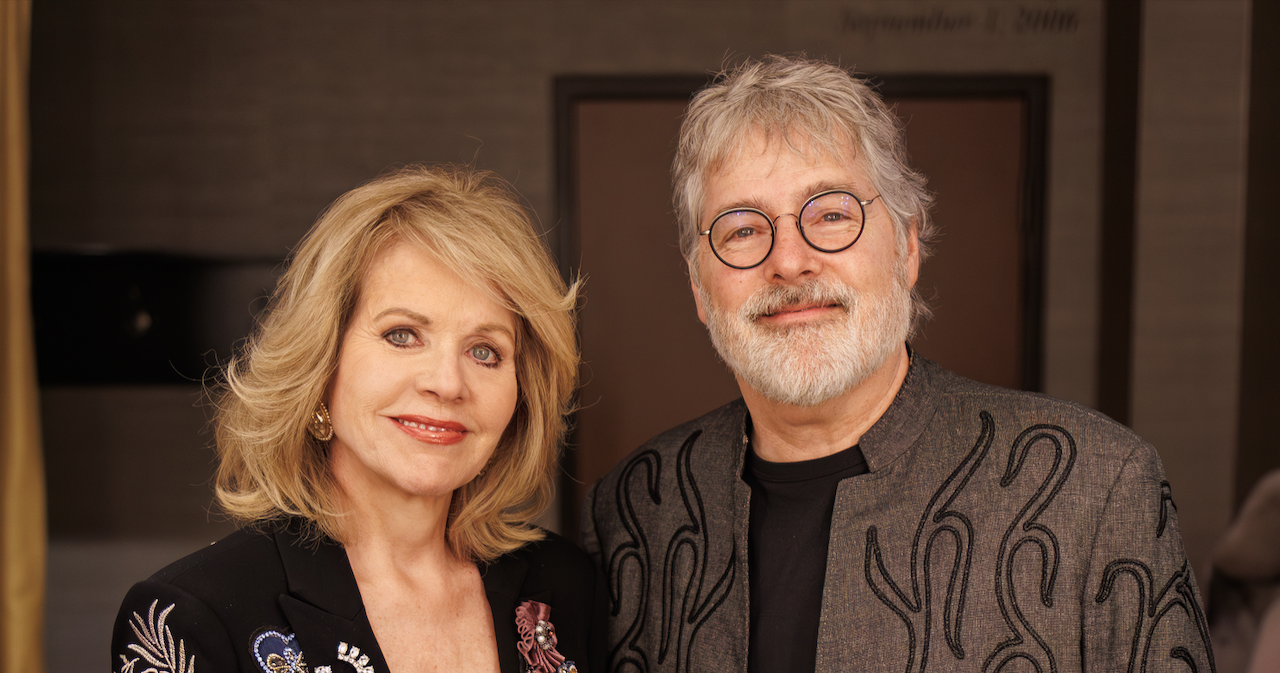
Fleming is one of the most renowned opera singers of the modern day, but the internationally acclaimed soprano has a long history of musical curiosity and often enthusiastically indulges thereof. From this trait alone, she and Béla Fleck found a resonance within one another, embracing and making music beyond the bounds of their respective claims to fame. This resonance sparked an idea that endured for more than 20 years, culminating in The Fiddle and the Drum, an album of Appalachian songs sung by Fleming and produced by Fleck – one that, more than anything, reveals a journey of familiarity and discovery for both artists.
The pair joined BGS on a phone call to delve into the musical, historical, and personal connective dimensions of this record. The memories shared are rich and many. Some extend as far back as Fleming’s preteen years. Others revive Fleck’s contemplations of how each song might come to life through Fleming’s vocal prowess. Every one of their recollections is imbued with immense mutual respect and awe for each other as well as the album’s many collaborators; it’s clear they both appreciate the gifts each and every person brought to this record.
Our conversation isn’t without painful realities, as the album’s focus on love and loss and war prompts reflections on fights and fatalities happening today. But, ultimately, it’s a conversation colored by a range of emotions and experiences, not unlike the very music of The Fiddle and the Drum itself.
Renée, you’ve spoken extensively about your upbringing and how you formed your relationship with a lot of folk music and folk artists. In that vein, how would you describe the initial perspective you formed about the music of folk, bluegrass, and Appalachia during the younger formative years of your life?
Renée Fleming: I think it was in middle school that they offered a guitar class – which I think is a fantastic way to get kids interested in music, because it’s an instrument you can carry around and you can read tablature pretty easily and pretty quickly. So that got me interested in [music], but also some of the music that I really genuinely liked [and got me interested] came a little later, including my discovery of Joni Mitchell in junior high school and high school. Then I was exposed to it through my family as well, because my grandfather was a fiddler and a drummer, so we had very eclectic tastes in music. I just was constantly exploring. [I] wrote a lot of songs and wrote a lot of music, starting probably when I was 12 years old, and it just branched out from there.
Where did Béla Fleck initially come into the picture for you?
RF: I was already a fan of Béla because of Béla Fleck & the Flecktones. In college, I really started singing jazz with a big band and also with the trio every weekend, so I was a big fan of his [at that time].
Obviously everything worked out the way it was meant to, but you still carry those glimpses into other worlds – folk, jazz, and so on – and it helped somewhat shape where we are now. I think it’s really brought a lot of extra color, showing people that [music] doesn’t have to be so rigid and doesn’t have to be about genres and specific labels and I think that’s something that really shines through with The Fiddle and the Drum.
Béla Fleck: I think we all have a tendency to pigeonhole people and put them into a black-and-white kind of a concept. You know, “They do this, they don’t do that,” but people are nuanced and love all kinds of things, especially when growing up and you’re open, you’re trying things and figuring out where you’re going to land.
I was also a huge fan of Joni Mitchell, and I was a vocal major in school, even though I couldn’t sing worth a darn and was secretly working on the banjo in the closet. But being exposed to classical music in high school – and my stepfather is a cellist, so I was listening to string quartets and stuff when I was a kid. People might be surprised by that, or maybe not, considering the kind of music I like to do, which is very varied. But I think it makes all the sense in the world that all of these other interests make Renée an even better opera singer, if that’s the right thing to call her. But the bigger your world is, the more you can bring to the specific things that you do.
RF: I never heard that you were a voice major before. I love that.
BF: Don’t think I’m gonna sing, because I want to protect you from awful pain, agony, despair.
RF: I don’t believe it.
BF: Nobody ever gave me a voice lesson, but they started me on French horn. I got into my school playing guitar and then it became clear that I wasn’t going to be able to play the French horn. They said, “Listen, you could just go stand in the chorus and still be in the school.”
So they put me back in there, but they needed tenors. I wasn’t a tenor so I just kind of screamed, looked at the music, and tried to figure out what they were singing and sing along. Then, when I got to my final year, they said, “Oh, we found out we’re doing Rhapsody in Blue for the semi-annual concert, and we found a banjo part so you can get out of chorus. If you want to get out of chorus, you can play this banjo part on the final concert.” I was like, “I think I’ll stay in chorus.” I liked it at that point.
Then on the last day of school, the chorus teacher – a woman named Mrs. S, who was an amazing vocal teacher – she had never spent any time with me, but she got me in front of the piano and said, “Stand up straight, sing from your diaphragm!” And she gave me a few quick things she made me do and I was singing like a bird. I was like, “Holy cow, I wish you had given me a lesson when I started at the school. I would actually be able to sing!” She knew exactly what I needed to do. It was remarkable.
Speaking of singing technique, Renée, when you were preparing to record the songs for the album, where on the spectrum of vocal expression did you anticipate needing to steer your voice?
RF: I think it was Béla who kind of clocked that a lot of the songs we were choosing kind of fell in line with [themes of] love and loss – and war, as well.
One of the things that I do, especially when I’m singing outside the classical genre, is I try to avoid an obviously classical sound. That, typically for me, means the upper register. But we worked it in some songs and you just have to be mindful of vibrato. It’s really thinking about style and, for me, that’s the same as when I’m singing on a program of French art song versus an Italian aria. So I may sound the same, but the style is completely different.
What struck me as I listened to the album was just how subtle and yet impactful the differences in how you sing can be. It’s just shaping and forming your voice around the mood that needs to come through. And I visualized that, if your voice was some kind of an entity or something that could be shaped, that you just have this beautiful ability to mold it and manipulate it into exactly the shape and form and size it needs to be to express whatever the music calls for.
RF: I like to record. I like the idea of focusing only on what we hear and not adding so many other elements like you do in a live performance, where it’s also your acting and your movement and how you look and your facial expression. This is a very much more focused activity and we would do many versions of the same song. I left it to Béla to choose which versions he liked. I had almost no complaints about the choices he made.
BF: I loved to hear your voice on all the takes. And then sometimes there would just be a magic moment of, “Oh my god, the song is really happening here. We’ve got to make sure this is part of the final takes.”
I have a frustration when you have something killer that happens in one portion of the take and then the rest of the take isn’t as good. I like to find those magic moments and have them all end up on the record. But I also think for Renée, there’s an unconscious element to being a musician. [To Renée:] You’re inspired by a moment, and sometimes it’s hard to put into words all the things that you’re [doing]. You put the material in front of yourself, you decide [to] embody it, and the music is correct and things are happening in the right way – you just know what to do. And it’s hard to say how you know.
Renée and I worked really, really hard on our craft, but I think the craft is there to serve something that’s a little harder to quantify, which is just what the unconscious – what our bodies and our souls – wants to doubt when it’s time to make the music.
RF: And it has to do with the expression. I’m also thinking of specific pitches and words that relate to the song, but [to Béla:] I was really thrilled to hear how much you could vary what you were playing. Sometimes your harmonies would just come from another world and I’d say, “Wow, that’s so cool. Béla can kind of put in a jazz harmony once in a while.”
BF: You also pushed for that. I remember the first arrangements you said, “I think this could be more interesting.” And then in the moment, I had to come up with a better arrangement, a more interesting arrangement, for the first song on the record [“He’s Gone Away/Storms Are on the Ocean”]. I’m really proud of it. I think if you hadn’t pushed and I hadn’t reacted, we wouldn’t have ended up with that arrangement, which was quite unusual for that song, and then that kind of led the way to being a little bit more open.
It’s funny, when I’m playing with the Flecktones, or Chick Corea, or somebody like those folks, I feel very open harmonically. When I’m playing music that’s more traditional, I’m very careful not to get too harmonic. So, when I discovered this was a safe place to explore a little bit and look for just the right kind of harmonic additions to the basic chords, it was very freeing and inspiring. And of course, getting to work with a great vocalist like Renée… I’ve been a big fan of female vocalists since Joni Mitchell and Joan Baez and Linda Ronstadt and all of these people. I saw that there was a lot of art to working with a great vocalist like that. I was eager to have that opportunity and thankful to get a chance to try and figure out how to make it work from my end.
RF: It’s funny you say that, because I’m a huge fan now of Hazel Dickens, and you said that you had worked with her. Because there’s something so plaintive about the way she sings, it’s like Roscoe Holcomb, too. There’s something– I can’t describe it. It’s authentic and it’s immediate simplicity. I just absolutely love it.
BF: We used to talk about the “ancient tones” in the bluegrass world, and Bill Monroe had this quality. It might not always be perfectly in tune but it didn’t matter. It was just so pure and so powerful. And Hazel has that. It’s like it’s coming from another planet, almost. It’s so deep and powerful the ordinary rules don’t apply. It’s something else.
RF: I agree.
Connecting this topic of the intangible with the themes of the record, how are you both feeling about the album’s thematic focus, given the various experiences of war and loss that are happening in the U.S. and abroad?
BF: What happened was, we had a certain amount of songs we were committed to and we were excited about, and we were looking at quite a large list of additional songs that might finish out the record. That’s when I started looking at the original six songs we had recorded and thought, “You know, there really is a thematic arc.” Some of these songs were not working for me, and I couldn’t explain why until I put my finger on the fact that the six songs that we’d already recorded were telling me a story. When I explained what I was seeing to Renée, she said, “Oh, I see that. That makes all the sense in the world.”
It kind of starts with a romantic relationship that leads to commitment and then the man, in this case, goes off to war and doesn’t make it back. The woman is left on her own, maybe with a child, and then in the end, there’s a rumination about life and the way it goes like this often in the world. So that’s the story arc. Basically, to me, that is about when you make a man your boss, you give yourself up. You give up your beauty. You give up your individuality and all the promise that you could be if you weren’t in that kind of a relationship, you know what I mean? And in a way, the woman in this story is taken advantage of by bigger forces, a war.
Well, this stuff is happening every day, all over the world. And we’re in a big one right now, and there’s a lot of questions as to whether we should be there. Those questions usually come out a few years after the war is over, and everybody will say, “Oh, this was a terrible idea, and here’s why.” You don’t have to be a genius to know that we’re going to be saying the same thing about a lot of these conflicts before long. So to me, it just makes the record have that much more meaning. It’s happening right now, just like it always does – this is what people do. This is what mankind does. And it’s very disappointing that it keeps going back to this place.
RF: [My and Béla’s] generation has been fortunate that, in a way, we’re too young to have really understood what was happening in Vietnam. A lot of this repertoire really relates specifically to Vietnam. But there’s also the Civil War. And every once in a while, things really fall apart. We’re in a period now where the same thing is happening. And it’s really not useful. It’s not going to move the needle for Iranian citizens – it might even make it worse for them. So I just think it’s tragic when leaders feel like the only alternative is war.
BF: Renée also mentioned she wasn’t sure that “Scarlet Tide” would fit with the other songs, but we went ahead and did it because we both loved it. And then when we looked at what we had – again, those first six songs – it made all the sense in the world. The songs were leading us in a direction, one that, unfortunately, mirrored what mankind does.
RF: And my heart goes out also to people in the Ukraine. There are always conflicts happening around the world. There have been so many reasons for these things, it’s shocking that sometimes it’s just [plain] political. I find that really sad.
It certainly has just felt like a very heavy time, for quite a long time. So even though the themes on this album are rather heavy and emphasize a lot of the sadness that’s going on, I think it’s also very cathartic.
BF: It’s funny how in blues and bluegrass, sometimes you’ll sing the most terrible lyrics – little girl and the awful, dreadful snake or a guy killing a woman – and make this very happy, jolly song about it. It’s bizarre! And in blues, a lot of time you’re singing the saddest things, but it’s uplifting somehow to bring them out in the open and treat them maybe in a different way that allows you to experience them differently and work them through in different ways. Some bluegrass songs are really, really sad but they’re so jaunty you don’t quite realize it.
RF: Well, it’s also that we are practicing grief. That’s one of the things that scientists have come up with, that sad songs really help us process and learn how to process actual grief, because we’ll all experience it.
BF: I think also having kids – we’re both parents – but you realize that people process grief in really different ways. Some people don’t show it for a long time, but then it comes out. It’s handled in a lot of different ways.
When you were putting the music together, what kind of unexpected creative sparks came up amongst the two of you and also among the large group of immensely creative artists that are contributing to the album?
BF: I think with music, you can be over prepared because there’s a lot of things that happen very spontaneously when you have musicians of this caliber – people like Sam Bush, Jerry Douglas, Stuart Duncan. Just like Renée colors every take differently, they’re going to do the same. They’re going to be very responsive. Things are going to happen on the floor. Someone’s going to want to stay on the floor in the studio while we’re doing takes, someone’s going to say, “Yeah, I don’t know, that part’s not working for me.” And we’re going to solve it in a matter of seconds and something’s going to work.
It’s a very emotional place to get into when you’re recording, especially songs like this. As we’re all listening to Renée, we’re all inspired by how she’s singing them. They’re different than we’re used to hearing. So we’re playing differently than we’re used to. But we also come up with an arrangement, develop it, and do it a few times so we really think we have something and try not to rush through it. But there’s a tendency for things to really work out very quickly.
So with the producer role that I was in – and Renee didn’t have that experience with these folks, although she has with a lot of other musicians that are improvising musicians – where the parts are not written down and they’re very spontaneous, she was able to ride those waves very well. And whenever she spoke up, she gave me a lot of latitude, a lot of rope. But whenever she spoke up with any comment, it was always dead on the money. It was going to make it better. We listened and we tried to incorporate everything we could to make it her music.
RF: I think also that collaboration, for me– the example I would use is working with a conductor is, at best, very intuitive. You’re reading each other’s signals that you’re giving musically, in terms of dynamics, and it’s never the same way twice. I think that was true in this process as well. And having Béla, who had really created the structure for each of these arrangements, helped to anchor everything.
But to have those other musicians playing – they’re the crème de la crème of Nashville I think, and the singers as well. I mean, the way Dolly Parton was able to add her voice to the track I had already created [“In the Pines”] and just blend in amazingly, but then to also add so much to it. And the same was true for Jerry Douglas. Aoife O’Donovan, I already knew and had worked with her already on a project at the Kennedy Center. I didn’t know Sierra Hull and Sarah Jarosz, who are also just extraordinary musicians and terrific artists. For me, it was really a delight to be working with so many truly great musicians.
I’ve been fortunate to see Béla perform live in other genres with other musicians. [To Béla:] You never do anything easy, because I just wondered at your ability to manage these polyrhythms and changing meters, and then also to keep track of where you are. I mean, it just boggles my mind.
BF: Thanks. I feel like the banjo is like a percussion instrument. Like a tuned percussion instrument, similar to maybe a marimba. The rhythm of things is very fundamental to what makes me tick and what makes the banjo tick, because we don’t have sustain. So everything’s all about where you place the note.
So when they say, if you [lose or] don’t have a sense, your other senses become stronger – I think, as a banjo player, we have certain limitations that are almost like senses we don’t have. We can’t take a note and hold it for a long time. It’s just not possible. So we get better and better at timing and rhythm. If we’re on top of it, and we understand that, then we become rhythmicists.
It’s more challenging for me to do music with a lot of space, because I can’t do it. Banjo won’t do it. So notes will hang in the air for a little while. I can’t sustain like a piano with the whole pedal or things like that, but I find ways to work around it. In this case, I got to play the band. I couldn’t sustain, but I sure know who could. Jerry Douglas, Stuart Duncan, they know how to hold a note and have it mean something. It’s not just a length, it’s a feeling and a depth. So, I know I can step out of the way.
I mean, for a record that you’re kind enough to want my name on the record as an equal, I felt like I was really playing more of a producer role most of the time, and I really enjoyed that opportunity.
As the producer for the album, did you have a vision for the overall sonic profile of the music? Was there a particular way you envisioned blending the typical folk and bluegrass instrumentation with Rénee’s voice before you hit the record button?
BF: I did have the experience of hearing her sing live, doing opera in China. But I also listened to her recordings before taking the project on, because part of me was wondering, “Well, can she do this? Is this going to work?” I listened to some of her recordings and I heard some stuff that she did with Bill Frisell on one of her records, where she used a lower range. It was almost like a different person. I was amazed at how much I loved it. I love hearing her do her opera thing, because it’s the best it can be. It’s just so good. It’s like how I was not a basketball fan, but when Michael Jordan played, I wanted to watch.
I feel like Renée is like that with opera. Even if you don’t know about opera, or the form is strange to you and you’re not sure what you think about it, when you get a chance to hear her, do it. You want to see it. You want to do it, you want to hear it. I knew she was a world-class singer, but I didn’t realize that she had this other gear that was possible for her in her low range. I’m not trying to say that the opera stuff isn’t unbelievable. It’s just in a different language. It’s a different world of music. It’s a role. She plays these roles on every song.
I just didn’t know if she could translate her honest, personal humanity to these songs. And when I heard these Bill Frisell tracks, I went, “She can, she can! And it’s not a bluegrass/country singer doing their thing. It’s a whole different authenticity. I guess I didn’t know at that time that she had it in her family, and that it was music that she’d heard the whole time. So she wasn’t sitting there thinking or singing down to it, “Well, I can do this. This is easy. I do hard stuff.” She wasn’t like that. She was like, “I’m committing. I’m really going to do this thing.” So I was very impressed by her professionalism but also in the way she could summon up the emotion that felt true and authentic.
I think the album will just keep reinforcing to the listening population out there that people should embrace differences, embrace new, and embrace change – and maybe even embrace the unknown.
BF: I think it’s important to remember that it’s not just the idea that’s good or bad, it’s how it’s done. The same idea could be a disaster if it’s not done the right way.
We have something called a mashup, when you take two people that do completely different things and you throw them onto the same song and they alternate doing their thing. To me, that can be fun and enjoyable, but it’s not a true collaboration – where the artists actually have to change, grow, and listen to each other. You have to actually learn things. I look for those kinds of collaborations, where you’re doing something different from what you normally would do in order to play with this person.
But again, and you can talk about politics [in the same framing], too. Sometimes it’s not the thing that they’re doing, it’s the way that they’re doing it that is either good or bad. When you put musicians together from different musical worlds, often we can figure something out. We can work something out.
When I play with musicians from different parts of the world, people get really excited and happy. I do, the other musicians do, and we find a common ground. We find some way to play together. The people around that are there hearing it are uplifted by the idea that, “Hey, you guys worked it out.” And again, that’s what we need to do politically, too. We need to find ways to reach each other and connect with each other and listen to each other. It doesn’t need to be as hard as it feels like it is.
My most uplifting times have been playing with musicians from other cultures or from other musical worlds and finding common ground – finding a way to be yourself, together, and accommodate each other in that aural space.
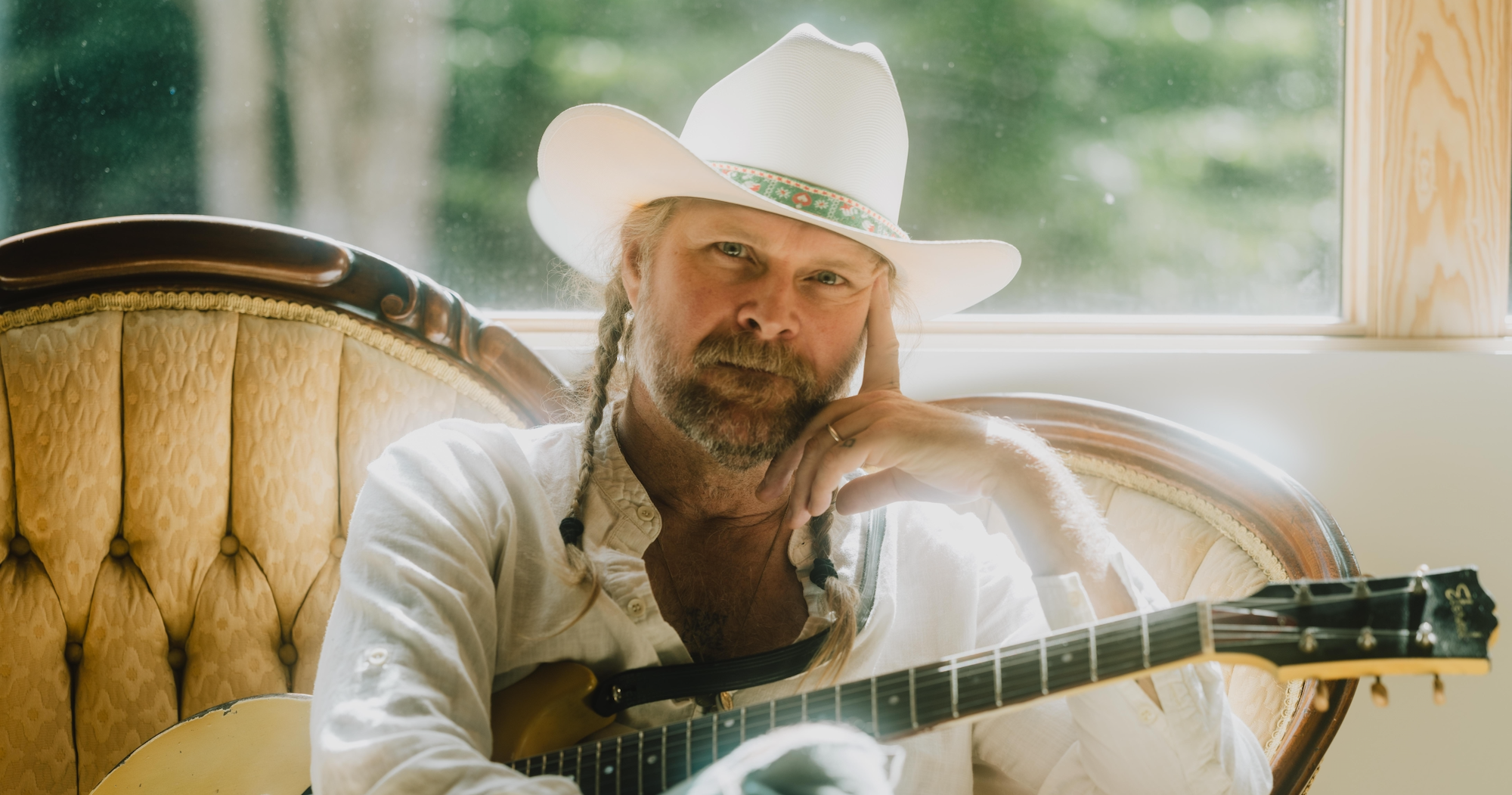
Next year, singer and songwriter MC Taylor will have been leading Hiss Golden Messenger for two decades. For most of that time, critics and listeners have relied on a few familiar narratives about Taylor: that he is a singular figure, for example; or that his move from California to Durham, North Carolina, marked a formal shift from punk to Americana; or even that he thinks slightly more than he feels. Talking to Taylor, from his home in Durham (well, there was a Zoom call involved), I found these cliches about his practices were limiting, factually accurate but emotionally untrue.
Instead of laser-focusing on one narrative, on telling the same stories over and over again, listening to Taylor speak, I encountered a new understanding of his practice, one which placed Taylor in the background and moved his bandmates and genre-play into the foreground – shifting from the centrality of a singular figure to a greater emphasis on generosity and expansiveness.
That the new album is called I’m People is the first clue that Taylor wants to expand the perception of his music; it’s a title that considers mutuality as central to the enterprise of musicmaking. So, how does one expand this thinking – one could consider him geographically or complicate these tales of origin, or think about who is playing on this record, or even refuse the standard narratives of genre.
Instead of focusing on the fact that Taylor began playing in hardcore bands in California, think about the other influences: that he played in a band named after Joni Mitchell’s Court and Spark, an album marked by an urbane distrust of other people’s desires. Or that, around the time he was carefully listening to Mitchell, he was also following that most American portable utopia, the Grateful Dead. Or think about his move to Durham, not strictly to play in a band, but to study folk music academically.
Or, consider how this album was recorded – at least partially – in upstate New York. A more cynical writer would note that Taylor borrows from Dylan’s Nashville Skyline, and that album itself was the foundation of a more isolated, lonely understanding of tradition after abandoning folk music, seeking a slightly more commercial understanding. Recording this in the Hudson Valley could be considered a pilgrimage or homecoming.
I don’t think that it is a homecoming just for Taylor; the record sounds lush, expansive formally, too. Perhaps because the people who sing or play on this record play in a collective of other bands, including Rhett Miller, the Mountain Goats, Bonny Light Horseman, and the Hold Steady.
The expansive nature of the band is not only connected to the history of music they listen to, or the other bands that they play in, but also more unexpected influences like Sade. The idea that Taylor is the band is false, and it is not even that Hiss is the band. Taylor expands the possibility of Hiss, but Hiss itself pushes the possibilities – because of where they come from, their other projects, and even the possibility of geography. Not because Durham is magically a place where music coalesces, but because for a long time it was a college town where rent was relatively cheap and lots of people liked playing music together.
When addressing genres, the promotional material calls the album Americana – but Americana is a useless category, one which might be country or folk or something else entirely. I’m People has a kind of intense richness that is neither of these genres. Listening to the LP, something happens where the expansion or fracturing of those playing on this record becomes its own kind of post-genre.
There are a lot of reasons not to love America right now, but emphasizing the American instead of Americana allows us to consider this album as a consequence of the totality of American music – Taylor addresses the improv nature of jazz as part of this, or traditional folk music, or even 1970s easy-listening. He speaks fondly of the detective novels of Elmore Leonard, and on at least one of his early albums the photography of William Gedney became a powerful totem.
I think of I’m People as a kind of ebbing and flowing for and against tradition, part of that decades-long wrestling with aesthetics and history. Consider the last song, “Depends on the River,” is another of his great songs about waterways. In a 2016 profile of Hiss, New Yorker critic Amanda Petrusich wrote about Hiss’s long tradition of river songs and how it fits into a century of metaphors from blues singer Geeshie Wiley to Joni Mitchell, working this tradition. Petrusich writes: “Taylor frequently evokes river imagery in his work; the river, of course, can be understood as its own kind of road, a direct line to somewhere else, far away.”
I don’t know if that’s wrong, but I also think about rivers as they turn into oxbow lakes, rivers which flow into swamps – literally bogged down – rivers that flow into oceans, and rivers that dry up depending on the season. Hiss’s meandering, deepening quality depends on that river, both the direct line that Petrusich talks about and the larger metaphor, one where Taylor literally talks about whether he dares to cross it. On I’m People, he not only crosses it and crosses it again, but brings along a whole community of other performers. And, an audience who is hungry for the difficulty and ambivalence of so much time playing – and thinking – with him, to the other side.
I know you have a degree in folklore studies, I also noticed that in the last few years there has been a cluster of second- or third-generation performers who have some academic training in folk traditions (see also: Jake Blount, Jake Xerxes Fussell, Willi Carlisle, etc.). Can you talk a little bit about the kind of intersection of formal and informal folk studies and also about your relationship to people who are making this kind of work? I’m thinking about the line on the song “Mercy Avenue” where you talk about the “boys on the corner knowing more than those with PhDs.”
MC Taylor: Well, it’s been a really long time since I was in the academics here. And that universe was one that I feel like I passed through briefly. I wasn’t destined to be in that realm forever. So, I’m not sure that I can totally speak to [that]. Like the place of academic/creative work.
I will say that my time in that space was a really good time for me, when I was restarting my brain and re-centering myself. School was a good way for me to step away from whatever I had been doing previously. I did a lot of field work at that time. I interviewed a lot of people, and I think that it made me a much better listener.
I think that, more than anything else, [that] is what I came away with, this feeling that people really, really like to be heard. So I think I just really tried to develop my listening skills.
Can you talk a little bit about working with a band – especially this band – and about how the bandmates are part of their own creative worlds? Is there a kind of politics there, or a kind of community making?
The basic tracking of the album was done with JT Bates playing drums and percussion, Cameron Ralston playing bass – both electric and upright – and Josh Kaufman, who was producing the record with me, playing guitars, mandolin, piano. My friend Chris Boerner was engineering the record. He plays guitar.
The road version of Hiss Golden Messenger, you know, [are] involved in a whole variety of things. JT, Cameron, and Josh play in Bonny Light Horseman. All three of them have also at various times been members of Hiss and have toured with Hiss. And in fact, that’s where those guys met – playing in Hiss. All of us have known each other for many, many years, so I consider those guys really good friends.
But we’ve never made a Hiss Golden Messenger record before. … They’ve worked on [other] records [together], but we never came together to create a Hiss Golden Messenger record together. It was this funny and unique situation in which we were already old friends, doing something that felt new and fresh. It didn’t feel like a complicated record to make for me. I think Josh Kaufman maybe would say the same thing, but Josh was performing sort of a different task than I was in the situation. It was a complicated record to write, but that was something of the solitary endeavor that took place over probably a year or a year and a half.
I really love those guys and I am delighted that they could be there to play on the record. I think of them as absolute top-tier musicians, every one of them. Cameron is currently playing with the Mountain Goats, he plays all kinds of jazz, he plays in the Spacebomb House Band. JT Bates plays drums with Big Red Machine, which is Aaron Dessner and Justin Vernon. And [he’s] just a legendary drummer in Minneapolis. Josh Galvin plays with everybody.
There are some songs on this album about hope and I wondered about making work about hope in this specific social and political moment? “Shaky Eyes” or “Heavy Worlds,” for example.
[I am interested] in how we [have] the energy to get through the messiness of life. And not only this particular time that we’re living through – although that is the most depressing. But just like life in general. I don’t think that we can do – or I don’t think I can do – life alone. So, in a way this record is me writing to myself. Maybe now [about] how important other people are.
I think I realized that the most important part is moving through, and needs to involve being around [other people]. Over the past few years, just speaking personally, the idea of community has felt like a more and more important part of it.
Thinking about that – and how dense/lush the production here is – though you are marketed as “Americana,” I wonder about how you view genre. And also how your band does – I’m thinking about background vocalist Annie Nero’s bio for radio: “She loves to find the common thread between musical ideas and genres…but also break free of genres because life’s too short to limit ourselves based on perceived taste!”
I listen to lots of different stuff. I think all of that stuff finds its way into what I’m doing. It’s a little tricky. I used to have a stronger stay-in-your-lane [attitude] about the term “Americana,” but I just don’t think that I care very much anymore. It’s not a word that I generally use. But I understand why it exists. Many of my favorite songwriters exist in that world.
What would you call your genre then?
I mean, I wouldn’t. I guess that’s what I’m saying.
Like, if I was at the dog park and I was talking to a stranger, and they said, “Oh, you’re a musician? What kind of music do you play?” I’d probably say, “Kind of rock and roll.” I generally am not describing my music in terms of genre, I guess. If I told someone that I played rock and roll, and they asked me to extrapolate on that, I would say something like, “Rock and roll that’s really swinging.” I try and concentrate on the rhythmic elements. I love singer-songwriter type music from the ’60s and ’70s. I like really oddball stuff. I love Bruce Ruffin reggae; I love free jazz. There’s a lot of music that I have inside of me. There’s a lot of music that Josh, Cameron and Chris – [that] we all have inside of us. I think it’s just a question of how we get it out and put it into use in a way that feels genuine and not forced. …
Thinking about the tension on this album between distinct geographical spaces and a more universal emotions – for example on “Seneca (Time is a Mother, Baby)” or “Mercy Avenue.” And also that becomes a larger theme of your work, thinking about how Amanda Petrusich writes about your decades-long commitment to writing about rivers. There’s even the river song on this album. What do you think your relationship is to the land, to rivers – especially. when you sing “Depends on the River.” Or is there specifically one river?
On previous Hiss records there are specific geographical places like city names mentioned. And not only are those places part of the fabric of the story that I’m trying to tell, but they sort of served as poles, maybe? What I’m trying to accomplish is sort of like a poetic travelog of my life growing up in America. I’ve been traveling as a musician since I was 18. I have been, it seems like, everywhere in this country – more than once or some places 10 times. I’ve been all over every highway. So, maybe the dimension of place names throughout is sort of like carving my name on a tree or something. It’s just kind of like, “I was here.” “This is where we are in this song right now.” “This is where we are in my life.” And then, “Now we’re over here.”
In terms of rivers, a river is always flowing, always changing. A river can kill you if you’re not careful. It can keep you alive and get you to the next place if you treat it with respect and understand its rules. The coda on that song, [“Depends on the River”], the last thing that we hear on the record is “the line depends on the river exactly.” I guess the meaning depends on what river of life we’re talking about. It depends how lucky we get.
I’ve always been impressed by the wide range of your reading, listening, and looking. For example, your careful thoughts on the photos of Gedney. What are you reading, what are you listening to, what are you looking at these days?
Well, you know what I’m reading right now? I’m like about 200 pages into this Gary Stewart biography. Gary Stewart, the country singer. It’s called I Am From the Honky-Tonks. Gary Stewart actually was someone that Chris Smith from [record label] Paradise of Bachelors turned me onto like 15 to 16 years ago. Those of us that are obsessive about him all knew that this book was coming. It’s finally out and yeah, if you’re Gary Stewart fan, it’s kind of like you can’t believe it exists. I’ve been waiting for it.
In terms of what I’m listening to, I’m always listening to all kinds of stuff. I just bought this record [that’s] The Sun Ra Arkestra doing Disney themes. It’s so beautiful, really makes you think about those compositions in a different way, [about] actually how deep they are. I’ve been revisiting some Ted Lucas. I’ve really been liking this McCoy Tyner record called Asante. It’s a 1974 record; might be my current favorite. It’s very deep in the zone with like Alice Coltrane and Pharoah Sanders – that era. Oh, it’s beautiful. [I’ve been listening to] some Paul Brady from ‘78. He’s amazing! I’ve been listening to Welcome Here Kind Stranger. [Also] a record that I was checking out for a while [was] by the Universal Liberation Orchestra. It’s kind of this weird, very minimal– I guess it would be jazz.
Located inside the historic Wang Theatre and founded by the Boch Center, the Folk Americana Roots Hall of Fame is Boston’s premier cultural and educational initiative dedicated to celebrating America’s rich musical heritage. Since its launch in 2019, FARHOF has honored the artists, songs, and movements that have shaped folk, Americana, and roots music while creating immersive exhibits, educational programming, and live experiences that connect audiences to the stories behind the sound. Guided by iconic artists and industry leaders, the Hall exists to honor the past, celebrate the present, and nurture the future of these genres.
On March 24, 2026, FARHOF will host its 2026 Induction Celebration at the Wang Theatre, an unforgettable evening recognizing the artists and industry leaders who helped build the foundation of folk, Americana, and roots music. This year’s honorees, whose collective achievements include 30 GRAMMY Awards and countless other accolades, represent the influence and ongoing evolution of the genres we preserve.
Our playlist theme, Roots That Built the Hall, celebrates the legacy and influence of this year’s inductees. Each song reflects the innovation and cultural impact of the artists who shaped Folk and Roots music, reminding us why this music endures and continues to inspire. – Denise Arellano, The Boch Center
“(I’m Your) Hoochie Coochie Man” – Muddy Waters
Muddy Waters electrified the Delta blues and carried it into the urban North, shaping the sound of modern roots music. This track demonstrates that blues roots continue to inspire folk and Americana, exemplifying the music and legacy the Folk Americana Roots Hall of Fame celebrates.
“Chain of Fools” – Aretha Franklin
Aretha’s voice bridges gospel, soul, and rhythm & blues, reminding us that roots music is inseparable from the Black musical traditions that shaped America. Her artistry embodies FARHOF’s mission to celebrate music as both cultural expression and social force.
“Suzanne” – Leonard Cohen
With poetic lyricism and folk instrumentation, Cohen represents the storytelling tradition central to folk music. His work highlights how intimate songwriting can shape national culture and influence generations to come.
“Make Me A Pallet On Your Floor” – Mississippi John Hurt
Hurt’s fingerpicking style and oral storytelling roots in this country blues standard echo the preserved histories and rare artifacts celebrated within FARHOF’s exhibits.
“My Journey To The Sky” – Sister Rosetta Tharpe
Blending gospel and the electric guitar, Sister Rosetta Tharpe helped lay the groundwork for rock ‘n’ roll. Her inclusion reflects FARHOF’s commitment to honoring artists whose innovations continue to ripple across genres.
“Running on Empty” – Jackson Browne
A pillar of folk and Americana, Browne captures the restless spirit of life on the road. His songs blend roots traditions with raw, lived experience, shaping the sound and soul of a generation.
“Both Sides Now” – Judy Collins
A defining voice of the 1960s folk revival, Collins helped bring reflective and socially aware songwriting to the mainstream. Her work showcases the genre’s power to spark dialogue and deepen cultural understanding.
“Harvest Moon” – Neil Young
Young’s blending of folk intimacy and country influence illustrates the fluid evolution of roots music. Songs like this show how tradition can feel timeless while still speaking to contemporary audiences.
“The Last Thing on My Mind” – Tom Paxton
Paxton’s songwriting embodies the heart of the folk process, simple melodies carrying profound emotional truth. His legacy reinforces FARHOF’s mission to preserve the craft of storytelling through song.
“Urge for Going” – Tom Rush
Rush played a pivotal role in championing emerging songwriters and expanding the Boston folk scene. His work connects directly to FARHOF’s educational spirit by nurturing future generations while honoring those who paved the way.
“Go Down Sunshine” – Odetta
Odetta’s commanding voice became a soundtrack to the Civil Rights Movement, proving music’s power to inspire social change. Her artistry ties directly to FARHOF’s belief that folk and roots music are not just entertainment, but vessels for justice, unity, and cultural preservation.
“All I Want” – Joni Mitchell
Joni Mitchell’s intricate songwriting and emotional clarity helped redefine the possibilities of folk music in the 1970s. “All I Want” is built upon the deeply personal storytelling that continues to influence generations of artists, embodying FARHOF’s commitment to honoring innovation within tradition.
“Tear the Fascists Down” – Woody Guthrie
Woody Guthrie stands as one of the foundational voices of American folk music, using song as a vehicle for social conscience and collective resilience. This track underscores how roots music has amplified the voices of working people and movements for justice, a legacy FARHOF preserves.
“Black Betty” – Lead Belly
Lead Belly’s recordings carried traditional work songs and prison chants into the American mainstream, ensuring these stories were not lost to time. “Black Betty” represents the oral traditions and lived histories that form the foundation of roots music and the cultural preservation FARHOF continues to strive for.
“It Ain’t Me Babe” – Joan Baez
Joan Baez helped bring folk music into the national spotlight during a pivotal era of cultural change. Her interpretation of this song reflects the genre’s spirit of independence and social awareness, qualities that continue to shape the folk and Americana traditions celebrated within the Hall.
Graphics courtesy of the Folk Americana Roots Hall of Fame.
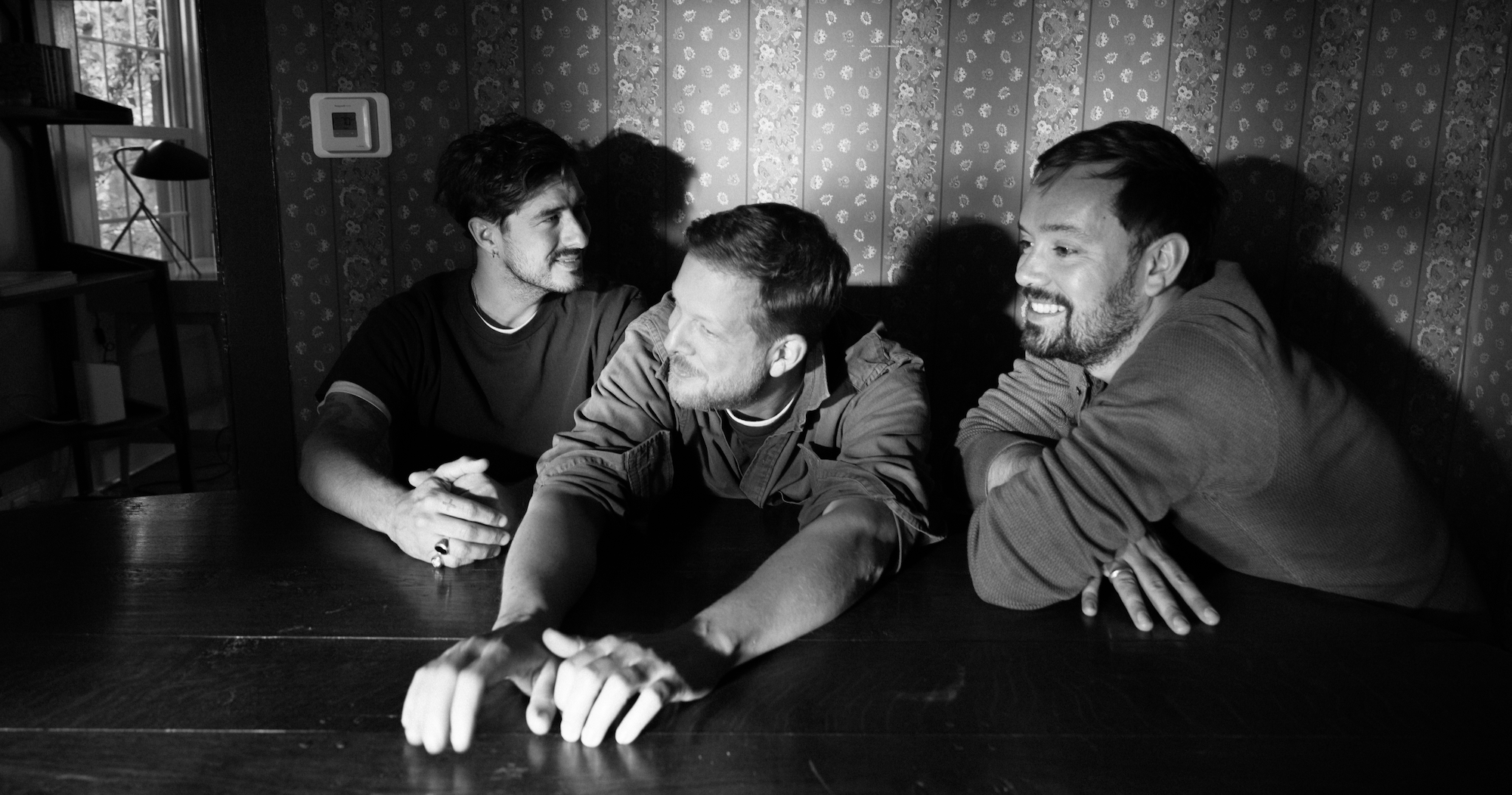
When Rushmere was released in March of this year – Mumford & Sons’ first album in seven years – critics noted its homecoming feel. The songs, the sound, the oh-so-yearning lyrics; they all combined to take the listener back to the beginning.
Tracks like “Malibu” and “Caroline” do not, perhaps, hit the wild highs of “Little Lion Man.” There’s a subtler expression at play in the album, reflecting an evolution from youthful exuberance to the quiet wisdom that only comes with experience. But a decade and a half on from Sigh No More, the band have clearly doubled back from their more experimental forays – 2018’s Delta; Marcus Mumford’s solo project, (self-titled) – to celebrate what brought them together in the first place. In Rushmere they had returned to their rootsy roots, and found peace there.
This month, the band heads back out on tour to Chicago, Philadelphia, Montréal, and more. In November, they’ll return to Europe, and ultimately to the UK, where their final leg will climax at London’s 20,000-capacity O2 arena. Months on the road this year and playing to sold-out venues have proven one thing: people still can’t get enough of them.
And yet the world is a very different place to when their debut album hit the shelves in 2009. When Mumford & Sons first toured Sigh No More, Barack Obama was President of the United States. In the UK, the biggest question on people’s lips was what Kate Middleton would be wearing at her royal marriage to Prince William.
Today’s social backdrop feels meaner, more fractious, less optimistic. Widening rifts in society have made it harder for people to celebrate shared values, even cherish the same moments together. Mumford have split with one of their own band members as a direct consequence of our rapid political polarization. What is it, then, that felt so fresh back then – and that still appeals today?
Matt Menefee first encountered the Mumford sound when his progressive bluegrass band, Cadillac Sky, were at their peak. “We were heading up out of Texas to play Telluride in 2010, and we played some gigs en route,” says Menefee. “So we’d stopped at a hotel, and there was Marcus on MTV, and someone said, ‘Oh, this band’s headlining the festival.’ Our lead singer already had the record and so we listened to it all the way up there.”
For a group of musicians that favored a raucous, punk rock vibe, Mumford’s gleeful-yet-soulful energy was something new. “We were like, ‘Oh man, this is something else!’” Menefee recalls. “To hear these cohesive, in-your-face anthems… it was raging. The melodies and the lyrics were beautifully crafted as well. It was a force that blew our guys away.”
Mumford’s Telluride set became an instant classic (it’s still spoken of in awe today). “It was just a party,” remembers Jerry Douglas, whom the band had asked to join them on stage. “The guys looked so excited. I’ve been to that festival so many times and you can get jaded. But I’m watching them jump up and down and I’m going, this is what it’s supposed to feel like.” He describes that electric closing set as one of the best he’s seen in Telluride’s 51 iterations.
Douglas is one of the many Americana musicians that Mumford and bandmates Ben Lovett, and Ted Dwane sought out to learn from in their early years and have built enduring relationships with. They included Douglas in their performance at the SNL 50th anniversary show, after he had recorded lap steel for Rushmere track “Caroline” – although he laughingly points out that it didn’t make the final mix. “It changed it, it took the band away from just sounding like themselves. I kind of Jackson Browne-ed them a little bit…”
Those collaborative relationships are one of the reasons that Mumford & Sons continue to matter, not least to the musical communities they’ve done so much to elevate. After their first meeting, Menefee became a regular guest artist with the band and has been their go-to banjo player since Winston Marshall’s departure. “You watch them interact with people,” says Menefee, “and they’re so humble, so sweet, so encouraging. They really look after everybody. They’re good, good dudes.”
In August, Mumford & Sons relaunched their Railroad Revival Tour, whose 2011 iteration involved travelling the Southwest in vintage trains alongside Old Crow Medicine Show and Edward Sharpe and the Magnetic Zeros. This summer’s rolling festival picked up where that one had left off, traveling between New Orleans and Vermont. The long list of musicians joining them on board ranged from Nathaniel Rateliff and Ketch Secor to Lainey Wilson and Molly Tuttle to Trombone Shorty and Chris Thile.
Lucius’s Jess Wolfe was one of the musicians sharing the stage with Mumford, after forging a bond with Marcus at celebrated, now infamous jams arranged by Brandi Carlile in Joni Mitchell’s living room. “Sitting listening to our hero sing – that’s such a humbling experience, it’s going to bring people close quite quickly,” laughs Wolfe. She describes Mumford & Sons as “natural collaborators – they feel like brothers from the minute that you step foot in the room with them.” It’s that comforting familiarity that expresses itself in their music and forms a major part of their appeal.
Having first heard their sound while working on the Brooklyn open mic circuit, Wolfe was struck by how it reflected the songs that her peers were writing, “except that these were songs that everyone could suddenly, with ease and without thinking, just sing along to. It was like a conversation you were having with an old friend.”
Their pulsing, anthemic melodies, underlaid with a signature stomp, quickly became an in-demand and much replicated sound in the industry. Banjo and mandolin players found themselves getting far more calls for session work. For musicians like Menefee who had spent years justifying their choice of instrument and trying to persuade a sceptical mainstream of its charms, the change was remarkable. “When Mumford hit, it was like, banjo’s cool!”
“I’d go do demo sessions for songwriters on Music Row and for years the publishers would ask you for ‘like, a Mumford thing,’” Menefee continues. “And I should say that’s not all they do – their Delta record is one of my favorites, with its beautiful marriage of electro pop and effects. But I witnessed the success of the other bands that followed in Mumford’s wake. They had a huge influence.”
Douglas believes it’s no exaggeration to say they changed the sound of the musical landscape. “And people either liked it or they didn’t. But it’s a heartbeat, you know? That’s the thing about it. It gets people excited and it makes them feel good. That endorphin rush happens and everybody goes to their happy place. And we need that right now. We need to go to our happy place.”
There, perhaps, lies the key to their successful return after seven years away from the limelight. Every night they play, Menefee sees crowds “losing themselves” in the singalongs. “There’s an anger and a vulnerability that really pierces the heart,” he says. “And it’s so freaking singable.”
The band themselves have admitted to be “stoked” to be headlining festivals in the UK again and there’s little sense of ego at their appearances. Instead, they host shows that have the feel of a party at which they themselves are enthusiastic guests. “It’s just so much fun,” says Menefee. “There’s a real joy in it, a rest from all the chaos.”
Perhaps, right now, we all need a bit more Mumford in our lives.
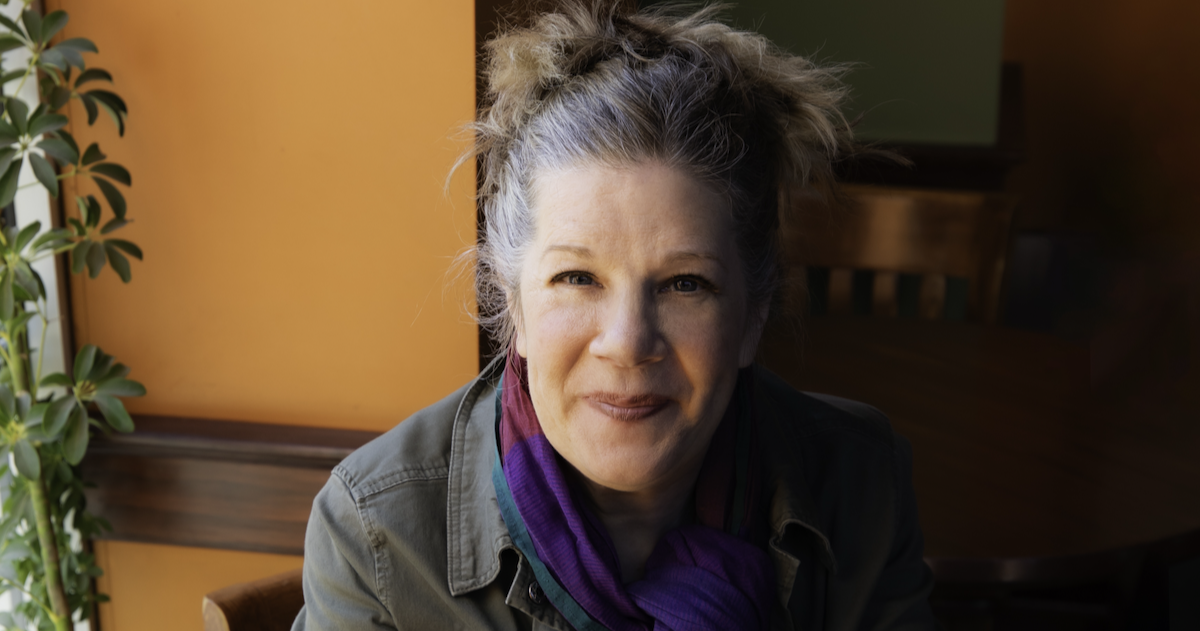
Dar Williams toured a spice farm in Belize amid pristine jungles and primordial Mayan ruins. At a bumpy junction, the driver told the passengers that there were three possible options: steering east, veering west, or sticking to the middle road, which he called the Hummingbird Highway. The instant wholly seized Williams’ attention. Something about the trail choices resonated, especially the enticing description of the middle one, striking her as a vivid metaphor of human life.
Williams, one of folk music’s most cherished gifts, titled her newest LP Hummingbird Highway (her 11th album). It’s an homage to the interdependence of boundless getaway and eternal return and another impressive offering from someone whose heart first journeyed to music long ago and whose emotional vigilance and poetic vigor seems to only intensify with age.
Indeed, the more Williams thought about the variety of roads, the more similarities she hit upon between herself and the hummingbird. “Hummingbirds have these fantastic migrations and hummingbirds need constant fueling,” said Williams.
Shortly after her Belize trip, Williams met a woman who had a matching hummingbird tattoo with her daughter, which the woman described as symbolic of distance and closeness, departure and arrival, the desire to fly in each and every direction with an understanding that the lucky ones can always ground again at home. Williams treasured the richness of all of this imagery. Once again, she contemplated the hummingbird, finding scores of analogies to the human experience and extracting her own correlations.
“Curiosity, love, longing, we’ve got all of these ways of getting around,” she said. “And it’s not always going forward. Like an artist, the hummingbird goes upside down and goes inside out… Flexibility, creativity, fastness, travel – they all make for a complicated person and parent. Hummingbird Highway was written from the perspective of a child, one with a peripatetic, depressed – perhaps bipolar – frenetic, creative, generous, loving parent.”
In a recording career that began with a demo tape in 1990 titled I Have No History, Williams has long leaned on songwriting and other forms of writing (she has written several travelogues and non-fiction books) to cast off and expose her blood and beauty to the world. Her creative journey was nurtured early in childhood bolstered by the support of parents who, as she said, “leaned into the commons culturally.” Born and raised in Westchester County, New York, music was always in the air at home. So, too, was love and praise.
Her mother was a preschool teacher who believed in letting her students and children choose their instruments first and then take lessons to learn how to play them, not the other way around. Her parents always backed their community’s arts programs, on one occasion selling grapefruit to raise funds for the local orchestra.
“I think that that influenced my love of working with coffeehouses,” said Williams. “It has influenced my love of things like art spaces that somehow figured out how to run a complex sound system, places that were community crowdfunded by a bunch of people who retrofitted it themselves from an old shoe store.”
Most of the music shaping Williams’ preferences she first heard long ago in her parents’ vinyl collection. At age 17, home from school one afternoon, she pulled out a couple of Judy Collins’ records. She fell in love with Collins’ Wildflowers (1967), which featured powerful orchestral arrangements by Joshua Rifkin and included her nourishing tone on songs by Joni Mitchell and Leonard Cohen. She remembers lines to “Sons Of,” a track from the 1970 album Whales & Nightingales as if she had just heard them moments ago.
“On these two albums by Judy, there were songs about lost sons and going to war and never coming back and brilliant, classical arrangements by Rikfin. There was poetry, peace. Pete Seeger, Leonard Cohen, Jacques Brel. A song with whales in it… Music made around that time, the musicians literally considered themselves to be turning the wheels of life and death, of culture and civilization. I wanted to be a part of that fabric.”
Williams treasured the pomp and flaming fire of Marvin Gaye, his charged, sexualized characteristics, and his Motown expression, as well as his connection to the wider world of society and humanity. Because of him, music became more to her than just what was present in her home and town. Music could represent the fullness of the planet. She was no longer merely listening to voices and sounds, but comprehending human dignity. Simon & Garfunkel were key early influences, too.
“Paul Simon’s iconography of urban life and ordinary things, buildings, people, and food, influences me to this day,” she said. “The idea of trying to create a sacred landscape from our daily lives comes directly from Simon & Garfunkel.”
Hummingbird Highway is classic Williams, a fresh supply of drink from the ever-flowing spring, exemplifying all of the strong points that make her music enjoyable. Spot-on humility supplies the nourishment of every song. Some express gladness, some are heavy, some are weightless, and others reflect her attempt to reconcile everything in her person. Breadth and beauty reside in all of them, displaying and epitomizing a songwriting mantra that Williams has practiced for a while, which is to allow each song the latitude to grow and shine on its own terms.
“My personal motto is to stick to writing the song that you are writing,” said Williams. “You shouldn’t just bat away a perfectly delightful song about a dragonfly landing on your shoulder, right? You can get to the bottom of a song whether it is a lighthearted or not-so-lighthearted song. Just keep yourself in the shoes of the characters, and find out what’s really happening. Songwriting is committing to the world that you find yourself in.
“We go to music that makes us cry, helps us laugh, helps us bang our heads around and makes us forget things, or makes us be in the ecstatic moment and escape from the murky depths. Feel that first inspiration and keep on going. It ends up being deeper than you thought anyway, even if it’s a flaky song. It’s a way into your inner blueprint and there is a reason it surfaced at that moment. Who are we to say what’s deep and what’s not deep?”
Williams doesn’t journal or write every single day. She does, however, seek to be inspired daily, constantly looking for something surprising or special in the ordinary flashes of day-to-day life, a need that she can satisfy sitting at a museum or on a park bench.
“That’s part of the honest struggle between pedestrian things and poetic things,” she said. “The artist decides all of that on a personal level and decides what in their life it is that they would like to turn into poetry.”
The deeper that she dips into her career, the more that Williams realizes that there is a holy motion guiding each and every recording, pushed forward by an intention that’s both specific and accumulated.
“Music is like archeology, where there are a lot of layers,” she explained. “And each album is a layer and an album is an eon of my life. Looking back, I can pinpoint times of my life, depending on what album I was writing or touring with, and what issues were coming up. Like archeology, it all sort of seems to make sense in its own world, even though it doesn’t at the time [the album] comes out. There is a certain palate, a certain feel, a certain personality, and a certain neuroses attached to each album. It is another way to keep a chronicle of a life and another way to gauge a life.”
Many of the songs on Hummingbird Highway were written during the pandemic and hold numerous references to birds, indicative of a point when Williams spent hours alone staring at and refilling the bird feeder in the garden. There’s also “Tu Sais Le Printemps,” a French bossa nova tune, and “All Is Come Undone,” a piece of writing which came to Williams as she was breaking up earth in the backyard, attempting to convert an idle plot of dirt into a thriving meadow, listening to Thomas Hardy’s poem “The Later Autumn.” Williams’ stab at modern Americana, “Put the Coins on His Eyes” was inspired by the storied history of early labor unions, movements, and revolutions in the U.S., and all of the agitation, suppression, and violence marking their expansions and downfalls.
The joy of taking a batch of new songs on the road is still compelling to Williams, who approaches every night with an alchemist’s urge for transformation, worship of experimentation, and spiritual curiosity about the core quality of things.
“It is a great thing to walk out and feel the energy of the people,” said Williams. “It’s best when there is no skepticism and no suspicion. But some audiences are tentative. You can feel it within the first couple of songs, like a massage therapist who feels tension; you feel the accretion of awareness for what kind of energy field you are walking into. The goal is to get to another place musically together with the audience.”
I seriously love sad songs and it’s honestly so hard to keep this Mixtape short. Every time I think I’m done, I remember another song that deserves a spot. Some songs are perfect for those late-night lonely vibes, while others hit harder on a rainy day. I just think sad music has this special kind of beauty that happy songs can’t match. It’s dramatic, emotional, and somehow comforting at the same time.
Honestly, this Mixtape feels more like a mood diary than just a list of songs. Even now, I know I’ve left off some that should be here which means I’ll probably end up making a “Part 2.” At this point I might as well admit I’m the CEO of sad playlists. But hey – you can never really have too many sad songs, right? – Jaelee Roberts
“Desperado” – The Eagles
“Desperado” is a song that has grabbed me by my heart strings for my whole life. The melody alone just has that sad and lonesome feel that I love so much. A line in the lyrics that always jumps out at me is, “You better let somebody love you before it’s too late.” That grabs my heart in the best way.
“Marie” – Blue Moon Rising
The first time I heard this song it stopped me in my tracks. The way Keith Garrett sings it is absolutely the epitome of lonesome. The song is about a man struggling his entire life to make ends meet and finally he gets a glimpse of happiness through a woman he meets, Marie, and she and their unborn baby pass away. Townes Van Zandt’s lyrics paint a heartbreaking picture of poverty and loss.
“He Stopped Loving Her Today” – George Jones
George Jones is my all-time favorite and this is an obvious choice, but such an important one! This song has often been called “the saddest country song of all time” and I might just have to agree with that. A short explanation is that a man lost the love of his life and he was never able to get over her until he passed away – that’s when he finally stopped loving her. That is absolutely gut-wrenching, but I am obsessed with the song and love it so much.
“I’m So Lonesome I Could Cry” – Hank Williams
I am a huge Hank Williams fan and I have always listened to this song when feeling sad. The way his voice almost cries when he sings it just gets me in my heart and feelings every time I hear it. I am a bit of a country music history nerd and I study a lot about the lives of my heroes and learning about him and this song – the lyrics are so sad and hit even harder when you get into the story behind writing the song. He wrote it after he and his wife Audrey split up amongst his struggles with addiction… it’s heartbreaking.
“Are You Lonesome Tonight” – Elvis Presley
I have loved this song since I was a little girl. Elvis was my first love and I can remember this song being one of the first songs to ever make my heart feel sad. I was just a little kid and thinking, “Oh my goodness, is he okay?” The cry and emotion in his voice is so tragically beautiful and it’s a go-to sad song when I need to hear one. The lyrics are so sad. When you hear his voice say, “…And if you won’t come back to me, they can bring the curtain down…” it breaks my heart every time.
“Lonesome Town” – Ricky Nelson
The first time I heard this song I was hooked. The melody, the lyrics, his hauntingly sad voice made my heart hurt in the way you want it to hurt when listening to a sad song. I really love this song!
“Both Sides Now” – Joni Mitchell
This song is filled with the most beautiful imagery. It’s about viewing love one way and then having your heart broken and seeing love a different way – seeing it “from both sides now.” It’s such a perfectly crafted song and Joni’s voice is so sad and raw on this track.
“Let Me Be Lonely” – Jaelee Roberts
When I first heard this song I knew I had to record it. If you can’t tell, sad songs are my absolute favorite songs and this one hit me hard. I am so honored I got to sing this one. I love the way that it all came together with the way the fiddle sounds so sad and then accompanied by the crying steel guitar (my favorite sound in the world). I love the harmonies that the writers of this song, Kelsi Harrigill and Wyatt McCubbin added. It just completed the lonesome feeling. My favorite lyric in the song is the opening line: “Don’t come knockin’ on the door/ That smile’s not welcome here anymore.”
“Chasing Cars” – Snow Patrol
I actually first heard this song during a heartbreaking scene of one of my favorite TV shows and I remember feeling so sad. Every time I hear this song I feel like I’m in a sad music video. Lyrically, the song is just so great. I love the chorus when it comes in strong and says, “If I lay here, if I just lay here, would you lie with me and just forget the world?”
“Manhattan” – Sara Bareilles
I am a huge Sara Bareilles fan and this song has always had a hold on me. It’s one of the first songs that made me want to play piano. Her voice and the piano work together to make such a beautifully sad song. The song is about finding love, sharing their lives together in Manhattan, and letting that other person have that special place when the relationship ends. The way it’s written is just genius, really.
“Weekend In New England” – Barry Manilow
The melody of this song is what first caught my ear’s attention and then Barry starts singing and it’s just so beautiful. I have loved this song since I was just a young girl and have always listened to it when I feel sad. It’s just a classic sad song and you cannot go wrong with listening to it over and over.
“Heartbreaker” – Dolly Parton
I can still remember sitting in the backseat of our car in the driveway at home – small enough that I wasn’t allowed in the front seat yet. My mom would turn on WSM and we’d sit there together listening to the Grand Ole Opry until it was over. I’ll never forget one night when Little Jimmy Dickens had just finished his segment and the Opry signed off. The DJ came on playing music and that’s when it happened – Dolly Parton’s “Heartbreaker” came on. In that moment, my world stood still. I had never felt so heartbreakingly sad from a song, yet so completely happy at the same time. It was the first time music truly hit me that hard and it’s stayed with me ever since. “Heartbreaker, couldn’t you be just a little more kind to me?” So, so good.
“Misery and Gin” – Merle Haggard
This is another song that I have loved as long as I can remember. The music and melody starts off and then you hear Merle’s voice come in singing, “Memories and drinks don’t mix too well/ Jukebox records don’t play those wedding bells…” What a perfectly sad scenario! Merle Haggard is one of my favorites and could sing anything and make it sound sad, which I love so, so very much. This song is so lonely, but so beautiful and the lyrics are everything a sad lonesome song should be.
“Cry In The Rain” – Jaelee Roberts
This song is so beautifully written. Penned by two incredible songwriters – Billy Droze and Chris Myers – it tells a sad story about being heartbroken over someone, but refusing to let them see your tears. Instead, you hide your pain and only let yourself cry in the rain. I really love this image – it’s sad, strong, and poetic all at once. To me, that’s what makes the song so special. I feel truly honored to have had the chance to record it and tell the story in my own voice.
“Between an Old Memory and Me” – Keith Whitley
Keith Whitley had a way of singing that made you feel every single word, as if he lived inside the stories he told in his songs. In this song especially, when he sings the line, “I don’t want to talk about it, why can’t they just let me be?” you can literally hear the raw desperation and aching sadness in the cry of his voice. It’s lonesome, it’s haunting, and it’s heartbreak wrapped in melody. I love this song with my whole heart – it’s everything I admire about Keith Whitley’s music.
Olive Klug and I recorded this interview in my closet while they were in Portland, Maine, to play a show. Along with their band Cori, Haley, and Payton they stayed with us and it was a real pleasure to be around them for a few days. You can tell that Olive is at their best around their band and it is a true collaboration on stage. Shoutout to the whole crew for leaving such a remarkable impression on me and my wife and for assembling some baby furniture while they were staying at our house.
In our conversation for Basic Folk, Olive takes us on a journey through their musical upbringing, exploring their childhood influences, including their father’s eclectic taste in ’60s and ’70s rock and folk. Olive discusses their love for Joni Mitchell and Taylor Swift, which inspired them to learn guitar and develop their own musical tastes. They provide insights into their early internet presence on platforms like YouTube and Tumblr, and how these shaped their creative expression and online identity.
Olive also touches on their experience of transitioning to a music career, going viral on TikTok, and the emotional and practical challenges that come with it. Additionally, they delve into how their psychology background and neurodiversity inform their songwriting, live performances, and day-to-day life. Our conversation wraps up with thoughts on the productive chaos of touring, the importance of community in the folk world, and their aspirations for long-term, sustainable growth in the music industry. Everyone belongs at the Olive Klug show. They leave their glow wherever their travels take them.
@oliveklugThe gay cowboys keep leaving nashvillea title=”♬ original sound – Olive Klug” href=”https://www.tiktok.com/music/original-sound-7519310944065817375?refer=embed” target=”_blank” rel=”noopener”>♬ original sound – Olive Klug
Now that summer is finally here and I’m about to embark on tour to support the release of my new album, I’m dreaming about idyllic summer pastimes, driving with the windows down, and crossing my fingers that I can force the band to have ice cream on the beach at least once. My new album, Afterglow, celebrates the rebuilding of self and who we become in the wake of life’s big cosmic shifts. The album has an ethereal, playful energy unlike any other record I’ve ever put out and it feels fitting that it’s being released in June (a Gemini baby!).
I never went to summer camp. My best fantasies about it fall somewhere between Wet Hot American Summer, The Parent Trap, and the tales my best friend spun while sitting on top of her sparkly pink trunk, freshly home in the late summer of 1999. In my dream scenario here, I am in an old school bunk with the most amazing women and songwriters four walls can hold; can you imagine what the moonlit campfire harmonies would sound like?! – Anna Vogelzang
“Limelight” – Tune-Yards
This song has the best groove of the summer; I cannot stop listening to it. “We all get free in the family” –Merrill is an incredible soul and I want to be around her fierceness all the time.
“The Light” – Anna Vogelzang
Of all the songs on the new record, this one is the most groove-forward. When I think about summer I think about wanting to move and groove, and this song makes me move every time I play it (or hear it!).
“Night Still Comes” – Neko Case
If I puked up some sonnets, would you call me a miracle?
Neko Case is one of my musical heroes and this song is so singable. That transition from intro to tempo, the way the background vocals fill the spaces – it all feels like dancing on a warm night.
“(You Make Me Feel Like) A Natural Woman” – Aretha Franklin
The clip of Aretha playing this song at the Kennedy Center just resurfaced on my algorithm. Watching Carole King watch Aretha sing is such an incredible joy bomb and brought tears to my eyes, even though I’ve seen the clip a million times.
“Can I Talk My Shit?” – Vagabon
I love Vagabon’s melodies so much; I started hearing about her around town when I lived in LA and have been soaking up each album since. This “honestly I’m ready to go” hook is so dreamy.
“True Blue” – boygenius
“You said you wanted to feel alive so we went to the beach…” There are so many songs I love on this record, but this one is all summer, all the time. Belting out harmonies on this near-perfect chorus while driving along Lake Michigan is something everyone should try at least once.
“Baby I’m Sorry” – mmeadows, Monica Martin
I’m obsessed with this new song from two of my all-time favorite singers. I know from experience that Moni is down to belt it out late into the night and the production on this entire track is so killer, I can’t get enough.
“The Returner” – Allison Russell
When Alli does this song live with her Rainbow Coalition, it’s otherworldly. I had the joy of jumping on stage with them for this tune at Thalia Hall and the energetic power of singing out, “If you think you’re alone, hold on, I’m comin’” cannot be denied.
“Make It Hot” – Mirah
I have been in love with Mirah since I saw her sing in a basement of a neighboring college almost 20 years ago. I love the descending chord progression on this chorus so much and arriving at the outro feels like a moment of pure triumph.
“not a lot, just forever” – Adrianne Lenker
I got to hear Adrianne play this song at a campfire hang at Kerrville once and it felt like a spell being cast – her specific song sorcery is unmatched.
“We the Common (For Valerie Bolden)” – Thao
I am a forever Thao stan and could’ve chosen so many different songs of hers, but this one’s chorus is so goddamn catchy and such a great sing-along moment (and all while speaking truth to power).
“Scaled to Survive” – Leyla McCalla
Summer laid out for us in a groove! This guitar tone, the percussion groove, and Leyla’s heavenly voice create the perfect summer storm. I love Leyla and have such a deep respect for her artistry.
“Ancient Light” – I’m With Her
Another mixed meter groove-forward campfire jam. I love this song, especially the breakdown, but really I’m loving the whole new album so much. These ladies are such a great hang and I would love their hilarity and power trio vibes in our cabin party!
“California” – Joni Mitchell
There is no song hero greater than Joni, and there is no song that feels more like summer to me than California. The opener might as well be today: “They won’t give peace a chance; that was just a dream some of us had.” On days where I really miss LA, I find myself humming this tune without even realizing it.
“King & Queen” –Anna Vogelzang
This track opens Afterglow and is a totally casual ode to toxic relationships – and really hits how good it feels when you realize you’ve outgrown someone, or something, and finally leave them in the dust. It’s giving running on the beach and into the sunset.
I left home (a sleepy market town in middle England) the day after high school finished and traveled around the world with just a guitar and a backpack. I paid my way by teaching English and singing songs in cafes. Five years, 36 countries, and two unfinished degrees later, I moved to Canada to marry a girl I’d once met at a party in Beijing and started my new career as a street performer.
Since then, I’ve played about 3000 gigs, from street corners to stadiums, successfully avoided getting a real job, and raised three amazing ginger kids. I love meeting and singing with people of all walks of life, especially the ordinary, humble folks who are often overlooked. I’m not really interested in finding a niche or a scene – I’m much more keen on finding ways to bridge the gaps between them.
One thing we all have in common is hard times and a need to hold on to hope through our grief and disappointment. Songs have always helped me, and do that, and I feel that I’m not alone. These tunes have inspired and comforted me over the years, and a couple of my own can do the same for you. – Martin Kerr
“Love More, Care Less” – Martin Kerr
I recorded this live in one take, because it’s a song about honesty and acceptance, and because there’s already enough airbrushing and auto-tuning in the world. ‘Love more, care less’ is how I’m trying to live my life now.
“Better, Still” – 100 mile house
This gem of a song beautifully encapsulates the feeling of being a young couple trying to find your place in a senseless world. 100 mile house have disbanded now, and they never got the recognition they deserved, but to me this song is timeless.
“Sometimes” – James
I still remember the first time I heard this song, wedged into the middle seat of an old car with new friends on a dark country road in northern England as the rain poured down. It’s an ecstatic, defiant celebration of song, storms, death, and the meaning of life.
“Big Bird In A Small Cage” – Patrick Watson
The softness of this song’s beginning is so inviting. It grows, line by line, with new instruments and harmonies, the song spreading its wings like the bird in the title. I love a song that grows and lifts and takes you on an unexpected journey. Plus, it’s my wife’s favorite, so I always get extra points for playing it.
“Re: Stacks” – Bon Iver
Usually I favor narrative songwriting with a clear story. But this abstract work of genius somehow immerses me in a world, a heart, and a feeling without making any outward sense. It’s the perfect end to a mind-blowing album, carrying the listener from anguish through acceptance to a new day.
“Feather On The Clyde” – Passenger
Passenger was a street performer when he made this record, busking on the streets of Sydney to pay for the recording and sleeping on the studio couch at night. I love the vulnerability and honesty in this simple song with its intricate fingerpicking that ebbs and flows like the titular river. I remember listening to this 20 times in a row on a long flight home and resolving to allow myself to be carried by the flow of life like the feather he sings about.
“A Case of You” – Joni Mitchell
Possibly the greatest vocal performance on any record ever. I’ve always wanted to cover this song, but never felt I could do it justice. Joni paints vivid pictures of heartbreak with her words and illuminates them with the glow of her perfect voice over a lonely dulcimer. The peak of confessional singer-songwriting. I listened to it endlessly in my first apartment in Beijing when I owned nothing but a sofa, a Discman, and a handful of pirated CDs bought from the street market.
“Fast Car” – Tracy Chapman
I love that this song was rediscovered by a new generation recently, but the original version can never be beaten. As a 5-year-old hearing this for the first time, I’m not sure I understood the whole story at first, but I pored over the lyrics on the back of the vinyl dust-cover in my sister’s room until I knew every word and every note of this young woman’s story from half the world away. The lift into the chorus captures the bittersweet exhilaration of escaping something that was once beautiful, but now has turned dark and needs to be left behind.
“Can’t Unsee It” – Martin Kerr
Unspeakable things are happening in the world at the moment and we’re told to look the other way, to pretend it’s not happening. I made this song to try and express the grief in my heart at witnessing the genocide in Gaza, while being powerless to stop it. The melody is inspired by “Here Comes The Sun,” in the hope that there could yet be some light at the end of this long darkness for the children of war.
“Guiding Light” – Foy Vance
My parents used to sing me to sleep with old Scots lullabies that I only half understood. Foy Vance manages to bridge the gap between Gaelic traditions and the modern world in his music and this song gives me a timeless feeling of home and belonging.
“Innocence and Sadness” – Dermot Kennedy
Hearing Dermot sing this solo for a whole stadium every night was magical. I got to open for him on his cross-Canada tour last year and it was unforgettable. His songs are so nostalgic and so fresh at the same time, ancient and modern, so personal yet universal. I try to reach for that in my own songwriting and performing.
“Farewell And Goodnight” – Smashing Pumpkins
I used to fall asleep to this song every night when I was 16 and 17, when I was trying to figure out who I was, where I belonged, and why the girls I fell for never fell for me. Listening now I can hear it starts with a brush on a snare drum, but I always thought it was the waves lapping on the shore. The song is a calm and wistful end to a chaotic album full of angst and confusion (Mellon Collie And The Infinite Sadness). I think it taught me the value of simplicity and comfort, of contrast and context. I can still hear the click of the stop mechanism that would almost wake me up as the tape ended on my cheap plastic boombox.
Photo Credit: Shaun Scade
This website uses cookies to improve your experience. We'll assume you're ok with this, but you can opt-out if you wish.AcceptRejectRead More
Privacy & Cookies Policy
Privacy Overview
This website uses cookies to improve your experience while you navigate through the website. Out of these, the cookies that are categorized as necessary are stored on your browser as they are essential for the working of basic functionalities of the website. We also use third-party cookies that help us analyze and understand how you use this website. These cookies will be stored in your browser only with your consent. You also have the option to opt-out of these cookies. But opting out of some of these cookies may affect your browsing experience.
Necessary cookies are absolutely essential for the website to function properly. This category only includes cookies that ensures basic functionalities and security features of the website. These cookies do not store any personal information.
Any cookies that may not be particularly necessary for the website to function and is used specifically to collect user personal data via analytics, ads, other embedded contents are termed as non-necessary cookies. It is mandatory to procure user consent prior to running these cookies on your website.