You Gotta Hear This: New Music From Courtney Hartman, Dee White, and More

It’s another week where popcorn may be necessary to fully enjoy our weekly new music round-up, with all of the new music videos included below! You Gotta Hear This…

Our first screening is some cosmic California country from Mac Cornish, who’s sharing a music video for the title track of her upcoming album, Wayfaring Woman. The full LP will launch in September, so enjoy this early taste of the project, a song about finding, re-finding, and returning to oneself despite time, geography, and all that comes between.

We have a couple of fun and funny videos you’ll enjoy as well. Nashville-based husband-and-wife roots duo Zaggie (Zach & Maggie White) have a new single and video for “Parking Lot Vacation.” Sometimes a need to unplug, unwind, and relax can be satiated with a good ol’ fashioned sit in a parking lot. The video is witty and hilarious to match the flowing, island-getaway sonics of the song. Plus, Essence & Gold Country have a gut-busting video to tribute Mother’s Day and every “Good Mom” out there. As frontwoman Essence Goldman puts it, it’s all about “the beautiful chaos of motherhood and the truth that we don’t have to lose ourselves to be a good mom.” It’s bluegrassy country that will get your toe tapping while bringing a smile to your face.

Also just in time for Mother’s Day, our old friend Courtney Hartman shares an intimate and tender peformance video for “Honey, Honey,” a song she wrote dripping with love for her young daughter, describing the perfection of her child through her own eyes and building her up for a life built on love, confidence, and strength. It’s gut-wrenching and comforting at the same time, a deft balance that Hartman is well known for in her songwriting and guitar picking. It’s a lovely video for the occasion – and beyond – and announces her upcoming album, With You: From The Garden Shed, set for release June 12.

From bluegrass, Jaelee Roberts has a new single that was written by bluegrass radio personality and songwriter Terry Herd. “I’m Putting You Out of My Misery” pulls inspiration from traditional hard-driving bluegrass and contemporary sounds equally and boasts a stacked roster of pickers rounding out the band behind Jaelee’s gorgeous, crystalline vocals.

Country and Americana powerhouse Dee White has a new song as well, “Green River Rye,” which dropped earlier this week. Check it out below, it’s a pretty stripped-down recording made with just a simple acoustic trio – with Brian Murray and Jimmy Law – that lands somewhere between classic folk, country & western, and bluegrass, aesthetically. With whiskey as its centerpiece, it’s a lonesome and longing song that feels truly timeless – like you could sing along intuitively immediately, even on first listen. And don’t miss singer-songwriter Zach Seabaugh’s “Owes You Nothing,” a song about navigating Nashville, Music Row, and the music industry without losing your sense of self – or comparing yourself to everyone else you meet along the way. It’s a lovely track built on sensitive and brooding modern country sounds.

Celebrate your Mother’s Day weekend by calling your mama (who is definitely a good mom), sipping some Green River Rye, and taking a parking lot vacation – you’ve earned it. And, You Gotta Hear This!

Mac Cornish, “Wayfaring Woman”

Artist: Mac Cornish
Hometown: Raised Bay Area, California, based in Nashville, Tennessee
Song: “Wayfaring Woman”
Album: Wayfaring Woman
Release Date: May 8, 2026 (single); September 25, 2026 (album)

In Their Words: “‘Wayfaring Woman’ is a song about a girl who stays moving so her past won’t catch up to her – and so she won’t have to face herself. By the time I finished writing it I realized it was about myself. It was my way of telling myself, ‘It’s alright to cry, but it’s time to remember who you are and stop this cycle.’ So when I sing, ‘Even in yours lows, you can always go home,’ I mean the place and the state of mind.

“Making my way back to myself has always felt connected to the California home of my youth. Those canyon roads and golden hills remind me of who I am and who I always dreamed of being. I might not be able to access those places physically anymore, but the sense of self that I found there is within me and this song is a reminder to myself that I can always go back, I can always go home to myself. ‘Wayfaring Woman’ is the title track and first single off my second record, set to come out in September 25. It’s steeped in cosmic California twang, and I don’t think I’ve ever sounded more like myself.” – Mac Cornish

Track Credits:
Mac Cornish – Vocals, acoustic guitar, songwriter
Hillary Fretland – Harmony vocals
Charlie Fuertsch – Electric guitar
Cooper Dickerson – Steel guitar
Jack Lawrence – Bass
Dave Racine – Drums

Video Credit: Directed and filmed by Janaya Pardo.


Essence & Gold Country, “Good Mom”

Artist: Essence & Gold Country
Hometown: San Francisco, California
Song: “Good Mom”
Album: Father’s Daughter
Release Date: May 8, 2026 (video); September 26, 2025 (album)
Label: Blue Elan

In Their Words: “This ‘Good Mom’ video is about the beautiful chaos of motherhood and the truth that we don’t have to lose ourselves to be a good mom. It holds that tension between giving everything to our children and still claiming space for our own soul, and taking care of ourselves so we have more to give.

“This song gets the best reaction when I perform it live. I just watch the mothers start laughing and shaking their heads in agreement. It is hard for me not to laugh when I sing it. Any mom out there can relate. We thought it was fun to release this music video as as a gift to all the moms on Mother’s Day. Though in my opinion, every day should be Mother’s Day!” – Essence Goldman

Video Credits:
Laura Kudritzki – Director, cinematographer
Essence Goldman – Producer
Austin Grose – Executive producer
Craig Morton – Assistant producer
Margaret Bolton Grace – Stylist
Angela Shippen – Hair, makeup
Andres Campos – Hair, makeup
Elise Bigley – Hair, makeup
Keldon Duane-McGlashan – Editor


Courtney Hartman, “Honey, Honey”

Artist: Courtney Hartman
Hometown: Eau Claire, Wisconsin
Song: “Honey, Honey”
Album: With You: From The Garden Shed
Release Date: May 8, 2026 (single); June 12, 2026 (album)

In Their Words: “‘Honey, Honey’ is a love song to my daughter – a collage of daily imagery and truths I want her to hold onto. She has taught me about delight and even as I am the one cradling her and giving her comfort, it is often my own heart being mended by her.

“In the final verse I list a few things I want her to remember when I am not there to hold her, ‘quiet waters, soothe and sway, sunlight and kindness, the cradle of a day. You’re brave as an iris, a bright display, a trumpeter swan lifting up and away.’ Tift Merritt co-wrote this song with me, helping me clear away the debris and uncover within my own days the scenes I most wanted to sing.” – Courtney Hartman

Video Credits: Filmed by Kyle Lehman.
Edited by Erik Elstran.


Jaelee Roberts, “I’m Putting You Out of My Misery”

Artist: Jaelee Roberts
Hometown: Nashville, Tennessee
Song: “I’m Putting You Out of My Misery”
Label: Mountain Home Music Company
Release Date: May 8, 2026

In Their Words: “‘I’m Putting You Out of My Misery’ is one of those songs that stopped me in my tracks the first time I heard it. Terry Herd wrote an incredible song and I fell in love with it right away. To me, it strikes the perfect balance between that hard-driving traditional sound and a touch of contemporary bluegrass. I absolutely love how everything came together in the studio. I’ve always enjoyed a song with a little bit of attitude and this one definitely delivers.

“I was also fortunate to have some amazing musicians join me on the recording. Alan Bartram on bass, Ron Stewart on banjo, Tony Wray on guitar, Michael Cleveland on fiddle, Justin Moses on mandolin and Dobro, and Zack Arnold adding harmony vocals. Getting to collaborate with such talented players made this project especially meaningful to me. I’m truly proud of how the track turned out, and I’m so thankful to each of them for being part of it. I hope you all enjoy listening to it as much as I enjoyed recording it.” – Jaelee Roberts

Track Credits:
Jaelee Roberts – Lead vocal
Alan Bartram – Bass
Ron Stewart – Banjo
Tony Wray – Guitar
Michael Cleveland – Fiddle
Justin Moses – Mandolin, resonator guitar
Zack Arnold – Harmony vocal


Zach Seabaugh, “Owes You Nothing”

Artist: Zach Seabaugh
Hometown: Marietta, Georgia & Nashville, Tennessee
Song: “Owes You Nothing”
Release Date: May 8, 2026 (single)
Label: Cloverdale Records

In Their Words: “This song came at a time when I needed to check myself – on where I was in life – and on the people in my life I didn’t want to take for granted. I wrote it with Park Chisolm and Reid Haughton on Music Row. I was talking to them about how hard it is sometimes to show up in Nashville, to be creative for a living. You can fall into the comparison trap when so much of the industry around you is trying to set out for the same thing. But I don’t like feeling sorry for myself. I’m super grateful for what I have and who I get to live life with and at the end of the day, I guess this world owes you nothing. So you gotta make the most with what you got—that’s when you realize you got all you need.” – Zach Seabaugh


Dee White, “Green River Rye”

Artist: Dee White
Hometown: Slapout, Alabama
Song: “Green River Rye”
Release Date: May 6, 2026

In Their Words: “I first discovered Green River Rye Whiskey during a hunting trip to Kentucky. The bottle instantly caught my eye – it was the same one I remembered from an antique lithograph that hung in my childhood home. At the time, my girlfriend had just left me, and the chorus melody had already popped into my head. Later that night, I was hanging out with my buddies Jimmy and Brian and we finalized the music and lyrics. The very next evening, we went into the studio and recorded it as an acoustic trio in Nashville.” – Dee White


Zaggie, “Parking Lot Vacation”

Artist: Zaggie
Hometown: Nashville, Tennessee
Song: “Parking Lot Vacation”
Album: Turpentine Mind
Release Date: May 6, 2026 (single); August 26, 2026 (album)
Label: Zaggie Records

In Their Words: “‘Parking Lot Vacation’ came from the exact mental-headspace-shift the song is about. I was supposed to be writing. Instead, I was staring at a blank page for long enough that it started staring back. Eventually I just… leaned back, let myself off the hook for a bit, and the song showed up. Turns out vacations are less about where you are and more about the moment you stop letting petty anxieties run the show. A good car seat, a warm breeze, a window cracked just right is sometimes all I need. We’ve seen a lot of beautiful places in the world and a parking lot on the right day is genuinely in the conversation.” – Zach White

Track Credits:
Zach White – Vocals, guitar, songwriter
Maggie White – Mandolin
Dan Needham – Drums
Byron House – Bass
Chris Walters – Piano

Video Credits:
Cast: Annabelle Fox-Tieman, Douglas Waterbury-Tieman, Ollie Fox-Tieman, Huck Fox-Tieman, Emily Rogers, Josée Klein.
Directed and edited by Zach White.
Location Videography by BAMM Productions.


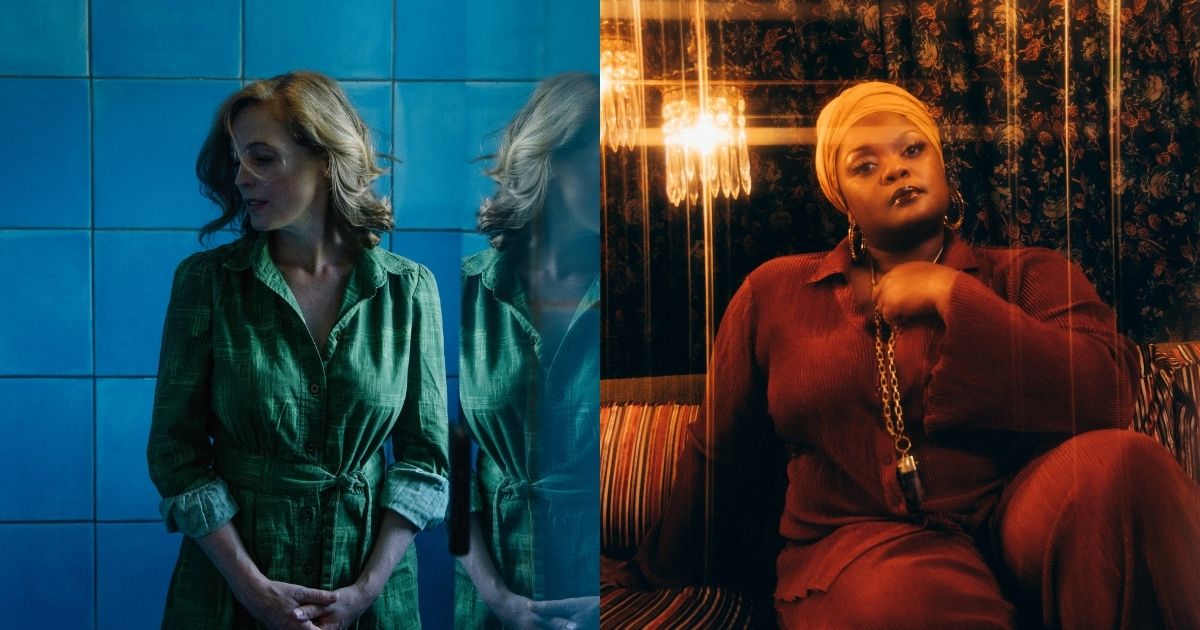
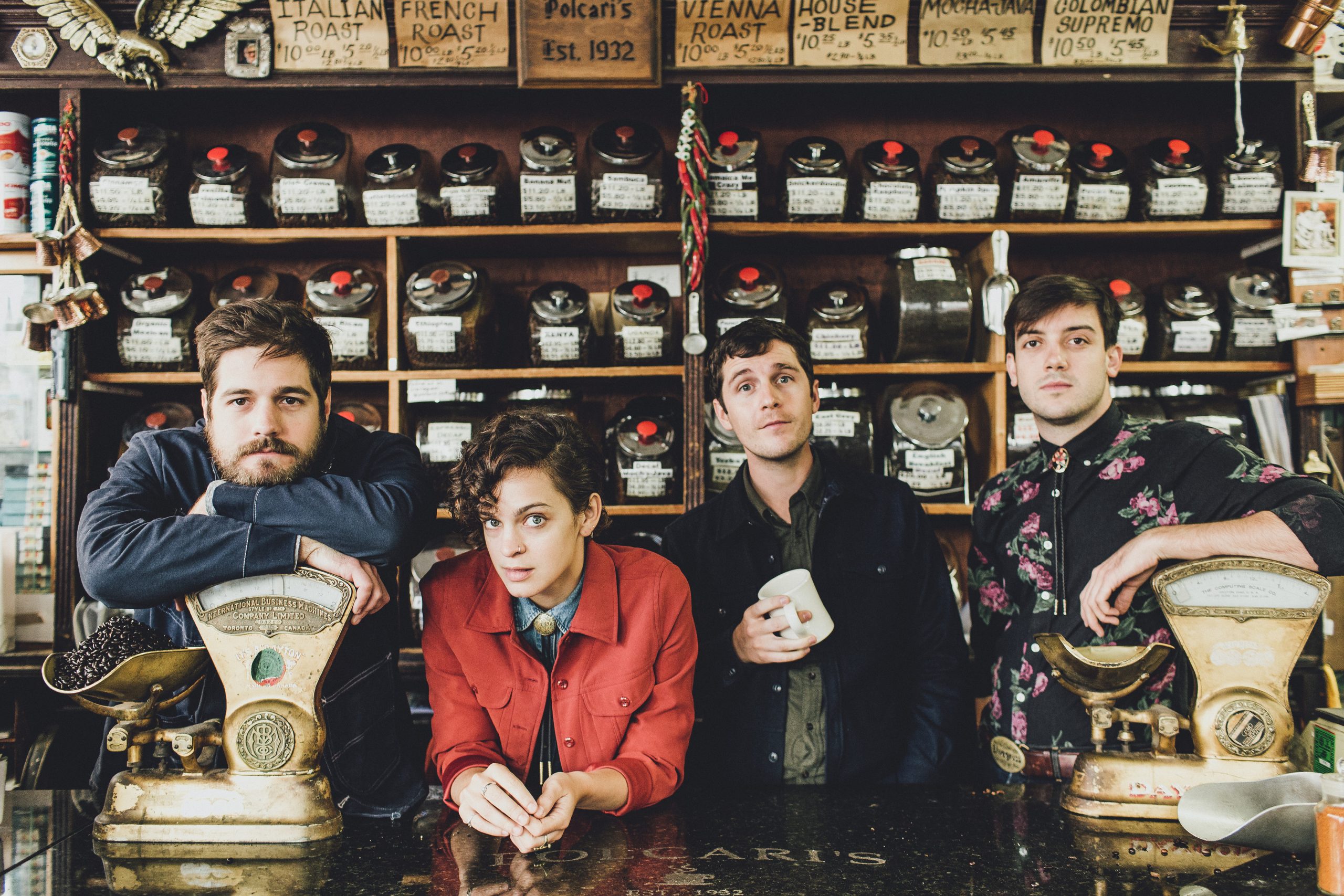
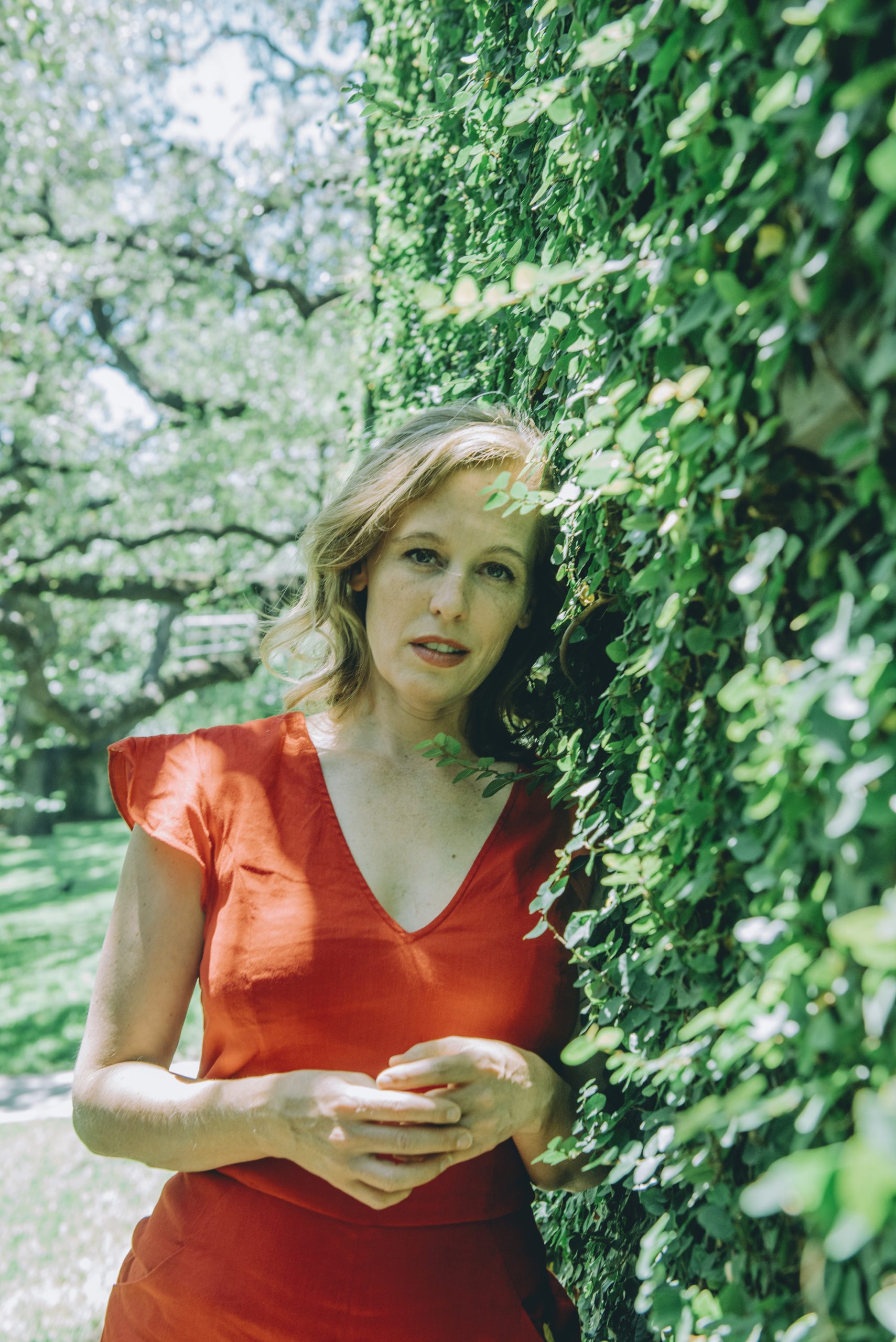
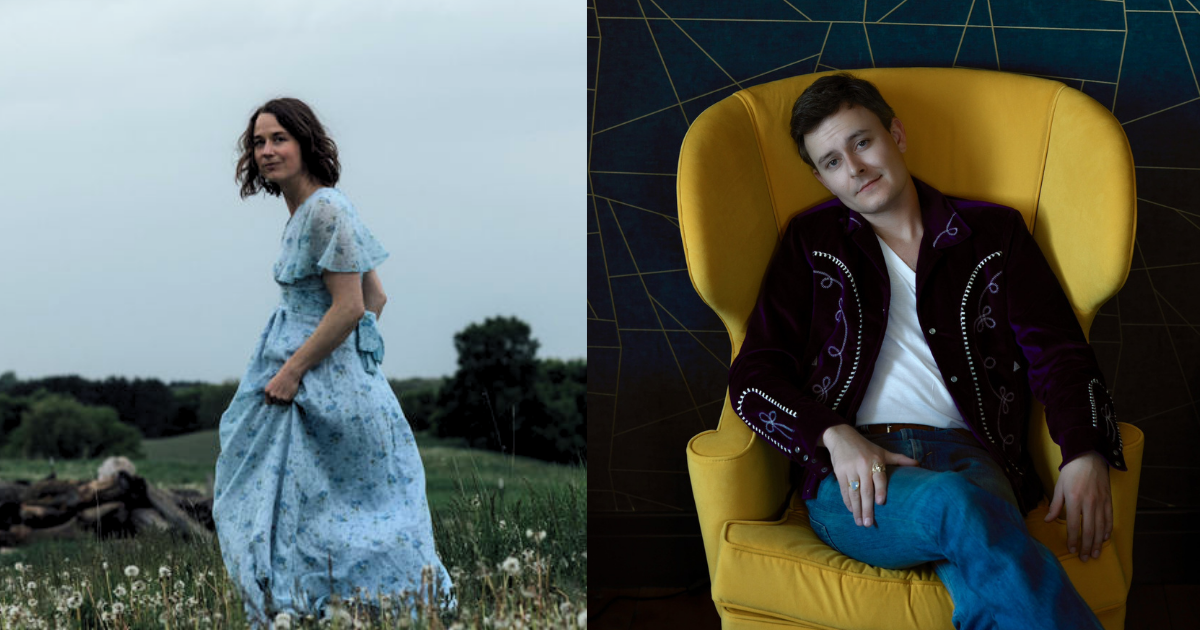
Photo Credit: Courtney Hartman by Michelle Bennett; Dee White by John Peets.
How Courtney Hartman
Made With You

In the late summer of 2022, Courtney Hartman realized that the songs she had written for a new album were not the songs she needed to release. “I had found out I was pregnant a few months earlier, [and already] had a batch of material I was working on for a new record. I felt this quiet urging to set all of that aside and give my attention to what was happening in our life and in my body,” she says.

She discarded everything and began writing her third album, With You, a personal journey through motherhood set to music.

“What was happening in our life” refers to a tumultuous string of events that saw Hartman and her husband, John, through the best and worst of times. Best because the couple were expecting their first child, rebuilding their house in Eau Claire, Wisconsin, and Hartman was on tour; worst because her husband fell off a ladder, could not work for months, lost two jobs, she was dropped by her booking agent, and they totaled their car.

The cumulative effect left the couple in need emotionally, physically, and financially. They soon found themselves uplifted by their community – their immediate one and her music community at large. The experience left Hartman deeply grateful and dedicated to giving back even more than she received.

In September of that year, Hartman began writing “in earnest” the songs that became With You. She and her husband welcomed their daughter in February 2023 – more best of times followed by worst of times as Hartman struggled with postpartum depression.

“At the end of [2023] I had all this material and realized I wanted to invite in other voices and stories and perspectives, specifically those of other mothers,” she says.

Once again, she drew on her community, calling on a fellowship of songwriter mothers – Sarah Siskind, Dawn Landes, Ana Egge, Tift Merritt, Kristin Andreassen, and Emily Frantz Marlin of Watchhouse – to help take her deeply personal new songs to an even higher level.

“I spent another few months, December [2023] to February [2024], writing mostly over Zoom, finishing the material with those other writers,” she says. With You was recorded in June and July 2024, at The Hive studio in Eau Claire, with Hartman producing and Brian Joseph as co-producer and engineer.

As one might expect from Hartman, there are plenty of guitars on the album – her Lawrence Smart Archtop, Bourgeois Parlor,
PreWar (modeled after a Gibson J-45), Bischoff Dreadnought, Martin 00,
and a Telecaster – but if you’re looking for the lightning flatpicking work that makes her a bluegrass force to reckon with, you’ll be best served on YouTube. With You tells a story that calls for understated guitars as a palette for its songs.

“Things weren’t all bright and shiny in that season,” she says, “but the impetus to write and pay attention helped me pay attention to some of those lighter moments. Not all the songs on With You are about everything being light, because that’s just not how it is. But there was this extra attention to some of those details that do help buoy your spirit when things are a little more challenging.”

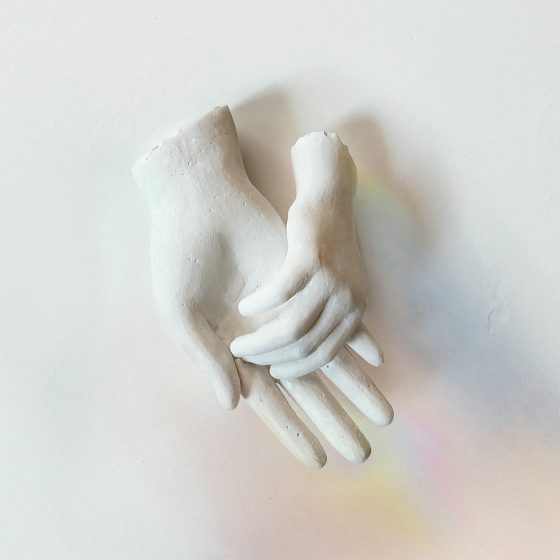
Courtney Hartman’s ‘With You’ album cover art, created by Claire Lindwall.

Completing the journey is With You’s striking cover art. The work of Hartman’s close friend Claire Lindwall captures the music’s delicate intimacy. “Claire is primarily a watercolor artist and illustrator,” says Hartman. “A special part of creating an album, for me, is giving the music to someone who then translates it into a visual piece of art. Every time, it’s surprising and expansive in a new way.”

Lindwall cast her own hand and that of her daughter’s, and positioned the casts so that one holds the other. “We experimented with drawings around it, then having just a splash of watercolor behind the piece,” says Hartman. “That’s all it needed.”

With this album now making its full debut, how do you feel about sharing so much vulnerability?

Courtney Hartman: The processing has happened in phases. I think it started just by saying yes to writing the material. There was an accepting of, “I’m writing about this thing that feels more vulnerable and more naked than anything I’ve written about before.” Bringing those songs to other writers, to collaborators, there was another level of vulnerability there.

A year ago I brought all of this material to my greater community and asked for support, because at that point I needed help putting the album out. Now, to give it to the rest of my community and listeners in the world, there’s a level of vulnerability, but I feel mostly excited. It feels like, “We made it.”

You’ve explained in other interviews that you had to use funding meant for the songs that came before these in order to get back on your feet. Needing financial assistance is also a vulnerable place and one that often brings publicly imposed shame and guilt. How did you process it?

You’re bringing up something that my husband and I have been talking about a lot, just with the news cycle and trying to get an understanding of what we can do for folks in our community. And having had small tastes of that in our life, because I know what we’ve experienced is so small compared to what so many people live through and are currently living through.

An important [word] that you touched on is shame – the shame of needing help; of not feeling like you can do it on your own or you can stand on your own two feet; of needing help for basic things like groceries. I think maybe accepting help and accepting care expands our capacity to feel compassion and to be able to then care for others.

In a podcast for Acoustic Guitar, you used the phrase “the intimacy of sound.” Could you talk more about what that means in the songwriting and guitar playing?

What I hear when you reflect that phrase back to me is the sound of the skin of your finger on the guitar string, or the sound of hands against a percussive instrument. When we went into the studio, I told the friends that were with me there on the first day, “Just as a guiding directive, whenever we imagine a sound that we want to create, let’s see if we can find something natural to create it with.”

Everyone took it in their own way, some on their instruments. Sean Carey was heavily involved on the record and he took that more literally in a lot of the percussion work. He found a nest outside when he was wandering around and that became the percussion on a track. Or even just the sound of skin on skin being a sound that we used as well; bringing in and magnifying some of these quieter sounds and allowing that to be a part of the soundscape [was part of the intimacy of sound].

Did you select the guitars around the songs or did some of the songs develop around your guitars?

Sometimes you think you know what a song wants before going into the studio and then you sit behind a mic and you’re like, “This isn’t serving it quite right.” And sometimes that experimentation takes a little longer than you think it will. Or sometimes you sit down with a first instinct and it’s totally right. That’s part of the reason it’s fun to have a good array of instruments in the studio.

Is the guitar as much a part of expressing your feelings as the lyrics?

It is. I think part of that comes from how long it’s been an instrument that feels like a voice to me. Songwriting came around the same time. I was about 12 when I started writing songs. Singing feels like something I still have so much exploration and learning to do.

How did working with other mothers, and their lived experiences, bring understanding to what you were going through?

What I was given [was the] shared experience and the acknowledgement of, “This is really hard. It’s really beautiful, but it’s also really challenging.”

So much of the caregiving that happens [as a mother], especially in that first year … so much of it is invisible. Maybe an aspect of that applies to all sorts of giving care – that it’s invisible other than to the one giving the care and the one receiving the care. When you feel invisible, it can also make you feel isolated and that can really feed into some of the struggles. A lot of folks have postpartum [depression] and societally we’re not set up to honor and support that season very well at all. It’s something I care a lot about, both from experiences with my family, but also as I’ve delved into work as a birth doula.

When you say, “Societally we’re not set up to honor and support that season very well at all,” what do we need to do?

We need to honor and uphold the importance of rest and nutrition and preparation. Parents are prepared for “Here’s what birth might look like,” but after that six-week checkup [traditional care usually ends]. Postpartum extends far longer than that.

A lot of [postpartum] mental health struggles won’t show up until maybe nine months or a year after a child is born. Better supporting [people postpartum] that would be the first thing I can think of. We live pretty isolated lives, as families in our insular homes, and so we’re not set up to receive support very well.

Or ask for it.

Yes, totally, [we need to be] preparing [people] to know that this is a time to accept and receive care. Preparing your heart for that is such a big piece of it, to know that we, as your village and your community, want to care for you in this time.

You’ve spoken openly about postpartum depression. What was that period of time like for you?

Moments of real happiness, but also moments of hitting my head against the wall … when I was struggling. [It was] hard to admit to myself and then to speak that [struggle] out loud to anybody. It wasn’t until afterwards that I could say, “That was hard.”

All depression is misunderstood and will often make people in your circle run away.

Let’s go back to your community, and the community of mothers, and how they lifted you.

I felt so cared for by our community in a way that was deeply humbling and in a way that somehow prepared me to do some of the caregiving that was going to be required of me. I was receiving so much love and support and meals and folks showing up. That kind of care is life-changing. It changes the way we see the world and our community around us.

My daughter was about nine months old or so when I started reaching out to other mothers, asking if they would collaborate on some songwriting. Having some tether creatively helped pull me through that season. It helped weave together the woman I was prior to having a child with the woman I was in that new space. … Sometimes it feels like … you almost can’t remember who you were before.

I was really afraid of [losing parts of myself]. I was afraid I wouldn’t create music again. There’s all these fears, irrational or not, that show up. Creating and being able to have these conversations that normalize what you’re experiencing. Having women who are [a] few years ahead of me be like, “It might be extra-challenging now, but it doesn’t stay that way forever.”

It’s almost 2026 and society still misunderstands and stigmatizes mental health, certainly PPD, and even some aspects of pre- and postpartum healthcare. Why are we uncomfortable talking about things that are so natural and important to discuss? Are we making progress or going backward?

I hope we’re making progress. It was a lot easier for me to ask, “Why don’t we talk about these things?” when I wasn’t part of the “we.” As soon as it was also part of my story to talk about and share, [I had to come] to terms with my own hesitancy. Why do I not want to talk about something as normal as pregnancy and motherhood in my songs? Why do I feel like if I put this music out, it will be discredited and potentially ignored, even though it may speak to so much of the population? …

I still don’t have an answer. Maybe it’s because there’s so many generations of women having to hide those things for fear of losing wages, or jobs, or discrimination, whatever it might be. For everybody’s sake, there’s so much we have to learn from mothers’ voices, and I hope we’re beginning to really listen.

On a podcast, The Other 22 Hours, you reflected on the period after Della Mae and the realization, at the time, that “Music was not a healing thing.” What role does music now play in your healing and mental health?

It has become healing again. Years ago, I was dealing with physical pain in my hands. That was magnified by touring all the time, being on the road so much, and the strain on my body. So I was speaking about it in a physical way. [Music] has become a lot more than just physically healing [for me]. I think this album exemplifies that.

You have worked with so many people. Who is your wish-list artist or artists?

Oh my gosh. The first person that came to mind – and maybe it’s because I’ve been listening to her record all week – I would love to play music in the same room as Brandi Carlile. She gives all of herself and it’s so good.

We had a listening party [for With You] and as I was listening to the album for the first time with a whole group of friends and collaborators, what I hear on it is my friends and heroes, which is such a joy. There are so many folks on this album that I look up to so much and who have been dream collaborators. So, in that way, a lot of it has been a dream list fulfilled.


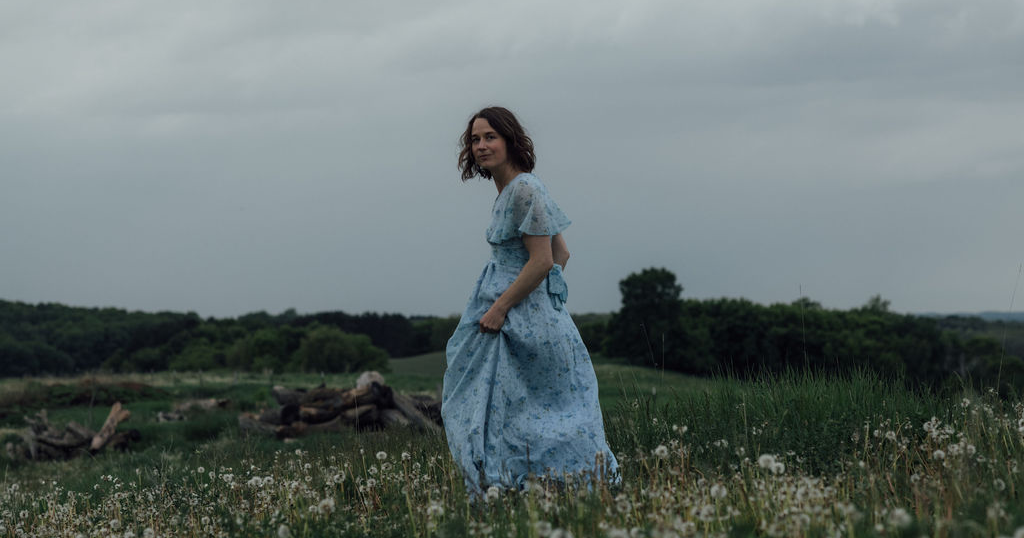
Photo Credit: Michelle Bennett

For Tift Merritt, Time and Patience Have Made the Difference

Tift Merritt never thought she’d end up back in her hometown of Raleigh, North Carolina. For about 15 years she toured through America and Europe to support a number of exceptional albums, particularly 2004’s Tambourine. Released on Lost Highway Records, that R&B-influenced LP earned a GRAMMY nomination and elevated her profile among audiences who admired the detail in her songwriting and appreciated her hard-to-define musical style.

After nine years of living in New York City, Merritt wrote her ticket home in 2016 and welcomed a daughter, Jean, that same year. Following the release of a studio album in 2017, Merritt largely stepped away from performing to pursue other ambitions, including the renovation of a historic hotel called the Gables Motel Lodge in Raleigh and working as a practitioner-in-residence at Duke University in Durham, North Carolina.

“I think we have this sort of unnatural expectation of what performing life is, what creative life is, and you can’t flower all the time,” Merritt tells BGS. “So, it’s been really nice to be away. And it feels really fun to be doing some gigs and be back.”

Merritt’s new album, Time and Patience, gracefully shines a light on her musical moments from two decades ago. Most of the recordings are homemade demos; four others are studio outtakes from the Tambourine sessions. A 20th anniversary edition of Tambourine has also been reissued on vinyl.

Ahead of her first AmericanaFest appearance in more than a decade, Merritt reminisced about writing the title track of her new collection, hearing Dolly Parton’s music as a kid, and the personal decision she considers “one of the best things that ever happened.”

I’ve read that your dog, Lucy, was watching you as you recorded these demos in your kitchen. What was it like to have her with you? Was it a little bit of companionship?

Tift Merritt: Oh yeah! At the time, I lived on a farm outside of Chapel Hill in North Carolina. My boyfriend went on a trip and I stayed home to get down to writing, because I’m a Capricorn in that way. [Laughs] At that point, I had had Lucy for almost 10 years and she was used to staring at me and staring at my notebooks. But she was such a good girl and we had a lot of years where I had a great writing routine when I wasn’t on the road. I’d be writing, then taking walks, then writing… It’s interesting to think back about those days when that’s all I had to do. [Laughs] I didn’t have somebody else to take care of! What did I do with all those hours?!

What was the goal in recording these demos? Were you trying to get someone to listen, or was somebody interested in you already?

I had already done Bramble Rose [in 2002] and the label told me to go home and write a hit. But they didn’t want to spend any money for me going to the studio. Those recordings are what I sent my label and my manager. That was the big audition.

Wow, that’s a tall order: “Go home and write a hit.” How did you receive that?

You know, I was 27 years old and I realized the precarity of the position that I was in. Someone had ambitions for me, which was a really good thing. It’s a lot better than people not having ambitions for you. At the same time, I was very determined to keep my integrity. I always wanted to be a career artist. I didn’t have aspirations to have big hits. I didn’t have aspirations that were purely commercial.

I would try to be very determined to just do excellent work in my own voice. They also told me that I was not allowed to be an Americana artist, because that didn’t really exist at that time and there was no money in it. You know, it was just a weird time. It was a weird time to be a woman in that industry. It still is, it always is. And certainly, a young woman. I mean, nobody trusted me.

What did they not trust?

My judgment, my writing, my band, how I dressed myself, that I knew how I wanted my picture to appear. None of it. It was always a struggle and part of that is because I have strong artistic opinions, I’m sensitive, and I’m not stupid. I came out of a very rigorous writing program and to walk into Nashville where it’s like, “Oh no, it’s not a hit,” I’m like, “That’s not criticism I can do anything with.” Again, I was glad that people had ambitions for me, but [I was told] my songs aren’t good enough. My band wasn’t good enough. And that sort of added up to, I’m not good enough.

The label would trust [the album’s producer] George Drakoulias, but they wouldn’t trust me. And this is not an unusual story: “You don’t trust an artist! And you certainly don’t trust an artist who thinks they’re a writer!” I think there was very much a power dynamic at that time, where you separate the singer from the band, and you separate the singer from the song, and you can get them to do what you want to do. I didn’t want to do any of that.

Your band was such an important part of your sound. How did you put them together?

Well, I was married to the drummer and I didn’t want to be slick Nashville. We were all North Carolina people. We came up together, cutting our teeth in clubs. The label did not want my band to play on Tambourine. And so that band was Mike Campbell, Neal Casal, Maria McKee, and Don Heffington. I trusted George enough to surround me with people who were all friends of Maria McKee, basically, and spoke the same language as I did.

Being from North Carolina, did you grow up around bluegrass? Or did that influence your musical direction at all?

I think the Everly Brothers and harmonies and acoustic instruments did. I wasn’t totally into bluegrass. I was more into songs. My dad had an extremely eclectic record collection, a lot of which was influenced by the radio, which was eclectic at that point. He had Aretha Franklin and Bob Dylan and Dolly Parton and all sorts of stuff. He was real song-oriented and kind of a folkie himself. Lots of Dylan songs, lots of finger picking. So, in some way, I would say that I’m more of a folk musician because I learned to play from my father by ear and he learned by picking out the songs that he heard that he loved. They were all that sort of “touch your heart” kind of thing.

Were there any musicians whose melodies inspired you?

I can remember singing Dolly Parton songs with my dad, driving carpool. And she always has such amazing melodies. There were some amazing pivotal records for me, like Emmylou Harris’ Quarter Moon in a Ten Cent Town and Bonnie Raitt, Bonnie Raitt. Also, as a writer, those early Joni Mitchell records. She is so creative, melodically and with the guitar. It’s never boring.

I always think I’m a much better writer than I am a musician. I try to bring, first, a rigor to what I’m trying to say in words, that it’s something worth saying. And then I try to do the same to the melody, so it’s something worth hearing. It’s not necessarily something fancy, but it’s something interesting and layered.

How old were you when you picked up the guitar?

I started picking it up from my dad, probably at 12 or 13, when all the boys were starting to do it. It was like [in an unimpressed voice], “Oh my God, I can do that, too.” Probably in my middle teens is when I really got into it. I didn’t think I could sing. I didn’t think people would come to a show or anything like that. I just loved doing it and I thought I would be a writer.

When did that shift for you?

In my early 20s. I started a band and we had some sparks kind of quick. That was really lucky. We were in the right place at the right time in Chapel Hill. And then I just didn’t stop getting gigs… until I did!

Have you played a lot over the last nine years?

I toured with my daughter for the first two years and then I said, “You know what, kiddo? This isn’t enough for you.” I thought she deserved roots. At the time, that felt like a big failure, like I hadn’t turned a corner where I’d get a bus and a nanny and make all of that doable. Seven years later, I think it was one of the best things that ever happened. Because I was able to – for the first time in my adult life – not be on the road and not be trying to fit into the creativity that is pretty narrow that the record industry offers. I mean, it’s the “three minutes and 30 seconds.”

So, I ended up doing a lot of other things that made me feel like I was more of an artist, rather than less of one. I’ve also had this incredible time raising my daughter. We actually just did our first real tour together in Europe and she loved it! I mean, I’ve jumped out here and there and done shows, but my focus has been on other things, mainly my daughter and figuring out how to take care of us.

On the song “Time and Patience,” there’s a glimmer of hope. It’s like you’re saying to yourself, “Hang in there. You can do this.” And there’s a verse where you’re telling somebody else, “I believe in you, too.” Do you remember what was going on in your life at that moment?

I do! I remember very, very much so and I do remember writing that song to myself about how frustrated I was, that nothing I was writing was a hit. I often get insomnia, especially when I’m writing. Like, I can’t get it out of my head. And I really did see the sun come up and I got up and I wrote that song, and then I made grits. Grits are such a good thing when you’ve had insomnia and go back to bed!

It’s funny because my dad has always loved that song. I am not somebody who looks back a lot. I’d much rather look forward. But it’s funny to hear that song now, where I was kind of trying to get myself through something really specific. And now, I’m in a place where my life is not at all what I imagined it to be. But it’s actually better than I imagined it to be and I couldn’t have imagined it. That feels like the timing is special. Maybe that was one of those songs that I didn’t really understand then that I understand a lot better now.


Photo Credit: Morgane Imbeaud

You Gotta Hear This: New Music From Tift Merritt, Kyshona, and More

Folk, country, and Americana join together in this week’s edition of our new music and premiere roundup. You Gotta Hear This!

The lovely and ethereal Tift Merritt is celebrating 20 years since the release of Tambourine this year with an upcoming vinyl reissue and a special collection of demos to go alongside it. Kicking off our new music collection today is one of those demos, “Good Hearted Man,” an intimate kitchen recording of just piano and vocals.

From the country realm, two impeccable artists and singer-songwriters have new albums out today, William Beckmann and Kelsey Waldon. Kentuckian Waldon sings about family ties, generational cycles, and finding oneself on “My Kin,” available today on her stunning new project, Every Ghost. Texan Mexican American Beckmann, for his part, brings a gorgeous, retro-styled music video for “Lonely Over You” that draws inspiration from classic television variety shows and huge musical personalities like Roy Orbison and Elvis.

Elsewhere in our collection you’ll find Steve Gillette paying tribute to his friend, musician and songwriter Gamble Rogers with the touching homage, “Song for Gamble.” The bluesy, energetic track is paired with vintage clips of Rogers set alongside photos and performance and recording footage of Gillette.

To celebrate Juneteenth yesterday, Kyshona released a new single, “More In Common (Live From the Blueroom Studio),” contextualizing the track saying, “I’m releasing ‘More in Common’ on Juneteenth as a reminder that none of us are truly free until all of us are free.” It’s an excellent, all-too-timely reminder – and you’ll be sure to enjoy the performance video shared below.

We always love wrapping up the week with the best new roots music. And you know what we think– You Gotta Hear This!


Tift Merritt, “Good Hearted Man (Kitchen Recording)”

Artist: Tift Merritt
Hometown: Raleigh, North Carolina
Song: “Good Hearted Man (Kitchen Recording)”
Album: Time and Patience (a collection of demos releasing in tandem with the 20th anniversary vinyl reissue of Tambourine)
Release Date: June 18, 2025 (single); August 29, 2025 (album)
Label: One Riot Records

In Their Words: “When I hear my 27-year-old self singing this song, after just having finished writing it, recording in the kitchen on an ADAT machine, I hear my dreams. I can’t help but smile – at my big dreams, the raw reaching, the no costume. I am enormously proud of these kitchen recordings and Tambourine, so happy they are coming out to the world this fall.” – Tift Merritt

Track Credits:
Tift Merritt – Piano, vocals


Kyshona, “More In Common (Live From The Blueroom Studios)”

Artist: Kyshona
Hometown: Nashville, Tennessee by way of Irmo, South Carolina
Song: “More In Common (Live From The Blueroom Studios)”
Release Date: June 19, 2025
Label: Lamiere Records/Moraine Music Group

In Their Words: “I’m releasing ‘More in Common’ on Juneteenth as a reminder that none of us are truly free until all of us are free. What if we took ‘I,’ ‘mine,’ ‘them,’ and ‘me’ out of our vocabulary—just for a moment? It’s so easy to tune out, to disassociate from the chaos we’re witnessing. But what if we remembered that we are under attack? That every child is our child?

“After a full year of touring the Legacy album, it’s been deeply moving to see how my own family’s story – of freedom, land ownership, and the wisdom of our elders – resonates with people from all backgrounds. No matter your race or religion, there’s a common thread in how we were raised and what we’ve inherited.

“When we peel back the layers that divide us and look closer at our shared values and stories, we begin to reconnect. The conversations that have come out of this tour have been powerful. People aren’t talking about differences – they’re talking about what unites us.

“As a society, I think we’ve gotten lazy. We’ve stopped looking for what ties us together. My hope is that this song reaches the quiet few who’ve been asking, ‘What happened to us? May it serve as a gentle nudge to follow the thread instead of cutting the seams.

“There’s a lot of noise in the world right now, and I know this message may not reach everyone. But if it reaches even one person – someone overwhelmed by it all – let it be a reminder: we can make ripples of good.

“All it takes is open eyes, open ears, and the courage to show up for each other. Let people know they are seen. Let them know their existence matters.” – Kyshona

Track Credits:
Larissa Maestro – String arrangement, cello
Kristin Weber – Violin
Kyshona Armstrong – Vocals, songwriter
Simon Gugala – Songwriter

Video Credits: Recorded at The Blueroom Studios.
Videographer – Jesse Carr
Edited by Caryn Johnson, Tiny Sunshine Studios.


William Beckmann, “Lonely Over You”

Artist: William Beckmann
Hometown: Del Rio, Texas
Song: “Lonely Over You”
Album: Whiskey Lies & Alibis
Release Date: June 20, 2025
Label: Warner Music Nashville

In Their Words: “I wrote ‘Lonely Over You’ with Jesse Frasure and Jessie Jo Dillon. It’s probably my favorite song that I wrote for this album. To me, it feels reminiscent of Roy Orbison, and there’s definitely some Elvis influence in there too. I love the way it was tracked and recorded—there are a lot of stacked harmonies, which give it that lush sound. It’s a new direction I was able to discover and bring to this record. I also think the music video for ‘Lonely Over You’ is my best yet. We shot it all on film in Austin, Texas, and aimed to capture the vibe of the Elvis comeback special. The set design was incredible and made it feel like we were in the late ’60s or early ’70s. Altogether, it’s a special song. I’m very proud of it, and the video that goes with it is a great piece of art as well. We’re looking forward to sharing it.” – William Beckmann

Track Credits:
William Beckmann – Lead vocals, background vocals, acoustic guitar, songwriter
Chad Cromwell – Drums, percussion
Craig Young – Bass
Jedd Hughes – Electric guitar, acoustic guitar
Jesse Frasure – Baritone guitar, background vocals, songwriter, producer
Jimmy Wallace – B3, piano, synth
Jon Randall – Acoustic guitar, producer
Todd Lombardo – Acoustic guitar
Jessie Jo Dillon – Songwriter


Kelsey Waldon, “My Kin”

Artist: Kelsey Waldon
Hometown: Monkey’s Eyebrow, Kentucky
Song: “My Kin”
Album: Every Ghost
Release Date: June 20, 2025
Label: Oh Boy Records

In Their Words: “I am the best of my kin and I am the worst of my kin. I got all of it. It took me a long time, but now, I love that for me. That means I got all of the character, the resilience, the grit, the beauty, the spirit, the humor, the independence, the self-sufficient ideals, the wisdom, and so much more. That, unfortunately, also means I also got the generational trauma, the demons, the stubbornness, the guilt, the defensiveness, and the thing that makes me want to push away anyone who tries to help or love me. I got the gene that makes me want to self-destruct a little bit, for sure. This song is saying, ‘I am all that, and I do have these issues, but the difference is that I am willing to learn and grow, and I am finally willing to break these cycles as well.’ These things are a part of me, and you will have to take me as I am, to a certain extent, and have patience with me. And don’t you love that all these things make me who I am? We just have to learn how to reign them in and use them for good.” – Kelsey Waldon

Track Credits:
Kelsey Waldon – Rhythm acoustic guitar, lead vocals
Junior Tutwiler – Electric guitar, baritone, high strung guitar, lead acoustic guitar
Cooper Dickerson – Pedal steel guitar
Blakely Burger – Kentucky fiddle
Erik Mendez – Electric bass, Rhodes, and Wurlitzer electric piano
Evan Kesel – Drums, percussion
Kristen Rogers – Background vocals


Steve Gillette, “Song for Gamble”

Artist: Steve Gillette
Hometown: North Bennington, Vermont
Song: “Song For Gamble”
Album: Steve Gillette – The Best Of…
Release Date: June 20, 2025
Label: Compass Rose Music

In Their Words: “I met Gamble [Rogers] at the Bitter End in New York in 1967 and we bonded over songs and Merle Travis’ guitar finger picking that became known as ‘Travis Picking.’ Over the years, we would often run into Gamble at festivals or when he was in the New England area. One time stands out for me, when I arrived in Kerrville in 1984: Gamble was booked to perform on the main stage, but he also gave a special one-hour workshop on his guitar technique and his performance ideas. He was so generous about sharing the secrets of his showmanship, and of course, that was consistent with his selflessness as a person. Sadly, it was just his willingness to consider others before himself that contributed to his losing his own life while trying to help another. He was with his family for a day at the beach just south of St. Augustine, Florida, when a little girl ran up to him in tears, begging him to help her father, who was in trouble in the surf. Gamble went into the water, but was unable to help the man and, sadly, both were drowned. That beach is now known as the Gamble Rogers Memorial State Recreation Area.” – Steve Gillette

Track Credits:
Steve Gillette and Charles John Quarto.

Video Credit: Thank you to Rick Davidson, Cathy Roberts, and Sherry Boas for their photos and video contributions.


Photo Credits: Tift Merritt by Alexandra Valenti; Kyshona by Anna Haas.

What Does Touring in 2023 Look Like for Most Working Music Creators?

If you take recent touring industry revenue reports at face value, business is booming. 2022 was a record-setting year with an estimated $6.28 billion, up 37% from the pre-pandemic year 2019.

When the onion layers start to peel back though, noticeable is that $2.68 billion of that sizeable amount of 2022 touring money was from stadium shows. Also notable is that inflation is much higher than it was 3 years ago, pushing sums to new heights. The lion’s share of the money went to the top-grossing artists, and 2023 is predicted to be similar for those acts.

The data for the rest of the industry is not as robust. We do know that throughout the past few years, artists like Santigold, Belle and Sebastian, Black Pumas, and Animal Collective have opened up to their fans about the professional and personal costs of touring. Last year saw frequent cancellations of shows, tours, and in some cases like with Dr. Dog, the end of touring all together for some acts.

So what does touring in 2023 look like for most working music creators? The short answer is, that the road looks different to everyone. The longer answer takes a look at multiple perspectives. BGS spoke with artists and industry leaders to learn about the issues and potential solutions facing roots artists on the road this year.

***


View this post on Instagram


A post shared by Mipso (@mipsomusic)

For the past two decades before the pandemic, live music was viewed as a sort of revenue redemption for music creators in light of the fact that the bottom fell out of the record business at the advent of downloadable and streamable music. For many working artists, this was a busy period of consistent touring. Jacob Sharp from the band Mipso shares what has become a common sentiment amongst touring artists, “For our band being on the road was a given. In a better time for touring, there was insatiable opportunity and demand, both where we had a following and where we didn’t. And there was an infrastructure that made sense then. But saying yes always locked us into a lifestyle and a business cycle we felt we couldn’t escape.”

Sharp says in the current touring landscape, “We are a band that has never been happier playing music together but are having frequent conversations about whether to break up due to the economics of the business. We know it has to involve less touring.”

***

So what are the main issues negatively impacting the live music industry for roots and independent music creators?

Cost of touring and inflation

No doubt the current state of the economy is affecting the concert business with rising costs for fans and for touring artists. Label Manager of Single Lock Records and touring drummer for Cedric Burnside, Reed Watson, says, “Artists can’t afford it. Hotels are expensive, gas is expensive. Entertainment takes it on the chin when times are tight.”

Sharp puts a fine point on the economic cost versus reward saying, “It costs a lot more to be on the road between travel, flights, vehicles, hotels. Everything is so much more expensive. At the end of the tour we have less money in our pocket.”

Inconsistency of crowds

Before the pandemic, it was much easier to build a tour, a budget, and a future based on somewhat tried and true marketing formulas and audience engagement. During the pandemic, as venues started to open up, many had received pandemic aid to get artists back on stage and to get people in the doors. Not that this was an easy time for artists as they navigated cancellations due to illnesses and the rising costs of touring, but there was some cash to be had, and throngs of artists were out on the road again.

As the pandemic wore on and the aid money thinned, the crowds were not pouring back in as predicted. And even events that sold well didn’t necessarily translate to full houses as audiences were notoriously low day-of-show for many venues. This impacts merchandise sales, food and beverage, and parking for the bands and venues.

Reed Watson believes this continued unpredictability is largely now due to the current economic lay of the land saying, “The reason we are starting to see attendance crater is because money is tight right now. We are in this inflation moment and that is making more of an impact on touring than the pandemic currently.” Crowds are also buying tickets last minute which makes it hard to budget, market, and plan.


View this post on Instagram


A post shared by Caitlin Rose (@mscaitlinrose)

Mental and physical health of artists, bands and crew

The stories of starving artists sleeping in vans on the road are romanticized and narrow in their telling of the difficulty level for the bands and crew enduring those hardships. And perhaps are only of remote interest to younger artists willing to risk their safety…and their backs. But for artists who have been touring for many years, traveling in discomfort for low yield and leaving behind their personal lives to do so is no longer an option they are willing to face. Recording artist Caitlin Rose shares, “I don’t want to tour needlessly. We could all tour and feel like crap for the first 10 years of our career, but it’s too tough now.”

Along the same lines, Reed Watson says, “I don’t believe in telling artists the only way they can tour is to sleep in their van. I also don’t believe in shaming artists who hold out until they can afford a hotel room and afford safety.”

Narrowing of live event opportunities for working musicians

In this era when so many independent venues and festivals are being swallowed up by conglomerates or shuttered, we have seen a general narrowing of traditionally viable opportunities for working musicians.

***


View this post on Instagram


A post shared by @santigold

And now that we’ve identified some of the underlying problems in the current industry, what are some potential solutions arising in 2023?

Creating an open dialogue with the audience

Since the pandemic, artists are seemingly having a more open dialogue with their audience about career and personal challenges than we’ve seen in the past. Reed Watson sees this is an overall plus for the industry saying, “I think it is the way of the world now for artists to be open and honest with fans. Fan bases for the most part are willing to take that ride with them. I think social media in general is very unhealthy. I think the impact on the business is ultimately not great. But seeing artists use it to their advantage and to do something good is great.”

Caitlin Rose says, “I think the complaining has become more productive to try and improve the discussion. Everyone can bitch now and that’s awesome, but people are actually trying to figure it out now. Priorities and guidelines are changing. What makes this worth it? I’m scared to do it again in a way that burns me out. I want to be happy.”

For Sharp and his band Mipso he says, “We want to set some boundaries and have a healthier balance with our working/touring life and our home life. Both financially, that is true for us, but really for our mental health, it will be easier to embrace and become a part of our lives.”


View this post on Instagram


A post shared by tiftmerritt (@tiftmerritt)

Focusing on alternative revenue streams

Singer-songwriter Tift Merritt gave up touring before the pandemic to grow roots for her then 20-month-old daughter. She shares, “It was a very fraught and scary decision, but it ended up being really empowering for both us and my work. This is a situation that wrecks anxiety on a lot of women, how they are going to continue doing what they are doing. It is often a very lonely situation, and I’m glad that people are talking about it. I feel really proud of what my daughter and I have done and the decisions that we have made. It doesn’t mean I’m not a musician and an artist.”

Though this is not an economic reality for every artist, instead of touring, Merritt’s work has now shifted. “I’m no longer a road-based artist, I’m a project-based artist,” she says. Working on alternative revenue streams, she now focuses on her Substack called Nightcaps, as well as archival, historical, and site-specific music projects.

Stong independent venue coalition in NIVA

The National Independent Venue Association was founded in a moment of dire need during the pandemic to protect vital independent venues throughout the country and hit the ground running with impactful adovcacy work. It has found more raison d’etre in the wake of the emergency. Newly appointed as Executive Director of NIVA, Stephen Parker shared with BGS, “Aside from when venues had to be completely shuttered, running a venue or promoting shows was never harder than it was during 2022. The live music sector was back for some but challenging for all. With every act on the road simultaneously vying for ticket buyers, staffing shortages – both with the artists’ touring teams and the venues and festivals, and the rising costs of everything, the economics of the industry have never been more challenging. In 2023, my hope is that independent venues will continue forging a path toward recovery. While logistical and financial issues may continue to linger, independent venues remain committed to attracting staff, promoting and marketing shows in creative ways, and creating compelling and affordable environments that artists and fans want to show up for. NIVA is focused on helping them make that happen.”


View this post on Instagram


A post shared by NIVA (@nivassoc)

Pressure on conglomerates

Alongside the robust work that NIVA is taking on to protect independent venues, there is worldwide pressure zeroing in on Live Nation and Ticketmaster. In the wake of several public debacles in recent months, there are calls for investigations and legislation to curb the conglomerates’ questionable business tactics that leave both fans and artists with less choices and money.

Touring with less people

In an effort to trim costs, some artists are strategically focusing on more acoustic or solo sets, leaving band and crew behind for some dates. Caitlin Rose is opening up for Old 97’s on tour this year, and is planning on taking a full band on the road for a portion of the time, but will perform as a duo on the West Coast to lower the impact of tour costs.

Watson adds, “Artists are leaving bands behind and touring solo. It used to look like 80% band shows to 20% solo shows but is shifting to the opposite. That is what it will look like moving forward for a little bit until artists are paid more.”

Strategic routing and events

From residencies to regional and weekend tours, to corporate and brand events, artists are attempting to find ways to supplement income, lower costs, and cater to fans. For Mipso in today’s touring reality, Sharp says, “We are touring less and now we say no to many things that the younger band would have been quite happy to do. We see that as self-preservation. Each of these cities we play is a market and it is easy to oversaturate.”

Touring artist Nick Howard owns Bookable with his wife, Katelynn Silver Howard. The company connects artists to nonconventional local live events in Nashville like conferences, brand-sponsored events, and hotel bookings, providing opportunities for artists to make money in their region while not necessarily saturating the market.

Focusing on fan community and engagement

Building a live music career focused on building community and knowing one’s audience well is the focus of touring artists like Nick Howard, who has built a sizable following and touring career in Europe. He says that in the past few years, the saturation has made it more difficult to get people to come out to shows and says, “Social media following no longer translates to ticket sales.” To take out the middlemen and engage directly with his fans, he now rents out venues himself and uses a third-party ticket company. That way, he saves money on agent, ticket, and promoter fees. And by being in close contact with his fans, he says, “You know how big your audience is and work backward.”

***

The overview of touring in 2023 is that there is no roadmap. It will be trial and error as the industry rebuilds itself — but the show will go on, as Reed Watson so positively reminds us. “Touring is the one thing that the internet can’t replicate. You cannot replicate getting in a room with live entertainers.”

7 Artists We’re Itching to See at MerleFest

As winter begins to thaw and festival season creeps in with the spring flowers, we find ourselves looking forward to one thing: MerleFest. Held in Wilkesboro, North Carolina, the four-day festival — taking place April 27-30 this time around — hosts the biggest names in bluegrass, old-time, and acoustic music, all while providing lucky attendees with local grub, artisan crafts, midnight jams, and scenic nature walks. While we wish we could catch every single artist on this year’s stacked bill, we’ve highlighted seven acts we just can’t miss.

Transatlantic Sessions Hosted by Jerry Douglas and Aly Bain

BBC’s Transatlantic Sessions are well-known for bringing together some of the globe’s best musicians for unforgettable performances. Jerry Douglas and Aly Bain are hosting the MerleFest installment, with scheduled guests including James Taylor, Sarah Jarosz, John Doyle, and more.

Tift Merritt

Recent Squared Roots subject Tift Merritt will bring songs from her excellent new album, Stitch of the World, to MerleFest, hopefully throwing in some old tunes from her far-reaching catalog of thoughtful, incisive folk songs, too.

Mipso

BGS favorites Mipso just released Coming Down the Mountain, a newgrass/pop-folk album that should appeal to those longing for the days of Nickel Creek. Look for a lively, jam-packed set from the North Carolina natives who will also be hosting the BGS Midnight Jam.

Jim Avett

Jim’s sons, the Avett Brothers (maybe you’ve heard of them?), may be headlining the festival, but don’t miss this opportunity to see where the young barn-burners got their chops: from their also-talented father.

Chris Jones and the Night Drivers

You’d be hard-pressed to find a better live act than Chris Jones and his crack band, the Night Drivers. Look for Jones and company to perform tunes from their new album, Made to Move.

Sierra Hull

Sierra Hull, our Artist of the Month way back in January 2016, is hands-down one of the most talented young musicians around — she’s a virtuosic mandolin player with songwriting chops and a sweetly strong singing voice, to boot. Live, Hull is a force to be reckoned with, so don’t miss this chance to catch her perform.

Chatham County Line

Raleigh bluegrass band Chatham County Line have been at it for nearly two decades now, honing an acoustic sound that blends traditional bluegrass with forward-thinking arrangements. Their 2016 album, Autumn, shows the band at their most adventurous, and their live set likely will, too.

Tickets for MerleFest 2017 are on sale now and may be purchased at MerleFest.org or by calling 800.343.7857. An advance ticket discount runs through April 26, 2017. Gate pricing begins on the first day of the festival.


Photo credit: Sasha Israel

Win Tickets to MerleFest from Yep Roc Records (+ Mandolin Orange Video Premiere!)

It’s that time of year again … MerleFest is nigh!

This year, four Yep Roc-ers are headed to Wilkesboro, North Carolina, from April 27-30. Tift Merritt, Mandolin Orange, the Stray Birds, and Chatham County Line will all be at MerleFest 2017, and Yep Roc wants you to be there, too.

One lucky winner will get two VIP passes to the fest, as well as hotel accommodations plus a meet and greet with the Yep Roc artists. It’s an $800 value, so get to it.

Enter to win right here

Then enjoy this Mandolin Orange video while you cross your fingers and knock on wood.

Squared Roots: Tift Merritt on the Fearlessness of Linda Ronstadt

In the world of folk-rock, a few artists reap the lion’s share of mentions, with Joni Mitchell, Bob Dylan, and Jackson Browne, among them. One of the great voices of the genre, though, is Linda Ronstadt. As a singer and song collector, she is all but unrivaled — a point most of her peers would agree with. Starting in the mid-1960s as a member of the Stone Poneys and, later, as a solo artist, Ronstadt made a name for herself on the marquees of folk clubs and rock arenas, alike, thanks to albums like Hand Sown … Home Grown (which some consider the first alt-country album by a female), Silk Purse, Heart Like a Wheel, and many more. Her artistry recognized no boundaries as she recorded with the Nelson Riddle Orchestra, as part of Trio with Dolly Parton and Emmylou Harris, and in Spanish. In 2011, however, she announced her retirement brought on by a battle with Parkinson’s disease.

I don’t have any great, huge proclamations to begin with, except that I adore Linda Ronstadt,” singer/songwriter Tift Merritt says with a laugh. And, really, that’s enough. From her debut album, Bramble Rose, to her latest release, Stitch of the World, Merritt has attempted to follow in the footsteps of her musical heroes — women like Harris and Ronstadt — who have blazed a trail of feminine fearlessness. By pretty much all accounts, she has succeeded — a point most of her peers would agree with.

Are you a student of Linda’s work for your own artistry or just a fan for your own enjoyment?

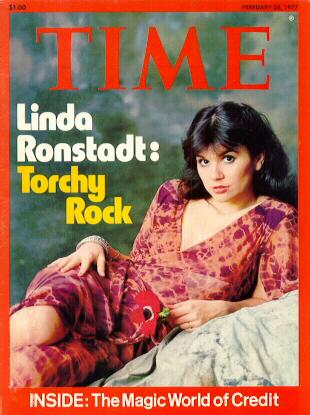
You know, I wanted to talk about Linda because she’s not singing anymore because she has Parkinson’s, so it’s almost more important to talk about her now because of that. I think what we need to talk about with Linda Ronstadt is that, at the height of the singer/songwriter movement, she was the one headlining stadiums with the Eagles and Elton John. I think it’s really important to talk about a woman doing that. She was bringing all these songwriters she knew and loved, and taking their songs and singing them. She was on the cover of Time magazine. She was a girl next door and a member of the band with a very understated sexuality, but she was also an absolute star and a commercial success. I think we tend to think about women with guitars singing earthy rock ‘n’ roll as coffee shop acts or something that’s going to fall apart in your hands. And Linda Ronstadt was kicking everyone’s ass. [Laughs]

[Laughs] What’s interesting is that there’s a quote of hers from 1999, in which she said, “I always mean to be a singer, not a star.” So, even though she achieved that level, like you said, it wasn’t necessarily her goal.

I think that’s why it’s important to talk about, too. Because she is an artist. I think she had a complicated relationship with her success and how she was viewed, sexually, and all of that. But she achieved success through her art. And I know that I first fell in love with Linda Ronstadt records when I was in my early 20s. In fact, when I made Bramble Rose, I wanted to make a record like [Emmylou Harris’s] Quarter Moon in a Ten Cent Town or I wanted to make a record like Heart Like a Wheel or Silk Purse or one of the early Bonnie Raitt records. Those first records were so raw and heartfelt and just penetrated your bones and brought tears to your eyes.

I remember that was said in the press release for my first record, and one of my first reviews kind of made fun of me for liking Linda Ronstadt. I thought, “Oh my God. This person doesn’t get it.” For me, all of those women, and Linda Ronstadt, especially … this was in the late ’90s or early 2000s. I sort of came of age in the ’90s. Madonna was on MTV in the ’80s. And I needed some female role modes who were more like me, who had something to say, who were not intent on acting outrageously, but really wanted to be storytellers. And who had a lot to say and who were masters of their art. You can tell from Linda Ronstadt’s discography and her work as a writer and a singer, she’s a student of her craft. But she always manages to look so cool in all the pictures of her! And she was in a band, too! You navigate this world of dudes traveling on the road, and she did that with so much grace.

Yeah. Yeah. I feel like, in listening to her and reading about her, to me, her fearlessness as a singer …

Uh huh. Absolutely!

both in song choices and vocal delivery. You can hear so much in her voice.

She’s totally fearless. Maybe that’s the source of her power because she’s so powerful, as well. I’ve sung along with those records … I had a break up and I ended up putting on those records to comfort myself and I was right back there. I’ve been singing along to those records for such a long time, and her voice is an unbelievable instrument. Unbelievable. It’s silken and velvet, and also as powerful as steel. And it’s fierce. The effortlessness with which she can belt at the top of her range, then go low … any melody is so lucky to end up in her hands. [Laughs]

[Laughs] What does it take for a singer to do what she did — both in terms of breaking down as many genre barriers as she did and finding her way into songs she didn’t write, but might as well have? They sounded like they were fully coming from her.

Right. They were realized through her. I don’t know her, personally, at all. But my impression is that it’s a combination of open-heartedness and intelligence and that fearlessness where you are singing with your heart on the line. Period.

Yeah. You find your way in and bring everybody along with you.

Mmm-hmm.

The other thing I feel like … her identification as a singer and, later, a producer … she was no less revered and respected just because she wasn’t a songwriter.

No. I know.

Except for with the guy who reviewed your record. [Laughs] Do you think that’s changed at all? These days, is being a songwriter, too, a huge part of the credibility factor?

I don’t know. I think the world has room for so many different types of careers. I come at this as a writer. But music is such a powerful thing, and to be able to inhabit that … music is a physical and social medium. To be open enough to let that run through you, it’s really an awesome thing.

I took some time off from touring and I missed that. It’s such a joyful letting go, even if it’s a sad song. And I think that’s what you hear when you listen to Linda Ronstadt. So much power coming through these tiny muscles in your neck. They’re so fragile. They’re the size of a dime. There’s an electric current that seems to jump out of her. Like a river of feeling coming out. I think it’s important to talk about, that music is not about a canvas on a wall. It’s not about words on a page. It is a physical, living, breathing type of media. And to be able to do that seamlessly … I love watching and hearing people who have that gift. And it is a gift.

That’s a great ending, right there.

Well, we just have to mention that “Long Long Time” and “Blue Bayou” are two of the greatest performances of great songs. Ever. [Laughs] That is all.


Tift Merritt photo courtesy of the artist. Linda Ronstadt photo courtesy of Carl Lender.

Seven Acts We Wanna Catch at Folk Alliance

Festival season doesn’t truly kick off until Spring, but every year, we’re treated to a musical oasis smack in the middle of our Winter festival drought: Folk Alliance International. From February 15-19, some of the world’s best and brightest folk and roots musicians will descend upon Kansas City, Missouri, for panels, showcases, and (fingers crossed) some serious jamming. The theme of this year’s festival is “Forbidden Folk: Celebrating Activism in Art” which, given our current predicament with President Agent Orange (thanks, A Tribe Called Quest!), is about as timely a theme as one could hope for. 

With so much amazing talent on display throughout the course of the festival, it’s no easy task to decide just who to check out. If you’re still putting your schedule together, though, allow us to do some of the heavy lifting for you. Check out some of the official showcase artists we’re most excited to see at Folk Alliance:

Cory Branan

Mississippi-born songwriter Cory Branan counts Jason Isbell as a fan and, well, that should be enough for you to stop reading and start listening. If you need a little more convincing, though, Branan seamlessly blends Americana inspiration with DIY punk ethos for a raw, singular sound you’d be hard-pressed to find elsewhere. Look for him to play new tunes from his forthcoming album, Adios.

Gaby Moreno

Guatemalan songwriter and musician Gaby Moreno writes smoky soul tunes reminiscent of Amy Winehouse. The Grammy-winning artist has toured with Ani DiFranco and the Milk Carton Kids, and just released a new album, Illusion.

Korby Lenker

Nashville songwriter, musician, and author Korby Lenker approaches lyric-writing like a novelist (he does, after all, have a song called “Book Nerd”). He has a book of short stories called Medium Hero out now and tours the country playing house shows and festivals, alike.

Marquise Knox

St. Louis’s Marquise Knox is one of the most exciting young blues artists to come up in recent years. The 25-year-old guitarist/singer got a good deal of his musical chops from his family, particularly his grandmother. He’s shared the stage with legends like B.B. King and Pinetop Perkins.

Ramy Essam

Ramy Essam gained worldwide notoreity in 2011 when he released “Irhal,” a song that became an anthem for protestors against Egyptian president Hosni Mubarak. Despite being captured and tortured for speaking out against Mubarak’s regime, Essam has continued to speak out and release music. He currently has a temporary residence permit that allows him asylum in Sweden, where he studies and writes songs.

Robbie Fulks

Robbie FulksUpland Stories was one of 2016’s best — and most underrated — albums. On the album, Fulks turns a compassionate eye to underdogs and underbellies, telling the kinds of decidedly American stories that otherwise wouldn’t get told. It earned Fulks two Grammy nominations at this year’s ceremony.

Tift Merritt

Tift Merritt has long been a favorite of ours at the BGS, and her new album, Stitch of the World, challenged the notion that we couldn’t love her any more than we already did. It’s her most vulnerable work to date and, also, despite some serious subject matter, her most fun. 


Photo credit: Alexandra Valenti

Tift Merritt, ‘Love Soldiers On’

And then, with the scribble of a black pen, the world changed.

Last Friday, President Donald Trump signed away a future for thousands of immigrants and refugees hoping to make America their new home — a future that included a life in this country that, once upon a time, promised them open arms. In that moment — along with the prospect of ticking our clock back years for women’s reproductive rights, equality for our LGBTQ citizens, and progress in climate change, not to mention efforts to “clean up” the inner cities — life as usual felt almost impossible. And, for me, that means music: There’s not a moment of my daily being that doesn’t include a soundtrack, from wake to work to the minutes of pseudo-consciousness before I drift off to sleep. But Friday, I felt numb. It seemed nothing would match the mood of the morning. No morose melodies helped, no upbeat pop anthems soothed.

Then I tried “Love Soldiers On,” by Tift Merritt, off her newest LP, Stitch of the World. Many have pointed out the similarities between Merritt and Joni Mitchell, and it’s not wrong — but there’s just enough grit in Merritt’s voice to not gloss over the hard realities of our current world. I’m not one for blind optimism, but “Love Soldiers On” gives that glimmer of hope in a post-Hope era, waltzing delicately with a heart on the mend and a head adorned with a pink knit cap. There is a way to soldier on, but it does feel like a battle. So load up our packs with resistance, poster board, and comfortable shoes, and get ready to fight. Along the way, look for love. And don’t forget the music.