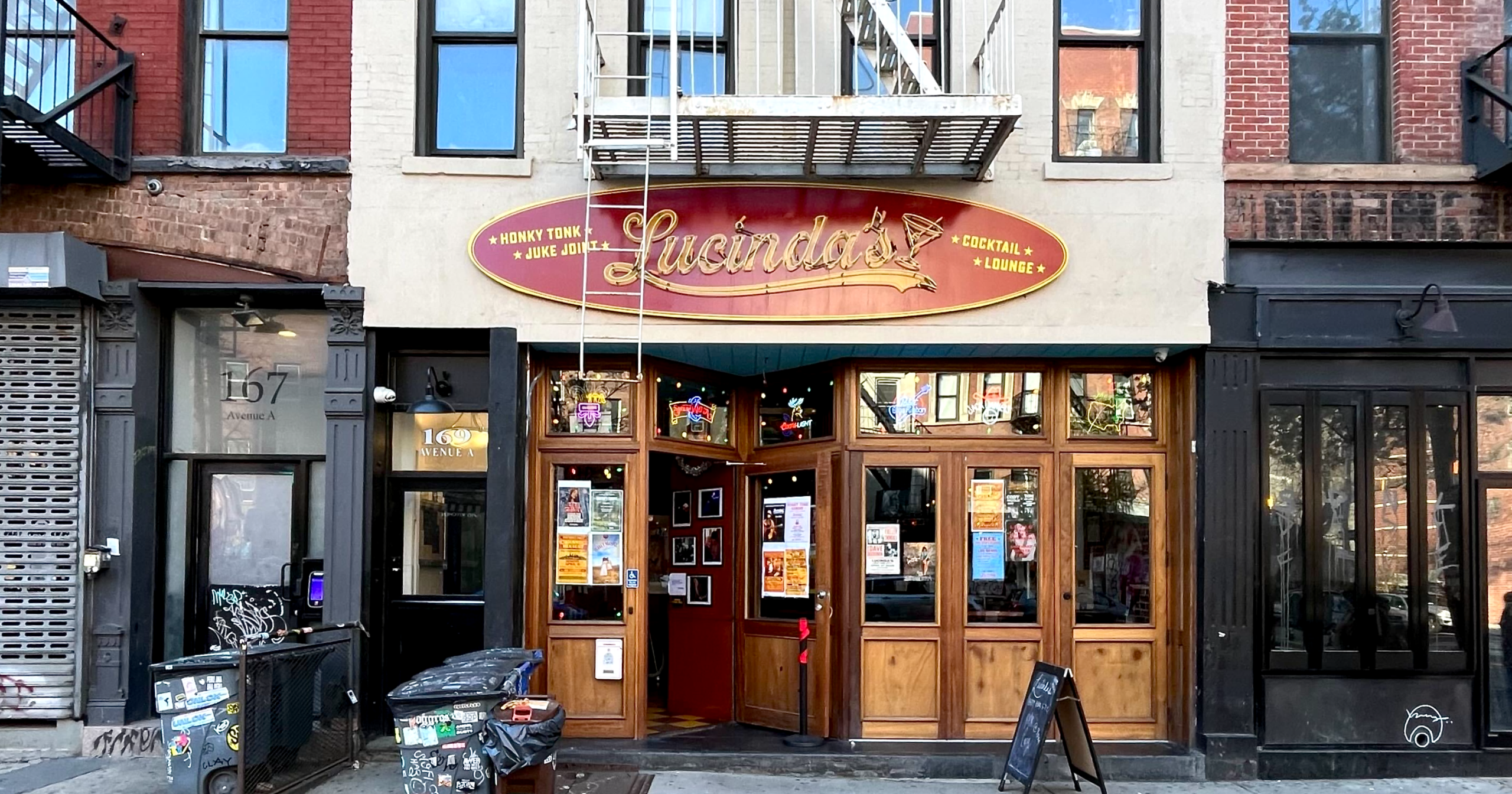
(Editor’s Note: Enjoy our tour of New York City honky-tonk, juke joint, and cocktail lounge Lucinda’s as a special postlogue to our Artist of the Month coverage of Lucinda Williams during March 2026.)
It’s the first springtime Sunday in Manhattan and after a bitter winter, the East Village is humming with human activity. Around the corner from the throng of Tompkins Square Park, where Girl Scouts hawk cookies and roller hockey players clatter their sticks and skates, tumbles of acoustic guitar spill from a storefront, attracting curious passers-by. Some folks pause and lean toward the open windows, and a few cross the threshold to meet wafts of fresh popcorn. Welcome to Lucinda’s.
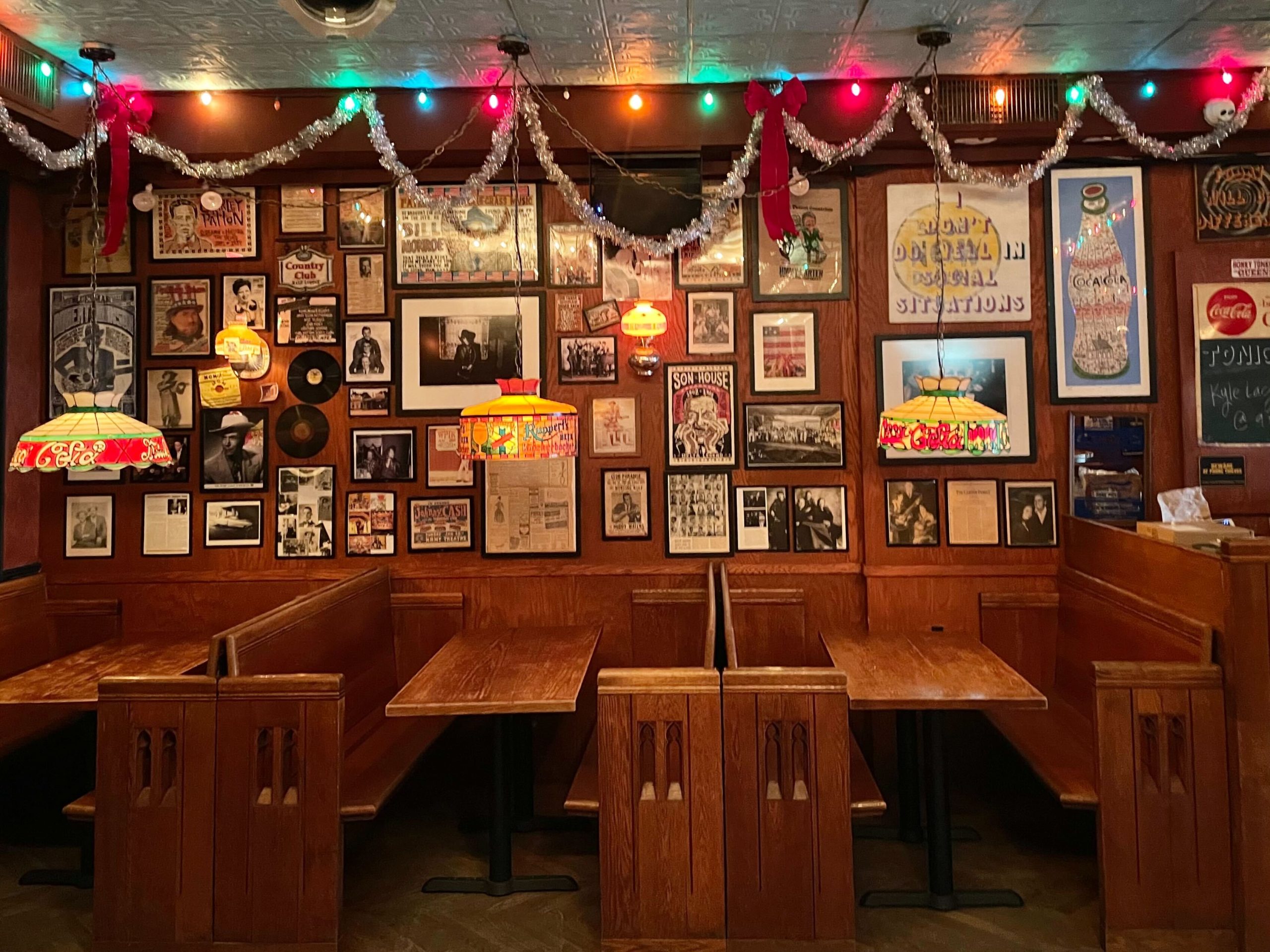
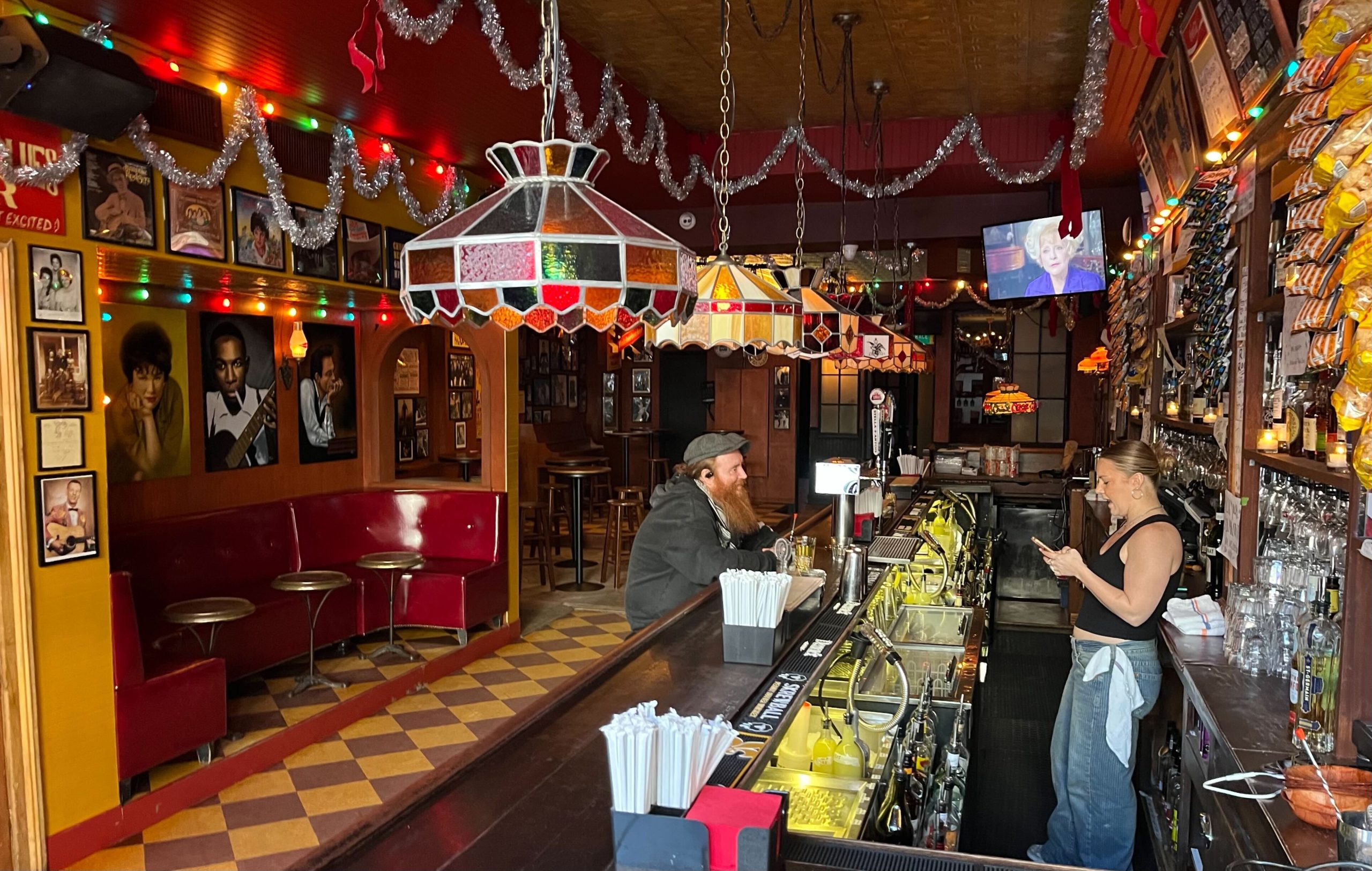
The bar’s tin ceiling interior is catnip to music history aficionados and Americana-kitsch collectors alike, the walls hung with poster prints, vintage memorabilia, and velvet paintings (among them Kitty Wells, Robert Johnson, and Elvis Presley shaking hands with Jesus Christ). There’s a jukebox ready to sling beloved feels-good-to-feel-bad hits, and peanut figurines with Jimmy Carter grinning and holding court over the liquor. These accoutrements all play second fiddle to the spot’s main attraction: live music meant for casual socializing every day of the week.
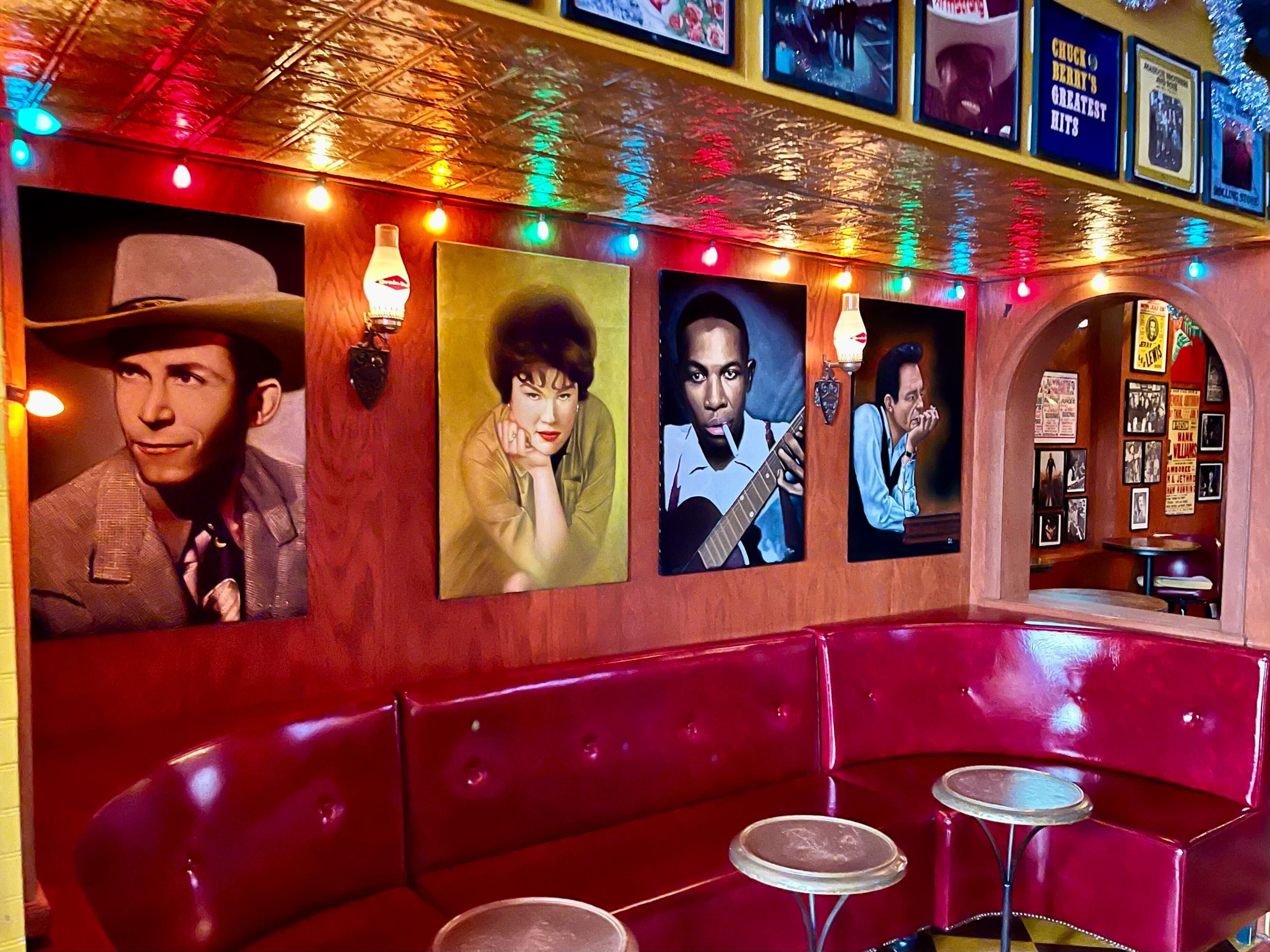
This robust programming – along with some of the bar’s most prized decorative items – is the work of Kelley Swindall, a musician and New Yorker of 20 years who grew up in Stone Mountain, Georgia. She takes pride in a large round aluminum Coca-Cola sign, an item on “permanent loan” from her family and one of several wall-hung nods to Georgia’s most lucrative liquid export. She’s more proud of filling a void in New York City nightlife. “There’s a lot of Southern people in the city that went to SEC schools that want to have some Southern culture again, like college football, or listening to music that they love and don’t normally hear in New York,” Swindall says.
Though the city has a handful of country-themed, sometimes Western-leaning bars – Williamsburg’s hootin-hollerin Skinny Dennis, the self-explanatory Honky Tonkin’ in Queens, the West Village’s Tex-Mex-y Cowgirl – Swindall wanted to develop a place to celebrate the early country, blues, folk, and other vernacular music that shaped generations of American song. She yearned for the sort of places she knew growing up and got to know as a touring musician, rooms where casual live music fosters socializing instead of hampering it. “That’s what the juke joints and honky-tonks were back in the day – it was live music as the soundtrack of the evening, but you were hanging out, drinking, dancing, and socializing,” Swindall says.
Swindall found a business partner in Laura McCarthy, who has a storied history of her own at 169 Avenue A running prior venues Brownies and Coney Island Baby. The pair found a namesake and patron saint of sorts in Lucinda Williams, with whom they connected through mutual friends. Williams agreed to endorse the place, her multi-stranded artistry anchoring the team’s vision for honoring the deep musical roots of the American South. She christened the stage with a set as part of the bar’s opening-night festivities last July.
On a Saturday night, Lucinda’s is rollicking, packed front to back with revelers before some New Yorkers have even gone to dinner. There’s college basketball on one TV, and The Best Little Whorehouse in Texas on the other. I want to mill around and make conversation, but the bar is thick with boisterous, overlapping shouts converging with mid-1990s Tim McGraw and Shania Twain songs that radiate in my bones.
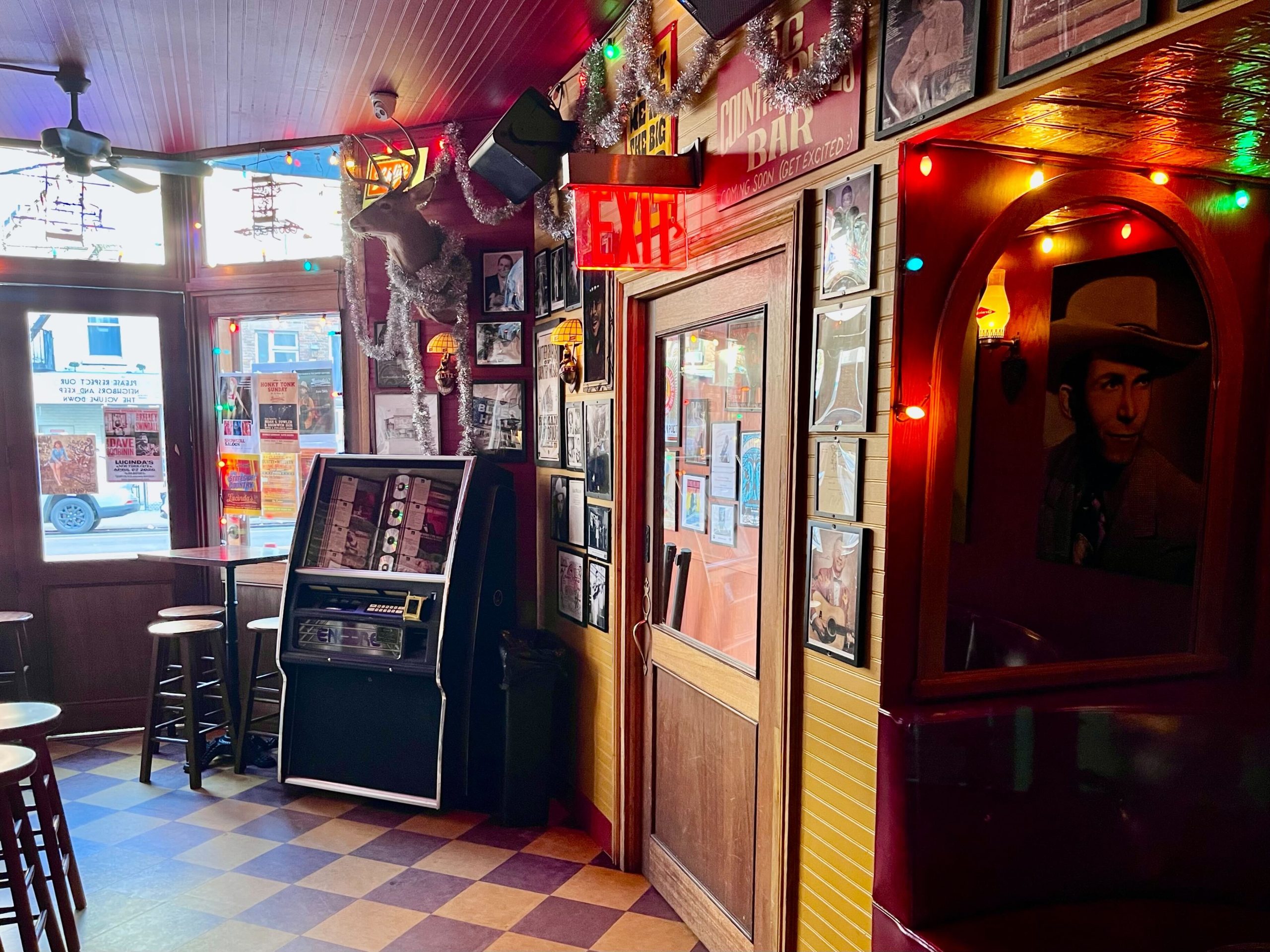
The mission of Lucinda’s is evidently working. With my elbows pinned to my sides, I chat with Emily from Texas and two girls who rolled up for one of several birthday gatherings in progress. After his friend paws at my unattended leftover garlic knots, Gavin, an Irish ex-pat and country music fan, tells me it’s his first time at Lucinda’s after hearing about it on TikTok. “We were in the neighborhood, and we wanted to come in. We already had plans somewhere else, and we made it our business to come back here,” he says, enthralled with the room’s unique decor. I don’t get a chance to ask his thoughts on the Dolly Parton or Johnny Cash bathrooms before he peels off with drinks in each hand.
Spirits are high, but by Lucinda’s standards, the fun has barely started: a few musicians are shouldering their way through to the corner stage. Nightly music programming is a staple at Lucinda’s, which Swindall accomplishes with standing residencies and open mics alongside other ticketed events. There’s a loose structure week to week; weekends are for the big sing-along bands, Sunday evenings are for classic country, and bluegrass and some old-time are on Tuesdays. “I was an artist first, and I still am, so I wanted to focus on the kind of music that I’m into,” Swindall says, adding that Thursday night is for two-stepping.
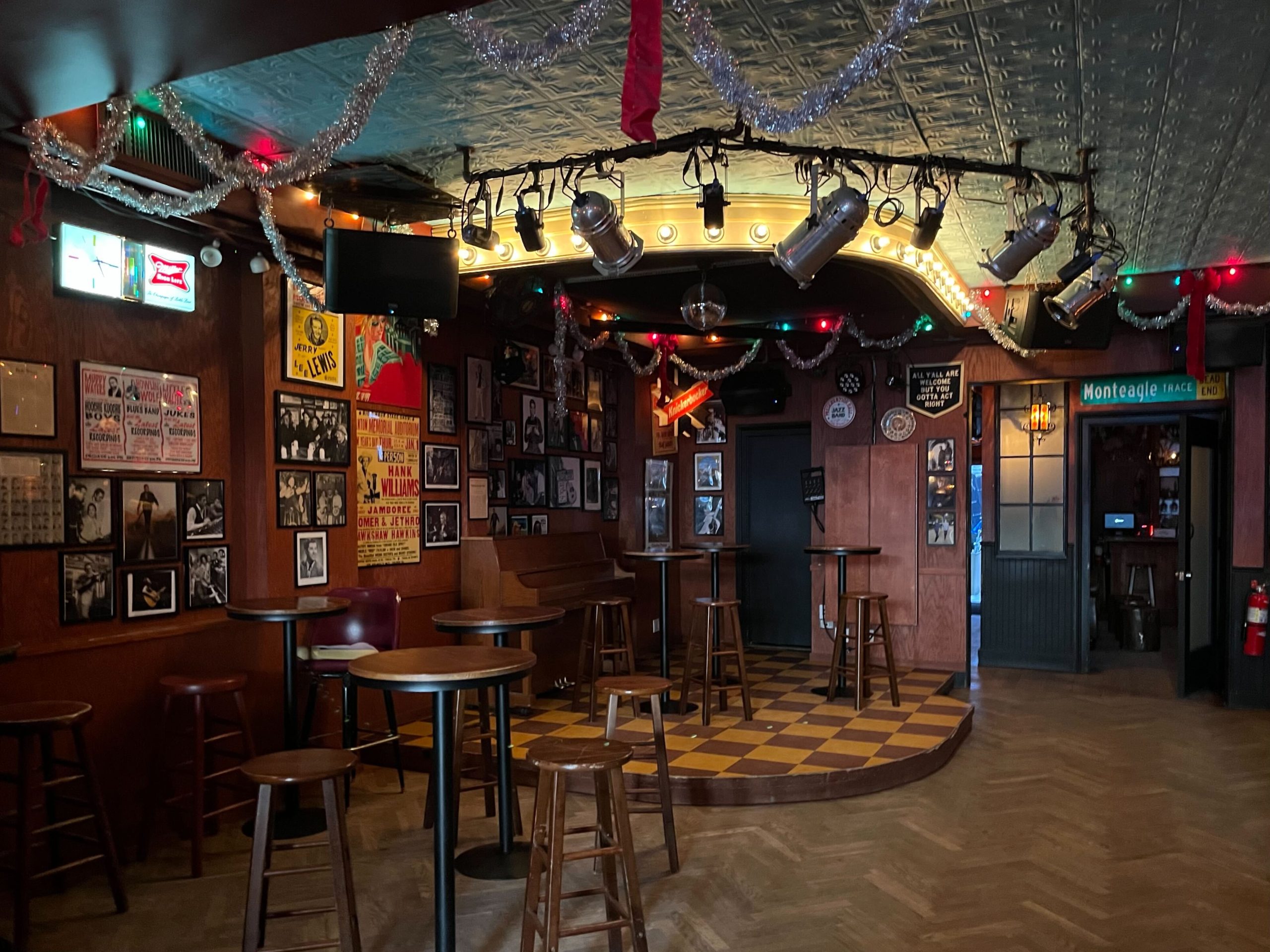
The Sunday open mics are a binding force to Lucinda’s operating concepts. Sign-ups start at 1 p.m. every Sunday, running through the afternoon until another outfit takes the stage for the evening. There are some gentle guidelines (no covers, no backing tracks), aimed toward bringing a pleasant and equitable atmosphere to the gatherings. Swindall prioritizes the artists’ experiences at these weekly forays, remembering open mics as essential to her relationship-building and development as a young musician.
“It’s more important to have people able to come in and play their songs, everyone listen, rather than have a thriving bar culture that day,” she says. Drawing further on her artist’s perspective, Swindall fosters the open mic knowing the challenges of getting a foothold in bigger booking circuits. “A lot of places, they don’t want to book you unless you can bring a crowd or you can show them live footage. It’s really great to give people an avenue to get comfortable on stage and get feedback for their songs,” Swindall says.
Moreover, the shindigs help Swindall expand her pool for her month-to-month bookings, strengthening the network of relationships that are essential to the arts-forward community that McCarthy and Swindall hope to nourish.
Almost a full year in, Swindall is eyeing a steady growth pattern. She worked her way up to music every night of the week and now sometimes has two shows a night; she’s starting to entertain ideas for a small festival. “From a bar point of view, there’s so much to do,” she says.
The space isn’t zoned for a kitchen, but Swindall wants to figure out some kind of food element; in the meantime, patrons can bring in takeout or ask a bartender nicely for a Moon Pie, a bag of Zapp’s chips, or a bowl of popcorn. Swindall will stay busy as she aims to make Lucinda’s even more of a place for the “all” in “y’all.”
Stop in, sit down, shake loose. Connect with a song, or maybe a stranger.
All photos by BGS Staff.
Explore our Artist of the Month coverage of Lucinda Williams here.