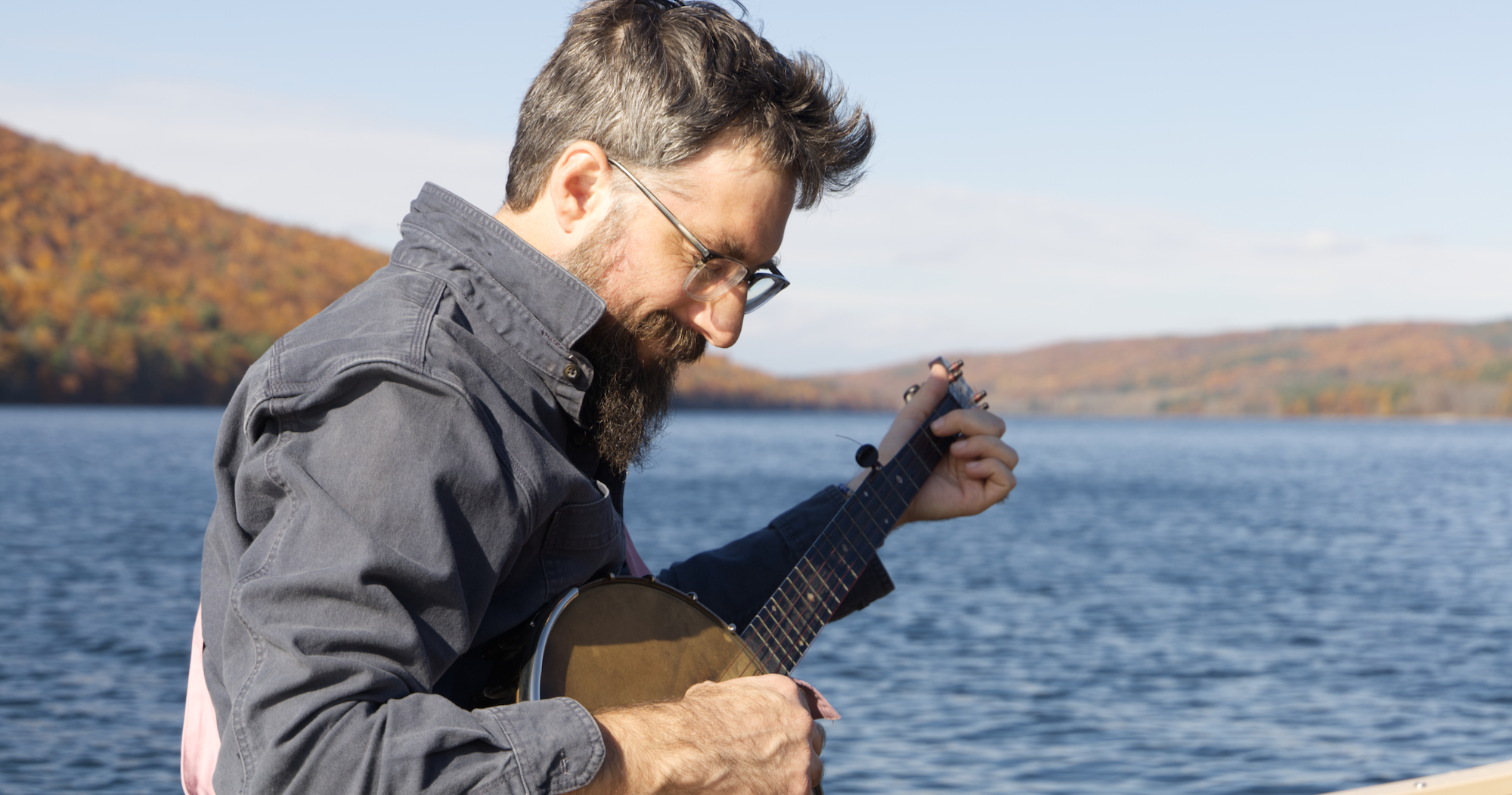
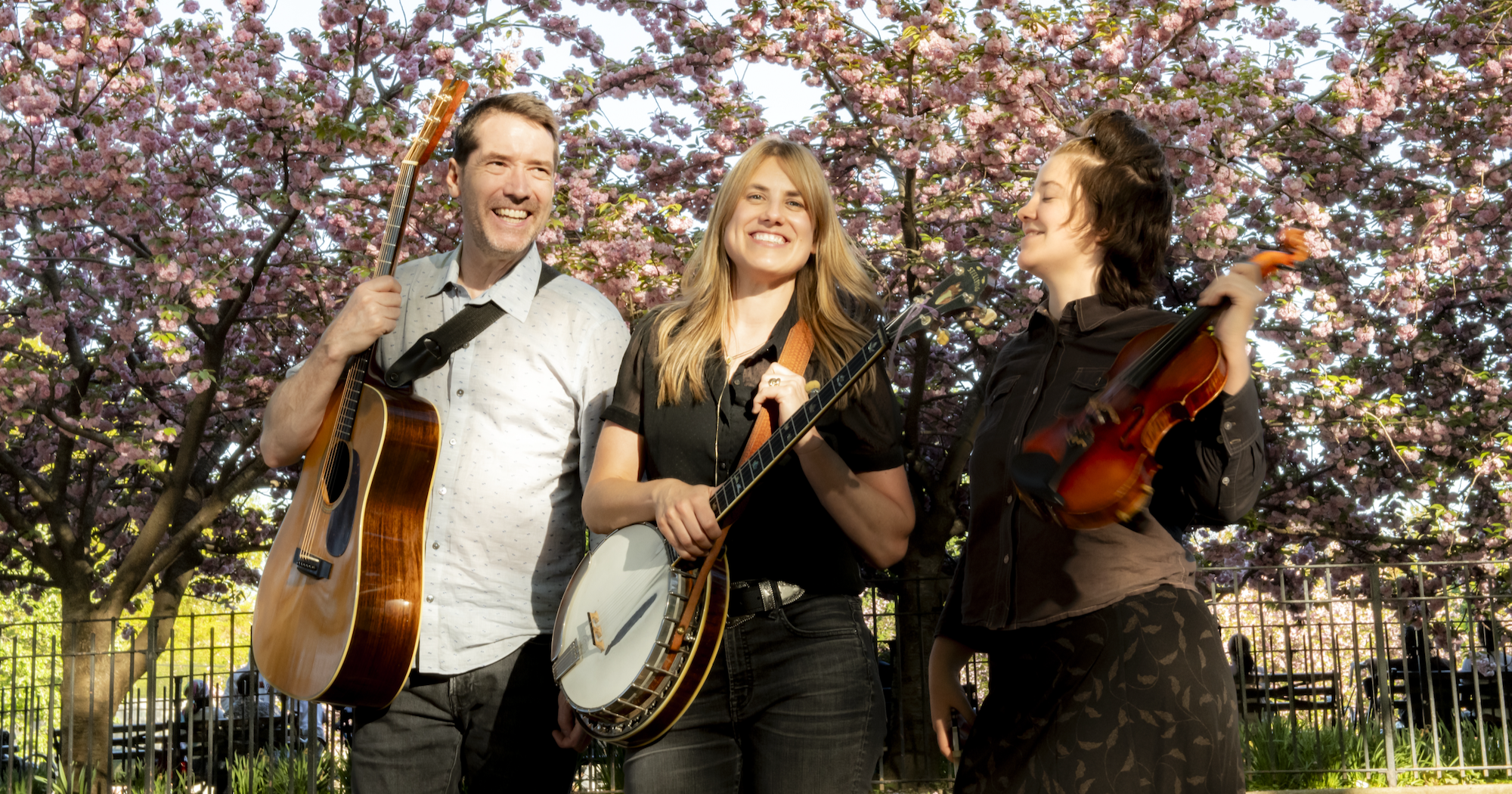
Artist:Benny Bleu Hometown: Hemlock, New York Latest Album:When I Am a Fossil (released June 5, 2026) Personal Nicknames (or rejected band names): My real name is Benjamin Haravitch. I like it just fine, and maybe someday I’ll release music as that guy. For now, Benny Bleu helps out.
Which artist has influenced you the most – and how?
Early on in my old-time journey, I became obsessed with the fiddling of Rayna Gellert. I said to myself, “I want to play the banjo like she plays the fiddle.” And that goal still stands. I love the way she records and releases music, especially her latest duo albums with Kieran Kane and also alongside Joachim Cooder. The music is accessible and rooted in traditional old-time music and also totally fresh with a clear point of view. Most importantly, it feels good and flows with perpetual motion. All things I try to do with the music I make.
What was the first moment that you knew you wanted to be a musician?
When I was about four years old, a new neighbor moved in next door. Gary. He had a band called Wilderness Family (banjo, fife, snare drum, upright bass, accordion) and I remember them playing for us in my driveway. When I was eight or so, the band threw a party in my backyard and invited all their freaky musician friends who camped out and jammed and juggled all weekend. I eventually grew up, but I don’t think I ever left that party. For a while I tried to work a 9-to-5 as a geologist. But the songs never stopped ringing in my head! I knew there was no avoiding the fact that I make music and that’s just what I do.
Which elements of nature do you spend the most time with and how do they impact your work?
All of the music I make is an echo of my relationship with the earth. Even the way I tour reflects this, primarily getting around on Amtrak. My new record When I Am a Fossil is entirely focused on our place in nature. In the title track, I reflect on my past life as an environmental geologist. Scientists in the deep future might find vast evidence of our human experiment, but will they ever find the steps we didn’t take?
I live in upstate New York, in a region known as the Finger Lakes. Two of these lakes – Canadice and Hemlock – have been lasting muses for me. Ancient worlds that have witnessed glaciation, generations of native cultures, colonial progress come and gone, and now provide water for the city of Rochester. This is a story I tell in the song “Abbey Lovely.” And “All I Want to Be” is a meditation on awe and the simple pleasure of being “here” in our place in nature.
Does pineapple really belong on pizza?
All toppings belong. Especially the under-represented ones, like pineapple. If a pizza is provided with a supportive crust, a zesty sauce, and savory cheese, then all toppings will manifest greatness. I don’t do the social medias, but in my newsletters I like to let my fans know where my favorite pies are as I travel around. I usually go for a simple slice of cheese.
What is a genre, album, artist, musician, or song that you adore that would surprise people?
The element of music that speaks to me most is rhythm. So I tend to love drummers and rhythmically adventurous musicians. I love Latin music. I love Fela Kuti and James Brown. Music that holds the groove above all else. Bernard Purdie, the legendary session drummer, is one of my favorite musicians and I hear a lot of similarity in how he keeps a song moving with how an old-time fiddler creates that perpetual forward motion. My desert-island-all-time favorite track would have to be “Sugar” by Stevie Wonder.
(Editor’s Note: Enjoy our tour of New York City honky-tonk, juke joint, and cocktail lounge Lucinda’s as a special postlogue to our Artist of the Month coverage of Lucinda Williams during March 2026.)
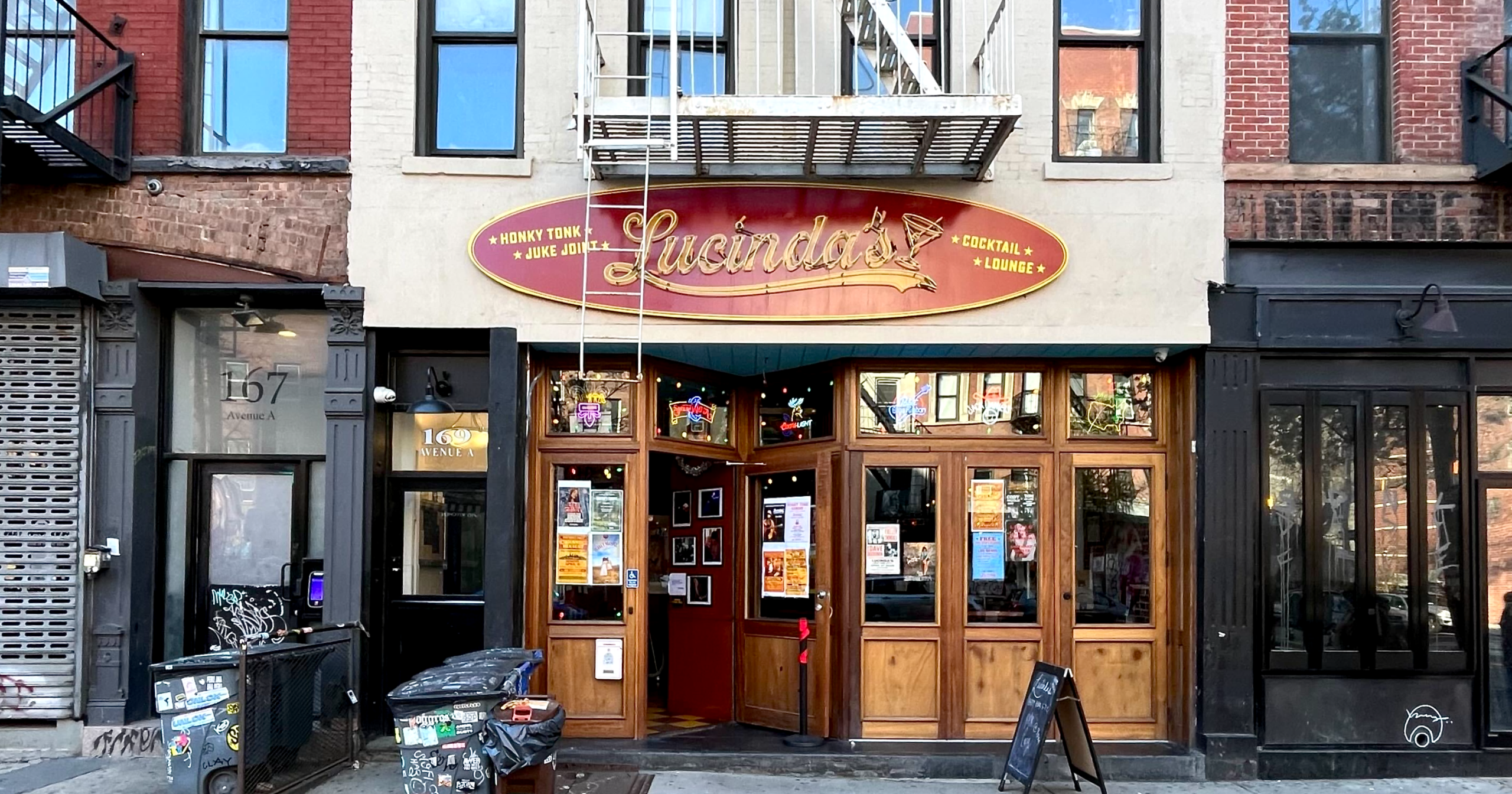
It’s the first springtime Sunday in Manhattan and after a bitter winter, the East Village is humming with human activity. Around the corner from the throng of Tompkins Square Park, where Girl Scouts hawk cookies and roller hockey players clatter their sticks and skates, tumbles of acoustic guitar spill from a storefront, attracting curious passers-by. Some folks pause and lean toward the open windows, and a few cross the threshold to meet wafts of fresh popcorn. Welcome to Lucinda’s.
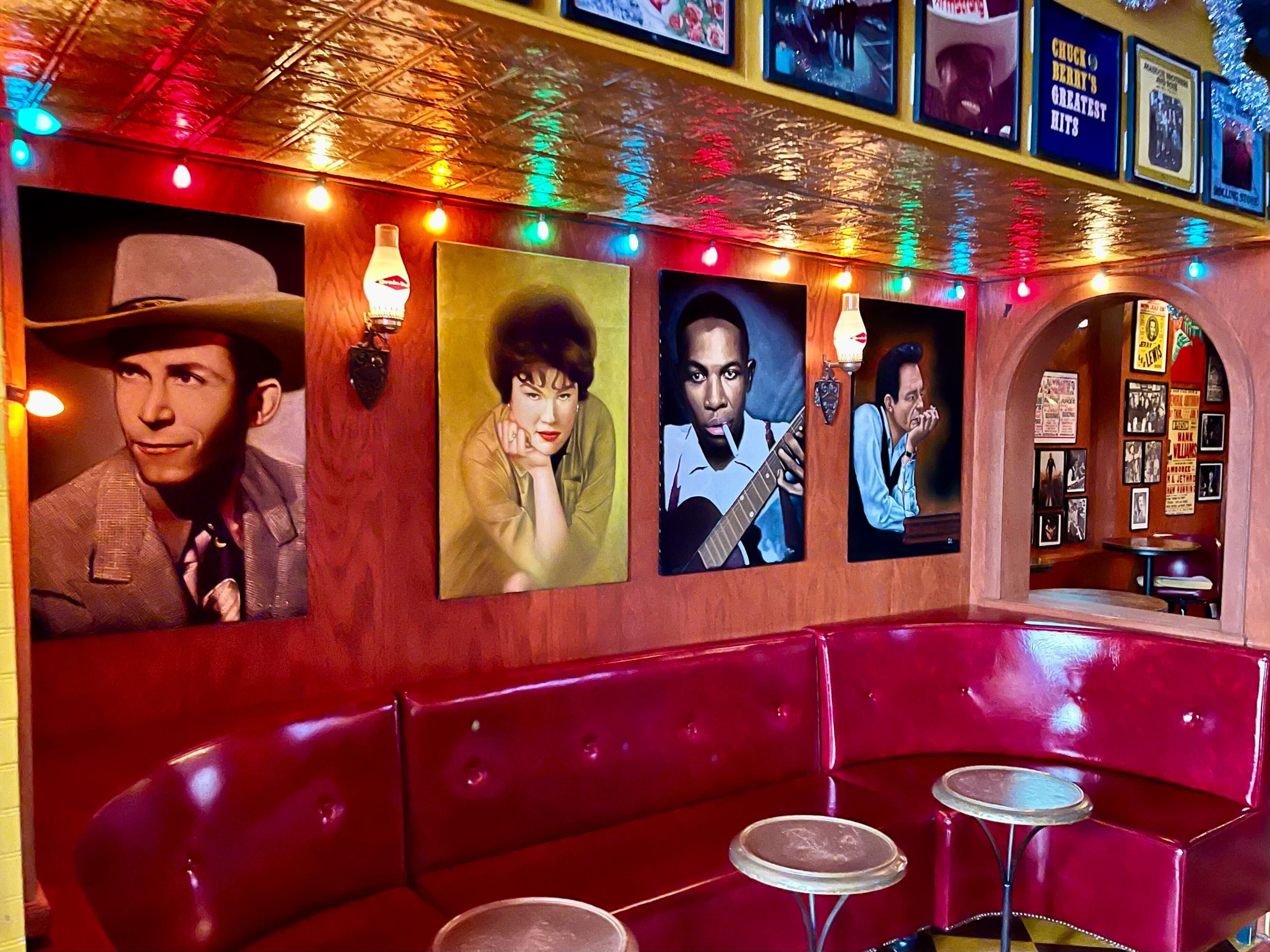
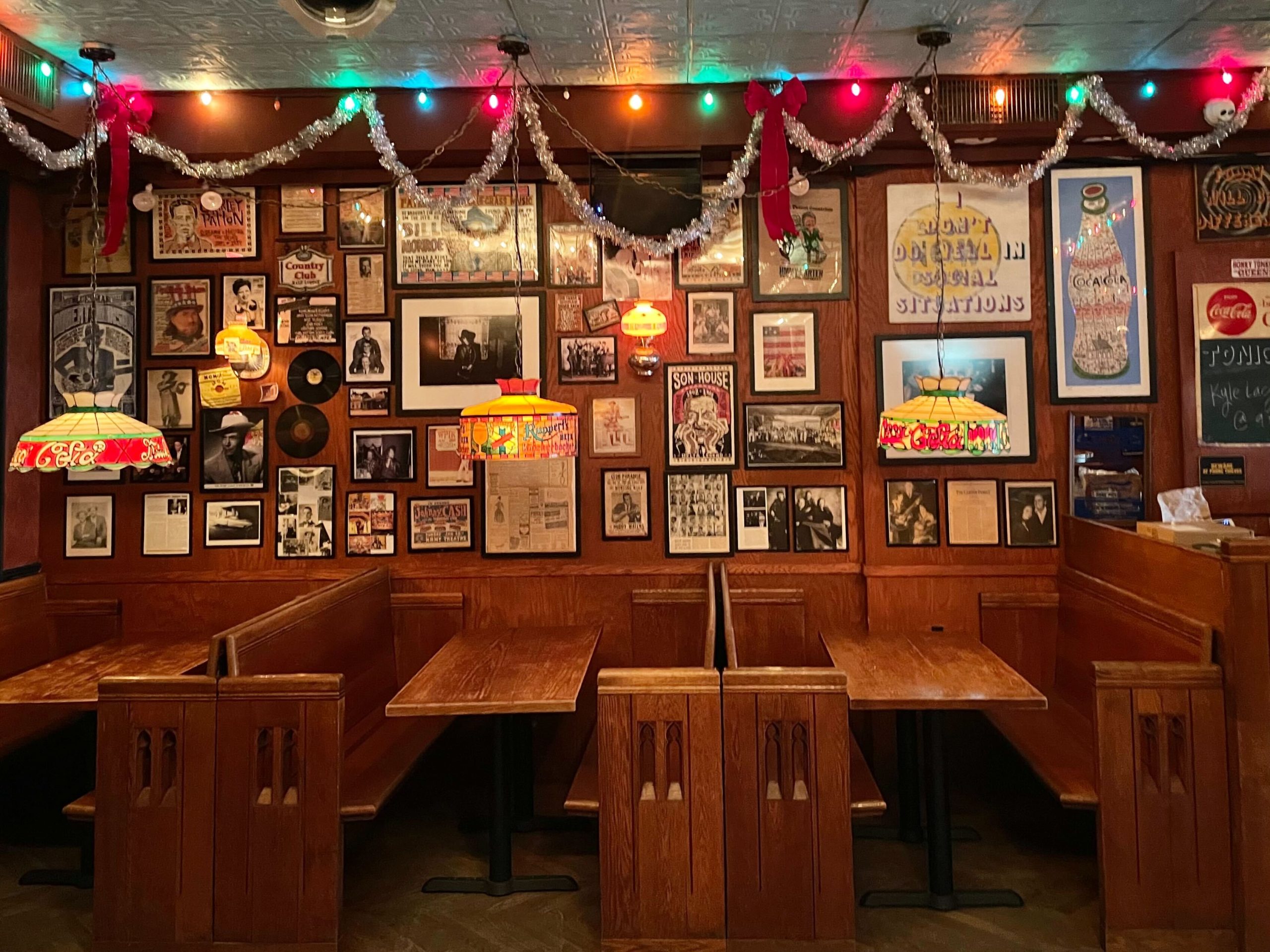
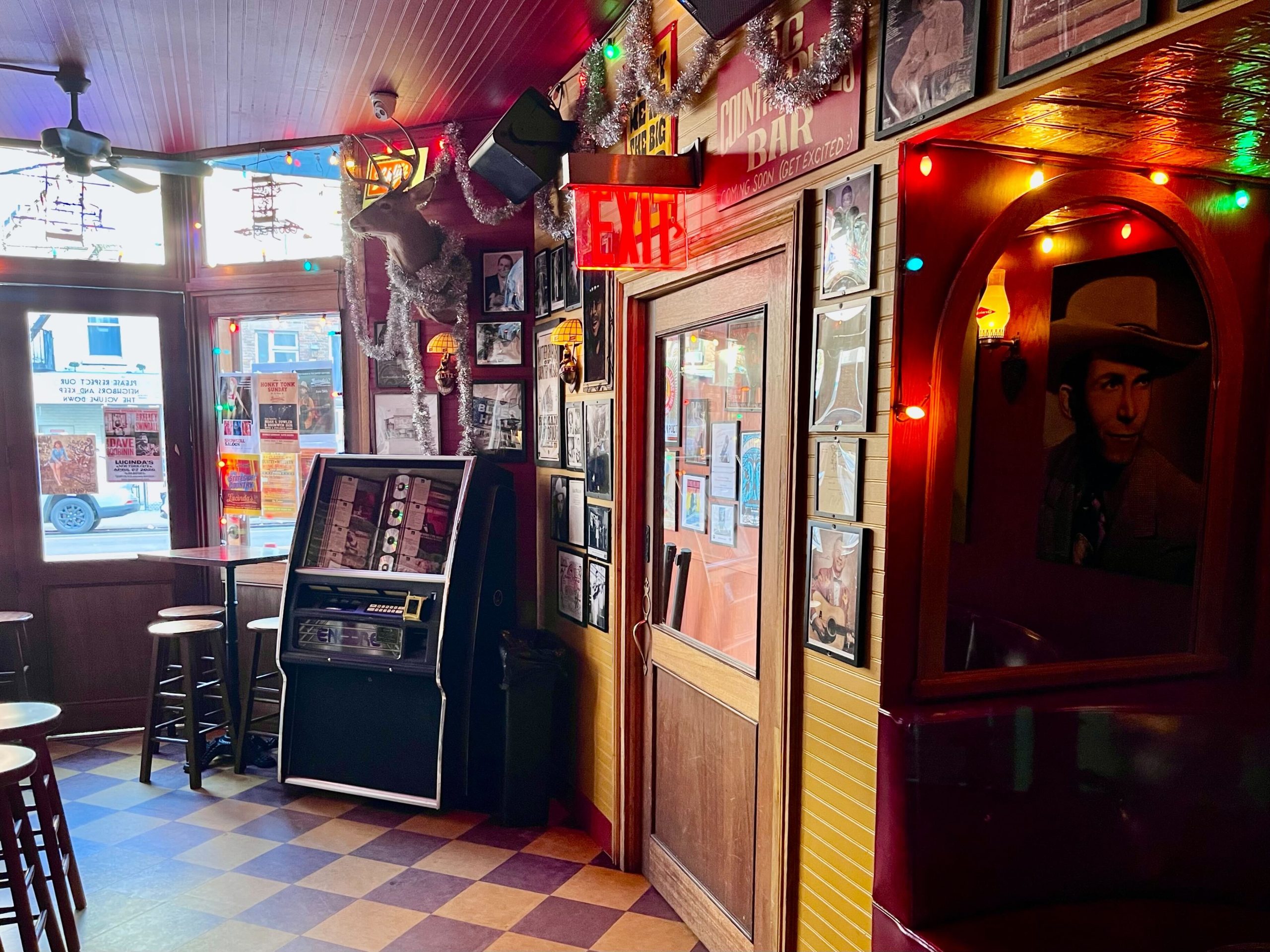
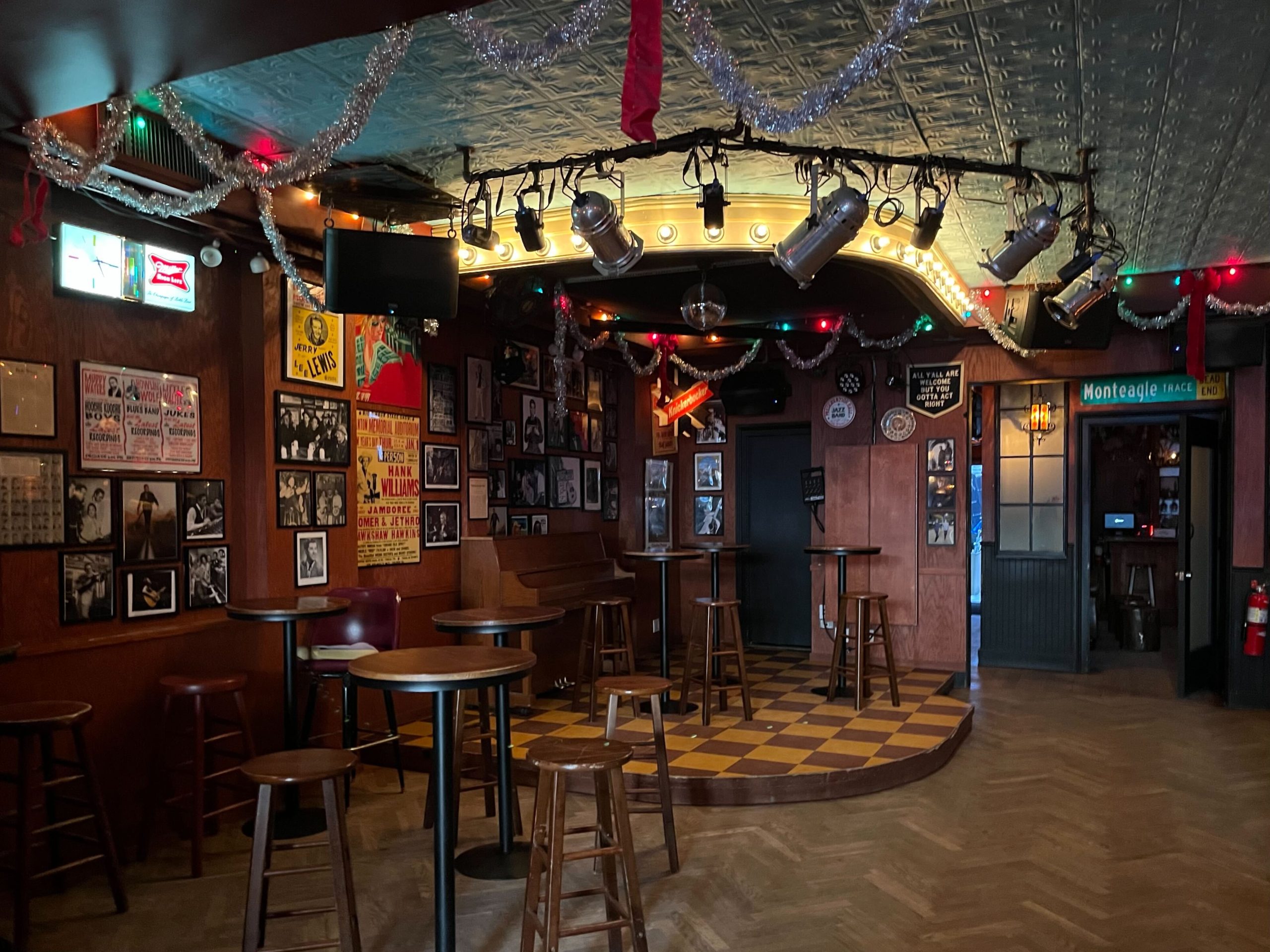
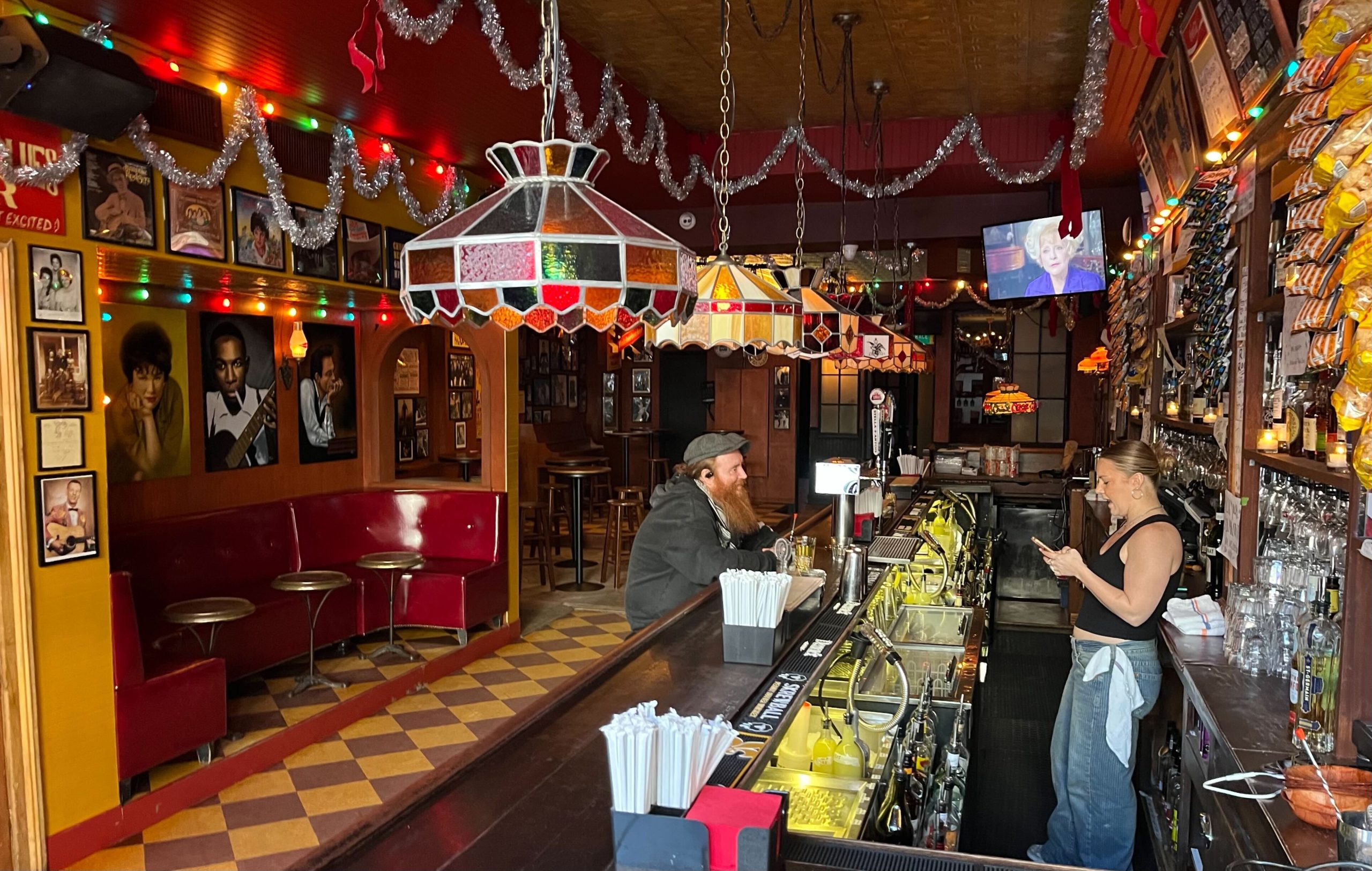
The bar’s tin ceiling interior is catnip to music history aficionados and Americana-kitsch collectors alike, the walls hung with poster prints, vintage memorabilia, and velvet paintings (among them Kitty Wells, Robert Johnson, and Elvis Presley shaking hands with Jesus Christ). There’s a jukebox ready to sling beloved feels-good-to-feel-bad hits, and peanut figurines with Jimmy Carter grinning and holding court over the liquor. These accoutrements all play second fiddle to the spot’s main attraction: live music meant for casual socializing every day of the week.
This robust programming – along with some of the bar’s most prized decorative items – is the work of Kelley Swindall, a musician and New Yorker of 20 years who grew up in Stone Mountain, Georgia. She takes pride in a large round aluminum Coca-Cola sign, an item on “permanent loan” from her family and one of several wall-hung nods to Georgia’s most lucrative liquid export. She’s more proud of filling a void in New York City nightlife. “There’s a lot of Southern people in the city that went to SEC schools that want to have some Southern culture again, like college football, or listening to music that they love and don’t normally hear in New York,” Swindall says.
Though the city has a handful of country-themed, sometimes Western-leaning bars – Williamsburg’s hootin-hollerin Skinny Dennis, the self-explanatory Honky Tonkin’ in Queens, the West Village’s Tex-Mex-y Cowgirl – Swindall wanted to develop a place to celebrate the early country, blues, folk, and other vernacular music that shaped generations of American song. She yearned for the sort of places she knew growing up and got to know as a touring musician, rooms where casual live music fosters socializing instead of hampering it. “That’s what the juke joints and honky-tonks were back in the day – it was live music as the soundtrack of the evening, but you were hanging out, drinking, dancing, and socializing,” Swindall says.
Swindall found a business partner in Laura McCarthy, who has a storied history of her own at 169 Avenue A running prior venues Brownies and Coney Island Baby. The pair found a namesake and patron saint of sorts in Lucinda Williams, with whom they connected through mutual friends. Williams agreed to endorse the place, her multi-stranded artistry anchoring the team’s vision for honoring the deep musical roots of the American South. She christened the stage with a set as part of the bar’s opening-night festivities last July.
On a Saturday night, Lucinda’s is rollicking, packed front to back with revelers before some New Yorkers have even gone to dinner. There’s college basketball on one TV, and The Best Little Whorehouse in Texas on the other. I want to mill around and make conversation, but the bar is thick with boisterous, overlapping shouts converging with mid-1990s Tim McGraw and Shania Twain songs that radiate in my bones.
The mission of Lucinda’s is evidently working. With my elbows pinned to my sides, I chat with Emily from Texas and two girls who rolled up for one of several birthday gatherings in progress. After his friend paws at my unattended leftover garlic knots, Gavin, an Irish ex-pat and country music fan, tells me it’s his first time at Lucinda’s after hearing about it on TikTok. “We were in the neighborhood, and we wanted to come in. We already had plans somewhere else, and we made it our business to come back here,” he says, enthralled with the room’s unique decor. I don’t get a chance to ask his thoughts on the Dolly Parton or Johnny Cash bathrooms before he peels off with drinks in each hand.
Spirits are high, but by Lucinda’s standards, the fun has barely started: a few musicians are shouldering their way through to the corner stage. Nightly music programming is a staple at Lucinda’s, which Swindall accomplishes with standing residencies and open mics alongside other ticketed events. There’s a loose structure week to week; weekends are for the big sing-along bands, Sunday evenings are for classic country, and bluegrass and some old-time are on Tuesdays. “I was an artist first, and I still am, so I wanted to focus on the kind of music that I’m into,” Swindall says, adding that Thursday night is for two-stepping.
The Sunday open mics are a binding force to Lucinda’s operating concepts. Sign-ups start at 1 p.m. every Sunday, running through the afternoon until another outfit takes the stage for the evening. There are some gentle guidelines (no covers, no backing tracks), aimed toward bringing a pleasant and equitable atmosphere to the gatherings. Swindall prioritizes the artists’ experiences at these weekly forays, remembering open mics as essential to her relationship-building and development as a young musician.
“It’s more important to have people able to come in and play their songs, everyone listen, rather than have a thriving bar culture that day,” she says. Drawing further on her artist’s perspective, Swindall fosters the open mic knowing the challenges of getting a foothold in bigger booking circuits. “A lot of places, they don’t want to book you unless you can bring a crowd or you can show them live footage. It’s really great to give people an avenue to get comfortable on stage and get feedback for their songs,” Swindall says.
Moreover, the shindigs help Swindall expand her pool for her month-to-month bookings, strengthening the network of relationships that are essential to the arts-forward community that McCarthy and Swindall hope to nourish.
Almost a full year in, Swindall is eyeing a steady growth pattern. She worked her way up to music every night of the week and now sometimes has two shows a night; she’s starting to entertain ideas for a small festival. “From a bar point of view, there’s so much to do,” she says.
The space isn’t zoned for a kitchen, but Swindall wants to figure out some kind of food element; in the meantime, patrons can bring in takeout or ask a bartender nicely for a Moon Pie, a bag of Zapp’s chips, or a bowl of popcorn. Swindall will stay busy as she aims to make Lucinda’s even more of a place for the “all” in “y’all.”
Stop in, sit down, shake loose. Connect with a song, or maybe a stranger.
Banjoist, songwriter, and podcaster Hilary Hawke has had a meandering journey with music, starting with guitar and clarinet before finding her musical home in the banjo and “becoming obsessed with it” during her late teens. Inspired by the storied folk tradition of upstate New York, Hawke now makes her home in New York City, where she leads her own bluegrass band and plays for various other groups as part of a close-knit roots music community.
New York City is uniquely ripe with gigs in theater and Hawke has found herself playing on Broadway for musicals such as Oklahoma! and Bright Star and composing music for puppet shows, among many other diverse projects. She has also started her own podcast, Banjo Chat, where she speaks about the banjo and banjo music with folks that love the instrument as much as she does.
BGS connected with Hilary Hawke to discuss the making of her new album, Lift Up This Old World, her time on Broadway, her new job teaching bluegrass at Columbia University, and more.
Can you tell me a bit about how you got started on the banjo?
Hilary Hawke: I actually went to school for classical music on clarinet and guitar, but I realized I didn’t know how I was going to get a job in music or what kind of job I wanted… composition? Teaching? Music therapy? I got to a point where I was like, “This all seems very serious and I’m not actually having much fun with music.”
During that time, I was writing songs on guitar and I just picked up a banjo for fun, to do something outside of school. I grew up in upstate New York and we have a lot of folk music and a lot of great banjo influences up here like Tony Trischka, Béla Fleck, Pete Seeger, the Gibson Brothers. And, honest to God, it was just the thing I started creating music on all the time. I started playing it nonstop. I ended up moving into New York City just on a whim. There were lots of opportunities to perform and I was able to take some lessons with Tony Trischka. New York is like– you just think you’re going to try it out and then suddenly 5 years have gone by.
Influences like the New Lost City Ramblers, Mike Seeger, Bruce Molsky, and Fred Cockerham seem to be threaded through your old-time and bluegrass style. Do you have a specific moment you can remember that sparked your love for these musicians?
I think that it’s always through popular culture that you get inspired to dive into the deeper stuff. Alison Krauss had a record called Too Late to Cry and I remember I heard the banjo on that and was like “What’s that sound?” It was Tony Trischka playing on her record. Similarly, I heard the banjo on the Dixie Chicks’ albums and wanted to know how it worked. Through those more popular bands, I got interested in banjo. And then I went to the festivals and I heard about the old guys. People would give me rides and we’d be listening to their CDs in the car. It was a lot of word of mouth like, “Oh you gotta hear Fred Cockerham and Tommy Jarrell!”
You started teaching banjo in Brooklyn at the Jalopy Theatre back in 2006. How has that community influenced your growth as a teacher and performer over the last 20 years?
I really cut my teeth at Jalopy. I was there for 10 years or so and I was able to develop a curriculum for teaching. I learned how to tear things apart and break them down, as far as playing the banjo. I gained the skills I’m now using to teach at Columbia University. I think Jalopy is a great breeding ground for performers, artists, and teachers to develop. It’s open-minded and exploratory.
Tell me about your new album, Lift Up This Old World. Where does it fall in the trajectory of your music-making?
This is the third album I’ve released under my own name. The first album I made was more of a singer-songwriter album; writing songs was really my entry point into folk music. Then I released an instrumental old-time album. This one combines songwriting and picking, but it is much more bluegrass-forward.
I noticed that you play both clawhammer and bluegrass-style banjo on the record. How do you relate to the two different styles and where do you feel more at home?
I started with fingerpicking and got into bluegrass first, but I just wanted to do it all. I wanted to be involved with a wide range of music. Sometimes a person would ask, “Do you want to come play with my old-time band?” And I had to say no because I couldn’t play that style. I quickly realized I didn’t like to say no! I wanted to be able to do it. So I started learning clawhammer from some Ken Perlman videos and taught myself. Now I feel like they take up an equal amount of space in my life and I pick the style based on the music.
With my original material, I approach the banjo with the kind of song I want to write in my mind, so if I want to write a honky-tonk song I might use fingerpicking, but if I want to do something with a shout chorus, for example, I’ll approach with clawhammer banjo. I listen to a lot of Tim O’Brien and I feel like he does that, too. Being able to play both styles, I have a little bit more of a tool kit for what I want to do.
Tell me about your approach to songwriting. There are a lot of songs about lost love and relationships on this album, some about relationships with people, but even your relationship with New York City. “NYC Waltz” is a track I particularly love. Is there a common theme that you see that brings these songs together?
I think this record is about overcoming struggles in confidence, specifically struggles in the music industry. I had the realization that you have to be your own cheerleader, you have to believe in yourself, and find that happiness in yourself. If you’re doing what you’re supposed to be doing, things are going to happen. Making this album was me having the belief that I could do this thing, overcoming fears and doubts in myself, striving, and coming out on the other side.
The way you recorded this album, it sounds live in a way that is rare for modern recordings. Can you tell me about how the record was made?
We did it live to save money. We started a year and half ago and I didn’t have the resources to do separate tracking, so we rehearsed it for a couple of days and then just went in and tried to nail it. We recorded pretty much the whole thing live with a full band in Williamsburg, one day with each of two fiddle players, Bobby Hawk and Camille Howes, at Waldon Studios in Williamsburg.
Ross Martin [who plays guitar on the album] and I have been playing together for two years as a duo and we have worked up some of these songs over that time. I felt like these album songs were a good representation of the music we have been making for a good while now. “Dreaming of You,” the last song on the record, is the only one that we arranged and tracked out separately; it has a very different feel than the rest of the album.
Yes, I noticed that! It’s a bit orchestral.
Yes, that was all arranged and written out by me. I produced this album myself and I think going forward, I would like to do more collaboration with visionaries and people I trust in the making of a record. I think I learned that it’s great to have another trusted set of ears for a project. It’s hard to step away and see things for yourself. I have a pretty clear vision about what I want things to sound like, but you also have to be gentle and kind to yourself. It’s hard to find that line.
You also have a podcast about the banjo called Banjo Chat. Can you tell me about how that got started and how you’re enjoying it?
It’s good! It started because I had a lot of questions for banjoists about the way they write songs, form solos, and think about music that I didn’t hear asked or answered on other podcasts. Also, I wanted to amplify the voices of people whose playing I loved who were female identifying, queer, gay, minorities, or just didn’t really fit into a bluegrass or old-time genre with their music.
So I started this podcast. I got some new software for editing and now I do the research, recording, editing, and mixing all by myself.
Before I let you go, I wanted to ask you about your time on Broadway. In 2016 you subbed on Broadway playing banjo for Bright Star – a show that brought bluegrass and old-time to the stage in a major way. Looking back, how did that highly choreographed experience change your approach to live shows?
Bright Star does have a huge regional presence. For me, that was my first Broadway subbing gig, subbing for Bennett Sullivan. Being in that environment made me realize that when you play live shows you need to get out of your own head, you can’t just be standing up there not giving any energy out to the audience. You have to have a lot of love to give out and to have your message clear in your head when you’re performing. Be happy to be there.
That’s what I learned from the theater. All these people bought tickets to see the show, they’re here to see a show and have a good time – not to see you in your head worrying about your performance.
Photo Credit: Aidan Grant
Madeline Combs contributed research and interview prep for this feature.
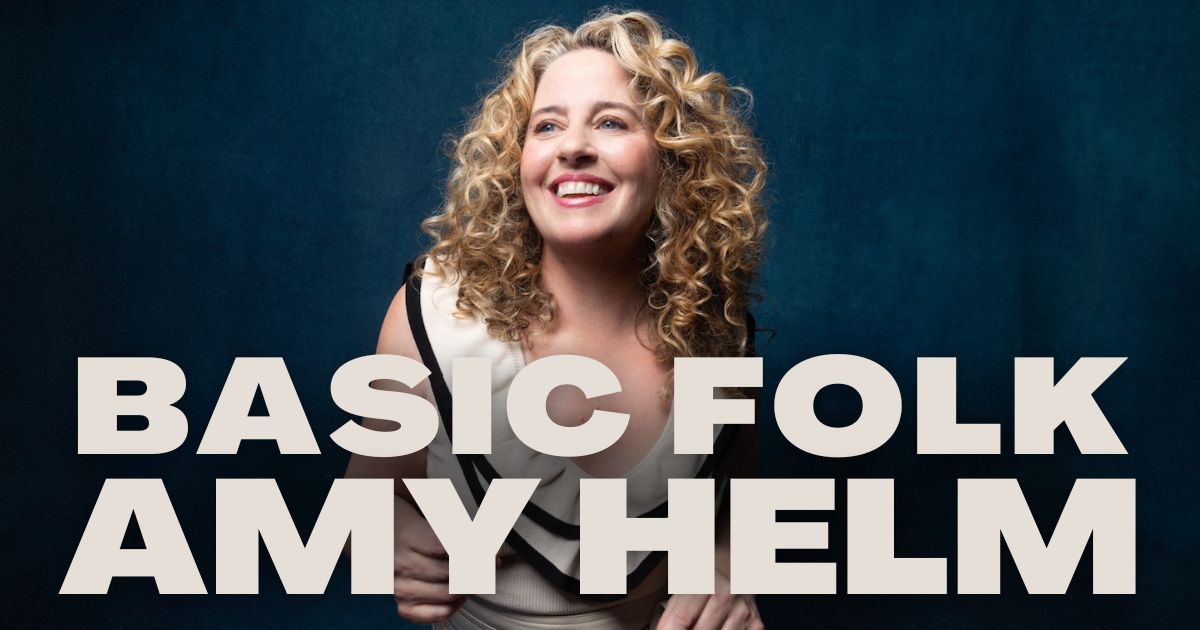
Amy Helm has had one of the most fascinating lives that any person can have. As you might have guessed from her famous last name, she comes from roots music royalty. Amy is the daughter of Levon Helm, the beloved late drummer for the incredible groundbreaking Canadian-American group The Band. She also continues to run The Barn, a music venue and recording studio built by her dad and Garth Hudson, which served as Levon Helm Studios.
In her own career, she has created a new lineage of musical tradition, family, great songwriting, poetry, and a feminine power that emanates off of her. We’re talking about her new album, Silver City, but we’re also talking about songwriting. We’re talking about grief. We’re talking about single parenthood. We’re talking about family. We’re talking about being on the road. We’re talking about how our bodies change over time and how that changes us as a vocalist and as an artist.
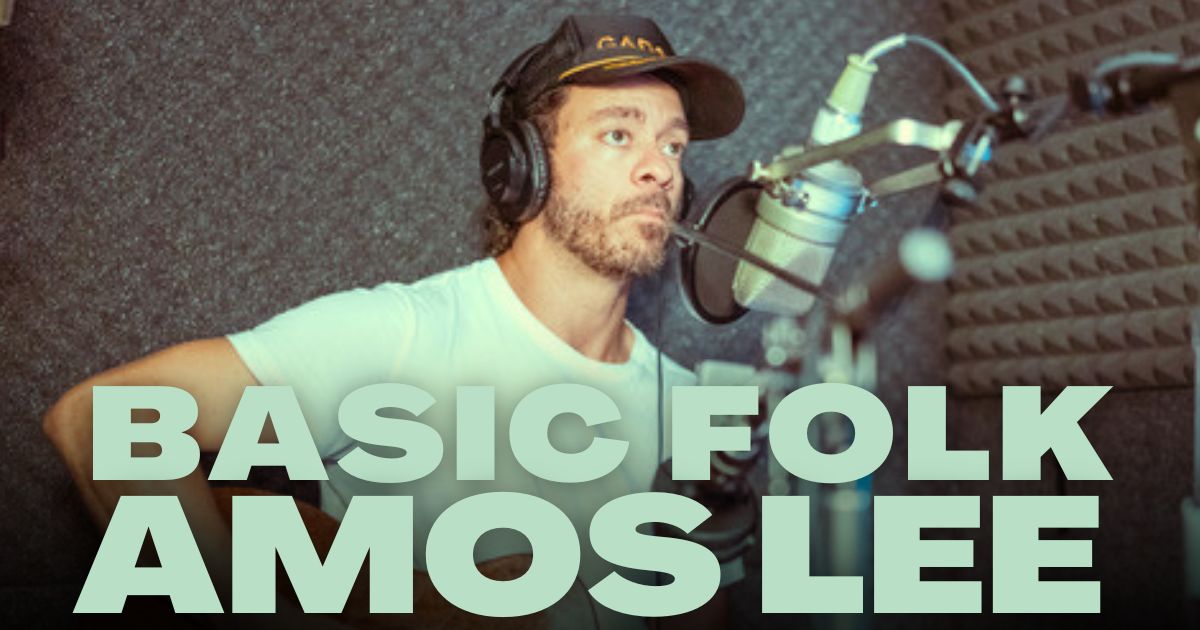
Throughout his music career, singer-songwriter Amos Lee has cultivated a large female fanbase and also owes a lot of his early start to Norah Jones (a female!). He’s about to hit the road co-headlining with folk music and queer icons the Indigo Girls. In our conversation, he talks about the atmosphere he’s going for in concert, and it’s not a very bro-centered vibe. His latest album Transmissions further proves his case with a gorgeous sonic palette that includes country music, indie folk, folk rock and acoustic music sounds. Recorded with his longtime band in a studio in rural Marlboro, New York, the songs came out as warm as the reclaimed church wood it was built out of.
Amos dives into topics like how he feels about kids, to his work with cancer patients, to the benefits of caring for your mental health and music. He touches on anxiety and overstimulation (a topic mostly prompted by my anxiety!) and overcoming adversity. He also talks about being a mentor for the Black Opry residency at WXPN in his town of Philadelphia, and explains what a Hoagiemouth is. Amaze and delight at the wonderful Amos Lee.
Artist:Kate Prascher Hometown: Hudson Valley, New York Latest Album:Shake The Dust (out August 30, 2024) Personal Nicknames (or Rejected Band Names): Kate or Katie. I go by my middle name, which I have always thought of as a Southern thing. Growing up in Tennessee, it was not uncommon to go by a middle name or even a family nickname and it has taken some explaining over the years. Especially when I moved to New York.
What rituals do you have in the studio or before a show?
I like to move some way or other, I will often practice yoga and try to get out of my head a little bit. I also warm up my voice and hands, drink tea, and run through whichever songs are new or have parts that need attention. I try to practice the week before a show and avoid day-of practicing whenever that’s possible, especially when there is new material. I have also started working with visualization this year. It is a thing I’m trying, so that I can see the audience in my mind before I meet them and give my brain a roadmap for how the next performance will go.
What other art forms – literature, film, dance, painting – inform your music?
Books are a huge part of my life and a big part of my songwriting practice. I read all the time, all different kinds of things. I think of reading as stuffing my brain with words that are then (hopefully) at my fingertips when I sit down to write. Reading so much has given me a clearer picture of what good storytelling can be, the moves a writer can make to hide, to expose, and to captivate. And it has taught me about characters. I do the same kind of gathering with music, I pack my mind with good songwriting – or bad – and try to name the things that work or don’t work, things that I find interesting, and ideas or themes I would like to filter through my own voice. Also, I find myself asking: What’s fun and intriguing? Why do I love this song so much?
Which elements of nature do you spend the most time with and how do those impact your work?
I am lucky to live in the Hudson Valley now. This after years of city living. I see the mountains every day; a privilege that I do not take for granted. There is something about this area, the Shawangunk Ridge and the Catskills, that cradles a person and whispers of things I’ve never known. I go walking or for a hike and usually return with a more rounded perspective. These old beings, these mountains, offer some kind of magic to us who live around here. They have seen things that they keep secret, but maybe also transmit in some silent way. I know at least one song of mine has come from a walk through the mountains, over a railroad trestle near my house.
What is a genre, album, artist, musician, or song you adore that would surprise people?
I love the Cranberries. Everybody Else Is Doing It, So Why Can’t We? was on heavy rotation in my preteen years. I love Dolores O’Riordan’s voice and the intensity that she could hammer across, but then release to tenderness. Love and love. Also, who doesn’t adore Snoop Dogg? Watching him at the Super Bowl in 2022, the charisma he threw out in that giant arena, surrounded by other huge stars, reached past the fireworks and through the screen. He. Is. So. Good. But you didn’t need me to tell you this.
If I didn’t work in music, what would you do instead?
I would very likely be a writer. I am word nerd at heart and not sure I could ever really let go of that part of myself. Maybe an actor? I thought I was going to be an actor for a while, even majored in theater. I am sure the actors and writers who have worked tirelessly and sacrificed daily to master their craft just love hearing this casual statement from me!
I do have a day job, as an elementary school teacher, love the kids, love the work, I learn something every day from teaching. It is a part of my life I am very proud of.
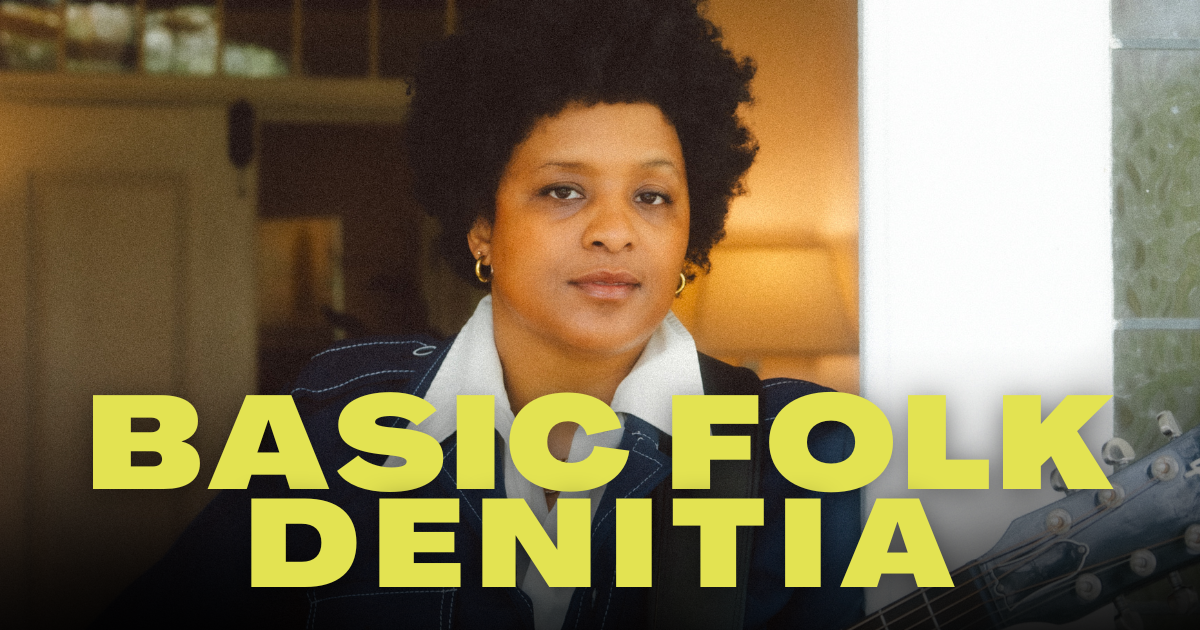
Sometimes it strikes me just how much power can emanate from a creative mind. Speaking with Denitia was one of those times. When the indie music artist comes across an unfamiliar musical concept, she goes “sponge mode” until she understands it. Then she seamlessly integrates it into her artistic vocabulary. This relentless curiosity and sense of play can be heard across Denitia’s catalog, from her early work as half of the New York indie R&B duo denitia and sene to her breakthrough 2022 country album, Highways. Her fluency across multiple genres gives her a refreshing approach to record-making, sound, and fashion alike (from her New York streetwear days to thrifting vintage clothes in Nashville).
Since moving to Nashville and pivoting from R&B to indie country, Denitia has been grabbing audiences’ attention with her gorgeous voice and catchy-as-hell, cool girl indie songwriting. Denitia was selected for the CMT Next Women of Country Class of 2024, and her forthcoming album, Sunset Drive (out September 6), delivers on the hype. Denitia and her longtime songwriting partner, Brad Allen Williams, have painted classic country landscapes against which tales of escape from the ordinary are told with longing and warmth. The new record is something of a full-circle moment for the Texas-born artist and a showcase for her prodigious talents as a vocalist.
Basic Folk co-host Lizzie No leads the conversation in our interview with Denitia, where she offers music industry insights, vocal warm-up techniques, and music marketing strategies.
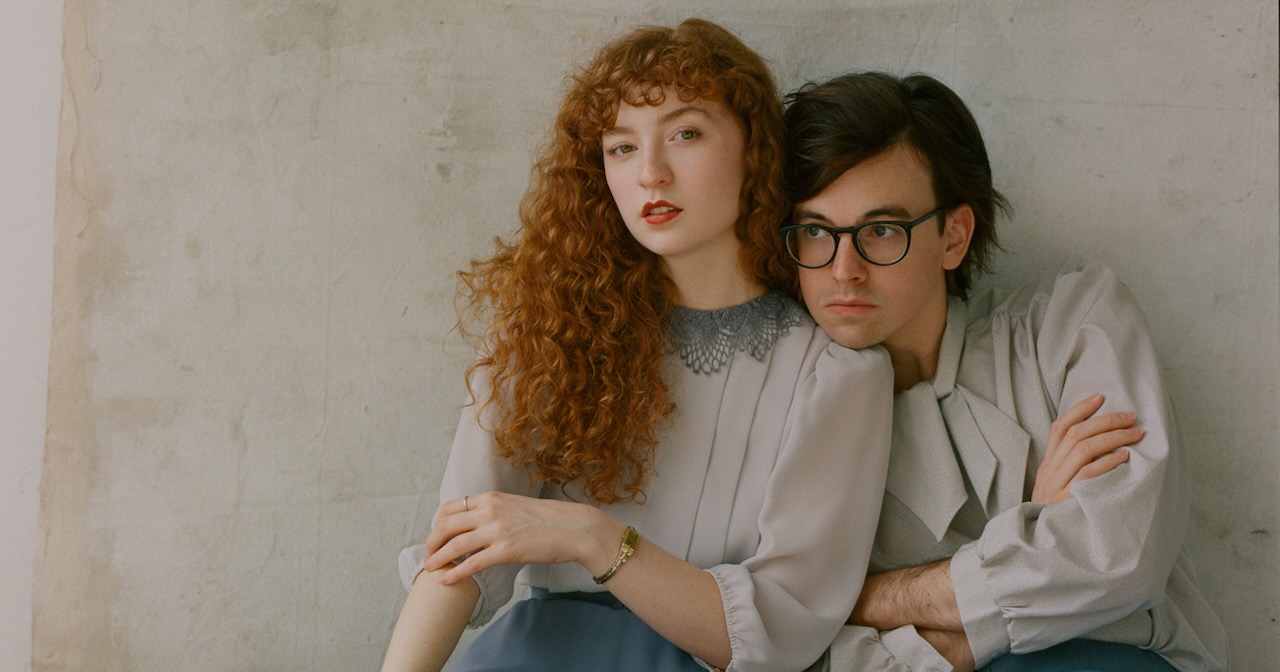
Artist:The Bygones Hometown: Brooklyn, New York & Nashville, Tennessee Song: “If You Wanted To” Album:The Bygones Release Date: April 4, 2024 Label: Tonetree Music
In Their Words: “‘If You Wanted To’ encapsulates the feeling of longing for acceptance and approval from someone you love that has known you through many chapters of life. People change and grow over time, and one of the biggest pains is when the ones closest to you don’t grow with you or want to get to know the current person you are. Over time, I’ve realized that you can’t make someone see you and love you for the current walk of life you’re in and not for a previous version of yourself, they have to choose to get to know you. Sometimes the ones you love just want to hold on to the version of you they knew that is no longer here.” – Allison Young
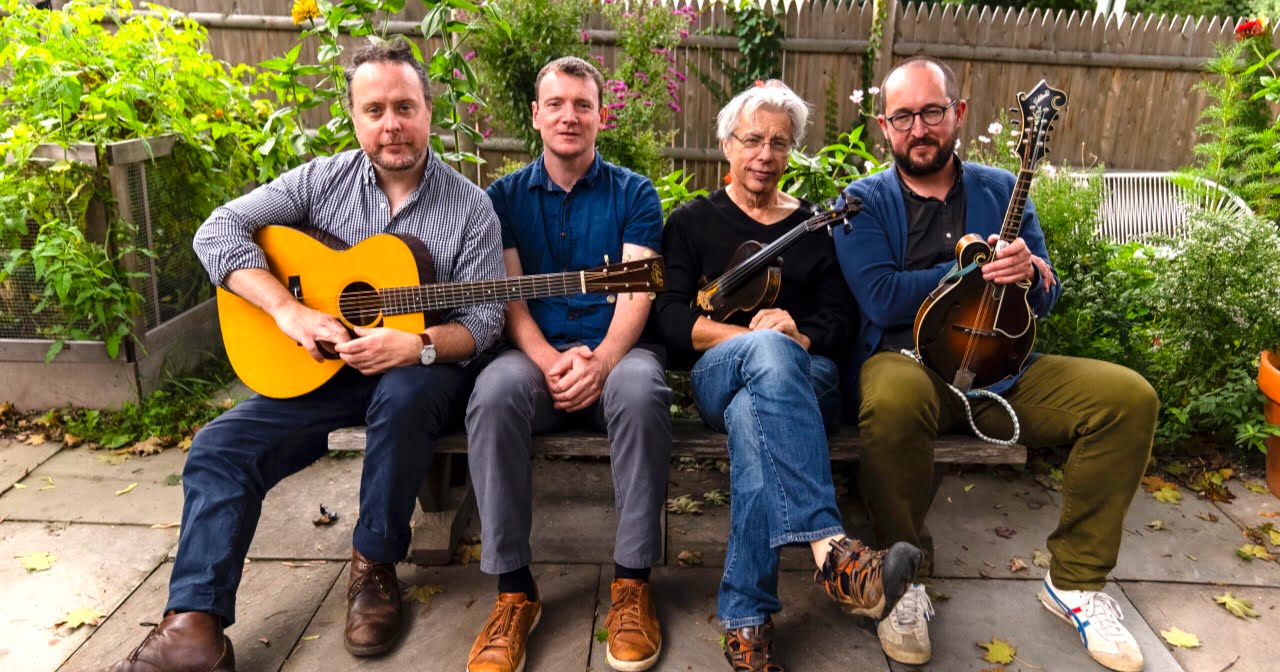
Artist:Mr Sun Hometown: Portland, Maine / Nashville, Tennessee / Brooklyn, New York Song: “Shovasky’s Transmogrifatron” (Ballet Snow Scene) Album:Mr Sun Plays Duke Ellington’s Nutcracker Suite Release Date: December 1, 2023 Label: Adhyâropa Records
In Their Words: “Everybody’s familiar with the Nutcracker Suite, but there’s this really beautiful recording of Duke Ellington and Billy Strayhorn’s arrangement of it – it was a really joyful, playful reimagining of this classic piece… It was an easy idea to propose, not fully appreciating the amount of time it would take to do it. Luckily, everyone in the band brings a tremendous skill set to the project.” – Joe K. Walsh, mandolin
“They basically said, ‘We’re gonna take this essential seed of an idea, but we’re gonna play it like us.’ And we’re doing the same thing – we’re playing it like Mr Sun, without doing anything too verbatim. It’s all about being ourselves. That’s the impression you get from Ellington, and that’s a thing we very much are: Ourselves.” – Grant Gordy, guitar
“It sounds simple, ‘Let’s just play this big band arrangement with four stringed instruments.’ In practice it’s been a little more complicated!” – Aidan O’Donnell, bass
“Duke Ellington of course was volcanically creative. He was one of the most creative musicians ever. He was beyond category. Melody, harmony, and rhythm – if you can put those things together in a way that reaches people, it’s gonna be successful in a way that means something.” – Darol Anger, fiddle
This website uses cookies to improve your experience. We'll assume you're ok with this, but you can opt-out if you wish.AcceptRejectRead More
Privacy & Cookies Policy
Privacy Overview
This website uses cookies to improve your experience while you navigate through the website. Out of these, the cookies that are categorized as necessary are stored on your browser as they are essential for the working of basic functionalities of the website. We also use third-party cookies that help us analyze and understand how you use this website. These cookies will be stored in your browser only with your consent. You also have the option to opt-out of these cookies. But opting out of some of these cookies may affect your browsing experience.
Necessary cookies are absolutely essential for the website to function properly. This category only includes cookies that ensures basic functionalities and security features of the website. These cookies do not store any personal information.
Any cookies that may not be particularly necessary for the website to function and is used specifically to collect user personal data via analytics, ads, other embedded contents are termed as non-necessary cookies. It is mandatory to procure user consent prior to running these cookies on your website.