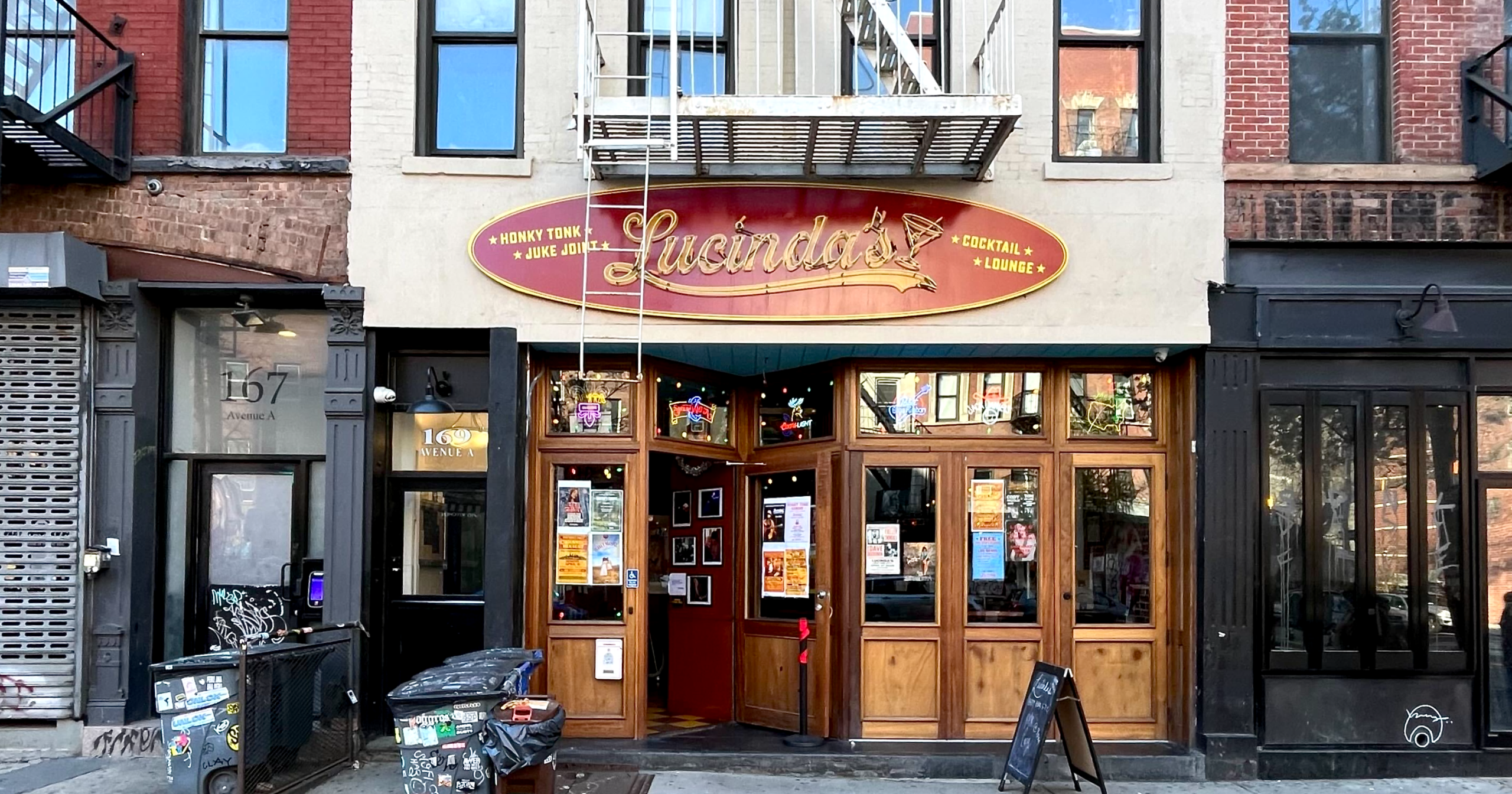
Check Out Lucinda’s, a Bustlin’ NYC Honky Tonk

(Editor’s Note: Enjoy our tour of New York City honky-tonk, juke joint, and cocktail lounge Lucinda’s as a special postlogue to our Artist of the Month coverage of Lucinda Williams during March 2026.)

It’s the first springtime Sunday in Manhattan and after a bitter winter, the East Village is humming with human activity. Around the corner from the throng of Tompkins Square Park, where Girl Scouts hawk cookies and roller hockey players clatter their sticks and skates, tumbles of acoustic guitar spill from a storefront, attracting curious passers-by. Some folks pause and lean toward the open windows, and a few cross the threshold to meet wafts of fresh popcorn. Welcome to Lucinda’s.

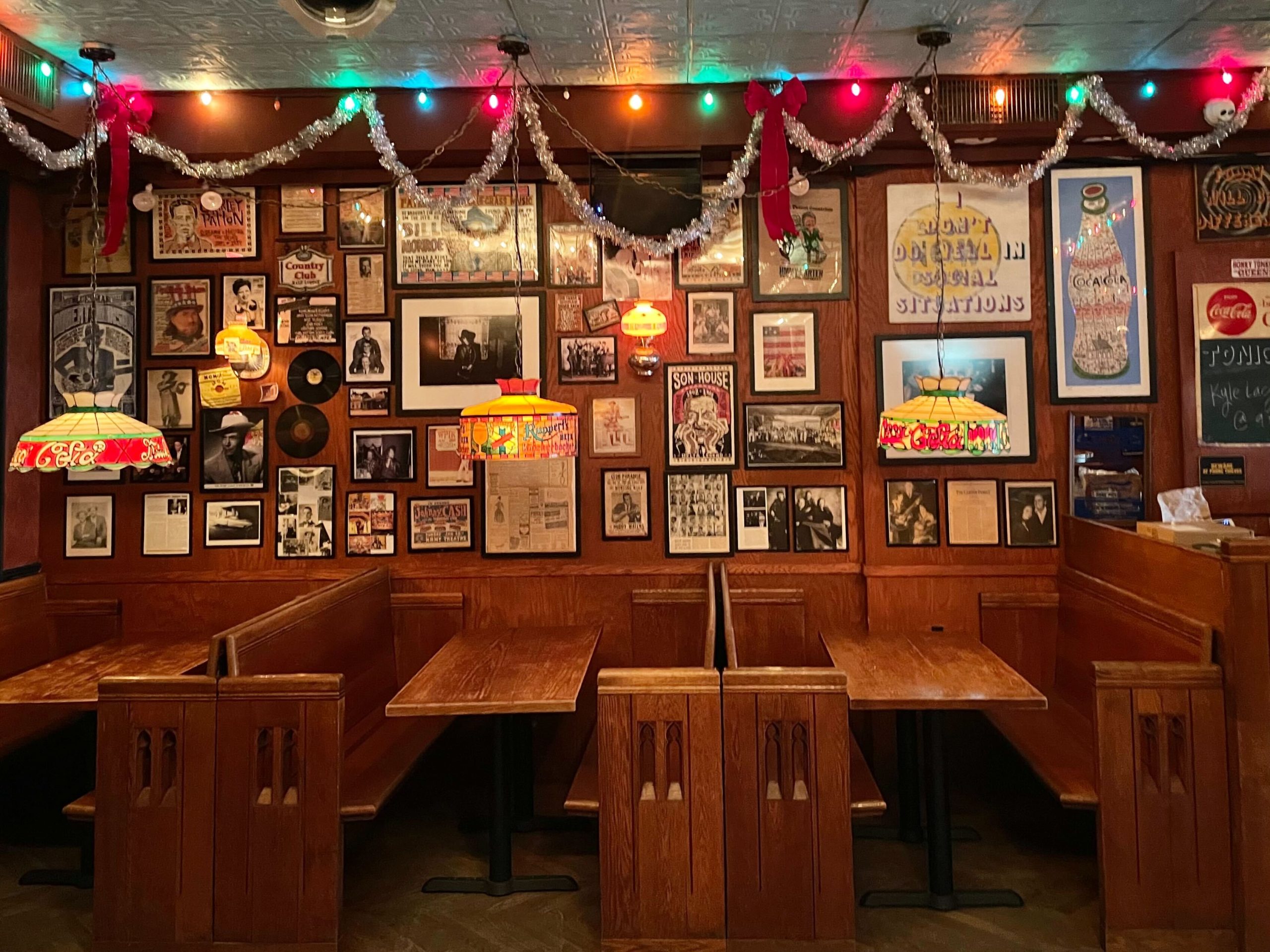
The bar’s tin ceiling interior is catnip to music history aficionados and Americana-kitsch collectors alike, the walls hung with poster prints, vintage memorabilia, and velvet paintings (among them Kitty Wells, Robert Johnson, and Elvis Presley shaking hands with Jesus Christ). There’s a jukebox ready to sling beloved feels-good-to-feel-bad hits, and peanut figurines with Jimmy Carter grinning and holding court over the liquor. These accoutrements all play second fiddle to the spot’s main attraction: live music meant for casual socializing every day of the week.
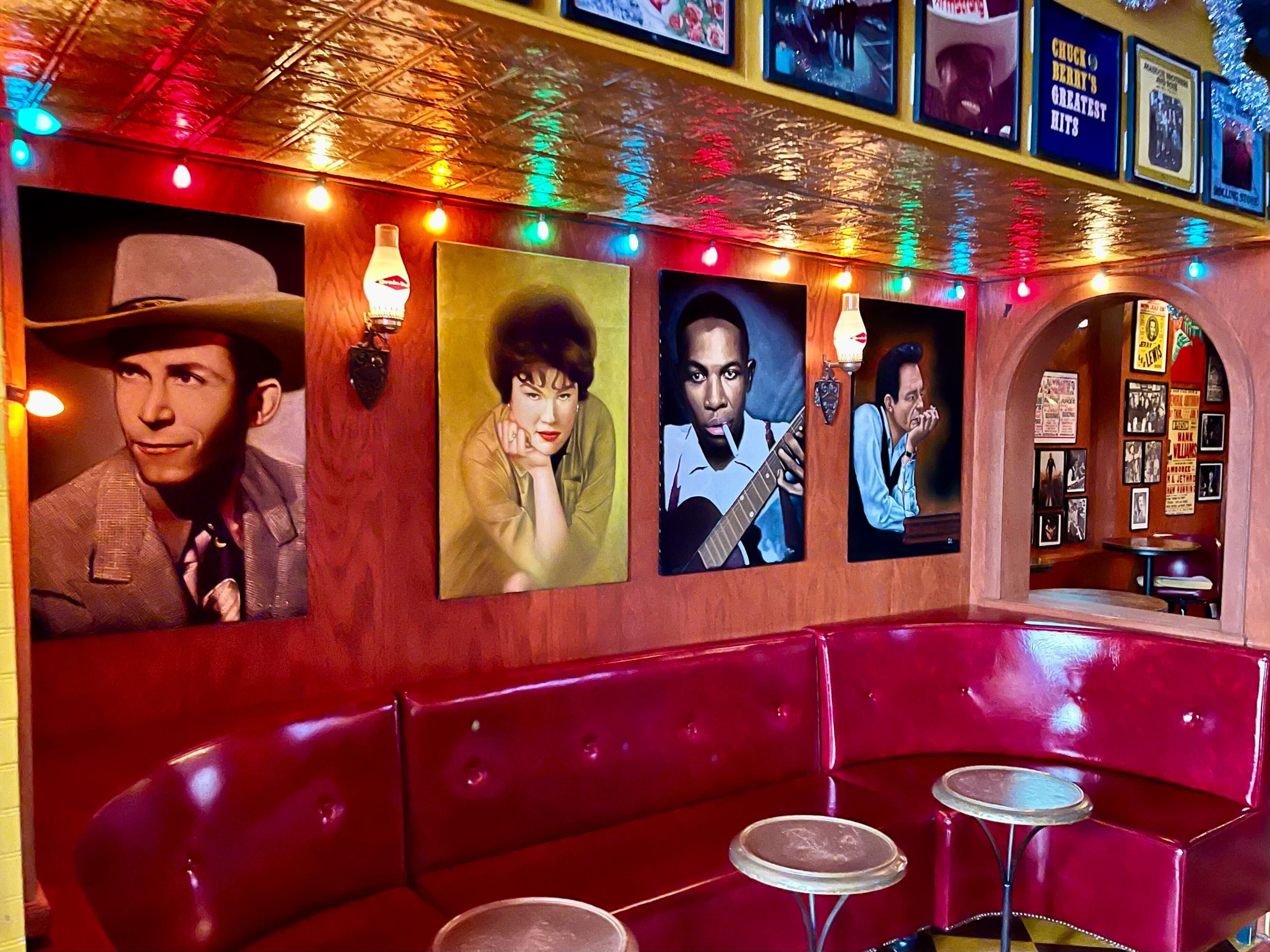
This robust programming – along with some of the bar’s most prized decorative items – is the work of Kelley Swindall, a musician and New Yorker of 20 years who grew up in Stone Mountain, Georgia. She takes pride in a large round aluminum Coca-Cola sign, an item on “permanent loan” from her family and one of several wall-hung nods to Georgia’s most lucrative liquid export. She’s more proud of filling a void in New York City nightlife. “There’s a lot of Southern people in the city that went to SEC schools that want to have some Southern culture again, like college football, or listening to music that they love and don’t normally hear in New York,” Swindall says.

Though the city has a handful of country-themed, sometimes Western-leaning bars – Williamsburg’s hootin-hollerin Skinny Dennis, the self-explanatory Honky Tonkin’ in Queens, the West Village’s Tex-Mex-y Cowgirl – Swindall wanted to develop a place to celebrate the early country, blues, folk, and other vernacular music that shaped generations of American song. She yearned for the sort of places she knew growing up and got to know as a touring musician, rooms where casual live music fosters socializing instead of hampering it. “That’s what the juke joints and honky-tonks were back in the day – it was live music as the soundtrack of the evening, but you were hanging out, drinking, dancing, and socializing,” Swindall says.
Swindall found a business partner in Laura McCarthy, who has a storied history of her own at 169 Avenue A running prior venues Brownies and Coney Island Baby. The pair found a namesake and patron saint of sorts in Lucinda Williams, with whom they connected through mutual friends. Williams agreed to endorse the place, her multi-stranded artistry anchoring the team’s vision for honoring the deep musical roots of the American South. She christened the stage with a set as part of the bar’s opening-night festivities last July.

On a Saturday night, Lucinda’s is rollicking, packed front to back with revelers before some New Yorkers have even gone to dinner. There’s college basketball on one TV, and The Best Little Whorehouse in Texas on the other. I want to mill around and make conversation, but the bar is thick with boisterous, overlapping shouts converging with mid-1990s Tim McGraw and Shania Twain songs that radiate in my bones.
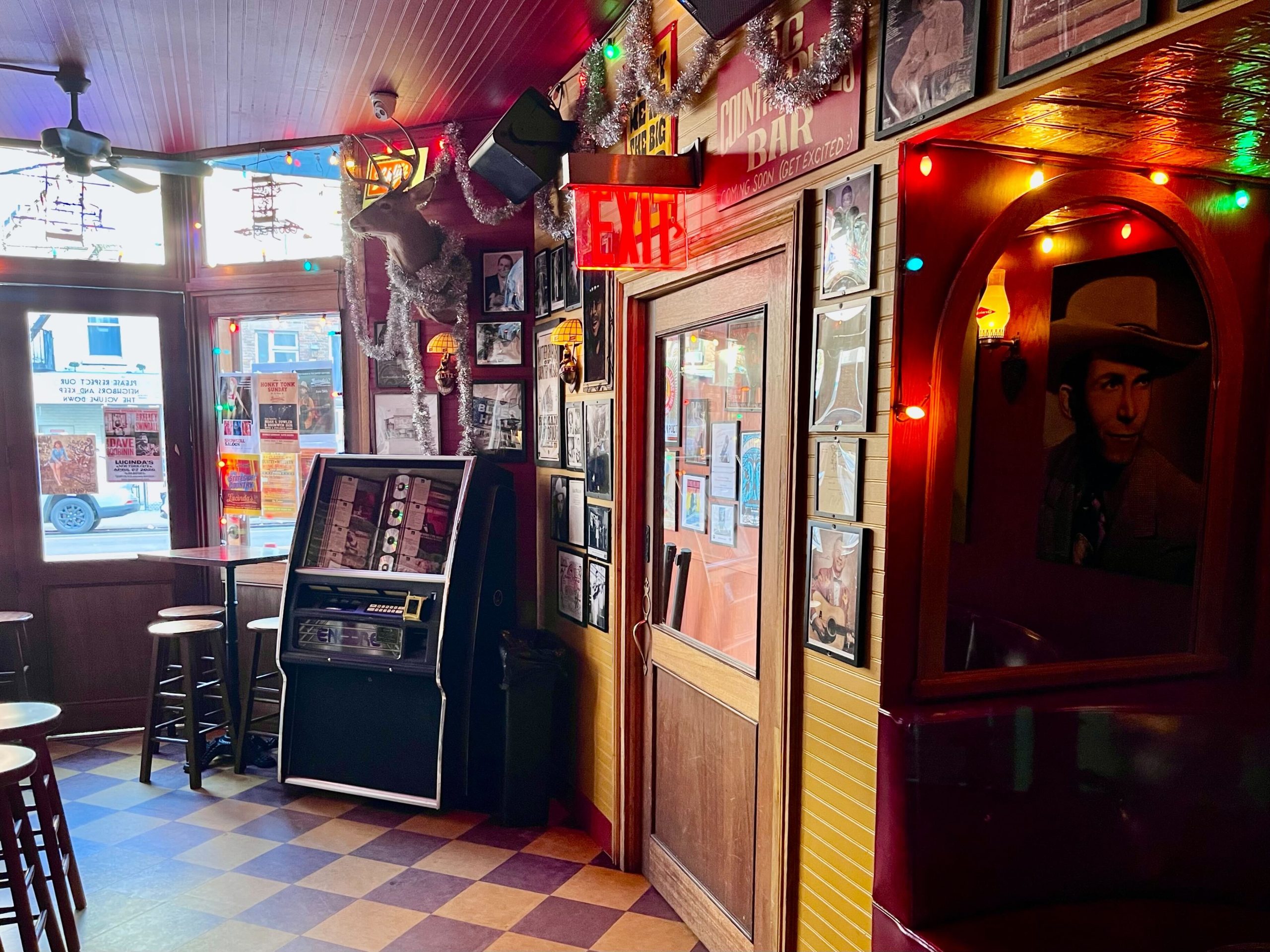
The mission of Lucinda’s is evidently working. With my elbows pinned to my sides, I chat with Emily from Texas and two girls who rolled up for one of several birthday gatherings in progress. After his friend paws at my unattended leftover garlic knots, Gavin, an Irish ex-pat and country music fan, tells me it’s his first time at Lucinda’s after hearing about it on TikTok. “We were in the neighborhood, and we wanted to come in. We already had plans somewhere else, and we made it our business to come back here,” he says, enthralled with the room’s unique decor. I don’t get a chance to ask his thoughts on the Dolly Parton or Johnny Cash bathrooms before he peels off with drinks in each hand.

Spirits are high, but by Lucinda’s standards, the fun has barely started: a few musicians are shouldering their way through to the corner stage. Nightly music programming is a staple at Lucinda’s, which Swindall accomplishes with standing residencies and open mics alongside other ticketed events. There’s a loose structure week to week; weekends are for the big sing-along bands, Sunday evenings are for classic country, and bluegrass and some old-time are on Tuesdays. “I was an artist first, and I still am, so I wanted to focus on the kind of music that I’m into,” Swindall says, adding that Thursday night is for two-stepping.
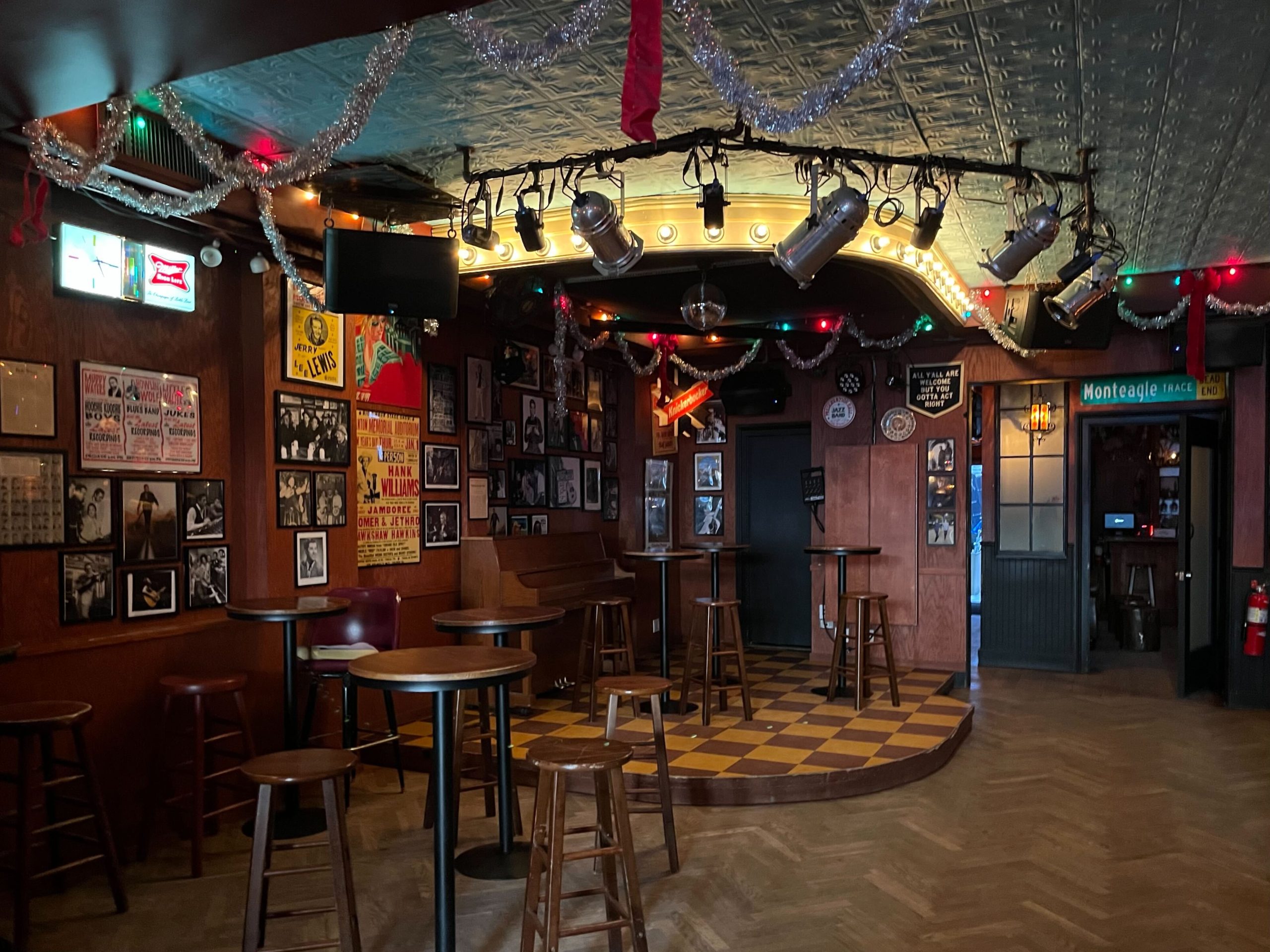
The Sunday open mics are a binding force to Lucinda’s operating concepts. Sign-ups start at 1 p.m. every Sunday, running through the afternoon until another outfit takes the stage for the evening. There are some gentle guidelines (no covers, no backing tracks), aimed toward bringing a pleasant and equitable atmosphere to the gatherings. Swindall prioritizes the artists’ experiences at these weekly forays, remembering open mics as essential to her relationship-building and development as a young musician.

“It’s more important to have people able to come in and play their songs, everyone listen, rather than have a thriving bar culture that day,” she says. Drawing further on her artist’s perspective, Swindall fosters the open mic knowing the challenges of getting a foothold in bigger booking circuits. “A lot of places, they don’t want to book you unless you can bring a crowd or you can show them live footage. It’s really great to give people an avenue to get comfortable on stage and get feedback for their songs,” Swindall says.
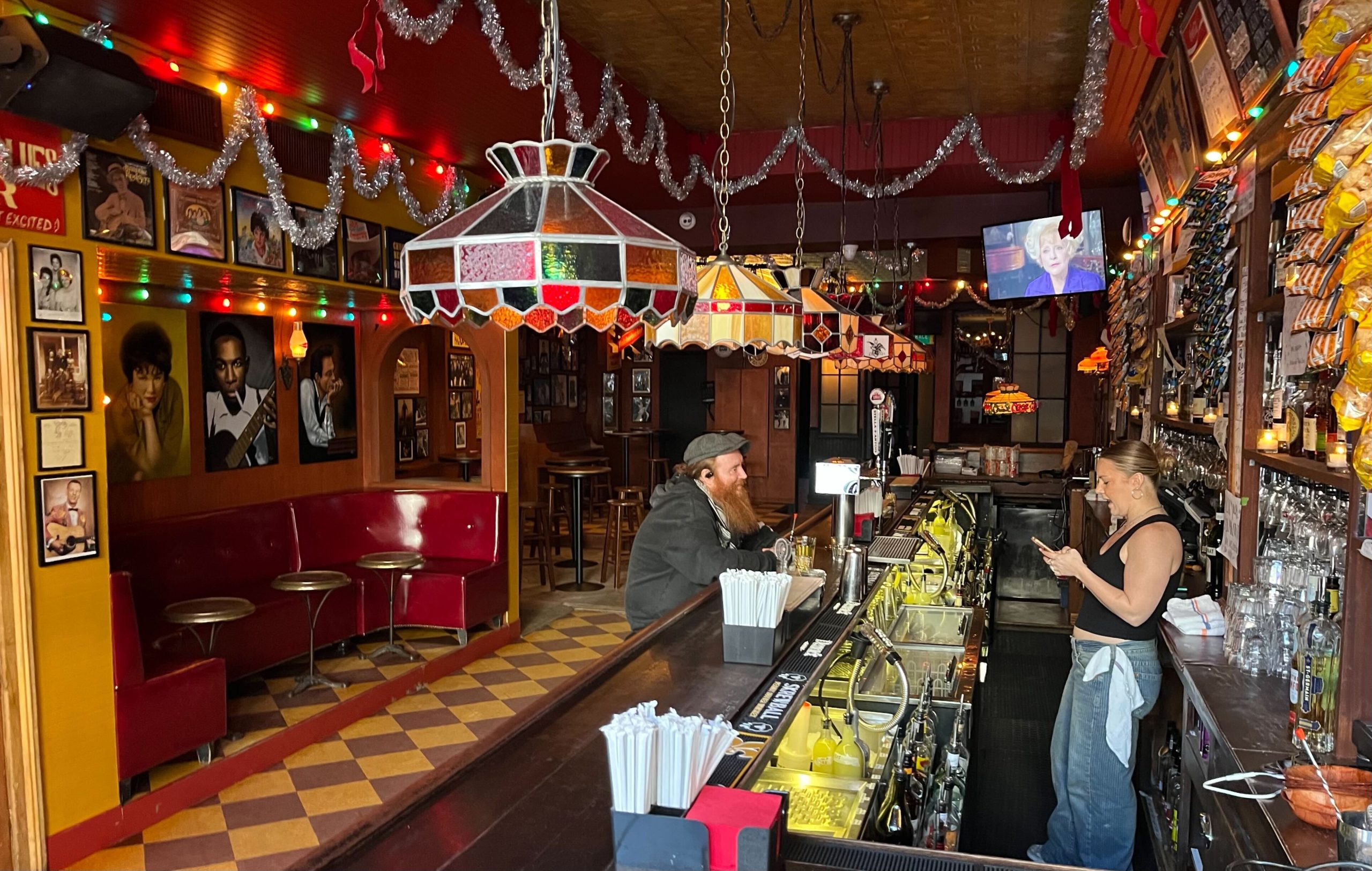
Moreover, the shindigs help Swindall expand her pool for her month-to-month bookings, strengthening the network of relationships that are essential to the arts-forward community that McCarthy and Swindall hope to nourish.

Almost a full year in, Swindall is eyeing a steady growth pattern. She worked her way up to music every night of the week and now sometimes has two shows a night; she’s starting to entertain ideas for a small festival. “From a bar point of view, there’s so much to do,” she says.

The space isn’t zoned for a kitchen, but Swindall wants to figure out some kind of food element; in the meantime, patrons can bring in takeout or ask a bartender nicely for a Moon Pie, a bag of Zapp’s chips, or a bowl of popcorn. Swindall will stay busy as she aims to make Lucinda’s even more of a place for the “all” in “y’all.”

Stop in, sit down, shake loose. Connect with a song, or maybe a stranger.


All photos by BGS Staff.

Explore our Artist of the Month coverage of Lucinda Williams here.
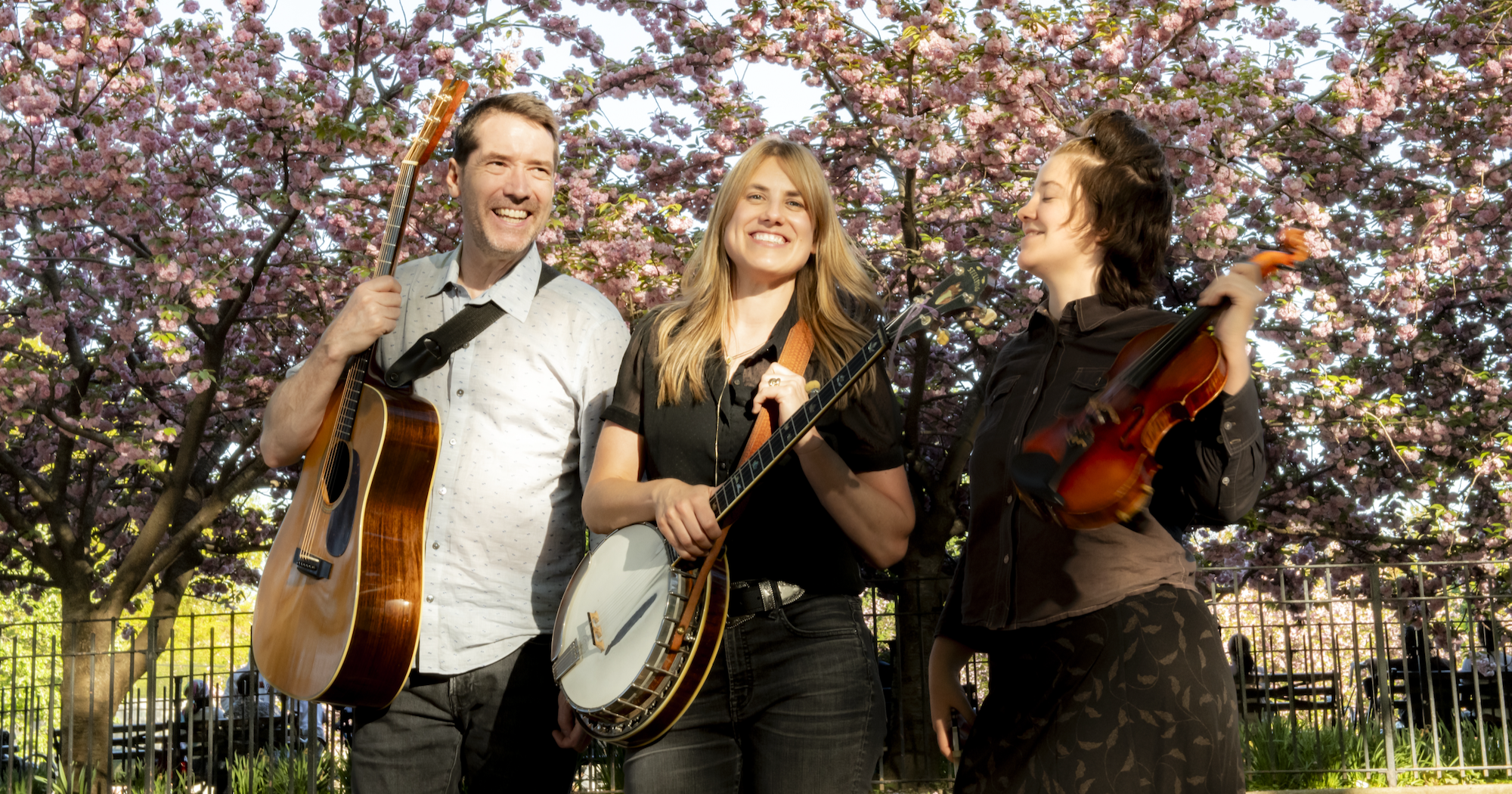
Hilary Hawke is a Banjoist Who Does It All

Banjoist, songwriter, and podcaster Hilary Hawke has had a meandering journey with music, starting with guitar and clarinet before finding her musical home in the banjo and “becoming obsessed with it” during her late teens. Inspired by the storied folk tradition of upstate New York, Hawke now makes her home in New York City, where she leads her own bluegrass band and plays for various other groups as part of a close-knit roots music community.

New York City is uniquely ripe with gigs in theater and Hawke has found herself playing on Broadway for musicals such as Oklahoma! and Bright Star and composing music for puppet shows, among many other diverse projects. She has also started her own podcast, Banjo Chat, where she speaks about the banjo and banjo music with folks that love the instrument as much as she does.

BGS connected with Hilary Hawke to discuss the making of her new album, Lift Up This Old World, her time on Broadway, her new job teaching bluegrass at Columbia University, and more.

Can you tell me a bit about how you got started on the banjo?

Hilary Hawke: I actually went to school for classical music on clarinet and guitar, but I realized I didn’t know how I was going to get a job in music or what kind of job I wanted… composition? Teaching? Music therapy? I got to a point where I was like, “This all seems very serious and I’m not actually having much fun with music.”

During that time, I was writing songs on guitar and I just picked up a banjo for fun, to do something outside of school. I grew up in upstate New York and we have a lot of folk music and a lot of great banjo influences up here like Tony Trischka, Béla Fleck, Pete Seeger, the Gibson Brothers. And, honest to God, it was just the thing I started creating music on all the time. I started playing it nonstop. I ended up moving into New York City just on a whim. There were lots of opportunities to perform and I was able to take some lessons with Tony Trischka. New York is like– you just think you’re going to try it out and then suddenly 5 years have gone by.

Influences like the New Lost City Ramblers, Mike Seeger, Bruce Molsky, and Fred Cockerham seem to be threaded through your old-time and bluegrass style. Do you have a specific moment you can remember that sparked your love for these musicians?

I think that it’s always through popular culture that you get inspired to dive into the deeper stuff. Alison Krauss had a record called Too Late to Cry and I remember I heard the banjo on that and was like “What’s that sound?” It was Tony Trischka playing on her record. Similarly, I heard the banjo on the Dixie Chicks’ albums and wanted to know how it worked. Through those more popular bands, I got interested in banjo. And then I went to the festivals and I heard about the old guys. People would give me rides and we’d be listening to their CDs in the car. It was a lot of word of mouth like, “Oh you gotta hear Fred Cockerham and Tommy Jarrell!”

You started teaching banjo in Brooklyn at the Jalopy Theatre back in 2006. How has that community influenced your growth as a teacher and performer over the last 20 years?

I really cut my teeth at Jalopy. I was there for 10 years or so and I was able to develop a curriculum for teaching. I learned how to tear things apart and break them down, as far as playing the banjo. I gained the skills I’m now using to teach at Columbia University. I think Jalopy is a great breeding ground for performers, artists, and teachers to develop. It’s open-minded and exploratory.

Tell me about your new album, Lift Up This Old World. Where does it fall in the trajectory of your music-making?

This is the third album I’ve released under my own name. The first album I made was more of a singer-songwriter album; writing songs was really my entry point into folk music. Then I released an instrumental old-time album. This one combines songwriting and picking, but it is much more bluegrass-forward.

I noticed that you play both clawhammer and bluegrass-style banjo on the record. How do you relate to the two different styles and where do you feel more at home?

I started with fingerpicking and got into bluegrass first, but I just wanted to do it all. I wanted to be involved with a wide range of music. Sometimes a person would ask, “Do you want to come play with my old-time band?” And I had to say no because I couldn’t play that style. I quickly realized I didn’t like to say no! I wanted to be able to do it. So I started learning clawhammer from some Ken Perlman videos and taught myself. Now I feel like they take up an equal amount of space in my life and I pick the style based on the music.

With my original material, I approach the banjo with the kind of song I want to write in my mind, so if I want to write a honky-tonk song I might use fingerpicking, but if I want to do something with a shout chorus, for example, I’ll approach with clawhammer banjo. I listen to a lot of Tim O’Brien and I feel like he does that, too. Being able to play both styles, I have a little bit more of a tool kit for what I want to do.

Tell me about your approach to songwriting. There are a lot of songs about lost love and relationships on this album, some about relationships with people, but even your relationship with New York City. “NYC Waltz” is a track I particularly love. Is there a common theme that you see that brings these songs together?

I think this record is about overcoming struggles in confidence, specifically struggles in the music industry. I had the realization that you have to be your own cheerleader, you have to believe in yourself, and find that happiness in yourself. If you’re doing what you’re supposed to be doing, things are going to happen. Making this album was me having the belief that I could do this thing, overcoming fears and doubts in myself, striving, and coming out on the other side.

The way you recorded this album, it sounds live in a way that is rare for modern recordings. Can you tell me about how the record was made?

We did it live to save money. We started a year and half ago and I didn’t have the resources to do separate tracking, so we rehearsed it for a couple of days and then just went in and tried to nail it. We recorded pretty much the whole thing live with a full band in Williamsburg, one day with each of two fiddle players, Bobby Hawk and Camille Howes, at Waldon Studios in Williamsburg.

Ross Martin [who plays guitar on the album] and I have been playing together for two years as a duo and we have worked up some of these songs over that time. I felt like these album songs were a good representation of the music we have been making for a good while now. “Dreaming of You,” the last song on the record, is the only one that we arranged and tracked out separately; it has a very different feel than the rest of the album.

Yes, I noticed that! It’s a bit orchestral.

Yes, that was all arranged and written out by me. I produced this album myself and I think going forward, I would like to do more collaboration with visionaries and people I trust in the making of a record. I think I learned that it’s great to have another trusted set of ears for a project. It’s hard to step away and see things for yourself. I have a pretty clear vision about what I want things to sound like, but you also have to be gentle and kind to yourself. It’s hard to find that line.

You also have a podcast about the banjo called Banjo Chat. Can you tell me about how that got started and how you’re enjoying it?

It’s good! It started because I had a lot of questions for banjoists about the way they write songs, form solos, and think about music that I didn’t hear asked or answered on other podcasts. Also, I wanted to amplify the voices of people whose playing I loved who were female identifying, queer, gay, minorities, or just didn’t really fit into a bluegrass or old-time genre with their music.

So I started this podcast. I got some new software for editing and now I do the research, recording, editing, and mixing all by myself.

Before I let you go, I wanted to ask you about your time on Broadway. In 2016 you subbed on Broadway playing banjo for Bright Star – a show that brought bluegrass and old-time to the stage in a major way. Looking back, how did that highly choreographed experience change your approach to live shows?

Bright Star does have a huge regional presence. For me, that was my first Broadway subbing gig, subbing for Bennett Sullivan. Being in that environment made me realize that when you play live shows you need to get out of your own head, you can’t just be standing up there not giving any energy out to the audience. You have to have a lot of love to give out and to have your message clear in your head when you’re performing. Be happy to be there.

That’s what I learned from the theater. All these people bought tickets to see the show, they’re here to see a show and have a good time – not to see you in your head worrying about your performance.


Photo Credit: Aidan Grant

Madeline Combs contributed research and interview prep for this feature.

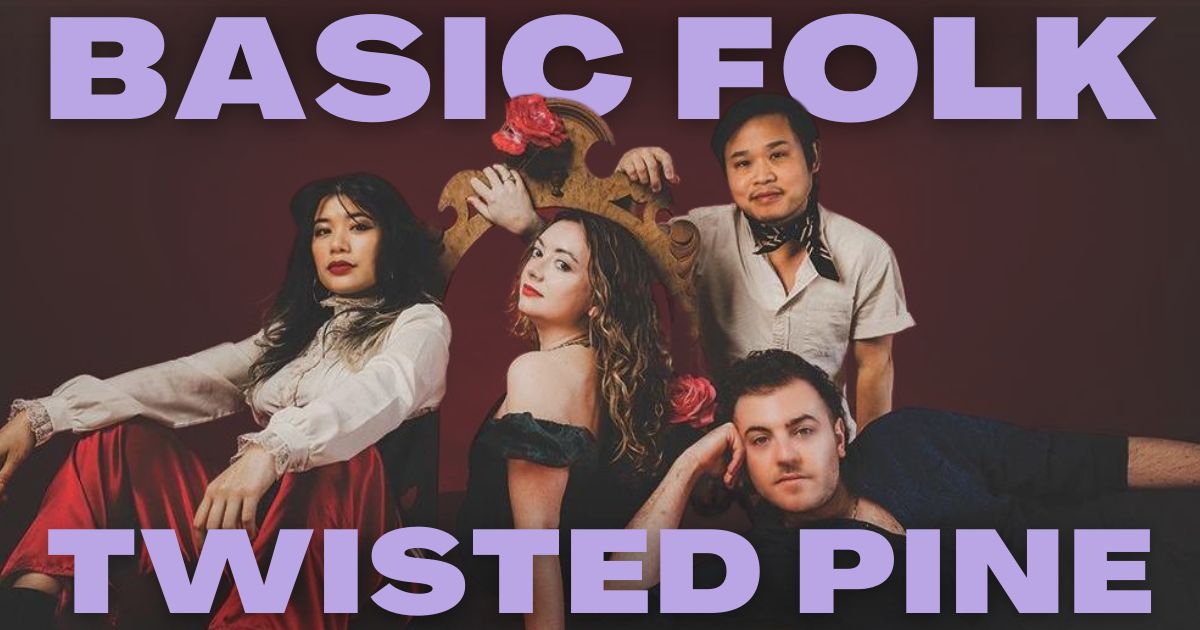
Basic Folk: Kathleen Parks of Twisted Pine

Hot off the heels of Twisted Pine’s latest release, Love Your Mind, Kathleen Parks is here to dig into her uncelebrated polka origins. Daughter of renowned trumpetist Eric Parks, the younger Parks grew up in New York’s Hudson Valley in a very creative family (her mother was also a dancer and the one who made Kathleen practice all the time). She started young on the violin and was surrounded by her dad’s polka music, as he was a member of Jimmy Sturr & His Orchestra, which my dad (also a polka-head) calls “the top polka band revered by all polka bands.” Parks even sat in with the band as a teen, when she would occasionally fill in for their violinist. She fully embraced her strong Irish roots not only in music, but also dance, which she calls her second love. After accepting a full scholarship to Berklee College of Music in Boston, she started meeting and jamming with bluegrass musicians in the area, especially at the Cantab Lounge, famous for its weekly bluegrass night. This is where her new band Twisted Pine scored a residency and started building a following.

LISTEN: APPLE • SPOTIFY • AMAZON • MP3

On the group’s new record, Kathleen is the de facto lead singer, which she’s just fine with. She also explains the band in one phrase: “Let’s see what happens.” That philosophy is definitely present on the new record, which is filled with wild vocal performances and sees the band operating at its highest level.

In our Basic Folk conversation, we explore the mental health themes highlighted in “Funky People,” a song about how difficult it can be to take care of yourself on the road and the relief you find in people you meet. Plus, we cover “After Midnight (Nothing Good Happens)” and finally find out what time one should go to bed at a bluegrass festival. It’s always earlier than you think.


Photo Credit: Jo Chattman

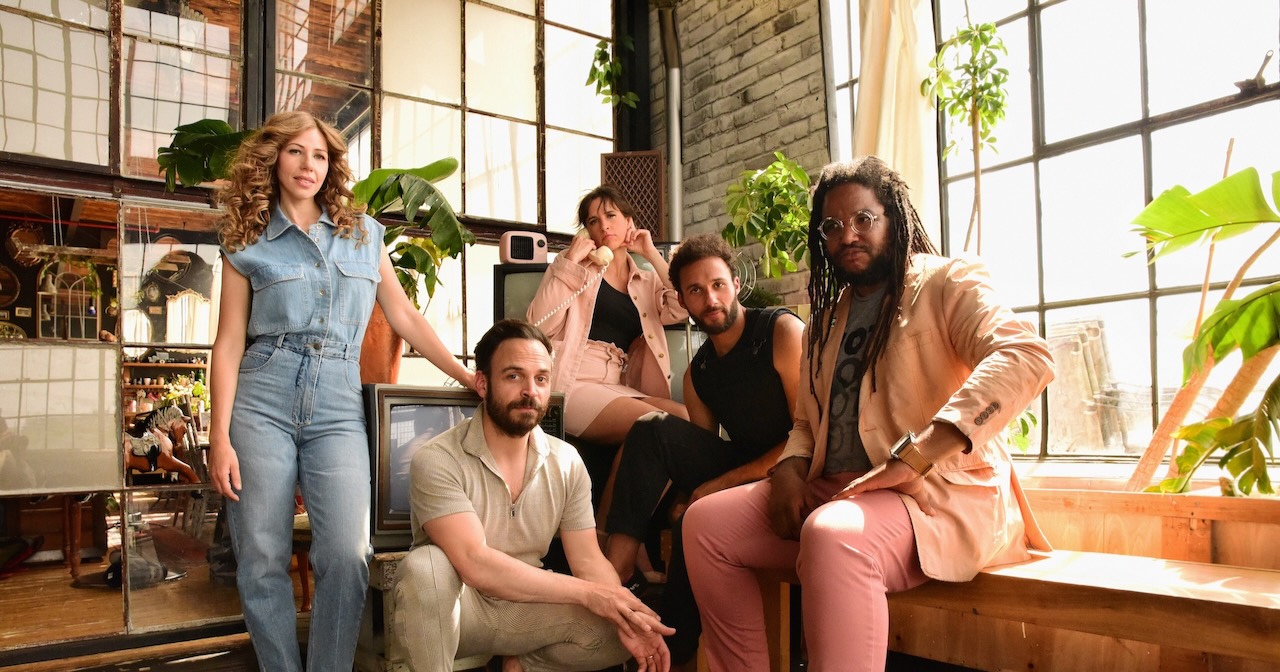
LISTEN: Lake Street Dive, “Neighbor Song” (Feat. Madison Cunningham)

Artist: Lake Street Dive
Hometown: New York City, New York
Song: “Neighbor Song” (Featuring Madison Cunningham)
Release Date: October 6, 2023
Label: Fantasy Recordings

In Their Words: “Madison Cunningham is an extremely special musician, the kind who can make a single note sound like music and who breathes life into every song that she comes into contact with. We feel so honored to have had her join us on one of our songs. We first recorded ‘Neighbor Song’ in 2010, shortly after a few of us had moved to Brooklyn. The song narrates an experience, all too familiar to many New York City apartment dwellers, of overhearing your neighbors making love. Involuntarily bearing witness to such intimacy inspires a potent mix of emotions from annoyance to despair to compassion. It’s a fun song to play live because we get to walk the audience through this emotional journey. Some audiences laugh a lot when we play it. Some cry a lot. In preparing to do this song on tour with Madison, we came up with a new musical treatment for the song to bring out some different sides of those emotions. We recorded it with Madison in Brooklyn, live in one room in a single take. We hope it makes you laugh and/or cry!” – Lake Street Dive


Photo Credit: Shervin Lainez

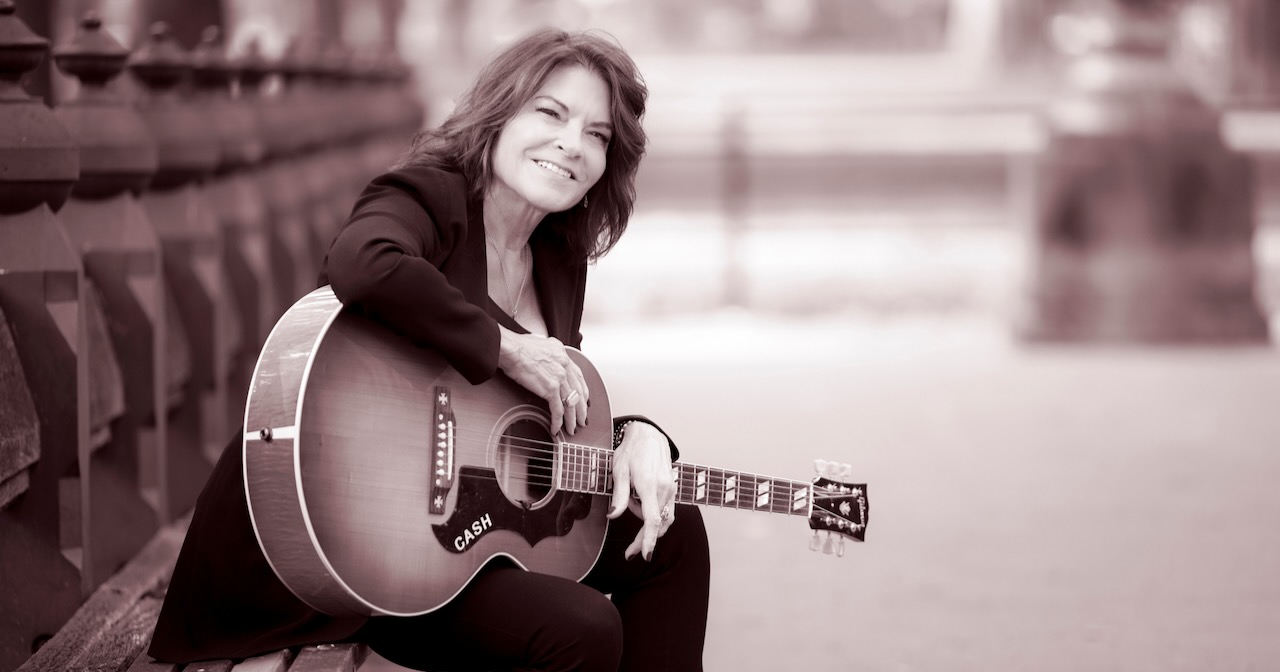
WATCH: Rosanne Cash, “The Wheel” Live at Austin City Limits in 1993

Artist: Rosanne Cash
Hometown: Born in Memphis, TN; Now lives in New York City
Song: “The Wheel” (Remaster) & “The Wheel” Live at Austin City Limits (1993)
Album: The Wheel 30th Anniversary Deluxe Edition
Release Date: November 17, 2023
Label: RumbleStrip Records

In Their Words: The Wheel was a seminal record for both me and John [Leventhal]. I seldom like looking back, or indulging in nostalgia, as present and future work is still so exciting for both of us, but this record was — and is now, in its re-mastered version, with the new photos, new liner notes, and added live performance disc — a cherished moment in our careers, and our personal lives. We have been partners in life and work since we created it. Every step along the way, we’ve reinvented The Wheel, and with this re-release, we’re proud to say, ‘This record opened a new road. Our lives changed because of this album. This is a moment to remember.'” – Rosanne Cash


Photo Credit: Pamela Springsteen

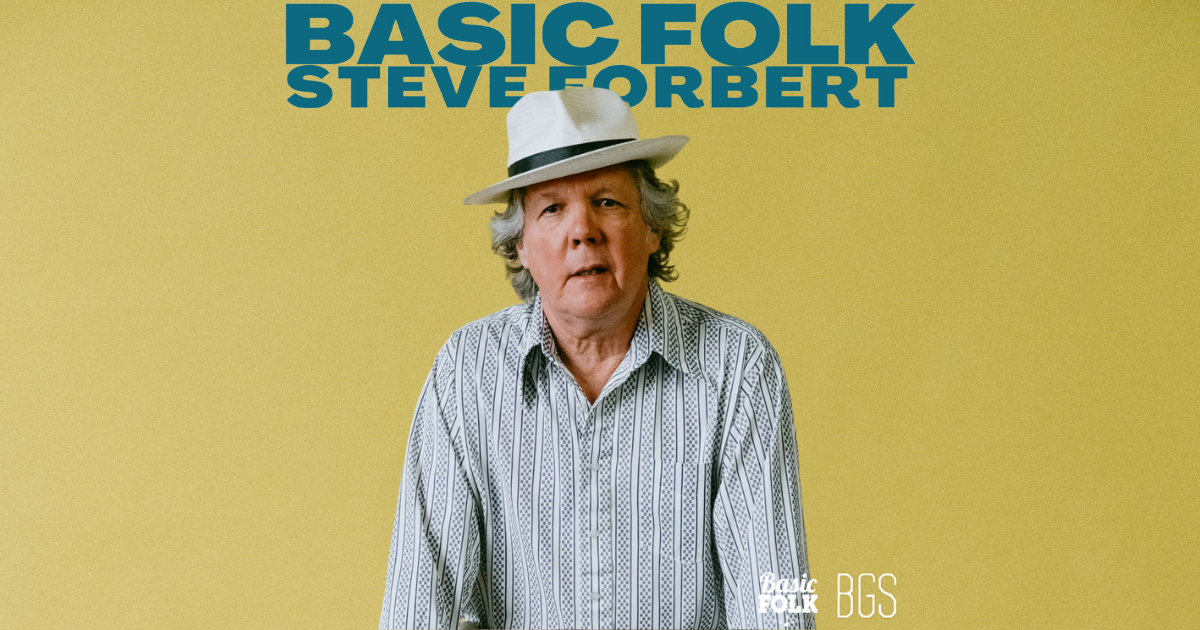
Basic Folk – Steve Forbert

Steve Forbert is not a dramatic person. His stories are fairly straightforward even though he’s lived a pretty incredible life, which began in Meridian, MS as a young musician.

LISTEN: APPLE • SPOTIFY • STITCHERAMAZON • MP3

In the hometown of Jimmie Rodgers, Steve found a great guitar teacher in Virginia Shine Harvey, who claimed she was a relation to the famous singing brakeman. Ms. Harvey taught Steve music through performance and connected him to other young musicians in the area, who then went on to form a couple of bands. He left his town for New York City in his early 20’s where he pounded the pavement as a singer-songwriter for a couple years before catching a break. During his climb upwards, Forbert found acceptance in New York’s punk scene, especially at the historic CBGB’s where club owner Hilly Kristal gave him a chance and introduced him to his manager. From there, Steve went on to start making records. His second album, Jackrabbit Slim, gave him his hit song, “Romeo’s Tune,” which he credits giving him his career and “a ticket into the show.” He’s releasing his latest, Moving Through America, with more character studies and focuses on life’s oddities.

It’s not easy to get Steve to talk about himself and his reflections, but he’s up for giving it a shot. He wrote a memoir in 2018, Big City Cat: My Life in Folk-Rock, which sounds like it was a challenge for him to revisit and write about his past – not because it seems like it was filled with mistakes and scandal, but because it was sooo much about himself. He seems grateful for the opportunity to still have a career and does not take it for granted. He also makes some very hip and hot music references in our conversation: like bringing up rappers Megan Thee Stallion and Jack Harlow. Color me impressed, Steve Forbert is watching the Billboard Hot 100.


Photo Credit: Marcus Maddox

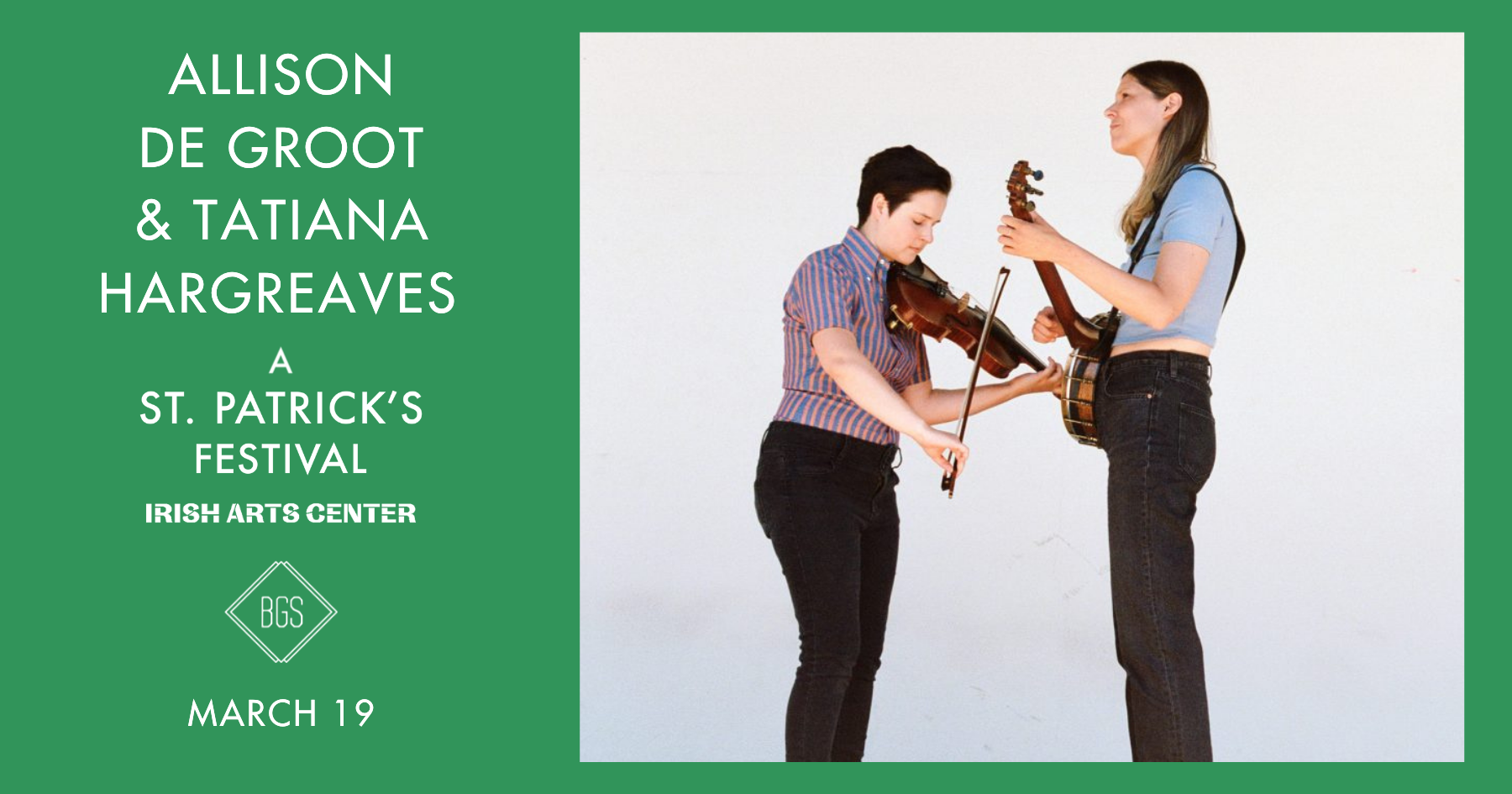
GIVEAWAY: Enter to Win Tickets to Allison de Groot & Tatiana Hargreaves @ Irish Arts Center (NYC) 3/19

Grab tickets to the rest of the festivities at the Bluegrass Situation Presents: A St. Patrick’s Day Festival at New York’s New Irish Arts Center, with de Groot and Hargreaves participating in an opening night jam session with fiddler-banjoist Jake Blount and traditional dancer Nic Gareiss on March 17 as well as a headlining show from Blount and Gareiss on March 18.

The Show on the Road – The Felice Brothers

This week, we call into the Catskills of New York for a deep conversation with James Felice: accordionist, pianist, songwriter and co-founder of fun-house-mirror Americana group, The Felice Brothers.

Powered by RedCircle

LISTEN: APPLE PODCASTSSPOTIFYSTITCHER
 

James started the band with his brothers (poet lead singer Ian) and percussionist Simone in 2006 as a busking folk pop experiment with a literary rebel streak within the subways of New York City. They’ve joined roots-pop luminaries like Bright Eyes at venues as storied as Radio City Music Hall — but somehow the gritty, back-alley bar seems like their natural habitat. Ian, James and their longtime quartet (Will Lawrence and bassist Jesske Hume round out the band) returned after years of hibernation to release their daring party-through-the-apocalypse rollercoaster of a new LP From Dreams To Dust in 2021 on Yep Roc Records.

Some bands record at home, or maybe in tricked-out cabins or plush studios, but The Felice Brothers seem to make records that use their unique and often bizarre surroundings as an added character in the band. Their beloved self-titled record, which came out 2008, feels like a gin-soaked saloon party where Hemingway and Lou Reed and Sly Stone would join in on swaying sing-alongs besides a sweat-soaked piano. It was somehow recorded in a converted chicken coop, while their brassy, bizarro-rock romp Celebration, Florida (2011) was recorded in a booming high school gymnasium. “Honda Civic” is a musical-theater-esque favorite, with an explosion at the local Wonder Bread warehouse taking center stage in the narrative. Does any of it make sense? Does it matter?

Their newest work is a more emotional, sonically lush, storytelling-driven operation, having been recorded in a church in Harlemville, New York, with award-winning mixer Mike Mogis at the helm. Mortality takes the spotlight. Ian Felice is in rare form here, spitting more words and setting more strange scenes per song than most slam-poets or absurdist playwrights. The lead song, “Jazz on the Autobahn,” has become a staple on Americana radio, showcasing what TFB have always done best: taking their listeners on a white-knuckle ride that has no predicable end or resolve in sight.

WATCH: Olivia Ellen Lloyd, “Loose Cannon”

Artist: Olivia Ellen Lloyd
Hometown: Shepherdstown, West Virginia
Song: “Loose Cannon”
Album: Loose Cannon
Release Date: February 26, 2021
Label: via Brooklyn Basement Records

In Their Words: “I started to write this song when I was feeling very lost. I was very briefly a flight attendant right out of college and it immediately didn’t pan out. I spent my first year of non-college adulthood moving around every few months and unable to lock down a solid job. After that, I immediately settled down with my ex-husband and lived a very externally ordered life. But it wasn’t what I wanted to be doing — I just felt like a failure at 23 years old. I wasn’t adventuring or creating or writing music, but everyone was complementing me on how ‘together’ I was. This song is about how it doesn’t matter if you’re put together or not. If you’re not living a life you want you’re probably not going to be particularly happy.” — Olivia Ellen Lloyd


Photo credit: Light Found Photography

LISTEN: Delta Spirit, “What Is There”

Artist: Delta Spirit
Hometown: NYC, Brooklyn, Los Angeles, Austin, Montreal
Song: “What Is There”
Album: What Is There
Release Date: September 11, 2020
Label: New West Records

In Their Words: “’What is There’ is an acrostic poem that I wrote for the guys in the band, with each verse directed at a specific person. I wrote the song in the winter of 2018 while living in Oslo. We had just decided to give the band another go and I was feeling sentimental about the journey we had been on since 2005. We were all just kids trying to break into this business. Each of us had been burned by the major label system with other projects. Starting Delta Spirit with my best friends, traveling the world, and playing music that meant the world to us was such an improbable miracle, but then it felt inevitable. There were moments when we lost our way as brothers and as creative collaborators, but since the break, we have found new and better ways to communicate. And that feeling of inevitability is back.” — Matthew Logan Vasquez, Delta Spirit


Photo credit: Alex Kweskin