Dismissing the Suits: A Conversation With The Milk Carton Kids (1 of 2)

The Milk Carton Kids have been about nothing if not duality. That’s down to their very name, which evokes both comedy and tragedy, and their stage presence, in which some of the stateliest and most delicate songs possible are broken up by riotously deadpan banter. They’ve always been about duo-ality, too — two voices and guitars, gathered around a single microphone, contemplative Everlys for the 21st century, unaugmented by anything that would have seemed rank or strange to the Stanley Brothers back in the 1950s.

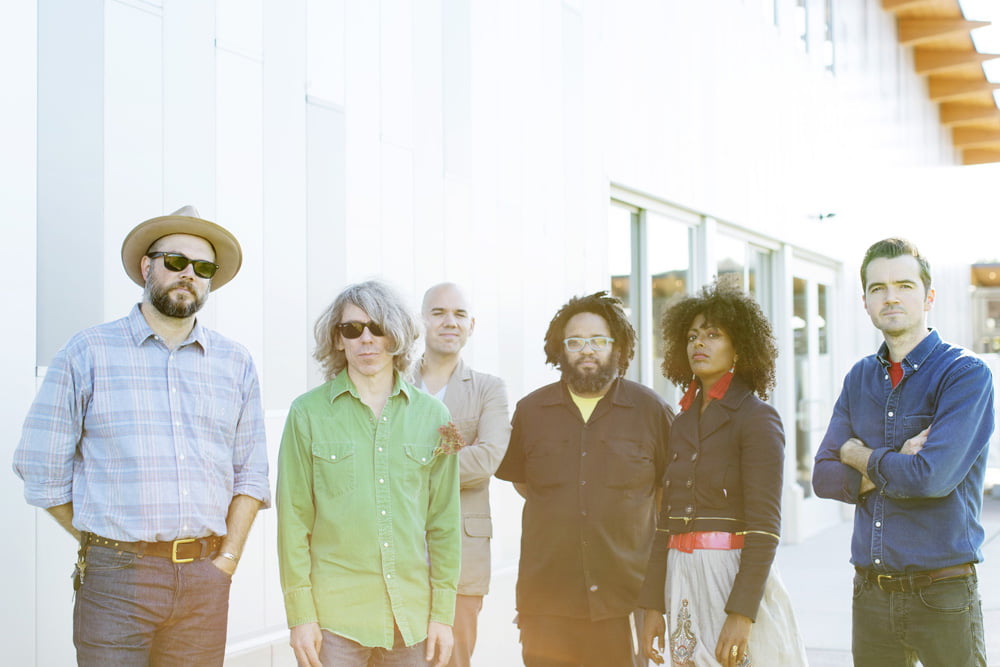
But now, suddenly, almost everything you know about the Milk Carton Kids is wrong — at least the formal elements. They’ve dropped the formal suits and picked up separate mics… and a full band, too, while they were at it. Could this be their Dylan-goes-electric moment? Not to worry — there probably won’t be any cries of “Judas!” greeting their fifth album, All the Things That I Did and All the Things That I Didn’t Do, or a touring ensemble that no longer fits in a single front seat. It’s not just that the new material is superb — although that never hurts — but that the fuller arrangements sound like a natural progression in what is still scaled for intimacy.

Before we get to the Kids, we queried producer Joe Henry for his thoughts about how necessary or smooth the transition was, going from duo to band configuration. He admitted there was at least the fleeting consideration of a backlash — “I don’t imagine it possible that the Kids weren’t individually and collectively pondering the response of an audience that has been so steadfast in their devotions to the band’s brazen and brave duo commitment to date.” But, Henry says, “I saw no evidence that the looming question gave them any pause… And no one involved that I’m aware of had any doubt that such a shift was now not only timely but imperative: they’d reached a point where the color of the light, so to speak, needed to reflect their growth as musicians and songwriters––this batch of songs being so particularly strong as to invite, nay, insist on a presentation equal in its evolution.”

The producer adds that the Kids are “still very much a duo in ethos and execution. There is real drama in the intimacy of Ken and Joey pushing up to a single mic in symbiotic solitude, and it was important to all three of us going in that that image remain intact ––even as new sonic weather kicked up and swirled around them.”

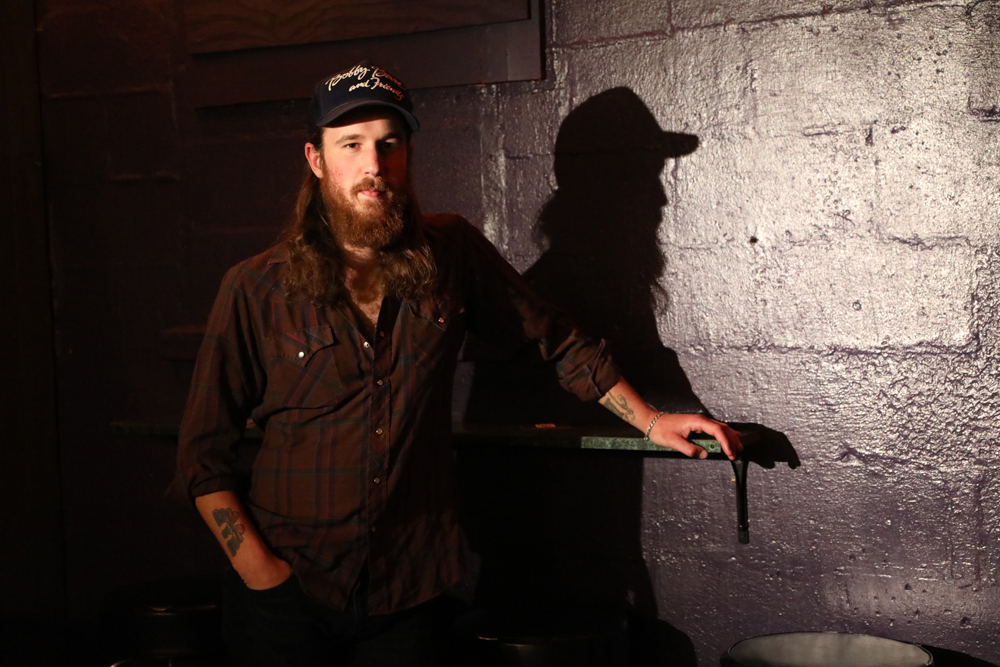
When we sat down with Kenneth Pattengale and Joey Ryan at a Van Nuys coffee shop in June, we found that off-stage they’re just like they are on-stage… only more so.

As part of changing things up, you’ve decided this is also the right time to go for street clothes in concert, right?

Joey: Talk about decisions that were never actually made.

Kenneth: Yeah, that one’s still TBD. I mean, we get on the tour bus tonight. Joey’s near his closet, but I didn’t bring anything from Nashville, so if I’m wearing a suit tomorrow, I’m gonna have to go to the Men’s Warehouse in Tucson. The advice I’ve gotten from literally everybody on earth is that they’re gonna be saddened to not see me in a suit, and that we should be wearing them. But… f— ‘em. [Laughs.]

Joey: Well, I never wanted to wear a suit. The reason that we wore suits in the beginning was as a part of a collection of survival techniques.

Kenneth: Given your druthers, you’d dress like an ass-clown, that’s why. And you can quote me on that!

Joey: [Sighs.] See, how can people not love us? No, it was a part of a suite of survival techniques that we developed when we were playing in very…

Kenneth: Techniques or tactics?

Joey: Techniques.

Kenneth: There are survival techniques? I think they’re mostly tactics. It’s interesting to hear you’ve developed survival technique. It sounds like something they’d sell in the Valley.

Joey: Those words are synonyms. It’s a survival tactic and a technique. In any case, in the early days, we were playing this really sonically fragile show, and the only places that would book us were like the smallest rock club or bar or coffee shop sometimes in town. In a dive bar, we would wear suits to visually indicate that it was just something different than what they would maybe expect to see in that room, so that you could have some chance for the first couple minutes of people taking note and going, “Alright, what is this gonna be? I’m going to shut up and listen for one song.” You at least have a song. You have that chance to get ‘em to stop talking loudly in the bars that they’re used to talking in and maybe pay attention to the show, because our show required that.

It’s not like an attention-seeking preciousness. It’s like a physical, sonic fragility that we had, because we mic-ed our guitars, and you just can’t turn it up that loud. The perfect example is how we played at the Beachland Tavern in Cleveland, Ohio, many times. It’s a great place but the beer fridge is louder than we could get the PA, so we had to ask the bar to unplug their beer fridge, and they were so accommodating. I don’t know what happened to the beer. And they would also bring in rows of folding chairs, which literally no other band would ever even ask them to do. But we always wanted to be in a theater where people would be able to receive what we were trying to present, and the suits were just part of that. Now, with the band…

Kenneth: You’re gonna go back to flip-flops!

Joey: With the band… [Long, exasperated pause.] See, people always say we’re antagonistic. I think it’s just him. No, with the band, we don’t have the sonic fragility that we had before. … And so the whole misdirection of wearing a suit in unexpected places is not required. That was a long way of saying: I’m excited to not wear suits.

How early or late in the process did you decide to go with a band for this album?

Joey: We decided three years ago in Dusseldorf, Germany that we weren’t going to make the next album as a duo… It was just a moment. It wasn’t like we even talked it out. [To Kenneth:] You were like, “I think we should probably do the full-band thing next.” And I was like, “Oh, thank God you said that, because I’ve been worrying about how to bring that up.” But you always break the ice.

Kenneth: Yeah. I’m a talker.

I’m always interested in how people who are identified with a very specific thing decide to change it up… or not. A lot of times, people back away from giving up the thing that people identify as unique.

Kenneth: It’s always risky to go down these philosophical rabbit holes in interviews like this, because invariably they come out not reading exactly as intended, but I’ll go anyway, because who gives a shit? One of our blind spots -– and I think it’s a common blind spot for artists specifically — is that Joey and I for a long time had a complete inability to understand what was good about our band, while also knowing it in our core. And it’s necessary. If we knew what that was, I think that we would lean into it, and it would get tired very quickly and wouldn’t mature and evolve.

But for the first year and a half of our band, Joey and I didn’t realize that we were good just because when we sang together, it sounded like something that people either had never heard before or hadn’t heard in a while, or it bore a trueness that was just apparent in its physics. Joey and I thought that it was a result of all the hard work we do about making sure our harmonies are tight or about phrasing or about all these marginal things that we quibble over. You really lose sight of what the fundamental thread is that actually is the reason the whole thing exists. And we still have that blind spot. There’s something that’s just innate in what you do from the beginning that we take for granted.

So what is the thing you have the blind spot about, that your audience totally gets?

Kenneth: To put it really simply, when Joey and I sing together, it reminds people of Simon and Garfunkel, the way they actually physically combine, like alchemy in the air, or the way the Everlys did it, or the Louvin Brothers. When Joey and I sing together, there is some physical chemistry that is actually, like, we have to try hard to f— it up. And we have from time to time, but we’ve got an advantage coming out of the gate to other people singing harmony together, in that there’s something that just works about it.

And then there’s a similar shared vision in our writing and stylistic choices, and even essential life administration, where, outside of a few blowouts where we figured out what the problem was, the way they rub together results in this strange band that people haven’t kicked out of life yet.

Read the second half of this interview.


Photo credit: Joshua Black Wilkins

3×3: Robert Francis on Rescuing the Pitbulls, Disappearing from Parties, and Playing the Piano

Artist: Robert Francis
Hometown: Los Angeles, CA
Latest Album: Indian Summer
Personal Nicknames: Baboo or the Crushed Beer Can

a Tim Reed classic

A post shared by Robert Francis (@robertfrancismusic) on

If you could safely have any animal in the world as a pet, which would you choose?

I’d like to have a ranch with hundreds of rescued pitbulls.

Do your socks always match?

Never

If you could have a superpower, what would you choose?

The power to disappear from parties.

miss this

A post shared by Robert Francis (@robertfrancismusic) on

Which describes you as a kid — tree climber, video gamer, or book reader?

All of the above.

Who was the best teacher you ever had — and why?

My father. When I was two years old, he’d hum melodies and ask me to play them back to him on the piano. That’s how I developed my ear. He was an amateur astronomer, photographer, and classical record producer.

What’s your favorite city?

New Orleans. My grandad and all the men in our family before him are from there.

Boots or sneakers?

Boots

Which brothers do you prefer — Avett, Wood, Stanley, Comatose, or Louvin?

Louvin

Head or heart?

Heart

3×3: Alex Williams on Austin, English, and Traveling Back to the ’70s

Artist: Alex Williams
Hometown: Pendleton, IN
Latest Album: Better Than Myself
Personal Nicknames: Skinny

If you could safely have any animal in the world as a pet, which would you choose?

Buffalo

Do your socks always match?

Never

If you could have a superpower, what would you choose?

Time travel to live in the early/mid-1970s.


Fredericksburg! Thank yall very much. Till next time. 

A post shared by Alex Williams (@alexwilliams_official) on

Which describes you as a kid — tree climber, video gamer, or book reader?

Tree Climber

Who was the best teacher you ever had — and why?

Mrs. Douglas … English teacher who really got me into writing.

What’s your favorite city?

Austin, TX


Boots or sneakers?

Boots

Which brothers do you prefer — Avett, Wood, Stanley, Comatose, or Louvin?

Louvin

Head or heart?

Heart


Photo credit: Nicole Flammia

3×3: Amber Cross on Lions, Louvins, and Not Liking Fresno

Artist: Amber Cross
Hometown: Woodland, ME
Latest Album: Savage on the Downhill
Personal Nicknames: mom


Tubby time!

A post shared by Amber Cross (@ambercrossmusic) on

If you could safely have any animal in the world as a pet, which would you choose?

Moose or a lion

Do your socks always match?

Most days

If you could have a superpower, what would you choose?

I would fly


On my 5th load of flannels!Gearing up for Central Coast Folk Festival and Parkfield Bluegrass Festival!!

A post shared by Amber Cross (@ambercrossmusic) on

Which describes you as a kid — tree climber, video gamer, or book reader?

Tree climber

Who was the best teacher you ever had — and why?

Dr. Oliver Ford. He was both the president and an English teacher at a college I attended my freshman year. I enjoyed his creative writing assignments immensely. He and his wife helped me out and showed their support in countless ways. Don’t think I could have gotten through that year without them.

What’s your favorite city?

I really don’t like the city, but I have a soft spot for Fresno. There’s no NO like Fresno.


Last Saturday nights lineup. Red Barn Los Osos.

A post shared by Amber Cross (@ambercrossmusic) on

Boots or sneakers?

Boots

Which brothers do you prefer — Avett, Wood, Stanley, Comatose, or Louvin?

Louvin

Head or heart?

Heart

3×3: Bombadil on Sloths, Sneakers, and Sisters

Artist: Stacy Harden, James Phillips, and Daniel Michalak (of Bombadil)
Hometown: Durham, NC
Latest Album: Fences
Personal Nicknames: Racer Whiteside, Strong Foot, Z Pocket


Saturday rehearsal. We’re excited to have Bryan Rahija along for a chunk of our release tour.

A post shared by Bombadil (@wearebombadil) on

If you could safely have any animal in the world as a pet, which would you choose?

SH: Two-Toed Sloth.

JP: A pug named Frederick.

DM: Squirrel.

Do your socks always match?

SH: 99 percent of the time.

JP: Always!

DM: Yes, but they have holes.

If you could have a superpower, what would you choose?

SH: Adamantium claws.

JP: Definitely flight, although I’d want invincibility with that ability, as well. A close second would be the ability to freeze time.

DM: Time travel.


contemplating innovation in PDX.

A post shared by Bombadil (@wearebombadil) on

What’s your go-to road food?

SH: JJBLT.

JP: Burrito!

DM: WaWa hoagies/gas station hot water.

Who was the best teacher you ever had — and why?

SH: In high school, my senior year history teacher, Andrew Smithson, would sometimes go off on a tangent and give us lessons on basic life skills. Once, we were supposed to be learning about George Washington’s farewell address, but instead we learned how to balance a checkbook.

JP: Jenny Conlee was an amazing piano teacher. She was so thorough, encouraging, and organized. I’m still working on exercises she gave me five years ago and trying to keep my pesky left pinky in line.

DM: Plants … they teach patience, and that death is okay and inevitable without water.

What’s your favorite city?

SH: Any city with its own style of BBQ.

JP: Metropolis.

DM: I love all cities.


-5 Celsius tonight in NC…making tents for my sweet peas!

A post shared by Bombadil (@wearebombadil) on

Boots or sneakers?

SH: Usually sneakers.

JP: Sneakers.

DM: Sneaks!

Which brothers do you prefer — Avett, Wood, Stanley, Comatose, or Louvin?

SH: Louvin

JP: I’ve never had a brother, so I pick my sister Anne.

DM: My brother, John.

Up or down?

SH: Up!

JP: Up!

DM: UP!

3×3: Romantica on Matching Socks, History Lessons, and Louvin Brothers

Artist: Ben Kyle (of Romantica)
Hometown: Minneapolis, MN
Latest Album: Shadowlands
Personal Nicknames: Benny Boo, T-Dizzle, Danger Dave, Fabulous Fabbrini, Lovan Spoonful, Sister J.

If you were in a high school marching band, which instrument would you want to play?

The snare. It’s all about the groove.

Do your socks always match?

YES.

If you could have a superpower, what would you choose?

Healing.

What’s your go-to road food?

Chipotle. At least you know it’s GMO-free, the meats are almost reasonably raised, and you can’t beat that guac for healthy fat!

Who was the best teacher you ever had — and why?

Steve Duesterbeck. Ninth grade history. At least once a day he would say, “War is hell and people die.”

What’s your favorite TV show?

The Waltons

Boots or sneakers?

Sneakers. I used to be cool. Now I’m comfortable.

Which brothers do you prefer — Avett, Wood, Stanley, Comatose, or Louvin?

Louvin.

Canada or Mexico?

Love ’em both. If I had to choose … Mexico. My father-in-law has a ranch in the mountains outside Gaudalajara.


Photo credit: Nicole McCoy Photography

Reading List: 5 of the Best Bluegrass Biographies

We've offered you plenty of options for learning about the history of bluegrass masters via streaming, but what about good old-fashioned books? For those of you who like your learning a bit more in-depth and enjoy the heft of a good book (or, we hate to say, the sleek screen of a Kindle) in your hands, we've rounded up a handful of the best bluegrass biographies (and autobiographies) out there. 

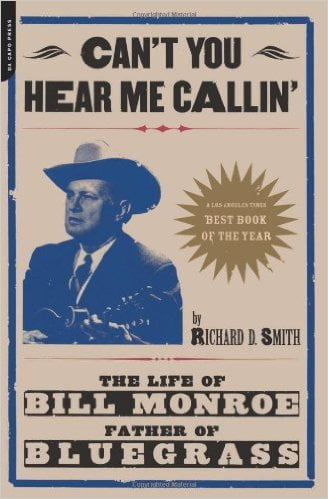
Can't You Hear Me Callin': The Life of Bill Monroe, Father of Bluegrass, by Richard Smith

Few musicians have had more influence on bluegrass than Bill Monroe, and this biography seeks to explain that influence — one that, truth be told, no book could sum up — in 352 pages of extensive interviews, thoroughly researched musical history, and rare glimpses into Monroe's personal life. There's no better lens through which to understand bluegrass than the career of Bill Monroe, and this book is as close as you can get to the man himself.

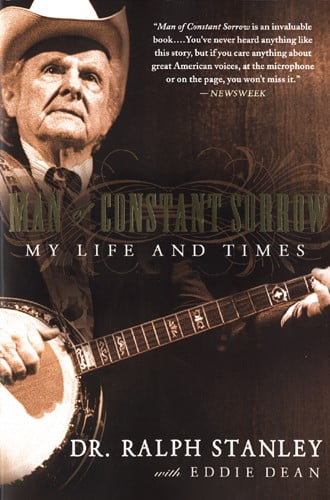
Man of Constant Sorrow: My Life and Times, by Dr. Ralph Stanley

There's nothing quite like hearing it from the man himself, and there's no man we'd want to hear "it" from more than Dr. Ralph Stanley. In this 2010 autobiography, the banjo pioneer reflects on his monumentally influential career, from his early days learning his craft in Virginia to his time touring well into his '80s. This is a must-read for any bluegrass fan.

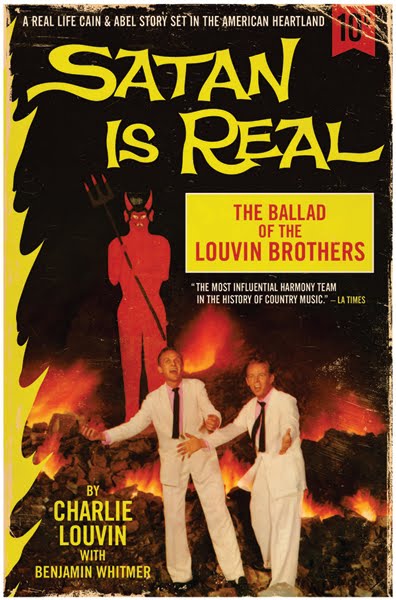
Satan Is Real: The Ballad of the Louvin Brothers, by Charlie Louvin and Benjamin Whitmer

Two of the godfathers of country harmony, Ira and Charlie Louvin traded their gospel roots for country music around the time the genre was picking up unstoppable speed in the mainstream. Devout Baptists with a handful of sinful habits (particularly in Ira's case), the brothers were a "real life Cain and Abel," as is described in this Charlie-penned autobiography. This one should appeal to fans of music and William Faulkner alike.

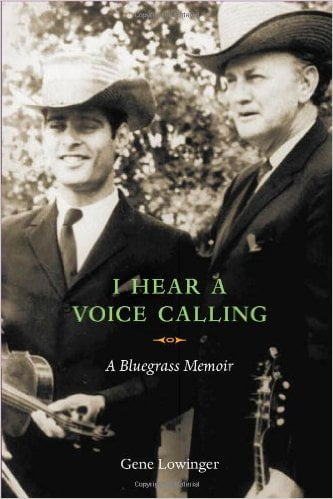
I Hear a Voice Calling: A Bluegrass Memoir, by Gene Lowinger

You may not know the name Gene Lowinger (or, hey, maybe you know enough about the genre that you should write your own book), but the New Jersey born fiddler was around for Bill Monroe's final years, and he documented the father of bluegrass in a series of intimate photographs that show the legendary musician both on and off stage. Lowinger also shares tales of brushes with other bluegrass greats, including the New York Ramblers and the Greenbriar Boys.

Smart Blonde: Dolly Parton, by Stephen Miller

Dolly Parton may not be a bluegrasser in the traditional sense, but her rags-to-riches tale of growing up in the mountains of east Tennessee to become one of the biggest country stars on the planet falls in line with the career trajectories of many of our grassier favorites. And while there are countless books on Parton available, this one, which will receive an updated reprint in May of this year, is often considered the definitive source.


Lede photo credit: azrasta via Foter.com / CC BY-NC-SA