Honestly, I think the reason I am a nerd about string band music is that it offers a beautiful way of thinking about how music moves – not just through instruments traveling, but also through melodies, rhythms, and ideas making their way through people and place and time.
Maybe that means across the globe, but it could mean between a dining room and a basement, whatever the dialogue. The tracks in this playlist are a winding path through a tiny subsection of this sonic world. – Rachel Meirs, fiddle, Vaiano’s Paisanos
“Rosa Negra Vals Venezolano” – Orquesta De Lionel Belasco
“Rosa Negra Vals Venezolano” comes from Lionel Belasco, a Trinidadian-Venezuelan pianist and composer whose recording career spanned five decades. This waltz is a really joyous piece recorded by Belasco’s orchestra, who recorded an incredible number of sides for Columbia Records in New York City in the late ’20s and early ’30s. An iteration of a calypso band with piano, woodwinds, strings, and syncopated rhythms that all give a hint to which version of the journey this waltz form took to arrive.
“Para Mi y Para Mi Novia (Vals Foxtrot)” – El Ciego Melquiades
“Para Mi y Para Mi Novia (Vals Foxtrot)” comes from El Ciego Melquiades, “The Blind Fiddler,” who recorded in San Antonio. It sounds like a Tex-Mex fiddle tune, since that’s the way he plays it, but the most compelling thing about it is how unintuitive it is. I could never figure out why its form and melody were so strange, but a friend recently tipped me off that it’s his take on “For Me and My Gal,” a 1917 pop song (later popularized by Judy Garland), which also made the song title make more sense.
“Rolling Mill Blues” – Peg Leg Howell
Discovering the origins of “For Me and My Gal” brought to mind this Peg Leg Howell recording from 1927. I loved his recordings with Eddie Anthony on fiddle, but when I heard “Rolling Mill Blues” I remember thinking it was beautiful and strange. Instead of Eddie Anthony’s driving country-blues style fiddle, the violin’s counter-melody takes on an almost ethereal tone. I don’t know if it is a coincidence or not how much that melody calls to mind the pop song, “Tonight You Belong to Me,” which was first recorded in 1926.
“Smart (Tango Argentino)” – Kostas Bezos, Loudiana, Aspra Poulia
On the theme of the crazy routes music takes, I think saying that this next one, “Smart (Tango Argentino)” comes from Kostas Bezos, who led a Hawaiian band in 1930s Athens, is sufficient!
“Cariño” – Cuarteto de Cuerdo de F. Facio
Orquestas de cuerdas were small string bands that played for dances and social functions in Northern Mexico. The entire Arhoolie compilation Orquestas de Cuerdas: The String Bands: The End of a Tradition 1926-1938 is worth listening to, but “Cariño” from Cuarteto de Cuerdo de F. Facio has always stood out to me for what I think is a cello or bowed bass in addition to violins and bajo sexto. This adds a significant low-end to an already dramatic song – this one goes through a lot of emotions.
“Valsa Continental” – Abrew’s Portuguese String Trio
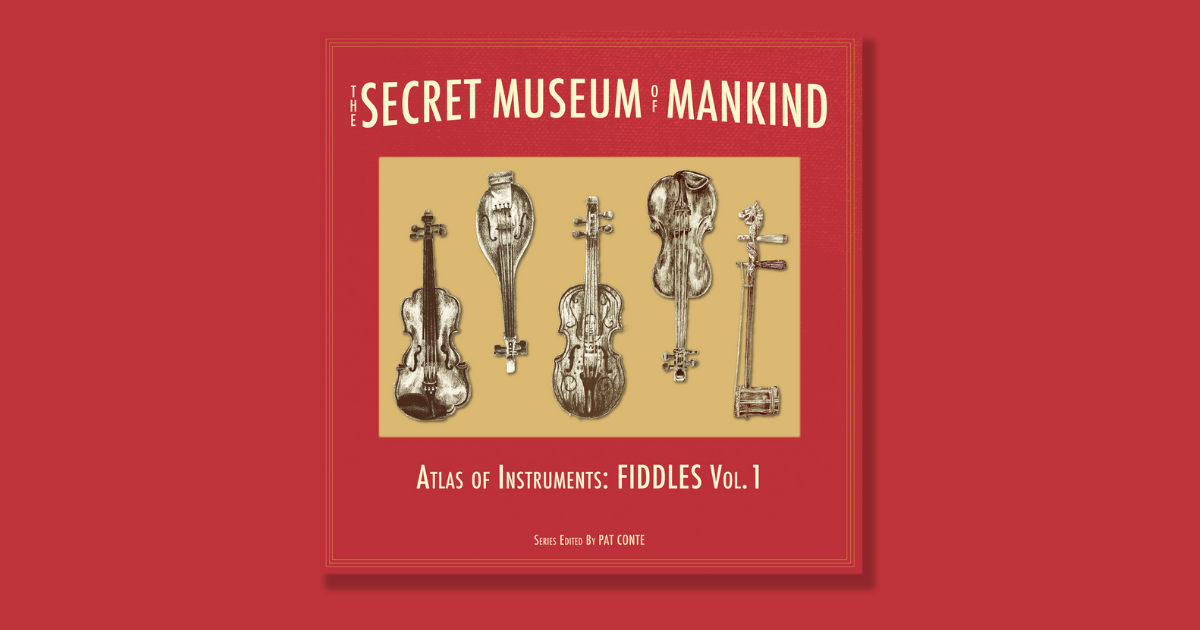
This next one comes from another compilation series I recommend for anyone looking to deep dive into this music across even more territory. Check out Pat Conte’s anthology series, The Secret Museum of Mankind (now on our label, Jalopy Records, since 2021.) Another waltz, which I named this playlist for, “Valsa Continental” comes from Abrew’s Portuguese String Trio. Composer, violinist, and bandleader Augusto Abreu led this Cape Verdean trio from New England who recorded four discs for Columbia Records in 1931.
“Abrew’s Portuguese Jazz” – Vaiano’s Paisanos
It’s hard to say, but since Abrew’s Portuguese String Trio is one of my favorite bands, and because the recordings are still hard to find digitized, this next one is our band Vaiano’s Paisanos take on “Abrew’s Portuguese Jazz.” Our version keeps the violin part, but instead of guitar and cavaquinho, we have mandolin adding harmonies and rhythm, and tenor guitar playing the melodic runs that make up the tune’s backbone and bass line.
“Quisiera Olvidarte” – Pastorita Huaracina
This style of melodic accompaniment reminds me of the relationship between a country-blues fiddle line and a song’s vocal melody (for instance “Rolling Mill Blues,” on this playlist) is one of my favorite things to hear. Maybe that’s why I have listened to “Quisiera Olvidarte” by Pastorita Huaracina so many times in a row. This track comes from another great Arhoolie compilation, Huayno Music of Peru, Vol. 1.
“Il Mio Cuore E Tuo” – Giovanni Gioviale
I knew I wanted to include a track to represent some of the Italian-American music of the era. For many of the tracks on this playlist, I have been trying to decide between polkas, mazurkas, waltzes, foxtrots, and tangos, a reminder many of these groups were dance bands. The mazurka form comes from Poland, a dance in 3/4 or 6/8. This mazurka comes from Giovanni Gioviale, a mandolin virtuoso from Sicily who recorded in New York between 1926 and 1929. “Il Mio Cuore E Tuo” features Gioviale on the tenor banjo– another marker of combined musical histories.
“Black Mountain Mazurka” – Gu-Achi Fiddlers
The next tracks have us following mazurkas to the Southwest. “Black Mountain Mazurka” is Gu-Achi fiddle from the Tohono O’odham people of Southern Arizona. This Southwest fiddle sound is made even more distinct with the addition of drums and very sweet harmonies.
“Bailando en Phoenix” – Lone Piñon
Staying nearby but jumping ahead into this century, Lone Piñon (also on our label, Jalopy Records), plays New Mexican string band or “orquesta típica” music. “Bailando en Phoenix” shows both the amazing energy and musicianship of the whole band. Their whole album is a beautiful tribute to their attention to learning, playing, and performing this musical style.
“Tarantella” – Magic Tuber Stringband
One more modern band, to remind ourselves that we are all participating in the process of reimagining music across time and space. And we will be for as long as we engage with these old traditions and continue to make music. The cross-tuned fiddle on North Carolina-based Magic Tuber Stringband’s “Tarantella” so effectively calls to mind the droning sound of a zampogna (an ancient bagpipe played in southern and central Italy), and the track fades to a fitting end for this playlist.
Photo Credit: Brian Geltner