When Good Country spoke with award-winning singer-songwriter Tenille Townes in 2024, she had severed ties with Columbia Nashville and claimed her autonomy as a recording artist. It was a tremendous, liberating step into the unknown.
This month, Townes releases her first independent project, The Acrobat. Over the course of its 10 songs, she transparently and hauntingly channels the healing journey of the past two years – one that intertwined heartache, isolation, a plunge into depression, and the long road back.
She recorded The Acrobat at home, in the company of her beloved dog Sam, played all the instruments, and produced and mixed the tracks. This wasn’t the original plan, but as the work tapes progressed, she found catharsis in the honesty of the stripped-down vocals and guitar. This, she decided, was the album, and the best way to bring it to audiences was to perform it the way it was recorded.
She is now on The Living Room Tour, again with just her vocals and guitar, for intimate performances across the U.S. and her native Canada – with one exception: two dates with the Calgary Philharmonic Orchestra on April 23 and 25.
“I’m working with Dave Pierce, who’s arranging the shows,” she says. “He has written musical interludes between the songs that will accompany the storytelling pieces of what I’m doing and connect it all together. Hearing these songs in a completely different light has inspired me. Thinking about the magnitude of that many people onstage, it’s going to be emotional hearing that wall of sound all around me. It’s unlike anything I’ve ever done.”
You moved from Alberta to Nashville in 2013. Who were you then and who are you now? How has Nashville changed over 13 years and how has Nashville changed you?
Tenille Townes: I still feel that the spark for music, the love for it, the complete joy is intact, and I’m grateful for that. Nashville, as a community, has obviously grown so much and taken on lots of different lives in those 13 years, but the heart of the community feels the same to me.
What drew me to Nashville initially was the creative community, the writers, the songs that are created there every day, and this group of people that creatively have each other’s backs. I still love the heartbeat of that town so much. It’s a little harder to get in to see rounds at the Bluebird [Cafe] these days, or things like that, but the spirit’s the same.
When I first got to town, I was so wide-eyed and just [full of] complete optimism. I had this belief that anything’s possible, everything to prove and nothing to lose, and that tenacious… maybe naivete helped me kick down some doors and get things going.
A lot of the dreamer’s expectation is to show up in town, get the deal, and try to find a tribe of people who believe in what you’re doing. I had such an amazing experience finding wonderful people who believed in it with me, and we had a great run. But the deal is not the finish line. It’s where the whole new page of the dream begins, and I feel like a different person now experiencing the other side of that.
There were a lot of beautiful highs and a lot of hard parts in that journey and losing myself for a while. I feel this return to that same “everything to prove, nothing to lose” situation I started with 13 years ago. So it feels good to be getting back to that feisty energy.
How did the cumulative effect of those years and experiences bring you to this point professionally and personally?
I think it’s just life lived. It’s the experiences of finding out that sometimes the picture we paint in our minds of how we think it’s going to be is completely different than how it turns out. Sometimes that’s for the better and sometimes that’s way harder.
Also I think about cumulative experiences, and about the places I got to travel because of music. Touring around the world, playing shows for people in the U.K. and Australia, and they know the second verses to songs I’ve written. That’s such a crazy thing to think about. My experiences on the road have definitely grown my capacity for seeing a community of music that’s bigger than your own backyard, and I love looking at music like that. It makes the world feel smaller in the best way.
It’s been a lot of experiences. It shaped this record I’ve just made, because for a while I lost my footing a little bit in going, “What artistically is my vision, and what do I want to say in these songs and talk about?” I had certain expectations that were like a moving bull’s-eye, and I got a little lost for a while. When I let that rest, I got back to the art of the truth of the matter, just songs I love that tell stories that are important to me.
I ended up making this record sitting in this spare room of my house, next to my dog. It’s this return to creatively tuning out all the noise around me and getting back to the truth underneath. All the experiences led to my hunger for that sparseness and return to self and that feels good.
You pursued every artist’s dream of a record deal, captured the dream, and walked away from the dream – which can be done in this DIY era. Still, it’s a breakup of sorts. Two years later, what are the lessons learned from being signed and from now being independent?
It really is a breakup of sorts. It’s this group of people that were working towards the same common goal beside me. We had such great experiences together and we moved a lot of mountains in our time together. But it got to this point of, “I think I’m losing myself in this.” It is such a unique opportunity right now, the power being back to the people, and being able to post something and have people get excited about it. There is the opportunity to have that freedom to make my own green lights for releasing music anytime it feels creatively right for me.
It took me a few years of unwinding from that structure and that system of how things used to be. There was a lot of heartache in that, a lot of feelings of failure for a while, and eventually busting out of that. I feel like I’ve gotten to this other side, where it is freedom and liberation and, “I get to do whatever I want now.”
With the label, we’d done vinyl before, but never this way. We launched this album online and I had this feeling in my gut that it needed to be a vinyl project. People got excited about it and it blew past all my expectations. I had planned to try to sell 300, which would have beaten my past goals. We launched it and I told the fans, “I’m doing this independently. Make this leap with me. You guys have been believing beside me for so long.” They totally embraced it. They took the leap and we sold over a thousand copies in one weekend of announcing the record. Feeling that support, I was like, “Wow, I feel so much more capable and able to take the leap into the unknown without the safety net of that system.” Feeling this supportive community behind what I’m doing, it was incredibly encouraging.
The Acrobat is obviously a deeply personal album, as are all your albums. You’ve spoken openly about your battles with mental health challenges, but as relates to this album, how was your mental health going into the creative process, during the process, and now?
I made this record in the heart of the mess and a lot of these songs were written in a really dark place. But I do feel, even though it’s a cliché to say this, the more I worked on this project, and the more I felt the liberating side of the freedom coming back to me, the better my mental health got.
This record was quite healing for me and the fact that I produced this myself and played everything on it was a moment of going, “I’m capable of doing this. I got this.” That feeling was really helpful in my mental health space. I didn’t seek out producing my own record and doing it this way. I started just making guitar vocals of some of my favorite songs that had never seen the light of day, so I could decide which ones to take into the studio for the next record. I got a handful done and I was like, “Wait. I really love these just like this. What if I did this myself? What if I recorded it here and made a record that’s really sparse and vulnerable and messy?”
I’ve never done that before. I’m not a master engineer of any sorts. A lot of the imperfections of this record, the truth that people can hear through it, are due to my limitations. None of these vocals are tuned, because I don’t know how to do that. It was a lesson in letting things be not perfect and that was helpful for my mental health, too. Coming to this place of, “I like this as it is,” and finding that strength on my own two feet again to be okay with that.
All in all, this record was a healing experience. I finished it and had this feeling of an exhale. So much of what I’ve walked through in the past few years is very much in the theme of these songs. There’s also this passage of time that I have a new appreciation for. Stepping back and looking at things from a different way and getting back to more vulnerability helped me see. I think that through line thematically is connected to being in a better state of mind as well.
Whatever happens to this record, I’m excited that people will get to hear it, and hopefully these songs will take on entirely different lives and meanings to other people. What I love about music is it’s so open for everyone’s own experiences, but the thread of emotion that runs through them is the same, and that’s something we can all hold on to together. I’m excited for the invitation of that, and whatever life it takes on beyond is great, but just the experience of making this record was so healing for me. That is a victory in itself, and I’m really grateful for that.
Is it paramount to find co-writers who understand your work from lived experience? What is your vetting process for opening up this way to someone who is going to have their input in your material?
Lived experience is so much a part of that, but also I have to feel safe around those people, to show up and be exactly who I am. There’s something disarming about a great co-writer who’s happy to sit with you in whatever you’re processing, and vice versa. Being a good co-writer means being a great listener. A lot of empathy has to be present, to me, in co-writers.
I’ve gotten to write songs with so many people through the years, and I’ve learned something new from every person. I’m always trying to be a sponge and soak in what somebody’s habits are, how they get past the little blocks that pop up in your mind, or how they keep diving in and not settling until you have complete peace about a line. Everybody’s got their own ways of doing that.
But, to me, it’s just feeling safe to really share the truth. That’s the vetting process. Sometimes that takes a few times and sometimes it happens on the first time. Music is such a magical mystery to me. I could sit with someone I’ve never had a conversation with before, but there’s something unspoken in the room, where you’re like, “Here’s what I’m going through,” and the other person is like, “Yeah, I’ve been there. Let’s talk about this. How can we unpack it?”
The song has its own agenda in the room, too. It’s this thing you can’t quite articulate, but when a song is supposed to be written, I believe it will be. I love getting to find out the characters that will help me pull out those songs. Sometimes it’s trusted friends and sometimes it’s complete strangers. It’s all such a magical thing.
On the Bobby Bones Show in 2024, you said every full record gets a new “time capsule” guitar. What’s your newest?
This album is an LG-2, and I love it. I’ve not had a Gibson before and it’s been so fun to play. I got this guitar a couple years ago, thinking that new music was a lot closer than it ended up being, so this guitar has been waiting in the wings for its moment. I wrote a lot of these songs on this guitar because it was on standby.
After I got to the point of “I think this is an album,” I was like, “I need to tattoo this guitar. It’s a match.” I met up with my friend Lewis Lavoie, who’s an incredible muralist painter in Alberta. I brought it to him and shared the different symbols and themes of the record. It was like, “There needs to be hands letting go.” There’s some azaleas from one of the lyric lines. “The Acrobat” is represented by a petal that turns into a bird, and that leads into “In Love With The Sky.” Every song has its moment on the guitar canvas. It’s a trilogy of the guitar time capsules I’ve made. I’m excited to take that one on the road.
How many guitars do you have?
I have two Martins that are tattooed as well. One was for The Lemonade Stand and one was for Masquerades, and the back was for Train Track Worktapes. I also have a Gibson electric that I love to play, an old D-28 that I love playing at home, and a Taylor 912ce that I got for my high school graduation. My family all wrote their names on little pieces of paper and tucked them into the case and I felt like I headed out into the world with this guitar in hand and all their love and support with it. My grandparents bought me my first guitar. It was a parlor size, not a Sears catalog guitar, but something close to that. It’s at my parents’ place in Canada. That was the first guitar I ever played. The stories that come with the guitars mean so much to me.
View this post on Instagram
Does the guitar play as much a part as the lyrics in terms of expression and what you need to say?
Yeah. It’s really hard for me to separate the two. A lot of people will write the music and then write the lyrics. I respect that process, and I’ve written a couple songs that way, but to me, they really feed each other. I can’t hear the space for the melody and how many words need to make sense for it without the guitar laying that out. They’re like threads completely woven together. I enjoy taking away all the noise to leave space to hear how the guitar and vocal would interpret a song. That’s always the truest form to me. That’s the way I started as a kid, just playing songs in my room.
How do you protect yourself mentally and emotionally when you perform these songs?
There’s an exhale once the song has been recorded, and in the live experience it becomes so much more communal. I feel like my job up there is to hold open doors. Songs have ways of helping us sit inside the rooms in our hearts that are terrifying to go into alone, and the live experience is very much part of the exhale. It doesn’t hurt to relive it onstage as much as I might think it would, because it’s a part of something bigger.
I’m very nervous for these shows because there’s nothing else to fall back on. I’ll miss my band very much. I love those guys, so it’s going to be very different. But it feels timely for this creative season I’m in right now, and I think it will help me continue to build that intuition back even stronger. These shows are more of a living, breathing thing because it is just me up there. It’s going to be a two-way street with the audience and it will be a way for us to maybe chat a little bit, take some requests, and be less locked to a grid that five or six people are working towards the same goal on. It’s just me and the audience, so I’m pretty excited for that.
You posted a video last year in tandem with Mental Health Awareness Month, in which you said that you “came to a whole different low” the previous year and “depression doesn’t care how much you had a grip on positivity and gratitude.” What was different about that low, and how did you claw your way out?
It’s a process. There were a lot of personal changes in relationships for me, career shifts, and feeling a different kind of alone. The unending joy that music has always given me – it was such an indication that something was off, because that light was really dimmed. That was scary, because that has never gone away.
I consider myself a pretty positive person. I grew up learning tools of how to stay looking on the sunny side and all those things. But there’s also an avoidance of the truth that builds up over time, and that all caught up to me in that space, a lot of the people-pleasing tendencies and this realization that I was taking matters into my own hands again.
There’s such waves to it. Everybody’s experience with depression is different, but it’s this big scary thing to talk about because it is really scary. It’s dark. It’s so lonely and isolating and hard. I love when I see other people talk about it. It’s like, “Oh, I’m not the only one. Okay, good.” This is a part of the human experience, and we have to lean on each other to be able to know that it’s okay to feel that low sometimes and you’re not the only one.
I tried medication that helped and got me to a base level where I could go, “How else can I keep chipping away at this?” It’s not easy. It was an incredibly slow return of every day waking up and trying to have the right intention to take a step in a better direction for myself. So going for walks, trying to hit a certain amount of steps every day to keep my body moving, eating healthier foods, and being able to have friends that I force myself to check in with and be honest with.
Those things are not easy for me at all, but it’s part of the process and it definitely helps get me to this place. At that time I wasn’t creatively doing anything. Once I got a little bit better, I was able to start working on this record, and that really helped me continue the mental health journey.
How long were you in that dark place?
It was probably six to eight months of really dark. But I think it had been brewing for a long time and I had been denying its existence and covering it up. So it was a buildup, and then a slow, gradual return from there.
Was this your first experience with depression?
It was my first time acknowledging it for what it was. I think I’d experienced it before, but I hadn’t given myself permission for that to be okay, to be the truth.
Was it tough to record that video and say it publicly?
It was tough, for sure, but it also was part of the exhale. It was scary to make the video and press the button to post it. I didn’t want to do that, but after I did, the encouragement from the community and people reaching out going, “I have dealt with the same thing,” or “This helped me because I have been feeling the same way,” or whatever the responses, it’s like we give each other permission, and that encouraged me to do it, because I do love the community of people. It’s been a long ride, and I felt like I needed to be honest with what I was dealing with. It was powerful and encouraging to see that other people felt the same. It made a really lonely and isolating time feel a little less lonely.
Your awareness of and empathy for youth shelters, food banks, homelessness, the ills of the world, and now mental health, goes back to your school days, when you wrote a song from the perspective of a daughter whose father was in Afghanistan. Feeling so deeply for so many about so much, it’s easy to overload and spiral when you’re carrying everybody else’s struggles along with your own. How do you take care of yourself and find balance?
I don’t think I balance that very well at all, which is why I struggled for a long time. To me, it’s always keeping a connection to something greater than all of us. There’s different phases of what that’s looked like in my life, but that is what intuition is, just listening to that guiding force. If I keep that in check, then my compass tells me what to hold on to and what to let go of. When that “check engine” light is on, I know I’ve got to pay attention and get back to that.
I’m still learning what that balance is, and I don’t have all the answers at all, because I do feel things quite deeply. Maybe that’s an empath thing. I think that’s also part of being a creative and part of being a writer. You have to soak things in and feel them to a certain degree for it to become real in your own interpretation, so that you can write about it. Keeping those channels open is important to me, but I’m still learning ways to protect my own heart in that process.
View this post on Instagram
Music is a big part of your healing, but dog lovers also understand canine therapy. Tell us about Sam.
Sam is 6. He is a pandemic baby. I found him on Petfinder and got him from a rescue in Illinois. He’s been my buddy ever since. He’s coming with me on tour. Because it’s an acoustic show, it’s a smaller crew – just my tour manager, my sound guy, and Sam and I – so Sam’s able to come on his first tour. I’m pretty excited about it.
Sam gets an unwritten executive producer role on this project, for sure, an emotional support credit. I’d be lost without this little guy. He brings me so much joy, but also a dog will force you to be present and in the moment. They need to go outside right now. They need to go for a walk. They need to get out of bed in the morning because they’re hungry. This beautiful creature is a constant reminder of showing up as your most authentic self in every moment. Sam is the perfect example of that.
They’re also such intuitive creatures. In some of those really dark times, he just knew. He would come snuggle right up beside me and put his little chin on my knee like, “Hey, I got you.” I’m so grateful to know and experience that kind of unconditional love from this beautiful little guy. There’s nothing like it.
When people listen to The Acrobat, what do you hope they learn about you, and maybe also about themselves, through your songs?
I hope they hear the courage it took to get to this sort of honesty, and that they feel permission to stand on their own two feet as well. This returning to autonomy, and this ability to let things go and embrace change, even when it’s hard and feels like the worst thing in the world, I hope they feel comforted that somebody else knows what that feels like and that they’re not alone.
That’s always the greatest mission of my music. I hope it helps people feel a little less alone, and that’s definitely one of my hopes with this record. I think there’s a lot more humanness when we talk about these things. That’s what I love about music. It opens the door for those conversations.
Continue exploring our Artist of the Month coverage of Tenille Townes here.
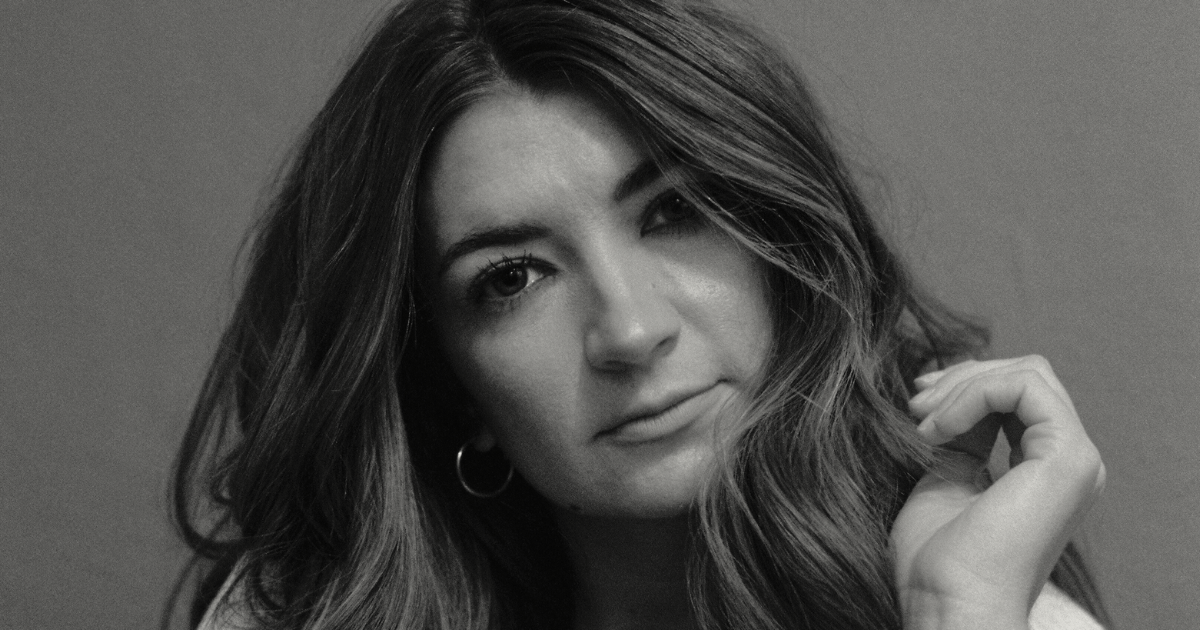
Photo Credit: Madison Rensing.