Roots Songs All About Mental Health

May is Mental Health Awareness Month, but for those with lived experience, every day is about mental health awareness. During the most difficult times, many creators and listeners turn to music. It’s where we connect through lyrics and melodies that express the things we so often cannot, will not, dare not say.

The intersection of music and mental health is nothing new. Long before memes and catchphrases about “break the stigma,” Hank Williams did just that with “I’m So Lonesome I Could Cry.” Years later, Porter Wagoner exposed the ugly unspoken truth about “The Rubber Room.” 

Thankfully, through incremental steps, times have changed – although not enough – in terms of media portrayal and public discourse. With great courage, more and more artists are coming forward about their struggles. Dozens of artists and musicians have spoken openly with BGS and Good Country about how mental health challenges move them to create songs and albums that make us all feel a little bit less alone. (Scroll to find our playlist of roots songs all about mental health below.)

Artists and bands like Becky Buller, Courtney Marie Andrews, Sister Sadie, and Tenille Townes give us glimpses at how mental health and self-care inform their creative processes and how they craft their songs, albums, and sets. Groups like Southern Avenue and the Band Loula – who make music built on the sonic and storytelling traditions of the South – subvert regional expectations about what’s “allowed” to be spoken about in the light of day with their approaches to infusing mental health awareness into their songs. Still more conversations with artists like Fruit Bats, Cole Chaney, Emily Scott Robinson, and Chely Wright reinforce that mental health in roots music isn’t a fad or passing trend, it’s an intentional through line. Songwriting and roots music are perfect vehicles for this sort of vulnerability and these once forbidden topics.

The proliferation of YouTube and democratization of music videos in the 2000s and 2010s opened up new dimensions for artists, giving them more formats in which to express themselves, depict their work, and consider mental health. Additionally, of course, it offers live performances that go beyond anything a studio recording can capture.

“I Think It’s Going to Rain Today” – Randy Newman

Randy Newman’s masterpiece has been covered many times, and the internet is full of those recordings – as well as his. This performance, however, at his induction into the Rock and Roll Hall of Fame, may very well surpass them all.

“God, Can You Hear Me?” – Dax

Dax is fearless in addressing the most difficult and “taboo” topics. “God, Can You Hear Me?” asks the unspoken question within the context of a subject that far too many people refuse to address: suicidal ideation. (Content warning: graphic.)

“Let the Circle Be Broken” – Sister Sadie

In genres predicated upon generational legacies and “handing down” tradition, Sister Sadie’s song of release, letting go, and stepping out from underneath the long shadow of generational traumas is more than powerful. By the same token, that it was written and is sung and performed by a band of all women makes it a truly transcendent message. Some circles are meant to remain unbroken, others must be demolished.

“Bench Seat” – Chase Rice

Chase Rice broke down walls and stereotypes and opened doors to discussions about suicide with this multiple-award-winning video. Country needed this. Country needs more of this. (Content warning: graphic.)

“Hurt” – Johnny Cash

Johnny Cash. Enough said.

“I’m Gonna Be the Wind” – Laurie Lewis

Bluegrass legend Laurie Lewis has penned many a fine song tackling issues of mental health, but this is the song for when you’re ready to stride out anew again. It’s a song of strength, resilience, of realizing that often one of the primary forces keeping us down is our own mindset. Tired of being a blade of grass, bent and bruised by the wind? Be the wind!

“Sunday Morning Coming Down” – The Highwaymen

Mickey Raphael described them as “like Mount Rushmore onstage” and called Kris Kristofferson “the Shakespeare of our time.” This is why.

“Will the Sun Ever Shine Again” – Bonnie Raitt

One of the best songs Bonnie Raitt has ever sung and released was recorded for the 2004 animated film Home on the Range. Devastating, endlessly relatable, but ultimately hopeful, the film cut of “Will the Sun Ever Shine Again” is hard to track down on streaming services and online, but it’s truly lovely. A gem of a soundtrack find from an often overlooked Disney children’s movie from the aughts.

“Alone Again (Naturally)” – Gilbert O’Sullivan

In 1971, Gilbert O’Sullivan bravely addressed loss, grief, heartbreak, loneliness, depression, suicidal thoughts, and questions of faith, wrapped them up in a lovely melody, set them to a catchy beat, and rode to the top of the charts with one of the most gutting, most accurate depictions of mental health challenges ever put to song. Decades and numerous cover versions later, stripped down to keyboard and guitar, his voice aged like fine wine, “Alone Again (Naturally)” remains poignantly accurate and relatable.

“Bad Mind” – Erin Rae

A song so perfect in its illustration of how we project and ascribe mental health, onto ourselves and others. We all may know, somewhere inside ourselves, that there is no such thing as a “Bad Mind,” but stigma and internalized expectations leave so many of us feeling broken and “incorrect.” Listening to Erin Rae sing this lovely, devastating song brings an immediate feeling of needing to reassure the singer that there really aren’t bad minds… and thereby the realization we should also apply that grace to ourselves.

Below, you’ll find our full playlist of nearly 8 hours of roots music created by the teams at BGS and Good Country that features some of the many excellent songs that address mental health. For Mental Health Awareness Month and beyond.


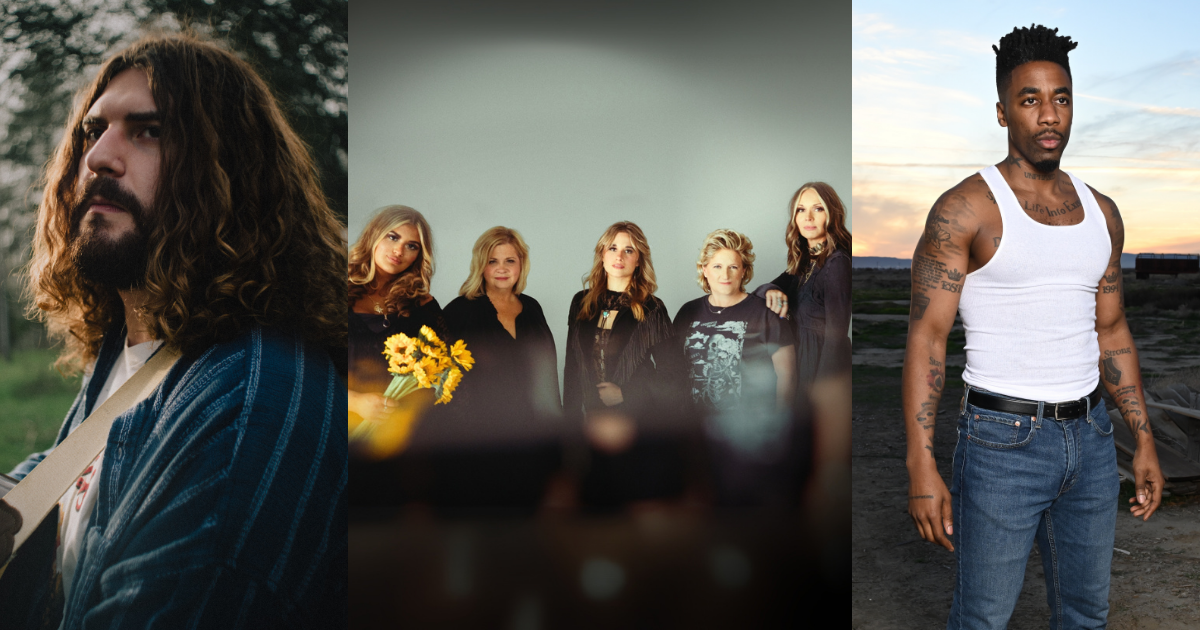
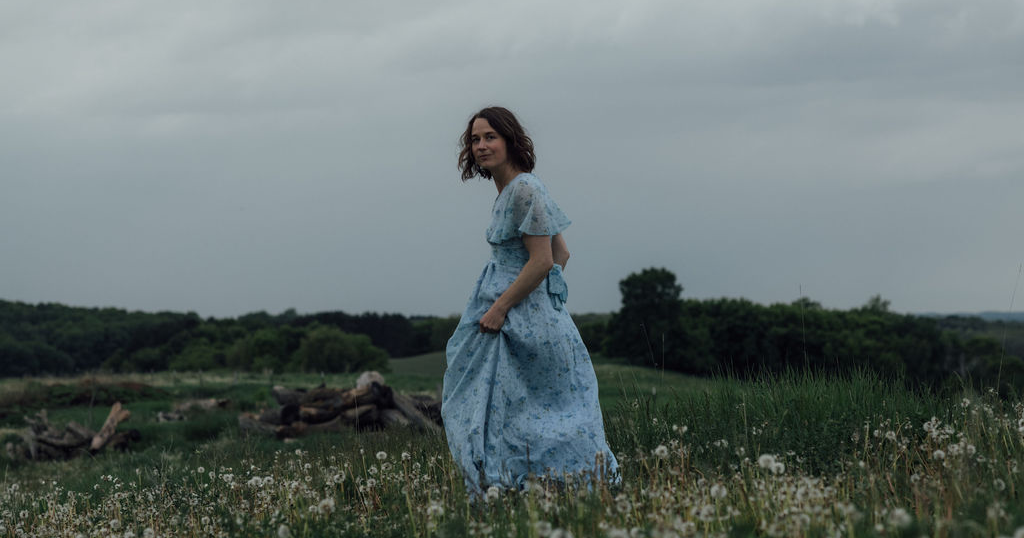
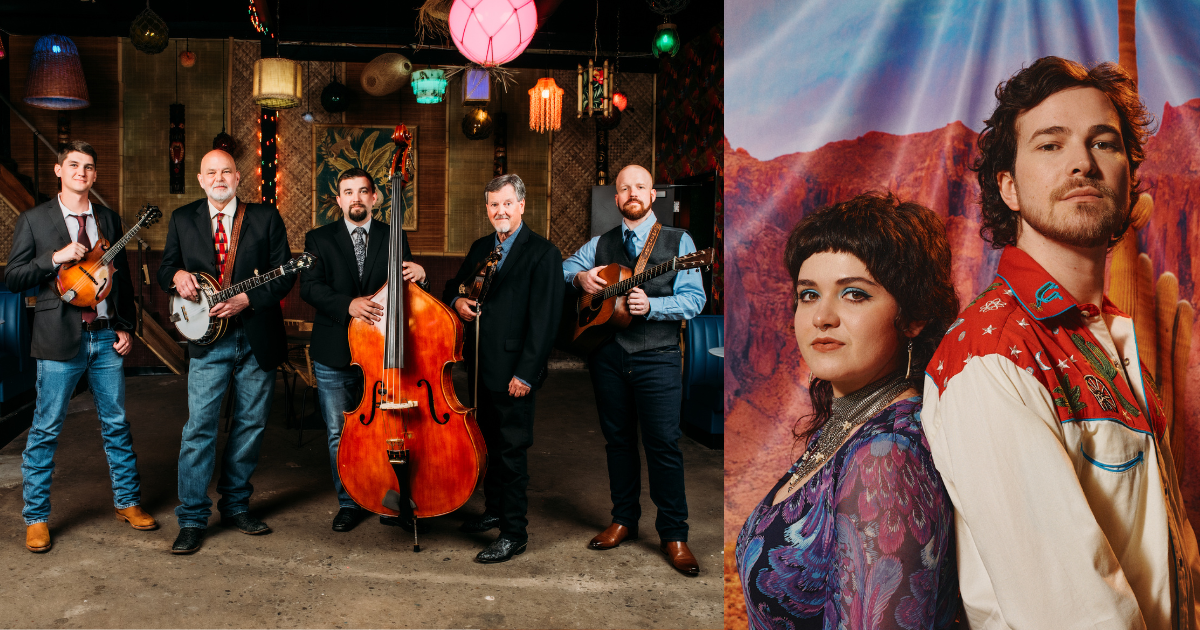
Photo Credit: (L to R) Cole Chaney by Anthony Simpkins; Sister Sadie courtesy of the artist; Dax by Annie Devine.

Additional curation and contributions by Shelby Williamson and Justin Hiltner.

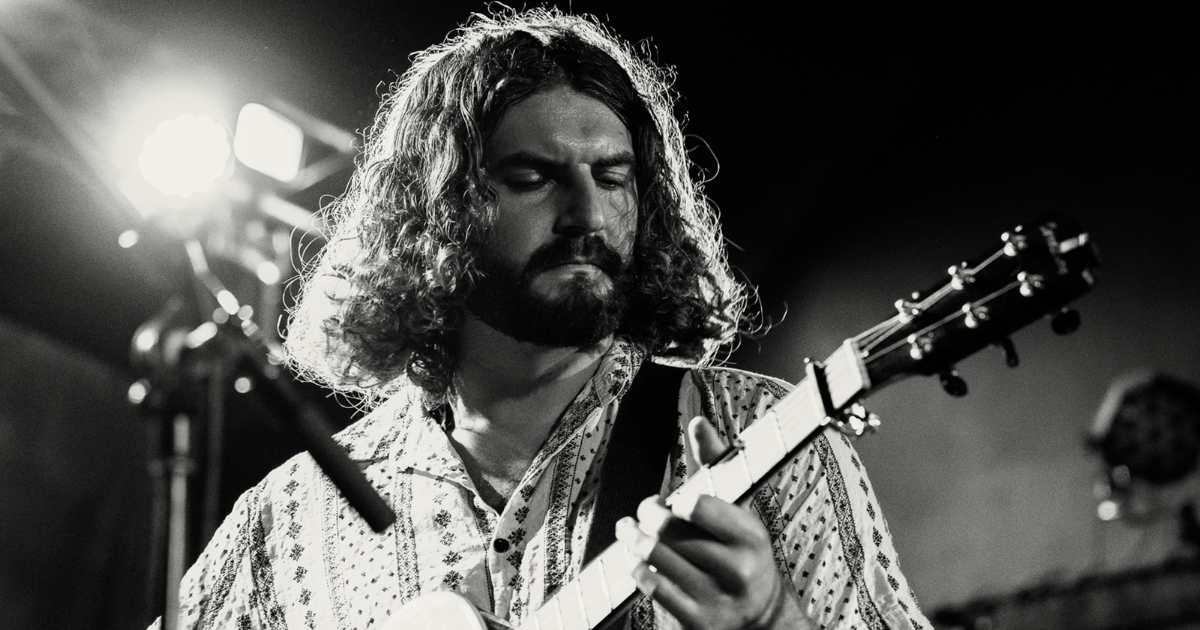
Cole Chaney is
“Anti-Machine”

While many young talents, willingly or hesitantly, bow down to music industry boardroom suits who promise stardom if they’ll follow a professionally curated path, Cole Chaney takes a hard pass. He knows exactly who he is, what he does, and how he wants to get there. He creates songs, not content. He’s a career musician, not a brand. And the only thing he hopes to influence, maybe, is someone, somewhere, who wants to make music for all the right reasons.

Chaney grew up in Catlettsburg, Kentucky, surrounded by the legacies and storytelling of his elders. After graduating high school he worked as a welder, uncertain of his career path, but already fueled by his passion for music. Today, he keeps one musical foot in the bluegrass traditions of his Appalachian roots and the other in guitar-centric, amplified bands like Soundgarden, Nirvana, Alice In Chains, and Stone Temple Pilots.

His debut album Mercy and subsequent OurVinyl Sessions reflect his love of acoustic music and showcase his leanings toward introspection and melancholy. In the Shadow of the Mountain, released last fall, takes that darkness to a new place, balances it with moments of light and leans into the aforementioned rock influences, while never losing the origins of his sound. All of this shines at peak level onstage, captured by Western AF on a Live AF Session.

Sitting outside at home on an April morning, drinking coffee and surrounded by the sounds of birds and a breeze, Chaney spent a couple of hours on the phone with Good Country. He spoke candidly about his music, faith, values, mental health, and the intertwining of inner peace and inner turbulence that make all these things uniquely him.

When you were ready to do this professionally, you went to Lexington. Most songwriters would have chosen Nashville. Was yours a deliberate decision or a natural one?

Cole Chaney: To understand that decision, you have to look at who I was looking up to at the time – and still do – and what drove that decision. When I was in high school, probably around my freshman or sophomore year, 2014 or 2015, I started getting into this band called Sundy Best. They’re from Prestonsburg, Kentucky, which is just down the road from me. This was pre-Tyler Childers. At the time, in Eastern Kentucky, these guys were the biggest thing coming and going. They leaned heavily on being from Kentucky, the same way I do, and they moved to Lexington to get a foothold.

That was my early example, watching those guys. I knew they weren’t going about it the traditional way, which was to go to Nashville and pray somebody picks you up. They did it in Lexington. A couple years later, Tyler Childers comes along – another super-influential figure in my musical upbringing. Of course, he’s anti-Nashville – not the city, but the machine, if you will. I’m pretty sure he lived in Lexington, or at least around the area in the scene, for a while. So did Sturgill Simpson. The list goes on.

I was like, “What business model makes more sense to me? Do I go to the place where there’s more songwriters than the rest of the entire planet or somewhere where people will actually understand what I’m saying and I can maybe build myself a little bit of a foundation?”

The way I saw it is if I started building a sort of fan base or if I had enough ticket buyers, places like Nashville or Denver, these big music scene cities, what choice would they have other than to book us? That’s the way I looked at it.

And it worked.

It did work. It’s a simple business model, but the difference between that model and the other is you’re not sitting around waiting for something to happen. It’s on you to go out and make your own connections. It’s a very grassroots and organic way of doing it and that’s the way I like to do things. I’m anti-machine. Even though I work with some bigger companies, I keep it as limited as possible. That’s so I can play pretty much wherever I want, whenever I want, and they understand that.

On the Whiskey Riff Raff Podcast you said, “Music found me.” Would you mind expanding on that just a bit?

It did. I never would have dreamed at 16 years old that I would be doing this as my full-time job at 25. That was never on the horizon for me. I didn’t know what I was going to do. I knew I was going to weld for a little bit, see what happened, and maybe try to start my own business. And I did. But I really didn’t think it was going to end up like this.

I started realizing that people liked to hear me play and sing around the same time that COVID hit really hard. That gave me an opportunity to sit down, write some songs, and think about what I wanted to do with the rest of my life.

I’m very much a subscriber to the Bible, and I think the Lord has a mysterious way of working. He put me on a path without me even realizing it way back then and I do my best to stay on it now. I think my job while I’m here is to create as much good stuff as I can, stuff that means something, get it out to the people, and get out in front of them and play it for them. As somebody who enjoys going to shows in their free time and watching my favorite bands perform live, I know how that feels, and it’s truly a privilege to be able to offer that same service to other people.

There is music in your bloodlines, not professionally, but family members who played in church and at home. You obviously assimilated the sound of the area, and also this wider scope with bands like Alice In Chains and Stone Temple Pilots. When did all of that begin seeping into your songwriting?

We listened to the radio when I was growing up. I didn’t get educated on music or how to play until I started really getting into it. To this day, I’m still being educated and learning how to play on a daily basis. Part of what keeps it so fun to me is how much I don’t know and constantly learning about things.

Mercy was my first album, and I had access to what was around me. I had just moved to Lexington and I was really into bluegrass. There’s a band called the Wooks that, to this day, Glory Bound is one of my top three favorite records of all time. I was infatuated with that sound and that was what I wanted Mercy to sound like, or at least as close to it as I could get. A lot of the Wooks ended up playing on that album, plus Michael Cleveland. It was crazy.

Alice In Chains has been a mainstay in my musical taste since I was probably 15 or 16 years old. Since I first found them, I was very drawn in by the tone of Layne Staley’s voice and the weight of Jerry Cantrell’s guitar. It feels like you could bite it and chew on it. I don’t know how to describe it.

I’ve also always loved bluegrass, so it was [figuring out] how to bridge the gap of what I listen to and where I want to go with my writing without completely abandoning that sound. And bringing the alternative rock sound into the folk realm, where you have mandolin, upright bass, fiddle, acoustic guitars, and drums. The biggest change in the sound has been the addition of drums over the past two years, navigating that and seeing how it fits into the whole equation. It opened up a lot of avenues for me as a songwriter.

You began playing guitar at 13 or 14. Did you always play acoustic?

The thing about electric guitar, for me, is that it’s such a deep realm of gear and a deep dive. I’ve always been attracted to good-sounding acoustic guitars and players like Tony Rice, so I felt my effort was best spent getting really good at playing the acoustic guitar.

That will carry over whenever I decide to pick up an electric guitar, more so than if I only played electric guitar and tried to write some bluegrass-style acoustic lines. It would be a tougher transition to come over from light gauge strings on an electric guitar to .013s on a dreadnought and trying to play “Blue Railroad Train” or something like that.

Do you have an electric guitar?

I have several electric guitars. I’ve got a ’57 reboot Stratocaster, an American Professional Telecaster, my old Paul Reed Smith that I learned how to play electric on, and a nice Vox amp. I don’t know all that much about electric guitars. I still have a lot to learn.

Prior to this interview, you sent over your touring rig: a Gibson J-45 Banner in standard tuning with a K&K Pure Mini pickup, and a Breedlove sitka/rosewood Custom Dreadnought in drop D/double drop D, with an LR Baggs Element VTC pickup. Also two Grace BiX DI’s and a Lampifier Model 711 cardioid mic for lead vocals.

Those are my road guitars. They aren’t the ones I recorded everything with, but those are what you see at the shows.

In addition to the Gibson and Breedlove, do you have other acoustics?

I have two Gary Cotten guitars. [On] OurVinyl [Sessions, that] was my first Cotten I recorded with. On In the Shadow of the Mountain, many of those songs are my newer Cotten, which is sinker mahogany and an Adirondack top. “Alone?,” “In the Shadow of the Mountain,” “Into,” “Feels Like Rain,” and “Spirit” [were all recorded] on the Cotten.

That guitar sounds huge. It’s an outstanding guitar. I don’t tour with it because I’m scared something would happen to it and it’s too special to me. And Gary’s a great dude. He’s always taken really good care of me, and I want that guitar to stick around for a long time.

I don’t have any electronics in it, either. It’s a very traditional style, it’s a dovetail, and I want to keep it as traditional as I can and keep as much weight out of it as I can, because the more weight you add, sometimes it makes them sound worse.

What makes the Gibson and Breedlove right for touring?

They’re super-versatile and they both sound fantastic plugged in. That Breedlove is the longest-standing guitar I have that I’ve consistently played shows with. I got it in 2019 from 4 o’clock Rock Guitar Shop in Ashland [Kentucky]. It’s a custom dreadnought that they shop-ordered and it’s got the LR Baggs VTC Element in it. It has always sounded so good plugged in. I mean, all guitars sound bad plugged in, but it’s a matter of how much of the original sound can you actually preserve when you plug it in.

I’ve gotten to the point where I am almost starting to desire a little bit of that direct input texture. Maybe it’s because I’m listening to too much MTV Unplugged, but I’m starting to desire that kind of cardboard bad sound.

The Gibson, I put a K&K Pure Mini in and it sounds really close to what it sounds like not plugged in. Man, that Gibson is a beast. I love that guitar. It’s been to every show with me since I bought it last year.

I still have a Paul Reed Smith acoustic guitar and it’s a damned good little guitar. I’ll probably end up using it again on some stuff. It’s one of those that you plug in and it sounds great, too. But when I got into the whole bluegrass thing, I knew I needed something with a little more body.

Sometimes you use a pick, sometimes fingers. Either way, your attack is strong. How did your technique develop?

It’s one hundred percent out of necessity. I had a really bad injury in 2015 and I damn near cut my index finger completely off at the knuckle. I can’t wholly bend my index finger and I can’t feel the picking side of that finger. If you watch some of my older videos, my index finger is flailing around all the time. It’s because I’m picking with my thumb and middle finger, and that’s where I’m holding the pick. That took me long enough to learn how to do.

In recent years I’ve learned how to use my middle finger to lock my index in place and be able to hold a pick. It looks normal, but if you could see how the sausage is made, it’s not that pretty. I wish I had that dexterity in my finger. The takeaway message from that is, “Take care of your hands, y’all.”

Let’s talk about the through line from bluegrass to bands like Stone Temple Pilots and Alice In Chains. You blend the genres seamlessly and it all makes sense. Did you always feel that connection?

If you listen to any playlist I’ve had, I’ll go from Ralph Stanley to Chris Cornell in a heartbeat. Obviously the music is different, but there are common themes between the two. Mountain folk music, hard rock, and that era are very dark and brooding, and they can be heavy in their own ways too.

What is heavy? What makes a song heavy? You’ve got people drop-tuning their guitars, but it’s still not as heavy as Pantera or Black Sabbath or something like that. So it’s not necessarily the sound that makes it heavy. It’s the vibe of the song.

I feel like a salesman a little bit, trying to sell this idea that this stuff can be brought together and related in an authentic capacity. Let’s take [Stone Temple Pilots’] “Big Empty,” for example. To do a cover of that and be looked at as a folk artist or an Appalachian artist, or some people will even say country – which I disagree with, but whatever – it always seems like somebody will start into a cover of this great song, but then they’ll get hokey with it and it loses all its purity.

That’s not at all the intended purpose for me. It’s to say, “This is a fantastic song and it fits the vibe that we’re all going for in this realm.” A lot of people probably didn’t know that a mandolin or fiddle sounds great on “Big Empty,” but now they do, because it fits. That’s the way I listen to that kind of stuff. It’s just how to pull that off without being cheesy or coming off in a capitalistic way. More so in a way of, “I love this song and you guys should listen to it.”

Was it challenging to find musicians who understand going from bluegrass to Stone Temple Pilots and back again?

The band, I think through a lot of prayer/manifestation, has come together and, as you hear, they’re fantastic. They can play anything in any style. Ella [Webster] and Kyle [Kleinman] come from a more traditional folk music side of things. Kyle is a bluegrasser and Ella is an old-time fiddle player. Lars [Swanson] and James [Gooding] are jazz cats, so they have infinite vocabulary when it comes to music. If you can play jazz, then you’re going to be all right. If you can pull off that stuff, you don’t have anything to worry about when it comes to my type of music. Stone Temple Pilots is a walk in the park for you.

In our van, the most listened-to bands between us are Soundgarden, Pantera, whatever James’s choice of jazz is, and Alice In Chains MTV Unplugged. That’s a really good piece of music. But yeah, they’re a great band and they can play anything.

Did Lars and James know each other before they joined your band? To lock in a rhythm section…

No, they didn’t. Once you start playing with a jazz drummer, you need somebody who can comprehend the stuff he’s laying out and answer that on the bass. To have those two sit in a room and jam is really something to witness and listen to, because they speak a language to each other that I don’t understand. But I love when they do it, and it’s great to hear.

I’ll be playing onstage, singing and doing my thing, those guys are behind me and I’ll hear them back there, talking to each other while we’re doing this thing, and it’s awesome. They’re special. Those two dudes – they’re incredible. They’re the unsung heroes of music in general. That’s your metaphorical offensive line right there. If you don’t have a Lars and a James, then your quarterback’s getting sacked all the time.

This is you in 2025 on The Western Side, talking about Shadow: “a lot of darkness and an equal amount of joy in other songs. It’s a good depiction of where I’ve been for the past two years. A tumultuous and chaotic time period, but also great. And I’m still here.”

Then, In 2021, on With A View: “I load the pressure on. It’s how I operate. My brain lives in constant turmoil.” In 2020, talking about “Fever Dream,” “a song about trying to keep it all together. … the way I deal with this is isolation. And when you isolate yourself, you don’t have much of a choice but to hash some things out in your head.”

You are no stranger to the dark place.

Hearing those things, I look at that younger version of myself almost as I would look at a younger brother. Part of me wishes I could put an arm around that kid’s shoulders and be like, “You’re going to be all right, buddy.” Times got a little tough, as they probably should for anybody at points in their life. You can’t really enjoy the great parts of your life without having a little bit of adversity to overcome or deal with. The darkest part, for me, was maybe just growing up and gaining a new understanding of the way the world actually operates and how hopeless that can be at times, but also how beautiful it can be in the same stroke.

What I’ve realized is you get out of this world what you pay attention to, because whatever you want to find, you can find it. It’s there and it’s aplenty, whether you want to find the negativity and suffering, or whether you want to find the positive and the good. I don’t have the answer to where folks are supposed to operate and live, but I think it’s good to help people who are in that suffering side of things. But you can’t let that dominate your existence, and for a little while, I was maybe dominated by the darker side of life.

I try to be as empathetic as I can, but with that comes feeling a lot and also accidentally hurting people sometimes. That’s really tough, because then you have this cycle of guilt that you deal with trying to make it right in your head. As I’ve gotten a little older and maybe figured a couple things out, I try to have a lot more grace for myself. What I’ve learned about the pressure is that it’s really just perceived pressure and none of that exists, and you should just care less what people think.

Obviously, music is where you go during those times.

Absolutely. If something is eating at me that I’m having a hard time getting out in a linear fashion, a lot of times I find myself writing about it without even realizing it. My mom is an abstract painter, so I grew up with an understanding of what “abstract” means and abstract concepts. That’s how I materialize a lot of that stuff, because some of it is things I would never come right out and literally write down, for multitudes of reasons, but things you want to indirectly address. That’s when [abstraction] becomes a great tool for addressing those kinds of things. Metaphors.

It seems, when it comes to expressing those things, you’re in the balance between the emotionally open world of Cornell, Cobain, and others and the world of bluegrass, country, hunting, fishing, and those stereotypes of “manly men” – and not so much emotional transparency.

Not necessarily. I don’t know about the whole “alpha male” personality type. It’s always seemed to me that a lot of times the guys who are trying to be perceived as macho are probably the ones who need a hug the most. Now it’s everybody else’s problem because their dad didn’t do it, and that sucks.

As I’ve emotionally developed a little bit, I’ve really started to respect individuals like Chris Cornell. If you look into him as a person and watch some of his interviews, he’s intelligent and seemingly self-aware. I respect the way he conducted himself, especially in interviews, and the way he made sure to pay attention to people and make them feel seen. The only way you can empathize with people like that and make sure of those types of things is if you’ve been on the other end of that stuff and you’ve felt looked over and brushed off.

I may not be the best at answering Instagram DMs, and I definitely don’t stay on the internet because I think it sucks, but if I talk to somebody in person, I always try my best to give them that and be present in the moment. Somebody else that does a fantastic job of that is Nicholas Jamerson, the frontman of Sundy Best, who’s a mentor, friend, and hero of mine.

Have you ever felt any hesitation about publicly ripping off the mental health Band-Aids? Or, conversely, is there a feeling of opening the door to people having these conversations?

Sure, there’s hesitation about a lot of things. There’s a lot of decisions about, “How do you want to portray yourself in a public light?” But my main goal is and has been to just be as authentic as I can, as representative of how I feel about things as I can, and to be accepting of people and understand that they come from different places and have different perspectives.

With that hesitancy, there’s also much more in the way that when we were talking about 20-year-old Cole, the way I want to put my arm around that kid and comfort him, that’s what I want my music to do for people that feel the way I was feeling at that time.

Listening to you, I’m reminded of something Charlie Daniels said to me during an interview years ago: “Music is too precious for me to prostitute it.”

Oh, yeah. Absolutely. And, too, Charlie Daniels is one of the greatest country musicians ever. I want to go on record saying that.

The way I look at it is, could I see my heroes, people I look up to, going online and being like, “Comment what song you think I should release next”? No, I don’t think I could. When I see someone who has musical and artistic integrity, that’s how I’m going to operate. I’m going to try my hardest to uphold my integrity and not do the TikToks and the really cheap stuff.

You absolutely will suffer financially for not playing the game and if you don’t kiss the right ass, but, to me, that suffering is not negative suffering. I’m honored to be able to suffer like this, because if my options are suffer or have to watch Country Central’s “Hot Take Tuesday,” then give me suffering all day long, because I’m not paying attention to that bullshit. It’s ridiculous. I don’t care who’s beefing and I don’t care what dude is playing cowboy this week.

That’s why I’m trying to get out of the country scene. It’s becoming so fake and there’s so many people trying to be carbon copies of other people. There’s no authenticity. Everybody’s full of shit. We went through this period where people like Tyler [Childers] drove the spear through the heart of this mainstream country thing and it was akin to when Nirvana came on the scene and effectively killed hair bands for a while. But then the Nirvana copycats came along and garnered a lot of the same attention.

I’m not saying that just Tyler Childers is responsible for this. People like Sturgill, and a lot of smaller artists in their own scenes, are responsible for the turning over of the dirt, if you will. But it’s getting stale. It’s past getting stale. It is stale and it’s bad. There’s a lot of really shitty music being put out right now and I don’t want any part of that.

If I’ve got to step away and back off and be out of the internet eye, then fantastic. That doesn’t bother me one bit. If it means a few less people know who I am, then so be it. But I hold out hope that people will eventually realize how cheap and bad a lot of the music is that is being promoted right now, and there’ll be another turning of the dirt soon.

Yes, art is subjective, but art is subjective. Not this corporate bullshit that they’re trying to push. That’s not art. That’s six dudes in a room trying to come up with a song that’s going to sell on the radio or sell on the internet, or “We’re going to put thirty tracks on this album” so they can set streaming records. It’s like, “Man, y’all have lost the complete plot of the whole thing.” There’s nothing interesting about that to me. I’m all about authenticity. I want to believe the person on the other side of the microphone from me, and if I don’t believe you, then I’m out.


Photo Credit: David McClister

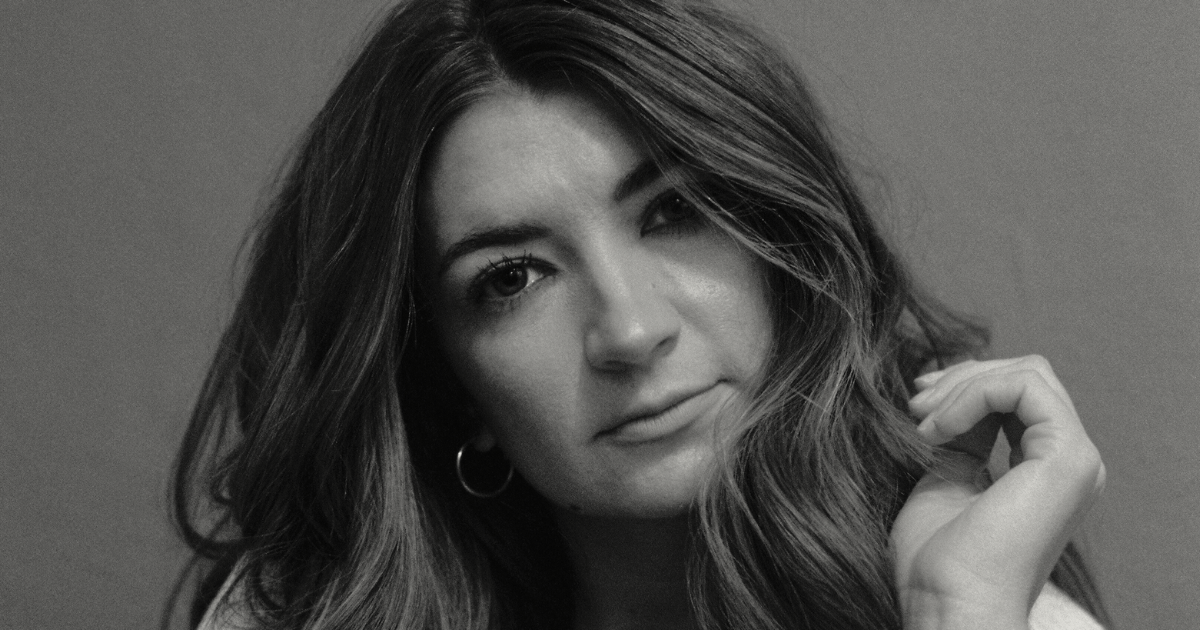
With The Acrobat, Tenille Townes Has Reached the Other Side

When Good Country spoke with award-winning singer-songwriter Tenille Townes in 2024, she had severed ties with Columbia Nashville and claimed her autonomy as a recording artist. It was a tremendous, liberating step into the unknown.

This month, Townes releases her first independent project, The Acrobat. Over the course of its 10 songs, she transparently and hauntingly channels the healing journey of the past two years – one that intertwined heartache, isolation, a plunge into depression, and the long road back.

She recorded The Acrobat at home, in the company of her beloved dog Sam, played all the instruments, and produced and mixed the tracks. This wasn’t the original plan, but as the work tapes progressed, she found catharsis in the honesty of the stripped-down vocals and guitar. This, she decided, was the album, and the best way to bring it to audiences was to perform it the way it was recorded.

She is now on The Living Room Tour, again with just her vocals and guitar, for intimate performances across the U.S. and her native Canada – with one exception: two dates with the Calgary Philharmonic Orchestra on April 23 and 25.

“I’m working with Dave Pierce, who’s arranging the shows,” she says. “He has written musical interludes between the songs that will accompany the storytelling pieces of what I’m doing and connect it all together. Hearing these songs in a completely different light has inspired me. Thinking about the magnitude of that many people onstage, it’s going to be emotional hearing that wall of sound all around me. It’s unlike anything I’ve ever done.”

You moved from Alberta to Nashville in 2013. Who were you then and who are you now? How has Nashville changed over 13 years and how has Nashville changed you?

Tenille Townes: I still feel that the spark for music, the love for it, the complete joy is intact, and I’m grateful for that. Nashville, as a community, has obviously grown so much and taken on lots of different lives in those 13 years, but the heart of the community feels the same to me.

What drew me to Nashville initially was the creative community, the writers, the songs that are created there every day, and this group of people that creatively have each other’s backs. I still love the heartbeat of that town so much. It’s a little harder to get in to see rounds at the Bluebird [Cafe] these days, or things like that, but the spirit’s the same.

When I first got to town, I was so wide-eyed and just [full of] complete optimism. I had this belief that anything’s possible, everything to prove and nothing to lose, and that tenacious… maybe naivete helped me kick down some doors and get things going.

A lot of the dreamer’s expectation is to show up in town, get the deal, and try to find a tribe of people who believe in what you’re doing. I had such an amazing experience finding wonderful people who believed in it with me, and we had a great run. But the deal is not the finish line. It’s where the whole new page of the dream begins, and I feel like a different person now experiencing the other side of that.

There were a lot of beautiful highs and a lot of hard parts in that journey and losing myself for a while. I feel this return to that same “everything to prove, nothing to lose” situation I started with 13 years ago. So it feels good to be getting back to that feisty energy.

How did the cumulative effect of those years and experiences bring you to this point professionally and personally?

I think it’s just life lived. It’s the experiences of finding out that sometimes the picture we paint in our minds of how we think it’s going to be is completely different than how it turns out. Sometimes that’s for the better and sometimes that’s way harder.

Also I think about cumulative experiences, and about the places I got to travel because of music. Touring around the world, playing shows for people in the U.K. and Australia, and they know the second verses to songs I’ve written. That’s such a crazy thing to think about. My experiences on the road have definitely grown my capacity for seeing a community of music that’s bigger than your own backyard, and I love looking at music like that. It makes the world feel smaller in the best way.

It’s been a lot of experiences. It shaped this record I’ve just made, because for a while I lost my footing a little bit in going, “What artistically is my vision, and what do I want to say in these songs and talk about?” I had certain expectations that were like a moving bull’s-eye, and I got a little lost for a while. When I let that rest, I got back to the art of the truth of the matter, just songs I love that tell stories that are important to me.

I ended up making this record sitting in this spare room of my house, next to my dog. It’s this return to creatively tuning out all the noise around me and getting back to the truth underneath. All the experiences led to my hunger for that sparseness and return to self and that feels good.

You pursued every artist’s dream of a record deal, captured the dream, and walked away from the dream – which can be done in this DIY era. Still, it’s a breakup of sorts. Two years later, what are the lessons learned from being signed and from now being independent?

It really is a breakup of sorts. It’s this group of people that were working towards the same common goal beside me. We had such great experiences together and we moved a lot of mountains in our time together. But it got to this point of, “I think I’m losing myself in this.” It is such a unique opportunity right now, the power being back to the people, and being able to post something and have people get excited about it. There is the opportunity to have that freedom to make my own green lights for releasing music anytime it feels creatively right for me.

It took me a few years of unwinding from that structure and that system of how things used to be. There was a lot of heartache in that, a lot of feelings of failure for a while, and eventually busting out of that. I feel like I’ve gotten to this other side, where it is freedom and liberation and, “I get to do whatever I want now.”

With the label, we’d done vinyl before, but never this way. We launched this album online and I had this feeling in my gut that it needed to be a vinyl project. People got excited about it and it blew past all my expectations. I had planned to try to sell 300, which would have beaten my past goals. We launched it and I told the fans, “I’m doing this independently. Make this leap with me. You guys have been believing beside me for so long.” They totally embraced it. They took the leap and we sold over a thousand copies in one weekend of announcing the record. Feeling that support, I was like, “Wow, I feel so much more capable and able to take the leap into the unknown without the safety net of that system.” Feeling this supportive community behind what I’m doing, it was incredibly encouraging.

The Acrobat is obviously a deeply personal album, as are all your albums. You’ve spoken openly about your battles with mental health challenges, but as relates to this album, how was your mental health going into the creative process, during the process, and now?

I made this record in the heart of the mess and a lot of these songs were written in a really dark place. But I do feel, even though it’s a cliché to say this, the more I worked on this project, and the more I felt the liberating side of the freedom coming back to me, the better my mental health got.

This record was quite healing for me and the fact that I produced this myself and played everything on it was a moment of going, “I’m capable of doing this. I got this.” That feeling was really helpful in my mental health space. I didn’t seek out producing my own record and doing it this way. I started just making guitar vocals of some of my favorite songs that had never seen the light of day, so I could decide which ones to take into the studio for the next record. I got a handful done and I was like, “Wait. I really love these just like this. What if I did this myself? What if I recorded it here and made a record that’s really sparse and vulnerable and messy?”

I’ve never done that before. I’m not a master engineer of any sorts. A lot of the imperfections of this record, the truth that people can hear through it, are due to my limitations. None of these vocals are tuned, because I don’t know how to do that. It was a lesson in letting things be not perfect and that was helpful for my mental health, too. Coming to this place of, “I like this as it is,” and finding that strength on my own two feet again to be okay with that.

All in all, this record was a healing experience. I finished it and had this feeling of an exhale. So much of what I’ve walked through in the past few years is very much in the theme of these songs. There’s also this passage of time that I have a new appreciation for. Stepping back and looking at things from a different way and getting back to more vulnerability helped me see. I think that through line thematically is connected to being in a better state of mind as well.

Whatever happens to this record, I’m excited that people will get to hear it, and hopefully these songs will take on entirely different lives and meanings to other people. What I love about music is it’s so open for everyone’s own experiences, but the thread of emotion that runs through them is the same, and that’s something we can all hold on to together. I’m excited for the invitation of that, and whatever life it takes on beyond is great, but just the experience of making this record was so healing for me. That is a victory in itself, and I’m really grateful for that.

Is it paramount to find co-writers who understand your work from lived experience? What is your vetting process for opening up this way to someone who is going to have their input in your material?

Lived experience is so much a part of that, but also I have to feel safe around those people, to show up and be exactly who I am. There’s something disarming about a great co-writer who’s happy to sit with you in whatever you’re processing, and vice versa. Being a good co-writer means being a great listener. A lot of empathy has to be present, to me, in co-writers.

I’ve gotten to write songs with so many people through the years, and I’ve learned something new from every person. I’m always trying to be a sponge and soak in what somebody’s habits are, how they get past the little blocks that pop up in your mind, or how they keep diving in and not settling until you have complete peace about a line. Everybody’s got their own ways of doing that.

But, to me, it’s just feeling safe to really share the truth. That’s the vetting process. Sometimes that takes a few times and sometimes it happens on the first time. Music is such a magical mystery to me. I could sit with someone I’ve never had a conversation with before, but there’s something unspoken in the room, where you’re like, “Here’s what I’m going through,” and the other person is like, “Yeah, I’ve been there. Let’s talk about this. How can we unpack it?”

The song has its own agenda in the room, too. It’s this thing you can’t quite articulate, but when a song is supposed to be written, I believe it will be. I love getting to find out the characters that will help me pull out those songs. Sometimes it’s trusted friends and sometimes it’s complete strangers. It’s all such a magical thing.

On the Bobby Bones Show in 2024, you said every full record gets a new “time capsule” guitar. What’s your newest?

This album is an LG-2, and I love it. I’ve not had a Gibson before and it’s been so fun to play. I got this guitar a couple years ago, thinking that new music was a lot closer than it ended up being, so this guitar has been waiting in the wings for its moment. I wrote a lot of these songs on this guitar because it was on standby.

After I got to the point of “I think this is an album,” I was like, “I need to tattoo this guitar. It’s a match.” I met up with my friend Lewis Lavoie, who’s an incredible muralist painter in Alberta. I brought it to him and shared the different symbols and themes of the record. It was like, “There needs to be hands letting go.” There’s some azaleas from one of the lyric lines. “The Acrobat” is represented by a petal that turns into a bird, and that leads into “In Love With The Sky.” Every song has its moment on the guitar canvas. It’s a trilogy of the guitar time capsules I’ve made. I’m excited to take that one on the road.

How many guitars do you have?

I have two Martins that are tattooed as well. One was for The Lemonade Stand and one was for Masquerades, and the back was for Train Track Worktapes. I also have a Gibson electric that I love to play, an old D-28 that I love playing at home, and a Taylor 912ce that I got for my high school graduation. My family all wrote their names on little pieces of paper and tucked them into the case and I felt like I headed out into the world with this guitar in hand and all their love and support with it. My grandparents bought me my first guitar. It was a parlor size, not a Sears catalog guitar, but something close to that. It’s at my parents’ place in Canada. That was the first guitar I ever played. The stories that come with the guitars mean so much to me.

Does the guitar play as much a part as the lyrics in terms of expression and what you need to say?

Yeah. It’s really hard for me to separate the two. A lot of people will write the music and then write the lyrics. I respect that process, and I’ve written a couple songs that way, but to me, they really feed each other. I can’t hear the space for the melody and how many words need to make sense for it without the guitar laying that out. They’re like threads completely woven together. I enjoy taking away all the noise to leave space to hear how the guitar and vocal would interpret a song. That’s always the truest form to me. That’s the way I started as a kid, just playing songs in my room.

How do you protect yourself mentally and emotionally when you perform these songs?

There’s an exhale once the song has been recorded, and in the live experience it becomes so much more communal. I feel like my job up there is to hold open doors. Songs have ways of helping us sit inside the rooms in our hearts that are terrifying to go into alone, and the live experience is very much part of the exhale. It doesn’t hurt to relive it onstage as much as I might think it would, because it’s a part of something bigger.

I’m very nervous for these shows because there’s nothing else to fall back on. I’ll miss my band very much. I love those guys, so it’s going to be very different. But it feels timely for this creative season I’m in right now, and I think it will help me continue to build that intuition back even stronger. These shows are more of a living, breathing thing because it is just me up there. It’s going to be a two-way street with the audience and it will be a way for us to maybe chat a little bit, take some requests, and be less locked to a grid that five or six people are working towards the same goal on. It’s just me and the audience, so I’m pretty excited for that.

You posted a video last year in tandem with Mental Health Awareness Month, in which you said that you “came to a whole different low” the previous year and “depression doesn’t care how much you had a grip on positivity and gratitude.” What was different about that low, and how did you claw your way out?

It’s a process. There were a lot of personal changes in relationships for me, career shifts, and feeling a different kind of alone. The unending joy that music has always given me – it was such an indication that something was off, because that light was really dimmed. That was scary, because that has never gone away.

I consider myself a pretty positive person. I grew up learning tools of how to stay looking on the sunny side and all those things. But there’s also an avoidance of the truth that builds up over time, and that all caught up to me in that space, a lot of the people-pleasing tendencies and this realization that I was taking matters into my own hands again.

There’s such waves to it. Everybody’s experience with depression is different, but it’s this big scary thing to talk about because it is really scary. It’s dark. It’s so lonely and isolating and hard. I love when I see other people talk about it. It’s like, “Oh, I’m not the only one. Okay, good.” This is a part of the human experience, and we have to lean on each other to be able to know that it’s okay to feel that low sometimes and you’re not the only one.

I tried medication that helped and got me to a base level where I could go, “How else can I keep chipping away at this?” It’s not easy. It was an incredibly slow return of every day waking up and trying to have the right intention to take a step in a better direction for myself. So going for walks, trying to hit a certain amount of steps every day to keep my body moving, eating healthier foods, and being able to have friends that I force myself to check in with and be honest with.

Those things are not easy for me at all, but it’s part of the process and it definitely helps get me to this place. At that time I wasn’t creatively doing anything. Once I got a little bit better, I was able to start working on this record, and that really helped me continue the mental health journey.

How long were you in that dark place?

It was probably six to eight months of really dark. But I think it had been brewing for a long time and I had been denying its existence and covering it up. So it was a buildup, and then a slow, gradual return from there.

Was this your first experience with depression?

It was my first time acknowledging it for what it was. I think I’d experienced it before, but I hadn’t given myself permission for that to be okay, to be the truth.

Was it tough to record that video and say it publicly?

It was tough, for sure, but it also was part of the exhale. It was scary to make the video and press the button to post it. I didn’t want to do that, but after I did, the encouragement from the community and people reaching out going, “I have dealt with the same thing,” or “This helped me because I have been feeling the same way,” or whatever the responses, it’s like we give each other permission, and that encouraged me to do it, because I do love the community of people. It’s been a long ride, and I felt like I needed to be honest with what I was dealing with. It was powerful and encouraging to see that other people felt the same. It made a really lonely and isolating time feel a little less lonely.

Your awareness of and empathy for youth shelters, food banks, homelessness, the ills of the world, and now mental health, goes back to your school days, when you wrote a song from the perspective of a daughter whose father was in Afghanistan. Feeling so deeply for so many about so much, it’s easy to overload and spiral when you’re carrying everybody else’s struggles along with your own. How do you take care of yourself and find balance?

I don’t think I balance that very well at all, which is why I struggled for a long time. To me, it’s always keeping a connection to something greater than all of us. There’s different phases of what that’s looked like in my life, but that is what intuition is, just listening to that guiding force. If I keep that in check, then my compass tells me what to hold on to and what to let go of. When that “check engine” light is on, I know I’ve got to pay attention and get back to that.

I’m still learning what that balance is, and I don’t have all the answers at all, because I do feel things quite deeply. Maybe that’s an empath thing. I think that’s also part of being a creative and part of being a writer. You have to soak things in and feel them to a certain degree for it to become real in your own interpretation, so that you can write about it. Keeping those channels open is important to me, but I’m still learning ways to protect my own heart in that process.

Music is a big part of your healing, but dog lovers also understand canine therapy. Tell us about Sam.

Sam is 6. He is a pandemic baby. I found him on Petfinder and got him from a rescue in Illinois. He’s been my buddy ever since. He’s coming with me on tour. Because it’s an acoustic show, it’s a smaller crew – just my tour manager, my sound guy, and Sam and I – so Sam’s able to come on his first tour. I’m pretty excited about it.

Sam gets an unwritten executive producer role on this project, for sure, an emotional support credit. I’d be lost without this little guy. He brings me so much joy, but also a dog will force you to be present and in the moment. They need to go outside right now. They need to go for a walk. They need to get out of bed in the morning because they’re hungry. This beautiful creature is a constant reminder of showing up as your most authentic self in every moment. Sam is the perfect example of that.

They’re also such intuitive creatures. In some of those really dark times, he just knew. He would come snuggle right up beside me and put his little chin on my knee like, “Hey, I got you.” I’m so grateful to know and experience that kind of unconditional love from this beautiful little guy. There’s nothing like it.

When people listen to The Acrobat, what do you hope they learn about you, and maybe also about themselves, through your songs?

I hope they hear the courage it took to get to this sort of honesty, and that they feel permission to stand on their own two feet as well. This returning to autonomy, and this ability to let things go and embrace change, even when it’s hard and feels like the worst thing in the world, I hope they feel comforted that somebody else knows what that feels like and that they’re not alone.

That’s always the greatest mission of my music. I hope it helps people feel a little less alone, and that’s definitely one of my hopes with this record. I think there’s a lot more humanness when we talk about these things. That’s what I love about music. It opens the door for those conversations.


Continue exploring our Artist of the Month coverage of Tenille Townes here.

Photo Credit: Madison Rensing.

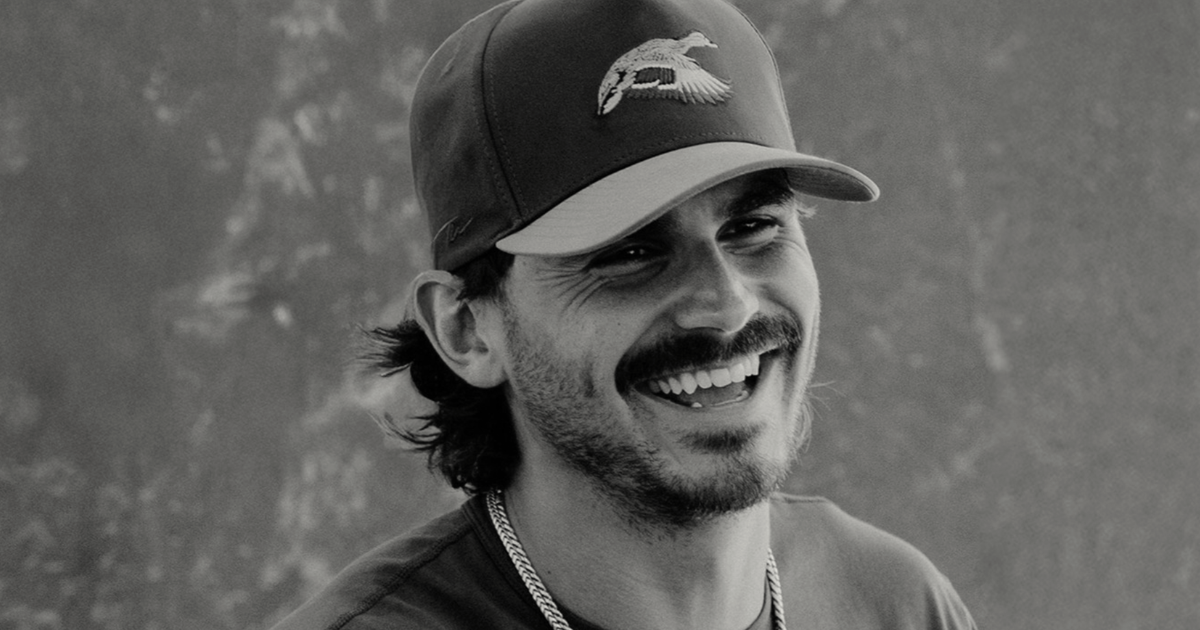
Tucker Wetmore Is Buckled Up for the Ride

If you’ve read about Tucker Wetmore or listened to one of his many interviews, chances are the following subjects were lobbed his way: women, whiskey, blondes versus brunettes.

When the “star-maker machinery” that is the business of music collides with media outlets in search of headlines and algorithm rankings, it can make or break a promising new artist by reducing them to a pretty face with a clickbait story angle, the whole time steamrolling over the singer-songwriter at the core.

Tucker Wetmore is keenly aware of this and proceeds with caution. He’s affable enough to play along and astute enough to know the game. Peel back the layers and you’ll find a thoughtful, hard-working artist rooted deeply in faith and family and with a sense of public image versus personal values, carefully monitoring how and what he presents.

With multiple hit singles, award nominations, over a billion streams, product endorsements and campaigns, television appearances, endless interviews, the 2024 breakout Waves on a Sunset EP, and 2025’s unstoppable nineteen-track What Not To, Wetmore is taking it all in with cautious abandon, savoring the wins as they come.

It’s been a long, hard-fought road in a story now told countless times: he grew up in a small town, was raised in the church, brought up by his mother when his father walked out on the family. Music became vital at a young age, athletic prowess and four state titles led him to college, a severe football injury sidelined his career goals. Back home, he again threw himself into music, moved to Nashville in 2020, and pursued his dream.

On January 25, 2026, Wetmore added another victory to his timeline – this one particularly special, as it brought with it a lifetime of memories. He performed the National Anthem at Lumen Field during the halftime show at a Seattle Seahawks game, in front of a stadium filled with cheering fans.

He was still on that high when he spoke with Good Country only days after – and days before the launch of his Brunette World Tour. “It felt like a full circle moment,” he says of the halftime show. “I’ve been to Seahawks games growing up. I’ve been in that stadium, screaming my face off, cheering for the ‘Hawks. But to be on the field and playing my songs in front of thousands and thousands of people was absolutely surreal, especially for something as big as the NFC Championship. I’ve pretty much seen every NFC Championship since I was born. I was super nervous, but we got through it and we didn’t mess up too bad, so it was a good time.”

You have the biggest country debut album from a new artist in 2025. When did you realize that things were really taking off and it was time to “buckle your seatbelt, because this is happening”?

Tucker Wetmore: I’d say even before the album. The first time I felt like that was when Kameron Marlowe was nice enough to bring me on tour. I had one song out and I hadn’t even dropped “Wind Up Missin’ You” yet. I remember getting onstage at that first show and people screaming my songs back to me, singing every word to the songs I had teased [online]. It was absolutely insane. I was like, “I should probably buckle up. This is getting pretty real.” That’s when I knew I might have a chance to do this.

Can you ever be truly prepared for this level of success?

There’s definitely ways to prepare for certain situations, but there’s curveballs thrown at you every single day, so there’s no way to prepare for that. To put it in sports terms, learning how to sit back on the curve, wait for it to cross the plate, swing, and hopefully hit it.

We know about fan reactions to “What Not To,” and people relating to it from the perspective in which you wrote it. Have you also heard from fathers whom that song is hitting as hard because of what they didn’t do?

I’ve heard stories at meet-and-greets, people spending a little extra time telling me about how much that song has helped them cope. But I don’t think I’ve heard anything from fathers having that realization. That’s a touchy subject, and I hope it moves some fathers to want to be better.

All I can do with my music is write what I’m feeling, produce it the way I think it should sound, and put it out to the world for people to do what they will with it. One of my goals with that song was hopefully this changes some viewpoints on some fathers, and hopefully it helps people learn. It’s a “glass half full” kind of song. It’s saying, “Even though these things happened to me in my life, I can learn from this and use everything as a lesson,” instead of, “Oh, poor me.”

Have you ever fallen into that mindset?

I think we’re all human and we all do it. Not in a really long time, though.

I look at life as an opportunity. Whether it’s good or bad, it’s always an opportunity to learn and grow. I don’t [fall into it] so much anymore, but I remember being young and being pretty upset about some of the cards I was dealt. Luckily, my mom’s great and my family’s super supportive, I’ve got the best friends in the world that think the world of me, and I do the same for them. So I’ve got good people around me to keep my head on straight.

You had to grow up early when your dad left. What are some life lessons you took from those years that apply to your life and career now?

Growing up, I had four sisters and a beautiful mother, so it was a lot of women in the house, but it taught me a lot of things and I wouldn’t have changed it for the world.

There’s definitely times where I thought, “It’d be really nice to go out with another male and throw the ball out in the yard.” But looking back at it now, I learned so much about how to care for women, and how to be a provider, at a really young age, even though there wasn’t much I could do back then. Now I’m taking all those lessons and putting them into real life, like providing for my family, taking care of them, making sure they’re good mentally and financially.

A lot of things I learned at a young age are translating into my life now. Down the road, when I do find that special someone, I want kids someday. I want to build a family and do it right. And so I’d say I’m prepared for when that day comes because I know what to do and what not to do.

In an interview with Billboard, you said about music, “It saved me. It helped me. It was my therapy.” Let’s talk about how music helped you and how it continues to do so.

Music is, in my opinion, the best form of therapy. I think it’s God’s gift to us to be able to create and sing along, or dance, or whatever it is, to a tune. Music has shaped my mindset so much. I started playing when I was 10 or 11 years old and it shaped the way I cope with things. Instead of getting angry or upset or sad or frustrated, whatever the emotion is, I sit down at my piano and I just play for 30 minutes to an hour.

Being creative and having that creative mind, it runs fast and it runs 24/7. It’s … not a double-edged sword, but there’s a yin-yang to it. Music is the thing that drives me crazy because my mind can’t shut up and stop. But at the same time, I was in a write yesterday and the energy in the room was so great for four or five hours straight. We were smiling and laughing and creating the song. So music is my escape from what music does to my brain, if that makes any sense. It helps me ease the craziness of my mind.

During those earlier periods, when music, as you said, saved you, how dark was the darkness?

I lean very strongly on my faith, even during the dark times, and we all get them. I’m the happiest man in the world most days, but I still have days where the weight of the world feels like it’s compressing my spine, in a sense. It’s definitely been dark at times, but I lean on faith and I lean on God, and I lean on my music and other people’s music. It’s easy to snap out of when you have those avenues that are so moving to the soul or the mind.

Has there ever been a time when your faith wavered, or when you questioned it?

Yes. In college … it sounds wrong, and I don’t mean it in this way, but I kind of put my faith on the back burner. I was focusing on other things instead of the most important thing. I was playing football, I was partying a lot with my buddies, I was drinking every weekend to escape whatever it is. I still drink, but I do it with a solid conscience and it’s more celebratory now. There’s a fine line of focusing on worldly things and keeping your eye on the bigger picture of faith and the blessings that God has for us, because there’s so many.

You are giving a portion of ticket sales from this tour to Face The Fight, supporting suicide prevention and mental health treatment for veterans. Why is this the organization you selected to promote and help?

The first time meeting them, I turned to my manager and I was like, “I want a part of this. Let’s find a way to do something.” We put our minds together and it was, “What if we do ticket sales?” I was like, “Yes, a hundred percent.” It’s a huge thing for me because I’ve got a lot of veterans in my family, a lot of men that served and that have given their life on the battlefield.

My grandpa was like my father figure a lot growing up. He ended up taking his life five years ago. He was a very decorated veteran and one of the best people I’ve ever met, but even though it was so many years later, he couldn’t win that battle in his mind.

I think it’s super important to not just shine a light on it, these people that have given so much for our country and the people in it. It is such a selfless act, especially in the heat of war, when you’re fighting for people that you don’t even know, and doing things that no human should do, in my opinion. And then to come home, and 20 or 30 years down the road you’re still thinking about it, and still in that mental space of, “I can’t escape my mind.”

What [Face The Fight] is doing is amazing. It’s a blessing to be a part of. I think if my grandpa had an avenue like that, or knew of an avenue like that, maybe he’d still be here.

In an interview or podcast, you mentioned that you read the comments–

Sometimes.

You must have a really thick skin, because that can wear a person down.

There’s a lot of keyboard warriors out there. I can read the worst comment in the world and it doesn’t get under my skin at all. At the end of the day, I know who I am. The irony behind it is most of the people saying heinous and nasty things online have never created a song. They’ve never sung a tune. They’ve never sat in a room at 3 a.m. because they can’t sleep and put all their feelings on a piece of paper and tried to put a melody behind it. They don’t get it. They see things at surface level. I’m not going to bash on them or say it’s their fault for that. There’s irony behind it and that’s all I take it as. It’s funny to me. It’s almost comical at times.

@tuckerwetmore This one is getting loud live.. #songofthesummer ♬ Brunette – Tuck

I heard you use the words “build your brand” during a podcast. There’s a lot of image in this industry: wear the tight jeans, pose with your shirt up – you know what I’m talking about. How do you make sure this doesn’t overshadow the craft? As a new artist, do you have the autonomy to say no, to not answer a question, to stop an interview, to not want to take this picture?

While building a brand, and while creating something that is larger than yourself, it is more important to say no than it is to say yes. I definitely have the autonomy of saying no, and I do say no to a lot of things that come across the table. It’s saying yes to the correct things that align with not just the goal of what we’re trying to build, or the pillars that we are building it on, but morally. I account for my faith in pretty much all the decisions I make.

If I could give advice to any artist coming up – and I’m still making my way there – my biggest piece of advice is, “Say no to things that don’t feel right or don’t make you look like you.” I think I’ve done that pretty decently. At the beginning it’s really hard to say no to things, because you want every opportunity there is. But now I’m saying no to a lot more, saying yes to the correct things, and trusting my people. They know who I am and what we all want to build together, and it makes it a little easier.

Earlier you mentioned people reacting to song teasers. Before this career explosion, was there pressure to keep up when “everyone” is teasing songs on social media and the algorithm is bombarding people? It can turn into artists chasing numbers, which can also affect your mental health. How did you ride that storm without falling victim to it?

The grace of God, honestly. That’s a tough thing. It’s easy to compare yourself to others, based on a numerical scale of, “This got a million views, and I just posted one that’s got 150,000, it’s not being shared.” It’s very easy to get into that comparison mindset, but I do think it’s important to keep posting your stuff. Luckily, I’m getting to the point where I don’t have to post all the time. Posting is one of the most taxing things to my brain. I can’t stand just sitting there and making TikToks or taking photos or whatnot.

I realize the weight that a viral video can hold to your career and to a certain song or a project. It’s an easy way for millions of people to engage with what you’re trying to create. It’s a great tool. That’s the word I’ll use for it: social media is a tool. Some people idolize it and can’t go through their day without it. I look at it as a tool for people to share my music and hear my music and get excited about the things I’m trying to do.

We can’t do this without talking about your mother. She is such an integral part of your life and your career. Without her support, how different would your trajectory have been?

I don’t think there would be any trajectory at all, honestly. After I got injured playing football and dropped out of college, I was living back home. I remember having that conversation with her. I was like, “Mom, I really want to chase this music thing.” It was like a sigh of relief from her, in a sense. Her shoulders went down, she took a deep breath, she goes, “Finally. Finally. I’ve been telling you this for years now.”

She helped me pack up all my stuff and move, and she supported me financially the first couple years of me moving to Nashville. I would be living on the street if it weren’t for her – metaphorically living on the street, because she would never let me do that. She believed in me before I even had good songs. She believed in my work ethic and my mind and my creativity. One of the biggest blessings God has given me is a mother who cares and wants to see her kids succeed in whatever dream they have.

And now she’s doing podcasts and talking about your childhood.

Yeah. Somebody needs to rein her back a little bit!

You love being on the lake. Is water also a form of therapy for you?

Oh, a hundred percent. I grew up in a super small town, Kalama, Washington. Because it’s built up on a hill, pretty much wherever you are, you can see the Columbia River. I spent so much time on that river, or on the Kalama River, or at the lakes surrounding. I feel happiest when I’m at the ocean or at the islands.

I’ve got a lake house in Nashville and it’s a great escape for me to go back home and be able to sit there and look at the water. It helps not just my creative mind, but [also] my mental health. Another thing God has given us as natural therapy is the beauty of a body of water. It’s the most simple thing in the world, but I do not take it for granted.

Is it a spiritual place for you as well, a natural church?

Yeah. Anything can be a church, as long as you’ve got the spirit in it!

What’s on your heart as you’re getting ready for this tour?

Excitement. It’s been a couple months since I’ve toured and I’m itching and eager to get back to it. I’ve had a great break. I’ve had a very creative break. I finished writing my second album yesterday. Obviously, things change and I get new thoughts or whatever, but right now I feel pretty confident in the songs we got, and I’m excited to get back on the road and maybe tease or play some of these new ones and see how people like them.

And I’m excited to just be on the road. I feel most alive when I’m in the craziness of it all. It does get taxing at times, but it’s truly a drug to not just me, but pretty much all my artist buddies. It’s a feeling you can’t really explain, getting up on a stage in front of thousands and having people scream your creations back to you. It’s the coolest thing in the world. I’m excited to see the fans and be with my band, my crew, and my team. It’s a family that we’ve built, and it’s going to be cool. I’m excited.

Since you brought it up, before we close, what can you tell us about the next album?

It is sonically one of the coolest things I’ve heard in a long time. I don’t want to give too much away. I’ve been doing a lot of thinking about what I want this next record to be for the last year already. I think about what I get in my truck and listen to, and I’m kind of an older soul. So it’s very ‘70s-influenced and early ‘80s, with the guitar tones and drums and weird, synth-y sounding steel guitar licks. It’s really cool and it’s fresh, and I don’t think anybody’s really doing it right now, which I’m excited about but which is also scary, because I don’t know how people are going to feel about it because it is different.

I was thinking about this yesterday, actually: “Proving Me Right” is the perfect bridge into this next chapter, sonically. It’s not too far leaning over there, but it’s still got the old tendencies in it. If you were to listen to anything that gets you excited about this next record, I’d say “Proving Me Right” is a great start.


Want more Good Country? Sign up to receive our monthly email newsletter – and much more music! – direct to your inbox.

Photo Credit: Chase Foster

How Courtney Hartman
Made With You

In the late summer of 2022, Courtney Hartman realized that the songs she had written for a new album were not the songs she needed to release. “I had found out I was pregnant a few months earlier, [and already] had a batch of material I was working on for a new record. I felt this quiet urging to set all of that aside and give my attention to what was happening in our life and in my body,” she says.

She discarded everything and began writing her third album, With You, a personal journey through motherhood set to music.

“What was happening in our life” refers to a tumultuous string of events that saw Hartman and her husband, John, through the best and worst of times. Best because the couple were expecting their first child, rebuilding their house in Eau Claire, Wisconsin, and Hartman was on tour; worst because her husband fell off a ladder, could not work for months, lost two jobs, she was dropped by her booking agent, and they totaled their car.

The cumulative effect left the couple in need emotionally, physically, and financially. They soon found themselves uplifted by their community – their immediate one and her music community at large. The experience left Hartman deeply grateful and dedicated to giving back even more than she received.

In September of that year, Hartman began writing “in earnest” the songs that became With You. She and her husband welcomed their daughter in February 2023 – more best of times followed by worst of times as Hartman struggled with postpartum depression.

“At the end of [2023] I had all this material and realized I wanted to invite in other voices and stories and perspectives, specifically those of other mothers,” she says.

Once again, she drew on her community, calling on a fellowship of songwriter mothers – Sarah Siskind, Dawn Landes, Ana Egge, Tift Merritt, Kristin Andreassen, and Emily Frantz Marlin of Watchhouse – to help take her deeply personal new songs to an even higher level.

“I spent another few months, December [2023] to February [2024], writing mostly over Zoom, finishing the material with those other writers,” she says. With You was recorded in June and July 2024, at The Hive studio in Eau Claire, with Hartman producing and Brian Joseph as co-producer and engineer.

As one might expect from Hartman, there are plenty of guitars on the album – her Lawrence Smart Archtop, Bourgeois Parlor,
PreWar (modeled after a Gibson J-45), Bischoff Dreadnought, Martin 00,
and a Telecaster – but if you’re looking for the lightning flatpicking work that makes her a bluegrass force to reckon with, you’ll be best served on YouTube. With You tells a story that calls for understated guitars as a palette for its songs.

“Things weren’t all bright and shiny in that season,” she says, “but the impetus to write and pay attention helped me pay attention to some of those lighter moments. Not all the songs on With You are about everything being light, because that’s just not how it is. But there was this extra attention to some of those details that do help buoy your spirit when things are a little more challenging.”

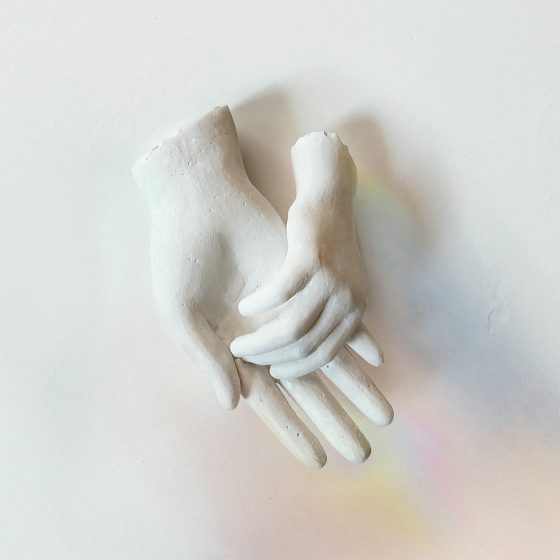
Courtney Hartman’s ‘With You’ album cover art, created by Claire Lindwall.

Completing the journey is With You’s striking cover art. The work of Hartman’s close friend Claire Lindwall captures the music’s delicate intimacy. “Claire is primarily a watercolor artist and illustrator,” says Hartman. “A special part of creating an album, for me, is giving the music to someone who then translates it into a visual piece of art. Every time, it’s surprising and expansive in a new way.”

Lindwall cast her own hand and that of her daughter’s, and positioned the casts so that one holds the other. “We experimented with drawings around it, then having just a splash of watercolor behind the piece,” says Hartman. “That’s all it needed.”

With this album now making its full debut, how do you feel about sharing so much vulnerability?

Courtney Hartman: The processing has happened in phases. I think it started just by saying yes to writing the material. There was an accepting of, “I’m writing about this thing that feels more vulnerable and more naked than anything I’ve written about before.” Bringing those songs to other writers, to collaborators, there was another level of vulnerability there.

A year ago I brought all of this material to my greater community and asked for support, because at that point I needed help putting the album out. Now, to give it to the rest of my community and listeners in the world, there’s a level of vulnerability, but I feel mostly excited. It feels like, “We made it.”

You’ve explained in other interviews that you had to use funding meant for the songs that came before these in order to get back on your feet. Needing financial assistance is also a vulnerable place and one that often brings publicly imposed shame and guilt. How did you process it?

You’re bringing up something that my husband and I have been talking about a lot, just with the news cycle and trying to get an understanding of what we can do for folks in our community. And having had small tastes of that in our life, because I know what we’ve experienced is so small compared to what so many people live through and are currently living through.

An important [word] that you touched on is shame – the shame of needing help; of not feeling like you can do it on your own or you can stand on your own two feet; of needing help for basic things like groceries. I think maybe accepting help and accepting care expands our capacity to feel compassion and to be able to then care for others.

In a podcast for Acoustic Guitar, you used the phrase “the intimacy of sound.” Could you talk more about what that means in the songwriting and guitar playing?

What I hear when you reflect that phrase back to me is the sound of the skin of your finger on the guitar string, or the sound of hands against a percussive instrument. When we went into the studio, I told the friends that were with me there on the first day, “Just as a guiding directive, whenever we imagine a sound that we want to create, let’s see if we can find something natural to create it with.”

Everyone took it in their own way, some on their instruments. Sean Carey was heavily involved on the record and he took that more literally in a lot of the percussion work. He found a nest outside when he was wandering around and that became the percussion on a track. Or even just the sound of skin on skin being a sound that we used as well; bringing in and magnifying some of these quieter sounds and allowing that to be a part of the soundscape [was part of the intimacy of sound].

Did you select the guitars around the songs or did some of the songs develop around your guitars?

Sometimes you think you know what a song wants before going into the studio and then you sit behind a mic and you’re like, “This isn’t serving it quite right.” And sometimes that experimentation takes a little longer than you think it will. Or sometimes you sit down with a first instinct and it’s totally right. That’s part of the reason it’s fun to have a good array of instruments in the studio.

Is the guitar as much a part of expressing your feelings as the lyrics?

It is. I think part of that comes from how long it’s been an instrument that feels like a voice to me. Songwriting came around the same time. I was about 12 when I started writing songs. Singing feels like something I still have so much exploration and learning to do.

How did working with other mothers, and their lived experiences, bring understanding to what you were going through?

What I was given [was the] shared experience and the acknowledgement of, “This is really hard. It’s really beautiful, but it’s also really challenging.”

So much of the caregiving that happens [as a mother], especially in that first year … so much of it is invisible. Maybe an aspect of that applies to all sorts of giving care – that it’s invisible other than to the one giving the care and the one receiving the care. When you feel invisible, it can also make you feel isolated and that can really feed into some of the struggles. A lot of folks have postpartum [depression] and societally we’re not set up to honor and support that season very well at all. It’s something I care a lot about, both from experiences with my family, but also as I’ve delved into work as a birth doula.

When you say, “Societally we’re not set up to honor and support that season very well at all,” what do we need to do?

We need to honor and uphold the importance of rest and nutrition and preparation. Parents are prepared for “Here’s what birth might look like,” but after that six-week checkup [traditional care usually ends]. Postpartum extends far longer than that.

A lot of [postpartum] mental health struggles won’t show up until maybe nine months or a year after a child is born. Better supporting [people postpartum] that would be the first thing I can think of. We live pretty isolated lives, as families in our insular homes, and so we’re not set up to receive support very well.

Or ask for it.

Yes, totally, [we need to be] preparing [people] to know that this is a time to accept and receive care. Preparing your heart for that is such a big piece of it, to know that we, as your village and your community, want to care for you in this time.

You’ve spoken openly about postpartum depression. What was that period of time like for you?

Moments of real happiness, but also moments of hitting my head against the wall … when I was struggling. [It was] hard to admit to myself and then to speak that [struggle] out loud to anybody. It wasn’t until afterwards that I could say, “That was hard.”

All depression is misunderstood and will often make people in your circle run away.

Let’s go back to your community, and the community of mothers, and how they lifted you.

I felt so cared for by our community in a way that was deeply humbling and in a way that somehow prepared me to do some of the caregiving that was going to be required of me. I was receiving so much love and support and meals and folks showing up. That kind of care is life-changing. It changes the way we see the world and our community around us.

My daughter was about nine months old or so when I started reaching out to other mothers, asking if they would collaborate on some songwriting. Having some tether creatively helped pull me through that season. It helped weave together the woman I was prior to having a child with the woman I was in that new space. … Sometimes it feels like … you almost can’t remember who you were before.

I was really afraid of [losing parts of myself]. I was afraid I wouldn’t create music again. There’s all these fears, irrational or not, that show up. Creating and being able to have these conversations that normalize what you’re experiencing. Having women who are [a] few years ahead of me be like, “It might be extra-challenging now, but it doesn’t stay that way forever.”

It’s almost 2026 and society still misunderstands and stigmatizes mental health, certainly PPD, and even some aspects of pre- and postpartum healthcare. Why are we uncomfortable talking about things that are so natural and important to discuss? Are we making progress or going backward?

I hope we’re making progress. It was a lot easier for me to ask, “Why don’t we talk about these things?” when I wasn’t part of the “we.” As soon as it was also part of my story to talk about and share, [I had to come] to terms with my own hesitancy. Why do I not want to talk about something as normal as pregnancy and motherhood in my songs? Why do I feel like if I put this music out, it will be discredited and potentially ignored, even though it may speak to so much of the population? …

I still don’t have an answer. Maybe it’s because there’s so many generations of women having to hide those things for fear of losing wages, or jobs, or discrimination, whatever it might be. For everybody’s sake, there’s so much we have to learn from mothers’ voices, and I hope we’re beginning to really listen.

On a podcast, The Other 22 Hours, you reflected on the period after Della Mae and the realization, at the time, that “Music was not a healing thing.” What role does music now play in your healing and mental health?

It has become healing again. Years ago, I was dealing with physical pain in my hands. That was magnified by touring all the time, being on the road so much, and the strain on my body. So I was speaking about it in a physical way. [Music] has become a lot more than just physically healing [for me]. I think this album exemplifies that.

You have worked with so many people. Who is your wish-list artist or artists?

Oh my gosh. The first person that came to mind – and maybe it’s because I’ve been listening to her record all week – I would love to play music in the same room as Brandi Carlile. She gives all of herself and it’s so good.

We had a listening party [for With You] and as I was listening to the album for the first time with a whole group of friends and collaborators, what I hear on it is my friends and heroes, which is such a joy. There are so many folks on this album that I look up to so much and who have been dream collaborators. So, in that way, a lot of it has been a dream list fulfilled.


Photo Credit: Michelle Bennett

You Gotta Hear This: Lonesome River Band, The Prickly Pair, and More

You’ve reached the end of the week and we’ve got roots music ready to take you into the weekend. It’s our weekly roundup of new music, new videos, and premieres.

Continuing with our mini-series this week, saxophonist Eddie Barbash returns with yet another excellent performance video of a classic instrumental bluegrass tune on sax. This time, he offers “Clinch Mountain Backstep,” listening to and learning from every instrument in a classic bluegrass five-piece in order to forge his own way through the melody on his outlier of a string band instrument. Also in bluegrass, the long-running and fundamental group Lonesome River Band have unveiled a new single today, “No Business Mountain,” drawing inspiration from near their home turf, down the road in Patrick County, Virginia. It’s a lilting, sunshiny bluegrass song perfect for a two-step.

Americana duo The Prickly Pair have brought us a song from their upcoming self-titled EP. Out next week, you can hear a sneak peek of “Piece of the Sky” today, a vibe-rich retro-sounding song inspired by the infamous story of D. B. Cooper. Plus, Western North Carolina singer-songwriter and Steep Canyon Rangers member Aaron Burdett shares a new single, “Rhyme or Reason.” First conceived and written at a songwriting workshop with Darrell Scott a few years ago, Burdett’s recording of the track comes shortly after he got to share the stage with Scott in Brevard, N.C. A full circle moment right in time for the song’s release.

Singer-songwriter Max Gomez released his latest album, Memory Mountain, in late summer, but lucky for us he’s not done with bringing new content from the project yet. Today he shares a new music video for “New Mexico,” a number that some folks call the unofficial anthem for the state. Which, Gomez is deliberate in sharing with us, is also a point of the song: To remind listeners that New Mexico is indeed a state. Rounding out our collection, Appalachian Americana artist Darrin Hacquard also brings a new music video for “Places I Went,” a song from his brand new album, Weights & Measures, which is out today. It’s a track that interrogates duality and Hacquard describes as a sort of “fucked up gospel song.” But you’ll have to listen and watch to see if you agree.

Up and down the mountains, whether in Virginia, North Carolina, or New Mexico, there’s plenty of excellent roots music for you to enjoy right here on BGS. You Gotta Hear This!

Eddie Barbash, “Clinch Mountain Backstep”

Artist: Eddie Barbash
Hometown: Nashville, Tennessee
Song: “Clinch Mountain Backstep”
Album: Larkspur
Release Date: November 28, 2025 (The album will be released one song at a time with the last track coming out Nov. 28.)

In Their Words: “I enjoy playing fiddle music on saxophone because it feels like an adventure! I have to figure out how to make these tunes sound good on sax, because I have no example to look to. Every instrument in a string band has its own versions of the melodies that are uniquely suited to it. When I adapt a tune for saxophone, I listen to how every instrument plays it and then use the variations that work best for me. If there are any phrases that continue to elude me, I create my own variation that is unique to the saxophone. This process is especially evident with a banjo tune like ‘Clinch Mountain Backstep.'” – Eddie Barbash

(Editor’s Note: Watch the first two videos in our mini-series with Eddie Barbash here and here.)


Aaron Burdett, “Rhyme or Reason”

Artist: Aaron Burdett
Hometown: Saluda, North Carolina
Song: “Rhyme or Reason”
Release Date: October 17, 2025
Label: Organic Records

In Their Words: “The very last thing I did before the COVID pandemic hit in 2020 was to attend one of Darrell Scott’s ‘Songfood’ workshops. ‘Rhyme or Reason’ is a song I wrote over the course of a few days there with about a dozen other songwriters who were doing the same thing. I’d been thinking about the concept on the way, driving from my home in North Carolina over to Nashville, and when Darrell told us to bring a new song back to the group, this is what came up. I remember right where I was when the idea hit, which isn’t uncommon. And then it fleshed out there in that workshop in late February of 2020. As I write this now in September of 2025, I am proud to say I was on stage with Darrell recently singing with him at the Mountain Song Festival in Brevard. Funny how things turn out. And truly that’s what the song is about – appreciating the ride as we move through life and doing the best we can with what we have. Things work out.” – Aaron Burdett

Track Credits:
Aaron Burdett – Lead vocal, acoustic guitar
Kristin Scott Benson – Banjo
Carley Arrowood – Fiddle
Tristan Scroggins – Mandolin
Jon Weisberger – Upright bass
Wendy Hickman – Harmony vocal
Travis Book – Harmony vocal


Max Gomez, “New Mexico”

Artist: Max Gomez
Hometown: Taos, New Mexico
Song: “New Mexico”
Album: Memory Mountain
Release Date: October 17, 2025 (video); August 29, 2025 (album)

In Their Words: “The song is a protest song. What we’re protesting against in the song are our fellow Americans who seem to be unaware at times that my home state, the great state of New Mexico, is in fact one of the 50 that make up our nation. And yes, it’s sort of a tongue-in-cheek approach, but, it’s a real problem no less.

“In the last verse of the song I mean you no disrespect if you happen to be from Kansas or Kansas City, Missouri. Or if you ever worked for the TSA. It’s a true story, it happened to me when I was younger.

“Some folks call it the ‘unofficial state anthem’ of New Mexico. Perhaps one day we’ll find some legislature and crowbar it in the history books.” – Max Gomez


Darrin Hacquard, “Places I Went”

Artist: Darrin Hacquard
Hometown: Hocking Hills, Ohio
Song: “Places I Went”
Album: Weights & Measures
Release Date: October 17, 2025
Label: Like You Mean It Records

In Their Words: “‘Places I Went’ is an anthem of duality, highs and lows. I’ve always thought of this as a fucked up gospel song, riffing on the Christian notions of salvation and eternal life (heaven; ‘the mountaintop’) and the Buddhist conviction that life is suffering and completely impermanent ( ‘the river,’ never the same twice, it all melts away).

“The song also speaks to my mental/social duality – some days I want to live it up and laugh with all of my friends and some days I want to ‘live in a Goddamn cave!’ I have flirted with suicidal and depressive ideations at times, but ultimately want to stick it out to uncover the great mysteries and to sup of that holy chalice of gas station coffee with the radio on a late-night drive. I’m proud of the ‘Jawbreaker x Eagles’ brand of slacker rock we cooked up for this track and I never get tired of hearing Don Rogers’ ferocious Tele solos! The music video is especially dear and personal to me, as it features a pile of friends and family (including my lovely mother) who have been there through my highs and lows and helped me KEEP GOING!” – Darrin Hacquard


Lonesome River Band, “No Business Mountain”

Artist: Lonesome River Band
Hometown: Floyd, Virginia
Song: “No Business Mountain”
Release Date: October 17, 2025
Label: Mountain Home Music Company

In Their Words: “‘No Business Mountain’ is an idea that Barry and Will Hutchens mentioned to me a few years ago. It’s a place the three of us grew up seeing in our youth in eastern Patrick County, Virginia. I guess we all kind of had the thoughts that are portrayed in this song back in the day, but were never able to explore there. Made perfect sense to put what we thought it was like there in a song. We hope you enjoy the story!” – Sammy Shelor

Track Credits:
Sammy Shelor – Banjo, harmony vocal
Jesse Smathers – Acoustic guitar, harmony vocal
Mike Hartgrove – Fiddle
Adam Miller – Mandolin, lead vocal
Kameron Keller – Upright bass
Rod Riley – Electric guitar


The Prickly Pair, “Piece of the Sky”

Artist: The Prickly Pair (Mason Summit & Irene Greene)
Hometown: Nashville, Tennessee
Song: “Piece of the Sky”
Album: The Prickly Pair (EP)
Release Date: October 24, 2025

In Their Words: “I figured that we had things in common based on the first songs we played in [songwriting] class, the first day. We’d never met before [I’d invited him to write together]. Instantly, when Mason came into the room he had this idea. He said, ‘Do you know about D. B. Cooper?’ And I said, ‘No, I’ve never heard of that.’ But he thought it was something I would be interested in. So we looked it up and watched something about it and then we instantly came up with this thought. What would it be like to write a song from his perspective? And it worked really easily. Sometimes writing songs with people is challenging because you’re not on the same wavelength with them. But I felt instantly we had a connection and that we had a lot in common.” – Irene Greene

“The first day of songwriting class, Irene performed a song about Roswell, New Mexico and UFOs, so I thought another unsolved mystery/conspiracy theory might be a good jumping-off point for a co-write.” – Mason Summit


Photo Credit: Lonesome River Band by Sandlin Gaither; The Prickly Pair by Libby Danforth.

Basic Folk: Olive Klug

Olive Klug and I recorded this interview in my closet while they were in Portland, Maine, to play a show. Along with their band Cori, Haley, and Payton they stayed with us and it was a real pleasure to be around them for a few days. You can tell that Olive is at their best around their band and it is a true collaboration on stage. Shoutout to the whole crew for leaving such a remarkable impression on me and my wife and for assembling some baby furniture while they were staying at our house.

In our conversation for Basic Folk, Olive takes us on a journey through their musical upbringing, exploring their childhood influences, including their father’s eclectic taste in ’60s and ’70s rock and folk. Olive discusses their love for Joni Mitchell and Taylor Swift, which inspired them to learn guitar and develop their own musical tastes. They provide insights into their early internet presence on platforms like YouTube and Tumblr, and how these shaped their creative expression and online identity.

LISTEN: APPLE • SPOTIFY • AMAZON • MP3

Olive also touches on their experience of transitioning to a music career, going viral on TikTok, and the emotional and practical challenges that come with it. Additionally, they delve into how their psychology background and neurodiversity inform their songwriting, live performances, and day-to-day life. Our conversation wraps up with thoughts on the productive chaos of touring, the importance of community in the folk world, and their aspirations for long-term, sustainable growth in the music industry. Everyone belongs at the Olive Klug show. They leave their glow wherever their travels take them.


@oliveklugThe gay cowboys keep leaving nashvillea title=”♬ original sound – Olive Klug” href=”https://www.tiktok.com/music/original-sound-7519310944065817375?refer=embed” target=”_blank” rel=”noopener”>♬ original sound – Olive Klug


Photo Credit: Alex Steed

Solitary Refinement

Ever since she was a child in Arizona, Kassi Valazza has battled crippling stage fright. While that fear has lingered in the years that have followed, on her journeys touring, and living in Portland, then New Orleans, and (soon) Nashville, she’s been able to conquer it with intention, introspection, and consistency.

“I need to be alone for at least 10 minutes before I go out [on stage] so I can relax and do my breathing exercises,” Valazza tells Good Country. “More than anything, just getting into the groove of playing shows helps, because eventually your brain does turn it off a little bit. The nerves never fully go away, but at a certain point things just start to become muscle memory and you’re able to tune the other noise or inner thoughts out.”

Those three pillars also make up the foundation of her third album, From Newman Street, released May 2. On it Valazza spins her most personal web of songs yet, her vintage and Emmylou-esque warble taking listeners on a cosmic Americana journey that pulls back the curtain on vulnerability and universal struggle, forging a soundtrack of triumphant growth.

Songs like “Roll On” and “Your Heart’s A Tin Box” are ripe with melancholy, wisdom, and a bit of hindsight – plus bed-ridden humor – all of which is also reflected in the album’s artwork. It depicts a pensive Valazza in a staring contest with a breakfast-in-bed platter captured by friend and longtime photographer, Kait De Angelis.

“I wanted to capture exactly what I was going through when I was writing this album – I was really depressed, I was in bed, and I wasn’t getting up or going out a lot,” explains Valazza. “There’s also a funny and comedic side to that too where depression and anxiety are very real feelings that a lot of people have that I wanted to present in a playful, but still real way.”

Ahead of the release of From Newman Street, Good Country spoke with Valazza about the solitary environment the songs within it were born from, nature’s influence on her work, how she’s poised for a move to Nashville, and more.

Like the previous installments in your catalog, From Newman Street was self-produced. What’s your motivation behind that?

Kassi Valazza: It started out more from necessity, because then – and even now – I don’t have a ton of money, I’ve just been working with friends. I’m also a little bit of a control freak, too, though. Ultimately, I really trust the people I work with and think we’ve been able to make some great stuff without having to bring in an extra person. It’s made just as much sense to do things that way financially as it has from a creative sense.

Maybe not as much a financial decision, but certainly one that benefited on a creative level, was the move to record in Portland despite leaving there for New Orleans a couple years ago. What was it that took you down to the bayou?

I’d just been to New Orleans a lot and had a solid community of people I knew out there. I spent a lot of the summer on tour before I moved and was seeing a lot of those people, which gave me the idea of giving life in New Orleans a go before trying out Nashville. I’ve really enjoyed my time here, but funny enough I’m actually moving to Nashville in November. I had my little moment here and loved every minute of it, but Nashville is where I see myself ending up.

Why is that?

The thing I like about Nashville is that it’s so open genre-wise. There’s not just country, there’s also a ton of indie artists doing everything from psychedelia to jazz. I also have my booking agent and a lot of good friends there. New Orleans has been really fun but I’m just gone all the time, so I needed a home base that’s a bit more calm and easier to wind down in.

There’s also a bunch of nature [around Nashville]. I really love to hike and be outside, but in New Orleans you’re kind of just stuck there – there’s not a lot of space to leave. There’s a lot more diversity in both landscape and music in Nashville. It makes New Orleans feel like an island by comparison.

Speaking of nature, how does it inform your music and creative process?

On [2023’s Kassi Valazza Knows Nothing] nature was a major influence, because when I was living in Portland I was always outside. I even lived out in the country for a while in a yurt house and wrote a lot of songs there. But on this new album a lot of it was written from my bedroom – or at least somewhere inside – and I think it shows in the lyrics. There’s just not a lot of imagery of the outdoors, which is what makes this project stand out against my others. That being said, I miss having nature as a reference, so it’ll be nice to get back to hiking and camping again soon.

You just mentioned From Newman Street being mostly written in isolation, from your bedroom. Does that mean this is a pandemic record or were these songs born more recently than that?

It’s actually not related to that at all. It’s all pretty recent from the past two years. I went through a weird phase where I was a little bit depressed and shut in and wasn’t going out as much, because my mental health had hit a low. These songs are a reflection of where I was physically and mentally during that time.

With that in mind, tell me about the song “Your Heart’s A Tin Box,” which seems to be a rumination on the sacrifices of being a working musician. Was there a specific moment that inspired the song, or rather an accumulation of many?

It’s a mix of both and definitely a wrap up of my last year. The opening line (“Walking through the airport/ With no money I can spend…”) was written in the airport when I was walking around after just getting back from my European tour. There’s this thing that happens when you play overseas where they don’t pay you right away, because they have to go through all the venues and booking agents first. I had been there for almost two months and had no money, not even enough to buy water in the airport after I landed.

It’s one of those things where I don’t know whose fault it is, but it’s not set up to benefit the musicians at all, which has been really hard to cope with. A lot of friends have been dealing with it, too, because in general there’s not many people or organizations out there protecting musicians these days – it’s kind of like the Wild West.

Nobody should have to beg for money they earned. Due to the touring associated with my work I have all kinds of expenses – from plane tickets for my band and I to hotels, gas money, rental cars, and more – that quickly pile up. You end up having to put it all on a credit card hoping you can pay it off when you’re all done and the timing of it just never quite adds up.


View this post on Instagram


A post shared by Kassi Valazza (@kassivalazza)

The repetitive cycles and costs associated with touring that you touched on there remind me of another song, “Roll On,” which I understand is about repeating patterns, but in the context of a relationship rather than the music business?

Yes! I had been in a relationship that wasn’t working for me, but kept trying and trying to fix it. It felt like I tried 13 times to put a Band-Aid on it, which led to the song coming along very easily almost as soon as I sat down to write it. It was a scenario where I loved the person so much and wanted to make it work before realizing that I just had to let it go.

Listening to it and “Time Is Round” – which directly precedes “Roll On” on the album – I couldn’t help but think of the two as sister songs where you’re trying to chase time only to realize what’s meant for you will come back around eventually?

I’ve never thought about it like that, although they are both about different relationships with people and myself. “Roll On” was about a relationship that wasn’t working and “Time Is Round” is one I wrote at the start of a new relationship and trying to gauge the situation to assess whether I was repeating the same mistakes. Now that you mention it, maybe there is some kind of correlation there.

Glad I could be of service!

One last song I wanted to ask you about was “Birds Fly.” I love everything from the trance-like arrangements on it to the lyrics, which seem to be about sitting around and marinating in your own thoughts as the world moves around you. Is that what you were trying to convey there?

A lot of that song is just me disassociating from my feelings, which is captured in the vibe of the music. It just reflects me laying in bed and avoiding conflict and the various issues in my life.

Erik [Clampitt], who played pedal steel on the album, really leaned into that with the bird sounds he created with the pedal steel. Then you’ve got Sydney Nash playing vibraphone, which is such a calming, comfortable instrument to listen to. Then Tobias [Berblinger] is doing all the synths behind her. I wanted to create a little pad for somebody to lay down on and listen.

Well, mission accomplished! What’s your songwriting process look like – from what I understand you almost exclusively write on your own?

I do, but the process definitely gets changed up a lot. Oftentimes I’ll find something that works and keep doing it until it eventually runs its course before finding something else. Lately it started a lot with the melody first and struggling to find lyrics to put with it. A lot of Knows Nothing – and this record too – came from poems I’d written down in my journal and added a melody on top of. When I hiked a lot they’d sometimes come up at the same time, and other times they’d pop into my head unexpectedly. It’s always different – I’m not capable of relying on one specific process.

Whether it’s sitting with your thoughts in bed, journaling them, or putting them to song, what’s something that music has taught you about yourself?

I have a lot of big feelings and go through waves of depression and anxiety, which can make it hard to know what’s real and focus on the present. The beautiful thing about art and songwriting is that you get to capture a moment that you can look back on later.
Sometimes things aren’t very clear, whether it’s confusing relationships or not being your best self.

I try to write as honestly as I can, even if it makes me look bad. The ability to do that, look back on it, and learn something about yourself so that you can grow is such a huge privilege and something that’s been wildly beneficial to my mental and physical health. If I wasn’t making art I’d be a much unhappier person, that’s for sure.


Photo Credit: Kait De Angelis

Chely Wright Now

From growing up on a Kansas farm, to building an award-winning country music career, to a groundbreaking coming out in 2010, to now. As Senior Vice President, Corporate Social Responsibility and New Market Growth at global workplace experience and facilities management company ISS, Chely Wright has followed a simple but effective mantra: “Plan your work and work your plan.” Her parents instilled this ethic in Wright and her siblings, and to this day it guides her trajectory.

“My parents raised all three of us kids to be problem solvers,” she says. “When you live on a farm, you’re poor, and you have to fix things with duct tape, you get really good at problem-solving. It’s in our DNA, and I love that they raised us to do that.”

A singer and songwriter, she moved to Nashville in 1989. Awarded the Academy of Country Music’s Top New Female Vocalist of 1995, her steady ascent led to over fifteen chart singles — including her first hit, “Shut Up and Drive” (1997), first number one, “Single White Female” (1999), and “The Bumper of My S.U.V.” (2005) — and eight studio albums.

Wright came out in 2010, making history as the first country star to publicly do so — at great personal and professional risk. At that time, she could not have anticipated that her courage and authenticity would not only reverberate and empower countless others, but would eventually lead to a high-level position.

“When I came out, I wanted to do it well,” she says. “That included embedding myself with organizations that could inform, educate, and help me be a good voice in the LGBTQ community. In doing that, I gained tremendous understanding of the power of storytelling and, essentially, culture work. I began having opportunities to do that work with corporate organizations, higher education, and faith communities. It became what I called my ‘side hustle,’ in addition to my work as an artist.”

When COVID-19 lockdowns brought touring to a halt in 2020, Wright continued her “side hustle” through virtual events and workshops. One of her clients, global design firm Unispace, brought her on full-time as chief diversity officer, working in DEI (diversity, equity, and inclusion). This year, she joined ISS, whose international reach includes over 320,000 employees worldwide.

Moving into corporate social responsibility was an organic transition, as CSR intersects with DEI. “We think about creating access and opportunity for Black- and Brown-owned businesses, women-owned businesses, locally owned businesses, LGBTQ-owned businesses, veteran-owned businesses,” she says. “We think about procurement, sustainable sourcing, and ethical supply chains. Our clients have their eye on mindfulness around who works for them. They know there’s an employee value proposition. Those employees want to know that the company they work for is not only being good corporate citizens, but also ‘What are they doing for my community? What are they doing within a twelve-block, twenty-block, hundred-block radius of where I go to work?’

“Especially in the past five to ten years, companies are seriously asking themselves, ‘How do we not only protect our shareholders, our stakeholders, but how are we making sure that the people who work here know that not only do we need and want to give them health insurance, and economic security through a 401k and a paycheck, but what are we doing to use the monies we are making as a company to make the communities outside the four walls of this business, this office, better?’ That’s how I see the shared space between DEI and CSR.”

Wright works in the ISS New York office, sometimes telecommuting from home, and often traveling to meet with clients onsite. “I keep having opportunities to use my story,” she says, “and I cannot think of a single thing more gratifying than doing that now in a corporate space, in a global organization. I get to use that on their behalf and on behalf of our clients.”

In time for Mental Health Awareness Month, Chely Wright spoke at length with BGS about what she calls a move “from C-chord to C-suite,” how the landscape on Music Row and beyond has and hasn’t changed in the fifteen years since she came out, and how she balances fear and caution about the current climate with innate hope and optimism.

So many of us, especially women, experience impostor syndrome in our careers. Did you experience this as you moved into corporate spaces?

Chely Wright: Yes, a hundred percent. “Am I good enough? Am I smart enough? Do I belong here? Do I actually have the goods to deliver?” Making a dramatic life pivot, impostor syndrome bubbled up and it wasn’t my first bout. I dealt with it when I came out. I dealt with it when I left Polygram and went to MCA Records. I dealt with it in 1989, when I went to Nashville to get a record deal. I know now that when impostor syndrome scratches at my back, I just turn around and say, “Okay, I have things to learn.”

There is nothing more exciting than taking on a new skill set and dipping my toe in a body of water that I never thought about being in before. I have 10,000 sunrises left, if I’m lucky. So it’s not “What can I do?” It’s “What do I get to do?” Why wouldn’t a person like me have a second and third life, take the leadership/communication/radical listening/storytelling/execution skill set, and go into corporate spaces?

We take a myopic view of the music business, but it’s business. The artists who have staying power and choices are iconic not just because of their talents. They do open their mouths and something magical comes out. But when you look at what they’ve done with their business and marketing and the protection and stewardship of their brand, it is business.

When Rodney Crowell produced Lifted Off the Ground [2010], he asked me, “What is your goal as an artist?” I said, “My goal is to be able to make music as long as I want to, when I want to, where I want to.” Because I’m in a corporate role right now does not mean in any way, shape, or form that I’m not going to make more records. I know I will. I have the choice to do that when, where, and how I want to, and having that choice is a blessing and a gift.

What changes do you see in the music industry? How does the big picture look today compared to when you came out?

It looks different than it did fifteen years ago. The music industry, as a whole, obviously is making progress. And I think it would be safe to say that the country music industry is making its own progress at its own pace.

All I know is this: change happens, whether we want it to or not, and there will never again have to be someone who says, “Do I jump first?” I jumped and several others since then have joined me in raising their hands, owning their narrative, and saying, “I am a writer, a producer, a picker, and I happen to be a queer person.”

That said, a lot has changed in the world that makes it more difficult to raise your hand and say who you are. Certainly in the last few years, politically, it’s gotten, in some ways, more dangerous to do that. In some ways, the stakes feel higher right now. But change happens. That’s the thing about time: you can’t slow it down. It’s coming.

Does country music have quite a ways to go to be known as a bastion of equity, fairness, justice, and safety for all? Of course. So does banking, construction, and tech. They’re all on their respective journeys and it takes courage. It takes courage to be a holder of a unique story that people might not be ready to hear. It takes courage, tenacity, and a sense of self. God bless those who raise their hands and say, “I am also this.”

Change is not always a forward or positive step. Change is happening now, but in ways that many of us feel are going backward and becoming increasingly frightening.

Change is happening in some terrifying ways. I won’t gaslight and say, “It’s not as bad as it seems,” or, “It’s just rhetoric,” because even if the thing itself doesn’t happen, the terror that it might is the damage.

Some of these things we fear might not come to pass for certain populations, but we look at our brothers and sisters who are in the fight as well — Black and Brown people, immigrants, trans people — they are my family, and very real things are manifesting for them that aren’t just rhetoric. My wife is Jewish, we are an interfaith family, we are two moms, we are women, and we feel under threat in a lot of different ways. People in our family, and in our circle of love and trust and chosen family, are under threat.

American democracy is, by all intents and purposes right now, very close to being disabled. When we hear we’re in a constitutional crisis, in farm terms, we’re hogtied. As a mother of Jewish babies, as a queer person, as a person who has traveled the world and believes America is the greatest nation on the planet, the importance of America and democracy surviving this — it’s not just America at stake. It’s everyone. It’s the human population. We need to find a way to become un-hogtied, because democracy and freedom, real freedom for all, has to stand. I shudder to think what the world would look like without an American democracy.

In a 2010 interview with Entertainment Weekly you said, “It’s the secret haters who do the most harm, historically.” Those haters are now loud and proud. Is that better or worse? Knowing the enemy versus not knowing who and where they are?

Yes. They’ve become unburdened by any concern of being seen as homophobic, anti-Semitic, misogynistic. The power of gang mentality is real and negative gang mentality scares me a lot. There’s danger in it and people are very easily pulled into the vortex of those energies. When these people group together, form coalitions, lock arms, and move, they take on a new and exponential energy that can suck others up into it.

That scares me. I almost wish they would stay in their closets. But it’s also helpful to know who’s with us and who’s against us. That is really powerful information to have.

You said earlier that you have 10,000 sunrises left, if you’re lucky. There was a point in your life when you no longer wanted those sunrises. The Trevor Project’s 2024 U.S. National Survey on the Mental Health of LGBTQ+ Young People cites, among other things, that 39% seriously considered attempting suicide in the past year. What is your message – and how is your mental health today?

Coming out as gay when I did was the only way I could survive. On the morning after I didn’t end my life, on that cold winter day in my house in East Nashville, I was afraid I was going to go back downstairs, grab that gun, and do it. So I got on my knees and said, “God, if you have a way for me now, I need to know it.” Hand over my heart, in an instant I knew, “You’re going to come out, you’re going to come out well, and you’re going to tell the whole story.”

I had a responsibility to my maker to tell that story, which included a successful, relatively well-positioned person who always had a ton of confidence, love, friends, health, and resources. I had all those things, and I found myself with a loaded nine-millimeter gun in my mouth – a gun my parents bought for me for protection.

I had a responsibility to say, “This is how bad it gets when you don’t get to be who you are.” It was important, and I’ve said this many times, for the 14-year-old kid at the foot of their bed with their dad’s gun in their hand. It was important because we have to raise our hands in spaces where representation does matter, like in country music. Somebody needed to say, “I love the Grand Ole Opry, I love our troops, I love having grown up in a farm town in Kansas, I’m a person of faith, and I am a queer person, always have been, and always will be.”

My mental health, ever since that morning after I didn’t end my life – I’ve never had another thought of doing it. I’m often asked if the day I came out was the best day of my life. It wasn’t. The best day of my life was the day I decided I was going to come out, because for the first time since I was 9 years old I had hope that I could be me – the whole me.

So my message … I don’t say “It gets better.” I never liked that campaign of “Just survive junior high. Just make it through being bullied in high school, because once you’re an adult and have resources to change your zip code, it gets better. Just hang on through the shit because it’s going to get better.” I don’t like it. Our job as grown-ups is not to ask young people to survive the shit until it gets better. Our job is to roll our sleeves up, reach out, go to the shit, and fix it for young people right now. It’s incumbent upon those of us who have power, position, and resources to make it better now.

What can each individual, those of us who don’t have “power, position, and resources,” do to help make it better?

What I realized after coming out and having conversations with thousands of other queer people, whether it be on the phone, or they’d write a letter, write to me on Facebook, or stand in line after an event and talk to me and share their story, I understood that everybody has a fan club. That fan club may be your neighbors, your colleagues, your family, your congregation. It may be one person or a collection of people that notice what you do, what you say, how you express yourself. Everybody has their own personal story and presence. How will you use your respective power, position, and resources to do good?

Power means your personal influence – and it may just be with one neighbor or coworker. Position means, for example, if you’re really good at swinging a hammer, then do a little work with Habitat for Humanity. Use your skill. Resources might be, “I’ve got some extra ‘this,’” so use it.

Everybody has power. How will you wield it? How will you use your skill set? How will you use your unique resources, your influence, to make things a little bit better for an organization or a single person? That might mean swinging your hammer, or it might mean helping someone in a crosswalk when the light is about to change. There are a thousand ways we can use our power, position, and resources every day.

You wrote your autobiography Like Me: Confessions of a Heartland Country Singer “to tell the story of who I am.” Who are you now?

I’m exactly the same. I have new experiences to add, my CV looks different, but I am exactly the same person. Still a person of faith, a person who loves country music and the Grand Ole Opry, who loves to meet and talk to people. I’m still really curious, proud of who I am, and as hopeful as I always have been.

And I’m still strategic, as evidenced by the way I came out. If you look at the way I’ve lived my life and evolved my career since then, it should surprise no one how strategic I was in how I came out. I wanted to come out well, and that required strategy, because the people who will and do malign people like me, the Focus On the Family [kind of] organizations and the far-right fringe, who want to tell stories that aren’t true about people like me — you better believe they’re strategic.

I’m going to meet and match their strategy with how I tell the real story of me and people like me. It goes back to what [my parents] Stan and Cheri Wright told me: “Plan your work and work your plan.” I did that when I came out, and I’m doing that now.


Photo courtesy of Shorefire Media.

Dualities & Disorientation: Olive Klug is Older, Wiser, and Still Feels Like a ‘Lost Dog’

“If the world is my oyster I’ve been poking at it with a plastic fork,” sings Olive Klug on “Taking Punches from the Breeze,” the first track off their second album, Lost Dog, which released April 25. Klug writes with a mesmerizing combination of levity and intensity about a slightly off-kilter world. Through closeups on minute, funny, and revealing moments in life, they illustrate how schisms can be beautiful, too, if you see them right.

Though often joyful and whimsical, Lost Dog isn’t always rosy. On it, Klug works through immense life and perspective shifts. Their takes on breakups – “The butterflies have all got broken wings” (“Cold War”) – and depression – “When my friend hangs up / and my mind turns gray” (“Opposite Action”) – are refreshing not for their angst but for their realism. But nowhere is their combination of playful, revealing storytelling more evident than on “Train of Thought,” their love letter to their neurodivergent brain.

There’s a train in the sky in the middle of my mind and it’s flying off a one-way track
And they try to button up my suit and tie in an attempt to hold me back
But I’m this strange old conductor wearing pearls and a backwards baseball cap…

Klug grew up in Oregon and studied psychology in college, intending to work towards a master’s degree and career in social work. Not long after graduation, the COVID-19 pandemic hit and they lost their job. Like so many others, Klug ended up at home, on TikTok. There, music took off fast, and their song “Raining in June” scored them an audience. From there, life hit warp speed – a record deal, a move, a music career, a new relationship – and then it fell apart.

Now older and recalibrating, they’re releasing their second album, Lost Dog (their Signature Sounds debut), about aging with a neurodivergent brain, leaning into their differences, and coming to terms with not having everything figured out.

Your first album, Don’t You Dare Make Me Jaded, came out in 2023 and now we’re talking about your new album, Lost Dog. You’ve lived a lot of life between recording the two albums and you’re clearly writing from a different place this time around. What’s changed for you between those two projects?

Olive Klug: I was 23, 24 when I really started to pursue music as a career. I was not particularly young, but I was kind of naive in the music industry world. I blew up pretty quickly after giving it a go and then moved to LA and signed a record deal. When I look back, I had a lot of hubris, I was very self involved. I was living in LA. It was very exciting. I thought “I’ve made it.” I was making all my money off of music. [But] I was dropped from that record label directly after the release of that album, Don’t You Dare Make Me Jaded, which I think now is kind of like funny and ironic and is hilarious.

That’s funny, “Damn, I said don’t.”

So I was dropped from that label and I also went through a breakup. I had these two years of riding this crazy high and then everything came tumbling down at the same moment. I realized that that whole era of my life was a little bit gilded; that relationship wasn’t right for me, that record label wasn’t right for me. But I looked like I had it together on the outside.

All of that made me dig pretty deep into what I wanted out of my life. It was a moment of soul searching and a moment of having to believe in myself, understand who I was, and motivate myself to keep going in music, because there was nobody around me believing in me anymore.

The past two years have been this wild journey of figuring out what I want, figuring out who I am, and maturing and leaving that hubris behind – and [leaving] that life behind. Since that happened, I moved to Nashville, Tennessee, I recorded a bunch of songs, I wrote a bunch of songs. I bought a van. I now live in my van, but I still don’t really have things totally figured out. I’m still lost at times. I think that’s the reality for a lot of people my age.

I’m in my late 20s now and I think that this album is really about the moment that I woke up. I was 27 and things were less figured out than they were when I was 24. That’s where the Lost Dog title comes from, feeling like I am getting older yet I am still feeling like a lost dog, wandering around the country.

There is so much pressure in this world to have it figured out or to be one specific way, and it feels like you’re pushing back on that and saying you don’t have to do that if it’s not right for you.

I’m not really trying to make a statement. My first album, I tried to tie all of my songs up in this neat little bow to be like, “Here is the message that I want to send with this song.” This next album is much more unfiltered. It’s just what came out of me. This is my experience. I’m not trying to reassure anybody with these songs.

You’ve said that this album is about aging as a neurodivergent free spirit. Particularly talking about “Train of Thought,” where you’re leaning into the chaos you feel inside your brain sometimes, instead of trying to hide it. What about that experience felt like what you needed to write about on this album?

I spent my adolescence trying hard to fit in. I had my little secret moments at home. But at school and in my regular life, I got good grades. I dressed up in a way that I thought would be rewarded [at] school. I still was very [much] conforming to my gender, and I tried really hard to be “normal.” I was scared of what would happen to me socially if I did not try to fit in, even though there was this part of me that really wanted to be different.

It wasn’t until my adulthood that I felt the freedom to experiment more with my identity and experiment more with rejecting those norms. I think that’s totally the opposite of what a lot of people experience. A lot of people, when they’re a teenager, they rebel and they dress really crazy and they try to be as weird and challenge the norms as much as possible. I didn’t start doing that until maybe even slightly after college. Since then, it’s been a deep spiral down into allowing myself the freedom to really be myself.

I didn’t understand that I was neurodivergent. I didn’t understand that my brain worked a little differently than other people. Now I’m like, “Well, what do I have to lose? I’m just going to be totally myself.” Having this community of people who are my listeners and fans who really like that about me, and who really celebrate that about me, has been really healing. I think that a lot of artists and writers are neurodivergent in some way and the superpower of it is that’s what allows us to write the way that we do. That’s what [“Train of Thought”] is about, allowing myself to stop trying to put myself in a box and let the chaos of my mind roam totally free.

I’m curious about “Taking Punches from the Breeze,” which is you letting yourself wander in a different way. There are these great lines in there like, “…If the world’s my oyster I’ve been poking at it with a plastic fork.” I don’t think anybody has ever presented that concept before in that way.

I wrote that one living in an apartment in LA by myself. And I love living alone. It’s like the best for my creative flow. But I was really sad. It was in the aftermath of that breakup and being dropped from the record label where I wrote these songs. “Taking Punches From the Breeze” was one of the first ones I wrote. That and “Cold War” were the beginning of this Lost Dog era, so to speak. I got really high one night, to be so honest with you. I was in my apartment and I had just gone on– you know when you have your first date after a breakup? I was on this first date after a breakup. I feel like I am pretty good at asking other people questions and I was asking this person all these questions. Then they would turn around and ask me those questions and I’d be like, “God, I don’t know what I’m doing right now.”

When I’m doing shows, I’m like, “Oh, I’m a Gemini. That’s why this album is the way it is.” I think it’s true, it’s about holding a lot of dualities. A constant disorientation is what I’ve really felt for the past two years. But there’s a lot of fun and joy and possibility in that constant disorientation. It can be hard at the same time.

The other side of the duality, or another part of the duality, is “Opposite Action,” where you’re really pretty down in the middle of the album. Tell me about writing that song.

That was also in that time. I think it was late summer, I was in my apartment in LA feeling weird. I was a psychology major, and I learned about DBT [Dialectical Behavioral Therapy]. That song borrows from a DBT concept called opposite action. I remember having questions about it when I learned about it. But it’s basically the concept that you do the opposite of what your instincts are telling you to do: If you are feeling particularly depressed, you’re supposed to take a deep breath and try to do the opposite. So if you wake up and you want to lay in bed all day and do nothing, you’re supposed to force yourself to go out and be social, go to the park, go to the beach.

I was like, “I’m gonna go to the beach, even if it’s by myself. I’m gonna try to plant things in my backyard.” It was all these things that I was trying to do to make myself feel better, but then feeling really frustrated, because I was taking good care of myself and I still felt bad.

How the song really started was, as a touring musician, so many of the things that people tell you to do to establish some sort of stability and happiness are just impossible to do. Growing plants is something that I would love to be able to do. I can’t do that, because I’m not at my house most of the time. I came back from a trip or a show or something and I had tried to grow jalapeños and tomatoes in my little back patio area. They had died.

That to me is one of the things that really sticks out about your music. You have this way of dialing in on these minute observations. Is that how your brain works all the time? Is that how you’re seeing the world?

I don’t know, maybe. I don’t know how people see the world differently or not. But my writing does feel sort of matter of fact to me oftentimes. So maybe that is how I see the world.

It’s matter of fact, but it’s really joyful.

I think a lot of Lost Dog is coping with those decisions I can’t really take back. If I had gone down that traditional path, if I had gone to grad school, become a therapist, I would have health insurance right now, I would have job security right now. There would be a lot of things that I would have right now that I lack in my life. It is scary to be even a semi-successful musician. I have no certainty. It’s really, really hard to feel any sense of stability or certainty. And to not have any health insurance and to not have any benefits, and all of that stuff, it can be really scary. I wish that small working artists had that. It makes me feel like I’m never going to be able to really have a family, if I go keep going at this rate, I am never going to be able to go to the dentist.

That’s the thing that I really wish more people understood. You’re looking at this artist on stage every night and you relate to their music, they’re still on the road maybe 200 days a year. They don’t have that personal life stability. They don’t have that health insurance often. Even if you think they’re well known, the margins are so crummy and what it takes is so intense.

But if I had not taken this risk, I would always wonder what would have happened. I’m really glad I took the risk. It’s such an incredible payoff. One thing that I can always feel when I’m on stage every night is I have the most fulfilling career ever. That is something that I will never question.

People are like, “I want to have a job that has meaning and that feels aligned with what I’m good at and who I am.” Every night I go on stage, I’m getting paid to do the thing that I feel like I am meant to be doing and that is really worth it. Maybe one day that will include some stability.

And just like that, we’re back to dualities.

Yes, exactly.


Photo Credit: Alex Steed