When Cadillac Sky released their full-length label debut, Blind Man Walking, in 2007, they soon found that they had created something much bigger than anticipated. In many ways, Blind Man Walking and the two albums that followed, Gravity’s Our Enemy in 2008 and Letters in the Deep in 2010, were prescient moves — experimental fusions of rock, jazz, “prog-grass,” country, acoustic, and roots music that paved the way for a new wave of bluegrass artists.
During those years, band members Bryan Simpson (vocals/songwriter/mandolin), Matt Menefee (banjo), Ross Holmes (fiddle), and Andy Moritz (bass) took traditional bluegrass into then-unlikely realms. In addition to other lineup changes along the way, Simpson left the band in 2010, and after completing what became their final tour in 2011, Cadillac Sky announced their “indefinite hiatus.”
The four musicians who’d been with the band since Blind Man Walking pursued other projects, but their paths continued crossing. Menefee and Holmes launched the band ChessBoxer, opened for Bruce Hornsby, and recorded and toured with Mumford & Sons. In 2018, Menefee started The Hit Points, and in 2022, co-founded Wood Box Heroes. Simpson launched The Whistles & The Bells, with Menefee and Holmes joining him, and The Golden Age, with Menefee. Moritz returned to Houston, where he and his wife raised their family, and dedicated himself to teaching orchestral bass and authoring bass-instruction books. Holmes joined the Nitty Gritty Dirt Band in 2018, continuing through their farewell tour in June 2026.
Through it all, the legacy of Cadillac Sky never faded. Nor did the loyal fan base, who continued listening to their albums, following the new projects, and hoping for a reunion. They’ll soon get their wish: On January 29, 2027, Cadillac Sky will reunite onstage in Nashville to celebrate the twentieth anniversary of Blind Man Walking.
With the promise of new music to come, the band participated in a conference call with BGS to discuss the past, present, and future.
The Beginning
Bryan Simpson: I started the band a long time ago. I was writing songs and had so many that didn’t fit in the genre and marketplace I was writing for. I loved string band music and bluegrass, and my goal was to come up with players and play original music. At age 10, I had Pete Wernick from Hot Rize’s book How to Make a Band Work, and I read it over and over because I loved the concept of being in a band. I would look at Bluegrass Unlimited ads for festivals and wish I could do that. You [start a band], travel around, and learn that it’s difficult. In Cadillac Sky, we were all different ages and places in our maturity, but it had its own signature because we were from New Mexico and Texas, which are not necessarily known for deep bluegrass roots.
Andy Moritz: They grabbed me from another band in Houston. My involvement was supposed to be four or five dates. I thought I was just covering for their old bass player, and it turned out to be a long-form audition. The next thing you know, I was in for the ride, and it was a fabulous ride, incredible, but rides have ups and downs. Traveling as a band is like a family; you argue, but there is love. We lasted longer than a lot of bands because there was love and respect. When it came apart, it was like a piece of me got ripped into.
Matt Menefee: I was born and raised in New Mexico. My grandpa played and sang bluegrass. I got my start in the world of music through video games. It freaked my parents out, so they said, “Here’s a banjo, go play with Grandpa.” We moved to Texas and I played in all kinds of bands, different types of music, marching band and jazz band in school, and tried to fit the banjo into situations like that. I met Bryan at a benefit. He was a songwriter, I thought that was cool, and we decided to do this. Cadillac Sky was my first legit band and it was an incredible journey.
Ross Holmes: I started out with Texas contest-style fiddle. Bryan and I had the same teacher, although we didn’t know each other. I was into Western swing and he was into bluegrass. I met Matt first, and we started a band with a guitar player, called Ellis County Line. We recorded some songs, but we never played. I met Matt, then Bryan met Matt, he passed my number along to Bryan, and we got together and talked about his vision for Cadillac Sky. When we cut Blind Man Walking, at that moment for all of us it was, “This is special.” It was unlike anything in bluegrass at the time and it gave us a sense of purpose. We did the thing until the thing expired for the reasons bands break up. It was a powerful first chapter that set us all up for everything that has come since then.
The Reunion
Simpson: We’re all friends and have maintained friendships, so it wasn’t that crazy to call them and say, “Let’s celebrate twenty years of that record.” It seemed like a good place to start again and see how it felt. As simple as it sounds, we like having fun and creating music together. This is a special thing. We have the songs, the sound, and it’s all four of us diving in with equal voices. Back in the day, I was the voice and making decisions, and that didn’t work out very well. This time, we all respect each other’s voices more than ever and give each other room to grow.
Holmes: The last time the four of us were together was in the fall of 2010, in Milwaukee, on the road with Mumford & Sons, which we didn’t know would be our final tour. It was easy to be around the guys again because we’ve all worked in other projects and for those of us who live in Nashville, it’s inevitable that you’ll run into each other. When Bryan reached out about a Cadillac Sky reunion, there was joy from all of us because this was an integral part of us. It’s how we cut our teeth in this business. I’m grateful to be in this situation and turn to the thing I love so much — my passion, my work, my fiddle — and find comfort in that, especially revisiting songs that meant so much to us then and still do, and hopefully will mean as much to the people who have listened to them over the years and wished we’d do something again.
Moritz: You go in not knowing what this version of yourself, and the bunch of you, will be like in this situation. We started going through some tunes, and pretty quickly it was evident that there was a lot of magic, that this is happening, and it’s special and cool and we need to pursue that. I always enjoy spending time with and playing with these guys. We’re musical soulmates, and the way we’re approaching it this time — the level of professionalism, respect, open minds, and open voices — we’re in this together and it’s been great.
Menefee: I agree with all of that. [Since Cadillac Sky], we’ve done session work, freelance things, continued making music, toured, and had a lot of fun and grand adventures. When we had that first rehearsal [after Bryan called], it was nice to hear those tunes again. And here we are.
The Future
Simpson: We have plans for new music. The last thing we want is someone having a sentimental feeling, [thinking] “Oh, that’s sweet, they’re trying to play their old songs.” Our goal is to hit the speed we were once playing at. What we have in our back pocket is sixteen years of playing onstage with other people to influence the way we play together in 2027. People have open minds toward music now more than ever, and if you have something to offer, they’re willing to add you to their playlist. With everything you put out in the world, if you give something good, something good will come back. If we divulge a bit of ourselves and put ourselves out there, that’s a powerful thing.
Holmes: We’ve gone through a lot over sixteen years apart. We’re different people and better people. We’ve grown up. We’re better players and better thinkers, all trying to serve the songs the best way and treat the music with an acknowledgement of what we were capable of then and what we accomplished, but with a sense of maturity and energy that feels natural.
Moritz: When we were touring, everybody did not embrace the things we were doing. There was an old guard/new guard thing going on and that got to be a bit of a challenge, being on that cutting edge. But look at what the music’s done since we’ve taken a break. The music community has embraced the things we were trying to bring to the table, period, but particularly the bluegrass community. That’s been really encouraging, to see that in some ways, we were right. We were on to some good ideas. Now, other people have taken that ball and run with it, and we’re excited to get back on the playing field.
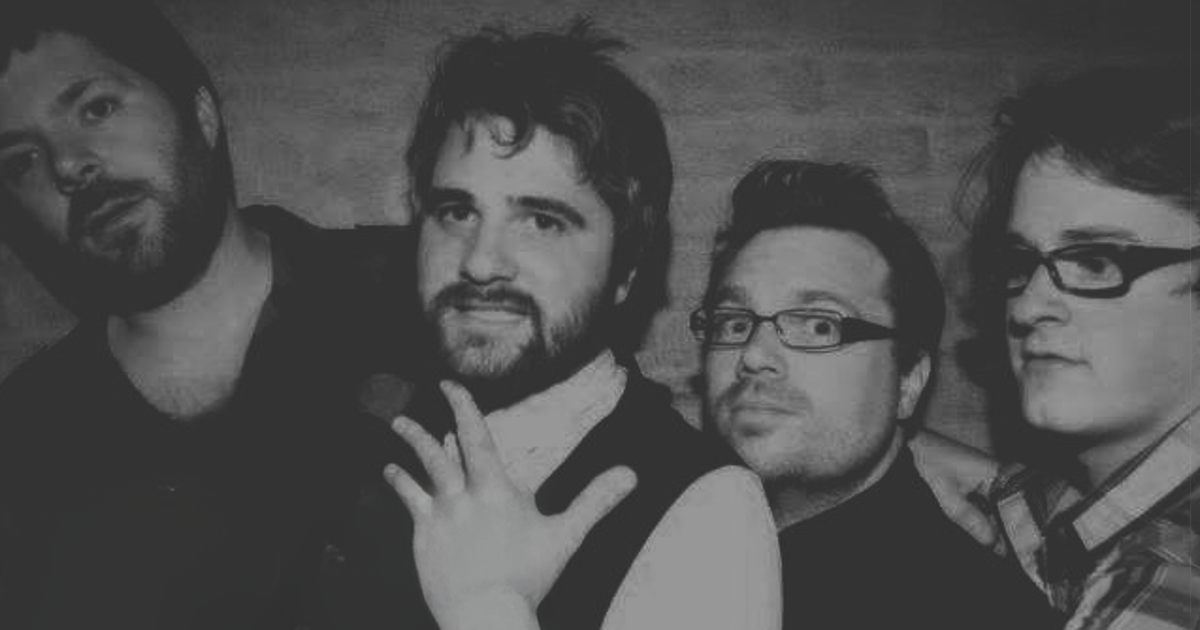
Pictured (L-R): Bryan Simpson, Matt Menefee, Andy “Panda” Moritz, Ross Holmes