Industrial Strength Bluegrass has a great thing going – in Southwestern Ohio and on social media, too. Awarded Event of the Year by IBMA in 2022 and 2024, the Xenia and Wilmington, Ohio-based festival – run by Joe Mullins, and his family and staff at Real Roots Radio – have amassed tens of thousands of followers on TikTok. Clips from their Summer Fest, indoor festivals, and the radio station have racked up millions of views on TikTok, YouTube, Instagram, and Facebook. And rightly so, their events and airwaves always boast the absolute best in bluegrass.
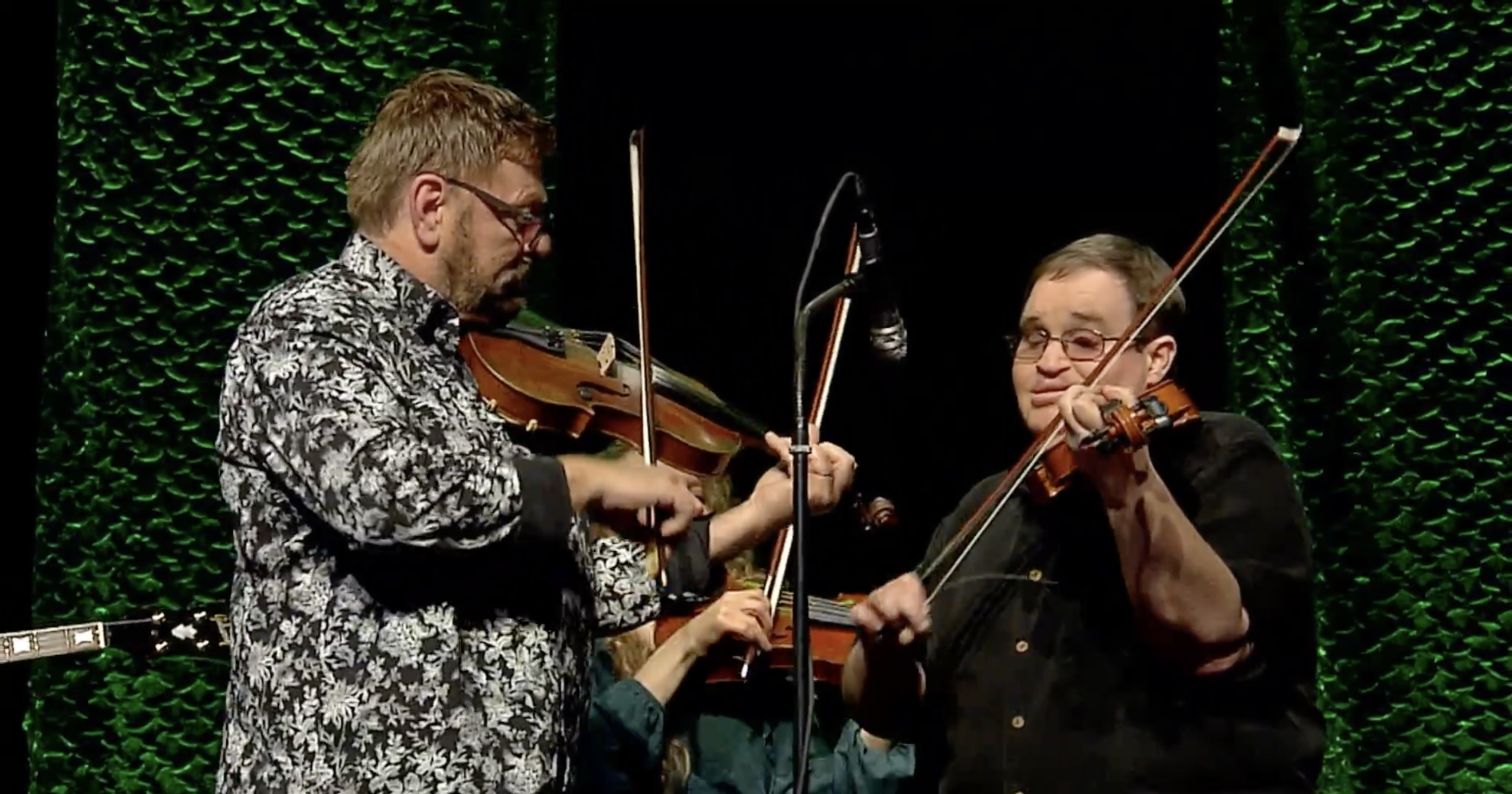
BGS has partnered with Industrial Strength Bluegrass over the years and this time we’re excited to bring you full-length videos of ISB’s most popular and veritably viral performances. First up, it’s a performance from Industrial Strength Bluegrass’s March 2024 edition indoors in Wilmington, Ohio at the Roberts Centre. In a rare duo appearance, fiddling phenomenons Michael Cleveland and Ron Stewart wowed the ISB crowd. In this video, the pair perform a rip-roaring rendition of “Roanoke” with Joe Mullins himself joining in on banjo, as well as IBMA Award winner Vickie Vaughn on bass, and members of High Fidelity including Jeremy Stephens, Corrina Logston Stephens, and Daniel Amick.
It’s easy to tell why this video was so popular in its shortened, vertical format! Stewart and Cleveland are two of the best, both having won IBMA’s Fiddle Player of the Year (Cleveland an unprecedented 12 times) and both beloved by legions of bluegrass fans, from jamgrass to mash and back again. For an impromptu sort of jam session on stage, it’s a magnetic and impressive performance of a classic fiddle tune. Since 2024, many snippets and clips from Cleveland and Stewart’s 3o-minute performance together at Industrial Strength Bluegrass have taken off on social media. We know we aren’t the only ones who appreciate ISB bringing bluegrass to the masses with their festival content.
Follow Industrial Strength Bluegrass on TikTok, Instagram, YouTube, and Facebook. Make plans to attend their Summer Fest held July 16-18, 2026 in Xenia, Ohio, and future indoor festivals, too. More information can be found here.
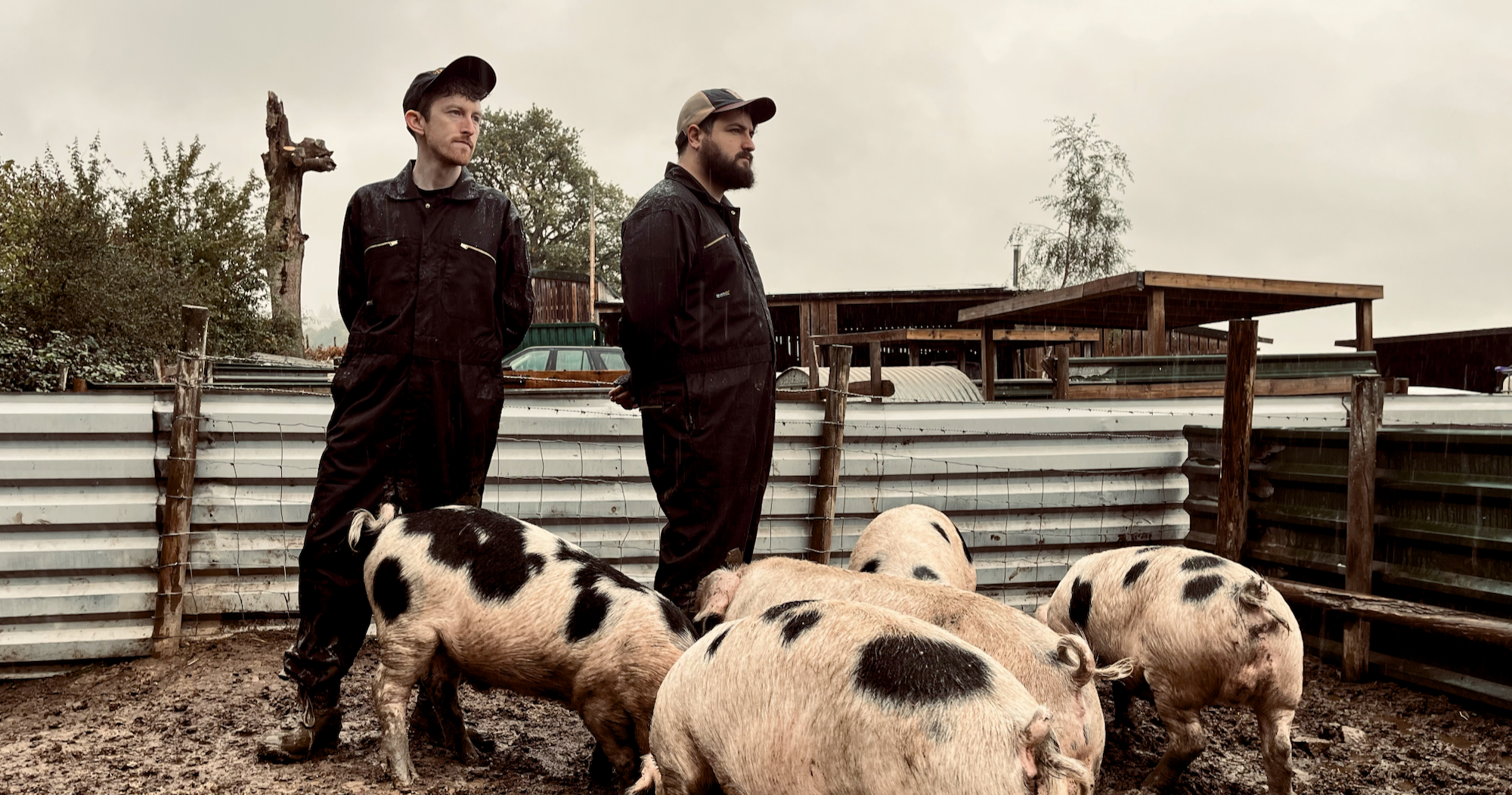
(Editor’s Note: Below, United Kingdom-based old-time duo Old Spot – Rowan Piggott and Joe Danks – curate a Mixtape for BGS celebrating old-time music of the UK and Ireland. In order to include as many tracks as possible representing the vibrant string band scene in the UK, some selections are shared via Spotify and others via Bandcamp, depending on availability. We hope you enjoy listening and learning about transatlantic old-time – and that you support all roots musicians directly whenever possible.)
This is a Mixtape designed to highlight some of the amazing old-time string band music coming out of the UK and Ireland at the moment. Old Spot is a product of a vibrant scene, with the fiddlers and bands around us just as influential to us as their American counterparts.
This playlist looks to reflect some of the musicians performing string band music today, whilst shining a light on lesser-known gems. In compiling it, we’ve realized how much of the music we love on the old-time scene here isn’t on Spotify – if you love any of this music, buy it from the artists who made it! Anyway… less jawin’ more sawin’… – Old Spot
“Elzick’s Farewell” – Rattle On The Stovepipe
Rattle On The Stovepipe formed in 2003 and have played up and down the UK spreading old-time with band stalwarts Pete Cooper and Dave Arthur joined later by Dan Stewart – probably our favorite banjo player in the UK. This groovy version of “Elzick’s Farewell” is from their first album with Dan, No Use In Cryin’.
“Maggie Mead” – Follywren
Follywren is the brainchild of Bristol musician Kai Carter. We love lots of stuff that Kai does – his old-time trio is great and his original music (Kai & Hollis) is also a tour car staple. We have a real soft spot though for this amazing Follywren album, described as a kind of New Orleans-inspired electric string band. The tuba and electric banjo actually end up landing you somewhere between Clyde Davenport, Ghanaian Highlife, and Captain Beefheart’s Shiny Beast era… a good place to be.
“Rainbow” – Cath & Phil Tyler
Cath & Phil Tyler straddle the traditional and experimental music scenes in the UK and run the Newcastle sacred harp singers. Their albums are a treasure trove of ballads, with Phil’s mesmeric guitar and banjo playing supporting Cath’s one-of-a-kind, transportive voice. In some ways though, they are at their best a cappella where their background in shape note style really shines.
“Shanghai Skyline” – Jeri Foreman & Ruth Eliza
Jeri Foreman & Ruth Eliza are a powerhouse fiddle and banjo duo and you always want to see them on a festival lineup. Where these guys go, good tunes follow and their debut album shows off their musical connection beautifully. Recorded live, we’ve chosen one of Jeri’s tunes to highlight here.
“Chicken & Dumplings” – Ben McManus
Welsh musician Ben McManus is a multi-instrumentalist and promoter of old-time music in the UK. He’s schooled in the history of old-time and has done a number of interesting projects exploring the connections between Wales and Appalachia. He’s also interned at the Smithsonian – absolute dude. This is a laid-back clawhammer guitar and cello version of “Chicken & Dumplings,” a favorite of UK sessions. This record makes us miss Ben, and not just because he makes a mean Negroni.
“Dormae” – Hannah Read
Hannah Read’s first Fungi Sessions album is one of our favorite ever records as a band. We loved the sonics of it so much that we travelled to the studio in Scotland where it was recorded to make our new album. Hannah is now based in the US, but hails from Scotland and comes over frequently to collaborate with the incredible Michael Starkey. Hannah has collaborated with indie royalty Big Thief, Julien Baker, and Lucy Dacus, and you can hear this broader sonic palette across her output. But the real star of these Fungi Sessions albums is her incredible composition and the subtle magic of her bow arm.
“Wolves A’ Howlin'” – Kieran Towers & Charlotte Carrivick
Kieran Towers & Charlotte Carrivick can most often be found in the bluegrass scene in the UK, but came together for this one-off old-time album of absolute rippers. Charlotte, one of the best flatpickers in the UK, reveals herself to be one of the finest clawhammer players, and Kieran, best known for shredding bluegrass solos, turns into prime Bruce Molsky. Being able to just casually drop this album as a side project is outrageous. A frustratingly brilliant album from two undeniable musical geniuses.
“Glory In The Meeting House” – Ben Paley & Tab Hunter
In our opinion, Ben Paley is the jewel in the crown of British old-time music. He’s performed in loads of different lineups with musicians from the South of England – probably most notably The Long Hill Ramblers and with his dad Tom Paley of The New Lost City Ramblers. His fiddling is just as good as it gets, full of character, groove, and skill. On this record from 1999, he’s backed by Tab Hunter who is an old-time backer with taste, power, and pocket.
“Pterodactyl” – One Night Stringband (Old Spot, Jeri Foreman, Ruth Eliza)
We recorded this collaborative album with Jeri Foreman and Ruth Eliza over the course of one night and a bottle of whisky. We put it out the following day after some hungover mixing and now we perform sporadically as The One Night Stringband for square dances and concerts. We’ve got our seventh and eighth gigs together this summer!
There’s a kind of exploratory madness in these recordings and we all chose tunes we couldn’t get to hang quite right in our duos. There’s a raging version of Rhys Jones’ “I’ll Reap What I’ve Sown,” a version of “Josie-O,” and this, Ruth’s prog-y old-time wig-out “Pterodactyl.”
“Benton’s Dream” – High Strung Trio
From Cork, Ireland, this is one of our favorite old-time records of the last few years. From ex-members of the Grits & Gravy Stringband comes a new trio record of uncompromising ragers. Fiddle player (and luthier) Ian is an absolute machine on this record, laying down danceable bangers like it’s nothing. A great record to pick up new tunes or to power a long car journey, we can’t stop listening.
“Two Little Sisters” – Sugarwell Hill
Sugarwell Hill is a trio from Leeds in Yorkshire. This is a new record from them that the scene has been anticipating for a while. Recorded confidently and simply, it’s a great snapshot of what is so magical about this laid-back band. “Two Little Sisters” features Simon’s relaxed vocal delivery and groovy banjo playing set against Mick’s gritty fiddle playing. We’re so lucky to have these three in the scene over here, and can’t think of a bad time to stick this beautiful new record on.
“Walk Me Round” – Rhona Dalling
Rhona is another Bristol-based fiddler, singer, and banjo player. This record is, so far, her only recorded output, but like so many of the best trad musicians, her best music happens in sessions and muddy fields. She has an incredible fiddle style, full of poise and effortless technique, and a beautiful voice. This quietly beloved record features a great waltz and her tune “Balfour Road,” which is played in trad sessions up and down the country and has really transcended the old-time scene, thanks to a recording by bal folk band Topette!. Perfect for a rainy day.
“Bear Creek” – Lankum
Whilst most of their repertoire is drawn from Irish folk, experimental trad behemoths Lankum often close their sets with this old-time tune. We couldn’t not include it after watching 20,000 people bouncing up and down to it at Glastonbury!
“Bowling Green” – Joe Mansfield & The Temperance Two
Bristol-based Joe Mansfield is another person you love to see walk through the door at a jam. He’s got an amazing repertoire and is a great hang. He’s got a new duo called The Low Line (watch that space), but he gigs out all the time with the Temperance Two. This is a great version of “Bowling Green.”
“The Roustabout Song” – Old Spot
We heard “The Roustabout Song” sung at a Morris Dance festival singing session. The song sounded distinctly American – a bit of digging led us to English folklorist Sandy Paton and, in turn, the songwriter Dillon Bustin. The song was written at Pinewoods Camp and according to Paton presented both a cappella and with a “lazy river” banjo accompaniment. We’ve done a new joyful fiddle-singing version, bringing out the song’s subtle political undertones. Unfortunately the parasols are twirling faster than ever.
“June Apple” – The Firecrackers
The Firecrackers are five of the UK old-time scene’s stalwarts, and they whip up a frenzy wherever they go. This album of field recordings is a good snapshot of them doing their thing and Benton Flippen’s “June Apple” is their signature tune.
One of the band’s fiddle players, Dave Proctor, edits Old Time News, the quarterly old-time magazine published by FOAOTMAD (Friends of American Old Time Music and Dance), a grassroots organization that has supported the growth of old-time in the UK so much over many years.
Welcome to another edition of our weekly round-up of new roots music! You Gotta Hear This…
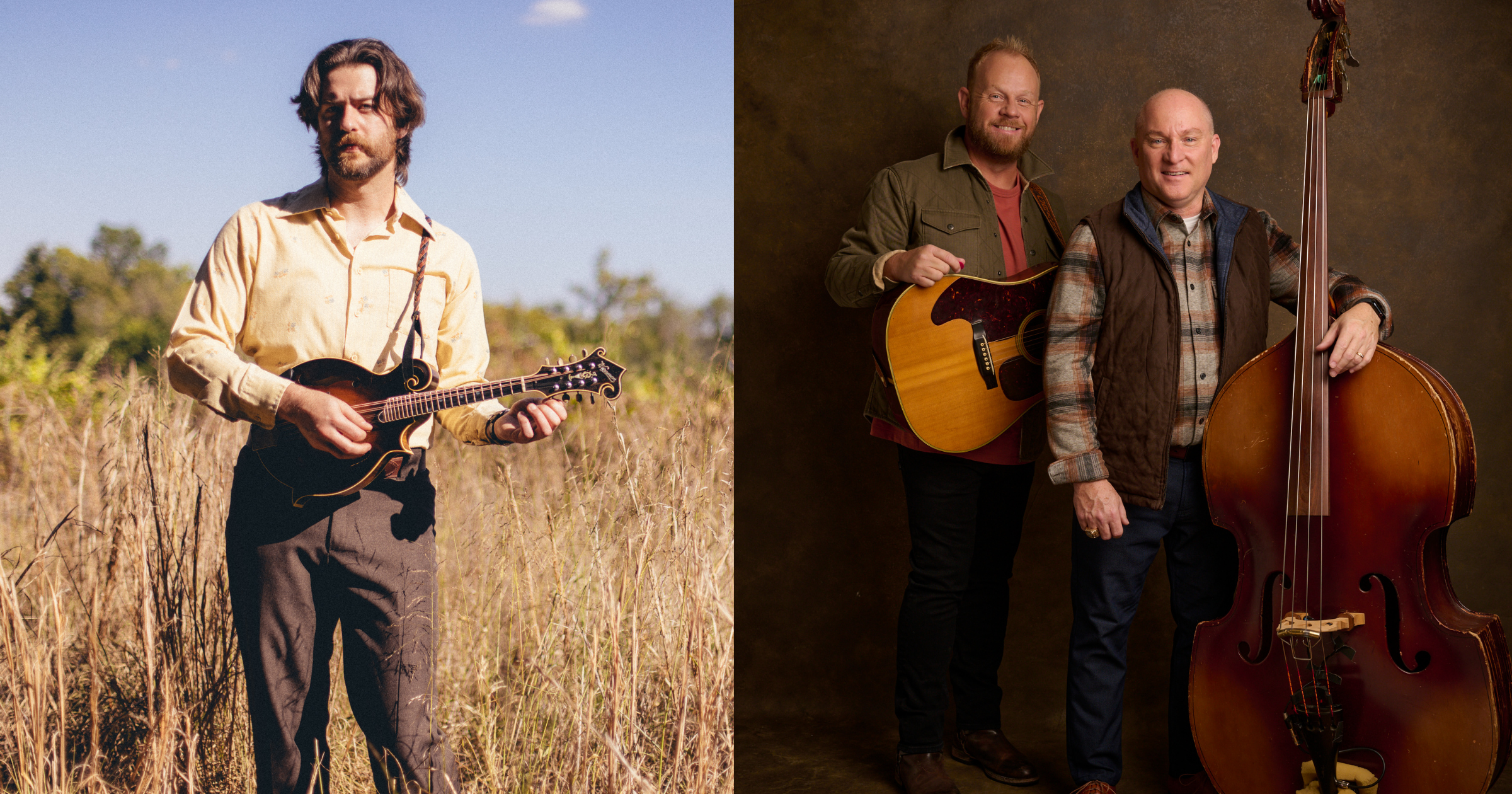
To get us started this week, Dailey & Vincent continue to tease tracks from their upcoming album, A Beautiful Life, which will arrive on June 12. In the meantime, they’re sharing a music video for “Moon Shines on the Still,” another delightfully bluegrassy number for the country-and-gospel-and-bluegrass powerhouse duo. The fresh single’s breakneck tempo doesn’t stymie any of the fine pickers who shred throughout the feisty song about moonshine running and that good ol’ mountain dew. For another bluegrass duo, check out fiddlers Deanie Richardson & Kimber Ludiker launching their new track, “Rutland’s Reel.” It’s an acrobatic and challenging tune by Howdy Forrester with several complicated parts, but these two turned it into a stellar twin fiddle number anyway. What, like it’s hard?
From Asheville, North Carolina, Appalachian string band TANASI infuse their songs and tunes with influences from around the world. “Give Me Love (Give Me Peace On Earth)” is their timely rendition of a George Harrison song, on which Dobroist and multi-instrumentalist Billy Cardine plays a chaturangui, a slide instrument that draws from Indian classical music traditions. Watch a performance video for their cover below. Singer-songwriter Maisy Owen has shared a new music video today, too. “Dark On A Sunny Day” is lush indie folk wrapped in a sonic dreamscape, with a slightly dark and gritty tinge to pair perfecdtly with her evocative lyrics. The beat pulses forward, pushing and pulling the track ahead.
Plus, mandolinist Jarrod Walker – who you may know from Billy Strings’ band – just this week announced an upcoming solo album, Nighthawk, his first release as an artist in his own right. Prior to the album announcement Wednesday, Walker unveiled an upcoming tour in May. Now the lead single/title track from his debut LP is available everywhere, and we’re sharing the lyric video visualizer for the remarkably straight-ahead bluegrass number below. Nighthawk arrives in full on May 8.
Bluegrass, folk, and indie; mandolins, fiddles, and banjos; moonshine, darkness, and emotions – there’s something for everyone to enjoy. You Gotta Hear This:
Dailey & Vincent, “Moon Shines on the Still”
Artist:Dailey & Vincent Hometown: Nashville, Tennessee Song: “Moon Shines on the Still” Album:A Beautiful Life Release Date: April 10, 2026 (single); June 12, 2026 (album) Label: Pillar Stone Records
In Their Words: “‘Moon Shines on the Still’ is a fun, up-tempo song with a lot of personality. It’s the kind of record that makes you want to roll the windows down and enjoy the ride.” – Jamie Dailey
“We had a blast recording this one. ‘Moon Shines on the Still’ has energy, heart, and a sound that feels both fresh and true to who we are.” – Darrin Vincent
Maisy Owen, “Dark On A Sunny Day”
Artist:Maisy Owen Hometown: Nashville, Tennessee Song: “Dark On A Sunny Day” Album:Dark On A Sunny Day Release Date: April 10, 2026 (single); May 1, 2026 (album) Label: Tompkins Square
In Their Words: “There was a period of time two years ago in the summer when I was writing almost every night. ‘Dark On A Sunny Day’ was one of the first songs I kept. There’s a kind of honesty that comes with someone’s early work, something I always look for when I deep dive into a new musical obsession. Something early is something pure. This is the only song on the album with a full band arrangement. The instrumentation is dark and unceasing. There is no metaphor or veil regarding the lyrics, they are candid.” – Maisy Owen
Artist:Deanie Richardson & Kimber Ludiker Song: “Rutland’s Reel” Release Date: April 10, 2026 Label: Mountain Home Music Company
In Their Words: “‘Rutland’s Reel’ was written by one of my ultimate fiddle heroes, Howdy Forrester. In typical Howdy fashion, it’s got several parts and is challenging to play. It was a lot to take this one on as a twin fiddle piece and Kimber took on the challenge of learning the harmony part. She nailed it! I’m so proud to have this tune on our record honoring the great Howdy Forrester.” – Deanie Richardson
Artist:TANASI Hometown: Asheville, North Carolina Song: “Give Me Love (Give Me Peace On Earth)” Album:TANASI Release Date: April 9, 2026 (single); May 8, 2026 (album)
In Their Words: “This song by George Harrison feels especially relevant right now – we need as many songs about peace and love as possible in difficult times. It echoes both backward and forward, carrying layers of meaning that resonate personally and globally. In addition to honoring the song itself, we wanted to pay tribute to Harrison’s influence – particularly his role in bringing classical Indian instruments like the sitar into popular music. Alongside his signature Dobro, Billy Cardine plays the chaturangui, a slide instrument developed by his teacher in India, Debashish Bhattacharya. With its 22 strings, it creates a rich, shimmering tone reminiscent of the textures heard in many of Harrison’s recordings. Mary Lucey and Anya Hinkle share the lead throughout, trading lines and weaving their voices together in sister-like harmony.” – TANASI
Track Credits: Billy Cardine – Dobro, chaturangui Mary Lucey – Bass, vocals Anya Hinkle – Guitar, vocals
Jarrod Walker, “Nighthawk”
Artist:Jarrod Walker Hometown: Lithia, Florida Song: Nighthawk Album:Nighthawk Release Date: April 8, 2026 (single); May 8, 2026 (album)
In Their Words: “A few years back, I stumbled upon the word ‘Nighthawk’ in The Dictionary of Obscure Sorrows, a collection of definitions for newly invented words that describe unnamed emotions, feelings, and experiences. Initially, ‘Nighthawk’ began as a moody, vibey track, but Christian Ward and I soon realized it worked better as a straight up bluegrass song. Once we committed to that approach we were able to lock down a couple verses, a chorus, and everything started to take shape. One of the trickest parts of songwriting is revisiting an unfinished song, returning to that headspace to add final touches Eventually we added a third verse which tied it all together with a big ribbon and bow. Now I couldn’t imagine it without it. I find that with trad bluegrass it’s best to keep things close to home or else you risk losing the essence of the song. I say that now, but ask me how I feel next year. The band knocked this one out in a few takes and later Billy [Strings] added a killer tenor harmony. Ultimately, ‘Nighthawk’ wound up being by far one of the grassiest tracks on the record.” – Jarrod Walker
Track Credits: Jarrod Walker – Vocals, mandolin Cory Walker – Banjo Jamie Dick – Drums Christian Ward – Fiddle Jake Stargel – Guitar Royal Masat – Upright bass Billy Strings – Background vocals
Photo Credit: Jarrod Walker by Jesse Faatz; Dailey & Vincent by Gregg Roth.
Honestly, I think the reason I am a nerd about string band music is that it offers a beautiful way of thinking about how music moves – not just through instruments traveling, but also through melodies, rhythms, and ideas making their way through people and place and time.
Maybe that means across the globe, but it could mean between a dining room and a basement, whatever the dialogue. The tracks in this playlist are a winding path through a tiny subsection of this sonic world. – Rachel Meirs, fiddle, Vaiano’s Paisanos
“Rosa Negra Vals Venezolano” – Orquesta De Lionel Belasco
“Rosa Negra Vals Venezolano” comes from Lionel Belasco, a Trinidadian-Venezuelan pianist and composer whose recording career spanned five decades. This waltz is a really joyous piece recorded by Belasco’s orchestra, who recorded an incredible number of sides for Columbia Records in New York City in the late ’20s and early ’30s. An iteration of a calypso band with piano, woodwinds, strings, and syncopated rhythms that all give a hint to which version of the journey this waltz form took to arrive.
“Para Mi y Para Mi Novia (Vals Foxtrot)” – El Ciego Melquiades
“Para Mi y Para Mi Novia (Vals Foxtrot)” comes from El Ciego Melquiades, “The Blind Fiddler,” who recorded in San Antonio. It sounds like a Tex-Mex fiddle tune, since that’s the way he plays it, but the most compelling thing about it is how unintuitive it is. I could never figure out why its form and melody were so strange, but a friend recently tipped me off that it’s his take on “For Me and My Gal,” a 1917 pop song (later popularized by Judy Garland), which also made the song title make more sense.
“Rolling Mill Blues” – Peg Leg Howell
Discovering the origins of “For Me and My Gal” brought to mind this Peg Leg Howell recording from 1927. I loved his recordings with Eddie Anthony on fiddle, but when I heard “Rolling Mill Blues” I remember thinking it was beautiful and strange. Instead of Eddie Anthony’s driving country-blues style fiddle, the violin’s counter-melody takes on an almost ethereal tone. I don’t know if it is a coincidence or not how much that melody calls to mind the pop song, “Tonight You Belong to Me,” which was first recorded in 1926.
On the theme of the crazy routes music takes, I think saying that this next one, “Smart (Tango Argentino)” comes from Kostas Bezos, who led a Hawaiian band in 1930s Athens, is sufficient!
“Cariño” – Cuarteto de Cuerdo de F. Facio
Orquestas de cuerdas were small string bands that played for dances and social functions in Northern Mexico. The entire Arhoolie compilation Orquestas de Cuerdas: The String Bands: The End of a Tradition 1926-1938 is worth listening to, but “Cariño” from Cuarteto de Cuerdo de F. Facio has always stood out to me for what I think is a cello or bowed bass in addition to violins and bajo sexto. This adds a significant low-end to an already dramatic song – this one goes through a lot of emotions.
This next one comes from another compilation series I recommend for anyone looking to deep dive into this music across even more territory. Check out Pat Conte’s anthology series, The Secret Museum of Mankind (now on our label, Jalopy Records, since 2021.) Another waltz, which I named this playlist for, “Valsa Continental” comes from Abrew’s Portuguese String Trio. Composer, violinist, and bandleader Augusto Abreu led this Cape Verdean trio from New England who recorded four discs for Columbia Records in 1931.
“Abrew’s Portuguese Jazz” – Vaiano’s Paisanos
It’s hard to say, but since Abrew’s Portuguese String Trio is one of my favorite bands, and because the recordings are still hard to find digitized, this next one is our band Vaiano’s Paisanos take on “Abrew’s Portuguese Jazz.” Our version keeps the violin part, but instead of guitar and cavaquinho, we have mandolin adding harmonies and rhythm, and tenor guitar playing the melodic runs that make up the tune’s backbone and bass line.
“Quisiera Olvidarte” – Pastorita Huaracina
This style of melodic accompaniment reminds me of the relationship between a country-blues fiddle line and a song’s vocal melody (for instance “Rolling Mill Blues,” on this playlist) is one of my favorite things to hear. Maybe that’s why I have listened to “Quisiera Olvidarte” by Pastorita Huaracina so many times in a row. This track comes from another great Arhoolie compilation, Huayno Music of Peru, Vol. 1.
“Il Mio Cuore E Tuo” – Giovanni Gioviale
I knew I wanted to include a track to represent some of the Italian-American music of the era. For many of the tracks on this playlist, I have been trying to decide between polkas, mazurkas, waltzes, foxtrots, and tangos, a reminder many of these groups were dance bands. The mazurka form comes from Poland, a dance in 3/4 or 6/8. This mazurka comes from Giovanni Gioviale, a mandolin virtuoso from Sicily who recorded in New York between 1926 and 1929. “Il Mio Cuore E Tuo” features Gioviale on the tenor banjo– another marker of combined musical histories.
“Black Mountain Mazurka” – Gu-Achi Fiddlers
The next tracks have us following mazurkas to the Southwest. “Black Mountain Mazurka” is Gu-Achi fiddle from the Tohono O’odham people of Southern Arizona. This Southwest fiddle sound is made even more distinct with the addition of drums and very sweet harmonies.
“Bailando en Phoenix” – Lone Piñon
Staying nearby but jumping ahead into this century, Lone Piñon (also on our label, Jalopy Records), plays New Mexican string band or “orquesta típica” music. “Bailando en Phoenix” shows both the amazing energy and musicianship of the whole band. Their whole album is a beautiful tribute to their attention to learning, playing, and performing this musical style.
“Tarantella” – Magic Tuber Stringband
One more modern band, to remind ourselves that we are all participating in the process of reimagining music across time and space. And we will be for as long as we engage with these old traditions and continue to make music. The cross-tuned fiddle on North Carolina-based Magic Tuber Stringband’s “Tarantella” so effectively calls to mind the droning sound of a zampogna (an ancient bagpipe played in southern and central Italy), and the track fades to a fitting end for this playlist.
When it comes to fiddlers, we all know that more is more is more.
Lonesome fiddle? Great. Twin fiddle? Even better. Triple fiddle? (Who called Bob Wills?)
But with all this great fiddling, it’s hard to keep up with who is who. We are here to help. It turns out that for all the fiddlers that you may know and love, there are probably 10 more that you haven’t heard of – even if you’ve heard their playing!
Here are some fiddlers making big waves and sawin’ big figure eights who may be flying under your fiddle radar.
Ellie Hakanson
Originally from Portland, Oregon, Ellie Hakanson grew up playing music in her family band. Bluegrass fans will have heard her blazing solos as part of Jeff Scroggins & Colorado, with whom she toured and recorded for five years. She now lives in Nashville, where she plays with Missy Raines & Allegheny and Kristy Cox among many other artists.
Ellie’s fiddling is defined by its traditional bluegrass sound and deep study of the genre. The International Bluegrass Music Association agrees, as Ellie has been nominated for several IBMA Momentum Awards – in 2017 for Instrumentalist of the Year, in 2018 for Vocalist of the Year, and in 2019 for both Vocalist and Instrumentalist of the Year.
Here, she plays “Sally Goodin” with the incredible Michael Cleveland during a workshop at Cowichan Valley Bluegrass Festival in Lake Cowichan, British Columbia, in 2024.
Evan Snoey
Multi-instrumentalist Evan Snoey approaches music with a wide lens. Equally comfortable playing old-time fiddle and jazz saxophone, Snoey’s breadth of musical knowledge finds him playing with everyone from young shredders (like the Litch Brothers) to country artists (like Dylan Gossett). Originally from Seattle, Snoey’s stylistic interests include old-time, bluegrass, Scandinavian, Scottish, swing, jazz, and contemporary improvisational music.
In this video, he performs a medley of tunes – “Busta,” “Sjøvald,” and “Primrose Lass” – with Alex Wilder on piano for the Nashville Contra Dance.
Omar Ruiz-Lopez
Chapel Hill, North Carolina-based fiddler and multi-instrumentalist Omar Ruiz-Lopez may be best known for his work with folk duo Violet Bell. Ruiz-Lopez is currently making a name for himself as a sideman (playing cello, guitar, and fiddle) with artists such as the War and Treaty, Franklin Jonas, Lizzie No, and Langhorne Slim. And he has just announced a crowdfunding campaign for his first record of original music. Born in Panama and raised in Puerto Rico and Florida, Ruiz-Lopez is a bilingual singer-songwriter who brings a cross-cultural perspective to his music.
In the above video clip, Ruiz-Lopez performs “Panavueiro da Rabeca” and “Panariqueño,” an original fiddle tune, accompanied by Jamey Haddad and Clay Ross at Casey Driessen’s Blue Ridge Fiddle Camp in 2025.
Josie Toney
Soon after moving to Nashville, Josie Toney hit the road as part of Sierra Ferrell’s band, which went from a DIY van tour to a bus operation during her tenure. In 2022 she released her solo album, Extra, featuring her songwriting and guitar playing as well as extraordinary fiddle work. Originally from Olympia, Washington, Toney studied at Berklee College of Music before moving to Music City. She now tours with country star Hailey Whitters and appears often around Nashville fronting her own band and picking with others.
In 2022, she was a guest on Cameron DeWhitt’s podcast, Get Up in the Cool, performing a version of “Smith’s Reel” that perfectly shows her style.
Libby Weitnauer
Libby Weitnauer grew up in the shadows of the Great Smoky Mountains and studied classical violin in Chicago before returning to her roots in Tennessee to play old-time and country fiddle. An endlessly curious and evolving musician, she has played for Margo Price and Kelsey Waldon and has performed on Broadway in New York City, as well as founding indie band Dallas Ugly and fronting her own songwriting projects. A solo album is rumored to be on the way.
In this video, she performs “Swannanoa Waltz” for the YouTube channel The Old-Time Fiddler.
Amy Alvey
Old-time expert Amy Alvey is a fiddler from California who focuses on building community wherever she goes. In addition to recording and touring with her duo, Golden Shoals, and her indie solo project Mild Windago, she fronts the string band Hometeam Advantage, hosts a radio show on Middle Tennessee’s WMOT, and has cultivated a weekly old-time jam in Nashville. Amy is an encyclopedia of old-time tunes and sources with a wide range of stylistic ability.
Here, Hometeam Advantage includes George Guthrie (banjo), Charlie Fuertsch (guitar), and Ethan Hawkins (bass) performing “Tanner’s Farm.”
Jamie Fox
Montana-based fiddler (and pilot and aircraft mechanic) Jamie Fox grew up on the Fort Belknap Indian Reservation and is part of the Agniih and Nakoda tribes. Jamie, along with her brothers, learned Métis fiddle styles from traditional players on the reservation such as Old Fatty Morin, as well as Métis fiddlers like Jimmie LaRocque, Mike Page, and Johnny Arcand. She currently tours with her band The Fox Family Fiddlers, and as a solo performer.
This video, uploaded in 2019, showcases three reels in the Métis style performed in Denmark with Malene D. Beck accompanying on piano.
Katie McNally
Scottish fiddler Katie McNally grew up in the Boston area and was mentored by the legendary Hanneke Cassel. Her style is fierce and energetic, drawing inspiration from traditional Scottish and Cape Breton styles – as well as Scottish-American players. Katie records and tours her own music and is also a member of The Pine Tree Flyers with Emily Troll (accordion), Benjamin Foss (guitar), and Neil Pearlman (piano).
In 2024, the Pine Tree Flyers performed “Vidita” together for Seirm during Celtic Connections 2024, taped for BBC Alba. Watch above.
Austin Derryberry
As deeply rooted as they get, old-time fiddler and luthier Austin Derryberry plays with the groove of generations. Originally from Unionville, Tennessee, Derryberry’s duo album with Trenton “Tater” Caruthers focuses on the less well-known fiddling of the Middle Tennessee area. He apprenticed with legendary fiddle maker Jean Horner and now makes and plays fiddle in the region.
In this video, Derryberry is joined by his wife Courtney Derryberry and Greg Reish to perform an Ed Haley version of “Chinese Breakdown” in Ireland for the Westport Folk & Bluegrass Festival in 2023.
Connor Murray
Originally from the Chicago area, Connor Murray Ostrow polished his bluegrass chops studying with Michael Cleveland and he can currently be found gigging all over Nashville and around the country. Connor’s playing is clean and focused, with bluegrass drive and country sensibilities.
A graduate of Belmont University, for his senior recital in 2022 he performed a hot club jazz rendition of a Kenny Baker tune, “Bluegrass in the Backwoods,” illustrating the way his approach to the instrument has cross-pollinated with many styles.
Photo Credits: Lead image (L to R): Ellie Hakanson by Nico Humby; Josie Toney by Natia Cinco; Omar Ruiz-Lopez by Phyllis B Dooney, PHOTOFARM. Alternate image: Ellie Hakanson by Nico Humby.
It’s noon in the Bay Area, and singer-songwriter/multi-instrumentalist/producer Laurie Lewis is sitting in her backyard on what she describes as “a beautiful sunny day.” She spent her morning pulling up oxalis, and now she’s painting a railing she purchased at Urban Ore.
“It’s a good handrail for our front steps and along the walkway for my partner, Tom,” she says, “so I’ve been sanding it, wiping it down, and painting it.” Later during this interview, she’ll continue pulling up weeds, noting, “It’s very liberating for me, getting my hands in the dirt. It feels really good.”
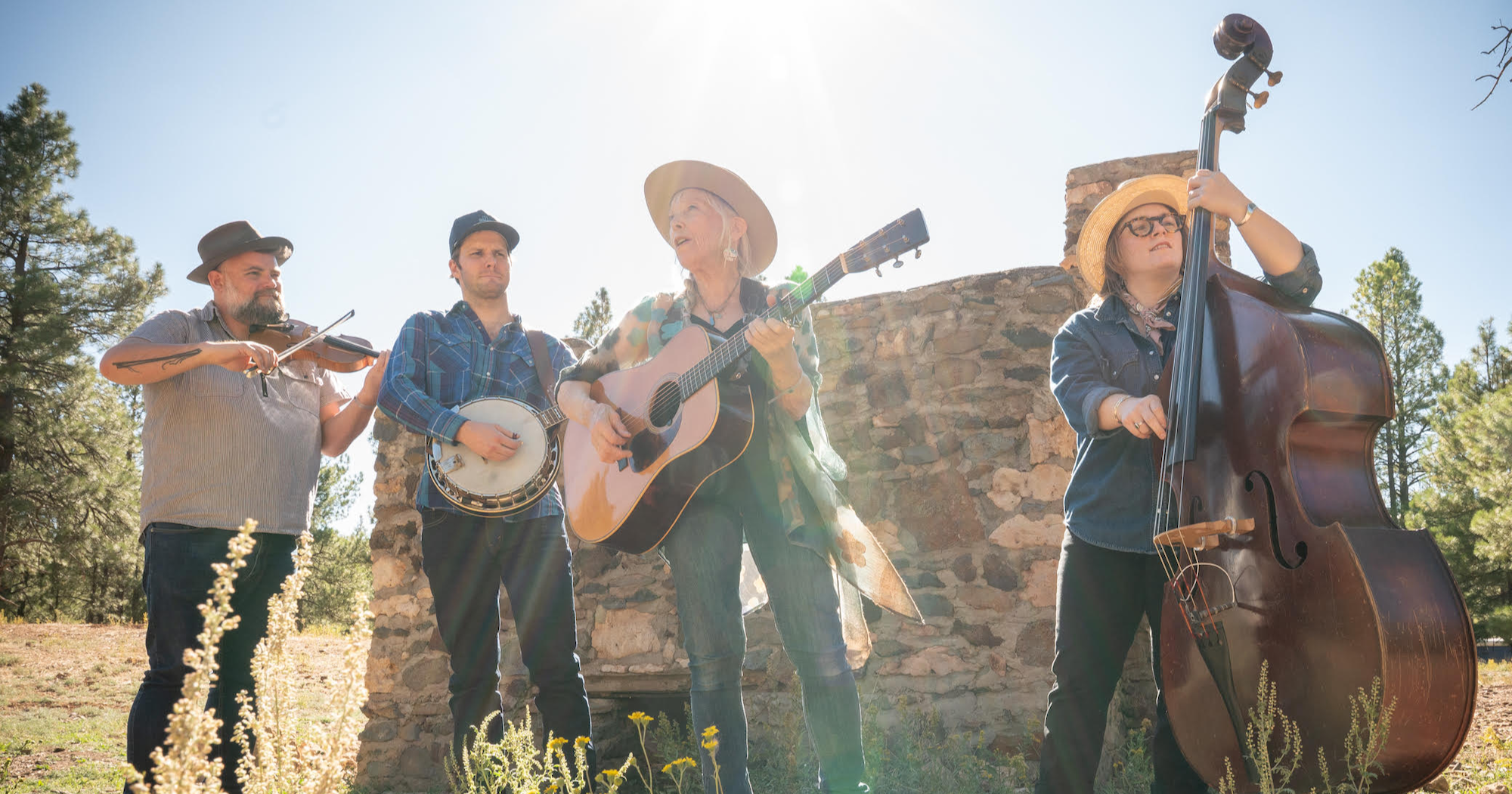
The reason for today’s call is Lewis’s new album, O California! Like its predecessors, it’s an emotional palette of songs – five originals, five traditionals, and a cover of close friend Alice Gerrard’s “Sweet South Anna River” – that blend the many genres influencing her work, from bluegrass to country, jazz, and even a hint of rock. O California! features the stellar musicianship and vocals that define Laurie Lewis and her band, The Right Hands: Brandon Godman (fiddle), Hasee Ciaccio (bass), and George Guthrie (banjo, guitar).
A two-time IBMA Female Vocalist of the Year and a two-time GRAMMY nominee, Lewis is no stranger to BGS readers, as she’s been featured many times. Dedicated fans are also deeply familiar with her longtime partner, mandolinist Tom Rozum, and his Parkinson’s disease diagnosis. “He’s doing pretty well,” Lewis says. “He had spine surgery in November and he’s recovering very well from that. He had been living with intense sciatica pain for a year and a half, and the pain is gone, so that’s great.”
What would you like readers to know about O California!?
Laurie Lewis: Let’s see… all kinds of things. I wrote five of the songs on the album and they’re all over the map, so they’ll say, “She’s got a lot of different musical influences.” We’ve also drawn from the folk tradition and some great traditional songs and thrown that in the mix. It’s all done with the same four people and same four voices on beautiful acoustic instruments. Sonically, it’s really nice. You really hear the personalities of these particular four people working together. It’s what made me want to make the album.
This is album number 25 in your catalog. Artists often speak of albums as chapters in their lives. Which chapter is O California!?
This chapter is this band at this moment in time, these particular four people. I wanted to celebrate our working relationships together. It’s something that wouldn’t have happened at another time in my career, because I wasn’t working with these particular people for as long as I have been on this album. They are all on the previous album, but that was me calling all the shots. This is me settling in, listening to everybody, and trying to make a whole out of the four parts.
How did this approach make the creative process different?
Usually I come into a recording situation with more of an idea of what I want a song to sound like. This one, I came in with snippets and vague ideas for [the band] to have their way with it. We collaborated on arrangements and we listened to every idea. It’s not that I don’t listen to other people’s ideas at other times, but generally there might be more input than just three other people if I’m doing that.
I’m a collaborative artist. One of the reasons I play music is because it’s my best way of communicating in the world. And that is, for me, to an audience. But it’s also true for me to my bandmates and other musicians. It was fun to say, “We’re making a band album. This is what it’s going to be. We’re going to let people toss out songs.” “How does this sound?” “Oh yeah, great. Let’s do that.” It was, “How shall we do it?” “I’ve got an idea.” “How about if we do this?” It’s a very free and open feeling.
[The band are] all very open-eared and open-minded about the music. It doesn’t have to be the way Earl Scruggs did it, or the way Bill Monroe did it, or anything. It doesn’t have to fit into a neat bluegrass category. I’ve played with musicians in the past who have been more or less open, and all it takes is one more closed-off person to direct the band in a particular direction.
You’ve stated in the past, paraphrasing here, that writing is sometimes specific and sometimes spontaneous, sometimes it’s almost random, sometimes it’s unfinished. What was it this time, or was it some of each?
I’d say it was some of each. With the song “O California,” I was writing lyrics in the studio. I did a scratch vocal and changed the lyrics three times before I came home and overdubbed an actual vocal. That’s unusual for me, that it was in such an unformed state when I got into the studio, but it’s when we had the time and I knew the bones of it were good. Some vocal lines, some lyrics, just were not right yet, but I knew what it was about.
When did the songs start coming together as an obvious collection? Was there an intention in mind, a theme, when you all got together?
We started this project in a different way than I have other projects. We had little tours booked, so we would get together a day early before every tour, because we all live in different parts of the country. They would fly out here, we’d rehearse a song, get what we wanted down, figure it out, and then go on our tour and play it every night. We’d have a studio day booked on the day we got back from the tour, so we’d go in and record whatever we had worked out the week before and played on the tour. It was a fun way to approach a project and it spaced it out over a long period of time. It took close to a year.
When it’s spaced apart that way, how do you make it feel like a collection, rather than recording individual pieces of music?
Because it’s all us. It’s like an old friend – you can pick up the conversation right where it was. You haven’t changed your tone or your relationship with each other so drastically that it doesn’t fit together. It would be different if I were doing something like that over a year and just getting together with whoever I thought was the right person to play on a particular song. Then, the only thing that would hold it together would be my production values.
Do you still write ideas on notes, or have you tech-ed your way up to phone apps?
Oh, no. I write. I like to write with a good pen or a pencil on a piece of paper. I will make notes sometimes on voice memos, but mostly that’s it. I’m old-fashioned. I feel like there’s something that happens, the tactile feel of a writing utensil on the paper, that is easier for me to get a thought out than to sit at a keyboard. I’ve been known to still write letters, in fact.
We live in a world of texts, emojis, phone scrolling, and what’s being called “an epidemic of isolation.” Bluegrass is associated with festivals, musicians getting together and jamming, and community. Is this still true?
Oh, definitely. In fact, here in the Bay Area it’s having a real resurgence of community jamming culture. That’s always been at the basis of bluegrass. It’s what everybody wants to do – get together and let their instruments do the talking, let the songs do the talking. It’s a wonderful thing. I love it so much.
You mentor and teach at workshops and music camps, where you connect with younger and up-and-coming musicians. What do they want to know? What do they need to know?
One of the things that I try and impart to people is the importance of finding your own voice, because many young musicians have heroes they want to emulate. That’s how you learn, but at some point you have to find what you want to say with your voice and your instrument. That’s one of the things I try to emphasize and help people feel confident that they have something to say and their own way of saying it.
There is intergenerational connection at these camps and workshops, contrary to the ageism on both sides, that society seems to push: “What do those kids know?” or “What do those old people know?” What is your perspective?
There’s still a lot of that, but luckily there are enough people, young and old, paying attention and willing to listen to each other. It’s especially helpful when there are youth music camps and stuff like that, because then the kids have each other, but they also have their mentors there. They’re there because they want to learn, and it’s usually the older people who are teaching them, but then they get to be with their cohorts, their age group, and that helps a lot.
I certainly learned a lot from teaching at kids’ camps. When I first was asked to teach at a youth-oriented fiddle camp, I thought, “I can’t do that. I don’t know how to talk to kids. I don’t know anything about that stuff.” I said yes because I tend to say yes to things, and I found it to be so enlightening and so important in my life. It’s very enriching.
On a 2021 FolkWorks podcast, you talked about The Good Ol’ Persons playing a trade show luncheon years ago in front of a room full of drunk men. You described it as being “thrown to the wolves.” Many years later, how are we doing?
In terms of women musicians out in the world, there are so many more, and it is so great to see. And the technical abilities – you can’t fault it. You can put Molly Tuttle up against any guy. It’s been some huge steps forward in the time I have been in the music business, but it’s still very male-dominated from the top. It takes generations to change things like this, these ways of thinking, and now there’s a real cultural backlash happening and I don’t know how that’s going to play out. Women have made huge strides and maybe that’s just going to be taken away. Every generation has to fight the same fights, apparently.
Overall, how is bluegrass doing, to your eyes and ears?
That’s a really hard question for me to answer. Honestly, there’s a part of it that has gotten very entrenched in staying within a particular genre. I hear a lot of songs by people singing in a bluegrass style about bluegrass music, or their cabin home and I think it’s in danger of becoming a trope instead of a living, breathing art form.
Luckily, there are enough people out there creating in the art form and doing great stuff. There’s so much of everything happening all the time now that it’s going in all different directions at once. There’s good stuff and bad stuff, and it all depends on your point of view.
Who is making an important contribution, in your opinion?
I hear a few things now and again that I respond to and like a lot. I’m not very impressed with a lot of technical brilliance. I want to be made to laugh and cry, and if it doesn’t do one or the other or both, I’m not all that interested in it.
In terms of bands, Mighty Poplar can do it, and the duo Paper Wings, two young women, Emily Mann and Wila Frank, who I actually met at a fiddle camp when they were teenagers. They’re pretty wonderful. And I always like hearing what my old friends are coming up with in terms of songs and writing. I love hearing whatever 92-year-old Alice Gerrard is coming up with. She has a way of putting her finger on the pulse of what’s happening in the world and is pretty great.
In 1998, you recorded a song called “The Refugee.” Twenty-eight years later, here we are …
Oh, I know. I find it unfortunate that [that] song is still so incredibly relevant – or more relevant. I find it very unfortunate that song has not outlived its message. It’s terrible. I wrote it when Guatemala was in such bad shape, people were fleeing, and there was all this backlash. It’s an empathetic song. These days, empathy – there’s a whole movement, “empathy’s a bad thing.” It’s so crazy.
In a 2020 interview with BGS you said, “Music has a real way of being able to soothe and heal grief.” Could you talk about that healing power, not only as a songwriter, but also as a lover of music, a listener?
Oh, yeah, it’s true. I stand by that. There’s nothing like it. It’s such a direct conduit to the heart. A song can sneak in and express something for you that you had no words for. It can help you, as a songwriter, to figure out a way to express what you might be going through in a way that makes it universal. You put it out there in the world, everybody can feel it and relate to it, and it makes you feel a part of something greater than just your little dark cell that you might be stuck in, or your own personal grief.
It has helped me deal with things, with grief in my life, to be able to learn a song that makes me cry. Every time I hear it, I learn it, and it becomes part of me. It becomes part of my way of being able to express myself, or to write a song that every time I start trying to sing it, I’m in tears or something. You learn to work through your grief by embracing it musically. It’s an incremental way of dealing with things, and it’s really healing.
It’s a sense of support through the company of songs that speak to us.
Yeah. You are not alone. Especially with all the internet stuff, people spend a lot more time not with actual other humans, having conversations or whatever. To hear something, to listen and understand that other people are going through the same alienation or grief or loss, or whatever it is that you are experiencing, makes it easier to bear.
The French author Jean Giono, who wrote The Man Who Planted Trees – I wish I could find this quote – said in an essay that an artist’s duty is to express yourself for all the people who don’t have the words or the art to express themselves. It’s your duty in society, your job, to put it out there for everybody who can’t.
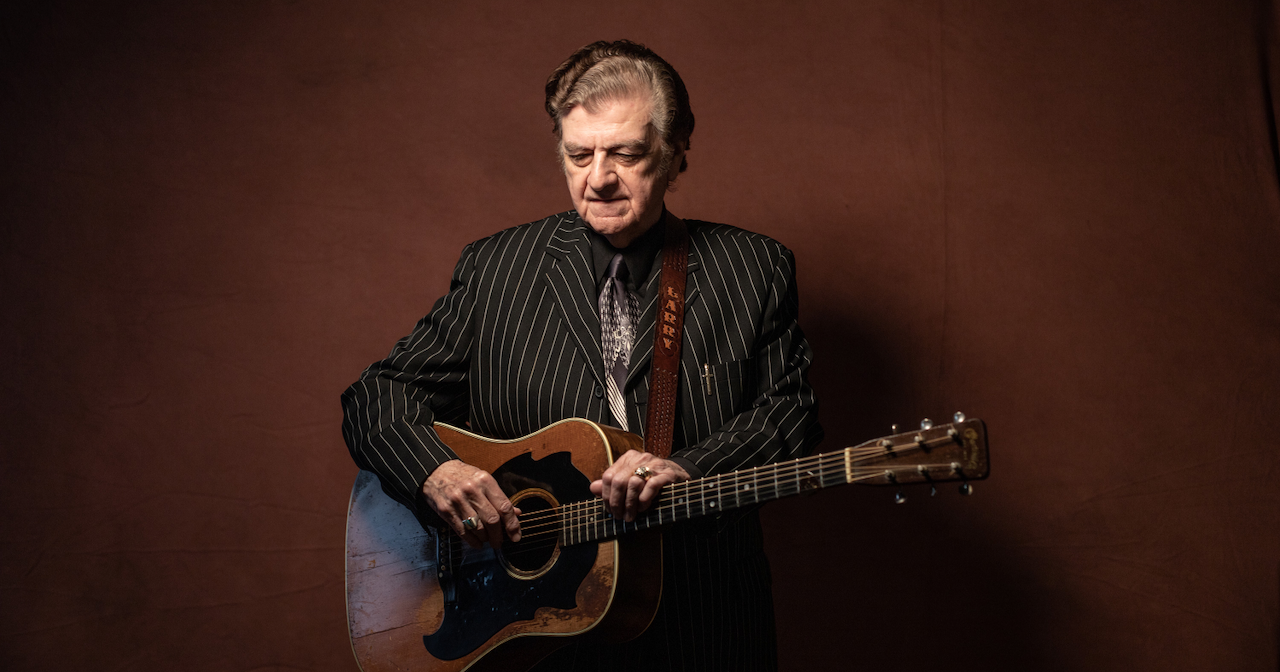
Speaking to Bluegrass Music Hall of Fame inductee and IBMA Award winner Larry Sparks over the phone, you might never guess you’re conversing with a living legend. He’s remarkably humble, down to earth, and plainspoken. And his approach to making bluegrass – as he has professionally for more than 60 years – is surprisingly zen.
His latest album, Way Back When, was released in late October 2025 and the project finds Sparks in exactly the same sonic space as any of his excellent LPs from the last six decades. If you were to take a short audio sample of Way Back When, it would be genuinely difficult to identify from which era of his lauded career it came. The project is warm, lively, and resonant, sounding like you’ve been dropped into a cozy living room with perfect acoustics and a superlative bluegrass string band.
The songs, as well, are timeless and classic, whether fresh tracks, iconic covers, or an old-timey instrumental fiddle tune with familial origins. Like his vocal style, guitar picking, and production preferences, Sparks’ song curation also feels like an intuitive extension of his personality. When he describes how he accomplishes this consistency across eras and executes the timelessness of his albums, it seems as though he becomes a sort of bluegrass guru.
“When songs touch me, they touch my feelings,” he explained to BGS . “When the song touches me, it’s saying something. I’ll take that and see what I can work with, and make it my song.
“The song’s me and I’m the song. And that’s the way that they did it back in the day. They become that song – the older singers, they became those songs. That’s the way that I do it, I try to make that song me and me the song.”
It’s a secret ingredient lacking from too many bluegrass records out there today. Not just his inhabitation of songs so that they can inhabit him, but also treating bluegrass like the forebears of this music did. As a living, breathing, cutting-edge thing that doesn’t need to be built on a foundation of regurgitation and emulation and litmus testing. Like Sparks puts it so simply – and eloquently – in our conversation, bluegrass has mainstream appeal. It requires heart, soul, and being present – becoming the music and becoming each song.
That right there is exactly how Sparks became a Bluegrass Music Hall of Famer and a hero to many – Alison Krauss, Billy Strings, and this writer included. It’s also how he’s maintained a consistent (never boring, stale, or regressive) sound over the course of his 62-year career. And, it’s what keeps him motivated to continue looking forward while inspiring all of us and reaching new audiences.
Let’s start by talking about your excellent new album, Way Back When. When I first listened to it in the fall, when it was released, I was struck by how old-school it sounds. The production style sounds so timeless, it sounds so warm and live – like real bluegrass. It also feels like it could have been pulled from almost any era of your career. with the way that it’s produced and the way that it stands out sonically. I wondered how you accomplished that?
Larry Sparks: I try to do things normal and just go for it. And all of the band– you just feel what you’re doing. You make it real. It’s hard to explain. It’s just, I sing and play from my heart, soul, and mind. Some songs you don’t have to do that, you just – like the old saying – rear back and let it go.
But some songs need attention, and you have to become that song and the song becomes you. That’s the way that I think probably all these songs are, everything I sing is pretty much that way. But, I don’t know, the feel just comes out natural. It’s more of an older feel, the real feel. That’s the way I like things. So much [that’s] added in today’s recording and music and everything, it’s okay – I’m not saying anything about it! But myself, I’d rather keep it pretty real, just like it used to be.
Are you tracking in isolation booths? Or are y’all tracking in the same room and live? It doesn’t sound like you’re putting the music under the microscope, as it were.
No, I don’t like that. You have to [sometimes], but I’d rather [not]. It’s [an] all in the same room deal. Sometimes you’ve gotta do an overdub break or something. You miss your hot lick, you gotta do it over again. Overdubs are good to use, but I don’t like to depend on them. I’d rather do it straight down the line, and if you make a mistake you do it over, you can overdub a spot or something.
Something else that stood out to me listening to the album is how consistent your sound has been over the decades. You have your own way of singing, you have a style that’s really consistent – as well how you pick the songs that go on your recordings. And you certainly have your own guitar-picking style. Almost no one picks like you these days. How do you think it is true, across 60 years in music, that when you listen to Larry Sparks, you know you’re hearing Larry Sparks and Larry Sparks alone?
It’s a natural style for me. I respect the older songs an awful lot. The older music and the older singers, that came along before I did, in the ‘30s, ‘40s, and ‘50s. I was a kid, but I remember the music mighty, mighty well in the ‘60s. All the older country singers were embedded in me, too. Some of the people just stayed in me. They were good singers and their music, their singing was real. It embedded in me.
I still had my own way of singing and playing. I never did wanna copy someone else. And although I respected what they did very much, the older music and the older country and bluegrass [artists] and whatever else – there is other music, too. It just became natural for me to have my own style of singing and playing, and I never really worked on it to do that. It’s just me, and the band pretty well feels what I’m doing.
The whole thing, you gotta keep it natural, real, and feel what you’re doing, from your heart and soul. That’s the way I do it. It’s nothing I plan to do. It just comes out that way.
I think that’s why it works and is so consistent across your entire career, because it’s not a costume that you put on, it’s not affectation, it’s not a target that you’re trying to hit. It’s just you being you.
People can feel that, too. The audience can feel what you feel. Most of ’em, they can feel exactly what you feel, what you do.
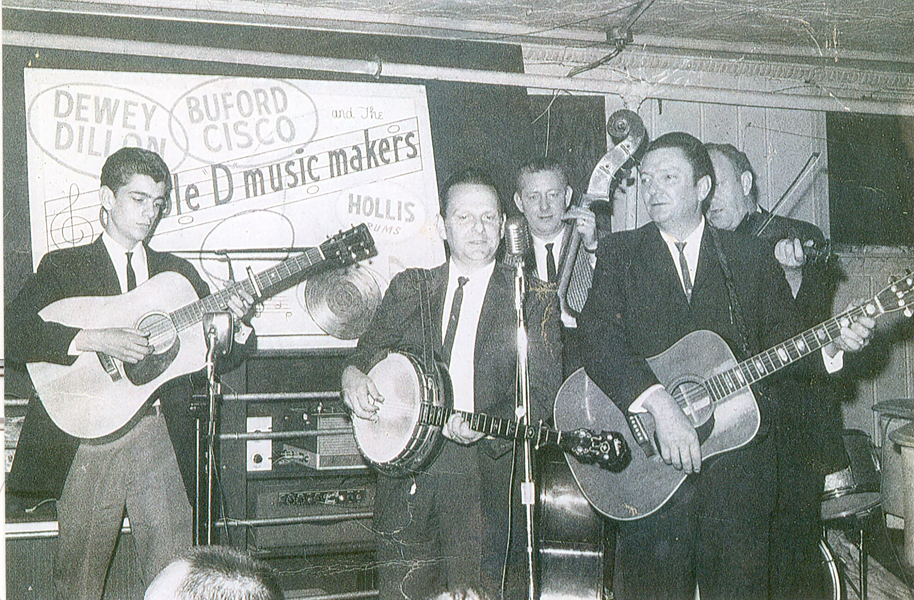
Larry Sparks (far left) performs with the Stanley Brothers before Carter Stanley’s death. Circa 1964. Image courtesy of Rebel Records.
I so appreciate that you bring up heart and soul, because I think people make the assumption that bluegrass is not a music that’s based on heart and based on soul. Especially when you listen to some barn burning, shredding bluegrass or jamgrass.
But for me, this music has always been as much about the stories, the heart, and the soul – and the feeling of it. And that’s clearly such an important part of it for you, too, and the storytelling. I think a lot of people don’t realize heart and soul are an important part of the tradition of bluegrass.
Yeah, sure it is. I’ve worked under the bluegrass name for years. Bluegrass is about 80 years old now, and I have been into it 62 of those years.
Wow.
I can’t believe I’ve been into it that long under the bluegrass name. My music is considered bluegrass, but actually a lot of my stuff could go either way. I’m considered bluegrass and that’s fine. I appreciate it. I’m honored, but a lot of my stuff can go into country or some other direction, too.
I just hold to what I’m doing and [what has] been a good business for me over the years. But you have to make it work and look ahead. The music is music, but you gotta make a business out of it. If you don’t, it’s not gonna work. And that’s what I did. It’s worked out for me. A lot of the bluegrass [industry] is not easy. It’s not one of the easiest forms of music to “make it” in.
And, it’s always been set behind [other] forms of music. I’d really like to see it be possible for bluegrass to be played on all stations. To play it [alongside] new country, modern country, rock and roll. Whatever it is, mix it up. But get bluegrass to program directors. If it ever could get played on other stations, with the right songs and the right artist – put in with everything else they’re doing – it would work. I don’t know if it’ll ever come to that or not, but that’s what it’s always been. We’ve always – like the old saying – took the backseat to the other forms of music.
But we got enough fans and that keeps it [going]. … I’m honored and I’m thankful for it. But it takes a lot of years, a lot of hard work. It’s not easy. I’ve done it all myself. I’ve done my own management, my own booking, my own phone calls, my own writing. This, that, this, that, this, that. I’ve done it all. Like I said, I’m gonna keep doing it, it’s working. It’s fine.
Like you mention, these songs really could go both ways. I love how much country is on this album, and you do such a great job of illustrating that bluegrass and country will always be related and that they cross-pollinate.
And I totally agree, bluegrass has mainstream appeal. And always has! I don’t know why we pretend like it doesn’t.
Yeah, we need more promotion on bluegrass. I wanna keep doing everything I can for it, because I respect it very much. Bill Monroe, the Stanley Brothers, and Flatt & Scruggs – these three names put [bluegrass] on the path and all that played bluegrass come after those three names.
Those three names are in you. I never did want to actually copy any one of those three names, but you take those three names – just to give you an idea. Take those three names I said and you put the Osborne Brothers with ‘em. Put Jim & Jesse with ‘em. Put Jimmy Martin, Mac Wiseman and others – and Larry Sparks – all those names. Every one of ’em are different sounds, different style. But they’re still on the same path. That’s what you gotta have. That’s what I knew, “I better stick to that and not be a copy.”
Let’s talk a little bit about your guitar playing style, because I think you’re carrying on a tradition of a particular kind of guitar picking in bluegrass that is rarer and rarer today. So few people who still make records and perform shows pick like you do. I love how front-and-center your guitar is on this album. Could you talk a little bit about your picking style and maybe who your influences were or how you came up in that type of picking?
Other guitar players are really good and there are a few players out there that can. But the way I do things, my playing is like my singing. I play the melody. And I don’t play over the melody. There’s less notes than normal guitar, it’s more of a feel. It’s hard to explain, but I just play the feel of the song and the melody. I try not to overdo it. I play it and when I hit a note or a slide or a backward– or whatever I do, a pull-off, I want it to come from me. I want it to be me and I wanna feel that note I’m doing, feel that slide I’m doing, whatever I’m doing. And [I want to] keep it that way and not overplay the song.
I also wanted to talk about the instrumental on the album, “Sleepin’ Lula.” Speaking of things that are rarer and rarer in bluegrass, having the clawhammer banjo on it is excellent. It feels like no one flogs the banjo anymore. There’s a lot of old-time players, a lot of clawhammer players, but it doesn’t really seem like anybody’s flogging it anymore. Hearing the instrumental, when the clawhammer kicks in, it was reminding me of that era of early bluegrass when you were just as likely to hear frailing banjo as a three-finger in a bluegrass band.
That’s great. Yeah, I thought it turned out pretty good. I was pleased with it. That’s an old tune. My grandpa, I got a recording of him playing that in 1953. Him and some guys, and he’s from Jackson County, Kentucky. Very good fiddle player. Very good. He was one of the best, he could’ve done something with his talent. He was born in 1877. Back in those days, up to the turn of the century, ‘20s, ‘30s, ‘40s, and ‘50s, he just played square dances around locally and stuff. He never did really go out. Stringbean asked him to go out with him some, but he never wanted to leave or go ‘round traveling and stuff. But he could have filled the bill for anything. He was that good.
I heard the tune from him. And I had never heard it before. “Sleepin’ Lula” – that was my grandma’s name, his wife’s name. She died in 1910 in childbirth and I never got to see her, of course. But her name was Lula, and so he recorded that “Sleepin’ Lula.” And I don’t know, I’m not going to say for sure if he wrote it. There’s a couple other fiddle players I heard play that from back in the ‘20s or ‘30s. But all respect to him. There wasn’t a player like my grandpa.
I don’t know who it came from. I don’t know if it came from my grandpa and he put it together because his wife’s name is Lula. Or if “Sleepin’ Lula” was the name [he gave another tune.] Someday I may try to trace that out a little further.
The other fiddlers that you know played it, did they use the same title for it, too?
Yeah!
Interesting. That’s so cool!
Yeah, it’s something else.
You’re a famous bluegrasser. You’ve been famous to me, for instance, my whole life. I was honestly nervous and a little starstruck to have this conversation. [Laughs] But you’re also becoming more famous at this moment, because two of the biggest bluegrass names to ever come out of the genre – Alison Krauss and Billy Strings – they’re such big fans of yours. I feel like both Alison and Billy see your legacy, they see how important it is, and they are translating that importance to people that maybe don’t know who you are or are just learning about you for the first time.
So I’ve just been curious to ask you, how do you feel about having these prominent “fans” – and it’s not just Alison and Billy, obviously. What does it mean to you to be part of that constellation of people that they look to as influences? And, what does it mean to you to see your music reach new audiences thanks to them and others?
It’s a new world. It’s a different world than what I’m used to. Which, there’s nothing wrong with it. I’m very honored that they stand behind what I do and my music. And, for the music, I’m very honored and thankful that they like it and that they maybe have it in their shows sometime or whatever.
But yeah, the new crowds in bluegrass – we have a very good crowd, but it’s bigger than it ever has been, now, bluegrass music is. But we still have that limited crowd [coming] from other forms of music. And that’s why I said, if it ever got to play on the big stations, give us a little room and respect for the bluegrass. It’s very important music and if the big country stations would give us some respect and get bluegrass to their program directors…
Don’t just [throw it out there]. You gotta be careful. Give it the right thing, the right artists, the right songs, and it would really help our music. It really would help.
But if it never happens, we still got a good crowd and we get more people all the time coming in. It’s a kind of a new crowd coming in, a new age group coming in. We still have a lot of the older people, but the younger people are coming into it. Teens to 20 years old, I’m seeing that happen more. That’s good. Bluegrass, it needs more push, it needs more promotion.
Do you see what Billy Strings is doing as that push or as that promotion? Can you tell, with younger fans coming in, that they started as Billy Strings fans and found you that way? I wonder, is there any way you’re measuring the impact of people talking about you and pushing your music?
I can’t really tell on that, for sure. I can’t. I’m just seeing people that’s young – teenagers and stuff – that wants to learn to play the music and are trying to play. And then that age group I was telling you about is. It’s coming in stronger all the time.
I’ll be honest with you. I don’t listen to other music. I don’t listen to anything hardly, music-wise. You gotta keep yourself fresh. But I respect other music. I respect it. All forms of music. I don’t have anything against the big bands and all the new names. But I like that old stuff. Of course, bluegrass and old country. And other things, blues, I like a lot of that.
You seem remarkably humble and so down to earth. You follow the songs, you put heart and soul into ‘em. But you’re literally a Hall of Famer and you’re one of the last of the first big generation of bluegrass makers that are still doing it today. You’re a legend to all of us. Does it feel like you’re a legend? To you, on the inside? Or no?
I would be to a lot of people, a legend, and to a lot of people I would be famous, I would be a star. But when I went into this business, went into music in my teens, I never looked at it as wanting to be a star or to be famous. I never looked at those two things. I wanted to take what talent I had. I knew I had something to offer. I had to put it together and see what I could do [to] make it work.
I don’t know if I’m a star or famous to people. I hope so, because that’d be nice. I’m pretty honored.
Photo Credit: Images courtesy of Rebel Records. Lead image by Michael Wilson.
As one of Nashville’s key classic-country connoisseurs, fiddle maestro Joshua Hedley has long been a musician of many hats. In 2018 his first solo album Mr. Jukebox tapped 1960s-style countrypolitan. 2022’s Neon Blue embraced the lush warmth of the ‘90s-era format, and he regularly thrills crowds with cover sets from across time at the famed Nashville honky-tonk, Robert’s Western World. Yet with his new album All Hat, Hedley dons the metaphorical cap he’s long obsessed over – the wide-brimmed stetson of his Western Swing heroes.
A titan of twang and perhaps Broadway’s finest down-home devotee of the traditional arts, All Hat finds the lifelong Bob Wills fan going back to his roots. Produced by Western Swing icon and Asleep at the Wheel founder Ray Benson, the album captures the upbeat joy of an eminently danceable (yet often overlooked) country style, which Hedley has been loving and learning since he was 8 years old.
Over 11 tracks of old-style originals, he celebrates a genre defined by jaunty rhythms and euphoric solos meant to keep a crowd dancing long into the night. With an already-respected resumé, Hedley still calls All Hat his “pièce de resistance,” and feels Western Swing deserves its due in this era of cultural callbacks.
“It’s definitely not seen the renaissance that say bluegrass or the outlaw country sound have,” he laments.
Joshua Hedley spoke with Good Country about the new album, the differences between Western Swing and other country styles, and what it’s like to be produced by one of your heroes. Plus, he explains how “getting stoned and playing country music” is the best cure for creative burnout.
Your new album is called All Hat. But that term is famously used to describe posers – and you don’t fit that bill when it comes to country. So why are you calling it All Hat?
Joshua Hedley: Well some people disagree, man. [Laughs] I don’t know what constitutes “not a poser.” I would think playing country music since you were 8 would take care of that, but apparently not.
Really?
It is what it is. I don’t really give a shit, but it was just kind of poking fun at myself and those criticisms. I just think it’s funny. But honestly, for the album, I was working on a different album. I was writing for something else and I was on the road with Asleep at the Wheel and Brennen Leigh – we were doing a package show tour together – and I was just hanging out with Ray. He was like, “You ought to let me make a record on you.” I’ve been wanting to do another Western Swing album for a long time and I was just like, “This is it.” When Ray Benson wants to make a record on you, you make a fucking Western Swing record.
It came out really great. I’m enjoying it for sure. I wonder, how are you feeling about your craft these days? Like you said you’ve been doing this since… well, your whole life really.
Man, I’m feeling good about it these days. This album in particular has been just a joy all the way around. Writing – it was really fun. Recording – it was really fun. Playing these songs live is super fun, and it’s something I’ve been needing. You get pretty burned out when you do it this much. I come off the road and I go back to playing music just at home. When you play like that, you get burnt out hard – and I was really burnt out. This record is kind of pulling me out of the burnout.
That’s interesting. I’ve been watching you at Robert’s Western World for years and it’s always felt like you had that dialed in. I mean, you’ve earned the respect of everybody in the field, and you could probably be making a more commercial play, but it seems like you’re more inspired to make music with your friends and do small residencies. Is that a more satisfying life?
Definitely. I’ve done a lot of touring and all of that, but when I’m really having fun is when I’m down at Robert’s or Dee’s [Country Cocktail Lounge] or Skinny Dennis. I’ve been playing these solo acoustic shifts at Dee’s, it’s just two hours a week and I just sit there with my guitar and get stoned and play country songs. It’s kind of empty in there, and I get to do whatever I want. I forgot how much fun I have doing that, so I’ve been leaning more towards playing at Robert’s and doing the honky-tonk thing lately, just because at the end of the day, you got to do what makes you happy. If I was going to do something I wasn’t enjoying, then I could get a desk job and probably make a lot more money than I make doing this.
Maybe.
I wonder, do you ever feel like you know a secret that some of your peers are missing? I mean, when you talk about that burnout phase, and being able to sit down and just get stoned and play country music, is that a secret hack of the lifestyle?
I don’t know about a hack or anything like that, but for me, I am having the most fun when I am playing covers and just singing old songs that I really love. You hear a great song on the radio and the feeling that you get from hearing that song? Imagine the feeling you get from singing it. That’s my jam.
You’ve been calling All Hat your “pièce de resistance.” And I cannot speak French, so I can’t say that phrase. But how do you figure?
I love country music in all its forms – well… maybe not all its forms. But most of its forms. Western Swing has always been my very favorite thing to play and sing, and I actually made a tribute to Bob Wills when I was 15 with Buddy Spicher and his band up here in Nashville.
What? Really?
Yeah, it’s all Bob Wills covers, and a lot of ’em, I think probably I learned them from Asleep at the Wheel. … It’s just always been on my mind that I should write one of these instead of just doing Bob Wills songs, and always wanted to do it. And then getting to do it with somebody like Ray and with the players who are on the album – guys I’ve looked up to my whole life. I don’t know, it’s just the vibe was in the room and this record came out better than I could ever imagine.
Tell me a little bit about your songwriting on this one. What do you do differently when you’re writing a Western Swing tune?
Oh yeah. It is actually quite different because a lot of those melodies come out of the pop world. And when I say pop, I mean like ’30s and ’40s pop.
Like the original pop.
The original pop. Big band music and stuff like that. Country’s very structured, at least the classic kind that I do to where you’re verse, chorus, turnaround, chorus, outro, something like that. It’s real regimented and formulaic and it’s a different approach to writing Western Swing. A lot of those songs are just one verse, and then you play a bunch of solos, and then you just repeat that verse and take it home, which is a very jazz standards thing to do.
I guess I never thought of that.
Like on “Fresh Hot Biscuits.” I kind of approached that how Bob and them would approach “Ida Red” or something, which is really just a fiddle tune that he wrote words to. I leaned into borrowing old lines from old blues songs and tried to find some of those old lines. Like in “All Hat” – “I know a gal up over the hill/ She won’t do it, but her sister will.” That line’s as old as time.
Right. So the structure, is that because it’s made for dancing?
Yeah, the vocal is secondary a lot of the time, and the lyrics certainly are. It’s more about dancing and the whole thing evolved out of square dance culture and callers where there weren’t lyrics to the songs. It was just a guy telling you what to do on the dance floor. The lyrics are kind of secondary to the overall vibe, and the musicianship is really a big part of it, too.
I did want to ask you about “Stuck in Texas” because that one’s got Ray on it. It’s got that jumpy beat, and a little bit of yodeling in there, too. Where did that one come from?
I had wrote several songs that had really similar chord progressions at that time. I had written them in a row, and I was trying to get out of that. And I’m also trying to push myself on guitar to write outside of three chords, four chords. I just kind of came up with that. I was thinking about the Sons of the Pioneers when I wrote that song, wanting a real good guy, cowboy-movie cowboy. Thinking about Gene Autry and stuff. Then it was just a no brainer for Ray to step in on. Mr. Texas.
What’s it like to be produced by a guy like Ray Benson? Is it different than playing in his band?
It is different than playing in his band because his band is his brainchild and he knows exactly what he wants it to sound like. I think he recognized that this was my brainchild and we all kind of did it together. Ray, he kind of choreographed a lot of it being like, “We should throw the ensemble part here and twin this,” and “We got to have fiddle on the intro,” that sort of thing. But a lot of it was just a group of guys that play together all the time getting together and playing these songs. And what happened was just natural.
You said somewhere in your bio that you grew up playing fiddle with guys who were in their 50s and 60s, and learning from them. I just wonder, is that what you aspire to be one day?
Yeah, definitely. There’s actually this kid Nash [Grier] that comes down to Robert’s whenever Brazilbilly plays and it’s always a treat. He’s like six or seven years old and he’s a really great fiddle player. He comes up and he sings “Hey, Good Lookin'” and he plays “Orange Blossom Special” behind his back – all the little things I used to do when I was his age. Now that I’m 40 years old, I’m like, “Man, look at that little guy.” It really brings back memories. I was that kid and I love seeing a new generation embracing all this stuff. It’s really special to get to pass it on.
What you hope people take away from this one. I know it’s a labor of love for you and a lot of fun to do, but what do you hope people get from this thing? Do you want to spark a revival?
I don’t know about any revival, but I hope people have fun with it. I hope that they don’t take it too serious. Music can get so heavy these days, and I get it. But I want to remind folks that you can just keep it light and make a great record. Sometimes it’s nice to just dance, to just do some two-stepping, learn how to polka and not be so serious all the time. It’s all fun. That’s why we got into this. So I just want people to remember to enjoy themselves.
Ready for another batch of new songs and videos? Great! ‘Cause You Gotta Hear This.
It’s a roundup full of friendship and interpersonal connections this week. First up, Americana rockers Chamomile & Whiskey bring a new video for “Friends Are Falling Out.” In the vein of classic, folky alt-rock sounds, the track and video explore the fragility of relationships with a deep groove, distortion, and fiddle and banjo. But keep scrolling, as you’ll also find singer-songwriter Kim Moberg’s testament to the all-too-rare true friend with her new track, “I’ll Always Be A Friend.” The jangly modern folk number was born from Moberg’s desire to communicate to her old and new friends how important they are to her. The paeans to friendship continue with a new video from old-time/folk duo Paper Wings, who debuted their new single “Fumblin” earlier this week. It’s a double-guitar track about awkwardness, eagerness, and how we all stumble through life and through relationships.
There’s still more to enjoy elsewhere in our collection, too. Bluegrass icon Laurie Lewis has announced her upcoming 2026 album, O California! with a new video for “Look Down That Lonesome Road.” Lewis took the mournful ballad, wrote new verses, and set the lyric to a jammy, driving bluegrass tune that drips with her signature sounds. Plus, fiddler Andy Leftwich calls on his pal, guitarist Cody Kilby, to trade licks on a new original fiddle tune he’s just released called “Old Hickory.” You might never guess he first wrote the melody on guitar.
You won’t want to miss “The Doldrums” from New York Americana string band The Mammals. They’ve just dropped an animated video for the track from their recent project, Touch Grass, Vol. 1. The song might just be a cure for its own namesake; it’s a perfect selection to take with us into the often doldrums-heavy winter months. Finally, don’t miss a brand new single from iconic folk trio The Lone Bellow. Today they announced their upcoming record, which will release in February 2026 and was recorded in Muscle Shoals, Alabama. “You Were Living” finds the band with an expansive, resplendent sound that certainly sounds like The Lone Bellow, but steeped in the Shoals.
There’s plenty to find and enjoy in our conglomeration of new music. Scroll on for more. You Gotta Hear This!
Chamomile & Whiskey, “Friends Are Falling Out”
Artist:Chamomile & Whiskey Hometown: Charlottesville, Virginia Song: “Friends Are Falling Out” Release Date: November 19, 2025
In Their Words: “I wrote the line ‘that broken heart might just catch a break’ after meeting up with a friend of mine. She had regaled me with her latest story in a long line of bad relationships. I live in Charlottesville, which isn’t very big, and we’ve got plenty of small-town drama. The song kind of came out of some of that and the fragility of friendships. I finished writing it just before we celebrated 1,000 shows as a band.
“In preparation for the show, Marie and I did an in-studio performance at WNRN, a station we’ve long had a good relationship with. I thought it would be fun to try a brand new song. A few days later they told me that NPR Music had shared the video as their live song of the day. We felt like it must have some juice and we decided to record it ASAP. We all liked the mysterious, Southern Gothic aesthetic that we felt in the studio. Critter added the banjo on top of fiddles before laying down a glass slide part on the guitar. Marie and I grew up in Nelson County and that first Old Crow Medicine Show record, O.C.M.S., was huge in our circles and reminds me of driving around those beautiful backroads as a teenager. To have Critter put his signature sound on one of our songs was special and felt full circle.” – Koda Kerl
Track Credits: Koda Kerl – Guitar, lead vocals, songwriter Marie Borgman – Fiddle, backing vocals Bobby St. Ours – Fiddle, backing vocals Brian Gregory – Bass, backing vocals Critter Fuqua – Banjo, slide guitar, backing vocals Jesse Fiske – Baritone guitar, backing vocals Drew Kimball – Electric guitar Stuart Gunter – Drums
Video Credits: Directed by Johnny Saint Ours and Jenny Carhartt. Filmed at Dürty Nelly’s Pub
Andy Leftwich, “Old Hickory”
Artist:Andy Leftwich Hometown: Carthage, Tennessee Song: “Old Hickory” Release Date: November 21, 2025 Label: Mountain Home Music Company
In Their Words: “Every once in a while, you sit down with your instrument, a melody just falls out, and within a few minutes you have a fun, catchy melody! This is exactly what happened to me with this song. Even though it’s a fiddle tune, I actually wrote it on my guitar. After a few small changes to the melody, I finally landed on something that flowed well under the fingers – not only for the fiddle, but the lead guitar part as well. I was honored to have my good friend, Cody Kilby, take the lead guitar on this one! It’s so much fun to play and was named after ‘Old Hickory,’ a town near where I live.” – Andy Leftwich
Track Credits: Andy Leftwich – Fiddle, mandolin Byron House – Upright bass Cody Kilby – Acoustic guitar Matt Menefee – Banjo
Laurie Lewis, “Look Down That Lonesome Road”
Artist:Laurie Lewis Hometown: Berkeley, California Song: “Look Down That Lonesome Road” Album:O California! Release Date: November 21, 2026 (single/video); February 13, 2026 (album)
In Their Words: “I have been playing around with this song since I heard Gaither Carlton sing it decades ago as a mournful ballad. I love it that way, but it seemed to me that sometimes parting needn’t be so sad, if you know you get to meet again (maybe at a festival next year). I started writing verses for it and when I got up to about eight or ten, I decided it was time to get serious. I love the loose arc of the story and the way the band responds to it. We winnowed down the verses to the essentials, leaving the others for the extended jam version.” – Laurie Lewis
Track Credits: Laurie Lewis – Lead vocals, acoustic guitar Brandon Godman – Fiddle George Guthrie – Banjo, harmony vocal Hasee Ciaccio – Double bass, harmony vocal
Video Credits: Produced and directed by Bria Light. Recorded at the Strawberry Music Festival in Grass Valley, CA.
The Lone Bellow, “You Were Leaving”
Artist:The Lone Bellow Hometown: Nashville, Tennessee Song: “You Were Leaving” Album:What a Time to Be Alive Release Date: November 21, 2025 (single); February 13, 2026 (album) Label: Thirty Tigers
In Their Words: “‘You Were Leaving’ is a song about the fleeting, transient nature of life. For us, the song is deeply personal, but it also feels universal. It invites people to find their own story in it, what it means to say goodbye, and what stays with us long after the leaving.” – The Lone Bellow
The Mammals, “The Doldrums”
Artist:The Mammals Hometown: West Hurley, New York Song: “The Doldrums” Album:Touch Grass, Vol 1 Release Date: November 1, 2025 Label: Humble Abode Music
In Their Words: “I wrote ‘The Doldrums’ during a stretch of isolation when joy felt out of reach and time moved so strangely. ‘Why do the good times go so fast? Why do the doldrums linger and last?’ We tend to remember the hardest part of the day when we lay down to sleep, but this song reminds me to appreciate every amazing moment. I’m grateful this recording sounds triumphant and energized – like an anthem to shake out of a low vibration and shine a bright light into the future. For all who listen, may music and friendship help carry you through the next windless day. The Mammals have your back.” – Ruth Ungar
Track Credits: Ruth Ungar – Vocals, guitar, songwriter Mike Merenda – Guitars, banjo, vocals Brandon Morrison – Bass, vocals Will Bryant – Keys, vocals Tim Morrison – Drums
Video Credits: Animated and Directed by Anne Beal.
Kim Moberg, “I’ll Always Be A Friend”
Artist:Kim Moberg Hometown: Cape Cod, Massachusetts, the traditional territory of the Indigenous Nauset and Wampanoag Nations Song: “I’ll Always Be A Friend” Album:All That Really Matters Release Date: January 30, 2026 (album)
In Their Words: “As an artist who grew up listening to the amazing singer-songwriters of the 1970s, Carole King’s ‘You’ve Got A Friend’ is embedded in my heart. I love that her song and its message about connection, support, and loyalty have endured all of these many years. I was a military ‘brat’ who attended 10 different schools in 12 years, so growing up I never lived in one place long enough to be part of a friend group or a clique. I was always ‘the new kid’ who was never included. The rare true friend meant more than gold to me.
“‘I’ll Always Be A Friend’ was born from my desire to share how important the friends in my life have been and how equally important the new friends I get to connect with through performing are to me. In these uncertain and trying times, community and friendship are paramount. (And Libra loyalty lives strong in this song!)” – Kim Moberg
Track Credits: Kim Moberg – Lead vocal, acoustic guitar Jon Evans – Bass, tenor guitar, drums, percussion, Fender Rhodes, harmony vocals
In Their Words: “‘Fumblin’ is about friendship and watching one another stumble and fumble through the joys and trials of life. We wrote this one together in the backyard in a sort of trance state, describing scenes from our lives. It’s definitely a romanticization of awkwardness and our eagerness to connect as a species despite inevitable failure at times. We played double guitars on this one which we’ve been having fun doing lately. It’s the first track in the world of ours that I recorded and mixed in my studio in Nashville, so that’s quite exciting as well. We have a lot more music coming from this space, so look out!” – Wila Frank
Video Credits: Filmed by Sami Braman, edited by Wila Frank.
Photo Credit: The Lone Bellow by Debbie Ewing; Laurie Lewis and band by Dawn Kish.
2025 was a standout year for roots music books. In a time of political upheaval and uncertainty, authors like Craig Shelburne & Brenda Colladay and Alisa Murphy brought us deep into the history of music institutions that have weathered generations of American ups and downs: the Grand Ole Opry and The Station Inn. Reading about these places is a reminder that culture is often a better litmus test than news cycles, when it comes to what a country stands for and where its soul can be found.
Biographies of Dolly Parton and Alice Gerrard (the latter written by Gerrard herself) highlight women who defied the odds to become iconic voices in country and old-time. Parton first debuted on the Opry at the age of 13 and her influence on American culture has spanned from highlighting women in the workplace with “9 to 5” to donating a million dollars for medical research to accelerate the creation of the Moderna COVID vaccine. Gerrard, while less of a household name, is considered one of the last of the old guard in traditional music; even if you haven’t heard of her, you’ve probably still been touched by her work. These books detail the unlikelihood of these women’s successes given the time and place of their work and both good reminders of changing gender norms that we now take for granted.
Two books on Black American fiddle and banjo music continue the quest to restore African music’s and African American musicians’ rightful place in the history of the American string band tradition. With additional archival and notation resources, these books offer not only scholarship, but an opportunity for dedicated pickers to add to their repertoire, too.
And finally, roots musicians Paul Burch and Charlie Parr channel their creative writing into novels Meridian Rising and Five, respectively, the former a fictionalized story of Jimmie Rodgers and the latter a wild meditation on the wanderings of a troubadour.
From coffee table aesthetics to novels and new tunes, 2025’s roots music books have you covered! See a list of our favorites and a collection of “honorable mentions” below.
Ain’t Nobody’s Fool: The Life and Times of Dolly Parton by Martha Ackmann
Martha Ackmann is known for illuminating the stories of women who rise above societal expectations, so it’s only appropriate that she should tell the story of Dolly Parton’s ascent to success. With new interviews and documents, the book focuses on the price Parton paid for her early fame, penalized and criticized by those who saw it as a betrayal of her roots. Despite legal battles and struggles with her mental health, Parton persevered and went on to use her affluence to help her East Tennessee home, through the development of Dollywood, her charitable work, and the creation of The Imagination Library. Find it here.
Go Back and Fetch It: Recovering Early Black Music in the Americas for Fiddle and Banjo by Kristina R Gaddy and Rhiannon Giddens
Appropriate for pickers and scholars alike, this collection of early Black Atlantic music is equal parts songbook and history lesson. Nineteen carefully transcribed tunes sourced from 1687 to the 1860s are presented in standard notation and banjo tablature, and accompanied by rich historical essays detailing their origins, cultural context, and evolution over time and place. This collection is another important step in the recovery of Black history of the American musical canon – and specifically the fiddle and banjo canon – from two lauded experts on the subject. Find it here.
Meridian Rising by Paul Burch
Meridian Rising, the debut novel from Paul Burch, fictionalizes the life of country star Jimmie Rodgers and was released this fall to rave reviews. As the Chattanooga Free Press says, “Burch must have done a great deal of research to deliver a story that feels so authentic, but research alone doesn’t make a good novel. The writing is what matters, and Burch skillfully renders a large cast of narrators throughout Meridian Rising, especially its main subject, whose witty, sometimes barbed voice is vivid and memorable.” Find it here.
The World Famous Station Inn by Alisa M Murphy
The passing of JT Gray in 2021 marked the end of an era for The Station Inn. Although the venue continues its bluegrass legacy with new management, it has been long past time to commemorate this (as its name rightly points out) world-famous venue with a book of stories and photos. Author Alisa M Murphy spent two years immersing herself in the culture of the venue and conducting interviews to put together her coffee-table book, The World Famous Station Inn.Find it here.
Custom Made Woman: A Life in Traditional Music by Alice Gerrard
This new memoir from one of our national treasures, Alice Gerrard, features over 100 of her personal photographs along with stories from pivotal times and an exceptional life in traditional music. Gerrard’s career saw her crossing paths with Bob Dylan, Doc Watson, Elizabeth Cotten, and many more. Recent rereleases of Gerrard’s trailblazing collaboration albums with Hazel Dickens have been put out by Rounder Records and Smithsonian Folkways, and they can be listened to in an entirely new context thanks to this book. Find it here.
Fiddling is My Joy: The Fiddle In African American Culture by Jacqueline Cogdell DjeDje
UCLA Ethnomusicologist Jacqueline C. DjeDje investigates the fiddle in Black America, not only helping restore it to its rightful position in history, but also exploring why fiddle in African American culture disappeared from the mainstream story of the instrument in the first place. In addition to exploring geographic differences in African American fiddling traditions, DjeDje’s scholarship looks at fiddle traditions in West African and how their specific characteristics made their way to both Black and white American fiddlers. The book is accompanied by an online eScholarship Companion with primary source documents and audiovisual examples of music discussed in the text. Find it here.
Five by Charlie Parr
The second collection of short fiction from beloved Minnesota musician Charlie Parr is not for lovers of a tight plot and succinct characters. Parr’s five stories are, according to his own description, “more like sad anecdotes told to you at the end of an impossibly long dinner party by the drunken spouse of someone that you barely know while you’re easing your way to the door, having already put your coat on around the time that these stories began.”
But, if you’re a fan of Parr and his 18 (!!!) studio albums, this collection is a must. Find it here.
100 Years of Grand Ole Opry by Brenda Colladay & Craig Shelburne
Music journalist Craig Shelburne worked tirelessly with Opry historian Brenda Colladay – and dozens of artist, announcer, and Opry employee interviewees – to tell the story of the world’s longest-running live radio show over a century. The Grand Ole Opry is certainly the main character. This book is perfect for collectors and readers alike, since it’s full of illustrations and photographs. It’s separated into chapters by time periods, following the twists and turns of the Opry’s youth, adolescence, and adulthood. From Lester Flatt to the 2010 flood, the book is as deep as it is wide. An entertaining resource for country fans who like to get the full story. Find it here.
Other Reads From Our Inbox
Solomon Simon Dog Man Jack by Cindy Baucom, illustrated by Grace van’t Hof (Self-published)
This website uses cookies to improve your experience. We'll assume you're ok with this, but you can opt-out if you wish.AcceptRejectRead More
Privacy & Cookies Policy
Privacy Overview
This website uses cookies to improve your experience while you navigate through the website. Out of these, the cookies that are categorized as necessary are stored on your browser as they are essential for the working of basic functionalities of the website. We also use third-party cookies that help us analyze and understand how you use this website. These cookies will be stored in your browser only with your consent. You also have the option to opt-out of these cookies. But opting out of some of these cookies may affect your browsing experience.
Necessary cookies are absolutely essential for the website to function properly. This category only includes cookies that ensures basic functionalities and security features of the website. These cookies do not store any personal information.
Any cookies that may not be particularly necessary for the website to function and is used specifically to collect user personal data via analytics, ads, other embedded contents are termed as non-necessary cookies. It is mandatory to procure user consent prior to running these cookies on your website.