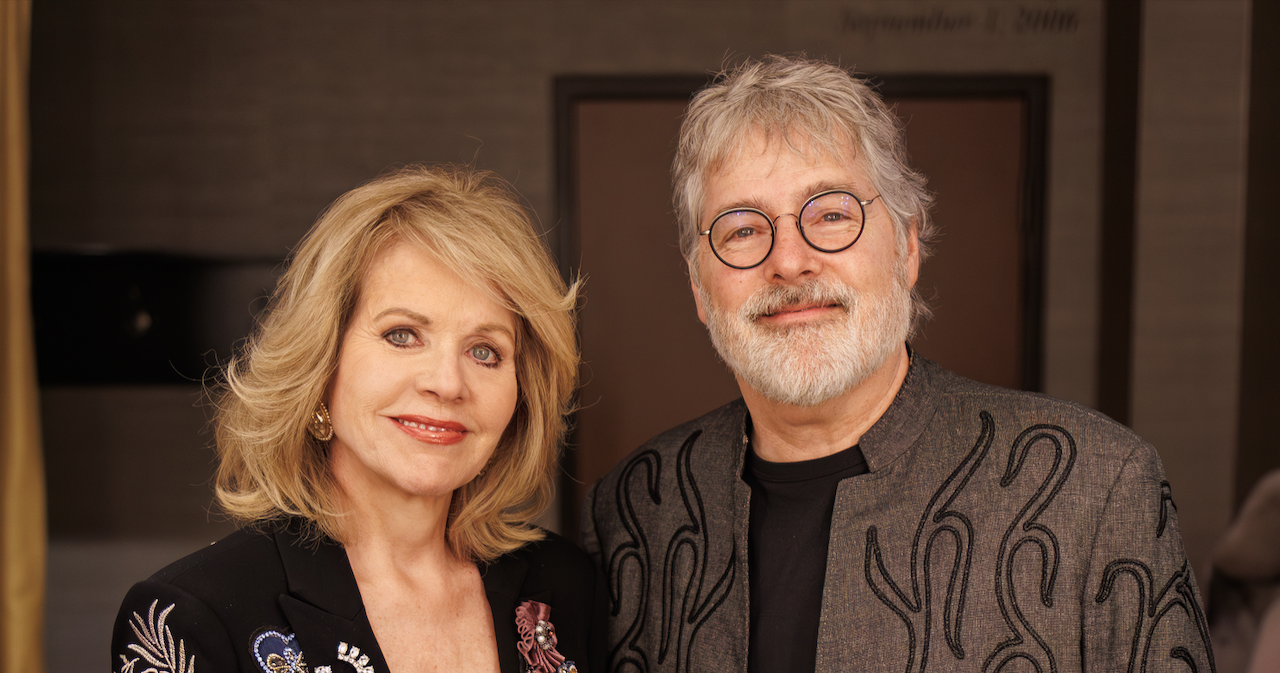
Renée Fleming and Béla Fleck in Conversation

Renée Fleming, Béla Fleck, Appalachia, and an all-star bluegrass band. Though the knee-jerk reaction to this list might be to play “one of these things is not like the other,” there is much more to this premise than meets the eye – and ear.

Fleming is one of the most renowned opera singers of the modern day, but the internationally acclaimed soprano has a long history of musical curiosity and often enthusiastically indulges thereof. From this trait alone, she and Béla Fleck found a resonance within one another, embracing and making music beyond the bounds of their respective claims to fame. This resonance sparked an idea that endured for more than 20 years, culminating in The Fiddle and the Drum, an album of Appalachian songs sung by Fleming and produced by Fleck – one that, more than anything, reveals a journey of familiarity and discovery for both artists.

The pair joined BGS on a phone call to delve into the musical, historical, and personal connective dimensions of this record. The memories shared are rich and many. Some extend as far back as Fleming’s preteen years. Others revive Fleck’s contemplations of how each song might come to life through Fleming’s vocal prowess. Every one of their recollections is imbued with immense mutual respect and awe for each other as well as the album’s many collaborators; it’s clear they both appreciate the gifts each and every person brought to this record.

Our conversation isn’t without painful realities, as the album’s focus on love and loss and war prompts reflections on fights and fatalities happening today. But, ultimately, it’s a conversation colored by a range of emotions and experiences, not unlike the very music of The Fiddle and the Drum itself.

Renée, you’ve spoken extensively about your upbringing and how you formed your relationship with a lot of folk music and folk artists. In that vein, how would you describe the initial perspective you formed about the music of folk, bluegrass, and Appalachia during the younger formative years of your life?

Renée Fleming: I think it was in middle school that they offered a guitar class – which I think is a fantastic way to get kids interested in music, because it’s an instrument you can carry around and you can read tablature pretty easily and pretty quickly. So that got me interested in [music], but also some of the music that I really genuinely liked [and got me interested] came a little later, including my discovery of Joni Mitchell in junior high school and high school. Then I was exposed to it through my family as well, because my grandfather was a fiddler and a drummer, so we had very eclectic tastes in music. I just was constantly exploring. [I] wrote a lot of songs and wrote a lot of music, starting probably when I was 12 years old, and it just branched out from there.

Where did Béla Fleck initially come into the picture for you?

RF: I was already a fan of Béla because of Béla Fleck & the Flecktones. In college, I really started singing jazz with a big band and also with the trio every weekend, so I was a big fan of his [at that time].

Obviously everything worked out the way it was meant to, but you still carry those glimpses into other worlds – folk, jazz, and so on – and it helped somewhat shape where we are now. I think it’s really brought a lot of extra color, showing people that [music] doesn’t have to be so rigid and doesn’t have to be about genres and specific labels and I think that’s something that really shines through with The Fiddle and the Drum.

Béla Fleck: I think we all have a tendency to pigeonhole people and put them into a black-and-white kind of a concept. You know, “They do this, they don’t do that,” but people are nuanced and love all kinds of things, especially when growing up and you’re open, you’re trying things and figuring out where you’re going to land.

I was also a huge fan of Joni Mitchell, and I was a vocal major in school, even though I couldn’t sing worth a darn and was secretly working on the banjo in the closet. But being exposed to classical music in high school – and my stepfather is a cellist, so I was listening to string quartets and stuff when I was a kid. People might be surprised by that, or maybe not, considering the kind of music I like to do, which is very varied. But I think it makes all the sense in the world that all of these other interests make Renée an even better opera singer, if that’s the right thing to call her. But the bigger your world is, the more you can bring to the specific things that you do.

RF: I never heard that you were a voice major before. I love that.

BF: Don’t think I’m gonna sing, because I want to protect you from awful pain, agony, despair.

RF: I don’t believe it.

BF: Nobody ever gave me a voice lesson, but they started me on French horn. I got into my school playing guitar and then it became clear that I wasn’t going to be able to play the French horn. They said, “Listen, you could just go stand in the chorus and still be in the school.”

So they put me back in there, but they needed tenors. I wasn’t a tenor so I just kind of screamed, looked at the music, and tried to figure out what they were singing and sing along. Then, when I got to my final year, they said, “Oh, we found out we’re doing Rhapsody in Blue for the semi-annual concert, and we found a banjo part so you can get out of chorus. If you want to get out of chorus, you can play this banjo part on the final concert.” I was like, “I think I’ll stay in chorus.” I liked it at that point.

Then on the last day of school, the chorus teacher – a woman named Mrs. S, who was an amazing vocal teacher – she had never spent any time with me, but she got me in front of the piano and said, “Stand up straight, sing from your diaphragm!” And she gave me a few quick things she made me do and I was singing like a bird. I was like, “Holy cow, I wish you had given me a lesson when I started at the school. I would actually be able to sing!” She knew exactly what I needed to do. It was remarkable.

Speaking of singing technique, Renée, when you were preparing to record the songs for the album, where on the spectrum of vocal expression did you anticipate needing to steer your voice?

RF: I think it was Béla who kind of clocked that a lot of the songs we were choosing kind of fell in line with [themes of] love and loss – and war, as well.

One of the things that I do, especially when I’m singing outside the classical genre, is I try to avoid an obviously classical sound. That, typically for me, means the upper register. But we worked it in some songs and you just have to be mindful of vibrato. It’s really thinking about style and, for me, that’s the same as when I’m singing on a program of French art song versus an Italian aria. So I may sound the same, but the style is completely different.

What struck me as I listened to the album was just how subtle and yet impactful the differences in how you sing can be. It’s just shaping and forming your voice around the mood that needs to come through. And I visualized that, if your voice was some kind of an entity or something that could be shaped, that you just have this beautiful ability to mold it and manipulate it into exactly the shape and form and size it needs to be to express whatever the music calls for.

RF: I like to record. I like the idea of focusing only on what we hear and not adding so many other elements like you do in a live performance, where it’s also your acting and your movement and how you look and your facial expression. This is a very much more focused activity and we would do many versions of the same song. I left it to Béla to choose which versions he liked. I had almost no complaints about the choices he made.

BF: I loved to hear your voice on all the takes. And then sometimes there would just be a magic moment of, “Oh my god, the song is really happening here. We’ve got to make sure this is part of the final takes.”

I have a frustration when you have something killer that happens in one portion of the take and then the rest of the take isn’t as good. I like to find those magic moments and have them all end up on the record. But I also think for Renée, there’s an unconscious element to being a musician. [To Renée:] You’re inspired by a moment, and sometimes it’s hard to put into words all the things that you’re [doing]. You put the material in front of yourself, you decide [to] embody it, and the music is correct and things are happening in the right way – you just know what to do. And it’s hard to say how you know.

Renée and I worked really, really hard on our craft, but I think the craft is there to serve something that’s a little harder to quantify, which is just what the unconscious – what our bodies and our souls – wants to doubt when it’s time to make the music.

RF: And it has to do with the expression. I’m also thinking of specific pitches and words that relate to the song, but [to Béla:] I was really thrilled to hear how much you could vary what you were playing. Sometimes your harmonies would just come from another world and I’d say, “Wow, that’s so cool. Béla can kind of put in a jazz harmony once in a while.”

BF: You also pushed for that. I remember the first arrangements you said, “I think this could be more interesting.” And then in the moment, I had to come up with a better arrangement, a more interesting arrangement, for the first song on the record [“He’s Gone Away/Storms Are on the Ocean”]. I’m really proud of it. I think if you hadn’t pushed and I hadn’t reacted, we wouldn’t have ended up with that arrangement, which was quite unusual for that song, and then that kind of led the way to being a little bit more open.

It’s funny, when I’m playing with the Flecktones, or Chick Corea, or somebody like those folks, I feel very open harmonically. When I’m playing music that’s more traditional, I’m very careful not to get too harmonic. So, when I discovered this was a safe place to explore a little bit and look for just the right kind of harmonic additions to the basic chords, it was very freeing and inspiring. And of course, getting to work with a great vocalist like Renée… I’ve been a big fan of female vocalists since Joni Mitchell and Joan Baez and Linda Ronstadt and all of these people. I saw that there was a lot of art to working with a great vocalist like that. I was eager to have that opportunity and thankful to get a chance to try and figure out how to make it work from my end.

RF: It’s funny you say that, because I’m a huge fan now of Hazel Dickens, and you said that you had worked with her. Because there’s something so plaintive about the way she sings, it’s like Roscoe Holcomb, too. There’s something– I can’t describe it. It’s authentic and it’s immediate simplicity. I just absolutely love it.

BF: We used to talk about the “ancient tones” in the bluegrass world, and Bill Monroe had this quality. It might not always be perfectly in tune but it didn’t matter. It was just so pure and so powerful. And Hazel has that. It’s like it’s coming from another planet, almost. It’s so deep and powerful the ordinary rules don’t apply. It’s something else.

RF: I agree.

Connecting this topic of the intangible with the themes of the record, how are you both feeling about the album’s thematic focus, given the various experiences of war and loss that are happening in the U.S. and abroad?

BF: What happened was, we had a certain amount of songs we were committed to and we were excited about, and we were looking at quite a large list of additional songs that might finish out the record. That’s when I started looking at the original six songs we had recorded and thought, “You know, there really is a thematic arc.” Some of these songs were not working for me, and I couldn’t explain why until I put my finger on the fact that the six songs that we’d already recorded were telling me a story. When I explained what I was seeing to Renée, she said, “Oh, I see that. That makes all the sense in the world.”

It kind of starts with a romantic relationship that leads to commitment and then the man, in this case, goes off to war and doesn’t make it back. The woman is left on her own, maybe with a child, and then in the end, there’s a rumination about life and the way it goes like this often in the world. So that’s the story arc. Basically, to me, that is about when you make a man your boss, you give yourself up. You give up your beauty. You give up your individuality and all the promise that you could be if you weren’t in that kind of a relationship, you know what I mean? And in a way, the woman in this story is taken advantage of by bigger forces, a war.

Well, this stuff is happening every day, all over the world. And we’re in a big one right now, and there’s a lot of questions as to whether we should be there. Those questions usually come out a few years after the war is over, and everybody will say, “Oh, this was a terrible idea, and here’s why.” You don’t have to be a genius to know that we’re going to be saying the same thing about a lot of these conflicts before long. So to me, it just makes the record have that much more meaning. It’s happening right now, just like it always does – this is what people do. This is what mankind does. And it’s very disappointing that it keeps going back to this place.

RF: [My and Béla’s] generation has been fortunate that, in a way, we’re too young to have really understood what was happening in Vietnam. A lot of this repertoire really relates specifically to Vietnam. But there’s also the Civil War. And every once in a while, things really fall apart. We’re in a period now where the same thing is happening. And it’s really not useful. It’s not going to move the needle for Iranian citizens – it might even make it worse for them. So I just think it’s tragic when leaders feel like the only alternative is war.

BF: Renée also mentioned she wasn’t sure that “Scarlet Tide” would fit with the other songs, but we went ahead and did it because we both loved it. And then when we looked at what we had – again, those first six songs – it made all the sense in the world. The songs were leading us in a direction, one that, unfortunately, mirrored what mankind does.

RF: And my heart goes out also to people in the Ukraine. There are always conflicts happening around the world. There have been so many reasons for these things, it’s shocking that sometimes it’s just [plain] political. I find that really sad.

It certainly has just felt like a very heavy time, for quite a long time. So even though the themes on this album are rather heavy and emphasize a lot of the sadness that’s going on, I think it’s also very cathartic.

BF: It’s funny how in blues and bluegrass, sometimes you’ll sing the most terrible lyrics – little girl and the awful, dreadful snake or a guy killing a woman – and make this very happy, jolly song about it. It’s bizarre! And in blues, a lot of time you’re singing the saddest things, but it’s uplifting somehow to bring them out in the open and treat them maybe in a different way that allows you to experience them differently and work them through in different ways. Some bluegrass songs are really, really sad but they’re so jaunty you don’t quite realize it.

RF: Well, it’s also that we are practicing grief. That’s one of the things that scientists have come up with, that sad songs really help us process and learn how to process actual grief, because we’ll all experience it.

BF: I think also having kids – we’re both parents – but you realize that people process grief in really different ways. Some people don’t show it for a long time, but then it comes out. It’s handled in a lot of different ways.

When you were putting the music together, what kind of unexpected creative sparks came up amongst the two of you and also among the large group of immensely creative artists that are contributing to the album?

BF: I think with music, you can be over prepared because there’s a lot of things that happen very spontaneously when you have musicians of this caliber – people like Sam Bush, Jerry Douglas, Stuart Duncan. Just like Renée colors every take differently, they’re going to do the same. They’re going to be very responsive. Things are going to happen on the floor. Someone’s going to want to stay on the floor in the studio while we’re doing takes, someone’s going to say, “Yeah, I don’t know, that part’s not working for me.” And we’re going to solve it in a matter of seconds and something’s going to work.

It’s a very emotional place to get into when you’re recording, especially songs like this. As we’re all listening to Renée, we’re all inspired by how she’s singing them. They’re different than we’re used to hearing. So we’re playing differently than we’re used to. But we also come up with an arrangement, develop it, and do it a few times so we really think we have something and try not to rush through it. But there’s a tendency for things to really work out very quickly.

So with the producer role that I was in – and Renee didn’t have that experience with these folks, although she has with a lot of other musicians that are improvising musicians – where the parts are not written down and they’re very spontaneous, she was able to ride those waves very well. And whenever she spoke up, she gave me a lot of latitude, a lot of rope. But whenever she spoke up with any comment, it was always dead on the money. It was going to make it better. We listened and we tried to incorporate everything we could to make it her music.

RF: I think also that collaboration, for me– the example I would use is working with a conductor is, at best, very intuitive. You’re reading each other’s signals that you’re giving musically, in terms of dynamics, and it’s never the same way twice. I think that was true in this process as well. And having Béla, who had really created the structure for each of these arrangements, helped to anchor everything.

But to have those other musicians playing – they’re the crème de la crème of Nashville I think, and the singers as well. I mean, the way Dolly Parton was able to add her voice to the track I had already created [“In the Pines”] and just blend in amazingly, but then to also add so much to it. And the same was true for Jerry Douglas. Aoife O’Donovan, I already knew and had worked with her already on a project at the Kennedy Center. I didn’t know Sierra Hull and Sarah Jarosz, who are also just extraordinary musicians and terrific artists. For me, it was really a delight to be working with so many truly great musicians.

I’ve been fortunate to see Béla perform live in other genres with other musicians. [To Béla:] You never do anything easy, because I just wondered at your ability to manage these polyrhythms and changing meters, and then also to keep track of where you are. I mean, it just boggles my mind.

BF: Thanks. I feel like the banjo is like a percussion instrument. Like a tuned percussion instrument, similar to maybe a marimba. The rhythm of things is very fundamental to what makes me tick and what makes the banjo tick, because we don’t have sustain. So everything’s all about where you place the note.

So when they say, if you [lose or] don’t have a sense, your other senses become stronger – I think, as a banjo player, we have certain limitations that are almost like senses we don’t have. We can’t take a note and hold it for a long time. It’s just not possible. So we get better and better at timing and rhythm. If we’re on top of it, and we understand that, then we become rhythmicists.

It’s more challenging for me to do music with a lot of space, because I can’t do it. Banjo won’t do it. So notes will hang in the air for a little while. I can’t sustain like a piano with the whole pedal or things like that, but I find ways to work around it. In this case, I got to play the band. I couldn’t sustain, but I sure know who could. Jerry Douglas, Stuart Duncan, they know how to hold a note and have it mean something. It’s not just a length, it’s a feeling and a depth. So, I know I can step out of the way.

I mean, for a record that you’re kind enough to want my name on the record as an equal, I felt like I was really playing more of a producer role most of the time, and I really enjoyed that opportunity.

As the producer for the album, did you have a vision for the overall sonic profile of the music? Was there a particular way you envisioned blending the typical folk and bluegrass instrumentation with Rénee’s voice before you hit the record button?

BF: I did have the experience of hearing her sing live, doing opera in China. But I also listened to her recordings before taking the project on, because part of me was wondering, “Well, can she do this? Is this going to work?” I listened to some of her recordings and I heard some stuff that she did with Bill Frisell on one of her records, where she used a lower range. It was almost like a different person. I was amazed at how much I loved it. I love hearing her do her opera thing, because it’s the best it can be. It’s just so good. It’s like how I was not a basketball fan, but when Michael Jordan played, I wanted to watch.

I feel like Renée is like that with opera. Even if you don’t know about opera, or the form is strange to you and you’re not sure what you think about it, when you get a chance to hear her, do it. You want to see it. You want to do it, you want to hear it. I knew she was a world-class singer, but I didn’t realize that she had this other gear that was possible for her in her low range. I’m not trying to say that the opera stuff isn’t unbelievable. It’s just in a different language. It’s a different world of music. It’s a role. She plays these roles on every song.

I just didn’t know if she could translate her honest, personal humanity to these songs. And when I heard these Bill Frisell tracks, I went, “She can, she can! And it’s not a bluegrass/country singer doing their thing. It’s a whole different authenticity. I guess I didn’t know at that time that she had it in her family, and that it was music that she’d heard the whole time. So she wasn’t sitting there thinking or singing down to it, “Well, I can do this. This is easy. I do hard stuff.” She wasn’t like that. She was like, “I’m committing. I’m really going to do this thing.” So I was very impressed by her professionalism but also in the way she could summon up the emotion that felt true and authentic.

I think the album will just keep reinforcing to the listening population out there that people should embrace differences, embrace new, and embrace change – and maybe even embrace the unknown.

BF: I think it’s important to remember that it’s not just the idea that’s good or bad, it’s how it’s done. The same idea could be a disaster if it’s not done the right way.

We have something called a mashup, when you take two people that do completely different things and you throw them onto the same song and they alternate doing their thing. To me, that can be fun and enjoyable, but it’s not a true collaboration – where the artists actually have to change, grow, and listen to each other. You have to actually learn things. I look for those kinds of collaborations, where you’re doing something different from what you normally would do in order to play with this person.

But again, and you can talk about politics [in the same framing], too. Sometimes it’s not the thing that they’re doing, it’s the way that they’re doing it that is either good or bad. When you put musicians together from different musical worlds, often we can figure something out. We can work something out.

When I play with musicians from different parts of the world, people get really excited and happy. I do, the other musicians do, and we find a common ground. We find some way to play together. The people around that are there hearing it are uplifted by the idea that, “Hey, you guys worked it out.” And again, that’s what we need to do politically, too. We need to find ways to reach each other and connect with each other and listen to each other. It doesn’t need to be as hard as it feels like it is.

My most uplifting times have been playing with musicians from other cultures or from other musical worlds and finding common ground – finding a way to be yourself, together, and accommodate each other in that aural space.


Photo Credit: Madison Thorn
Kronos Quartet Wants You To Know Mahalia Jackson’s Impact

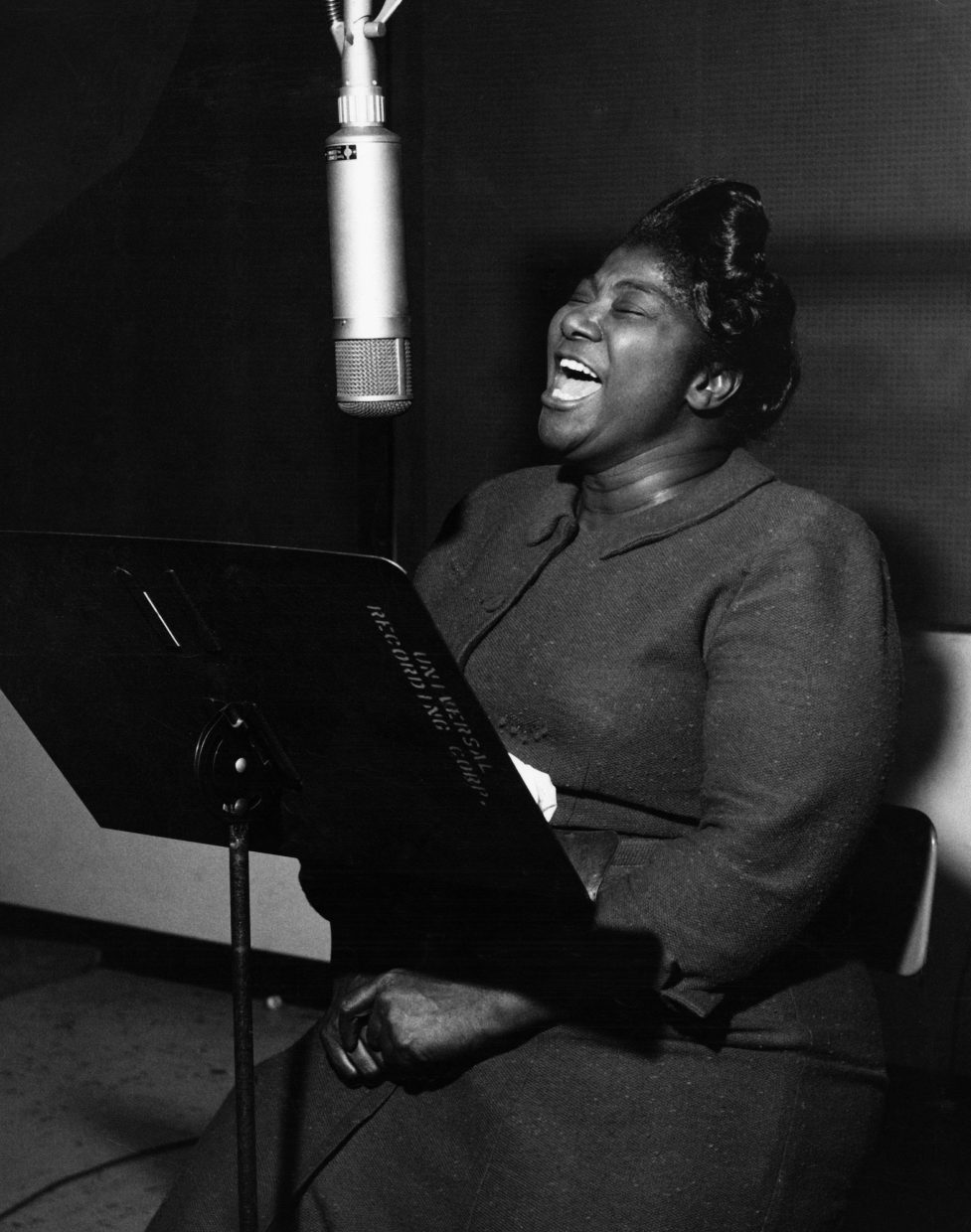
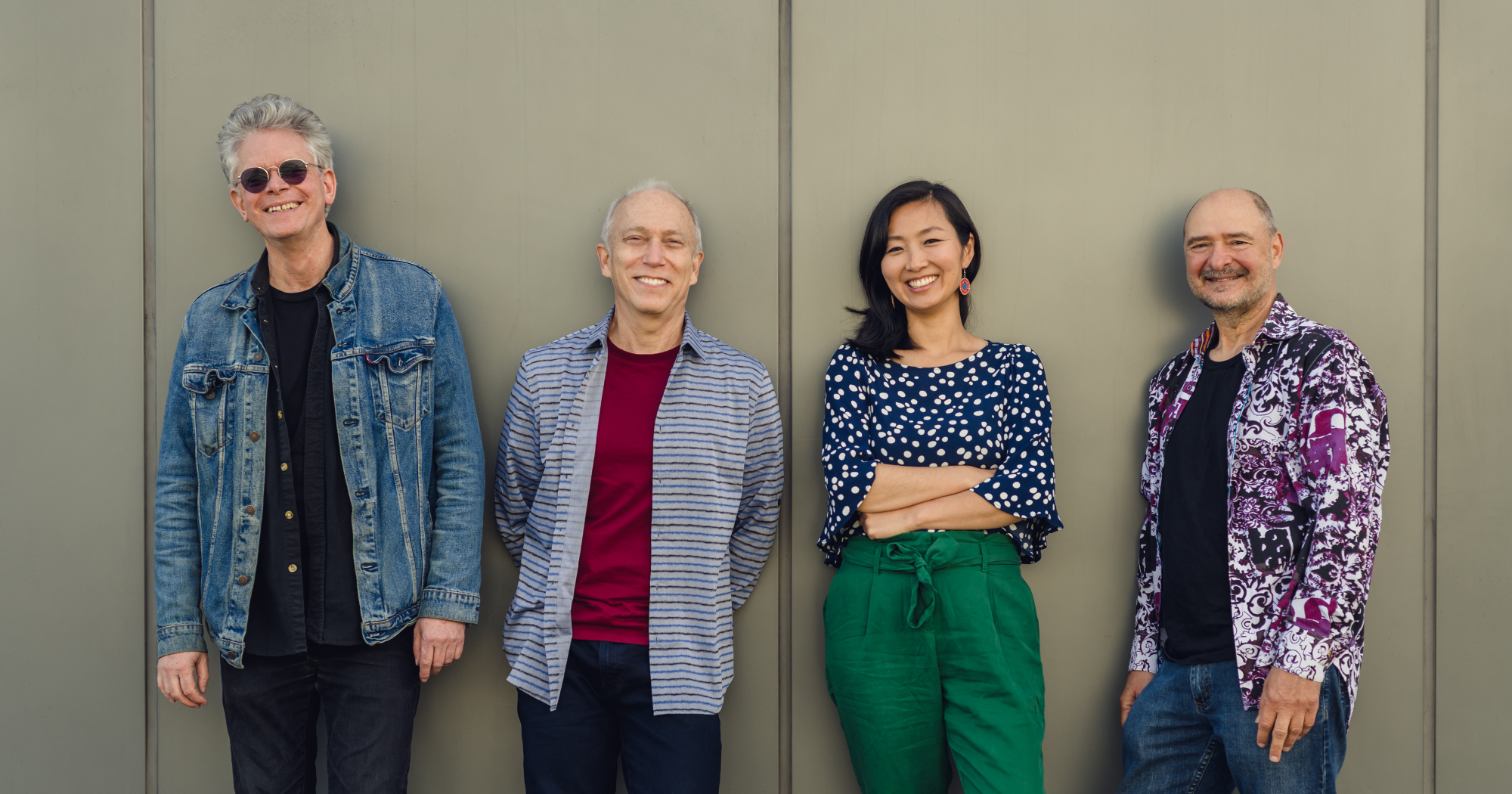
“If Mahalia Jackson were singing right now, I would have figured out a way that we would be able to perform with her,” says David Harrington, co-founder and violinist of Kronos Quartet, an ensemble that in its more than 50 years has consistently set new standards for what a string quartet can be.

He laughs as he leans into the camera on a Zoom from his San Francisco home, his white hair sticking straight up.

“You can count on that.”

Of course, that’s impossible. Mahalia Jackson, the New Orleans-born gospel singer, voice of the Civil Rights Movement, mentor to Aretha Franklin, confidant of and advisor to Martin Luther King Jr., died in 1972 at age 60. But Harrington got close. A little while back he commissioned composer Stacy Garrop to craft musical settings for excerpts from a 1963 interview conversation Jackson did with Chicago radio host Studs Terkel, a longtime friend of hers, and from performances broadcast in 1957.

The result is Glorious Mahalia, a five-part suite and the title piece of a new Kronos Quartet album featuring the ensemble’s recent lineup of Harrington, John Sherba (violin), Hank Dutt (viola) and Sunny Yang (cellos). It’s insightful and bold, the music echoing and enhancing the conversations, at times cordial, but also at times testy between these two friends as Jackson tells Terkel that he can never understand the experience of Black people in America.

And in one segment, Harrington gets right up next to his wish, as Kronos performs to a recording of Jackson singing “Sometimes I Feel Like a Motherless Child.” It is, indeed, glorious.

Mahalia Jackson photo by Lacey Crawford (courtesy of the National Museum of African American History & Culture.)

This is complemented by another suite, “Peace Be Till,” commissioned by Kronos from composer Zachary Watkins, incorporating reminiscences by King lawyer and speechwriter Clarence Jones as recorded by Harrington about the friendship between King and Jackson. At its core is the moment in a 1963 rally as he watched Jackson interrupt the written speech King was giving, shouting to him, “Tell them about the dream, Martin,” spurring one of the most impactful orations of modern times, the extemporaneous “I Have a Dream.”

An instrumental arrangement by composer Jacob Garchik of Antonio Haskell’s hymn “God Shall Wipe All Tears Away,” based on a 1937 Jackson recording, serves as a perfect interlude between the suites. Kronos has performed the song for years, including a stunning version with Mali’s Trio Da Kali on the 2017 album Ladilikan.

Kronos has long used spoken oral histories in its vast, wildly eclectic career. There is 1988’s landmark Different Trains, composed for the quartet by Steve Reich, juxtaposing audio accounts from a former Pullman porter and survivors of Holocaust transports, and last year’s Witness, by composer Mary Kouyoumdjian, with audio from survivors of the Lebanese civil war and the Armenian genocide. Glorious Mahalia’s themes of social justice also connect to, among many others, 2020’s Long Time Passing, a celebration of Pete Seeger, and 2022’s My Lai, the Jonathan Berger/Scott Chessman opera about the 1968 U.S. Army massacre of a Vietnam village. The new album follows those latter two as the third Kronos release from Smithsonian Folkways.

Harrington discusses all of this in a generous, wide-ranging chat for BGS, edited for length and clarity.

What were your first experiences with Mahalia Jackson’s music?

David Harrington: I think I heard her on television as a kid. But it was Hank Dutt, our longtime violist, who gave me an LP of hers in the late ‘70s. It just blew me away. Have you seen Summer of Soul, that film [Questlove’s 2021 documentary about the 1969 Harlem Music Festival]? Then you’ve seen Mahalia on that. Our family watched it, my daughter, son-in-law, grandkids, wife, and I watched together. And wow, when Mahalia got on, I said to everyone, “I have never seen a singer with a full-body vibrato before!” [Laughs] That was one of the most amazing performances I’ve seen in my life.

Glorious Mahalia springs from the conversations between Mahalia and Studs Terkel, and then it feels like Stacy Garrop joins the conversations with her music, and then Kronos join in too, all of you in a four-way exchange.

That’s a beautiful expression of it. I’ve never thought of it that way. What I wanted to do was hear all the interviews [Terkel] ever did with Mahalia. And that’s where my conversation started with Stacy Garrop. I think she knew a lot about his work, so it started there, really. We wanted a piece that celebrates their friendship and relationship, and what they brought to our society and our country.

It’s not always an easy conversation between Terkel and Jackson. She pushes back on him, even snaps at him that he can never know what it’s like to be her, to be Black in America. Was that part of your process with this, to consider, culturally and experientially what your place is in terms of presenting her views and experiences?

It gets back to wanting to perform with Mahalia Jackson. [Laughs] It’s like, every once in a while I hear a musician – I’m lucky as an explorer of music – I’ll hear something that is just so amazingly powerful. I want to find a way of bringing it into my own experience and that of the other members of Kronos and of our audience. And so I think I’ve been really consistent about that through the years.

The question is, what gives me the right to do that? I guess I’ve never really asked that question too often, because this is what musicians do. I’m absolutely convinced that if Beethoven would have heard some of the amazing musicians in India or various places around the world in his time, he would have wanted to bring elements of that music into his work in some way or another. Beethoven did a lot of transcriptions of Scottish music!

The first thing we hear on the album is Jackson’s voice, alone, singing the words “hold on.” It’s gripping and powerful, and must be even more so in a darkened theater for both you and the audience, hearing that before you even start playing.

Yeah, it’s about as good as it gets!

And then, from there, your task is to enhance and echo and illustrate the tone of her voice.

We’re also commenting, and our role takes on different kinds of complexities, being there as a platform for [Jackson’s and Jones’s] thoughts and voices to exist.

You have a history of projects that let others tell their cultural stories and experiences, from the oral histories of Different Trains and Witness to working with composers and musicians from many different places and traditions around the globe. This one is more centered on one person, though.

It goes back a long way, and thinking how to present this on a Kronos album – not only the voice, but the personality, the force, just the being of Mahalia Jackson. [That] was what I felt would be a good thing to do. That really came into focus when right around the 50th anniversary of the “I Have a Dream” speech, Clarence Jones was on television and he recounted how the speech became the speech as we know it.

When he described that moment of hearing Mahalia Jackson, someone King relied on in moments of need, Clarence spoke of when she would sing to him on the phone. I mean, when you think of anybody in the universe, a leader like Martin Luther King Jr., a civil rights leader, a spiritual leader, and he’s getting sustenance from a musician!

So then the speech is happening and, from what I can gather, she wasn’t quite hearing what she needed to hear from her friend. And so she called out to him: “Tell them about the dream.” When I heard that story I thought, “Okay, I get it. Mahalia Jackson has defined to me the role of musicians, the musical community in our world.” It was so clear. And what we get to do as musicians is listen. We listen to our inner selves, we listen to our families and our friends and our society.

In this case, Mahalia Jackson used her musical ability and listened to Martin Luther King and then gave him feedback. “Come on. I’ve heard you do better.” Now, am I imagining this? I don’t know if I am. I don’t even care, because it kind of defined something for me about my own role and the role of Kronos and musicians. So at that moment I thought, “I need to get in touch with Clarence Jones.”

This project started a few years back, but it’s coming out as the U.S. celebrates its 250th birthday. How does that timing feel, especially with the current political and cultural climate?

We’re doing a triptych, “Three Bones,” that’s premiering at Carnegie Hall [on April 25]. Part one will [draw on] Indigenous cultures. Part two will be African American, particularly Gullah Geechee [of the Southeastern U.S.]. Part three will be Chinese and Chinese American.

I’d like to make an experience that brings these three essential elements of American society to the stage at Carnegie Hall as our contribution to the 250 years. It’s about listening. It is just growing from listening. That kind of gets back to Mahalia.

Back to the idea of a conversation, it seems like it’s not just with Jackson and Terkel, but with the nation, with the cultures and the experiences, and not a static situation from 60 years ago. Does it feel like your relationship with Mahalia, her music, and her mission is something living and evolving?

I am very happy when Kronos gets to play this music on a college campus and for audiences that maybe never heard Mahalia Jackson, never heard about her, [or heard] that an artist can have very powerful ideas about life and our society. [About] what’s good and what’s right, and can express them as beautifully as Mahalia Jackson and Studs Terkel and Clarence Jones. You put these leaders together and it’s very impressive. And I don’t think there’s an expiration date there.


Photo Credit: Lead image of Kronos Quartet by Lenny Gonzalez. Inset image of Mahalia Jackson by Lacey Crawford courtesy of the National Museum of African American History & Culture.

Chris Thile Infuses Himself Into Bach’s Partitas and Sonatas

How many years does it take for a musician to master the music of Johann Sebastian Bach? This isn’t the start to a joke, but the answer to the question can be a bit amusing considering that, for Chris Thile, there’s no such defined number of years or fixed amount of time.

It’s an apropos viewpoint for the GRAMMY-winning mandolinist, composer, vocalist, and collaborator to have, given that Thile is reviving a Bach-related pursuit he began more than 12 years ago. In January 2013, Thile recorded three of the six works that make up Bach’s Sonatas and Partitas for Solo Violin. That August, he released Bach: Sonatas and Partitas, Vol. 1. The logical question following the record’s release and enthusiastic public praise was, “When would volume 2 arrive?”

There’s no disputing the abundance of professional endeavors and musical collaborations that Thile dove into since then, recording with the likes of Yo-Yo Ma, Brad Mehldau, Edgar Meyer, Punch Brothers, and Nickel Creek; winning a MacArthur “Genius” Grant; hosting Live From Here; releasing other solo albums; and even creating a new musical variety show with Claire Coffee, The Energy Curfew Music Hour, which just released its second season on Audible. The extended wait has been understandable. Still, it became difficult not to wonder if Bach’s sonatas and partitas would ever see completion in Thile’s extensive and stylistically diverse discography. Thankfully, Thile renders the other half of the collection on a new solo recording, Bach: Sonatas and Partitas, Vol. 2, released November 7.

The undertaking sounds simple enough: record the remaining two partitas and one sonata. However, Thile embraces Bach’s work with a completely different aim from the first volume. Vol. 1 stayed true to Bach’s written intentions as much as possible. Now, Thile has allowed himself to consider his inner desires for what he feels the music needs – particularly where his music-making process is concerned.

The result is music that is not only pristinely performed, but also offers moments that occur naturally as Thile puts each piece together. Whether that means the ethereal decay of an individual harmonic, harnessed and expanded to ignite a particular feeling between movements I and II of Partita No. 3 in E major, or listeners’ ears traveling from one place to another as a piece blends audio from two completely different settings – like a concert hall, public park, or Blackberry Farm. Vol. 2 is an enlightening peek into Chris Thile’s mind and a bit of a walk in his shoes. In fact, he goes so far as to say that the process of learning Bach’s music is eternal, ongoing, and personal to every musician.

“It’s never done,” he says. “I think you could keep living and growing with Bach forever. But god, what a rewarding process!”

Chris Thile spoke to BGS on a call from Ann Arbor, Michigan, amid a cluster of solo tour dates. He reflects on the different ways musicians become inspired to explore Bach’s music, some of the very subtle but unrelenting dissatisfaction he encountered during the recording process, how practicing Bach is like practicing yoga, and much more:

Given the profundity you view Bach’s music as having, how did you negotiate its iconic place in music history with your desire to explore the possibilities you feel when listening to it, learning it, and making it part of yourself?

Chris Thile: I think that almost every ambitious musician’s relationship with Bach begins when someone tells them they should check it out, you know? Some of us just encounter it in the wild and have a major moment with it, but for me, my grandmas on my mom’s side – my grandma and my step-grandma – they both are excellent pianists and taught piano, performed a bunch, and both are gigantic Bach fans. When they realized their little mandolin-playing, bluegrass grandson was pretty serious about music, they were like, “Well, this boy needs to know about Bach!”

Sometimes it takes an expert to tell you that something is amazing and that you should see what’s there in it for you. And, sometimes, you’re just intrinsically aware of the thing’s value. I think mine was kind of both that helped. Having these women in my life who were so important to me tell me that this guy was really, really good helped [foster curiosity].

When [my grandma Sal] sat me down with Bach, it was with Glenn Gould’s second recording of The Goldberg Variations. She was also underlining that Gould’s performances of the music were more notable. That, I think, impressed itself on me, too; that we don’t have recordings of Bach playing Bach. So someone makes those for us or we make them for ourselves. Then it introduces this other music-making entity into the equation.

That’s a big and very long transition going from “Bach, the Almighty” to Bach, a human being whose music I am interested in having a real relationship with. And by “real relationship,” I mean a two-way, back-and-forth conversation. Yes, the text is fixed, but you can still have a living, growing relationship with it. And it takes a long time to learn how to do that. I think it’s lovely to have people giving you advice along the way.

You’ve said that practicing Bach “is like practicing yoga” and that it’s something you do everywhere you can. What does that mean for you?

Being someone who plays Bach and being someone who does yoga, I did want to figure out a way that the recording could represent that [connection] – the living, changing, growing, aspect of being someone who interacts with this music regularly. That these pieces could go from one place to another, potentially mid-movement. And then realizing that would also potentially mirror my experience of playing the pieces.

Because it’s not like I’m only playing them in my workspace. I might play them at the Elbphilharmonie in Hamburg and then a couple months later be at a Hampton Inn in Carbondale, Illinois. Or, it’s just too nice outside and I gotta practice outside today. So, multiple locations ended up serving two ends: wanting to be able to utilize the studio and [all that’s] possible when you’re recording music, to trying to figure out a way to sonically represent that life of practicing Bach.

Did you have a lot of thoughts on Bach going through your mind even while planning Season 2 of the Energy Curfew Music Hour?

Yeah! That was all happening concurrently. Every now and then, Punch Brothers would be in a practice room and I’d show my bandmates something, [asking,] “What do you think of this random thing I’m trying to do with the C major Fuga?” Just trying to get a read on people and playing a little bit of it on the side, to see if I can gauge a natural reaction to it and see if that gives me any ideas for future shenanigans. And it definitely did.

You’ve said that once you hear something in your head and enjoy it, you have to chase it until your ears tell you differently. That making peace with that aspect of your musicianship “is actually kinda the B story of this whole record.” What does it mean for you to “make peace” with this facet of your artistic spirit?

I am compelled to make this music. I don’t always understand the nuts and bolts of why I think it’s important to do it. First and foremost, I love the music. I love hearing other people play it. I love it on the page, I love the physical sensation of playing it, and I love the sound of me playing it.

But then, as is my custom, I’m voice memo-ing myself playing [the sonatas and partitas]. I heard the voice memos back and did not like how it sounded. There was something insincere about it. It was very, very strange, like something reflexive. It was almost the sensation of seeing video of me back and having some sort of physical mannerism that I was unaware of and not liking it. Or like, hearing the tone of my voice on a recording and thinking, “That’s what I sound like?” I think we’ve all had that sensation before.

So it was really disorienting and vexing, my perception of what was happening: the music that was actually being made was so off and somehow struck me as inauthentic and non-additive – and like regurgitation. So I had to do something.

The thought struck me, “I’m not ready to make this record.” The way I approach making music has changed over the last 12 years. I went back into this music thinking that my methods from when I was 31-32 were gonna be great and yield a good result. I just like to get my hands dirtier these days. The musician that I am takes everything down to the studs and blends it with everything else that’s swirling around in my musical life. That’s what I do. That’s how I make music. It’s how I write music and it’s how I approach performing any other music besides Bach. I think my reverence and awe that I hold [Bach’s] work in was preventing me from actually engaging with the music the way that I do with every other piece of music in my life.

It was scary for me, because I’m not any less reverent of what Bach did. I don’t love it any less. I don’t think it needs to be different. But when it’s me playing it, it has to go through my process, like everything else does, or else it doesn’t sound sincere and doesn’t sound authentic. That was an almost painful realization to have, and to have to basically scrap an approach and build a whole new approach to working on this music. But again, it wasn’t a new approach. It was just applying everything I know about music to Bach for the first time.

What was your intention when you decided to record in different settings – New York City’s Reservoir Studios and Tomkins Square Park, Tennessee’s Blackberry Farm, and Farrell Recital Hall at Murray State University – as well as choosing to merge audio together?

The different locations thing was part of the initial impulse, in terms of turning the thing into an actual record. It was a fairly radical move – to go from just recording in a nice studio or nice hall and getting a great sound and letting that be the sound and playing the music.

There were two reasons to do it: One of them is that, increasingly, I feel if you’re going to make a record, you should utilize the studio as an instrument. You should make sure that you’re using the medium. I guess it’s not a “should.” You can utilize the medium. For me, I’ve made a lot of archival records where really it’s just, “This is what happened in the room. Enjoy!” But I’ve realized about myself that often, when I’m listening to an archival recording, I have FOMO or something. I wish I were there, because clearly this happened in a room just like this and imagine if you had been there when it happened.

Whereas, I don’t have that when I’m listening to something that’s really taking advantage of the tremendous tool that the recording studio can be. For example, a record like Radiohead’s Kid A, where it’s something that can’t happen live. If you had been there in the room, it would have been really interesting to hear them discover the sounds. But then the flight that performance takes in the hands of a great engineer, who’s been set free in terms of exercising their own creativity in the mix environment, or artists who are very hands-on during that part of the process.

Again, it’s like a performance that’s happening over the course of months, even years at times. What happens live in the room is part of it. And then what happens in the editing booth is part of it, and what happens in the mixing room is part of it. If you’re going to make a record, it’s just interesting to note the difference. You can use the studio as an instrument or it can merely be the camera with which you’re taking the snapshot of where you’re at with a piece of music at a given time. I wanted to mess around with the former on this album.

The more I listened to something like that in my head, the more I liked it. The more committed to it I became, the more I considered, “[What if I] allow myself to record these things in multiple locations and even stitch performances together from from very tangibly different environments?” Really, sort of leaning into the surrealism of it. Now you’re in a studio and now you’re in a corner of Tomkins Square Park in the East Village. If I’ve allowed myself to do something like that, then what wouldn’t I allow myself to do?

Track 10, the first movement of Partita No. 3 in E major, I. Preludio, ends with nearly 13 seconds of ominous, rising, distorted feedback that pivots right into the clean first notes of movement II. Loure. What role is that very intentional ending meant to play?

It wasn’t something I knew that I needed until I had everything quote-unquote “done.” And then it was like, these moments in this medium need a little extra something. To give the [Partita No. 3 in E Major II.] Loure this kind of psychodrama towards the end of it was important to me. And then to prepare that [piece] with that crazy delay loop, grabbing that last harmonic [in the first movement, Preludio] was also important to me. So I asked my mixing engineer, Joseph Lorge, to find something. Bless him, I love what he found. That is almost like the harbinger of what’s going to happen on the Loure. What happens during the Loure was really important to me, artistically. But then I wanted there to be some sort of trumpet call like, “Hey, look out. Something’s coming.”

What stands out as something unique about making Bach’s music more your own this time around, especially knowing this is a solo endeavor?

There’s so much in today’s society about “Be yourself!” “Follow your dreams!” I’m talking about how important it is for me to have a two-way conversation with this music and not just revere Bach to the point that I’m taking myself out of the equation as a creator.

But we are so “Me, me, me, me” now. “This is me, just deal with it.” It can be really interesting to consider, “What happens when you expose yourself to the taste of other people?” It’s ultimately going to happen anyway, but what if there’s a practical concern? Can you go through that kind of exercise? It’s one of the reasons I love being in bands. In Punch Brothers, for instance, I need [all four of my bandmates] to be as happy with the music as I am. It’s not done until then. When I make music by myself, I have to figure out ways to trick myself into considering more than just me while I’m doing it.

[However,] you do have to make sure that you’re pleasing the only ears that you actually have any control over pleasing, which are your own. That’s first and foremost. But yeah, you’re always looking for any way to give shape to the very nebulous process of creating something from nothing.

What do you think musicians and composers of today can learn from Bach’s approach to music that would bring today’s songs, performances, and practice mentality closer to the timeless, ever-insightful, and continually inspiring nature of Bach’s work?

One thing that I keep trying to learn from Bach, just as someone who does try and write music or make it all the time, is how much of his art was happening anonymously. He had his professional duties – as he was a court composer and then he was a church composer – so there were those things, where he was writing music for very definite purposes with very definite deadlines. A ton of it was really theoretical and him working on the craft without any promise of getting a reaction out of his fellow humans – really his own curiosity and work ethic and desire to know and discover.

So I’m constantly thinking about, “Are people going to like this? Is it going to help me grow my audience? Is it going to help me make rent? Pay the mortgage?” Of course, [Bach] had those kinds of concerns. I think human beings in the early 1700s were not immune to ego. It’s not like Bach didn’t care what people thought of him – I’m sure he did. But I’m also sure that [thought process] took a very different form in those days and I think being able to make music – just for the love of it and with the patience that it takes to really explore your materials – is a thing that I at least keep trying to learn from Bach.


Photo Credit: Josh Goleman

Ethan Setiawan’s Personal Encyclopedia Mandolinnica

A short history of the mandolin in America: The mandolin is essentially a small lute which has been around since the 1300s. Italian immigrants brought bowl-back mandolins to the States in the 1800s. Mandolin orchestras were big in the 19th and 20th centuries, believe it or not. In fact, a whole mandolin family exists with mandolas, mandocellos, and mandobasses out there.

Around the turn of the 20th century, Orville Gibson started to develop flat-backed mandolins constructed more similarly to guitars. Finally, in the 1920s, Lloyd Loar created the F5 mandolin, with its longer neck and F holes. These new instruments were built to project and fill a concert hall, though they were ill-timed – the mandolin orchestra craze was fading and not ’til Bill Monroe picked up one of those instruments from a barbershop in Florida in the ’30s did they come back into their own. Since then, bluegrass mandolinists the world over have played these instruments or copies thereof. I play an instrument by John Monteleone, who started innovating on Lloyd Loar’s design in the 1980s – and so the tradition continues.

My new album, Encyclopedia Mandolinnica, turned into a survey of Western and Northern mandolin styles quite quickly. It’s very much been shaped by these inspiring musicians who were very kindly up for playing a duet with me. We go on a real journey through bluegrass both progressive and traditional, old-time, jazz, classical, and Scottish trad. The chance to get to work with these heroes of mine has been such a pleasure and invoked several “pinch me” moments. One of the most beautiful things was getting to see how everyone approached our little 8-stringed instrument so uniquely. I learned something from playing with and working alongside each of the mandolinists that agreed to be a part of the project!

In putting together this playlist I thought about my personal inspirations as well as the mandolin’s place in musical cultures across the world. It ranges from hardcore bluegrass, to Brazilian choro, over to Scottish trad – with lots of things in the middle. It mostly features folks you can hear on Encyclopedia Mandolinnica. I hope you enjoy my guided tour of the mandolin! – Ethan Setiawan

“Victoria” – Ethan Setiawan & Mike Marshall

Mike is a legend of the mandolin. He was an early member of the David Grisman Quintet and went on to collaborate with Darol Anger, among others. He helped write the book on progressive acoustic music and mandolin styles therein. This tune of mine falls within that realm and Mike was the perfect person to play it with.

“Shoulda Seen It Comin’” – Mike Marshall & Chris Thile

Mike also duetted with this young guy Chris Thile, whom you may have heard of. The live record that this cut is from is one of my very favorite recorded mandolin performances. Both mandolinists are at the top of their game. This tune was in my ear quite a bit when writing the previous tune, which maybe you can hear?

“There Will Never Be Another You” – Don Stiernberg

Don is one of the world’s foremost practitioners of jazz mandolin – a combination of words you might have never thought you’d hear. He studied with the great Jethro Burns of Homer & Jethro before forging his own path forward into a style where few mandolinists have ventured. Don was a teacher of mine during high school and it was great fun to get to be in the studio together for Encyclopedia Mandolinnica.

“Jiguaraña” – Ethan Setiawan & Maurizio Fiore Salas

Venezuela has a rich and beautiful mandolin tradition that not many folks are aware of. This tune is a co-write between myself and Maurizio. We took a jig (a Celtic form in 6/8) that I came up with and Maurizio had the bright idea of putting it over a Venezuelan rhythm called guarana (also in 6/8). It’s always a joy to play with Maurizio, he challenges me in the right ways.

“Wonderful” – Kinnaris Q (Laura-Beth Salter)

Laura-Beth is at the forefront of the Scottish trad revolution in Glasgow, Scotland. This track by her band Kinnaris Q puts the mandolin front and center – when she takes the tune at 1:52 check out the facile right hand triplets! We co-direct the Glasgow Mandolin Retreat as well and it’s always great to get a tune with LB.

“Blue Grass Stomp” – Bill Monroe

This is where it all started for a lot of us. Bill Monroe, along with Earl Scruggs and Lester Flatt, in the ’40s had something electric and powerful, so much so that in large part bluegrass has been unchanged since then.

“New Cimarron” – Matt Flinner

Matt Flinner is one of my favorite mandolinists out there. One of the many things that strikes me about his playing is how good it feels. Everything is placed so precisely and beautifully. He also writes great tunes that beautifully synthesize lots of things we love about bluegrass, old-time, and jazz. This is one of my favorite tunes of his.

“Golden” – Ethan Setiawan

In a similar tradition to the last tune, this is my take on a progressive “new acoustic” tune. Darol Anger on the fiddle here, he produced this album and it was such a joy to work with him on it.

“O Voo Da Mosca” – Jacob Do Bandolim

While bluegrass was developing up north, another mandolinist was fusing styles down south. Way down south. In short, choro is a fusion of classical forms with jazz harmony and Afro-Brazilian rhythms – similar on the page to ragtime. Jacob Do Bandolim (which translates to Jacob the mandolin, amazing) wrote many tunes that became staples of the style and was a virtuosic mandolinist to boot.

“Saint Cecilia Caprice” – Hamilton De Holanda

Hamilton De Holanda is the Chris Thile of Brazil. Amazing technically and a great musical mind. He wrote a double album of caprices and made the music public on his website, as well. Every mandolinist reading this: go download them, now!

“Salt Spring” – John Reischman

The greatest modern jam standard of our time! John is another great tune writer. He also gets the most beautiful sound out of the mandolin.

“Shetland Jigs” – Hildaland (Ethan Setiawan)

My own contribution to the Scottish trad lexicon from my duo with fiddler Louise Bichan, Hildaland. These are a couple nice jigs from Shetland. I’m playing mandola here, but I’ve tuned the highest string down a step and put on a capo so that the strings are tuned DAEA. This is inspired by the fiddle, which is crosstuned – common in old-time but not so common in Great Britain. We thought it was a cool connection to draw for our duo which goes between those styles at will.

“Canon at the Twelfth in Counterpoint at the Fifth” – Caterina Lichtenberg & Mike Marshall

Caterina is one of the greatest classical mandolinists to ever live. There have been vital classical mandolin traditions going on this whole time in Italy and Germany, which is so cool to see. Classical music is being made on the mandolin at very high levels and being taught as well.

“Queen of the Earth, Child of the Stars” – Sharon Gilchrist & John Reischman

A beautiful old-time tune, played so beautifully by Sharon on mandolin, John on mandola, and backed up by Scott Nygaard on guitar. I first heard this tune played late at night by Darol Anger and Bruce Molsky at Freshgrass a bunch of years ago now and it’s stuck with me ever since.

“Big Hill” – Ethan Setiawan & Andrew Marlin

Andrew has taken the mandolin scene by storm over the past several years with beautiful tunes and great trad bluegrass playing. Part of the thing that developed with this project was to write something that I thought might work well for each guest – not to explicitly write something that sounded like theirs, but to draw a little inspiration. I think this tune captured something there and I love the way Andrew accompanies the tune.


Photo Credit: Louise Bichan

Basic Folk: Anna B Savage

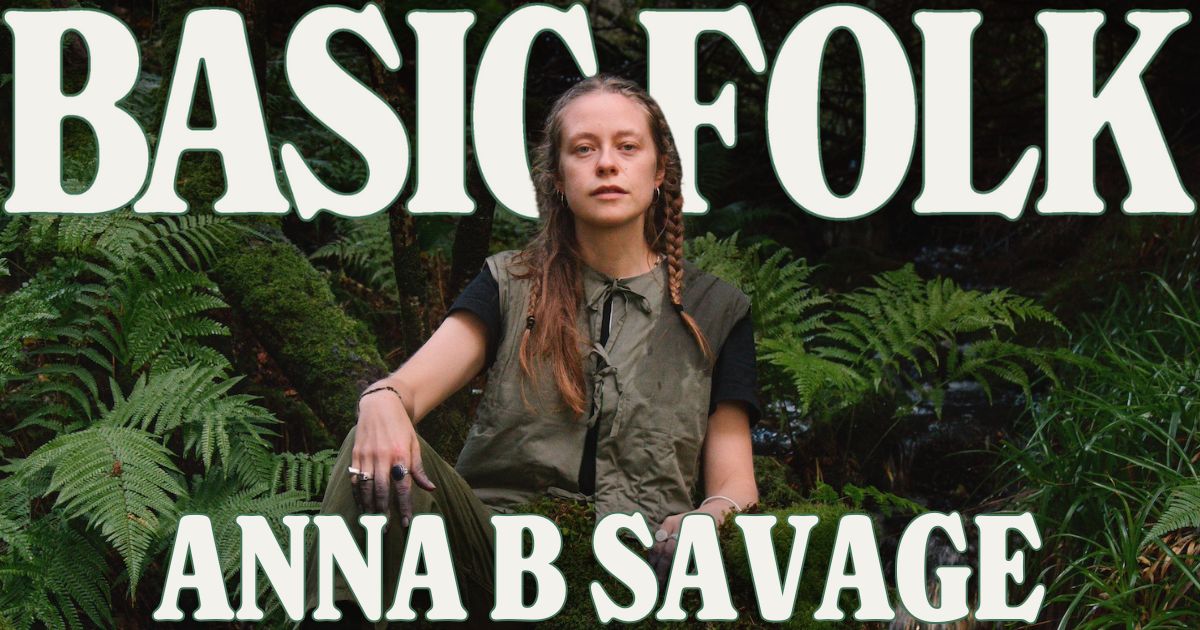
Anna B Savage is down-to-earth and witchy as hell at the same time. Over her three albums, she’s cultivated a mesmerizing sound and epic image – like David Bowie, Björk, Kate Bush, etc. – that’s gained her a godlike reputation. A reputation which preceded the actual human being behind the art, leaving some to wonder what it would be like to speak to her. Turns out, she’s a grounded, kind of goofy, and perfectly normal person. In our Basic Folk conversation, we explore the duality of her persona – Anna Savage versus her stage name of Anna B Savage – and how her new album, You & i are Earth, reflects a blending of these identities with a focus on nature and love.

LISTEN: APPLE • SPOTIFY • AMAZON • MP3

In this episode, Anna reflects on the realization of her parents’ unusual musical paths (they are both opera singers) and how it influenced her own creative pursuits. We delve into her songwriting journey, her love for birds, and the evolution of her unique singing voice, which blends classical influences with a jazz singer’s sensibility. Anna also opens up about her stage fright and the progression of her confidence as a performer. She touches on the complexities of being an English person living in Ireland and the importance of understanding the historical context of her new home.

As we navigate the themes of You & i are Earth, Anna reveals the inspiration behind the track “Agnes” and the mysterious allure of the 17th-century plate that inspired the album’s title. With a lighthearted lightning round, we learn about her favorite birthday tea, her ideal stage outfit, and her witchiest recent activity, too.


Photo Credit: Katie Silvester

Combining Classical and Bluegrass, Scroggins & Rose Improvise and Inspire on ‘Speranza’

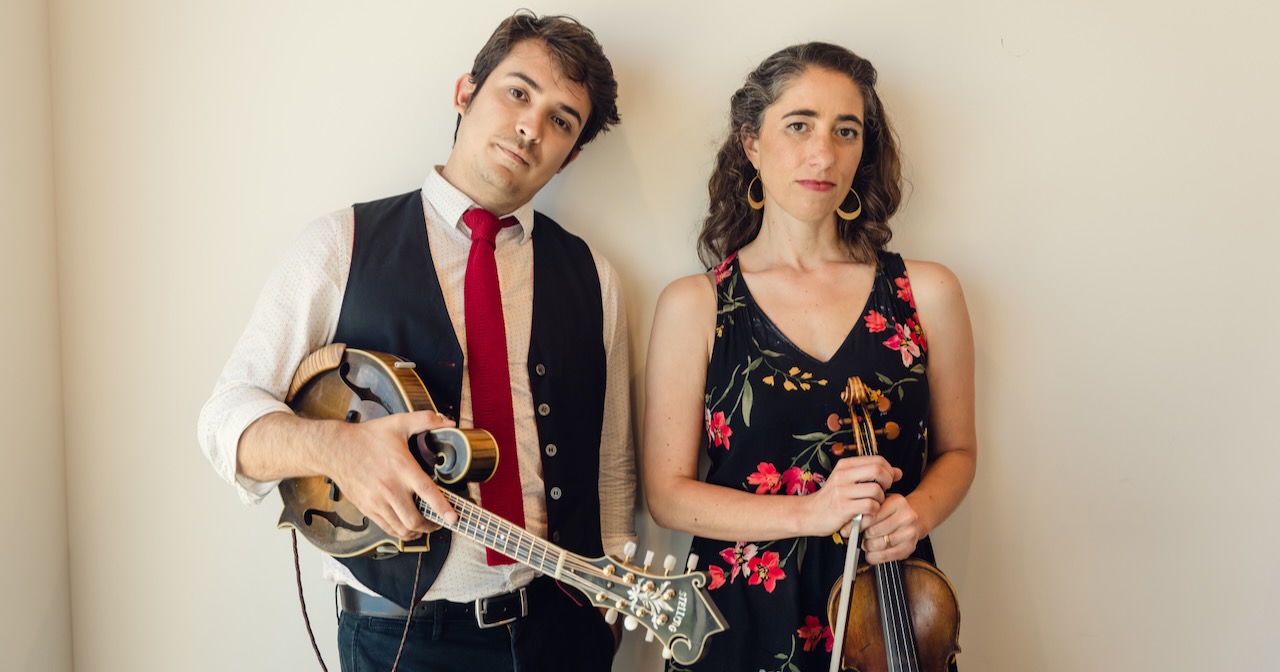
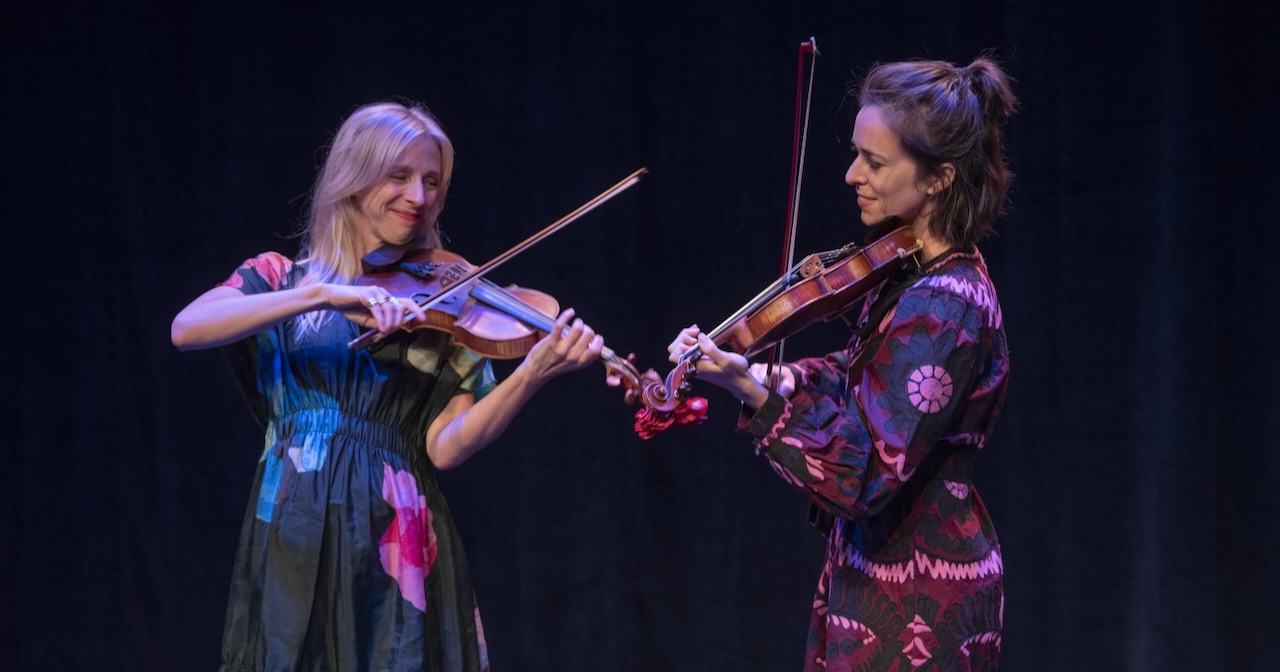
Acutely expressive, profoundly innovative, and ceaselessly gripping, Scroggins & Rose are masters of sonic storytelling. The project consists of Alisa Rose (violin) and Tristan Scroggins (mandolin), both virtuosic talents with a sprawling list of credits each in their own right. While Scroggins primarily forays in the bluegrass sphere and Rose spent her musical upbringing largely studying classical music, the two alchemize a blend of genres to achieve their distinct style.

The duo’s third collection, Speranza, relays a moving dialogue between fiddle and mandolin, drawing upon a diverse range of musical influences to weave together a thoughtful assortment of colors and textures. Initial ideas for the project began back in the quarantine days of 2020, and Speranza – which consists of six immersive instrumentals, a dynamic assortment of original and familiar tunes – now arrives nearly five years later in a moment where its intonations of hope feel just as crucial.

BGS had the pleasure of sitting down with Scroggins & Rose to discuss their origins, influences, and the percolation of their most recent release.

Congratulations on the album release! To start us off, could you talk about how the two of you came into playing together?

Alisa Rose: We both taught at NimbleFingers, which is a camp in British Columbia.

Tristan Scroggins: It’s a bluegrass week of workshops that has been going on for a couple decades. I always describe it on stage as “sleepaway camp for adults who want to learn how to play the banjo and drink.”

AR: There’s a really nice feel at that camp. Tristan was in a band with his dad at the time, so I did some shows with them there. Then one night, I remember the two of us improvising by a picnic table and we just had a really nice musical chemistry where we follow each other’s ideas around. Immediately it felt like, “Oh, this is a good musical fit.”

TS: At that time I was playing with my dad in Jeff Scroggins & Colorado, and we were touring full-time. So I just ended up in California a lot and I would tack on extra time to come hang out with Alisa. And we started writing music and playing shows. I live in Nashville now, so these days it’s more of a deliberate effort when I come out to collaborate.

At this point you’ve been able to flesh out that musical chemistry over the course of three collections. What would you say unites your musicality or differentiates it?

AR: I think when we improvise, it’s playful and creative and experimental – we’re not afraid to leave what may be reasonable behind, and sometimes that takes us to good places, and sometimes we fall on our faces. We also have a similar sense of rhythm and how we respond to it. It allows us to improvise freely because we feel rhythm in the same way. So that’s where we unify, but we have really different musical backgrounds.

Could you tell me more about that?

AR: Sure. Growing up I played a little bit of fiddle, but mostly I grew up in the classical world. I was a Suzuki kid, so I learned by ear initially, which I think has allowed me to play a lot of different music, but I was learning primarily classical violin growing up. Tristan grew up very much in the bluegrass world, and I’ve studied bluegrass and I’ve played in bluegrass bands, but I still have a different sense of melody and expressiveness. I think a lot about how to make music really expressive emotionally and I play with timings – those two things are less common in the bluegrass world.

TS: I think it’s been really valuable for me, generally musically and especially in the context of this project, to be exposed to those different ways of thinking about playing. I grew up playing with my dad, and in mandolin contests just learning how to play bluegrass, which does instigate this question of, is bluegrass expressive or not? I think it is sort of, but it’s so different from how classical music is expressive or how jazz is expressive. I’ve had to work a lot on navigating that challenge, because for me, I didn’t go to school at all for music. So much of how I play is very instinctual and this project often has me figuring out how to adapt those instincts in order to have more options, especially since there’s just two of us. We have to really be on the same page a lot of the time and work together to fill in spaces or leave holes where we want them to be – they have to line up, and it’s really obvious if they don’t.

Speranza does an excellent job at combining those classical and bluegrass sensibilities to achieve expression while still leaning into roots-like melodies. Can you tell me about the impetus behind your latest release? What drove you to create this third collection?

AR: So our first collection, Grana, was very improvised and we were a new duo. Basically we set out to make a demo – we wanted to record, like, three tunes and get some gigs. We got an Airbnb, rented some recording equipment, had our awesome engineer friend set it up for us, and we just hit record over and over for a weekend. By the end it seemed like it was an album, so that’s how that one came to be. Very improvised, very sort of exploratory. There were like 1000 takes of everything. Well, not actually 1000 because we didn’t have that long, but there was definitely a sort of trial and error of figuring out what we wanted to create.

And then for the second album, Curios, we worked out everything. We rearranged everything and really sought to emphasize the strength of melodies. A lot of that album was about making the melodies come out. To me, it’s also an exploration of different sound colors. We worked with Wes Corbett on that one and he helped bring that out in that album. We really tried to shape each tune into a little story, so they’re more composed. Some have solo sections, but they’re more like little pieces and arches – I mean, I would call them miniatures, but really they’re sort of standard length for bluegrass. In the classical world they might be considered miniatures– little, crafted, sparkly gems.

But we put [Curios] out in the pandemic, which was very anticlimactic. We were supposed to have a release tour and we worked really hard on that album for a long time. We had received a great grant from FreshGrass and were able to do a lot of things in the way we wanted. We worked with Dave Sinko as our engineer, who was awesome, and recorded in this pretty church in Nashville with Egyptian stained glass.

So the third one, Speranza, is more organic. We’ve grown as a duo in terms of creating, so we decided that instead of writing a whole record of stuff we would write and record as we went, or write and improvise as we went, and do some of both. So I believe this album combines the freedom of the first album and the shape and craft of the second album. And the material for Speranza came out of the pandemic – that was such a crazy time. Life seems sort of normal now, but a lot of the tunes started in that time and then we finished them once we could get back together.

TS: I think that in a lot of ways Speranza feels very shaped by the reality of the pandemic, 2020, things getting shut down – the first stuff that we worked on remotely, because we had to. It feels wild that we’ve been working on this for years now. It’s funny, similarly to the pandemic, it doesn’t feel like that was five years ago. We recorded it over different sessions and then mixed it over different sessions.

AR: “Pandemic Buddy” and “Reaper” are the darkest ones – those I did write in like that first month of the pandemic, but I just came up with the beginning idea and then as a duo, over two or three or four visits, we finished writing the pieces together. We’re often coming up with ideas, kind of sitting with them, and then recording voice memos and listening to them. It takes us a fair amount of time to do it and we really flesh out the arrangement and how our parts fit together in person. That tends to be pretty time-intensive. Basically we’re writing the pieces, but we’re memorizing them at the same time, with space for improv – everything is fluid, but the basic composition is pretty worked out. So our compositional process is pretty spacious and lengthy.

What was inspiring you during the composition of these pieces? Any art that you were ingesting or other cultural touchstones of during that moment?

AR: In the beginning of the pandemic, Tristan did a tune challenge, which is where some of these songs started. There was a word prompt every day to write a tune about. For example, “Reaper” began with the prompt “death.” “Pandemic Buddy” was for the prompt “friend.” It was a really nice way to channel energy at the beginning of the pandemic, when everything was crazy. I spent hours every day writing these tunes and trying to get a good video, and I think I got a little better at them as I went.

TS: I mean, it’s sort of an obvious one, but we talk a lot about Mike Marshall and Darol Anger. It’s the same mando and violin pairing, but I love listening to them and listening to other people who do this kind of new acoustic music/composing. I spend a lot of time in Nashville with Wes Corbett. Wes produced our second album, but he’s also a friend of mine, and I helped him with publicity for his first album, which has a lot of really beautifully written instrumental pieces.

It’s interesting – we spent so much time working on this in chunks and that was a very different part of my brain than the part of that was working very hard on, like, Texas-style fiddle tunes. Those weren’t crossing over, exactly. I think rather than being influenced by something specific, it’s more that I try to cultivate something within myself by listening to both stuff I like and new stuff. Absorbing all of that, letting it ferment inside, and then figuring out how to express that all together, rather than trying to emulate any one thing.

AR: I tend to think that when composing, everything you’ve ever listened to, everything that ever resonated with you and definitely anything you’ve ever played with your body or had in your body – whether you danced to it, or you physically played it – is a part of your musical sensibility. I don’t know what I was listening to when I was writing these tunes, but I definitely love Darol Anger and Mike Marshall. I also love Schubert string quartets, I love Beethoven piano sonatas, and I love Debussy piano music – I love a lot of different kinds of music, and I think all of that is part of what comes out. That’s all part of what’s in my head when I’m conceiving of new material.


Photo Credit: Lenny Gonzalez

One To Watch: With Connecticut Origins, On the Trail Find Their Way in Bluegrass

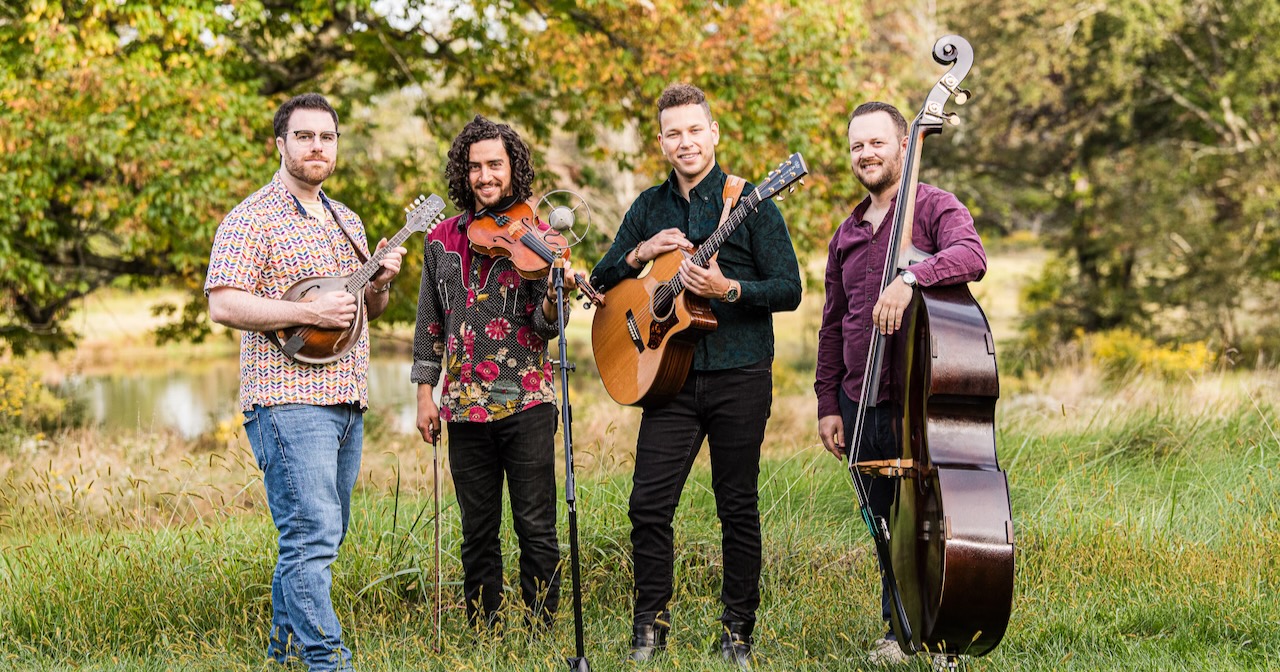
While Boston may claim its title as the bluegrass capital of the Northeast, acoustic quartet On the Trail is living proof that the Connecticut bluegrass scene is not only alive and well, it is thriving. Composed of four impeccable musicians who each attended Western Connecticut State University to earn vastly varying degrees, On the Trail weaves together an uncommon collection of backgrounds to deliver a unique sound.

Drawing inspiration from opera to the Beatles to jazz, these four achieve a sonic richness that will leave listeners edified and enamored. True to their band’s name, they trailblaze full force with the release of their first full-length album, Where Do We Go from Here.

BGS recently had the pleasure of sitting down with Tom Polizzi (mandolin, guitar, vocals), Matt Curley (bass, vocals), Charlie Widmer (guitar, vocals), and Austin Scelzo (fiddle, vocals) to discuss all things On the Trail.

Congrats on the new album! Will you tell me a little bit about how you all ended up in a bluegrass band together?

Tom Polizzi: Well for me, I was a really, really serious jazz guitar player for a number of years – it was my whole life. Then around the end of high school I started to get a little more disillusioned with what jazz was about and where that could take me in life. I knew about Chris Thile, though weirdly I didn’t know about mandolin’s association with bluegrass, but I knew I was really interested in mandolin, the tone and potential of the instrument. I got a little $400 scholarship from the music department at my high school and bought myself a mandolin as a graduation gift for myself.

I learned to play walking around a camp that I worked at that summer with the thing on my back, playing while I walked anywhere around the camp. I remember standing somewhere at that camp with the mandolin and someone asked, “Do you want to play a bluegrass tune?” I was like, “A what?” And then they taught me “Cherokee Shuffle.” From there, I just started learning fiddle tunes and while in college I pretty much gave up on jazz aspirations. Even though I got my scholarship to school with jazz, I just kind of started playing Doc Watson and bluegrass tunes and the rest is history.

Austin Scelzo: My background was in classical violin. I learned to read [music] growing up in school orchestra and then went on to study it in college. But in the summers of my later high school years, I got sent to those iconic fiddle camps that get so many people in the door and that opened up my whole world to non-classical playing, which eventually propelled me into spending my summers in college exploring different music camps and festivals. My freshman year of college I went to Grey Fox, my first bluegrass festival. And throughout college, I started playing in a bluegrass country group locally. I would play classical music in school systems and then spend summers floating from festival to festival, living out of my car and really digging into the bluegrass stuff, which over time grew to become my primary musical expressive tool. So between the classical/arranging mindset and my investment in traditional bluegrass, that’s kind of where my musical tastes lend themselves to this group.

Default icon

Charlie Widmer: Austin and I met when I was 19 years old – he’s actually the one that married my wife and me; he got ordained for it. We’ve known each other for such a long time. I had auditioned on a whim for a musical at 16. Didn’t know I could sing. They were doing Grease and I had a crush on a girl at the time. I went into that room and I met my now-wife, that same day at the audition, and I ended up getting the lead role. And then that kind of spiraled into more musical theater and trying to get into music school.

When Austin and I met, I was in school for classical singing and we were both interns at a church in Ridgefield [Connecticut], where we were both paid section leaders in the choir. After about a year of working together, somehow we ended up sitting next to each other. You know, we were in an a cappella group together, lots of different choirs, all these classes, but we just hadn’t connected. But as soon as we sat next to each other it was clear that we were getting along.

And so, fast forward five years, I was in the middle of a gig with my hip-hop soul band. I’d been doing stuff as a front man for a hip-hop soul group and it was awesome. I’m drenched in sweat, and Austin and I are talking in the break and I say to him, “Hey, man, I’ve been listening to Chris Thile and his group, Punch Brothers, and they’re sick, man. If that’s, like, a possibility in bluegrass, I’d love to do something where I’m playing guitar – let me know if a gig pops up.” We kind of agreed that he needed another year to finish school and get settled into being a teacher and everything. And a year later, almost to the day, he said, “I got us something if you want to drive.” It was perfect timing. My other group was falling apart. When this started, it just kept working and going. I don’t think any of us ever thought at that point, six years later we’d be here with an album.

Matt Curley: I was the last member to join On the Trail and I’ve been in the group for about three-and-a-half, four years now. I started playing guitar when I was in middle school and in early high school, I was playing in punk rock bands. When I got to high school, I really wanted to play in the jazz band playing guitar, but the guitarist was very good, So I thought, “I’ll play bass. It’s easy, it’s four strings.” Then the band director points to the upright bass. I remember thinking, “No, no, not that one!” So during that rehearsal it was the first time I ever played upright, and I eventually came back to the bass.

I’m the kind of guy who’s switched instruments several times. I switched to percussion, joining the drum line. I ended up marching drum corps for a few years, which led me to majoring in percussion at WestConn and then to get my master’s degree in Tennessee, right outside of Nashville, in classical percussion performance. For a while I thought I was going to be in professional orchestras, as I was training and practicing to take auditions for triangles and cymbals. Glad I didn’t do that. Then I started teaching band down there in Tennessee and I ended up moving back up here. I was teaching and Austin was the orchestra teacher in the same school, so we started jamming. Up to this point, I knew nothing about bluegrass. Even living in Nashville for a while, I knew nothing about bluegrass. Then I just happened to own a bass, so that led to me showing up to an On the Trail rehearsal. Here we are, three and a half years later.

CW: We also had a banjo player with us for the first three years, Chet, who was from Mississippi and originally grew up in Nashville. Chet lent a hand on some of the songs, even on the album. He got a doctoral offer to go down to Florida and get his doctorate in philosophy. He’s a genius, really such a smart guy – we always hope that Chet will join us again. We just always have a lot of fun together. I think that can be rare in groups.

Absolutely. Y’all have amazing chemistry and it’s evident. You recently released the band’s first full length album, Where Do We Go from Here. What are you each proudest of on the album?

TP: I think the fact that I actually wrote songs with lyrics and they made it somewhere. After I finished school with an audio engineering degree, I did our whole first EP – all of the editing, mixing, mastering – myself. And with this record, I felt like that kind of stuff culminated in a different way, where I knew how to be on the other side of the booth, so to speak, in a way that was productive. I think I was able to help us keep the sessions thoughtful and productive throughout, from a perspective of final product.

I also love that I’ve got a couple of very sad or introspective songs on the album, one of which my fiancée didn’t know I had written. We were on the phone with her mom and she was talking about “Help Me” on the album. She said something along the lines of, “This is so devastating. Tom, you really wrote something beautiful.”  And Claire goes, “You wrote that devastating song about heartbreak and loss?!” I had all these things written years ago after I broke up with my ex-girlfriend. Claire had never heard it because I don’t sing it – Charlie sings it on the record and we don’t play it at shows very much. She didn’t know I was capable of even having such sad words in my brain.

AS: I love that this album captures three or four original songs from each of us. My three songs all have a really different feel than anything else I’ve put out and they all mean something really powerful to me. They each capture a timestamp of a part of my life. The title track, “Where Do We Go from Here,” was one of the last songs we recorded, and one of the last songs that we even talked about putting together. It almost didn’t make the album at all. But we’re so proud of that track. That’s the song I’m by far the most pleased with. I also really like the way that “Trouble in My Soul” captured a different side of my voice that I’ve never captured on a record. It’s a lot more gritty, which is kind of cool, and then “Can’t Get You Out of My Mind” has some really nice moments too.

CW: For me, honestly I think the whole album is the pride point. When we did our first record, we had no clue what we were doing. I was really green to bluegrass in so many ways. Those first couple years were trial by fire, where I had no clue about any artists or vernacular and I was constantly terrified of every gig and jam. It felt like everyone was speaking a language. This record feels very full circle – we’d been talking about it forever. It really captures who On the Trail is. As songwriters, I think all of us have gained some confidence, though so much of that has come from just performing these pieces and getting positive feedback from the audience the last six years. When we started we didn’t know we had something, but our friends and family and even strangers told us to keep going. It just kept fueling us, you know? So, yeah, when I think about the proudest thing, it’s that we have this collection.

Given the diversity of musical backgrounds you each come from, where do you feel like your aligned priorities are? Do you have through lines about what you all prioritize and value musically?

TP: I would say one of the biggest factors that held us together is just that joy of making music. One of our biggest frictions, probably, is that diversity of background – even now, in the background of this interview, I’m just wrapping up my marketing job, my day gig, Matt’s driving home from teaching school, and Charlie and Austin both freelance more and do more things that are full-time music. A lot of it has been about finding that balance that brings us all joy and keeps us believing in what we’re doing. But you know, on our toughest days, what drives us ahead is that we love making music together, we love making music on our own and sharing it with one another.

CW: Yeah, as any musician knows, we’re always just chasing that incredible moment. We all share a true appreciation of music, and we are all deeply aligned regarding what exciting music feels like. When something’s hot, we all can agree immediately – it’s not even so much of a discussion.

AS:  We’re all also pretty consistent with the vocal harmony, regardless of the song. No matter the arrangement, we value strong vocal harmony and strong vocal presence. So a big part of this group is understanding harmony to a point where we can get really good three-part and other types of arrangements.

TP: For probably the first year and a half, I didn’t sing a note in the band. Vocals have become such a big thing. I learned from these guys, who are and always will be better singers than I, but they coaxed it out of me.

MC: Same for me. I’ve never taken a voice lesson or anything and now I’m singing four or five songs. It’s incredible.

For our final question – you’re our One to Watch, but who are you watching right now? Any creatives, musical artists, or otherwise that are inspiring you right now? Could even be a TV show or a Tik Tok creator.

TP: I’m sure they’ve been featured here a lot, but someone who’s been talked about a lot in our band is AJ Lee & Blue Summit. We love them. We’ve played with them. We’re inspired by them. Lots of our friends just around here, you know, keep us moving. The Ruta Beggars are doing fantastic things. Cahaba Roots, High Horse – all of those guys have so much going on. And if you’re looking for a good TV show to watch, watch Shrinking, because it’ll just rip your heart out. Oh, and one sleeper album – if you love all the music that we’ve talked about, this is an album I’ve heard no one else talk about. Maybe I’m just not talking to the right people, but it’s an album called Passages by Ethan Sherman. It’s got Wes Corbett on the banjo, and Thomas Cassell plays amazing mandolin on that album. I found it very inspiring.

CW: For me, a constant, big influence in songwriting and sticking to your vision and making it work has been Theo Katzman, who’s one of the guys from Vulfpeck. His last record especially resonated incredibly. All of his records have, but that one was during the process of making my album, as well as On the Trail’s album, and it empowered just feeling brave enough to do what we felt was right for the music. He was a big inspiration.

Allen Stone is also a huge inspiration for me as a singer and as a songwriter and he just dropped a new project. I always come back to Nickel Creek and Punch Brothers. Nickel Creek’s last album, I thought, was stunningly brilliant and beautiful.

MC: It’s really a great time for bluegrass, country, and folk music, even in the Northeast, not just down south [or] in Nashville. There are a lot of groups that are getting really big here. I mean, we have a Connecticut group, North County Band, that is doing some good things. Another group that I played with this summer, Raquel and the Wildflowers, from the Poughkeepsie area, are also doing great things. Shout out to the Rock Hearts, the other group Austin fiddles with. They’re great too.

AS: I mean, I would definitely have to reiterate the bands that Tom mentioned. We’re so steeped in the New England scene, we play so many shows, and my best friends are in so many of these bands. We’ve been friends with the Ruta Beggars forever. I mean, they were my earliest experience seeing young people play bluegrass music at Grey Fox. I just love those guys – they are so hardworking. They just got signed this year and are doing awesome stuff.

I go to IBMA every year with the Rock Hearts and I see some of the upcoming bands, and every once in a while one will really strike me, and the one that struck me this year was Never Come Down. I got to hang out with them in Colorado and I was hanging with the Stillhouse Junkies, who have a new player from New England that just joined them this year, so they’re a quartet now. They’re doing some really cool new stuff. Another band is Della Mae, and they’ve been around for a really long time, but they’re still producing amazing new songs. I mean, some of the songwriting that comes out of the group has absolutely made me weep, multiple times. Some of the songs are unrecorded—they’re still building a repertoire that’s really meaningful and really powerful.

I think we always have an eye on Twisted Pine, too, who just came out with a new album, and they have all these really fun videos, too. They’re doing something that I think we hope to do as well, which is kind of keep a foot in the bluegrass door, but also step into spaces that bluegrass music hasn’t been to. I think our music is suited for that, to get it outside of the traditional festival circuit, the traditional concert series, and preserve the tradition we’re so grateful for while also being innovative.


Photo Credit: Courtesy of the artist.

Becca Stevens Strips It All Back on ‘Maple to Paper’

In her dynamic, restless career, Becca Stevens plans to never repeat herself, like the proverbial waterway that’s never the same river twice.

Since being noticed by New York Times jazz critic Nate Chinen in 2008 as a 24-year-old “best kept secret,” she’s collaborated with: David Crosby and his Lighthouse Band; jazz orchestra Snarky Puppy; the modernist ensemble Kneebody; pianist Brad Mehldau; harmony genius Jacob Collier; the neo-classical Attacca Quartet; and others. Her five solo studio albums, especially the mind-stretching and richly grooving Regina (2018) and Wonderbloom (2022), have mingled folk-grounded melodies and jazz-deep harmonies with pop dazzle. The common denominator has been her uncommon voice, which is conservatory-trained, but utterly unique and enthralling. She is, in my humble opinion, one of the finest overall musicians making song-based music today, a peer to 21st century savants St. Vincent and Madison Cunningham.

One frontier that remained for Stevens was, ironically, the most obvious for a singer-songwriter – the solo acoustic album. Her version of this venerable format finally arrived in late August with Maple to Paper, a 13-song collection that was shaped at every level by a series of landmark life events. After marrying Nathan Schram, violist in the Attacca Quartet, she gave birth to daughters in 2022 and 2024. Their family moved from New York to Princeton, New Jersey. Her mother died, as did her close collaborator and friend David Crosby.

Stevens alchemizes this season of change, love, and loss through songs that challenge conventional forms with rich and fearless lyrics that play at times like Emily Dickinson set to classical guitar. On the cover, she’s demurely naked behind a guitar. In the grooves, she’s as vulnerable as we’ve ever heard her. As she told me of her emotional multiverse of the past few years, “I felt uncomfortable about sharing it, but I also was like, well, if I’m going to do this, I might as well make it completely exposed.”

It’s easy to suppose that the changes of the past few years – moving, having children, losing your mom – made a solo acoustic record sound more appealing at both artistic and practical levels?

Becca Stevens: Absolutely, yeah. You’re spot on. Two things can be true. So the choice to do this album completely solo and from home both served the concept and integrity of the album. But it also was maybe the only way that I could have gotten it done during that time.

Just to put that into perspective, you know, there was the logistics of the grieving. The loss of my mom was super fresh, and I had a six-month-old who was part-time in daycare. And then towards the end of the recording and writing process, I was pregnant again. So there was the logistics of being a new mom, of having morning sickness, of being in a new place, of grieving my mom, and all of that was so much more possible to do from home. But I resisted it.

For a long time, I had the idea of recording the demos at home and then going into the studio. But I went back and forth a lot with Nic Hard, who mixed it with me. He also did Wonderbloom. And the deeper that we got into the material, the more crystal clear it was that the songs were best served if performed live – guitar and singing at the same time – and performed at home, where I was really in the character and in the feelings.

Did writing and making art feel like what you wanted to do under all those cross-cutting pressures and changes, or did you have to force yourself a bit through the work?

“Want” is maybe the wrong word. I felt like, at least for the grieving part, I had to do it because it was like I was going to explode if I didn’t do something. And it was a confusing loss – something that left me with a lot of questions. Ever since I was a kid, I’ve been somebody who processes confusing emotions through writing songs or stories, or art in some way.

I felt like I needed to do it. But also, yes, there were times where I just absolutely did not want to and just wanted to lie on the floor. And I had to find a way to incorporate that as part of the process, so that I could forgive myself. I literally had a futon on the floor of my workspace, where I told that part of my brain, “You are invited to lay down there whenever you need to. You’re not at a studio. The clock’s not ticking. You’re not paying for this.” I called it my Womb Room. And I would put on salt lamps and put the lights down really low and lay down. And then some of the songs came from that space.

Some of these feel more like classical art songs than folk songs, in that they’re not shaped around a set number of measures or predictable beats. Did they feel a bit like that to you?

Yeah, the song “Payin’ to be Apart” comes to mind. It definitely felt that way; a little less folky, more like poetry that just happens to be on a wave of music. It’s interesting to hear you say that, because in the writing process – harmonically and in the accompaniment – I took a much simpler approach than what I have done before, on Regina or Wonderbloom, on everything really. Because I put so much intention and honesty and, like, blood, sweat, and tears into the lyric, I gave myself permission to let the waters that it was floating on be a little less turbulent artistically, a little less complex and a little more like I was trying to cradle them and deliver them in a way that takes care of them and makes it easier to metabolize – or something.

Was your mindset different, knowing there’s not going to be the grid of the drum beat? Can drums be a bit of a cage sometimes?

Yeah, they can be a cage. But they can also be like something that’s really cozy to lean on in the arrangement. Like, I can drop everything and have it just be drums and vocals for a verse and it feels really good. But for this album, I set a goal that the songs are meant to be performed as just me and the guitar, because that’s how they were recorded. That means that whatever break that I gave you in Wonderbloom by stripping down the arrangement and going to drums now needs to be created with whatever tools I have by myself, whether that’s narrative, or a right hand finger pattern, or fill in the blank.

This made me wonder how much you have performed solo acoustically in your career, given the emphasis on arrangement on a lot of your records.

Quite a bit, yeah. I have a lot of respect for my bandmates. And if there were ever gigs that we were offered where I felt like I couldn’t cover their fee and treat them well, I would just take it solo. I’ve done that a lot. I’ve done a lot of solo tours. A lot of my writing has started out solo, and I have solo versions – for example, “You Didn’t Know,” the song from Wonderbloom that was inspired from watching the documentary about R. Kelly. That song, I poured my heart out solo and then stripped the solo version back when I was in the studio turning it into the Wonderbloom version.

Solo feels like a home base to me, and it’s something that I think I’ve resisted, because maybe I felt like it wouldn’t be enough. There’s this narrative, especially in the booking world, that they don’t want to book you unless you have more than one or two people on stage, because it’s not enough to create the energy to get the focus of the audience. And maybe it’s not loud enough, you know? I also had that in mind. This might not be very marketable, but I’ve got to do my best to just serve these songs to the best of my ability. And it’s got to get done anyway, because this is how I’m processing this part of my life,

Meanwhile, your tempo of collaborative work never seems to let up. I have my personal favorites, but can you address some of your favorite partnerships here in the last few years?

We haven’t mentioned this yet as part of the story of this record, but knee-deep in the writing and recording stages of this album, we also lost David Crosby. I’d already gotten punched in the face and then I was like, kicked on the ground. Not that it’s about me. The whole world grieved that loss. As I mentioned, when I lost my mom, it was a very complicated grieving process. I took a lot of inspiration from listening to albums like Sufjan Stevens’s Carrie & Lowell, where it’s okay for grief to be ugly and complicated and to show that. But with Croz, it was so sad, because I loved him so much, and I loved being in his band, and I loved writing music with him. But the presence that he held in my life didn’t diminish. I couldn’t hug him, but there was this sort of heavenly presence when I was writing the songs for this album, where I could hear him and see him in my mind, kind of rooting me along.

And tell me about Michael League of Snarky Puppy and the universe that he inhabits with the GroundUP record label, which has been supportive of you all this time. It’s such a fascinating record company. I feel like they’ve got a lot to teach the music industry about curation and cultivation of a tribe, and I’d love for you to remark on how that model has served you.

I like the word tribe. I often think of it as family, but I think tribe is even stronger. I feel safe with that label in a way that I’ve never felt safe with labels before, especially major ones, where, if you’re not performing exactly the way that they want you to, you get kind of put on a shelf, and then your art doesn’t get heard because, because you’re not pleasing the corporation.

With GroundUP, I’ve always felt like whatever I’m getting into is what they want me to do. They’re like, “Your health and happiness and artistry come first and if that’s what you need to make right now, we’re behind it.” And I can’t tell you how liberating and comforting that is as an artist to know that the people that are helping you put your music out have your back. And we all love each other too. We all play together and love each other too.

And speaking of Sufjan Stevens, you got to be on Broadway in his Illinoise musical. What did that add to your world?

Yeah, it was a limited run on Broadway and I did half of the run. So I had Isla, my second daughter, on February 24 of this year. And then I got a call from Timo Andres, who did the orchestrations, saying, “I know you’re on maternity leave. This is crazy. I shouldn’t even be calling you, but I can’t not think of you for this role. Is there a world where you would ever audition for this?” I was like, “Yeah, I could audition and see what happens…” and didn’t expect to get it. I came in with my newborn baby. I handed her to my manager, did the audition, and they called me within a day and said they’d love for me to do it.

Initially I thought, “There’s no way.” I’m giving you all of this extra detail because a huge part of the experience for me was the chaos and the balance of the life that I was living at home for the first half of that day in Princeton – nursing my baby and being a new mama – and then handing her to my husband and jumping on the train for two hours, going into the city just in time to perform, and then coming back home and doing it all again and nursing through the night. It was this superhuman thing that initially I thought, “Oh, there’s no way this is going to work.”

The whole experience was like a dream state – being on stage and singing that music, which I’ve loved for so long. And also, having it not be about me was very refreshing. I’m not the band leader and I’m singing someone else’s music as a narrative that’s coming from the bodies of the dancers. We can lean on the coziness of the production, and just enjoy it.

I would say coming out of that helped me to be less self-absorbed. The headspace that I was in for Maple to Paper was very me, me, me, me, me, me. And then Illinoise was like, “No, it’s not about you. It’s about being in service to something greater than you.” Whether you’re writing a song about your feelings or singing somebody else’s, that’s always what it’s been.


Editor’s Note: Need more Becca Stevens? Check out our recent Basic Folk conversation with Stevens here.

Photo Credit: Shervin Lainez

Fiddles In Conversation: Brittany Haas & Lena Jonsson on Their New Album, ‘The Snake’

Behold, fiddle nerds! There is a new foundational collection of tunes to sink your teeth into, from two of the foremost fiddle players in Swedish and American traditions. Brittany Haas (Nashville) and Lena Jonsson (Stockholm), are award winning instrumentalists and have been long time collaborators and friends. The duo recently released their second recording together, and their first in nearly 10 years. The Snake explores old-time and Swedish fiddle traditions with finesse and subtlety, but is even more ambitious in scope than their first, self-titled record.

As part of the new collection, Jonsson and Haas composed a three-part suite for two fiddles, made up of entirely original material, but inspired by the format and musical stylings of J.S. Bach. Over a video call between Nashville, New York, and Sweden, we discussed how to stay inspired on the fiddle, what guides their accompaniment choices, and what records folks should start with if they want to learn more about Swedish fiddle and folk music.

We’ve put together a playlist of their recommendations at the bottom of this piece.

Okay, this is a weird place to start, but I noticed a distinct lack of chopping on this album. Was that intentional? I mean as someone who played in a two fiddle format a lot, you only have so many options for how to arrange. Were you like, “WE WILL NOT CHOP” on this record?

Brittany Haas: [Laughs] Honestly, I didn’t even think about it! But you’re right, I think maybe there’s just a little bit of chop on “10 Days of Isolation?” And maybe, Lena, did you chop on “Fiddle Claw?”

Lena Jonsson: I mean, maybe I kind of chopped! I can’t really chop. I think part of it is that for Swedish tunes, chopping doesn’t feel as natural. It isn’t really in the tradition, so it wouldn’t be a “go to” choice. It would more be an option if you wanted to do something really different sounding.

BH: Yeah, in Swedish fiddle music, the most common way that fiddles play together is in harmony, but the harmonies are way more diverse than in American traditions. The Swedish harmonies are all over the place, you call it second voice I think.

Totally. And considering that the options are so open ended for harmony, how do you decide where to go with it?

BH: I think I’ve just heard it done a lot, and often the second voices will be lower, being more fluid with direction and rhythm. So when I’m playing with Lena, she will play under me, and then I don’t want to do the exactly same thing, so I might try and play something above her to explore and change it up.

LJ: The harmony above is really unusual in Swedish music, but now that I’ve heard Brit do it so much, I’ve started to do it and it sounds really cool, I love it!

BH: Because we’re just the two of us and because we are coming out of a heavily Swedish tradition on this record, the harmony is not so chordally rooted, it’s much more based on the melody and the implied chords can change completely from repeat to repeat.

That’s super interesting! So in Swedish music, what would the main chordal instruments be?

LJ: The chordal instrument would be guitar, accordion, cittern, or mandolin, an example is the band Dreamers’ Circus. But also, it’s a relatively new idea to play backup chords for fiddle tunes, so folks are always experimenting with how to do back up, but finding interesting ways to play it is always cool. For some tunes, it’s just really hard to define what are the chords are, especially with the the older tunes, the melody can be really open. So when you’re in a jam it can be very confusing, chordal instruments could be playing all completely different chords over the same tune. [Laughs]

Would it be fair to say that the Swedish tradition is very centered around the fiddle, and everything else is auxiliary?

LJ: Yes, I would say so.

You both have done a lot of playing in the old-time and Swedish traditions. In melding these two styles, I’m curious how you find a groove together? To me, these styles can traditionally land quite differently rhythmically, but it seems to be seamless between the two of you?

BH: My sense of that is that it happens pretty naturally and I think that the reason why we’re here, playing together, is because we naturally line up together on a groove.

LJ: I agree, I think that’s interesting too, to not be so decision oriented, to not say, “This tune should be traditionally this way,” or “That tune should be traditionally that way.” It’s more interesting to find the meeting of the two genres as it happens naturally.

BH: Over the years of knowing each other and playing together, we’ve probably come together groove-wise by teaching each other tunes, etc.

Of course, that makes sense. You’re learning each other’s groove within the tunes you’re learning from one another.

I wanted to ask you, there’s a really interesting series on the record called “Låt efter Back,” which is a three part composition, divided into Vals, Visa, and Polska, Can you tell me about it?

LJ: Yes! Well, I went to Nashville in March a few years ago to just visit and play tunes in Britt’s house, we didn’t have a plan to make an album. We started jamming and playing and writing typical tunes that we would write. But then, we decided to have a challenge, to write something in the style of Bach – and we wanted to write it in two fiddle parts at the same time, kind of inspired by the Bach double, so that the two parts are equal voice. It was fun but so hard, I mean much harder than the writing of a typical fiddle tune.

So, in writing this, were you through-composing it? Or were you creating a basic structure and then improvising around it.

BH: Somewhere in between, I think. I mean, sometimes we were improvising the harmony, but then that became how it went.

LJ: Yeah, because there’s long notes in the melody. You wouldn’t have those long notes in a regular fiddle tune, and it left room for another melody to come from the other part. I remember having the sheet music out, we were writing it out in front of us, and then moving things around, taking sections from here and there.

In using Bach as an inspiration, did you take any actual melodies from his work or were you just using stylistic inspiration?

BH: More the style, but we did examine it closely. Like checking out, “Where would he typically repeat a section? When do you move on from one idea?” So we were referencing it a lot.

LJ: Also, we looked at how the movements relate to each other – one fast, one slow, one medium – but we wrote it as a mix of that influence and our own, so that it would still have a part of fiddle music in it. I remember when we were on tour, there was a lady in Norwich who was a Baroque musician, and she thought it was inspiring to hear a Bach-influenced piece being played like dance music.

Yes, it’s like bringing “historical performance” full circle into the living tradition of fiddle music, which is in a way also historical performance.

Speaking of historical, it’s been some years since you two last recorded an album together. What inspired you to make this recording now?

BH: Well, we had both been doing different work for a while. I’m mainly in collaborative settings and not necessarily writing a bunch of music on my own, so it’s helpful to have someone who is really good at being creative to show up and bring me into that space. It’s really fun and I think easier than a lot of co-writing settings I’ve been in. This one is very fun and explorative.

LJ: This record was also easier, because there wasn’t a clear plan, like “We are gonna make an album.” It was kind of like, “Let’s see what happens.” I think that also opens up the creative space, because you don’t have pressure. You just want to find music that’s good and fun to play, and sounds nice. I think a lot of the time in the writing process, if it feels good to play, if it feels good on the instrument, then that’s a good indication that it’s a successful composition.

You two have both been playing fiddle music for a long time now. And as someone who struggles in my own relationship to the instrument, I’m curious how you stay inspired by the fiddle?

LJ: I’m super inspired by Brittany’s playing and in playing with her I learn so much and become a better fiddle player, so that’s a great way to stay inspired – and also a reason to do this project.

BH: I feel the same about Lena, I do think that seeing what someone else is doing is kind of the best resource for inspiration. Like, “Oh, there’s someone else doing it different than me, but it’s really cool, how does that work?”

LJ: Also, Instagram can actually be a source of inspiration, just checking out what everyone is playing and also listening to other styles of music, like classical music. Sometimes I work on a classical piece that’s really hard just to challenge myself. I don’t perform classical music, so it’s kind of disconnected from work and I don’t have to feel that I’m gonna perform it. It’s just there for me to grow and take inspiration from.

Here in the states, I think I understand where the fiddle as an instrument and fiddle music falls in the popular psyche. Of course there’s the nerds like me who go to fiddle camp, and the festivals like Clifftop that have their own entire subculture, but the general public also knows what fiddle music is as something that happens at barn dances or square dances and in their favorite country songs. They know of Charlie Daniels, and Oh Brother, Where Art Thou? And the fiddle licks in “Wagon Wheel” or Dave Matthews Band. I’m curious what relationship fiddle music has to pop culture in Sweden?

LJ: That’s a really interesting question. It’s definitely a sub-culture, but people know primarily of the fiddle players and dancers at Midsommar celebration, so everyone knows about that. But a lot of people don’t know that there are fiddle festivals and Swedish folk music, unless you’re from an area where there are fiddlers and more of a strong tradition. But there are some artists that break through a little bit, like Sara Parkman, who is a pop artist but will play a fiddle tune in the middle of her set.

But, at school for example, being a fiddle player is not “cool?”

LJ: [Laughs] definitely not. I mean some people come to school a little early just so they can hide their fiddle case away so nobody will see!

Well that feels pretty universal! Thank you both so much for your time and this wonderful album!


Photo Credit: Douglas Robertson

MIXTAPE: Bonnie Montgomery’s Music of an Arkansas Childhood

I was born into a music-centered family in small town Arkansas near “where the Delta meets the Ozarks.” My grandparents started a music store on the court square in the 1960s and they sold instruments and equipment, et al. – and also carried the top records of the day. So, music and musicians were infused into my life from birth and my family was at the center of a vibrant musical community.

At every holiday or birthday or community event, we played music together and sang with a cast of characters ranging from the local church organist to Sun Records session players. I thought every family was like that, but as I’ve grown older and a lot of those characters have passed on, I’ve realized how rare my upbringing was and I cherish it with all my heart.

I remember the voices and the sounds of the jams like it was yesterday, and I’m honored to make a playlist of some of the favorites we played and sang together. I didn’t discover a lot of the recordings of these songs until much later in my life because we played them by rote – or sheet music – at those beautiful, heavenly hoe-downs. These songs are the soundtrack of my early life. I’m honored to share them. – Bonnie Montgomery

(Editor’s Note: Scroll to find the full Mixtape playlist below, to enjoy while you read.)

“Precious Memories” – Merle Haggard & The Strangers featuring the Carter Family

I chose Merle Haggard and the Carter Family’s version of this hymn, because it’s the closest version to what I remember our hoe-down version sounding like. My grandfather Ivan would always request this song and all the old-timers would sing with such passion, and even tears. I remember the far away look in their tear-filled eyes when they sang it, and although I never felt it like they did back then, I loved the song. We always thought it was a funny selection too, because they would always sing it “pray – shush mam -ries” over and over, which made us laugh. But now that those faces are all passed and gone across the great divide, I feel it like my grandfather used to. Now, just like them, all I have is the memories. Sacred, precious, treasured memories gathered around the piano in my grandparent’s music room – in what feels like a lifetime ago.

“Your Cheatin’ Heart” – Hank Williams Sr.

I didn’t hear the recorded Hank Williams version of this until my late teen years, but we sang it as the grand finale of the Christmas Eve hoe-down every year. After hours of singing the entire catalogue of Christmas carols and standards, my grandfather would sing this one with the most volume and gusto of them all. My mother, or our dear family friend Teddy Reidel, would play a romping walking bass line on the piano with it. So when I went Christmas caroling with friends at age 11, I was ready for the big grand finale and started in on “Your Cheatin’ Heart,” but none of my friends knew it! It was then that I realized “Your Cheatin’ Heart” in fact wasn’t a Christmas carol!

“Born to Lose” – Ted Daffin

My grandfather always requested this song when I was playing piano, whether at the jam sessions or after school, when I would be practicing piano at their house. I never understood it, because the lyrics were so depressing and I wondered why anyone in their right mind would want to profess to being such a huge loser, ha! I remember practicing my classical pieces (I rebelled in the ultimate way by falling in love with classical music at a young age) and Papaw would holler “quit playing that long hair music and play ‘Born to Lose.'” By “long hair,” he meant classical, as in Handel or Beethoven’s long hair. I still laugh about that – instead of long haired hippies, he was talking about the wild artists from centuries ago.

“Sentimental Journey” – Doris Day, Les Brown & His Orchestra

This was my grandparents’ song. They would request this one and dance together every time we played it. During the Great Depression, my grandfather left Arkansas and went to California to look for work. Once he was there, he sent for my grandmother Frances and when she was out there, they got married. They both missed home terribly, so around 1943, when they finally arranged to go back, they had to go separately because of money. My grandmother was expecting their first child by then and had to ride all the way home from California to Arkansas in the back of pickup truck. She always called it her sentimental journey and you could just see the love between them every time we played this one.

“Tennessee Waltz” – Connie Francis

This was another favorite at the hoe-downs. I must have played it a million times while everybody danced and sang. And other times, when we were just hanging out at home, my grandmother would sit in a chair near the piano and ask me to play this one. She would have such a huge smile on her face and she just seemed to melt into the song. I’m so grateful for her encouragement with my musical endeavors.

“Sweet Dreams” – Patsy Cline

This was another of my grandmother Frances’ favorites. She was a fashion-forward, tall, beautiful red-head, full of life and fire. For small town Arkansas she was way ahead of her time. She started her own businesses (the music store was her main project) and ran for mayor in the ’60s too. She adored Patsy Cline and always thought she was so classy compared to the other female country singers of her time. We didn’t jam on this song, but we listened to the recording at full volume. The string arrangements from those Patsy songs have a huge influence on my string arrangements (arranged and played by maestro Geoffrey Robson) in the studio.

“Goin Down the Road Feelin’ Bad” – Woody Guthrie

My grandfather used to take us to his farm in Garner, Arkansas almost every morning in the summer. It was pure heaven for us as children – we could run wild and do whatever we wanted, ride horses, swing on the barn swing, go fishing, drive old cars and tractors around the farm, eat turnips straight out of the ground when we got hungry, crawl around with the pigs in the pig pen, and much more. We would sing in the truck with him all the way to the farm and he loved to sing this song and make up new verses such as, “I’m goin’ where the boys don’t blow their nose…”

That farm lives in my memory every single day – and incidentally, the highway it’s on (old highway 367), got named the “Rock and Roll Highway,” because it’s the road all the Sun Records artists would drive from Memphis to Helena back in the day. I didn’t know that when I was young, but it makes sense that Johnny Cash, June Carter, Elvis, Roy Orbison, Carl Perkins, etc. knew that road well.

“The Strawberry Roan” – Sons of the Pioneers

My grandfather on my father’s side, a wild cattle auctioneer named Leon Montgomery, used to drink his whiskey and burst in the door with his cowboy hat and a grin and croon out “Oh, That Strawberry Roan” as a greeting.

“Gonna Burn Some Bridges” – Ray Price

Ray Price was another familiar voice in the musical landscape of my childhood and is pretty much the ultimate crooner in my opinion. I’m including this tune because it’s direct inspiration for a song on our new album.

“I Was Fine” – Bonnie Montgomery

I’m including one of the songs off my new album, because it was inspired by the music of my childhood and, in particular, the music of Ray Price. My bandmate and engineer, Kevin, came up with a steel guitar riff that’s a direct nod to the steel guitar riff on Price’s “Gonna Burn Some Bridges.” We recorded this one with vibraphone and full string orchestra and I sang my heart out for Ray.


Photo Credit: Jamie Lacombe