Yamaha’s Atmosfeel Was
Created by Musicians for Musicians

The great Doyle Dykes once remarked, “The Bible says, ‘Sing unto the Lord a new song and play skillfully with a loud noise.’ Of course, I guess it helps to have a good amp to do that!” The team at Yamaha Guitars has taken that theory a step further to include a good pickup/preamp system. That’s why they designed Atmosfeel.

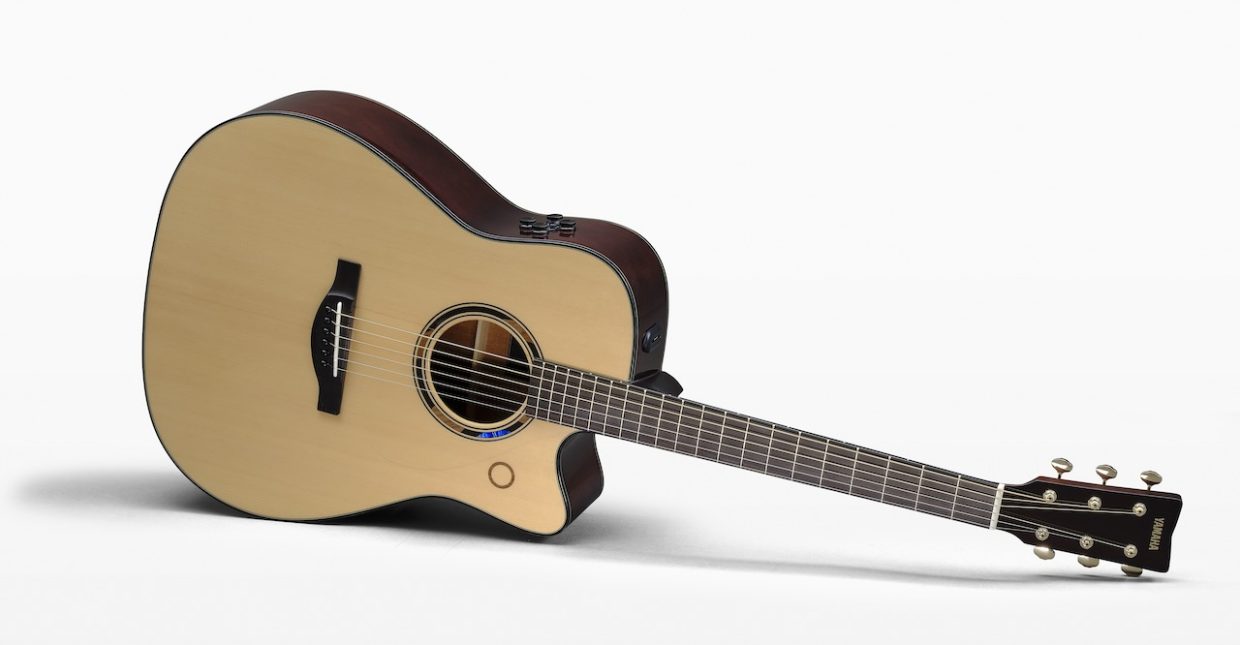
Atmosfeel is user-friendly, easy to use, and available in the X models of Yamaha’s exquisite FG Red Label acoustic guitars and concert-size FS series. Its 3×3 concept – three elements, three knobs – may appear simple, but in fact it was almost five years in the making.

According to Yamaha Guitars marketing manager Brandon Soriano, development of the Atmosfeel system began in 2014, prior to its original launch, plus an additional three years leading up to the FG/FS9X guitars.

Like all Yamaha products, Atmosfeel was created with the musician in mind, says Soriano. “Yamaha’s consistent process is that we include a lot of feedback from artists, from our internal employees, and from partners we work with. This pickup system was geared toward artists and performers from the very beginning, so their feedback was essential in crafting this system.”

There is no shortage of choices when it comes to acoustic guitar pickups and preamps. What makes Atmosfeel different? Once again, says Soriano, it comes down to R&D by musicians, for musicians. With guitarists often searching and settling for what he calls the “least bad” option, Yamaha was determined to offer “actively good” the first time, every time, with technological advancements that don’t require an engineering degree and 200-page manual to make the magic happen.

“What we noticed is that the pickups on the market tended to not sound like your guitar,” says Soriano. “There was the sound of your guitar in the room, and then this other sound that happens when you plug it in. Our goal was to make a pickup system that sounds natural – a true representation of the guitar you have, of your tone onstage, while keeping it simple enough to use and easy enough to make changes on the fly, and to have the same sound in the room and through the speakers when you plug it in.”

Atmosfeel was developed alongside the FG and FS guitars, which allowed Yamaha to voice the pickup system to specific models within the series, guaranteeing accuracy and precision at every level. “Our process is so in-depth that we leave no stone unturned,” says Soriano. “For example, the 9 grade FG and FS guitars have Adirondack tops, which are a different stiffness than the Sitka tops you’ll find on the 3 and 5 grade guitars. The [more recent] 9 level guitars have a slight taper going on, where the outer edges are about .2 millimeters thinner than the center point.

“We have exact measurements of how each of those tops resonate, how they vibrate, what their headroom looks like. We have all of these [minute] details at our disposal because we made the guitars. We know that the back and sides might have a slightly different thickness between rosewood and mahogany. We know that the stiffness of Sitka and Adirondack is different to this exact measurement.

“When we’re crafting the pickup system, we take all those things into account and modify the voicing accordingly, with the ultimate goal of all these guitars outputting the most accurate sound we could possibly come up with, compared to what the guitar sounds like acoustically in the room. The guarantee is that we spent years developing this system and specifically voicing each model’s pickup system to that guitar.”
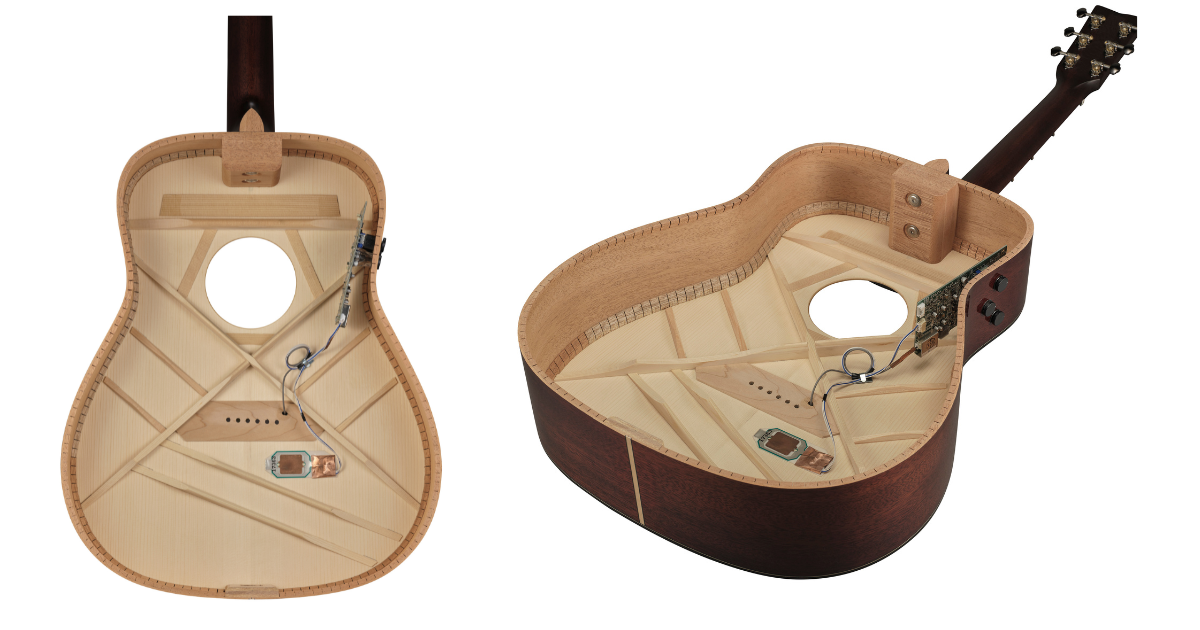
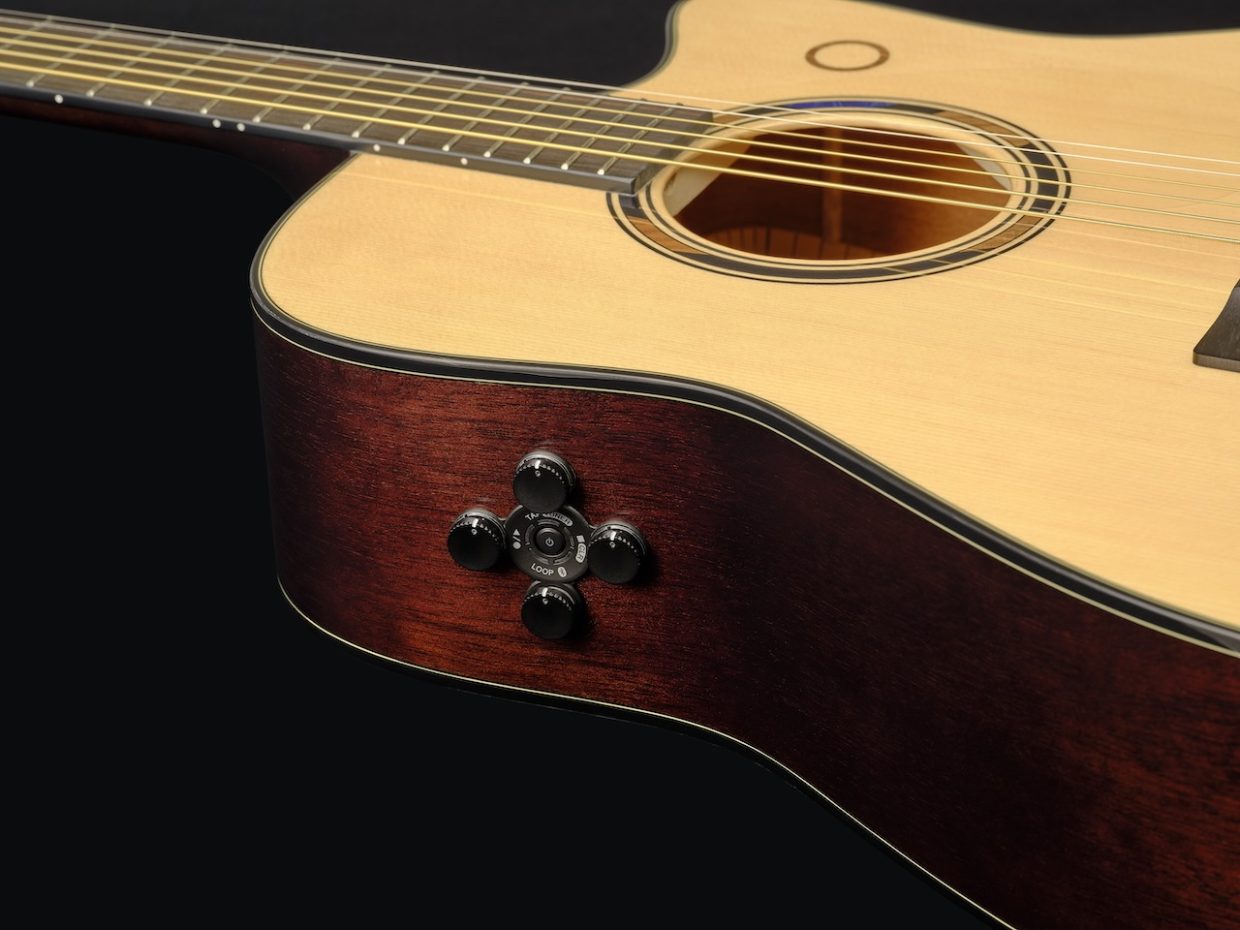
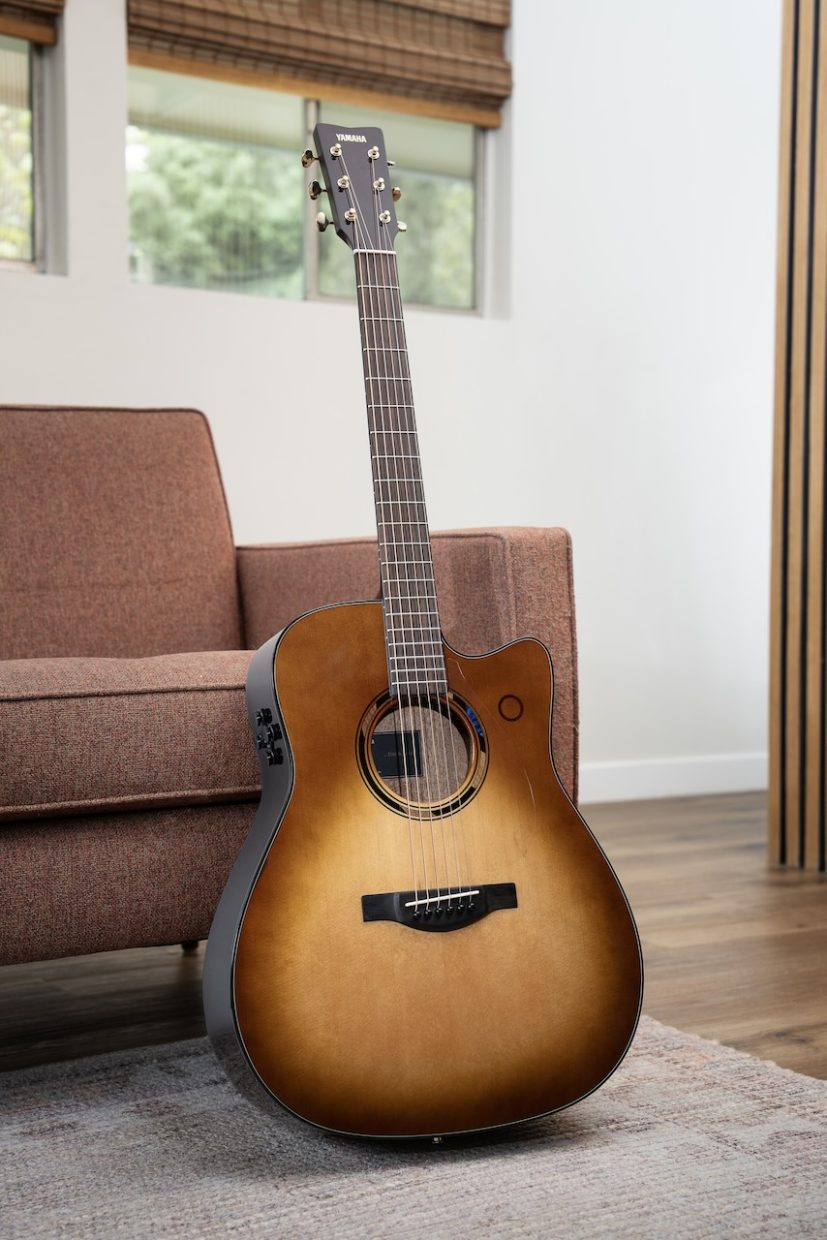
The onboard electronics and Atmosfeel system of a Yamaha FG9 MX guitar.

To further dial in accuracy and ensure that Atmosfeel could deliver anywhere, at any time, the system was thoroughly artist-tested prior to its debut.

“We come up with a voicing we’re really confident in and then we’ll bring in artists to do evaluations,” says Soriano. “In real time, we have the guitar hooked up to a computer, and a person is behind the keys adjusting the voicing based on the feedback the artist is giving us. We do this with a number of artists until we arrive at something that works for them and is the most versatile for all their different styles.”

How does Atmosfeel work, why does it work, and how does something so advanced remain simple and easy to use? This brings us back to the 3×3 concept, which was not a coincidence, says Soriano, but instead a carefully thought-out design balance between “How much is too much?” and “How little is too little?” One knob means few, if any, options, while an assortment of knobs becomes cumbersome and tricky, especially for guitarists who need quick-touch adjustments.

Atmosfeel is comprised of three elements: an under-saddle piezo pickup for low end, miniature condenser mic for mids, and proprietary, whisper-thin but deceptively strong, transducer contact sensor for overtones and clarity.

“Our approach was, first of all, to find out what are the strengths and weaknesses of all three elements,” says Soriano. “The under-saddle piezo pickups do a great job of capturing a bold and consistent low end. The weakness is that the high end has a tendency to sound unnatural to guitar players. That’s where you start to get a different sound than what your guitar is like in the room.

“The contact sheet, which is under the top wood of the guitar, is the inverse of that. It’s a paper-thin sheet that has a positive and a negative, and it captures the vibrations of the top. It’s really good at capturing air, high-end presence, and sparkle, and the low end is not as resonant.

“We’re taking the low end of the under-saddle and the high end of the contact sheet and creating what we consider to be the ideal blend between those two. That was the first step. Of course, neither of those technologies independently are completely new. Under-saddle pickups have been around for a long time. But the combination of the two, and the detail of how we blend them together, is what’s new in this system. That has created a new approach.

“The microphone, aimed at the side wood at the upper bout of the guitar on the low E string side, covers the mid-range character of the guitar, whether you choose mahogany or rosewood. Essentially, the system lets you have an ideal low end, an ideal high end, and you can blend the microphone in so that you get a mid-range to taste. We figured out how to take existing technologies to the next level and optimize them.”

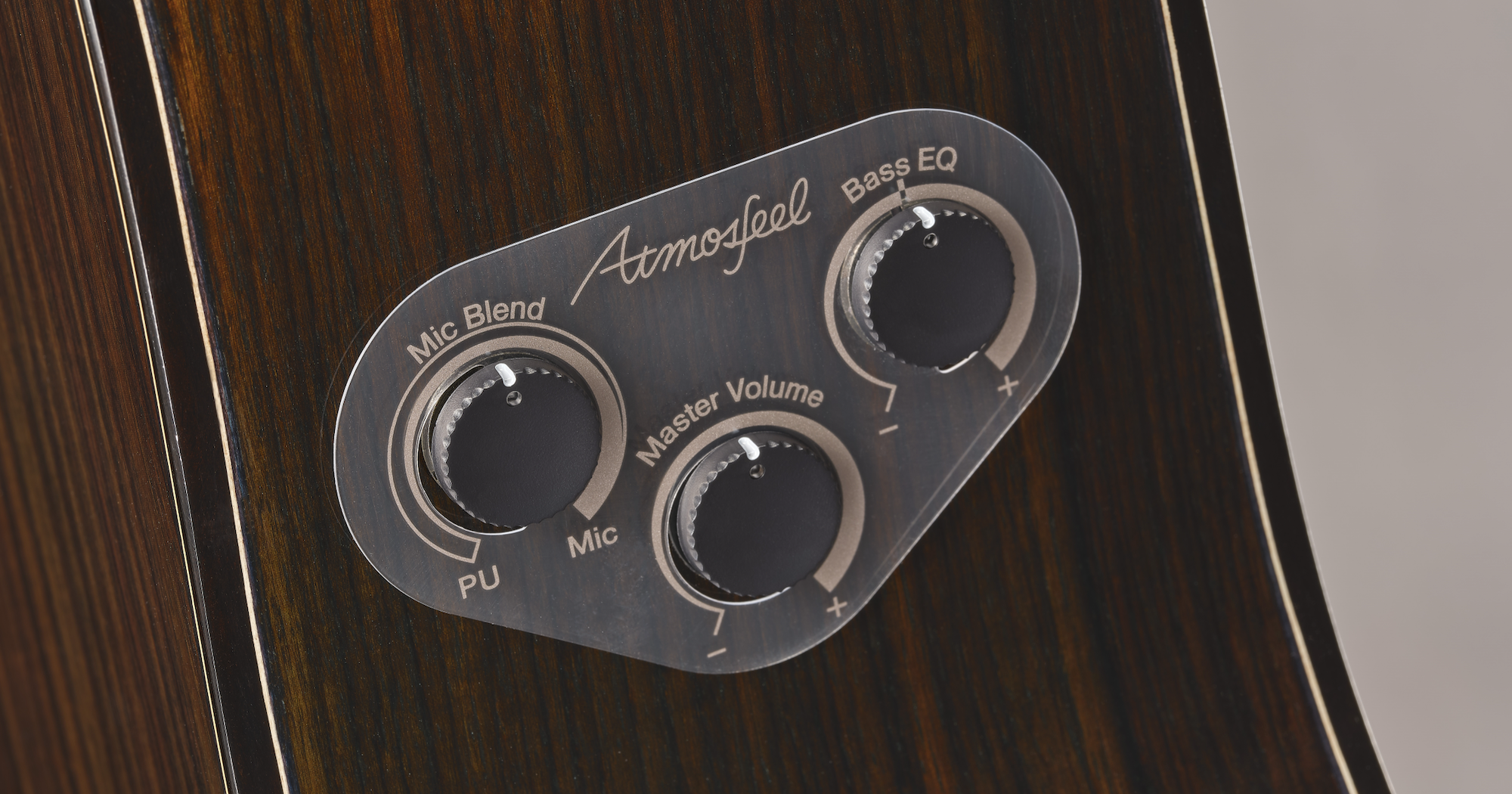
All of this is controlled by three small knobs. “You get a Microphone Blend, which is really effective for shaping your midrange and overall character,” says Soriano. “You get a Master Volume, which is essential, and then the Bass EQ is really interesting.

“When you’re playing live, a lot of feedback can happen in the bass frequencies. The Bass EQ is a cut or boost knob, which can help with controlling feedback or warming up your signal. If you’re playing solo and need to take up more room in the mix, you can crank that Bass EQ knob. Vice versa is true as well. If you’re playing with a band and there’s a bass player, you don’t want to step on their toes, so you’re probably going to want to roll off some of that bass.

“The Microphone Blend can be used to pop in and out of featured parts or solos. If you need a smaller, more compressed sound just to be in the background, you might use less of the Mic Blend. When it’s time for you to step out and take your chorus, you can crank that microphone up, stick out in the mix momentarily, and turn it back down when the time is right.”

Atmosfeel was designed for player flexibility – style, genre, attack, in the studio, onstage, on your own, with a band. Wherever you go, whatever and however you play, the system’s versatility works with you and for you.

“If you’re an arena- or stadium-level act, chances are you have a pretty silent stage,” says Soriano. “Those acts today are using a lot of in-ear monitoring. You can get away with a lot of Microphone Blend in that setting, because you don’t have sound coming back at you with an onstage wedge, and the risk of feedback is probably lower. Also, in a larger space, the sound has more room to dissipate.

“If you’re in a coffee shop, you have a floor wedge aimed at you, and the room is small, your risk for feedback might be pretty high. In that instance, you want to reduce the Microphone Blend and maybe the Bass EQ to accommodate for those things.

“And, of course, everything in-between exists as well – clubs, mid-sized venues, things like that. The system lets you tailor your settings to each of those without being too complicated. It’s just three knobs. If you know how to use them, you can optimize your sound for whatever setting you’re in.”

Yamaha designed Atmosfeel with musicians’ peace of mind foremost, meaning durability on the road and reliability onstage and in the studio. Choose your settings and rest assured they will remain in place, even if you don’t. “The Bass EQ knob has a notch at 50 percent,” says Soriano. “When you get to that spot, it locks you into place. Of course, it’s not too hard to move out of that space, but it certainly will not move on its own.”

Best of all, the 3×3 setup means easy to use, easy to remember. “Even the highest level of professional musicians are human,” says Soriano. “When you’re onstage, you have adrenaline going, and you have to make quick decisions, you don’t want to pause and remember which one of your seven knobs does what. You want to reach down and do what you need to do quickly so you can get on with the performance. The three-knob system is extremely user-friendly for that. You don’t have to spend time thinking about it before making an adjustment.”

Atmosfeel is perfect for recording in a pro studio, home studio, or on the road. “The vast majority of the time, if you’re recording an acoustic guitar, you’re putting a microphone on the guitar,” says Soriano. “Nowadays, especially with the rise in home recording, a lot of people might have trouble getting a clean signal with a microphone in front of their instrument, especially if your room has a lot of reflections in it.”

What does this mean for bluegrass players?

“A lot of artists we work with are primarily bluegrass players,” says Soriano, “so bluegrass was absolutely a primary focus in the development of the FG9X guitars. Bluegrass players most commonly use dreadnought-style guitars, so when we were voicing the pickup system in the FG9’s, we knew they had to be able to use this and be happy with it. That was a big part of our testing.

“Bluegrass tends to be quite guitar-forward, especially if there’s a solo section, for example. Bluegrass players are discerning when choosing their instrument. A lot of players have a strong preference. They want rosewood or mahogany, and there’s a reason behind that. If you’re going to make that decision, and it’s going to show your artistry and your taste, you should be able to have that come through when you’re performing live, even with a pickup system.

In a world of bells and whistles, where everything has to be shiny with lots of buttons and gizmos, Atmosfeel is deliberately stripped-down – no flash, no glitter, just durability and refreshing beauty in its simplicity.

“When you have a minimal setup that’s well dialed in, well executed, and well developed, when you put that work in on the front end, you earn the ability to have a simpler user interface,” says Soriano. “Because we are so confident in the voicing of this system, and in the fidelity and quality of the components, we didn’t have to put a million knobs on the guitar. We could afford to keep it simple and be confident that it’s going to sound great.”


This content is brought to you in partnership with Yamaha Guitars. All images courtesy of Yamaha Guitars.
Yamaha’s Groundbreaking Second-Generation TransAcoustic Guitar

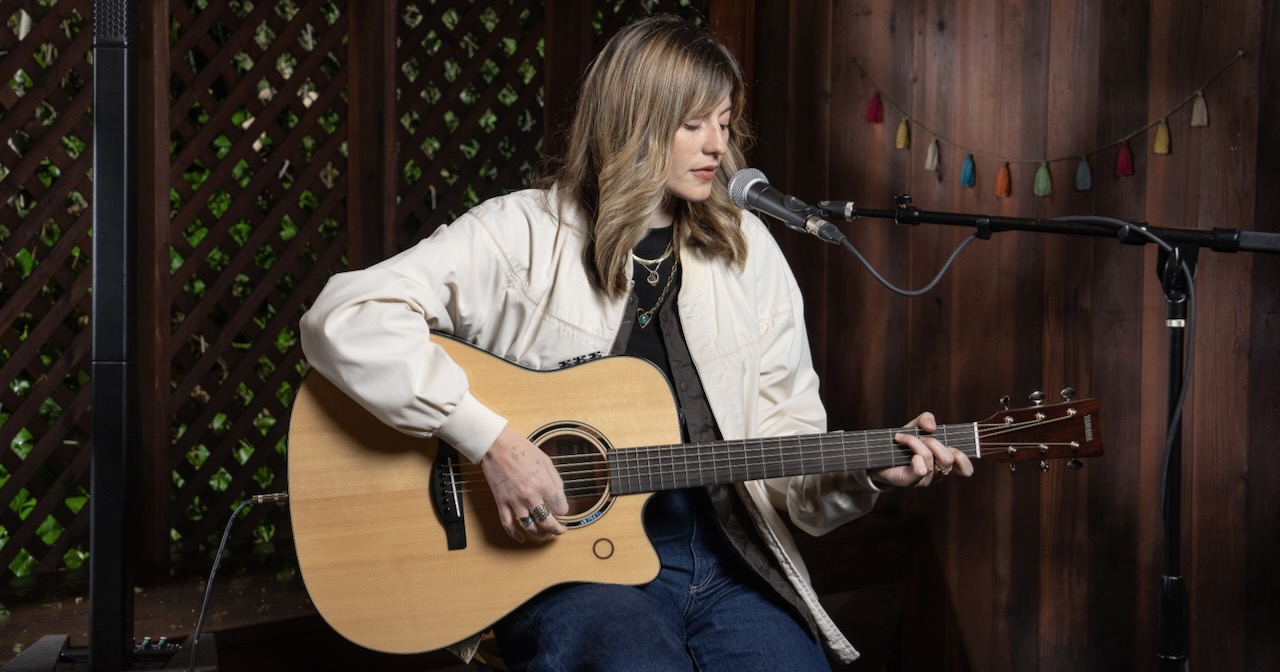
Yamaha Guitars knew they were breaking ground – and raising eyebrows – when they debuted their TransAcoustic Guitar at the 2016 winter NAMM and Musikmesse trade shows. The original TransAcoustic Guitar turned heads immediately, thanks to its innovative technology and, of course, the quality acoustic guitar body and sound that musicians have long associated with the Yamaha name.

Fast-forward eight years and Yamaha has introduced the second-generation TAG3 C, a completely new model offering advanced features and more options. With Bluetooth capability, a built-in looper, a rechargeable battery with a five- to eight-year life, iOS and Android compatibility, and a plethora of controls and effects — reverb, chorus, delay, its TAG Remote app, and more — the TAG3 C is a workhorse, opening new avenues for artistry at all levels. It’s also a beauty, with its dreadnought body, solid Sitka spruce top, and solid mahogany back and sides.

The TAG3 C was designed for guitarists and, in a sense, by guitarists. When the first generation entered the marketplace, Yamaha’s Product Manager, Shingo Ekuni, was hands-on with customer reviews and interviews – what they liked, needed, and ultimately wanted. “We concluded that we needed more capabilities for creative players,” he says, “for the person who is proactively doing their practice at home or creating songs at home.”

This presented the challenge of creating a high-tech yet user-friendly guitar that sparks interest in tech-minded musicians without alienating traditionalists. “From my perspective as a player, and with most of my friends also being musicians, guitar players can be very particular about their sound,” says Yamaha’s Marketing Manager, Brandon Soriano. “They want the level of control. One person might prefer a plate reverb while another prefers a hall. They might want a very specific decay time or tone, and the same thing goes for chorus or delay. At the same time, guitar players don’t want a lot of barriers to actually playing the guitar. They don’t want an overly complicated user interface and experience. The way the TAG3 C is structured, you get all of the control over the specific sounds you want in the app, but when it comes to actually using the guitar, it’s a very simple interface.”

A cursory glance at the TAG3 C might cause one to scoff, “Second-generation guitar, TikTok-generation players.” But – curmudgeons rejoice! – this is not the case. No interest in apps? No worries. “You don’t need internet to use the guitar,” says Soriano. “You don’t have to connect it to Wi-Fi. And it doesn’t require the app to run. Straight out of the box, without downloading the app or anything, you can turn the guitar on, effects will already be dialed in, and you can use all the functionality.

“If you want to use the Bluetooth audio, of course you need to connect your phone or another Bluetooth output device. And if you want to get into the parameters of the effects, like changing from a plate reverb to a hall, that’s where you start using the app. But you can fully use the guitar without using the app.”

“Something really great with this guitar is the quality strictly as an acoustic guitar,” he adds. “It’s built to Yamaha standards, which, as we all know, are very solid, rigorous, and high level. Even if you were to take out all the technology, I would still love it just as an acoustic guitar. I think that’s going to add to people wanting to pick it up.”

“Nowadays, with our mobile devices, the ‘smart’ devices, with tools for guitarists, everybody is using the tuner, the metronome, [from] the very basic stuff to more complex and connected devices,” says Ekuni. “Customers are happy to accept new technology for a new type of product. Parallel with that, the TAG3 C is an authentic acoustic guitar, but the technology can expand the possibility of acoustic guitar playing.”

“We are in a technological age, and it’s all around everybody all the time,” Soriano agrees. “There is a little more open-mindedness to innovation, even in commonly traditional circles like bluegrass, for example. Customers also want to know that their money is well spent and that they can be confident in their purchase from a quality standpoint, durability, sound, playability, all those things. Those are some of the main pillars of Yamaha — delivering the best quality for the money at any price point, from the $400 guitars to the $4,000 guitars.”


This content brought to you in partnership with BGS sponsor Yamaha Guitars. Discover more about Yamaha Guitars and the TAG3 C here.

Photos courtesy of Yamaha Guitars. 

Acoustic Guitarist (And Instagram Star) Jake Eddy Is Still Mesmerized by Music

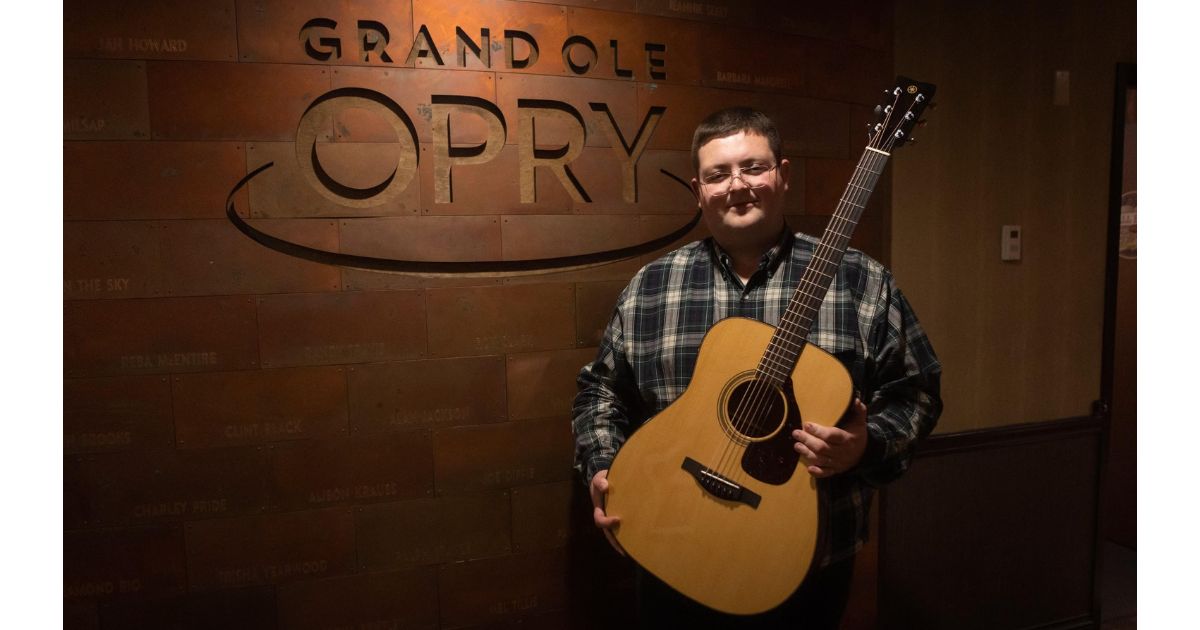
Jake Eddy is among a new generation of bluegrass musicians who are making a name for themselves on social media. Jake’s videos on Instagram and other platforms garner thousands of likes and even more views thanks to his technical skill, wit, and charisma. But Jake is not a mere internet sensation. His bluegrass roots run deep through his family in Parkersburg, West Virginia, where he grew up playing with local traditional music legends. While touring with the Becky Buller Band, he made his debut on the Grand Ole Opry stage, which led to Jake and his brother Carter accompanying bluegrass/jazz/klezmer mandolin legend Andy Statman on the Opry. Jake stays busy with a full teaching schedule in addition to his time on the road with Andy, his own band, or as a solo act. BGS caught up with Jake to learn more about his early interest in bluegrass, his experiences in music school, and his upcoming Yamaha custom guitar.

How did you get into playing music?

Eddy: My grandpa was a picker, and my mom played, and I had two cousins that fiddled on the Opry back in the ‘70s on my dad’s side. So it was just kind of the usual thing for bluegrass people from my region. I was just surrounded by pickers and wanted to be one.


View this post on Instagram


A post shared by Jake B. Eddy (@thejakeeddy)

When did you start on the guitar?

Banjo was really my very first when I was a kid. I started working on guitar simultaneously. Because of the technique, or maybe the lack of technique, being taught by old-timers around here, playing the banjo became uncomfortable and a little bit painful, and I could feel like it just wasn’t the best fit for me in the long term. I still do play banjo on some sessions and stuff like that, but as far as touring, playing banjo, it’s not in the cards for me. I prefer to play guitar anyway, so it’s okay.

When did you decide to make a career out of music? Or did it just sort of happen?

Yeah, it was pretty natural. I did the family band thing a little bit when I was real young. And then I got a call to go play banjo for Melvin Goins when I was in middle school. That experience was awesome, like going to bluegrass school. It was really crazy and had some great and terrible things both going on. But it was really cool because my parents let me go on the road under the condition that I would bring an adult with me at all times. They had played music so they were hip to what it can be like on the road. The deal ended up being that my grandpa would chaperone me on the road. So he came with me, and on the first show, Melvin had this blowout with the bass player, and the bass player quit. And I tell Melvin, like, “Hey, my grandpa is a bass player.” And he filled in on one show with us and got offered the gig. So we actually were both in the band for two years together. It’s a great memory, and it grew me up really fast, but it was cool.

That’s a great story. It’s hard to explain to other people what that experience is like as a kid. All the good and bad and how much you learn.

You can imagine. You know, those old-timers. It’s a different lifestyle.

How long did you play with Melvin?

I think it was two years. I think I got hired when I was 14. I think I was in 7th or 8th grade and probably quit when I was in the 10th grade or something like that.

Did you end up going to music school?

Yeah, I did music school for a little bit, and I was a horrible student. The usual, playing a bunch and giggling a bunch, but not going to class a whole lot, and just decided that it seems silly to me that a lot of the really great players I knew at music school were not doing very well at school. And a lot of the so-so players were passing with flying colors. So it just started to seem silly.

It’s definitely funny to go to school to theoretically get a job that you already have.

Yeah, man, that was the thing. They would get on me about attendance, and I would be like, I’m playing gigs. And I get it that you can’t bend the rules but I figured it wasn’t a fit for me.


View this post on Instagram


A post shared by Jake B. Eddy (@thejakeeddy)

Where were you going?

I was going to Ohio University in Athens. It’s this little, cool, artsy, open-minded kind of bubble in Ohio. And OU Music School, in my eyes, was a place for a lot of your local music educator-type people, but it also had this population of disgraced jazz players from CCM, which is a bigger school in Cincinnati. So there were some good players floating around, but just a weird scene.

Were you studying jazz then?

Technically the degree was Guitar Performance, maybe? Or guitar something. But yeah, I was in the jazz track, so all my ensembles and all my instructors were jazz players, and I had played that music a bit before. I learned things in music school, but if given the opportunity again, I don’t know if I would have gone that way.

You’re playing with Andy Statman now, right?

Yeah, a bunch. Man, it’s cool. I assume you’re hip to Andy’s playing because, like, all the mandolin nerds love him. He’s the coolest. I hired him to cut a couple of tracks that I wrote, and we ended up really hitting it off and we hung out some and decided to do a couple of one-off shows. And it just snowballed into doing some tours. Andy is Orthodox Jewish, so he doesn’t work weekends, so our touring is limited in some ways. But we’ve gotten to play quite a bit and we’re about to go out again in the spring, it’s looking like, and we got a record coming out on his label, so, yeah, some things happening there for sure.

What’s the material you play like?

Andy’s a huge Monroe buff, so there’s a lot of nights where we’re playing things like “Evening Prayer Blues” or “Tombstone Junction” and all these Monroe tunes, but they can quickly take a musical turn and he’s a pretty deep musician. It’s definitely traditional material, but it’s through the lens of a pretty free approach, I think is the way I’d put it.

What was your practice regiment growing up? How do you think you got so technically good?

I’m sure in a lot of ways my brain is totally broken and that’s why this has worked out for me. I think a lot of musicians are that way. I think if I was completely normal, I’d probably just like music in a hobbyist, healthy way. When I was a kid, I hesitate to put a number on it, but I’d say when I was really into soaking up everything, I was probably playing eight or 10 hours a day. That’s before school, after school. I would try to skip a class here and there to play, or I would skip lunch or I would fake sick at a gym and go get the guitar. I was always working an angle to be playing more. And then after school, playing until bedtime and playing gigs with the family band on the weekend.

It was an extreme focus on picking. I think I was lucky just being exposed to music a bunch. I worked really hard at it, but my parents made it seem cool and made it seem accessible. And I think that plays a pretty big part as well, right? There are still some days where I’ll go in my studio for eight or 10 hours with the metronome on full blast just going crazy in there. And then when it’s done, you feel totally drained. I feel like my brain is melted. That’s not how I tell my students to practice. I tell them to do something that’s manageable and that’s part of their normal routine. But I’m certainly not following that advice.


View this post on Instagram


A post shared by Jake B. Eddy (@thejakeeddy)

I’ve always felt like if somebody wants to get that good, they’re going to do that regardless of what tools they have. You can’t really convince someone to be that obsessed with it.

Yeah, man, I think so. It’s a blessing and a curse kind of thing. But I still feel a ton of amazement and wonder by the guitar and by music. And that’s the secret thing you can’t teach anyone. I still think music is so mesmerizing and just so damn cool.

You’ve been working with the Yamaha custom shop on a guitar. Can you tell me about that?

Yeah, I don’t have it in my possession yet, but I have a prototype that’s really good. I played some of their prototypes at the Fretboard Journal Summit in Chicago last year. I thought it was a good guitar and one of the better ones I played there that weekend, which was really surprising because Yamaha doesn’t historically have a huge reputation in the bluegrass world. So they called me and sent one and then they had me come down and play at IBMA. It’s just one of those luck things. Bumped into the right guys and it kind of snowballed. I went out with Jordan Tice and filmed some promo stuff for a new model and demoed the guitars. I think my custom’s going to be done any day now. They’re cool, man. And they’re not cheap guitars — these are nicer models. They’re not trying to be old-sounding guitars by any means. It’s modernly voiced and it’s cool.


View this post on Instagram


A post shared by Jake B. Eddy (@thejakeeddy)

When you say these guitars are “modernly voiced,” what did you mean by that?

In one sense it sounds new. It doesn’t sound particularly dry and woody like an old guitar might, but it’s really slick and it’s loud and it’s balanced. It’s great up the neck. It has a little more sustain than something like my old D-18. Talking about guitars is kind of like talking about wine tasting or something. It’s hard to explain.

Yeah. I always find the word choice very funny and completely arbitrary.

It means nothing but you can hear the differences when you play them. They’re really fast. When you play the note, it’s right there. It has good attack. It’s super-even and balanced. Those are the main kinds of things I like out of my D-18. But it’s a different voice. I think when the demos and stuff come out, it’ll make more sense when people can hear it.

What did you go for in your custom model? I feel like people are always really specific with custom instruments and I have no idea what I would ask for on something like that.

Yeah, I went with things that I knew were good. I think a lot of people, when they get a custom build, they have the tendency to try to be cutting-edge or to be a smarty-pants about it and be like, “Oh, I want this certain type of wood from this certain type of tree with the grain like this.” I just went for a mahogany guitar, spruce top. It’s really simple and lightweight. I think you can get carried away wanting a special guitar more than you want a good guitar. There’s no inlay on it. And I really pushed them for a double pick guard. I don’t know if they’re going to go for it because a lot of the aesthetic stuff is controlled by the guys in Japan. But fingers crossed. I’m excited to get it in my hands. If it’s anything like the prototypes, it’s going to be pretty sweet.


Photo Credit: Madison Thorn

Custom Acoustics from California: A Look Inside Yamaha Guitar Development

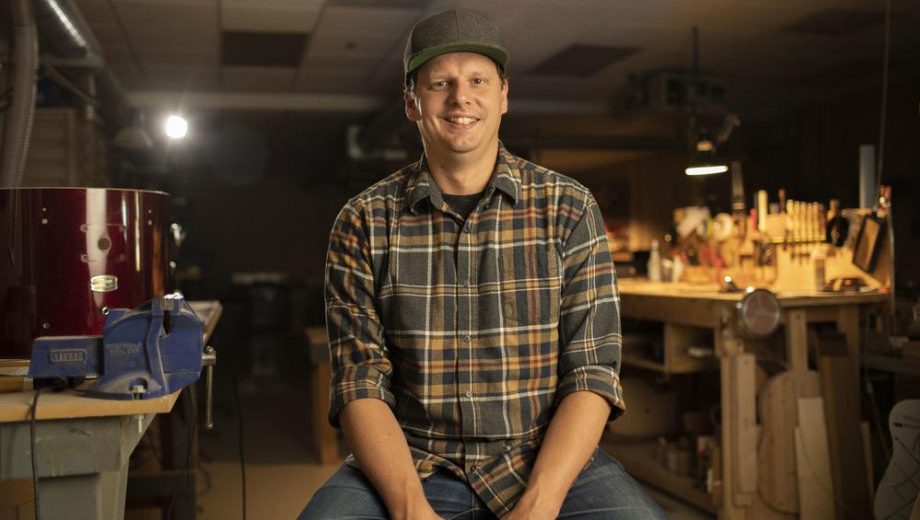
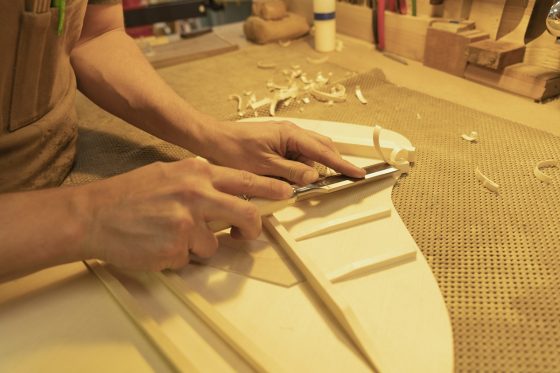
Yamaha Guitar Development is a custom shop in Calabasas, California, where luthiers build acoustic, electric, and bass guitars for Yamaha artists. The shop is also a research and development facility, contributing to production guitars that are available to customers around the world. In this interview, Senior Acoustic Guitar Builder Andrew Enns talks about his approach to the craft and his collaboration process with the engineers in Japan.

How did you get into guitar building?

Before I started building acoustic guitars, I was building electric guitars as a hobby. Then I got a job building classical guitars and learned acoustic guitar construction from master luthier Kenny Hill. From there, I learned everything I could from Kenny and other acoustic builders I met, then applied that knowledge to my guitars.

What is your approach to the craft of building guitars?

My approach is very traditional. I’m not trying to reinvent the acoustic guitar — I am trying to make a better acoustic guitar. There is still quite a bit of mystery involved with guitar and what makes one sound a certain way and a seemingly identical one sound different.

My goal at Yamaha is to combine my intuition as a builder with the engineering knowledge and technological capabilities from the team in Japan. We’re trying to essentially break the code for total control of shaping a guitar’s sound and applying that to our production models.

How does the research and development at the shop connect to the production guitars that customers can buy?

All new Yamaha models go through the development process before hitting the production factories, and part of that process is building prototypes. The YGD custom shop builds all the initial prototypes for potential new models. We collaborate with the team in Japan and experiment with new shapes, materials, bracing ideas, construction methods, etc., to improve on existing designs and invent completely new ones as well.

What does the collaboration between the YGD custom shop and Japan look like?

I collaborate with the team in Japan on a daily basis. We collaborate to develop new construction methods and building techniques, and then we work together to train the luthiers at our factories who build our production guitars.

Could you pick a favorite guitar that you’ve designed or built at YGD?

My favorite project is almost always whatever I am currently working on. Sometimes I look back and think of a specific guitar that really stood apart from the rest. But mostly, I’m always in the mindset that the guitar I am building now is going to be the best one yet.

Discover more about Yamaha and their custom shop offerings at www.YamahaGuitars.com.