Yamaha’s Atmosfeel Was
Created by Musicians for Musicians

The great Doyle Dykes once remarked, “The Bible says, ‘Sing unto the Lord a new song and play skillfully with a loud noise.’ Of course, I guess it helps to have a good amp to do that!” The team at Yamaha Guitars has taken that theory a step further to include a good pickup/preamp system. That’s why they designed Atmosfeel.

Atmosfeel is user-friendly, easy to use, and available in the X models of Yamaha’s exquisite FG Red Label acoustic guitars and concert-size FS series. Its 3×3 concept – three elements, three knobs – may appear simple, but in fact it was almost five years in the making.

According to Yamaha Guitars marketing manager Brandon Soriano, development of the Atmosfeel system began in 2014, prior to its original launch, plus an additional three years leading up to the FG/FS9X guitars.

Like all Yamaha products, Atmosfeel was created with the musician in mind, says Soriano. “Yamaha’s consistent process is that we include a lot of feedback from artists, from our internal employees, and from partners we work with. This pickup system was geared toward artists and performers from the very beginning, so their feedback was essential in crafting this system.”

There is no shortage of choices when it comes to acoustic guitar pickups and preamps. What makes Atmosfeel different? Once again, says Soriano, it comes down to R&D by musicians, for musicians. With guitarists often searching and settling for what he calls the “least bad” option, Yamaha was determined to offer “actively good” the first time, every time, with technological advancements that don’t require an engineering degree and 200-page manual to make the magic happen.

“What we noticed is that the pickups on the market tended to not sound like your guitar,” says Soriano. “There was the sound of your guitar in the room, and then this other sound that happens when you plug it in. Our goal was to make a pickup system that sounds natural – a true representation of the guitar you have, of your tone onstage, while keeping it simple enough to use and easy enough to make changes on the fly, and to have the same sound in the room and through the speakers when you plug it in.”

Atmosfeel was developed alongside the FG and FS guitars, which allowed Yamaha to voice the pickup system to specific models within the series, guaranteeing accuracy and precision at every level. “Our process is so in-depth that we leave no stone unturned,” says Soriano. “For example, the 9 grade FG and FS guitars have Adirondack tops, which are a different stiffness than the Sitka tops you’ll find on the 3 and 5 grade guitars. The [more recent] 9 level guitars have a slight taper going on, where the outer edges are about .2 millimeters thinner than the center point.

“We have exact measurements of how each of those tops resonate, how they vibrate, what their headroom looks like. We have all of these [minute] details at our disposal because we made the guitars. We know that the back and sides might have a slightly different thickness between rosewood and mahogany. We know that the stiffness of Sitka and Adirondack is different to this exact measurement.

“When we’re crafting the pickup system, we take all those things into account and modify the voicing accordingly, with the ultimate goal of all these guitars outputting the most accurate sound we could possibly come up with, compared to what the guitar sounds like acoustically in the room. The guarantee is that we spent years developing this system and specifically voicing each model’s pickup system to that guitar.”
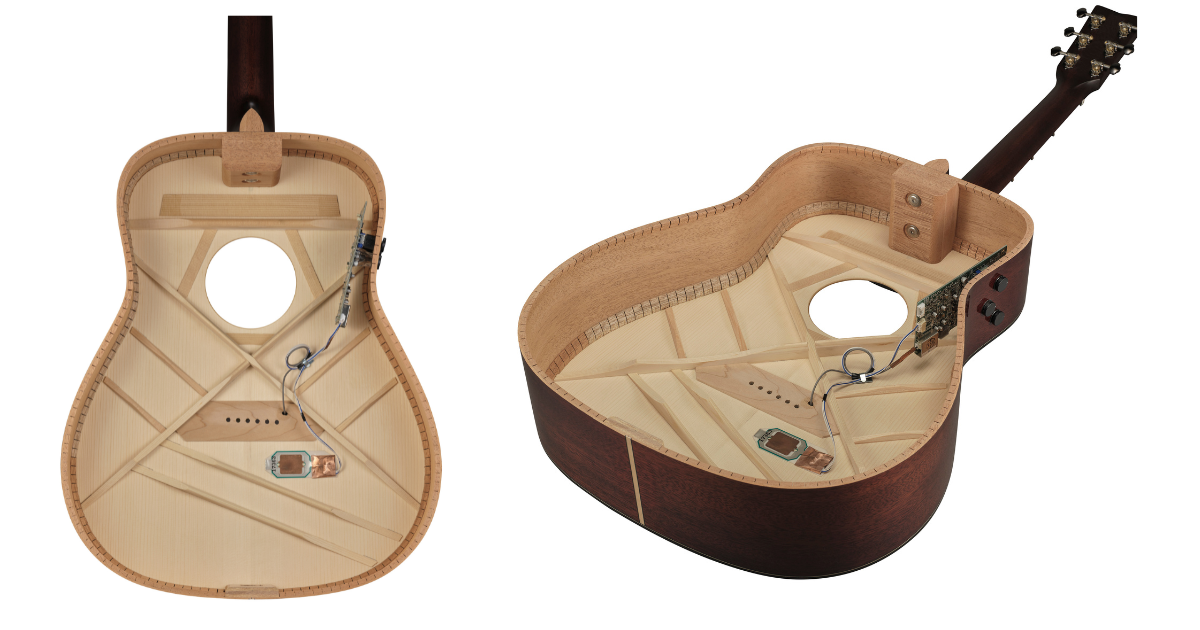
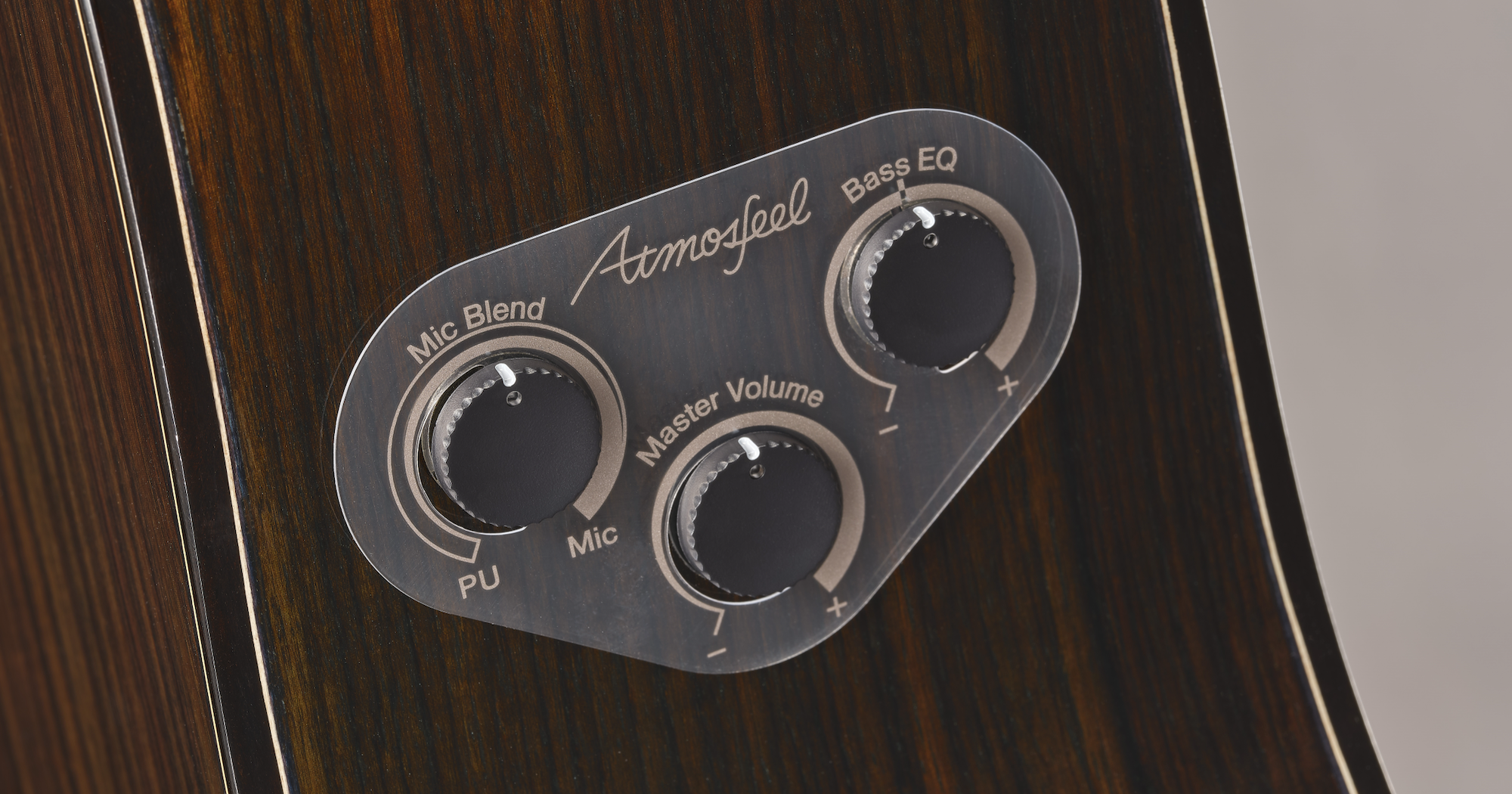
The onboard electronics and Atmosfeel system of a Yamaha FG9 MX guitar.

To further dial in accuracy and ensure that Atmosfeel could deliver anywhere, at any time, the system was thoroughly artist-tested prior to its debut.

“We come up with a voicing we’re really confident in and then we’ll bring in artists to do evaluations,” says Soriano. “In real time, we have the guitar hooked up to a computer, and a person is behind the keys adjusting the voicing based on the feedback the artist is giving us. We do this with a number of artists until we arrive at something that works for them and is the most versatile for all their different styles.”

How does Atmosfeel work, why does it work, and how does something so advanced remain simple and easy to use? This brings us back to the 3×3 concept, which was not a coincidence, says Soriano, but instead a carefully thought-out design balance between “How much is too much?” and “How little is too little?” One knob means few, if any, options, while an assortment of knobs becomes cumbersome and tricky, especially for guitarists who need quick-touch adjustments.

Atmosfeel is comprised of three elements: an under-saddle piezo pickup for low end, miniature condenser mic for mids, and proprietary, whisper-thin but deceptively strong, transducer contact sensor for overtones and clarity.

“Our approach was, first of all, to find out what are the strengths and weaknesses of all three elements,” says Soriano. “The under-saddle piezo pickups do a great job of capturing a bold and consistent low end. The weakness is that the high end has a tendency to sound unnatural to guitar players. That’s where you start to get a different sound than what your guitar is like in the room.

“The contact sheet, which is under the top wood of the guitar, is the inverse of that. It’s a paper-thin sheet that has a positive and a negative, and it captures the vibrations of the top. It’s really good at capturing air, high-end presence, and sparkle, and the low end is not as resonant.

“We’re taking the low end of the under-saddle and the high end of the contact sheet and creating what we consider to be the ideal blend between those two. That was the first step. Of course, neither of those technologies independently are completely new. Under-saddle pickups have been around for a long time. But the combination of the two, and the detail of how we blend them together, is what’s new in this system. That has created a new approach.

“The microphone, aimed at the side wood at the upper bout of the guitar on the low E string side, covers the mid-range character of the guitar, whether you choose mahogany or rosewood. Essentially, the system lets you have an ideal low end, an ideal high end, and you can blend the microphone in so that you get a mid-range to taste. We figured out how to take existing technologies to the next level and optimize them.”

All of this is controlled by three small knobs. “You get a Microphone Blend, which is really effective for shaping your midrange and overall character,” says Soriano. “You get a Master Volume, which is essential, and then the Bass EQ is really interesting.

“When you’re playing live, a lot of feedback can happen in the bass frequencies. The Bass EQ is a cut or boost knob, which can help with controlling feedback or warming up your signal. If you’re playing solo and need to take up more room in the mix, you can crank that Bass EQ knob. Vice versa is true as well. If you’re playing with a band and there’s a bass player, you don’t want to step on their toes, so you’re probably going to want to roll off some of that bass.

“The Microphone Blend can be used to pop in and out of featured parts or solos. If you need a smaller, more compressed sound just to be in the background, you might use less of the Mic Blend. When it’s time for you to step out and take your chorus, you can crank that microphone up, stick out in the mix momentarily, and turn it back down when the time is right.”

Atmosfeel was designed for player flexibility – style, genre, attack, in the studio, onstage, on your own, with a band. Wherever you go, whatever and however you play, the system’s versatility works with you and for you.

“If you’re an arena- or stadium-level act, chances are you have a pretty silent stage,” says Soriano. “Those acts today are using a lot of in-ear monitoring. You can get away with a lot of Microphone Blend in that setting, because you don’t have sound coming back at you with an onstage wedge, and the risk of feedback is probably lower. Also, in a larger space, the sound has more room to dissipate.

“If you’re in a coffee shop, you have a floor wedge aimed at you, and the room is small, your risk for feedback might be pretty high. In that instance, you want to reduce the Microphone Blend and maybe the Bass EQ to accommodate for those things.

“And, of course, everything in-between exists as well – clubs, mid-sized venues, things like that. The system lets you tailor your settings to each of those without being too complicated. It’s just three knobs. If you know how to use them, you can optimize your sound for whatever setting you’re in.”

Yamaha designed Atmosfeel with musicians’ peace of mind foremost, meaning durability on the road and reliability onstage and in the studio. Choose your settings and rest assured they will remain in place, even if you don’t. “The Bass EQ knob has a notch at 50 percent,” says Soriano. “When you get to that spot, it locks you into place. Of course, it’s not too hard to move out of that space, but it certainly will not move on its own.”

Best of all, the 3×3 setup means easy to use, easy to remember. “Even the highest level of professional musicians are human,” says Soriano. “When you’re onstage, you have adrenaline going, and you have to make quick decisions, you don’t want to pause and remember which one of your seven knobs does what. You want to reach down and do what you need to do quickly so you can get on with the performance. The three-knob system is extremely user-friendly for that. You don’t have to spend time thinking about it before making an adjustment.”

Atmosfeel is perfect for recording in a pro studio, home studio, or on the road. “The vast majority of the time, if you’re recording an acoustic guitar, you’re putting a microphone on the guitar,” says Soriano. “Nowadays, especially with the rise in home recording, a lot of people might have trouble getting a clean signal with a microphone in front of their instrument, especially if your room has a lot of reflections in it.”

What does this mean for bluegrass players?

“A lot of artists we work with are primarily bluegrass players,” says Soriano, “so bluegrass was absolutely a primary focus in the development of the FG9X guitars. Bluegrass players most commonly use dreadnought-style guitars, so when we were voicing the pickup system in the FG9’s, we knew they had to be able to use this and be happy with it. That was a big part of our testing.

“Bluegrass tends to be quite guitar-forward, especially if there’s a solo section, for example. Bluegrass players are discerning when choosing their instrument. A lot of players have a strong preference. They want rosewood or mahogany, and there’s a reason behind that. If you’re going to make that decision, and it’s going to show your artistry and your taste, you should be able to have that come through when you’re performing live, even with a pickup system.

In a world of bells and whistles, where everything has to be shiny with lots of buttons and gizmos, Atmosfeel is deliberately stripped-down – no flash, no glitter, just durability and refreshing beauty in its simplicity.

“When you have a minimal setup that’s well dialed in, well executed, and well developed, when you put that work in on the front end, you earn the ability to have a simpler user interface,” says Soriano. “Because we are so confident in the voicing of this system, and in the fidelity and quality of the components, we didn’t have to put a million knobs on the guitar. We could afford to keep it simple and be confident that it’s going to sound great.”


This content is brought to you in partnership with Yamaha Guitars. All images courtesy of Yamaha Guitars.

The Festival-Lover’s Ultimate Holiday Shopping Guide

2025 has flown by and as we enter December we once again find ourselves preparing for the holiday season. We think it’s important to focus on slowing down, being together, and being more intentional in our gift-giving. Which is why we’re thrilled to bring you the second year of the BGS holiday gift guide.

This installment of our guide, featured below, is specifically tailored to the avid outdoor festival-goer. Maybe they’re already planning out their next festival season a year in advance. Or maybe they’re the type who always has a bag ready, so they can pack up and pitch a tent when the music calls. Whatever their style, these gift recommendations from our friends, partners, and staff will be well-loved by those who like to take their musical experiences outside.


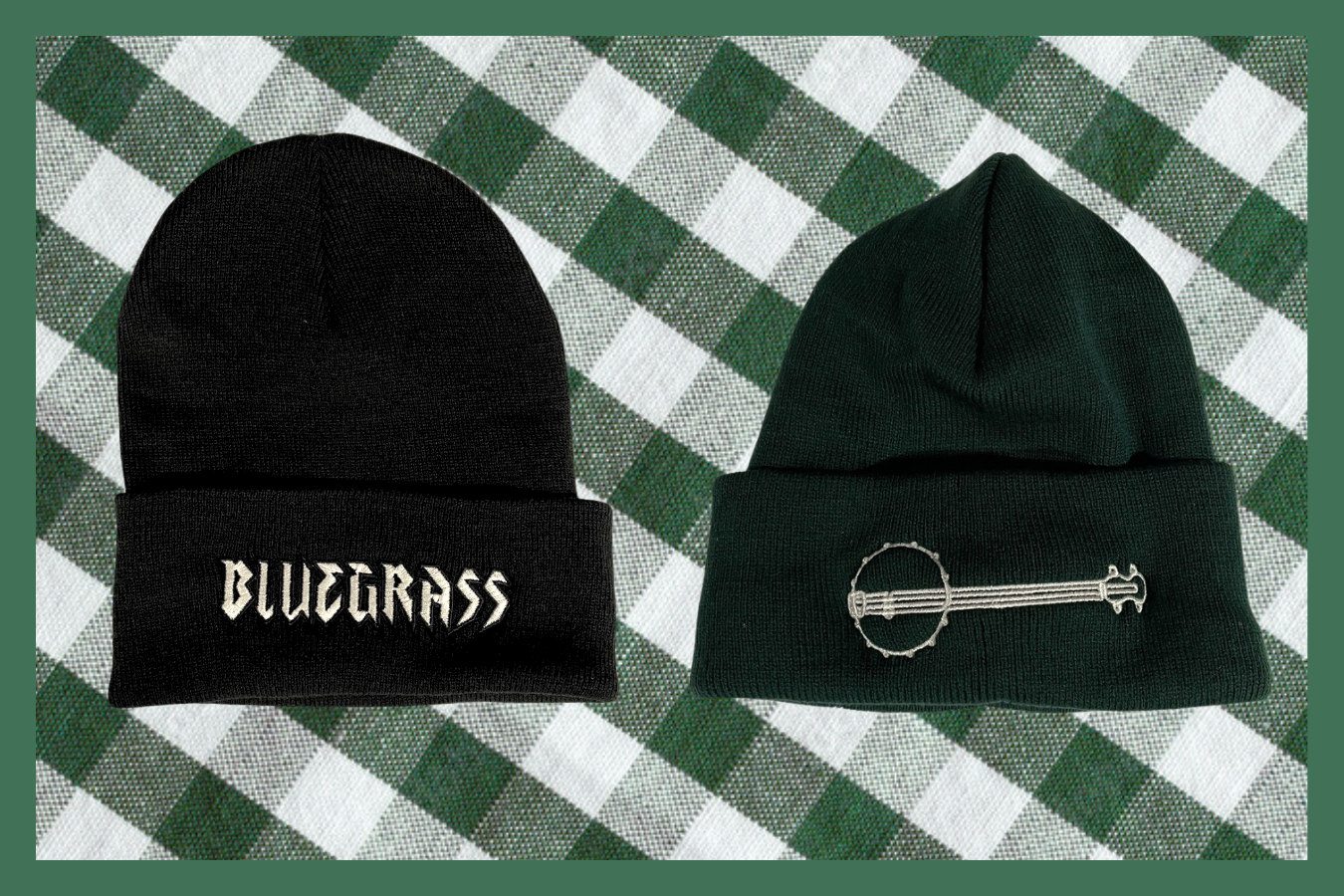
BGS Bluegrass Metal and Banjo Beanies

Warm noggins are all the rage this winter, and you can keep yours cozy with our two new original beanie designs. Freshly added to the BGS Mercantile, choose between two styles that are both sure to turn heads and start great conversations wherever you wear them.

Purchase Metal Beanie | Purchase Banjo Beanie


Green Goo Ultimate First Aid Care Bundle

Festivals can be unpredictable. This is why we love them, of course, but it’s also why we always arrive prepared. Green Goo’s Ultimate First Aid Care Bundle is the perfect prep kit for festival season, with four handmade herbal salves meant to soothe bug bites, bruises, scrapes, sore muscles, dry skin, and much more. Best of all, BGS readers can get 25% off their order with code HOLIDAY25.

Purchase


Guest Gifter: Chris Pandolfi
(GRAMMY-Winning Musician with The Infamous Stringdusters & Avid Fly Fisherman)

“If you know someone who travels to fish, they need the Orvis Carry-It-All Bag! It’s ideal for carrying a bunch of gear without all the rod tubes/bulk and you can carry it on to any plane, so you’ll never be without your essentials. I used to make the rounds just stuffing everything into my suitcase, but this Orvis gear bag is a total game changer and I never leave home without it if I’m heading out to explore.

The Flylow Micah Fleece is a really quality, stylish midlayer from one of my favorite apparel brands out there, Flylow. They make gear that lasts but also looks great, from the mountain to the stream to the stage. You can never have too many midlayers!” – Chris Pandolfi

Purchase Orvis Carry-It-All Bag | Purchase Flylow Micah Fleece

Chris Pandolfi is a founding member of The Infamous Stringdusters. He is also the host of the Inside the Musician’s Brain podcast and an avid fly fisherman and guide.


Eagle Nest Outfitters Lounger DL Chair

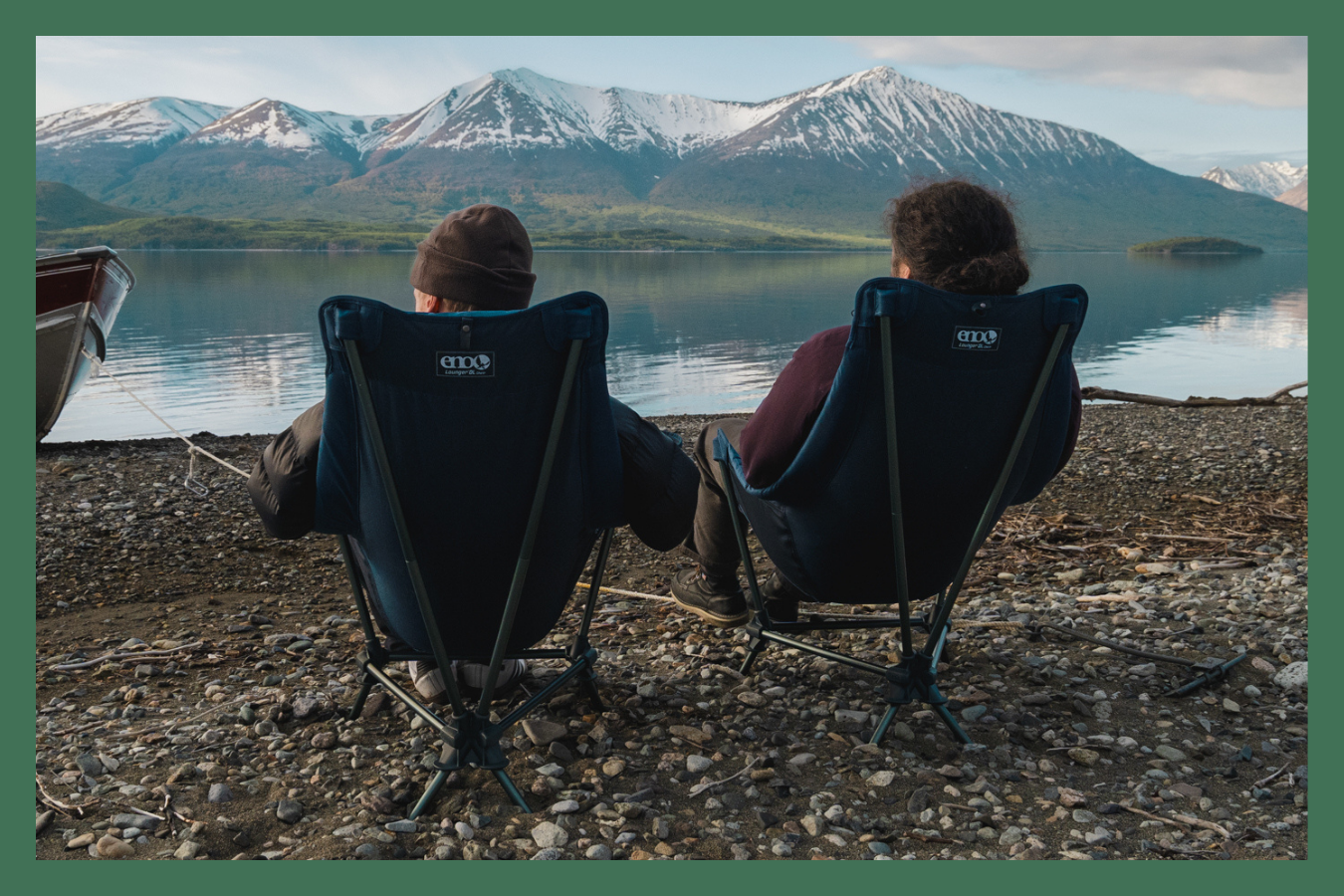
Please, for the love of god, replace your rickety old camping chair. At every festival campsite, the good chair is always obvious… and that one you “borrowed” from your parents’ garage ten years ago might just collapse at any moment. Upgrade your festival seating experience with Eagle Nest Outfitters’ Lounger DL Chair. This lightweight, portable hammock chair sets up quickly, is fully adjustable, and has a cushioned pillow and armrests — just trust us, it’s the good chair.

Purchase


Natural Life Cozies

After a long day at an outdoor music festival, there’s nothing like getting cozy back at your campsite. Natural Life has you covered on cozy essentials, with warm socks, sherpa-lined slippers, the super soft (and versatile) boho bandeau, and your new favorite mug for hot toddy night caps or coffee on a chilly morning. And the best part about gifting these around the holidays? Break them out early and stay warm all winter long.

Purchase


Guest Gifter: Amy Reitnouer Jacobs
(BGS Co-Founder & Executive Director)

“I spend enough time at music festivals to know that these days a sturdy clear bag is an absolute essential. But finding something that is efficient and cute is easier said than done. That’s why the Away Stadium Bag is on my wish list this year. It’s a hard shell clear bag that’s big enough to hold your phone, keys, glasses, lip balm, Loop earplugs, etc., getting you through security without skipping a beat. Added bonus: you can even get it monogrammed!” – Amy Reitnouer Jacobs

Purchase

Amy Reitnouer Jacobs is the co-founder of BGS and Good Country, as well as producer for concerts, stages, and experiential events throughout the country. She also collects and sells vintage homewares with her company Fernweh Flea.


WinterWonderGrass Tickets

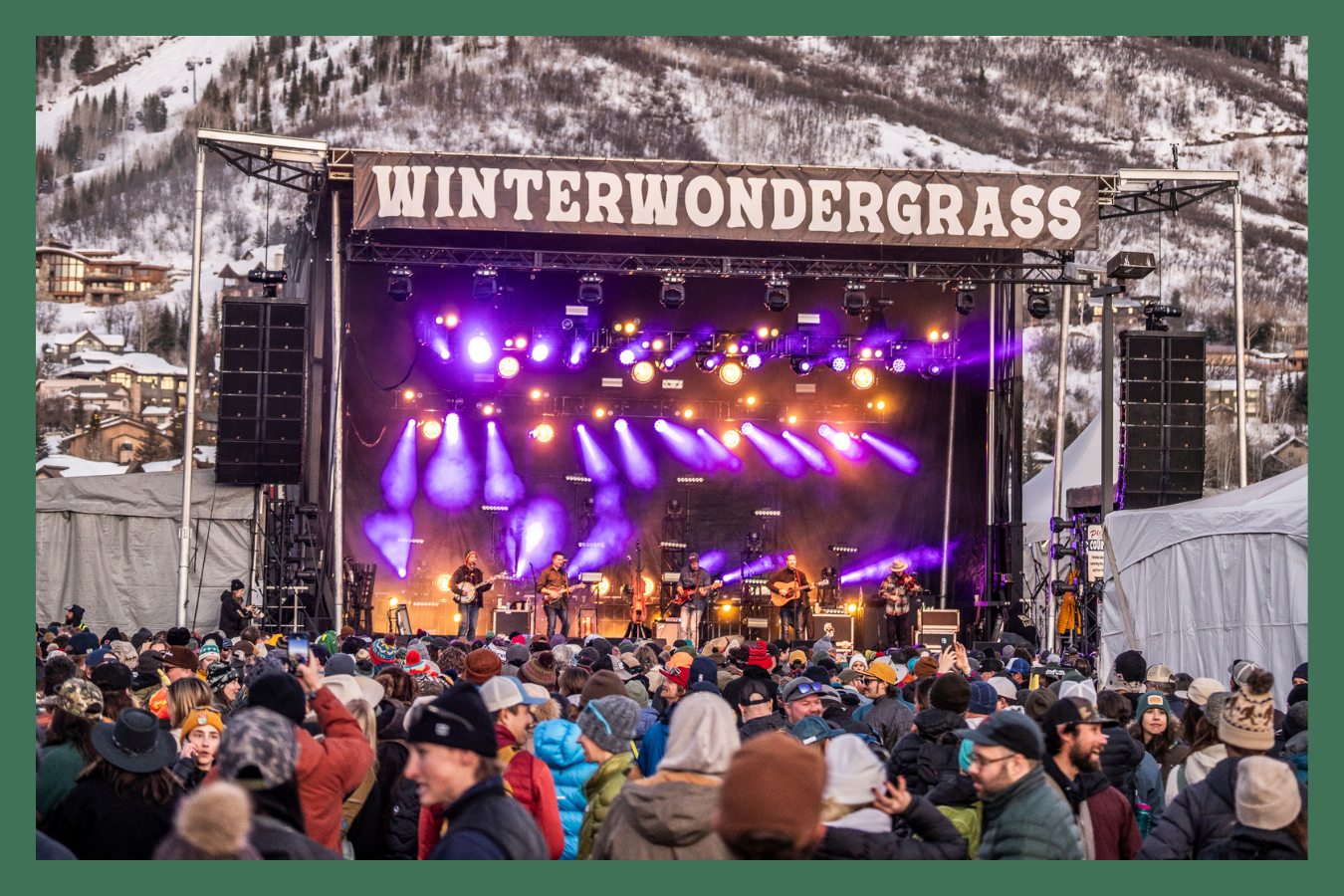
One of the most unique and anticipated festivals of the year is always WinterWonderGrass. This year’s lineup is one of their most fun yet with The Infamous Stringdusters, Leftover Salmon, The Devil Makes Three, Daniel Donato’s Cosmic Country, and so many other BGS faves jamming out over three days alongside the perfect powder of Steamboat Resort in Colorado. Tickets, packages, and more info here.

Purchase


Zeal Optics

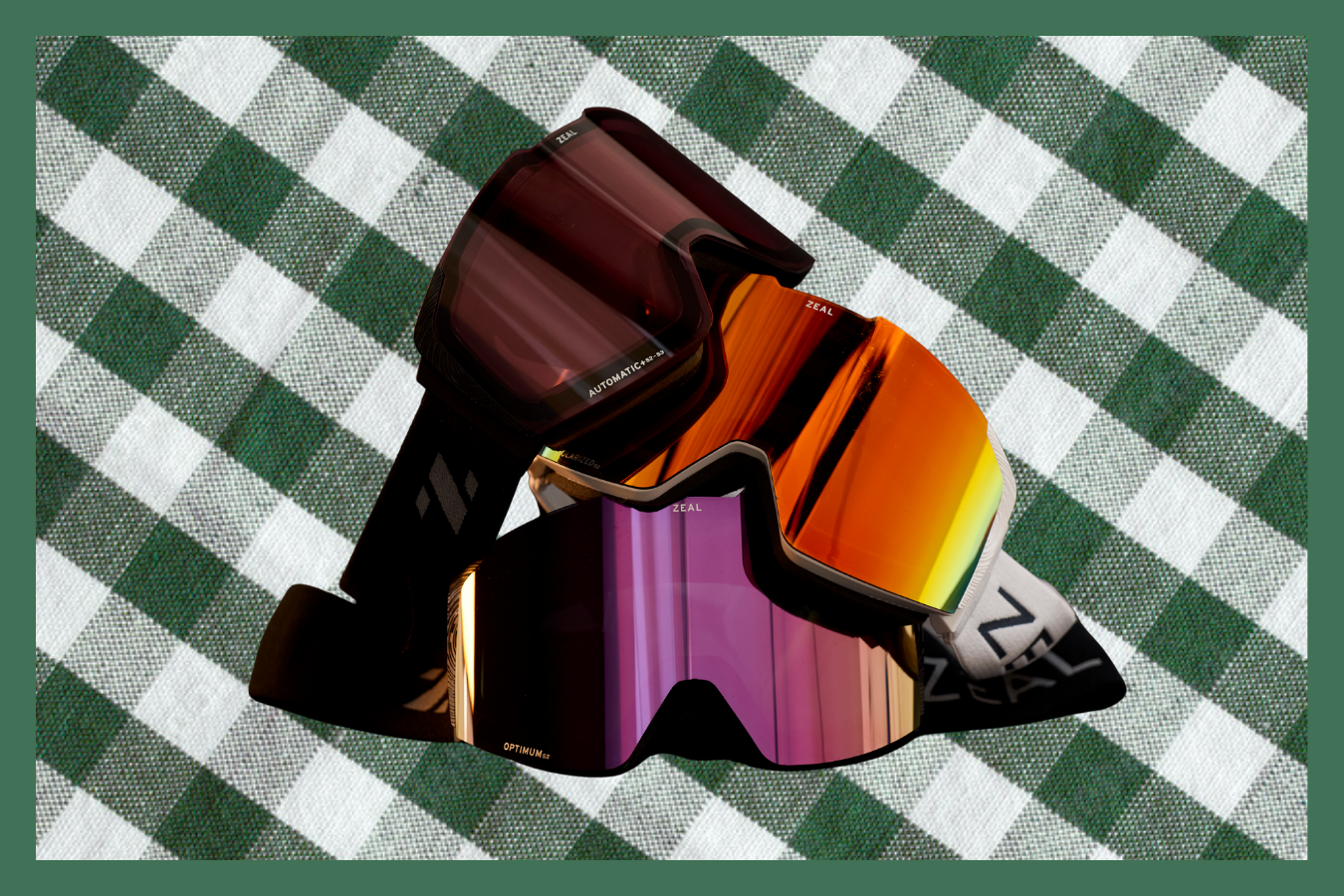
The right eyewear is essential for a good festival weekend, and from the desert landscapes of Stagecoach to the mountains of Telluride Bluegrass, Zeal Optics has your eyes covered. Their polarized Rangely sunglasses will keep you glare-free at Bourbon & Beyond, while their Meridian Goggles are perfect when you hit the slopes between sets at WinterWondergrass.

Purchase


_


This content brought to you in partnership with Green Goo and WinterWonderGrass.

The Musician’s Holiday Gift Guide

2025 has flown by and as we enter December we once again find ourselves preparing for the holiday season. We think it’s important to focus on slowing down, being together, and being more intentional in our gift giving. Which is why we’re thrilled to bring you the second year of the BGS holiday gift guide.

Below is the first of our guides – this one specifically geared towards avid musicians, be they recreational or professional players. Check out personal product selections from our friends, partners, and staff.


D’Addario Humidipak

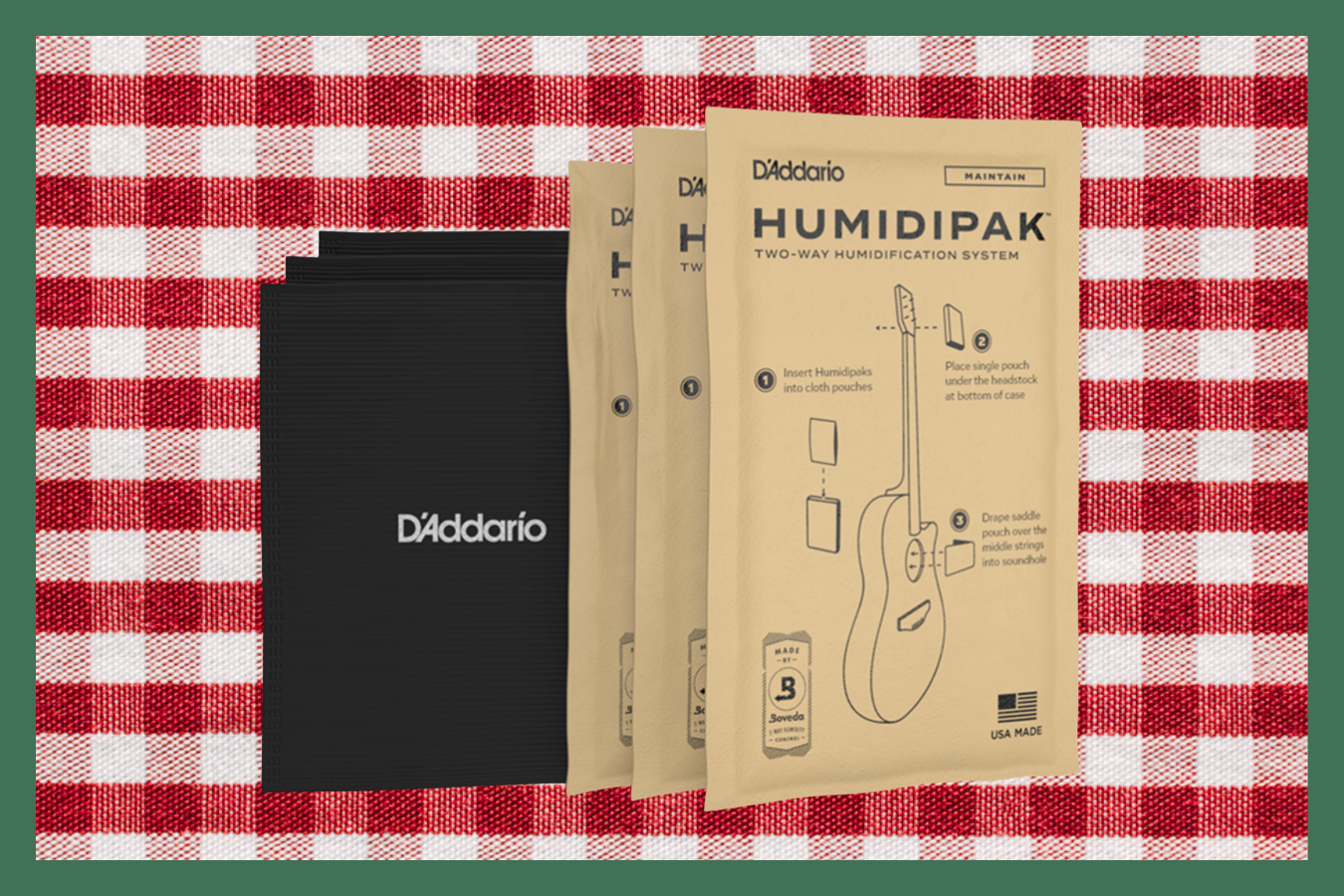
Most beginner or hobby-level acoustic players don’t consider the proper storage environment for their instrument, but did you know that maintaining humidity and temperature can be just as important as buying a sturdy case? D’Addario’s Humidipak is a two-way humidification system automatically maintaining the ideal humidity level to preserve tone and protect damage. They even have three different variants to accommodate your specific humidification needs.

Purchase


Guest Gifter: Hannah Connolly
(Singer-Songwriter & BGS Social Media Director)

“Traveling as a guitarist you can never have too many capos. This Shubb C1 capo is my usual go-to, but I have friends who swear by the F1. It’s on my wishlist because although it’s a little more of an investment, it can be stored on the guitar itself (behind the nut of the headstock) when it’s not in use… making it nearly impossible to misplace on tour!” – Hannah Connolly

Purchase Hannah’s Pick | Purchase Budget Option

Hannah Connolly is a singer-songwriter based between Nashville and Los Angeles. Her latest release is Shadowboxing, and her third album is set for release in 2026. When she’s not writing or performing, Hannah also serves as the Social Media Director for BGS and Good Country.


nugs Annual Subscription

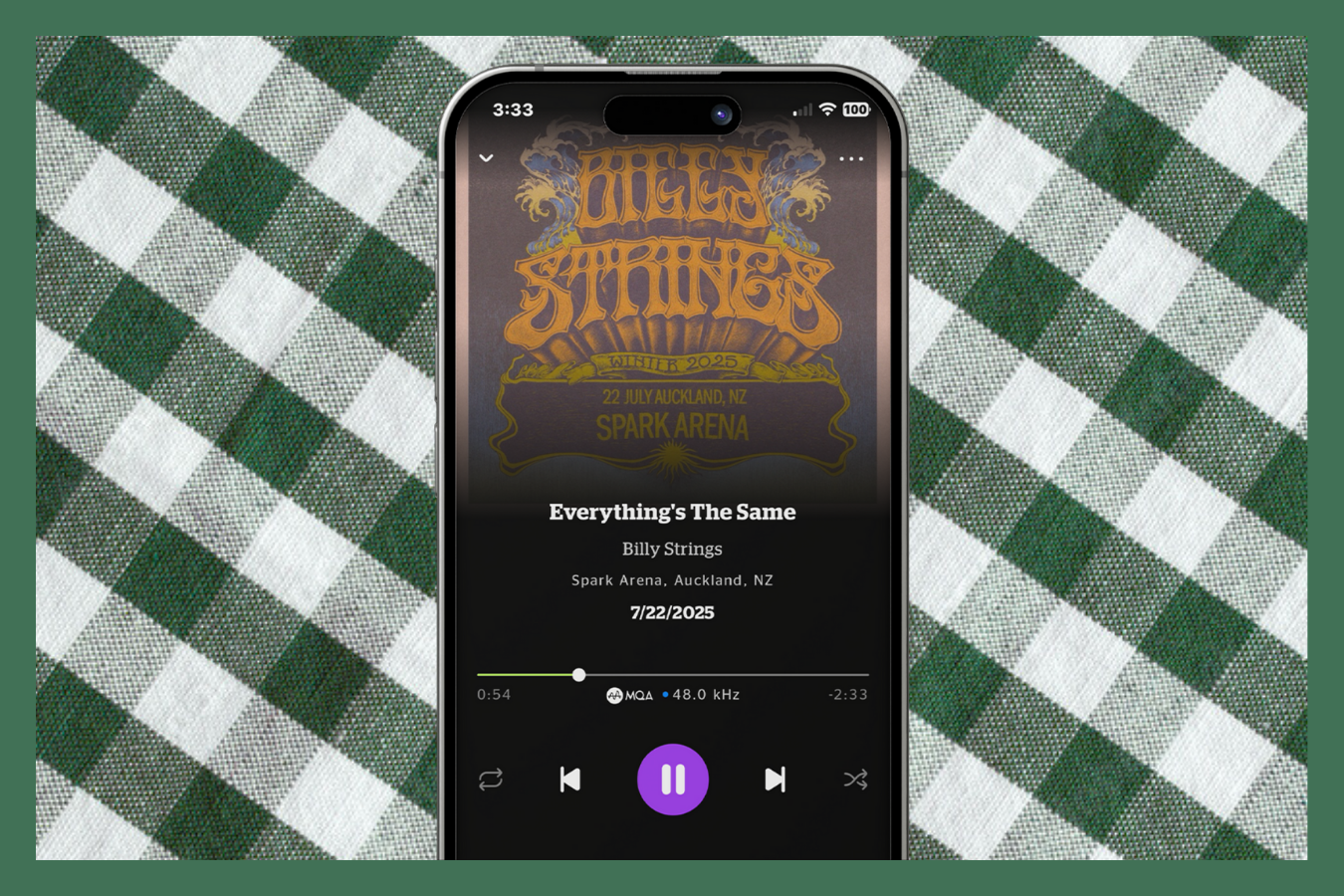
If you’re a regular reader of BGS, chances are you know that one person in your life who worships bootleg Grateful Dead recordings or would drive thirteen hours just to catch one more Billy Strings show. (If you don’t know that person, perhaps it’s you…?) Why not gift them All Access to a one-stop destination for concert livestreams, on-demand videos, and high-quality audio recordings with a nugs annual subscription? nugs partners with legendary artists such as Bruce Springsteen, Dead & Company, Pearl Jam, Goose, Greensky Bluegrass, Johnny Blue Skies – and of course Billy Strings – to ensure you always have a concert on the calendar.

For a limited time, BGS readers can get a nugs 1-year All Access subscription for 50% off the regular price using the link below. Offer valid through January 5, 2026.

Purchase


Preston Thompson Guitars – DMC Model

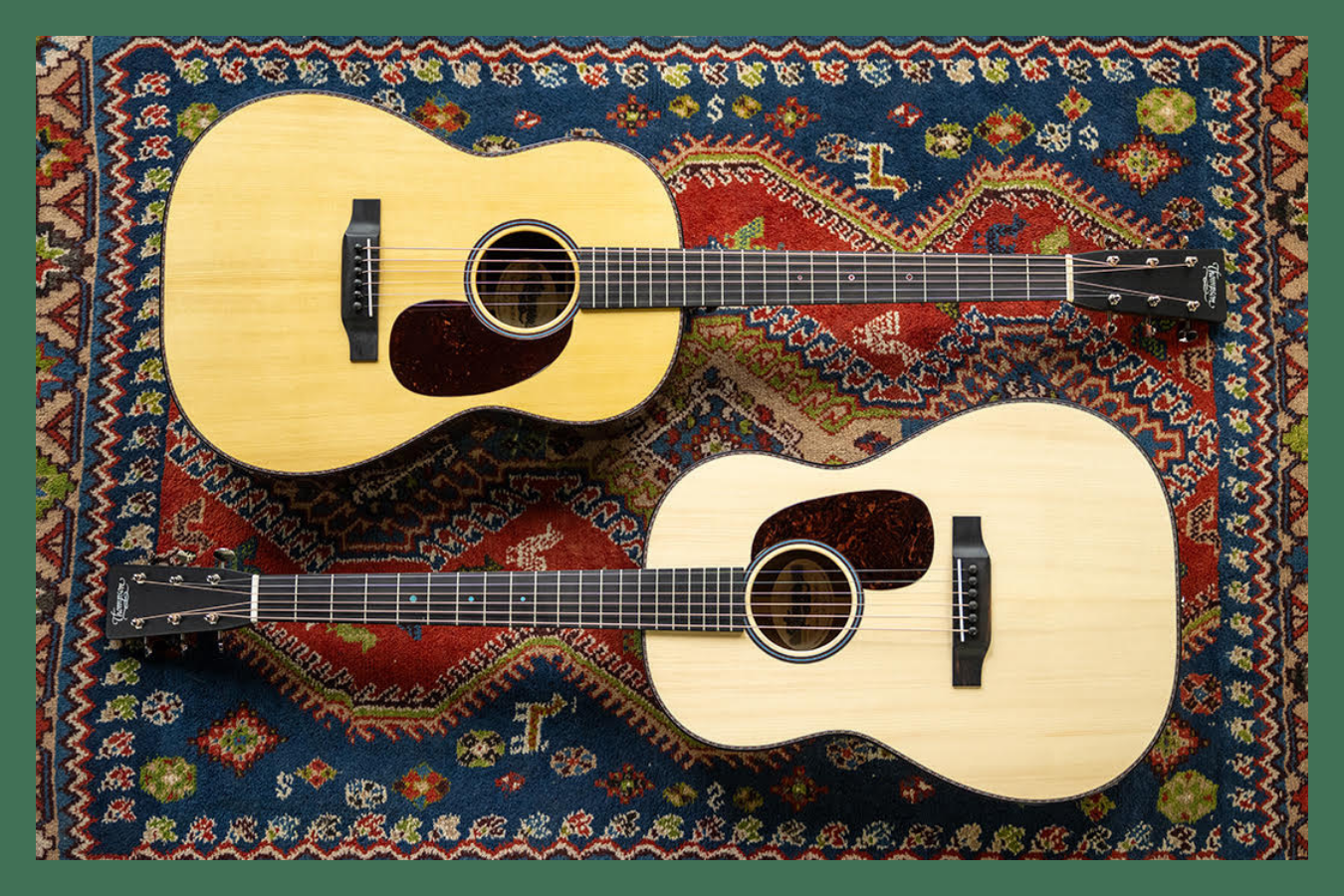
At a studio deep in the heart of Oregon, Preston Thompson Guitars has long been making some of our favorite high-end custom instruments. Their new model, DMC, is a smaller, deep bodied guitar which is fashioned after Willie Nelson’s famous “Trigger,” a N-20 Hybrid Classical. Between now and January 31, you can get one of these Spruce-top beauties for 15% off. After all, we could all stand to be a little more like Willie.

Direct orders only. Contact [email protected] for more info.


Qobuz or TIDAL Streaming Subscription

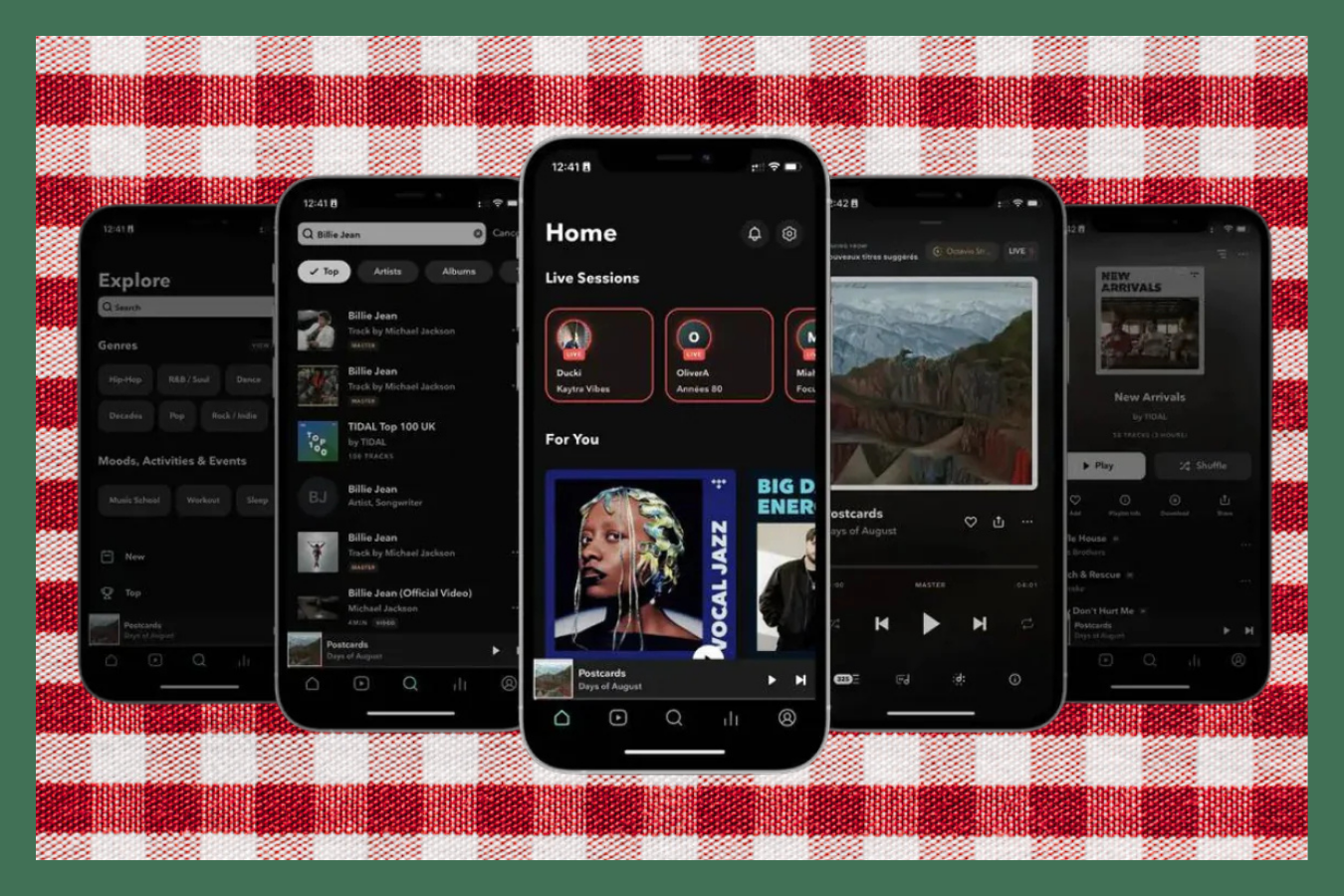
Suffice to say, we really hate that streaming services are paying out less than ever to musicians and songwriters in royalties (and don’t get us started on the lack of regulation over AI-generated music). But with that said, it’s more important than ever to make purchasing decisions that actually make an impact and help support your favorite artists. Consider gifting a subscription to an alternative streaming service like Qobuz or TIDAL — both platforms pay some of the highest streaming royalties to artists, and streaming at a higher audio quality audio than their major competitors. It’s the gift that keeps on giving.

Qobuz | TIDAL

And on a similar note, we all know a live music lover that has been shut out of a recent ticket on-sale that may be feeling frustrated about inflated prices on the secondary ticket market. A CashorTrade Gold Membership is a great way to support the face value ticketing movement. All transactions are insured so you can feel confident you’re not getting scammed.


Guest Gifter: Sierra Hull
(GRAMMY-Winning Musician)

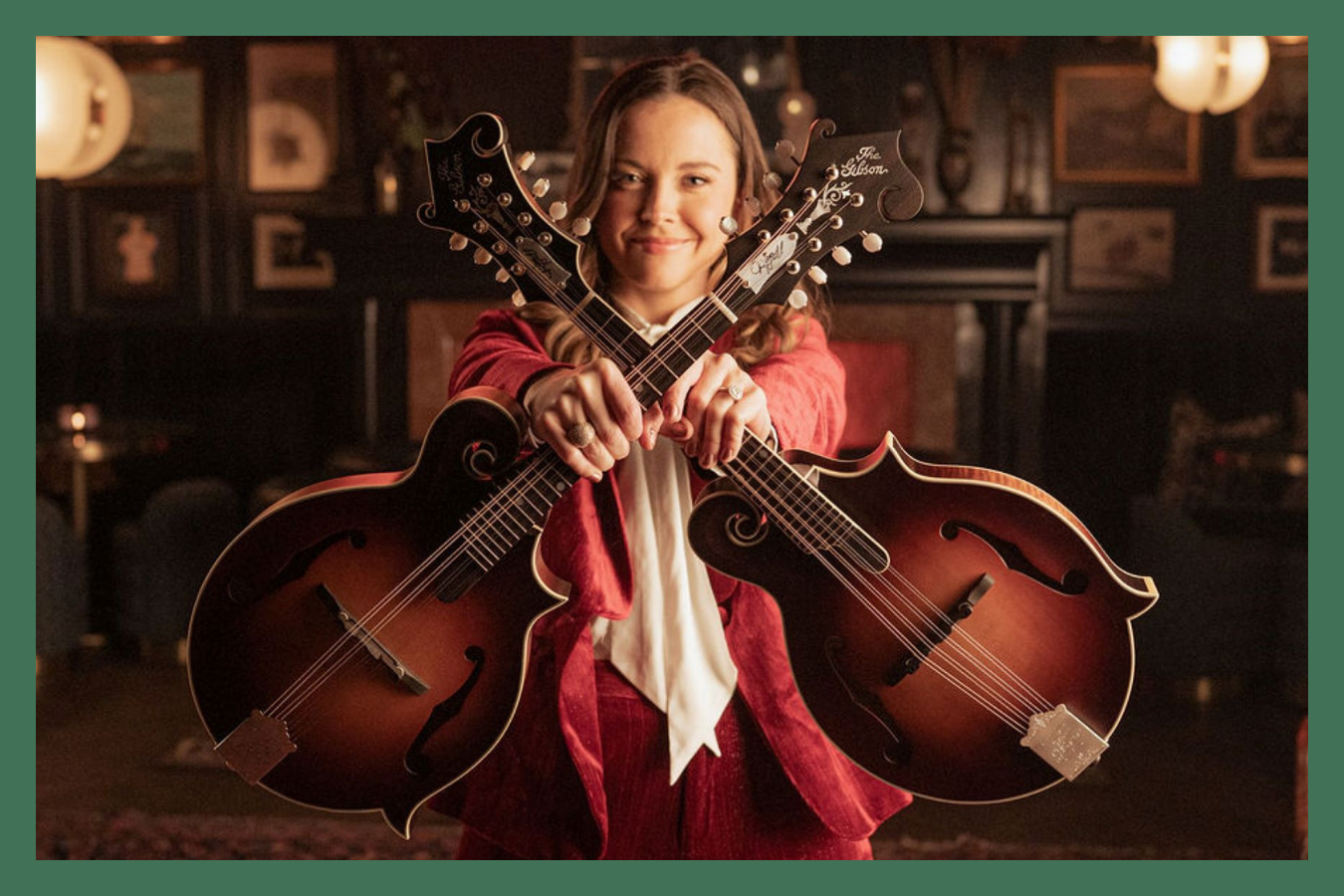
“I’ve had my eye on getting one of these Crossrock double mandolin cases so I can more easily bring along both of my new signature model Gibson mandolins (both the master model and the F5G) on tour! The last few months I’ve been carrying around three different mandolin cases, so I think it would be awesome to consolidate a couple of them into a single case. I currently have one of the smaller fitted Crossrock cases and they are really solid [and] such affordable little cases!” – Sierra Hull

Purchase

Sierra Hull’s latest record, A Tip Toe High Wire, recently garnered four GRAMMY nominations. Discover more and find out how to catch her on tour with the Milk Carton Kids in 2026 at SierraHull.com.


Yamaha Acoustic Guitars – FG/FS9 Series

For over fifty years, Yamaha has been handcrafting their acoustic artistry, incorporating traditional Japanese woodworking with innovative Japanese technology. Their flagship model, the FG/FS9 steel-string acoustic guitar, is ideal for singer-songwriters.

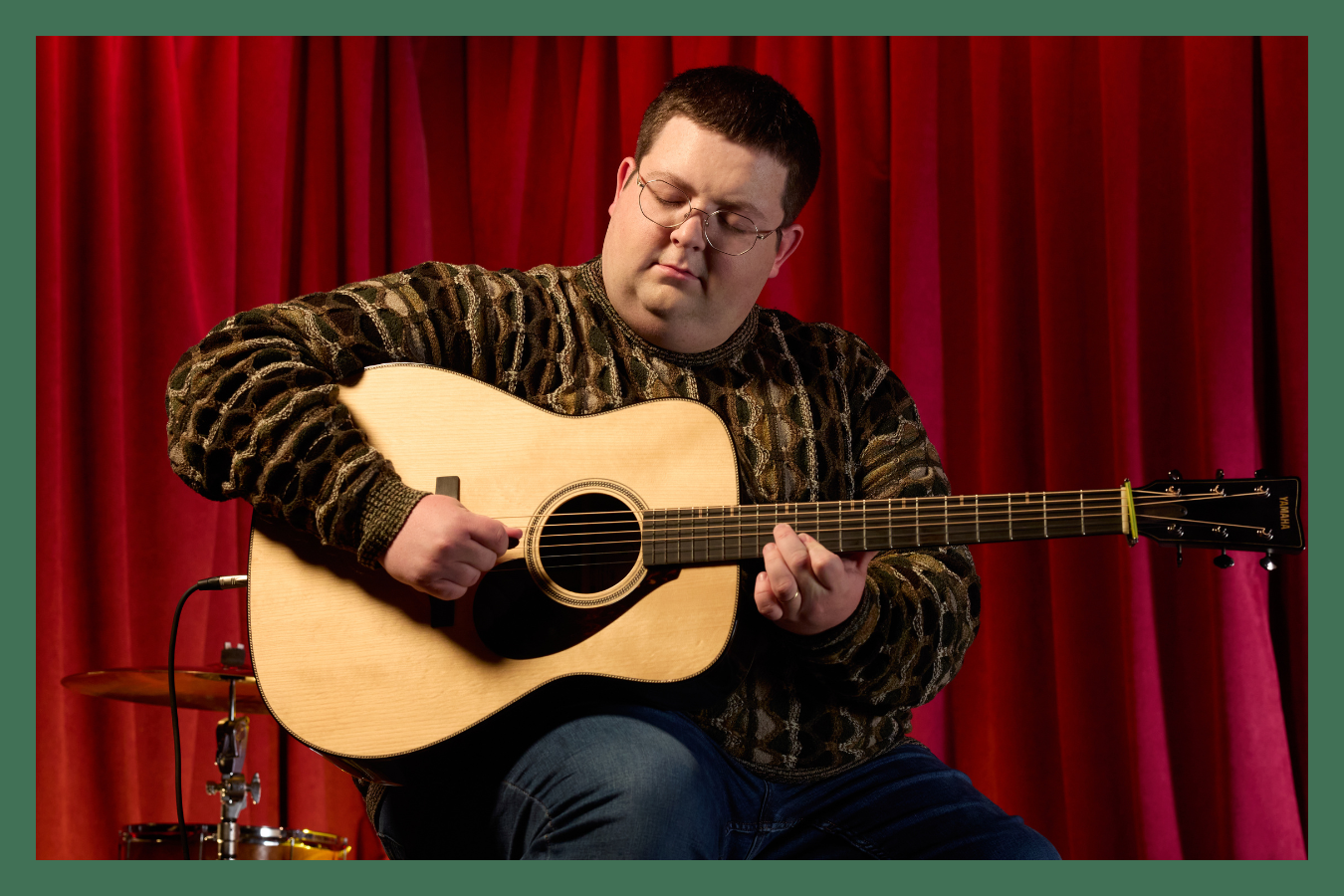
Check out bluegrass guitarist Jake Eddy playing his FG9 RX below.

Purchase


This content brought to you in partnership with D’Addario, nugs, Preston Thompson Guitars, and Yamaha Guitars.

You Gotta Hear This: New Music From Aaron Burdett, Nic Gareiss, and More

Here’s a flock of brand new songs and videos you gotta hear! This week, our premiere round-up includes Americana, fiddle tunes, percussive dance, good country, string band excellence, and more.

Don’t miss new tracks like “Second Best,” from Americana singer-songwriter and Steep Canyon Rangers vocalist Aaron Burdett, and “China Camp,” a fiddle tune written by Paul Shelasky and performed by Amy Kassir with Jake Eddy and more. Also, Wisconsin’s own Them Coulee Boys drop “I Am Not Sad,” a song that grapples with mental health from their upcoming 2025 album, No Fun In The Chrysalis.

We’ve got some superlative videos this week, as well! Percussive dancer and folk musician Nic Gareiss dances us through a gorgeous, queer rendition of a Gillian Welch song, “Back Turn and Swing,” and alt-folk trio Palmyra have brought a live field recording of “Fried,” a song from their brand new EP, Surprise #1. Meanwhile, Eilen Jewell pays tribute to Loretta Lynn and spotlights the progress and regression of the last 50 years of reproductive rights activism with a cover of “The Pill.”

To wrap us up, we don’t want you to miss the latest AEA Session, premiered in partnership with AEA Ribbon Mics on BGS earlier this week. This edition of the series features Brit Taylor & Adam Chaffins, performing live at Americanafest last month.

It’s all right here on BGS and, certainly, You Gotta Hear This!


Aaron Burdett, “Second Best”

Artist: Aaron Burdett
Hometown: Saluda, North Carolina
Song: “Second Best”
Release Date: October 25, 2024
Label: Organic Records

In Their Words: “You might say ‘Second Best’ was a song 30 years in the making. I’ve had this line from an old David Wilcox song rattling around in my head since the ’90s. It always struck me as a phrase that could be interpreted in many different ways. So I eventually started playing with that idea and bouncing it off various scenes and situations. A year or so ago I landed on the one (or two) that ended up in the recording, along with the original Wilcox line that inspired the chorus. Some songs arrive quickly, and some arrive much more slowly!” – Aaron Burdett

Track Credits:
Aaron Burdett – Vocals, acoustic guitar
Kristin Scott Benson – Banjo
Carley Arrowood – Fiddle
Tristan Scroggins – Mandolin
Jon Weisberger – Upright bass
Wendy Hickman – Harmony vocals
Travis Book – Harmony vocals


Nic Gareiss, “Back Turn and Swing”

Artist: Nic Gareiss
Hometown: Lansing, Michigan
Song: “Back Turn and Swing”
Release Date: October 25, 2024

In Their Words: “When I heard Gillian Welch’s song ‘Back Turn and Swing,’ I was immediately drawn to the way it brings the listener into the scene of a dance event: musicians tuning up, someone cooking potluck food to pass around, the excitement in the air, folks eager to get up onto the floor. The lyrics evoke the feeling of the square and contra dances I grew up attending in the rural Midwest. At the same time, as a non-binary queer person, I feel bodily unease around how the song sets up the dualistic gender of the attendees.

“Many folk dances these days have adopted expansive and inclusive dance calls, like using ‘larks and robins,’ ‘lefts and rights,’ etc. (shoutout to Michigan’s Looking Glass and Ten Pound Fiddle contra dances, Detroit’s queer square dance, Asheville’s Old Farmer’s Ball, and Brooklyn’s Gayli). Yet I’m still compelled to check beforehand that the caller – the authoritarian voice at the front of the hall telling people what to do with their bodies – is onboard with same-sex couples dancing together or trans and genderqueer people expanding these roles. This past summer a partner and I were at a dance when someone in their 20s asked us mid-set, ‘Who is the man?’ This reminded me that there’s still work to do; inclusivity still requires advocacy and allyship to help all feel welcome in the dynamism of the dance floor.

“Speaking of dynamic, as a child I saw John Hartford and was both astonished and inspired by the soundscapes he could create; dance, music, and song all embodied in one person. I aspire towards that dance-as-music in this video, where I added a few lyrics to the last verse.” – Nic Gareiss

Video Credits: Filmed by Blake Hannahson. Audio mixed by Jaron Freeman-Fox.


Eilen Jewell, “The Pill”

Artist: Eilen Jewell
Hometown: Boise, Idaho
Song: “The Pill”
Album: Butcher Holler: A Tribute To Loretta Lynn
Release Date: October 22, 2024 (single); November 15, 2024 (album)
Label: Signature Sounds

In Their Words: “The amazing thing about ‘The Pill’ is that it still feels edgy today, nearly 50 years after its original release. Loretta infused it with so much sassy defiance that, even now, when I sing it live and reach the phrase ‘now I’ve got the pill,’ some fans pump their fists while others clutch their pearls. It still strikes a nerve, a testament both to how effective this song is and how little progress we’ve made in this country in terms of reproductive rights.

“Loretta still holds the prestigious record for the singer of more banned radio hits than all other male country artists in the twentieth century combined. And ‘The Pill’ was the most banned of all of her songs, which is saying a lot. By recording and performing it live, I hope to do my part to spread the word about the importance of public access to family planning as an integral part of a woman’s right to the pursuit of happiness. It’s hard to believe this fight is still going on, but until it’s over I’ll be here for it.” – Eilen Jewell

A note from the artist: A percentage of sales from “The Pill” will be donated to Planned Parenthood.

Video Credits: Bill Hurley at The Fallout Shelter in Norwood, Massachusetts


Amy Kassir, “China Camp”

Artist: Amy Kassir
Hometown: Durham, North Carolina. Currently lives in San Rafael, California.
Song: “China Camp”
Album: Bread and Butter
Release Date: October 25, 2024

In Their Words: “‘China Camp’ is a great tune by the legendary California fiddler Paul Shelasky. I first heard it on the 1983 Good Ol’ Persons record, I Can’t Stand to Ramble, and I’ve been obsessed ever since. While so many tunes on my album are ‘bread and butter’ fiddle tunes I grew up playing in North Carolina, I wanted to include a tune that represents the rich musical legacy of California, which has been my home for the last 10 years. I’m so thankful Paul gave me his blessing to record this tune.

“This recording features Jake Eddy on guitar and banjo, Korey Kassir on mandolin, and Carter Eddy on bass. It’s such an exciting tune to play, and we had a lot of fun bringing it to life.” – Amy Kassir


Palmyra, “Fried”

Artist: Palmyra
Hometown: Richmond, Virginia
Song: “Fried”
Album: Surprise #1 (EP)
Release Date: October 24, 2024
Label: Oh Boy Records

In Their Words: “As we have ventured into playing bigger stages and festivals, our sound has expanded significantly. While the core of Palmyra remains the three of us, we’ve been experimenting with a larger four-piece sound, as heard on the recorded version of ‘Fried’ on our new EP, Surprise #1, with Oh Boy Records. ‘Fried’ is our most ambitious acoustic experiment, starting with a drum set and a hypnotic repetitive guitar lick. Recording the song acoustically with one microphone in a field was a fun way for us to find the core of the tune. It was a challenge to see how many elements we could strip away and still keep the groove. We like to call ‘Fried’ our ‘jam band’ song, and we hope even this field recording gets you on your feet.” – Palmyra

Track Credits:
Written by Sasha Landon, Mānoa Lewis Bell, and Teddy Chipouras.
Sasha Landon – Mandocello, voice
Teddy Chipouras – Guitar, voice
Mānoa Bell – Upright bass, voice
Jake Cochran – Drums

Video Credit: Elliott Crotteau


Them Coulee Boys, “I Am Not Sad”

Artist: Them Coulee Boys
Hometown: Eau Claire, Wisconsin
Song: “I Am Not Sad”
Album: No Fun In The Chrysalis
Release Date: October 29, 2024 (single); February 28, 2025 (album)
Label: Some Fun Records

In Their Words: “‘I Am Not Sad‘ is the last song on the record and captures the theme of accepting change this record focuses on. I’ve struggled with my mental health my whole life, dealing with depression, anxiety, and issues with self worth. I’ve embraced those issues in my songwriting, hoping to shine a light on things that we all go through from time to time. We have plenty of songs that talk about these issues, but this one is the first that accepts them.

“The song is built around the phrase ‘I am not sad anymore, at least not today.’ It’s a celebration of the happiness in the moment, while acknowledging that there’s times when it’s harder. It’s about being thankful for the good times, and letting them stack up on one another for when the bad times come. It’s a declaration, a moment of catharsis, while knowing that it won’t always be like that.

“Sonically it starts sparsely, with elements of the band being added with each verse, like confidence growing in one’s self as you begin to believe. It’s self-assured, with strummed mandolin and piano a backdrop for growth. When the bridge lyrically introduces the idea that these positive feelings might not last, the musical interlude represents the choice to embrace that realization. An ethereal, almost dream-like backdrop sets up the catharsis of the last verse. When the last verse hits, it invites all the good feelings back for a triumphant jam. It’s loud and snarls in the face of the hard times. It’s meant to soar and it does.” – Soren Staff


AEA Sessions: Brit Taylor & Adam Chaffins, Live at AmericanaFest 2024

Artist: Brit Taylor & Adam Chaffins
Hometown: Hindman, Kentucky (Brit), Louisa, Kentucky (Adam); now, both call Nashville home.
Songs: “Little Bit at a Time,” “Holding On Holding Out,” “Trailer Trash,” “The Best We Can Do Is Love,” and “Saint Anthony”

In Their Words: “It was fun playing and talking about new songs on some incredible sounding AEA gear with Brit Taylor on the Bell tone sessions!” – Adam Chaffins

“Brit and Adam’s songs are personal, yet universal. They are warm in person and it’s clear they spend a lot of time together singing, playing, and writing. Their vocals weave and intertwine so effortlessly.” – Julie Tan, AEA Ribbon Mics

More here.


Photo Credit: Aaron Burdett by Mike Duncan; Nic Gareiss by Blake Hannahson.

Guitar Masters Jordan Tice and Jake Eddy Take Their New Yamaha FG9s For a Spin in Our Sitch Sessions

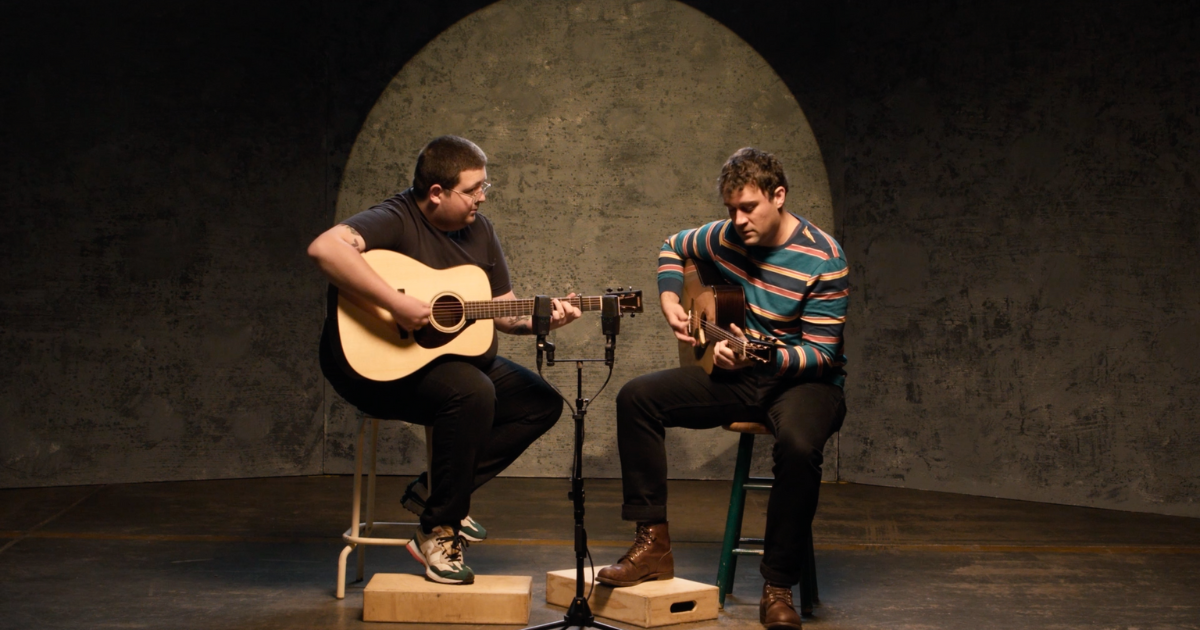
On a cool and cloudy day in December, guitarists Jake Eddy and Jordan Tice (Hawktail) rolled into a converted garage on the east side of Los Angeles. The two artists had not spent much time together before (though you’d hardly know it based on their easy banter and musical ease around each other) but were brought to California by Yamaha Guitars to test out their brand new Japan-made FG9 model acoustics.

Check out our two brand new Sitch Sessions with Jake and Jordan and discover more about Yamaha’s just-released FG9 model at YamahaGuitars.com.

Acoustic Guitarist (And Instagram Star) Jake Eddy Is Still Mesmerized by Music

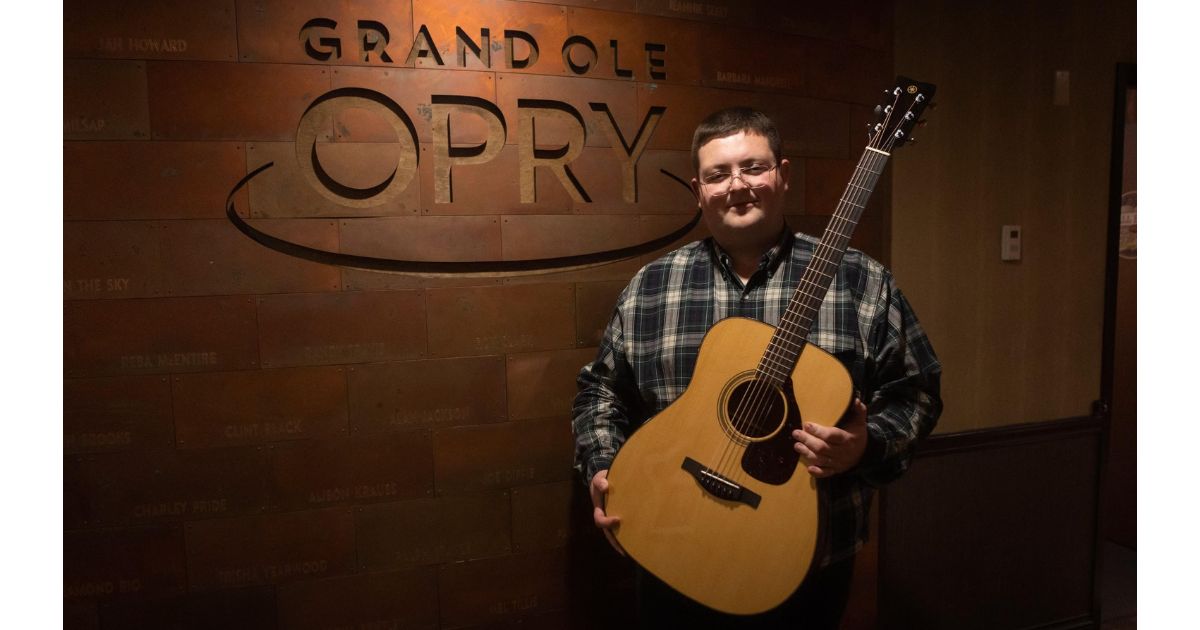
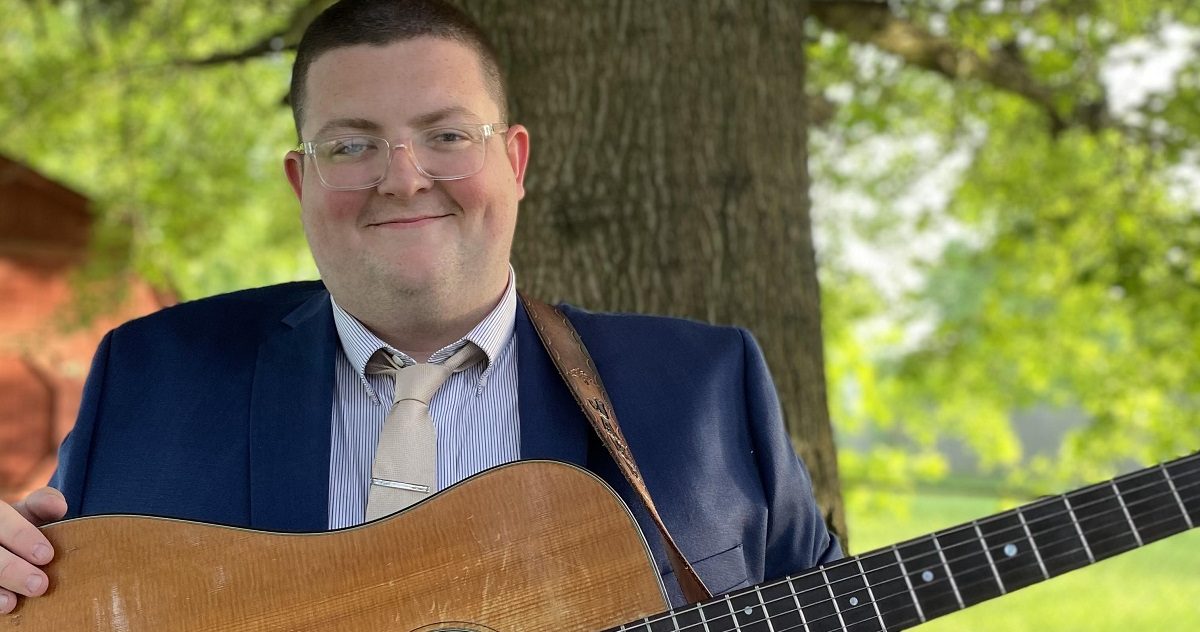
Jake Eddy is among a new generation of bluegrass musicians who are making a name for themselves on social media. Jake’s videos on Instagram and other platforms garner thousands of likes and even more views thanks to his technical skill, wit, and charisma. But Jake is not a mere internet sensation. His bluegrass roots run deep through his family in Parkersburg, West Virginia, where he grew up playing with local traditional music legends. While touring with the Becky Buller Band, he made his debut on the Grand Ole Opry stage, which led to Jake and his brother Carter accompanying bluegrass/jazz/klezmer mandolin legend Andy Statman on the Opry. Jake stays busy with a full teaching schedule in addition to his time on the road with Andy, his own band, or as a solo act. BGS caught up with Jake to learn more about his early interest in bluegrass, his experiences in music school, and his upcoming Yamaha custom guitar.

How did you get into playing music?

Eddy: My grandpa was a picker, and my mom played, and I had two cousins that fiddled on the Opry back in the ‘70s on my dad’s side. So it was just kind of the usual thing for bluegrass people from my region. I was just surrounded by pickers and wanted to be one.


View this post on Instagram


A post shared by Jake B. Eddy (@thejakeeddy)

When did you start on the guitar?

Banjo was really my very first when I was a kid. I started working on guitar simultaneously. Because of the technique, or maybe the lack of technique, being taught by old-timers around here, playing the banjo became uncomfortable and a little bit painful, and I could feel like it just wasn’t the best fit for me in the long term. I still do play banjo on some sessions and stuff like that, but as far as touring, playing banjo, it’s not in the cards for me. I prefer to play guitar anyway, so it’s okay.

When did you decide to make a career out of music? Or did it just sort of happen?

Yeah, it was pretty natural. I did the family band thing a little bit when I was real young. And then I got a call to go play banjo for Melvin Goins when I was in middle school. That experience was awesome, like going to bluegrass school. It was really crazy and had some great and terrible things both going on. But it was really cool because my parents let me go on the road under the condition that I would bring an adult with me at all times. They had played music so they were hip to what it can be like on the road. The deal ended up being that my grandpa would chaperone me on the road. So he came with me, and on the first show, Melvin had this blowout with the bass player, and the bass player quit. And I tell Melvin, like, “Hey, my grandpa is a bass player.” And he filled in on one show with us and got offered the gig. So we actually were both in the band for two years together. It’s a great memory, and it grew me up really fast, but it was cool.

That’s a great story. It’s hard to explain to other people what that experience is like as a kid. All the good and bad and how much you learn.

You can imagine. You know, those old-timers. It’s a different lifestyle.

How long did you play with Melvin?

I think it was two years. I think I got hired when I was 14. I think I was in 7th or 8th grade and probably quit when I was in the 10th grade or something like that.

Did you end up going to music school?

Yeah, I did music school for a little bit, and I was a horrible student. The usual, playing a bunch and giggling a bunch, but not going to class a whole lot, and just decided that it seems silly to me that a lot of the really great players I knew at music school were not doing very well at school. And a lot of the so-so players were passing with flying colors. So it just started to seem silly.

It’s definitely funny to go to school to theoretically get a job that you already have.

Yeah, man, that was the thing. They would get on me about attendance, and I would be like, I’m playing gigs. And I get it that you can’t bend the rules but I figured it wasn’t a fit for me.


View this post on Instagram


A post shared by Jake B. Eddy (@thejakeeddy)

Where were you going?

I was going to Ohio University in Athens. It’s this little, cool, artsy, open-minded kind of bubble in Ohio. And OU Music School, in my eyes, was a place for a lot of your local music educator-type people, but it also had this population of disgraced jazz players from CCM, which is a bigger school in Cincinnati. So there were some good players floating around, but just a weird scene.

Were you studying jazz then?

Technically the degree was Guitar Performance, maybe? Or guitar something. But yeah, I was in the jazz track, so all my ensembles and all my instructors were jazz players, and I had played that music a bit before. I learned things in music school, but if given the opportunity again, I don’t know if I would have gone that way.

You’re playing with Andy Statman now, right?

Yeah, a bunch. Man, it’s cool. I assume you’re hip to Andy’s playing because, like, all the mandolin nerds love him. He’s the coolest. I hired him to cut a couple of tracks that I wrote, and we ended up really hitting it off and we hung out some and decided to do a couple of one-off shows. And it just snowballed into doing some tours. Andy is Orthodox Jewish, so he doesn’t work weekends, so our touring is limited in some ways. But we’ve gotten to play quite a bit and we’re about to go out again in the spring, it’s looking like, and we got a record coming out on his label, so, yeah, some things happening there for sure.

What’s the material you play like?

Andy’s a huge Monroe buff, so there’s a lot of nights where we’re playing things like “Evening Prayer Blues” or “Tombstone Junction” and all these Monroe tunes, but they can quickly take a musical turn and he’s a pretty deep musician. It’s definitely traditional material, but it’s through the lens of a pretty free approach, I think is the way I’d put it.

What was your practice regiment growing up? How do you think you got so technically good?

I’m sure in a lot of ways my brain is totally broken and that’s why this has worked out for me. I think a lot of musicians are that way. I think if I was completely normal, I’d probably just like music in a hobbyist, healthy way. When I was a kid, I hesitate to put a number on it, but I’d say when I was really into soaking up everything, I was probably playing eight or 10 hours a day. That’s before school, after school. I would try to skip a class here and there to play, or I would skip lunch or I would fake sick at a gym and go get the guitar. I was always working an angle to be playing more. And then after school, playing until bedtime and playing gigs with the family band on the weekend.

It was an extreme focus on picking. I think I was lucky just being exposed to music a bunch. I worked really hard at it, but my parents made it seem cool and made it seem accessible. And I think that plays a pretty big part as well, right? There are still some days where I’ll go in my studio for eight or 10 hours with the metronome on full blast just going crazy in there. And then when it’s done, you feel totally drained. I feel like my brain is melted. That’s not how I tell my students to practice. I tell them to do something that’s manageable and that’s part of their normal routine. But I’m certainly not following that advice.


View this post on Instagram


A post shared by Jake B. Eddy (@thejakeeddy)

I’ve always felt like if somebody wants to get that good, they’re going to do that regardless of what tools they have. You can’t really convince someone to be that obsessed with it.

Yeah, man, I think so. It’s a blessing and a curse kind of thing. But I still feel a ton of amazement and wonder by the guitar and by music. And that’s the secret thing you can’t teach anyone. I still think music is so mesmerizing and just so damn cool.

You’ve been working with the Yamaha custom shop on a guitar. Can you tell me about that?

Yeah, I don’t have it in my possession yet, but I have a prototype that’s really good. I played some of their prototypes at the Fretboard Journal Summit in Chicago last year. I thought it was a good guitar and one of the better ones I played there that weekend, which was really surprising because Yamaha doesn’t historically have a huge reputation in the bluegrass world. So they called me and sent one and then they had me come down and play at IBMA. It’s just one of those luck things. Bumped into the right guys and it kind of snowballed. I went out with Jordan Tice and filmed some promo stuff for a new model and demoed the guitars. I think my custom’s going to be done any day now. They’re cool, man. And they’re not cheap guitars — these are nicer models. They’re not trying to be old-sounding guitars by any means. It’s modernly voiced and it’s cool.


View this post on Instagram


A post shared by Jake B. Eddy (@thejakeeddy)

When you say these guitars are “modernly voiced,” what did you mean by that?

In one sense it sounds new. It doesn’t sound particularly dry and woody like an old guitar might, but it’s really slick and it’s loud and it’s balanced. It’s great up the neck. It has a little more sustain than something like my old D-18. Talking about guitars is kind of like talking about wine tasting or something. It’s hard to explain.

Yeah. I always find the word choice very funny and completely arbitrary.

It means nothing but you can hear the differences when you play them. They’re really fast. When you play the note, it’s right there. It has good attack. It’s super-even and balanced. Those are the main kinds of things I like out of my D-18. But it’s a different voice. I think when the demos and stuff come out, it’ll make more sense when people can hear it.

What did you go for in your custom model? I feel like people are always really specific with custom instruments and I have no idea what I would ask for on something like that.

Yeah, I went with things that I knew were good. I think a lot of people, when they get a custom build, they have the tendency to try to be cutting-edge or to be a smarty-pants about it and be like, “Oh, I want this certain type of wood from this certain type of tree with the grain like this.” I just went for a mahogany guitar, spruce top. It’s really simple and lightweight. I think you can get carried away wanting a special guitar more than you want a good guitar. There’s no inlay on it. And I really pushed them for a double pick guard. I don’t know if they’re going to go for it because a lot of the aesthetic stuff is controlled by the guys in Japan. But fingers crossed. I’m excited to get it in my hands. If it’s anything like the prototypes, it’s going to be pretty sweet.


Photo Credit: Madison Thorn

Rising Bluegrass Artists Hear Something Special in Yamaha Custom FG Guitars

Bluegrass music is based in tradition, yet every guitarist brings their own touch to the genre. Among a new generation of acoustic musicians, Yamaha Custom FG guitars have become a welcome addition on stage and in the studio. From the design to the tone to the overall feel, Yamaha Custom FG guitars bring out the best in these players, who have been making their mark in bluegrass music. Within mere moments, they have noticed the attention to detail and craftsmanship of Yamaha’s Senior Acoustic Guitar Builder Andrew Enns and his team.

Fred Kosak of Stillhouse Junkies plays a custom Yamaha FG made to complement his musical approach in a variety of settings. Hailing from Durango, Colorado, the band won an IBMA Momentum Award for Band of the Year in 2021, and they have continued to build their fan base through touring, especially in Colorado and Utah.

“I’ve long believed in the power of the connection between instrument and player,” Kosak says, “and that’s why I’ve worked with custom builders over the years to imagine and build instruments that suit my individual attack, style, and taste and with which I feel an immediate bond. My custom Yamaha FG is no exception: from the first strum I knew that Andrew Enns had created something special. He captured a sonic signature and vibe that I could take on stage with me in any situation knowing it would respond exactly the way I wanted it to. Yamaha has taken a ground-up approach to design and rolling out this new line of acoustics that I think is very player-centric and unique for a larger manufacturer, and the results are easy to see in every instrument they’ve produced.”


West Virginia musician Jake Eddy, a 2022 IBMA Momentum Instrumentalist of the Year nominee, has played music professionally since he was a teenager. In addition to touring in bluegrass songwriter/fiddler Becky Buller’s band, he’s recorded an album of fiddle tunes on guitar. He played his new Yamaha custom FG prototype at the Fretboard Summit.

“The new guitars being built by Andrew Enns at Yamaha are great!” Eddy says. “My old D-18 will always be a part of my life, but this guitar has really squeezed its way into my musical world. It feels and sounds how a mahogany guitar should. Lightweight, and fast!”


Theo MacMillan had his heart set on acoustic music from an early age, playing in churches and local talent shows as a kid. He surrounded himself with bluegrass as a college student in Kentucky before moving to Nashville after graduation. The versatile musician (who also plays fiddle) presents his original music through performing as a solo singer-songwriter as well as singing with his younger sister in the Theo & Brenna Band. He says he’s been pleased with his Yamaha Custom FG for a variety of reasons.

“Since I got the FG from Yamaha, I’ve been pleasantly surprised at how great it sounds plugged in. This is a new experience for me (playing live with the pickup) and it has significantly affected my live performances. I’m a big fan of the tone that the FG is capable of even when it’s plugged in. Andrew and I talked about giving it extra low and high end (more of a scooped eq) — the result was a guitar very capable of acoustic lead and bass-y rhythm. I’m finding it to be my guitar of choice if I’m playing duo shows or solo for a songwriter round, although it definitely holds its own for pure bluegrass rhythm playing. In addition to the sound, the guitar is absolutely gorgeous. I get comments on its aesthetic all the time.”


Jordan Tice is a member of progressive bluegrass band Hawktail and also performs with Yola. His fifth album as a solo artist, Motivational Speakeasy, puts his voice and his guitar front and center. Based in Nashville, Tice is eagerly awaiting his Yamaha custom FG to be completed and delivered.

“I really enjoyed playing that new Yamaha FS model with mahogany back and sides for my Fretboard Summit show in Chicago,” Tice says. “It had the features I love from old Yamahas combined with high quality materials and modern boutique craftsmanship. It had quite a nice range but remained balanced and focused and I was also impressed with the depth of the tone — a good amount of low end without feeling muddy, tubby or unclear. It plays very nicely too — love the feel of the neck and it had a very nice string tension. A lot of great music has been made on Yamaha guitars over the years and hearing them take these styles to the next level is really cool. I would play that guitar all the time both live and at home if I had it.”


As a singer-songwriter, Isaac Horn from The Arcadian Wild believes that a guitar’s rosewood back and sides can “hug the voice and create this really wide, open area that you can sing into.” Upon first seeing the prototype of his own Yamaha custom FG, Horn noticed a design on the fret overlays that he had never seen before. He also admired the beauty and elegance of the rosette, the purfling, and even the pickguard. The Adirondack top of the guitar was also shaved down to allow for the quiet playing that Horn sometimes prefers.

“It was really reassuring because I knew that Andrew and the team were making choices that were really creative and intentional,” he says in a video interview about the guitar. “My expectations have been exceeded for sure.”


Editor’s Note: Read our Q&A with Senior Acoustic Guitar Builder Andrew Enns and see how Yamaha Guitars have guided numerous well-known musicians to their signature sound.

LISTEN: Jake Eddy Feat. Bryan Sutton, “Billy in the Lowground”

Artist: Jake Eddy featuring Bryan Sutton
Hometown: Parkersburg, West Virginia and splitting time in Nashville
Song: “Billy in the Lowground”
Album: Jake Eddy
Release Date: July 10, 2021

In Their Words: “This was easily one of the most incredible sessions I’ve ever been a part of. Bryan and I really connected in the studio and had a great time. It’s so fun to approach an old tune like this with an open mind and just see what happens (especially with a great player like Bryan). This tune did not have any special meaning to me, at first. I knew that I wanted to include Bryan in some capacity so we got together and just started playing through some tunes. ‘Billy in the Lowground’ came up and we both were into it — so that’s what we played. I think the fact that it was unplanned adds to the excitement. At the end of the track you can hear some banter between us that sums up the session perfectly.” — Jake Eddy


Photo credit : Teran Storey